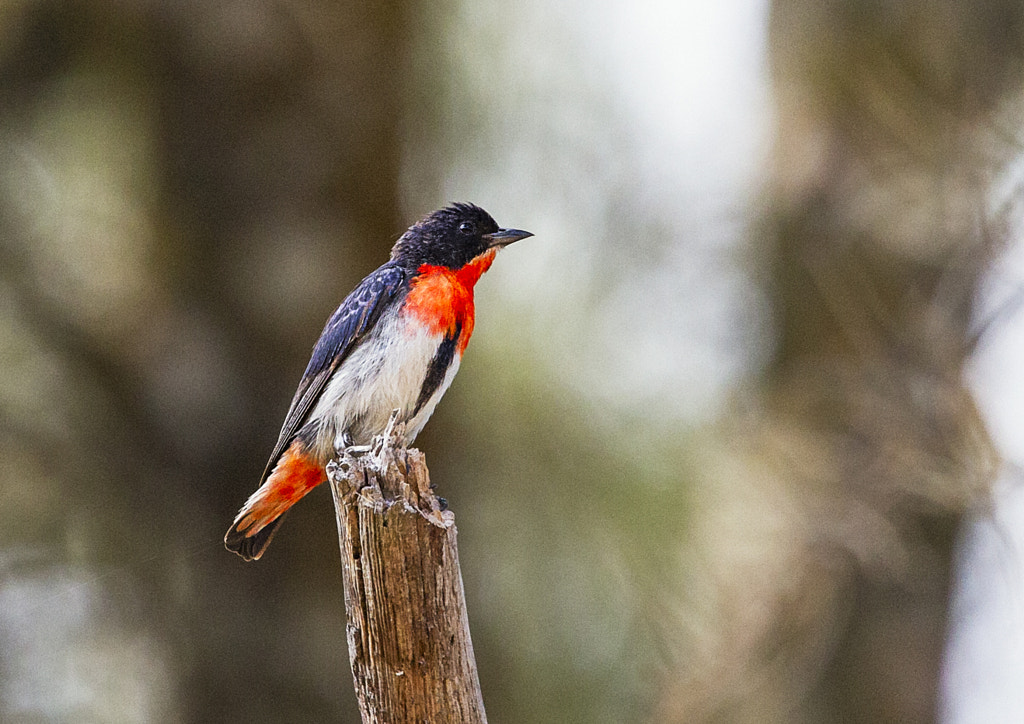
Birds were so much easier back in England. I wrote earlier about how Australian Robins come in an assortment of colours and not just the red breasted ones I grew up with. Well walking down the river bed the other day I see this.
Mistletoebird, Dicaeum hirundinaceum. The Nyoongar name is Minnijit. York, Western Australia. Canon EOS 6d with Sigma 150-600mm f/5-6.3 DG OS HSM Contemporary lens. Exposure: 1/1000 sec, f8 at ISO 1600.
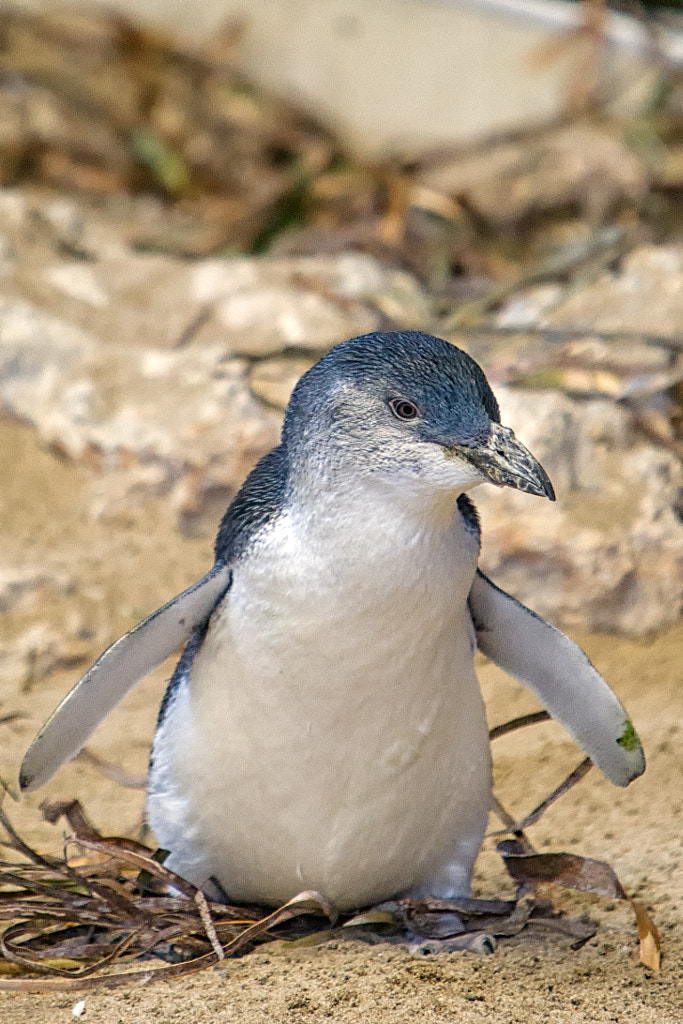
It’s obviously some sort of robin thinks I as I walk along pondering this new bird. WRONG!!!! It’s a mistletoe bird. First robins come in multiple colours and now birds with red breasts aren’t robins. I think I’m going to stick with penguins – they’re black and white and easy to identify.
Little penguin or fairy penguin (Eudyptula minor). Penguin Island, Western Australia. Canon EOS 5d with a Canon EF 70-200mm f/2.8L IS USM lens and Canon x2 extender. Exposure: 1/250, f5.6 ISO 1600.
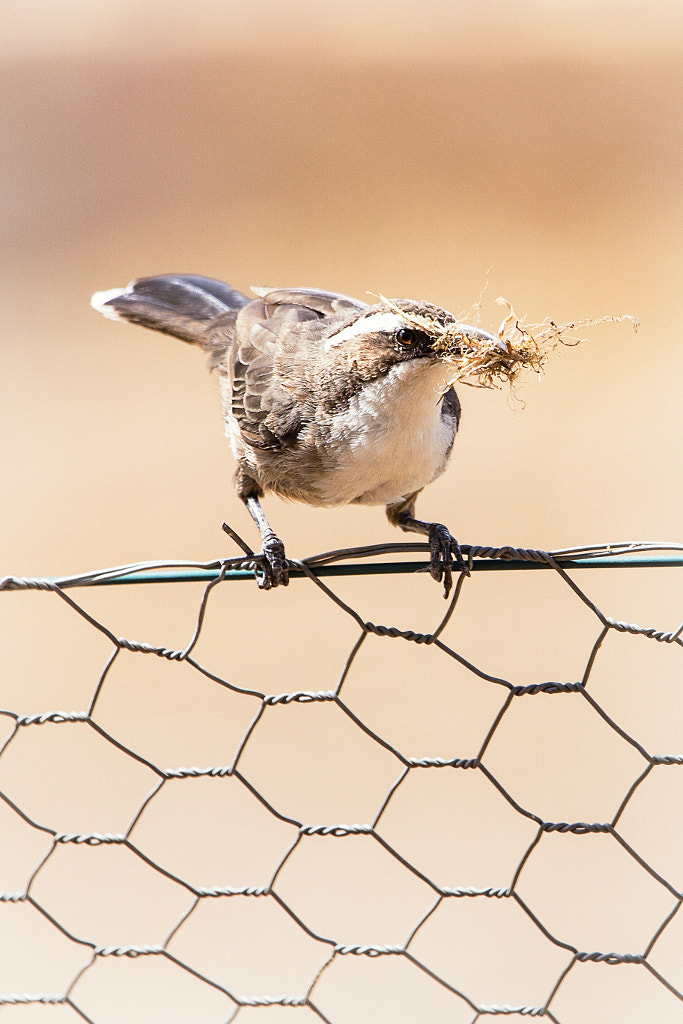
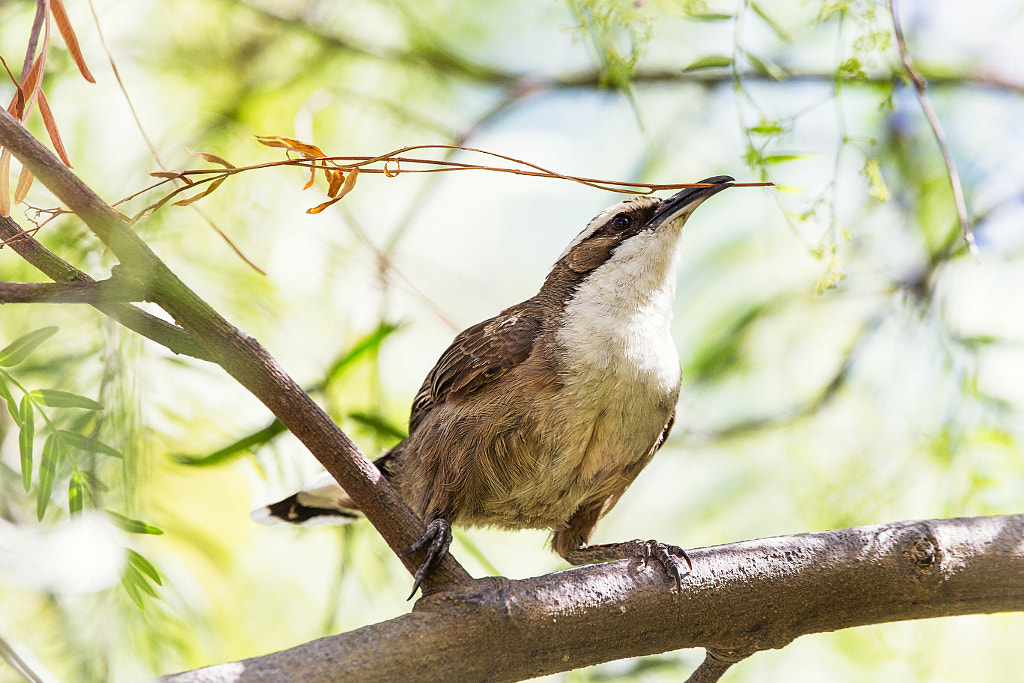
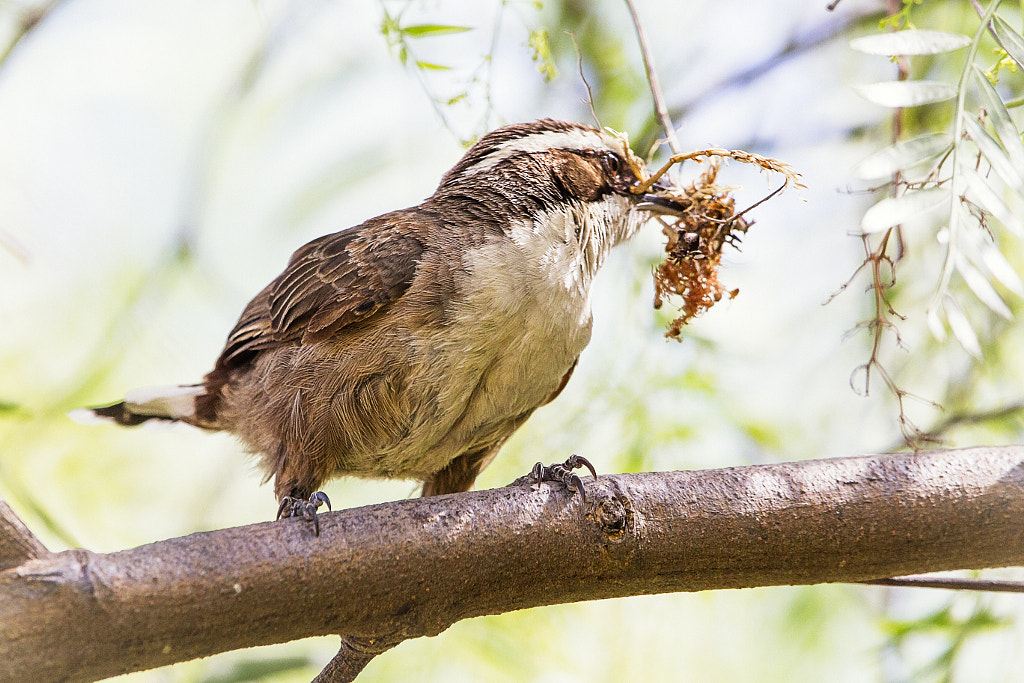
Back in September I wrote about the various birds nesting in the garden. Well autumn is now here and I thought I’d write an update. The white browed babblers have successfully hatched all their eggs which means there has been a population explosion. They are quite curious birds as they live in communal nests and have separate nursery nests as well which they all take turns in raising the chicks. Well now they are embarking on a building program to make a new communal sleeping nest for all the new adults. As a result these funny little grumpy birds are flying in building materials at a great rate of knots.
A delivery of nest material from next door. White browed babbler, Pomatostomus superciliosus. York, Western Australia. Canon 6d with Sigma 150-600mm f/5-6.3 DG OS HSM Contemporary lens. Exposure: 1/640 sec, f6.5 at ISO 500.
Queuing on the landing branch waiting to unload. White browed babbler, Pomatostomus superciliosus. York, Western Australia. Canon EOS6d with Sigma 150-600mm f/5-6.3 DG OS HSM Contemporary lens. Exposure: 1/640 sec, f6.3 ISO 320.
Waiting to enter the building site. White browed babbler, Pomatostomus superciliosus. York, Western Australia. Canon EOS6d with Sigma 150-600mm f/5-6.3 DG OS HSM Contemporary lens. Exposure: 1/640 sec, f6.3 at ISO 640.
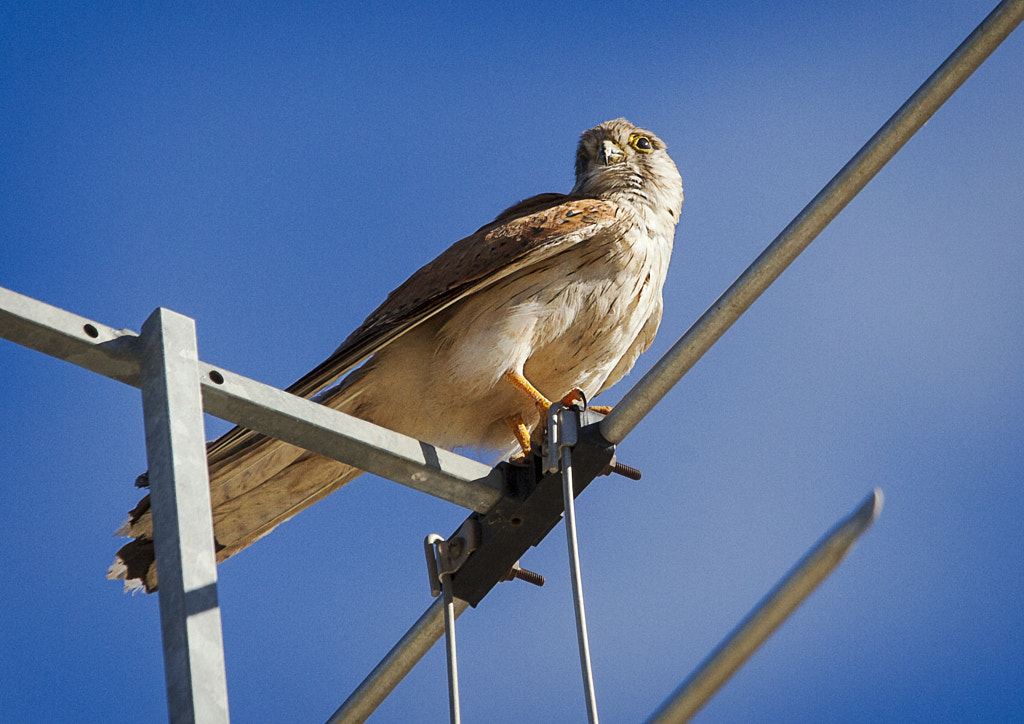
We were also quite delighted to have a visitor. While we were talking one afternoon I spotted a Nankeen Kestrel hunting in the field opposite. It didn’t catch anything and left empty-handed. I thought that was that when I heard a bump from the TV aerial so we both ran outside to look, me with my camera and Helen with her binoculars. Sure enough the kestrel had decided our aerial would make a very good observation perch. It remained there quite unfazed for quite a while. It was only when I tried to get closer for a better photo that it decided to leave.
Nankeen kestrel, Falco cenchroides cenchroides. York, Western Australia. Canon EOS 6d with Sigma 150-600mm f/5-6.3 DG OS HSM Contemporary lens. Exposure: 1/1000 sec, f8 at ISO 320.
I’ve not had access to a proper studio since I left TAFE (college) where I abused, I mean used the excellent facilities. Now working from home I have to make do with whatever is around the house and a few well-chosen bits of photo kit. In the above pic I’m doing a product shot of back pack in the sitting room. I don’t have a white infinity curve on a product table so I use a small Ikea coffee table covered in a white shower curtain and a white double sheet as the background. I want the backpack on a white fore ground and against a white background. Experience has taught me that if a light the background with a flash gun (speed light to our American readers) and over expose by 1 stop it will show as pure white. The subject is lit by two flash guns in brolly boxes arranged at 45º to each other. The camera sits on a tripod and the flashes are triggered wirelessly using a Phottix Odin transmitter. Unlike a lot of photographers I shoot using TTL control and use flash exposure compensation on each flash to control the lighting ratio which in this case is 2:1 or the key light (the black brolly) is set to be twice as powerful as the fill light. All very simple really.
…and boy did it pour down. It rained so hard that the drops actually bounced.
I was in a rebellious frame of mind this week. I had downed tools on my latest book project as it turned out I’d received no royalty payments for two years. Not unusual I’m afraid, publishers are notoriously tight at best and blatant rip off merchants at worst. My father was not a politically correct man and one of his favourite jokes was:
“How do get a drink out of a Scotsman?
Stick two fingers down his throat!”
Well it wouldn’t work with my publisher. They are just impervious. The accountant usually has a number of excuses as to why he has not made any payments. The usual one is that his father had just died. Not a word of bullshit he had his father die four times over a six month period. Well the statements have been coming in, but no payments had hit my bank account for two years. So as William Shakespeare had King Lear say “Thou art a boil, a plague sore, an embossed carbuncle” .
I was right royally hacked off and emailed them to say I’m not finishing the current book until I’ve been paid and then I felt the need to go out and do something for me instead of working. So I went to Wireless Hill to photograph orchids in the pouring rain. Make that torrential rain. I’d have stayed drier if I’d have jumped fully clothed into a swimming pool. Anyway despite all that I got four photos I was happy with.
Pansy orchid, Diuris magnifica. Wireless Hill, Western Australia. Canon EOS6d with Canon EF100mm f/2.8L Macro IS USM lens, Phottix Mitros+ speedlite triggered by a Phottix Odin TCU. Exposure: manual mode, 1/160 s at f/8.0 at ISO 100.
Dancing spider orchid (Caladenia discoidea) aka antelope orchid or bee orchid. Wireless Hill, Western Australia. Canon EOS6d with Canon EF100mm f/2.8L Macro IS USM lens. Exposure: aperture priority, 1/125 s at f/8.0 at ISO 1600.
Pansy orchids, Diuris magnifica, Wireless Hill, Western Australia. Canon EOS 6d with Canon EF100mm f/2.8L Macro IS USM. Exposure: aperture priority,1/800 s at f/8.0 at ISO 1600.
Carousel Spider Orchid, Carousel, Wireless Hill, Western Australia. Canon EOS6d with Canon EF100mm f/2.8L Macro IS USM lens. Exposure: aperture priority, 1/1000 s at f/4.0 at ISO 1600.
The old Canon EOS6d with 100mm f2.8L Macro IS lens performed admirably in the wet and I’m always astounded by the quality of the files it produces, Many would argue that it is not a professional camera due to it having a very basic AF system, poor dynamic range, not properly weather sealed and only having one card slot, but man alive if you can’t produce professional quality work with it then you really need to get some help.
* Today’s musical reference is the song “The Sky Is Crying” written and originally performed by Elmore James in 1959. It was an impromptu song inspired by a downpour of rain. Since then it has become a blues staple with a plethora of artists recording it over the years. My favourite version is still the Elmore James one, but I also like the version by Stevie Ray Vaughan. The video I’ve embedded below features and all star line up of Stevie Ray Vaughan, Albert King and BB King.
As me Uncle Ted would have said it’s been “reeet parky” hereabouts. Or to translate it to English it’s been freezing. It has been very hard to leave a nice warm bed in the mornings. Anyways yesterday I made the effort to go up to Mount Ronan Nature Reserve and take a look to see what’s out. Wasn’t a bad haul.
Winter donkey orchid (Diuris brumalis), Mount Ronan, Western Australia.
Dwarf Pink Fairy orchid or Little Pink Fairy Orchid (caladenia reptans subspecies reptans), Mount Ronan, Western Australia.
Dwarf Pink Fairy orchid or little pink fairy orchid (caladenia reptans subspecies reptans), Mount Ronan, Western Australia.
Dark banded greenhood orchid (Pterostylis sanguinea), Mount Ronan, Western Australia.
Jug orchid or recurved shell orchid (Pterostylis recurva), Mount Ronan, Western australia.
Jug orchid or recurved shell orchid (Pterostylis recurva), Mount Ronan, Western australia.
… it’s a bit like fishing. There’s always the one that got away. It doesn’t matter how prepared you think you are the opportunity presents and disappears in a nano second. One of my photography lecturers used to talk about what he called ‘the retrospective drive home’ where you analyse everything you did and didn’t do that contrived to create that missed opportunity. The frustrating thing is as you try and tell someone about it they invariably say “A photograph or it didn’t happen”. Well this time I’ve got the photos to prove it! Sort of.
The other day I was walking along the Swan River foreshore at Claremont when I saw an Osprey drop like a stone from the air and scoop up a fish. In less than the blink of an eye it was over. I was ready the camera was out of the bag and had a long lens fitted, it was switched on and the settings were optimised. So what did I get?
The osprey making its escape with catch of the day.
With some Photoshop magic this is what I got.
That was the best I could get – pathetic isn’t it? There I am with (hang on the other half may read this) an untold amount of money tied up in photo equipment and this is it! I remember watching the original Bladerunner where they had a fancy doodad that could extract a useable photo out of some ridiculous enlargement. You know that film was set in 2019 and it is now 2018 and we haven’t got that fancy photo doodad let alone flying cars. The future is such a disappointment. So as I walk away from the scene looking dismally at the LCD on the back of the camera I’m mentally kicking my backside.
Half an hour later I hear a commotion coming from the water. A shoal of fishing flapping on the surface coming on to the shoreline. Low and behold a fin and then a head break the surface. It’s a pair of bottle nosed dolphins driving fish into the shore. With the relaxes of a dead cat I leap into action and fire off a burst.
Indo-Pacific Bottle Nosed Dolphins can often be seen in in Freshwater Bay. They often drive shoals of fish into towards the shore to make hunting easier. They also feed on the crabs found on the sandbar.
Well this time I got a sharp photo of something recognisable as a dolphin. But that is the best I got. This wildlife photography lark is hard – the wildlife aren’t giving me chance.
Warperup Creek, Margaret River, Western Australia. Apple iPhone SE panoramic mode. Exposure: 1/1000, f2.2 at ISO 40.
I had the chance to nip down to Margaret River for the day while my partner, Helen, was playing croquet in Bunbury. Most people when they think of Margaret River think about wine or surfing but there is more to the area than that. It is a beautiful part of the world with forests and beaches that are home to some very spectacular flora and fauna. I was looking for orchids, but as I had the dog with me I wanted to tire her out before so she would be more settled while I was on the hunt. I don’t know whether you, my dear readers are fans of so-called cosy crime TV such as Morse, Lewes, Midsummer Murder, or Endeavour, but when you watch those it is always the dog walker that finds the body. To be more precise it is the dog who finds the body. Well we were just walking along a track when Frida – the dog – took off like a rocket into the undergrowth and after much thrashing around emerged holding a large femur. As far as she was concerned she had found treasure and after a couple of minutes later thundered back into the bush and reappeared with another. At this stage I was wondering whether she had found a body and whether I should have a look, but I decided to have a look to see what sort of bones they were. Now whenever Frida gets a bone she becomes very possessive and develops a level of distrust befitting a paranoid schizophrenic. Fortunately she hands over the bone nicely as she obviously feels that she a great big pile of the things and again dives into the bush to return with the skull. Definitely not human, much to my relief, it was a western grey kangaroo which had obviously been hit by a car and managed to drag itself to these bushes to die. My overseas readers may not realise this but ‘roos are a bit like rabbits, if they get dazzled by car headlights they will just sit in the road rather than take off. Unlike rabbits they make more of a mess of your car.
Frida’s treasure. The skull of a western grey kangaroo round near the busy Caves Road, Margaret River, Western Australia. Canon EOS 6D with a Canon EF 100mm f/2.8L Macro IS USM lens. Exposure: 1/400, f5.6 at ISO 100.
Thankfully after all that excitement we managed to find what we were looking for which were leafless and hare orchids.
Leafless orchid (Praecoxanthus aphyllus), Margaret River, Western Australia. Canon EOS6d with Canon EF 100mm f2.8 IS L macro lens. Exposure: 1/100, f11, at ISO 1600.
Hare orchid (Leporella fimbriata), Margaret River, Western Australia. Canon EOS6d with Canon EF 100mm f2.8 IS L macro lens. Exposure: 1/60, f8, ISO 800.
When I was a kid one of the many rebuffs used was “take a long walk on a short pier” – it was, I suppose, a more imaginative way of saying get lost. Well whoever first coined the phrase hadn’t taken into account Busselton Jetty in Busselton Western Australia.
Busselton Jetty is longest timber piled jetty in the southern hemisphere and is a popular tourist attraction. Canon EOS6d with Canon EF 24-70mm f4 IS L lens. Exposure: 1/60 sec, f11 at ISO 100.
Busselton Jetty is the longest wooden jetty in the Southern Hemisphere and it is 1.81Km or 1.12 miles long. Building the jetty commenced in 1853 and it opened in 1865 and by the 1880’s it was already attracting tourists. By 1972 the jetty ceased operation as a commercial port and today it attracts a staggering 450,000 people per year.
The sculpture “Fish” (the sea in her belly) stares enigmatically out to sea by the Busselton Jetty. Canon EOS6d with Canon EF 24-70mm f4 IS L lens. Exposure: 1/80 sec, f16 at ISO 400.
X marks the spot. Over the course of the jetty’s 152 year history it has been extended several times. Each red X indicates the previous limit of the jetty Canon EOS6d with Canon EF 24-70mm f4 IS L lens. Exposure: 1/20 sec, f16 at ISO 100.
At the end of the jetty is the Underwater Observatory which takes visitor down 8m to the seabed where they can observe the huge variety of marine life that has made the jetty home.
At the end of Busselton Jetty is the Underwater Observatory where you cab descend to a depth of 8 metres to view the marine life that calls the jetty home. Canon EOS6d with Canon EF 24-70mm f4 IS L lens. Exposure: 1/125 sec, f5.6 at ISO 6400.
The piles that support the Busselton Jetty form a vertical reef. More than 300 species of tropical and sub-tropical corals, sponges, fish and invertebrates live there. Canon EOS6d with Canon EF 24-70mm f4 IS L lens. Exposure: 1/125 sec, f5.6 at ISO 6400.
To get there you don’t have to walk, there is a solar-powered electric train, the Stocker Preston Express, which can carry up to 90 people. So now it is the case of a small train journey on a long pier.
Busselton Jetty is 1.81Km (1.12 miles) long and it has a train service that takes 90 passengers 1.7 Km to Underwater Observatory. Canon EOS6d with Canon EF 24-70mm f4 IS L lens. Exposure: 1/200 sec, f5.6 at ISO 100.
The Jetty Train on Busselton Jetty takes passengers on a 1.7 kilometre journey across the calm, clear waters of Geographe Bay. Canon EOS6d with Canon EF 24-70mm f4 lens. Exposure: 1/125 sec, f8 at ISO 100.
Found in abundance across Western Australia in spring are pink everlastings (Helipterum roseum). In many places they can form thick carpets of vibrant colour. York, Western Australia. Canon EOS6d with Canon EF 100mm f2.8 macro IS L lens. Exposure: 1/250th sec, f8, ISO 100.
I’ve written about going to York Golf Course to photograph flowers, particularly orchids, before and today I’m going to do so again. This time was a little different. Firstly I was looking for pink everlasting daisies (Helipterum roseum) and secondly I went on a Saturday just after lunch instead of early on a weekday morning. It was a bad idea – a very bad idea. It was like something out of the movie Saving Private Ryan. The golf course was full. Here in the Wheatbelt when we say something was overcrowded it means there were three people, so to see roughly thirty people in one place was sensory over load – where had they all come from? To cap it all it was just after lunch the club bar been open and it seemed like everyone had been imbibing freely. Up to this point I thought it was the done thing to shout “Four” upon teeing off. Well at the York Club the word began with F and had four letters but it certainly wasn’t “Four” It was reminiscent of the opening scene from Four Weddings and a Funeral.
It went something like this. “Swish” went the sound of the club as the golfer made his swing, followed by a sharp “thwack”, followed almost immediately by a loud “F**k” as the ball was sliced into the rough. Unfortunately I was, along with the pink everlastings, in the rough. The late Spike Milligan once described an artillery barrage as being like Chinese water torture except with solids in his autobiography “Rommel?” “Gunner Who?”. Well the balls didn’t explode on impact, but they certainly had the effect of making me hit the deck and take cover. The only time I’ve moved faster was when the Rugby club president declared an open bar (my excuse being that I was an impoverished student at the time). After thirty minutes of cowering in the dirt wishing there was an air raid shelter nearby I decided to call it quits and I beat a hasty retreat back to the safety of the car. I did manage to get the two pictures of Everlastings shown on this page.
Pink everlastings (Helipterum roseum). In many places they can form thick carpets of vibrant colour. York, Western Australia. Canon EOS6d with a Canon EF 100mm f2.8 macro IS L lens. Exposure: 1/60 th sec, f16, ISO 100.
As I made my tactical withdrawal I hit the cover of some bushes where I found a small clump of green spider orchids (aka Fringed Mantis Orchid, Caladenia falcata) so I quickly stopped to grab a couple of photos.
Fringed Mantis Orchid or Green Spider Orchid, Caladenia falcata, York Golf Course, York, Western Australia. Canon EOS6d with EF 100mm f2.8 IS L macro lens. Exposure: 1/160 sec, f8, ISO 100.
All I can say is was a very traumatic experience. Every time I hear someone hitting a ball I develop a nervous twitch.
Clicking on a photo will take you through to my online gallery.



You must be logged in to post a comment.