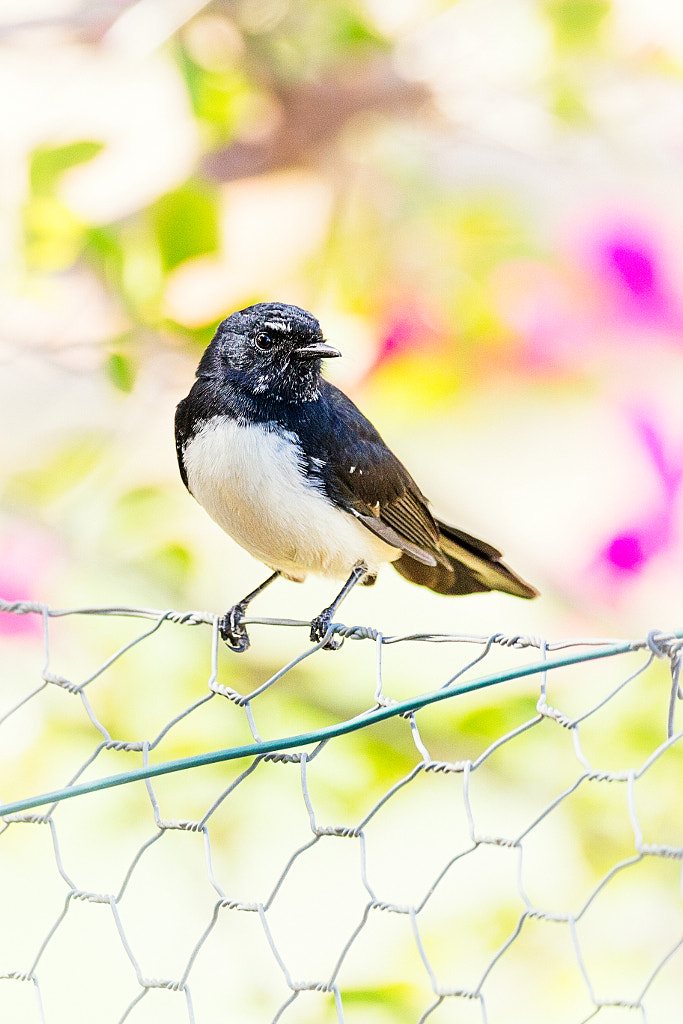
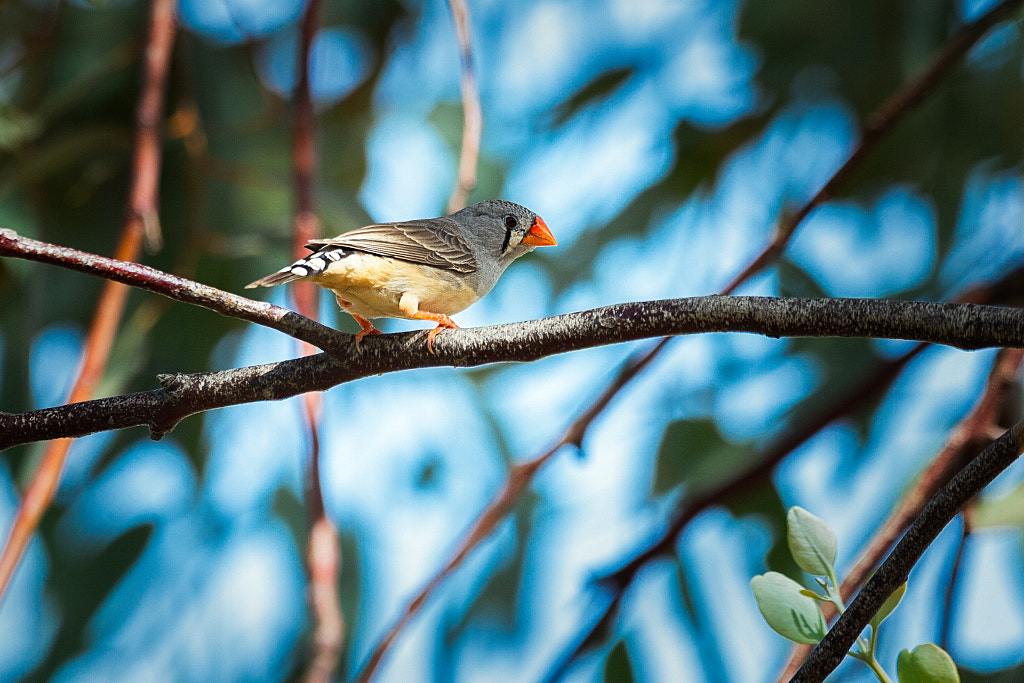
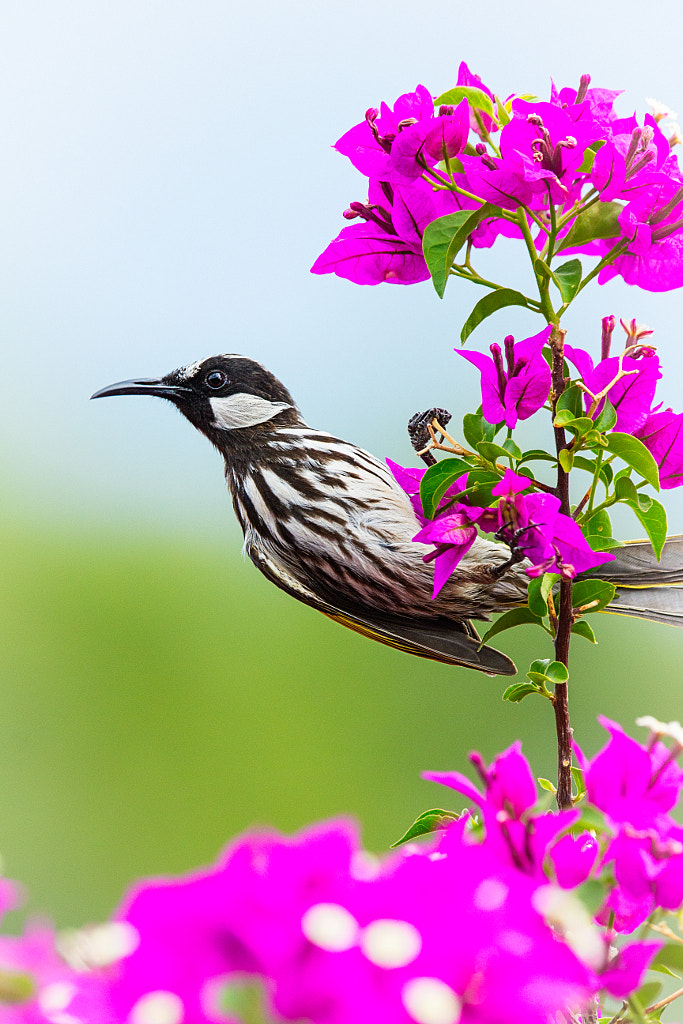
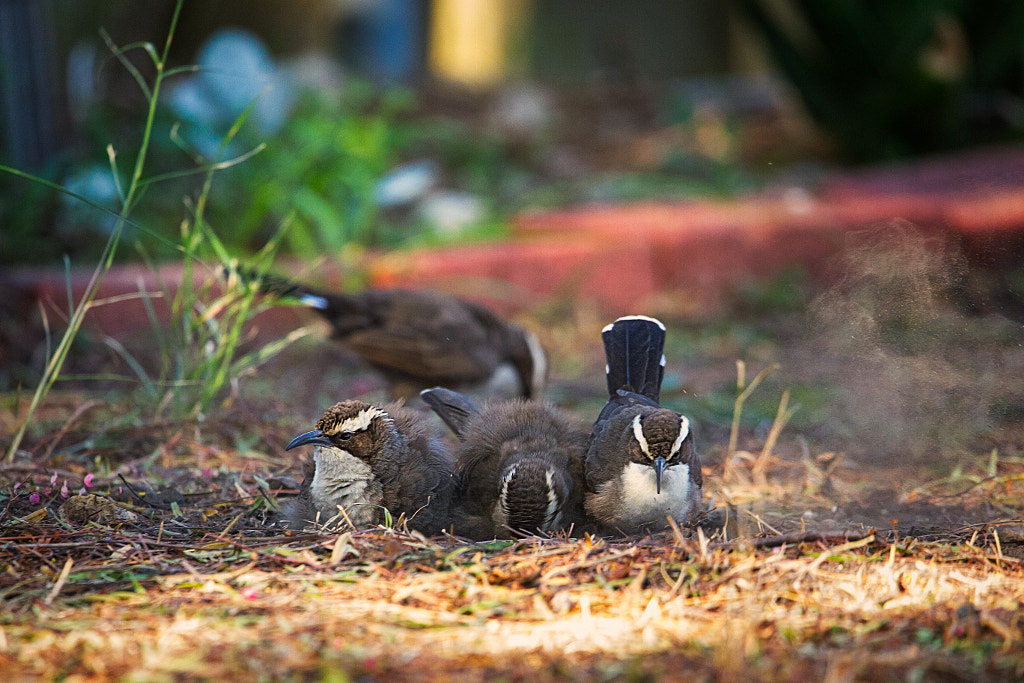
Well it seems that the COVID-19 restrictions have been in place for an age. Here in Western Australia the social distancing requirements aren’t as strict as some places, but we still aren’t able to go where we want and do what we want. It makes me more appreciative of what my parents went through growing up in the Great Depression and then after that the Second World War. But anyway to keep myself from going totally mad I’ve been working on a few projects. This one is to document all the birds that come into our backyard. I’ve not got them all by any means. Some are very elusive and just don’t want their photos taken for some reason. Can’t imagine why. Here is a selection form the last couple of weeks.
Willie Wagtail on the back fence. York, Western Australia. Canon EOS 6d with Sigma 150-600mm f5-6.3 Contemporary lens. Exposure: 1/500 sec, f7.1 at ISO 1600.
Zebra finch, Taeniopygia guttata. York, Western Australia. Canon EOS 6d with Sigma 150-600mm f5-6.3 Contemporary lens. Exposure: 1/500 sec, f6.3 at ISO 400.
White-cheeked Honeyeater, W, in my back garden. York, Western Australia. Canon EOS550d with Sigma 150-600mm f/5-6.3 DG OS HSM Contemporary lens. Exposure: 1/500 sec, f7.1 at ISO 500.
White browed babblers (White) breaking the social distancing rules by communal dust bathing. York, Western Australia. Canon EOS 6d with Sigma 150-600mm f5-6.3 lens. Exposure: 1/500 sec, f6.3 at ISO 5000.
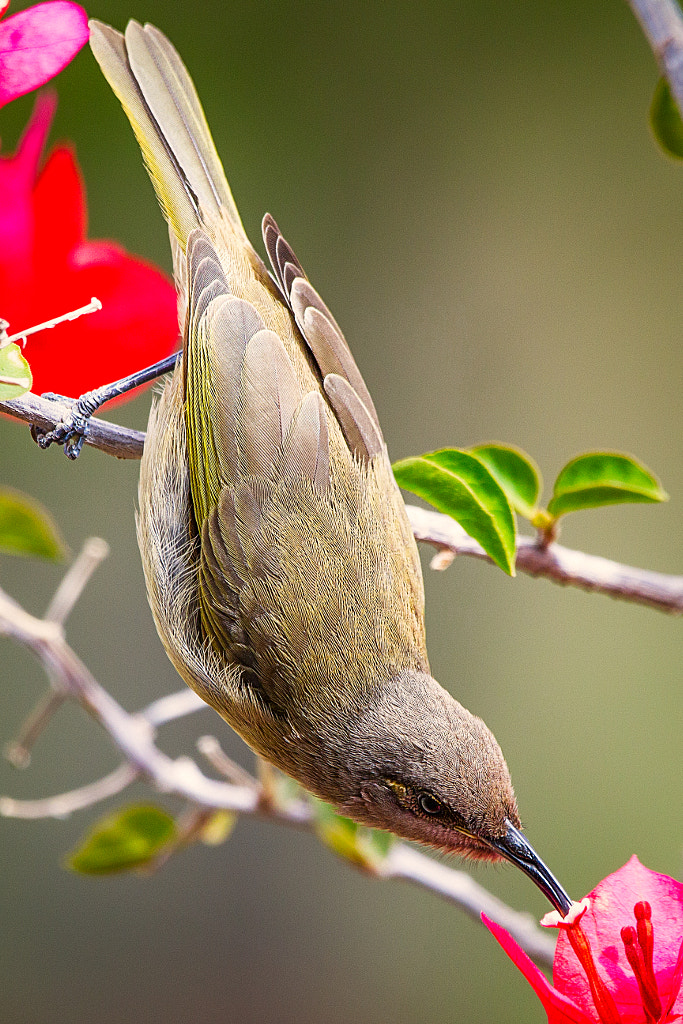
Brown Honeyeater, Brown, in my back garden. York, Western Australia. Canon EOS 550d with Sigma 150-600mm f5-6.3 lens. Exposure: 1/500 sec, f6.3 at ISO 320.
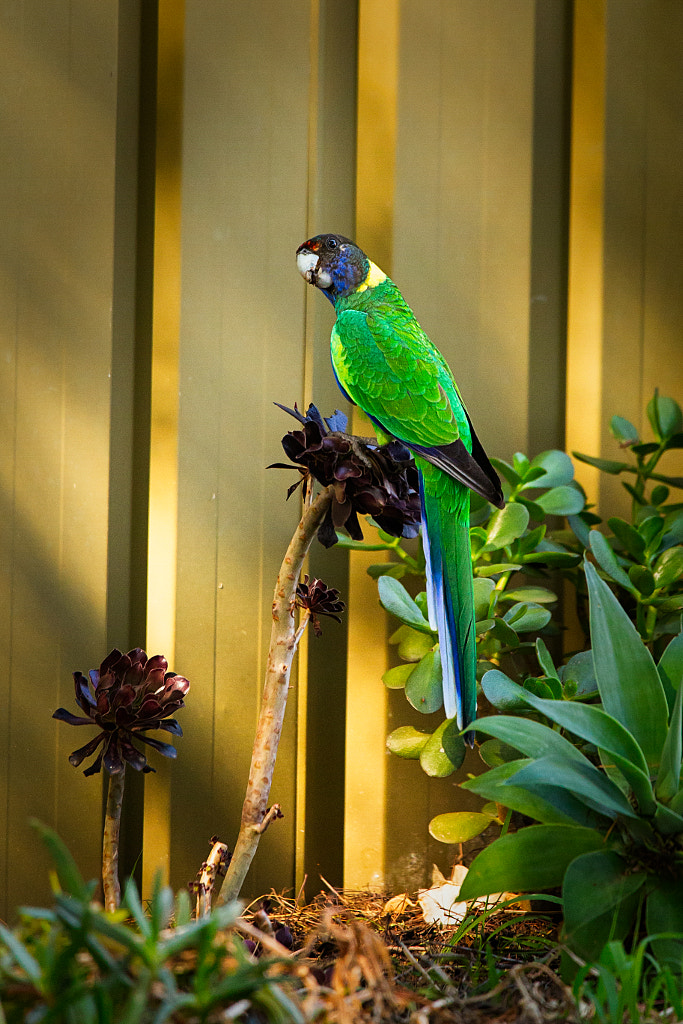
Australian Ringneck aka twenty-eight parrot,Aus. York, Western Australia. Canon EOS 6d with Sigma 150-600mm lens. Exposure: 1/500 sec, f6.3, at ISO 6400.
Well that’s it for this week. Stay safe, keep positive and try and keep busy.
This last few months have been particularly difficult in the light of climate change induced bushfires here in Australia and now the spread of the Coronavirus (COVID 19). It would in the light of compulsory lockdowns, quarantines and restrictions on social gatherings and travel easy to be filled with dread and let feelings of hopelessness pervade our lives. I myself have had further restrictions imposed as I’m in the process of recovering from spinal surgery and am fighting off the temptation of feeling sorry for myself and collapsing in a heap.
There is an antidote to this. Firstly instead of just being passive and feeding our psyches with all the negative news we can find in the media endeavour to do something creative. Creativity is important, it feeds the soul, gives a sense of achievement and allows you to express yourself. All of this has a positive effect on your psychological well being. It doesn’t matter what it is – paint, draw, knit, cook, write, photograph, sing. Although singing could be problematic depending upon your living arrangements and how well you can sing. My partner has issued me with an ultimatum; if I sing Bohemian Rhapsody at full volume in my usual tone deaf manner then lockdown or not I will be looking for alternative accommodation which I think is a little harsh. Secondly reconnect with nature. This one could be a bit hard depending on what the local authorities are imposing, but it can be done. If confined to the house take time out in the garden, encourage wildlife to come into the garden and watch them. Plant things and watch them grow. If possible go a walk in the park or woods (maintaining correct social distancing of course), go bird watching, fungi spotting it doesn’t really matter. Bonus points if you can combine this with doing some creative as this will allow you to enter a flow state. Sounds poncey but “it is the mental state in which a person performing an activity is fully immersed in a feeling of energized focus, full involvement, and enjoyment in the process of the activity. In essence, flow is characterized by the complete absorption in what one does, and a resulting transformation in one’s sense of time” (Mihály Csíkszentmihályi, 1975). The benefits of this are that intense and focused concentration on the present moment that you become so totally engrossed in the experience to the extent that other needs or concerns become negligible and this makes you feel in control over a situation. Do this a few times a week and your mood will lift.
I’ve taken my own advice this week. As I said I’ve been laid up at home and not doing much so I hauled my carcass down to the Avon River a couple of times to photograph some birds in the dawn light. It was well worth it. Stalking birds and photographing them required too much concentration and I was able to forget about my own circumstances and the worries of the world and just enjoy being in the moment. It was so enjoyable that I’m going to get out and do some more over the next week.
Red-capped Robin (Petroica goodenovii) in the dawn light. York, Western Australia. Olympus OM-D E-M1 with Panasonic Leica DG 100-400/F4.0-6.3 lens. Exposure: 1/500 sec, f6.3 at ISO 1600.
A great egret (Ardea alba) hunting in the early morning light on the bank of the Avon River in York, Western Australia. Canon EOS 6d with Sigma 150-600mm f5-6.3 lens. Exposure: 1/1000 sec, f7.1 at ISO 800.
A male Rufous Whistler (Pachycephala rufiventris). York, Western Australia. Canon EOS 6d with Sigma 150-600mm lens. Exposure: 1/1000 sec, f6.3 at ISO 2000.
Right that’s me done I’m off to try and bake a lumberjack cake.
Time – it is a difficult concept to get to grips with. When I was a kid time used to go so slowly. When I grew up and started working time at work went so slowly and my days off went so quickly. Now as a I edge towards sixty time just seems to keep on accelerating. Time isn’t a constant. Then we have the phenomena of how people interpret time within societal and cultural associations. This was brought home to me the other day when talking with someone about what they considered an old building and they were stating that Holy Trinity York was a very old, historical building that needs preserving.
Holy Trinity Bosham, West Sussex, England.
Here in Western Australia Holy Trinity Church in York is considered an old historic building. The Anglican Church was was established in York in 1831, and the building work on the current building began in the 1850’s. So I guess if were being generous then that’s 189 years.In terms of white colonial Australia that is old but in the big scheme of things it’s just a drop in a bucket. I spent my formative years in Chichester, West Sussex. Down the road is the little town of Bosham and it has a Holy Trinity Church as well. The differentiation is the first church in Bosham was mentioned in an account written by the Venerable Bede about Bishop Wilfrid’s visit in 681 AD – that’s 1339 years ago. The earliest parts of the current building were built in the 11th Century under the patronage of Godwin, Earl of Wessex who was one of England’s richest and most powerful of men. You may have heard of his son Harold Godwinson, better known as the King Harold who was poked in the eye by William the Conqueror at the Battle of Hastings in 1066 (apparently his last words were “Oi William! Be careful with that thing or you’ll have somebody’s eye out.”). Indeed there is an illustration of the church in the opening scenes of the Bayeux Tapestry with the accompanying text ‘Ubi Harold dux Anglorum et sui milites equitant ad Bosham. Ecclesia.’ Translated, this reads ‘Where Harold, Earl of the English, and his retinue ride to Bosham. The church.’ The church has historical associations with another king – King Cnut. Yep he’s the one that tried to turn back the sea as a demonstration to his courtiers of how insignificant his power was. Well it is believed that one of his daughters is buried in the church – local tradition has it she drowned in the nearby millstream aged 8. That’s a lot of history and it was all recorded. The big thing was that when I first saw these buildings they new and fresh to me. It was only as I became more familiar with them did I start to have any inkling of their historical significance.
A marker for the gravesite of one of King Canute’s daughters.
Does something that has been around longer become more valuable than something newer? Does the cultural and societal significance of something increase as it ages? Well I suppose the fact that the church in Bosham has parts of it that have physically been there for a thousand years makes it kind of special. Then add the fact that it is associated with key figures and events in history that makes it somewhat unique. Then stir into the mix the fact that it is still a central part of the community and then you have something really important. It is not just a dead building, a mausoleum to a bygone age, it is something that has come to help define a community over a long period of time and will continue to do so well into the future.
Photography and film/video are art forms that deal in part in capturing and expressing time in a way that other art forms have trouble articulating. You can speed it up, slow it down. You can show the effect of change. You can preserve things and memories. Over the last 150-200 years humans have come to see photos as an adjunct to their memories. I have photos and videos of some of my dogs playing, they’ve been dead a long time yet I find them very comforting and my memories of them somehow seem more real, more valid. Photos can, of course, also evoke sad/negative emotions and memories. A photograph can also be just proof of existence – either the subject or the photographer actually existed. For instance without these photos many of you wouldn’t be aware of these two churches having being built.
My great great grandmother with her dog
This is all getting a bit too metaphysical so lets change tack. If we stop and consider the two photos of the churches they were taken 29 years apart. Things have changed enormously photographically speaking between those photos. The photo of the church in Bosham was taken at the height of the film era using what was then already rather dated equipment – an Olympus OM4 with an Olympus OM Zuiko 35-105mm lens shooting Kodak Kodachrome 200 ASA reversal film. The photo of the church in York was taken well into the digital era on a Canon 6d with Canon 24-70mm lens. So not only are the photos snap shots in time of two churches, but they are all snapshots in terms of photographic equipment and trends. But I know that all said and done how they were captured will matter to very few people in the future. What will matter is that they were captured at all. I have a photo of a relative taken back in the 1880’s. I have no way of knowing what was used to make the photo nor whether it was considered cutting edge at the time. I just know that this woman and her dog existed at some point in time and she is one of my family and that is what makes it so important. I don’t know who she is other than my great great grand mother as there is no one left in my family who remembers who she was. But the important thing is that she existed and we can see that she liked dogs – a trait that still runs in our family. The important thing is that someone decided that wanted a photo of her and her dog as a keepsake and consecutive generations have kept it.
Time. It is a difficult concept to consider or explain but maybe we shouldn’t try. Maybe we should just mark its passing with photos and videos and leave them as gifts for those in the future to make sense of.
Christmas Tree (Nuytsia floribunda), these are semi-parasitic trees that produce bright orange flowers over the Christmas period. Apparently its the largest parasitic plant in the world.
The video is the short version of this article with a slide show of the best of this year’s orchids at the end.
It’s not for nothing that Western Australia is referred to as the “Wildflower State”. There are over 13,000 species of plant to be found, with new discoveries added every year. If we narrow it down to my particular area of interest – orchids – there are 394 species of terrestrial orchids in the South West Corner of the state. Some of these species are so specialised that are confined to very small areas and found nowhere else. Some species will not bloom unless there has been a bush fire the summer before, others if the winter rains are delayed or are insufficient will not put a show on either. This means that no two years are the same. An example of this is my favourite spot near where I live is prolific with the number of orchid species found there. When I first went I was simply amazed by the number of fringed mantis and white spider orchids that were flowering. Over the ensuing ten years I’ve seen such a display of those species since. This year there was a carpet of purple and pink enamels like I’ve never seen before. So this not knowing quite what you are going to find adds to the whole experience. On a few occasions I may be lucky enough to be able to access the flowers by car and a short walk, but most of the time I end up walking through the bush for anything up to four hours.
Pink enamel orchid, Elythranthera emarginata. Mokine, Western Australia. Olympus OMD EM 1 mk ii with Olympus 60mm f2.8 macro lens. Aperture priority, exposure: 1/800 sec, f5.6 at ISO 400.
Purple Enamel Orchid, Elythranthera brunonis. Mokine, Western Australia. Olympus OMD EM 1 mk ii with Olympus 60mm f2.8 macro lens and Metz 64AF-1 flash. Exposure: Aperture priority mode, 1/40 sec, f8 at ISO 200 with -1 stop exposure compensation.
The Canon EOS 6d camera with 100mm f2.8 macro lens that I used to use for photographing orchids alongside the Olympus EM 1 mk ii with 60mm f2.8 macro lens that I use now.
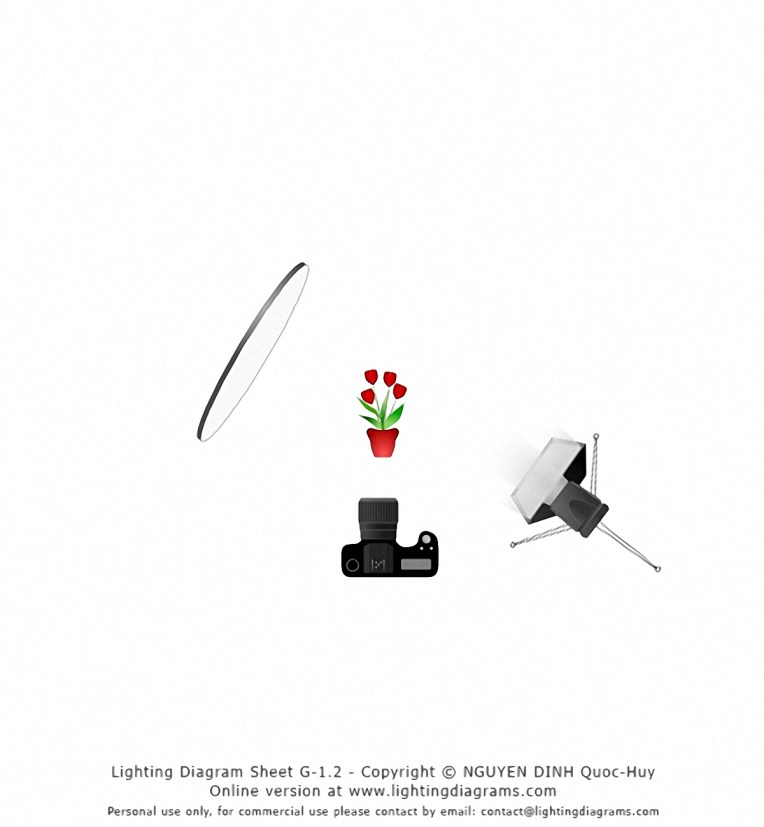
I approach photographing orchids as I would shooting a person’s portrait – using off camera flash and reflectors to fill shadows, separate from the background, bring out the shape and textures. Too many botanic studies show indistinct photos where the subject does not fill the frame and the background is intrusive. To that end I use a macro lens of around 100 -120mm (35mm equivalent). It’s not because I’m necessarily shooting at a 1:1 ratio, it’s just because I’ve found there are very few zoom lens that focus close enough and have a fast aperture to allow control of depth of field.I used to use a Canon DSLR with a Canon EF 100mm f2.8 IS L lens and carry around a Manfrotto 143 Magic Arm Kit to support the lights. I made a video about using that setup some 7 years ago and that can be seen just below. Since making that video I added a full frame 6d, the Canon macro lens, and extra light and a set of TTL wireless flash triggers and consequently found myself schlepping 10-12Kg of kit into the bush on longer and longer forays. Something had to give – and my back did! So fast forward 7 years and I’m now using an Olympus OMD EM1 mk ii with Olympus 60mm f2.8 macro lens. I’ve not given anything up in terms of image quality with this change because I’m generally working at a base ISO of 200 with lighting which means all the usual objections to m4/3 about excessive noise and poor dynamic range have been taken out of the equation. The Olympus 60mm f2.8 is easily the optical equal of Canon’s EF 100mm f2.8 IS macro L lens at less than 1/2 the price and about 1/3 of the weight. The Manfrotto Magic Arm got binned as it was very heavy at 2.7 Kg and replaced with a Manfrotto Table Top Tripod Kit 209, 492 Long which weighs 454g. As far as lighting goes I’m using a Metz 64AF – 1 and an Olympus FL-600R flash with small soft box, snoot and honeycomb grid. The only thing that I have given up is radio TTL triggers for the flash, I’m using a TTL flash sync cable at the moment. I prefer to use the Metz unit when doing a lot of high speed sync work as it is the more powerful of the two. This may change in the New Year, it may not.
Lighting diagram for my basic lighting of an orchid.
The FL-600R is a flash with a guide number of of 50 (ISO200/m). In addition, it comes with a LED lightt for use when shooting video.
Other things in the bag include an 80cm 5 in 1 reflector – I only use the white reflector as the silver is too strong, the gold too garish. Some times I use the diffuser over a plant to cut down on ambient light levels. A Vittorinox CyberTool L is there. It has a good selection of small screwdriver bits that can most screws on a camera body, a set of pliers, wood saw, metal saw and file and a host of other doodads. I once re-assembled my Voigtländer 35mm f2.5 Color-Skopar with it while in on holiday in Beijing. Water – this can be in a 1L bottle for shorter expeditions or a 3L water bladder for longer ones. Extra clothing if needed, sunscreen and insect repellent to avoid nasty encounters. Batteries for camera and flash. Wallet of memory cards. That’s it. The whole process is very simple.
Red Capped Robin, Petroica goodenovi, Avon Walk Trail, York, Western Australia. Panasonic G85 with Panasonic Leica 100-400mm f4-6.3 lens. Exposure: 1/500 sec, f6.3 at ISO 1000 with -2/3 stop exposure compensation.
Tomorrow here in Western Australia is the first day of spring. I don’t think Mother Nature got the memo as the bush around York sprung into life a couple of weeks ago. Flowers are bursting into bloom and the birds are in a frenzy of nest building and dancing around trying to attract mates. This means that I have also sprung into action trying to document as much of thais activity as possible. The cameras are working over time.
The unusual lutea or “yellow” form of the common donkey orchid (Diuris corymbosa). Talbot Hall, Western Australia. Canon EOS 6d with Canon EF 100mm f2.8 IS L macro lens. Exposure: 1/800 sec, f8 at ISO 400.
Green Spider Orchid, also known as the Fringed Mantis Orchid (Caladenia falcata). Talbot Hall, Western Australia. Canon EOS 6d with Canon EF100mm f/2.8L Macro IS USM lens. Exposure: 1/160 sec, f5.6 at ISO 400.
White Spider Orchids, Caladenia longicauda, Wambyn Reserve, Western Australia. Canon EOS 6D with Canon EF100mm f/2.8L Macro IS USM lens. Exposure: aperture priority with off camera flash 1/50 sec, f11 at ISO 100 with -1 stop exposure compensation.
Winter Donkey Orchid, Diuris brumalis, Wambyn Reserve, Western Australia. Canon EOS 6d with Canon EF100mm f/2.8L Macro IS USM lens. Exposure: 1/25 sec, f8 at ISO 100.
Brown Honeyeater, Lichmera indistincta, Avon Walk Trail, York, Western Australia. Panasonic G85 with Panasonic LEICA DG 100-400/F4.0-6.3 lens. Exposure: 1/500 sec, f13 at ISO 200 with -2/3 stop exposure compensation.
Female Western Whistler, Pachycephala occidentalis,, Avon Walk Trail, York, Western Australia. Panasonic G85 with Panasonic LEICA DG 100-400/F4.0-6.3 lens. Exposure: 1/500 sec, f11 at ISO 200.
The Sigma 150-600mm f5-6.3 DG OS Contemporary lens is part of Sigma’s Global Vision line of lenses. It offers an inexpensive way of getting into wildlife photography.
Not so long ago I looked at the the Panasonic Leica DG Vario-Elmar 100-400 f4-6.3 ASPH Power OIS lens for micro four thirds, well today I’m looking at an alternative lens for APS and full frame cameras – the Sigma 150-600mm f5-6.3 DG OS Contemporary lens. Now confusingly Sigma make two versions of the 150-600 and they are labelled the Sport and Contemporary. The-Digital-Picture.com has put up a good article explaining the difference between the two. The main ones are price and weight with the Contemporary being a 1Kg lighter and $1200 AUD cheaper. This is quite a significant difference and I for one prefer a lighter lens and a heavier wallet. The Contemporary is part of Sigma’s Global Vision line of lenses and is thus compatible with the Sigma TC-1401 1.4x Teleconverter which allows auto focus to work to a maximum of f8 while wide open if your camera supports this feature. This is an interesting option as it allows a reach of 860mm on full frame and a humongous 1376mm on an APSC sensor which is impressive reach for a lens and converter costing less than $2000 AUD. I didn’t happen to look at this option because none of my Canon DSLRs allow f8 auto focusing. shuttermuse.com has an article on f8 focusing with extenders or teleconverters and a list of compatible Canon DSLRs. This does not apply to the mirrorless R and RP which have f11 auto focusing.
Lens mounts available
Canon EF
Nikon F
Sigma SA
Focal length
150-600mm
Angle of view
4.1° – 16.4°
Aperture range
f5/6.3 to f22/27
Filter size
95mm
Minimum focusing distance
2.8 metres
Maximum magnification
1:4.9
Focusing
Silent HSM with internal focusing and manual override
Aperture blades
9
Lens construction
20 elements in 14 groups with 1 FLD and 3 SLD elements
Image stabilisation
Yes – 3 stops equivalent
Length
26cm
Diameter
10.5cm
Weight
1.93Kg without lens hood and tripod collar.
Fully extended to the 600mm focal length the lens is a beast. There is no sign of any wobble in the zoom extension.
Physically this is a large lens, it stands head and shoulders above my Canon 70-200mm f2.8 IS L lens which in itself quite a large lens. The 150-600 is also 500g heavier. At 2.1 Kg with lens hood and tripod collar attached it definitely has heft to it. Interestingly Sigma refer to it as a lightweight lens, I suppose it’s all a matter of perspective as the Panasonic Leica 100-400 is 0.985 Kg so the Sigma feels gargantuan compared to it while the Canon EF 600 mm f4L IS is over 3Kg so the Sigma then seems svelte and compact. The lens body is made out of what Sigma calls a Thermally Stable Composite (TSC) which is substantially stronger than conventional polycarbonates while having similar thermal expansion properties to aluminium. The lens mount is made of chromium plated brass which should ensure a long life. All in all it feels a well made and rugged lens, it may feel like plastic but the TSC body feels substantial and gives the impression of being very durable with no creaking or flexing. The Sigma 150-600 is advertised as being dust and splash proof but on closer reading of Sigma’s spec sheet there is only one seal and that is at the lens mount. If you want better then you’ll have to spring for the Sports version.
The Canon EF lens mount is made of chromium plated brass.
When looking at the lens from the front there is a large ribbed rubber zoom ring that has a long throw of about 160º. The action is smooth and feels not too tight nor too loose. As you rotate the zoom ring the lens barrel extends by 8cm. The extension feels secure with no slop or wobble. Just behind the zoom ring on the lefthand side is a zoom lock switch which can lock the zoom ring at the 150mm focal length to prevent zoom creep while carrying the lens. The focusing ring is narrow ribbed rubber and allows you to manually adjust focus while the lens is in the autofocus mode. There are no hard stops which might concern you if you were to use the lens for video. Behind the focusing ring is a panel of four switches and they are:
An AF switch allowing to choose between AF, MF and MO (Manual Override)
A focus limiter switch allowing a choice of full range, 10m to ∞, and 2.8 to 10m.
An optical stabilisation switch that gives a choice of off, on and a panning mode.
A custom switch that allows you to select two custom modes that can be programmed using the Sigma FD-11 USB Dock
There are three switches on the lens barrel. One fotr focus modes, the second a focus limiter and the third is for the optical stabilisation.
The focus distance scale is behind a window just below the the focus ring.
Above the switches is a window showing the focusing scale and then behind that is the lens collar. The lens collar allows you to turn the camera from horizontal to vertical while mounted on a tripod, but, unfortunately there are no detents to allow you to do this while looking through the viewfinder of the camera, you have to align the marks on the collar with those on the lens body. The tripod collar can be detached and thoughtfully Sigma provide a cosmetic rubber ring to slide over the lugs that hold the collar in place. The lens comes with a large plastic lens hood the size of a flower pot, it seems sturdy enough and bayonets into place and a nice touch is that is ribbed internally to prevent reflections. The 150-600 has a 95mm filter thread which means filters will be expensive and potentially hard to get. In terms of accessories Sigma provide a nice well padded lens case, a shoulder strap for it and a Sigma branded camera strap. Like all Sigma lenses you get a lot for the money you spend. Nice one Sigma!
The 150-600 has a 95mm filter thread which means filters will be the size of dinner plates, be expensive and potentially hard to get.
I tested the lens on a Canon EOS 6d and an EOS 550d to see how it would perform on both crop and full frame cameras. In terms of AF performance as neither of those cameras have what can be considered state of the art AF systems, in fact it is over twelve years old, the lens did very well. The single point AF using the centre point was fast and precise and well capable of fixing on small birds amongst foliage. In terms of continuous AF on the EOS 550d the camera was the limitation being only able to shoot 6 frame bursts in RAW, but out of my six shots when tracking my dog trotting five of the six would be in focus. The 6d is able to shoot 4.5 frames per second for 15 frames and on the trotting bull terrier test it managed 12 frames in focus.
This slideshow requires JavaScript.
When it came to BIF (birds in flight not fisticuffs) the AF was more than capable of focusing on and tracking medium to large birds. It really struggled with small birds especially swallows. Put it on a better camera and I’m sure you’d get better results.
Australian white ibis, Threskiornis molucca, Herdsman Lake, Western Australia.
My primary use for a lens like this is handheld bird photography, and as such I didn’t really give the image stabilisation a workout as I seldom use a shutter speed below 1/500 sec. But messing around at home in the house and garden I figured it was good for three stops. Mind you I do have steady hands so your experience may differ from mine.
The optical construction of the lens is twenty elements in fourteen groups with 1 FLD and 3 SLD elements. The FLD (“F” Low Dispersion) glass element, which offers performance equivalent to fluorite. Canon and other manufacturers have used synthetically grown crystals of calcium fluoride components in lenses to aid apochromatic design, and to reduce light dispersion so lenses made from it exhibit less chromatic aberration. What Sigma has done is use newer glasses and computer-aided design to render the use of fluorite crystals unnecessary. Sigma claim that the FLD element is “highly transparent, its refractive index and dispersion are extremely low as compared to conventional types of glass. It offers characteristics very similar to those of fluorite, which is valued for its anomalous dispersion. These characteristics minimize residual chromatic aberration (secondary spectrum), which cannot be corrected by ordinary optical glass, while helping to produce sharp, high-contrast images.” (https://sigmaphoto.com.au). The three SLD (Special Low Dispersion) glass elements also help to minimize chromatic aberration. To help achieve attractive out of focus transitions there are nine rounded aperture blades which should help achieve nice round bokeh balls when shooting specular highlights.
In terms of optical performance well I’ll deal with full frame and crop separately. First up using the lens on the crop framed 550d. At 150mm the centre of the lens wide open was sharp and contrasty and stayed A as such until f22 when it softened due to the effects of diffraction. At the edges the peak performance was attained at f11 and remained until f22 when it softened again. At 600mm the centre wide open was a little soft and lacking in contrast. This improved by f8 and then deteriorated at f22. The edges weren’t so good – wide open they were soft and lacking contrast and remained so until f22 when they got worse. As for vignetting well at the short end wide open it was apparent, about 1/2 to 1 stop and this disappeared by f8. It was the same story at the long end. Throughout the focal range there is slight pin cushion distortion and some chromatic aberration can also be seen. Open the files up in Lightroom and apply the lens profile and things improve nicely. On the full frame 6d the story is the same except for the vignetting which is naturally worse at around 1-1 1/2 stops which is totally understandable as you are using the whole frame rather than just the central part of the lens coverage.
100 % crop from the centre of a New Holland Honeyeater to show how detail is rendered by the Sigma 150-600mm f5-6.3 Contemporary lens.
What’s all this mean in real life. Well if we look at the image for the New Holland Honeyeater which I took at a distance of around 3.5 to 4 metres and then enlarge the section around the head you can see that there is nice feather detail and that the eye is sharper than a very sharp thing. To get much better you’d have to spend an awful lot of money and if we look at the Canon 600mm f4 lens I mentioned earlier that has an eye watering price of $18,500 AUD which is over 11 times the cost of the Sigma. Personally I know that if I plonked $18 K down on a lens I’d be heading for the divorce court which would make the Canon a doubly expensive lens. So for what it costs the Sigma is amazing value.
Below are some examples of bird photography shot with the lens on both a Canon EOS 6d and 550d.
Welcome Swallow, Hirundo neoxxena, Herdsman Lake, Western Australia. Canon 6d with Sigma 150-600mm Contemporary. Exposure: 1/500 sec, f7.1 at ISO 250.
Red capped robin, Petroica goodenovi, Avon Walk Trail, York, Western Australia. Canon 550d with Sigma 150-600mm Contemporary lens. Exposure: 1/500, f6.3 at ISO 160.
Chestnut-rumped Thornbill (Acanthiza uropygialis), York, Western Australia. canon 550d with Sigma 150-600mm Contemporary lens. Exposure: 1/1000 sec, f6.3 at ISO 320.
Mistletoebird, Dicaeum hirundinaceum. The Nyoongar name is Minnijit. York, Western Australia. Canon 6d with Sigma 150-600mm Contemporary lens. Exposure: 1/1000 sec, f8 at ISO 1600.
So would I recommend the lens? Yes without hesitation. It performs very well and is sold at a very good price and you can’t argue with that.
Been playing with a new lens – and so far I’ve been very impressed and it’s made me reconsider my camera system. I’ll put up a full report in the next week or two. Here are a couple of photos to whet your appetite.
Back lit bully. Frida modelling for a lens test.
Bully blast off! Frida helping test the auto focus capabilities of a new lens.
Both shots were taken with the Canon 6d, which continues to amaze me with its picture quality, and converted to monochrome in AlienSkin’s Exposure 4.
Splendid Fairy-wren, Malarus splendens subs splendens, out of the breeding period. Lake Leschenaultia, Western Australia. Canon EOS 6D with Sigma 150-600mm f/5-6.3 DG OS HSM Contemporary lens. Exposure: 1/1000sec, f6.3 at ISO 6400.
Sometimes I think that have got to be easier ways to enjoy birding and bird photography than dragging 3.5Kg of camera and lens quietly through the bush and trying to get a picture of something that is literally so flighty that the slightest sound sees your subject leave at a tremendous rate of knots.
Western Thornbill, Acanthiza inornata. Lake Leschenaultia, Western Australia. Canon EOS 6D with Sigma 150-600mm f/5-6.3 DG OS HSM Contemporary lens. Exposure: 1/1000 sec, f6.3 at ISO 1000.
Case in point. Not so long ago Beloved Significant Other (BSO) went for a trip to Lake Leschenaultia in Chidlow. I spent an age crawling around in the bush looking for a cooperative subject. In that time every small twig that I inadvertently trod on sounded like a thunder clap that sent all the wildlife scurrying for cover in a 5Km radius.
Silvereye, Zosterops lateralis. Lake Leschenaultia, Western Australia. Canon EOS 6D with a Sigma 150-600mm f/5-6.3 DG OS HSM Contemporary lens. Exposure: 1/1250 sec, f6.3 ISO 2500.
Even if you manage to creep up on a suitable subject you then have the problem of photographing something that is 5-10cm and hoping and twitching around like a meth user suffering from St Vitus’ dance while you are trying to track it and keep it in focus as it darts in and out of the foliage. So I’ve come up with an easier method. The BBQ. If you have BBQ in Australia every animal in the neighbourhood will be trying to relieve you of your food. The little buggers will climb into your lap and pose for photos if food is involved.
A picnic feast with the birds of lake Leschenaultia by Helen Amyes (aka BSO). Panasonic Lumix LX5. Exposure: 1/160 sec, f2.8 at ISO 80.





You must be logged in to post a comment.