Our poor old car started to sound as if it had a terminal condition. It produced an incredible range of noises from the engine and gearbox. With over 200,000 km on the clock it wasn’t surprising in someways. I took it into the mechanics and it came back with even more strange noises. So while we sorted out a replacement I’ve been somewhat grounded and most of the recent photography has taken place within the constrains of the garden. Most of it macro of various bugs that I’ve found, some of it shots of Bertie, our Miniature Bull Terrier puppy, as he plays. It’s been great fun.
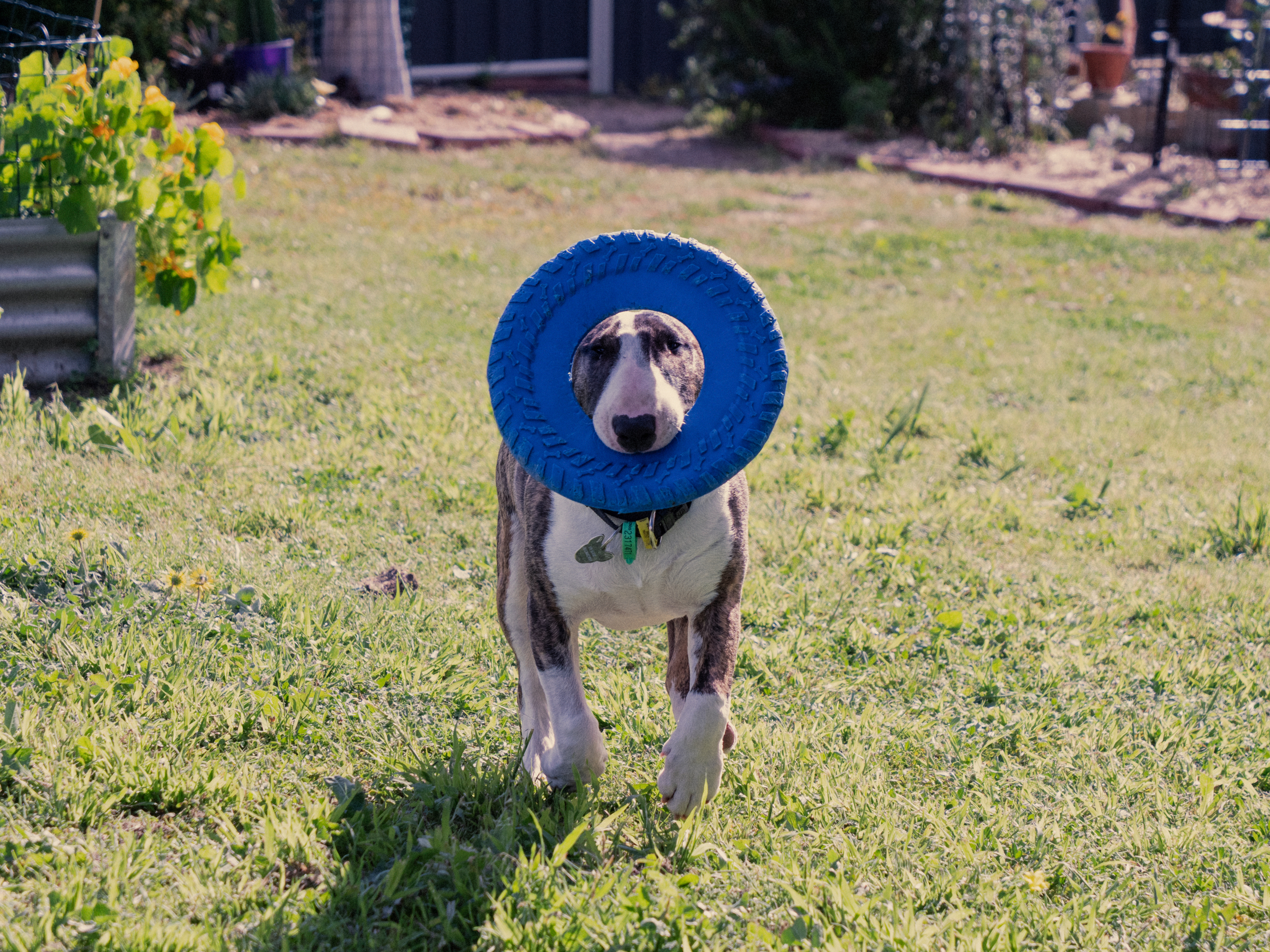
Bertie playing with his ring in the garden.
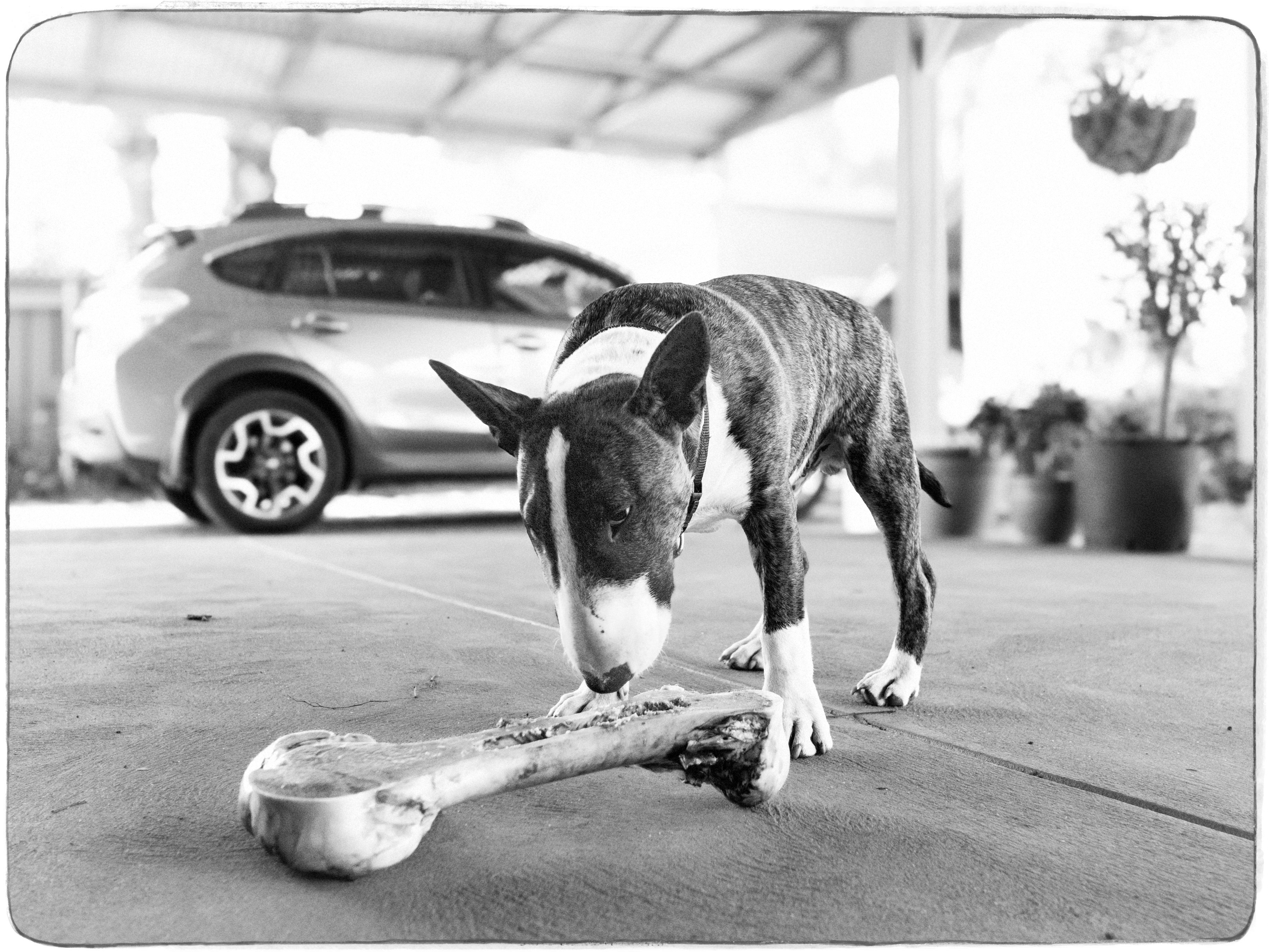
Bertie with his first marrow bone.
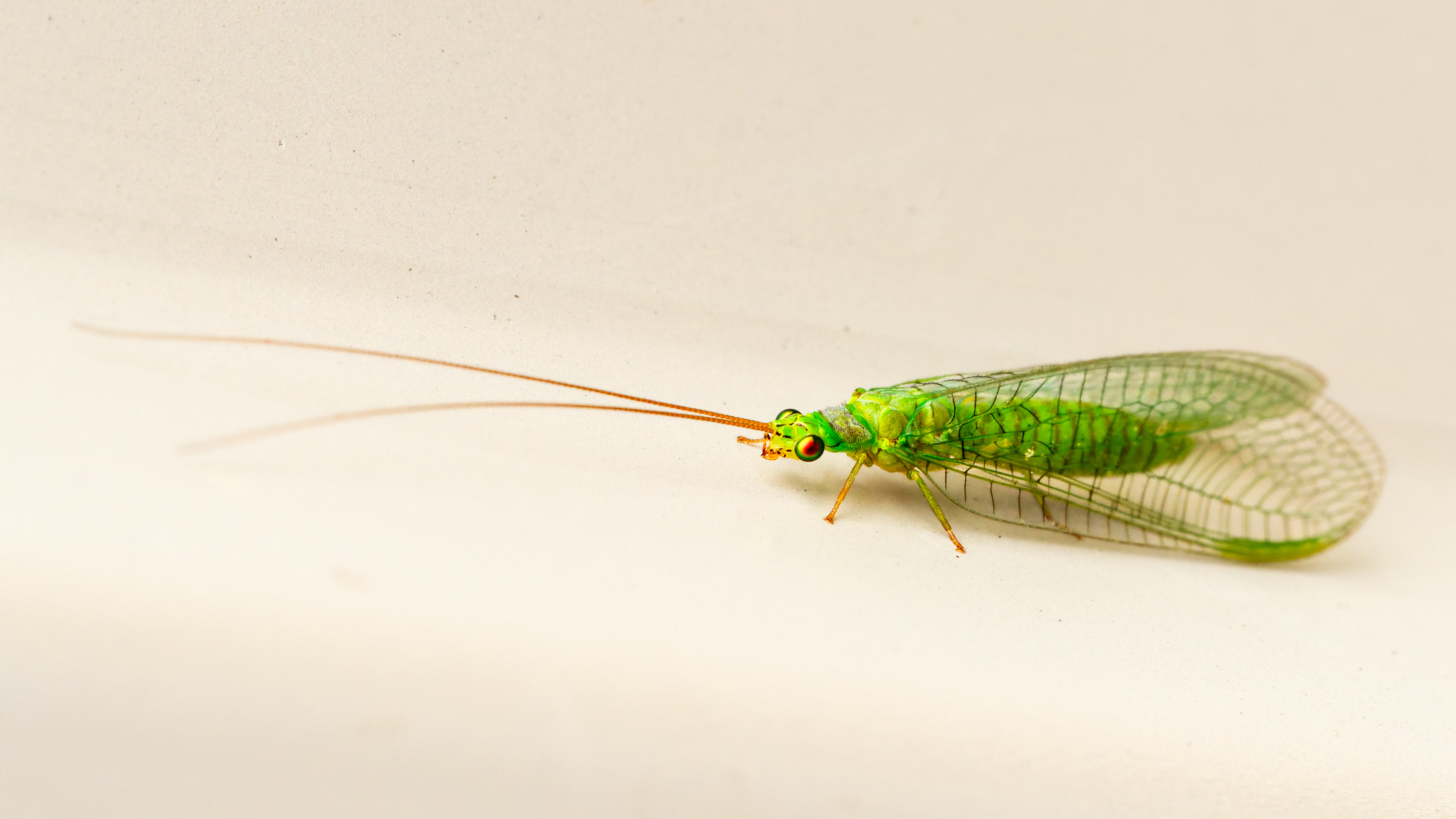
Green Lacewing, Mallada signatus. York, Western Australia.
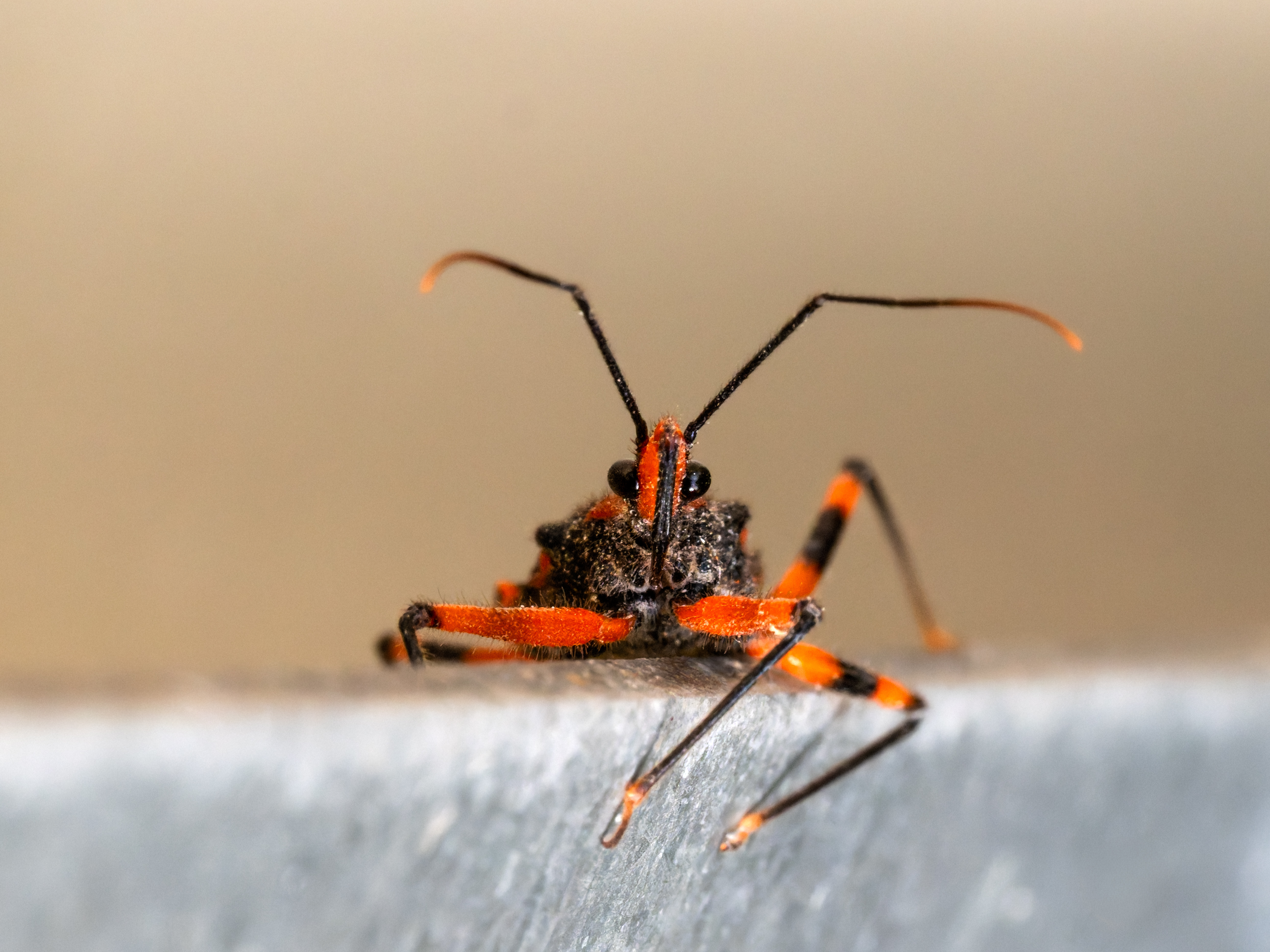
Red Tiger Assassin Bug, Havinthus rufovarius. York, Western Australia.
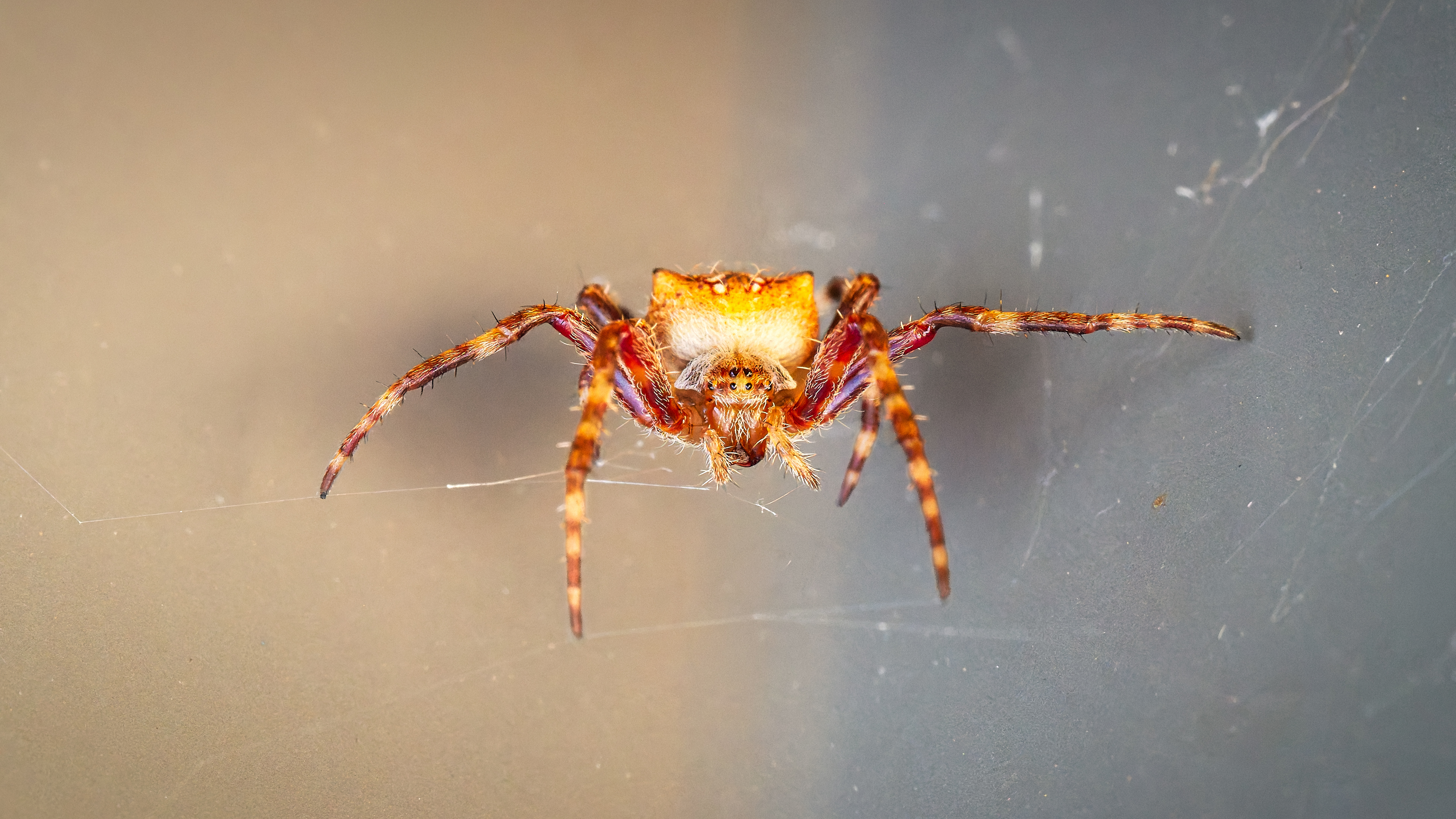
Dunno what sort of spider this is.
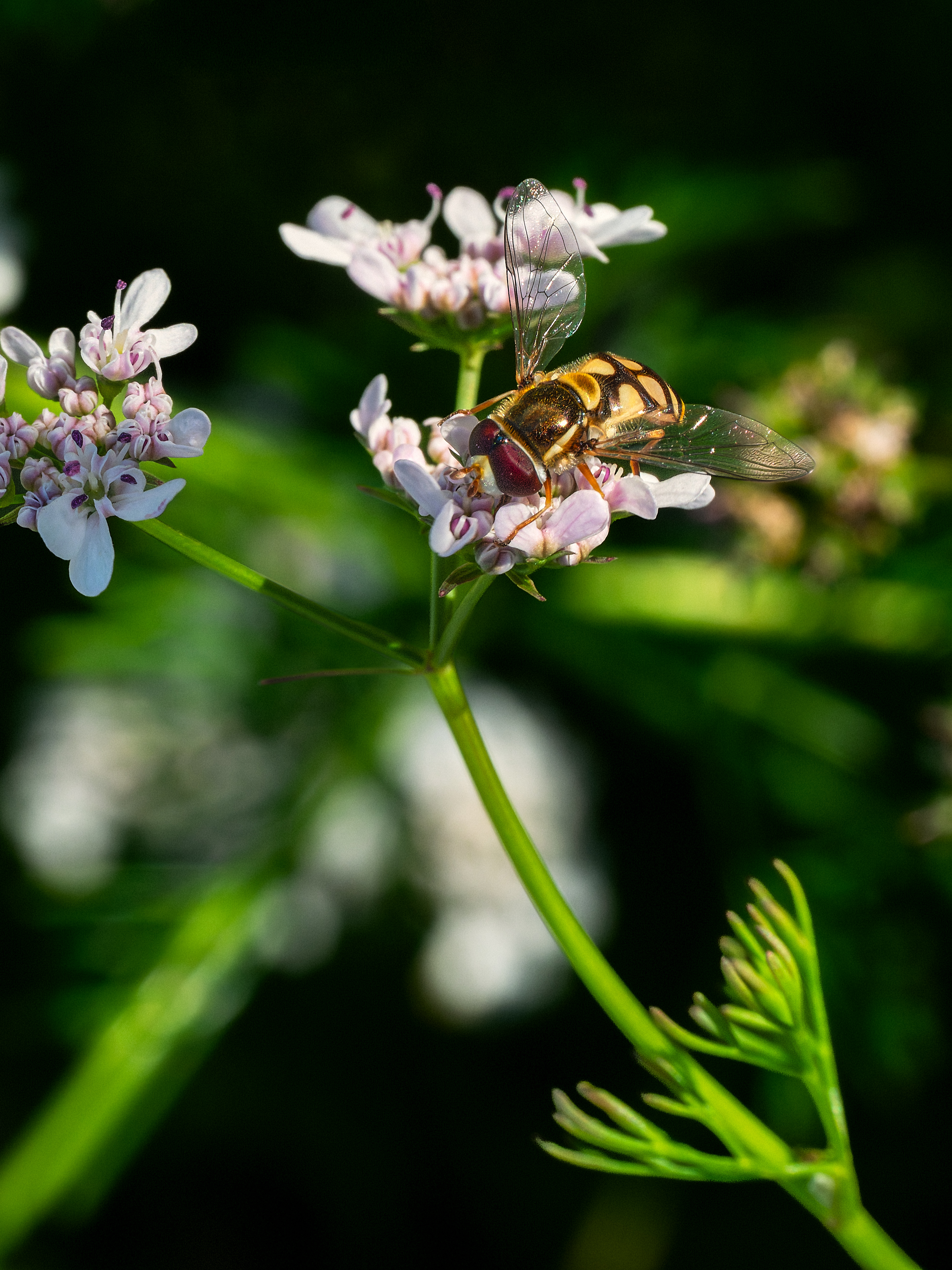
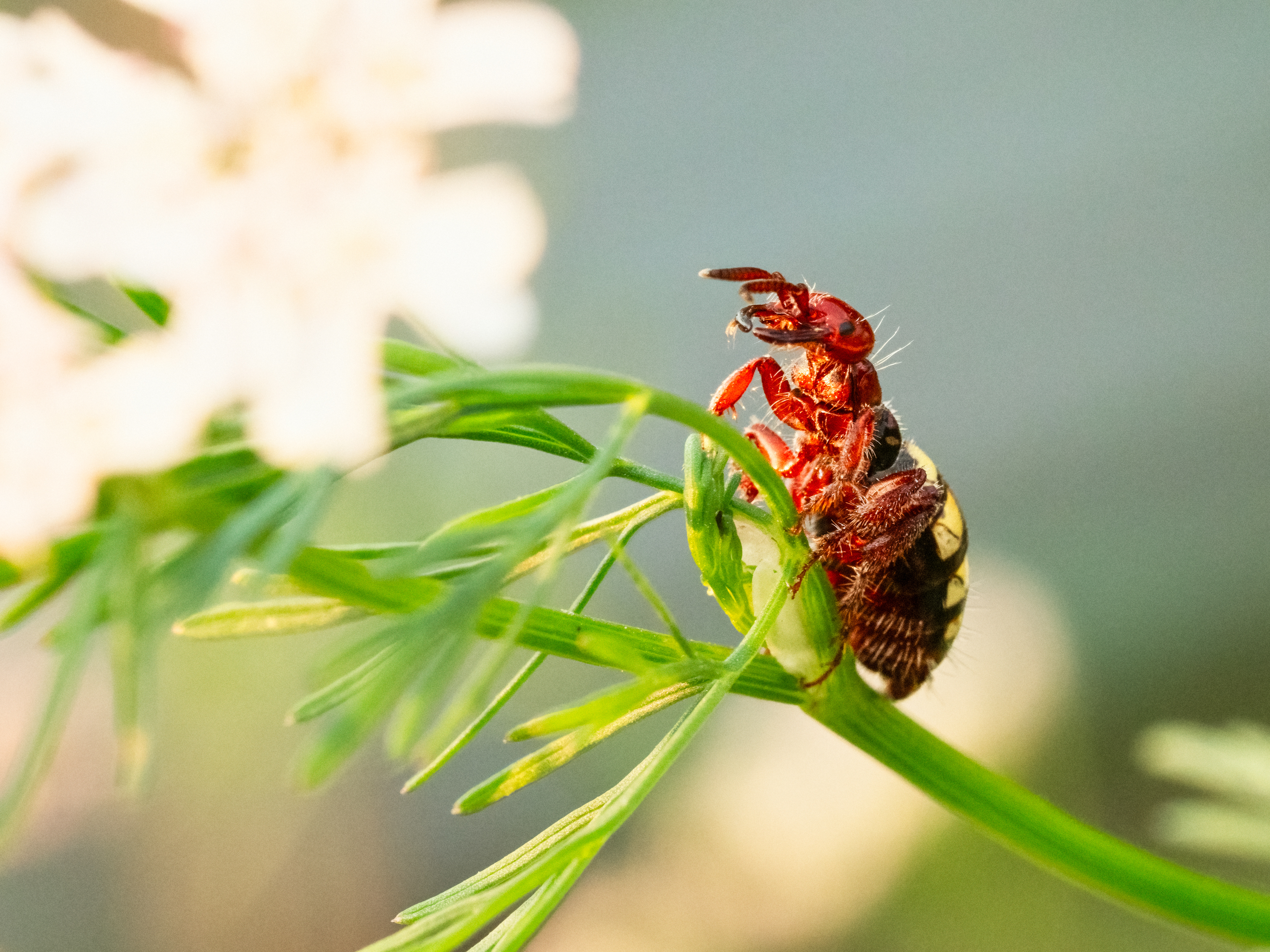
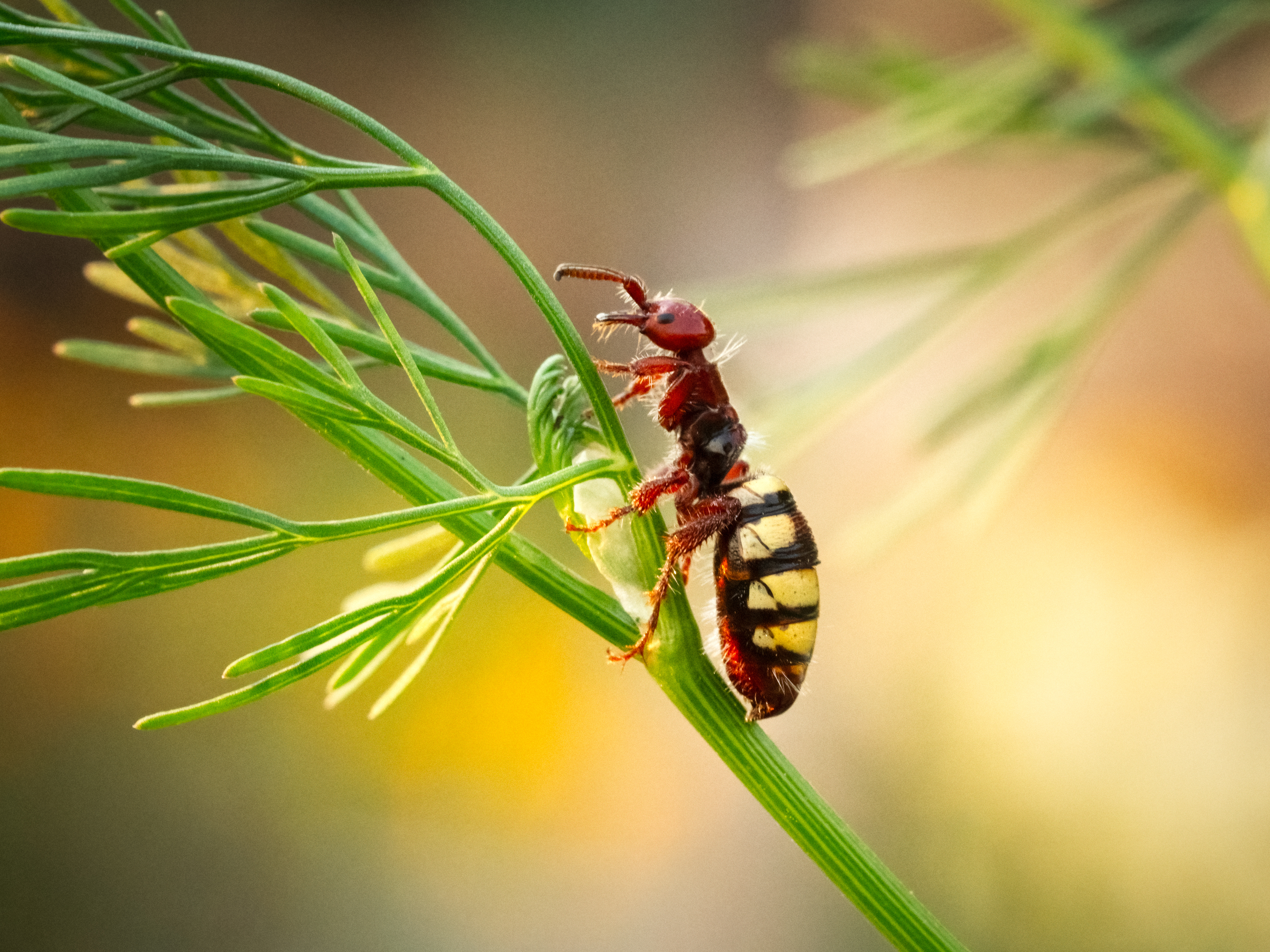
A male Yellow flower wasp feeding on the corriander.
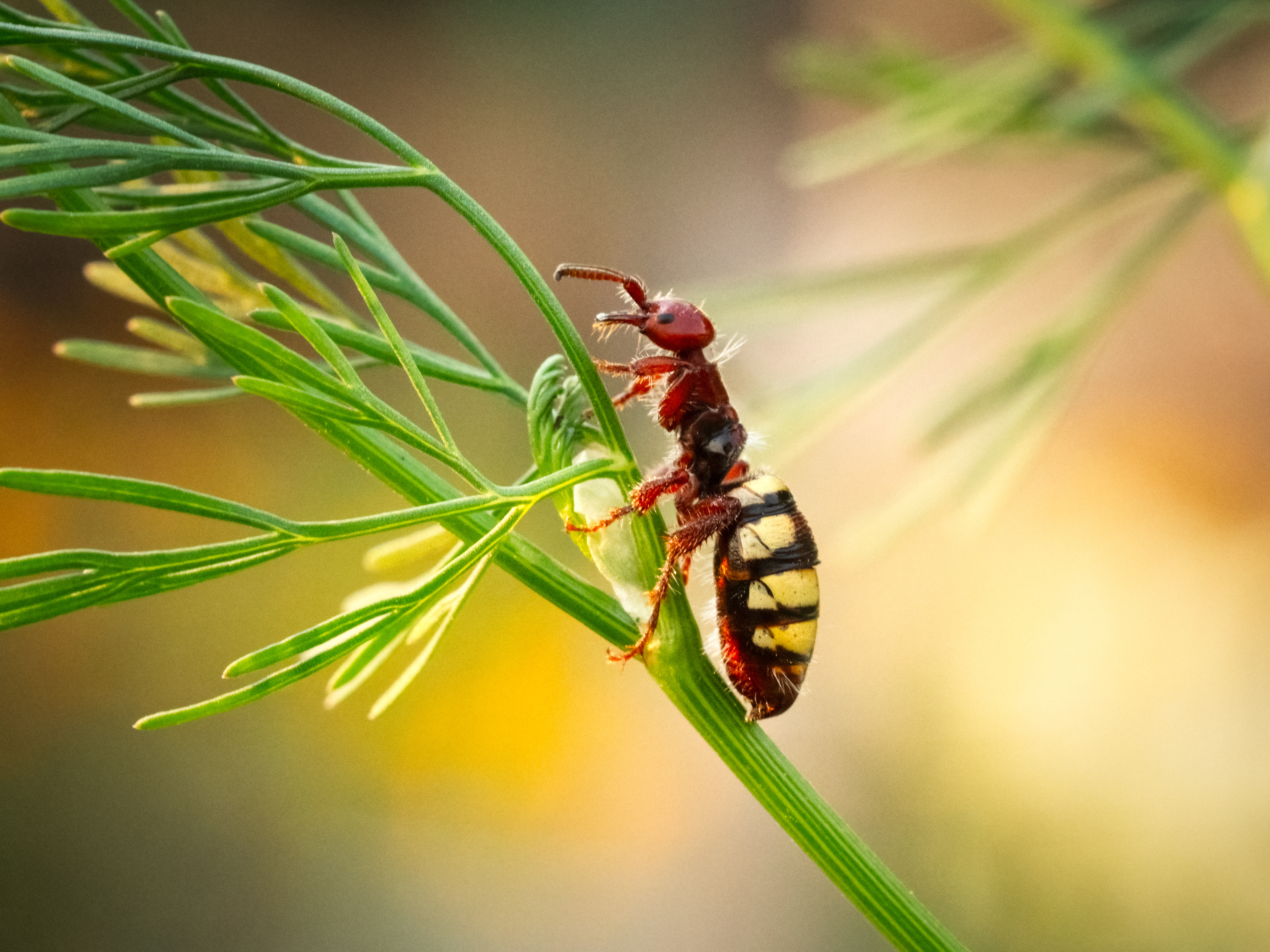
Last week I posted a photo of a mystery insect that I didn’t know what it was. Well it turns out it was a female Yellow Flower Wasp, which are flightless.
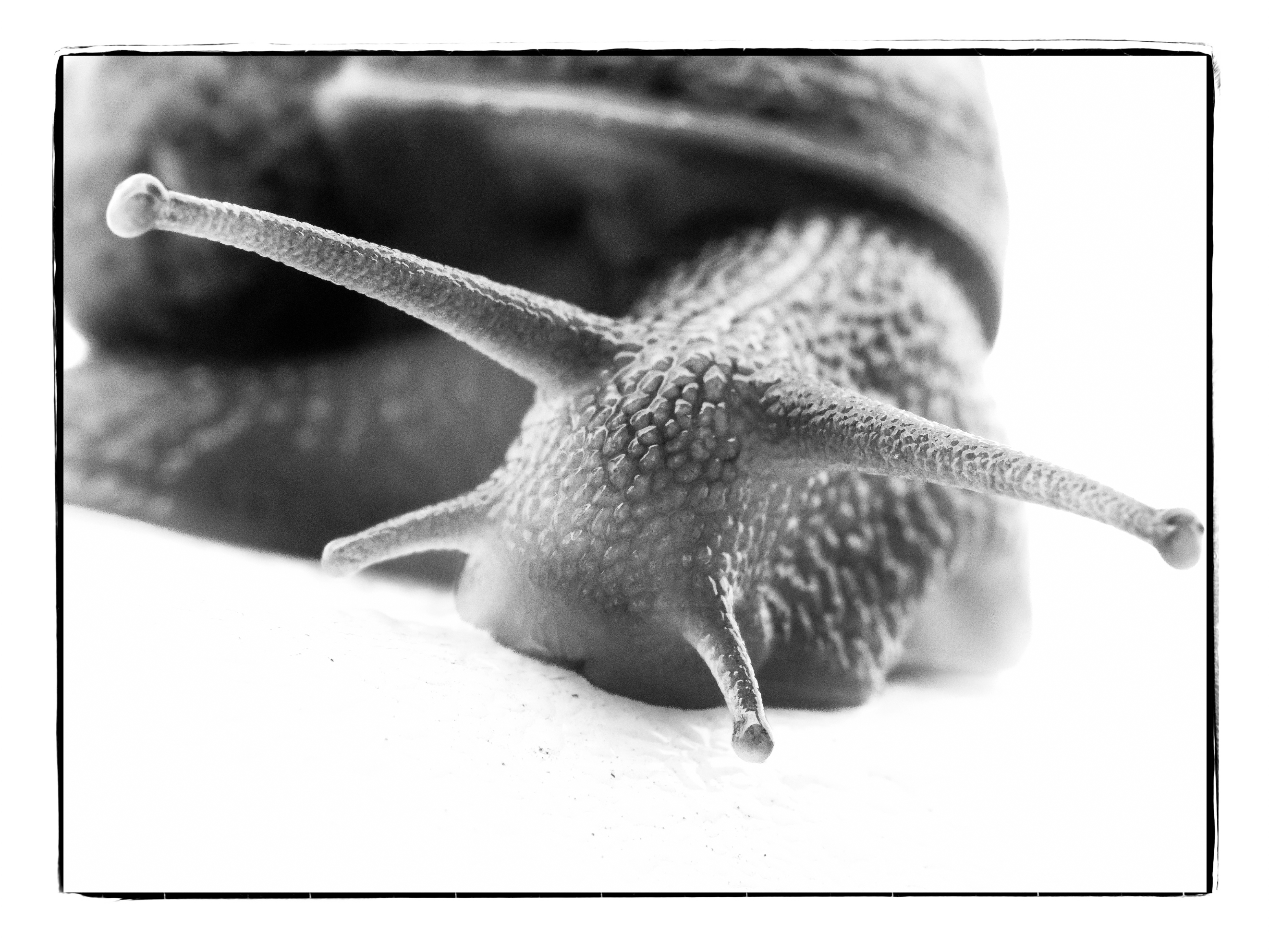
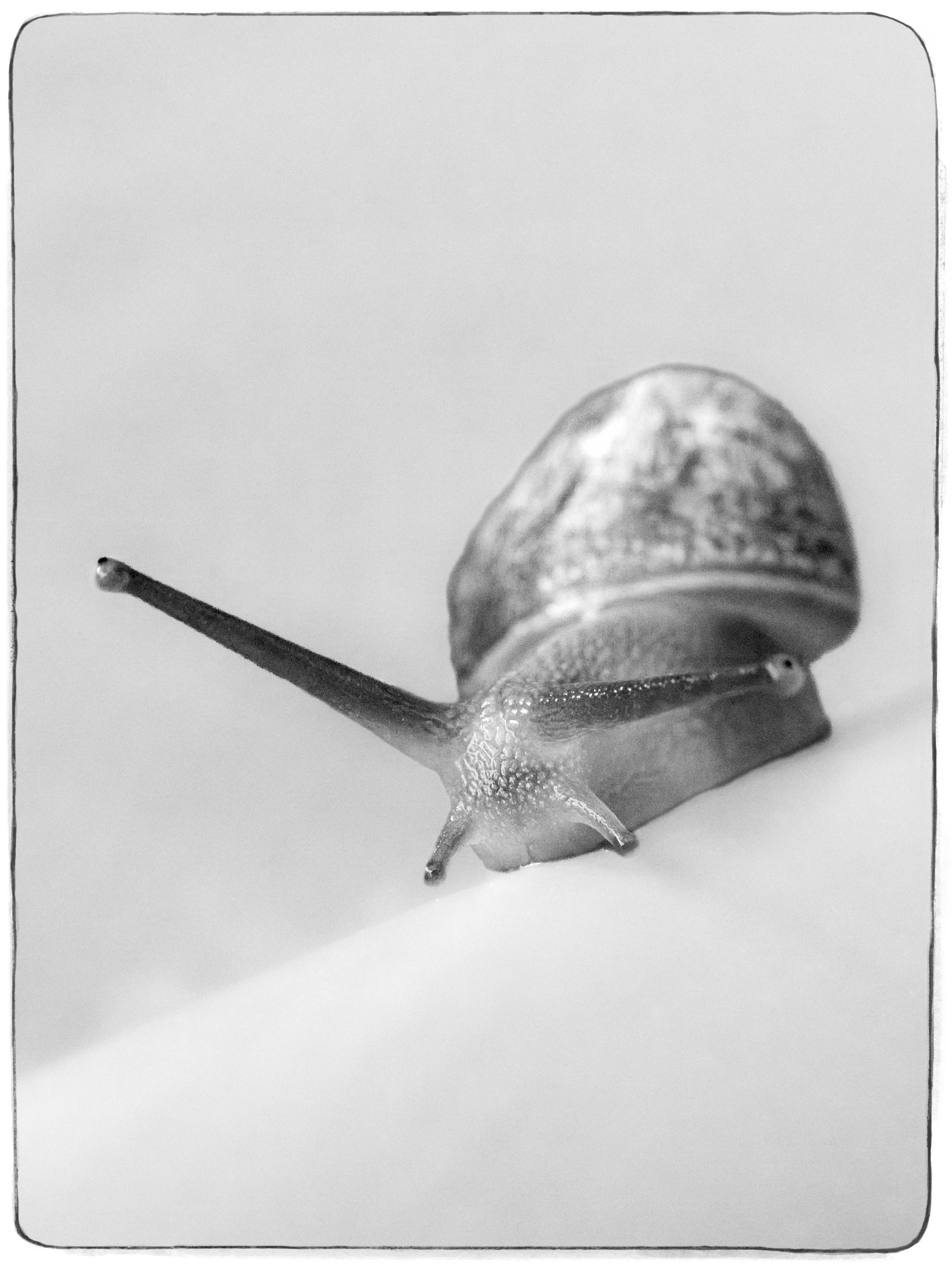
“Stay sill damn it!” Common garden snail, Cornu aspersum.
The recent orchid expeditionmade me get my macro lenses and flash out of the cupboard and consequently I’ve been playing around with it in the garden. I had this brilliant idea to improve my focus stacking technique by taking photos of snails. I mistakenly thought that they’d be a good subject as they don’t move much. I was very much mistaken. The little beggars move around quite a lot. The tentacles that their eyes are mounted on are in a constant state of motion and so my attempts at focus stacking failed. Not to be deterred I just stopped the lens down to f11 or f16 (well into diffraction territory on Micro Four Thirds) and just carried on taking picture of little critters in the garden.
Another fidgety snail.
The focus stack even failed on this. Dunno what I’m doing wrong.
Yikes! Don’t know what this was amongst the coriander.
Looks better in profile.
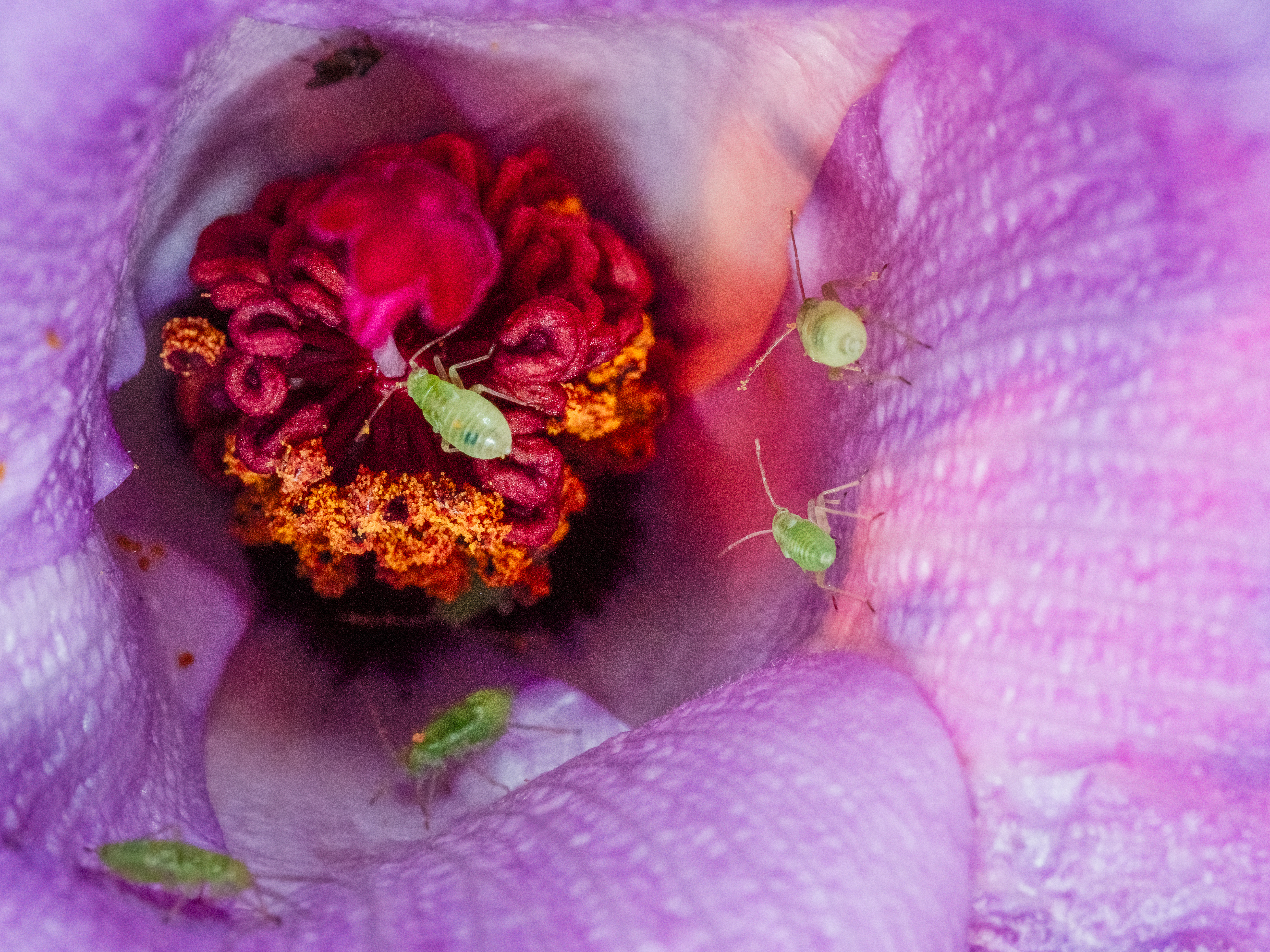
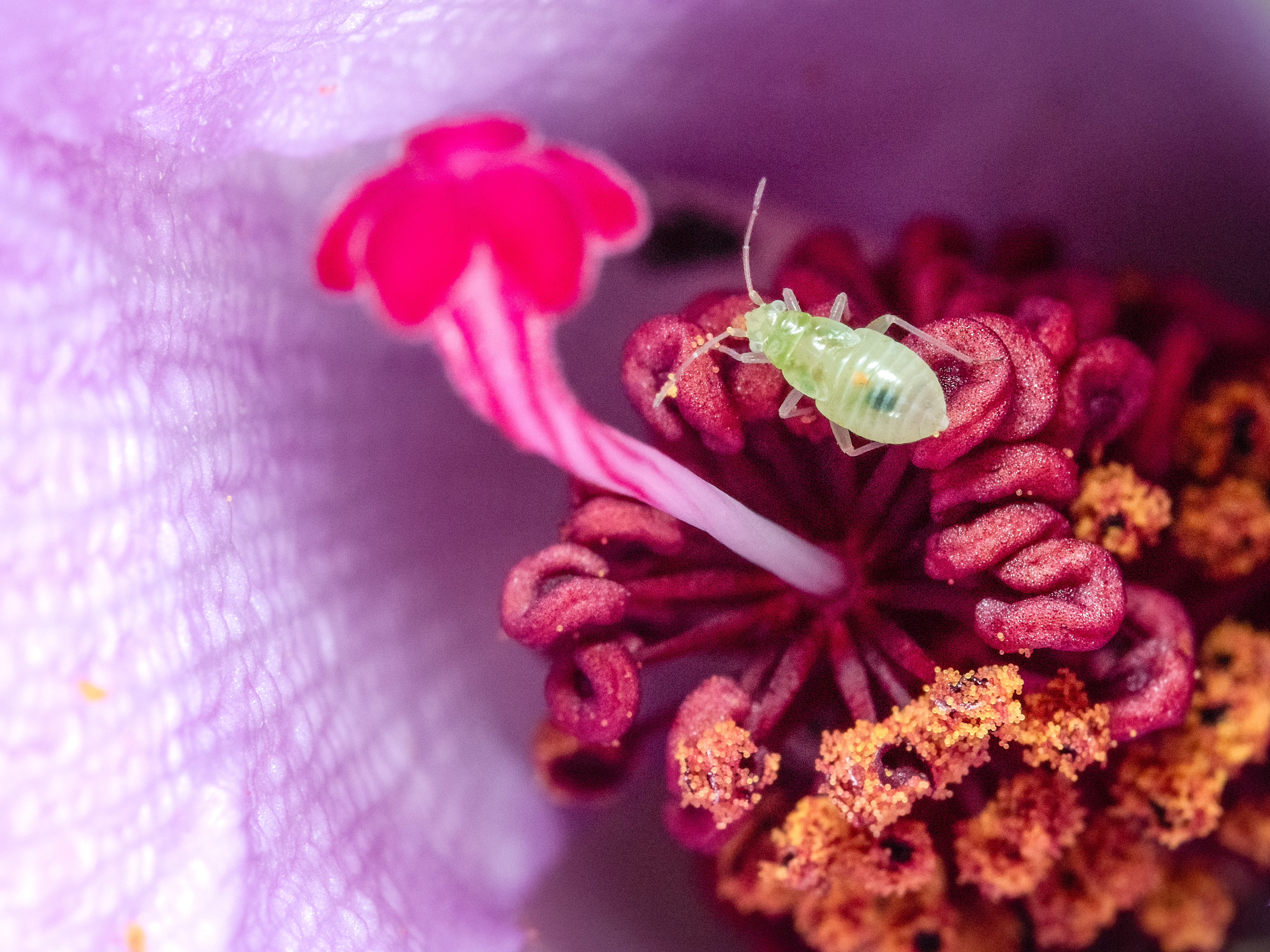
Oh dear! The Beloved Significant Other is not going to be happy with these aphids.
According to the Cambridge Dictionary to say someone is as “high as a kite” is to say they are either intoxicated or extremely happy. Currently I’m in the extremely happy category as we have been having regular visits from a juvenile Black-shouldered Kite. It spends mosts of its time perched on the TV aerial and can often be heard chattering away – sort of a cross between a chirp and a squawk. We had a bit of a mouse plague earlier and this bird is probably the result of that. Normally Black-shouldered kites breed only once a year in the period August to January, but when there is an abundance of food they will breed twice.
A juvenile Black Shouldered Kite, Boorh-ga in Nyoongar, perching on our TV areial. (Elanus axillaris). York, Western australia. Olympus EM1x with OM System 100-400mm lens.
The photos are the best I’ve managed to get so far, but the up the chuff view point (a bird photography technical term) is never a good look. I’ve seen it hunting over the open fields in front of us so hopefully I’ll manage to get some birds in flight shots soon.
One of the most common statements made on social media is “I’d like to photograph wildlife, but, there is none where I live”. In the next couple of posts I’d like to unpack this and suggest ways of finding wildlife in your location.
While Bertie can be pretty wild at times he is not wildlife.
Australia’s iconic Koala is an example of charismatic wildlife.
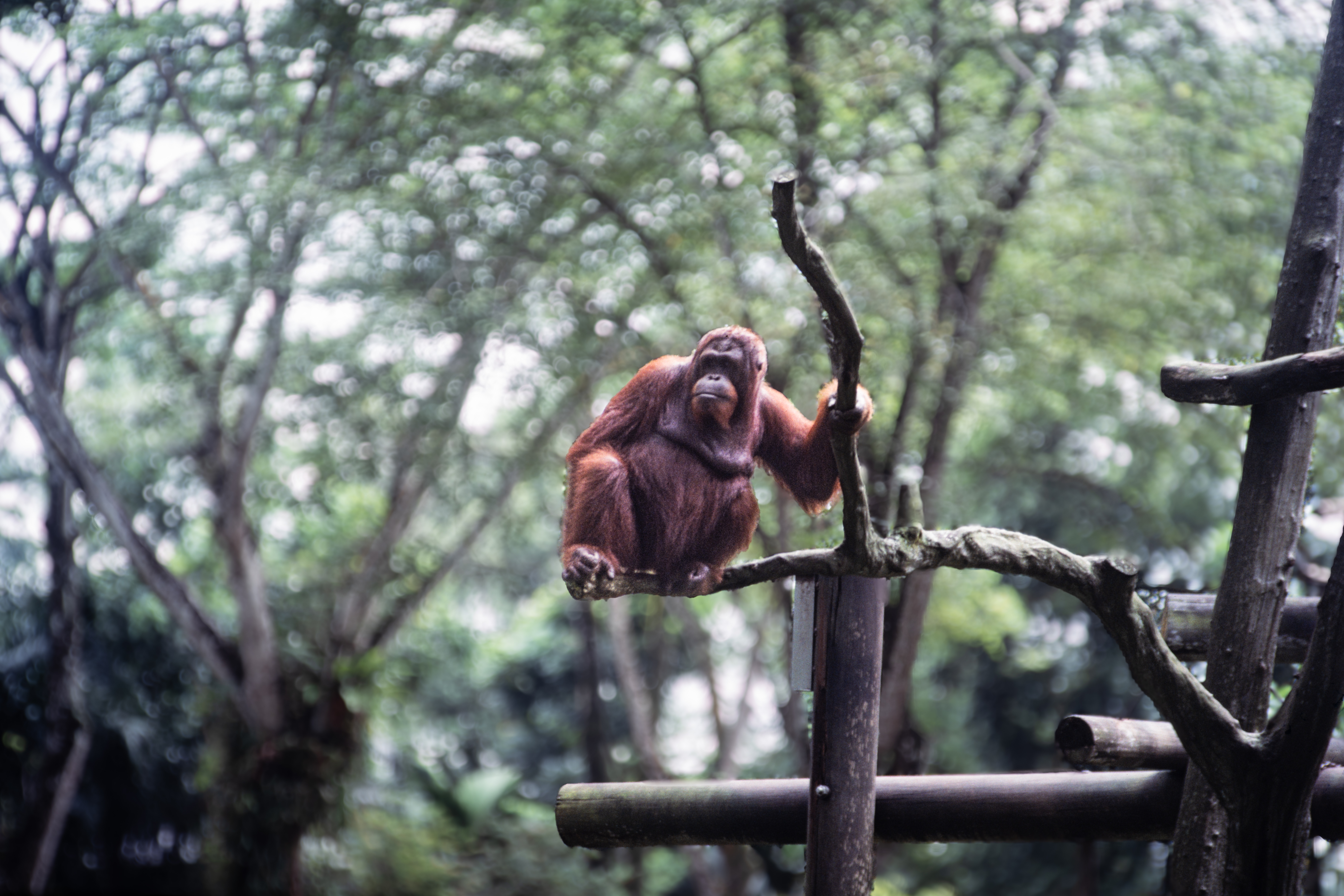
Orang-utans are another example.
Firstly we have to look at what people mean when they talk about wildlife. Wildlife is defined as undomesticated animals which can exist in their natural habitat, but has come to include all animals that live wild in an area without being introduced by humans. So that is a pretty broad definition and gives lots of scope. Having said that when most people talk of wildlife they tend to think only of certain charismatic species. Charismatic species are those animals which are visually appealing and generate public empathy to the extent that conservation groups and the media leverage those animals to the detriment of other species. The common features are that they are easily anthropomorphised, look cute, are large with big eyes, and they evoke strong positive emotions, making people want to protect them. Examples are giant pandas, gorillas, orang-utan, and koalas. The terms wildlife or wild animals cover a much broader range and includes animals rarely thought about.
Highly unlikely I’ll ever encounter a Polar Bear in the Wandoo National Park. Funnily enough I did photograph this one in Singapore which still seems highly unlikely.
We also have to take into account your location. In my case walking around my local national park expecting to photograph polar bears is delusional. To start any photographic project or endeavour you will have more success if you have accessibility, time, and certain equipment. The equipment side is the easy part of the equation and you don’t need vast sums of money and I’ve written about how to go about wildlife photography on a budget previously.
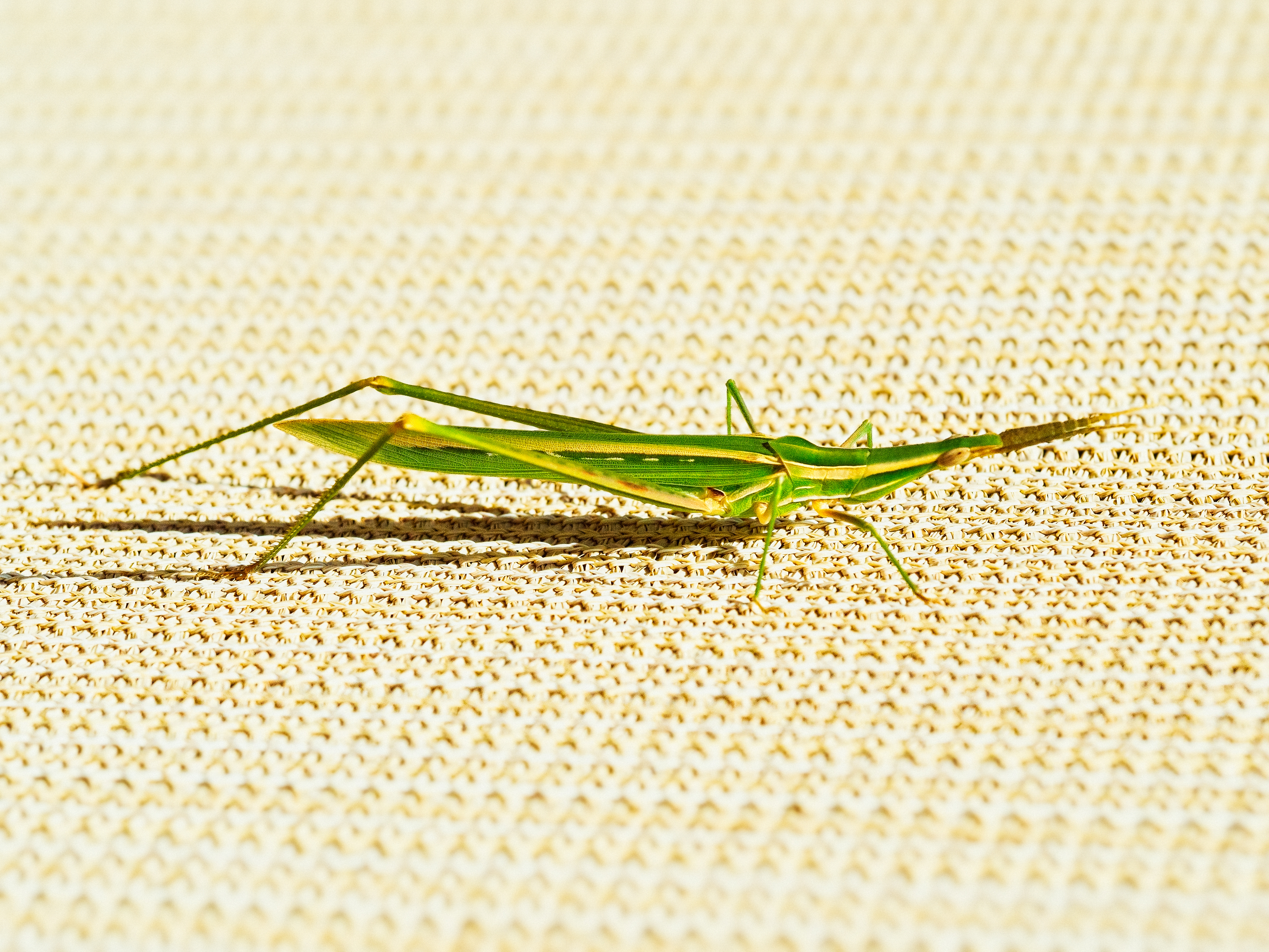
This Giant Green Slantface Grasshopper (Acrida conica) is not what comes to most people’s minds when thinking about wildlife.
The same could be said of this Blackbarred Mantis (Mantis octospilota).
At this stage it is time to think about what you want to photograph. Most people decide to photograph birds as that is what most comes to mind when talking about garden wildlife. I’ve known a couple of people who have decided to photograph in invertebrates they find in their garden. I’ve seen YouTube videos where people have hedgehogs or foxes come to their garden and they’ve gone out to take pictures of them as their main subject. We have resident frogs and bob tailed lizards in the garden and have had goannas and gwardars come visit. I think the neighbours chickens attract them.
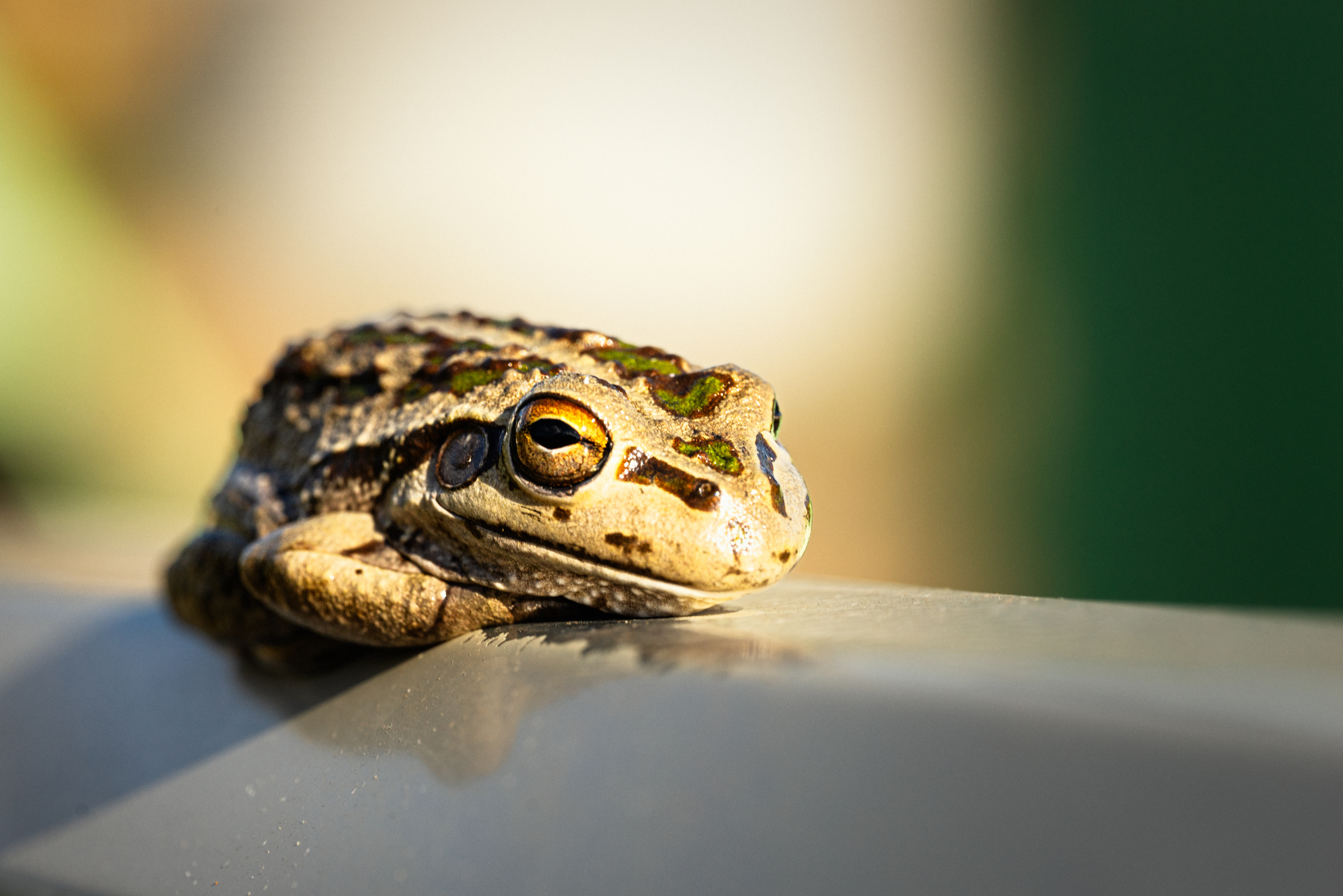
Motor Bike Frog [Litoria moorei (Copland 1957)]. Usually heard rather than seen.
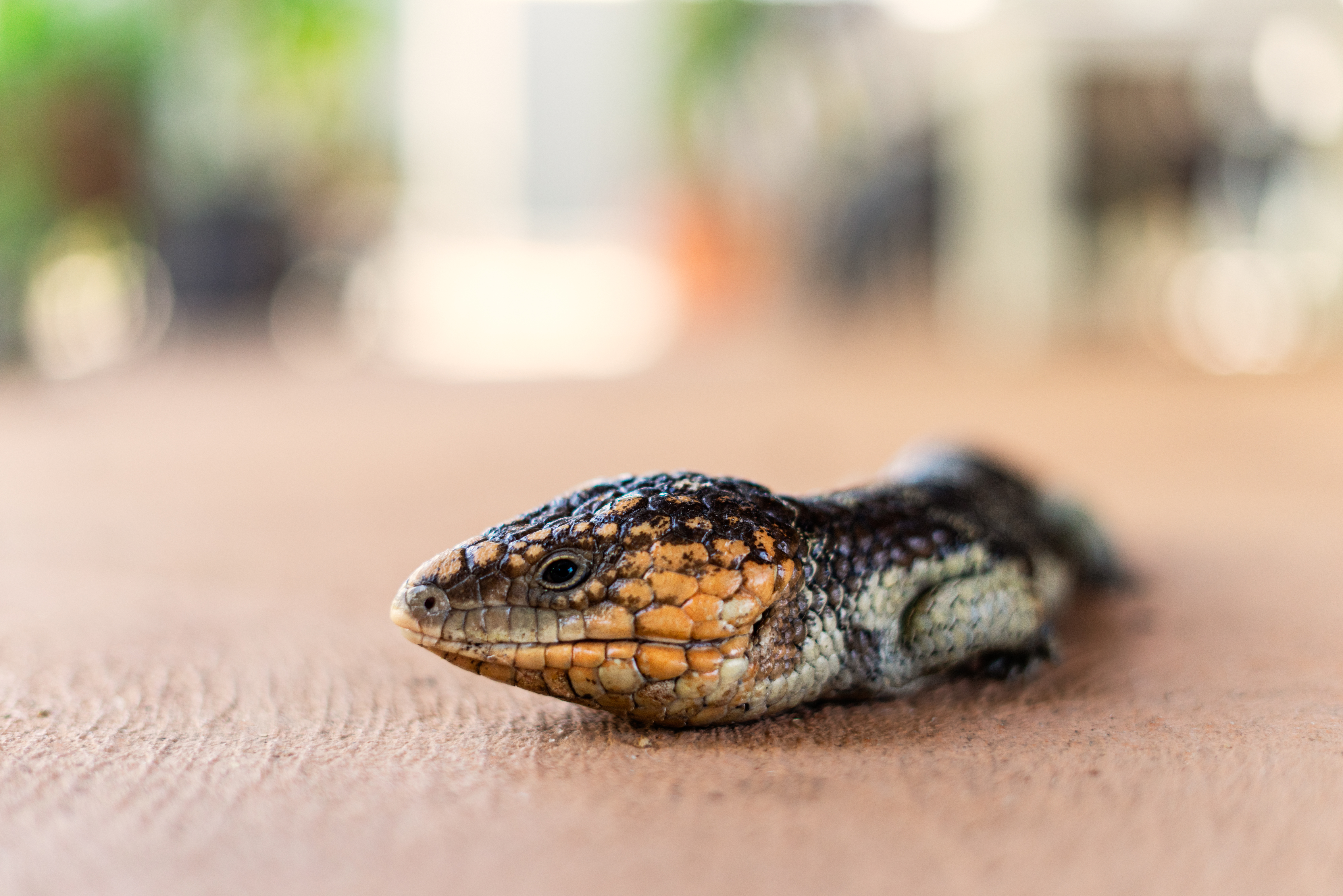
Big Bob the Bob Tailed Lizard (Tiliqua rugosa) on the prowl on the back patio.
My first forays into wildlife photography were in the garden and I think this is one of the best places to start because you have access and can observe what is happening through out the day and all through the seasons. Also if it is your garden to can modify or make alterations to attract more animals. I realise that not everyone has this luxury, but I do believe that with a bit of planning and a small amount of expenditure you can bring in animals. For those who don’t have the privilege then perhaps you have some access to some communal areas or have a friend or relative that would let you use theirs. So what do you need to do do? Well I can’t be very specific as my experience is in the Wheatbelt of Western Australia which is probably very different to where you live. But the basic principal is that all animals need three things. Food, water and shelter. So if can provide those you’ll get wildlife. For more detailed information the following links will help you:-
Inevitably the question of feeding wild birds comes up. Here in Western Australia it is illegal to feed native wildlife, including all native birds, without a license or lawful authority. Having said that around 30-50% of households do. The silly thing is you can walk into just about any supermarket and buy products for that explicit purpose. I suppose if you are going to do this do it so it benefits the animals in the long term. Give appropriate healthy food in small quantities so that they don’t become dependent on human handouts. In Western Australia with our long hot summers the best thing you can provide is water and plant native species that can provide food and shelter. Along with water we just put out seed which attracts Ring Necked Parrots, Galahs, Zebra Finches and laughing doves.
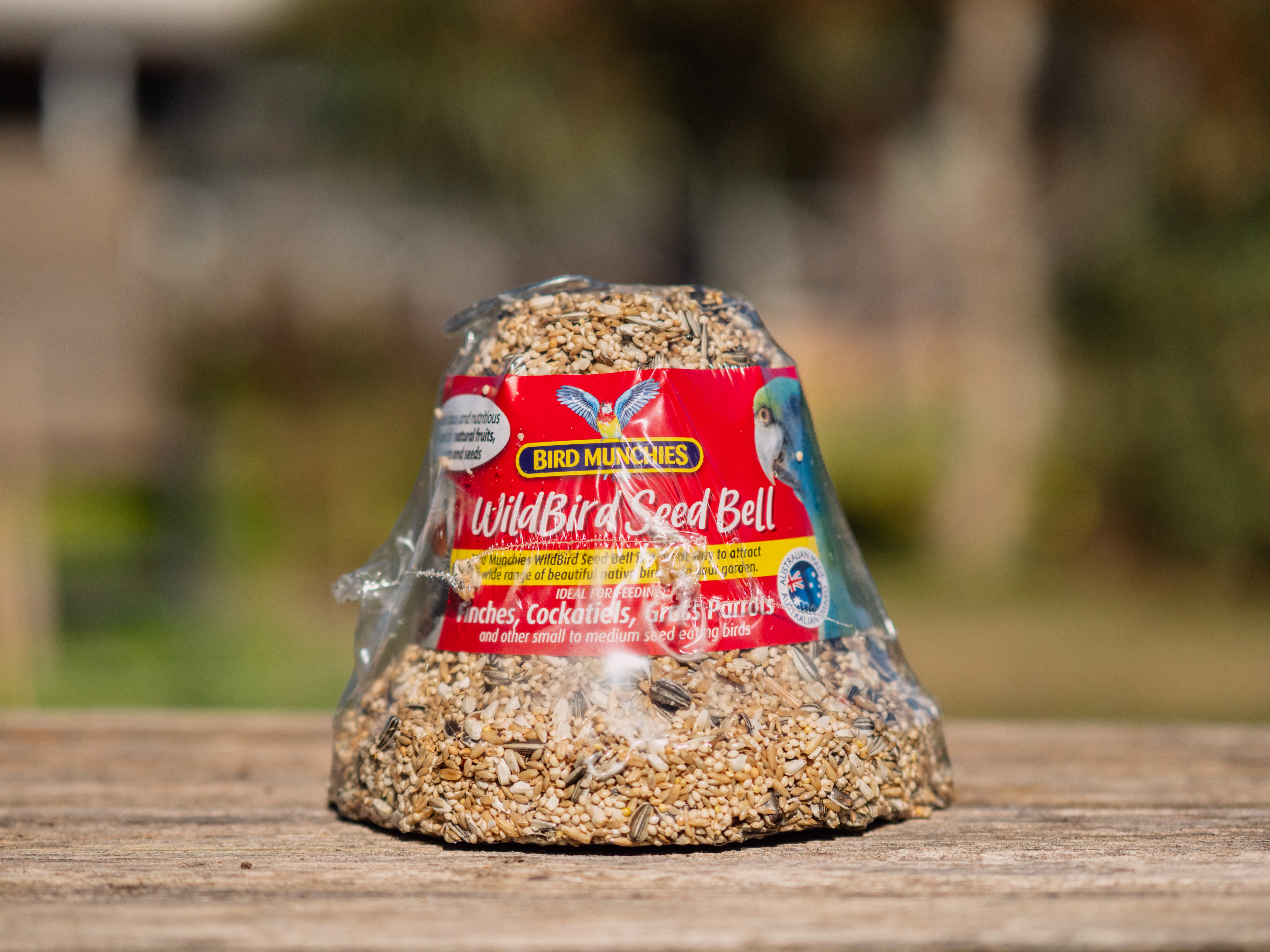
Although it is illegal to feed wildlife in Western Australia our local supermarket does a roaring trade in these seed bells.
Australian Ringneck or Ring-necked Parrot (Barnardius zonarius subspecies semitorquatus) making free use of the seed bell.
Don’t expect instant results. It can take a little time before the local wildlife population realises that you’ve put out food and water. Put the food and water out where there is cover not in the middle of a wide open space. Also think about what you’re trying to attract – it maybe necessary to provide sources at ground level if you want to see things like frogs and lizards.
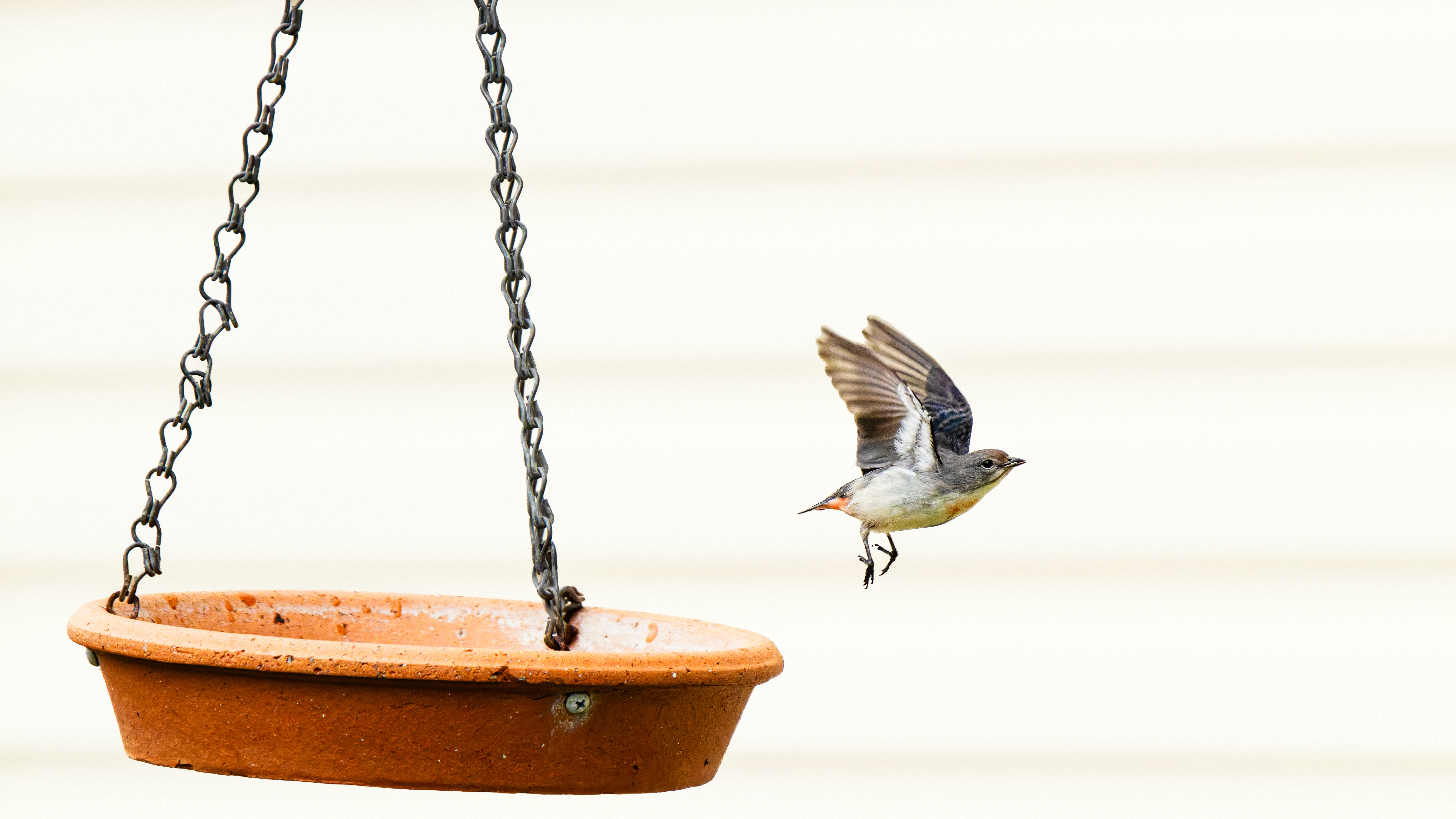
This photo of a Mistletoebird (Dicaeum hirundinaceum) leaving a bird bath was taken using a remote controlled camera.
Now that you’ve managed to attract animals to the garden how do you go about photographing them? Some people build a dedicated hide, other repurpose a shed or use a room in their house that faces onto the garden. Some use trail cameras. I don’t do any of those. I just wait quietly in the garden and photograph what turns up. A lot of the time I notice something interesting while doing something else and will just quietly slip into the house to retrieve my camera which is left permanently set up for birds. Lately I have been using my camera to photograph birds at the bird table and baths. I pre-set the focus and use a small aperture and trigger the camera via remote while I watch from a distance. All this is trial and error. You get a lot of duff photos, but occasionally you strike gold. As you find out what works and doesn’t you experiment with changing position and see how that effects things like the background.
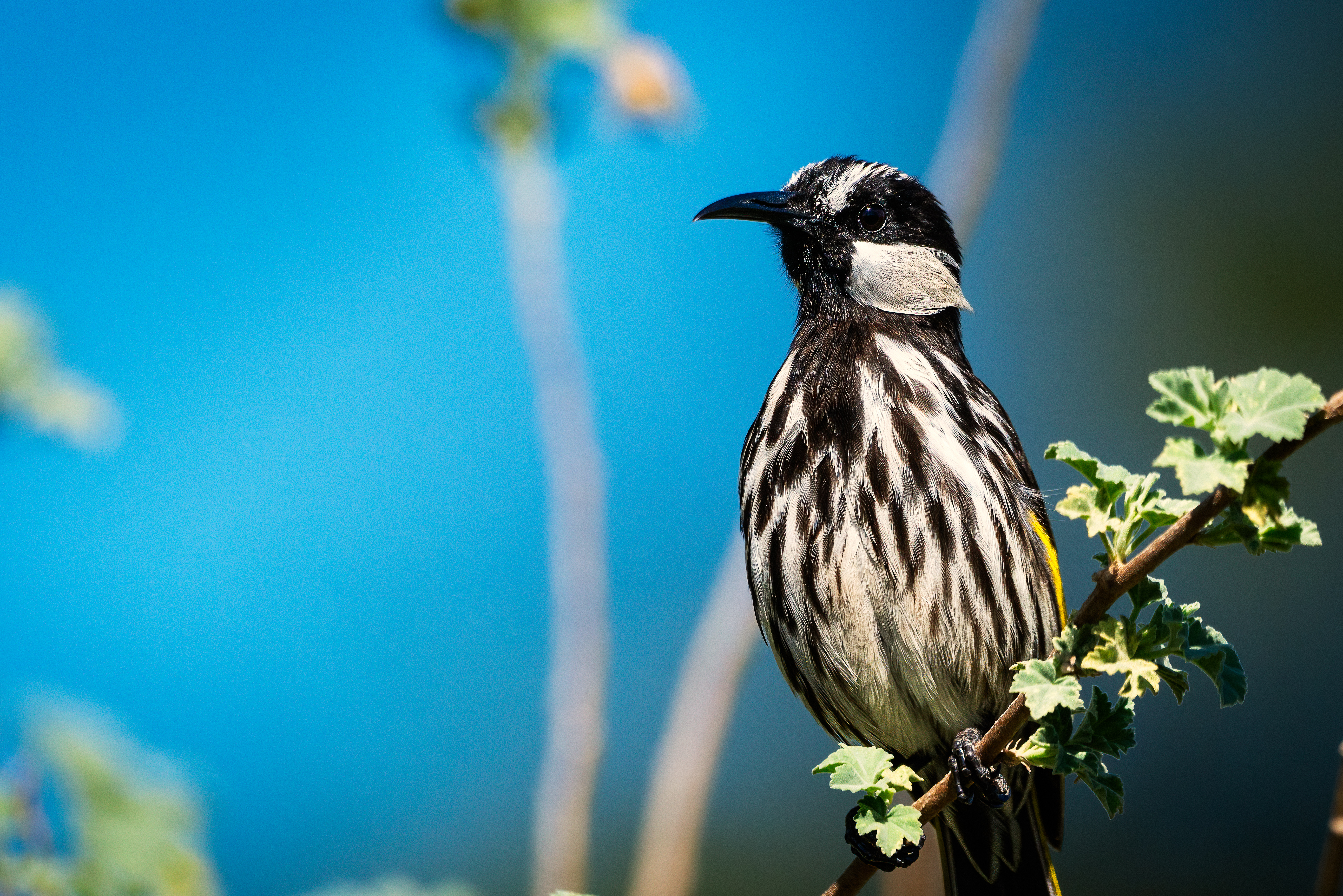
I saw this White-cheeked Honeyeater (Phylidonyris niger) while I was hanging out the washing. Luckily he obligingly stayed put while I got my camera.
I saw this Spiny-cheeked Honeyeater, Acanthagenys rufogularis while I was having a sundowner on the front veranda.
So why do I think the garden is a good place to start wildlife photography? Well it provides a readily available location where you can start to learn about animal behaviour. For example birds like to take off into the wind and many will defecate just before take off so if you see this happen you can time your shots to catch that moment.
If you know enough about bird behaviour photos such as this of a Zebra Finch (Taeniopygia guttata) become easier.
Djindjokoor or Brown Honeyeater (Lichmera indistincta) amongst grey saltbush.
It also gives you opportunity to fine hone your photographic skills. Learn how depth of field works with long and macro lenses. What shutter speeds you need to stop movement. How your cameras AF system works in different lighting conditions. At what level does the ISO have to get too before an image is unusable. This is important because it means that when you do go to a more “exotic” location you’ll have the skills to make the most of it.
The skills honed in my back garden allowed me to capture this photo of an Australian Hobby, Falco longipennis, feeding on a dragonfly at Gantheaume Point in Broome, Western Australia.
Another benefit is that when you need to be on location at dawn you can just fall out of bed and grab a coffee at just the right time rather than get up up a couple of hours before dawn and drive for ages while you’re still half asleep. Or you might be able to grab an hour or so after work.
I hope this helps to give you ideas and inspire you.
I’m feeling really deficient in the focal length department. After my trip to the Baigup Wetlands I’ve realised that if I want a picture of a Crake I’m going to need a longer lens. At the moment I’m capped at 600mm on full frame, 800mm full frame equivalent on Micro Four Thirds, and 960mm full frame equivalent on APSC sized sensors. Unfortunately I’m handicapped by the fact that I don’t have a spare $35,000 AUD lying around or camera to put the lens on or I’d get the Canon RF 1200mm f/8L IS USM. More affordable at $4000 is the OM System M.Zuiko Digital ED 150-600mm f5.0-6.3, but even that is currently beyond my budget.
The mighty Sigma 150-600mm Contemporary lens.
The Canon Extender EF 2x ii is a matched teleconverter and is designed to only fit certain Canon L lenses. Note how the lens elements stand proud of the lens mount.
So my solution was to use my Sigma 150-600mm lens with a Canon x2 teleconverter on my Canon 80d which would give me the full frame equivalent of 1920mm. That is serious reach in anybodies book, but will it work? The first thing to consider is whether the Canon teleconverter will actually fit on the Sigma lens. If you look at the photo you can see that the lenses of the teleconverter protrude beyond the lens mount and into the lens. Would there be enough room in the Sigma 150-600 to accommodate this. The answer was a resounding “YES!”. The next question was would it autofocus. The problem is that on DSLRs the autofocus mechanismuses a sensor in the bottom of the mirror box that requires a sub mirror behind the main mirror to reflect some light onto it. If light levels are too low then the system just doesn’t work and the camera can’t autofocus. So that means a lens with a minimum aperture of f8 won’t autofocus. Having said that if we use ‘live view’ the mirror is moved out of the way and on Canon cameras Canon uses ‘dual pixel autofocus’ where every pixel on the sensor can function as an AF point. So in theory it should autofocus. That is good because the minimum aperture of the Sigma 150-600mm at 600mm is f6.3, slap a 2x teleconverter on and that becomes f12.6. So I set up a target in the back garden to try it out. Lo and behold the camera failed to autofocus when using the viewfinder, so OK I knew that was going to happen, but using live view it did.
The next thing to consider was image quality. When using a teleconverter image, and especially 2x teleconverters, image quality takes a serious hit – the image becomes notably softer. The answer to this is to stop down. After a bit of experimentation stopping down to f16 improved sharpness slightly, but it means using incredibly high ISOs which has impact upon the image quality. I figured that I’d run the images through Topaz DeNoise AI and hope that I’d get something decent.
A suitable test target. After experimentation an aperture of f16 was found to produce the best results.
Now I just needed to test this out on a live subject. Luckily our back garden is frequented by lots of birds, so I set the camera on a sturdy tripod and just waited. The results were that using live view and dual pixel autofocus the camera would definitely focus, it’s just it does it very, VERY slowly. I managed to get some photos, but the bird had to sit in one place for quite a while and this was with good light levels in the middle of the day. It wouldn’t be practical for a subject in the shade at dawn. I tried to manually focus but I couldn’t move the focus ring in small enough increments to achieve fine focus. The best results were achieved with birds that were about 5m away. I tried on Ring-necked Parrots that were further away and there was huge hit to image quality, the picture were just not critically sharp.
This Willy Wagtail was obliging enough to sit around for a few seconds. It is mandatory that every Australian garden should have at least one Willy Wagtail.
A leucistic zebra finch happily riding the rotary washing line.
This distant shot of Ring-necked Parrots shows a pronounced hit on image quality. Viewing the image at 100% shows the feather detail has gone to mush.
Big Bob is the resident Yoorn or Bobtailed Lizard. He lives under the house and can occasionally be seen exploring the garden. Normally he is a very feisty lizard with a lot of attitude, but on Monday we found him in the shade house looking very sorry for himself. At first we thought he’d gone down with Bobtailed flu, but on closer inspection he was shedding his skin. We often find the old skins in the garden but I’ve never seen this happen. So we thought we’d just leave him be and get on with it. On Tuesday he’d moved out onto the grass and we were worried about him as we often get kestrels, goshawks or sparrow hawks use our TV aerial as an observation post and they’d have no qualms about making a meal of him. He started wriggling and writhing in the grass in an attempt to get his old skin off. By lunch time apart from a few scraps between his toes he’d got the job done. By Wednesday he was back to scaring our Bull Terrier, Frida, and walking round the garden like he owns it. Another couple of weeks and he’ll be tucking himself up for the winter.
Big Bob our resident Bobtailed Lizard found in the shadehouse looking very sorry for himself.
He’d started to shed his skin and was looking very tatty.
Not dead, wriggling in the wet grass trying to remove the old skin.
As the sun warmed everything up he was content to lie like this for about half an hour.
Right side up again.
Still looking a bit manky.
After another hour mission accomplished – looking all new and neat again.
Just a few snaps from the garden this week. First up is the biggest grasshopper I’ve ever seen. An absolute whopper. Appropriately called the Giant Grasshopper. It was sitting quietly on our front veranda and obligingly let me take it’s photo.
Giant grasshopper or hedge grasshopper (Valanga irregularis).
The second photo is of a praying mantis that also was very cooperative with my photo taking.
“Let us prey.” Blackbarred Mantis (Mantis octospilota).
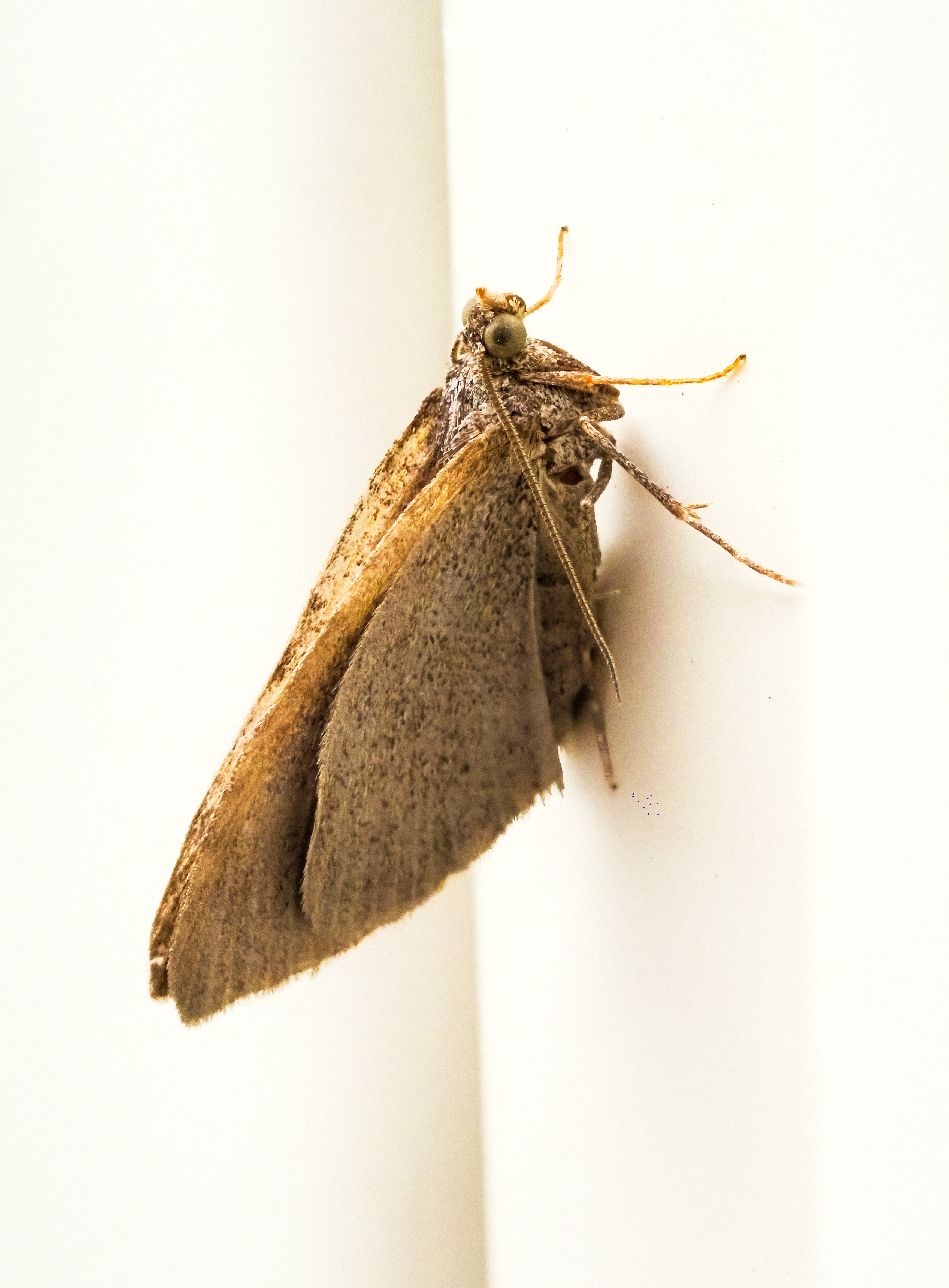
The last shot is of a white cedar moth that came from our next door neighbour’s white cedar tree.
Our household is in mourning. Last week we buried Little Bob. It was a very sad day.
Little Bob looking a bit grumpy having just woken up after his long winter sleep.
I’ve written about Little Bob the bobtail lizard before. He was one of three bobtail lizards that call our garden home. He was the smallest at only 20cm long nose to tail, hence his name, and he was the one we’d see the most often on our patio in summer or in the pile of old wood behind the shed in winter. Last Autumn I accidentally clipped him with the whipper snipper. He recovered nicely but lost the use of one his back legs which meant he wasn’t as mobile as he once was. I felt really guilty about that and decided to take a bit more care of him. So I’d hand feed him snails and bits of fruit and he became quite tame. Every now and again he’d get stuck in one of the cavernous holes the dog digs and I’d give him a helping hand at getting out and back under cover. The Nan Keen Kestrels who sit on our TV aerial would have made short work of him if they’d seen him stuck in a hole.
Take Cover! Incoming! Nankeen kestra (Falco cenchroides cenchroides), York, Western Australia.
So it was with great sadness that I found him dead in our drive. From the look of him – flat and crispy – I realised I’d run him over. So I buried him under the peppercorn tree with full honours, well it was just me and a shovel.
Big Bob doing his best snake impression on the back patio.
Yesterday Big Bob – so called because he’s nearly 40cm long and that is big for a bobtail lizard – came out from under the house to sun himself and have a strawberry. It was nice to see him, but he’s not the same. He’s got a lot of attitude and even the dog gives him a wide berth. The limit of his sociality is taking a bit of fruit. You definitely don’t want to pick him up if you value your fingers.
I’m not talking about Downton Abbey or the town in England, I’m talking about spiders, bugs, butterflies and all manner of little wriggly things.
Cabbage White Butterfly (Pieris rapae) – the scourge of gardeners.
A few weeks ago I wrote about documenting the wildlife in our garden and that I was widening the net, as it were, and including all animals including invertebrates. Well after a few weeks of trying this I’ve come up with some observations.
A very small jumping spider on a wandoo leaf. This is the only photo I got as it kept jumping all over the place.
Firstly, as a 58 year old man with a well dodgy back the time time taken between observing the little critter and getting down onto the ground and in a position to photograph it means that it has left the vicinity. Some of these creatures can move incredibly fast when they want to and I can’t. I knew that grasshoppers and their ilk can be very quick, but I wasn’t prepared for the speed of the jumping spiders – a blink of the eye and they are just out of there.
Christmas or jewelled spider. Not known for their speed of movement but the wind catches their webs and so focusing is difficult. Getting in a position to photograph them in a way that shows off their shape and colouring requires a degree of the flexibility that I am lacking.
Secondly, you have to able to contort yourself into some pretty strange positions to get down and photograph them. Now I thought that I’d got this one covered because I do this when photographing orchids, but combine this with being quick (see point one), being stealthy so as not to frighten them and having a spine with flexibility of an RSJ it makes each session like some weird kind of yoga with a camera.
Blue Banded Bee, Amegilla cingulata. York, Western Australia.
Thirdly, a lot of these critters are small. If you look at the photo of the jumping spider resting on a Wandoo leaf, it was less than 5mm in diameter. So you need good eyesight to spot things that small. I’ve just had my eyes tested and they’re fine for distance it’s reading and close up stuff that’s the problem. You can’t rely on autofocus with macro photography and I’m here to say that manually focusing on a small critter that keeps jumping around while having dodgy eyesight is not easy. As my dear old mum used to say “It’s enough to make saint swear!”.
This locust very obligingly sat still long enough for me to take his photo.
Lastly, the benefit of photographing creepy crawlies is that you don’t need a honking great telephoto lens that resembles a small artillery piece. Macro lenses are relatively lightweight and my back is thankful for that.
Blue Skimmer dragonfly (Orthetrum caledonicum). Although they move like miniature fighter jets when flying dragon flies will take frequent breathers on a twig or stalk, often preferring to use the same one repeatedly which makes photography a lot easier.










You must be logged in to post a comment.