Evolution Of Technique And Style

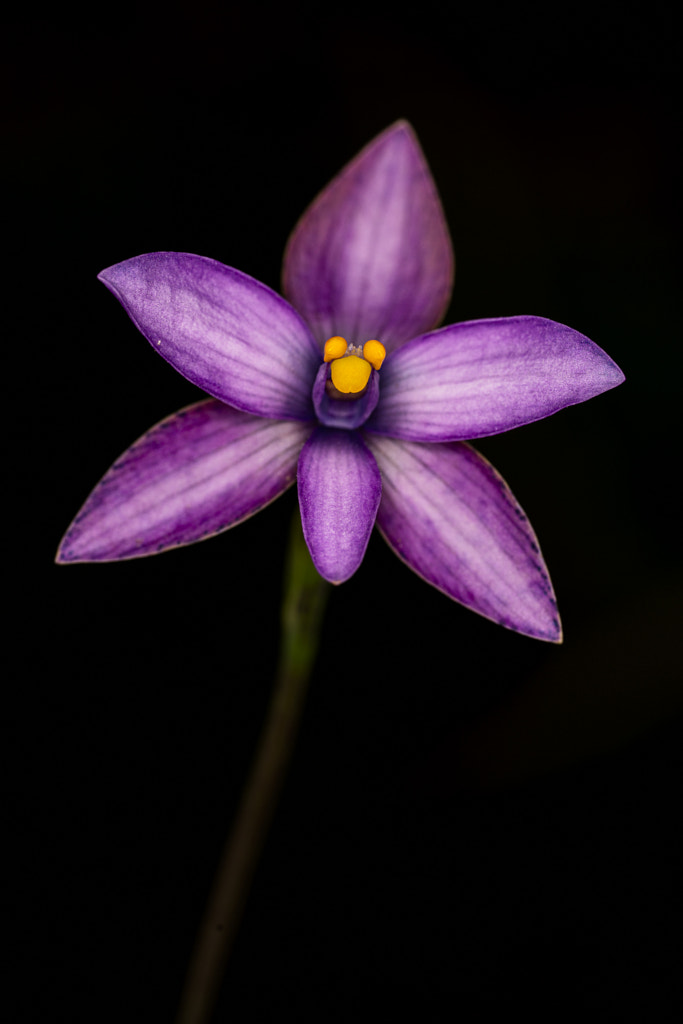
Scented Sun Orchid by Paul Amyes on 500px.com
This shot of a Scented Sun Orchid was what I considered my first successful photo of an orchid. The subject is separated from the background making easy to see.


I took what I call my first proper shot of an orchid back in 2008. Back then my technique was very simple – handheld with a macro lens. The problem was that it was often very difficult to isolate the flower from the background while having sufficient depth of field and a low ISO. For every successful photo there were hundreds of duds.
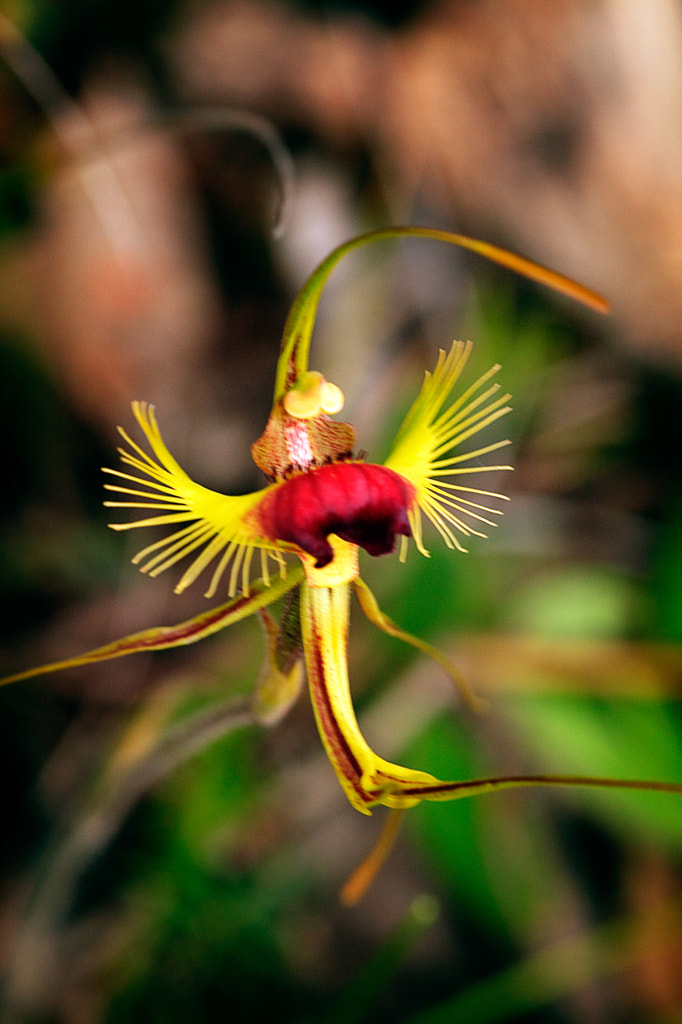
 

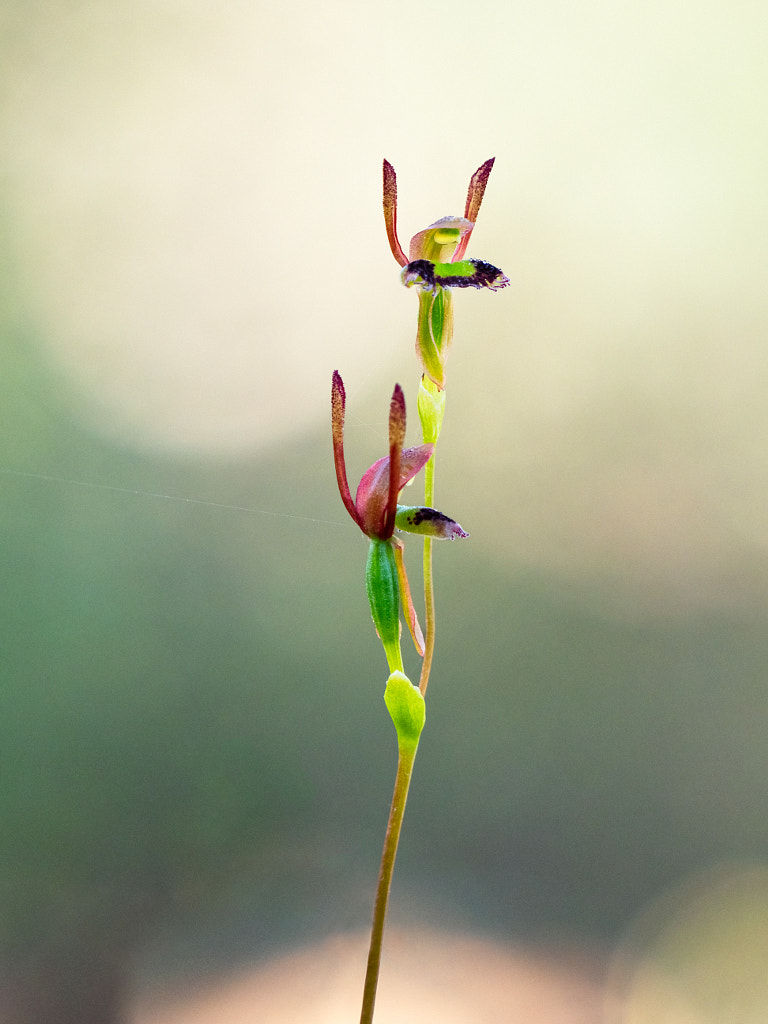
Butterfly Orchid by Paul Amyes on 500px.com
This shot of a Butterfly Orchid is one of the hundreds of duds. The messy background threatens to overwhelm the subject.


After about a year of trial and error (mostly error) I decided to photograph the orchids in the same way I would take a portrait of a person. Get down at “eye” level, use an off axis flash to provide the key light and have the natural light as my fill light at -1 to -2 stops. This was a huge improvement, but I still wasn’t getting the clarity and sharpness in the images I desired.


Photographing Orchids
My first flash rig for photographing orchids. Using a flash brake allowed me to get the flash off of the lens axis and get a more pleasing lighting effect.


120907-York-1324
The next attempt at better lighting was a heavy tripod and light stand. My back hurts just looking at this photo.


The next evolution was to mount the camera on a tripod and then mount the flash to one of the tripod legs via a “magic arm”. This allowed greater choice in the positioning of the flash and allowed me to use different flash modifiers such as soft boxes, grids and snoots. The arrival of affordable and reliable wireless flash triggers  meant I could use multiple speedlights for more sophisticated lighting. This came a tremendous cost. I have a chronically bad back and all that kit was heavy, the tripod and “magic arm weighed just under 6Kg. Then there was the futzing about setting everything up, taking the shot, breaking it all down, walking to the next subject and then repeating it all again. Suddenly it wasn’t fun anymore. Something had to give and it was my back.


Olympus Pen EP-2
The diminutive Olympus EP-2. Just what the orthopaedic surgeon ordered.


Three Way Comparison
A size comparison of my DSLRs (Canon 5d and 550d) and the Olympus EP-2 which replaced them.


In 2013 I bought an Olympus EP-2 mainly for travel and street photography. It was a revelation – small size, In Body Image Stabilisation (IBIS), and excellent flash implementation. It quickly became my orchid camera of choice. I could chuck out the tripod and become more mobile. It wasn’t all beer and skittles though. The 12Mp sensor wasn’t the best in terms of high ISO performance and dynamic range, the lack of a viewfinder made usage in bright sunlight problematic (solved with the addition of the optional EVF) and the contrast based autofocus system was a bit on the temperamental side. But the positives were enough to keep me using it and when the EM10 came out with a built in EVF, a better IBIS system and an improved sensor then I knew that the system would be just about perfect for what I did. I could walk around in the bush for hours at a time without back pain which meant I could explore further afield. This freedom allowed me to experiment a lot more.


Sigma’s 105mm f2.8 DG DN macro lens attached a Sony A7Rii.


The Tamron 35mm f2.8 lens has excellent macro capabilities.


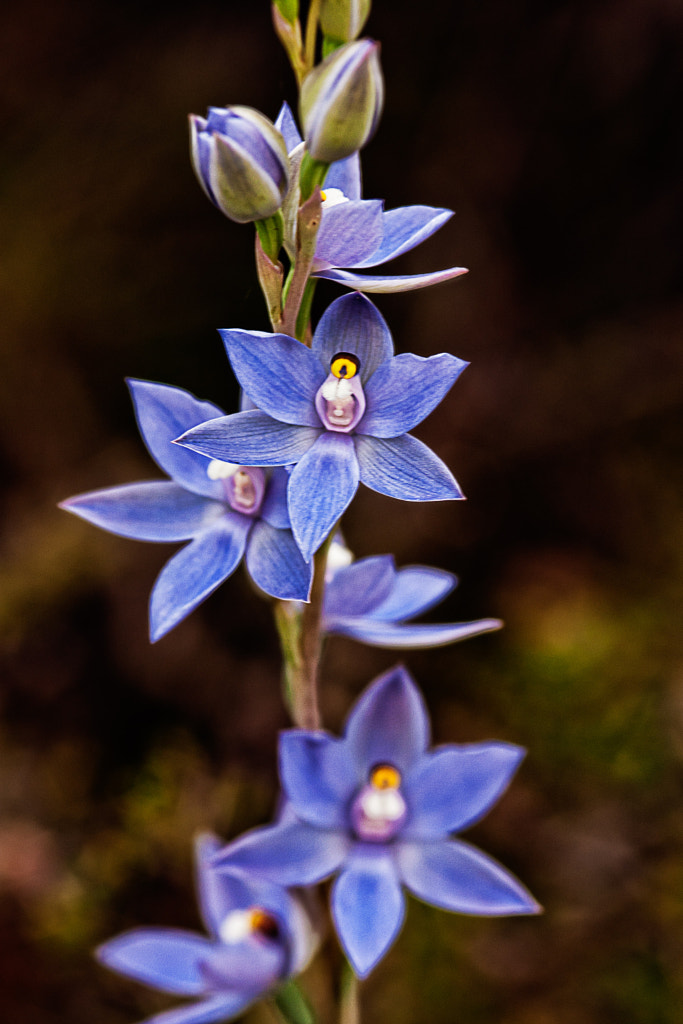
Curly Locks by Paul Amyes on 500px.com
Curly Locks, Thelymitra spiralis. Wandoo National Park, Western Australia. Sony A7r2 with Sigma 105mm f2.8 DG DN macro lens.


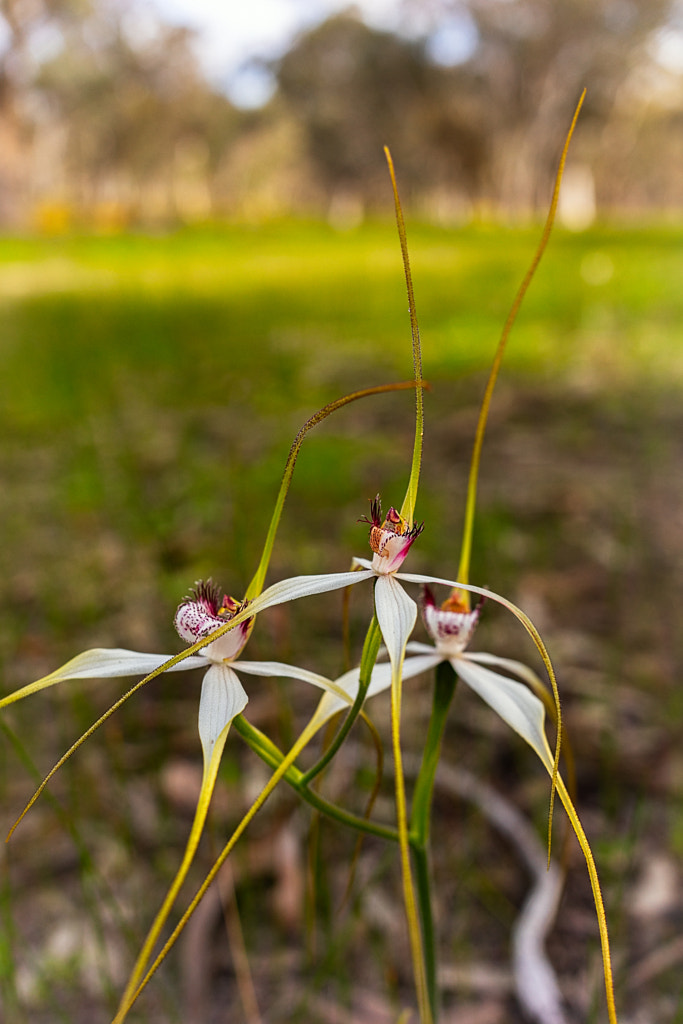
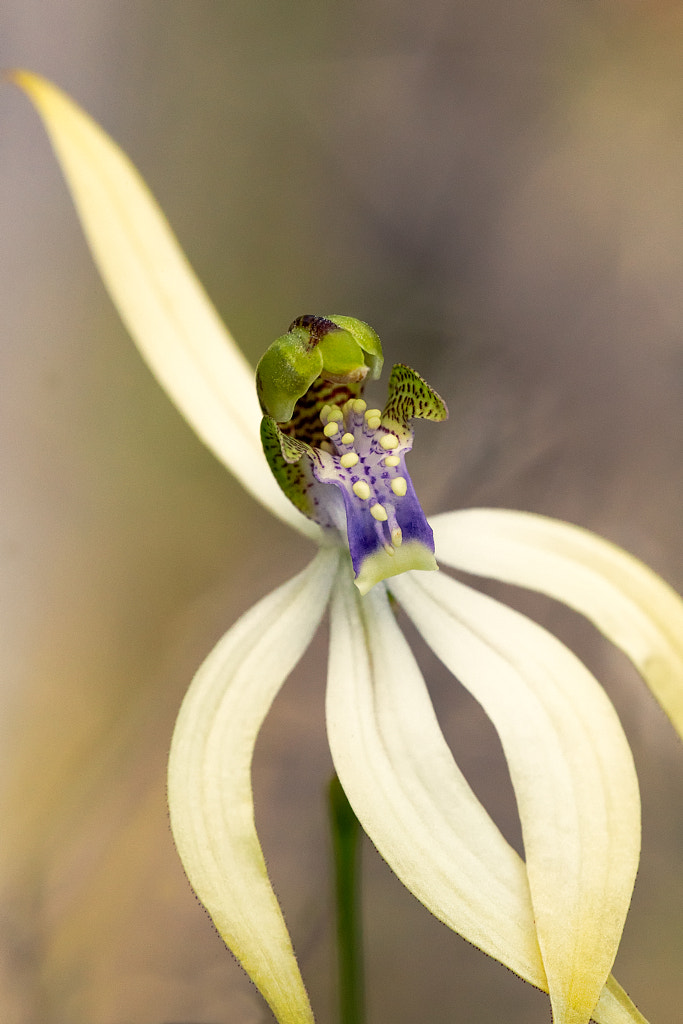
White Spider Orchid by Paul Amyes on 500px.com
White Spider Orchid, Caladenia longicauda subsp longicauda. Wambyn, Western Australia. Sony A7r with Tamron 35mm f2.8 lens.


In 2021 I felt that I wanted more resolution than the 20Mp EM1 mk ii was giving me. So I tentatively dipped my toe into the world of full frame mirrorless and I went with a second hand Sony A7r2. The image files produced by the camera were absolutely gorgeous. Alongside my usual working method of using flash with macro lens I decided to experiment with environmental portraiture of orchids. For this I used a 35mm lens with a half size macro capability and the results were pleasing. The downsides were as follows. The rear LCD is hopeless in bright light and it has no touch control facility. The IBIS wasn’t as effective as that on my Olympus cameras and the sensor resolution emphasised very tiny camera shake. A tripod was the solution. The sensor is a dust magnet which means that changing lenses enables dust bunnies to proliferate. The answer was to have one camera with the 105mm macro and one camera with the 35mm. Arrrrrgh! I was back carrying a load of heavy equipment. So it was back to the Olympus kit.
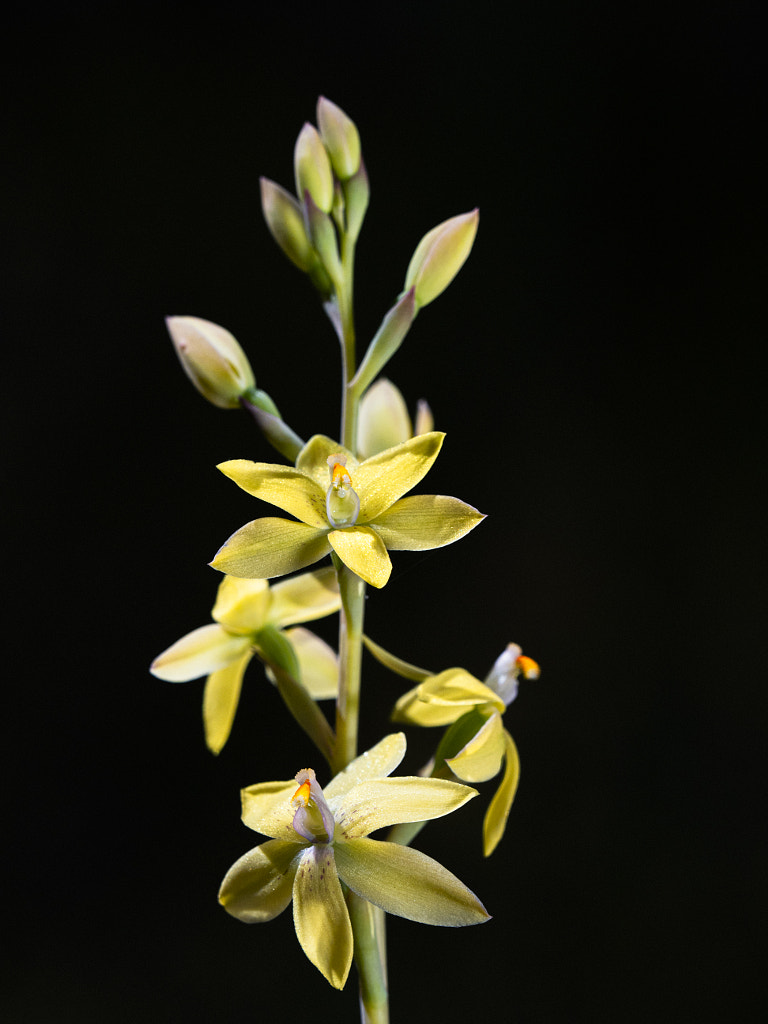
 

Lemon Scented Sun Orchid by Paul Amyes on 500px.com
This shot of a Lemon Scented Sun Orchid was made with the Olympus Em1 mk ii, Olympus 40-150mm f2.8 lens with 1.4 x teleconverter and the Olympus FL600R flash using the focus stacking function.


I’m still trying to evolve a style which produces a nice clean portrait of an orchid. One of the great benefits of Olympus’s cameras and lenses is that it allows very long telephoto lenses to have an almost macro capability. The use of such long lenses allows you to throw backgrounds well out of focus by dint of their increased magnification which reduces depth of field. The problem is that that decreased DOF means that it is hard to get your subject rendered sharp whilst retaining all that loverly bokeh. The counter to this is focus stacking which involves taking a series of pictures of the subject while moving the focus point and then blending the images in post. Olympus has a very neat feature that allows you to do this automatically in camera which is fantastic. Unfortunately the function limits your flash usage by restricting your maximum flash sync speed to 1/50th second and you have to manually set the flash exposure. I tried doing this for a while and it was a right royal pain. So now I don’t use the flash and just make the exposure using ambient light. The lens I’m using is the Olympus 40-150mm f2.8 with the the mc-14 1.4 x teleconverter. This gives me a 210mm f4 lens (420mm in full frame terms). Despite shooting wide open this invariably means shooting at a low shutter speed. So while the IBIS is fantastic on my EM1 mk ii using it with a long lens while focus bracketing wasn’t the best way to proceed. So it was back to a tripod. My aluminium Manfrotto 055 tripod is a good tripod but it is that heavy you could use it as a boat anchor. It was time to get a bit of fibre in my life – carbon fibre. So I bought a nice Sirui  AM-254 carbon fibre tripod which weighs just a smidge over 1Kg. It doesn’t have a centre column and so a minimum working height of 7.8cm which means you can get down and close to the subject. The results have been excellent and now I feel that using both my normal macro lens and the telephoto zoom with converter I’m getting closer to what I have envisioned.


20200818-Beverley-0002-Edit
The Sirui AM 254 tripod in action.


So this has been my journey of finding what works for me. I’ve discovered that learning how your equipment works is just as an important step in developing vision and style as is technique. Continual learning and experimentation will help you develop as an artist and we shouldn’t be afraid to do so. A few times I’ve felt that I was going backwards, but it was worth persevering. I’ve still got a couple of things to sort out, but I feel now I’m on the right track.

The following shots were made this last week.
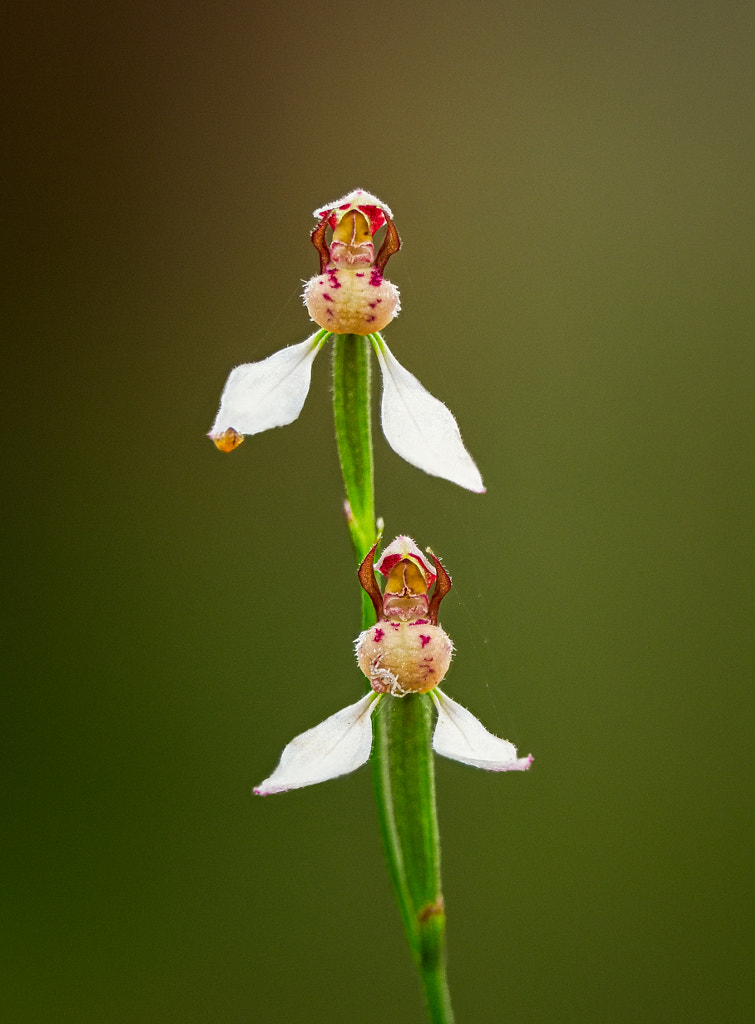
 

Common Bunny Orchid by Paul Amyes on 500px.com

Common Bunny Orchid, Eriochilus dilatatus subsp. multifloris. Oswald Sargent Reserve, Western Australia.A focus stack using the Olympus EM1 mk ii with the Olympus 40-150mm f2.8 lens and 1.4 x teleconverter.
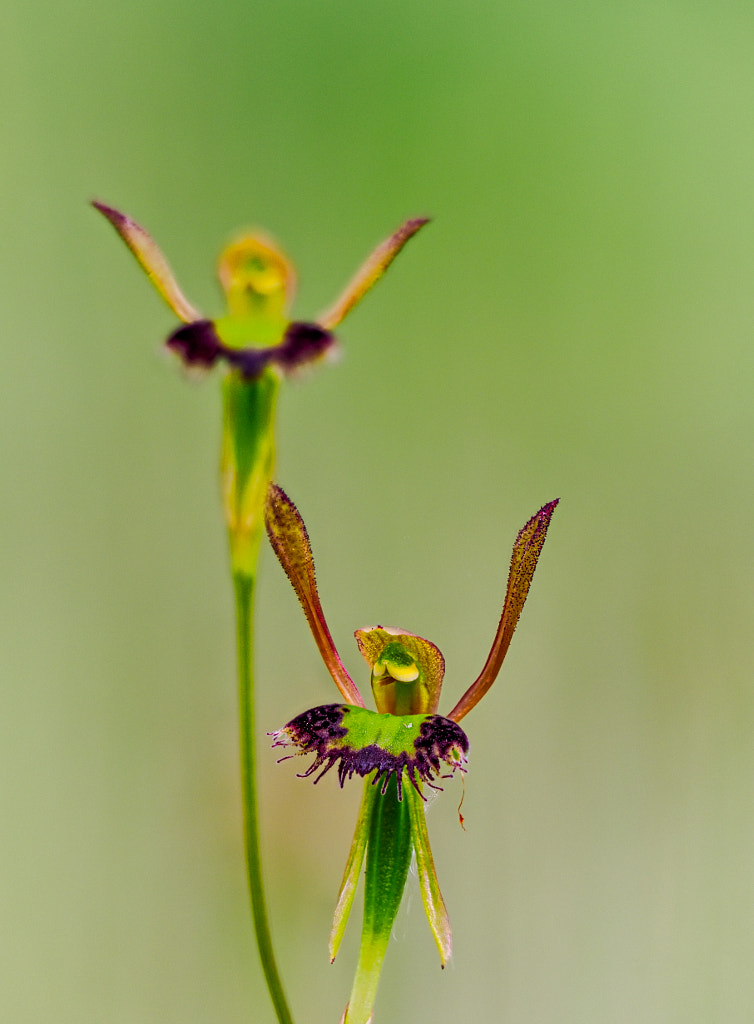
 

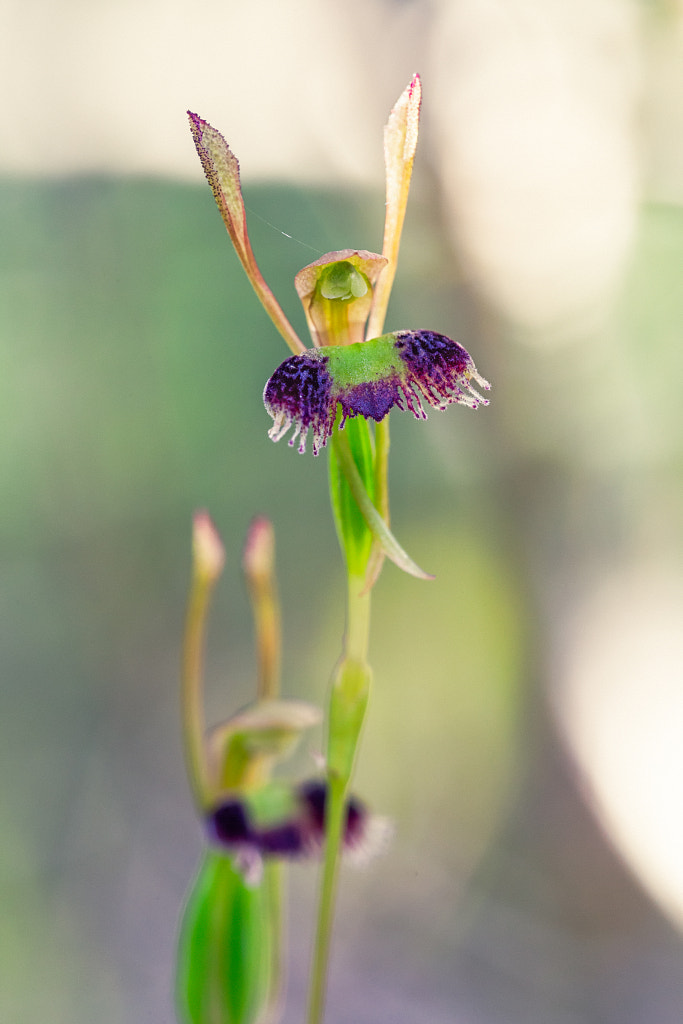
Hare Orchid by Paul Amyes on 500px.com
Hare Orchid or Fringed Hare Orchid (Leporella fimbriata). Oswald Sargent Reserve, Western Australia.


Frolicking In The Woods

The last few weeks I’ve been concentrating on the Avon River and I wanted a change. So early one morning I got up so I could be in the wandoo woodland of Mount Ronan’s Nature Reserve as the sun comes up. There is nothing like the first rays of the sun hitting the trunks of the wandoo trees. The golden rays illuminate their pale bark and they all but glow in the warm light.


Wardawort by Paul Amyes on 500px.com
Wardawort or Grey Butcherbird (Cracticus torquatus). Mount Ronan Nature Reserve, Western Australia.


I got off to a promising start – as I pulled up I was greeted by a mob of kangaroos. They weren’t so keen to see me however and took off into the bush. There was an incredibly loud melodious piping and warbling coming from the tops of the trees. At first I thought it was magpies singing a bit strangely, but after closer inspection I found it was about a dozen grey butcher birds  calling out to each other. What was amazing about it was they were all singing the same phrases taking turns with no gaps. You would be forgiven for thinking it was one bird as the performance was so seamless. It was like a choir recital.


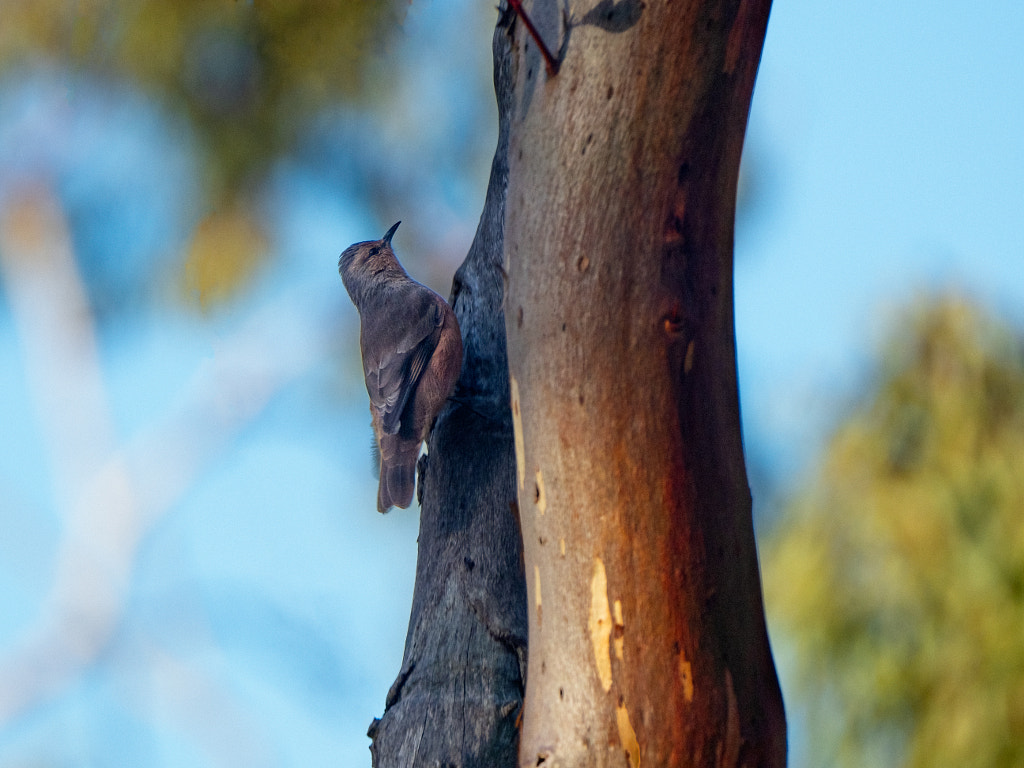
Djini by Paul Amyes on 500px.com
Djini or Rufous Treecreeper (Climacteris rufa) climbing up the trunk of a tree. Mount Ronan Nature Reserve, Western Australia.


Djini by Paul Amyes on 500px.com
Djini or Rufous Treecreeper (Climacteris rufa) taking some time out in the sun. Mount Ronan Nature Reserve, Western Australia.


Stalking animals in the wandoo forests is hard as the trees shed bark, twigs, branches and leaves in great quantities which means that the ground is covered in a thick crunchy mulch and no matter how hard you try to move quietly you always end up making a racket. The end result is that it is hard to get close enough to take photos. The ideal approach is to sit down and wait for the birds to come to you. After about half an hour I could hear the sound of small birds chasing insects and was rewarded with several rufous tree creepers. A few minutes later and I could see one climbing up the trunks of a tree to foraging for insects and grubs – I’ve never seen one going down they always seem to climb, and when they get as far up as they want the glide down to the ground or the next tree.


Djida by Paul Amyes on 500px.com
Djida or Yellow-rumped Thornbill (Acanthiza chrysorrhoa). Mount Ronan Nature Reserve, Western Australia.


As I continued to walk around the forest I must confess that I lost focus as I spotted a couple of orchids. It was annoying that I only had my bird photography rig with me and nothing really suited to photographing very small flowers. From that point on I was trying to watch for birds while looking on the ground for orchids. It is an impossible task. 


Fringed Hare Orchid by Paul Amyes on 500px.com
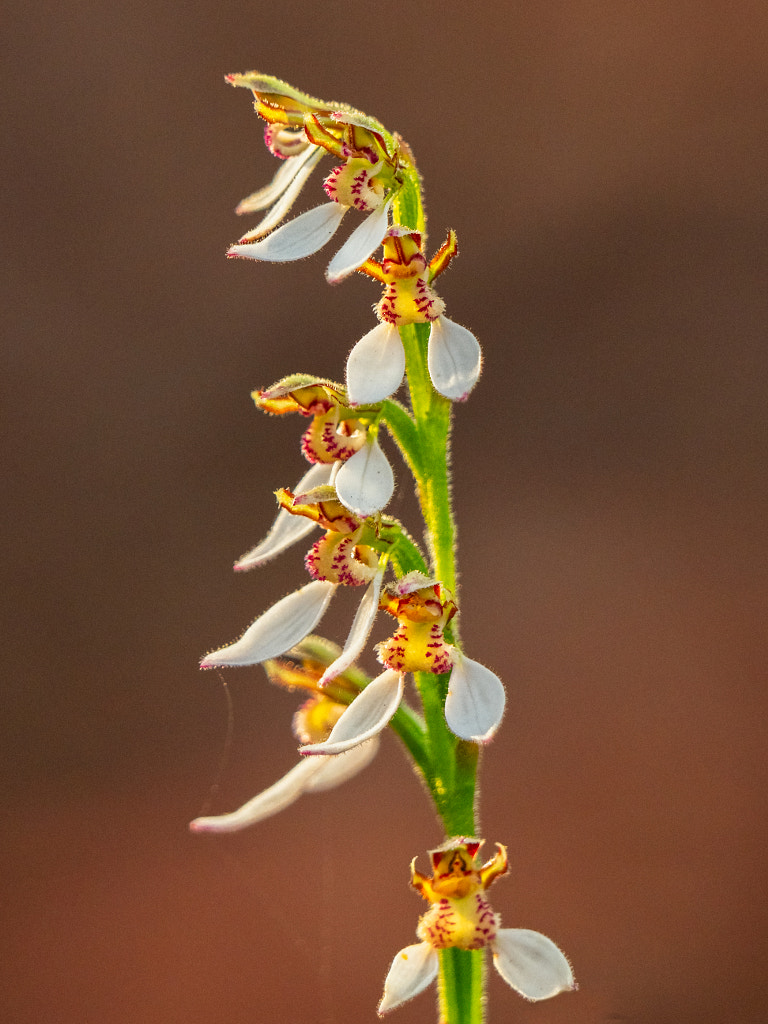
Hare Orchid or Fringed Hare Orchid (Leporella fimbriata). Mount Ronan Nature Reserve, Western Australia.


Common Bunny Orchid by Paul Amyes on 500px.com
Common Bunny Orchid, Eriochilus dilatatus subsp. multifloris. Mount Ronan Nature Reserve, Western Australia.


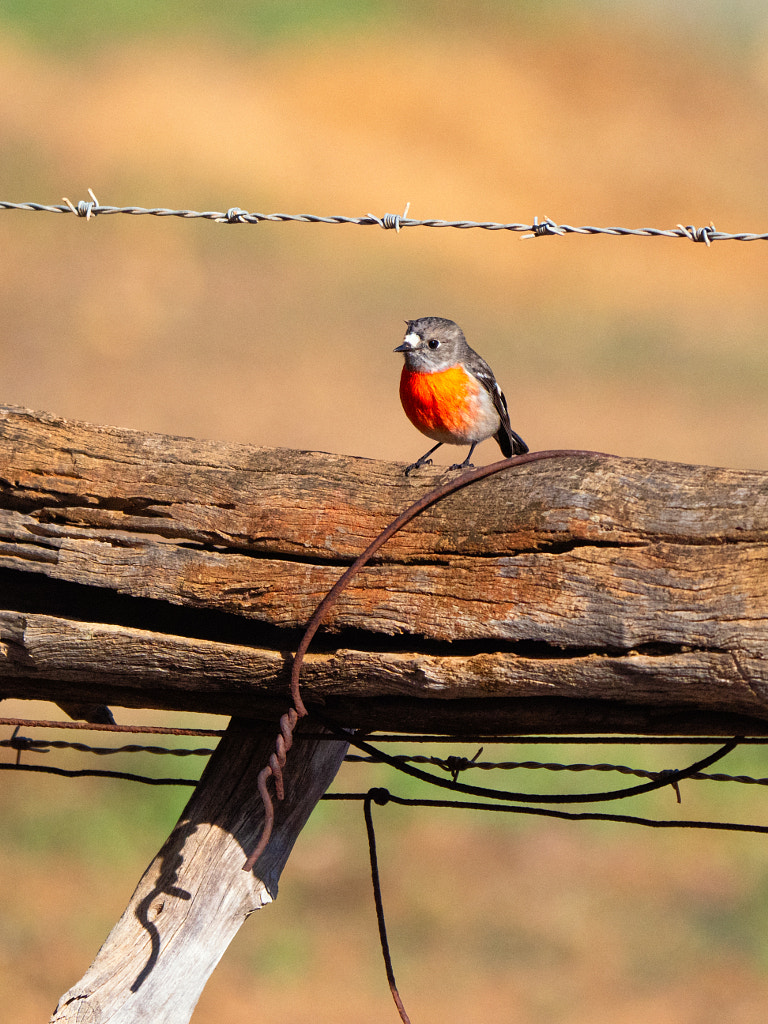
By 9:30 the best light had gone so I decided to call it a day and walk back to the car. Waiting for me was a female red-capped robin sitting on the fence. She was quite obliging and sat for a while allowing me to take her photo.


Dermokalitj by Paul Amyes on 500px.com
Female Dermokalitj or Scarlet Robin (Petroica boodang aka Petroica multicolour subsp campbelli). Mount Ronan Nature Reserve, Western Australia.


Moonset by Paul Amyes on 500px.com
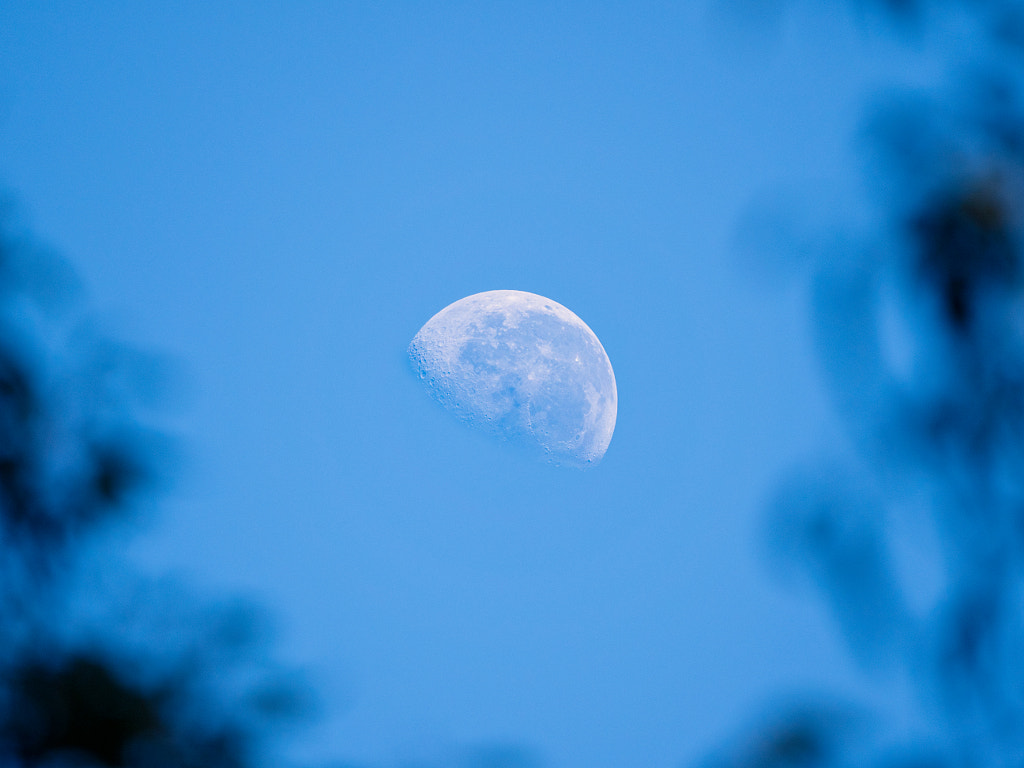
Moonset over Mount Ronan Nature Reserve, Western Australia.


Way Down South

Warperup Creek by Paul Amyes on 500px.com
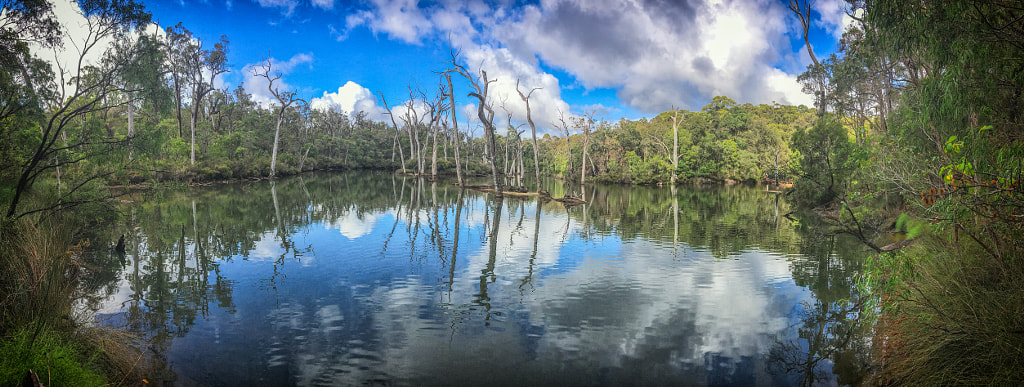
Warperup Creek, Margaret River, Western Australia. Apple iPhone SE panoramic mode. Exposure: 1/1000, f2.2 at ISO 40.


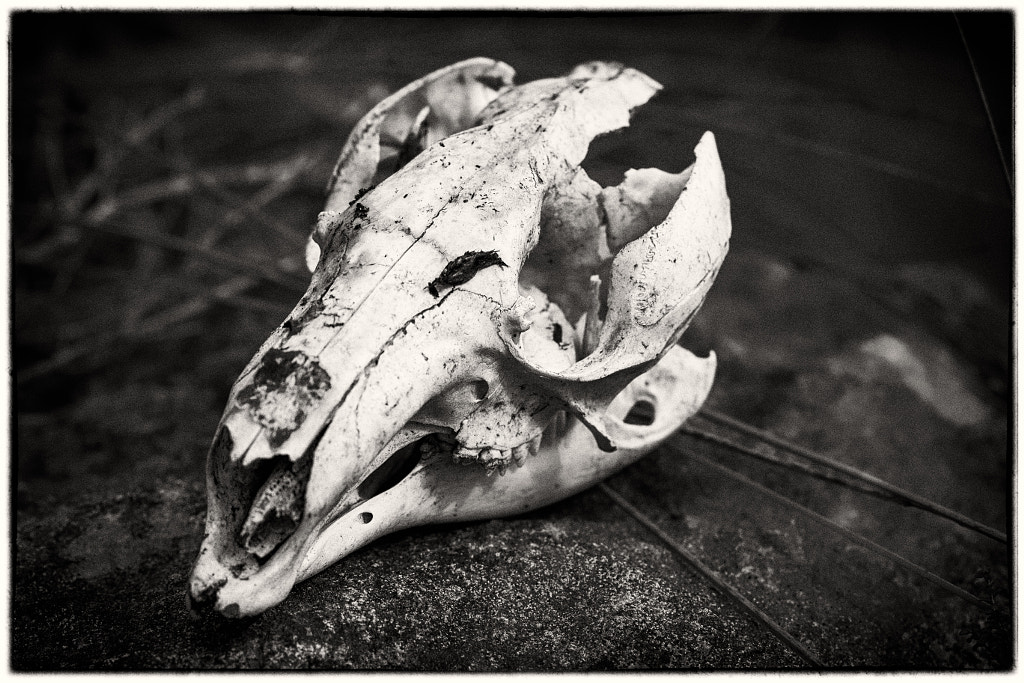
I had the chance to nip down to Margaret River for the day while my partner, Helen, was playing croquet in Bunbury. Most people when they think of Margaret River think about wine or surfing but there is more to the area than that. It is a beautiful part of the world with forests and beaches that are home to some very spectacular flora and fauna. I was looking for orchids, but as I had the dog with me I wanted to tire her out before so she would be more settled while I was on the hunt. I don’t know whether you, my dear readers are fans of so-called cosy crime TV such as Morse, Lewes, Midsummer Murder, or Endeavour, but when you watch those it is always the dog walker that finds the body. To be more precise it is the dog who finds the body. Well we were just walking along a track when Frida – the dog – took off like a rocket into the undergrowth and after much thrashing around emerged holding a large femur. As far as she was concerned she had found treasure and after a couple of minutes later thundered back into the bush and reappeared with another. At this stage I was wondering whether she had found a body and whether I should have a look, but I decided to have a look to see what sort of bones they were. Now whenever Frida gets a bone she becomes very possessive and develops a level of distrust befitting a paranoid schizophrenic. Fortunately she hands over the bone nicely as she obviously feels that she a great big pile of the things and again dives into the bush to return with the skull. Definitely not human, much to my relief, it was a western grey kangaroo which had obviously been hit by a car and managed to drag itself to these bushes to die. My overseas readers may not realise this but ‘roos are a bit like rabbits, if they get dazzled by car headlights they will just sit in the road rather than take off. Unlike rabbits they make more of a mess of your car.


Alas Poor Yorick by Paul Amyes on 500px.com
Frida’s treasure. The skull of a western grey kangaroo round near the busy Caves Road, Margaret River, Western Australia. Canon EOS 6D with a Canon EF 100mm f/2.8L Macro IS USM lens. Exposure: 1/400, f5.6 at ISO 100.


Thankfully after all that excitement we managed to find what we were looking for which were leafless  and hare orchids.


Leafless Orchid by Paul Amyes on 500px.com
Leafless orchid (Praecoxanthus aphyllus), Margaret River, Western Australia. Canon EOS6d with Canon EF 100mm f2.8 IS L macro lens. Exposure: 1/100, f11, at ISO 1600.


Rise Above The Rest by Paul Amyes on 500px.com
Hare orchid (Leporella fimbriata), Margaret River, Western Australia. Canon EOS6d with Canon EF 100mm f2.8 IS L macro lens. Exposure: 1/60, f8, ISO 800.


Small, but…

… beautifully formed.


Hare Orchid
Hare Orchid, also known as the Fringed Hare Orchid, (leporella fimbriata), Bickley, Western Australia. Olympus OMD EM-10 with Olympus Zuiko m4/3 60mm f2.8 macro lens. 1/20th sec, f4.5 at ISO 200.


The hare orchid was about 7mm  or 028 of an inch wide. Now I’ve looked for this species before but it is quite difficult to find amongst the debris of the forest floor and its colour makes it blend in with the background. I had decided to visit a friend and near where he lives is a patch of scrub between two roads that is home to this species. I thought I would n’t find anything as the I hadn’t had any luck in finding one in the previous two years and I only had an hour to search the area. After 20 minutes of bush bashing, no paths, I found something quite unexpected. A colony of crinkle leafed bunny orchids.


Crinkle-leafed Bunny Orchid
Crinkle-leafed Bunny Orchid (Eriochilus dilatatus), Bickley, Western Australia. Olympus EM-10, OLYMPUS M.60mm F2.8 Macro lens. Metz 44-AF1flash. Exposure 1/180 s at f/4.0 ISO 200 in manual mode.


So quite delighted with the find I get down at plant level with my camera and snap off a dozen or so shots trying different apertures and flash combinations. Mindful of the time I rolled over to put my stuff back in my bag where there in front of me was the hare orchid literally under my nose.


It certainly does.