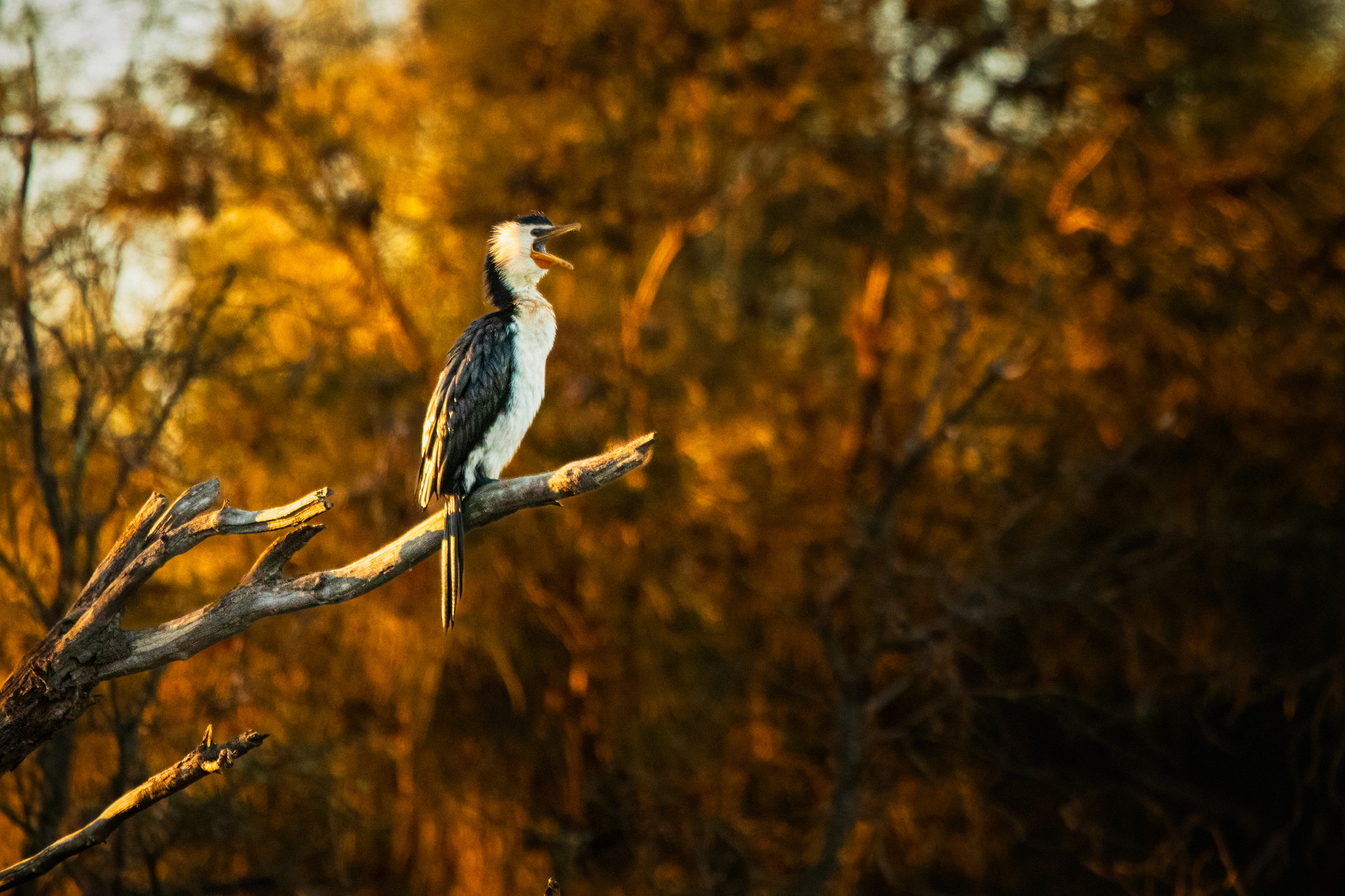
This about sums up the last couple of weeks. Kakak or Little Pied Cormorant (Phalacrocorax melanoleucos).
I haven’t felt like posting anything for the last couple of weeks. I’ve been taking photos, but for a number of reasons haven’t had anything positive to say.
The minor issues have been consumer affairs related. I use Adobe products and have done since Adobe Photoshop 4. That’s not CS4 but the 1996 version of Photoshop. Adobe have an incredible disdain for their customers and seem to forget that without us they would be nothing. I like their products, especially Lightroom, it’s Digital Asset Management is fantastic, but being hobbled to Adobe is a right royal pain in the posterior. Anyway before I start ranting and foaming at the mouth I’ll get on and say that I’ve already started to shift my whole workflow to different software which has resulted in quite a steep learning curve. The next consumer problem that has proved incredibly frustrating is that I bought a new Apple iPhone and it was wasn’t working properly straight out of the box – the battery won’t hold a charge and the home button doesn’t work. Apple have proven that like Adobe they too hold their customers in complete contempt. I’ve been batted back and forth between various Apple departments who are arguing over who is responsible. The only thing that they agree on is that they won’t replace my phone, won’t repair it, and won’t give a refund. Again I’ve been using their products for decades and have liked the Apple ecosystem, but now it looks like I’ll be changing. I haven’t used a Windows computer since Windows 98 and I’m not looking forward to switching back.
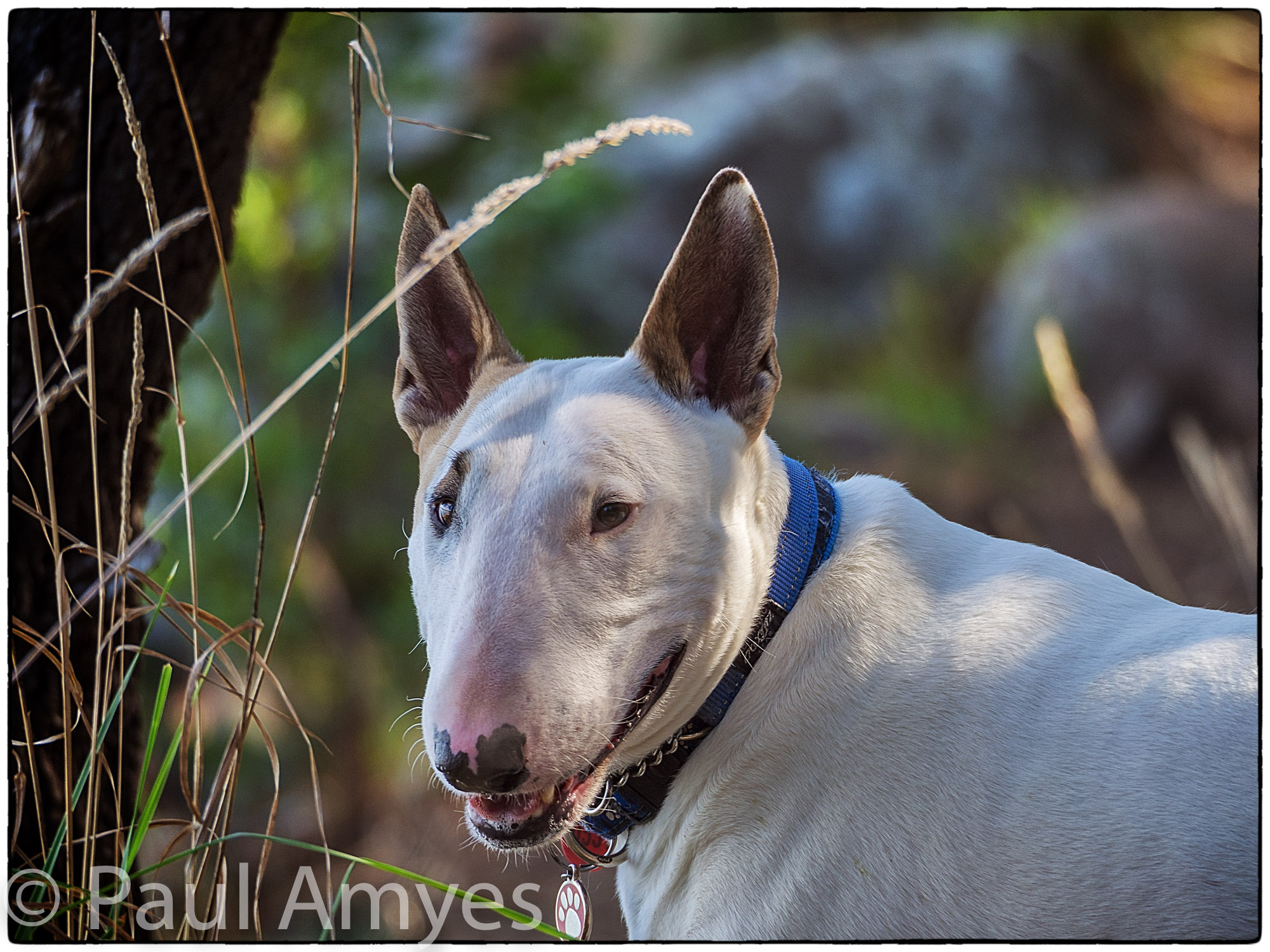
The major problem has been with our beloved dog – Frida. She was due to have her teeth cleaned by the vet, and as that involved having an anaesthetic the vet did a few tests to make sure she’d be OK. The results showed that she has stage 2 renal failure which left us gobsmacked. Bull Terriers are notorious for kidney problems and she is getting old. The vet was very good and suggested putting her on a renal diet for 8 weeks and see whether she improves. So this saw me searching on the internet for a reputable diet for her. We ruled out quite a few because they suggested things like elk and reindeer which aren’t very abundant here in Australia. The main worry was finding something she’d actually like to eat because one of the symptoms of renal disease is that the patient can become quite nauseous and go off their food. She has started her diet and things on the surface look to be improving already so we’re keeping our fingers crossed.
Relaxing in her favourite chair.
Watching BritBox TV.
Hopefully normal service will be resumed as soon as possible.
I’d not been down to the river for a couple of months – I’d given it a wide berth since the corella culls. So I was quite unprepared – it was 3ºC and I hadn’t dressed appropriately at all. Sitting in the shade by the water meant it was really chilly. The other change from when I’d last visited was there was some water in the river which meant that the birds instead of being congregated around the few permanent pools were spread out along the whole river. It was really quite spectacular watching the rising sun shine through the trees and paint everything golden. It was worth getting up just for that alone. I didn’t see many small birds, but the larger species were there in numbers all waiting for the sun’s warmth.
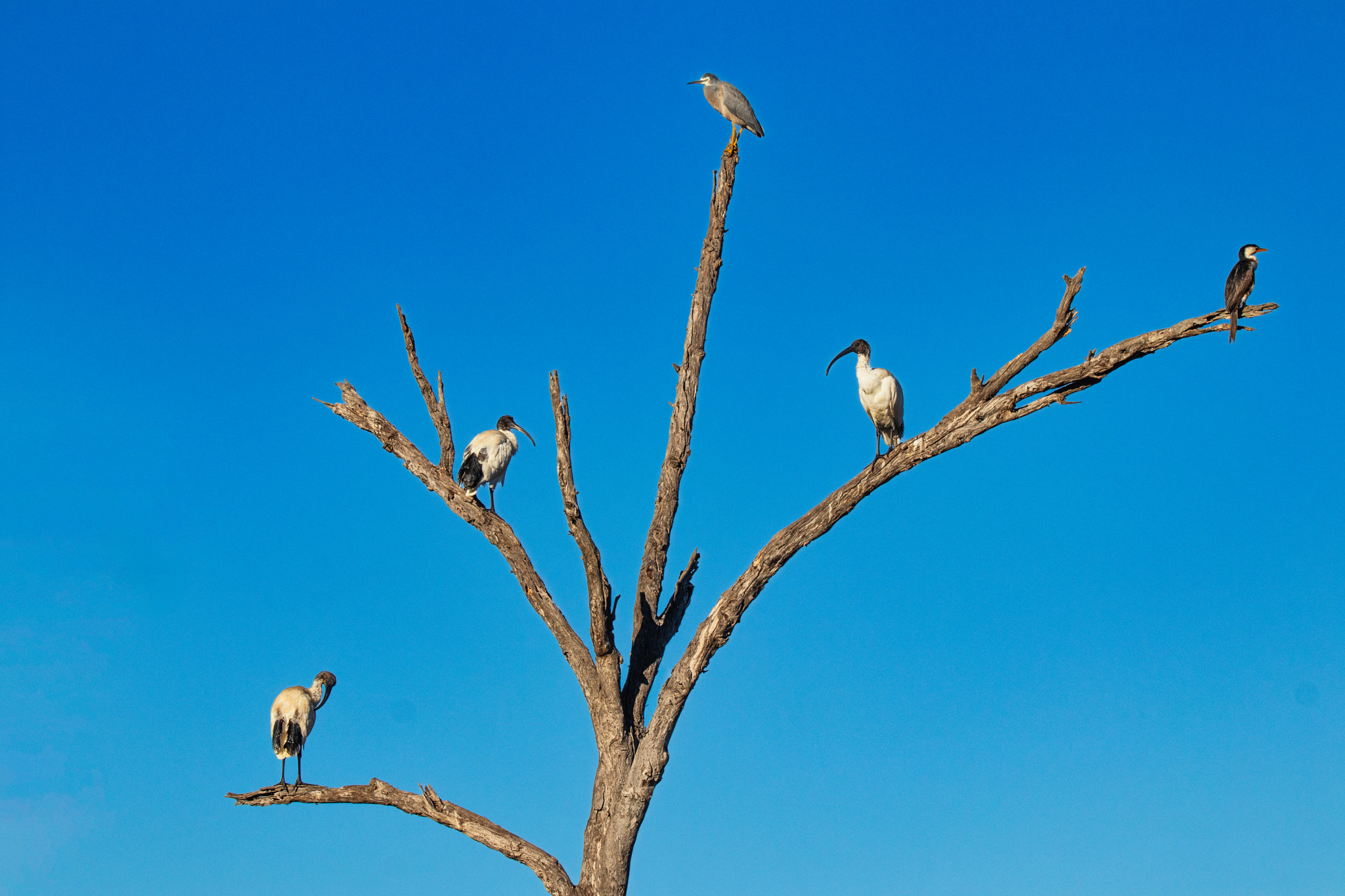
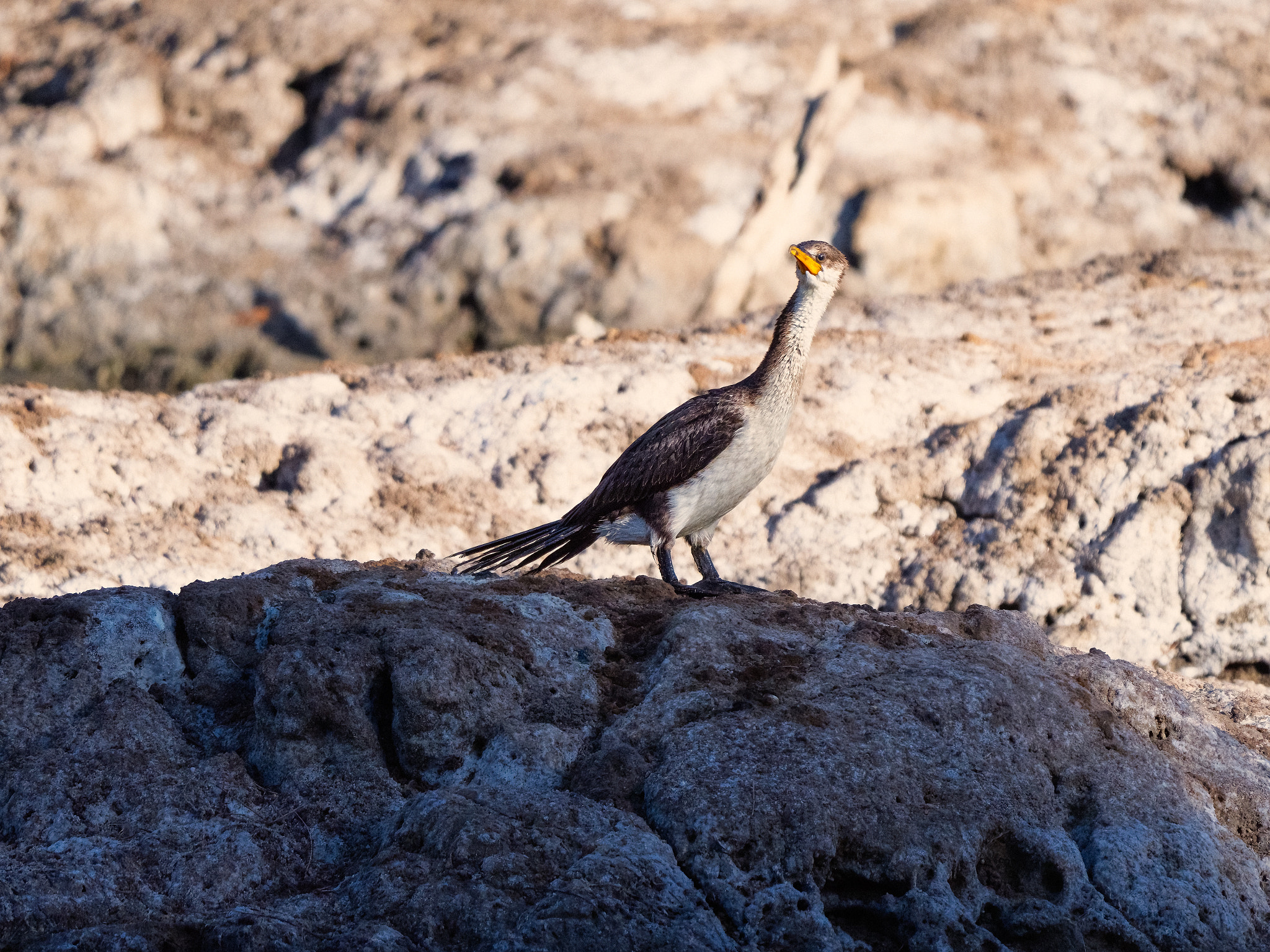
Kakak little pied cormorant (phalacrocorax melanoleucos). It’s rare to hear little pied cormorants calling out to each other, but this morning they were being very vocal. Perhaps they were complaining of being cold.
The rising sun shining through the trees produced some amazing soft golden light.
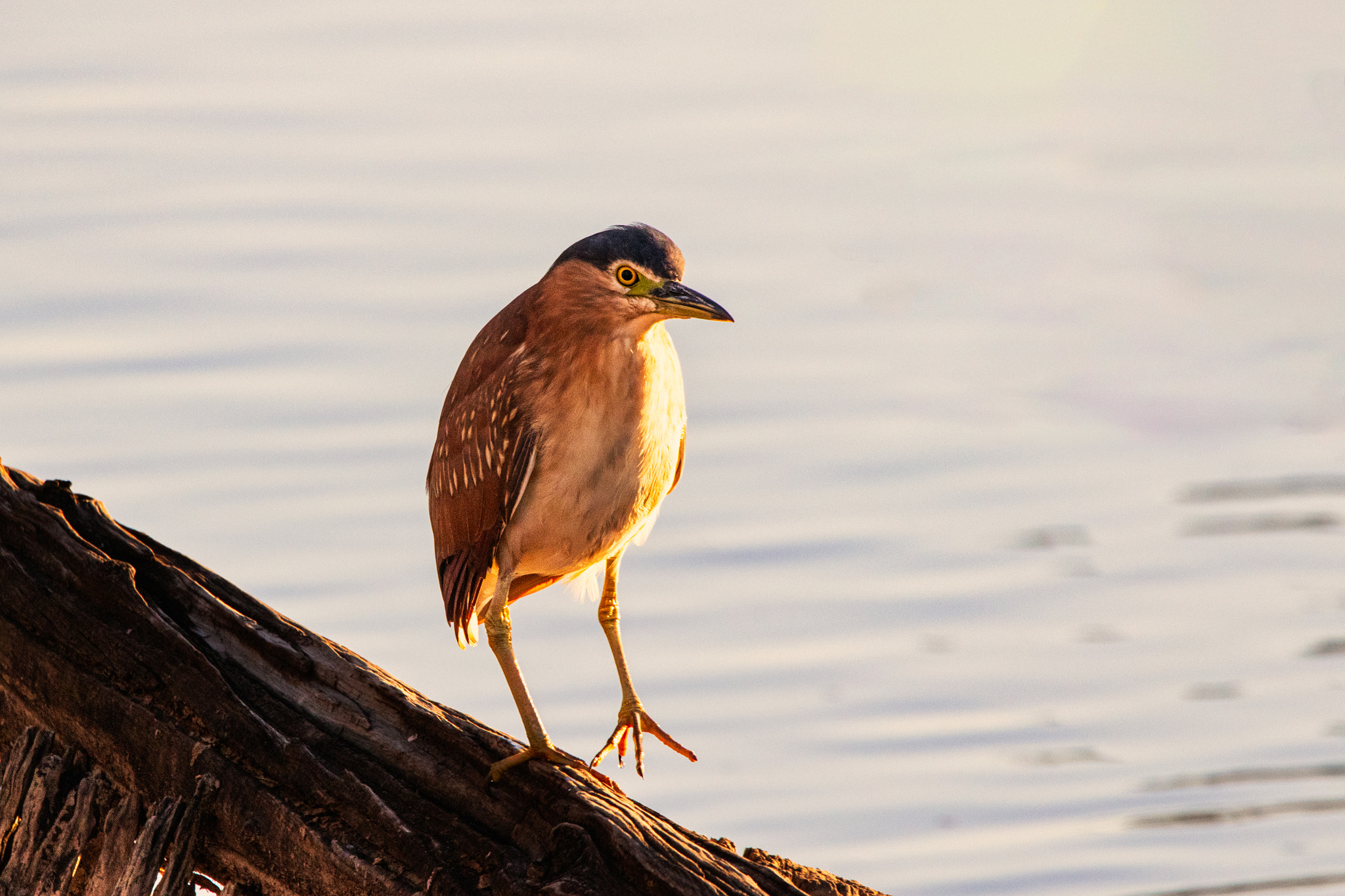
Ngalkaning or Rufous Night Heron aka Nankeen Night Heron (Nycticorax caledonicus subsp mannillenis).
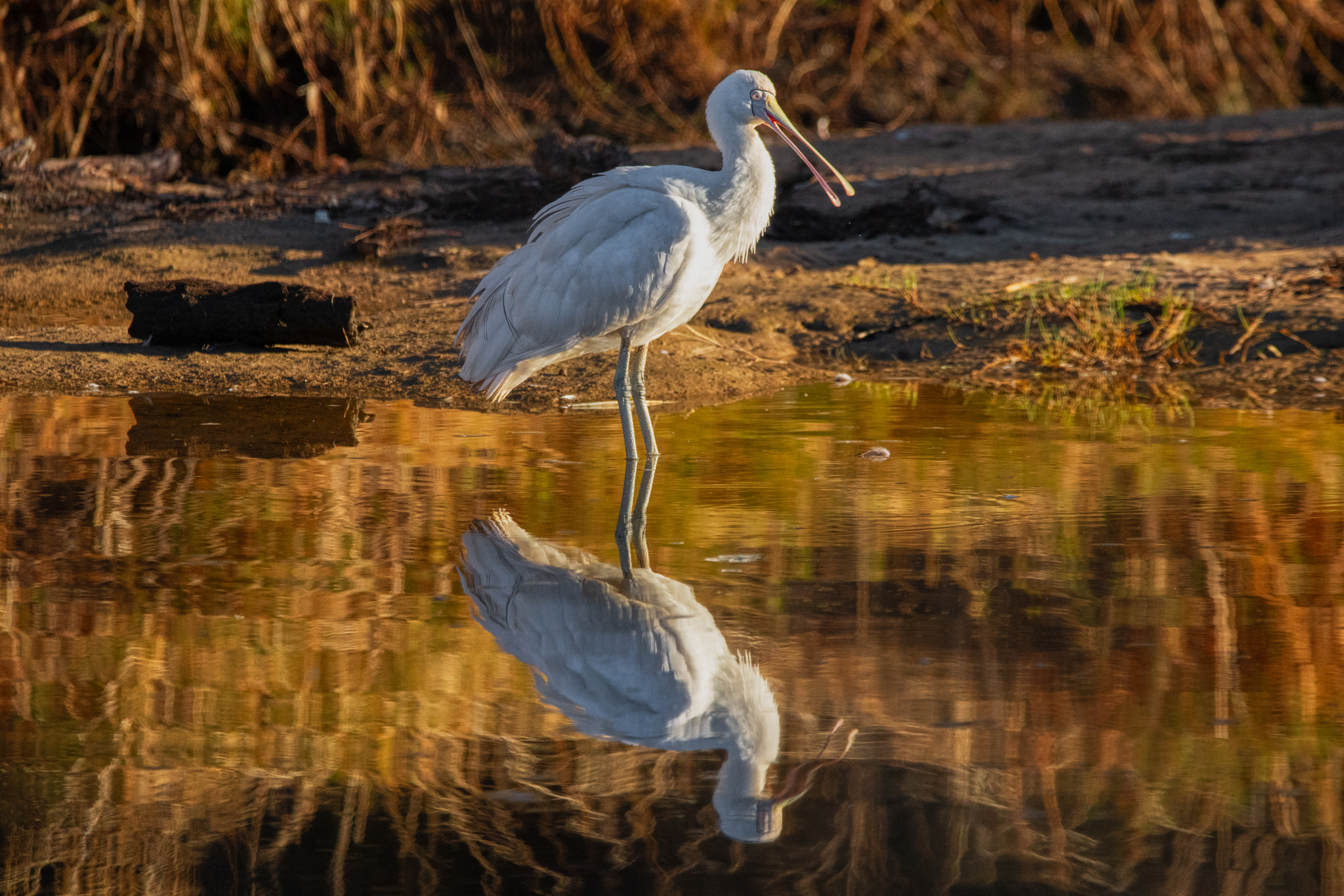
Kaaka-baaka or Yellow-billed Spoonbill (Platalea flavipes).
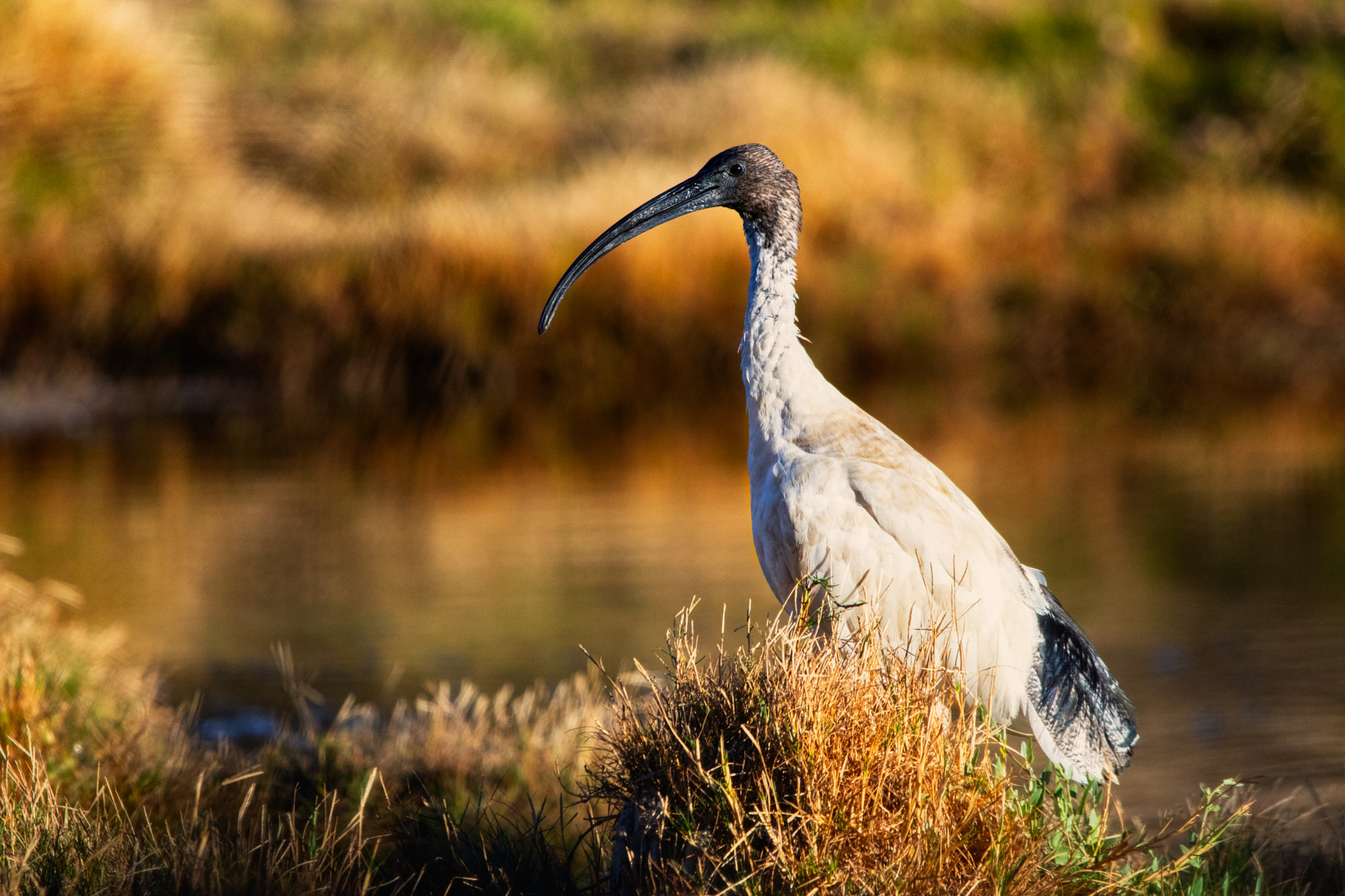
Ngalkaning or Australian white ibis (Threskioris molucca).
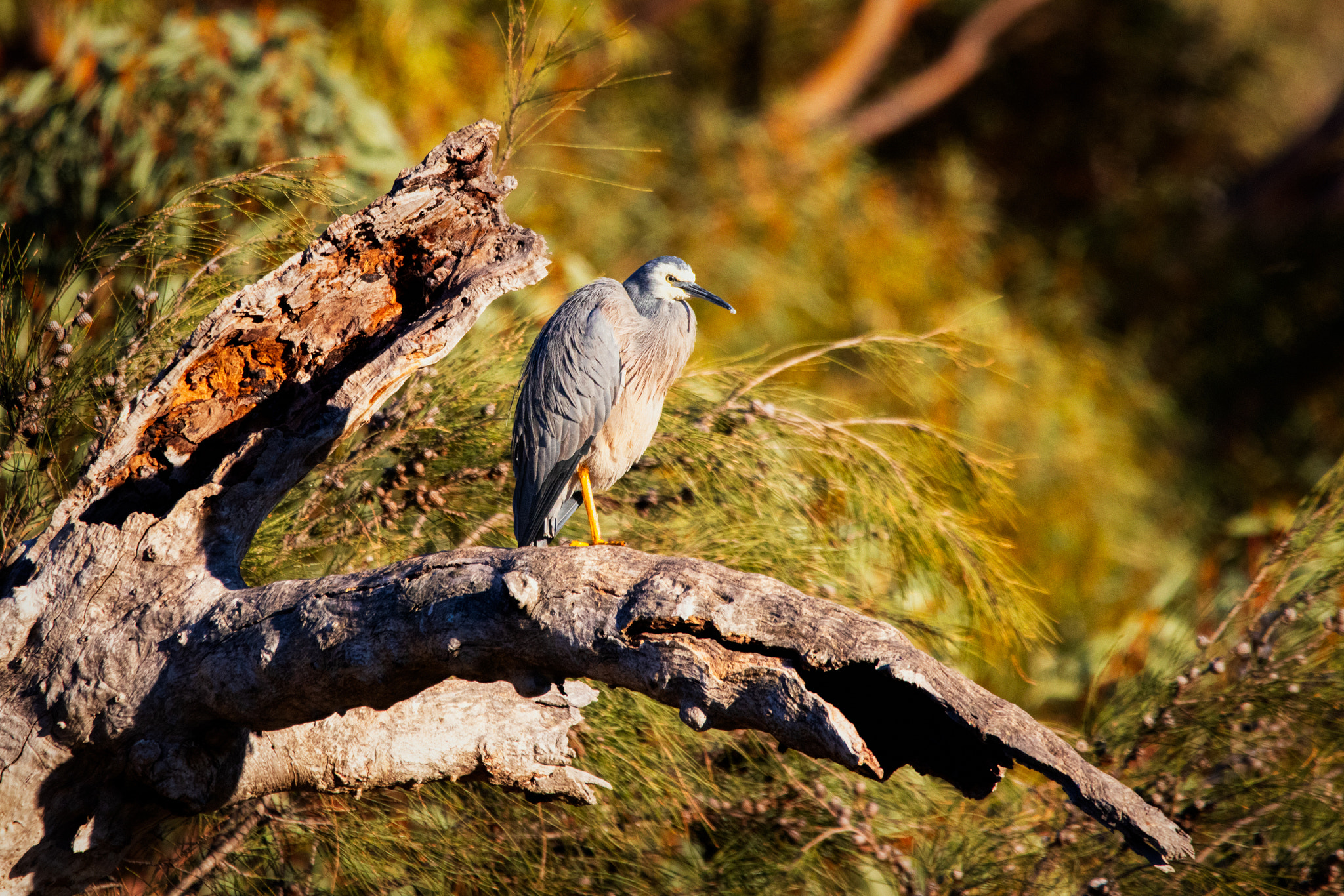
Wayan or White-faced Heron (Egretta novaehollandiae).
On a cold morning on the Avon River some of the inhabitants try catching the sun’s warmth.
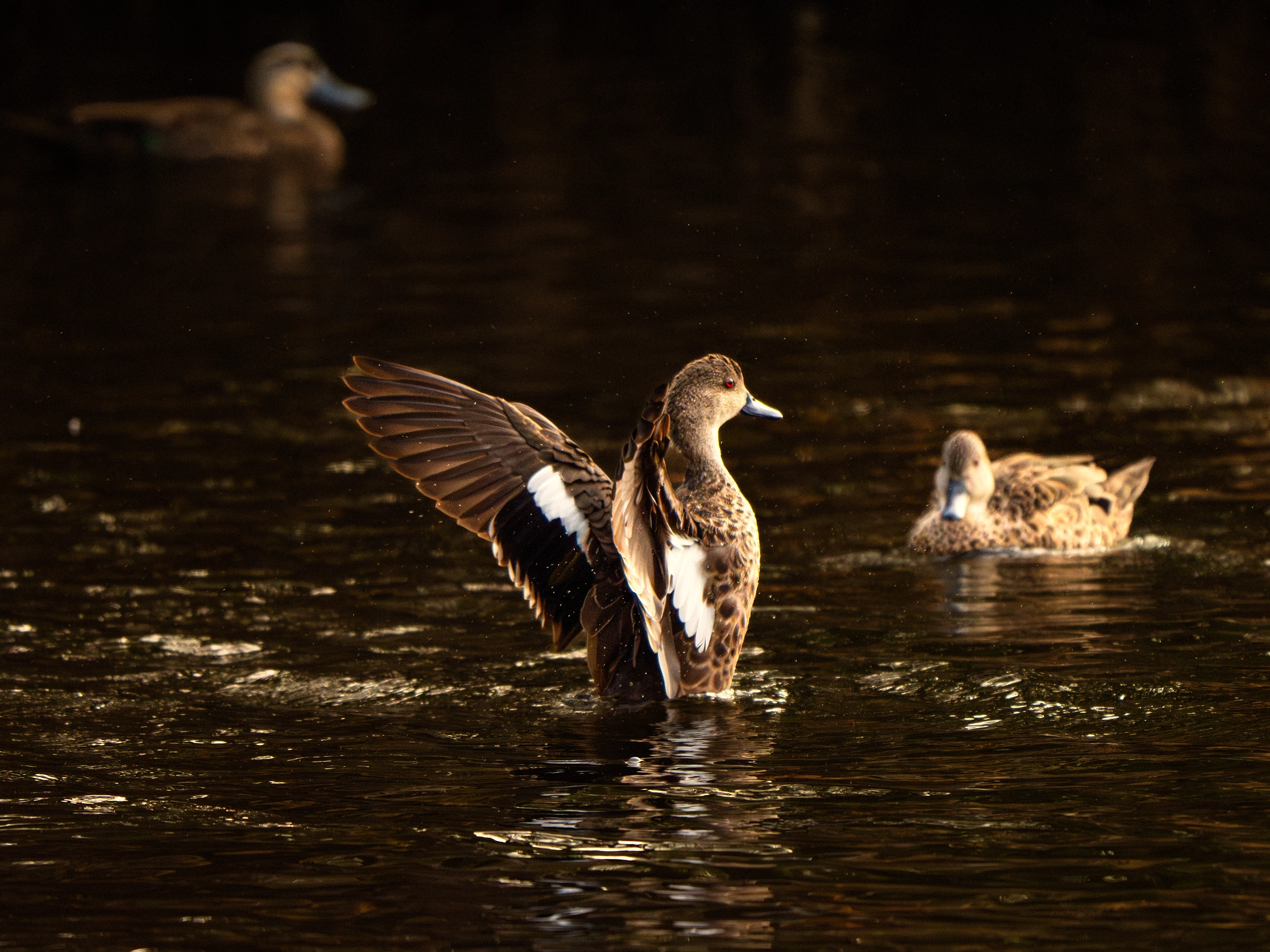
Ooooerrrr! That’s probably not the best thing to say in a blog about bird photography. Rest assured no ducks were harmed in the making of this blog entry.
No ducks were harmed in the production of this blog. Ngoonan or Grey Teal (Anas gracilis). York, Western Australia.
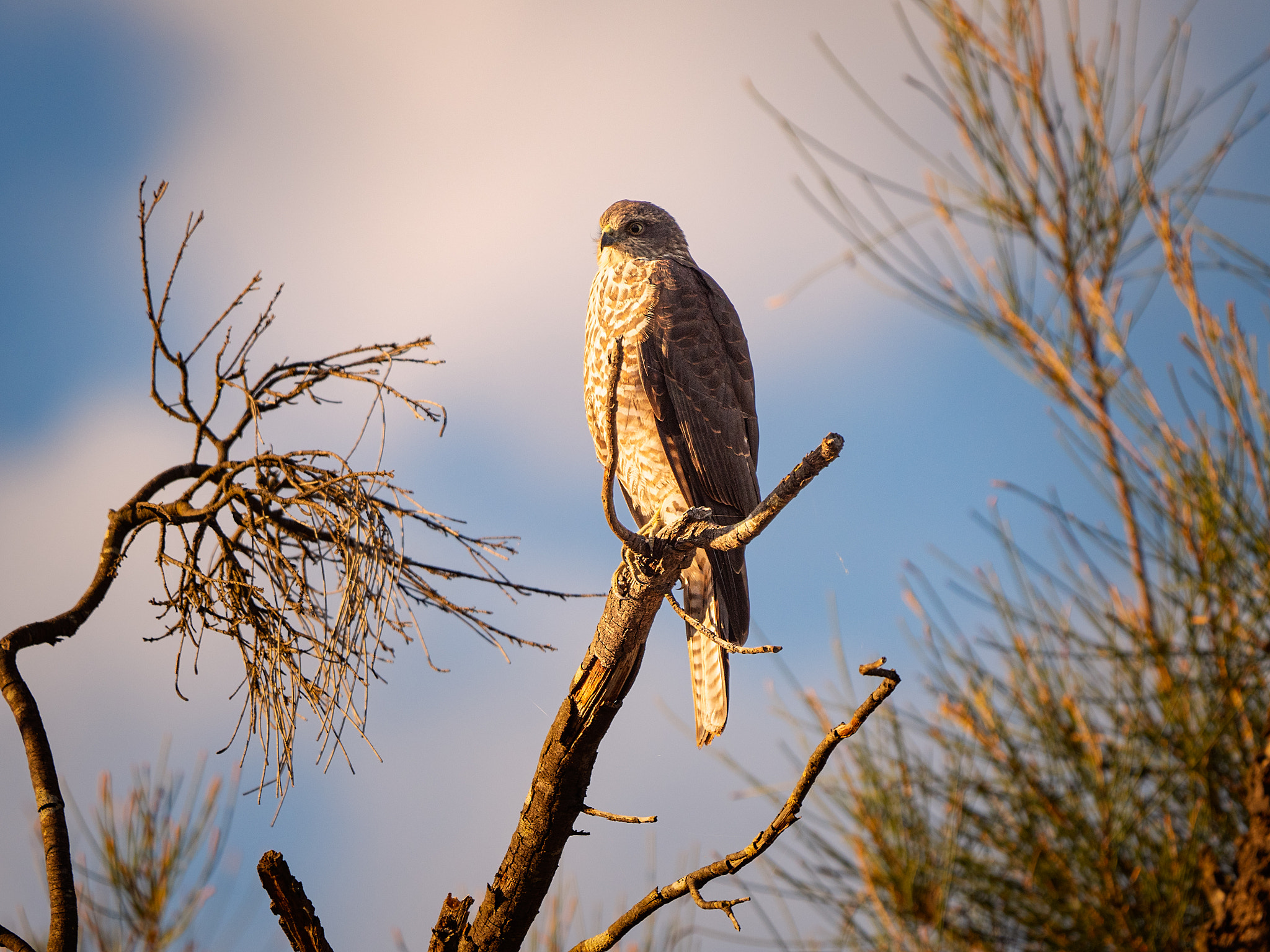
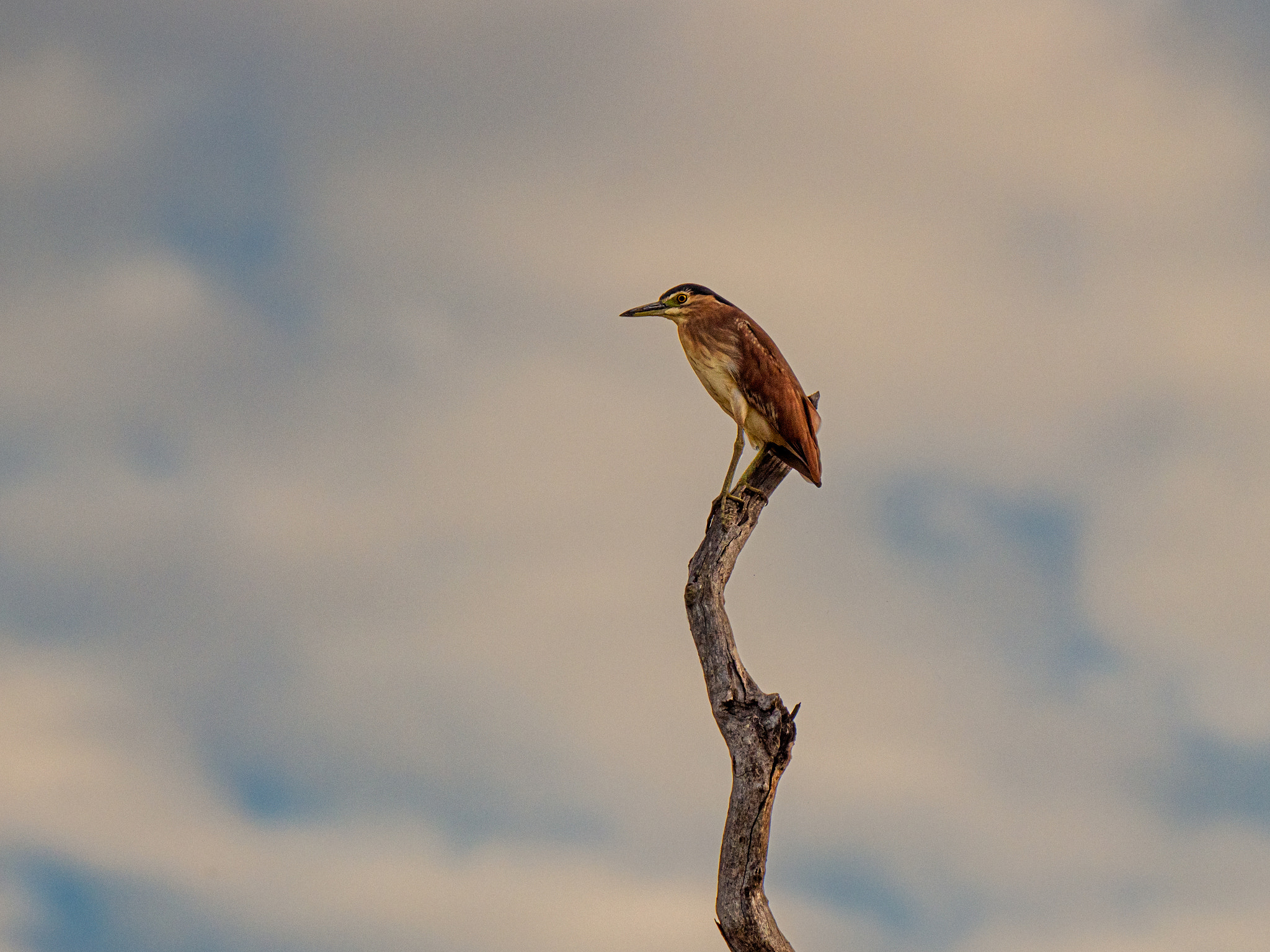
A little while ago I wrote about how my ability to photograph birds had deserted me. Well I can now report that yesterday morning I had a stonker of a morning. I parked up at my usual spot on the River Avon and before I had got my camera bag out of the car I could hear a couple of Brown Goshawks calling out to one another. I could only find one of the birds and it was obligingly sitting in the top of a tree and the first light of dawn was illuminating it nicely. I could hardly believe it! It just kept sitting there unfazed by my proximity and it was I who eventually moved on leaving it there calling out to its mate. This was the best start I’ve had in a very long time and if I’d seen nothing else this would have been tremendous. Just 20m further on and I found a pair of Nankeen Night Herons. By this time I had a grin that went from ear to ear. Walking up to Mile Pool things just got better and better.
Karkany or Brown goshawk (Accipiter fasciatus) basking in the dawn light. York, Western Australia.
Ngalkaning or Nankeen Night Heron (Nycticorax caledonicus subsp mannillenis). York, Western Australia
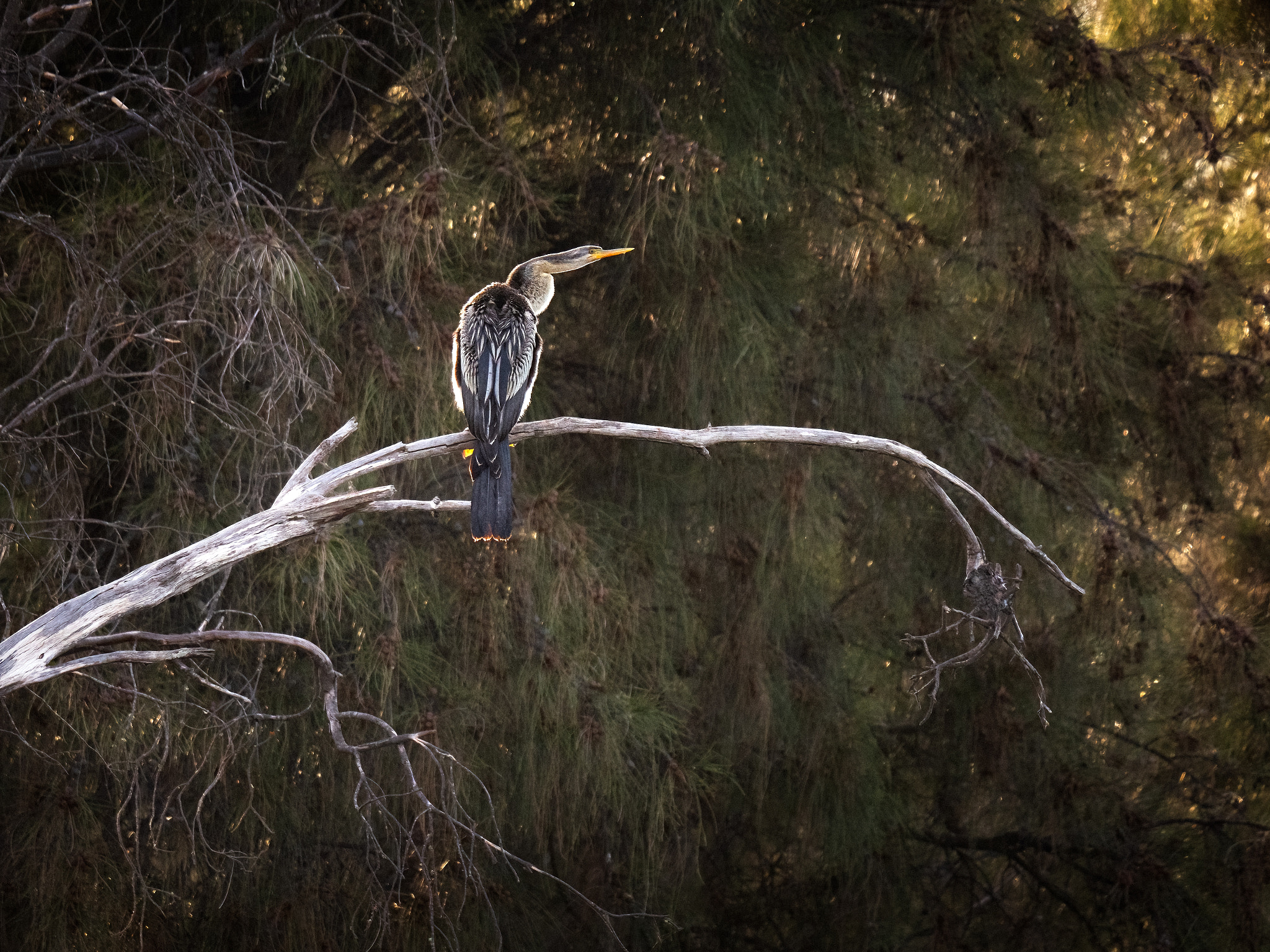
Mimal or Australian Darter (Anhinga melanogaster subspecies novaehollandiae). York, WEstern Australia.
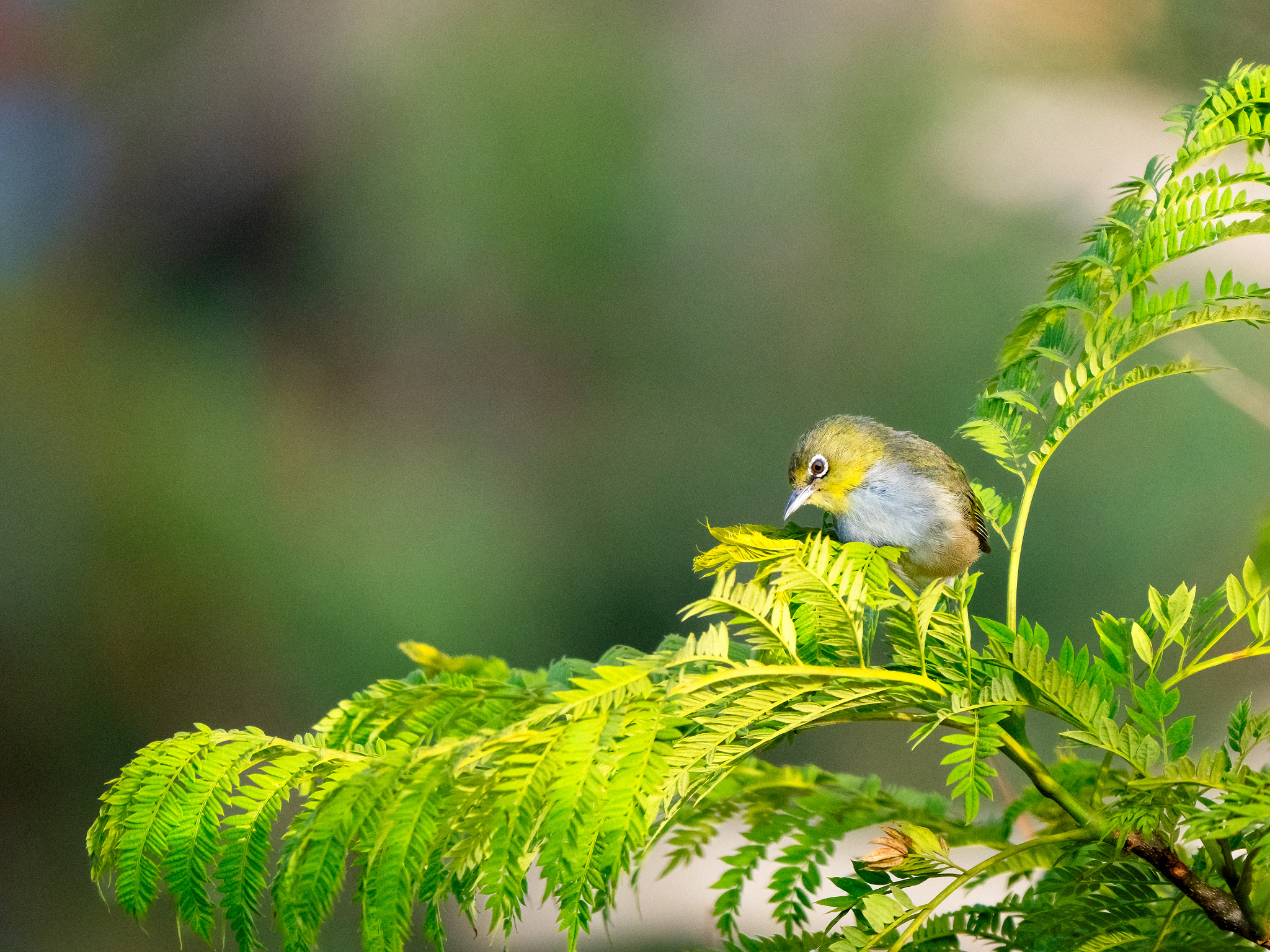
Doolor or Silvereye (Zosterops lateralis). York, Western Australia.
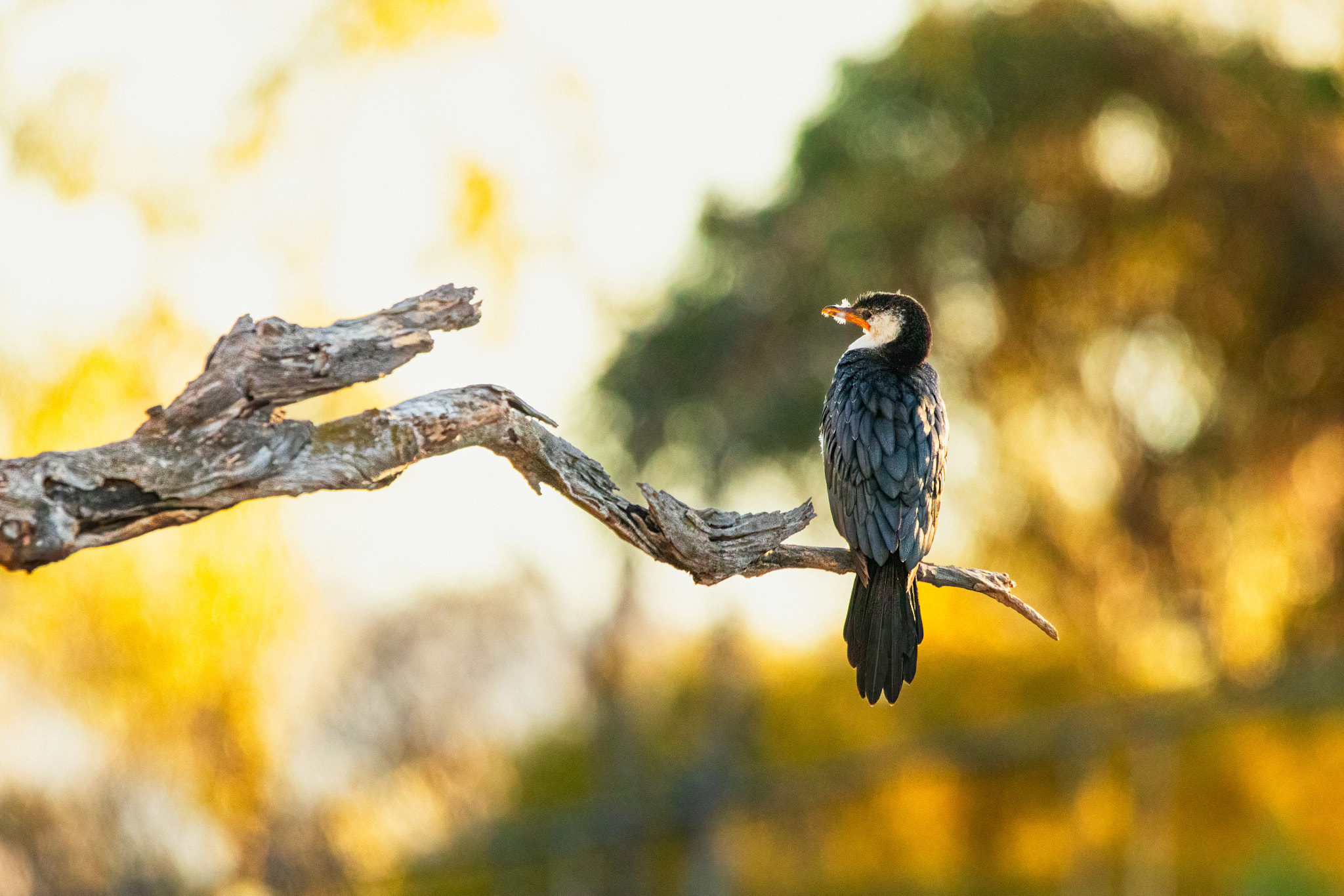
Kakak or Little Pied Cormorant (Phalacrocorax melanoleucos). York, Western Australia.
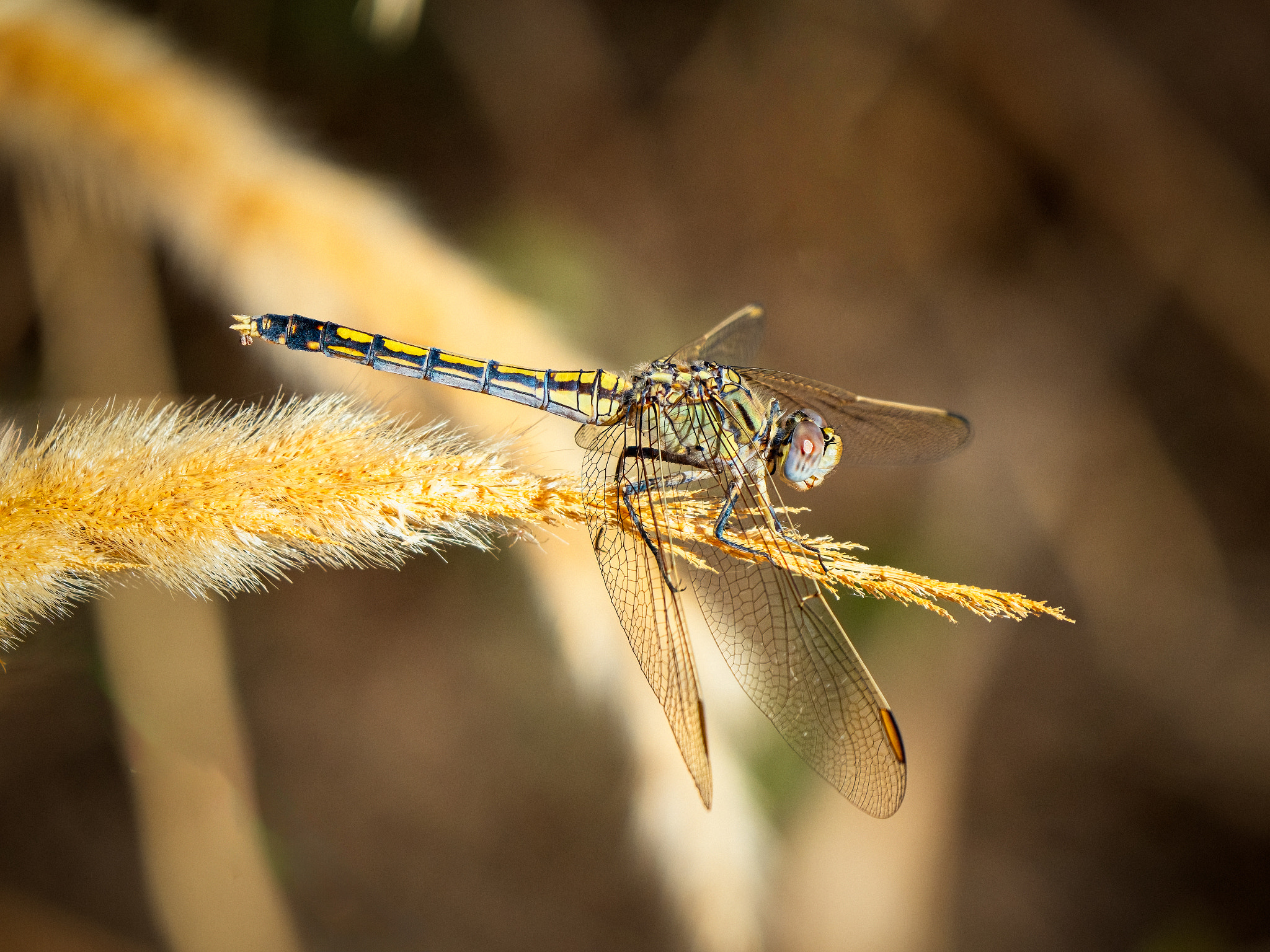
Western Inland Hunter, Austrogomphus collaris. York, Western Australia.
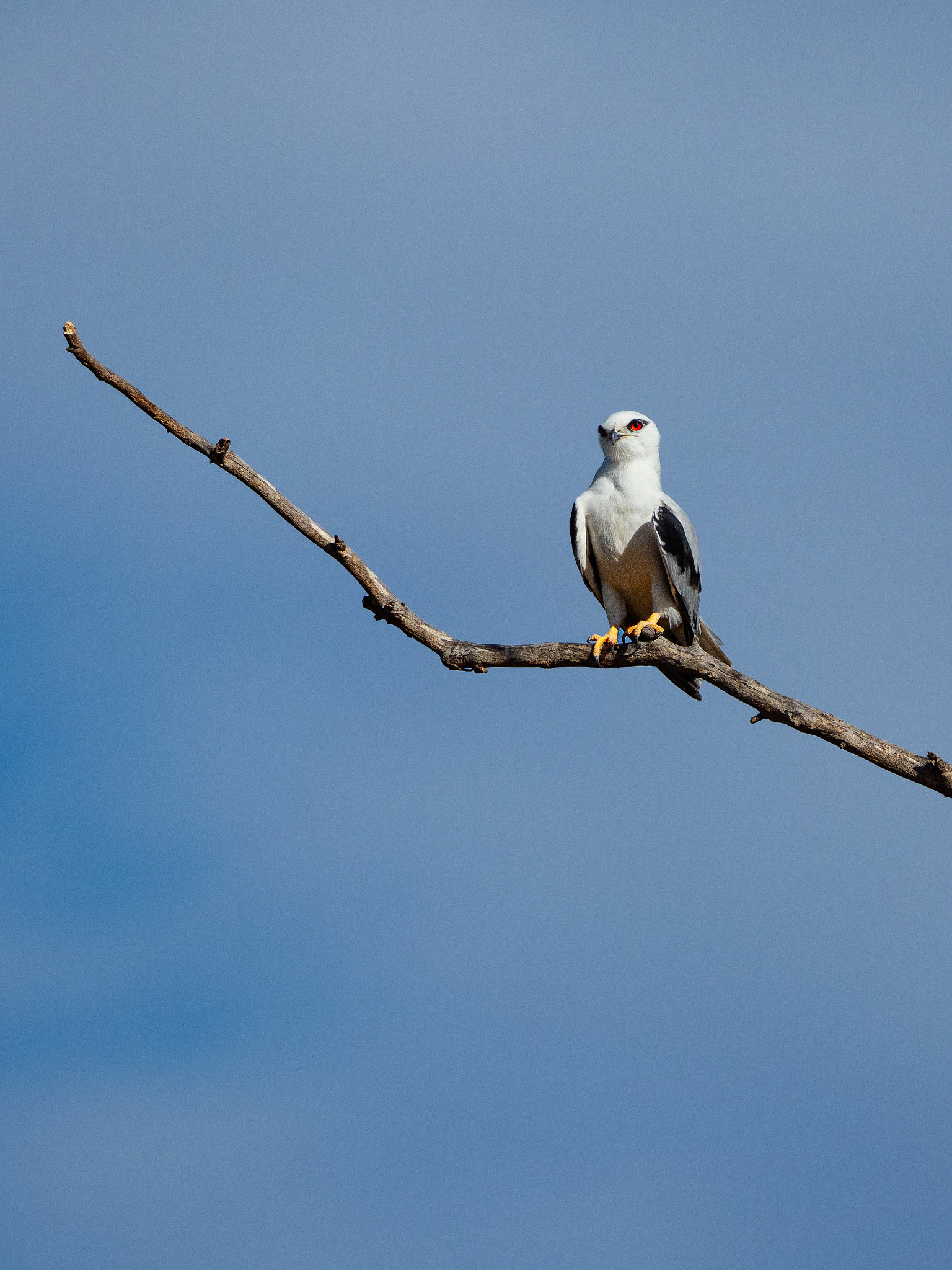
We’ve had some really hot days with temperatures exceeding 40ºC and this has meant there were a lot of birds congregated in the trees around the few remaining pools of water. By 8am the temperature was starting to soar and there was less bird activity. So I changed lenses and went looking for dragonflies and damselflies. I found some but the warmth had supercharged them and they were proving difficult to photograph as they would not sit still for very long. At 8:30am I decided that it was too hot and decided to call it a day. As I started to put my camera away I glimpsed a white bird sitting in the top of a dead tree. At first I thought it was just a corella, but there was something about the way it was moving made me think it was something else. Looking through the camera I could see those unmistakeable red eyes of a Black-shouldered Kite. Panic set in now as I didn’t have the right lens on. So calming myself down I changed lenses and started making my way closer to the bird. Usually what I do is wait for the bird to look in another direction then edge forward by a metre. I then stop take a few photos and then when it looks away again edge forward and take more photos. Like this I managed to get within 20m of the Kite. It looked quite relaxed spending most of its time scanning the ground below looking for food. After a little while it did a dump – birds often do this just before taking off, I suppose it lightens the load – and then took off in a lazy curve towards some taller trees. It was bloody brilliant! My only regret was that because there was insufficient cover I couldn’t get closer, but there’s always next time.
Black Shouldered Kite, Elanus axillaris. York, Western Australia.
By Western Australian standards it is freezing – well 2ºC – and just after dawn. I find myself sitting in a reed bed wondering why I abandoned a nice warm bed to be wet and cold.
Waradja or Spotless Crake (Porzana tabuensis). Lake Leschenaultia, Western Australia. A bit of a grab shot. It was taken with a geriatric Canon EOS 300d and an equally old Canon EF 75-300mm lens. Unfortunately the bird moved too quickly and the camera’s autofocus system wasn’t able to keep up.
Well the answer to that is four weeks ago I was here at Lake Leschenaultia mucking about with an old camera and lens when I spotted a small bird in the reeds that I’d not seen before. I grabbed a quick photo but it disappeared back into the reeds before I could properly sort myself out. When I got home I identified the bird from the blurry grab shot as a Waradja or spotless crake. Since then I’d been full of good intentions to go back and try to get a better photo, but,they were sabotaged by a great deal of procrastination until the other day when I’d decided to resurrect an old favourite camera of mine – the original Canon EOS 5d from 2005. The original batteries had perished and would no longer hold a charge so I got a set of replacements and found a couple of memory cards at the back of a drawer. I just needed something to point it at, and that is when I remembered the spotless crake.
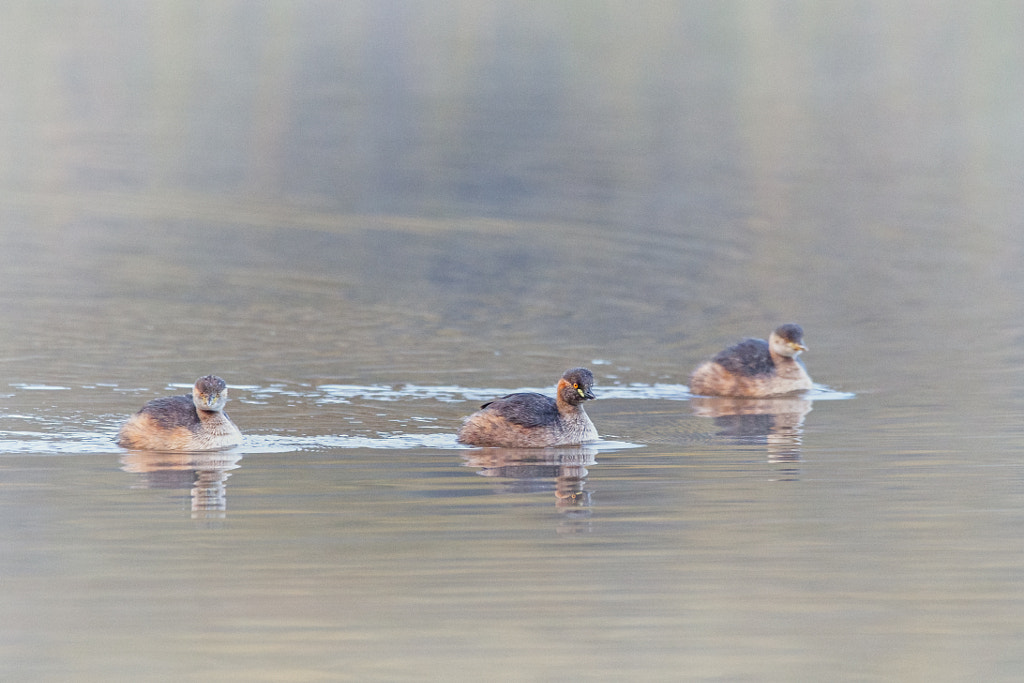
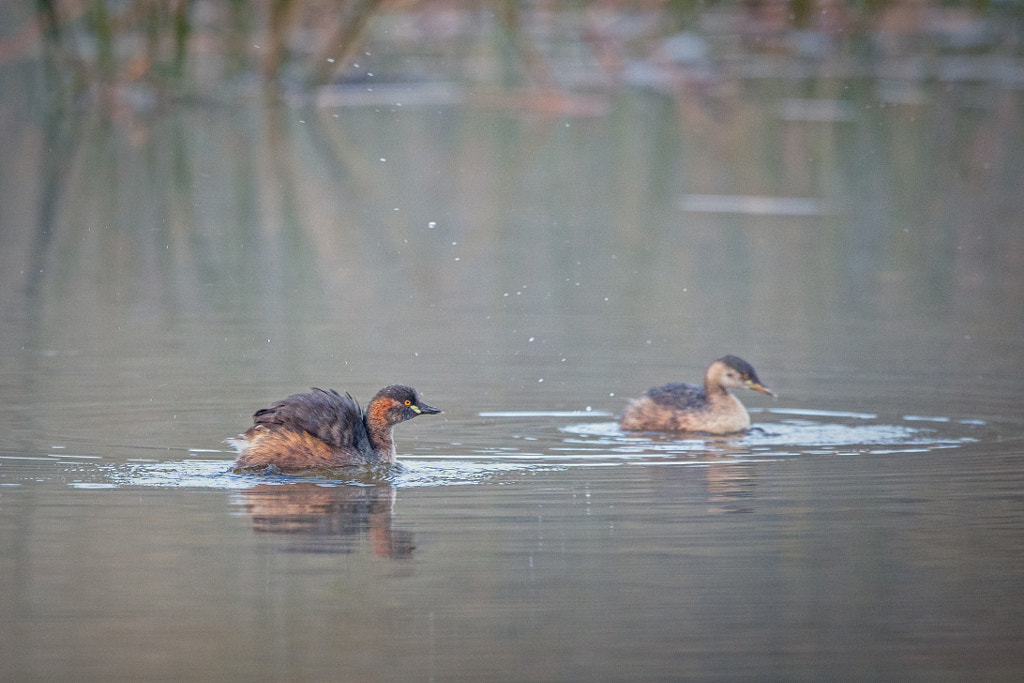
A flotilla of Ngoonan or Australasian grebe (Tachybaptus novaehollandiae) came to check out what I was doing.
After a quick shufti they headed off to the centre of lake.
Things had changed considerably in the ensuing four weeks. There had been a lot of rain and the water levels had risen considerably. So much so that the area where I saw the bird was now under water. The other thing that had changed was that there was a lot of noisy building work going on – and when I mean noisy I mean really loud. Combine this with the cold and it was no surprise that there were no birds on the lake, not even the Eurasian Coots. Undeterred I parked myself in among the reeds as close as I could to the place where I’d seen the spotless crake and just waited. Some large jarrah trees cast their shade over me so I didn’t get the warming effect of the rising sun. After a couple of hours a flotilla of Australasian Grebes approached and gave me the once over and then made off to centre of lake to be in the sun. By now I was really cold and miserable. It was obvious that the spotless crakes weren’t going to put in an appearance so I decided to walk down the other side of the lake to warm up in the sun and restore some feeling back to my feet.
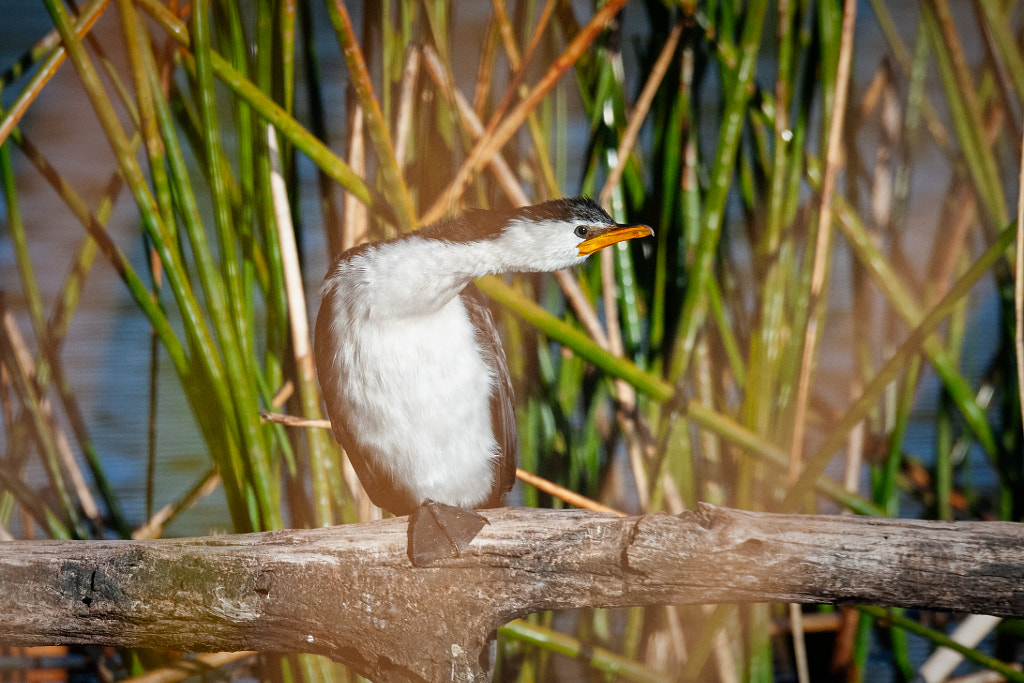
This Kakak or little pied cormorant (Phalacrocorax melanoleucos)was glad to see me move as I was disturbing its morning.
As walked past the dam wall I could hear the commotion of a whole heap of passerine birds moving through the forest understory. There were New Holland Honeyeaters, assorted thornbills, grey fantails and weebills. But, what really caught my attention were the splendid fairy wrens chasing insects at the waters edge. They were chasing small insects and occasionally they would perch on an old log or tree stump. For text twenty minutes or so I just took photos of them and then as quick as you like they were gone.
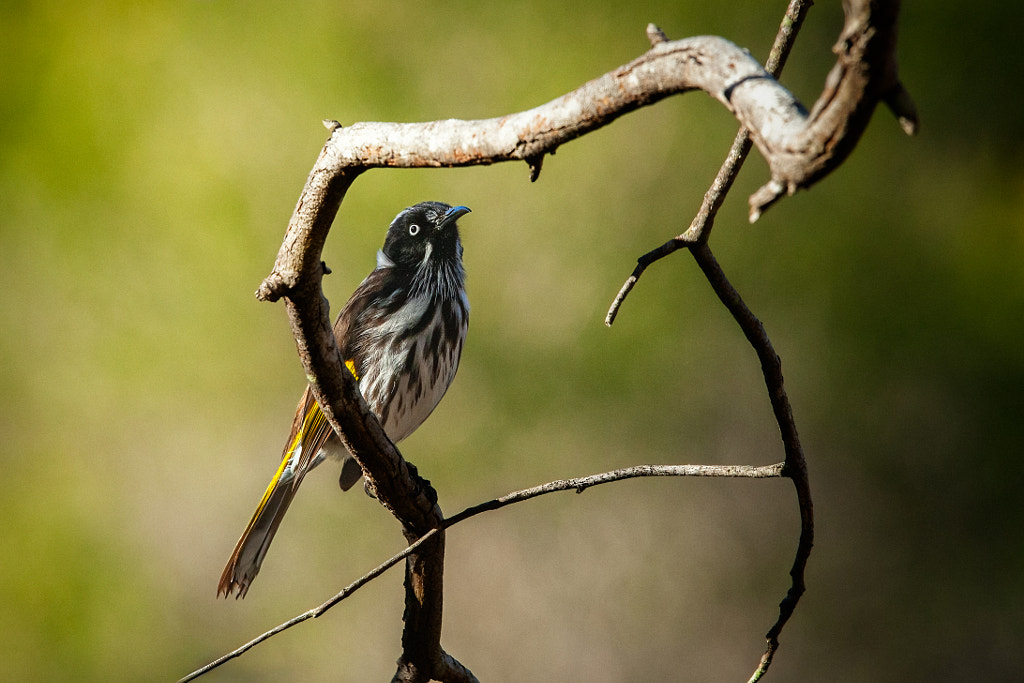
Bandiny or New Holland Honeyeater (Phylidonyris novaehollandiae) was one of the small passerine birds flitting about in the understory.
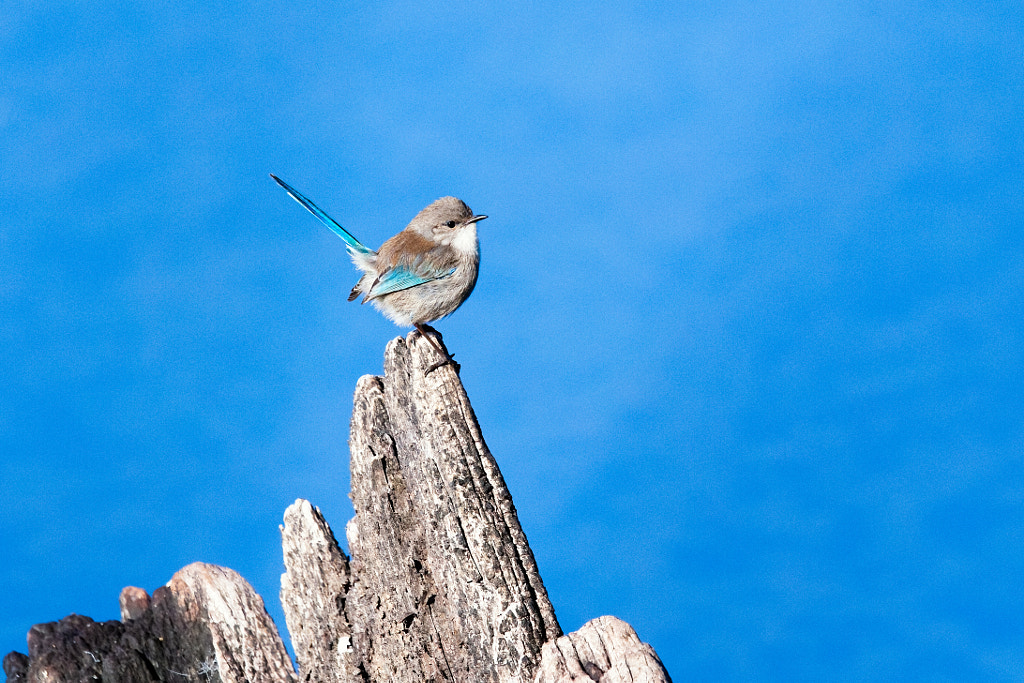
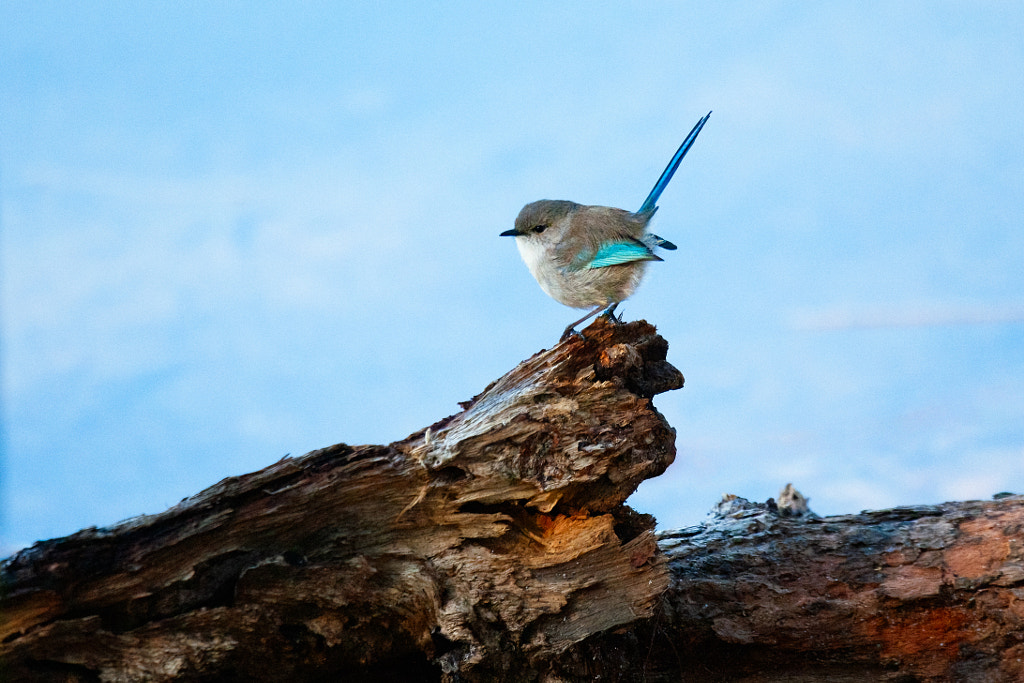
Djer-djer or Splendid Fairy-wren (Malurus splendens)catching the warmth of the sun.
Time out from chasing insects.
Is a splendid fairy wren on a log worth an invisible spotless crake in the reed beds ? Yes it was this time.
The Olympus M.ZUIKO DIGITAL ED 75-300mm f/4.8-6.7 II mounted on an OMD EM-10.
The Olympus m.Zuiko 75-300mm f4.8-6.7 mk ii (which shall now on referred to as the 75-300) is an updated version of their original super telephoto zoom for the micro four thirds format.Yes I said super telephoto zoom because that is what it is as it is equivalent to a 150-600mm lens in 35mm sensor terms.
The Olympus M.ZUIKO DIGITAL ED 75-300mm f/4.8-6.7 II mounted on an OMD EM-10.
The Olympus M.ZUIKO DIGITAL ED 75-300mm f/4.8-6.7 II compared with Canon EF 75-300 f4.5-5.6 IS for comparison. The Olympus gives an equivalent focal length of 150-600mm.
Keeping up with the m4/3s promise of smaller cameras and lenses this lens does not disappoint. It fits comfortably in the hand is quite a bit smaller than my Canon 75-300mm f3.5-5.6 IS which only covers half the focal range when mounted on my EOS5d. There are rumours on the various forums that the lens is designed and built by Sigma, but there is no evidence of that fact when looking at it. The 75-300 is largely constructed from engineering plastic and has a metal mount. There is no weather sealing. The lens extends while zoom, roughly doubling its length, there is no lens creep which is nice. While not heavy it feels reassuringly dense in the hand and not at all cheap and wobbly like some budget zoom lenses.The filter diameter is 58mm which it shares with the 40-150mm f4-5.6 and means that filters won’t be too pricey. Optically the lens has 18 elements in 13 groups, two of which are ED glass and one is Super ED (extra low dispersion). These exotic elements are there to minimise chromatic aberration throughout the zoom range. They certainly do the job for when I open up images shot with the 75-300 in Lightroom they are remarkably free of CA. The lenses elements are coated with Olympus propriety ZERO (Zuiko Extra-low Reflection Optical) coatings and I’ve found the lens to be quite resistant to backlit flare, however flare can be induced by bright light sources just outside of the frame so I would heartily recommend the use of a lens hood. Unfortunately Olympus does not include one in the box.
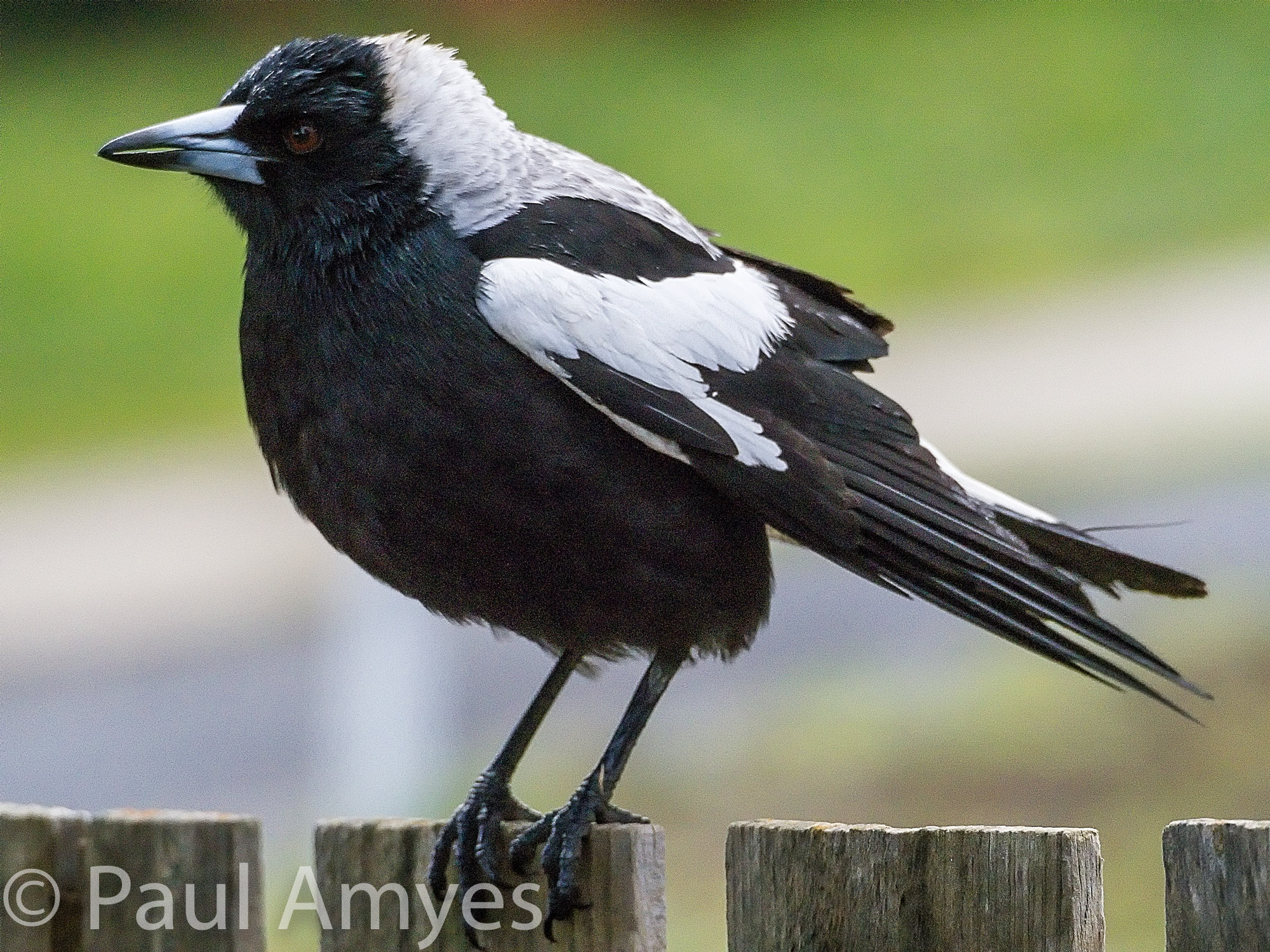
Cracticus tibicen hypoleuca is a subspecies of white backed magpie found on Tasmania, King and Flinders Islands.
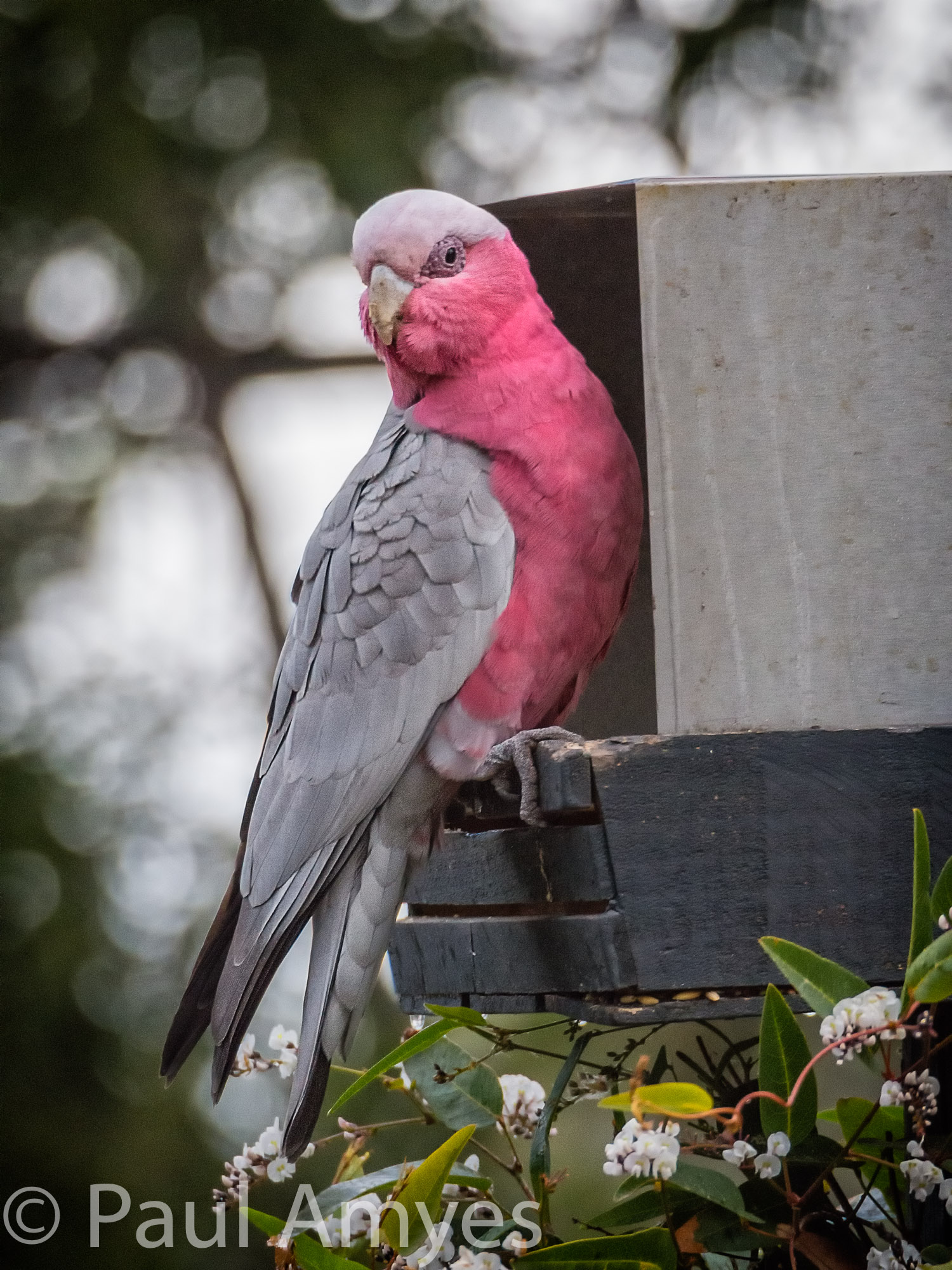
A pink and grey galah at our bird table.
Performance wise the 75-300 is remarkably good for a lens of this price and zoom range. The AF is quick and precise when shooting stills on both my EM-10 and EP-5, and quite a lot slower when shooting video. Optically the lens is very sharp up until the 200mm mark and then it does soften slightly, but this is not at all unusual with zoom lenses, which is unfortunate because this lens will be bought more for its uses at 300mm than 75mm. There is not a lot of love for this lens on the internet forums where it is harshly criticised for it performance at the long end, but from my experience with it it’s not as bad as people make out. I wonder whether camera shake is a contributing factor here. While Olympus bodies have In Body Image Stabilisation (IBIS) there is a limit to what it can achieve and we have to remember that this is the equivalent of a super telephoto 600mm lens in full frame terms and not many people would expect to handhold one of those and get tack sharp results. When using the lens on a tripod and monopod it certainly delivers the goods. When handholding I would certainly recommend not using a shutter speed of lower than 1/300th sec even when using IBIS.
Kite surfing off Park Beach in Tasmania.
Kite surfing off Park Beach in Tasmania.
Downsides of the 75-300. Well the slow maximum aperture will be a drawback for many, and I’ve read many threads where people have stated they would have preferred a constant f4. This all very well but lens design is a compromise and such a lens would be very large and heavy and cost considerably more. Personally I don’t mind using higher ISOs to keep the shutter speeds up as I’m happy to clean up my images with Niksoft’s Denoise. Another downside is when shooting video – this is not really a lens for run and gun style shooting, it is much to long to effectively control shooting handheld. Even on a tripod the lens showed up the failings of my fluid head for when panning there was quite a pronounced shudder when using it at its longest end.
Overall I feel that the few drawbacks are outweighed by the positives and I like this lens a lot. It is a very good lens when one considers the price. In Oz a full frame equivalent will cost at least double. I would recommend the 75-300 to anyone who was prepared to accept the trade offs involved i.e compact size and affordability versus the slow maximum aperture and the slight softening of the image at the long end. At the time of writing this there is only one other alternative, the Panasonic Lumix G.Vario 100-300mm f4-5.6 OS, which is at the same price point and has a similar performance. I would only consider the Panasonic over the Olympus if I was shooting on a Panasonic camera which has no IBIS. Both Olympus and Panasonic are introducing higher performance lenses at the 300mm focal length at some time in the near future, but I think we’ll find they are considerably bigger and more expensive.
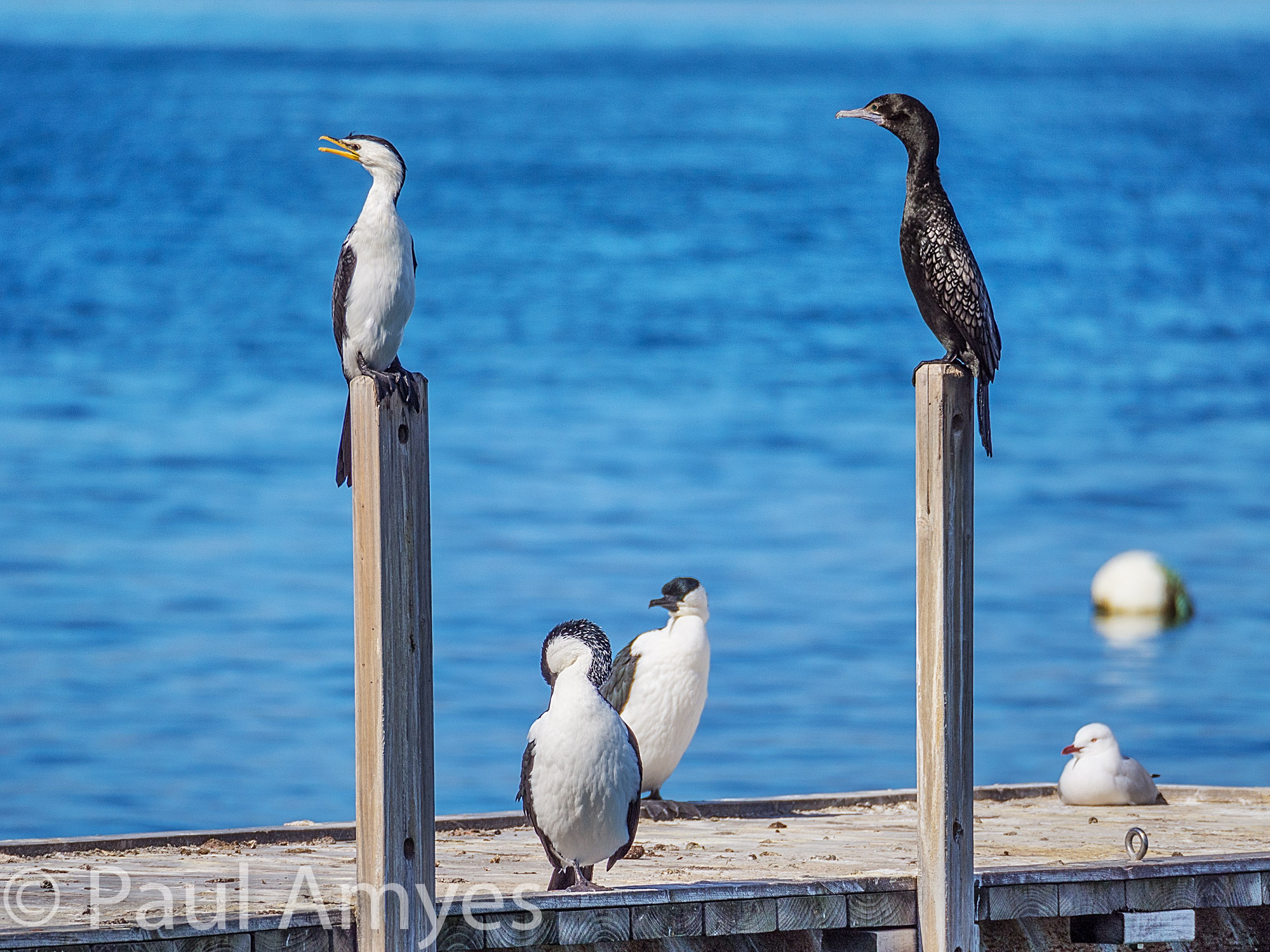
Two black faced cormorants, a little black cormorant, and a little pied cormorant hang out while a silver gull watches on. Lewisham, Tasmania.
Frida giving me a cheeky grin while waiting for me to catch up.
So if you fancy doing a bit of sport or wildlife photography then I would thoroughly recommend this lens to all Olympus users.








You must be logged in to post a comment.