Our poor old car started to sound as if it had a terminal condition. It produced an incredible range of noises from the engine and gearbox. With over 200,000 km on the clock it wasn’t surprising in someways. I took it into the mechanics and it came back with even more strange noises. So while we sorted out a replacement I’ve been somewhat grounded and most of the recent photography has taken place within the constrains of the garden. Most of it macro of various bugs that I’ve found, some of it shots of Bertie, our Miniature Bull Terrier puppy, as he plays. It’s been great fun.
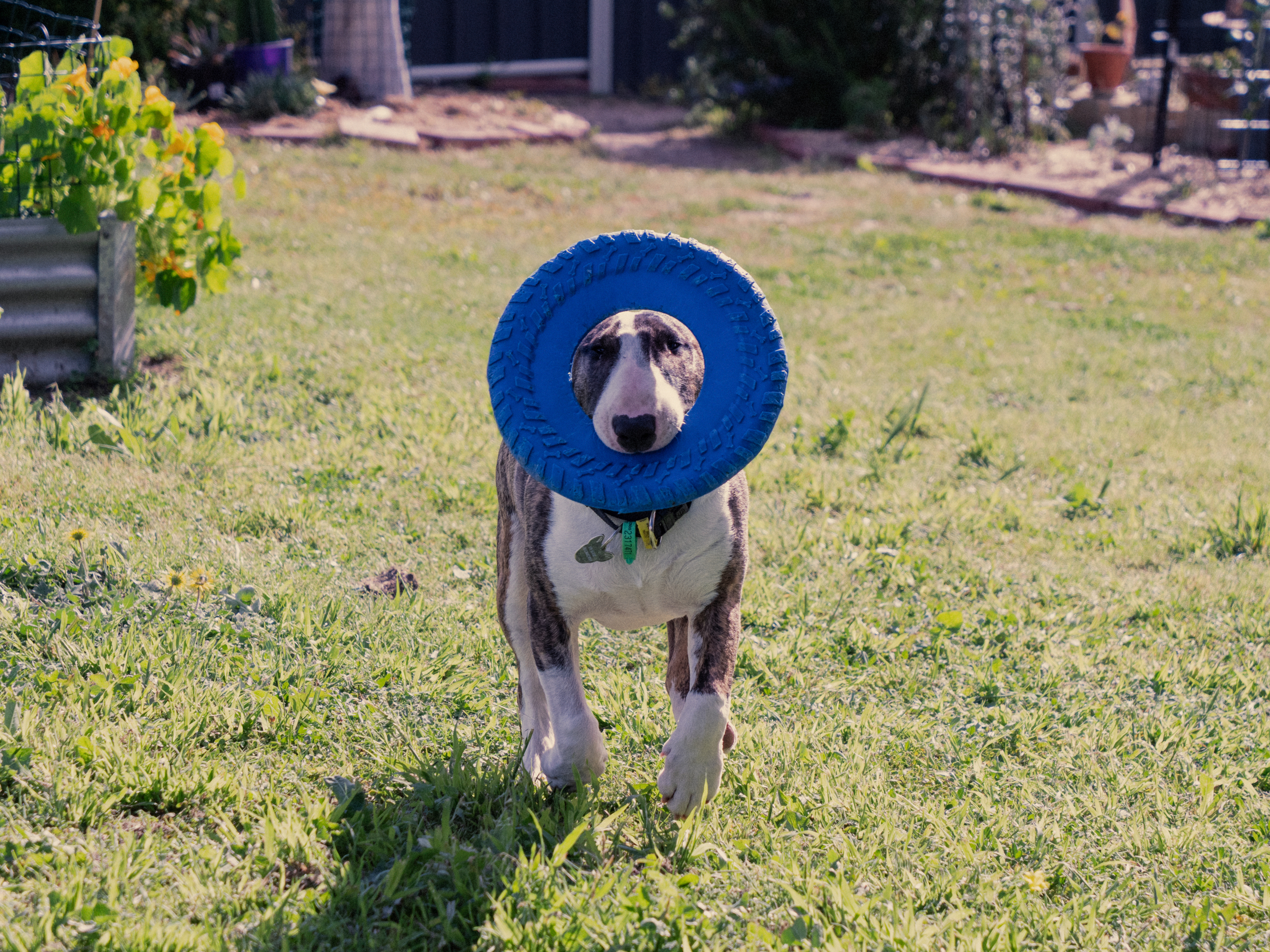
Bertie playing with his ring in the garden.
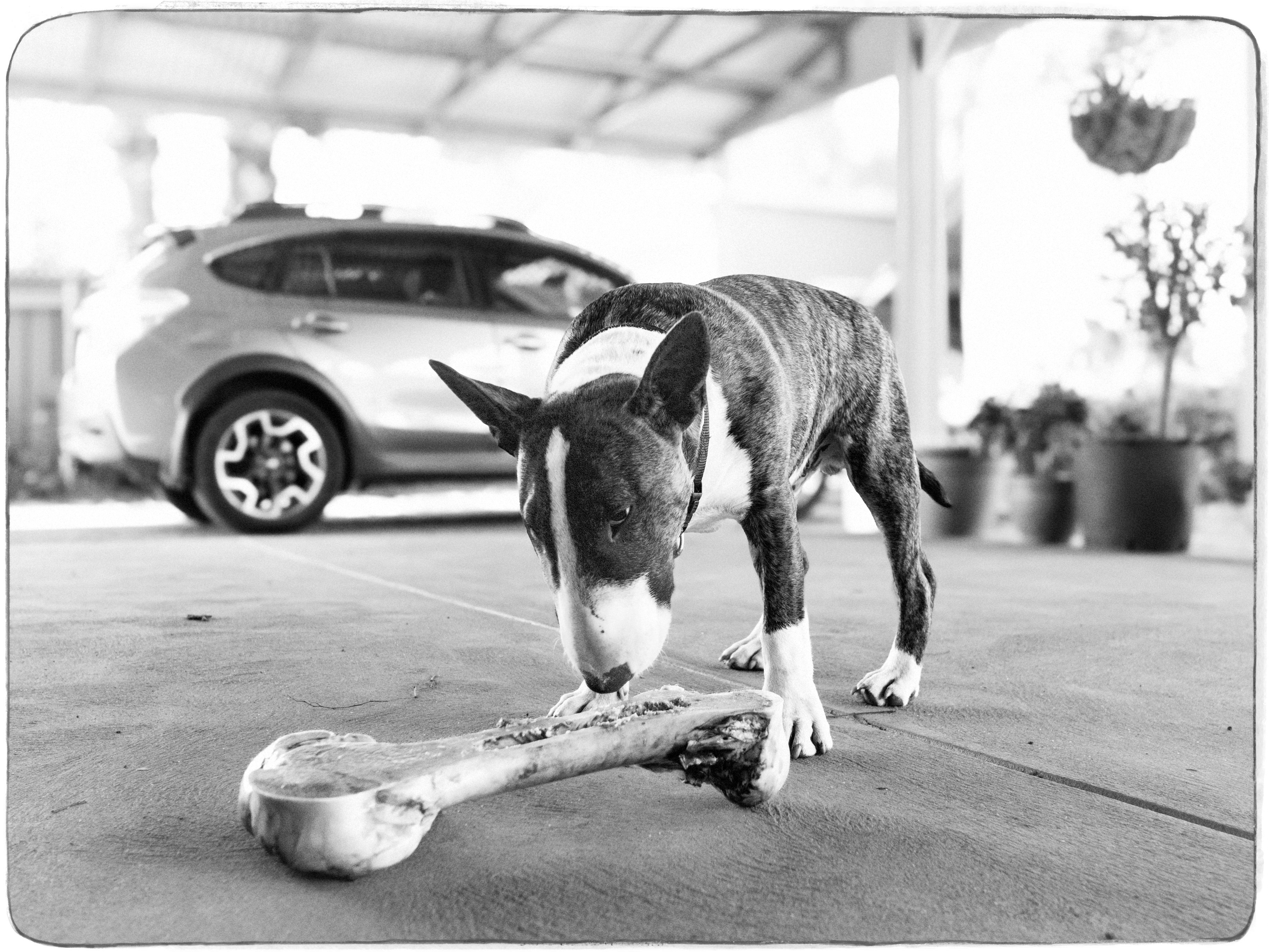
Bertie with his first marrow bone.
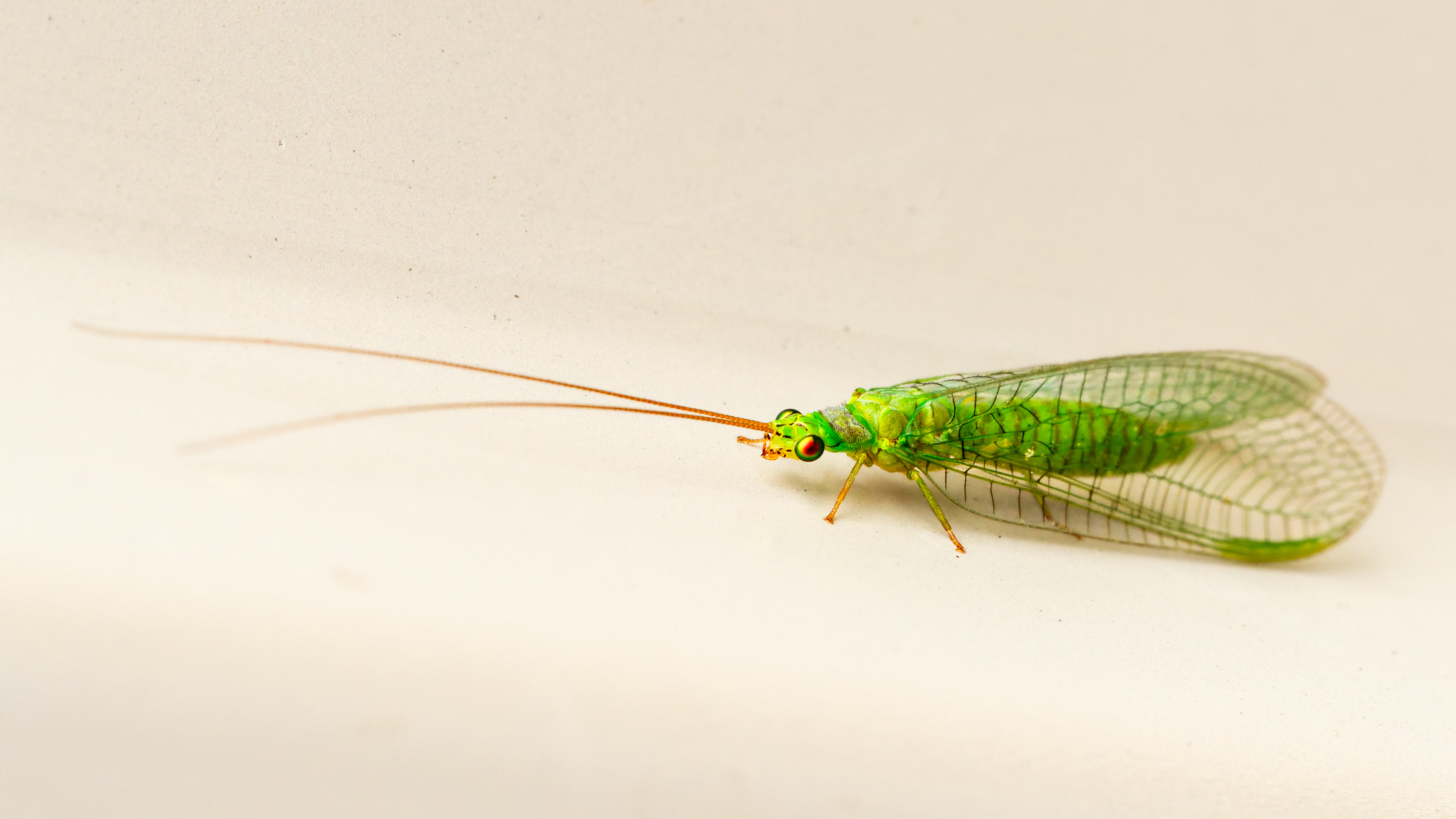
Green Lacewing, Mallada signatus. York, Western Australia.
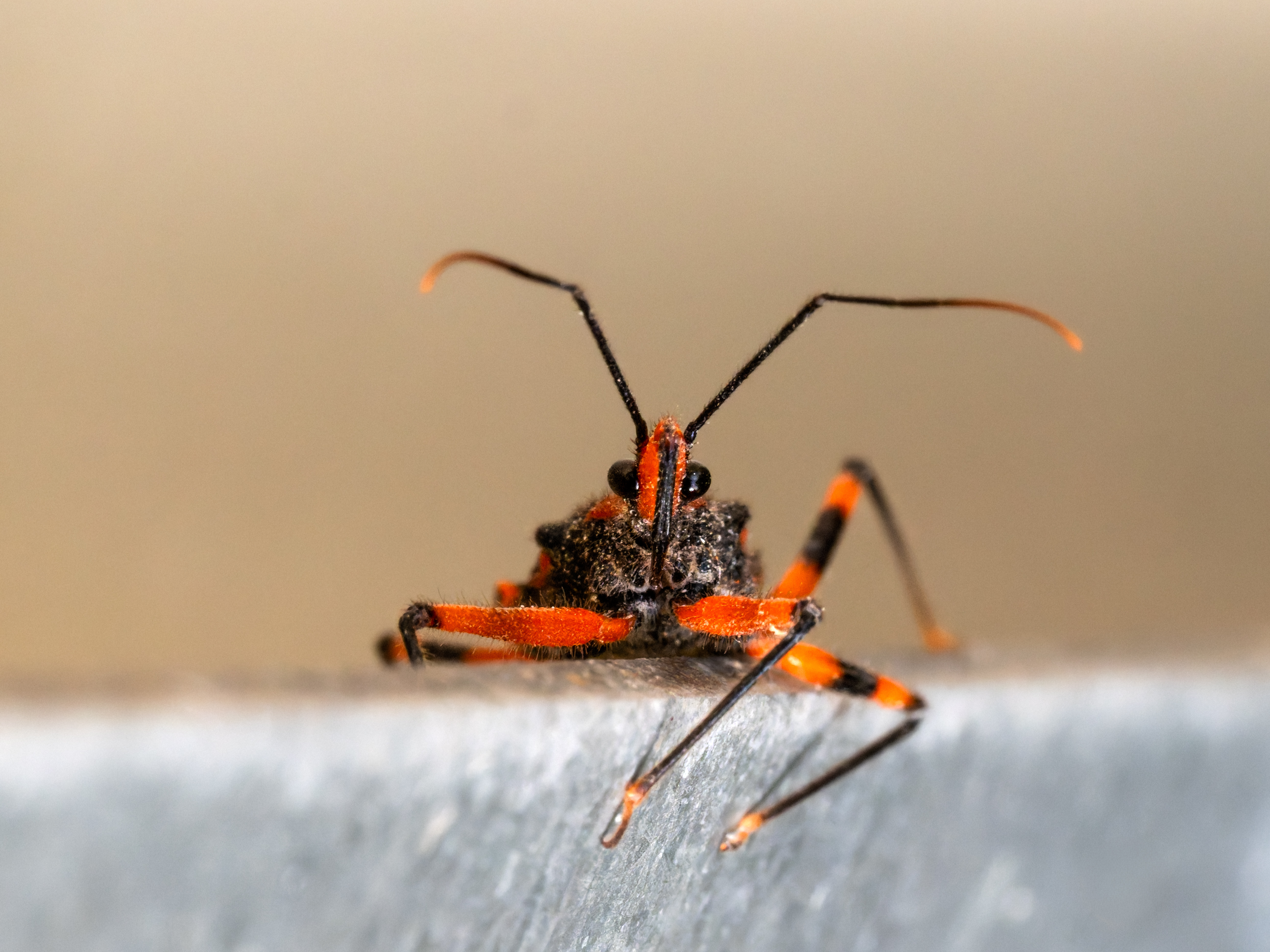
Red Tiger Assassin Bug, Havinthus rufovarius. York, Western Australia.
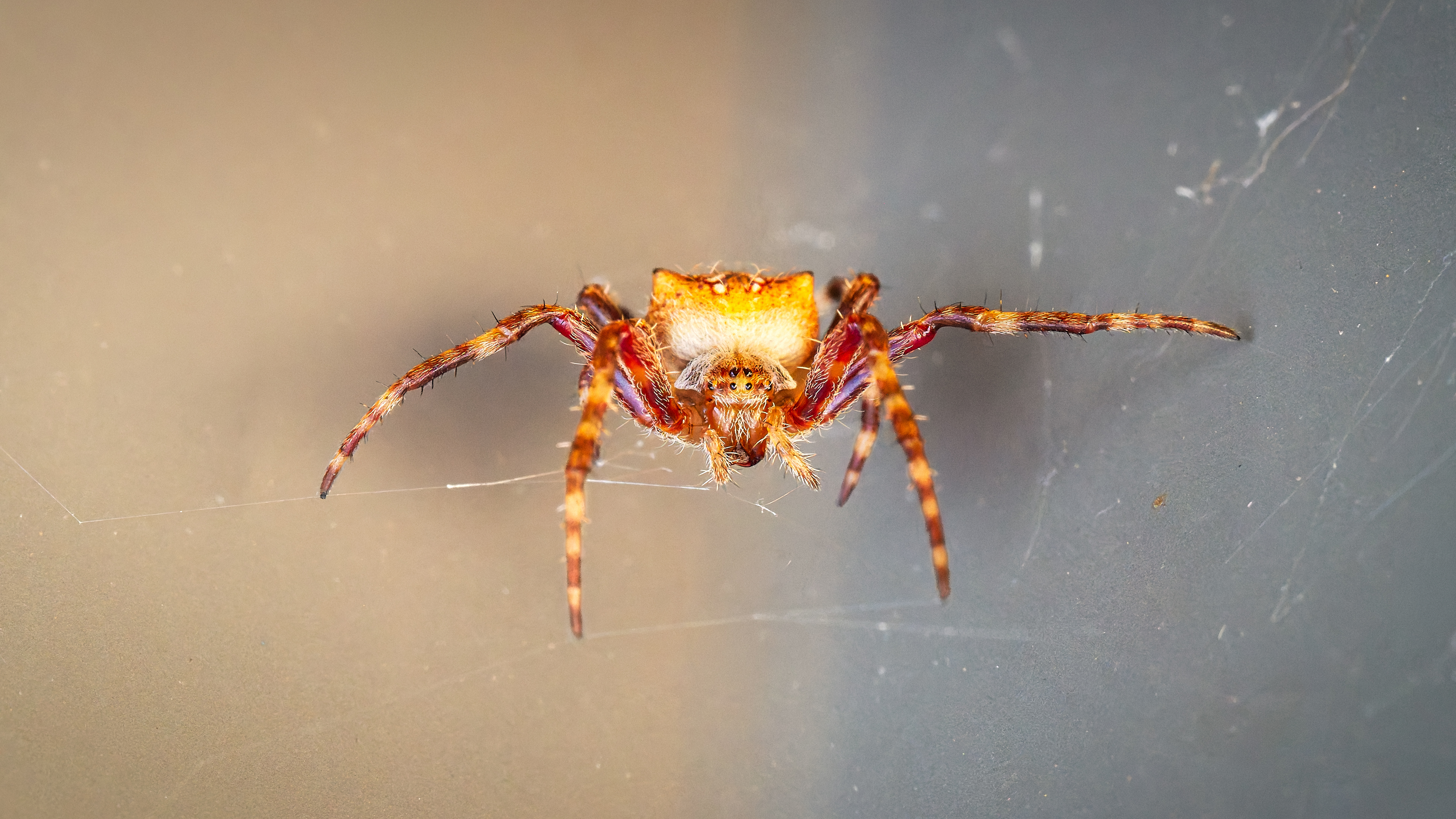
Dunno what sort of spider this is.
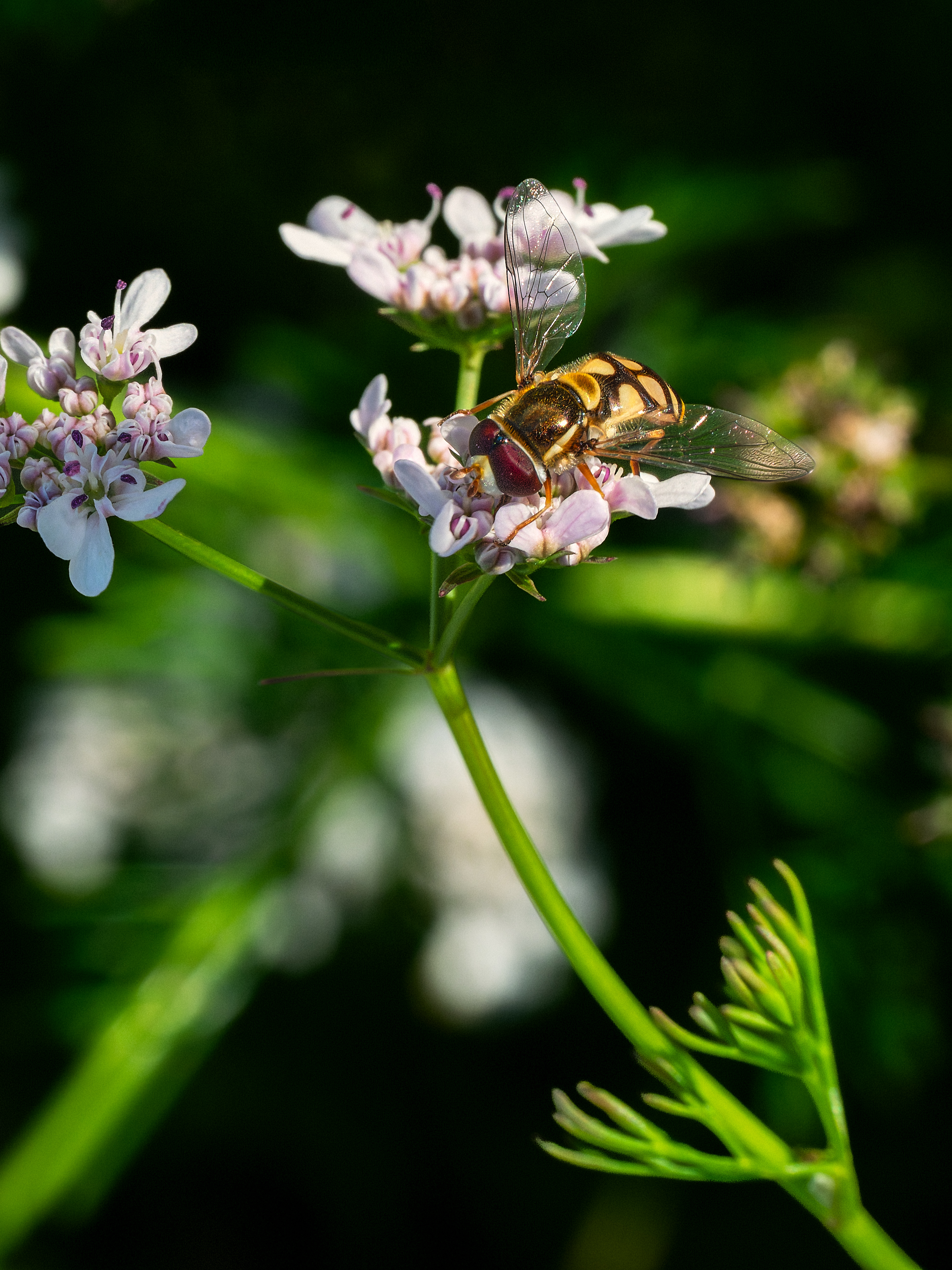
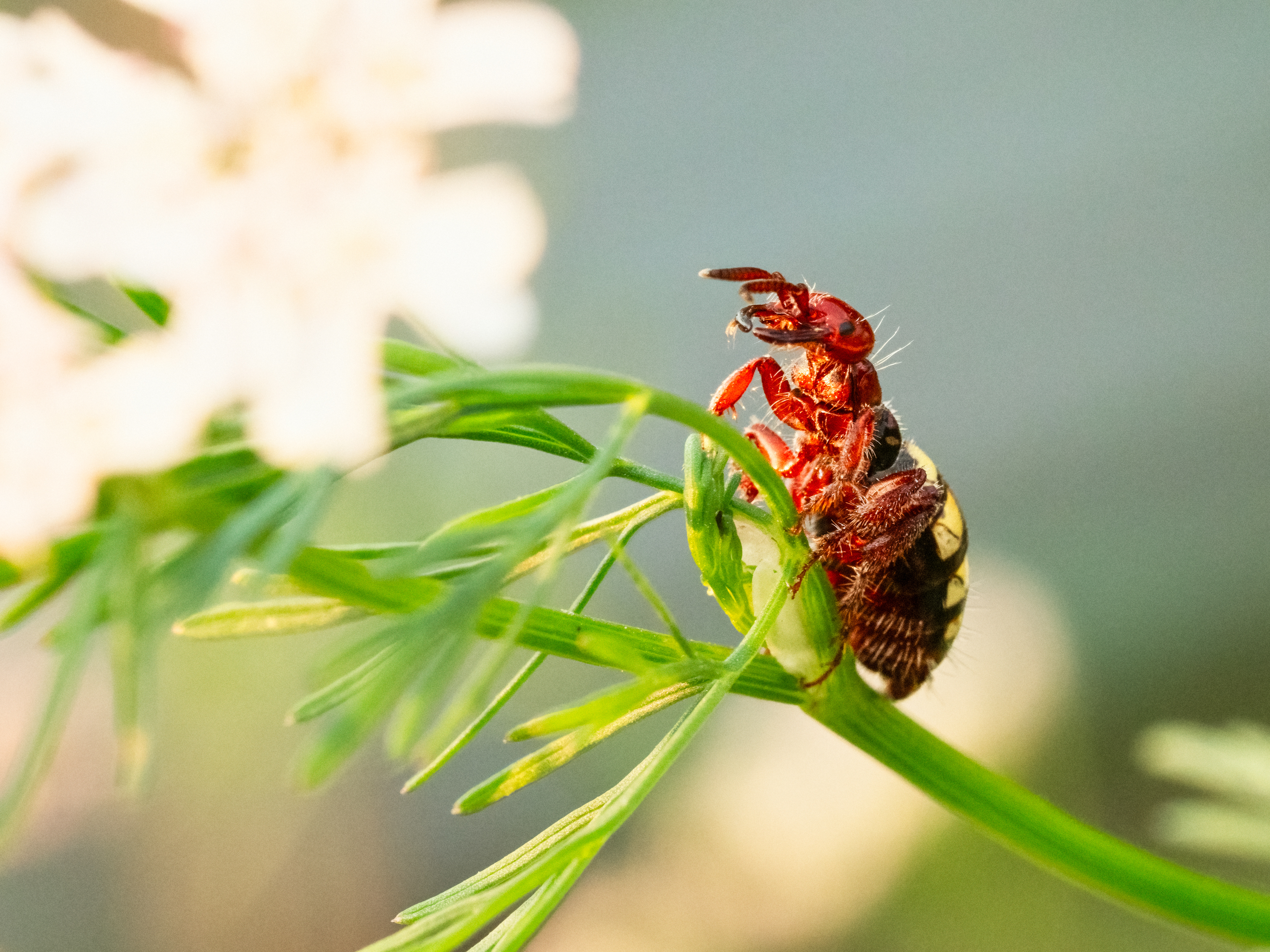
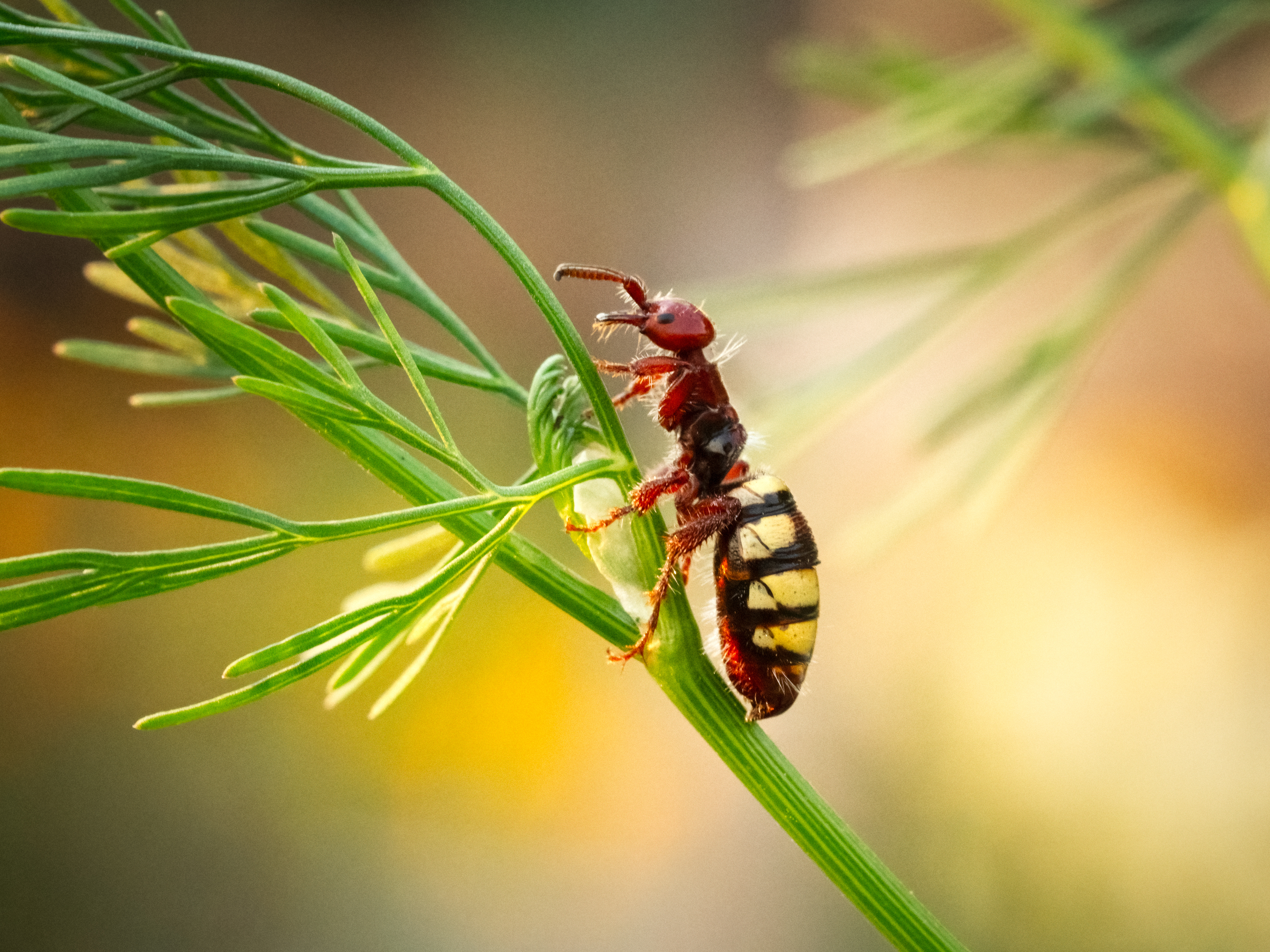
A male Yellow flower wasp feeding on the corriander.
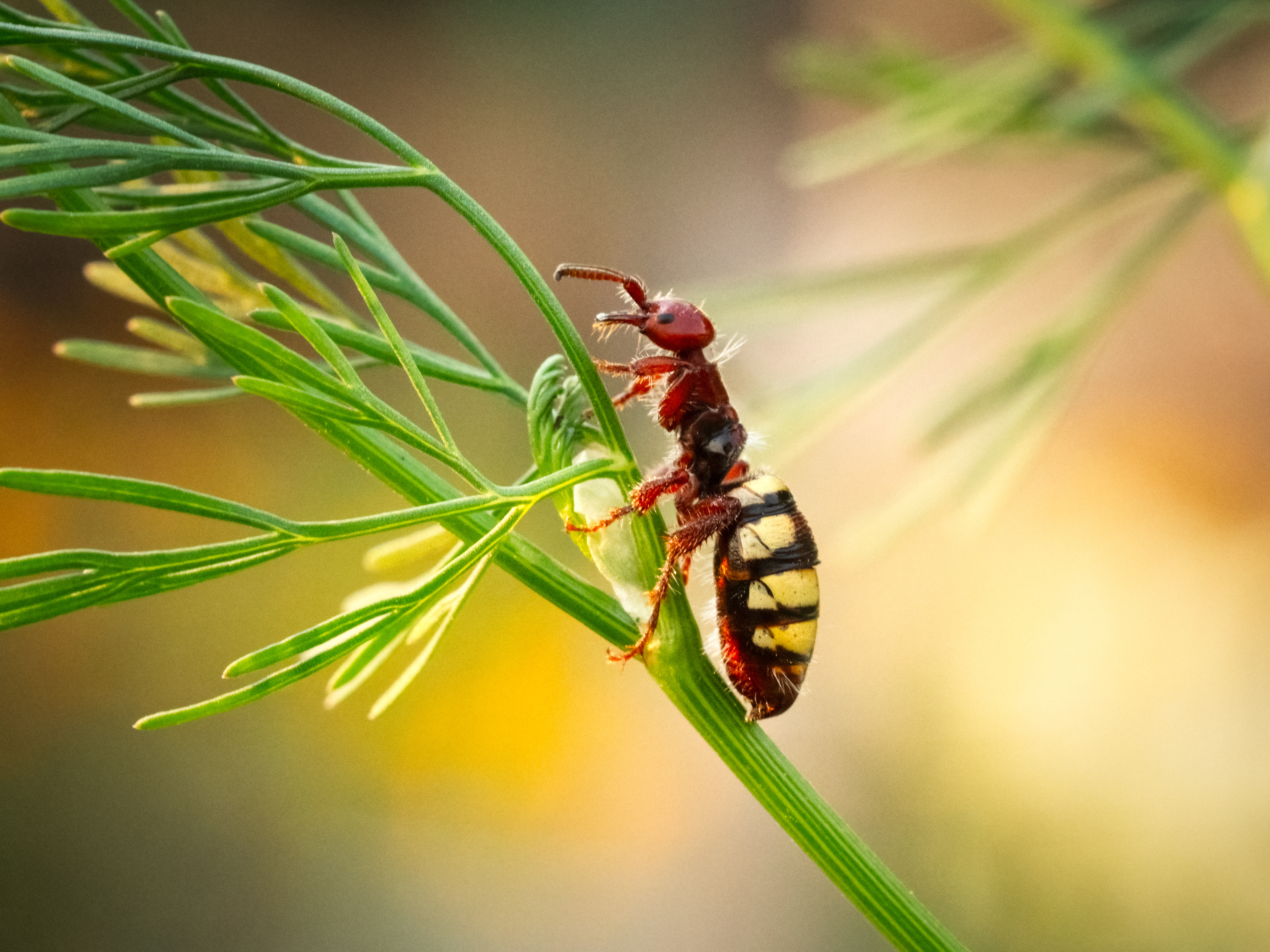
Last week I posted a photo of a mystery insect that I didn’t know what it was. Well it turns out it was a female Yellow Flower Wasp, which are flightless.
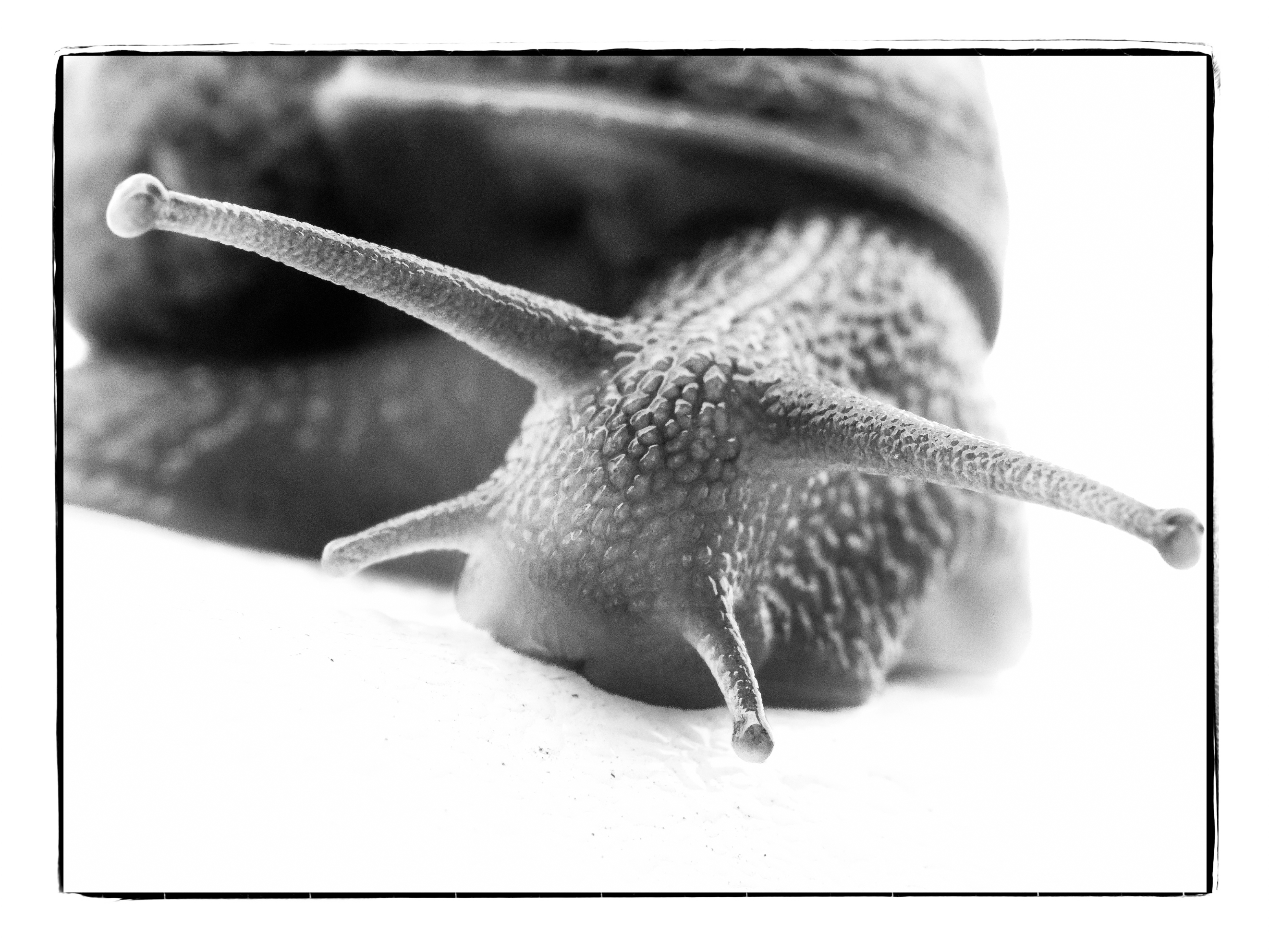
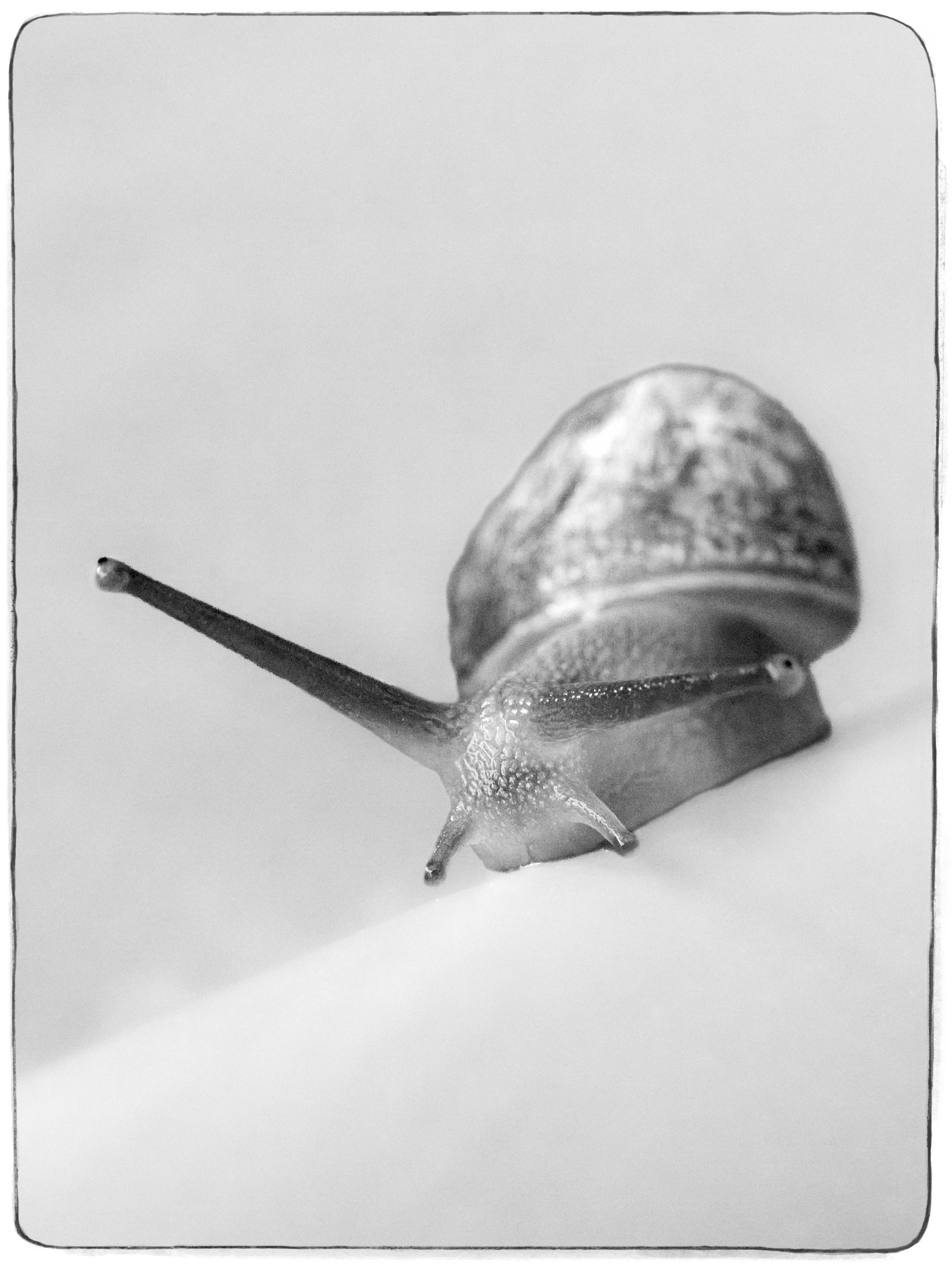
“Stay sill damn it!” Common garden snail, Cornu aspersum.
The recent orchid expeditionmade me get my macro lenses and flash out of the cupboard and consequently I’ve been playing around with it in the garden. I had this brilliant idea to improve my focus stacking technique by taking photos of snails. I mistakenly thought that they’d be a good subject as they don’t move much. I was very much mistaken. The little beggars move around quite a lot. The tentacles that their eyes are mounted on are in a constant state of motion and so my attempts at focus stacking failed. Not to be deterred I just stopped the lens down to f11 or f16 (well into diffraction territory on Micro Four Thirds) and just carried on taking picture of little critters in the garden.
Another fidgety snail.
The focus stack even failed on this. Dunno what I’m doing wrong.
Yikes! Don’t know what this was amongst the coriander.
Looks better in profile.
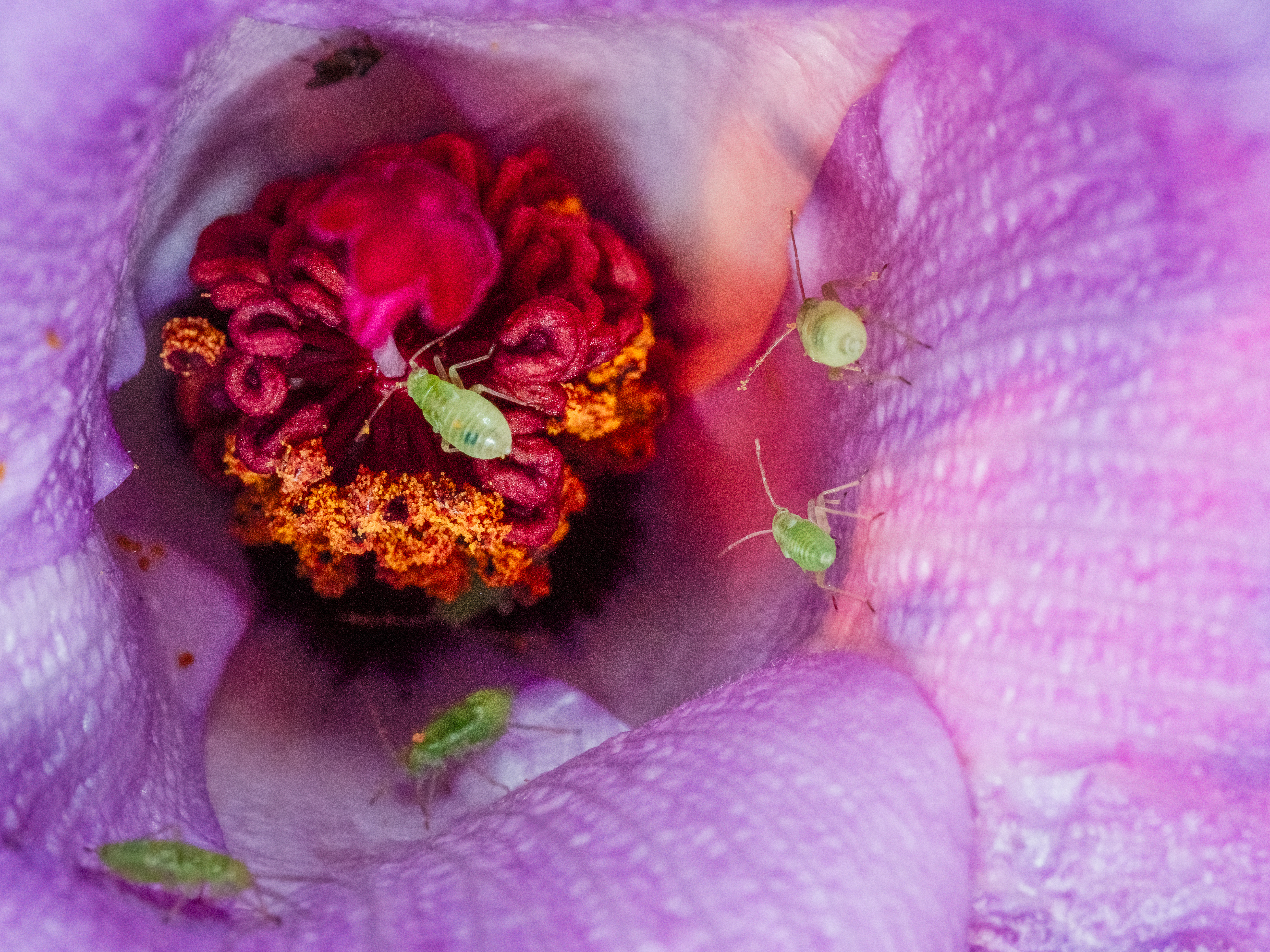
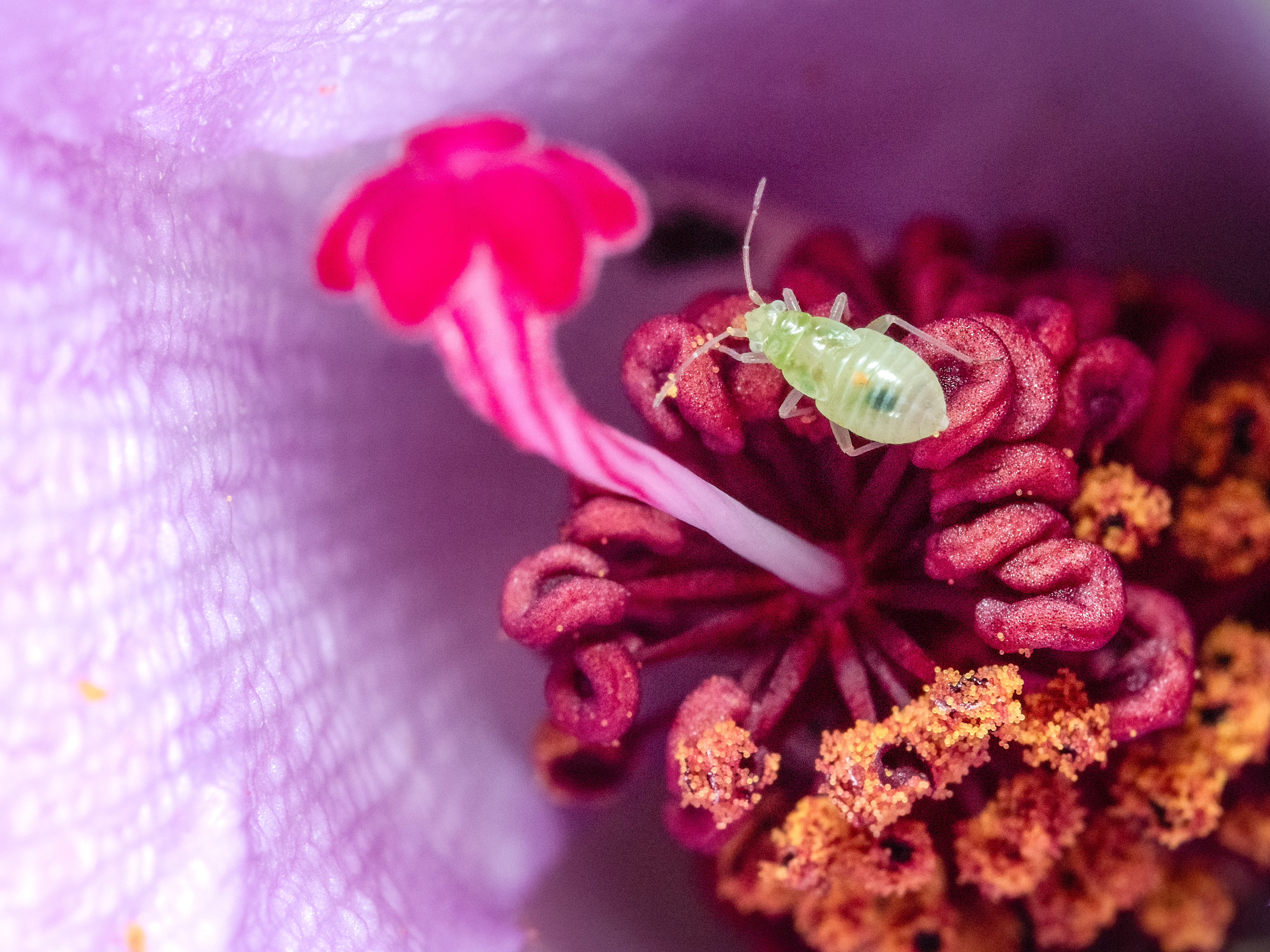
Oh dear! The Beloved Significant Other is not going to be happy with these aphids.
Events at home over the last few weeks have meant that I haven’t had the opportunity to do very much photography. Most of the blog entries are written a few weeks before they are published because of the vagaries of finding wildlife so that backlog came in handy for when I couldn’t get out and about. But now the well has run dry.
Crusader bug (Mictis profana) instar nymph.
What little photography I have done recently has been in our back garden. Thankfully we have quite a lot of wildlife visit that I can point a camera at. Most of it has been of the usual suspects, the more common species that can be found in gardens in this part of the world, but there have been a couple of unexpected visitors which was very nice. For the best part of a year we had a problem with stray cats killing a lot of the birds and reptiles. But one of our neighbours has taken the main culprit in and the wildlife numbers are climbing back to what they were.
Wall Skink or Fence Skink (Cryptoblepharus buchananii) cooling off in the bird bath.
Yoorn or Bobtailed Lizard (Tiliqua rugosa)
Kanyinak orSacred Kingfisher (Todiramphus sanctus) on our TV aerial with a freshly caught Bombay Runner (Periplaneta americana).
Bambon or Rufous Whistler (Pachycephala rufiventris). It is a joy to hear this bird sing every morning.
Nye-nye or Zebra Finch (Taeniopygia guttata) looking for food on the back lawn
Djida or Yellow-rumped Thornbill (Acanthiza chrysorrhoa).
Cabbage White Butterfly, Pieris rapae.
Giant grasshopper or hedge grasshopper (Valanga irregularis) resting on the garden fence.
The garden provided a great deal of solace over a difficult time and it always amazes me how restorative being in nature can be. Hopefully, over the coming weeks we’ll be able to get out and about more.
Earlier this month I wrote about my first orchid expedition of the season and I ended it with saying how I really liked the combination of my Olympus 40-150mm f2.8 and the 1.4 teleconverter. Well I’ve just reset the focus stacking mode on my Olympus EM1 mk ii and I went up to the nearbyOswald Sargent Reserve to see whether it worked. I took both my 60mm f2.8 macro and the afore mentioned 40-150mm + teleconverter.
It was a beautiful morning and there were hundreds of orchids out – it was quite a stunning display. There were so many flowers that I could afford to be very fussy pick specimens that had good backgrounds and in good light. It doesn’t always go as well as this.
Getting home and processing the photos I have to say that I much prefer the results from the 40-150mm combination. It’s not the sharpness of the lens, both lenses are very sharp. It is the way the lens renders the image. The way the tones in the out of focus areas merge smoothly and don’t draw attention away from the subject. When combined with focus stacking the effect is fantastic.
Oswald Sargent was a very interesting character. While being a pharmacist here in York he was also an eminent amateur botanist and his family were pioneering photographers. His son left a large archive of photos documenting life in the town.
Mid August. Get the orchid books out. Find the maps. Load the coordinates into the GPS. Dust off the macro lens. Kweda here I come!!!
It was a hair raising journey. After our heavy winter rains the dirt roads resembled cold lumpy gritty porridge and for the last 10km the car fish tailed along the road the tyres struggling to get a grip at times. It was a relief to stop and park up by the mobile phone tower which was the only bit of hard ground. Considering the conditions I was amazed that there were any orchids out as most species don’t like getting their feet wet at all.
Fringed Mantis Orchid or Green Spider Orchid (Caladenia falcata). Kweda, Western Australia.
Talbot's Spider Orchid, Caladenia pendens subsp talbotii. Kweda, Western Australia.
Winter Donkey Orchid, Diuris brumalis. Kweda, Western Australia.
Blue Fairy Orchid or Blue Beard (Pheladenia deformis). Kweda, Western Australia.
Early Wheatbelt Spider Orchid, Caladenia sp.’early wheatbelt’. Kweda, Western Australia.
I must say I’m really, really liking using the Olympus m.Zuiko 40-150mm f2.8 with the Olympus 1.4 Teleconverter MC-14 for focus stacking. It is a beautiful lens, probably the best one I’ve got.
…pick it up, and all day long you’ll have good luck”.
While attacking a wayward plant with the whipper snipper the other day I found a coin. I couldn’t tell what it was as it was in such bad condition. I soaked it in Coke overnight and all the dirt and corrosion had dissolved and I could see that I had found an Australian penny piece minted in 1957. Now Australia went decimal on 14th February 1966 so it has probably been lost for at least 59 years. Hardly worthy of Time Team, but interesting all the same.
Will this 1957 Australian penny bring good luck?
Australia was a very different country in 1957. Robert Menzies was prime minister. Aboriginal people didn’t have the vote and the White Australia policy was in full swing and married women weren’t allowed to work in the Public Service, and Australia’s Wallabies had lost the Bledisloe Cup to New Zealand’s All Blacks – somethings never change.
In case you are wondering inflation has meant that 1d from 1957 would be now worth 96c.
Behind the scenes showing the camera and lights used to photograph the penny.
To photograph the coin I got out my 12 year old Olympus EM1 and matched it with the Olympus 60mm f2.8 macro lens. The camera has a focus stacking function where it can take lots of images of the subject while the lens is wide open and combine them in camera to produce an in image where the whole subject is in focus. For the lighting I used three flash guns fired by a wireless radio trigger. I’d not used flash like this for ages as I’d gone over to using LED lights as I can use them to shoot both stills and video. With no video to shoot I could use speedlights. When it came to editing the photos I found that the in camera focus stacking had had a hard job with the coin and there were lots of artefacts. It seems that the texture of the coin was causing it to have problems. So I had to resort to stacking the image in Photoshop.
Did my penny bring me good luck? Well let’s say I’m still waiting.
My last wander about the local Wandoo forest didn’t yield anything much. The only plants worth getting the camera out for were some Leopard Orchids. So I did my usual full length portrait using my 40-150mm f2.8 plus MC-14 teleconverter with focus stacking. Then a tighter “head and shoulders” shot with the 60mm f2.8 macro and flash. I finished up with really tight detail shot at close to 1:1 again with the 60mm macro.
Leopard Orchid, Thelymitra benthamiana. A 10 shot focus stack using the Olympus EM1 mk ii, Olympus 40-150mm f28 lens and the the Olympus MC-14 teleconverter. File assembled in Photoshop.
If you look closely at the main flower there is a spider peeping out and the fly on the edge of plant is caught in its web. Leopard Orchid, Thelymitra benthamiana.
In the past I’ve used OM Workspace to do the focus stacks, but after it’s latest update it has become so slow – glaciers move quicker. So I decided to to do the stack using Adobe Lightroom and Photoshop. To say it was much faster would be a massive understatement, but the final result was a lot better as well. For the life of me I can’t work out why camera manufacturers software is so bad. It should be better as they know all the features of the cameras and how to get the best out of them. This isn’t just a whinge directed at OM Systems. Canon’s DPP is absolutely appalling as well. Adobe would’t have such a stranglehold on the market if the camera manufacturers could develop good software.
Whenever I’ve stopped in Williams it always been on the way to somewhere else and I’ve always been quick to get a move on. Well the other day I gave Williams my full attention. There are a few good spots for orchids there and I wanted to visit one in particular as it is the home to the Common Dragon Orchid. Despite its name I’ve never found the Common Dragon Orchid to be very common – in fact I’d only seen a rather manky looking one some twenty years ago. That, as they say, is a long time between drinks.
The bit of scrubby land that is home to the flowers is pretty ordinary to look at. It’s situated on the corner of a busy highway and a dirt track. Judging from the car bodies, rusted metal, bottles and corrugated asbestos it’s been used for fly tipping for years. But situated under the sheaoak trees in amongst the needles were an amazing variety of orchids. Common Dragon Orchids, well they were certainly common there. There were hundreds of them.
The first three images are pretty straight photos using the Olympus 60mm f2.8 macro lens and STF-8 flash or the Olympus 40-150mm f2.8 with no flash.
Common Dragon Orchid, Caladenia barbarossa. Williams, Western Australia.
Zebra Orchid, Caladenia cairnsiana. Williams, Western Australia.
Clubbed Spider Orchid, Caladenia longiclavata. Williams, Western Australia.
The last couple were done as focus stacks using the Olympus 40-150mm f2.8 and MC-14 1.4x teleconverter. The stacks were assembled in Photoshop.
Common Dragon Orchid, Caladenia barbarossa. Williams, Western Australia.
Zebra Orchid, Caladenia cairnsiana. Williams, Western Australia.
When you arrive at Toolibin Lake it’s hard not to be underwhelmed. It’s a smallish fresh water lake fringed by scrubby trees and populated by voracious mosquitos. While I was there only two other vehicles pulled up, the first visitor walked over to the information board and then got straight back in his car and drove off. A couple got out of the second car and walked down to the waters edge and then they too got back in their car and headed off. Perhaps it was the mosquitoes or perhaps their expectations did not match the reality of the place. Don’t know. All I do know is that it’s a fantastic nature reserve with plenty of nature.
Fringed Mantis Orchid aka Green Spider Orchid (Caladenia falcata).Toolibin Nature Reserve, Western Australia.
A closer look at the Fringed Mantis Orchid.
What makes Toolibin Lake so special? There used to be lots of lakes like this throughout the Wheatbelt, but agricultural land clearances have rendered them saline which has killed off the vegetation around them and destroyed the native animals habitats. Toolibin has miraculously managed to survive and has become an oasis for rare and threatened flora and fauna. If you want to see a Freckled Duck or a Red-tailed Phascogalethen Toolibin Lake Nature Reserves is one of your best bets for finding them. I wasn’t there for the wildlife, I was looking for the wild orchids that can be found in the surrounding woodland of flooded gum, acorn banksia and rock sheoak. What I found was nothing short of spectacular.While species like Cowslip Orchids are ten a penny in the South West of Western Australia it was the quantity of them that was amazing. It was a magnificent sight. I was looking for two species – the Clown Orchid (Caladenia roei) and its cousin the Purple-veined Spider Orchid (Caladenia doutchiae) both of which I found pretty quickly.The Clown Orchid I’d seen before at Wongan Hills, which is quite hike from where I live, but, the Purple-veined Spider Orchid was completely new to me and was the one I particularly wanted to photograph. I decided to photograph both as they can be a bit difficult to tell apart. As it was I passed up a Common Dragon Orchid as I thought it was a damaged Fringed Mantis Orchid. Note to self: next time photograph everything that you find.
Purple-veined Spider Orchid, Caladenia doutchiae. Toolibin Nature Reserve, Western Australia.
Purple-veined Spider Orchid, Caladenia doutchiae. Toolibin Nature Reserve, Western Australia.
Clown Orchid, AKA Ant Orchid, Man Orchid, and Jack-in-the-box Orchid, Caladenia roei. Toolibin Nature Reserve, Western Australia.
In profile. Clown Orchid, AKA Ant Orchid, Man Orchid, and Jack-in-the-box Orchid, Caladenia roei. Toolibin Nature Reserve, Western Australia.
Toolibin Lake is definitely a place I’ll be visiting again, although the next time I’ll forego the orchids and look for the Freckled Duck and the Red-tailed Phascogale. For anyone interested in visiting be aware that Toolibin Lake lies in a low rainfall area of the Wheatbelt and consequently it usually only holds water at certain times of year and some years it may not have any water at all. This year while the rains have been late they have been very heavy so everything was in top shape.
Dancing Spider Orchid, Caladenia discoidea. Toolibin Nature Reserve, Western Australia.





You must be logged in to post a comment.