It’s that time of year – the natural world here in Western Australia has started to step up a gear andit is time to get out and see it and more importantly photograph it.
I was recently reading a book on Western Australian orchids and I discovered within it mention of a few species that are found in the Wheatbelt, where I live, that I had never heard of before let alone seen. After a bit more research and a consultation with Florabase and Atlas of Living Australia I was all set to head off to Kweda.
Not a very reassuring sign.
Another comforting sign.
The floodway that empties into Lake Mears. Although there was a lot of the water it hadn’t flooded the road.
It was nice to get out and about again, but after seeing a couple of road signs I wasn’t so sure I’d made the right decision. Kweda Reserve is located on the corner of an intersection of two dirt roads and apart from the reserve the only other feature of note was a mobile phone tower. Getting out of the car it seemed as if the bottom end of the reserve once played host to a railway siding. The tracks were long gone only the embankments and a few bridges over creek lines remained. There was quite a bit of water about thanks to the late heavy rains and I was quite surprised as the genus of orchids I was looking for tend to favour drier sandy soils rather than the heavy wet clay that was at Kweda. There were a lot of birds and dragonflies about and I saw a bob tailed lizard happily grazing on some mushrooms.
The bottom end of Kweda Reserve used to have a railway line. The last vestiges of the embankment and bridges can still be seen.
Lots of late heavy rainfall have meant there is a surprising amount of water about.
One of the locals. Bob tailed lizard (Tiliqua rugosa). Kweda Reserve.
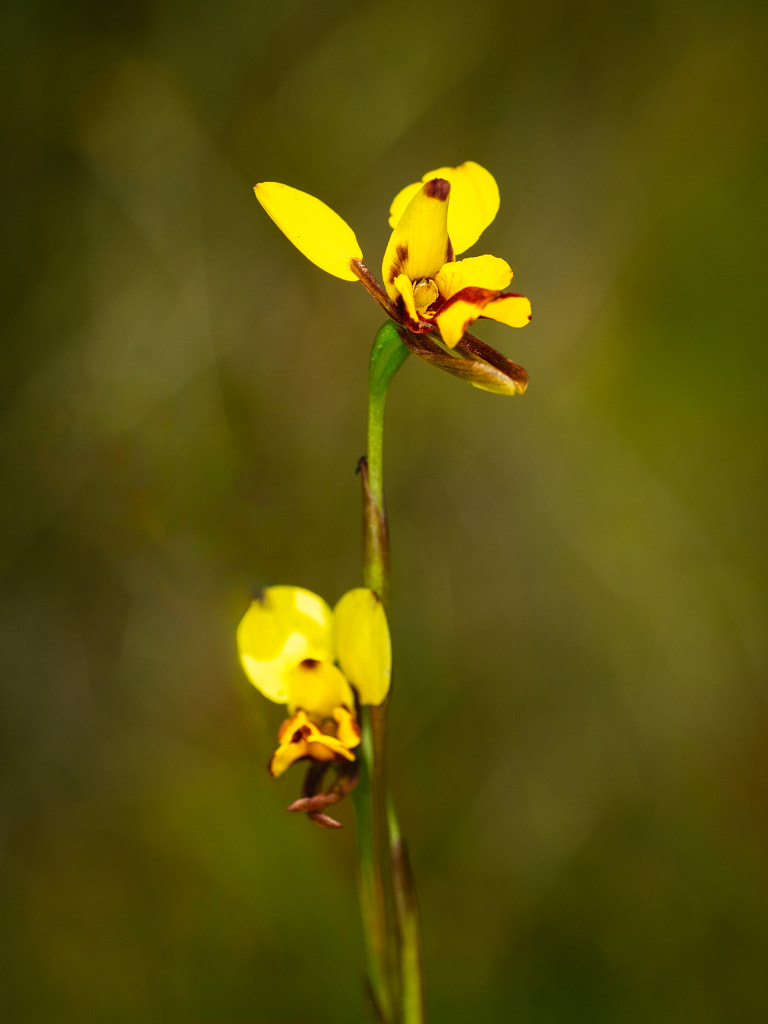
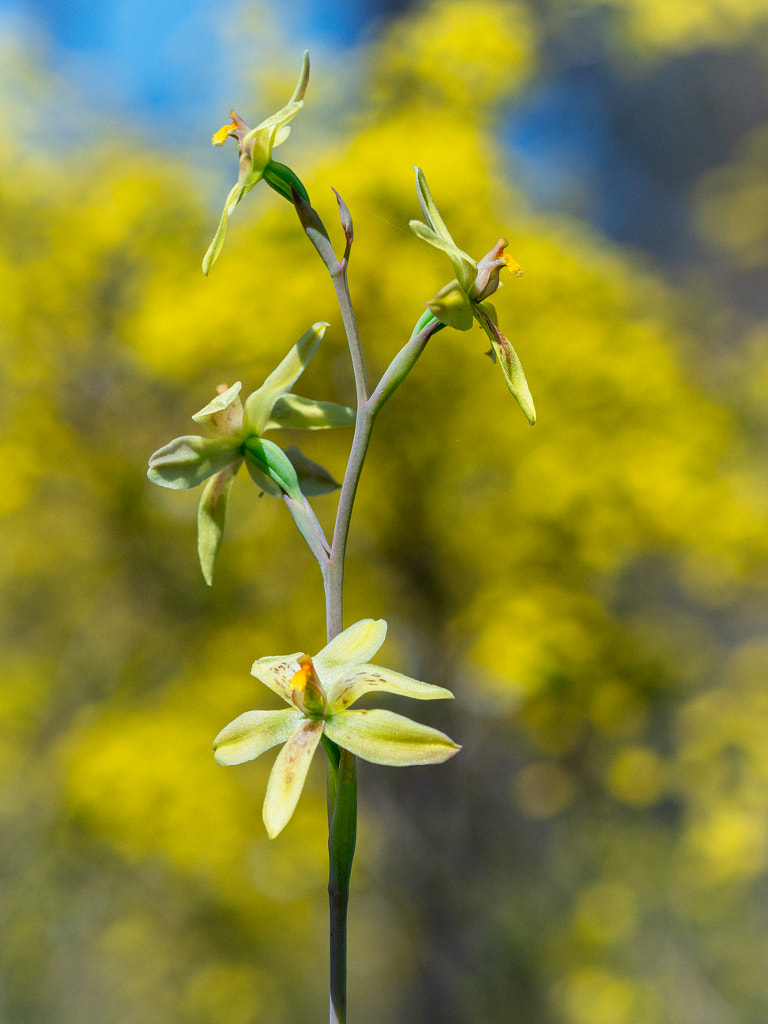
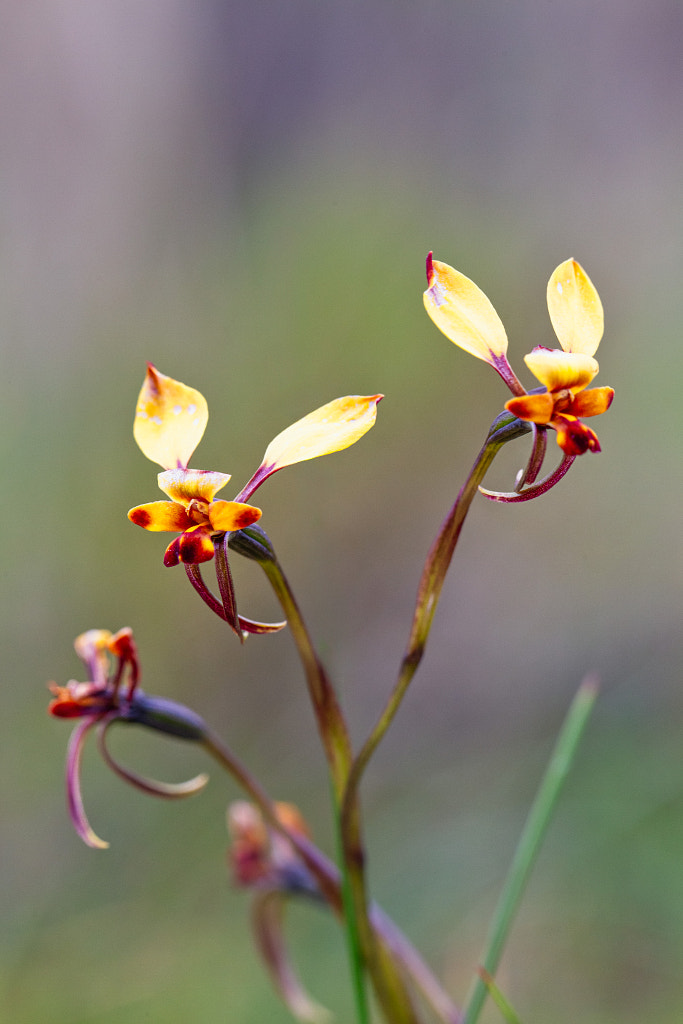
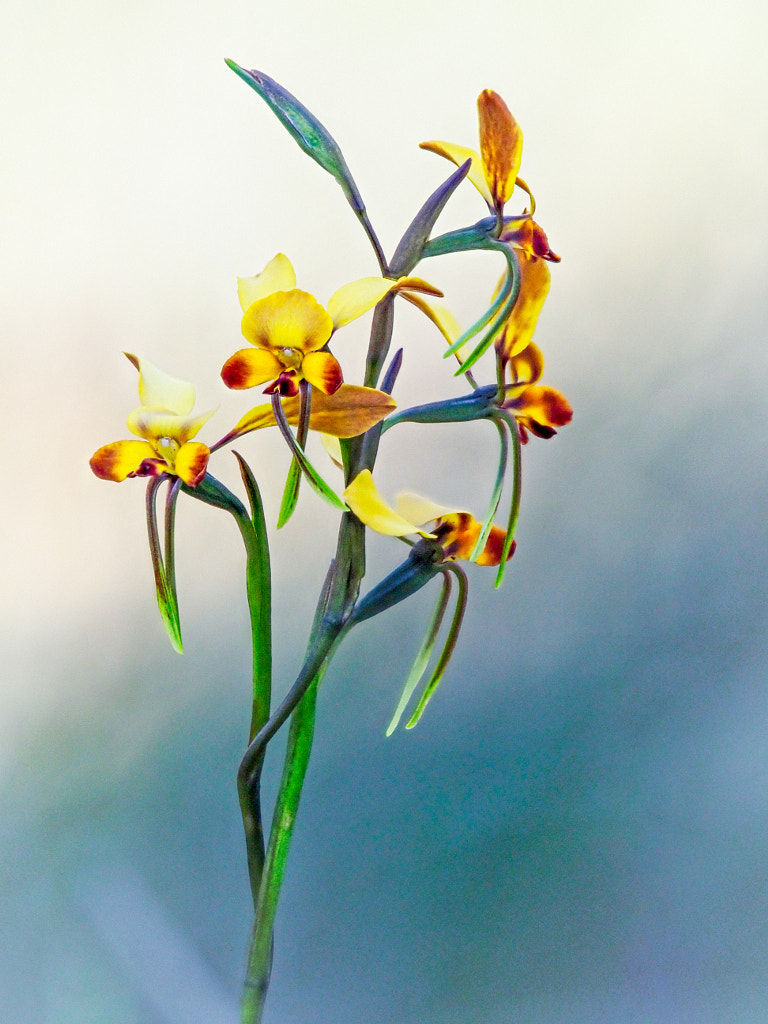
Western Wheatbelt Donkey Orchid, Diuris brachyscapa. Kweda.
Western Wheatbelt Donkey Orchid, Diuris brachyscapa. Kweda.
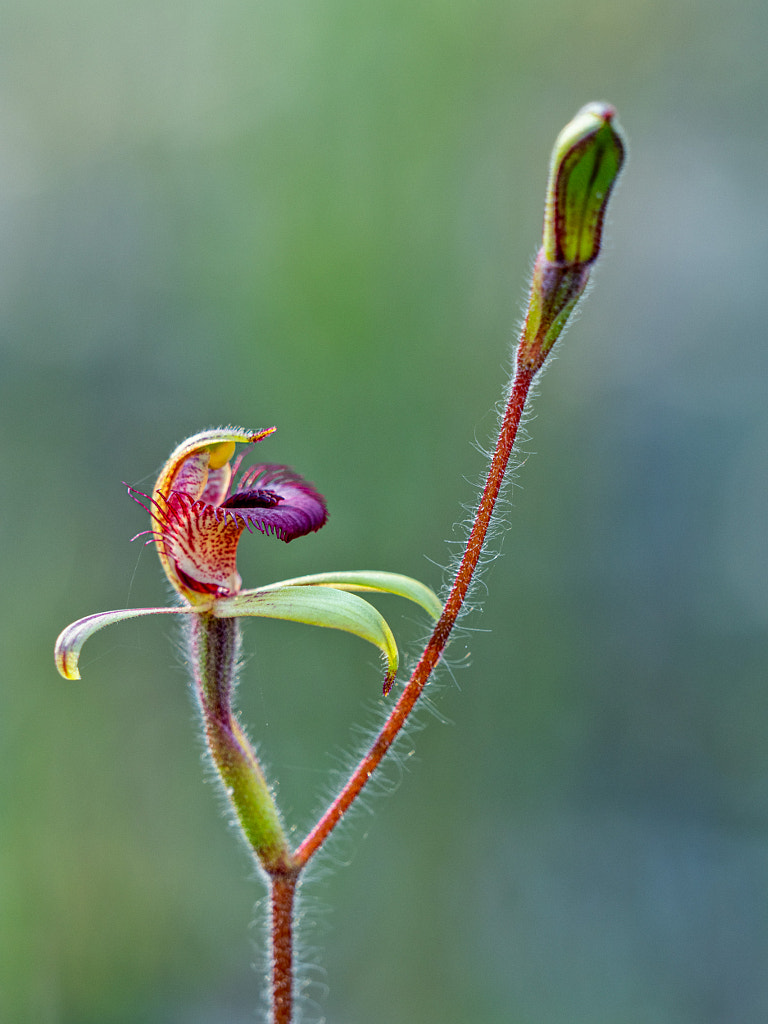
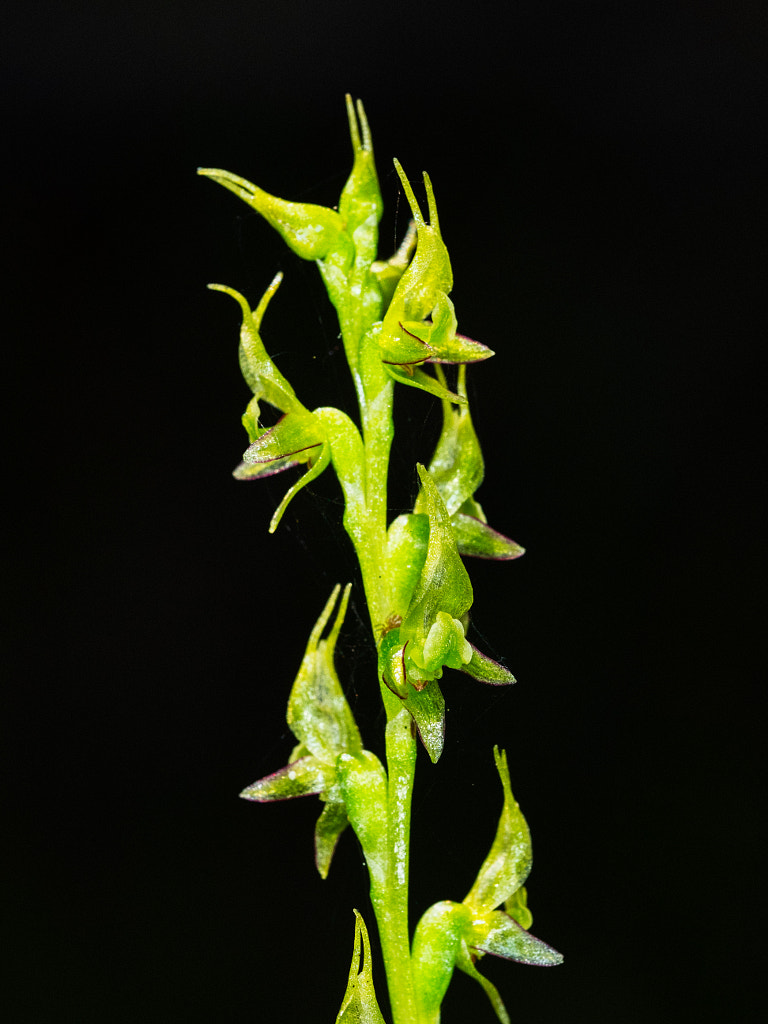
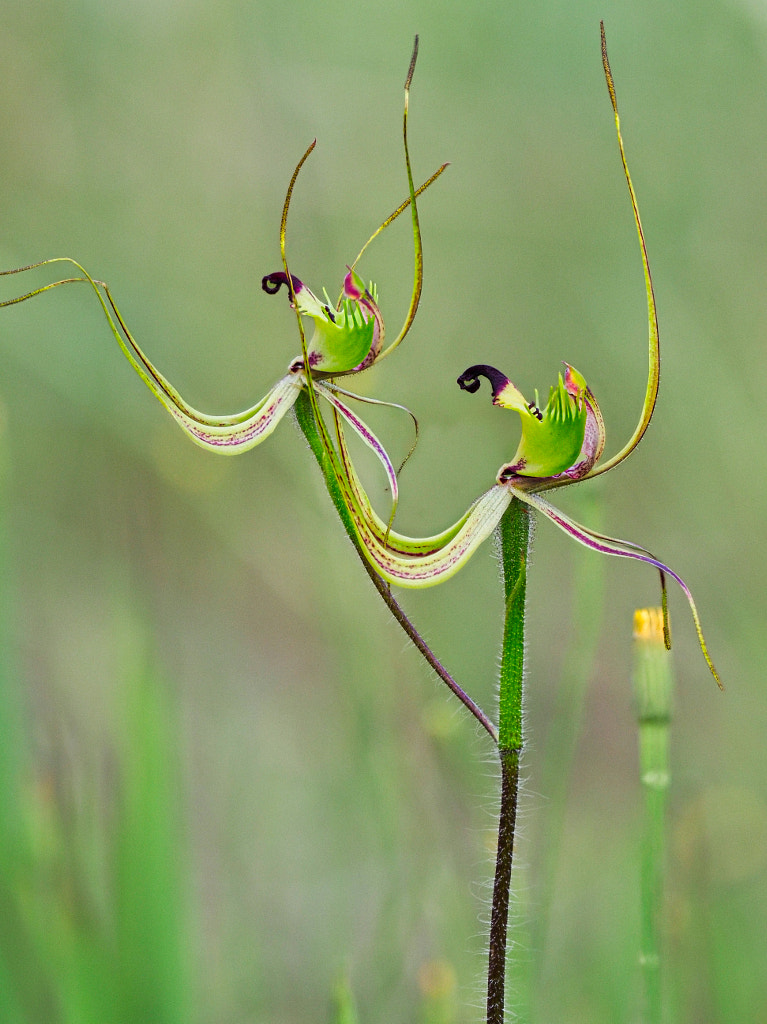
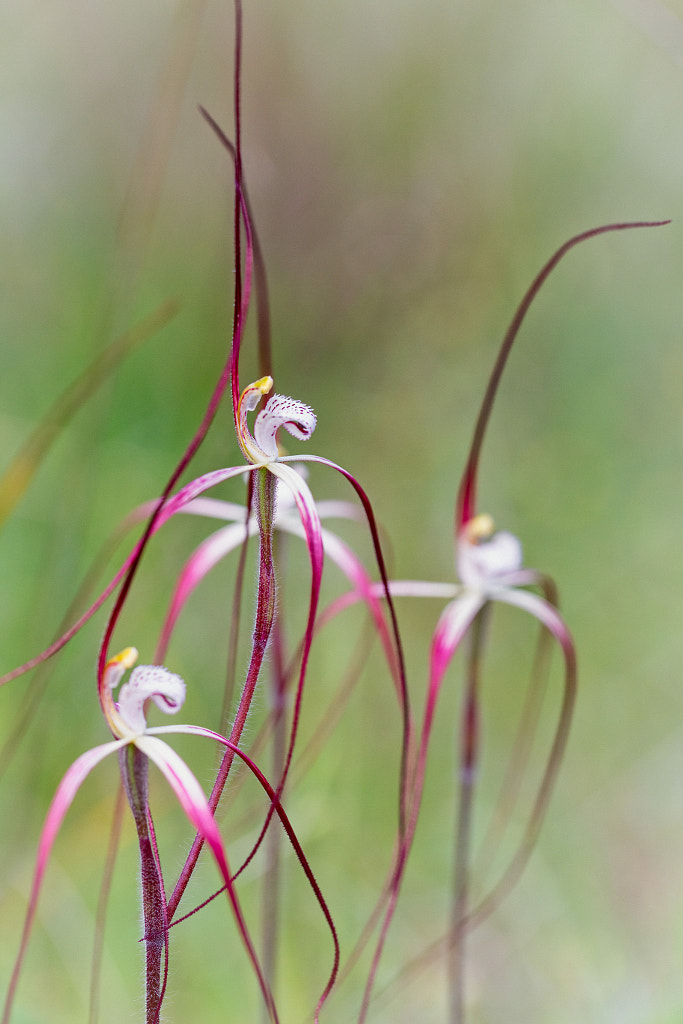
Fringed Mantis Orchid, aka Green Spider Orchid, Caladenia falcata. Kweda.
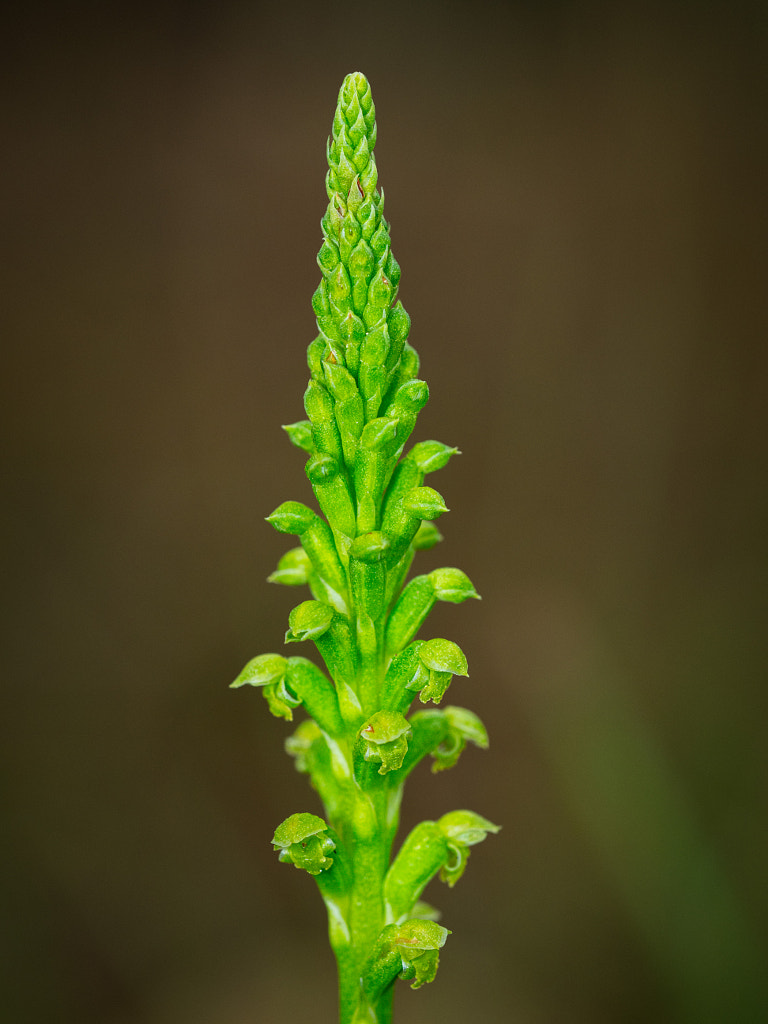
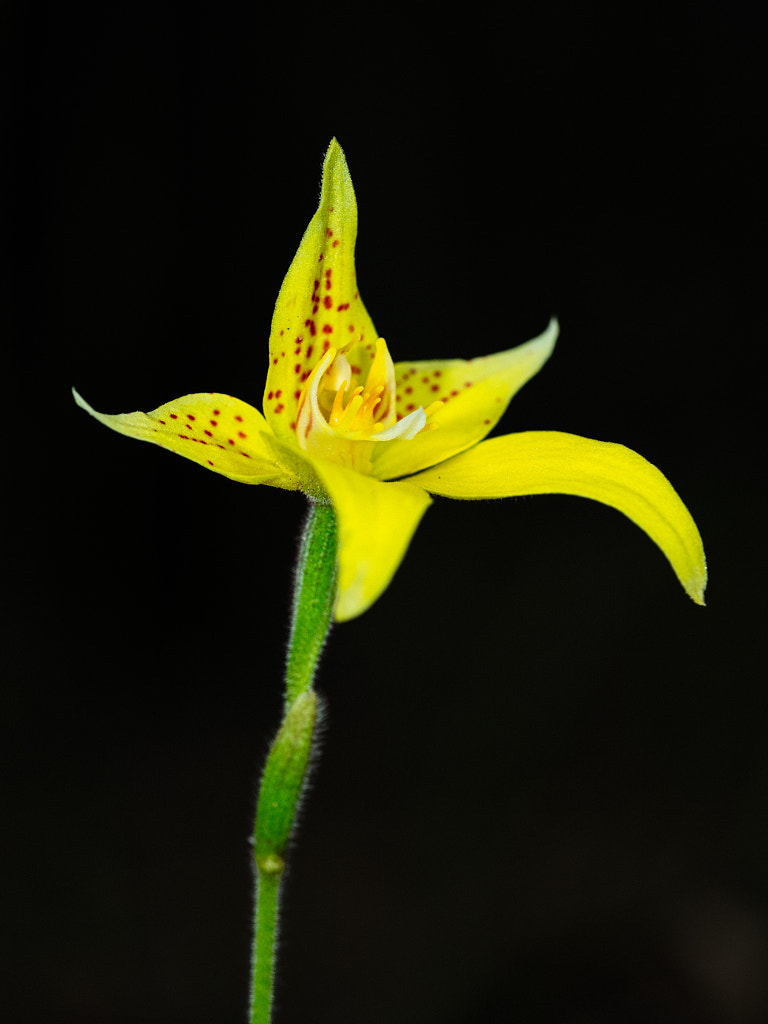
Did I find what I was looking for? No. But, I did find a couple of species I’d not photographed before so it was worth the effort. I’m also hoping to visit again, and the nearby Lake Mears, looking for wildlife.
The title for this blog entry came from the song by Misty In Roots.
It has been a difficult week. I walked along the local river bed looking for wildlife and struck very lucky with what I saw. My problems came when it came to identifying the species of damselfly I had photographed. Now in this part of Western Australia there are only ten species so you’d think it should be relatively straight forward. But, no it is not. For quite a few of the species counting the number of abdominal segments is a key feature. Now that’s not a huge problem because I can do that at home when looking at the photo. The problem I had was when you have to look at the “anal appendages” according to The Complete Field Guide to Dragonflies of Australia (Theischinger, Hawking and Orr). Now it’s hard enough to get a damselfly to sit still long enough for a photo, but getting one to remain still for a proctological examination – well good luck with that! I wonder if David Attenborough has a whole team of assistants who do this for him?
No problems identifying this wee beastie. Inland Ringtail, Austrolestes aridus. Avon Walk Trail, York, Western Australia.
Now this little chap presented nicely on this dried grass but he wouldn’t consent to having a rectal examination. Avon Walk Trail, York, Western Australia.
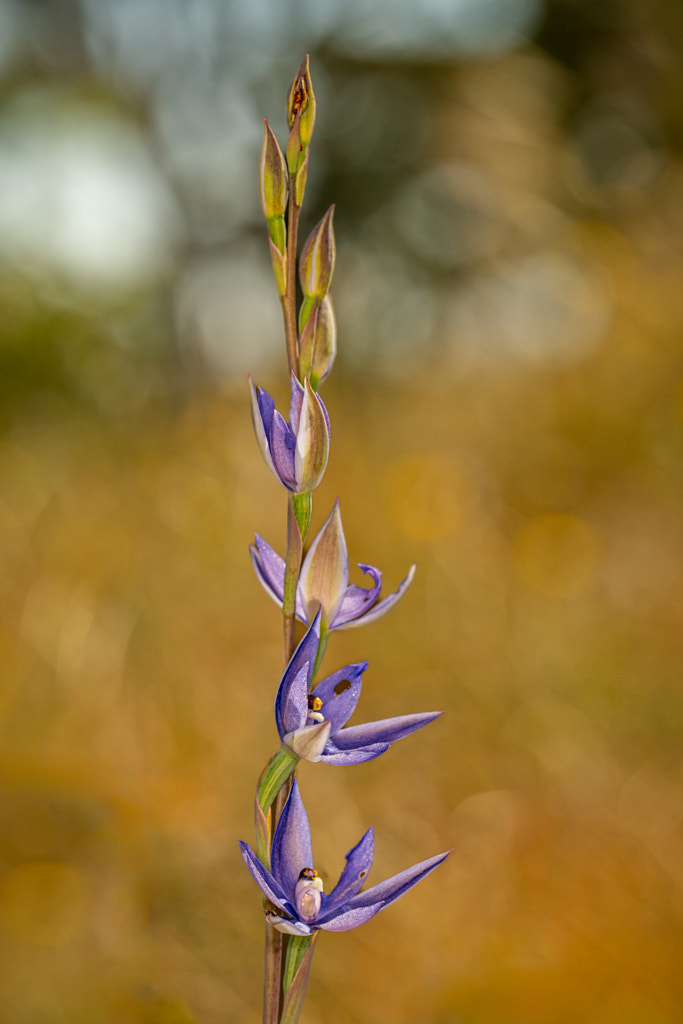
Up until this time last year I had only ever seen one leopard orchid (Thelymitra benthamiana). It is not that they are rare or hard to find, it’s just been that I’ve never been in the right place at the right time. The one I saw wasn’t at its best, but it made me very happy to see it. I went back to the same place last week and I was amazed to find not not one, not 10, but over a hundred of them. It was quite a spectacle. I’ve been saying how unseasonably warm it has been and dry the bush is, but obviously it suits leopard orchids. I was spoilt for choice as I wandered around looking for a good specimen with a good background that was sheltered from the wind.
Leopard Orchid, Thelymitra benthamiana. Wandoo National Park, Western Australia.
It’s been a strange August. From my blog entries you’d think that it has been a very wet winter, but the reality is that it has been very little rain and the bush is very dry – almost crispy. It has has a tremendous impact on the wildflowers – there aren’t as many as the previous few years. This is causing problems for the tourist industry with some interstate and overseas tourists getting upset.
Dark banded greenhood, Pterostylis sanguinea.
Locally it has been very strange. Some species of orchid didn’t flower at all while some flowered 6-8 weeks earlier than normal as the winter as well as being dry has been warmer than normal. This last month I’ve been concentrating on the bush reserves around York and particularly those I’ve never been to. It’s quite boggling to think that after almost 20 years of living in the area I still haven’t visited all the reserves. The pictures accompanying this piece are some of the ones I’ve taken in August.
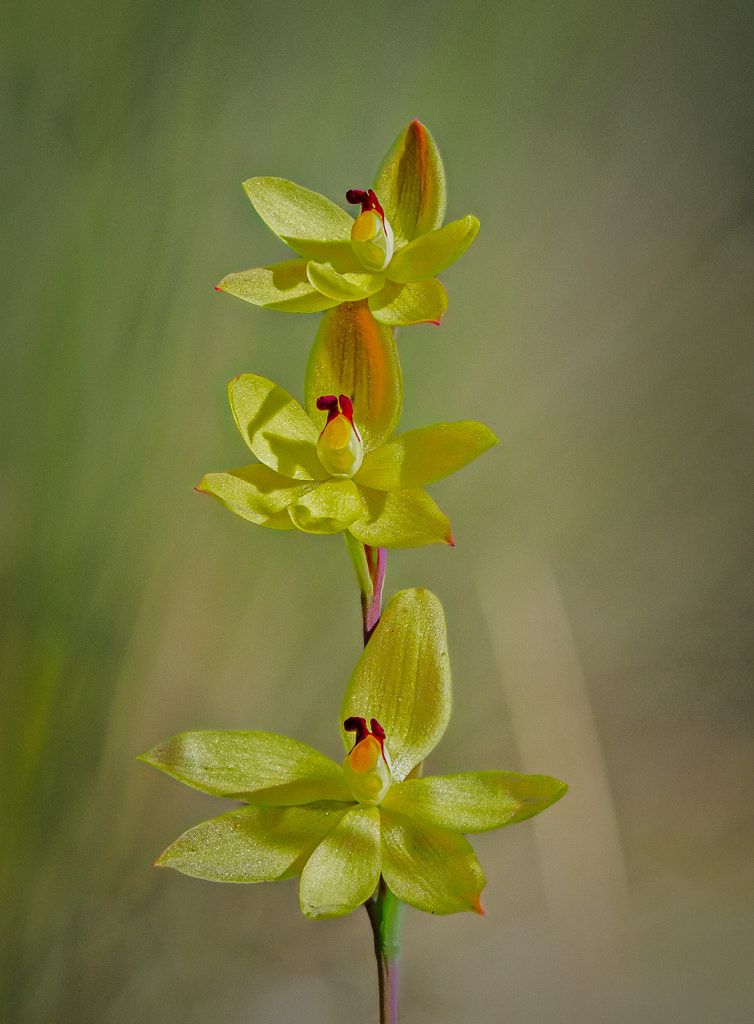
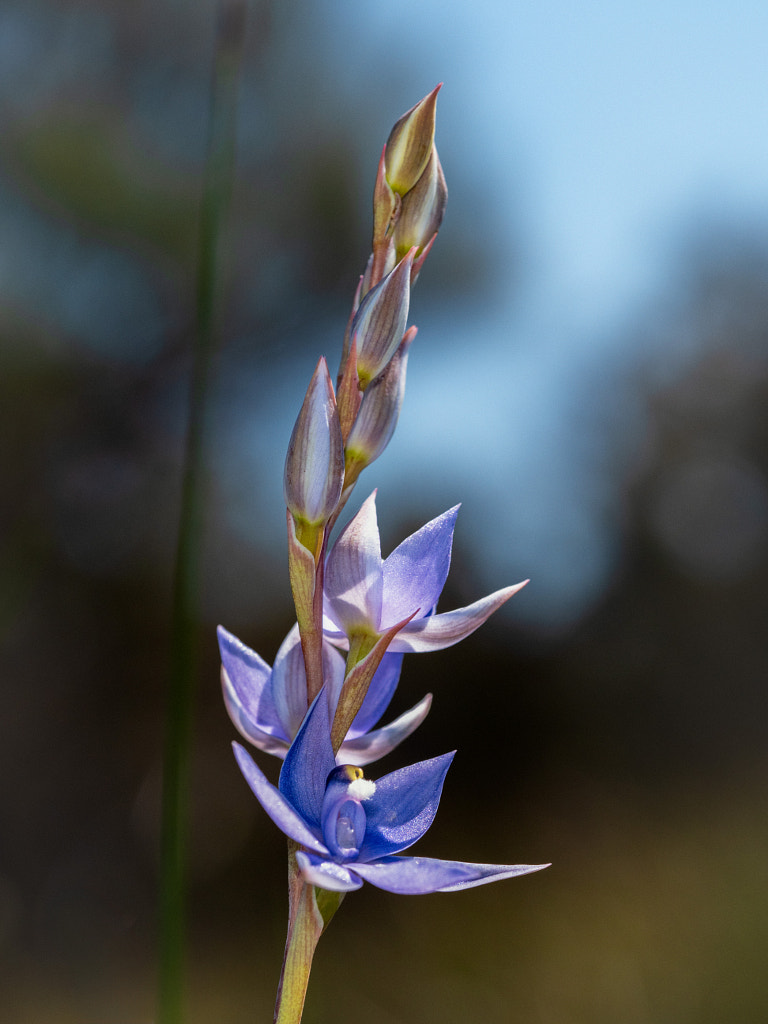
Lemon Scented Sun Orchid or vanilla orchid (Thelymitra antennifera).
One of the most disturbing things this year is the impact of orchid tourism. Usually the reserves around York receive a fraction of the visitors that other orchid hotspots do, but with high petrol prices more and more people are now restricting their days out to those areas an hours drive from Perth. Having more visitors isn’t bad in and of itself. What is bad is the deterioration in people’s behaviour. The amount of litter left in some spots is huge. Another thing is that people aren’t prepared to walk to sites and so drive off the tracks to look for flowers causing a lot of damage. The worst thing is that people are now digging up the orchids. On Friday 25th August I went out to photograph Curly Locks orchids in the Wandoo National Park. I found six in three separate clumps. The flowers hadn’t fully opened so I decided to go back in a couple of days time. The following Tuesday I went back and all three clumps had been dug up. I tried to report it but was told it was a kangaroo that did it, but in my experience kangaroos don’t dig perfectly square holes with spades, and nor do they smoke cigarettes while they do it and leave behind their water bottle.
Jug Orchid or Recurved Shell Orchid (Pterostylis recurva).
Orchid poaching is a big problem. Earlier this year Kings Park in Perth had nine hundred rare species of Western Australian orchids stolen. It seems that there people afflicted by orchidelirium a kind of flower-driven madness where people just have to own the rarest of the orchid species. It is a growing problem and only the other day I was approached by a man in his early 70’s claiming to be a friend of a noted Western Australian expert and that he was prepared to sell me orchid tubers for $40 a tuber. I told him in no uncertain terms where to go. The frustrating thing about this is that a lot of the orchid species are very specialised requiring certain other plants and pollinating insects to survive. Without these they die. In the case of the Curly Locks I know of only three sites where they can be found round York and at best there are only half a dozen flowering plants at each site per year. Wiping out one locations population like that means that is one less place where they can be found, which means extinction is even closer.
Bird Orchid, Pterostylis barbata
I’m sorry for the rant but the whole thing was a little upsetting and I’m not sure what was worse, the theft, the indifference of the authorities, or the brazenness of people trying to sell the orchids.
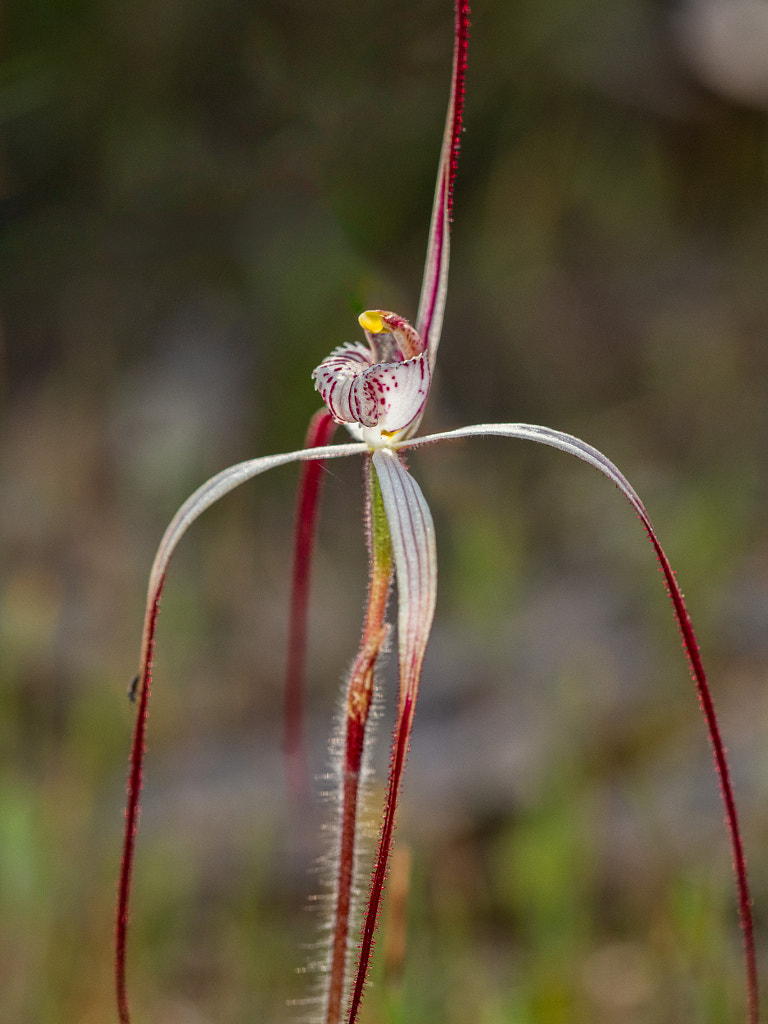
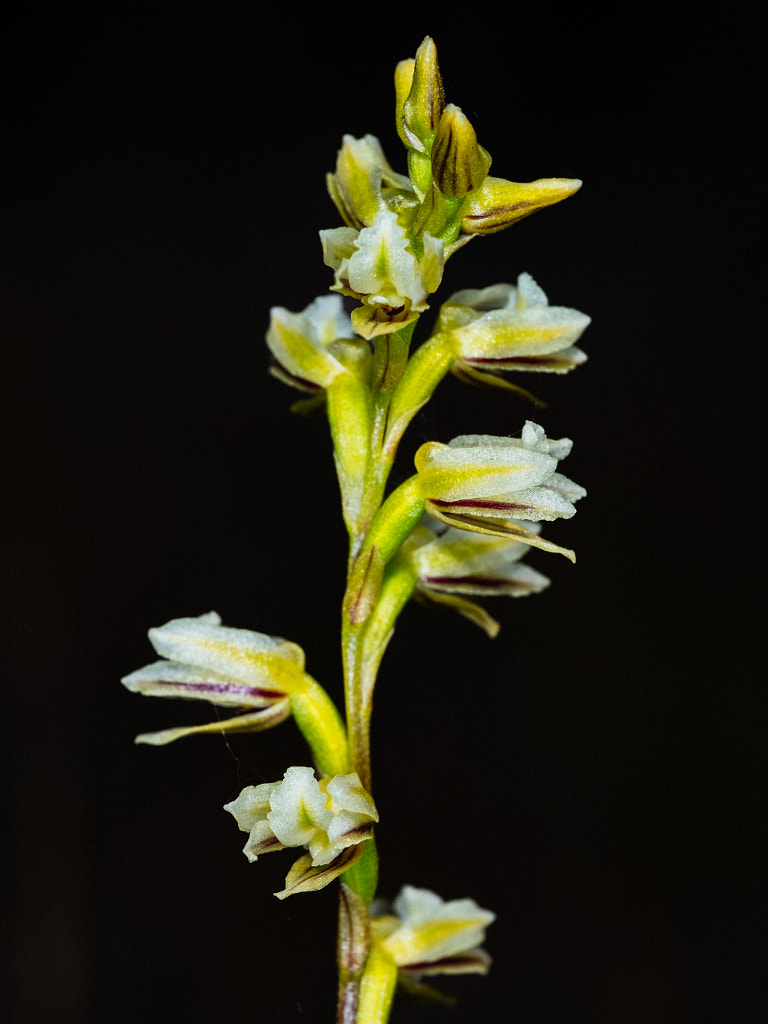
Clubbed Spider Orchid, Caladenia longiclavata.
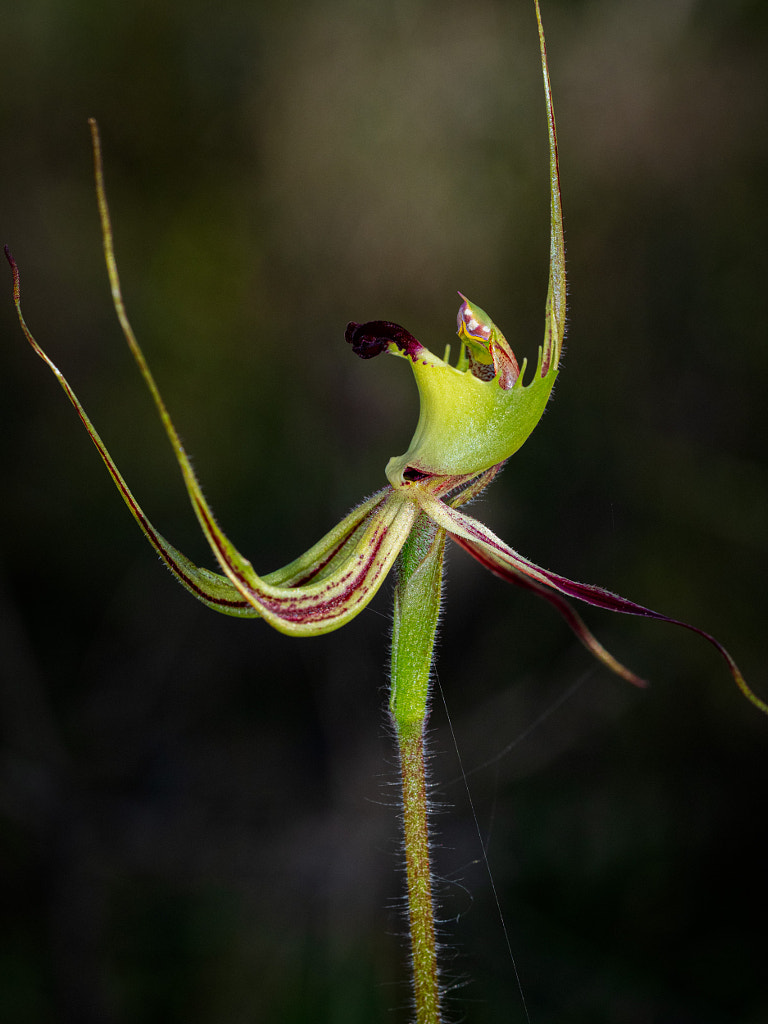
Fringed Mantis Orchid or Green Spider Orchid (Caladenia falcata).
The other week I had the privilege of being asked to judge one of Mundaring Camera Club’s monthly competitions. It was a great experience and I really enjoyed looking at all the wonderful photos that had been entered. At one point when looking a shot of a flower I made my oft said statement shoot photos of flowers like they are a portrait of a person. So what do I actually mean by that? After a couple of weeks thought – I’m not the quickest! – I’ve decided to actually write it down.
The following four shots are all photos of the same Winter Donkey Orchid – it’s nothing special it’s just a plant I found the other day. But they do illustrate how I approach each subject.
Winter donkey orchid, Diuris brumalis. Woottating, Western Australia.
The first is the establishing shot, an environmental portrait. It shows the plant in situ and how it relates to bush around it.
The first of the mid length portraits.
The second mid length shot done with the macro lens and flash. It creates a very different looking picture when compared with first one.
The next two are mid length shots. Two different techniques are used to try and produce the same effect. One is a single shot taken with a macro lens and flash, the other is done with a long telephoto lens as a focus stack. The aim is produce a shot with a nice clean back ground.
The tight “head” shot.
The fourth shot is a close up portrait – a head and shoulders if you like – to reveal some of the characteristics of the flower.
It is how I work the subject. Unlike Austin Powers I’m not asking the flower to be a tiger, but, what I am doing is taking a series of photos from different angles to bring out the best in the subject.
As an aside the clip of Austin Powers is its self a parody of another famous screen photographer – the protagonist of Michelangelo Antonioni’s masterpiece ‘Blowup’. I certainly don’t behave like David Hemmings’ character did when photographing Veruschka von Lehndorff in the film. That would be a bit strange.
Based on the evidence of what I post on this blog I go out to take nature and wildlife photos, but actually I go to be out in nature. The photos below are what I love being out in.
The warm light of sunset reflected by the trees in the Oswald Sargent Reserve.
Driving back home from the Oswald Regent Reserve at sunset.
This shot of a Scented Sun Orchid was what I considered my first successful photo of an orchid. The subject is separated from the background making easy to see.
I took what I call my first proper shot of an orchid back in 2008. Back then my technique was very simple – handheld with a macro lens. The problem was that it was often very difficult to isolate the flower from the background while having sufficient depth of field and a low ISO. For every successful photo there were hundreds of duds.
This shot of a Butterfly Orchid is one of the hundreds of duds. The messy background threatens to overwhelm the subject.
After about a year of trial and error (mostly error) I decided to photograph the orchids in the same way I would take a portrait of a person. Get down at “eye” level, use an off axis flash to provide the key light and have the natural light as my fill light at -1 to -2 stops. This was a huge improvement, but I still wasn’t getting the clarity and sharpness in the images I desired.
My first flash rig for photographing orchids. Using a flash brake allowed me to get the flash off of the lens axis and get a more pleasing lighting effect.
The next attempt at better lighting was a heavy tripod and light stand. My back hurts just looking at this photo.
The next evolution was to mount the camera on a tripod and then mount the flash to one of the tripod legs via a “magic arm”. This allowed greater choice in the positioning of the flash and allowed me to use different flash modifiers such as soft boxes, grids and snoots. The arrival of affordable and reliable wireless flash triggersmeant I could use multiple speedlights for more sophisticated lighting. This came a tremendous cost. I have a chronically bad back and all that kit was heavy, the tripod and “magic arm weighed just under 6Kg. Then there was the futzing about setting everything up, taking the shot, breaking it all down, walking to the next subject and then repeating it all again. Suddenly it wasn’t fun anymore. Something had to give and it was my back.
The diminutive Olympus EP-2. Just what the orthopaedic surgeon ordered.
A size comparison of my DSLRs (Canon 5d and 550d) and the Olympus EP-2 which replaced them.
In 2013 I bought an Olympus EP-2 mainly for travel and street photography. It was a revelation – small size, In Body Image Stabilisation (IBIS), and excellent flash implementation. It quickly became my orchid camera of choice. I could chuck out the tripod and become more mobile. It wasn’t all beer and skittles though. The 12Mp sensor wasn’t the best in terms of high ISO performance and dynamic range, the lack of a viewfinder made usage in bright sunlight problematic (solved with the addition of the optional EVF) and the contrast based autofocus system was a bit on the temperamental side. But the positives were enough to keep me using it and when the EM10 came out with a built in EVF, a better IBIS system and an improved sensor then I knew that the system would be just about perfect for what I did. I could walk around in the bush for hours at a time without back pain which meant I could explore further afield. This freedom allowed me to experiment a lot more.
Sigma’s 105mm f2.8 DG DN macro lens attached a Sony A7Rii.
The Tamron 35mm f2.8 lens has excellent macro capabilities.
Curly Locks, Thelymitra spiralis. Wandoo National Park, Western Australia. Sony A7r2 with Sigma 105mm f2.8 DG DN macro lens.
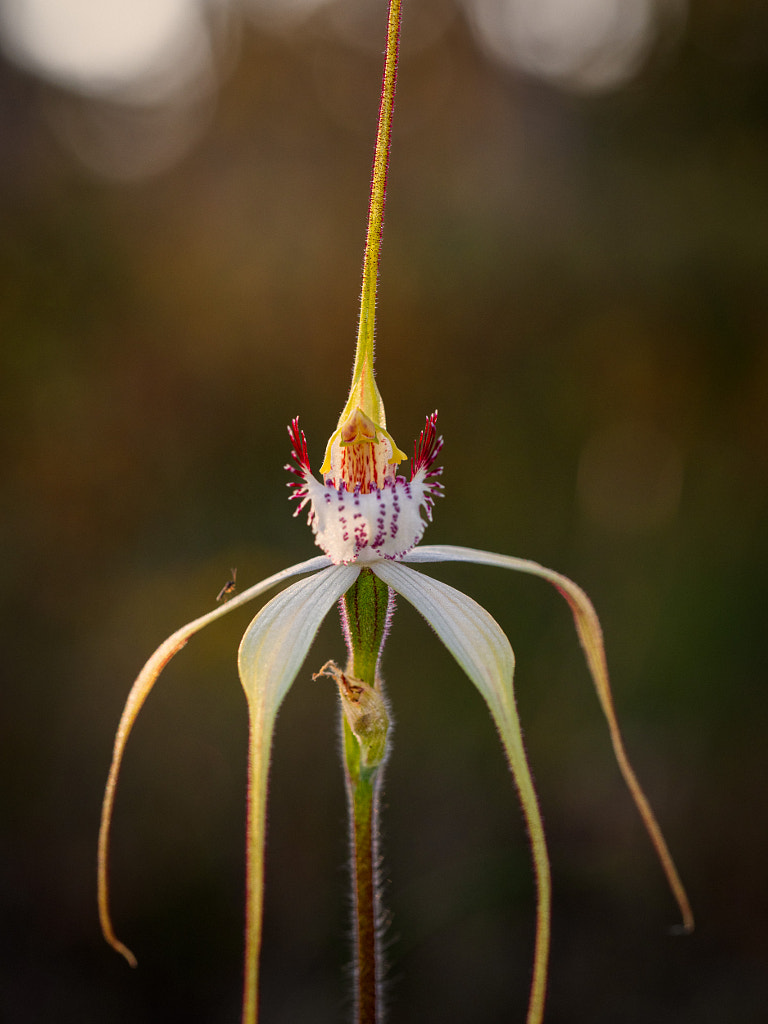
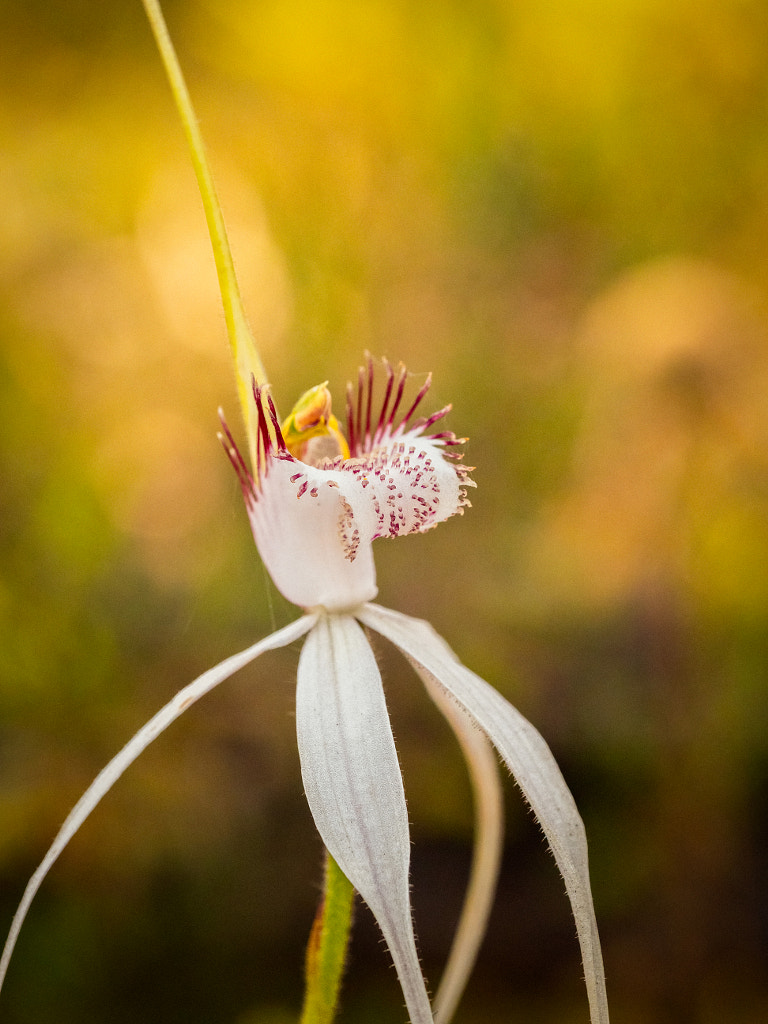
White Spider Orchid, Caladenia longicauda subsp longicauda. Wambyn, Western Australia. Sony A7r with Tamron 35mm f2.8 lens.
In 2021 I felt that I wanted more resolution than the 20Mp EM1 mk ii was giving me. So I tentatively dipped my toe into the world of full frame mirrorless and I went with a second hand Sony A7r2. The image files produced by the camera were absolutely gorgeous. Alongside my usual working method of using flash with macro lens I decided to experiment with environmental portraiture of orchids. For this I used a 35mm lens with a half size macro capability and the results were pleasing. The downsides were as follows. The rear LCD is hopeless in bright light and it has no touch control facility. The IBIS wasn’t as effective as that on my Olympus cameras and the sensor resolution emphasised very tiny camera shake. A tripod was the solution. The sensor is a dust magnet which means that changing lenses enables dust bunnies to proliferate. The answer was to have one camera with the 105mm macro and one camera with the 35mm. Arrrrrgh! I was back carrying a load of heavy equipment. So it was back to the Olympus kit.
This shot of a Lemon Scented Sun Orchid was made with the Olympus Em1 mk ii, Olympus 40-150mm f2.8 lens with 1.4 x teleconverter and the Olympus FL600R flash using the focus stacking function.
I’m still trying to evolve a style which produces a nice clean portrait of an orchid. One of the great benefits of Olympus’s cameras and lenses is that it allows very long telephoto lenses to have an almost macro capability. The use of such long lenses allows you to throw backgrounds well out of focus by dint of their increased magnification which reduces depth of field. The problem is that that decreased DOF means that it is hard to get your subject rendered sharp whilst retaining all that loverly bokeh. The counter to this is focus stacking which involves taking a series of pictures of the subject while moving the focus point and then blending the images in post. Olympus has a very neat feature that allows you to do this automatically in camera which is fantastic. Unfortunately the function limits your flash usage by restricting your maximum flash sync speed to 1/50th second and you have to manually set the flash exposure. I tried doing this for a while and it was a right royal pain. So now I don’t use the flash and just make the exposure using ambient light. The lens I’m using is the Olympus 40-150mm f2.8 with the the mc-14 1.4 x teleconverter. This gives me a 210mm f4 lens (420mm in full frame terms). Despite shooting wide open this invariably means shooting at a low shutter speed. So while the IBIS is fantastic on my EM1 mk ii using it with a long lens while focus bracketing wasn’t the best way to proceed. So it was back to a tripod. My aluminium Manfrotto 055 tripod is a good tripod but it is that heavy you could use it as a boat anchor. It was time to get a bit of fibre in my life – carbon fibre. So I bought a nice SiruiAM-254 carbon fibre tripod which weighs just a smidge over 1Kg. It doesn’t have a centre column and so a minimum working height of 7.8cm which means you can get down and close to the subject. The results have been excellent and now I feel that using both my normal macro lens and the telephoto zoom with converter I’m getting closer to what I have envisioned.
The Sirui AM 254 tripod in action.
So this has been my journey of finding what works for me. I’ve discovered that learning how your equipment works is just as an important step in developing vision and style as is technique. Continual learning and experimentation will help you develop as an artist and we shouldn’t be afraid to do so. A few times I’ve felt that I was going backwards, but it was worth persevering. I’ve still got a couple of things to sort out, but I feel now I’m on the right track.
The following shots were made this last week.
Common Bunny Orchid, Eriochilus dilatatus subsp. multifloris. Oswald Sargent Reserve, Western Australia.A focus stack using the Olympus EM1 mk ii with the Olympus 40-150mm f2.8 lens and 1.4 x teleconverter.
Hare Orchid or Fringed Hare Orchid (Leporella fimbriata). Oswald Sargent Reserve, Western Australia.
Just a few snaps from the garden this week. First up is the biggest grasshopper I’ve ever seen. An absolute whopper. Appropriately called the Giant Grasshopper. It was sitting quietly on our front veranda and obligingly let me take it’s photo.
Giant grasshopper or hedge grasshopper (Valanga irregularis).
The second photo is of a praying mantis that also was very cooperative with my photo taking.
“Let us prey.” Blackbarred Mantis (Mantis octospilota).
The last shot is of a white cedar moth that came from our next door neighbour’s white cedar tree.







You must be logged in to post a comment.