City of Perth Christmas Tree in Forest Place, Perth.
We’re gearing up for West Aussie Christmas. Temp here in the Wheatbelt metropolis is expected to be 38ºC or 100ºF so it’s a case of staying under the aircon and Christmas lunch can’t involve the oven. Hope everyone stays safe over the holidays and has a great time.
This is the second part of a series of articles on upgrading camera equipment on a budget. Parts 1 and 2 can be found here and here.
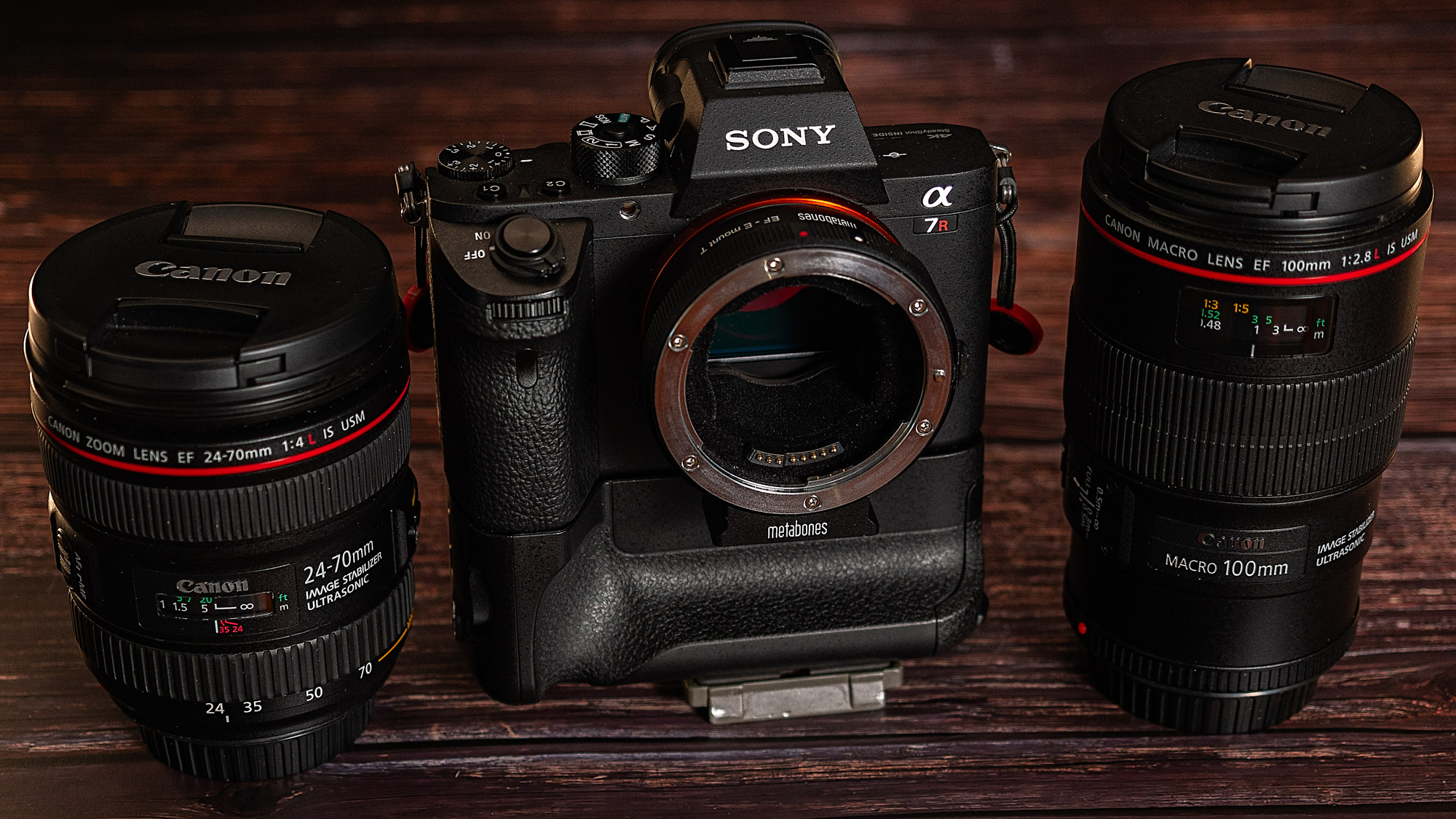
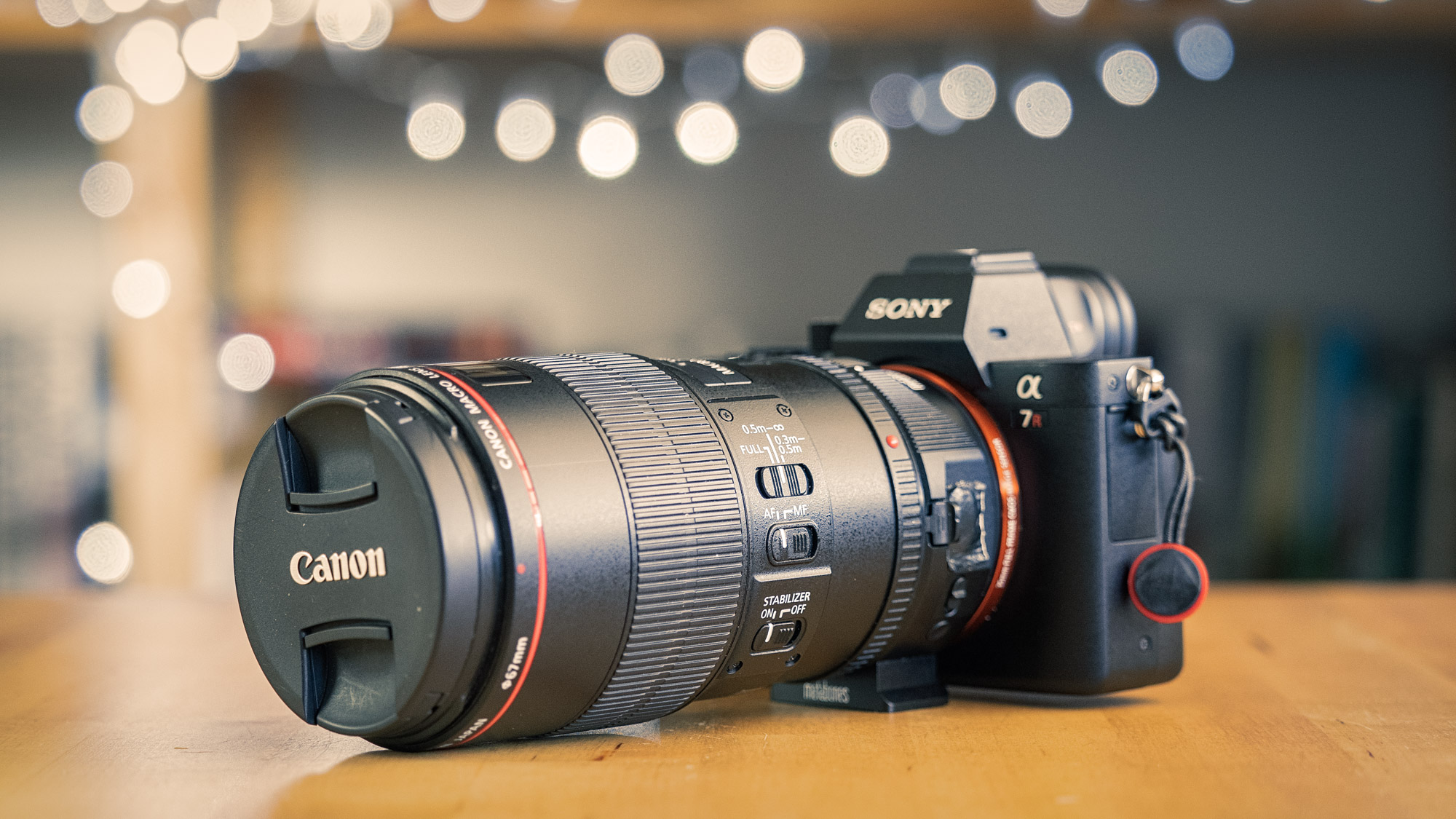
Mount your Canon EF lenses to your Sony A7rii using the Metabones V Smart Adapter.
TLDR
Metabones was an early innovator in terms of lens adapters entering the market in 2013 with the Speed Booster which was an adapter. With a focal range reducer that allowed full frame SLR lenses to be used on smaller format mirrorless cameras at close to the full frame field of view. The first with autofocus capabilities was a Canon EF to Sony E. Metabones themselves described its performance as:
“Autofocus speed is very slow and inadequate for most moving subjects. The autofocus speed is unfit for professional use for sure, and it would disappoint most enthusiasts.”
By 2016 Metabones was able to offer a “Smart Adapter” that allowed Sony users to access all the AF modes when using Canon lenses. The adapter makes the lens behave like a native Sony lens. Sigma had beaten them to the punch with their MC-11, but, that had the caveat of only promising that performance with certain Sigma lenses. The Metabones Smart Adapter V EF to FE is the latest incarnation and this is the model that I’m looking at. This is not a Speed Booster – there are no optical elements in the adapter. It is designed for mounting full frame Canon EF lenses on a Sony Alpha series body. In Australia this retails for a whopping $780 AUD. A lot of money when you consider that outcomes are not guaranteed. Luckily there are plenty on the secondhand market and you can expect to pay around half the retail price.
Mount your Canon EF lenses to your Sony A7rii using the Metabones V Smart Adapter.
Build Quality
The Metabones Smart Adapter V for Canon EF to Sony FE mount comes in a smart hard plastic case. Included are two Allen Keys, one for removing the Arca Swiss tripod mount and the other for carrying out adjustments.
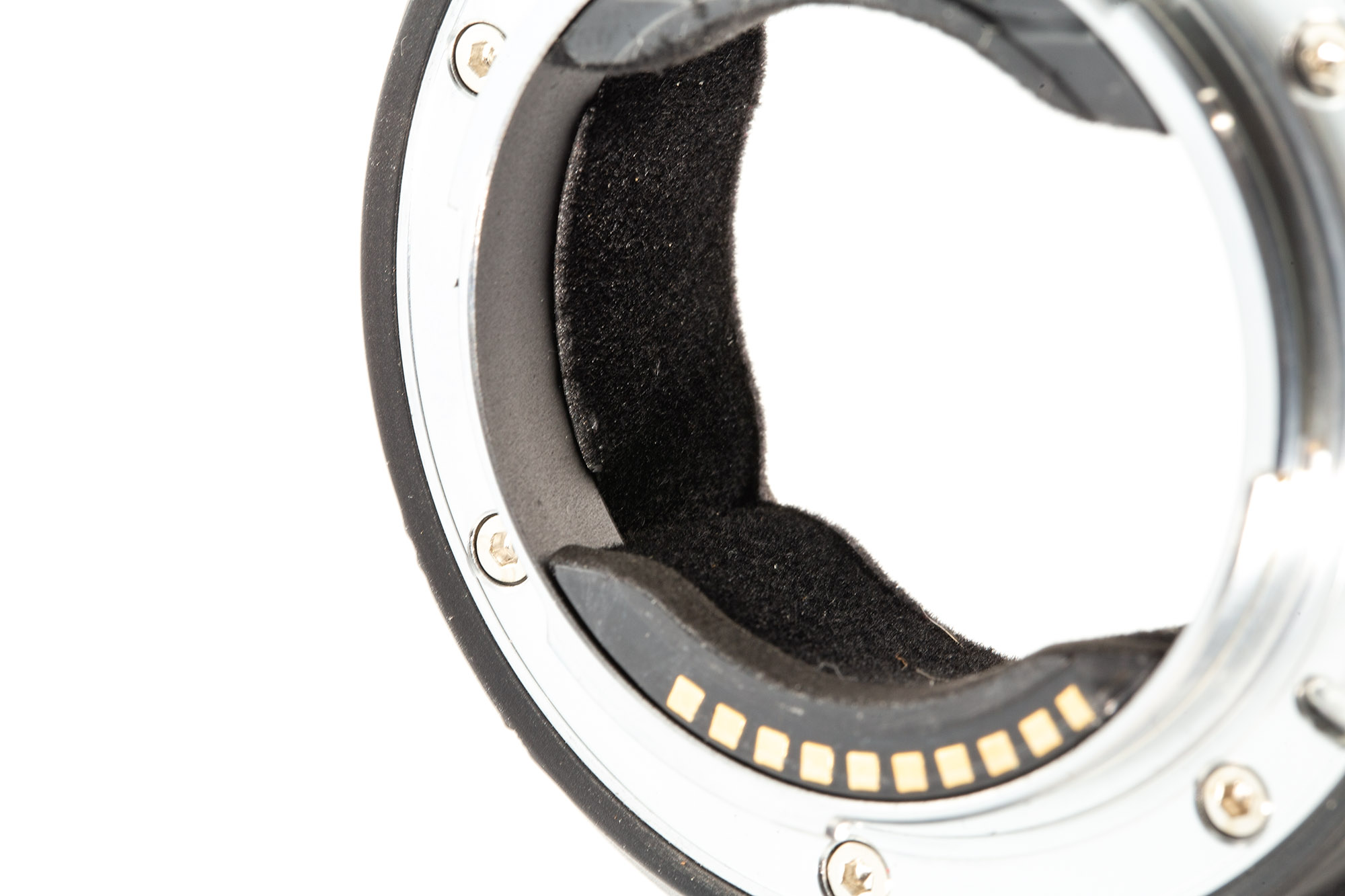
The adapter comes in a nice hard plastic case with two Allen key that are for removing the attached Arca Swiss tripod mount and carrying out adjustments. Picking it up the adapter feels well made with a metal body and both mounts are chromium plated brass for long life. There is a rubber gasket on the Sony mount side to prevent dust and moisture ingress and the adapter is lined with black flocking to prevent internal reflections. On the left hand side of the adapter is the lens release button, a USB port, an IBIS off/on switch and button you can customise its function like the ones found on the Sony G and GM lenses. There are two bad points. First is that the plug for the USB port is not of the flap variety that Sigma use that is attached to the adapter. In the six months I’ve had it the plug no longer fits snuggly and is prone to dropping out which potentially means it could be lost making the adapter susceptible to damage. I’ve taken to taping over it with a bit of gaffer tape but it is not what I would expect from an item costing so much especially when Sigma at half the price have a better approach. Second is the black flock used inside the adapter is a dust and hair magnet and it inevitably finds its way on to the camera sensor. I seem to be forever cleaning the adapter, the sensor and having to spot my photos.
Metabones line the adapter with black flocking to prevent internal reflections.
On the left hand side of the adapter is the lens release button, a USB port, an IBIS off/on switch and a customisable button.
A crucial part of whether the adapter will work is the ability to download and install firmware updates. Sigma enable you to both update the adapter and the lens firmware. With the Metabones you can only update the adapter firmware and this is a bit of a dogs dinner. You download the updater appfor Mac and Windows from their website. This and opening the app is the easy bit. When prompted you connect the adapter to your computer via USB cable. I primarily run a MacBook Pro running OSX Big Sur version 11.6 with Thunderbolt 3 and no matter what adapter for USB A to USB C I used the app would not run. I then tried my 2012 iMac running Mojave thinking the native USB 3 will be the solution. Nope. At the back of the cupboard in my office I found 2009 MacBook running El Capitan and having USB 2 ports. Did this work? Did it heck. The app recognised the adapter and advised that there was a firmware update available but when I went to install it the app just froze. So as a last ditch attempt I pulled out of a box in the shed a Sony Vaio from 2003 running Windows XP. I downloaded the Windows version of the app and it worked! It took an hour to download the update but it got there. This is important because the app just doesn’t up date the adapter firmware but allows you access various functions.
The Smart Adapter V has two modes:
Green Mode or basic mode
Advanced Mode
There is no instruction leaflet with the adapter so you will need to access the support page for it. How these two modes operate will depend upon your Sony camera. As I’m using it on a Sony A7r2 I’ll concentrate on that.
Green Mode
Auto focus – uses phase detection autofocus and is compatible with, according to Metabones, “virtually all AF lenses” but there is no eye-AF, poor video AF which is contrast-detect and requires half-pressing shutter release button to activate if at all, doesn’t work well with telephoto lenses and requires good light and high contrast to work. Most of the Sony native AF functions are not available. The lens only stops down when you press the shutter button. On the plus side it has low power consumption.
Advanced Mode
The autofocus uses a hybrid of contrast based and phase detect autofocus which makes it fast and accurate. It is not compatible with as many lenses as green mode. Eye-AF is supported. In video you get continuous phase detect AF. The AF works better with long lenses. The aperture stops down as you turn the aperture dial on the camera causing a lot of clicking noise and higher power consumption.
To tell which mode your adapter is in there is a small LED on the top. For Green Mode the LED shines blue and for Advanced Mode it is red. In an ideal world you’d want to be able to switch back and forth between modes. There are two ways of doing this. The first is via the Metabones App which as we’ve already found out is less than ideal. The second can be done in the field and it involves pushing buttons mounting the lens switching on and off etc. It is fiddly. Don’t try to follow the instructions just watch the YouTube video by Alex & Nadia Fediakov. After a short while of using Green Mode and not having a lot of success I just switched to Advanced mode and have left it there ever since.
Performance
I’ve used the adapter with 3 lenses:-
Canon EF 24-70mm f4 IS L
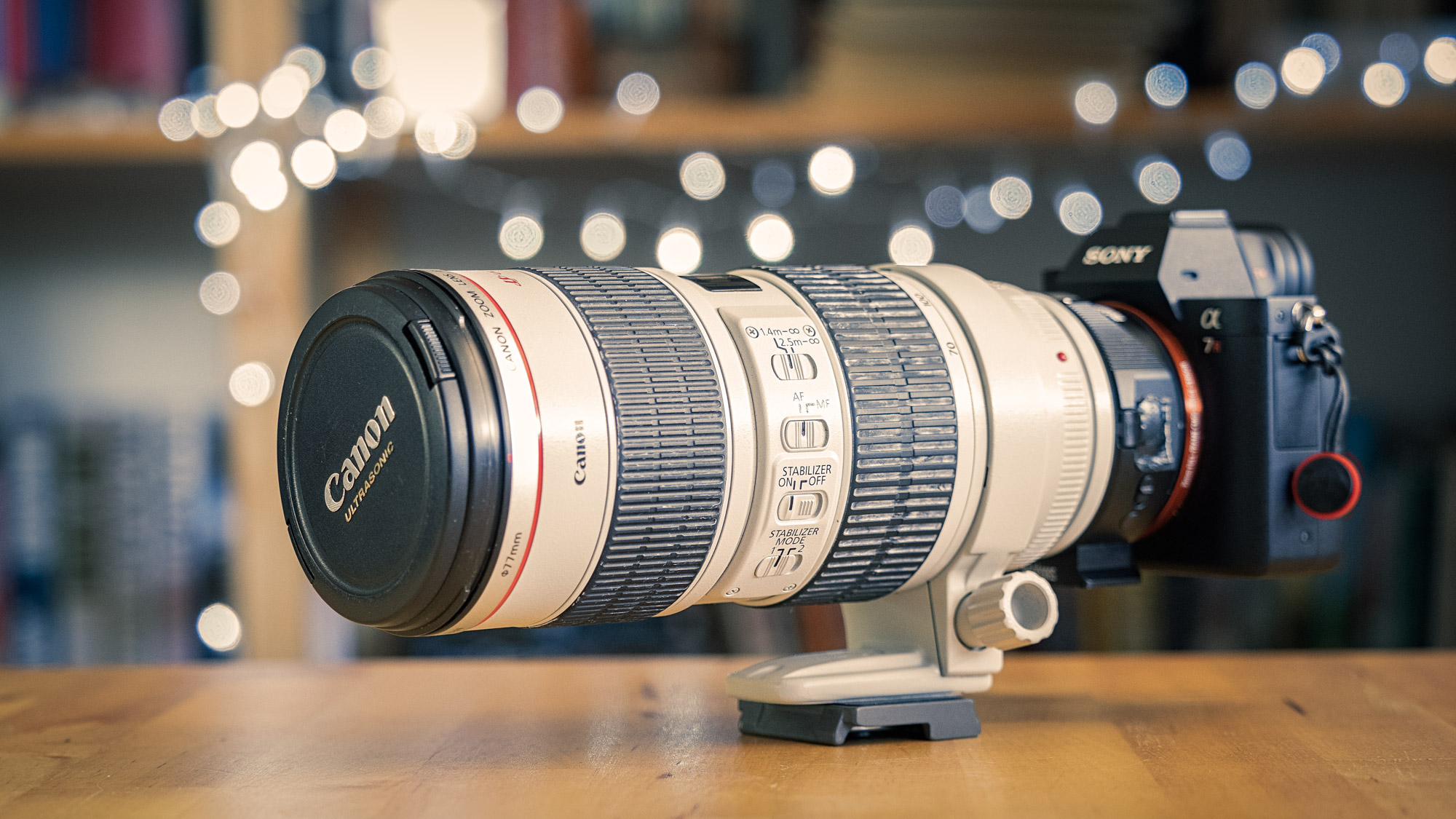
Canon EF 70-200mm f2.8 IS L mk i
Canon EF 100mm f2.8 macro IS L
Besides running tests I also used the camera and lenses in my normal day to day photography – nature, landscapes, events and grip and grin. Right from the beginning I’ll say what you get and don’t get in general terms and then go on to describe how things went with each lens.
There is no correction for vignetting or colour fringing. You have to manually select lens profiles in your editing program of choice.
The adapter enables EXIF data recording for focal length, aperture and make and model ID.
The adapter has no optics so there is no effect on lens performance. Any possible degradation in optical performance will come from the fact that Canon lenses are designed to work with the sensor stack of Canon cameras not Sony. With the three lenses I used there was no problem.
The auto focus generally works very well allowing access to all the AF modes on the camera. However, how well is specific to the lens. Focal length and the motor technology in the lens play a part in how well the adapter works.
Using the adapter in Green Mode in body image stabilisation is favoured while in Advance Mode both IBIS and optical image stabilisation are used.
In Green Mode the power consumption is low. In the Advanced Mode because the lens aperture is constantly opening and closing and both forms of image stabilisation are used the power consumption is high.
Tests
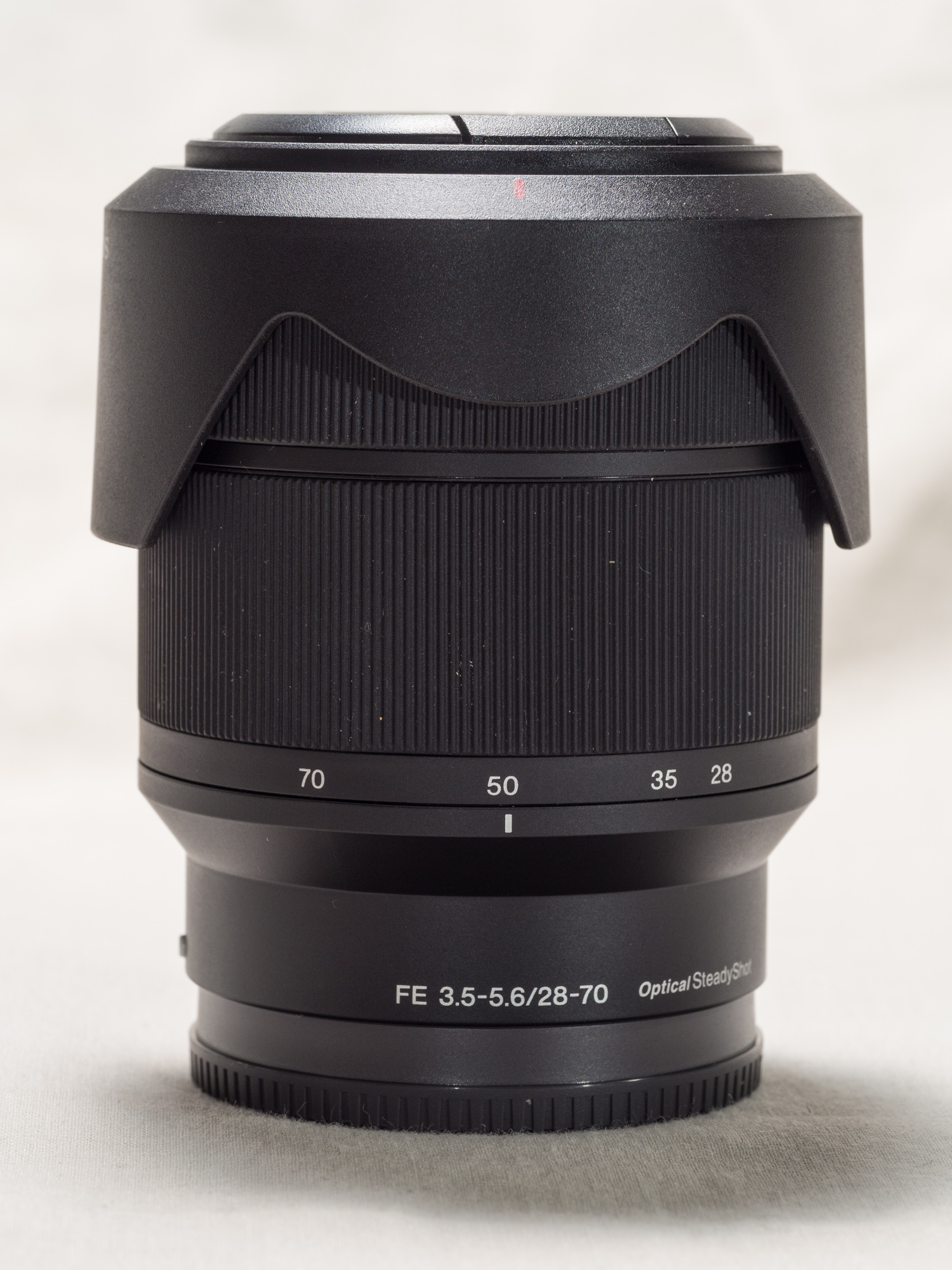
The Sony 28-70mm f3.5-5.6 OSS was introduced in in 2013 as the budget kit zoom to accompany the Sony A7 mirrorless camera.
The reluctant running bull terrier test with the Sony A7r2 andSony FE 28-70mm f/3.5-5.6 OSS lens.
To help me get some sense of what I was seeing I needed a point of reference and for that I used the Sony FE 28-70mm F3.5-5.6 OSS kit lens which can be picked up second hand for about $200 AUD. I wasn’t looking at optical quality but autofocus performance. Each of the Canon lenses had to equal or better the AF performance of that cheap kit lit lens. When shooting sequence of a moving subject (my reluctant Bull Terrier Frida) the Sony 28-70 was achieving a 90% hit rate which I thought was impressive.
Canon EF 24-70mm f4 IS L lens
The Canon 24-70mm f4 IS L mounted to a Sony A7r2 via a Metabones V Smart Adapter.
My initial tests were very disappointing. Using single point continuous AF with a burst of 5 frames none of the shots were in focus. So I changed the settings to lock on flexible spot with continuous AF and got a hit rate of 50%.Shooting video things were more promising. The autofocus was quick and positive and tracked well, but it didn’t do as well as the Sony 28-70.
Canon EF70-200mm f2.8 IS L lens
The Canon EF 70-200mm f2.8 IS L lens mounted to a Sony A7r2 via a Metabones V Smart Adapter.
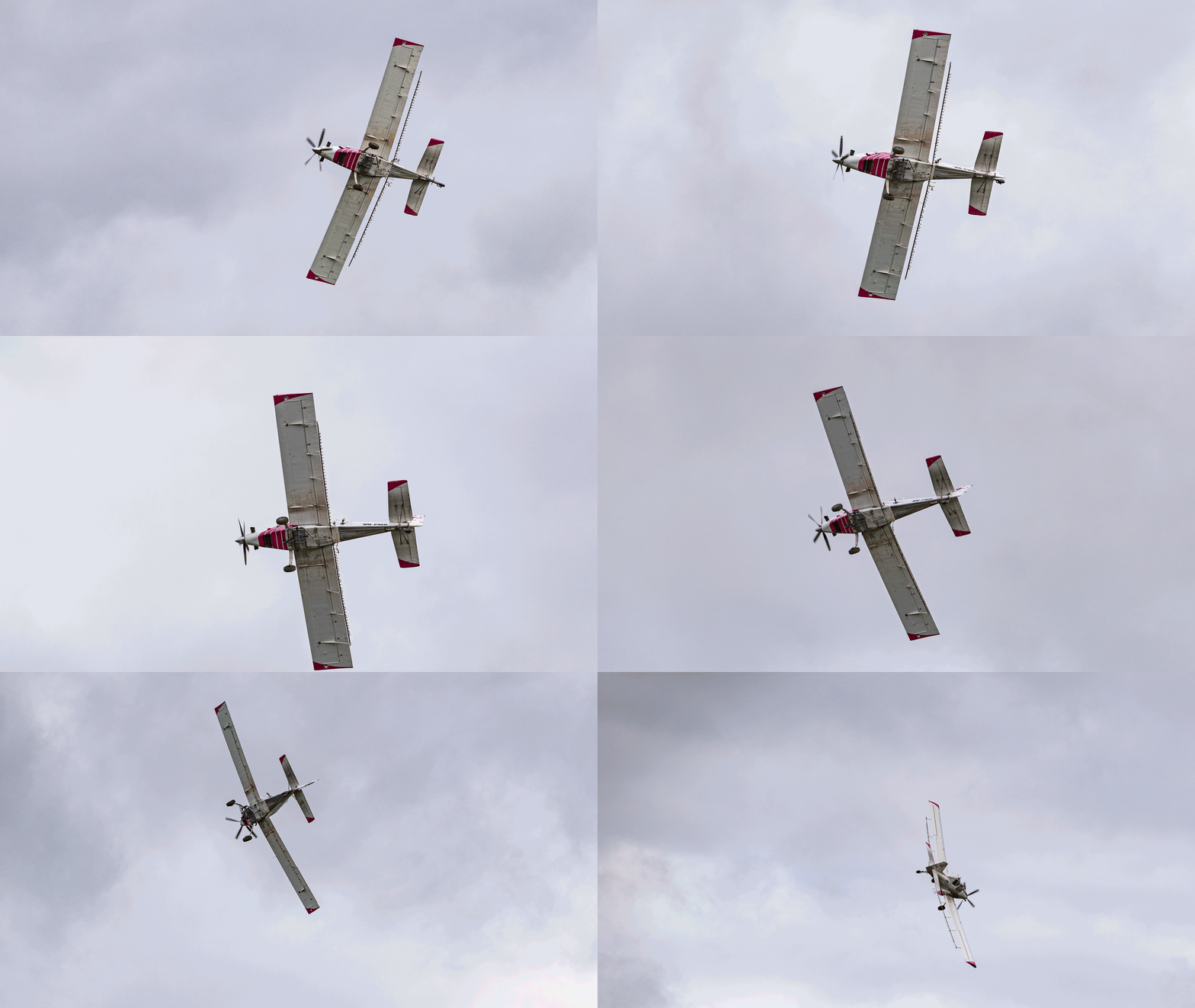
This lens did not work well in expanded flexible spot with continuous autofocus. Typically the lens racked back and forth, then would settle on the subject for a couple of seconds and then drift off out of focus. Switching to other focus modes was a very different story with the lens quick to acquire focus. I abandoned the bull terrier test in favour of a plane doing some crop dusting. Out of 5 runs I got 3 with a 100% hit rate, one with 92% and one of 61%. This averaged out at 90%.The video performance was woeful. At the short end wide open the lens was very slow to acquire focus and when tracking it would loose the subject and be painful slow to reacquire. At the long end wide open it was incredibly slow – glaciers move faster and the AF motor made a lot of noise while the lens racked back and forth.
Canon 100mm f2.8 macro IS L lens
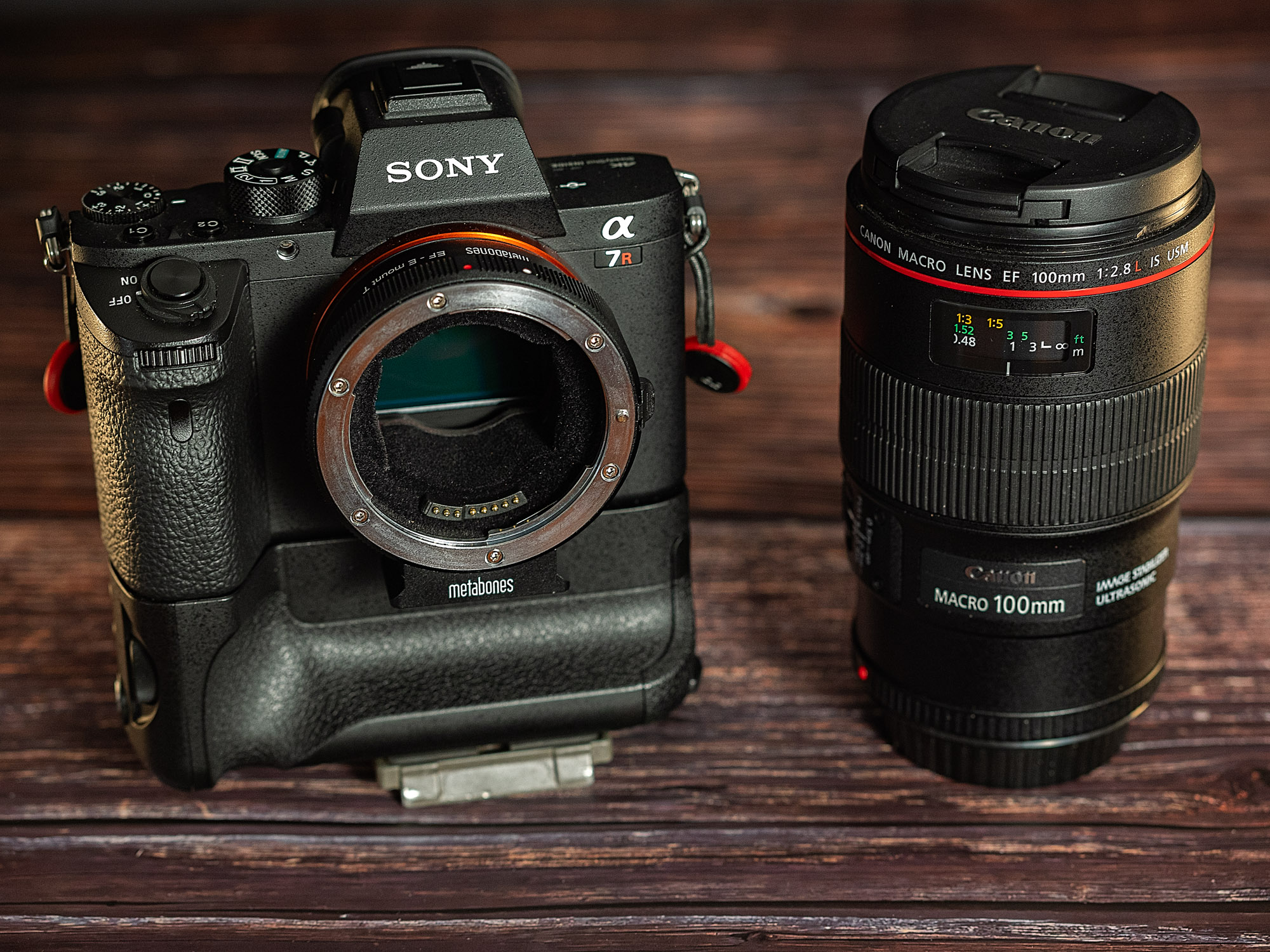
The Canon EF 100mm f2.8 macro IS L lens mounted to a Sony A7r2 via a Metabones V Smart Adapter.
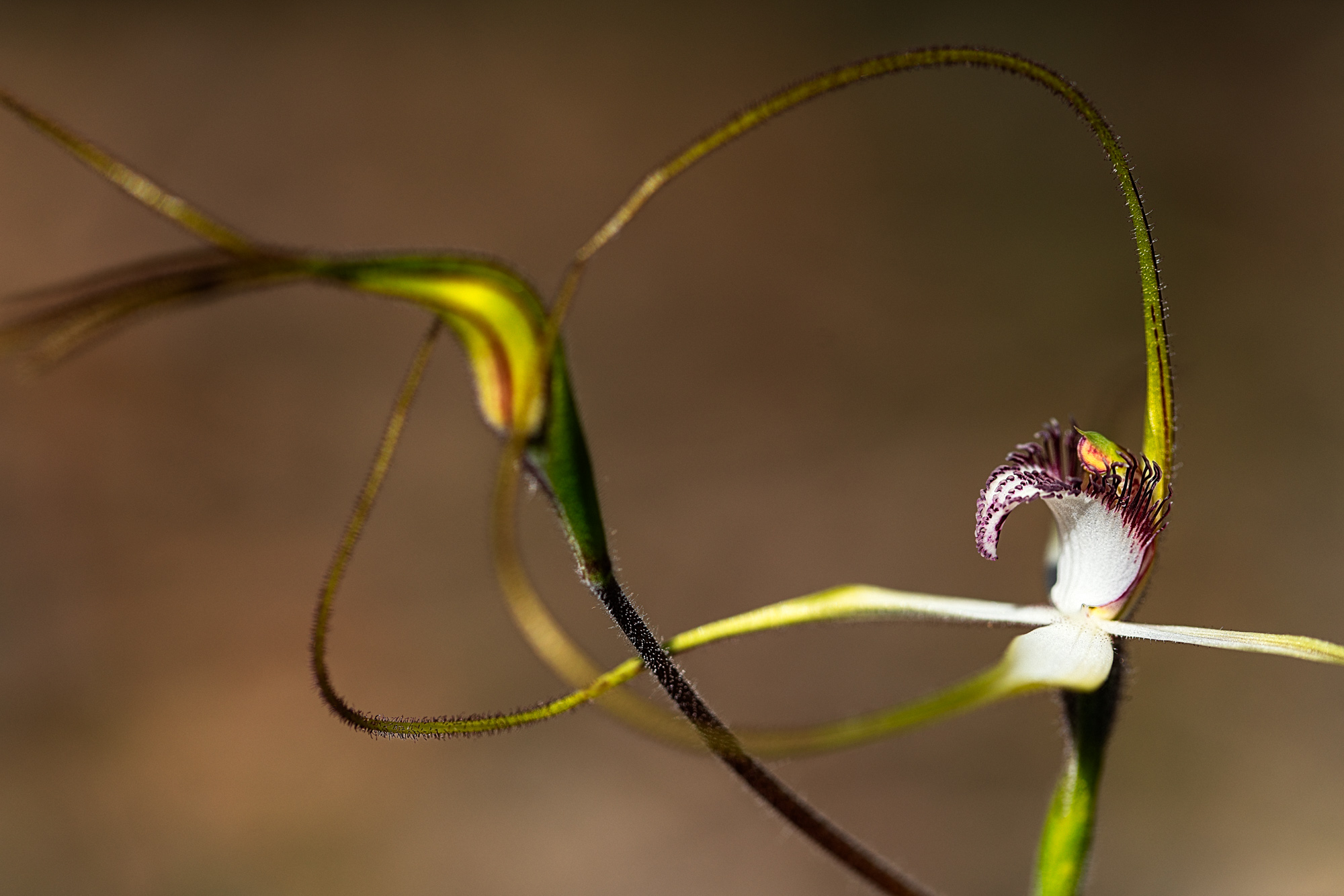
I didn’t test this lens with moving subjects as macro lens are notoriously slow to autofocus at the best of times. The lens was slow to focus in single AF mode both at macro distance and normal distances. At normal focus ranges despite being slow it was very accurate. At macro distances it would often get confused and I found that this would increase in low light or with subjects that had low contrast. For most people macro photography isn’t a fast moving high pressure scenario so this wouldn’t be really a problem. What was a disappointment was that the OIS didn’t combine with the IBIS and I had to use OIS only.
White Spider Orchid, Caladenia longicauda subsp longicauda, Wambyn, Western Australia. Sony A7r2 with Canon EF 100mm f2.8 IS lens mounted via the Metabones V Smart Adapter.
Real World Usage
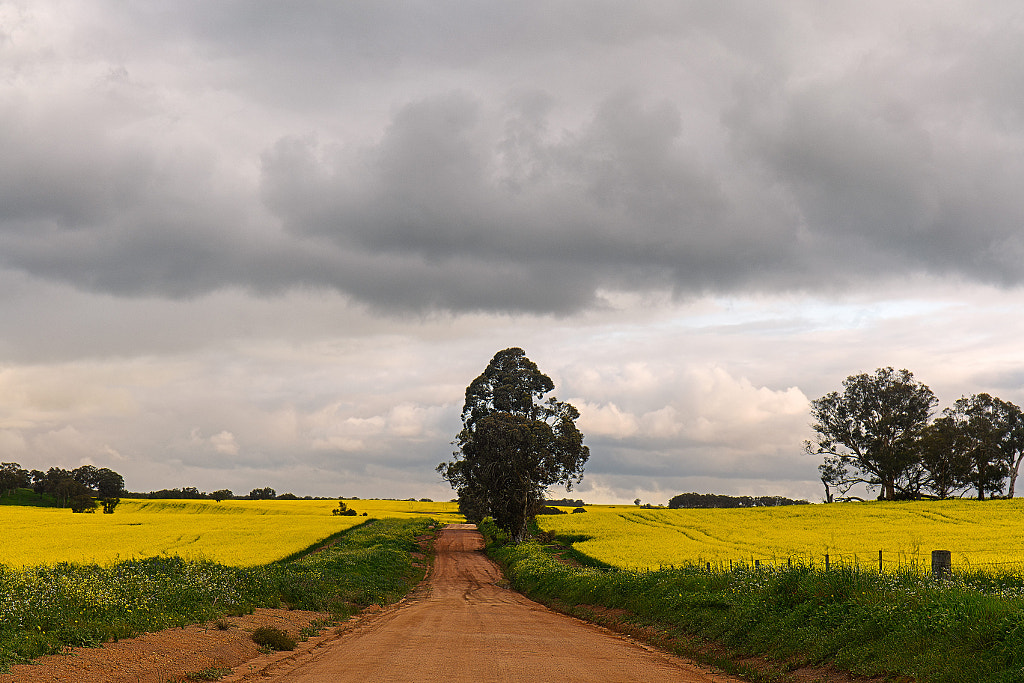
Canola fields flanking Helena Road. York, Western Australia. Sony A7r2 with the Canon EF 24-70mm f4 IS L lens.
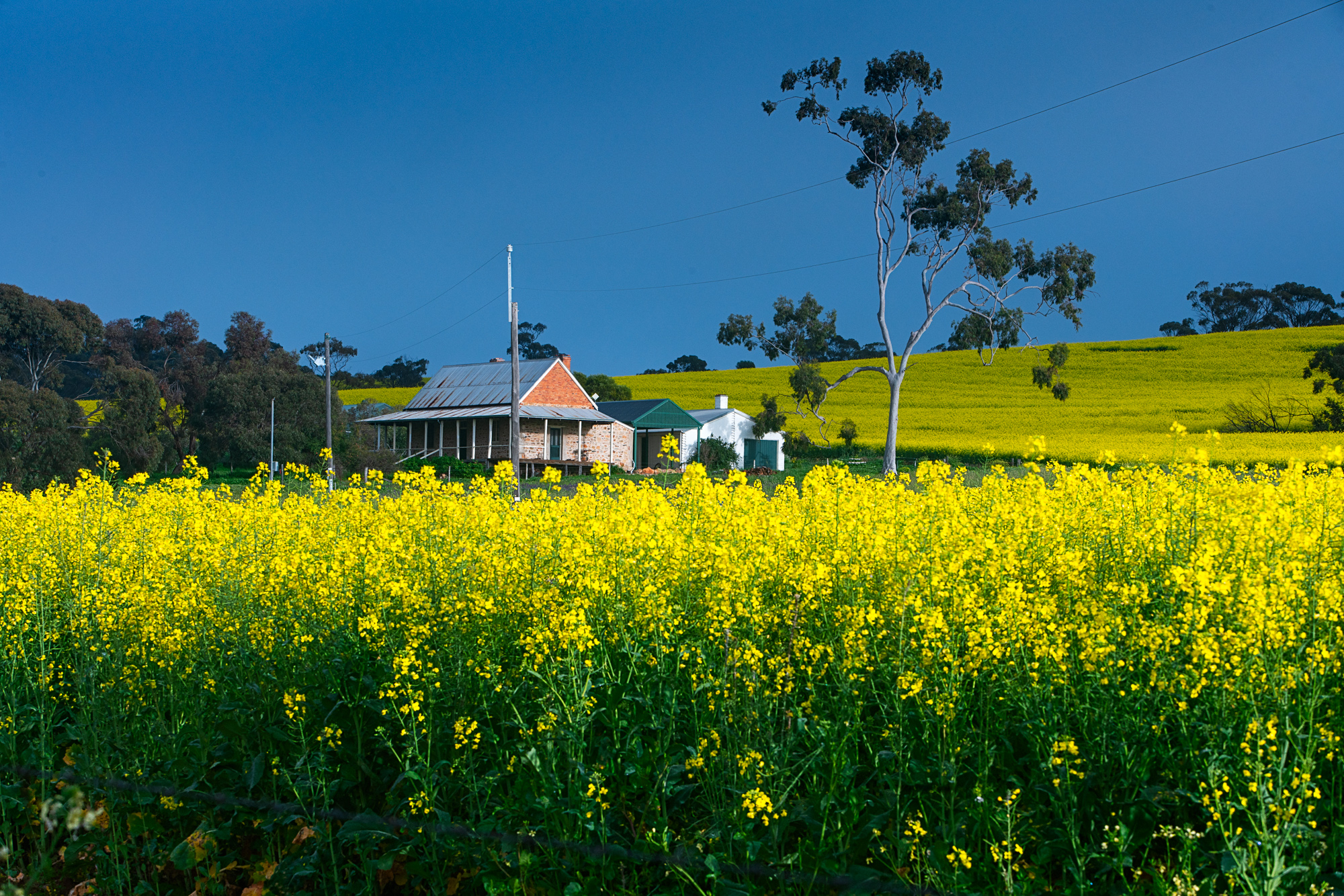
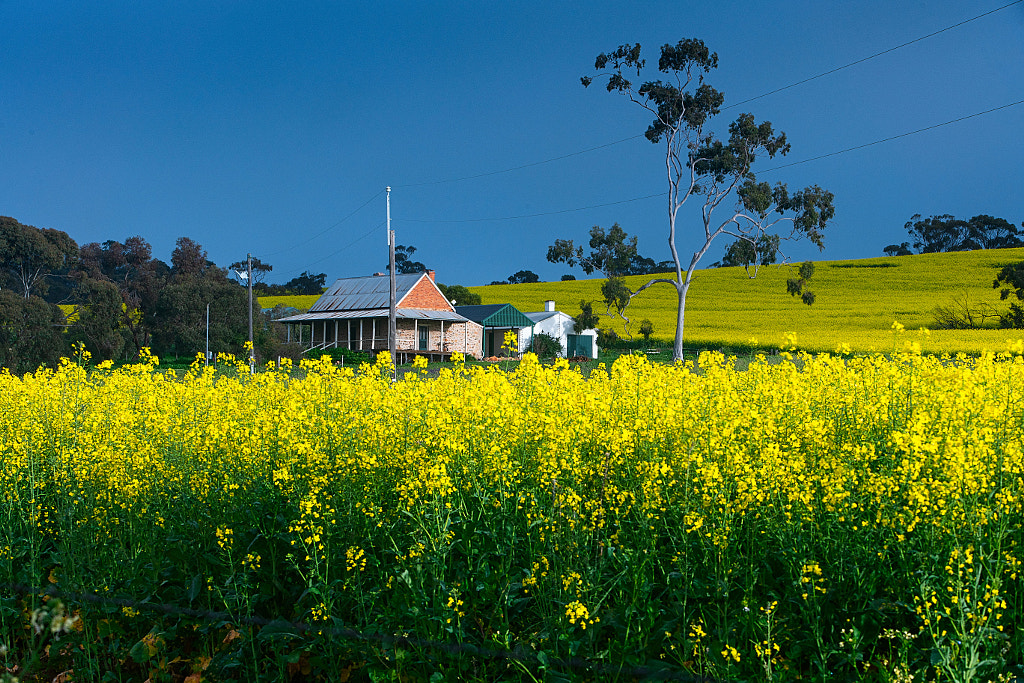
A farmhouse surrounded by canola in York, Western Australia. Sony A7r2 with Canon EF 70-200 f2.8 IS L lens.
Mounted Archery demonstration at the York Medieval Fair. Sony A7r2 with Canon EF 70-200mm f2.8 IS L lens.
Enough for the tests let’s look at real world usage. For landscape and macro work all the lenses did OK in real world usage. But for events and grip and grin work it was not all beer and skittles. The event I photographed was a medieval fair and I used both the 24-70 and the 70-200. The 70-200 did rather well with photographing mounted archers and taking candid portraits. Excellent stuff. The 24-70 didn’t do so well. I photographed a display of medieval combat and only 1 in 5 were in focus. These guys weren’tmoving fast they were just erratic and the tracking just could n’t cope. With static subjects everything was fine. I photographed an awards ceremony with the A7r ii and the 24-70. This sort of work is quick paced but straightforward photographically. I shot 220 frames with roughly a third out of focus, one third in focus but not critically sharp and the remainder were critically in focus.The experience was the AF wasn’t snappy but laboured and ponderous. Halfway through I was wishing that I’d had my micro four thirds system or my Canon DSLRs.
York Medieval Fair. Sony A7r2 with Canon EF 70-200mm f2.8 IS L lens.
York Medieval Fair. Sony A7r2 with Canon EF 24-70mm f4 IS L lens.
Conclusion
In conclusion my experience with the Metabones Smart Adapter V was quite a mixed bag. The lens that I thought would do very well, the EF 24-70 f4, didn’t do very well at all.The lens I really wanted to work but thought wouldn’t do well because of its age was the 70-200mm f2.8 and it did surprisingly well. The 100mm macro did as I thought it would.
The Sony A7rii with the Metabones V Smart Adapter and the Canon 100mm f2.8 IS L lens.
Christmas Rock Walk Trail that is. Christmas Rock is in Wongan Hills and I’ve written about going there before. This time I’m writing about the Christmas Rock walk trail which is located in a 2000 hectare reserve. It is an easy 2.7Km walk along relatively flat well marked paths not far from the centre of the town site. Along the trail are interpretive panels which give insights into the reserve. What makes it worthwhile is that at wildflower time the walk passes through country that is a riot of colourful flowers. It is a gobsmackingly beautiful sight this year as the weather conditions have been ideal. The bird life in the reserve is also pretty impressive and their song provides a fitting score for a very pleasant walk.
Cristmas Rock Walk trail is an enjoyable easy 2.7Km walk trail in the Wheatbelt Town of Wongan Hills. Sony A7r with Tamron 35mm f2.8 lens. Exposure: 1/160 sec, f8 at ISO 100.
Yellow everlastings at Christmas Rock, Wongan Hills. Sony A7r with Tamron 35mm f2.8 lens. Exposure: 1/125 sec, f8 at ISO 100.
Pink Everlastings, Christmas Rock, Western Australia. Sony A7r with a Tamron 20mm f2.8 lens. Exposure: 1/160 sec, f8 at ISO 100.
The rock gets its name from the Western Australian Christmas Trees (Nuytsia floribunda) which used to be found there and flowered at Christmas time. On the top of the rock is an elaborate series of channels that were designed to harvest rain water run off for the “Railway Water Supply” which was built in 1916. But the rock is also home to a wide variety of plants such as lichens and mosses. On a warm sunny day if you’re quick enough you might see the lizards who live in the various cracks and crevices.
The walk takes you up on the top of the rock which was part of the “Railway Water Supply” built in 1916. Rainwater runoff was harvested through a series of channels and creeks. Sony A7r with Tamron 20mm f2.8 lens. Exposure: 1/800 sec, f8 at ISO 100.
A suprising number of plants grow on Christmas Rock. Sony A7r with Tamron 20mm f2.8 lens. Exposure: 1/320 sec, f8 at ISO 100.
Rainwater captured on Christmas Rock in natural forming crack, depressions and gullies. Sony A7r with Tamron 20mm f2.8 lens. Exposure: 1/400 sec, f8 at ISO 100.
But for me it is the display of orchids which brings me to Wongan Hills. There are so many different types in large quantities. It made me feel like a kid on Christmas Day. The funny thing is that it could have been very, very different. Prospectors actually dug pits looking for asbestos. Luckily they didn’t find it in large enough quantities to make it a viable commercial operation and went looking elsewhere. So in September give Wongan Hills a visit. This isn’t the only walk as there’s Mount O’Brien Lookout, Gathecole Nature Reserve, and the Mt Matilda walk trail. Then there are the lakes which host lots of water birds. So instead of a day trip why not make a long weekend of it.
Pendant Spider Orchid (Caladenia pendens, subsp pendens). Christmas Rock, Western Australia. Sony A7r2 with a Canon EF 100mm f2.8 IS L macro lens. Exposure: 1/40 sec, f5.6 at ISO 125.
Lemon Scented Sun Orchid aka the vanilla orchid (Thelymitra antennifera). Christmas Rock, Western Australia. Sony A7r2 with a Canon EF 100mm f2.8 IS L macro lens. Exposure: 1/200 sec, f5.6 at ISO 125.
Lemon Scented Sun Orchid aka the vanilla orchid (Thelymitra antennifera). Christmas Rock, Western Australia. Sony A7r with Tamron 20mm f2.8 lens. Exposure: 1/250 sec, f8 at ISO 100.
A White Spider Orchid (Caladenia longicauda subsp longicauda) among the everlastings on Christmas Rock in Western Australia. Sony A7r2 with a Canon EF 100mm f2.8 IS L macro lens. Exposure: 1/125 sec, f5.6 at ISO 125.
Chameleon Spider Orchid (Caladenia dimidia). Christmas Rock, Western Australia. Sony A7r2 with a Canon EF 100mm f2.8 IS L macro lens. Exposure: 1/800 sec, f5.6 at ISO 200.
Sugar Candy Orchid, Caladenia hirta subsp. hirta. Christmas Rock, Western Australia. Sony A7r2 with a Canon EF 100mm f2.8 IS L macro lens. Exposure: 1/250 sec, f5.6 at ISO 125.
Pink Candy Orchid, Caladenia hirta subsp. rosea. Christmas Rock, Western Australia. Sony A7r2 with a Canon 100mm f2.8 IS L macro lens. Exposure: 1/80 sec, f5.6 at ISO 125.
Cowslip Orchid, Caladenia flava subs. flava. Christmas Rock, Western Australia. Sony A7r with a Tamron 20mm f2.8 lens. Exposure: 1/160 sec, f8 at ISO 100.
Lately I’ve been reading a lot of how photography has become really expensive. Sony released the A1 at $10,000 AUD, Canon are due to release the R3 at the same amount. As for lenses well the latest fast primes are priced in the stratosphere. But here’s the news – photography is very expensive if you treat it as technological proliferation. If you insist on having the latest and greatest you are going to have to pay. But do you really need the latest and greatest? Do you honestly need 30 fps shutter speed? 8K video? 4K 10 bit 4:2:2 video at 120fps? Fifteen stop dynamic range? Only you can say what you need, but I’m guessing that like 90% of photography enthusiasts you don’t. I know I don’t. Let’s face it the greatest photos of the Twentieth Century were taken with basic equipment. The vast majority on cameras that didn’t have autofocus or built in metering.
The back bone of my professional kit has been full frame Canon DSLRs since the launch of the original Canon 5d in 2005. Here is my 6d with my lenses.
Maybe you’re a bit like me. You’ve been doing the photography thing for quite a while. You were a happy SLR user in the days of film and when the digital revolution took place you patiently waited for the affordable DSLRs to arrive on the market and you made the switch. You bought into a system, acquired some nice lenses and upgraded the camera body as needed. But now something has come along that threatens that. That something is the advent of the mirrorless camera. These new wonder cameras are technological marvels with their WYSIWYG viewfinders and their information overlays, the incredible image stabilisation systems, the convergence with video, and the list of features goes on and on. The fly in the ointment is that to achieve this the manufacturers abandoned their lens mounts and developed new ones that could take advantage of the lack of the mirror box. This is where the expense comes in because to make the switch you have to spend big on not only a new camera body but also on new lenses. When I went digital I went Canon and over the years I ended up with a modest kit based around an EOS 6d, a 24-70 f4, a 70-200 f2.8, a 100mm f2.8 macro, a 50mm f1.8, and a Sigma 150-600mm. To get the equivalent kit based around an R6 body would cost me a few dollars under $20,000. That is a phenomenal amount of money. My wallet puckers up just thinking about it. So I looked at the more wallet friendly option of the R6, a Canon EOS-R Mount Adapter to adapt my EF lenses to the new RF mount, and a Canon RF 50mm f1.8 STM as my old 50mm f1.8 wouldn’t cope with CAF needed for video. The damage would be just under $5000 which while more wallet friendly was still more than I really wanted to spend. The other problem is that theCanon EOS-R Mount Adapter is currently back ordered here in Australia at the time of writing with no word on when stock would become available. Bugger!
The Olympus OMD EM1 mk ii with the Olympus m.Zuiko 60mm f2.8 macro lens.
Time to reappraise the problem. As regular readers will know I went mirrorless about ten years ago with the Micro Four Thirds system and this is what does the bulk of my work. But I wanted a larger sensor and higher resolution for certain situations. A bit like when I was running Canon35mm SLRs in conjunction with a Pentax 645n II. So m43 gives enough quality for about 80% of my needs. I wanted auto focus, 5-6 fps frame rate, in body image stabilisation, 4K video , and of course full frame. So the Canon R and RP wereimmediately excluded. Then it occurred to me that if I was going to have to adapt my Canon glass to use on an R series camera why not consider adapting them to another make such as Sony. Now again regular readers will be aware that I acquired a Sony A7r with which to use my old collection of manual focus Olympus OM mount and Voigtländer M mount lenses. So perhaps going Sony was the solution. From what I read the Sony A7r was not a suitable candidate for this because of its contrast based auto focus so it was going to have to be 2nd generation cameras or later. New prices were still out of my league, but secondhand looked promising. I also found that the secondhand prices on the Metabones Canon EF to Sony E-mount T Smart Adapter (Mark V) and the Sigma MC-11EF-Mount Lenses to Sony E mount were less than half the price of new. To keep within my $2000 AUD budget I decided to go for a Sony A7r II as I wouldn’t need to buy extra batteries as I already had loads for my A7r. So it was just a case of searching and eventually I came up trumps and found an A7r II with less than 50 shutter actuations, a Sigma and a Metabones adapter that kept me within my budget.
The Olympus OM Zuiko 35mm f2 mounted on a Sony A7r.
So did this end up a workable solution? Well I’m not going to review the A7r II as that has been done to death on the internet. But, suffice to say it gave everything I was looking for in a full frame mirrorless camera. The next two parts will look at how well the adapters worked with my lenses and the A7r II.
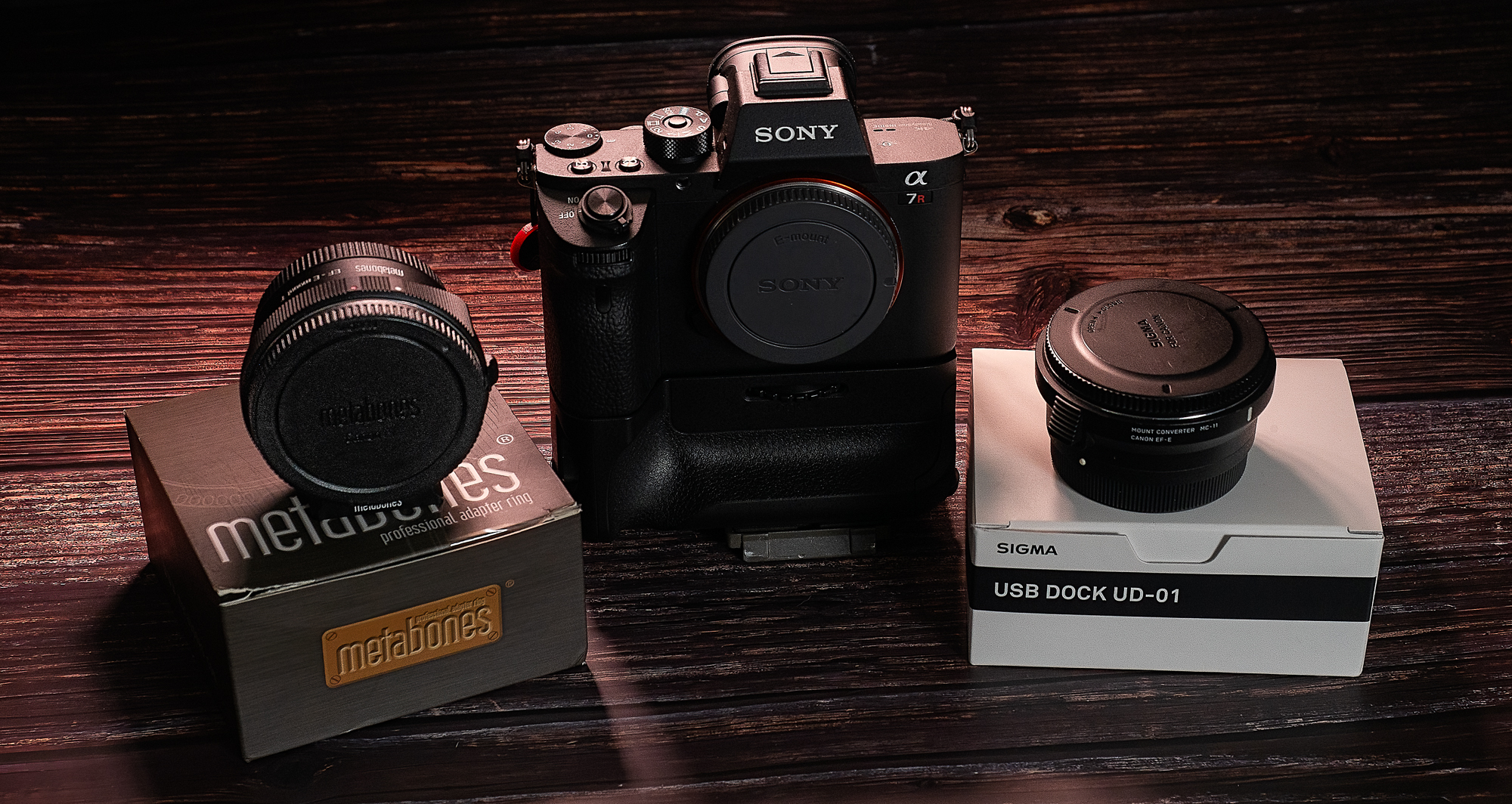
The Sony A7rii with the Sigma MC-11 and Metabobes V EF to FE lens adapters.
Mount your Canon EF lenses to your Sony A7rii using the Metabones V Smart Adapter.
Will the Sony A7rii work well with my Canon lenses? Is it time to say “Adios EOS”?
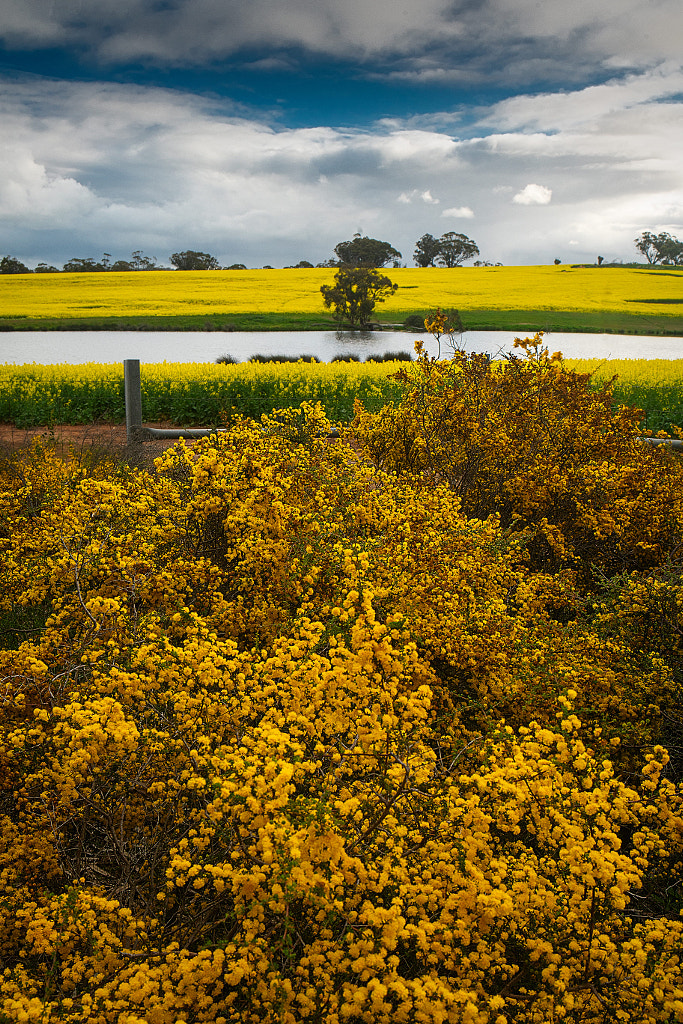
No this isn’t a new trilogy of mummy porn it’s because everything round here has turned a shade of yellow. Mostly that acid yellow that is canola, but the wattles give a nice counter point.
Canola fields flanking Helena Road. York, Western Australia. Sony A7 r ii, Metaboned V smart adapter, Canon EF 24-70mm f4 L lens. Exposure: 1/20 sec, f11, at ISO 100.
A farmhouse surrounded by canola in York, Western Australia. Sony A7 r ii, Metabones V Smart Adapter, Canon EF 70-200mm f2.8 IS L lens. Exposure: 1/60 sec, f16 at ISO 320.
Yellow wattle and yellow canola fields. York, Western Australia. Sony A7 r ii, Metabones V Smart Adapter, Canon EF 24-70mm f4 IS L lens. Exposure: 1/30 sec, f16, ISO 500
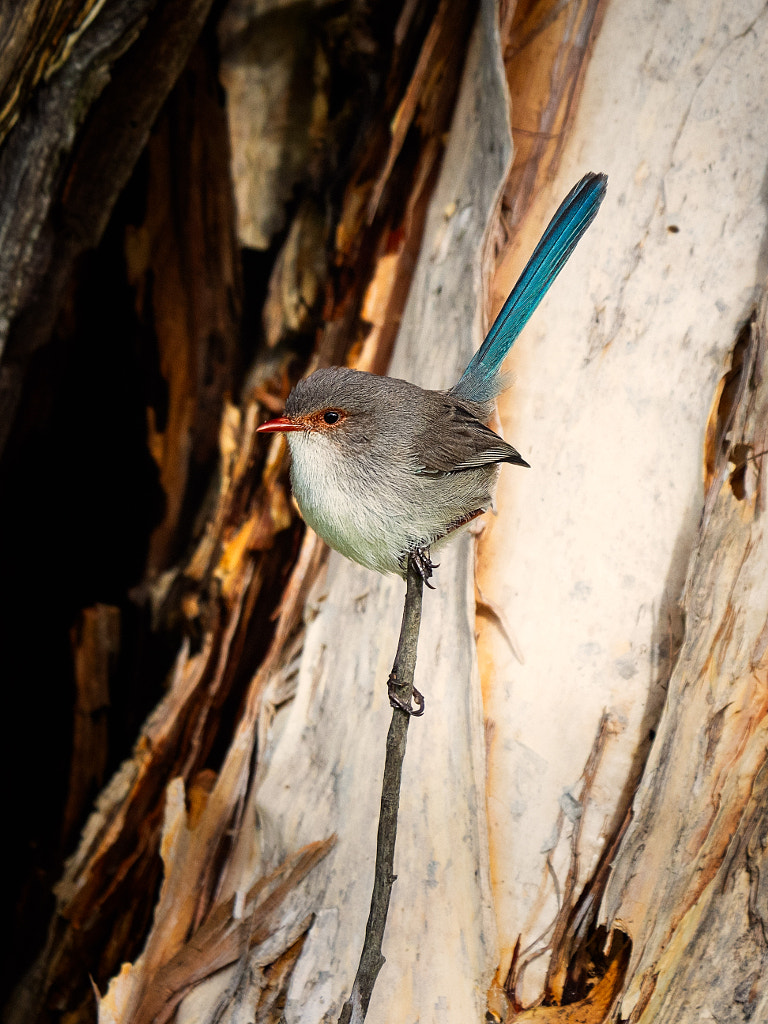
A gratuitous wren shot as wrens make everything better.
A bird on a stick – more specifically a female Splendid Fairy-wren, Malurus splendens subsp splendens. Whiteman Park, Western Australia. Olympus OMD EM1 mk ii with Panasonic Leica 100-400mm f4-6.3 lens. Exposure: 1/500 sec, f6.3 at ISO 320.
It has rained and rained here. I know not as much as in Germany, China or India, but it has rained a lot for here.It feels like I should be starting a DIY project – Ark building for dummies. Nah! I’ll skip that as I flunked woodwork at school. The Avon River burst its banks which drew lots of people in wanting to take photos of it. I even took a few myself.
The Avon River burst its banks in the recent rains. This park bench is normally a good 10m from the water. Sony A7 r ii with Canon EF 24-70mm f4 lens. Exposure: 1/80 sec, f8, at ISO 100.
The dog exercise area is now an aquatic park. Sony A7 r ii with Canon EF 24-70mm f4 lens. Exposure: 1/40 sec, f8 at ISO 125.
Despite all the wetness I’ve managed to grab a few sunny moments and head off to the local reserves. They are saying that all this rainfall is going to produce an amazing abundance of wildflowers this year. From what I’ve seen it looks to be true for our local reserves. Hopefully we’ll see some varieties come up that haven’t been seen for a few years – I’m looking at you Eastern Curlylocks.
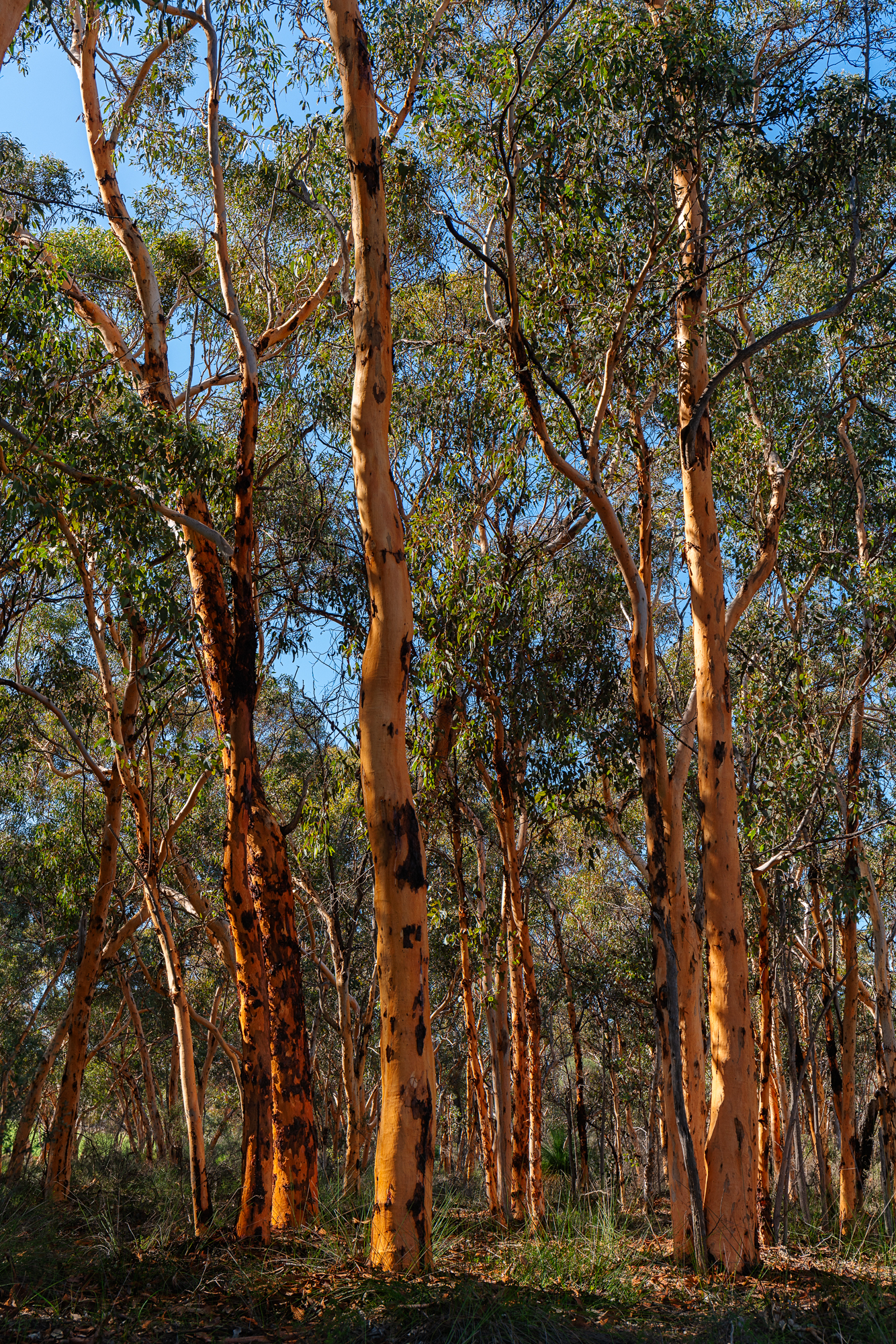
The wandoo woodland that makes up St Ronan’s Nature Reserve.
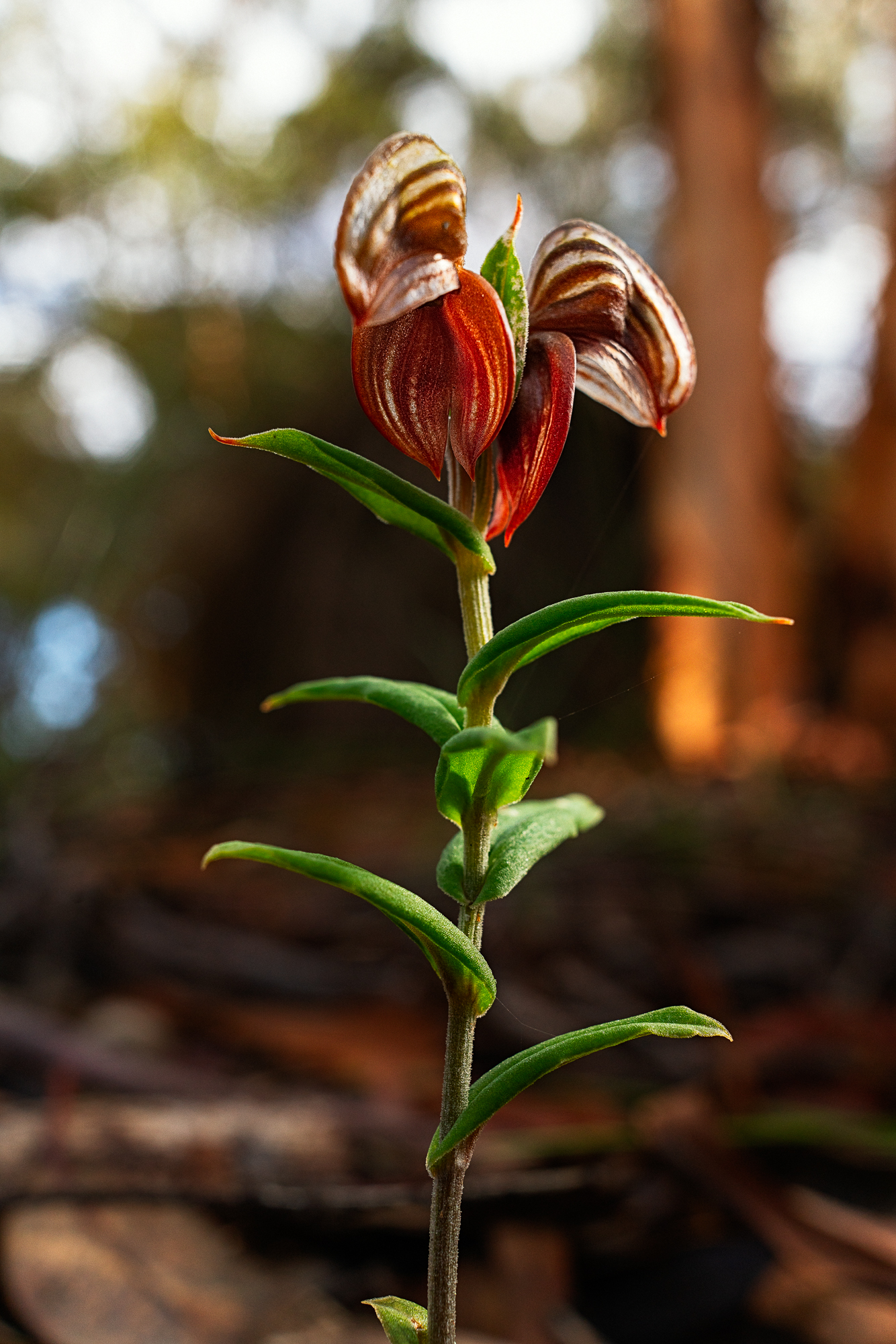
This dark banded greenhood is one of the many orchid species that can be found in the understory.
The last couple of days have been fine and tomorrow we head off to the Stirling Ranges where the weather forecast is rain for the whole time we’ll be there. I suppose I should be used to it now. Thank goodness for Goretex and the weather proofing on my Olympus camera.
















You must be logged in to post a comment.