I’d not been down to the river for a couple of months – I’d given it a wide berth since the corella culls. So I was quite unprepared – it was 3ºC and I hadn’t dressed appropriately at all. Sitting in the shade by the water meant it was really chilly. The other change from when I’d last visited was there was some water in the river which meant that the birds instead of being congregated around the few permanent pools were spread out along the whole river. It was really quite spectacular watching the rising sun shine through the trees and paint everything golden. It was worth getting up just for that alone. I didn’t see many small birds, but the larger species were there in numbers all waiting for the sun’s warmth.
Kakak little pied cormorant (phalacrocorax melanoleucos). It’s rare to hear little pied cormorants calling out to each other, but this morning they were being very vocal. Perhaps they were complaining of being cold.
The rising sun shining through the trees produced some amazing soft golden light.
Ngalkaning or Rufous Night Heron aka Nankeen Night Heron (Nycticorax caledonicus subsp mannillenis).
Kaaka-baaka or Yellow-billed Spoonbill (Platalea flavipes).
Ngalkaning or Australian white ibis (Threskioris molucca).
Wayan or White-faced Heron (Egretta novaehollandiae).
On a cold morning on the Avon River some of the inhabitants try catching the sun’s warmth.
Ooooerrrr! That’s probably not the best thing to say in a blog about bird photography. Rest assured no ducks were harmed in the making of this blog entry.
No ducks were harmed in the production of this blog. Ngoonan or Grey Teal (Anas gracilis). York, Western Australia.
A little while ago I wrote about how my ability to photograph birds had deserted me. Well I can now report that yesterday morning I had a stonker of a morning. I parked up at my usual spot on the River Avon and before I had got my camera bag out of the car I could hear a couple of Brown Goshawks calling out to one another. I could only find one of the birds and it was obligingly sitting in the top of a tree and the first light of dawn was illuminating it nicely. I could hardly believe it! It just kept sitting there unfazed by my proximity and it was I who eventually moved on leaving it there calling out to its mate. This was the best start I’ve had in a very long time and if I’d seen nothing else this would have been tremendous. Just 20m further on and I found a pair of Nankeen Night Herons. By this time I had a grin that went from ear to ear. Walking up to Mile Pool things just got better and better.
Karkany or Brown goshawk (Accipiter fasciatus) basking in the dawn light. York, Western Australia.
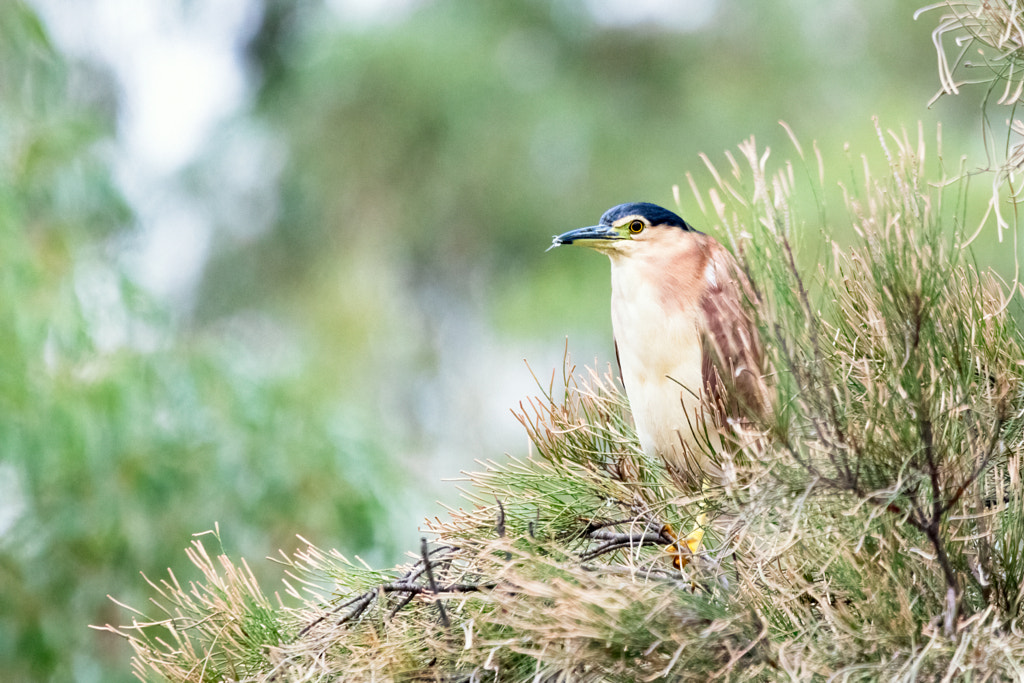
Ngalkaning or Nankeen Night Heron (Nycticorax caledonicus subsp mannillenis). York, Western Australia
Mimal or Australian Darter (Anhinga melanogaster subspecies novaehollandiae). York, WEstern Australia.
Doolor or Silvereye (Zosterops lateralis). York, Western Australia.
Kakak or Little Pied Cormorant (Phalacrocorax melanoleucos). York, Western Australia.
Western Inland Hunter, Austrogomphus collaris. York, Western Australia.
We’ve had some really hot days with temperatures exceeding 40ºC and this has meant there were a lot of birds congregated in the trees around the few remaining pools of water. By 8am the temperature was starting to soar and there was less bird activity. So I changed lenses and went looking for dragonflies and damselflies. I found some but the warmth had supercharged them and they were proving difficult to photograph as they would not sit still for very long. At 8:30am I decided that it was too hot and decided to call it a day. As I started to put my camera away I glimpsed a white bird sitting in the top of a dead tree. At first I thought it was just a corella, but there was something about the way it was moving made me think it was something else. Looking through the camera I could see those unmistakeable red eyes of a Black-shouldered Kite. Panic set in now as I didn’t have the right lens on. So calming myself down I changed lenses and started making my way closer to the bird. Usually what I do is wait for the bird to look in another direction then edge forward by a metre. I then stop take a few photos and then when it looks away again edge forward and take more photos. Like this I managed to get within 20m of the Kite. It looked quite relaxed spending most of its time scanning the ground below looking for food. After a little while it did a dump – birds often do this just before taking off, I suppose it lightens the load – and then took off in a lazy curve towards some taller trees. It was bloody brilliant! My only regret was that because there was insufficient cover I couldn’t get closer, but there’s always next time.
Black Shouldered Kite, Elanus axillaris. York, Western Australia.
Wayan or White-faced Heron (Ardea novaehollandiae) shrouded in the mist on the banks of the Avon River. York, Western Australia.
Early mornings along the River Avon have taken on a decidedly misty appearance. Going down to Monger’s Crossing at first light and I’ve been hard pushed to see across the river. The upside of this is that by carefully walking and crawling I can get quite close to the herons and spoonbills there. The spoonbills seem a bit more stoic than the herons. They just get on with the normal morning routine of foraging in the shallows for food. In contrast the heron looked decidedly unimpressed with the weather just standing in the long grass with its shoulder hunched up and looking forlornly at the water coming down from the weir.
Kaaka-baaka or Yellow-billed Spoonbill (Platalea flavipes) foraging on a misty morning.
Ngalkaning or Nankeen Night Heron (Nycticorax caledonicus subsp mannillenis) in the early morning mist.
Looking up the Avon River with Mount Bakewell shrouded in the early morning mist. York, Western Australia.
After an hour or so the sun gradually started burn off the mist and the golden light gave a radiance to everything. The sun’s warmth began to take effect and the birds became a lot more active and I was able to get some photos of birds flying, which is always a thrill. The still and quietness of the mist was gone and replaced by the raucous noise of the corellas and the honking of the herons as they flew overhead. By 9 o’cock it was all over. The birds had settled and no activity could be seen.
Golden Orb-weaving Spider’s web lit by the golden dawn light.
Wayan or White-faced Heron (Ardea novaehollandiae) flying in the warm light of dawn.
Manatj or Western Corellas (Cacatua pastinator) flying over the Avon River in York Western Australia.
Wayan or White-faced Heron (Ardea novaehollandiae) taking in the suns rays. York, Western Australia.
As we approach winter it is now easier to get up before first light as it gets light so much later. On Thursday, which just happened to be my 60th birthday, I got up and head down to the river just getting there as the sun started to rise above the tree line. I was hoping to see some Nankeen Night Heron’s but couldn’t find them, but I did find a strangely cooperative White-faced Heron who was happy to sit on a branch and allow me to get close enough to photography. The bird was looking into the rising sun and the warm glow was reflected off his feathers. The heron looked very majestic just perched there. A wonderful start to the day.
Geat Egret, Ardea alba. York, Western Australia.
Put to flight.
Feeling safer.
Walking up past Monger’s Weir I didn’t see anything more so I decided to head back and grab a coffee at the local bakery. As I was walking back I spied a Great Egret in one of the billabongs beside the main river. We’ve recently had a lot of rain so it was full and the egret was in the cooler shade of the trees while the golden light played on the foliage. Again another magical moment. Although Great Egrets are fairly common along the river it had been ages since I’d last photographed one. Again it was quite happy to let me sit quietly and take its picture. It knew I was there as occasionally it would stare at me as if to say “You still here?”. Eventually a boisterous dog burst through the undergrowth and put the bird to flight. It didn’t fly far – just 10 metres or so to the top of a dead sheaoak tree. By now the sun was well and truly up and we had the most brilliant blue sky so I quickly grabbed some shots of the egret against it.
Playing silly buggers in the trees. Djakal-ngakal or Galah (Cacatua roseicapilla). York, Western Australia
As I got near to the swing bridge to cross over into town some galas were playing around in the trees so I spent the next half hour photographing their antics. After a coffee I walked back to the car and saw four Nankeen Night Herons – three adults and a juvenile – so I grabbed a few shotsof them. A perfect end to a great photo session and a perfect start to a great day.
A juvenile Nankeen Night Heron, (Nycticorax caledonicus subsp mannillenis). York, Western Australia.
Ngalkaning or Nankeen Night Heron (Nycticorax caledonicus subsp mannillenis). York, Western Australia.
Ngalkaning or Nankeen Night Heron (Nycticorax caledonicus subsp mannillenis). York, Western Australia.



You must be logged in to post a comment.