Events at home over the last few weeks have meant that I haven’t had the opportunity to do very much photography. Most of the blog entries are written a few weeks before they are published because of the vagaries of finding wildlife so that backlog came in handy for when I couldn’t get out and about. But now the well has run dry.
Crusader bug (Mictis profana) instar nymph.
What little photography I have done recently has been in our back garden. Thankfully we have quite a lot of wildlife visit that I can point a camera at. Most of it has been of the usual suspects, the more common species that can be found in gardens in this part of the world, but there have been a couple of unexpected visitors which was very nice. For the best part of a year we had a problem with stray cats killing a lot of the birds and reptiles. But one of our neighbours has taken the main culprit in and the wildlife numbers are climbing back to what they were.
Wall Skink or Fence Skink (Cryptoblepharus buchananii) cooling off in the bird bath.
Yoorn or Bobtailed Lizard (Tiliqua rugosa)
Kanyinak orSacred Kingfisher (Todiramphus sanctus) on our TV aerial with a freshly caught Bombay Runner (Periplaneta americana).
Bambon or Rufous Whistler (Pachycephala rufiventris). It is a joy to hear this bird sing every morning.
Nye-nye or Zebra Finch (Taeniopygia guttata) looking for food on the back lawn
Djida or Yellow-rumped Thornbill (Acanthiza chrysorrhoa).
Cabbage White Butterfly, Pieris rapae.
Giant grasshopper or hedge grasshopper (Valanga irregularis) resting on the garden fence.
The garden provided a great deal of solace over a difficult time and it always amazes me how restorative being in nature can be. Hopefully, over the coming weeks we’ll be able to get out and about more.
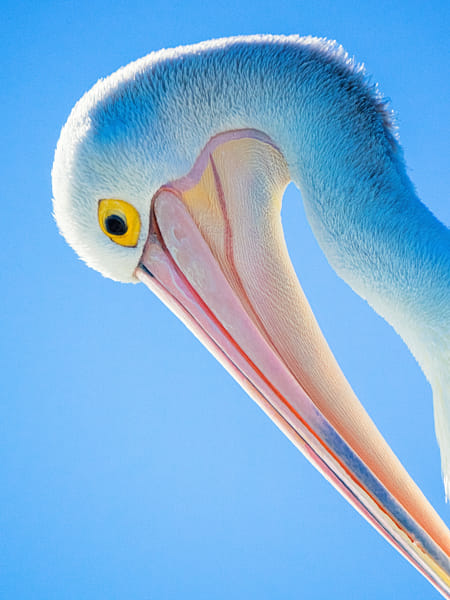
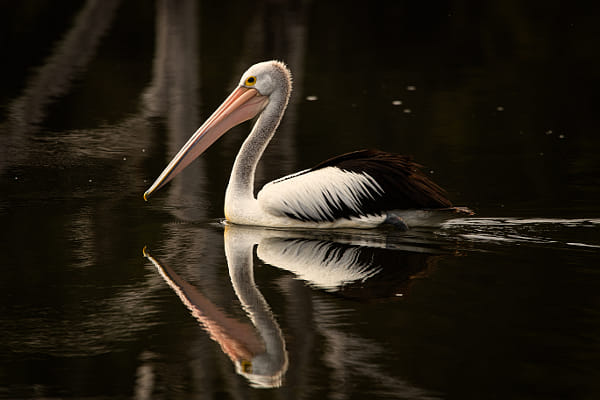
Boodalang is the Nyoongar name for the Australian Pelican (Pelecanus conspicillatus). Woodman Point, Western Australia.
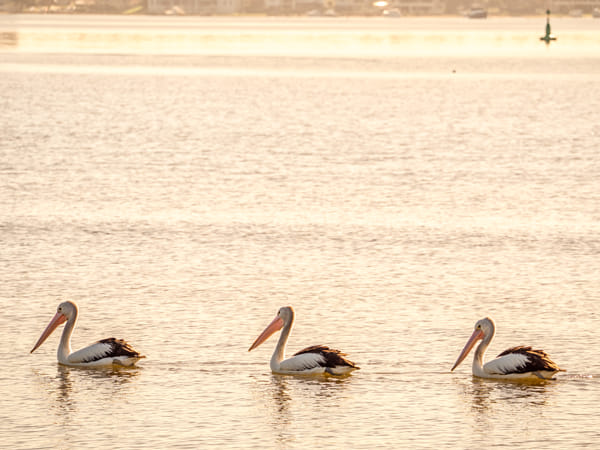
A trio of Australian pelicans swimming in formation off Point Walter on the Swan River.
The Australian Pelican is a familiar sight and can be found in waterways and coastal areas all around Australia. Basically where there are fish there are pelicans. I’m sure that I’m not alone in being slightly amused by the sight of them. That large beak and pouch looks somewhat comical and birds that size shouldn’t really be able to fly – how do they get airborne?
Australian Pelican, Pelecanus conspicillatus, Lake Seppings, Western Australia.
Australian pelicans are the second largest flying bird in Australia, only the brolga is bigger. Although on the small size compared to other pelican species the Aussie comes in 4-13Kg (males are larger than females) and have a wing span of up to 2.5m. That’s a lot of bird. That bill is the largest of any bird measuring up to 50cm in length. They are highly evolved animals that owe their success to a number of strange features.
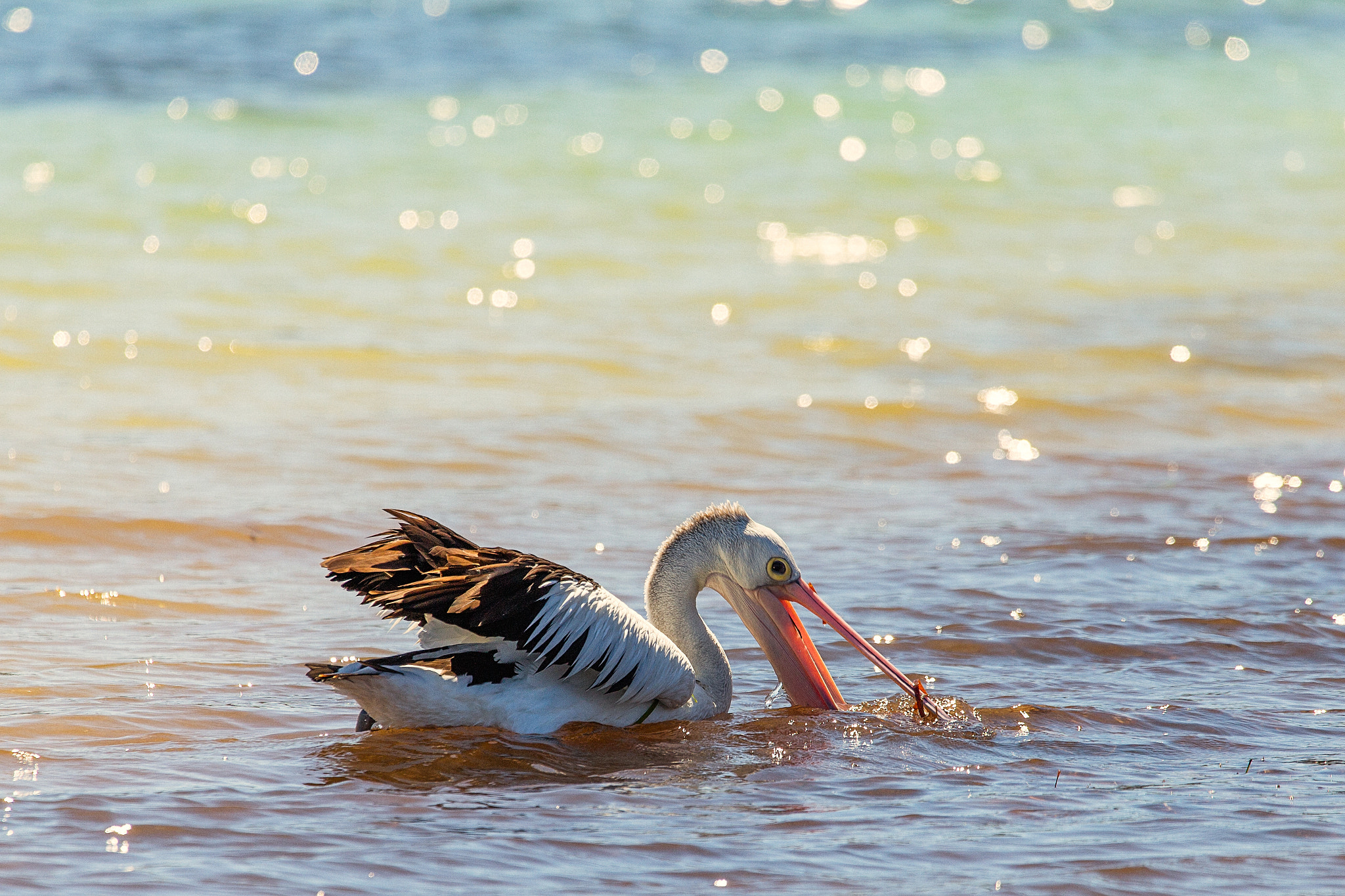
Trawling at Two Peoples Bay, Western Australia.
That distinctive bill and pouch is not for storing fish to eat later, but is rather used as a net to trap fish and other marine life. As the pelican trawls the pouch can hold up to 13 litres of water and food. When it is time to eat the bird lifts its bill out of the water and pushes it against its chest to expel the water and then it flips its prey around so that it can be swallowed head first. They don’t just eat marine life, they will eat small ducks, seagulls and small mammals. They will even steal the fish that other birds, such as ospreys, have caught. In all an adult pelican will eat up to 2Kg of fish a day. On a hot day the pouch is also used as a cooling system – the bird swings it about to cool down.
Effortlessly swimming along the Serpentine River in Mandurah, Western Australia.
Despite their size they have a light weight skeleton that has air pockets. This means that it weighs less than 10% of the total body weight which enables them to fly and remain buoyant in water. They also have a number of air cells under their skin which are connected to the respiratory system and act as floats. This gives the pelican the ability to float with very little of its body below the surface of the water which has the effect of minimising energy expenditure when swimming.
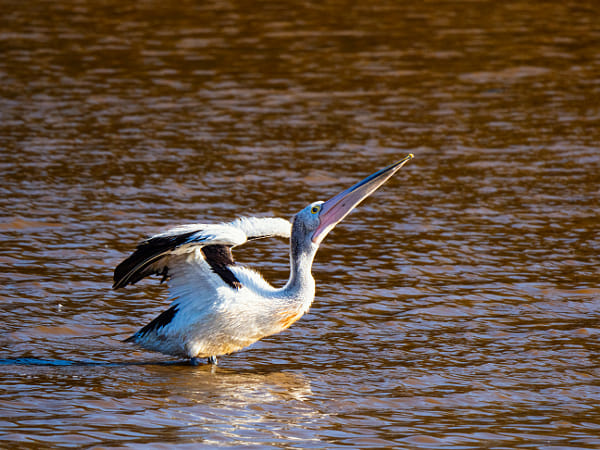
Getting ready. Alcoa Wellard Wetlands, Western Australia.
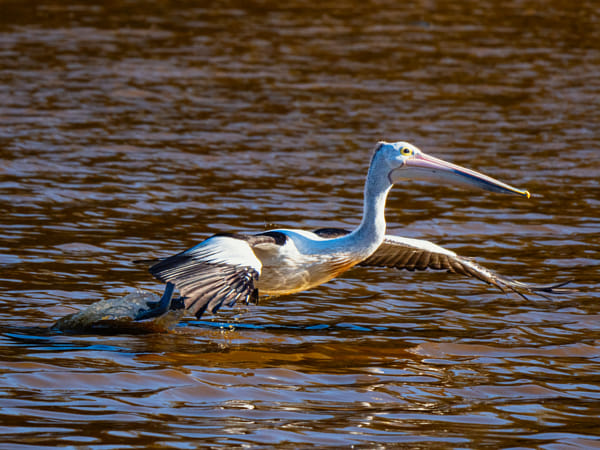
“We’re off!”
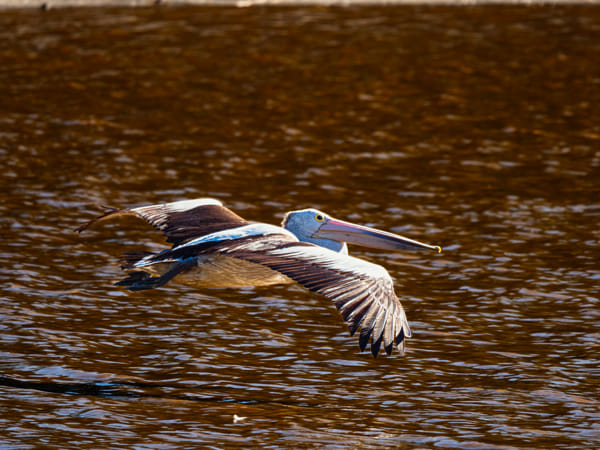
Heading home.
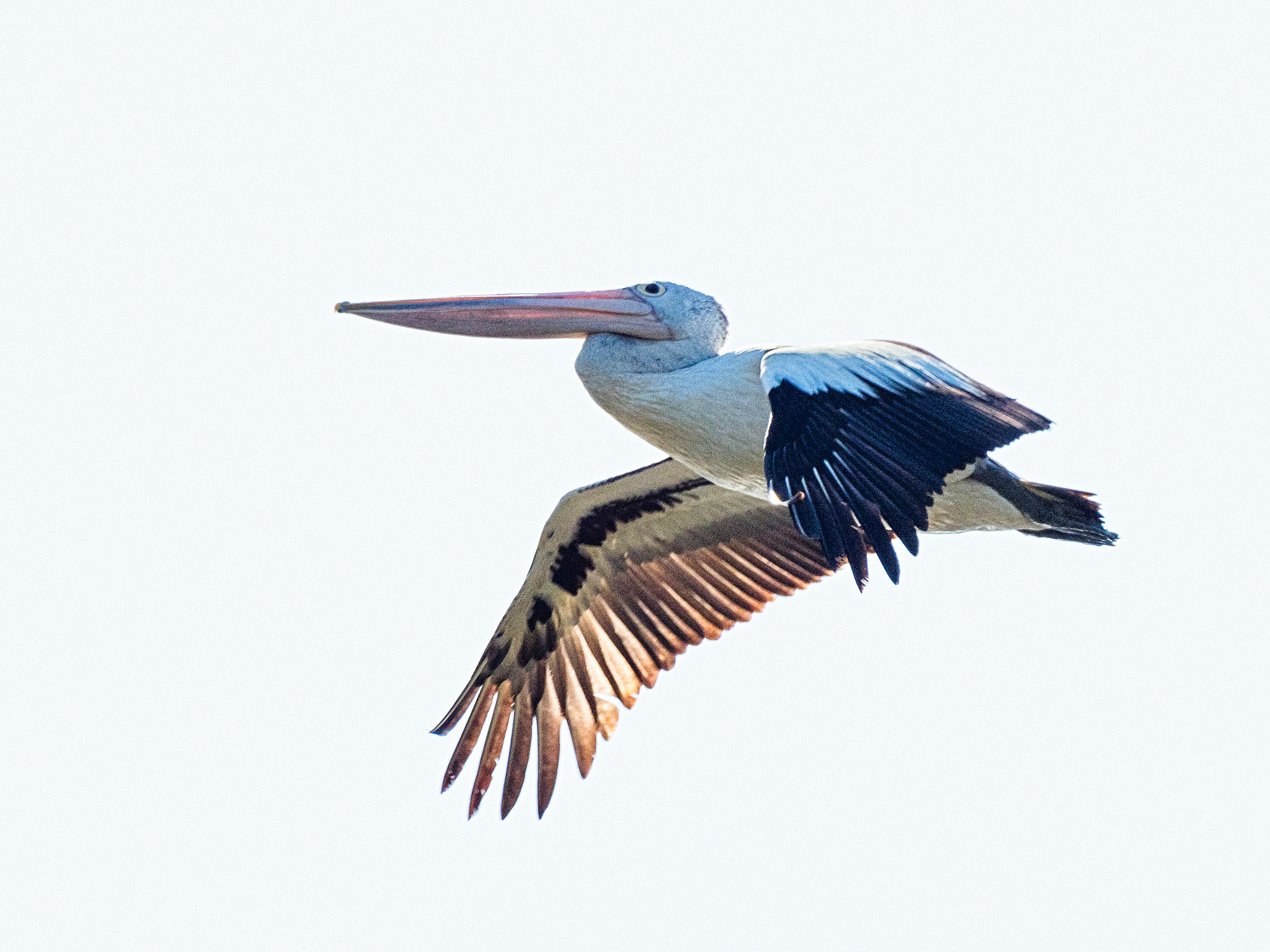
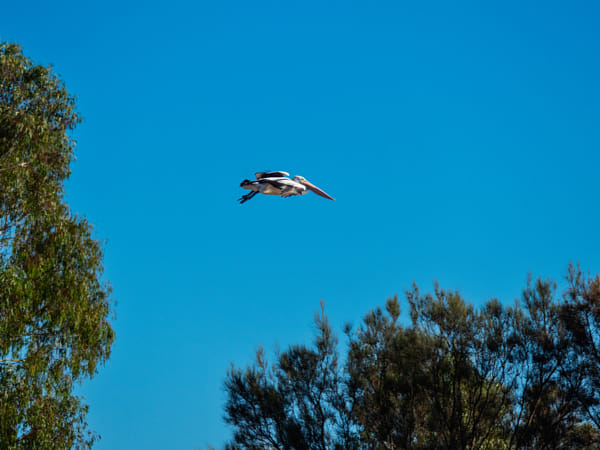
Perhaps the most amazing facts about the Australian pelican are when it comes to flight. Their large wings enable them to soar on thermal currents at altitudes up to 3000m and they can stay airborne like this for up to 24 hours. It makes for an incredibly efficient means of flying. When taking off a pelican will often fly incredibly low over water – they almost skim the surface. By this they take advantage of the “ground effect” which reduces drag and increases lift. The air flows between the wings and the water’s surface where it is compressed and exerts a strong upward force pushing the bird up and this again minimises the amount of energy expended. This energy efficiency is important because an adult pelican will often commute from its nesting site 150Km to find food.
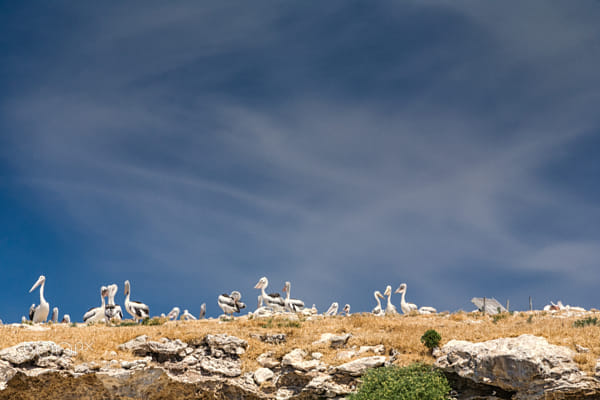
Nearly a thousand Australian pelicans use Penguin Island as a nesting site and breeding colony.
The Australian pelican maybe cut a comical figure, but they look like that for very specific reasons.
For wildlife photographers on a budget I happen to believe that micro four thirds (M4/3) has a lot to offer and represents incredible value. The micro in micro four thirds is a reference to the size and weight savings the system brings, it has no impact on the features and performance on offer.
Available Lenses
The Panasonic Leica DG Vario-Elmar 100-400mm f4-6.3 and the Olympus M.ZUIKO DIGITAL ED 75-300mm f/4.8-6.7 II lens are just two of the long lenses available for Micro Four Thirds wildlife enthusiasts.
The M4/3 system is now at the time of writing 15 years old and is, therefore, fully fleshed out. This means that there is plenty available on the second hand market. But, before we consider camera bodies let’s look at lenses first. Both Olympus (now OM Systems) and Panasonic provide a range of long lenses suitable for photographing wildlife. At the budget end there’s the Olympus 75-300mm II f4.8-6.7 and the Panasonic 100-300mm f4-5.6 which represent excellent value. On a M4/3 camera these two lenses have the same angle of view as a 150-600mm and 200-600mm lens respectively when used on a camera with a 35mm full frame sensor at a fraction of the weight and cost. The Olympus 75-300 can be found for around $500 AUD second hand (or $600 new) and the Panasonic 100-300 can be picked up for about $550 2nd hand ($1000 new). This means it is very feasible to put a good kit together for under $1000 AUD which is about $650 USD.
The Olympus 75-300mm lens delivers amazing performance for its price.
In the midrange category both companies offer 100-400mm zooms. The Olympus 100-400mm F5.0-6.3 IS sells for around $1500 2nd hand or $2200 new and the Panasonic Leica Vario-Elmar 100-400mm f4-6.3 sells for around thee $1200 mark second hand or $2200 new. This is for the original version. It has just been updated to make it compatible with tele-converters and will likely retail for around $2600 AUD.These two lenses give an angle of view equal to that of 200-800mm on a 35mm sensor in a very compact package.
Panasonic Leica DG Vario-Elmar 100-400mm f4-6.3 is a premium lens that be picked up on the secong hand market for a fraction of the price of full frame equivalents.
At the top end of town there are two lenses. The Olympus 300mm f4 IS which apparently is a gem of a lens and can be had for approx $2800 on the used market or $4000 new. Then we reach the stratosphere with the Olympus 150-400mmf4.5 IS PRO which retails for an eye watering price of $11500 new. Good luck in finding one new at a dealer as they are in short supply. I have seen a used one on a Japanese dealerswebsite going for $7500 and it was gone within a day.
The Panasonic G85 with the Panasonic 100-400mm lens compared to a Canon 6d with Sigma 150-600mm lens. The Panasonic combo is a fraction of the weight and has more reach.
So out of all these lenses I own the Olympus 75-300 and the Panasonic 100-400. Both of them have been very good, but with some caveats. The major criticism of the Olympus 75-300 is that it is soft at the long end. First I’d like to say get real! This is a budget lens. But, seriously this is a common complaint about zoom lenses especially at the budget end of the market. In my opinion,and based upon the example that I own, it is not as bad as people make out wide open and it improves if you stop down a bit. The pluses are it is amazingly small and light. I did intend to sell it when I got the Panasonic 100-400 but I kept it for those moments when I don’t want to carry the larger Panasonic ie when I’m out walking the dog. The Panasonic 100-400 is an amazing lens and I really enjoy using it. When it was first introduced there were complaints about it having an overly stiff zoom ring and it couldn’t be repaired. I’ve not experienced any problems and have used the lens extensively in all sorts of weather since I got in 2018. My only criticism of the 100-400 is that the lens based image stabilisation isn’t compatible with that of my Olympus cameras’s IBIS.
Click on the image to see full size
Click on the image to see it full size
Click on the image to see it full size.
Click on the image to see it full size
Camera Bodies
The Panasonic G85.
Once you’ve decided upon your lens then you can consider camera bodies. As things are at the time of writing I’ll be looking at the following camera which can be picked up easily second hand. The Olympus EM 1 mk I (approx $400 AUD), the Olympus EM1 mk ii, and the Panasonic G85. I own all three and think they all offer tremendous value for the wildlife photographer on restricted budget.
The Olympus EM1 is a very capable wildlife camera for those on a restricted budget.
Panasonic G85
Olympus EM1
Olympus EM1 mk ii
Year of Introduction
2016
2013
2016
Resolution
16 Mp
16 Mp
20 Mp
ISO range
200-25600
200-25600
200
Boosted ISO
100
100
64 and 100
IBIS
5 axis
5 axis
5 axis
File Formats
RAW and jpg for stills
AVCHD and MP4 for video
RAW and jpg for stills
H.264 and Motion jpg for video
RAW and jpg for stills
H.264 and Motion jpg for video
Auto Focus
Contrast only (DFD)
Multi area
Centre zone
Selective single point
Single AF
Continuous AF
Tracking AF
Face detection AF
Touch screen AF
Contrast and phase detect hybrid system.
Multi area
Centre zone
Selective single point AF
Single AF
Continuous AF
Tracking AF
Face detection
Touch screen AF
Contrast and phase detect hybrid system.
Multi area
Centre zone
Selective single point AF
Single AF
Continuous AF
Tracking AF
Face detection
Touch screen AF
Manual Focus Aides
Focus peaking
Focus peaking
Focus peaking
Focus Points
49
81
121
Maximum Shutter Speed
1/4000 mechanical
1/16000 electronic
1/8000 mechanical
1/32000 electronic
1/8000 mechanical
1/32000 electronic
Exposure Modes
Program, aperture priority, shutter priority, and manual.
22 Creative Control modes.
iAuto, Program, aperture priority, shutter priority, and manual.
22 scene modes and 12 Art filters.
iAuto, Program, aperture priority, shutter priority, and manual.
22 scene modes and 14 Art filters
Built In Flash
Yes
No
No
Dive Modes
Single frame
9 frames per second with the mechanical shutter and continuous AF. Up to 40 fps with the electronic shutter and the autofocus set to single point.
Single frame
6.5 fps with mechanical shutter and continuous AF. 11 fps with single AF and electronic shutter.
Single frame
Up to 18 fps with mechanical shutter and continuous AF. 60 fps with single AF and electronic shutter
Buffer
300 large jpgs,
45 RAW and RAW plus jpgs
50 large jpgs,
34 RAW
117 large jpgs,
84 RAW
Metering Modes
Multi zone, centre weighted and spot metering.
Multi zone, centre weighted, and spot metering.
Multi zone, centre weighted, and spot metering.
Video
4K up to 30 fps
HD up to 60 fps
HD up to 30 fps
Cinema 4k 24fps IPB
4K up to 30 fps
HD up to 60 fps
Storage media
1 x SD card slot UHS-II compatible
1 x SD card slot UHS-I compatible
2 x SD card slot with only 1 UHS-II compatible
Environmentally Sealed
Yes
Yes
Yes
Anti Aliasing Filter
No
No
No
Weight
505g with battery and card
497g with battery and card
574g with battery and cards
Battery CIPA Rating
330 shots
350 shots
440 shots
The Olympus EM1 mk ii is an extremely well specified camera that can be found for less than $1000 AUD on the used market making it somewhat of a bargin.
All three cameras feel good in the hand. The G85 has the easiest to navigate menu system. The Olympus menus cop a load of flack for being labyrinthine but they do allow a phenomenal amount of customisation and once these are set, your custom modes set up, and you use the Super Control Panel (SCP) you shouldn’t have to deep dive them often.
The Panasonic G85 with Panasonic Leica 100-400mm lens makes a very good wildlife video set up.
Which one should you get? Well that depends upon your budget and what you intend to do with the camera. If cash strapped the the EM1 is the one to go for. It’s a beautifully built camera that turns out a great performance. The only place is where it is lacking is video. If you shoot primarily stationary targets and some video capability is important I think the G85 is a great buy. It is only let down by its auto focus the DFD technology Panasonic uses just wasn’t as good for action as phase detection autofocus. Having said that I have used the camera to shoot some wildlife videos – you’ve just got to be patient and pick situations that the camera can cope with. If you’ve got the budget then the EM1 mk ii is the one to get.Not as accomplished in the video department as the G85 but it does produce a solid result and the AF for video and stills works quite well. You’d have to spend quite a bit more money to get better performance.
The Olympus EM1 is a very capable wildlife camera for those on a restricted budget. Pair it with the Olympus 75-300mm lens and you have a compact lightweight, but powerful combination.
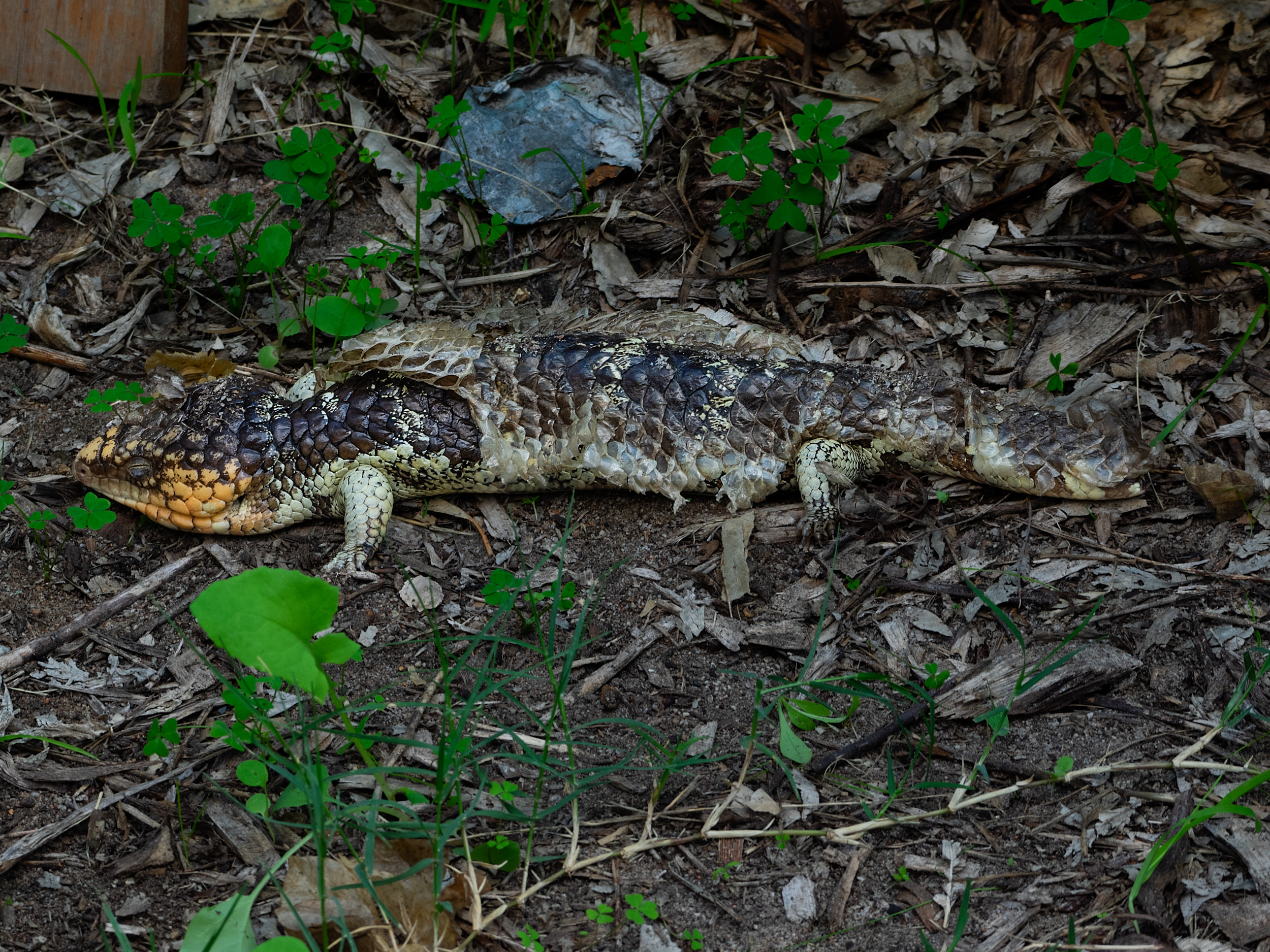
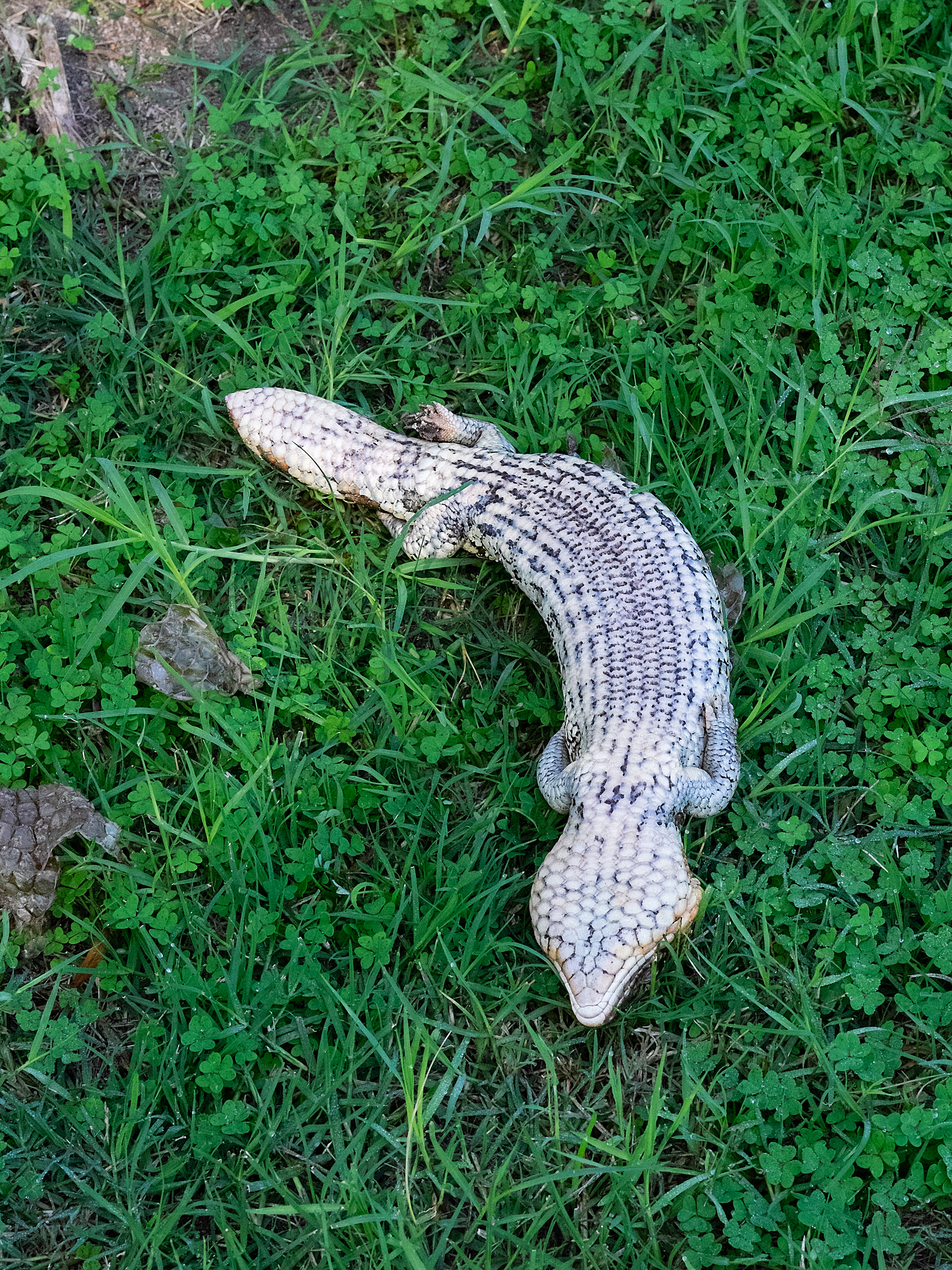
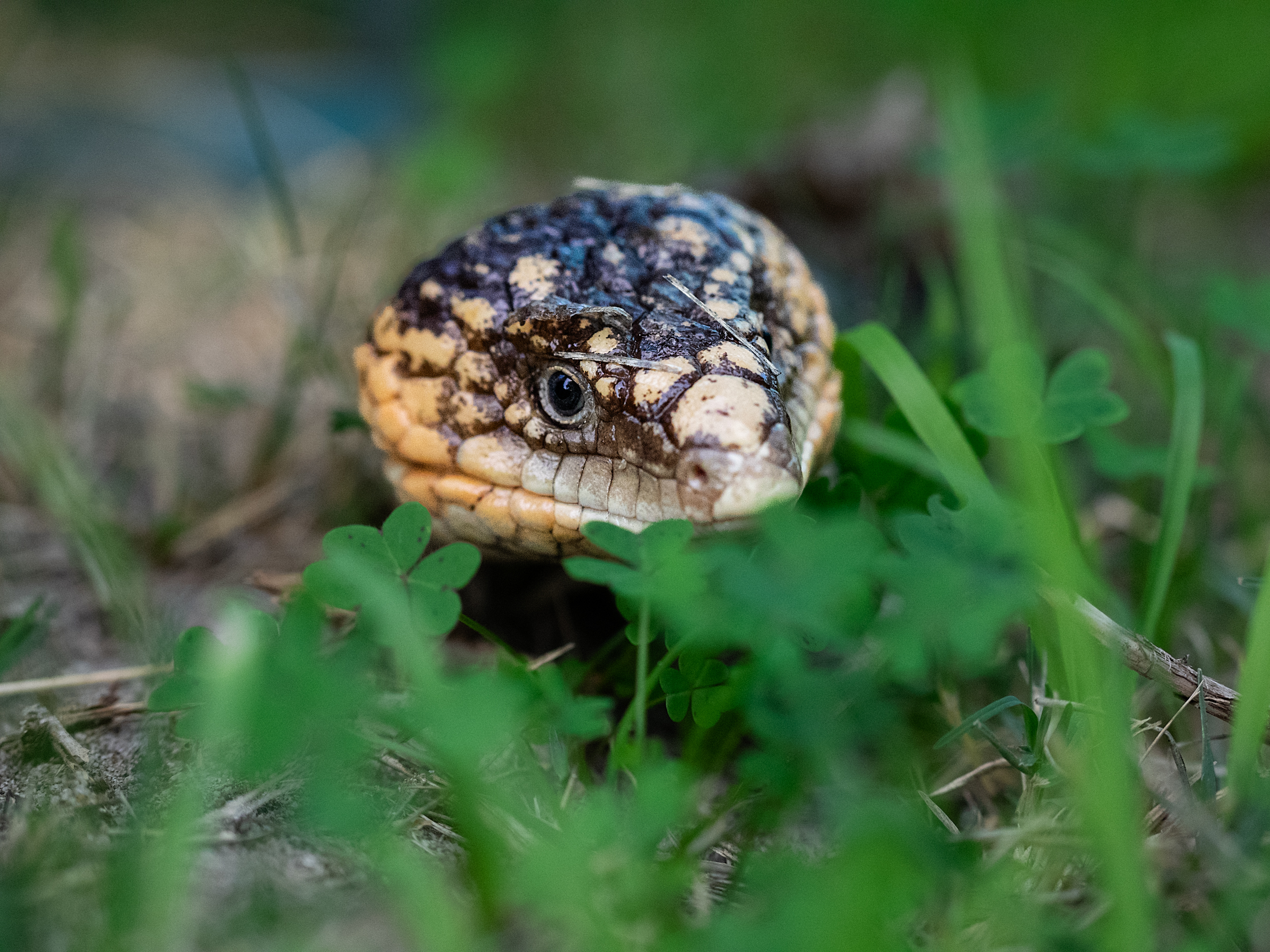
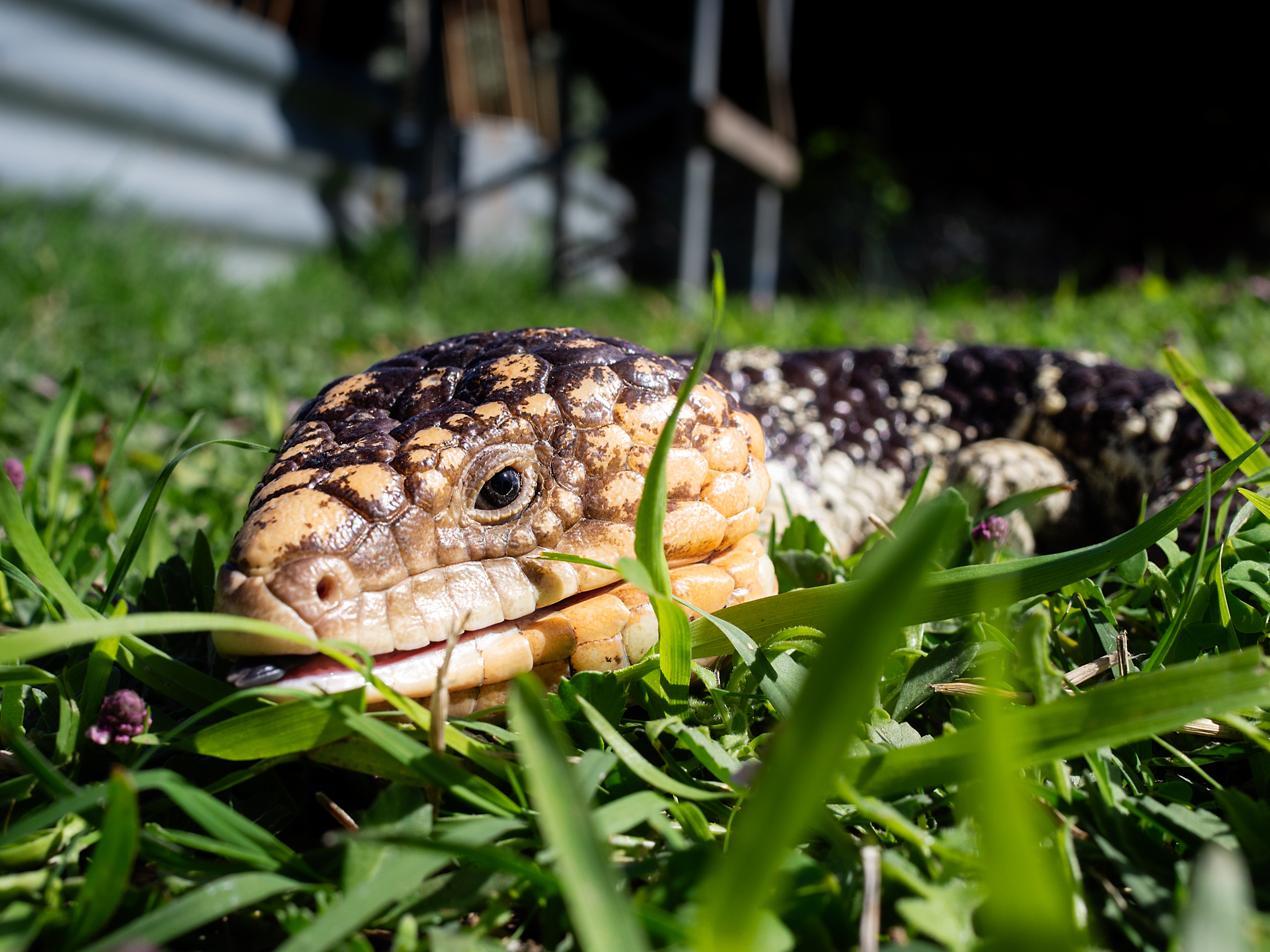
Big Bob is the resident Yoorn or Bobtailed Lizard. He lives under the house and can occasionally be seen exploring the garden. Normally he is a very feisty lizard with a lot of attitude, but on Monday we found him in the shade house looking very sorry for himself. At first we thought he’d gone down with Bobtailed flu, but on closer inspection he was shedding his skin. We often find the old skins in the garden but I’ve never seen this happen. So we thought we’d just leave him be and get on with it. On Tuesday he’d moved out onto the grass and we were worried about him as we often get kestrels, goshawks or sparrow hawks use our TV aerial as an observation post and they’d have no qualms about making a meal of him. He started wriggling and writhing in the grass in an attempt to get his old skin off. By lunch time apart from a few scraps between his toes he’d got the job done. By Wednesday he was back to scaring our Bull Terrier, Frida, and walking round the garden like he owns it. Another couple of weeks and he’ll be tucking himself up for the winter.
Big Bob our resident Bobtailed Lizard found in the shadehouse looking very sorry for himself.
He’d started to shed his skin and was looking very tatty.
Not dead, wriggling in the wet grass trying to remove the old skin.
As the sun warmed everything up he was content to lie like this for about half an hour.
Right side up again.
Still looking a bit manky.
After another hour mission accomplished – looking all new and neat again.
What do you do when you have to take your car into Perth to get it serviced but don’t want to hang around in the city and catch COVID? Go on a safari of course!!
My safari took me to Point Fraser and Heirisson Island. Heirisson Island is a small island of 285,600 sq. metres in the Swan River between East Perth and Victoria Park. Most people will know of it through crossing the Causeway which is the bridge over the river. It wasn’t always called Heirisson Island. Long before European explorers and colonists arrived there was a few smaller islands and some mudflats which was called Matagarup by the Beeloo Nyoongar. The name means one leg deep. The first known European visitors were led by Willem de Vlamingh in 1696. He and some of his crew rowed up the river and saw the black swans which led him to name the river the Swan River (Zwaanenrivier in Dutch). They got as far as the mudflats and island and could go no further. In 1801 Nicolas Baudinfrom the French ship Le Naturaliste traveled up river and he named the island after his midshipman François-Antoine Boniface Heirisson. Since the early arrivals the river has been dredged and there has been a lot of land reclamation which has seen the mudflats disappear and the formation of the present island.
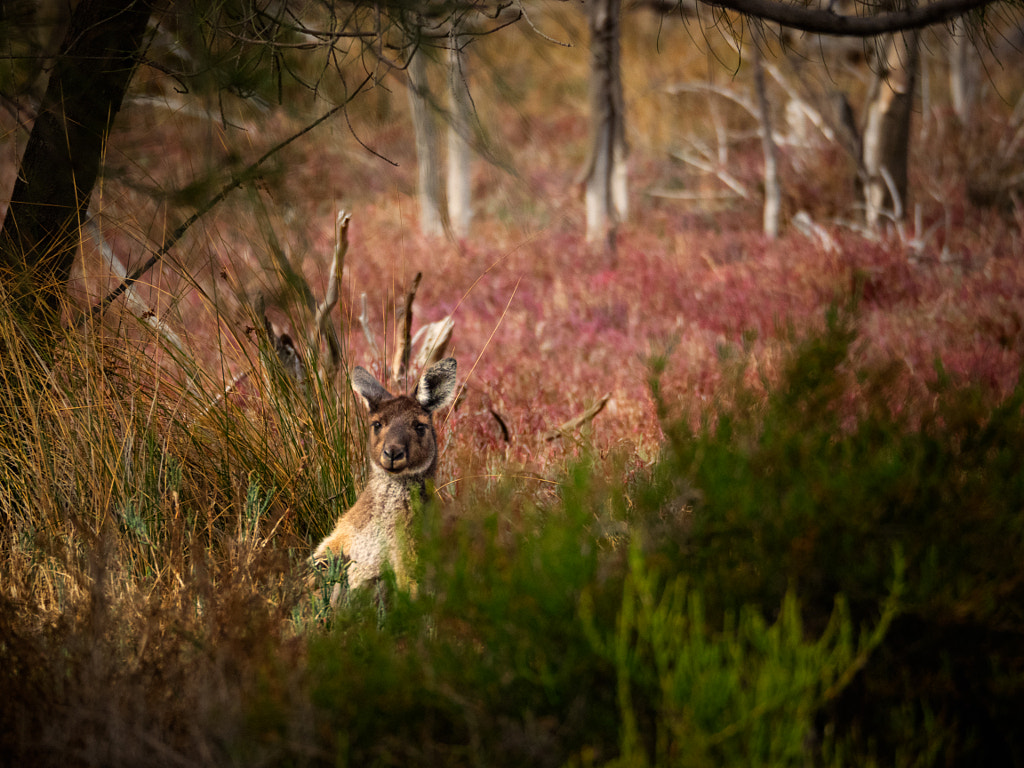
Yongka or Western Grey Kangaroo, Macropus fuliginosus. Herrison Island, Western Australia.
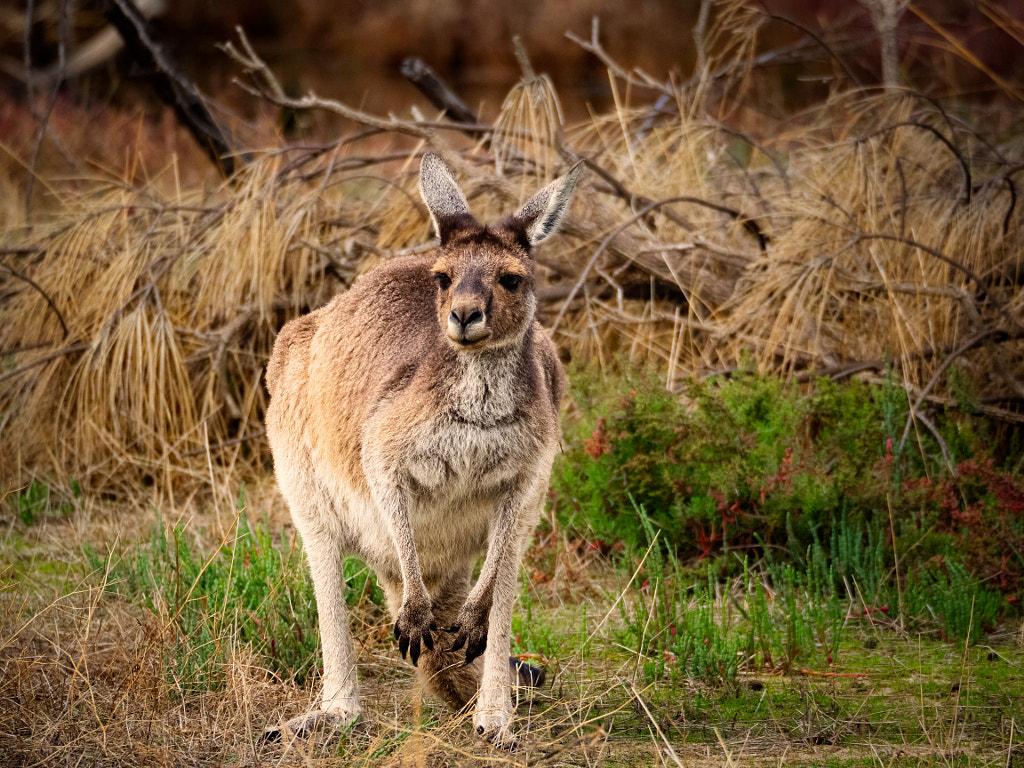
There is a footpath round the island which is 2 Km in length which makes it perfect for an inner city safari. As far as the wildlife goes 92 different species of bird have been observed on the island and there is a resident population of Western Grey kangaroos which were introduced in 1998. Funnily enough I’ve walked round the island several times over the years and not seen a single kangaroo. Amazing considering that it’s a small island and they’re relatively large animals. But kangaroos are very good at making themselves scarce during daylight hours. This visit was different I saw three female kangaroos, two lazing around in the bushes and one grazing. In fact the one that was grazing was very curious and came right up to me – I think it was an attempted mugging because as soon as she realised I didn’t have anything worth stealing in the way of food she was off.
This female checked me out to see what food offerings were available. I was a bit of a disappointment as I had nothing.
I must say it was a very pleasant way to pass the time and I’m looking forward to going again – hopefully to coincide with dawn or dusk.
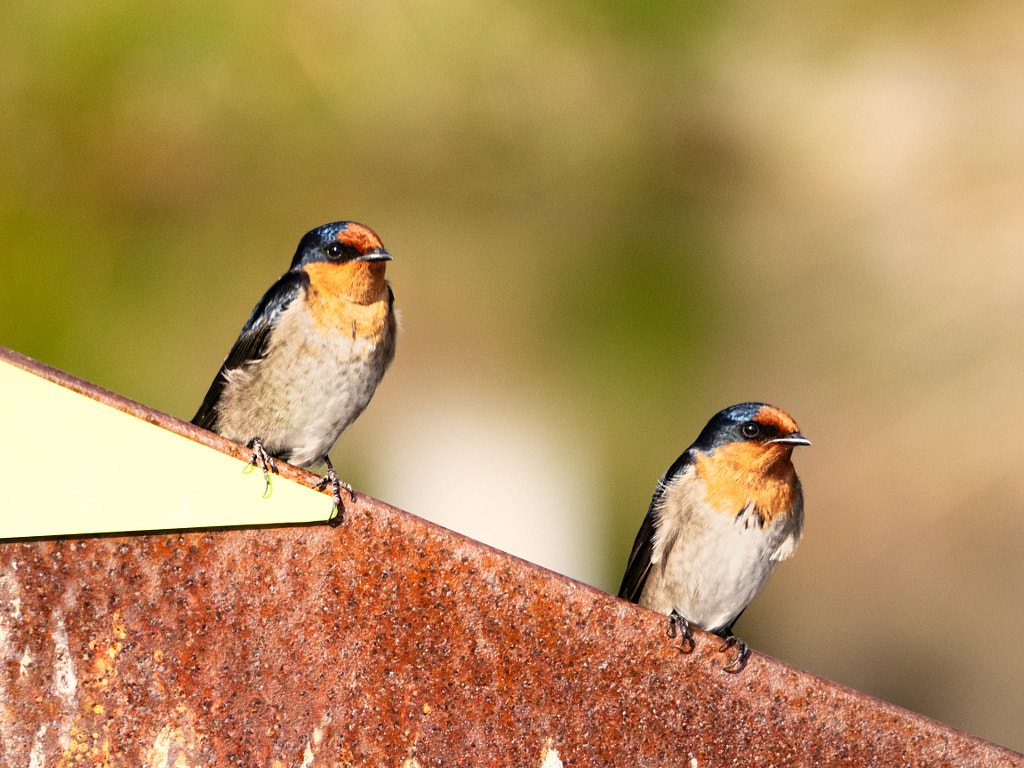
These two welcome swallows were very obliging and let me take their photo.
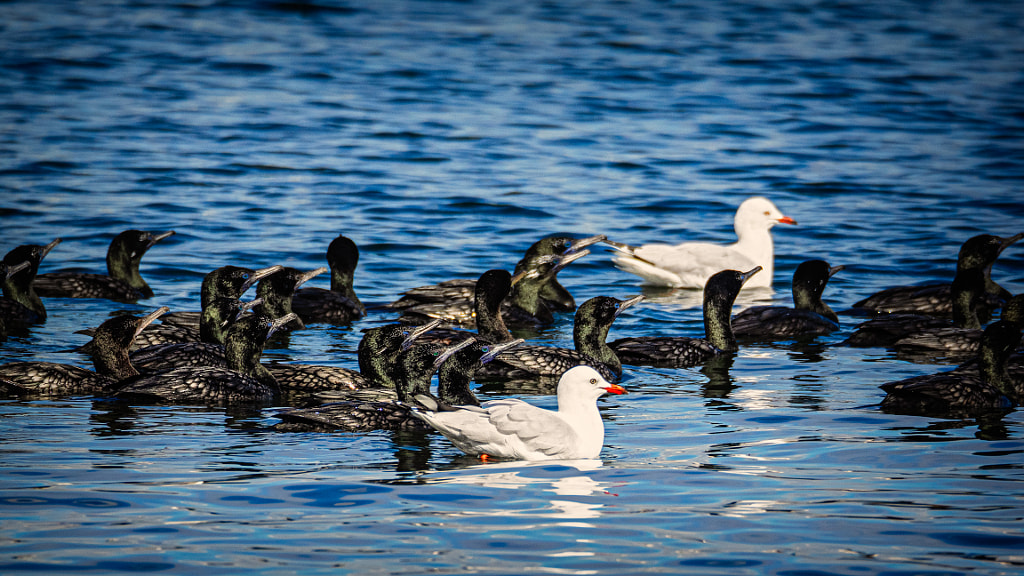
The Swan River Cormorants Club does not discriminate on the basis of colour or species – all are welcome.
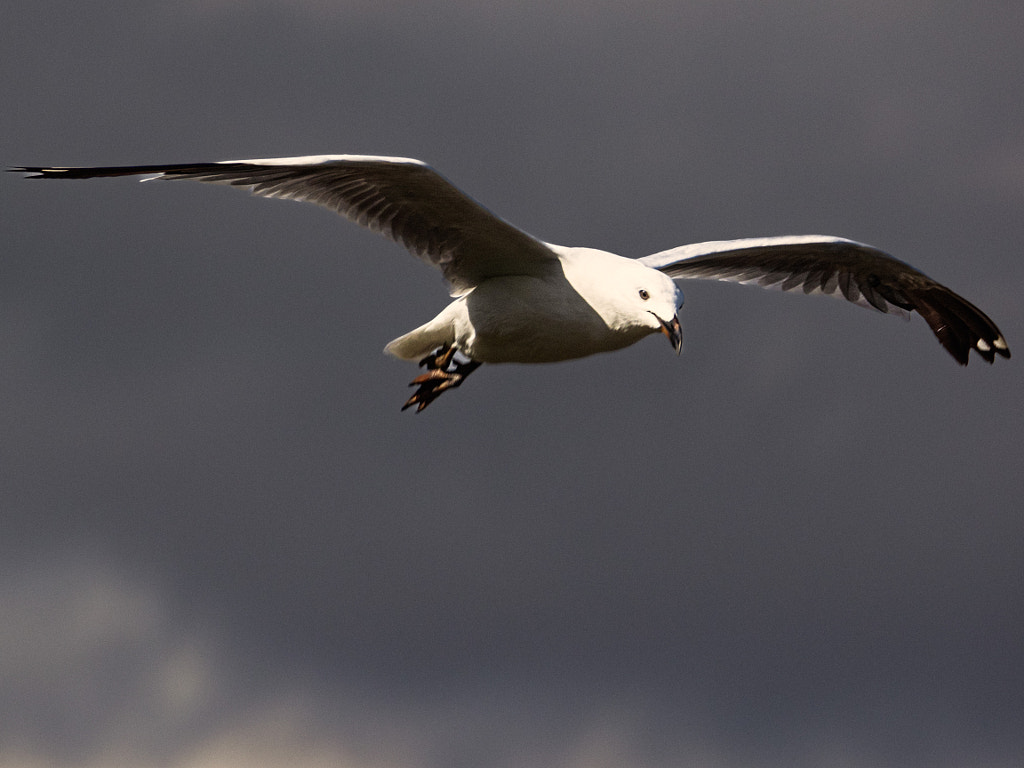
Not having any chips meant this silver gull just kept flying past.
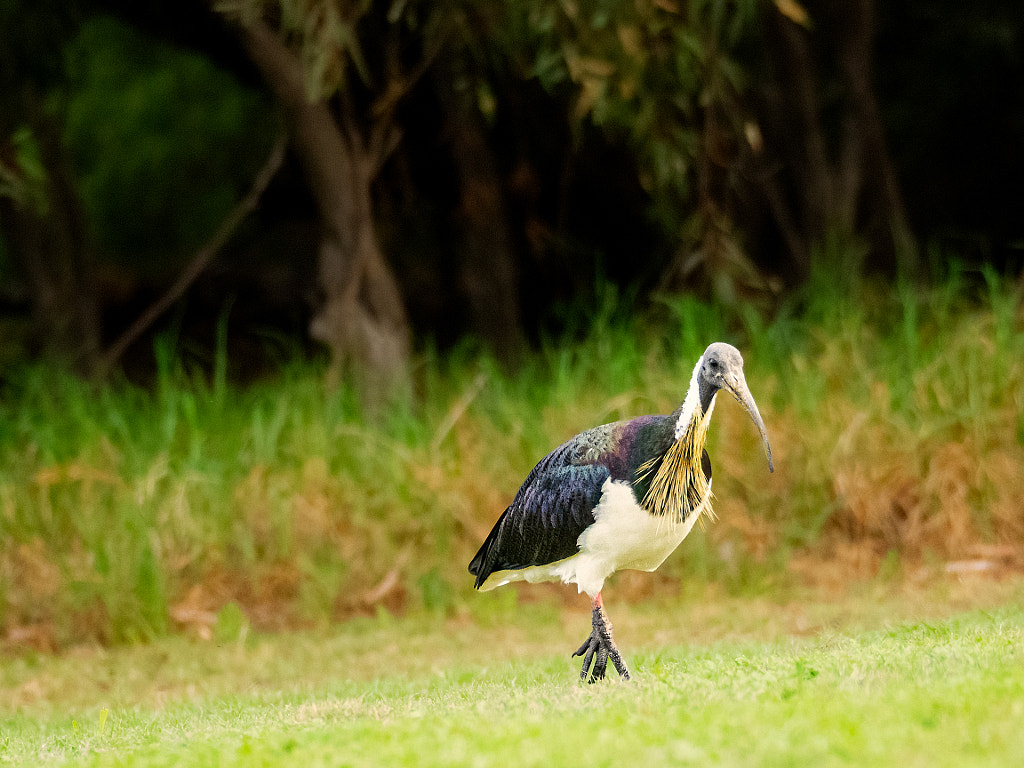
Straw-necked Ibis, Threskiornis spinicollis. Herrison Island, Western Australia.
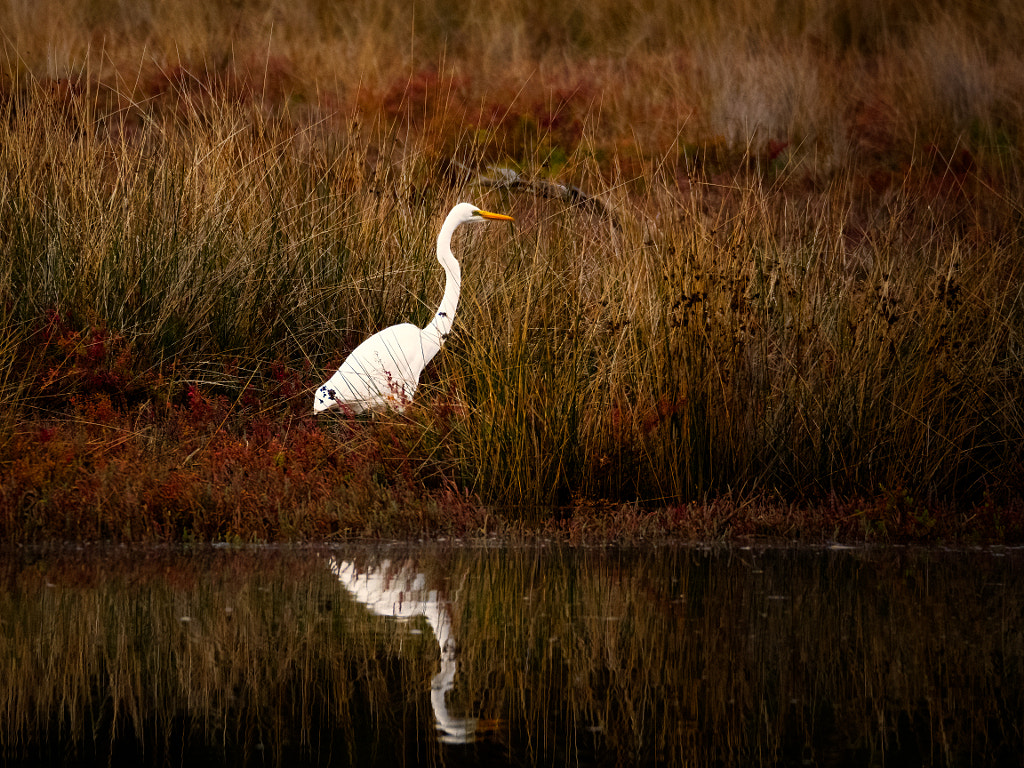
Great Egret, Ardea alba modesta. Herrison Island, Western Australia.
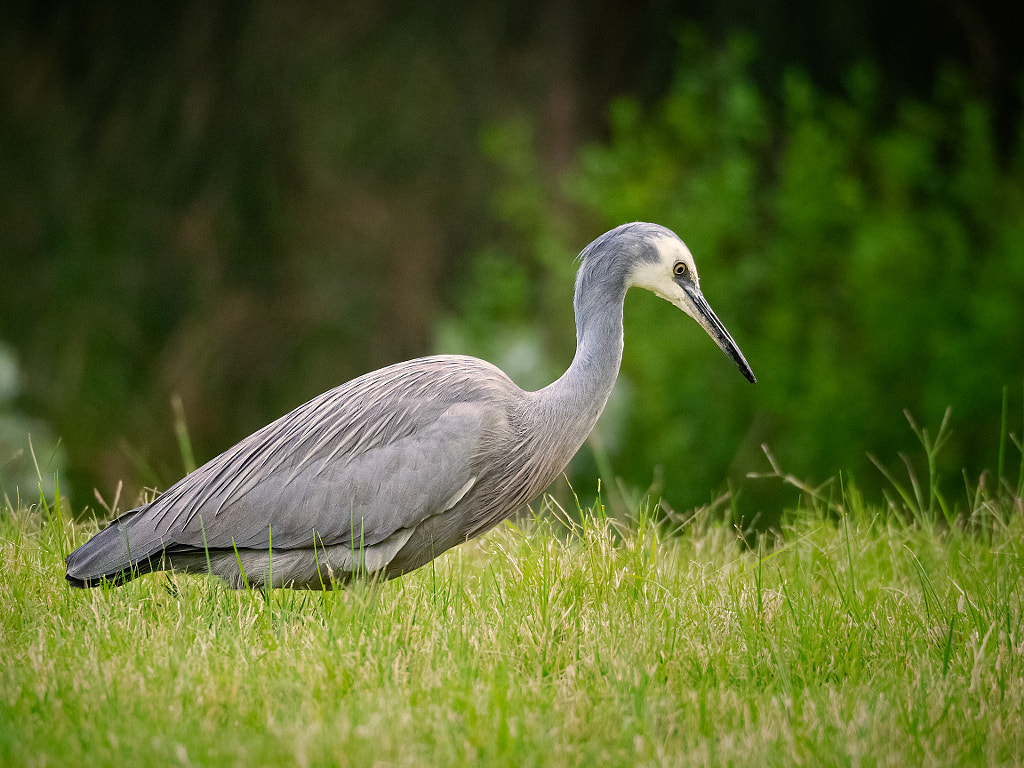
White-faced heron, Ardea novaehollandiae. Point Fraser, Western Australia.
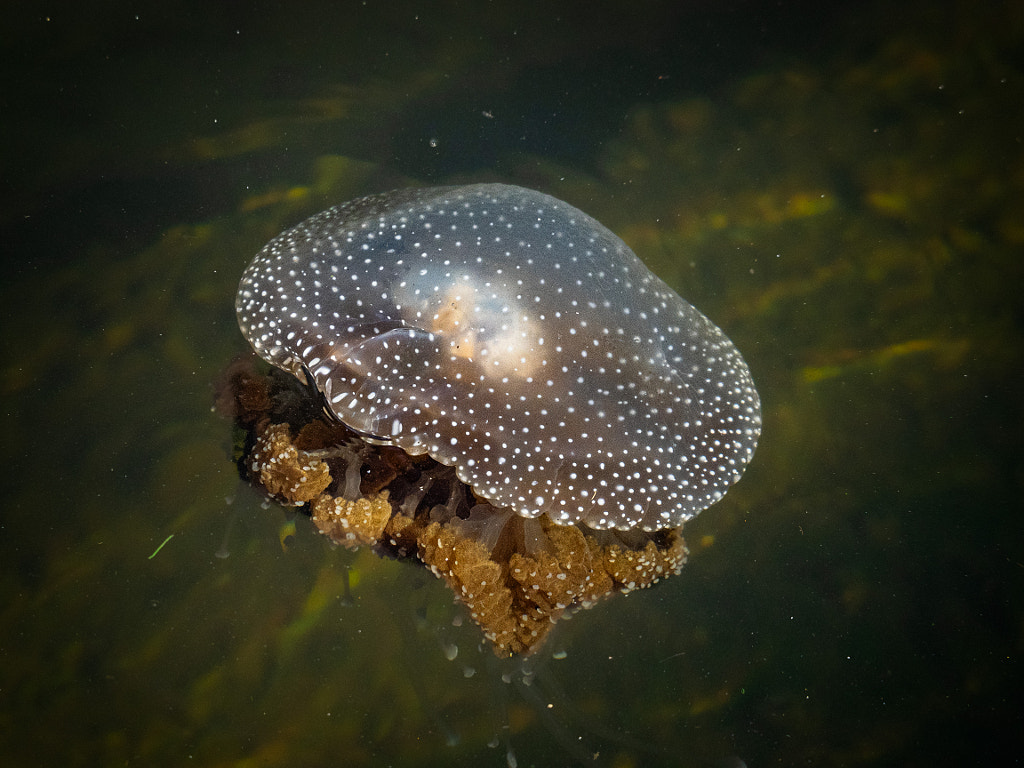
No visit to the Swan River is complete without the ubiquitous Brown Jellyfish (Phyllorhiza punctata).
Australian summers are hot and dry, and while we are not in a drought cycle like the Eastern States, it does get very warm here in York. 45º C is not unheard of. The hot weather and the lack of rain means that the Avon River largely dries up with the exception of a few deep pools, and so I often go walking along the dry river bed with Frida my faithful canine companion as it allows me to view quite a variety of wildlife that congregates around the pools.
Female Western Whistler, sometimes called the Western Golden Whistler, (Pachycephala occidentalis). York, Western Australia. Olympus OMD EM10 with Olympus M.Zuiko Digital ED 75-300mm f/4.8-6.7 II lens. Exposure: 1/1000sec, f7.1 at ISO 500.
A Southern Scrub Robin, Drymodes brunneopygia, achives vertical take off. The Nyoongar name is Djibot. York, Western Australia. Olympus OMD EM10 with Olympus M.Zuiko Digital ED 75-300mm f/4.8-6.7 II lens. Exposure: 1/1000 sec, f7.1 at ISO 500.
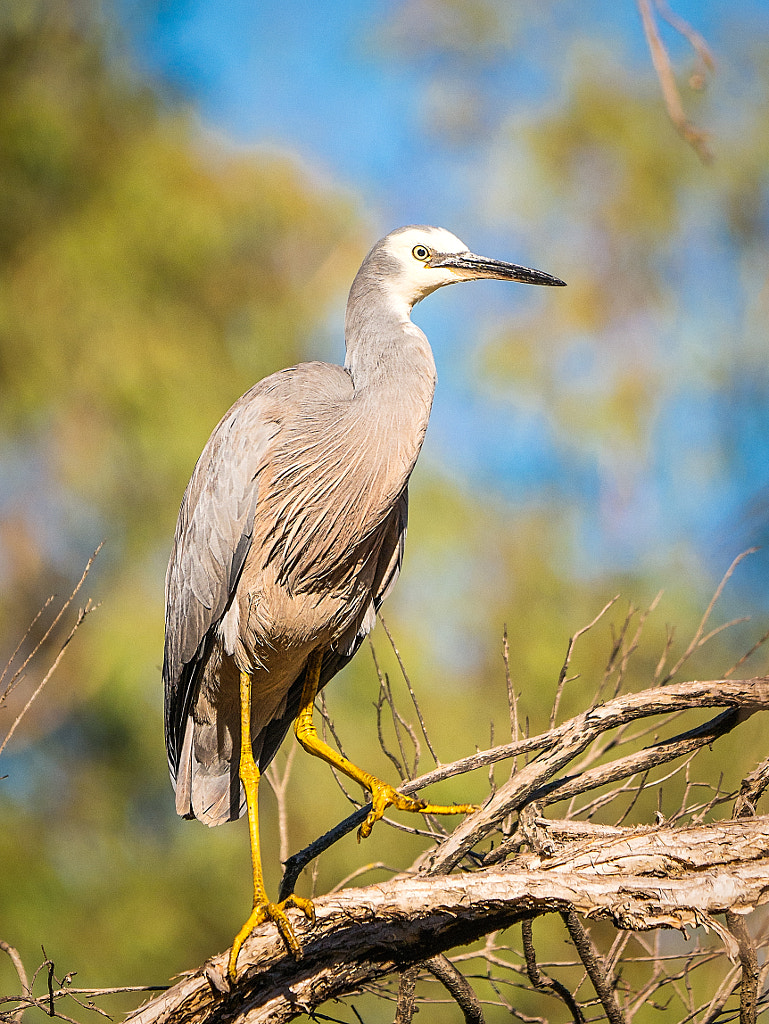
White-faced Heron (Egretta novaehollandiae). York, Western Australia. Panasonic Lumix G85 with LEICA DG 100-400/F4.0-6.3 lens. Exposure: 1/1000 sec, f6.3 at ISO 250.
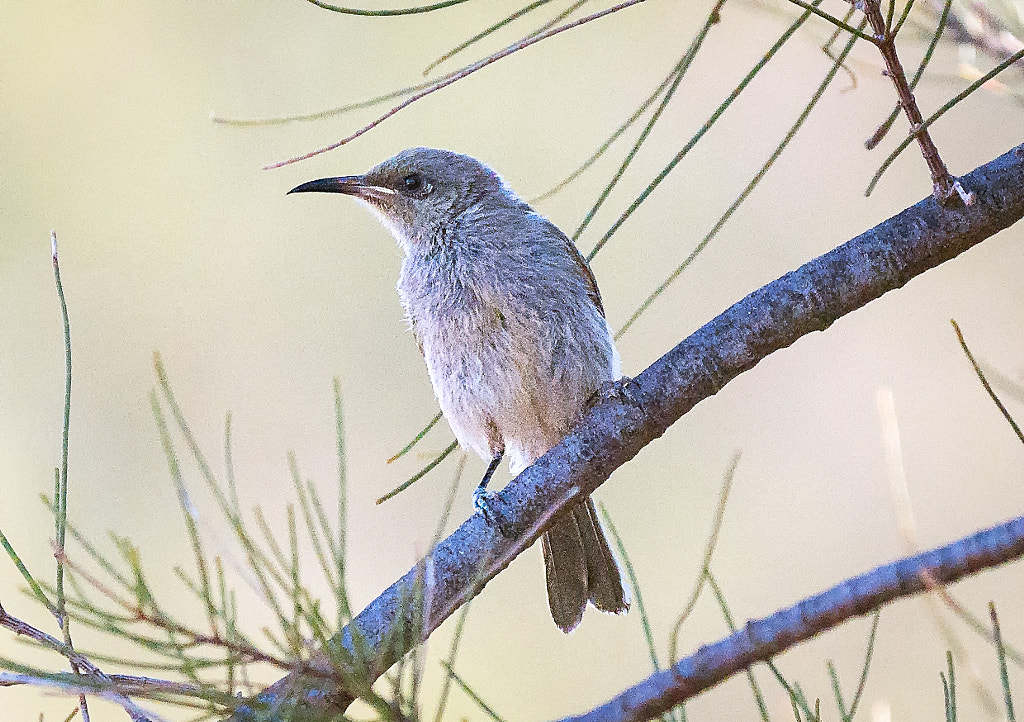
Brown Honeyeater, Lichmera indistincta.The Nyoongar name is Djindjoko. York, Western Australia. Panasonic Lumix G85 with Panasonic LEICA DG 100-400/F4.0-6.3 lens. Exposure: 1/1000 sec, f6.3 at ISO 3200.
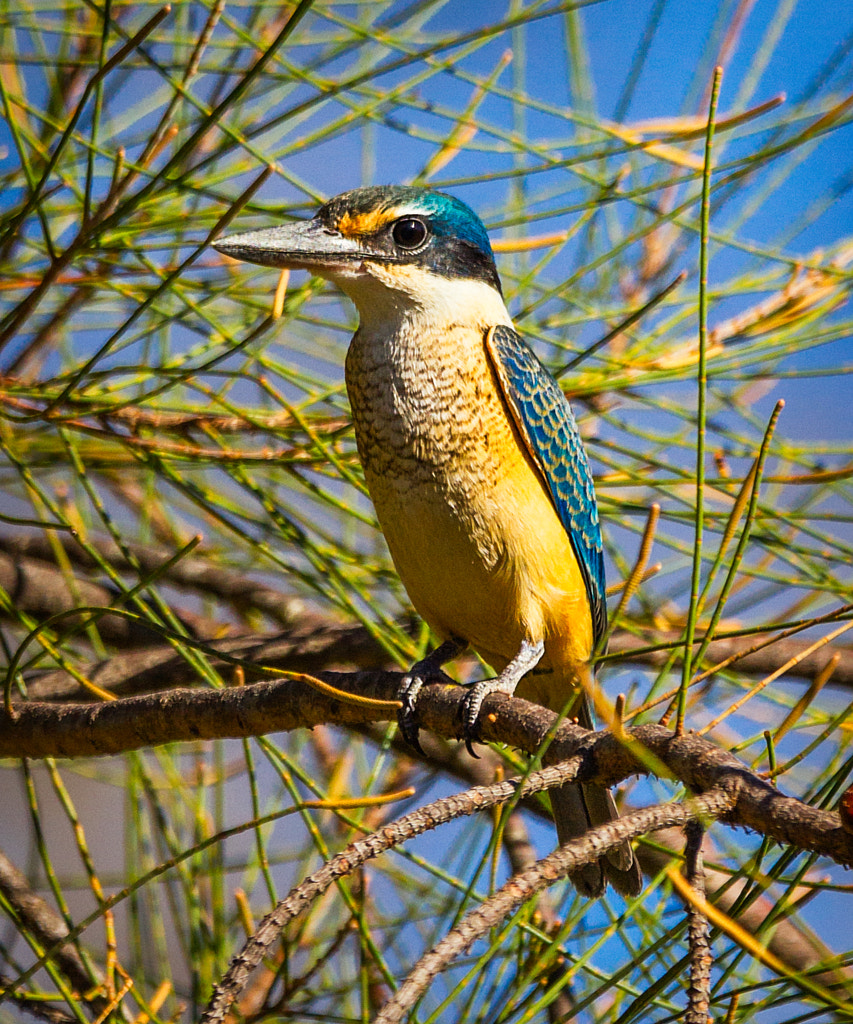
Sacred Kingfisher, Todiramphus sanctus. Known by the Nyoongar as Koonyenok. Avon River, York, Western Australia. Canon EOS 550d with a Sigma 150-600mm f/5-6.3 DG OS HSM Contemporary lens. Exposure: 1/1000 sec, f6.3 at ISO 250.
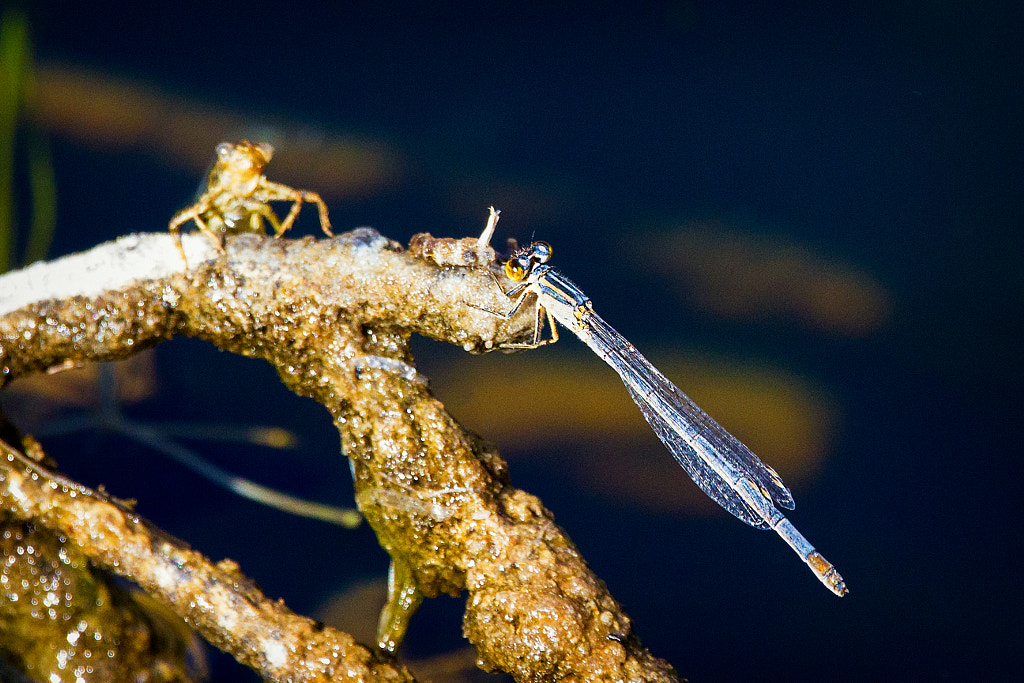
It’s not just birds we see, there are small fish in the ponds (difficult to photograph) and masses of different insects like this damselfly below.
Blue ringtail damselfly (Austrolestes annulosus,) at rest on the Avon River, York, Western Australia. Canon EOS 550d with a Sigma 150-600mm f/5-6.3 DG OS HSM Contemporary lens. Exposure: 1/1000 sec, f6.3 at ISO 1250.
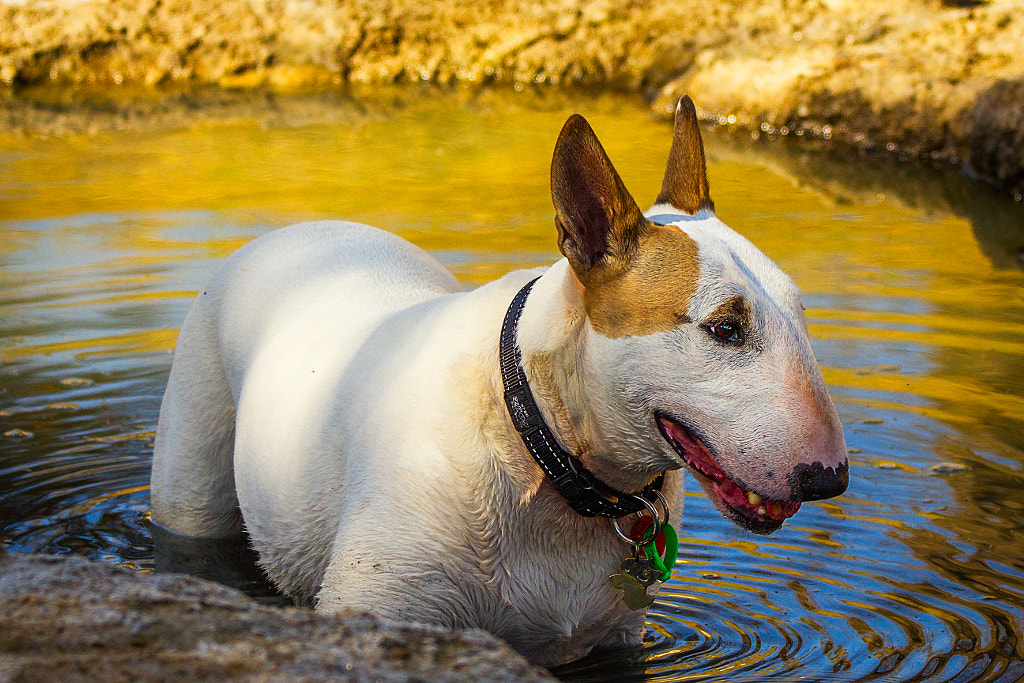
Frida usually takes my photographic hijacking of her morning walks with good grace. She usually waits for me either in some convenient shade or as shown below standing in some water. She’s not as daft as she looks!
Frida waiting patiently in the cool of a water pool.
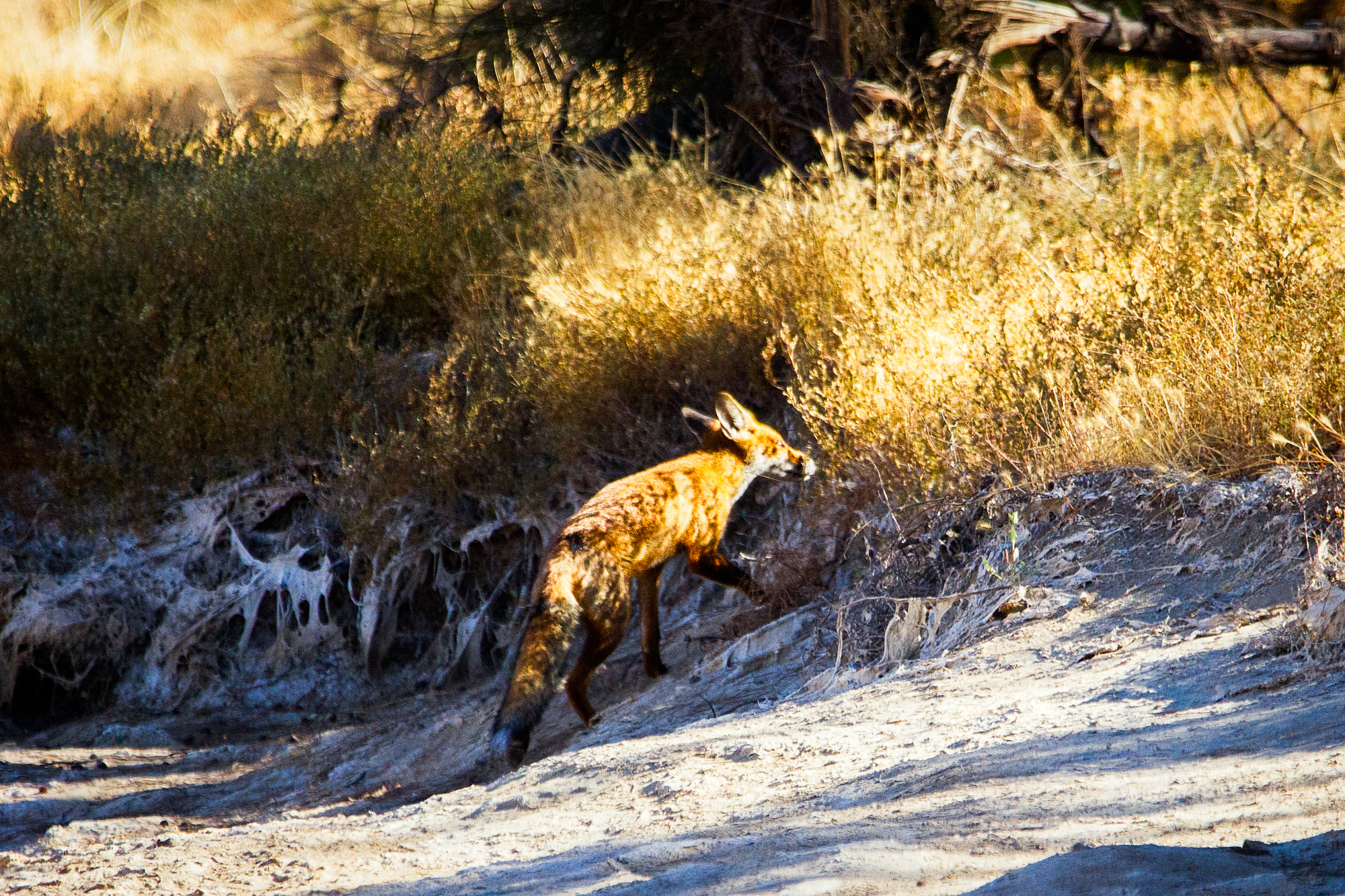
The other morning we were quite surprised to have a fox pop out of the long grass on the river bank and on to river bed. Initially it took off, but when it saw that Frida wasn’t in hot pursuit slowed down and turned back. The fox and Frida then played a mad game of chase up and down taking it in turns to be the chaser and the the chasee. Quite delightful to watch. It was like the canine equivalent of Kevin Costner’s film Dances With Wolves. Unfortunately by this time the battery in the camera had run flat so I was unable to take any photos of this rather special occurrence. Although this being a predominantly farming community most round here would not regard it as such as they belong to the “only good fox is a dead fox” brigade. A couple of days later we went back to see if the event could be repeated and I had a pocket full of batteries to ensure that I got some photos. We did find the fox in the same location but this time both it and Frida were indifferent to each other and the fox disappeared into the undergrowth on the opposite bank. Again I stuffed up the photography and all I got was the slightly blurred image below. Perhaps we’ll try again.
Red fox (Vulpes vulpes) on the Avon River river bed. York, Western Australia.
The soundtrack for summer in the Western Australian bush is provided by Broome based band the Pigram Brothers and their track Dry River Bed provided the title and inspiration for this blog entry.
When your drifting on the ocean
and the sea is a perfect blue
But those storm clouds on the horizon
are keeping you true to who are you
So take me away ‘cross the spinifex plains
where the true mirage never ends
And the smell of the rain is a long way away
lay me down on my dry river bed
Don’t have no white picket fence,
don’t have no green english lawn
Just got heat waves dancing for me,
on the red dirt where I was born
Feel the heart of my country,
beating to them lonely blues
Gotta get back there, gotta get back there,
I’ll be back there real soon
Pigram Brothers – Dry River Bed Music and Words: ( S Pigram/A, D, G, P, S Pigram, P Mamid)
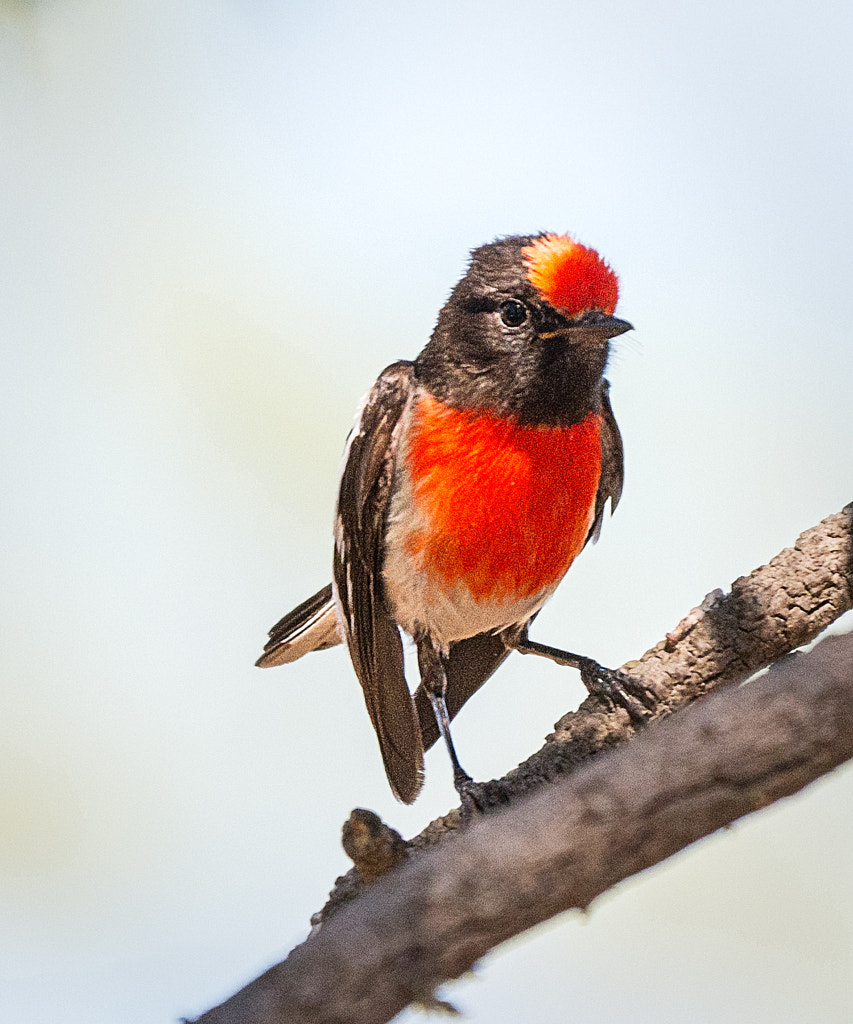
Red-capped Robin,Wei. Avon Walk Trail, York, Western Australia. Panasonic Lumix G85 with Panasonic Leica 100-400mm F4.0-6.3 lens. Exposure: 1/1000 sec, f6.3 at ISO 640.
Being originally from England I automatically associate Christmas with cold weather, and by association Robins as they are part of iconography of the festive season. So when walking along the Avon River on a 40º C day seeing these Red-capped Robins seems a little incongruous. For such a small bird they are as bold as brass and will let you approach quite closely. The other confusing thing about Australian robins is that they don’t just come in red.
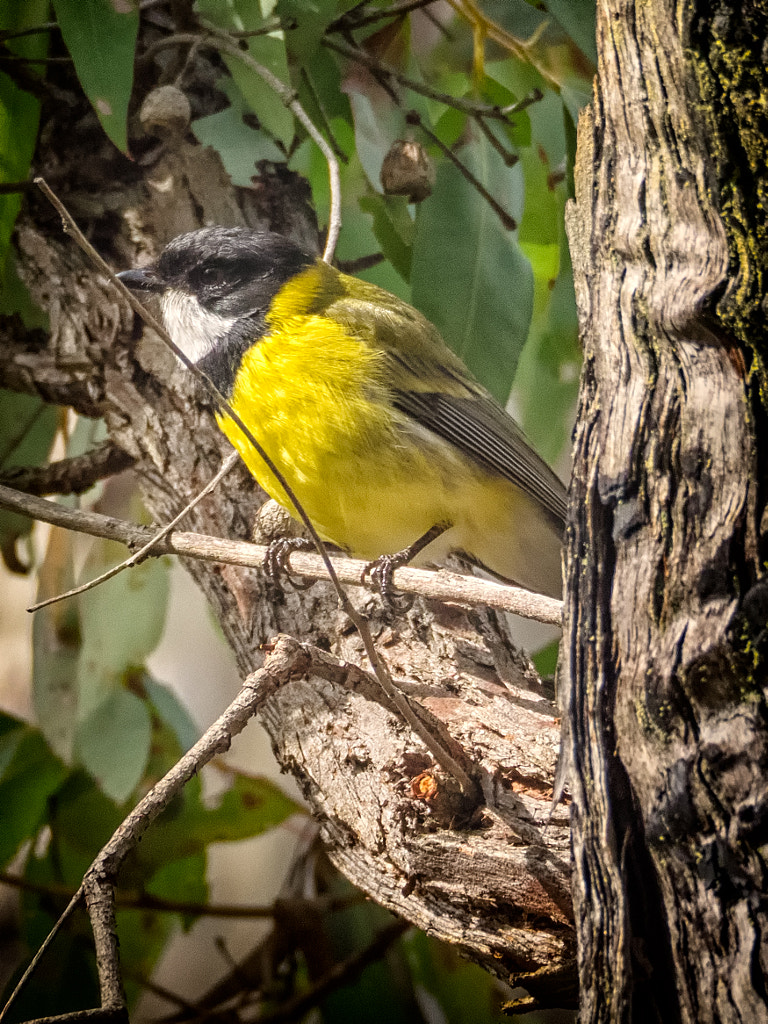
The Western Yellow Robin (Eopsaltria griseogularis). Lake Leschenaultia, Western Australia. Olympus OMD EM1 with Olympus M.Zuiko Digital ED 75-300mm f/4.8-6.7 II lens. Exposure: 1/400 sec, f8 at ISO 800.
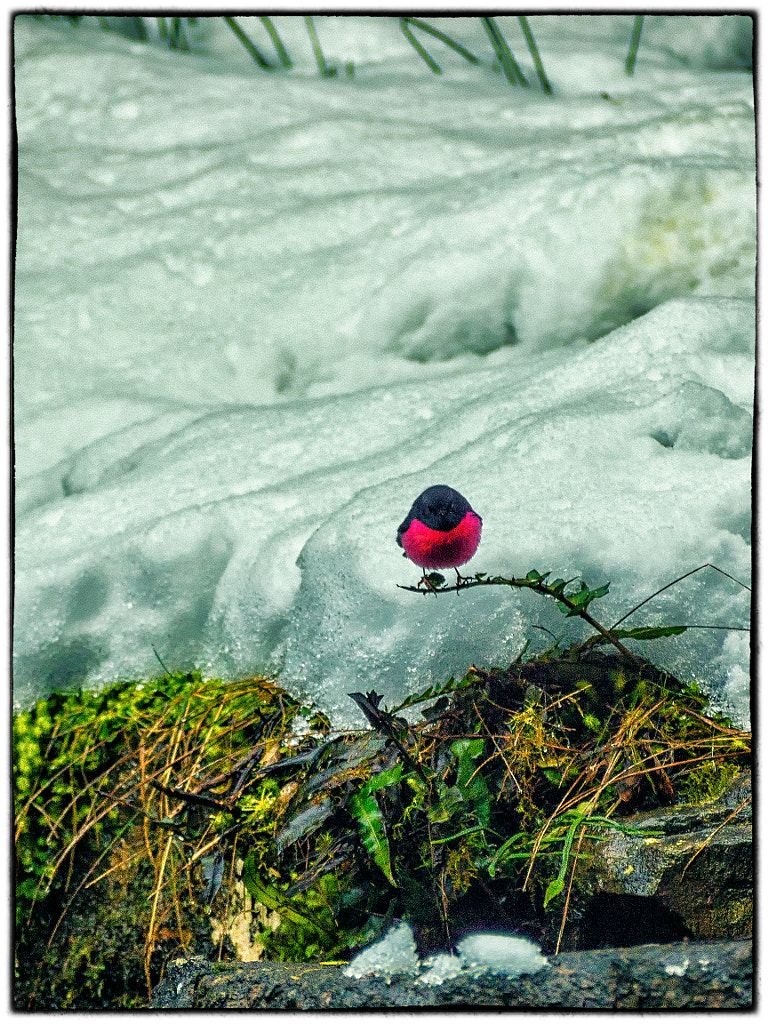
When we were in Tasmania we had proper winters with snow, and that meant we had robins in their proper setting, but not at Christmas. Oh it’s all very confusing!
A pink robin (pink) at Silver Falls, Mount Wellington in Tasmania. Olympus OM-D E-M10 with Olympus M.Zuiko Digital ED 40-150mm f/4-5.6 R lens. Exposure: 1/160 sec, f5.6 at ISO 200.
We decided to walk along the Bilya Walk Track on the banks of the Avon River in Toodyay ostensibly looking for birds. Although it was a fine winter’s day the ground was yes wet, flooded in places, and the river very high from the winter rains.
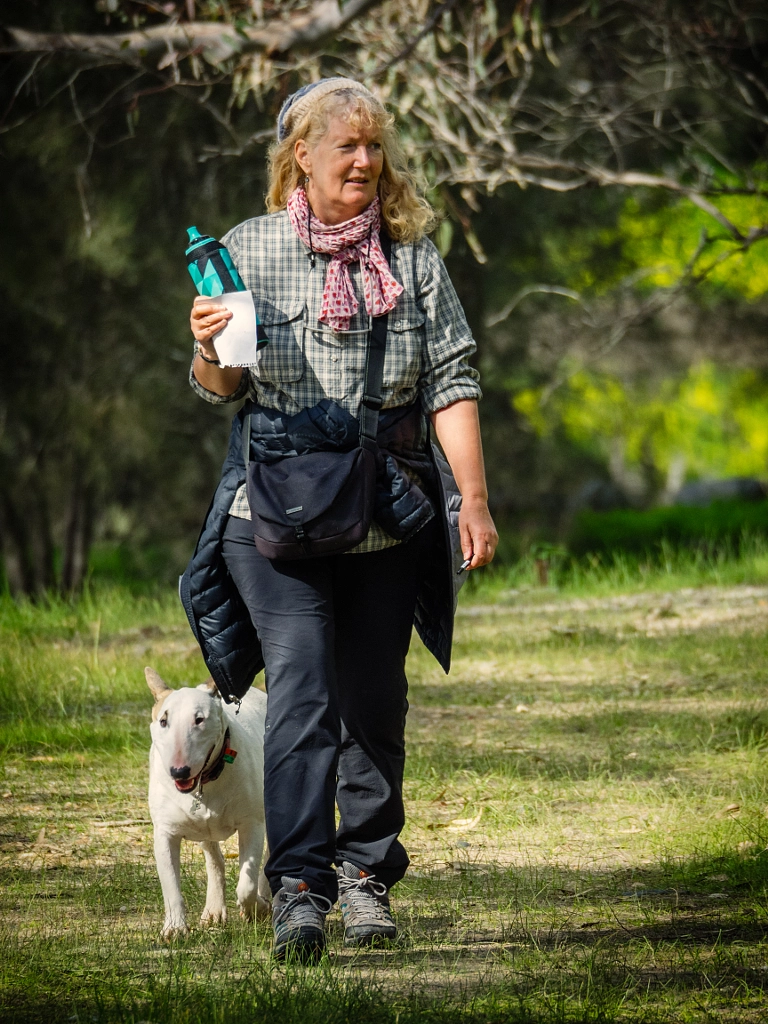
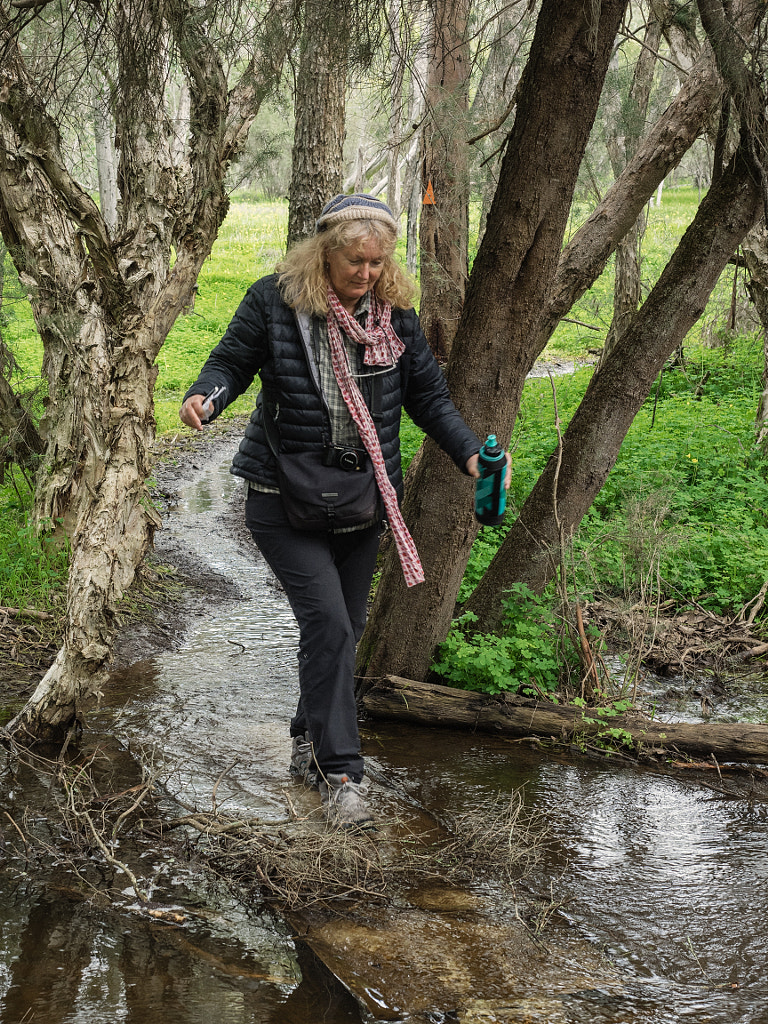
Helen and Frida out looking for birds along the Avon River.
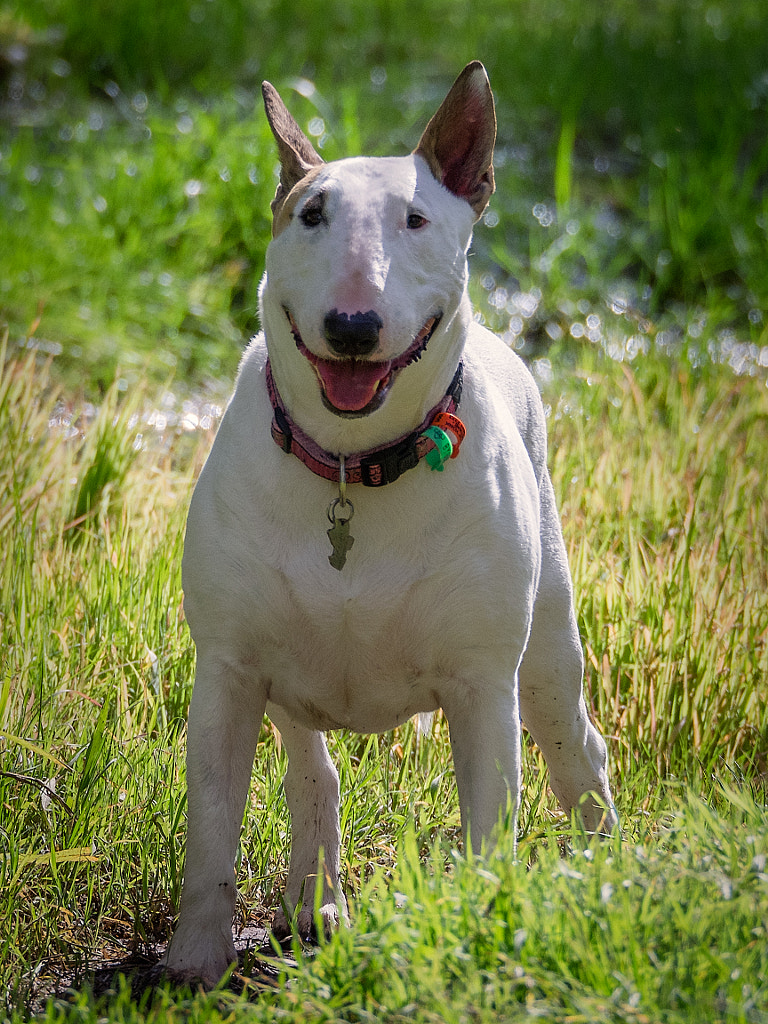
Gratuitous shot of Frida
The track was flooded in places necessitating some paddling.
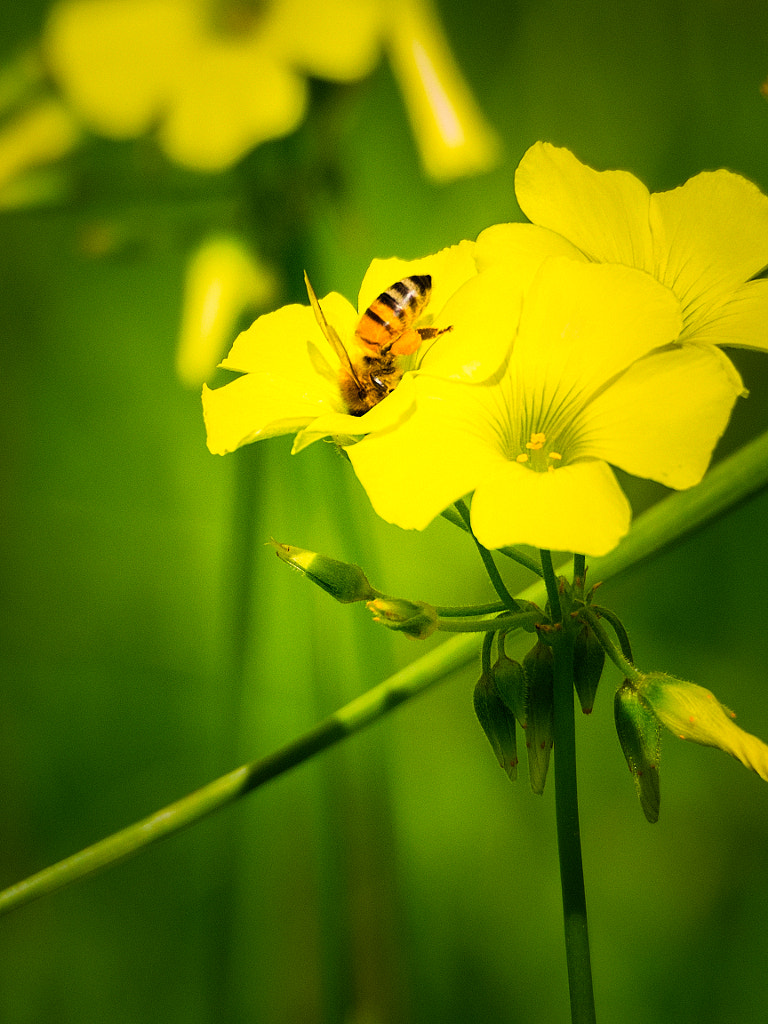
A bee pollinating Oxalis pes-caprae. Also known as Bermuda buttercup, African wood-sorrel, Bermuda sorrel, buttercup oxalis, Cape sorrel, English weed, goat’s-foot, sourgrass, soursob and soursop. It is a noxious weed introduced from South Africa to Australia. Toodyay, Western Australia.
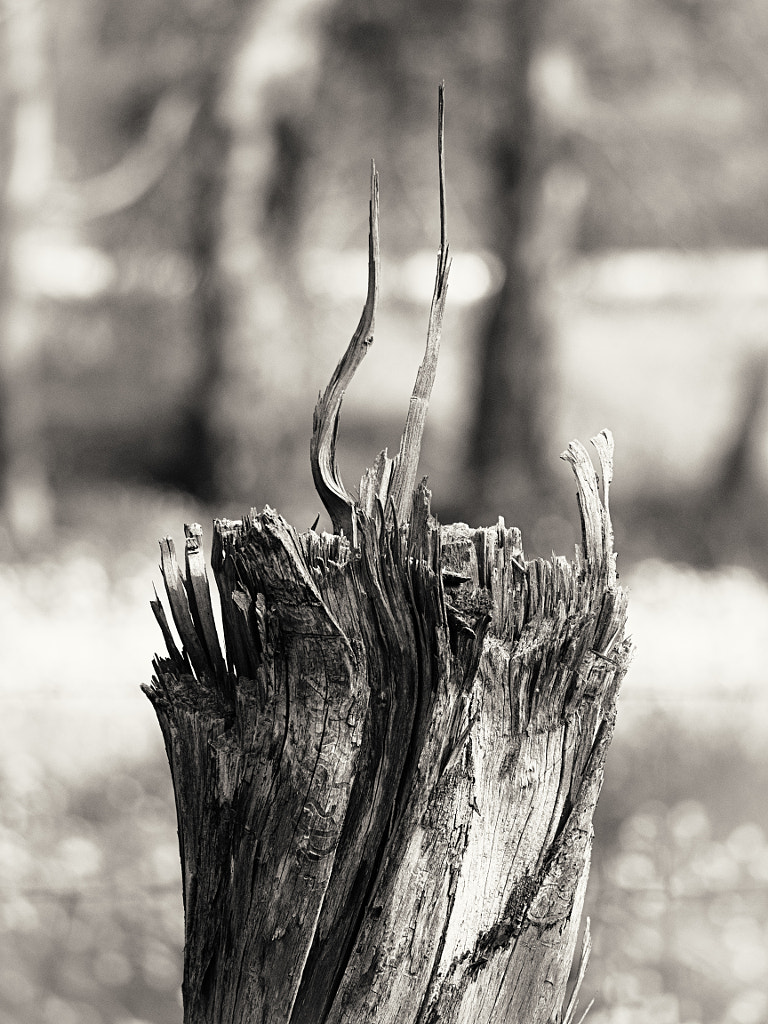
Toodyay Stump #1 Tree stump, Toodyay, Western Australia.
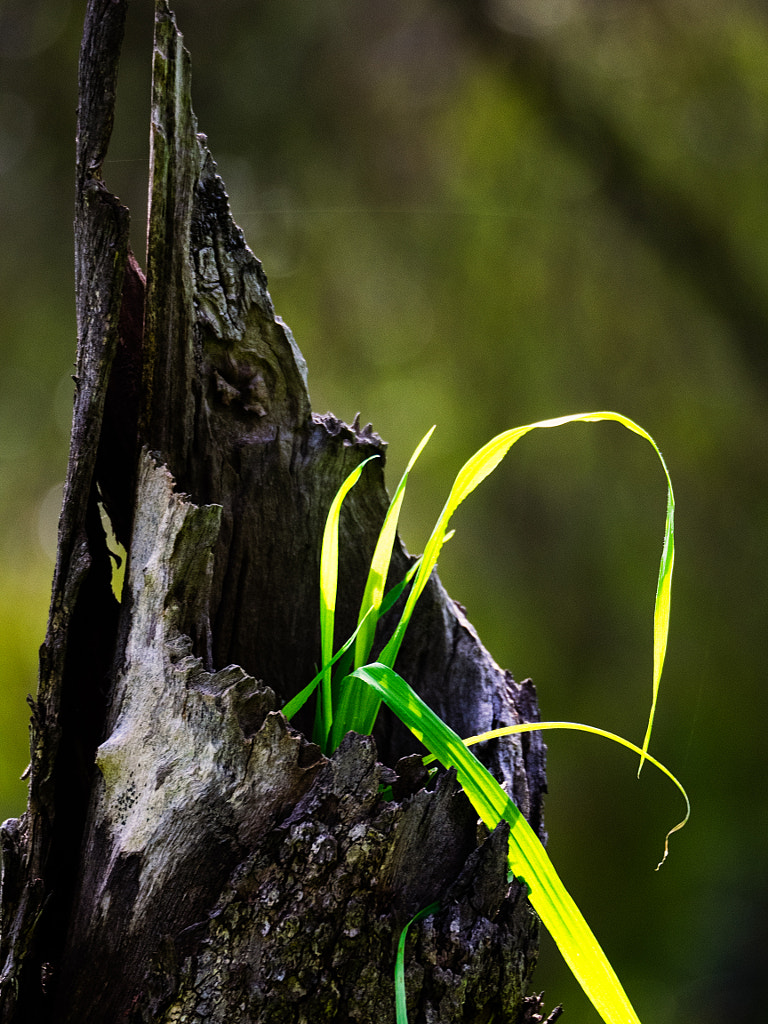
Toodyay Stump #2
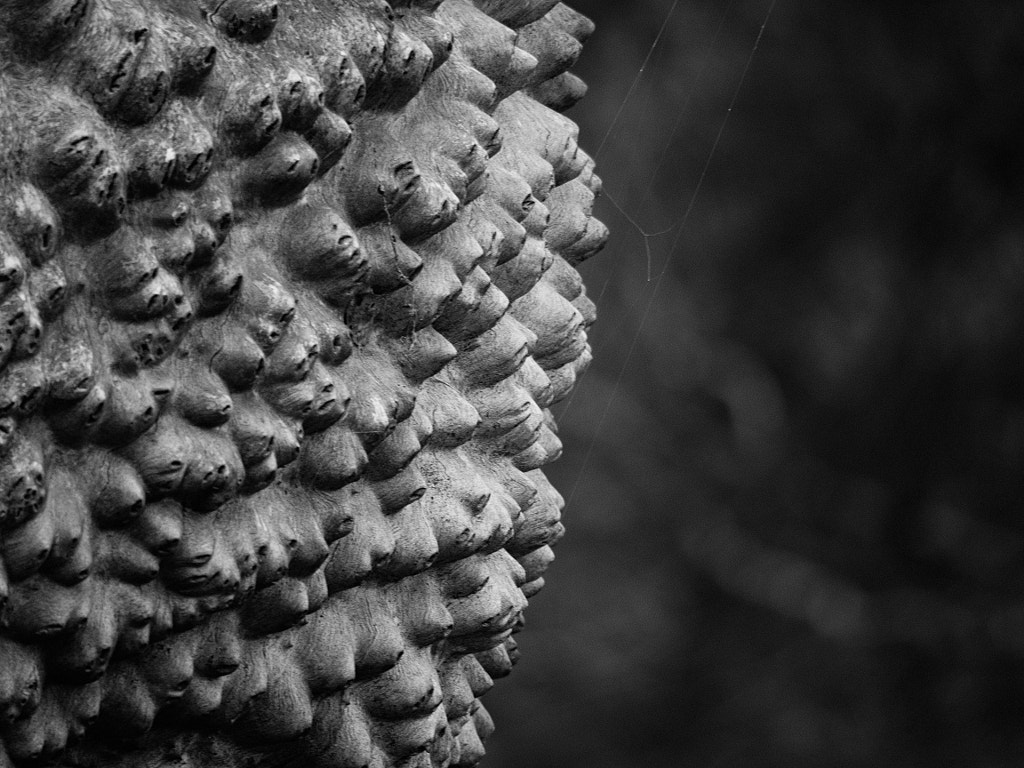
Knobbly Close up of a tree trunk. Toodyay, Western Australia.
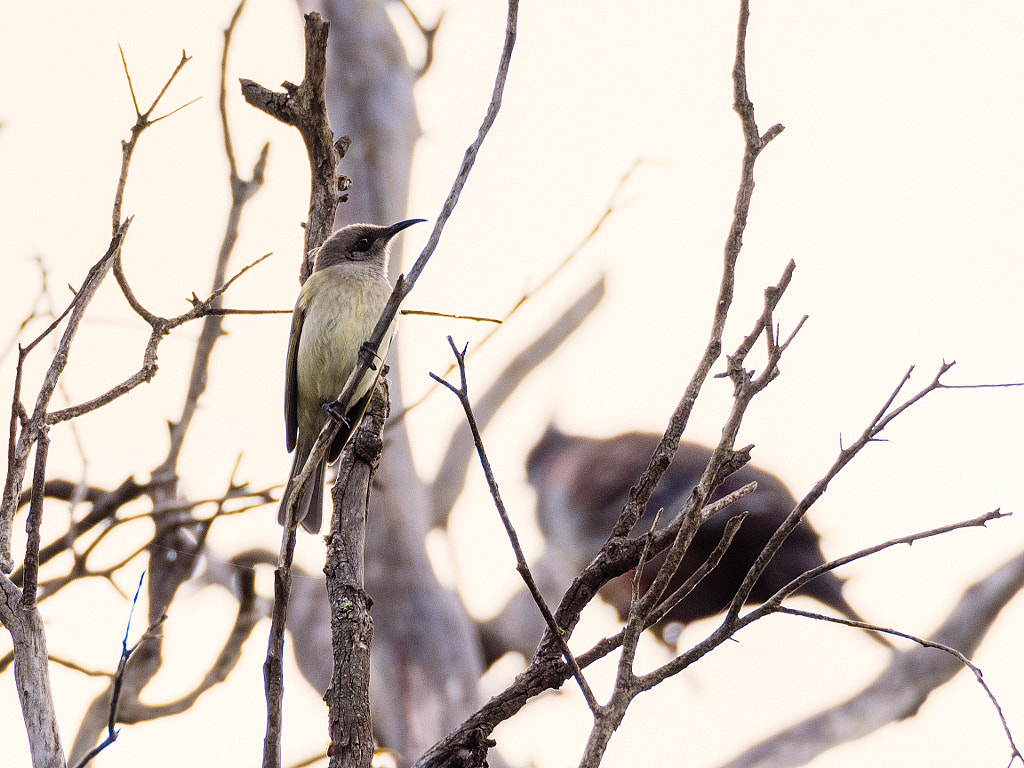
Brown honeyeater, Lichmera indistincta, Toodyay, Western Australia.
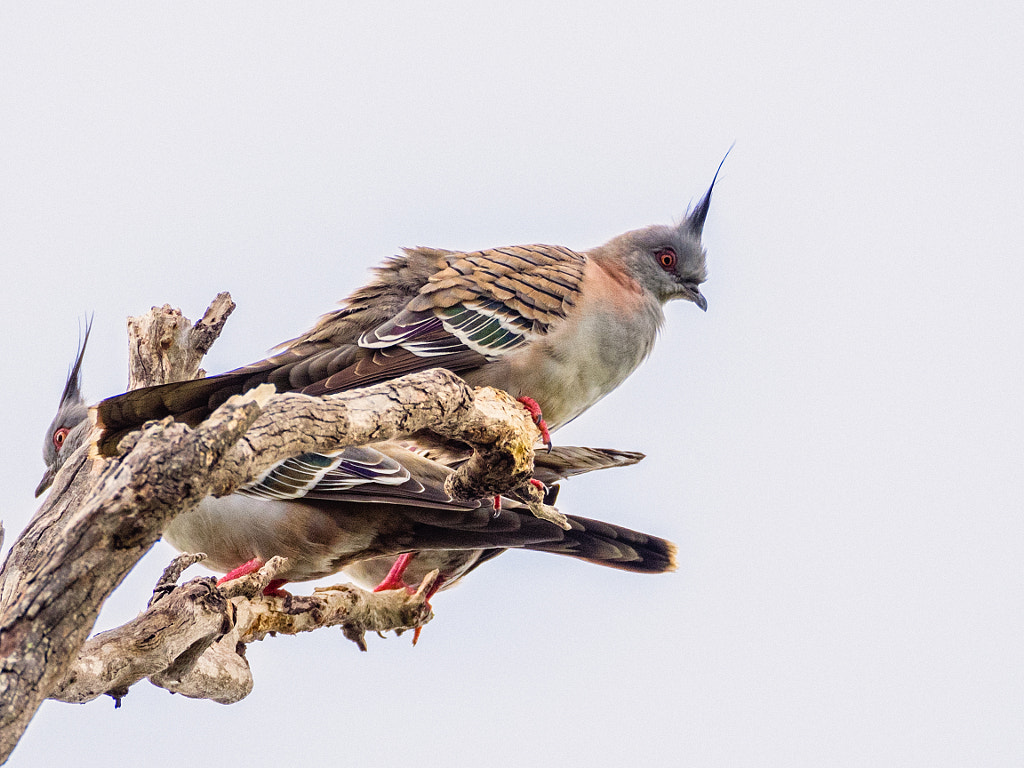
Crested pigeon (Ocyphaps lophotes), Toodyay, Western Australia.
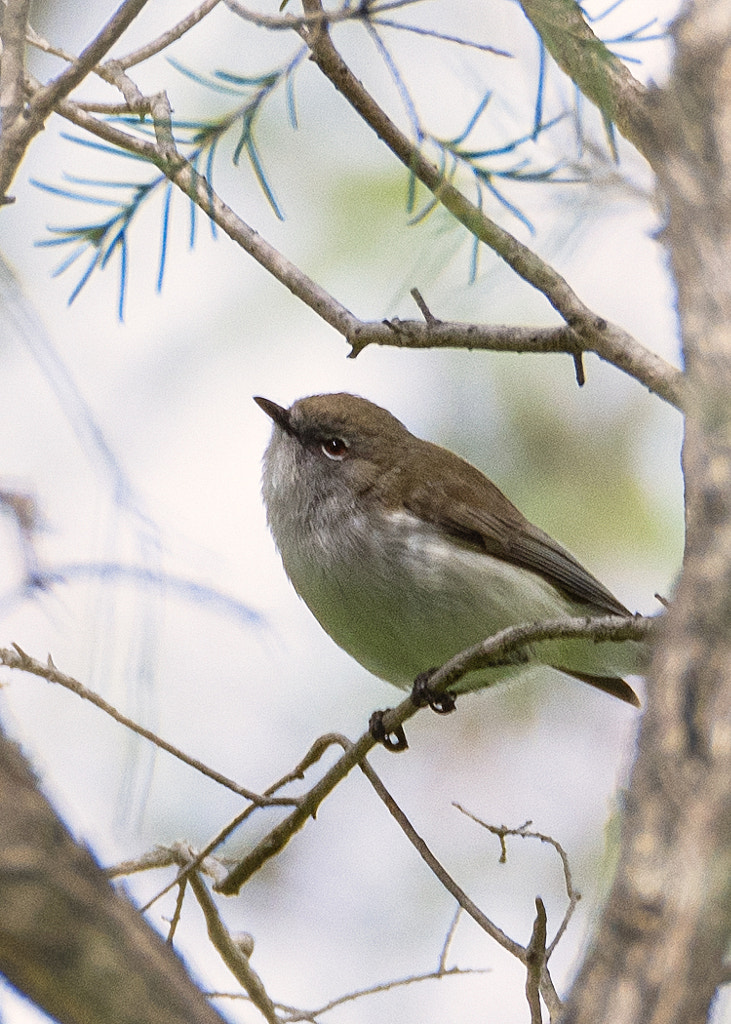
Weebill, , Australia’s smallest bird. Toodyay, Western Australia.
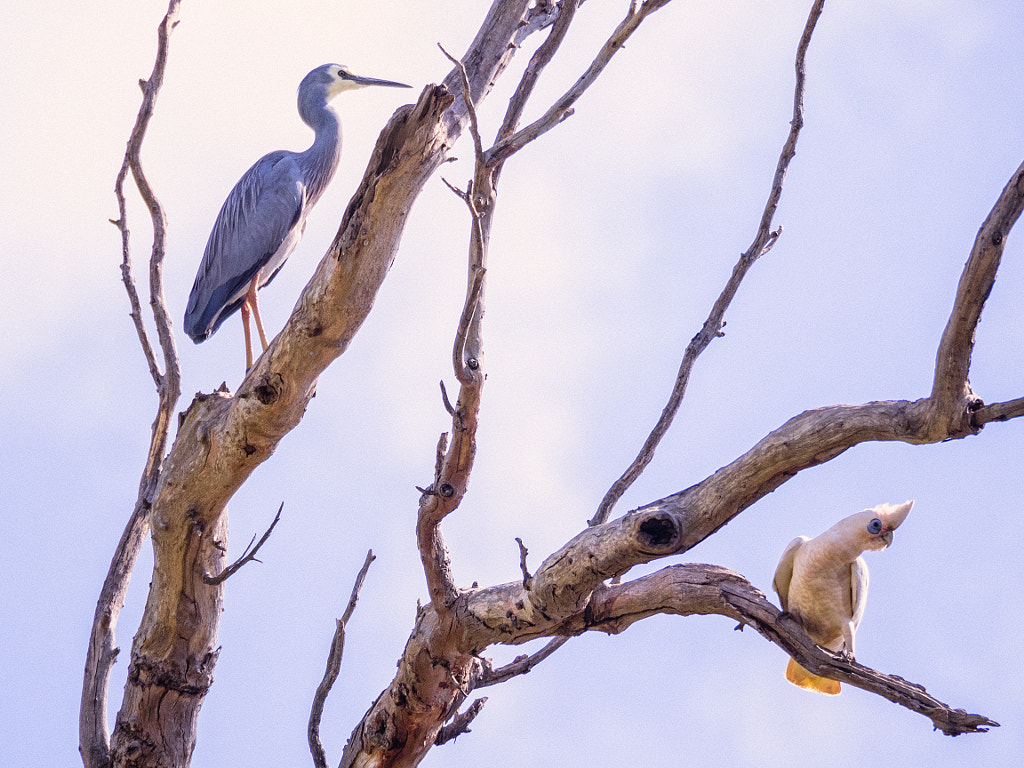
White-faced heron (Egretta novaehollandiae) and a western corella (Cacatua pastinator subsp. derbyi), Toodyay, Western Australia.










You must be logged in to post a comment.