Mugged


I was at Lake Leschenaultia and it was a lovely winter’s day, the sun was out I’d just finished a bush walk. I decided to have lunch at one of the picnic shelters by the lake when it happened. There was no warning. One minute I sitting there alone and happy the next minute these two ne’er-do-wells are demanding with menace. To make matters worse I had nothing to give and they just would not accept that. They were merciless in their onslaught. Would I recognise them again? You bet I would! Their visages are engraved indelibly upon my mind. But better than that I managed to get pictures of them so others could be warned. Here they are.
 

Lake Leschenaultia Lakeside Walk by Paul Amyes on 500px.com
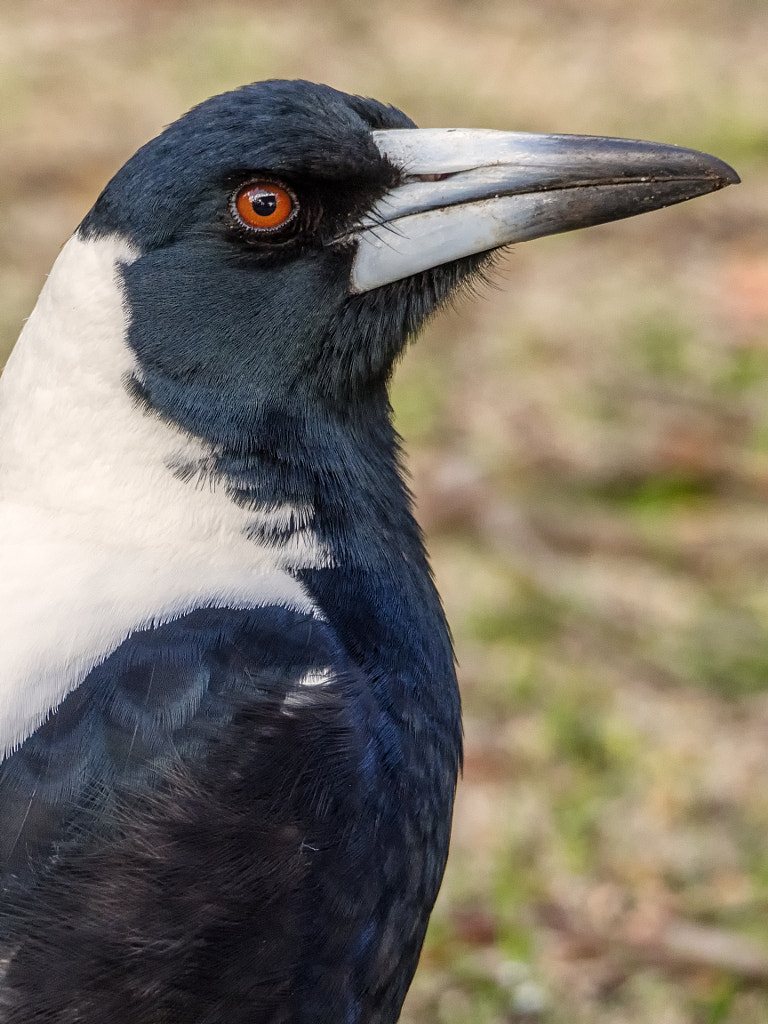
The eponymous Australian magpie (Gymnorhina tibicen) will happily relieve you of your picnic lunch at Lake Leschenaultia.


This was the ring leader. He was ruthlessly determined to relieve me of my lunch. He was brazen in his approach, like he just didn’t care.
 

Lake Leschenaultia Lakeside Walk by Paul Amyes on 500px.com
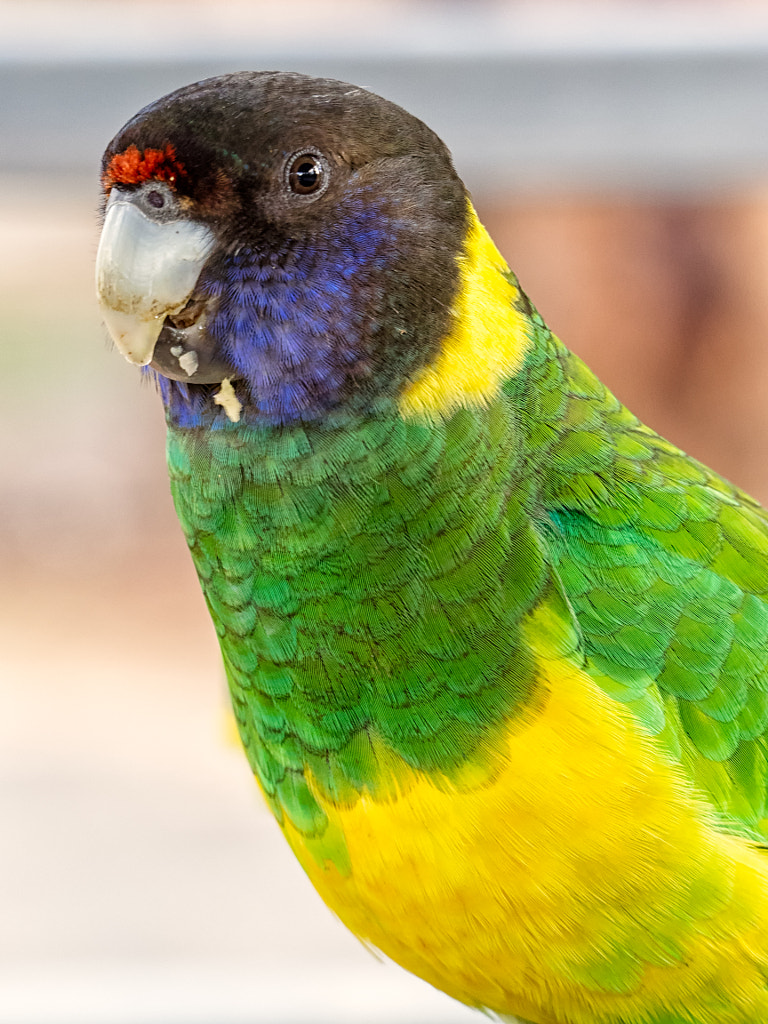
Australian Ringneck (Barnardius zonarius subspecies semitorquatus). One of the cheeky bandits that will help eat your lunch at Lake Leschenaultia


This one was a sly beggar! He quietly got into my bag and ransacked it looking for goodies. When discovered he just countered with a manic laugh.It was like something out of that Hitchcock film The Birds albeit with less blood and more sandwiches.


So if you go to Lake Leschenaultia watch out for these two. They are merciless – no picnic is safe! Be warned, or as the Australian Federal Government would say “Be alert but not alarmed“.
Perambulating With Penguins

Penguin Island by Paul Amyes on 500px.com
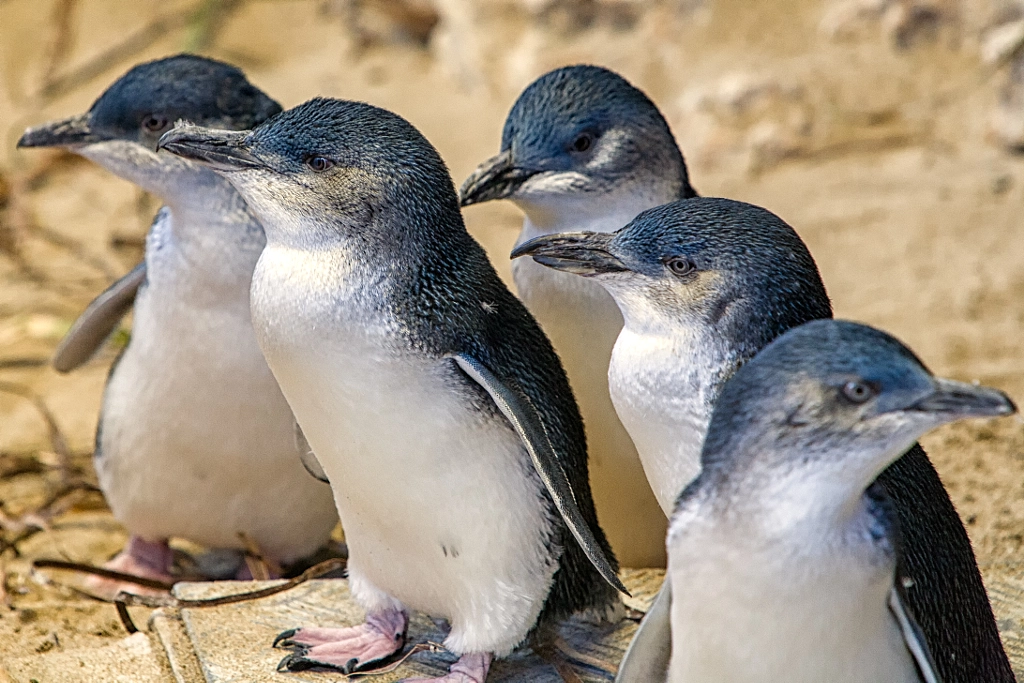
Penguin Island is home to a colony of approximately 1,200 little penguins, the largest population of the birds in Western Australia. The Penguin Discovery Centre is home to a small population of rescued birds which cannot be rehabilitated to the wild.


This week’s episode of Paul’s Pootles takes us to Penguin Island.


This is another walk from my book which is available from all good Australian book stores.


Breakfast Interrupted

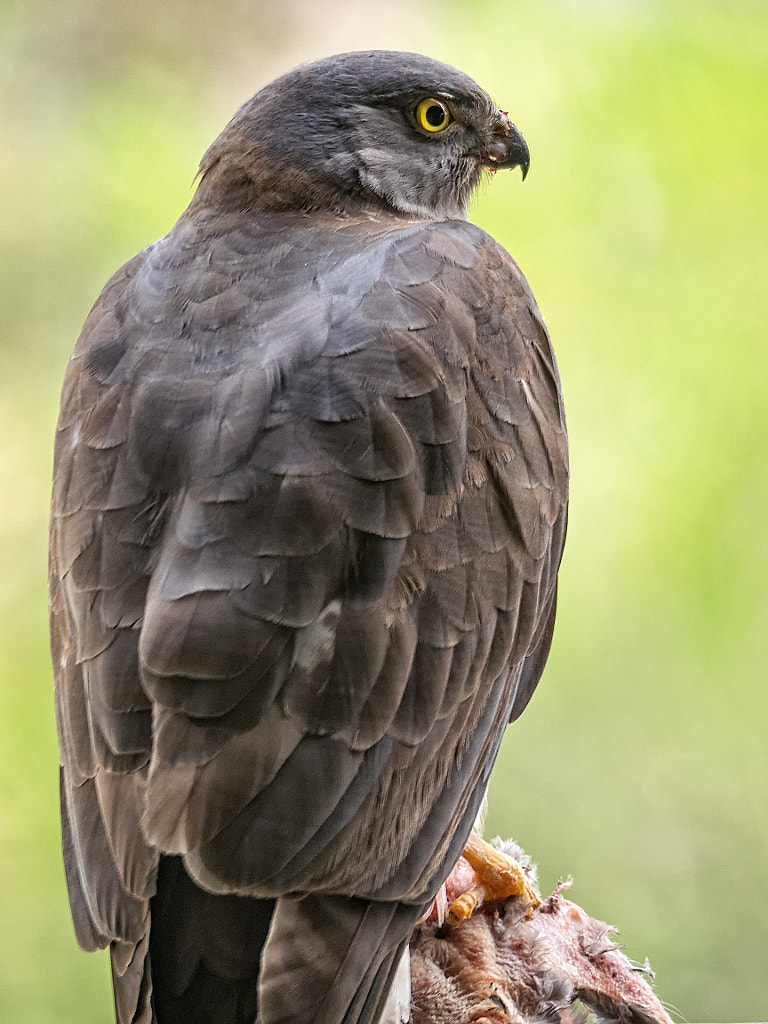
The other morning just as I was about to have my shower I heard a commotion on my front veranda. Quickly putting on my dressing gown (I don’t want to scare the neighbours) I went and looked out to see what was going on. To my delight a collared sparrowhawk had perched on the rail to eat its prey. I quickly ran to my office and grabbed a camera and long lens and started shooting.


Breakfast Interupted by Paul Amyes on 500px.com
A perching collared sparrowhawk (Accipiter cirrhocehalua) preparing to eat its freshly caught prey. York, Western Australia. Olympus OMD EM1 with OLYMPUS M.40-150mm F2.8 lens. Exposure: 1/320 th sec, f4 at ISO 200.


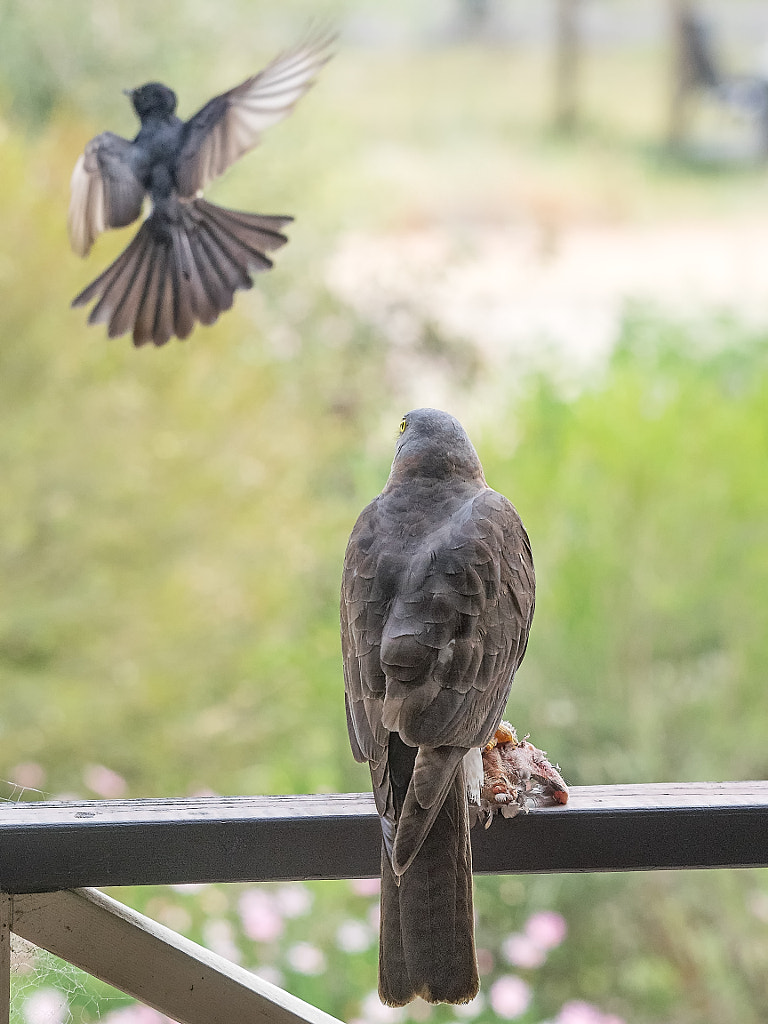
The commotion was caused by the resident Willie Wagtails (Rhipidura leucophrys leucophrys). For the non Aussies among us the Willie Wagtail is a tiny insect-eating bird whose bossiness and boldness knows no bounds and they will often attempt to chase off larger animals from their territory. That was what happening here hence all the noise.


Breakfast Interupted by Paul Amyes on 500px.com
Willie Wagtails (Rhipidura leucophrys leucophrys) are a tiny insect-eating bird whose boldness knows no bounds. Here one is trying to chase off a feeding collared sparrowhawk (Accipiter cirrhocehalus). York, Western Australia. Olympus OMD EM1 with OLYMPUS M.40-150mm F2.8 lens. Exposure: 1/1000 sec, f4 at ISO 800.


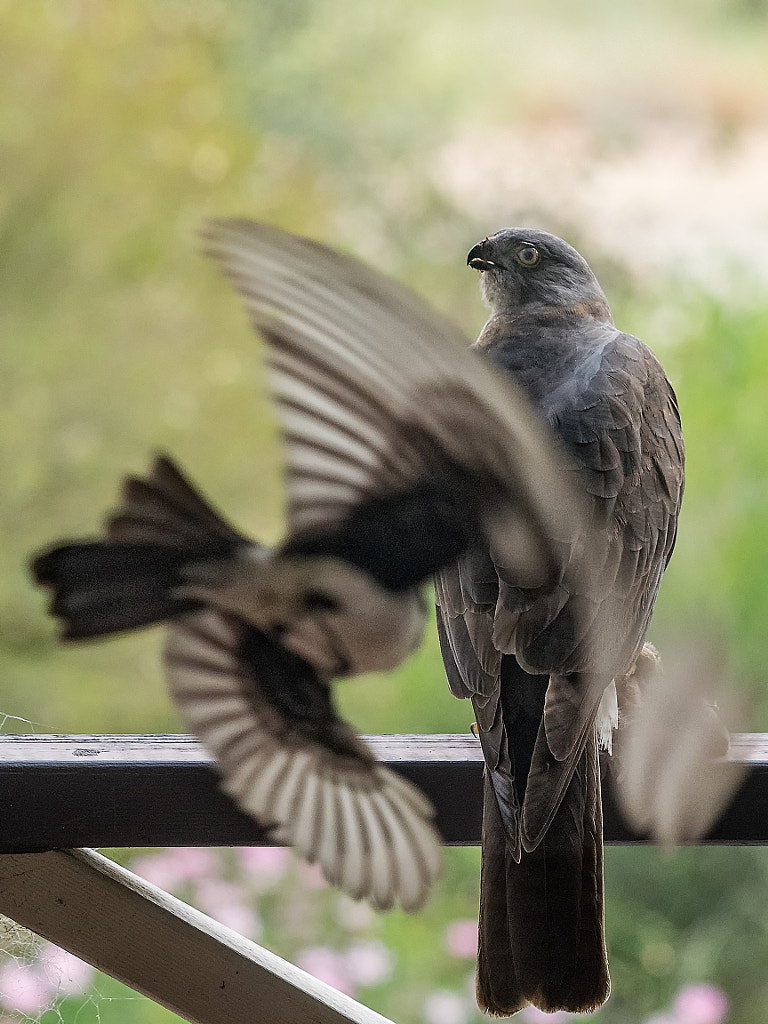
The Willie Wagtails made several sorties to no avail. Although the collared sparrowhawk’s feathers became a little ruffled at the constant harassment of the tiny feathered furies it did not move on and eventually the small birds gave up and left.


Breakfast Interupted by Paul Amyes on 500px.com
Willie Wagtails (Rhipidura leucophrys leucophrys) are a tiny insect-eating bird whose boldness knows no bounds. Here one is trying to chase off a feeding collared sparrowhawk (Accipiter cirrhocehalus). York, Western Australia. Olympus OMD EM1 with Olympus M.40-150mm F2.8 lens. Exposure: 1/1000 sec, f4 at ISO 800.


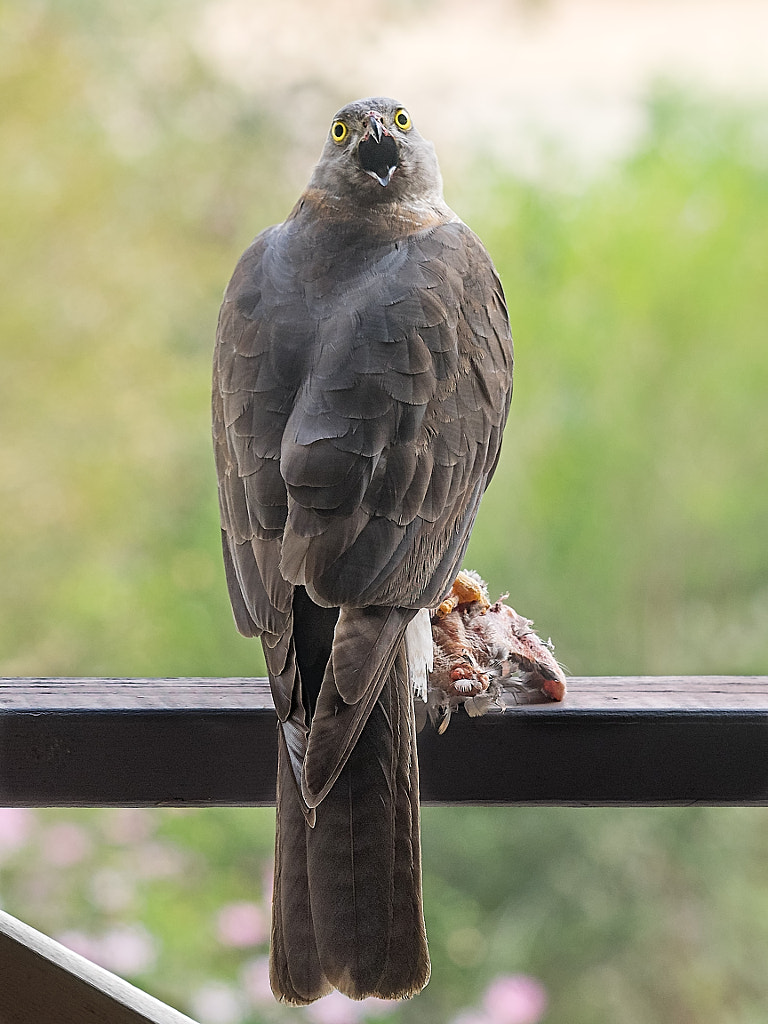
The raptor only left when I tried to move closer to get a better photo.


Breakfast Interupted by Paul Amyes on 500px.com
A perching collared sparrowhawk (Accipiter cirrhocehalua) preparing to eat it’s freshly caught prey. York, Western Australia. Olympus OMD EM1 with OLYMPUS M.75-300mm F4.8-6.7 II lens. Exposure: 1/400 sec, f6.7 at ISO 800.


To Twitch…

…  or not to twitch. That is the question. I fear I could be on the brink of another obsessive hobby – photographing birds. It is a worry. Oh well at least it’s not train spotting! Now where did I put my parka and thermos?

Striated Pardalote by Paul Amyes on 500px.com
A striated pardalote (Pardalotus substriatus) found on the Avon Walk Trail in York, Western Australia. Olympus OMD EM-1 with OLYMPUS M.75-300mm F4.8-6.7 II lens. Exposure: 1/2000th sec, f7.1 at ISO 800.


White-faced Heron by Paul Amyes on 500px.com
White-faced heron ( Egretta novaehollandiae) on the banks of the Avon in York, Western Australia. Olympus OMD EM-1 with OLYMPUS M.75-300mm F4.8-6.7 II lens. Exposure: 1/1600th sec, f8, ISO 800 and +1.7 stops exposure compensation.


Red-capped Robin by Paul Amyes on 500px.com
Red-capped robins (Petroica goodenovi) can be found in the sheoak trees on the banks of the Avon River. York, Western Australia). Olympus OMD EM-1 with OLYMPUS M.75-300mm F4.8-6.7 II lens. Exposure: 1/1250th sec, f7.1, ISO 800 with +0.7 stop exposure compensation.


Willie Wagtail by Paul Amyes on 500px.com
Willie wagtails (Rhipidura leucophrys leucophrys) can be seen bobbing around catching insects along the banks of the Avon River, York, Western Australia. Olympus OMD EM-1 with OLYMPUS M.75-300mm F4.8-6.7 II lens. Exposure: 1/160th sec, f8, ISO 800 with +1.3 stops exposure compensation.


Zebra Finch by Paul Amyes on 500px.com
A female zebra finch (Taeniopygia guttata) perched near the Avon River in York. They are not native to the mid Wheatbelt, but can be found further north. They are common in York and are most likely the offspring of escaped cage birds. Canon EOS 6D with EF70-200mm f/2.8L IS USM +2x converter. Exposure: 1/2000th sec, f7.1 Iso 800.


Noisy Neighbours

I got a few enquiries about corellas after my post Tales From The Riverbank part 2. Yes the Shire has previously culled the birds in the run up to Australia Day, but this year they didn’t. The reasons given are that they are noisy – I mean really noisy. To show how noisy I made a short film about them.

Tales From The River Bank – part 2

Summer in Pioneer Park by Paul Amyes on 500px.com
Western Corellas (Cacatua pastinator). Pioneer Avon Park, York, Western Australia. Olympus OMD EM1 with OLYMPUS M.75-300mm F4.8-6.7 II lens. Exposure: 1/1250 sec f8 ISO 800.


Well we’re well and truly in summer now here in York. The mercury has hit 42℃ (107℉), the wheat crop is in and the water level in the River Avon is steadily dropping. This time of year brings the western corellas (Cacatua pastinator) in huge numbers. They migrate here to fatten up on the spilled wheat around the CBH grain handling facility and because of the water in the river. Being seed eaters they need quite large quantities of water to help digest their food. The corellas take up residence in the large gum trees that line

Summer in Pioneer Park by Paul Amyes on 500px.com
Summer in Pioneer Park. Western Corellas (Cacatua pastinator). Pioneer Avon Park, York, Western Australia. Olympus OMD EM-1 with OLYMPUS M.75-300mm F4.8-6.7 II lens. Exposure: 1/500 f7.1 ISO 200.


the banks of the river and that means lots of them can be found in the Pioneer Avon Park. Unfortunately for the corellas this all roughly coincides with Australia Day and this is a problem at the park because the town chooses to celebrate Australia Day there, lots of awards are handed out  and of course lots of speeches are made. Corellas are noisy – very noisy especially in their hundreds and they can easily drown out a PA system. One year our shire CEO had his wonderful speech (well he thought it was wonderful we the citizens of York thought otherwise) drowned out by raucous squawking and it made him more than a little cross to say the least. To prevent such a thing happening the next year he arranged for the birds to be culled just a few days before Australia Day. This is why York wakes up to the sound of gunfire in the days leading up to Australia Day.


Summer in Pioneer Park by Paul Amyes on 500px.com
Little black cormorants (Phalacrocorax sulcirostris) none too impressed with the antics of the corellas. Pioneer Avon Park, York, Western Australia. Exposure


Summer in Pioneer Park by Paul Amyes on 500px.com
Pink and Grey Galahs (Eolophus roseicapilla) wishing the noisy visitors would bugger off and leave them in peace and quiet. Avon Pioneer Park, York, Western Australia. Olympus OMD EM-1 with OLYMPUS M.75-300mm F4.8-6.7 II lens. Exposure: 1/800 sec, f6.7 ISO 800.


Reflected Glory

Reflected Glory by Paul Amyes on 500px.com
The colours of sunset reflected by the sun bleached grass on the Dyott Range. York, Western Australia. Olympus OMD E-M10 with an OLYMPUS M.75-300mm F4.8-6.7 II lens. Exposure: ƒ/8.0/1/1000s/ISO 1600


Back in August I posted a blog called Mellow Yellow showing the yellow canola on the hills opposite our house. Well Summer is well and truly here and the crop has been harvested just leaving the sun bleached stubble. When the sun sets the colours are reflected on those hills with quite impressive results.

Summer Surf

I had a load of bits and pieces from various experiments shooting at Park Beach scattered over my hard drive so I put them together in a short video.

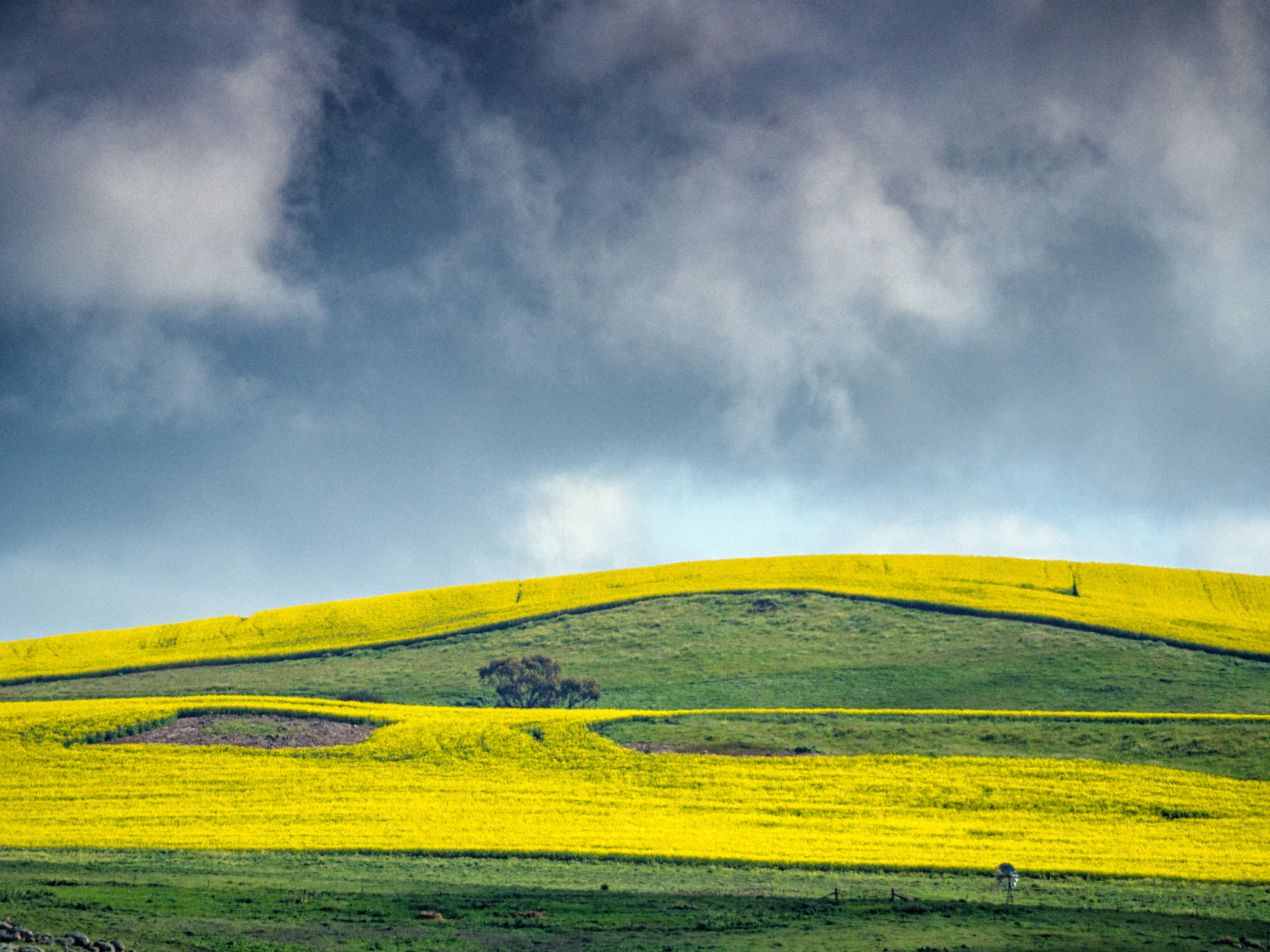
Mellow Yellow*

Canola growing on Daliak Estate in York, Western Australia. Olympus OMD EM-10 with Olympus M.75-300mm F4.8-6.7 II lens, Cokin circular polarizing filter and 3 stop graduated neutral density filter. Exposure 1/160 sec, f8 at ISO 200.

Well we have finally moved into our own home and this is the view from the front door. It’s nice to be a home owner again, and it’s nice to have such a brilliant view.

* This weeks musical reference is obvious – it is of course the 1967 hit song Mellow Yellow by Scottish singer song writer Donovan. Back in the day the song was rumoured to be about smoking dried banana peel for its hallucinogenic effect. For the children at home you can’t get munted off smoking bananas it was all a hoax. I wonder how many people spent hours drying bananas and then smoking them over the years. It would have to be millions. Oh the gullibility of youth!!! So what was Donovan’s song about then? Well the clue is in the phrase “electrical banana“.