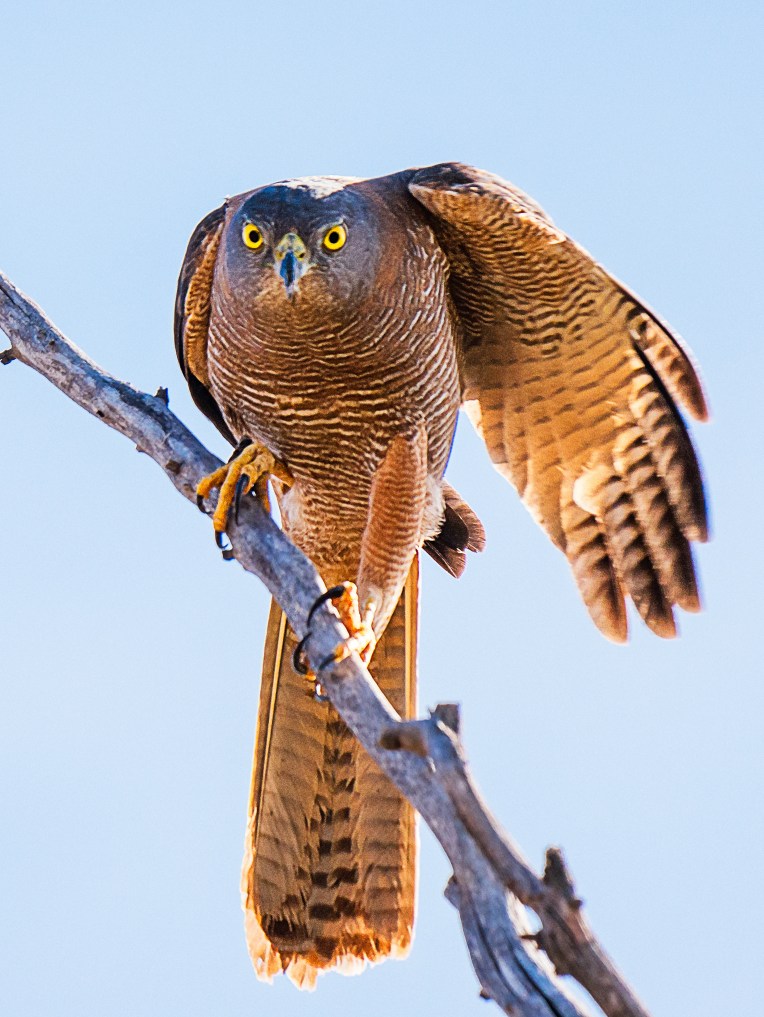
Brown goshawk, (Accipiterr fasciatus.) called Matwelitj, by the Nyoongar people of Western Australia. Avon River Walk, York, Western Australia. Panasonic Lumix G85 with LEICA DG 100-400/F4.0-6.3 lens. Exposure: 1/1000 sec, f6.3 at ISO 640 with + 1/3 stop exposure compensation.
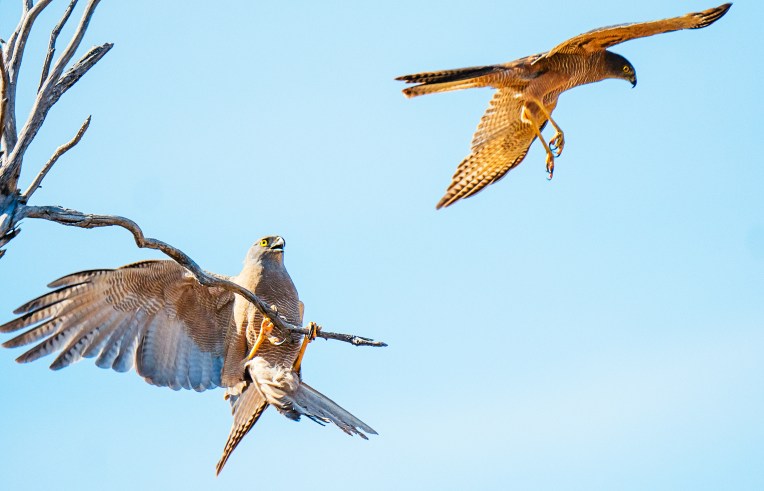
The last few mornings dog walks have been spiced up by some very territorial brown goshawks. As we walk along the river and then down onto the river bed we can hear them calling and chattering. It then goes quiet for a second or so and then there is a loud whoosh as you are buzzed from behind. As the bird passes overhead you can feel the air current generated by its wings. At first I thought the birds were objecting to the dog but I and this pattern persisted for about a week. But then something happened that disabused me of that notion – my hat suddenly became the victim of a bird of prey. The last time it happened they managed to knock it off my head. I’m beginning to think my bicycle helmet may be more appropriate headwear.
You know what they say “Any landing you can walk away from is a good landing”. Brown goshawk, (Accipiterr fasciatus.) Avon River Walk, York, Western Australia. Panasonic Lumix G85 with LEICA DG 100-400/F4.0-6.3 lens. Exposure: 1/1000 sec, f6.3 with +1 1/3 stops exposure compensation.
What you Looking At? Brown goshawk, (Accipiterr fasciatus.) called Matwelitj, by the Nyoongar people of Western Australia. Avon River Walk, York, Western Australia.
Get Lost! Brown goshawks, (Accipiterr fasciatus.) called Matwelitj, by the Nyoongar people of Western Australia. Avon River Walk, York, Western Australia.
South of the Swan River is a string of lakes known as the Beeliar Wetlands which are a chain of twenty six lakes stretching from Manning Lake in Hamilton Hill to Madura Swamp near Mandurah Wetlands. Nineteen of those lakes and associated wetlands have been incorporated into the Beeliar Regional Park. This extensive belt of wetlands that has been widely acknowledged as a biodiversity hot-spot having a greater number of endemic species than most other regions in Australia. Within this the Nyoongar with their hunter-gatherer life-style managed the land with their fire-stick farming and survived by hunting and trapping a variety of game, including kangaroos, possums and wallabies; by fishing using spears and fish traps; as well as by gathering an extensive range of edible wild plants, including wattle seeds. Since colonisation three-quarters of these wetlands have been drained for urban development. What remains has suffered untold damage through the introduction of feral animals and plants. Thankfully Australia is a signatory of the Ramsar Convention and several key wetlands on the Swan Coastal Plain have been set aside for conservation. Bibra Lake is the fourth lake (heading southwards) in that chain of lakes that makes up Beeliar Regional Park. Whitefellas believe that they discovered the lake in 1842 and named it after the bloke who bought the land in 1843, one Benedict von Bibra. The Nyoongar say they have known about the lake since time began and to them it known as Walubup.
I first went to Bibra Lake about thirty years ago and thought it was a bit boring and hadn’t been back until the other week. I was called upon for driving duties for the Beloved Significant Other (BSO) and I was left with a morning to kill. So I looked in my copy of Birding Sites around Perth by Ron Van Delft (sadly out of print and unavailable now) and saw that Bibra Lakes was nearby and rated as a good location for birding. The down side to this was that we were experiencing the first major cold front of winter and that meant it was bucketing down and blowing a gale. So suitably swathed in Gore-Tex and equipped with a suitably weather resistant camera I headed off to walk around the lake not expecting to see much.
A comforting warning painted on the cycle path that runs around Lake Bibra. It was cold and wet in winter so not much chance of a snakey encounter.
Initially I thought that with it raining I had more chance of photographing ducks as it was the perfect weather for them. There were quite a number of different species on the shore and the water. I was quite taken by the Shovelers and the Pink Eared Ducks. The Shovelers are quite a string looking duck with colouring and almost disproportionately large bills. They can often be seen foraging in shallow water where they filter water through their bills insects looking for insects, crustaceans and a variety of plants. Such a specialised mode of feeding means that they are limited to certain types of habitat such as freshwater swamps and lakes with large reed beds. Shovelers also tend to hang out with pink-eared ducks which are so called because of the patch of pink feathers on the sides of the drakes head. Like the Shovelers they too are filter feeders. As the walk moved through areas of paperbark and sheoak trees then smaller insect eating birds were seen such as Willie Wagtails, Grey Fantails, Silvereyes, and various types of wrens. Over all as I did the 8.5 Km walk I saw 18 different species of bird which I felt was a pretty good haul considering the weather conditions. So I’ve revised my opinion of Bibra Lakes and will not wait another 30 years before my next visit.
Australasian Shoevelers, Spatula rhynchotis. Bibra Lake, Western Australia. Panasonic Lumix G85 with Panasonic LEICA DG 100-400/F4.0-6.3 lens. Exposure: 1/400 sec, f6.3 at ISO 250.
A pink-eared duck (Malacorhynchus membranaceus) keeping a low profile while amongst Eurasian coots (Fulica atra). Bibra Lake, Western Australia. Panasonic Lumix G85 with Panasonic LEICA DG 100-400/F4.0-6.3 lens. Exposure: 1/500 sec, f6.3 at ISO 3200.
Brown Honeyeater, Lichmera indistincta. Bibra Lake, Western Australia. Panasonic Lumix G85 with Panasonic LEICA DG 100-400/F4.0-6.3 lens. Exposure: 1/500 sec, f6.3 at ISO 2500.
Varigated Fairy-wren, Malurus lamberti. Bibra Lake, western Australia. Panasonic Lumix G85 with Panasonic LEICA DG 100-400/F4.0-6.3 lens. Exposure: 1/500 sec, f6.3, ISO 320.
Willie Wagtail, Rhipidura leucophrys leucophrys, Bibra Lake. Panasonic Lumix G85 with Panasonic LEICA DG 100-400/F4.0-6.3 lens. Exposure: 1/500 sec, f6.3 at ISO 1600.
A female mistletoebird, Dicaeum hirundinaceum, at Bibra Lake in Western Australia. Panasonic Lumix G85 with Panasonic LEICA DG 100-400/F4.0-6.3 lens. Exposure: 1/500 sec, f6.3 at ISO 2000.
Bibra Lake is part of the Beeliar Wetlands which is an internationally recognised birding hotspot. This is one of two bird hides that have been buit at Bibra Lake.
Don’t feed the birds sign at Bibra Lake complete with Willie Wagtail, Rhipidura leucophrys leucophrys. Panasonic Lumix G85 with Panasonic LEICA DG 100-400/F4.0-6.3 lens. Exposure: 1/500, f4, ISO 250.
If you are interested in the birds that can be seen at Bibra Lakes, and indeed throughout the Beeliar Wetlands Birding WA has a useful webpage that gives info on the species that can be seen and where. Birdlife Australia put out a couple of useful brochures which can be got from regional visitors centres or downloaded as PDFs from their website. The brochures are:
Splendid Fairy-wren, Malarus splendens subs splendens, out of the breeding period. Lake Leschenaultia, Western Australia. Canon EOS 6D with Sigma 150-600mm f/5-6.3 DG OS HSM Contemporary lens. Exposure: 1/1000sec, f6.3 at ISO 6400.
Sometimes I think that have got to be easier ways to enjoy birding and bird photography than dragging 3.5Kg of camera and lens quietly through the bush and trying to get a picture of something that is literally so flighty that the slightest sound sees your subject leave at a tremendous rate of knots.
Western Thornbill, Acanthiza inornata. Lake Leschenaultia, Western Australia. Canon EOS 6D with Sigma 150-600mm f/5-6.3 DG OS HSM Contemporary lens. Exposure: 1/1000 sec, f6.3 at ISO 1000.
Case in point. Not so long ago Beloved Significant Other (BSO) went for a trip to Lake Leschenaultia in Chidlow. I spent an age crawling around in the bush looking for a cooperative subject. In that time every small twig that I inadvertently trod on sounded like a thunder clap that sent all the wildlife scurrying for cover in a 5Km radius.
Silvereye, Zosterops lateralis. Lake Leschenaultia, Western Australia. Canon EOS 6D with a Sigma 150-600mm f/5-6.3 DG OS HSM Contemporary lens. Exposure: 1/1250 sec, f6.3 ISO 2500.
Even if you manage to creep up on a suitable subject you then have the problem of photographing something that is 5-10cm and hoping and twitching around like a meth user suffering from St Vitus’ dance while you are trying to track it and keep it in focus as it darts in and out of the foliage. So I’ve come up with an easier method. The BBQ. If you have BBQ in Australia every animal in the neighbourhood will be trying to relieve you of your food. The little buggers will climb into your lap and pose for photos if food is involved.
A picnic feast with the birds of lake Leschenaultia by Helen Amyes (aka BSO). Panasonic Lumix LX5. Exposure: 1/160 sec, f2.8 at ISO 80.
Birds were so much easier back in England. I wrote earlier about how Australian Robins come in an assortment of colours and not just the red breasted ones I grew up with. Well walking down the river bed the other day I see this.
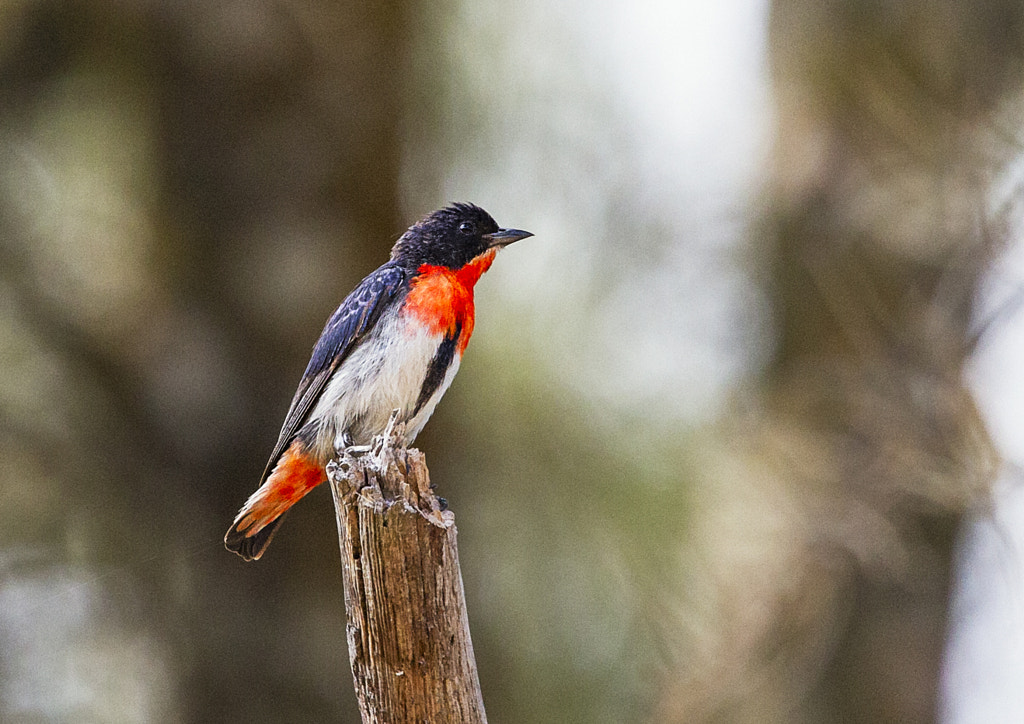
Mistletoebird, Dicaeum hirundinaceum. The Nyoongar name is Minnijit. York, Western Australia. Canon EOS 6d with Sigma 150-600mm f/5-6.3 DG OS HSM Contemporary lens. Exposure: 1/1000 sec, f8 at ISO 1600.
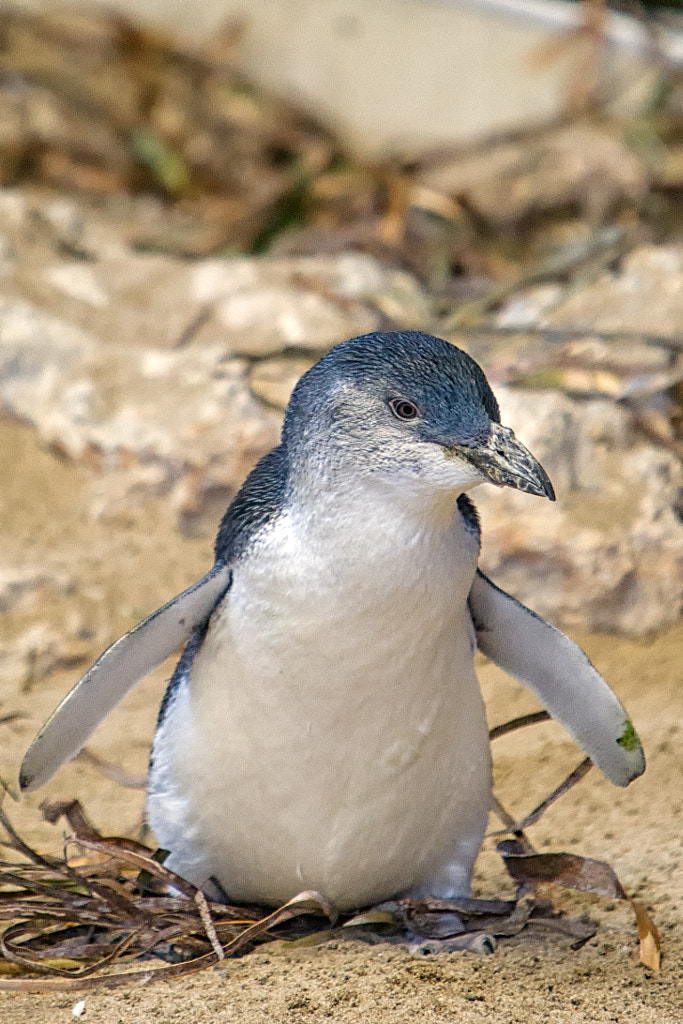
It’s obviously some sort of robin thinks I as I walk along pondering this new bird. WRONG!!!! It’s a mistletoe bird. First robins come in multiple colours and now birds with red breasts aren’t robins. I think I’m going to stick with penguins – they’re black and white and easy to identify.
Little penguin or fairy penguin (Eudyptula minor). Penguin Island, Western Australia. Canon EOS 5d with a Canon EF 70-200mm f/2.8L IS USM lens and Canon x2 extender. Exposure: 1/250, f5.6 ISO 1600.
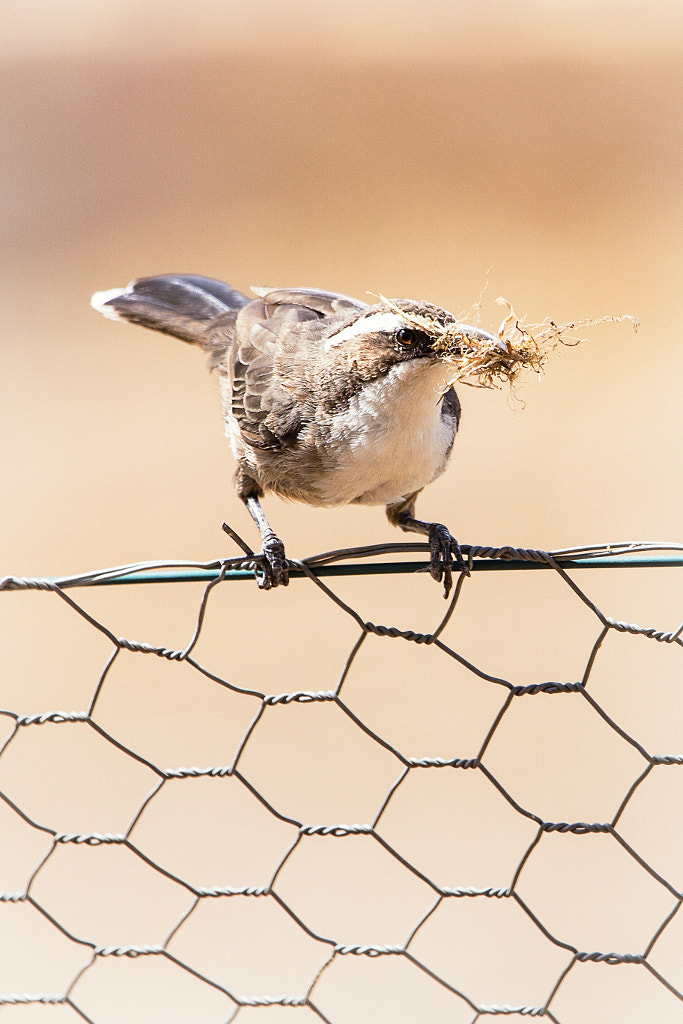
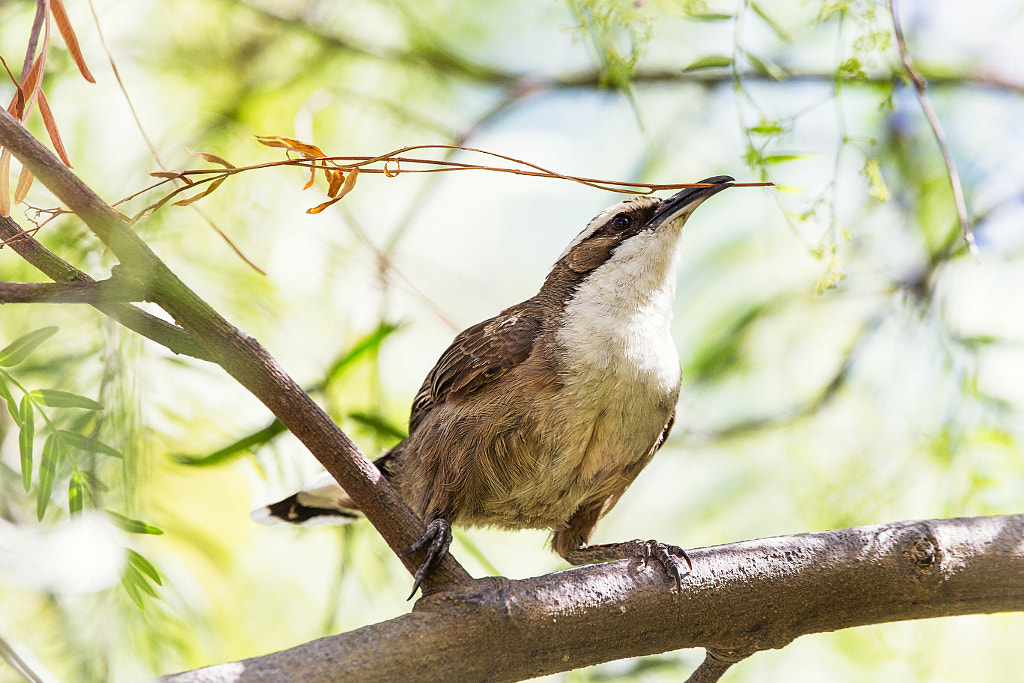
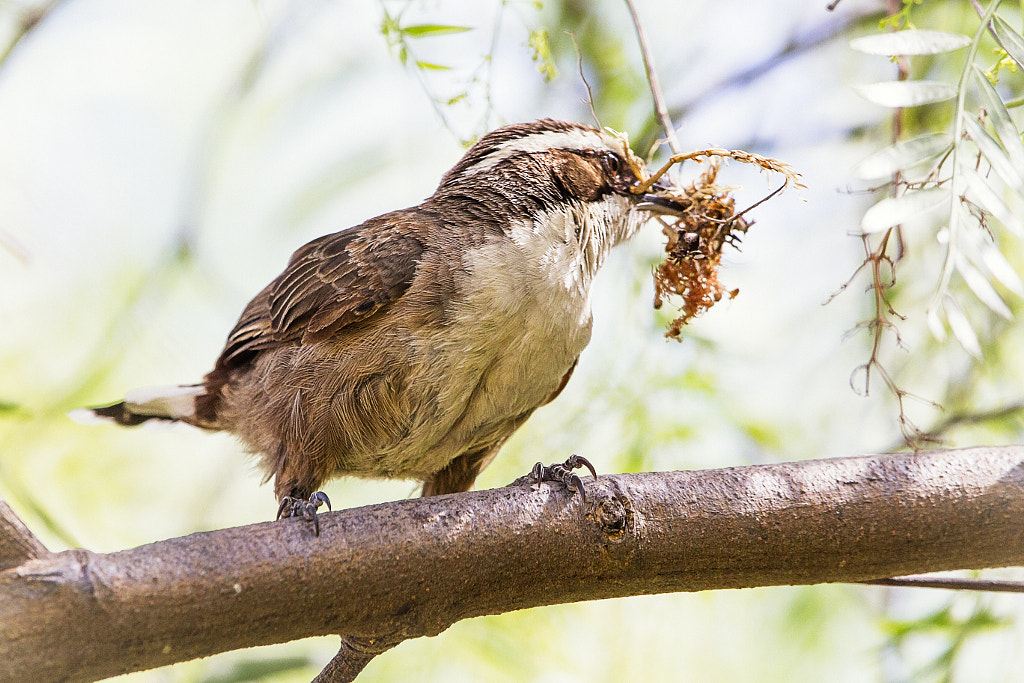
Back in September I wrote about the various birds nesting in the garden. Well autumn is now here and I thought I’d write an update. The white browed babblers have successfully hatched all their eggs which means there has been a population explosion. They are quite curious birds as they live in communal nests and have separate nursery nests as well which they all take turns in raising the chicks. Well now they are embarking on a building program to make a new communal sleeping nest for all the new adults. As a result these funny little grumpy birds are flying in building materials at a great rate of knots.
A delivery of nest material from next door. White browed babbler, Pomatostomus superciliosus. York, Western Australia. Canon 6d with Sigma 150-600mm f/5-6.3 DG OS HSM Contemporary lens. Exposure: 1/640 sec, f6.5 at ISO 500.
Queuing on the landing branch waiting to unload. White browed babbler, Pomatostomus superciliosus. York, Western Australia. Canon EOS6d with Sigma 150-600mm f/5-6.3 DG OS HSM Contemporary lens. Exposure: 1/640 sec, f6.3 ISO 320.
Waiting to enter the building site. White browed babbler, Pomatostomus superciliosus. York, Western Australia. Canon EOS6d with Sigma 150-600mm f/5-6.3 DG OS HSM Contemporary lens. Exposure: 1/640 sec, f6.3 at ISO 640.
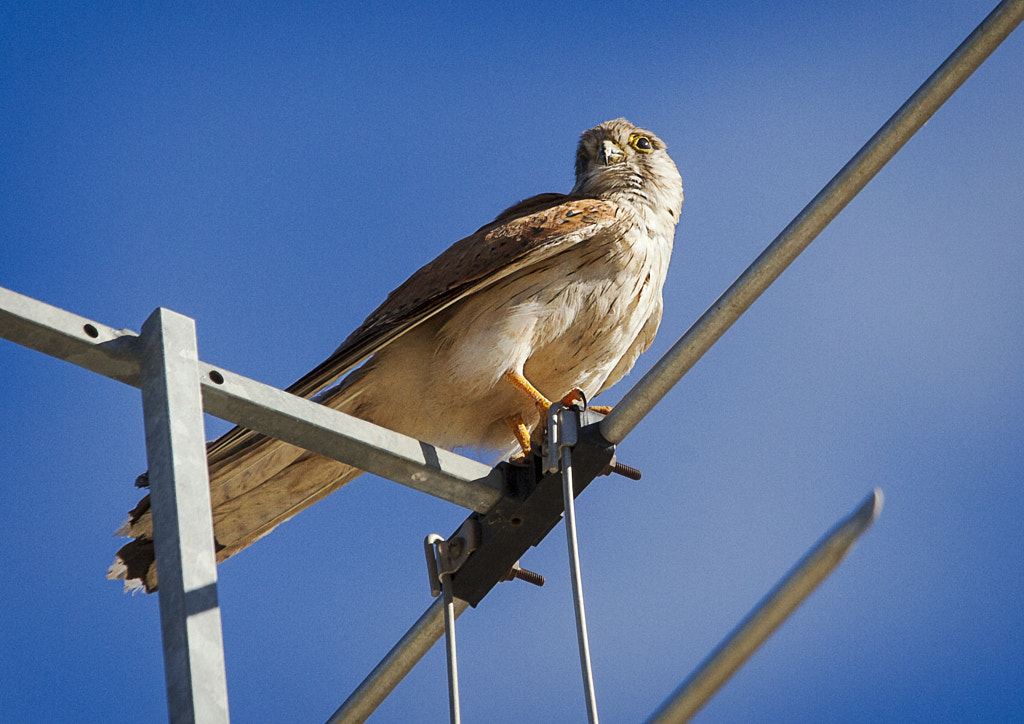
We were also quite delighted to have a visitor. While we were talking one afternoon I spotted a Nankeen Kestrel hunting in the field opposite. It didn’t catch anything and left empty-handed. I thought that was that when I heard a bump from the TV aerial so we both ran outside to look, me with my camera and Helen with her binoculars. Sure enough the kestrel had decided our aerial would make a very good observation perch. It remained there quite unfazed for quite a while. It was only when I tried to get closer for a better photo that it decided to leave.
Nankeen kestrel, Falco cenchroides cenchroides. York, Western Australia. Canon EOS 6d with Sigma 150-600mm f/5-6.3 DG OS HSM Contemporary lens. Exposure: 1/1000 sec, f8 at ISO 320.
Australian summers are hot and dry, and while we are not in a drought cycle like the Eastern States, it does get very warm here in York. 45º C is not unheard of. The hot weather and the lack of rain means that the Avon River largely dries up with the exception of a few deep pools, and so I often go walking along the dry river bed with Frida my faithful canine companion as it allows me to view quite a variety of wildlife that congregates around the pools.
Female Western Whistler, sometimes called the Western Golden Whistler, (Pachycephala occidentalis). York, Western Australia. Olympus OMD EM10 with Olympus M.Zuiko Digital ED 75-300mm f/4.8-6.7 II lens. Exposure: 1/1000sec, f7.1 at ISO 500.
A Southern Scrub Robin, Drymodes brunneopygia, achives vertical take off. The Nyoongar name is Djibot. York, Western Australia. Olympus OMD EM10 with Olympus M.Zuiko Digital ED 75-300mm f/4.8-6.7 II lens. Exposure: 1/1000 sec, f7.1 at ISO 500.
White-faced Heron (Egretta novaehollandiae). York, Western Australia. Panasonic Lumix G85 with LEICA DG 100-400/F4.0-6.3 lens. Exposure: 1/1000 sec, f6.3 at ISO 250.
Brown Honeyeater, Lichmera indistincta.The Nyoongar name is Djindjoko. York, Western Australia. Panasonic Lumix G85 with Panasonic LEICA DG 100-400/F4.0-6.3 lens. Exposure: 1/1000 sec, f6.3 at ISO 3200.
Sacred Kingfisher, Todiramphus sanctus. Known by the Nyoongar as Koonyenok. Avon River, York, Western Australia. Canon EOS 550d with a Sigma 150-600mm f/5-6.3 DG OS HSM Contemporary lens. Exposure: 1/1000 sec, f6.3 at ISO 250.
It’s not just birds we see, there are small fish in the ponds (difficult to photograph) and masses of different insects like this damselfly below.
Blue ringtail damselfly (Austrolestes annulosus,) at rest on the Avon River, York, Western Australia. Canon EOS 550d with a Sigma 150-600mm f/5-6.3 DG OS HSM Contemporary lens. Exposure: 1/1000 sec, f6.3 at ISO 1250.
Frida usually takes my photographic hijacking of her morning walks with good grace. She usually waits for me either in some convenient shade or as shown below standing in some water. She’s not as daft as she looks!
Frida waiting patiently in the cool of a water pool.
The other morning we were quite surprised to have a fox pop out of the long grass on the river bank and on to river bed. Initially it took off, but when it saw that Frida wasn’t in hot pursuit slowed down and turned back. The fox and Frida then played a mad game of chase up and down taking it in turns to be the chaser and the the chasee. Quite delightful to watch. It was like the canine equivalent of Kevin Costner’s film Dances With Wolves. Unfortunately by this time the battery in the camera had run flat so I was unable to take any photos of this rather special occurrence. Although this being a predominantly farming community most round here would not regard it as such as they belong to the “only good fox is a dead fox” brigade. A couple of days later we went back to see if the event could be repeated and I had a pocket full of batteries to ensure that I got some photos. We did find the fox in the same location but this time both it and Frida were indifferent to each other and the fox disappeared into the undergrowth on the opposite bank. Again I stuffed up the photography and all I got was the slightly blurred image below. Perhaps we’ll try again.
Red fox (Vulpes vulpes) on the Avon River river bed. York, Western Australia.
The soundtrack for summer in the Western Australian bush is provided by Broome based band the Pigram Brothers and their track Dry River Bed provided the title and inspiration for this blog entry.
When your drifting on the ocean
and the sea is a perfect blue
But those storm clouds on the horizon
are keeping you true to who are you
So take me away ‘cross the spinifex plains
where the true mirage never ends
And the smell of the rain is a long way away
lay me down on my dry river bed
Don’t have no white picket fence,
don’t have no green english lawn
Just got heat waves dancing for me,
on the red dirt where I was born
Feel the heart of my country,
beating to them lonely blues
Gotta get back there, gotta get back there,
I’ll be back there real soon
Pigram Brothers – Dry River Bed Music and Words: ( S Pigram/A, D, G, P, S Pigram, P Mamid)
Red-capped Robin,Wei. Avon Walk Trail, York, Western Australia. Panasonic Lumix G85 with Panasonic Leica 100-400mm F4.0-6.3 lens. Exposure: 1/1000 sec, f6.3 at ISO 640.
Being originally from England I automatically associate Christmas with cold weather, and by association Robins as they are part of iconography of the festive season. So when walking along the Avon River on a 40º C day seeing these Red-capped Robins seems a little incongruous. For such a small bird they are as bold as brass and will let you approach quite closely. The other confusing thing about Australian robins is that they don’t just come in red.
The Western Yellow Robin (Eopsaltria griseogularis). Lake Leschenaultia, Western Australia. Olympus OMD EM1 with Olympus M.Zuiko Digital ED 75-300mm f/4.8-6.7 II lens. Exposure: 1/400 sec, f8 at ISO 800.
When we were in Tasmania we had proper winters with snow, and that meant we had robins in their proper setting, but not at Christmas. Oh it’s all very confusing!
A pink robin (pink) at Silver Falls, Mount Wellington in Tasmania. Olympus OM-D E-M10 with Olympus M.Zuiko Digital ED 40-150mm f/4-5.6 R lens. Exposure: 1/160 sec, f5.6 at ISO 200.
Juvenile pied stilts (Himantopus leuccocephalus) at Blackadder Lake, Vivash, Western Australia. Panasonic Lumix G85 with a Panasonic LEICA DG 100-400/F4.0-6.3 lens. Exposure 1/1250, f6.3, ISO 800.
The other day we were down at Blackadder Lake in Vivash. We had gone to photograph Sacred Kingfishers, but the only glimpse we got of them was as we got out of the car. When we got to the lake we became entranced by the antics of a pair of juvenile pied stilts. They moved across the lake shallows in perfect synchronised formation, until the need for a tasty morsel became too much.
Juvenile pied stilts (Himantopus leuccocephalus) at Blackadder Lake, Vivash, Western Australia. Panasonic Lumix G85 with a Panasonic LEICA DG 100-400/F4.0-6.3 lens. Exposure 1/1250, f6.3, ISO 800.
Juvenile pied stilts (Himantopus leuccocephalus) at Blackadder Lake, Vivash, Western Australia. Panasonic Lumix G85 with a Panasonic LEICA DG 100-400/F4.0-6.3 lens. Exposure 1/1250, f6.3, ISO 800.
At present with the first days of spring upon us we have several birds nesting in the garden. Amongst the Bougainvillea on the back fence several white cheeked honey eaters (Phylidonyris nigra) have made nests. I’m not entirely sure how many there are in there as the thorns prevent me from having a closer look.
One of the white-cheeked honeyeaters, Phylidonyris nigra, on our lemon tree at the back of the garden.
The other avian residents of the garden are the bossy and busy white browed babblers (Pomatostomus superciliosus). They are quite raucous as they pick amongst the mulch looking for insects, spiders , small amphibians, reptiles and will also and seeds. There are three nests that I know about in the peppercorn trees and it is difficult to know exactly how many birds there are as they have quite complicated living arrangements.
“The White-browed Babbler builds a domed stick nest, with a hooded side entrance. It builds both brood (for breeding) and roost (for resting) nests. Breeding pairs are monogamous, but they form co-operative breeding groups comprising two to four breeding pairs and two to eight non-breeding helpers. Only the breeding female incubates the eggs, though other birds in the group feed her and the young birds. Cooperatively breeding groups occupy a home-range, but there are complex interactions within and between groups.”
Hills Hoist washing lines supporting birds for generations. White-browed babbler (Pomatostomus superciliosus), York, Western Australia.
All have lain eggs and the females are sitting tight on the clutches of eggs while the attentive males flit around the garden finding food for them.
About to head home with tonight’s tea. White-browed babbler (Pomatostomus superciliosus), York, Western Australia.
I observe all these antics as I hang out washing, cut the grass and other domestic human duties. It all sounds like paradise. Unfortunately just as happened in the original Garden of Eden so a pair are about to upset the apple cart so to speak. This pair aren’t snakes (they’re still asleep in the woodpile) and it definitely isn’t the resident Adam and Eve (er that’s me and the missus). No it is the two miscreants below who are to blame.
Laughing Kookaburras perched on our TV aerial looking for small animals to prey upon.
Kookaburras (Daceelo novaeguineae) normally eat small lizards, large insects and other invertebrates but they are not averse to raiding nests and taking small chicks. The babblers and honeyeaters all take cover when the Kookaburras take their observation post on the TV aerial. I think this is going to end in tears.







You must be logged in to post a comment.