Sigma 23mm f1.4 DC DN Lens


Sigma 23mm f1.4 DC DN Lens
The Sigma 23mm f1.4 with the box it comes in. Inside the box are the lens, the end caps and a lenshood.


The Sigma 23mm f1.4 DC DN lens was introduced in April 2023 for APS-C cameras in Sony E, Leica L, Fujifilm X and Canon RF mounts and currently sells for $750 AUD. The focal length gives a full frame equivalent of 35mm and it joins the 16, 30, and 56mm lenses which means that there are now f1.4 primes in 24, 35, 45, and 85mm full frame equivalent focal lengths. I’m looking at the Sony E mount version which I bought in May 2024 primarily to use for video mounted to my Sony A6500. I’ve only recently started using it as a general purpose walk around lens.


Sigma 23mm f1.4 DC DN Lens
The Sigma 23mm f1.4 with the Sony A6500 camera.


Vital Statistics


Mount Sony E, Leica L, Fujifilm X, and Canon RF
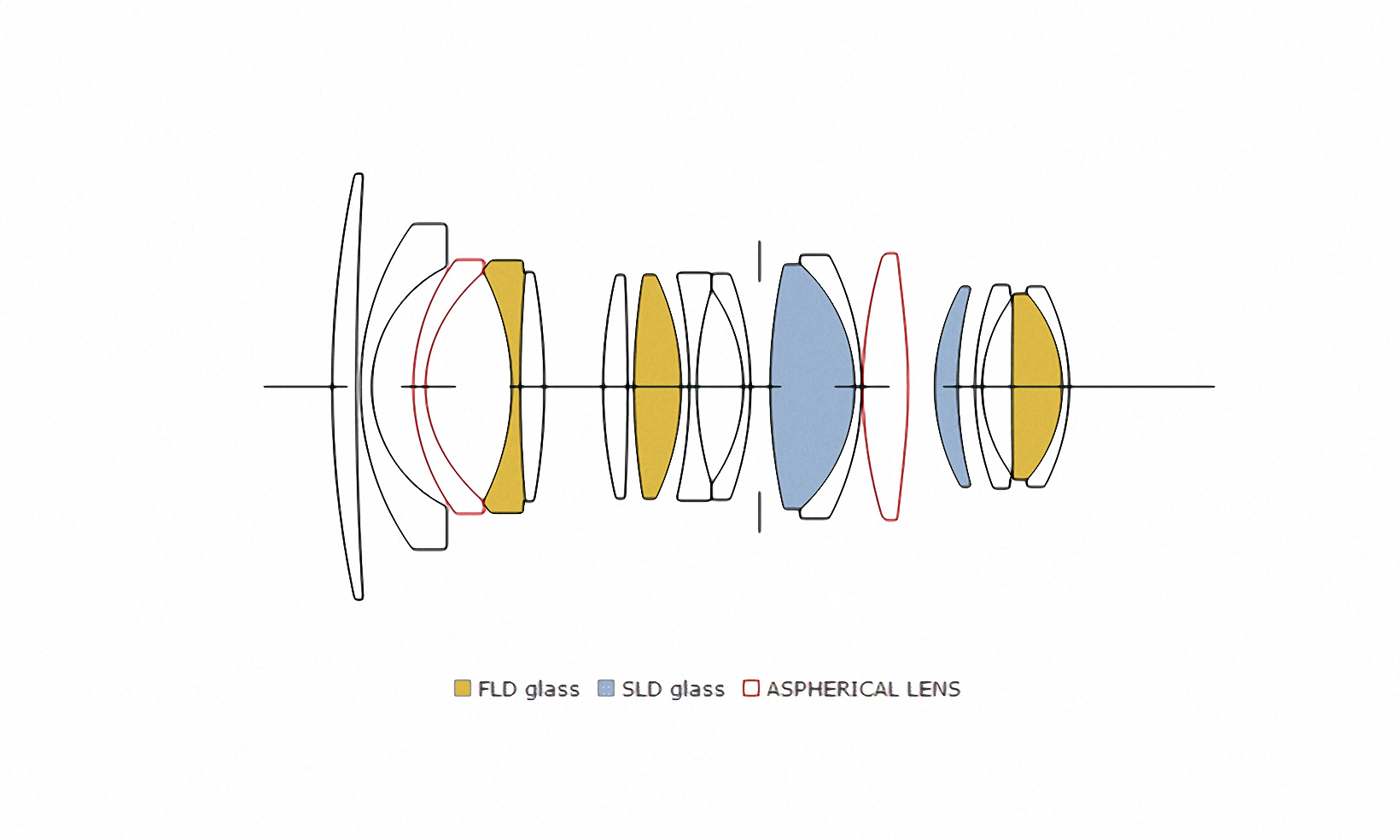
Lens Construction 13 elements in 10 groups with 3 Special Low Dispersion glass and 2 aspherical elements
Angle of View 63.4º
Number of Diaphragm Blades 9 rounded blades
Minimum Aperture  f16
Minimum Focusing Distance 25cm
Maximum Magnification Ratio 1:7.3
Filter Size 52mm
Dimensions 65.8mm ⦰ x 78.9mm (h)
Weight 330g for Sony E mount version
Supplied Accessories Petal shaped lens hood


Sigma 23mm f1.4 DC DN Lens


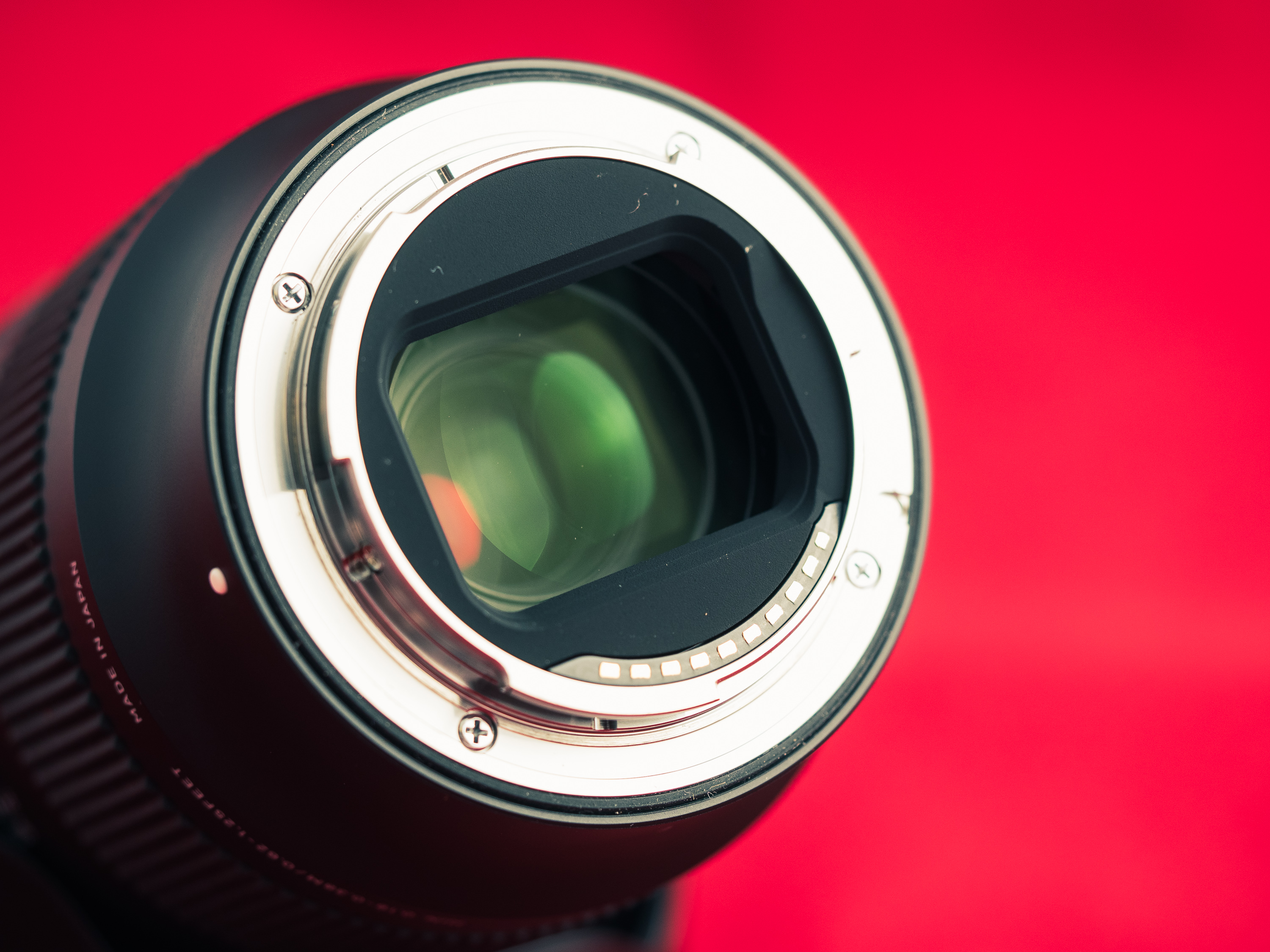
The Sigma 23mm f1.4 DG DN is part of Sigma’s Contemporary line which means it has a utilitarian plastic body (or as Sima prefers to call it a Thermally Stable Composite). The only external control on the lens is the ribbed focusing ring which is of the “fly by wire type”. The lens is advertised as being dust and splash proof, but the only sealing is at the lens mount where there is an “O” ring seal. The lens mount itself is chromium plated brass for longevity. It is still good to see this as other manufacturers are tending to use plastic mounts on their budget lenses. The lens is supplied with a plastic petal shaped lens hood which feels very well made and it attaches by a bayonet fitting to the lens. It feels secure and well made.


Sigma 23mm f1.4 DC DN Lens
The only weather sealing is the rubber “o” ring on the lens mount.


Sigma 23mm f1.4 DC DN Lens
The petal shaped lenshood supplied with the lens is well designed and made. Thoughtful touches are the ribbing on the exterior to facilitate a firm grip when attaching and detaching it from the elns. The interior is also ribbed to prevent light bouncing off it and into the lens.


Physically the Sigma 23mm is quite a large lens. Not as big as the Sigma 16mm f1.4, but bigger than the Sony 28mm f2 and Sony 50mm f1.8. The weight of the lens is 330g – the Sony E mount version is the lightest at 330g and the Canon RF is the heaviest at 345g – and it contributes to the lens having a satisfying heft in the hand. The whole thing is well put together with no dodgy looking seams in the composite body or creaking and flexing when you give it a squeeze. While not part of Sigma’s more premium Art and Sports lines the Sigma 23mm feels a quality piece of kit. 


Sigma 23mm f1.4 DC DN Lens
The Sigma 23mm f1.4 while being a fairly chunky lens is smaller that the Sigma 16mm f1.4.


Sigma 23mm f1.4 DC DN Lens
When compared to the Sony 28mm f2 and 50mm f1.8 you can see the Sigma 23mm is quite a chunky beast.


Sigma 23mm f1.4 DC DN Lens
The Sigma 23mm f1.4 mounted on the Sony A6500 camera.


The Sigma 23mm f1.4 DG DN has an optical construction of 13 elements in 10 groups with 3 Super Low Dispersion (SLD) elements to reduce transverse chromatic aberration and 2 aspherical elements to provide correction of spherical aberration and field curvature. The diaphragm sports 9 rounded blades and while not having the eleven blades that the Art Series primes have this does produce nice bokeh effects – more about which later. The minimum focusing distance is 25cm measured from the sensor plane which gives a maximum magnification ratio of 1:7.3.


Sigma 23mm f1.4 DC DN Lens
The minimum focus distance is 25cm, which is measured from the sensor plane, and gives a maximum magnification ratio of 1:7.3.


Sigma 23mm f1.4 DC DN Lens


Optical Performance


Sigma 23mm f1.4 DC DN Lens


Sigma 23mm f1.4 DC DN Lens


Sigma 23mm f1.4 DC DN Lens


Sigma 23mm f1.4 DC DN Lens


Sigma 23mm f1.4 DC DN Lens


I must say I was quite impressed with the optical performance of the Sigma 23mm f1.4. Wide open the centre is sharp and the corners are a tiny bit softer and have less contrast. Stop down to f2 and things significantly improve. The centre gets even sharper and there is more contrast and the corners now match the centre. Quite something. This performance stays constant until f11 where diffraction starts to set in and the image softens.

Chromatic Aberration

  • Axial chromatic aberration, also known as longitudinal chromatic aberration is present when the lens is wide open, but it is very well controlled and barely noticeable. Stopping down fixes the problem.
  • Transverse or lateral chromatic aberration is present, but it is very slight and you really have to pixel peep to find it or turn off the lens profile.

There is some very slight barrel distortion present, but you have to turn off the built in lens profile to really see it.


Sigma 23mm f1.4 DC DN Lens
With the lens profile turned off the barrel distortion is visible. Switching the profile on reduces it rather than totally eliminating it.


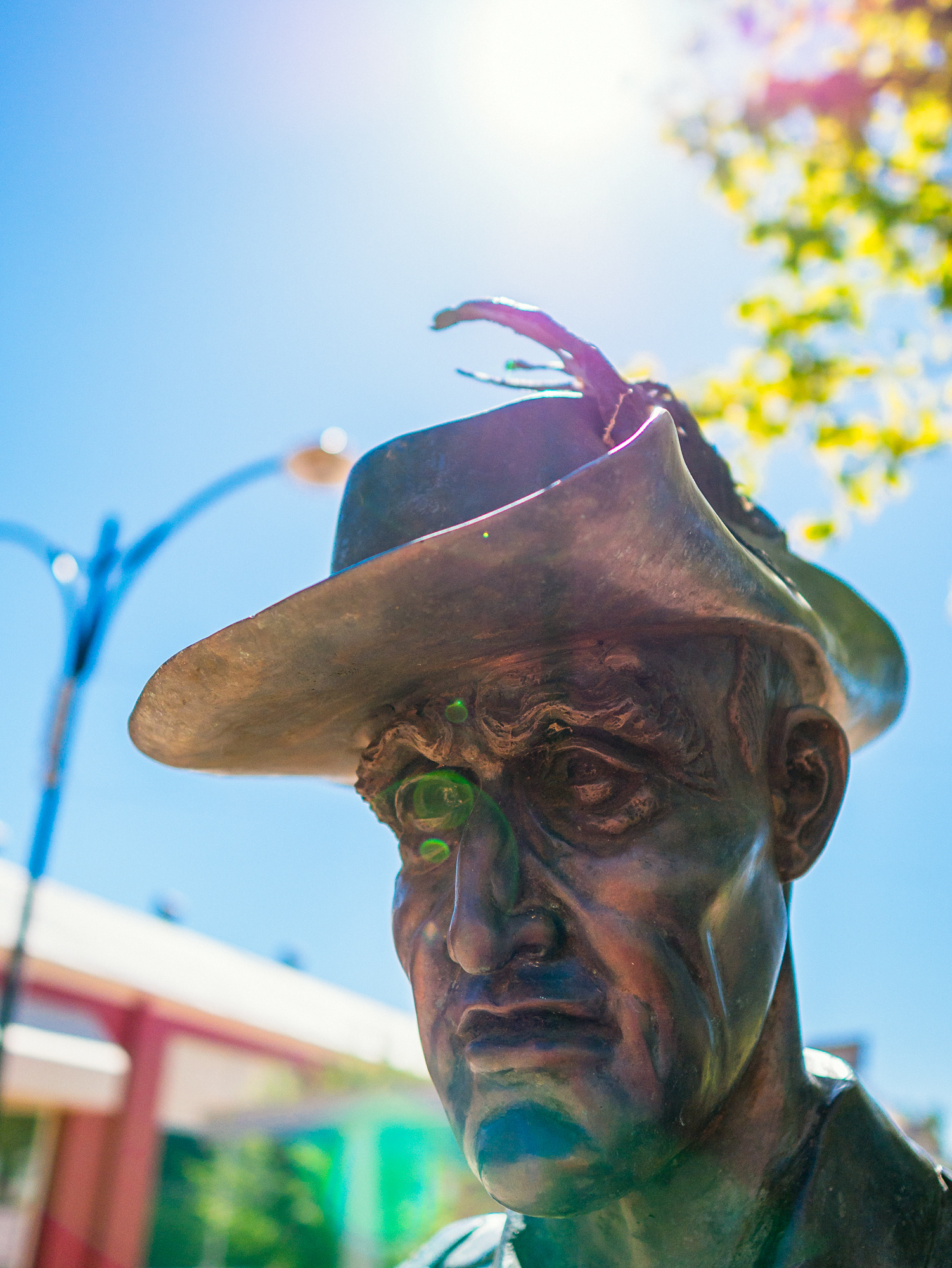
When it comes to flare and diffraction spikes it is a bit of a mixed bag. The good is that there is no evidence of any veiling flare. Polygonal shapes and light streaks are visible. The diffraction spikes or sun stars are quite nice and defined.


Sigma 23mm f1.4 DC DN Lens
Reflected glare in the form of polygonal shapes and light streaks are evident at smaller apertures. The diffraction spikes or sun stars are quite nice and defined.


The nine curved diaphragm blades produce nice clean bokeh balls with no evidence of the soap bubble effect or onion rings at the centre of the frame when wide open. At the edges they take on a more elliptical shape. At f2.8 and beyond the circles start to take on a more polygonal shape. The rendering of the out of focus areas and the tonal transitions are beautifully smooth.


Sigma 23mm f1.4 DC DN Lens
Bokeh balls at f1.4. The are round at the centre of the frame and change to a more eliptical shape at the edges. There is no soap bubble effect and there are no onion rings.


Autofocus Performance


Sigma23AFtest


The complexity of modern autofocus systems in mirrorless cameras means that much will depend upon the AF settings you have made on your camera. A casing point is that when testing this lens on my A6500 the initial results looked very poor. So poor in fact that I put the lens on my A7r2 in APS-C mode and repeated them and the results were like night and day. A quick examination of the A6500’s menu found that I had previously been experimenting with the AF settings and hadn’t put them back to how they were. Once restored it was like looking at a totally different camera and lens combination.

Shooting stills I tested the lens by walking towards the camera with continuous AF set and the lens easily kept up with my movement. It was only when I got close up that there was any sign of hesitancy, but it still managed to find focus. Averaging out several test runs I was getting a hit rate of 93% with critical focus and 7% with acceptable focus. An impressive result.

Shooting video the results weren’t as positive and the lens had trouble keeping up with me as the target. But, when I mounted Gary the Galah to a slider and set it to a 10 second run while close to the camera the AF was very sticky and accurate.I would expect that the A6700 with its more sophisticated subject tracking AF system would yield a better result here. Focus pulls using touch to focus were very decisive with no overt hunting.

While we are talking about focusing I looked at the focus breathing it was very evident.


Verdict

Well after using the Sigma 23mm f1.4 DG DN for a year I can say that I have found it be a very capable lens. For video it is near perfect for filming talking head pieces for YouTube – which is what I mainly use it for. For photography it is a great carry around lens suitable for street photography and urban landscapes. I’d happily travel with it as my only lens as well. Does it have any short comings? Well if I were to nitpick some people might find that the lens makes the camera a little front heavy. It doesn’t bother me in the slightest, but these sorts of things can be a deal breaker for some.

Who should buy it? Well that depends upon which camera ecosystem you’re in. If you have an APS-C Canon RF camera and want a fast moderately wide lens then this is your only choice. For Sony and Fujifilm owners it is a little more nuanced. Both manufactures have their own version of this lens. Sony has the Zeiss 24mm f1.8 which retails for $1500 AUD. It can focus a little closer but has a slower maximum aperture and is getting a little long in the tooth. Fujifilm has two competitors. The XF 23mm f1.4 R LM WR lens which retails for $1500 AUD which has better close focusing and superior weather sealing. Then there is the XF 23mm F2 R WR at $640 which also focuses closer, has better weather sealing and is cheaper while having a slower maximum aperture. If you want a fast maximum aperture at a reasonable price then the Sigma can’t be beat.


Sample Images


2025 York Motor Cycle Festival


2025 York Motor Cycle Festival


20240522-Mundaring-0226-Edit


20240522-Mundaring-0227-Edit


20240612-Frida-0224-Edit


20250405-York-0227-Edit


20250405-York-0233-Edit


20250405-York-0234-Edit


20250405-York-0242-Edit


20250406-York-0225-Edit


Sigma 23mm f1.4 DC DN Lens
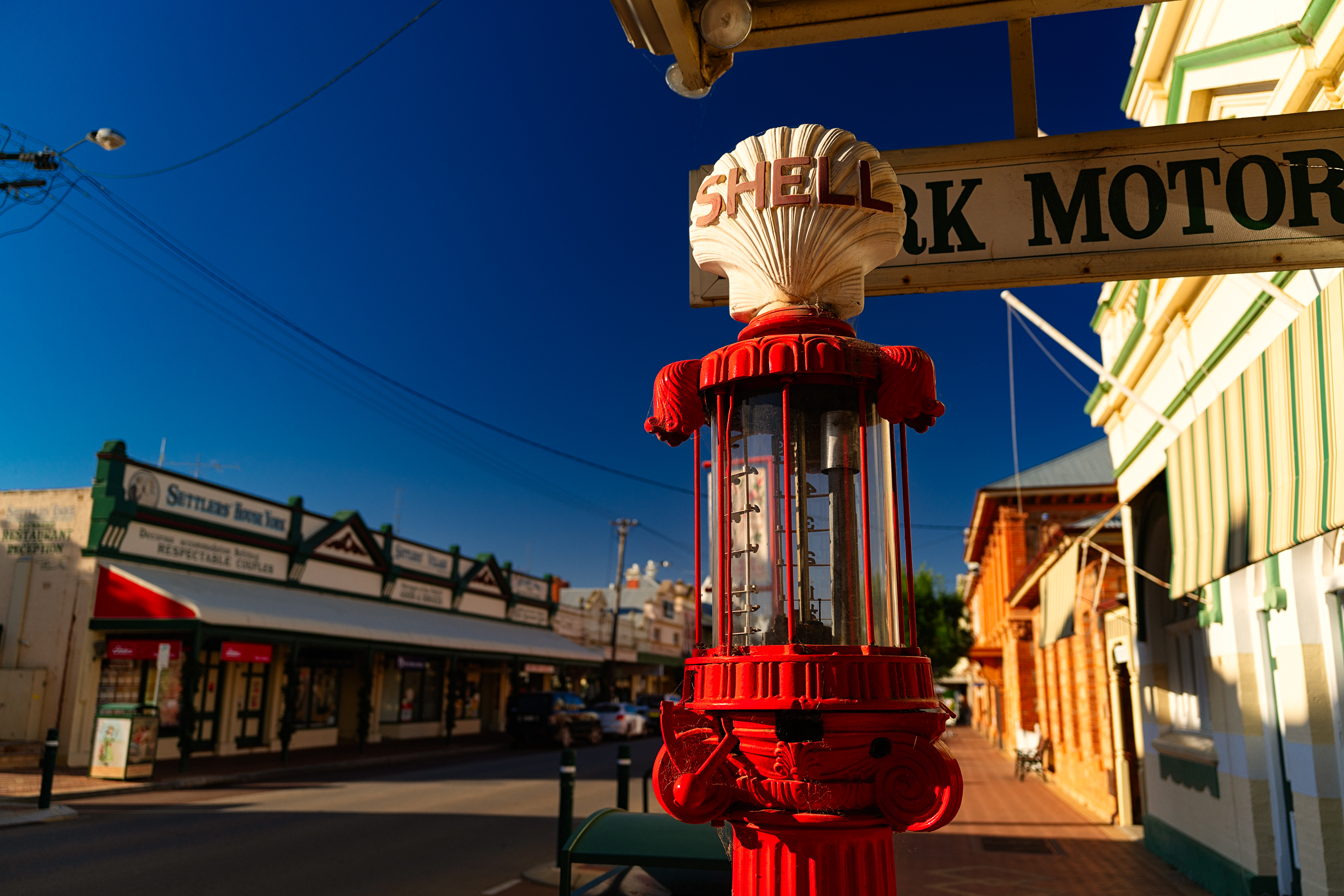
The Sigma 23mm f1.4 makes for a excellent lens for architectural studies.


Sigma 23mm f1.4 DC DN Lens


Sigma 23mm f1.4 DC DN Lens


Sigma 23mm f1.4 DC DN Lens


A New Standard


If you are a regular reader of this blog then you’ll be aware that I’m trying to transition from my full frame Canon DSLR to a full frame Sony mirrorless system without spending a fortune. Initially the idea was to buy a second hand A7r ii body and use second hand lens adapters (the Sigma MC-11 and the Metabones V Smart Adapter) to enable me to use my existing Canon EF lenses. The experience went relatively well until I tried to use the kit for covering a couple of events. It was my experience of using the Canon 24-70mm f4 IS L lens mounted via the Metabones V Smart Adapter that made me start to reconsider the whole idea of adapting Canon EF lenses to Sony FE bodies. I’d already been using a Sony 28-70mm f3.5-5.6 OSS lens and while the AF and the stabilisation were good points I wanted a brighter lens and a constant aperture as it makes life easier when doing flash photography. My options in this focal range were:

  • Sony Zeiss FE 24-70mm f/4 ZA OSS Lens
  • Sony FE 24-70mm f/2.8 G Master Lens
  • Tamron 28-75mm F/2.8 Di III VXD G2 Lens 
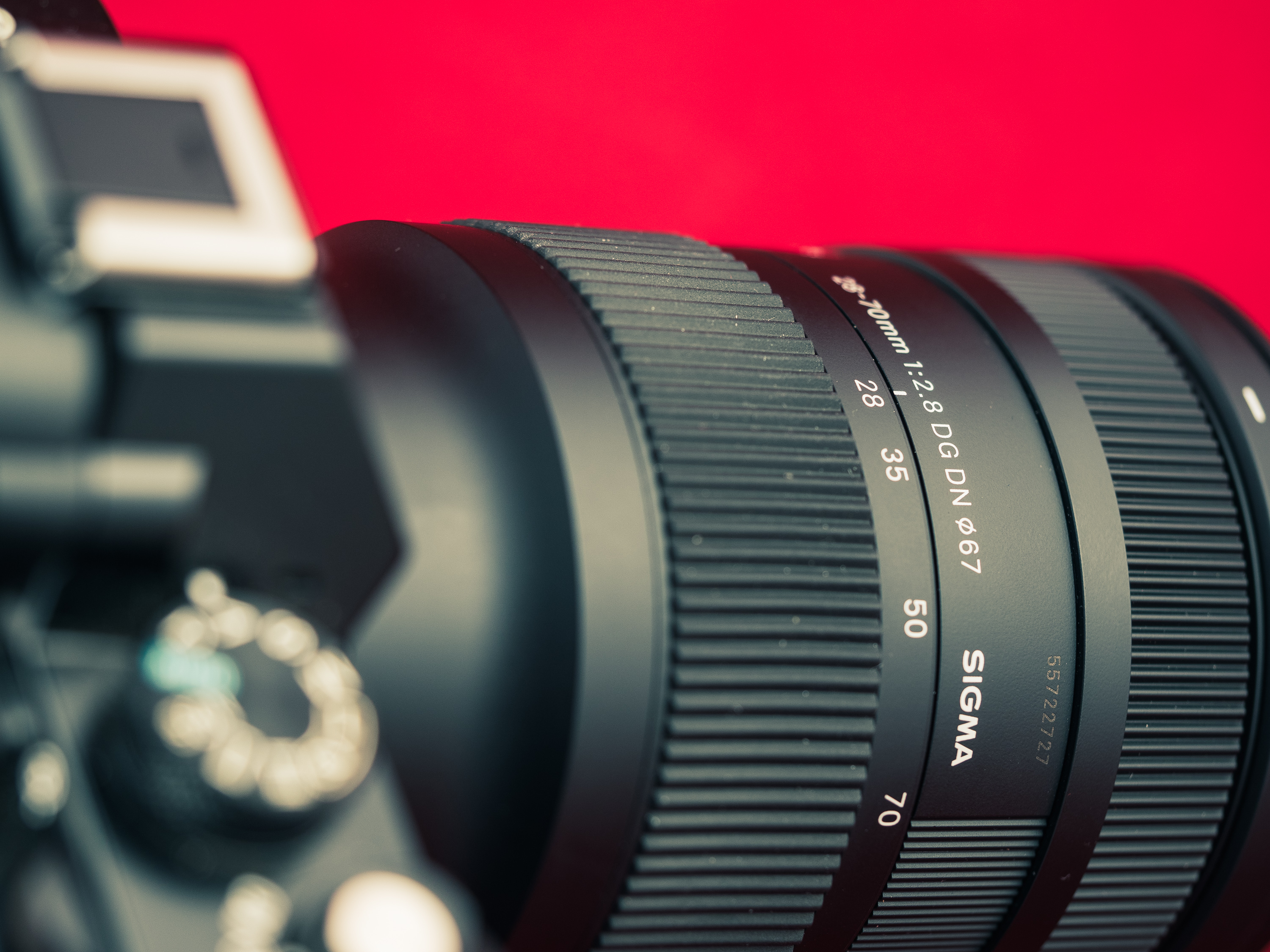
  • Sigma 28-70mm f2.8 DG DN Lens

The Sony Zeiss 24-70 f4 doesn’t have a very good reputation as there is a lot sample variation and it would appear that good copies are few and far between. Sony’s f2.8 GM, well at just under $3000 AUD was out of the running on price alone. With the Tamron 28-75mm well the original version is permanently out of stock here in Australia so goodness knows when the mk ii version will be available. So the Sigma won the day.

Sigma 28-70mm f2.8 DG DN Lens available in both Sony FE mount and L mount.

TLDR


Specifications 

Focal length 28-70mm
Angle of view 75.4~34.3°
Maximum aperture f2.8
Minimum aperture f22
Filter Size 67mm
Stabilisation  no
Maximun magnification  At 28mm 1: 3.3

At 70mm 1: 4.6

Minimum focusing distance Ay 28mm 19cm

At 70mm 38cm

Focusing modes AF and manual
Optical construction 12 groups, 16 elements

Including 2 FLD elements, 2 SLD elements, and 3 aspherical elements

Aperture blades 9 rounded blades
Weather sealing dust and splash-proof
Weight  470g
Dimensions φ72.2mm × 103.5mm
Mount Sony FE and L-mount Alliance

Build Quality

Sigma 28-70mm f2.8 DG DN Lens available in both Sony FE mount and L mount.

The 28-70mm DG DN is part of Sigma’s “Contemporary” line which up to recently was seen to be their line which had good optical performance while cutting costs in the materials and finish. Recent releases such as the 90mm f2.8 have muddied this somewhat as they spare no expense seemingly in their construction and performance. Anyway back to the 28-70 it has a more utilitarian approach to its design – it has a rather plain matte black appearance and is made out of Sigma’s Thermally Stable Composite which is a kind of engineering grade plastic that has similar thermal expansion properties as aluminium. The lens is compact and relatively light when compared to other standard zooms with a f2.8 constant aperture. When you pick it up it doesn’t feel cheap or flimsy, but rather it feels reassuringly dense and solid. Nothing creaks or flexes and there are no mould seams – Tamron I’m looking at you! The lens mount is chrome plated brass and there is an ‘o’ ring to prevent the ingress of moisture and dust.

The chrome plated brass mount and the “o” ring that surrounds it.

Compared to other lenses there is a paucity of controls – just a focus ring, a zoom ring and a focus mode selector switch. Both rings have a nice ribbed rubber texture to facilitate a good grip. The zoom ring has a smooth 90º which has just the right amount of resistance – not too sloppy or too tight. The lens barrel extends as you zoom to 70mm by 27mm. The focus ring is of the fly by wire variety with no hard stops. Again it is not too loose or tight and I found it quite pleasant to use.

The controls on the lens are few and far between. A focus ring, an AF mode switch and the zoom ring.

The lens comes with a plastic lens hood that bayonets into place securely. A nice touch is that the interior is ribbed to prevent reflections. The filter size is 67mm which is a modest size and keeps the cost of filters down. The first standard zoom I got had a filter thread of 55mm. Subsequent standard lenses went increased to 77mm and then 82mm so it’s good to see sizes slipping back.

The lens barrel extends by 27mm when zoomed out to 70mm. The lens comes with a petal shaped lens hood.

In terms of size and weight, well my Sigma 16mm f1.4 and Olympus 45mm f1.2 are almost as big and as heavy as the 28-70 DG DN and they were made for the micro four thirds system. It’s a little larger than the the Sony 28-70mm f3.5-5.6 OSS lens and while the same length as the Canon 24-70mm f4 IS L the Sigma is 135g lighter.

The Sigma 28-70mm f2.8 DG DN lens is only fractionally bigger and heavier than the Sigma 16mm f1.4 and Olympus 45mm f1.2 prime lenses for the micro four thirds system.

Optical Performance

To see any of the images larger just click on them.


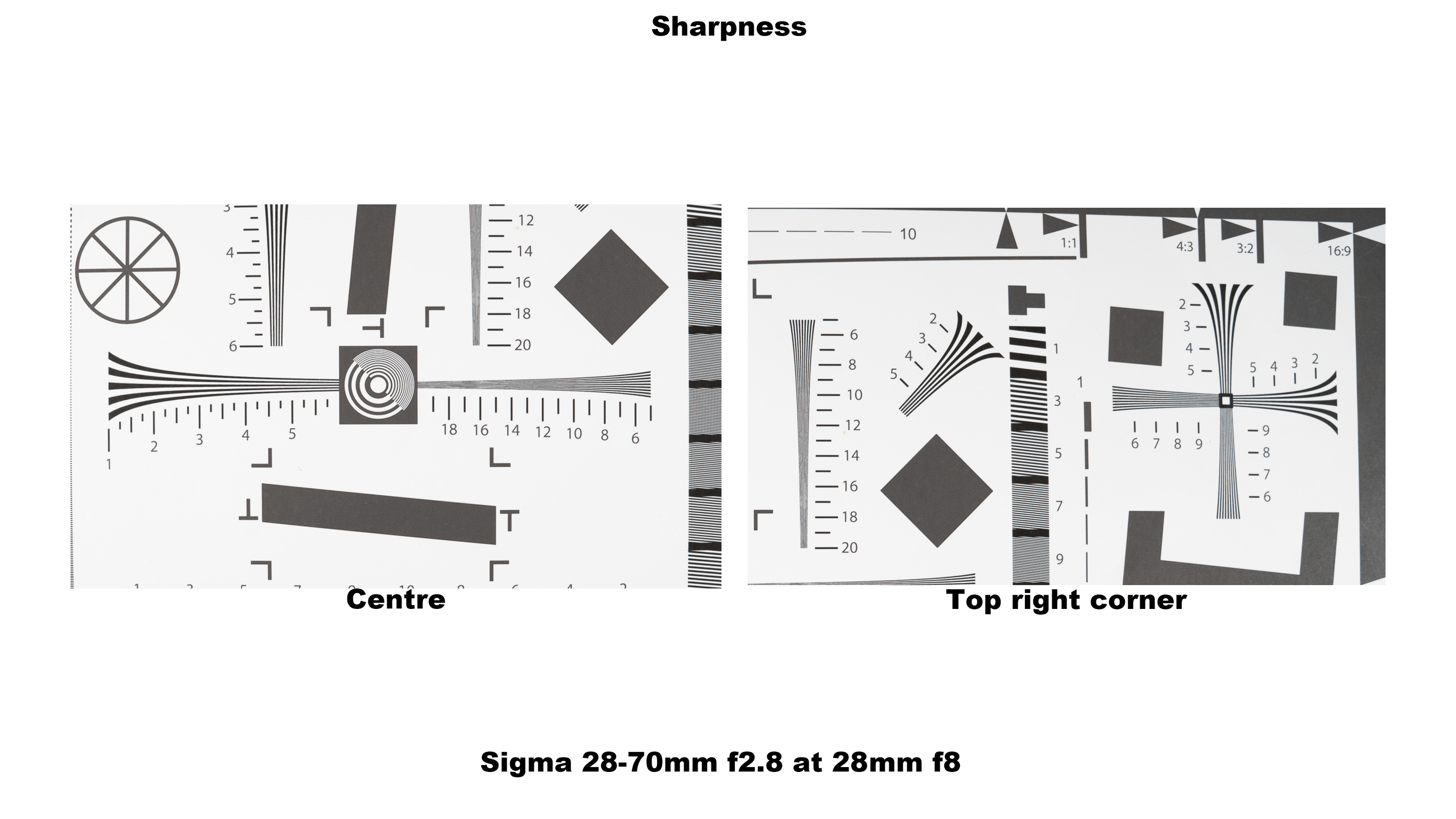
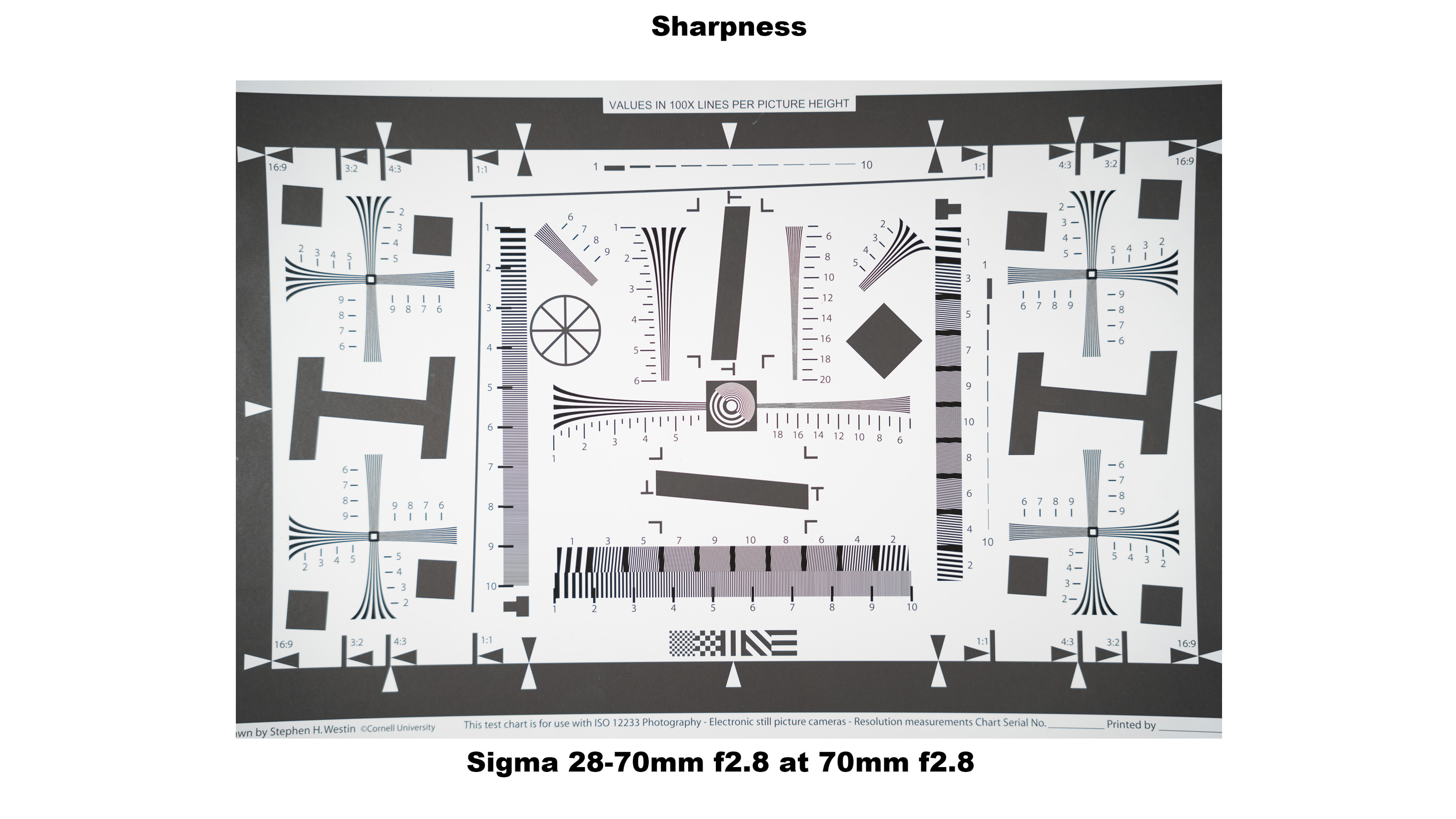
OK lets get down to the nitty gritty. At 28mm wide open the centre of the image is sharp and contrasty. The edges are softer and there is a very, and I mean very, small amount of green fringing. Switching off the lens correction we can see that there is vignetting and barrel distortion. At f8 the edges catch up with the centre sharpness. By f16 the effects of diffraction are noticeable.

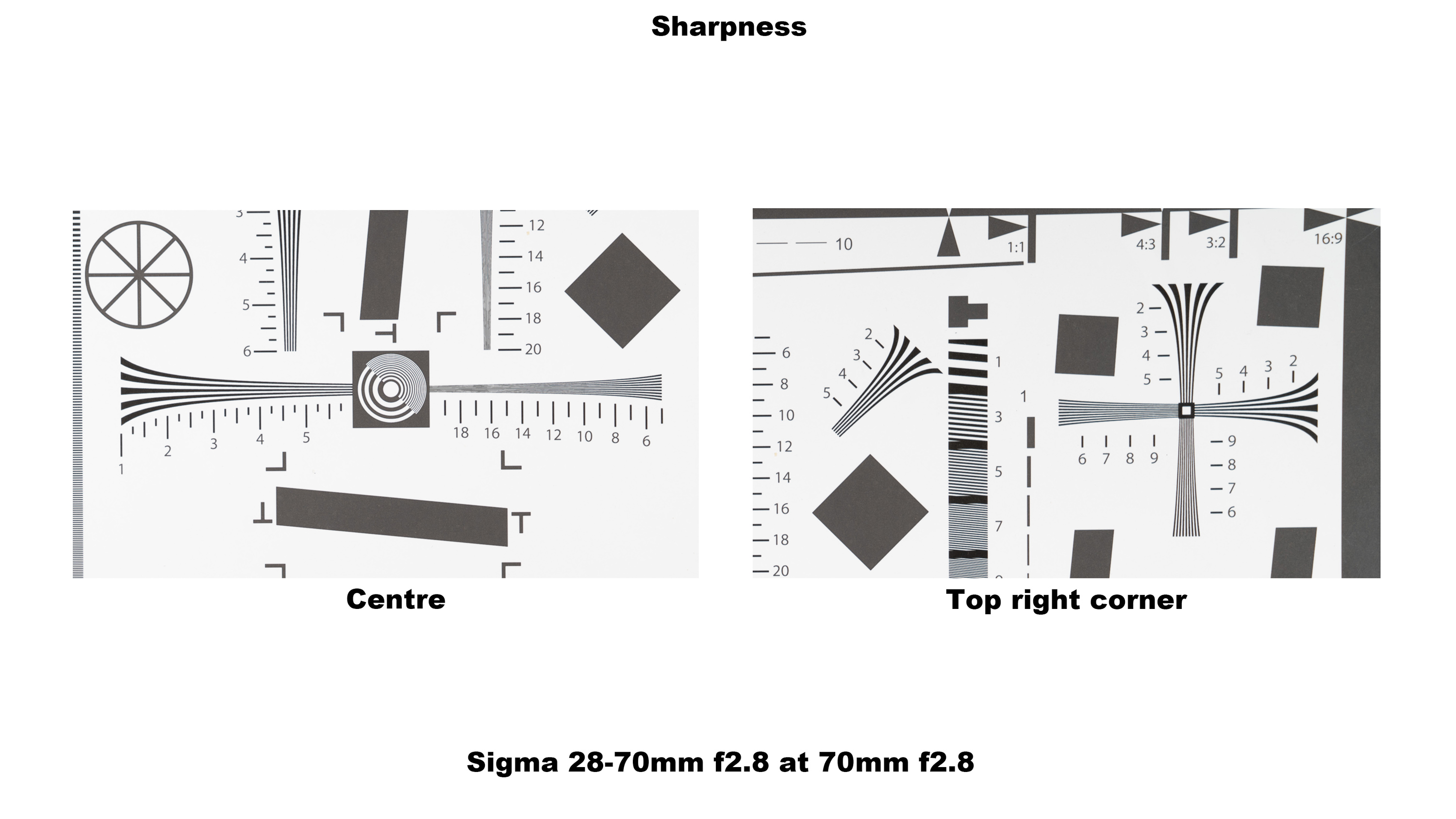
At 70mm f2.8 the centre performance is not as good as the wide end being slightly soft and lacking contrast in the centre and with corners a little worse. Stop down to f4 and the centre improves considerably and by f8 the corners are as good as the centre. Again by f16 diffraction is apparent. Without the lens profile there is vignetting and pincushion distortion.


.

When it comes to chromatic aberration well axial (or longitudinal) CA can be observed when shooting wide open especially at the minimum focusing distance. This is easily dealt with by stopping down. It is more pronounced at 70mm than 28mm. Transverse (lateral) CA is very well controlled and images need to be forensically examined at 200% to spot it. Very impressive.

Ghosting flare, sensor flare and diffraction spikes. 28mm at f22. I you look carefully you can see a small amount of ghosting flare and some sensor flare.

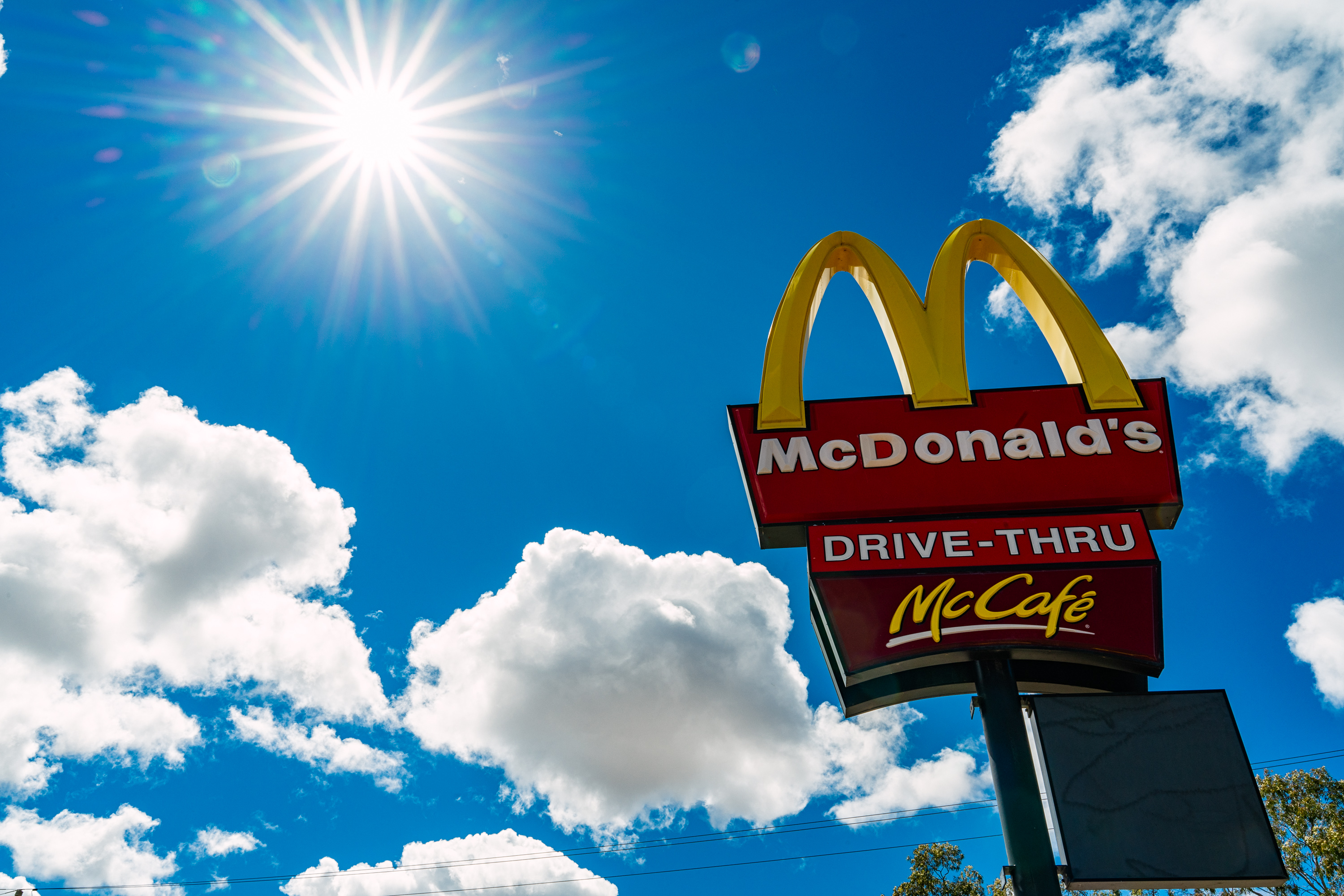
Looking at the diffraction spikes (sun stars) for this lens the nine bladed diaphragm produces 18 points and stopping down to f22 produces the best effect. Diffraction blurs them a little but I quite like them.

Flare resistance is very good. There is little to no veiling flare and just a little ghosting flare. What is apparent is sensor flare aka red dot flare.  This is caused by reflections from the micro lenses on the sensor hitting the rear lens element and the being reflected back onto the sensor. Unfortunately it seems that mirrorless cameras seem more prone to this due to the shorter lens flange distance.

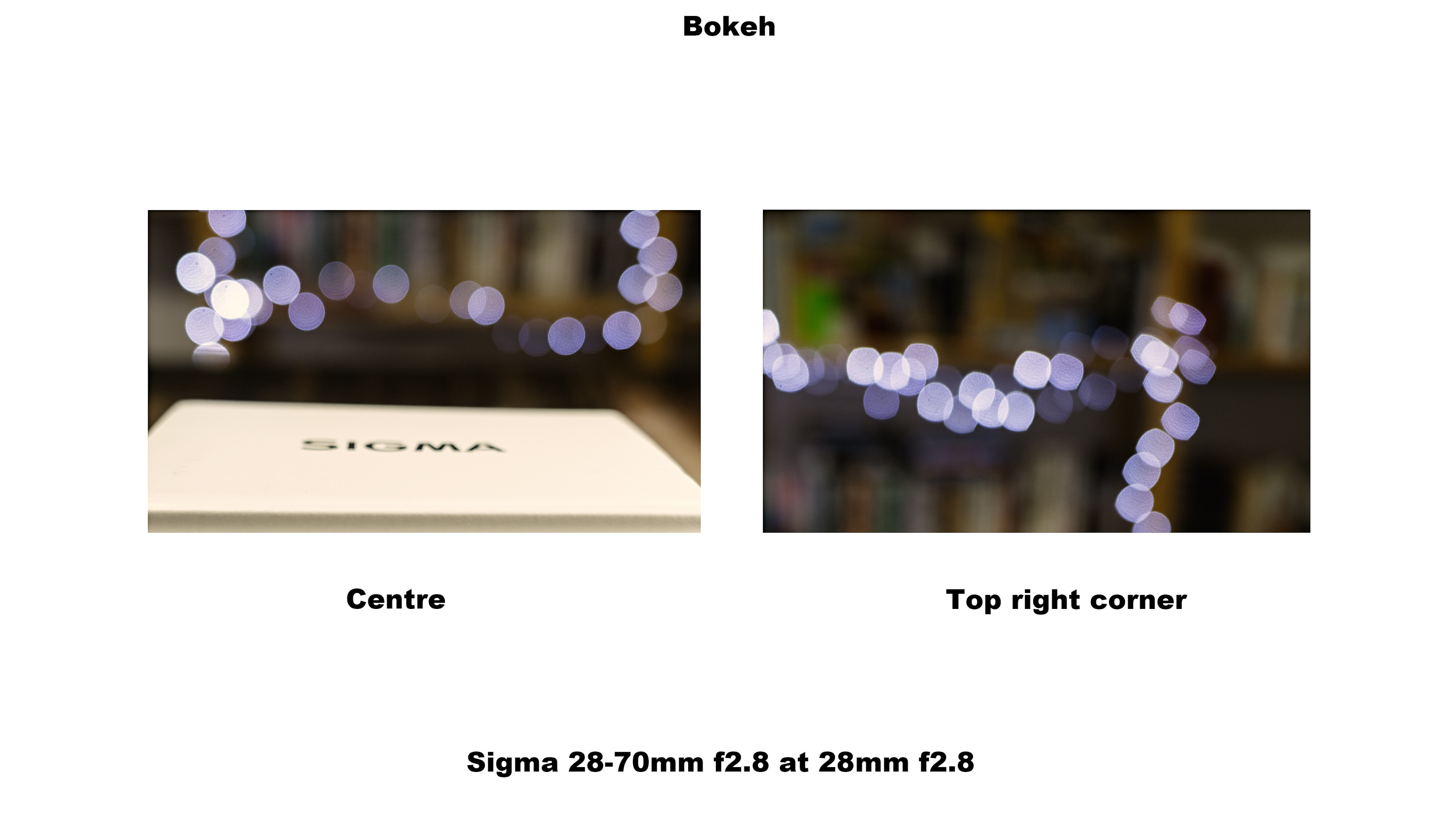
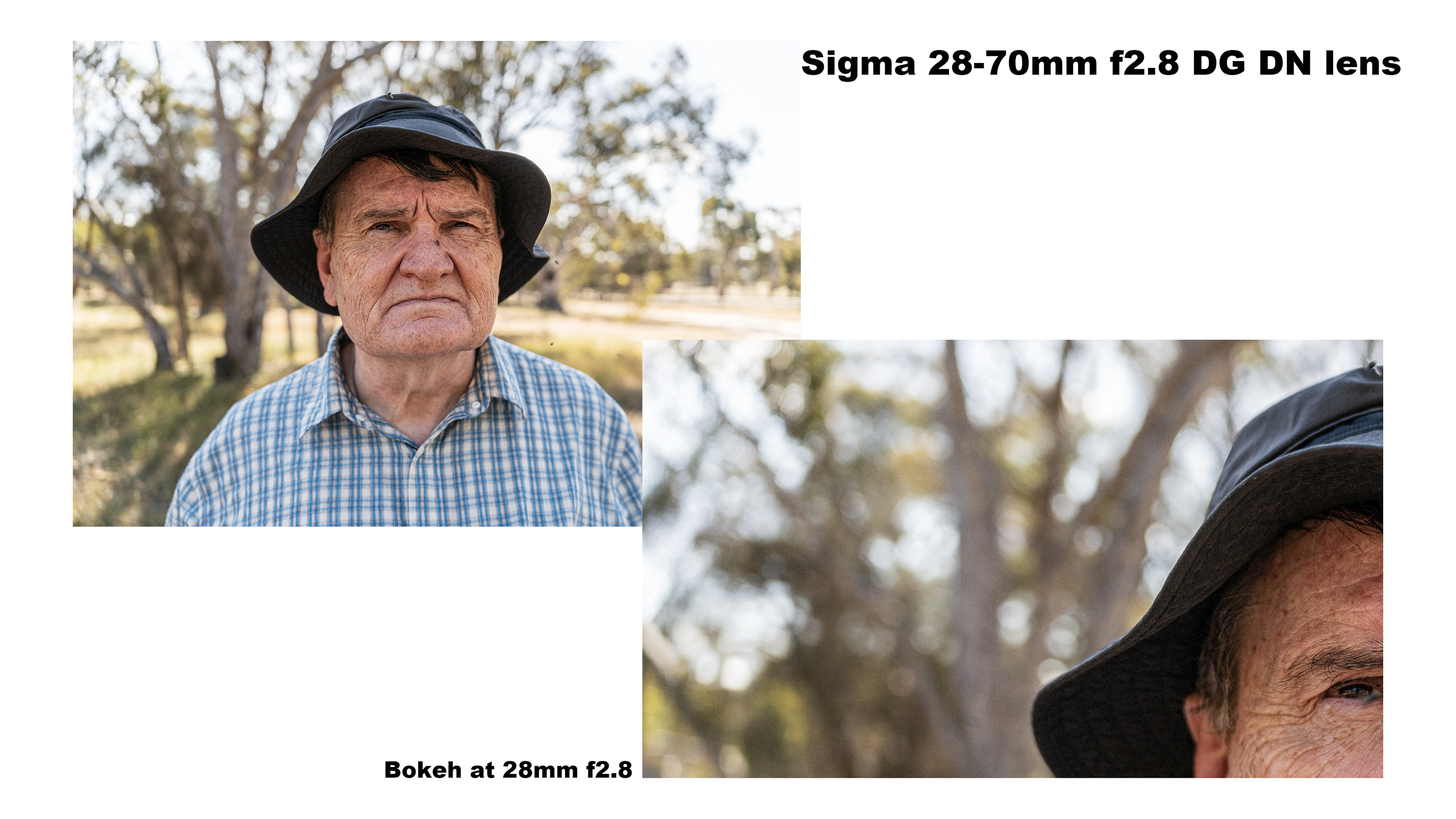
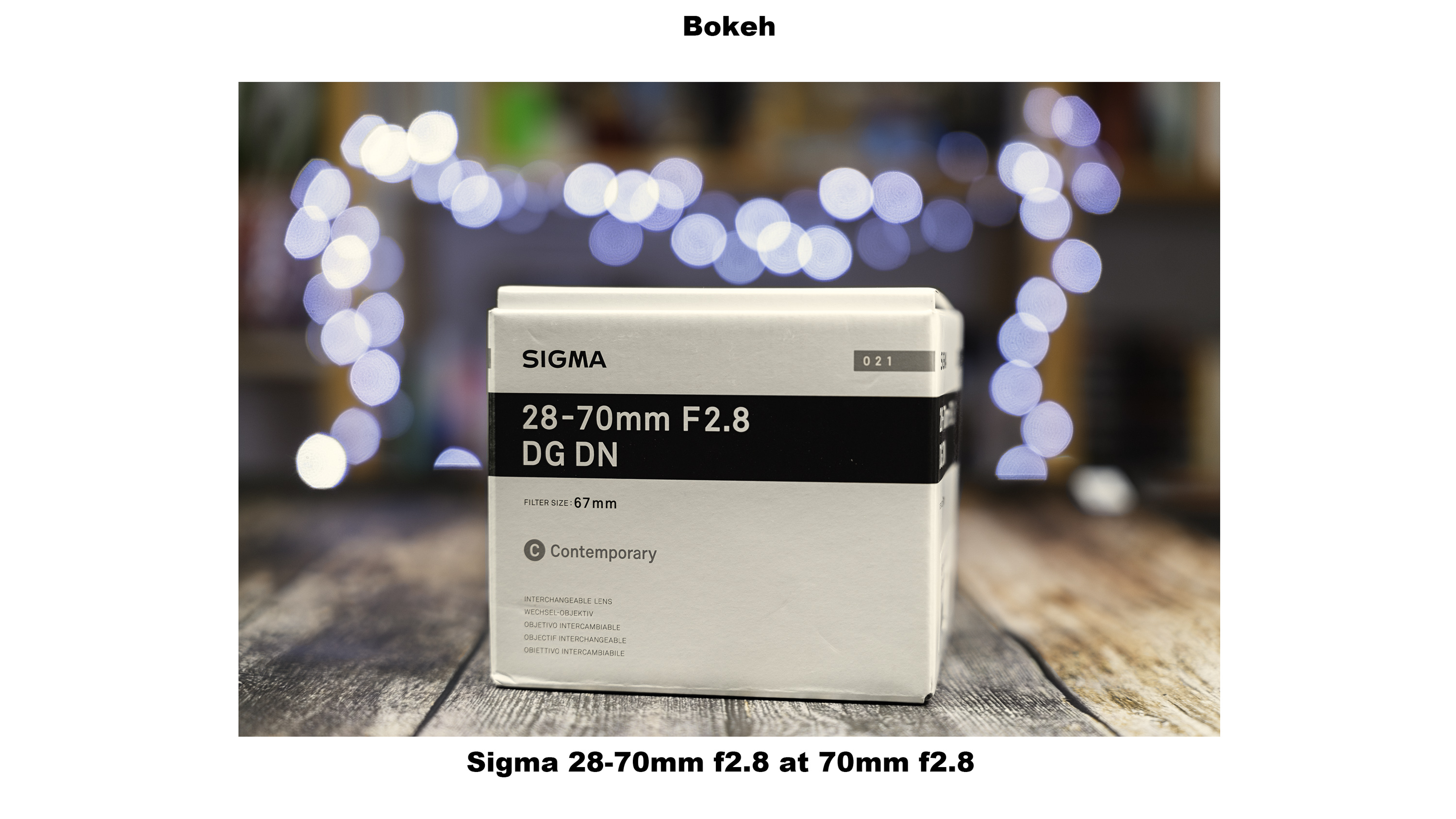
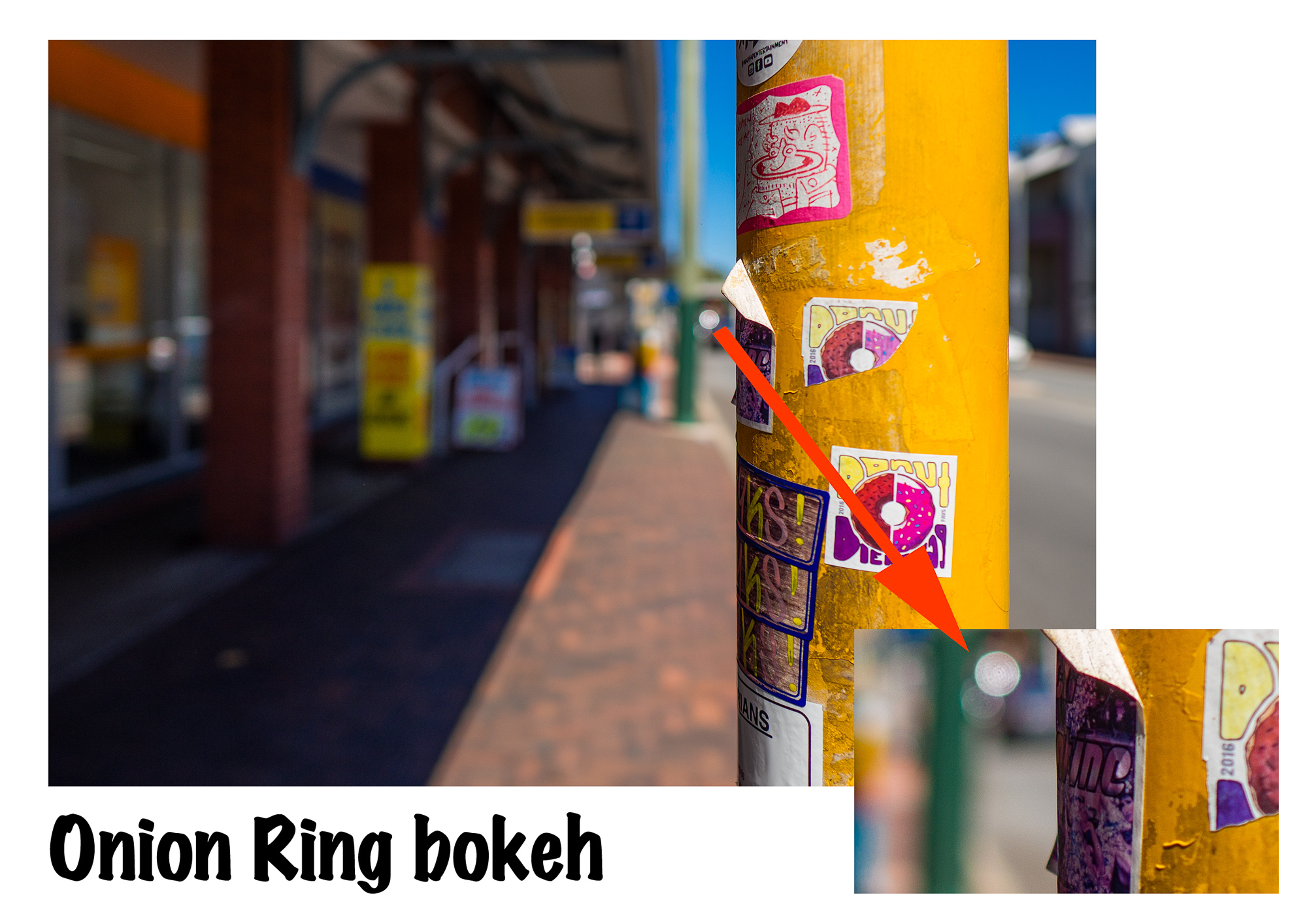
Looking at the bokeh at 28mm wide open at f2.8 the balls don’t have a round shape – they are a bit misshapen and have visible onion rings. The tonal transitions are smooth. By f8 the balls take on a polygonal shape. At 70mm wide open the balls in the centre of the frame are nice and round with some onion rings. At the edge of the frame they have an elliptical cats eye shape. The tonal transitions  in out of focus areas are again nice and smooth. Stopping down to f4 the balls become tighter and the onion rings not so prominent. Interestingly the bokeh balls keep their round shape all the way down to f22.


Bokeh at 70mm f2.8


Auto Focus Performance

Auto focus test for stills at 28mm.

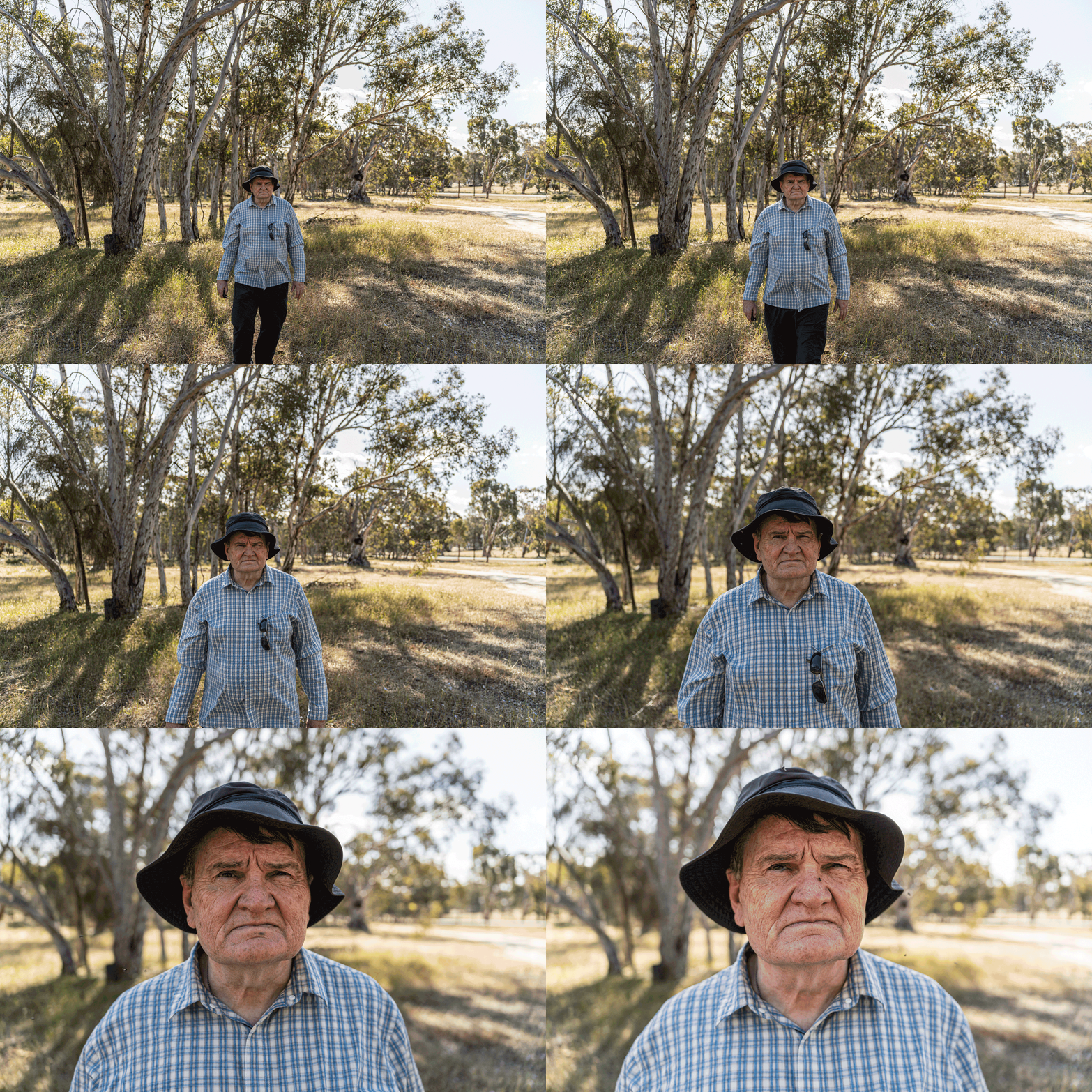
Shooting stills wide open at 28mm the autofocus is very snappy and sticky in daylight with lots of contrast. I shot several sequences of me walking towards the camera and achieved a 100% hit rate. At 70mm f2.8 the results weren’t as impressive but I averaged out with a hit rate of 81%. The problem seemed to occur when I got very close to the camera and the lens would struggle to keep up. It would focus for a couple of frames, loose focus for a frame and then re-acquire. Using the 28-70 DG DN with my Sony A7 r ii at a grip and grin I found that the AF wasn’t as confident in the low light and contrast setting. It wasn’t terrible but I found it wasn’t as quick as I’d of liked and a couple of times I lost a spontaneous moment because the combination hadn’t acquired focus quick enough.

Auto focus test for stills at 70mm.

When shooting the video test I mounted the camera on my slider with a repeating 20cm movement and then filmed myself walking back and forth. At 28mm wide open the lens did very well with just a couple of moments where it was hesitant. Overall a very good performance. At 70mm the AF wasn’t as confident and prone to loose focus and then not quickly re-acquire. I decided to re-test but not using the slider this time and everything was a lot better at both focal lengths so from that I can assume that the movement from the slider was stressing the autofocus too much.

Checking for focus breathing I found that it was very minimal which should keep the video crowd. Normally I don’t bother checking where a lens is parfocal or not, but, as the lens had so far done so well I thought I’d give it a go. And the Sigma 28-70 f2.8 is indeed parfocal.


Conclusion

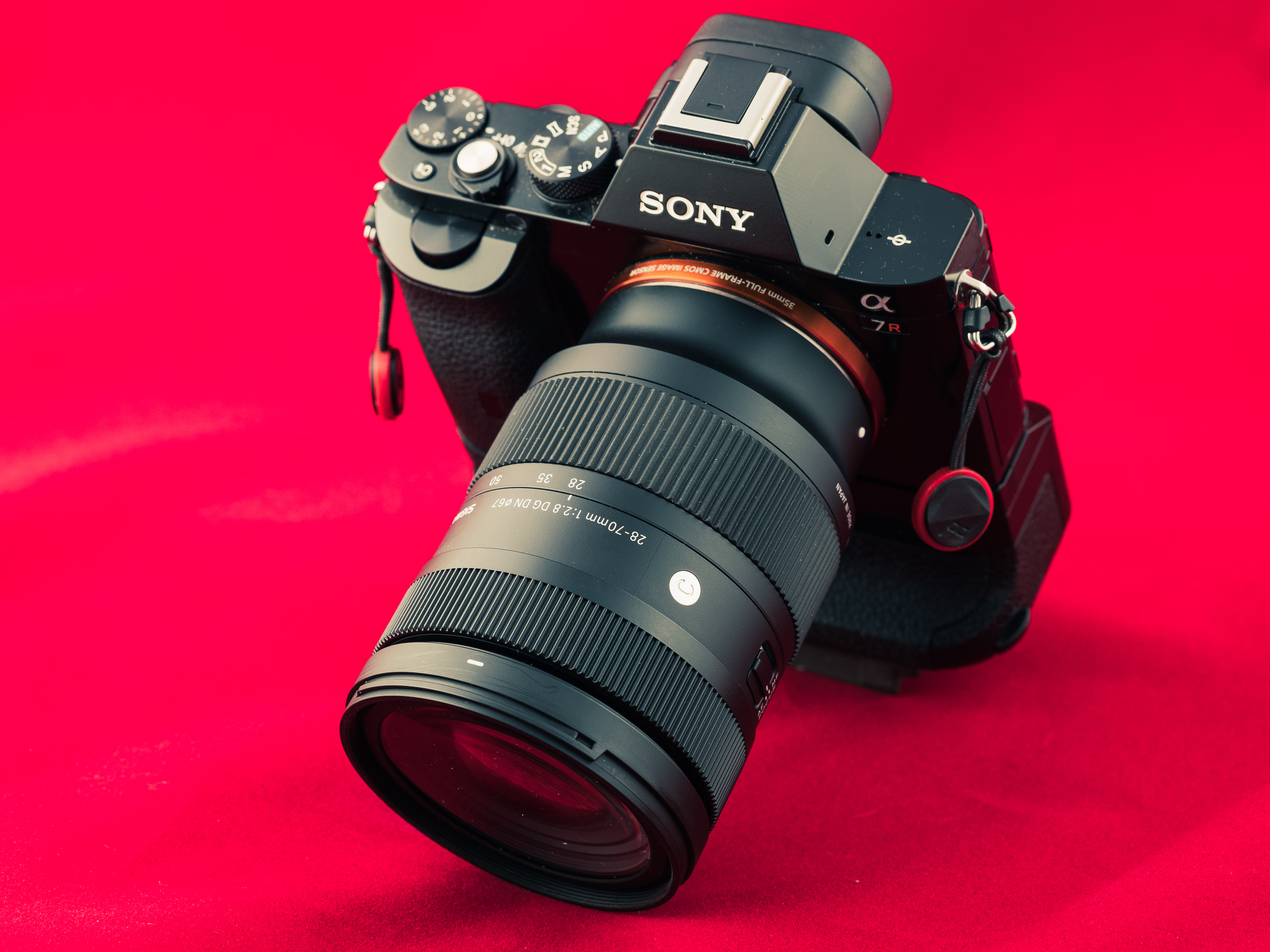
Sigma 28-70mm f2.8 DG DN Lens mounted on a Sony A7r ii.

There have been a few criticisms about the Sigma 28-70 DG DN. People moan about the distortion present when you don’t use the lens profile. I would argue that using corrections like that enables manufacturers to make compact, lightweight and affordable lenses. Other have been very vocal about the reduced performance at the 70mm end, but it is not unusual for a zoom lens to be better optically at the wide end. Better performance would again mean bigger, heavier and more expensive lenses. The main criticism is that at 28mm it’s just not wide enough and that it really should be a 24-70mm f2.8. Well Sigma does make one and its $600 AUD more expensive and it is bigger. Sony’s GM 24-70mm f2.8 is $1300 AUD more expensive, 371g heavier, 33mm longer and 14mm wider. So if you want a small compact f2.8 constant aperture standard zoom some compromise has to be made and I think Sigma has made the right choices.


The focusing and zoom rings have a nice ribbed rubber grip.


I really like standard zooms – I have one for each of my camera systems (Canon EF, M4/3, and now Sony FE). I find they fit in with my way of working with just one camera and one lens. This lens with its useful close focus ability makes it ideal for shooting small subjects, food, and products. Its constant f2.8 aperture is good for low light, flash photography and video. While 70mm at the long end makes it a bit on the short side for some types of portrait photography the focal range is great for environmental portraiture. Overall this lens is perfectly suited to being used as an everyday carry or part of a lightweight travel kit. Occasionally I wished for something a little wider, so what I ended up doing was carrying my Tamron 20mm f2.8 and then everything was just dandy.


Sigma 28-70mm f2.8 DG DN Lens available in both Sony FE mount and L mount.


I really enjoyed using this lens. While it’s not perfect by any means it is a very solid and workman like performer that lets you get on and take photos.


Sample Images
A selection of images taken with the Sigma 28-70mm f2.8 DG DN lens.

A glass of bubbles to celebrate.


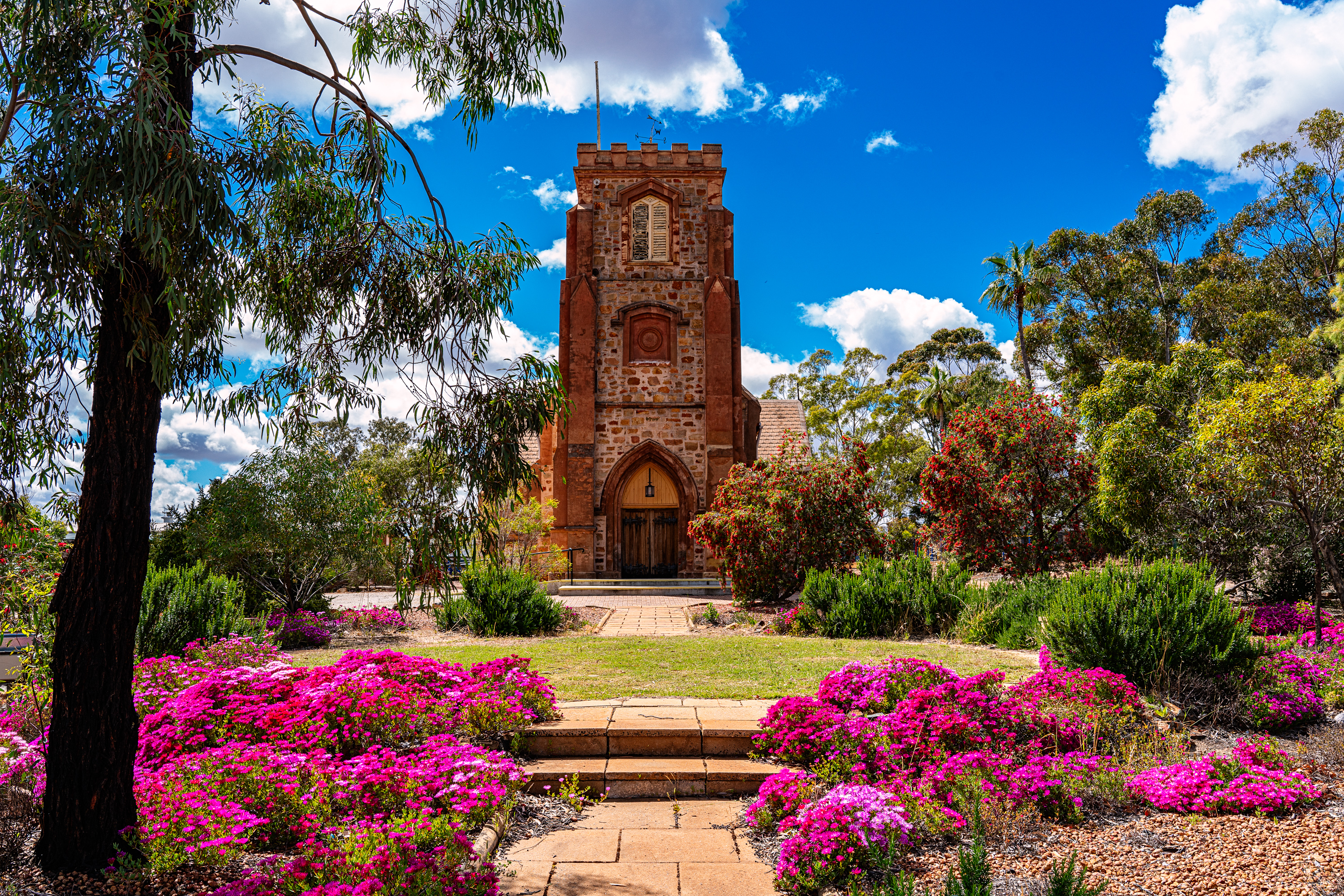
York Town Hall as the sun begins to set.


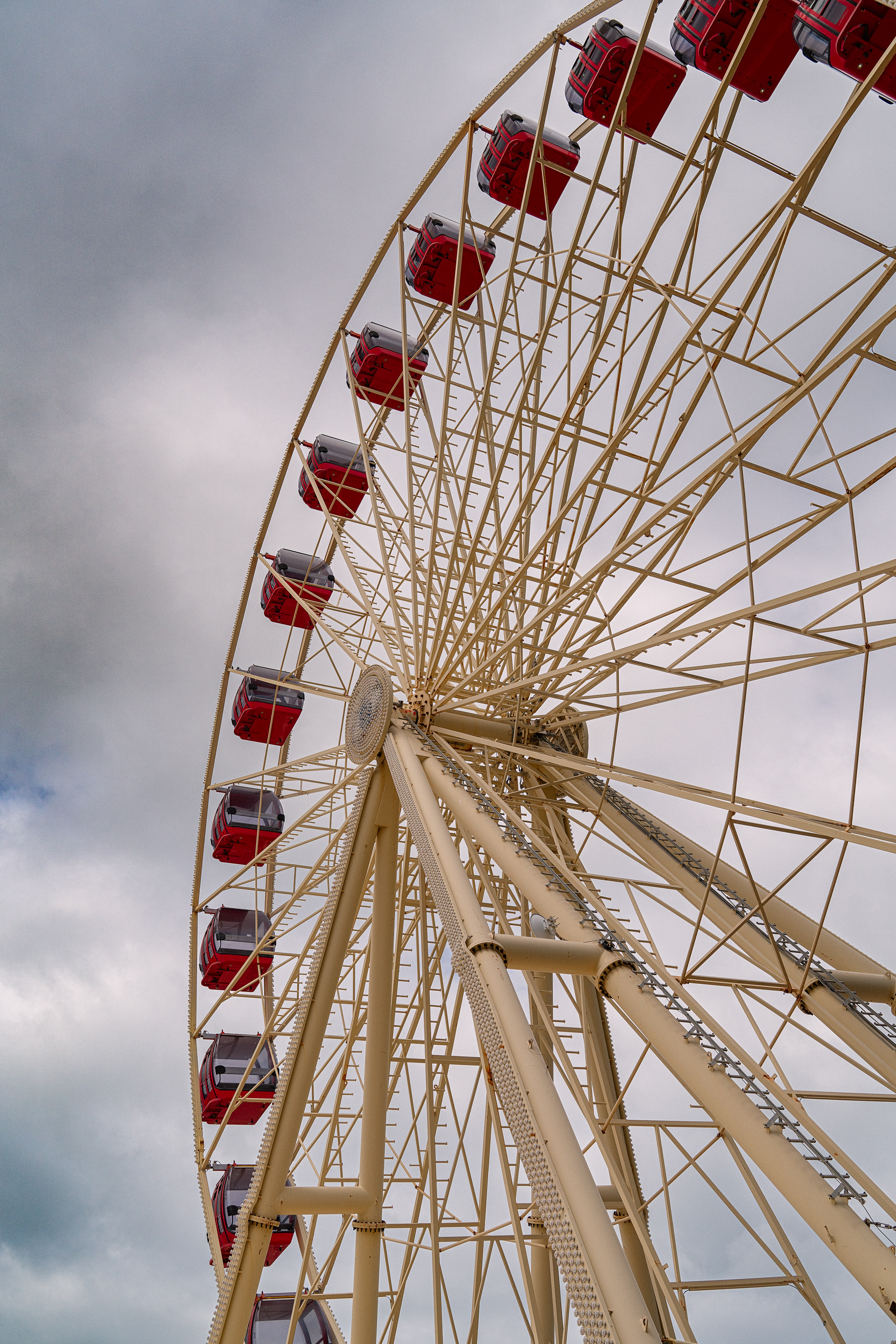
The Tourist Wheel on the Esplanade Park in Fremantle.


The point that tghe Wagyl (Dreamtrime Rainbow Serpent) leaves the Swan River and swims out to sea. Fremantle, Western Australia.


Greg James Sculpture Studio Gallery at the J Shed in Fremantle.


South Metroploitain TAFE Fremantle.


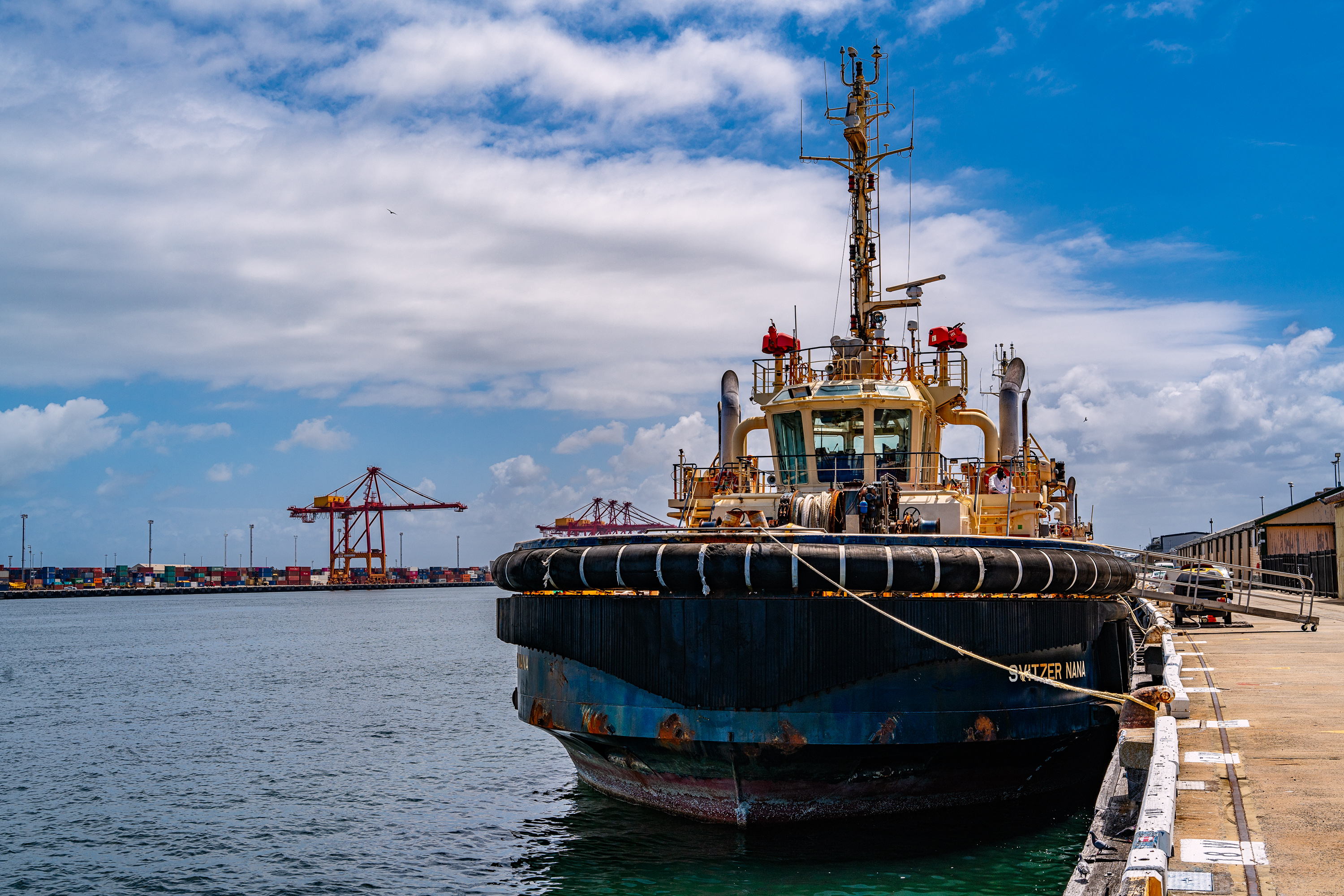
The pusher/tug Svitzer Nana berthed at Fremantle Harbour.


WA Maritime Museum at Fremantle Harbour.


The cargo ship William entering Fremantle Docks.


The cranes at the dry dock that houses HMAS Ovens at the WA Maritime Museum at Fremantle Harbour.


HMAS Ovens in dry dock at the WA Maritime Museum at Fremantle Harbour.


One of the cranes at the dry dock that houses HMAS Ovens at the WA Maritime Museum at Fremantle Harbour.


Part of the HMAS Ovens display at the WA Maritime Museum at Fremantle Harbour.


Sigma MC-11 Lens Adapter

The Sigma MC-11 adapter allows certain Sigma EF lenses to be used on Sony E mount bodies while retaining autofocus and image stabilisation.

This is the second part of a series of articles on upgrading camera equipment on a budget. Part 1 can be found here.

I’ll deal with the Sigma adapter first because I got that to work with just one lens – my Sigma 150-600mm F5-6.3 DG OS HSM Lens – Contemporary lens. 


TLDR


Construction

The Sigma MC-11 comes in two different versions:

  • Sigma SA mount to Sony FE
  • Canon EF mount to Sony FE

Obviously as I own Canon EF mount lenses this is about the EF version. Sigma state that their adapter is for use with their Global Vision lenses which comprises of three lens lines:

  1. Art
  2. Contemporary 
  3. Sport

As of the time of writing there are 44 Sigma lenses that are compatible with the adapter and these allow users to access all the auto focus modes on Sony E mount cameras. This is important to me as I want to be able to use the 150-600 for bird photography.

The Sigma 150-600mm F5-6.3 DG OS HSM Contemporary lens is one of the lenses that is compatible with the Sigma MC-11 lens adapter.


The first thing you notice when you pick up the MC-11 is that it is very solid and well made. The body is of metal construction and the lens mounts are chromium plated brass. Disappointingly there are no weather seals. On the body is a USB port behind a soft plastic flap and on the opposite side is the lens release button. Just by that is a tiny LED light which is very hard to see when it is off. The purpose of the light is to inform you about how well the lens attached will work it does this through one of four states:

  1. Constant green – the lens is compatible
  2. Flashing green – you need to update the lens firmware 
  3. Flashing orange – the adapter firmware needs updating
  4. No light – the lens isn’t compatible 

The light only comes on for 2-3 seconds when you switch on the camera.

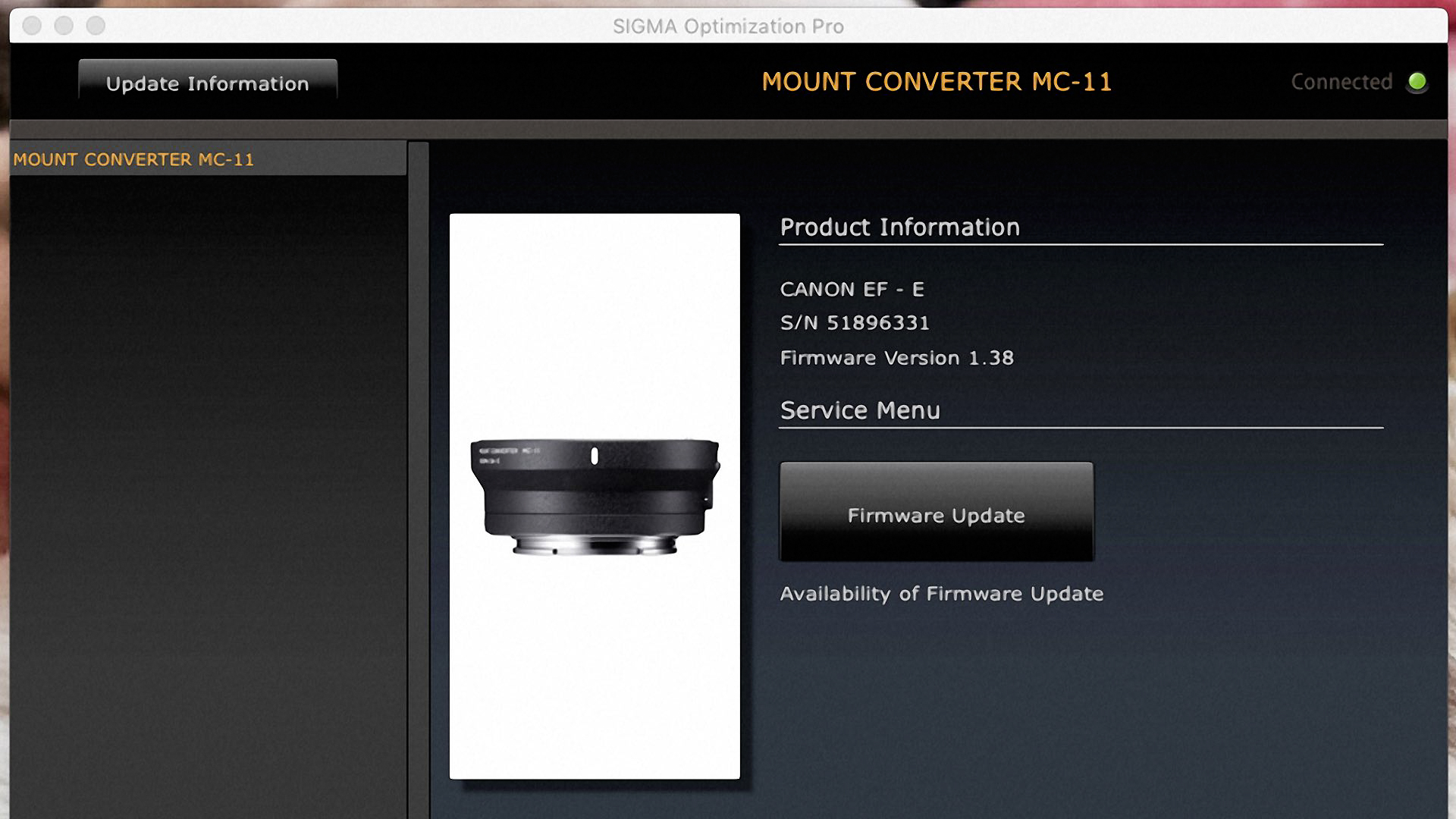
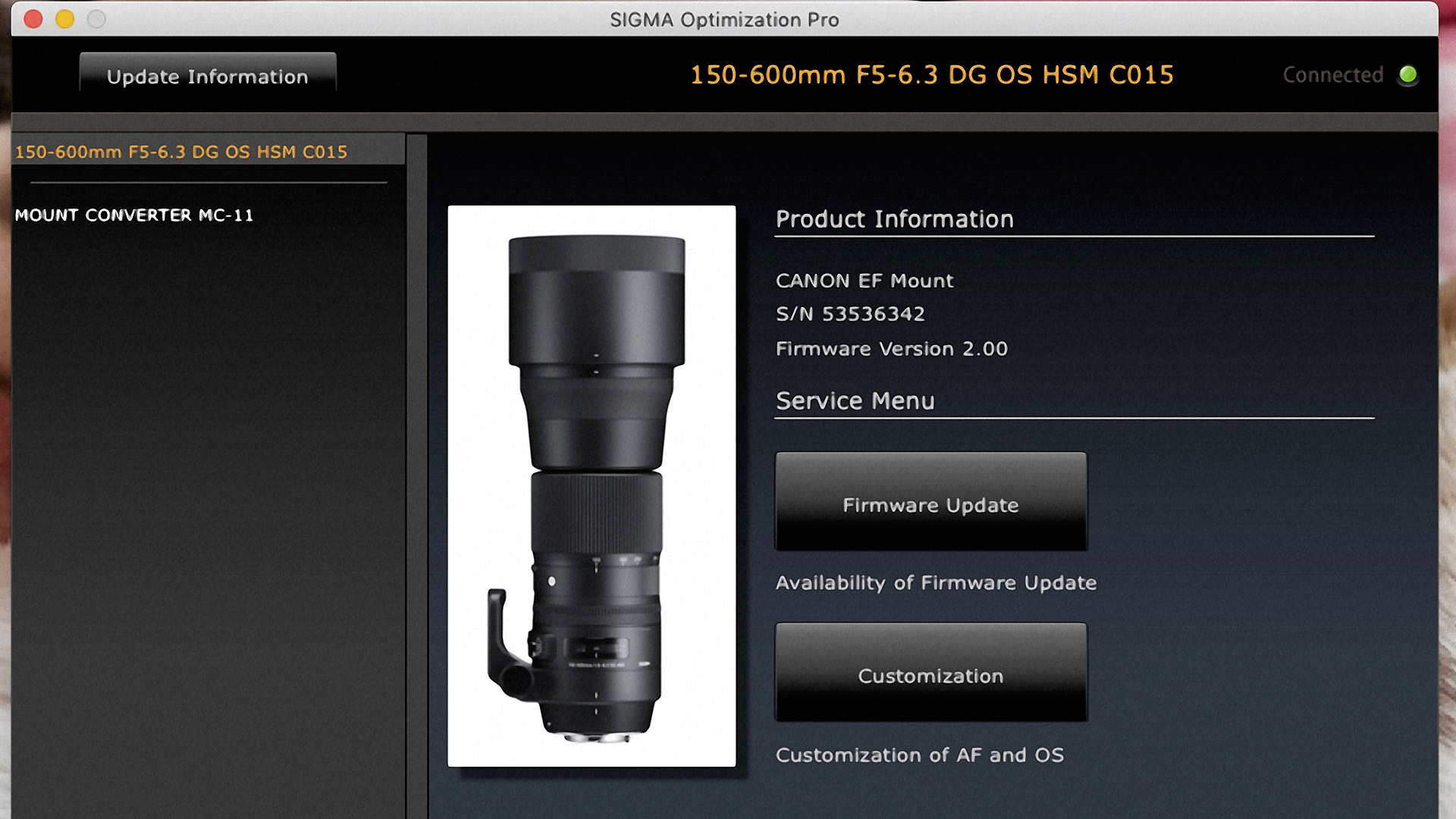
Speaking of firmware updates to do this you will need to download the Sigma Optimization Pro software from Sigma’s website. To update the adapter just needs a USB cable, for lenses you will need the Sigma Dock UD-01. I find it somewhat frustrating that you can’t update the lens firmware through the MC-11 adapter. The dock isn’t expensive to buy although in Australia the retail price varies between $80 to $120 AUD so it pays to shop around. Luckily there seem to be plenty for sale second hand on EBay for about $40. I ended up updating both the adapter and lens firmware and the whole process was very straightforward.


In Use

Before I updated the firmware I found that there was difficulty in acquiring focus when shooting in low light, backlit situations and with subjects in undergrowth. Once upgraded things worked a lot better. I experimented with the settings on the camera by setting up two custom modes. Custom mode 1 was in shutter priority with the shutter speed set at 1/500 sec, Auto ISO, Auto Focus Continuous, Lock on AF with a medium sized flexible spot and the frame rate was set to low speed continuous. Custom mode 2 was in shutter priority with the shutter speed set at 1/2000, Auto ISO, Auto Focus Continuous, lock on flexible spot large and high speed continuous drive. Both modes had the following parameters set:

  • Phase Detect Area – on
  • Pre AF – off
  • Priority set in AFC – balanced emphasis 
  • AF with shutter – on
  • AF drive speed – fast
  • AF tracking sensitivity – high

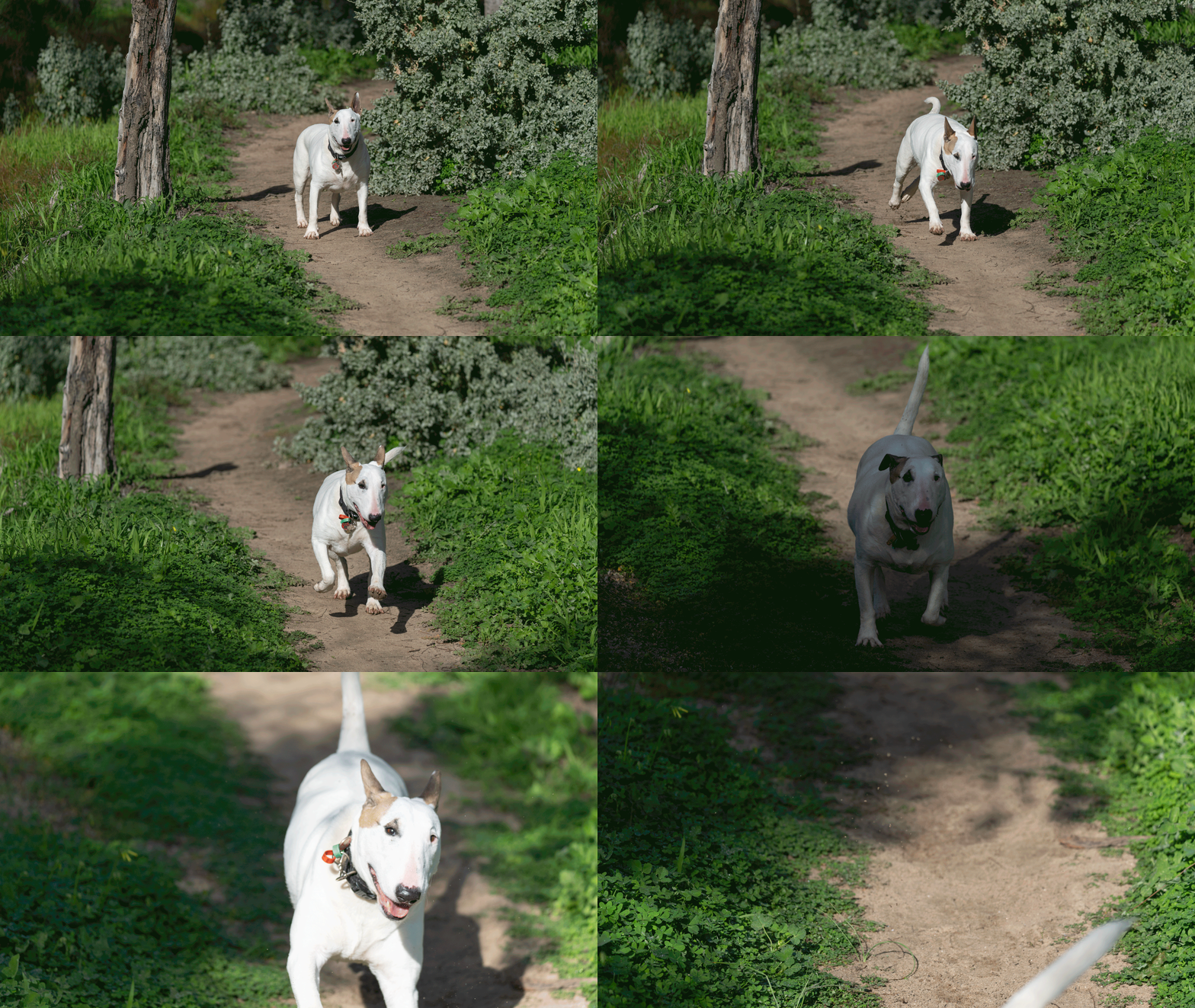
With birds in trees that weren’t moving too quickly I found that I was getting a hit rate of around 90%. With more erratic moving birds my hit rate dropped to 36% when I was using my custom mode 2. When I switched to mode 1 the hit rate improved to 85%. Photographing my dog running towards me both custom modes acquired focus very quickly, but the results from custom mode two weren’t very consistent fluctuating between 60 to 85%. In custom mode 1 I got very consistent results at 85%. When shooting birds in flight I found that I didn’t get a single shot with critical focus which was disappointing to say the least.


The video performance of the A7r II and the Sigma 150-600 was surprising. Shooting wide open at the short end AF performance is good, it is quick and confident. At the long end the AF is a bit slower but it does acquire focus and lock on. What is very apparent is the noise of the lens motor, it is quite loud and would mean that any sound would have to be recorded using an external microphone.


Conclusion


The Sigma MC-11 adapter allows certain Sigma EF lenses to be used on Sony E mount bodies while retaining autofocus and image stabilisation.

In practice it would certainly seem that shooting at higher frame rates the autofocus struggles to keep up and dropping the frame rate improves the hit rate considerably. Whether using this combination is a good idea depends very much on your expectations and what you want. If you want the performance of a Sony native lens then you are better off getting that. But if you already have the lens and want to change from a Canon DSLR to a Sony full frame mirrorless camera and you are shooting birds in trees, scrub, on the ground or on water then this works very well. For birds in flight you’ll want either a full Sony set up or a full Canon set up.


Sample Images


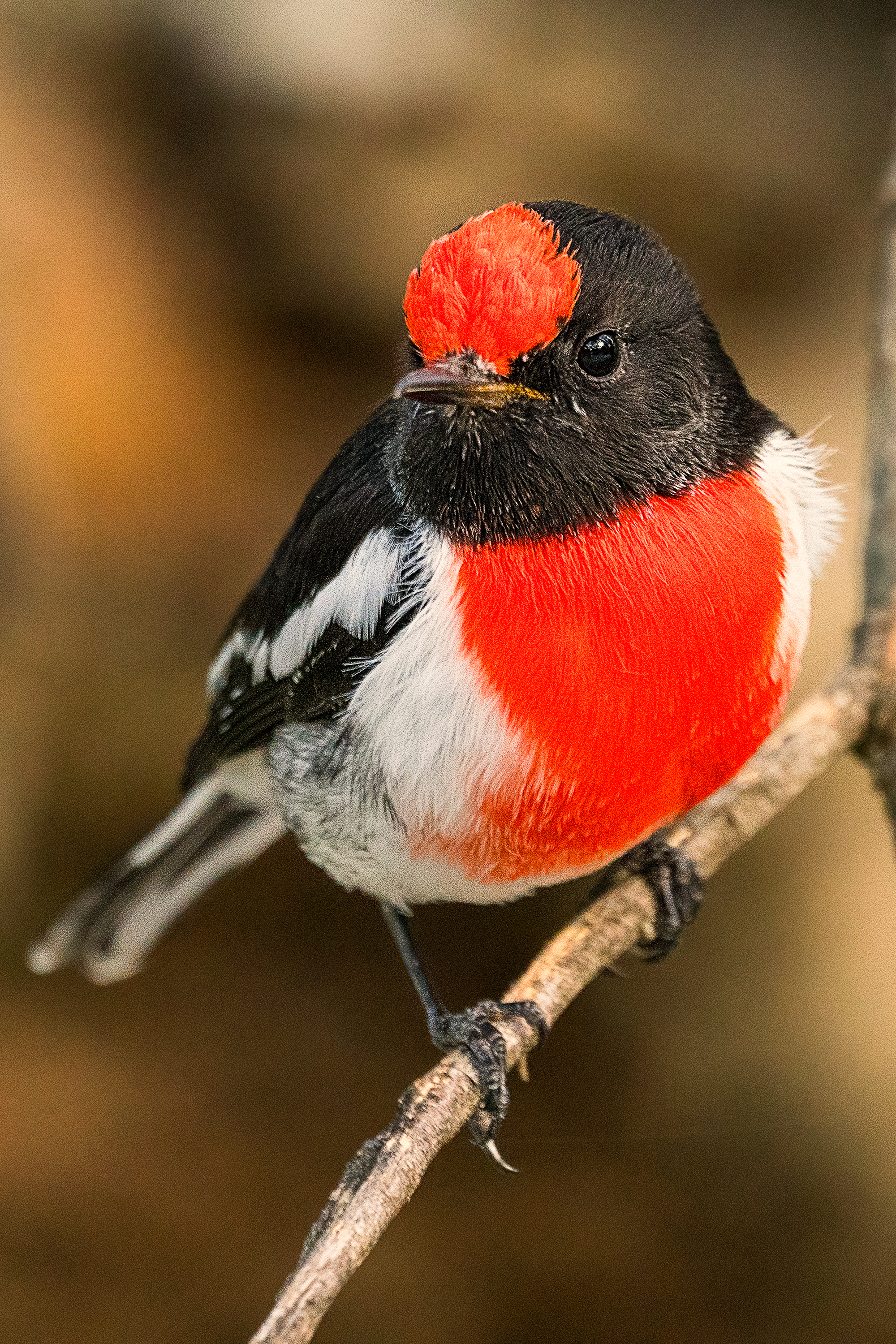
Menekedang called the Red-capped Robin (Petroica goodenovii) by white colonialists.


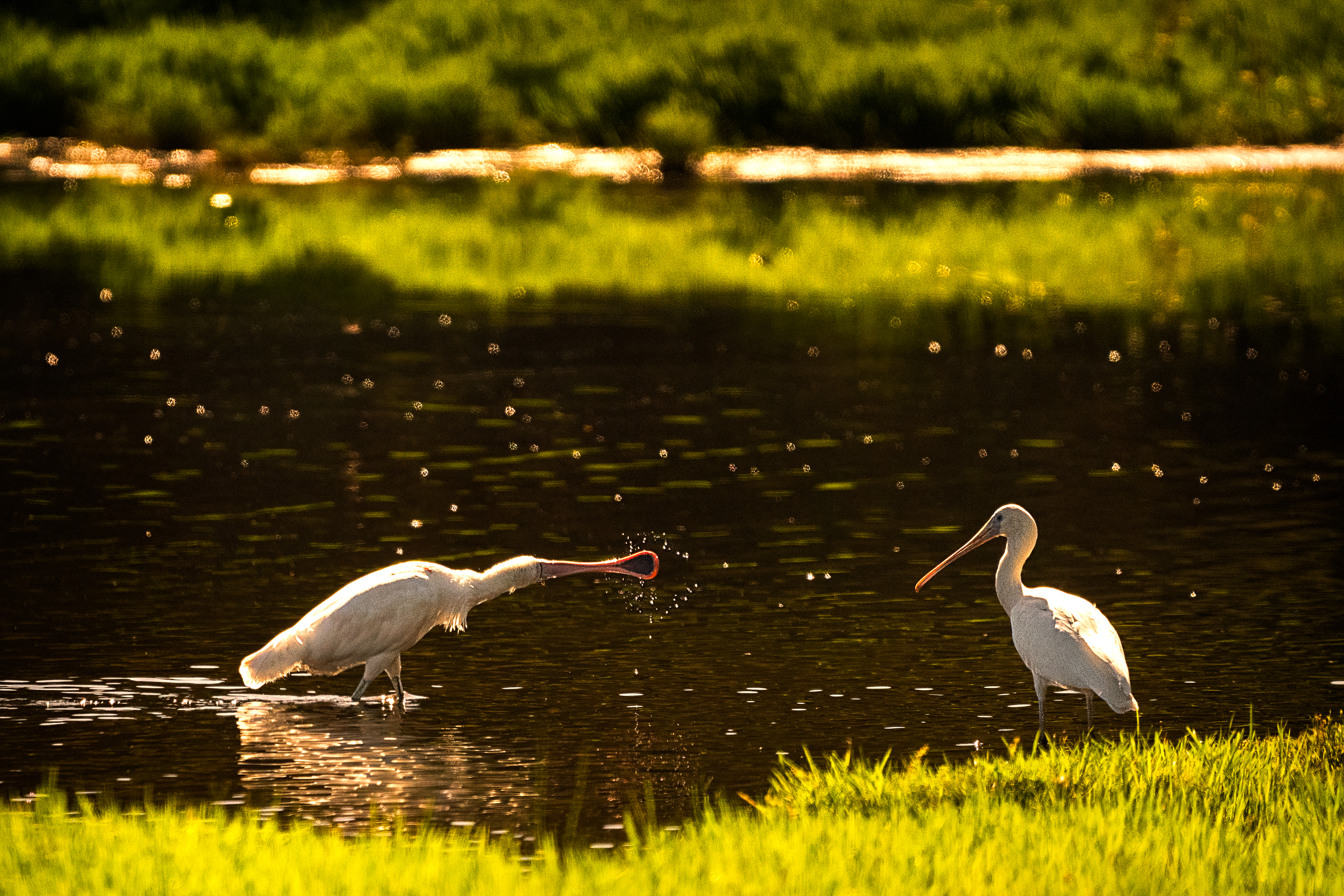
Melkullya called the Yellow-billed Spoonbill (Platalea flavipes) by white colonialists.


Menekedang called the Red-capped Robin (Petroica goodenovii) by white colonialists.


Red Wattle bird (Anthochaera carunculata subsp. woodwardi) known to the Nyoongar people as wodjalok. Yellagonga Regional Park.


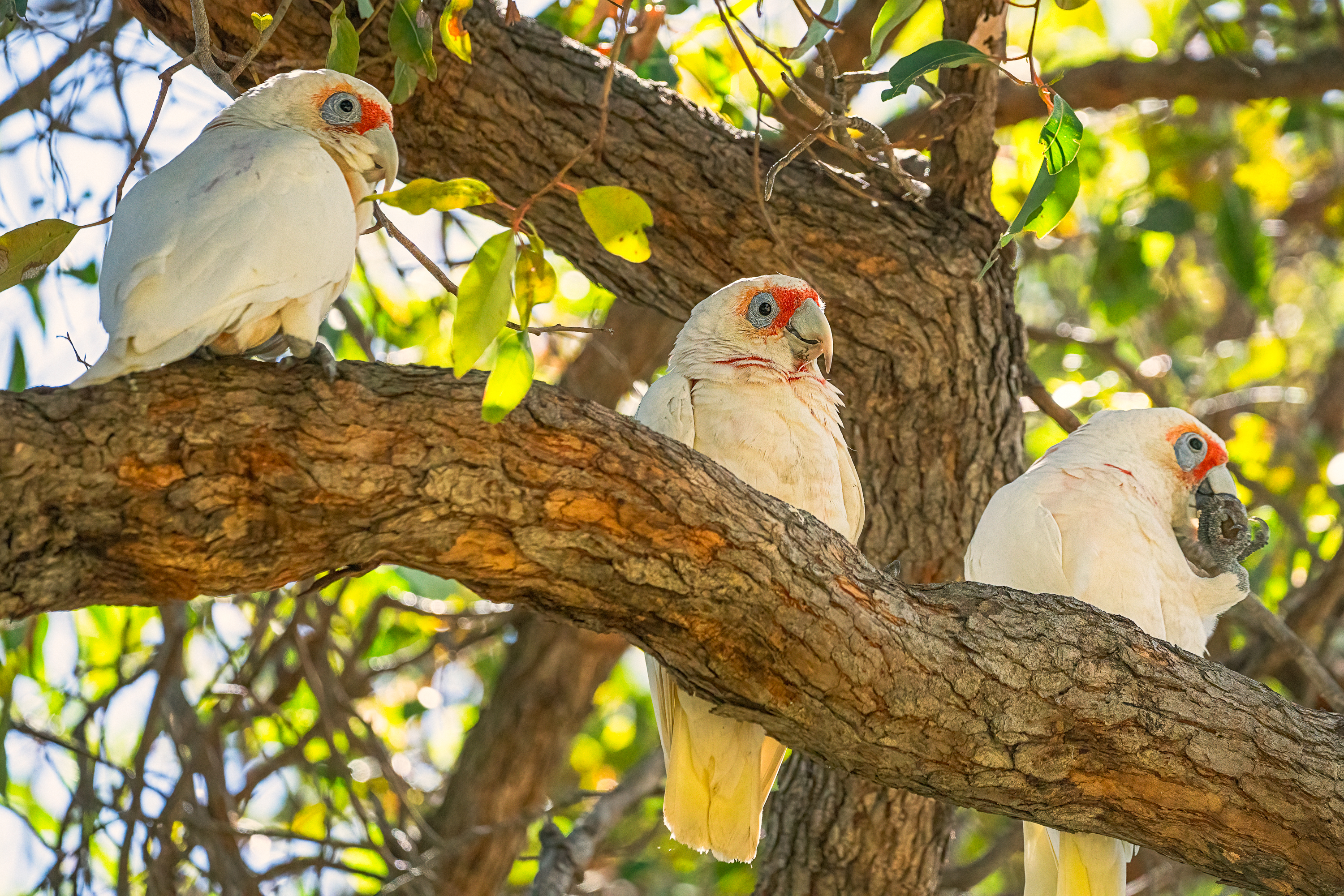
Three wise corellas – hear no evil, see no evil, and sorry my mouth is full. Yellagona Regional Park, Western Australia.


Manyt or the Western Corella (Cacatua pastinator subsp. derbyi). Yellagona Regional Park, Western Australia.


Dillabirt, known to non Nyoonga people as the Magpie-lark (Grallina cyanoleuca). Yellagonga Regional Park.


Melkullya or Yellow-billed Spoonbills, Platalea flavipes, amongst the paperbarks on Lake Joondalup in Yellangonga Regional Park.


Melkullya or Yellow-billed Spoonbills, Platalea flavipes, feeding at Lake Joondalup in Yellangonga Regional Park.


The eponymous Willie Wagtail, Rhipidura leucophrys leucophrys. Yellagonga Regional Park, Western Australia.


Despite their small size the Silvereye, Zosterops lateralis, has an incredibly loud birdsong. Yellagonga Regional Park, Western Australia.


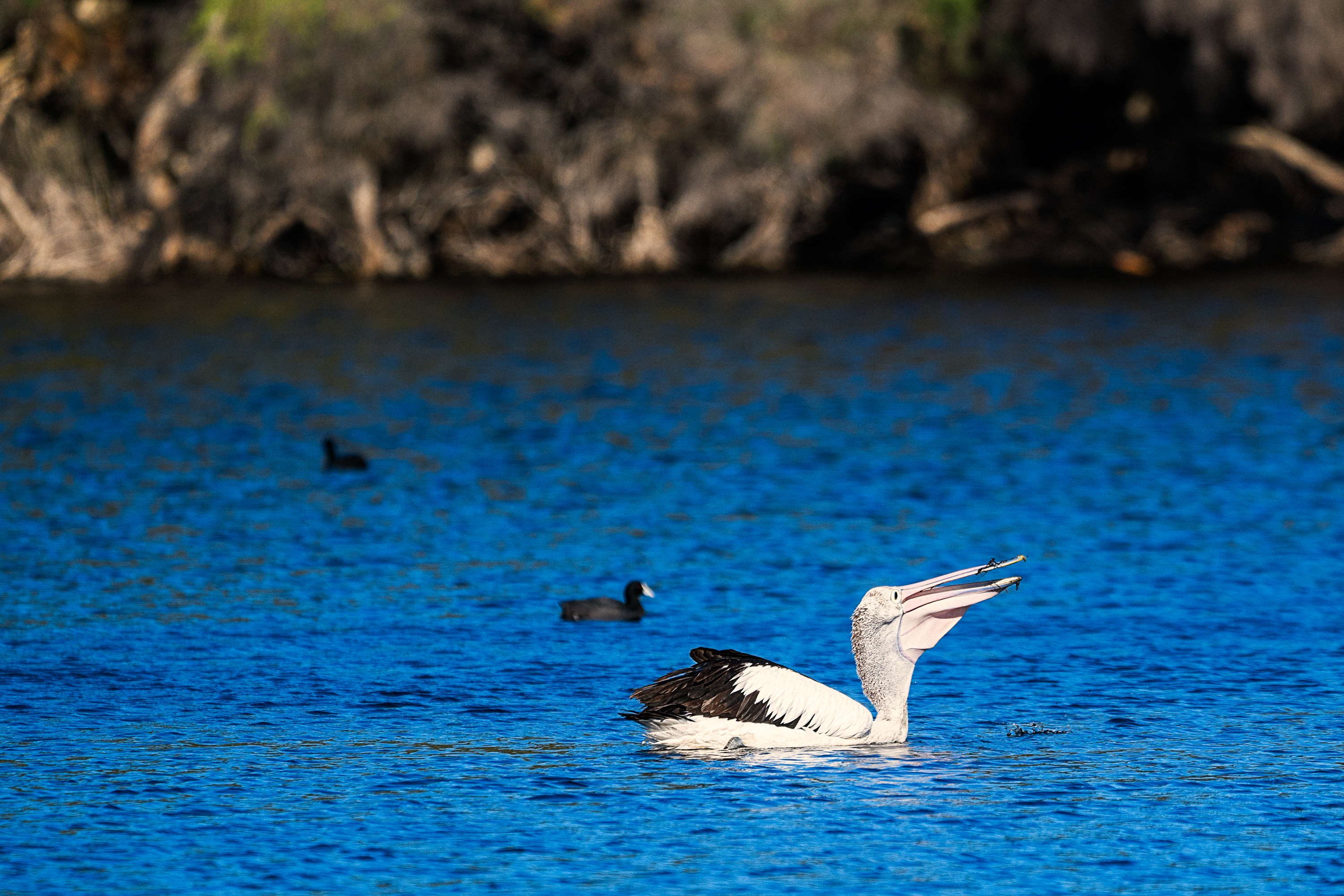
An Australian Pelican (Pelecanus conspicillatus) feeding on Lake Joondalup in Yellagonga Regional Park.


A white-faced heron looks out from its tree top perch over Horse Swamp. Whiteman Park, Western Australia.


Western Grey Kangaroo, macropus fuliginosus, Whiteman Park, Western Australia.

Optical Antithesis


A review of the Sigma 16mm f/1.4 DC DN lens for m4/3


The Sigma 16mm f1.4 shown mounted to an Oympus OMD EM1 mk 1 which is one of the larger m4/3 cameras.


I’ve said many times on this blog that my favourite focal length is 35mm (35mm equivalent) which give a diagonal angle of view of 63.4º To me it is a relaxing normal view, I find 50mm a bit too tight and 28mm a bit too “loose”. So when I migrated from so-called full frame to micro four thirds in 2010 one of the first lenses I bought was the Olympus m.Zuiko 17mm f2.8 pancake lens. Actually at the time there were only three lenses in the system the 17mm, a 14-42mm kit lens and the 40-150 telephoto kit zoom and I ended up getting them all.


Olympus m.Zuiko 17mm f2.8 shown on an EP5. The lens was the first prime introduced for the Olympus’ m4/3 system.


The 17mm was equivalent to 34mm in in full frame terms and has a diagonal angle of view of 65º, so close enough as not to make any real difference. It wasn’t a well received lens despite being what initial advocates of the micro four thirds said they wanted – pancake lenses. It’s slow maximum aperture of f2.8, slow and noisey auto focus combined with less than stellar optical performance put many people off and they went for the much more expensive Panasonic 20mm f1.7 which had the virtues of being optically better, and having a faster maximum aperture. It still wasn’t great in the AF department though. But hey these were the early days of mirrorless technology and AF systems were not very quick and accurate then. But anyways I got the Olympus in a kit with my Olympus EP2 and I actually loved it. I could slip it mounted to the EP2 in my pocket which made it a great stealth camera combination and I used it to shoot my TransPerth-Transhumance project. I still use the lens today, mainly on my EP5. The area where I felt it was absolutely hopeless was video. The AF was too slow, too noisy (think angry wasp stuck in a jar) and I wanted a bit more subject isolation than the f2.8 aperture could give.


The Sigma 16mm f1.4 compared to the Olympus 17mm f2.8, 25mm f.1.8 and the 45mm f1.9.


The Sigma 16mm f1.4 is a physically large lens. Here it is shown with the Olympus 12-40mm f2.8 and 75-300 f4-6.3 zoom lenses.


So fast forward a few years and I’m shooting more and more video and I decide to get myself a better 17mm lens. In the intervening years Olympus had produced the very favourably received 17mm f1.8 and the eye-wateringly expensive f1.2 version. Panasonic had also come to the party with their Panasonic Leica Summilux 15mm f/1.7 lens. In fact I went to my local (if you can call 110Km away local) camera dealer to buy this lens and it was always out of stock which made me want it even more. But in the end I went for an outlier in the form of the Sigma 16mm f/1.4 DC DN lens. The reasons being that f1.4 is faster than f1.9, it was cheaper than the f1.2 and the difference between f1.2 and f1.4 is slight, and my dealer had it in stock. So what makes it and outlier? Well to put it bluntly it’s bloody huge. It has a 67mm ⌀ filter thread which compares to 37mm for the Olympus 17mm f2.8. It is bigger than the Olympus 12-40mm f2.8 and the Panasonic Leica 8-18mm f2.8-4 while being only a little shorter than the Olympus 75-300mm f4.8-6.7. The 16mm focal length equates to 32mm on full frame with a diagonal angle of view 68.1º so is a bit wider, but when used with the Panasonic G85 for 4K video this isn’t much of a problem as the camera crops in slightly. So how come this lens is so lardy I hear you all ask. Well this lens wasn’t designed for micro four thirds, it was initially designed for the Sony 6000 series cameras with an APS sized sensor where it equates to being a 24mm in full frame terms. To get a wide angle lens that’s fast and a good optical performance means lots of glass and glass is heavy, and this lens is large and heavy for APS format cameras. To get some additional return on their investment Sigma decided to offer the lens in micro four thirds mount hence it seeming a funny focal length and being bigger than necessary.


Vital Statistics

Olympus 17mm f2.8

Sigma 16mm f1.4

Diagonal angle of view 65º 68.1º
Optical construction 6 elements in 4 groups 16 elements in 13 groups
Diaphragm 5 rounded blades 9 rounded blades
Minimum aperture f2.8 F1.4
Maximum aperture F22 F16
Minimum focusing distance 20cm 25cm
maximum magnification ratio 0.11x 0.07X
Filter diameter 37mm 67mm
Dimensions ⌀ 57mm x 22mm (H) ⌀ 72.2mm x 92.3mm (H)
Weight 71g 405g
Internal focusing No Yes


In the hand the Sigma 16mm feels very dense and substantial. The lens body is made out of what Sigma calls a Thermally Stable Composite (TSC) which is substantially stronger than conventional polycarbonates while having similar thermal expansion properties to aluminium. The lens mount is made of chromium plated brass which should ensure a long life. The Sigma 16mm is advertised as being dust and splash proof but on closer reading of Sigma’s spec sheet there is only one seal and that is at the lens mount. The lens comes with a bayonet mount petal lens hood which has a ribbed grip to make attaching and detaching easier. While it is good that the lens comes with a hood it’s not the best implementation and feels quite insubstantial and can be fiddly to attach as it can foul and not lock home. There is a ribbed rubber focus ring of the fly by wire type – it feels smooth and easy to use. There are no other controls or switches which means if you want to switch between AF and manual focus you will have to use the camera controls for that.


The Sigma 16mm has an optical construction of 16 elements in 13 groups with 3 FLD (“F” Low Dispersion) glass elements, which offers performance equivalent to fluorite which exhibits less chromatic aberration than those utilising a traditional flint glass. There are 2 SLD (Special Low Dispersion) glass elements which also help to minimise chromatic aberration and 2 ASPH moulded glass aspherical elements which work to reduce optical aberrations. According to Sigma’s website the ASPH elements are polished with a tolerance of under 10 nanometers or 0.000001 millimetres which according to Sigma reduces onion ring bokeh.


Performance

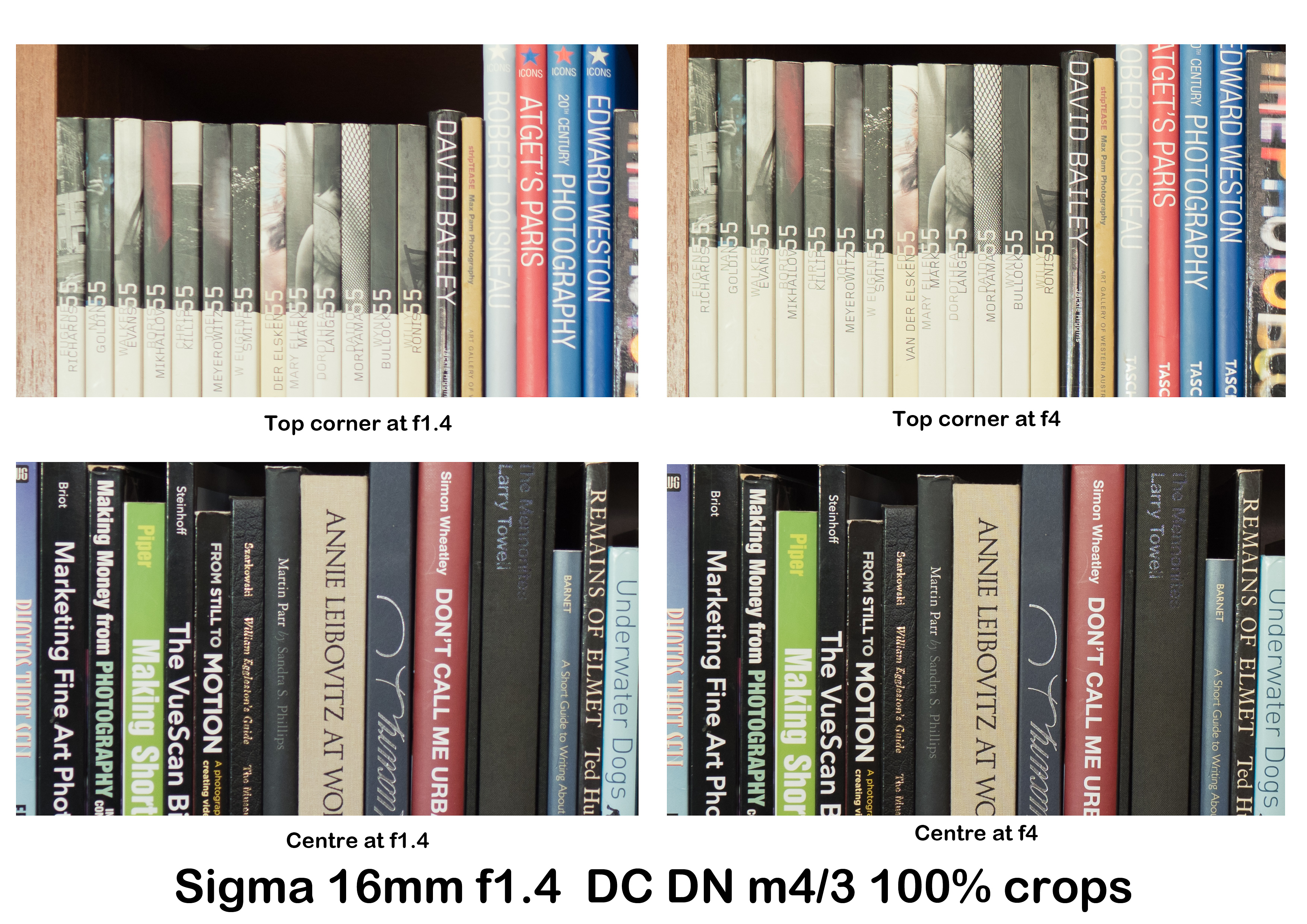
100 % crops showing lens performance wide open and then at the best performing aperture.


In terms of autofocus the stepping motor is fast and accurate and very smooth when shooting video. I tested the lens on the OMD EM1 mk ii which has on sensor phase detect AF and on the Panasonic G85 which uses DFD technology – a variant of contrast detect auto focus that requires the lens to provide a profile to the camera to ensure fast and accurate AF. The Sigma does not have such a profile as these are limited at present to only Panasonic’s own lenses. Despite that there were no problems and I could detect no discernible difference between the Olympus and the Panasonic. The only downside in the AF department is that I can’t use the Pro Capture Low setting which gives up to 18 fps with auto exposure and AF tracking. This is no fault of Sigma’s as the option is only available with Olympus lenses.


Optically – well straight from the get go the Sigma is impressively sharp wide open corner to corner. The performance improves slightly (and it is only visible on my 4K screen at 300%) as you stop down. Diffraction sets in at f16 and this does soften the image. In terms of chromatic aberration, well wide open in high contrast situations it is apparent albeit slight and it is easy to correct in post. The lens is reasonably resistant to flare – but if you have a specular light source in the frame you will experience some veiled flare and ghosting. If you turn off the built in lens profile you can observe a slight barrel distortion, but switch on the profile and it is not visible. The bokeh balls this lens produces are more or less round when shooting wide open even at the edges of the frame and the transitions are nice and smooth. There is some onion ring bokeh which is the result of using moulded aspherical lens.Vignetting is not a problem and is very slight in the region of 1/2 stop.
 

Chromatic aberration is quite apparent on this lens. It is also quite prone to flare even when using the included lens hood.


Verdict

This slideshow requires JavaScript.
 

Being designed to have an image circle much larger than micro four thirds requires means that you are using the best performing part of the lens and this really shows. Just for giggles I compared the Sigma with my old Olympus. The Olympus is noticeably soft in the corners at all apertures and just average in the centre. It suffers badly from chromatic aberration. Vignetting is very apparent, in excess of 1 stop in the corners with the lens profile switched on and getting on for 2 stops when switched off. Physically, optically and figuratively the Sigma stands head and shoulders above the little Olympus. The only area where the Olympus wins out is its small size and that is why I’ll continue to use it when I want something small and compact. For every other occasion I’m reaching for the Sigma. The knock on effect is that I’m seriously wondering about replacing my Olympus 45mm f1.8 with the Sigma 56mm f1.4.
What A Whopper!

The Sigma 150-600mm f5-6.3 DG OS Contemporary lens is part of Sigma’s Global Vision line of lenses. It offers an inexpensive way of getting into wildlife photography.


Not so long ago I looked at the the Panasonic Leica DG Vario-Elmar 100-400 f4-6.3 ASPH Power OIS lens for micro four thirds, well today I’m looking at an alternative lens for APS and full frame cameras – the Sigma 150-600mm f5-6.3 DG OS Contemporary lens. Now confusingly Sigma make two versions of the 150-600 and they are labelled the Sport and Contemporary. The-Digital-Picture.com has put up a good article explaining the difference between the two. The main ones are price and weight with the Contemporary being a 1Kg lighter and $1200 AUD cheaper. This is quite a significant difference and I for one prefer a lighter lens and a heavier wallet. The Contemporary is part of Sigma’s Global Vision line of lenses and is thus compatible with the Sigma TC-1401 1.4x Teleconverter which allows auto focus to work to a maximum of f8 while wide open if your camera supports this feature. This is an interesting option as it allows a reach of 860mm on full frame and a humongous 1376mm on an APSC sensor which is impressive reach for a lens and converter costing less than $2000 AUD. I didn’t happen to look at this option because none of my Canon DSLRs allow f8 auto focusing. shuttermuse.com has an article on f8 focusing with extenders or teleconverters and a list of compatible Canon DSLRs. This does not apply to the mirrorless R and RP which have f11 auto focusing.


Lens mounts available Canon EF

Nikon F

Sigma SA

Focal length 150-600mm
Angle of view 4.1° – 16.4°
Aperture range f5/6.3 to f22/27
Filter size 95mm
Minimum focusing distance 2.8 metres
Maximum magnification 1:4.9
Focusing Silent HSM with internal focusing and manual override
Aperture blades 9
Lens construction 20 elements in 14 groups with 1 FLD and 3 SLD elements
Image stabilisation Yes – 3 stops equivalent
Length 26cm
Diameter 10.5cm
Weight 1.93Kg without lens hood and tripod collar.


Fully extended to the 600mm focal length the lens is a beast. There is no sign of any wobble in the zoom extension.

Physically this is a large lens, it stands head and shoulders above my Canon 70-200mm f2.8 IS L lens which in itself quite a large lens. The 150-600 is also 500g heavier. At 2.1 Kg with lens hood and tripod collar attached it definitely has heft to it. Interestingly Sigma refer to it as a lightweight lens, I suppose it’s all a matter of perspective as the Panasonic Leica 100-400 is 0.985 Kg so the Sigma feels gargantuan compared to it while the Canon EF 600 mm f4L IS is over 3Kg so the Sigma then seems svelte and compact. The lens body is made out of what Sigma calls a Thermally Stable Composite (TSC) which is substantially stronger than conventional polycarbonates while having similar thermal expansion properties to aluminium. The lens mount is made of chromium plated brass which should ensure a long life. All in all it feels a well made and rugged lens, it may feel like plastic but the TSC body feels substantial and gives the impression of being very durable with no creaking or flexing. The Sigma 150-600 is advertised as being dust and splash proof but on closer reading of Sigma’s spec sheet there is only one seal and that is at the lens mount. If you want better then you’ll have to spring for the Sports version.


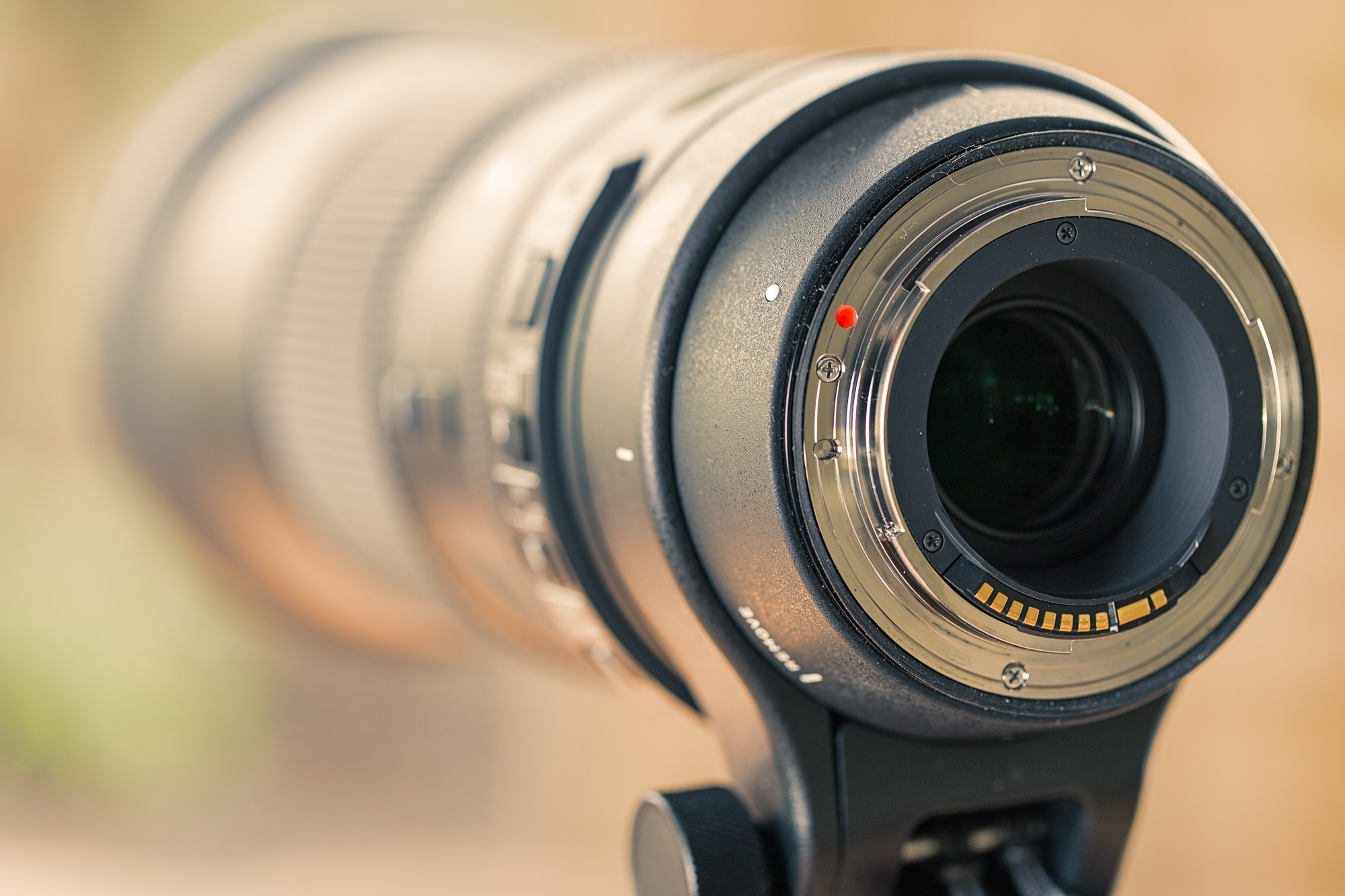
The Canon EF lens mount is made of chromium plated brass.

When looking at the lens from the front there is a large ribbed rubber zoom ring that has a long throw of about 160º. The action is smooth and feels not too tight nor too loose. As you rotate the zoom ring the lens barrel extends by 8cm. The extension feels secure with no slop or wobble. Just behind the zoom ring on the lefthand side is a zoom lock switch which can lock the zoom ring at the 150mm focal length to prevent zoom creep while carrying the lens. The focusing ring is narrow ribbed rubber and allows you to manually adjust focus while the lens is in the autofocus mode. There are no hard stops which might concern you if you were to use the lens for video. Behind the focusing ring is a panel of four switches and they are:

  • An AF switch allowing to choose between AF, MF and MO (Manual Override)
  • A focus limiter switch allowing a choice of full range, 10m to ∞, and 2.8 to 10m.
  • An optical stabilisation switch that gives a choice of off, on and a panning mode.
  • A custom switch that allows you to select two custom modes that can be programmed using the Sigma FD-11 USB Dock


There are three switches on the lens barrel. One fotr focus modes, the second a focus limiter and the third is for the optical stabilisation.


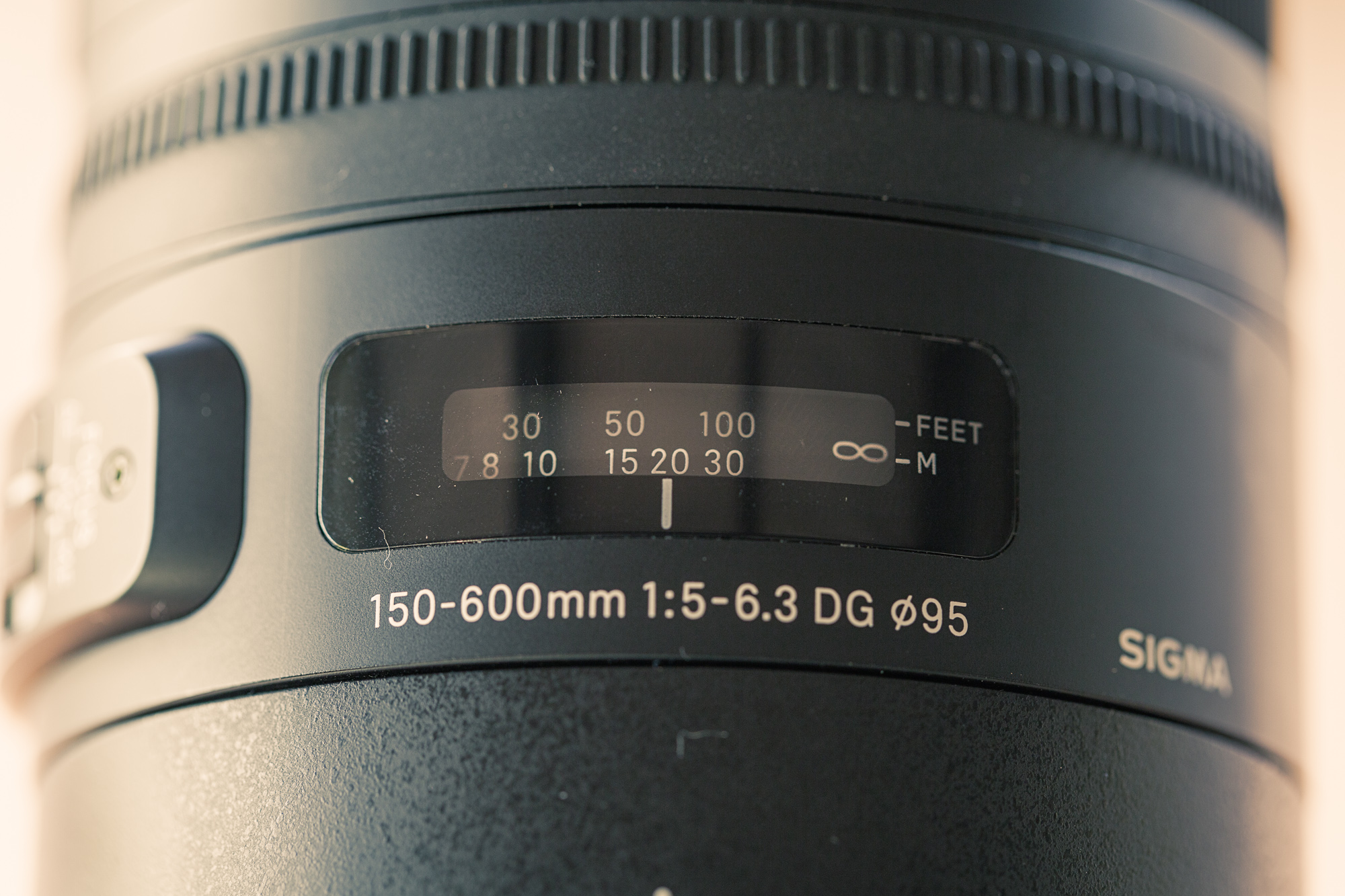
The focus distance scale is behind a window just below the the focus ring.

Above the switches is a window showing the focusing scale and then behind that is the lens collar. The lens collar allows you to turn the camera from horizontal to vertical while mounted on a tripod, but, unfortunately there are no detents to allow you to do this while looking through the viewfinder of the camera, you have to align the marks on the collar with those on the lens body. The tripod collar can be detached and thoughtfully Sigma provide a cosmetic rubber ring to slide over the lugs that hold the collar in place. The lens comes with a large plastic lens hood the size of a flower pot, it seems sturdy enough and bayonets into place and a nice touch  is that is ribbed internally to prevent reflections. The 150-600 has a 95mm filter thread which means filters will be expensive and potentially hard to get. In terms of accessories Sigma provide a nice well padded lens case, a shoulder strap for it and a Sigma branded camera strap. Like all Sigma lenses you get a lot for the money you spend. Nice one Sigma!

The 150-600 has a 95mm filter thread which means filters will be the size of dinner plates, be expensive and potentially hard to get.

I tested the lens on a Canon EOS 6d and an EOS 550d to see how it would perform on both crop and full frame cameras. In terms of AF performance as neither of those cameras have what can be considered state of the art AF systems, in fact it is over twelve years old, the lens did very well. The single point AF using the centre point was fast and precise and well capable of fixing on small birds amongst foliage. In terms of continuous AF on the EOS 550d the camera was the limitation being only able to shoot 6 frame bursts in RAW, but out of my six shots when tracking my dog trotting five of the six would be in focus. The 6d is able to shoot 4.5 frames per second for 15 frames and on the trotting bull terrier test it managed 12 frames in focus.


This slideshow requires JavaScript.

When it came to BIF (birds in flight not fisticuffs) the AF was more than capable of focusing on and tracking medium to large birds. It really struggled with small birds especially swallows. Put it on a better camera and I’m sure you’d get better results.


Australian White Ibis, by Paul Amyes on 500px.com
Australian white ibis, Threskiornis molucca, Herdsman Lake, Western Australia.


My primary use for a lens like this is handheld bird photography, and as such I didn’t really give the image stabilisation a workout as I seldom use a shutter speed below 1/500 sec. But messing around at home in the house and garden I figured it was good for three stops. Mind you I do have steady hands so your experience may differ from mine.


The optical construction of the lens is twenty elements in fourteen groups with 1 FLD and 3 SLD elements. The FLD (“F” Low Dispersion) glass element, which offers performance equivalent to fluorite.  Canon and other manufacturers have used synthetically grown crystals of calcium fluoride components in lenses to aid apochromatic design, and to reduce light dispersion so lenses made from it exhibit less chromatic aberration. What Sigma has done is use newer glasses and computer-aided design to render the use of fluorite crystals unnecessary. Sigma claim that the FLD element is “highly transparent, its refractive index and dispersion are extremely low as compared to conventional types of glass. It offers characteristics very similar to those of fluorite, which is valued for its anomalous dispersion. These characteristics minimize residual chromatic aberration (secondary spectrum), which cannot be corrected by ordinary optical glass, while helping to produce sharp, high-contrast images.” (https://sigmaphoto.com.au). The three SLD (Special Low Dispersion) glass elements also help to minimize chromatic aberration. To help achieve attractive out of focus transitions there are nine rounded aperture blades which should help achieve nice round bokeh balls when shooting specular highlights.


In terms of optical performance well I’ll deal with full frame and crop separately. First up using the lens on the crop framed 550d. At 150mm the centre of the lens wide open was sharp and contrasty and stayed A as such until f22 when it softened due to the effects of diffraction. At the edges the peak performance was attained at f11 and remained until f22 when it softened again. At 600mm the centre wide open was a little soft and lacking in contrast. This improved by f8 and then deteriorated at f22. The edges weren’t so good – wide open they were soft and lacking contrast and remained so until f22 when they got worse. As for vignetting well at the short end wide open it was apparent, about 1/2 to 1 stop and this disappeared by f8. It was the same story at the long end. Throughout the focal range there is slight pin cushion distortion and some chromatic aberration can also be seen. Open the files up in Lightroom and apply the lens profile and things improve nicely. On the full frame 6d the story is the same except for the vignetting which is naturally worse at around 1-1 1/2 stops which is totally understandable as you are using the whole frame rather than just the central part of the lens coverage.
 

100 % crop from the centre of a New Holland Honeyeater to show how detail is rendered by the Sigma 150-600mm f5-6.3 Contemporary lens.


What’s all this mean in real life. Well if we look at the image for the New Holland Honeyeater which I took at a distance of around 3.5 to 4 metres and then enlarge the section around the head you can see that there is nice feather detail and that the eye is sharper than a very sharp thing. To get much better you’d have to spend an awful lot of money and if we look at the Canon 600mm f4 lens I mentioned earlier that has an eye watering price of $18,500 AUD which is over 11 times the cost of the Sigma. Personally I know that if I plonked $18 K down on a lens I’d be heading for the divorce court which would make the Canon a doubly expensive lens. So for what it costs the Sigma is amazing value.

Below are some examples of bird photography shot with the lens on both a Canon EOS 6d and 550d.


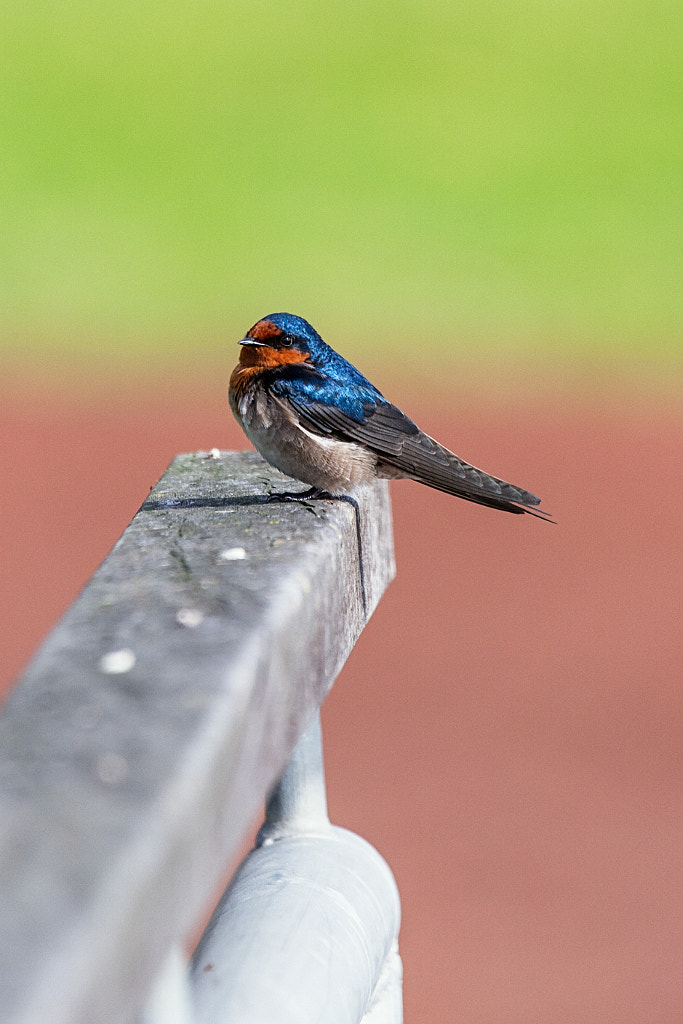
Welcome Swallow by Paul Amyes on 500px.com
Welcome Swallow, Hirundo neoxxena, Herdsman Lake, Western Australia. Canon 6d with Sigma 150-600mm Contemporary. Exposure: 1/500 sec, f7.1 at ISO 250.


Red Capped Robin, by Paul Amyes on 500px.com
Red capped robin, Petroica goodenovi, Avon Walk Trail, York, Western Australia. Canon 550d with Sigma 150-600mm Contemporary lens. Exposure: 1/500, f6.3 at ISO 160.


Chestnut-rumped Thornbill by Paul Amyes on 500px.com
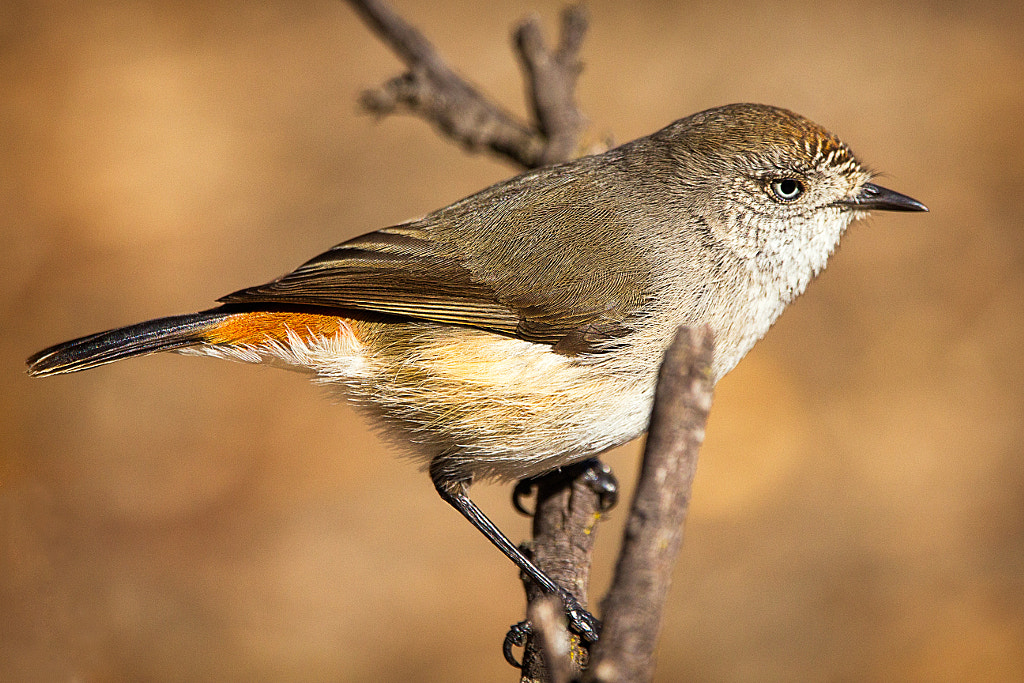
Chestnut-rumped Thornbill (Acanthiza uropygialis), York, Western Australia. canon 550d with Sigma 150-600mm Contemporary lens. Exposure: 1/1000 sec, f6.3 at ISO 320.


Mistletoebird, by Paul Amyes on 500px.com
Mistletoebird, Dicaeum hirundinaceum. The Nyoongar name is Minnijit. York, Western Australia. Canon 6d with Sigma 150-600mm Contemporary lens. Exposure: 1/1000 sec, f8 at ISO 1600.

So would I recommend the lens? Yes without hesitation. It performs very well and is sold at a very good price and you can’t argue with that.