Out and about again looking for orchids and birds. This trip took me to the Old Jooralying townsite just east of Narrogin. It was marked as such on my mud map but other than that I could find no other reference to it. When I got there there wasn’t too much to see. Amongst the scrubby rock sheoaks were some faint trails that once could have been dirt roads, and a few old timbers from some sort of structure. A bit more investigation and I found an old car wreck. It was remarkably intact considering how long it must have been there.
Abandoned car at the Old Jooralying Townsite in Western Australia.
It took a while but eventually I found the orchids – a small colony of them. They’re nothing special to look at, but they are a variety I’d not seen or photographed before so that made the journey worthwhile.
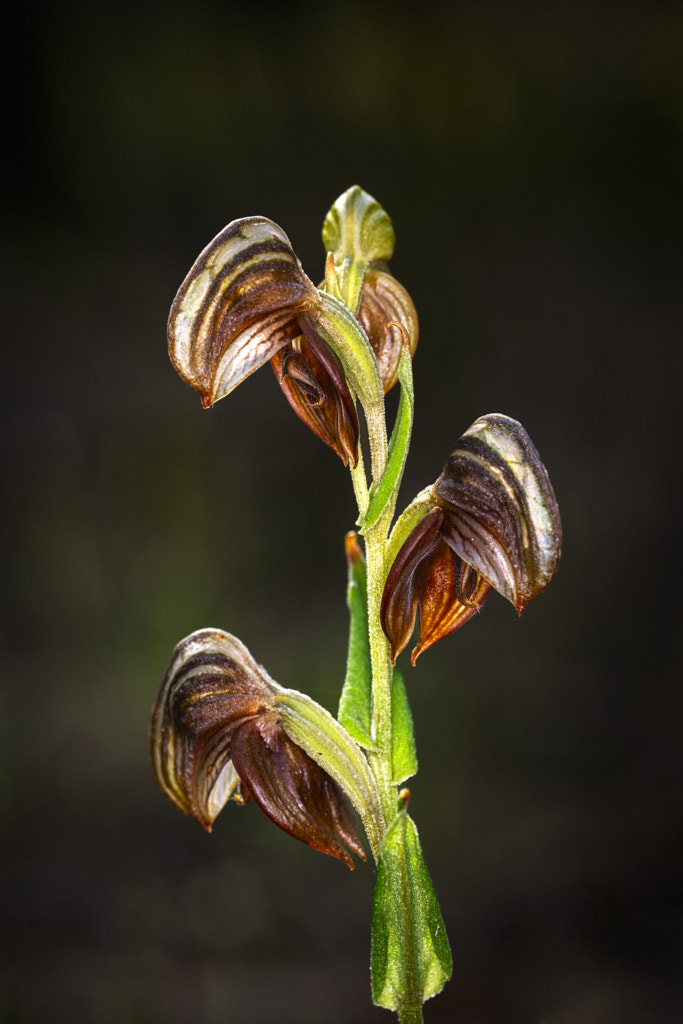
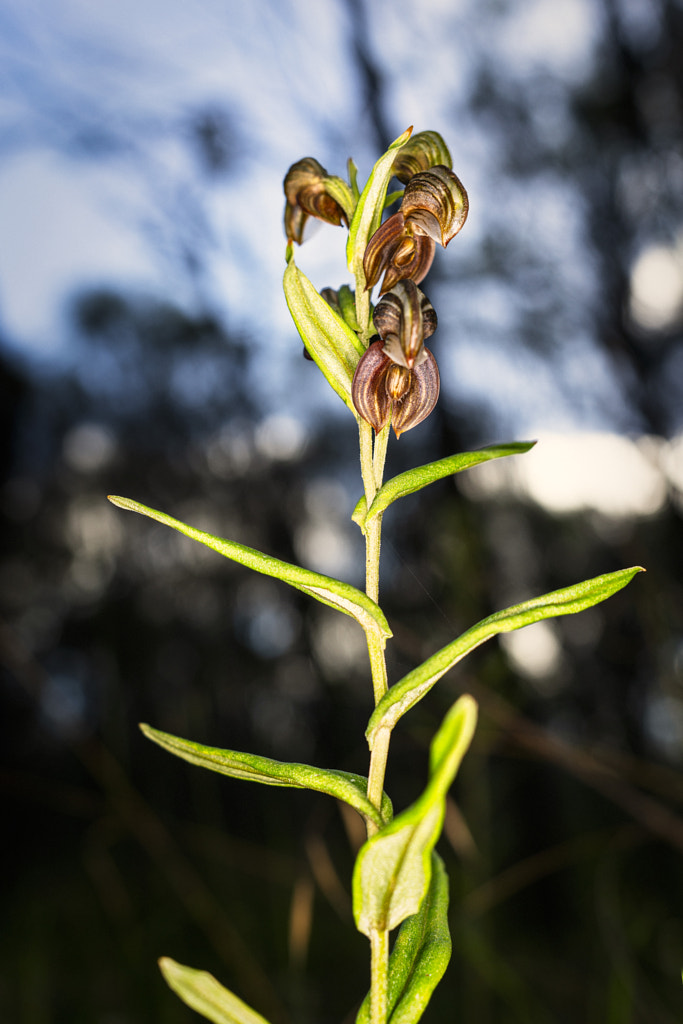
Cupped Banded Greenhood, Pterostylis concava. Jooralying, Western Australia.
Cupped Banded Greenhood, Pterostylis concava. Jooralying, Western Australia.
The Tamron 20mm f2.8 lens for Sony E mount cameras was announced back in November 2019 as part of a trio of prime lenses which share the same exterior design, construction, size, filter diameter and f stop. The other lens being the 24 and 35 mm. I reviewed the 35mm f2.8 back in June 2021 and was quite impressed with it.
TLDR
Vital Statistics
Focal Length
20mm
Maximum Aperture
F2.8
Angle of View (diagonal)
94º30’
Optical Construction
10 elements in 9 groups with 3 low dispersion lens elements and 1moulded glass aspherical element.
Minimum Object Distance
11cm or 4.3 inches
Magnification Ratio
1:2
Filter Size
67mm
Dimensions
(h) 64mm (2.5 inches) x ⌀ 73mm ( 2.9 inches)
Weight
220g (7.8 oz)
Number of Diaphragm Blades
7 curved blades
Accessories
included lens hood
Available Mounts
Sony E
Build Quality
The Tamron 20mm is pretty much the same design and build quality as the 24 and 35. They are all the same length and diameter. They all have the same filter diameter of 67mm. Weight wise the 20mm is the heaviest at 220g and the 35mm is the lightest at 210g. All three have the same magnification ratio of 1:2. So Tamron has worked very hard to ensure that uniformity is carried throughout this line of lenses. It will be interesting to see if they introduce longer lenses like an 85mm how they carry that out. When compared to my Canon EF 20mm f2.8the Tamron is only a smidge smaller and lighter which is quite surprising as the Canon is a retrofocus design built to accommodate the larger lens flange distance of 44mm compared to the 18mm of the Sony.
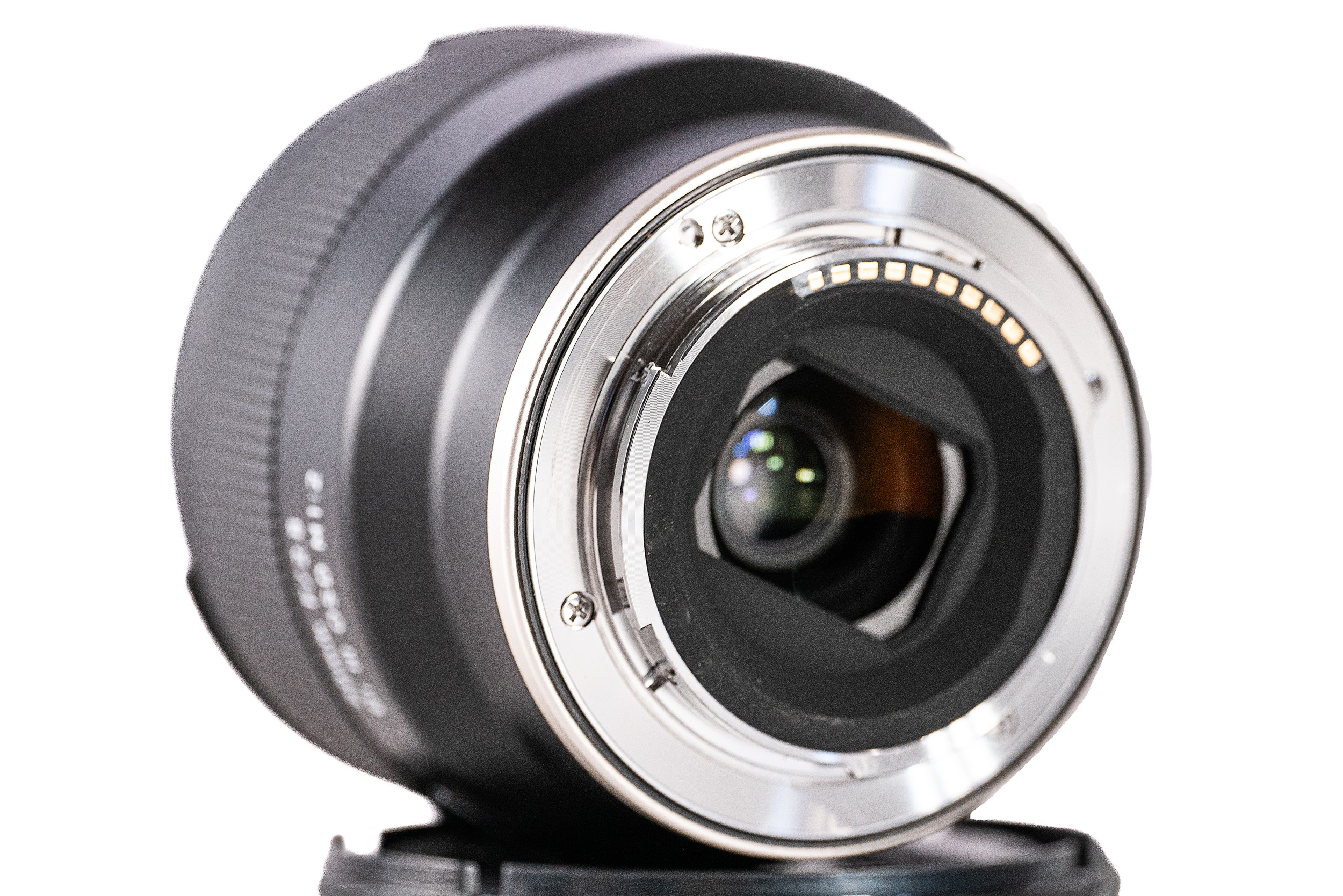
The body is made out of some form of engineering plastic and the lens mount appears to be chrome plated brass which is nice. There is an “o” ring which provides some semblance of sealing from the elements at the mount. There is no other weather sealing and no indication as to the level of sealing and Tamron on their website just say that it has a “Moisture-Resistant Construction”. Tamron also claim that the front lens element has a fluorine coating which is dirt resistant. The only control on the lens is the ribbed focus ring which is of the fly-by-wire type and it has no hard stops or any form of tactile feedback when turning it. Bad news if you want to do manual video focus pulls. The lens comes with a petal shaped lens hood that bayonets into place.
Optical Performance
Tamron on their website say “The expert arrangement of the LD and GM specialised glass elements greatly controls aberrations, including chromatic aberrations. Tamron’s proprietary BBAR (Broad-Band Anti-Reflection) Coating reduces ghosting and flare, which can otherwise occur when taking a photo against the sun.” When shooting with the camera’s lens correction function enabled “it delivers, throughout the frame, high resolution performance that maximises the benefits of the latest high-megapixel cameras”. So let’s see how those claims stack up to real world usage.
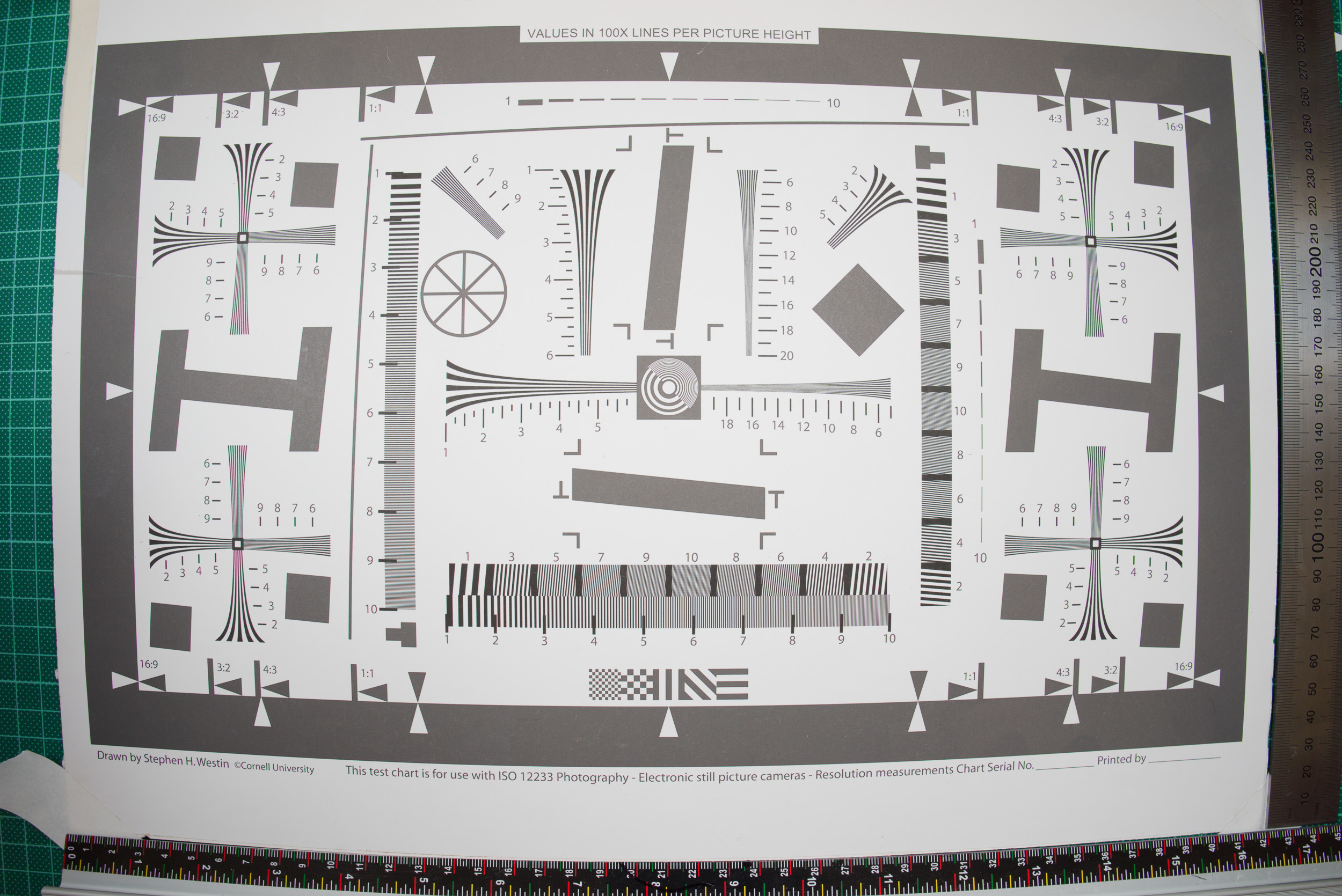
With no lens profile applied there is massive barrel distortion on the Tamron 20mm f2.8 Di III at f5.6.
Let’s deal with the whopping great elephant in the room. This lens has very profound barrel distortion, but for jpg shooters an inbuilt lens profile minimises the effect. For RAW shooters Adobe has made a lens profile available for Lightroom and Camera RAW.
When we look at the uncorrected image and look at the rulers on the bottom and the side we can see that it is 47.4 cm in width and 29.5 cm in height. Compare that to the corrected image which is 43.7cm by 28.3cm. So in percentage terms that is a 7.2% reduction in width and a 4.2% reduction in height. This means that with the lens profile applied the lens effectively becomes a 22mm. But if you shoot video with electronic stabilisation the image is cropped again and it will give an angle of view similar to that of a 24mm lens. So if video is important to you and you want an angle of view given by a 20mm lens then you either get a lens that doesn’t suffer from as much distortion or you get a wider lens– somewhere around 16-18mm.
So in real terms how bad is the distortion? Well comparing the Tamron, which is a very modern design to the Olympus OM Zuiko 21mm f3.5 released in 1984 and the Canon EF 20mm f2.8 USM from 1992 we can see that the Tamron has considerably worse distortion. This is very surprising as the two older lenses are retrofocus designs. SLRs have a big flippy flappy mirror between the lens and the film/sensor and this meant in the early days of SLR photography making wide angle lenses impossiblebecause the rear lens element would foul the mirror. The breakthrough camein 1950 when Pierre Angénieux invented the retrofocus lens which is akind of “reverse” telephoto design where the lens elements closest to the film plane have a negative effect making the image smaller. The downsides are more glass elements which means more air to glass surfaces which means more refraction which means more potential chromatic aberration and distortion. So the fact that the Canon and Olympus lenses have a better performance with their compromised design is saying something.
Slight barrel distortion on the Olympus OM Zuiko 21mm f3.5 lens at f5.6.
Slight barrel distortion on the Canon EF 20mm f2.8 lens at f5.6.
In terms of lateral chromatic aberration the Tamron 20mm shows mild CA in the corners and edges which is very slight when uncorrected and virtually invisible when the profile is applied. Wide open there is longitudinal chromatic aberration present – cyan and magenta fringing on the out of focus edges – but this is easily fixed by stopping down. Vignetting is quite apparent without the lens profile, but when it is applied it is a non issue.
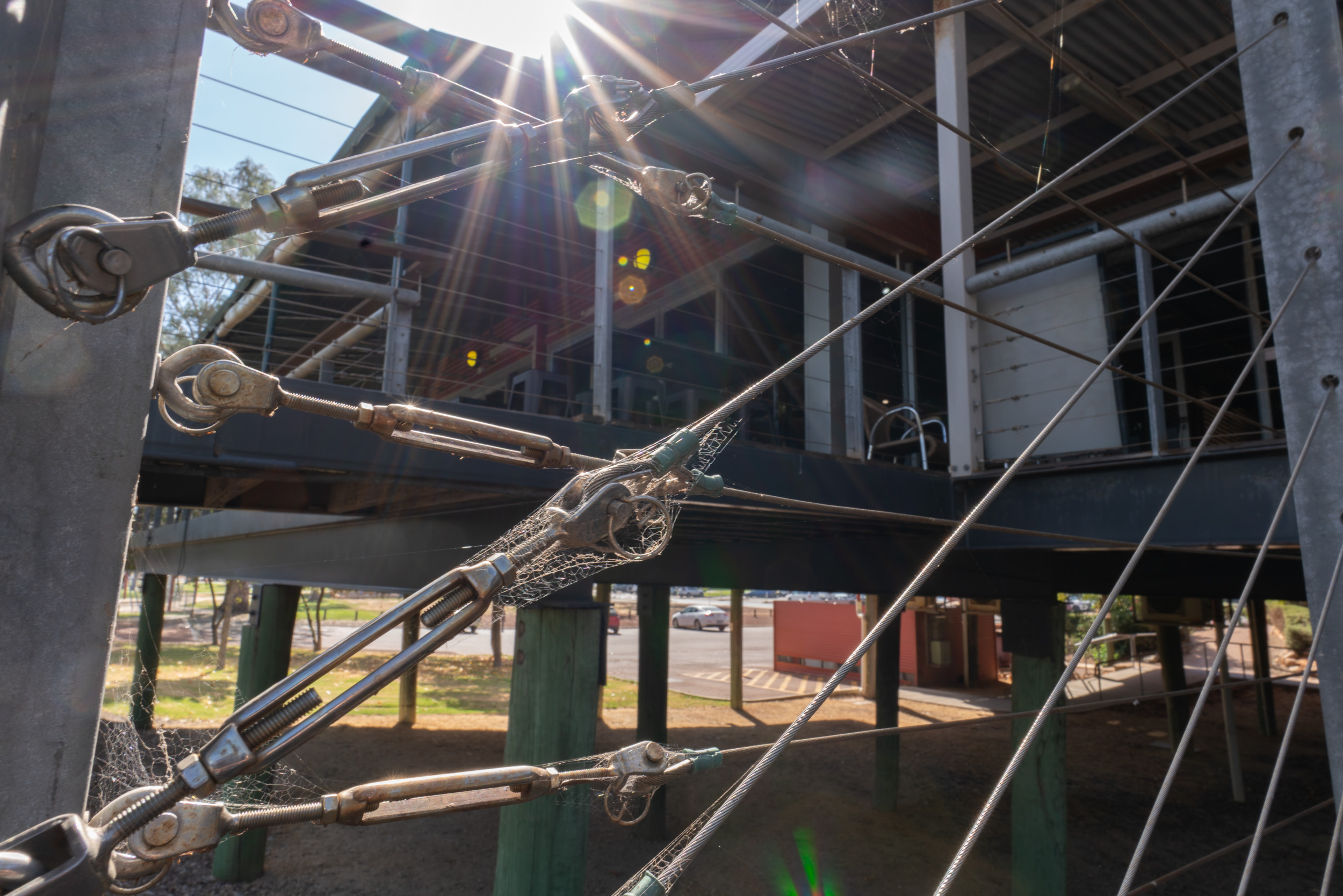
Specular light sources in the frame or just outside it can cause ghosting and flare.
Using the supplied lens hood reduces the incidence of len flare.
When it comes to flare resistance, well extreme wide angles lenses are very prone to the effects of flare and don’t necessarily have to have a specular light source in the frame to cause it. The Tamron handles it reasonably well but is prone to veiling and ghosting flare. The lens comes with a lens hood and it would be wise to use all the time and it does a reasonably good job of reducing the incidence of flare. The seven aperture blades produce sunstars or diffraction spikes that are a bit messy and not very pleasant – although this is a matter of personal taste.
The sunstars or diffraction spikes are a little on the messy side.
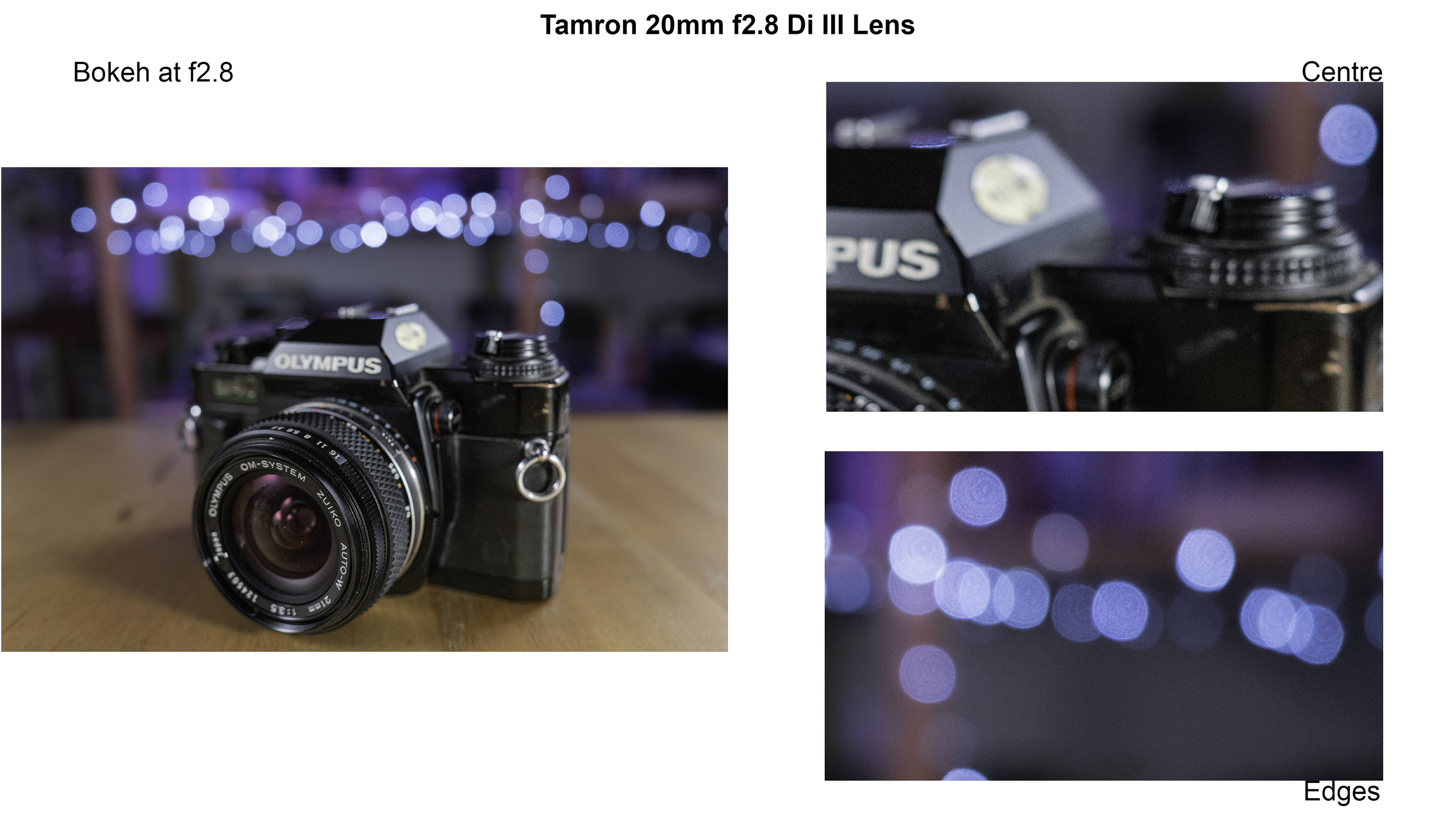
The bokeh balls produced by the Tamron 20mm f2.8 Di III lens wide open at f2.8.
A close up of the bokeh balls showing the shape deformity and the onion ring artefacts.
The bokeh produces nice tonal transitions in the out of focus areas.
The bokeh balls aren’t very attractive, they have a very pronounced onion ring effect and even the balls at the centre of the image have a slightly elliptical shape and this gets more apparent towards the edge of the image. While you don’t necessarily buy a 20mm lens for its bokeh it is important on this lens because of its close focusing capabilities. When we look at real world examples we can see the tonal transitions in the out of focus areas are nice and smooth.
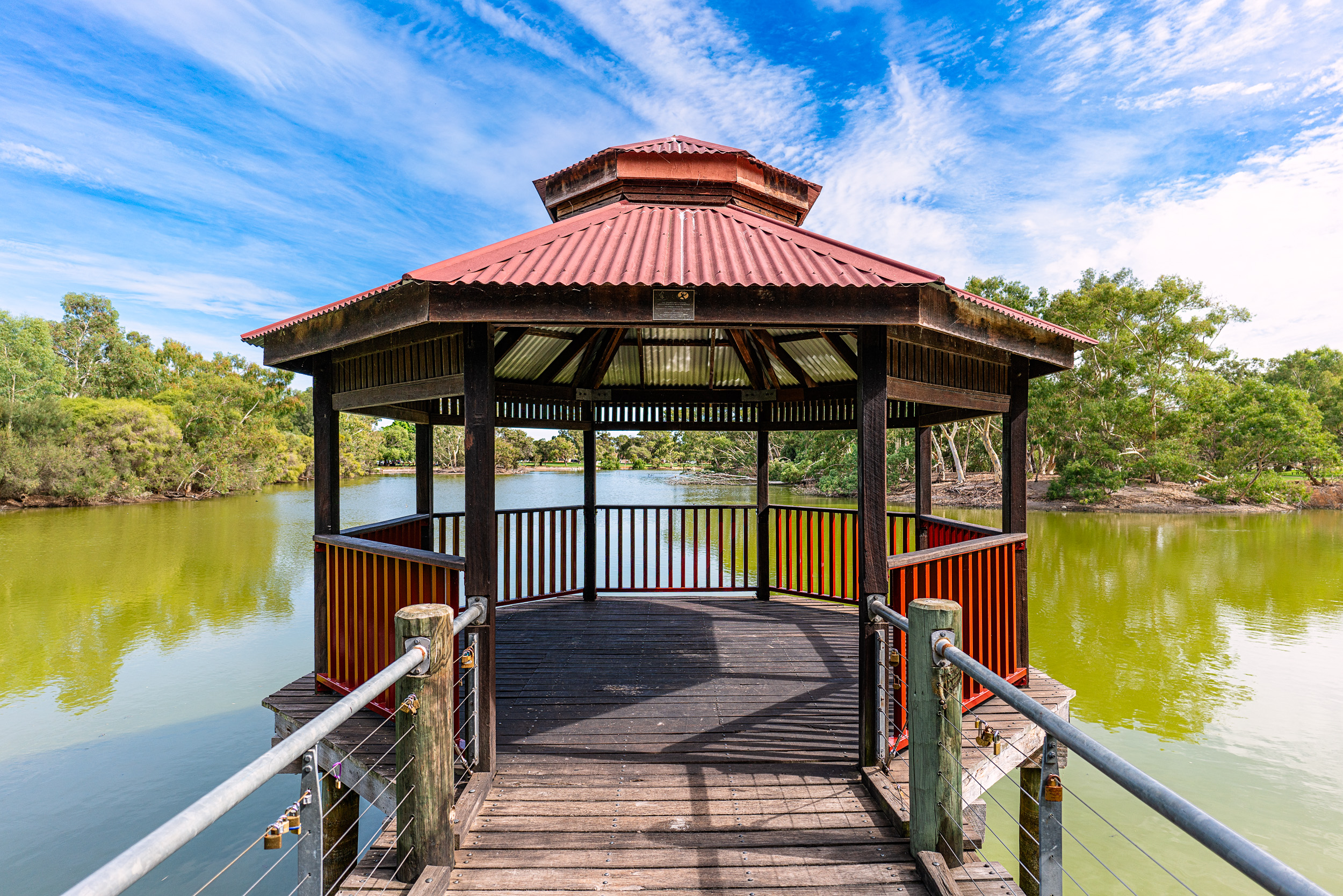
Sharpness. Wide open at the centre the lens is a little soft and lacking contrast. Things improve as you stop down and the best sharpness is attained at f5.6. At the edges at f2.8 the corners are slightly worse than the centre. It is not until f8 when the corner performance equals that of the centre.
The pergola in the middle of Tomato Lake in Kewdale.
Autofocus
For stills photography the Tamron 20mm is very positive in acquiring focus if just a bit slow. There’s no hesitancy and no hunting. In a sequence of shots of me walking backwards and forwards the camera and lens combo achieved an 88% hit rate. I would expect that to be better with the third and fourth generation A7 bodies.
Video is a different story. There is some hesitancy in focusing and a bit of wobble even with static shots. Performance is at its best at closer distances.
Usage Scenarios
For landscape and architectural work this would be quite a nice choice, particularly if you are travelling and want to keep the weight of your kit down. The fact that the lens doesn’t reach peak optical performance across the frame until f8 would not be a problem. Just remember to keep for your verticals vertical when shooting buildings.
The minimum focus distance and high magnification ratio means that you can fill the frame with small objects.
To achieve the magnification ratio of 1:2 you have to be very very close to your subject
The close up capabilities of this lens are what sets it apart from other extreme wide angle lenses. This lens will reproduce an object at half size at its minimum focusing distance of 11cm. Now remember that that distance isn’t measured from the front lens element but from the sensor plane. This means to achieve the magnification ratio of 1:2 you have to be very very close to your subject. So close that you may have to remove the lens hood as it casts shadow over your subject. I bought the lens for nature photography, particularly close ups of flowers. Wide angle close up shots allow you to show the detail of the subject and its context. That gives a more unusual look to the more standard viewpoint of a short telephoto macro lens such as 100mm. For this the Tamron works very well.
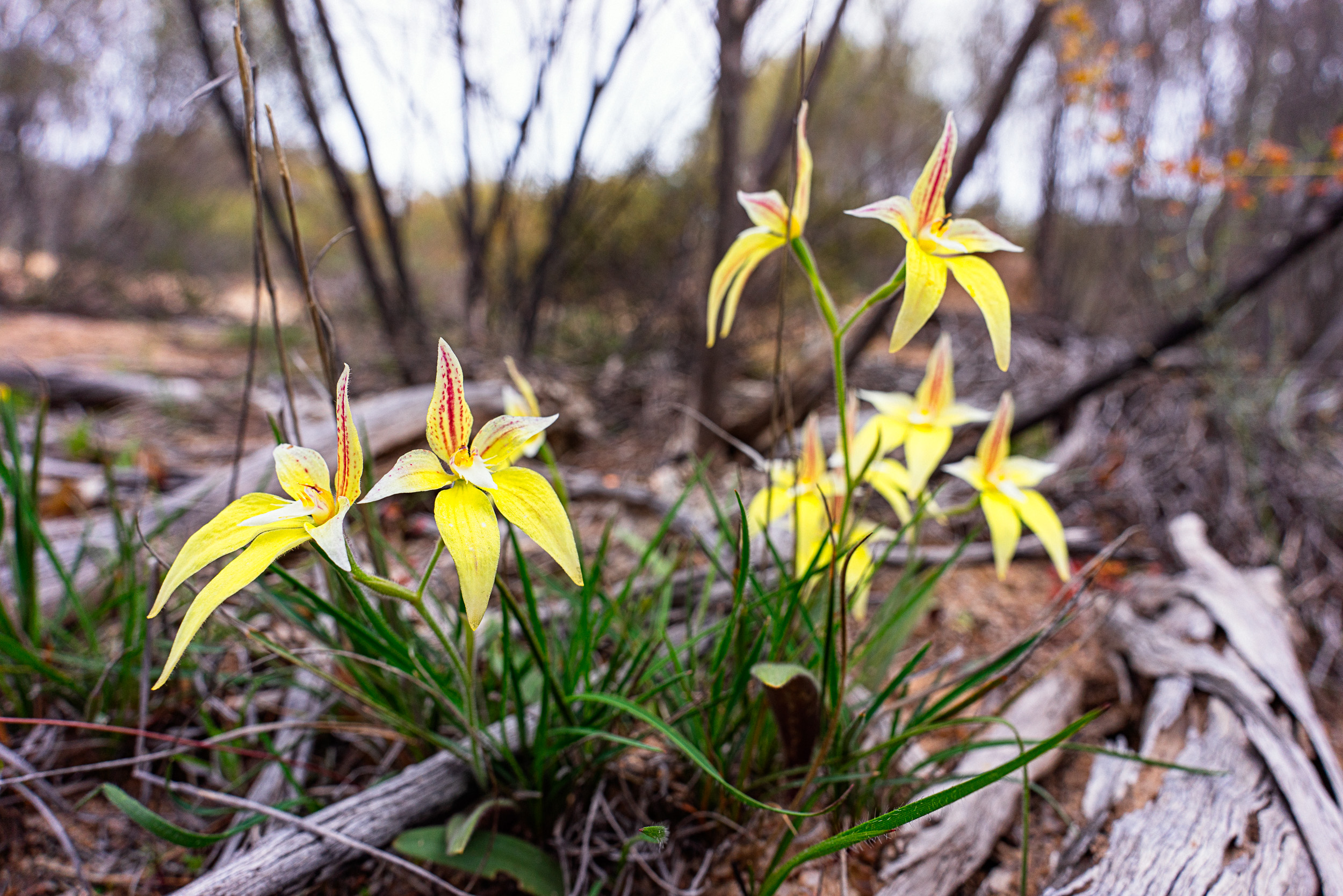
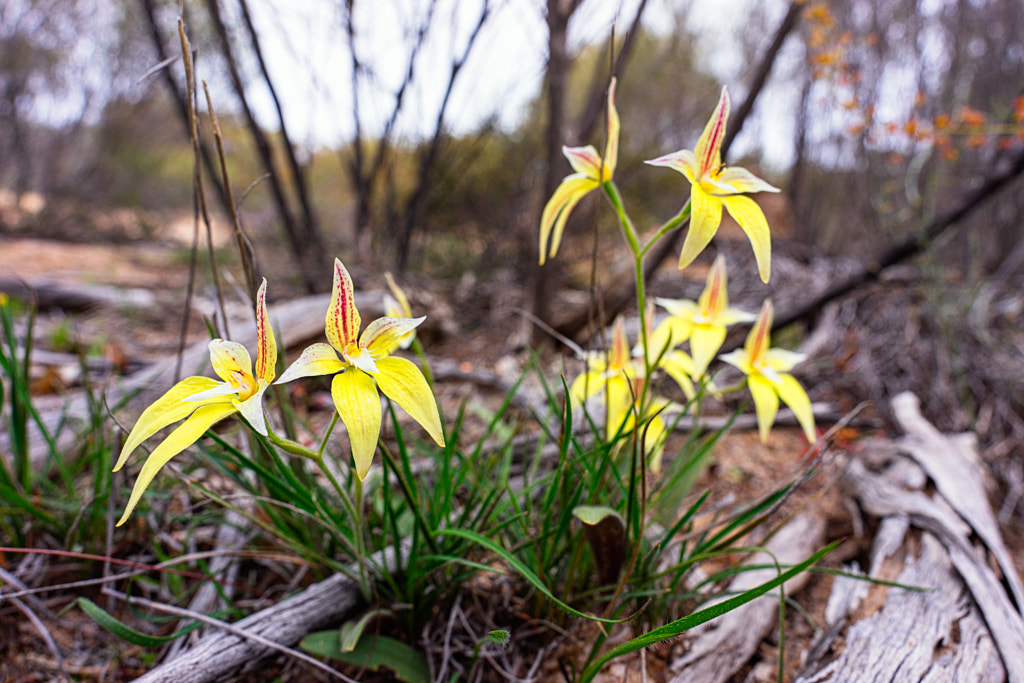
Cowslip Orchid, Caladenia flava subs. flava. Christmas Rock, Western Australia.
Astro – I don’t do this type of photography but from what I’ve read I think that you’d be better off getting one of the faster 20mm lenses from Sony or Sigma. F2.8 is borderline too slow an aperture and the lack of edge sharpness at wide apertures further handicaps the lens for this particular usage.
Video usage. This is where the lens is like the curate’s egg – “good in parts”. The autofocus is a bit of a let down and the manual focusing makes repeatable focus pulls difficult. The light weight is a boon for gimbal usage as is the fact that the lens doesn’t extend when focusing. If vlogging is your thing then the angle of view is just about perfect – giving your viewers more of the background rather than just having a large talking head – plus the light weight means the lens and camera combo is easier to hold at arms length.
Conclusion
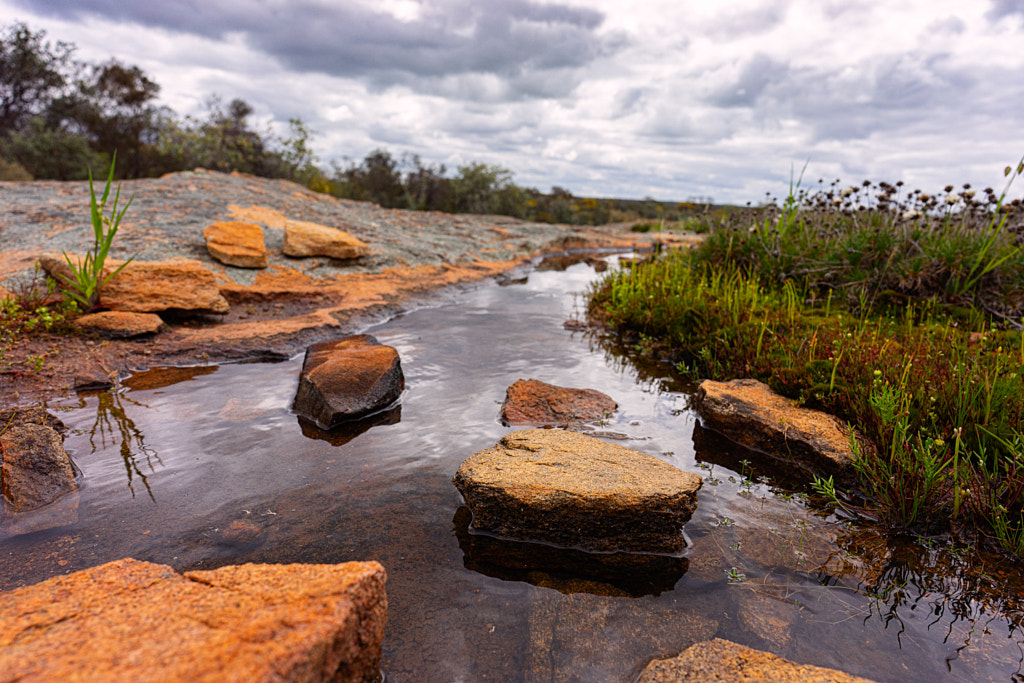
Rainwater captured on Christmas Rock in natural forming crack, depressions and gullies.
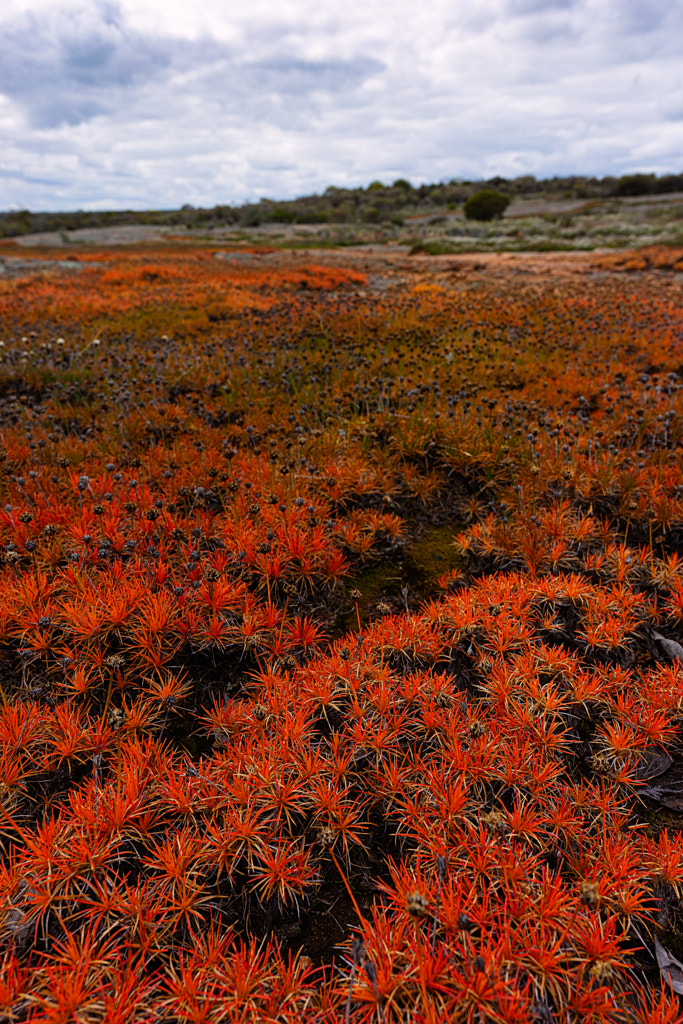
A suprising number of plants grow on Christmas Rock.
Jug orchid or recurved shell orchid (Pterostylis recurva). Woottating, Western Australia.
Cycling along the Beenyup Swamp Boardwalk in Yellagonga Regional Park.
I bought this lens to compliment the 35mm f2.8 which I really like and use a lot. I find that the 20mm is somewhat underwhelming. I feel that the optical performance isn’t as good as it could be. The lens distortion is quite severe and the lens profile just blurs the detail in the corners. Couple this with the autofocus performance and I’m left feeling that it would be better to save more money and buy a better lens. In fact if it wasn’t for the close focusing capabilities I would be parting company with this lens.
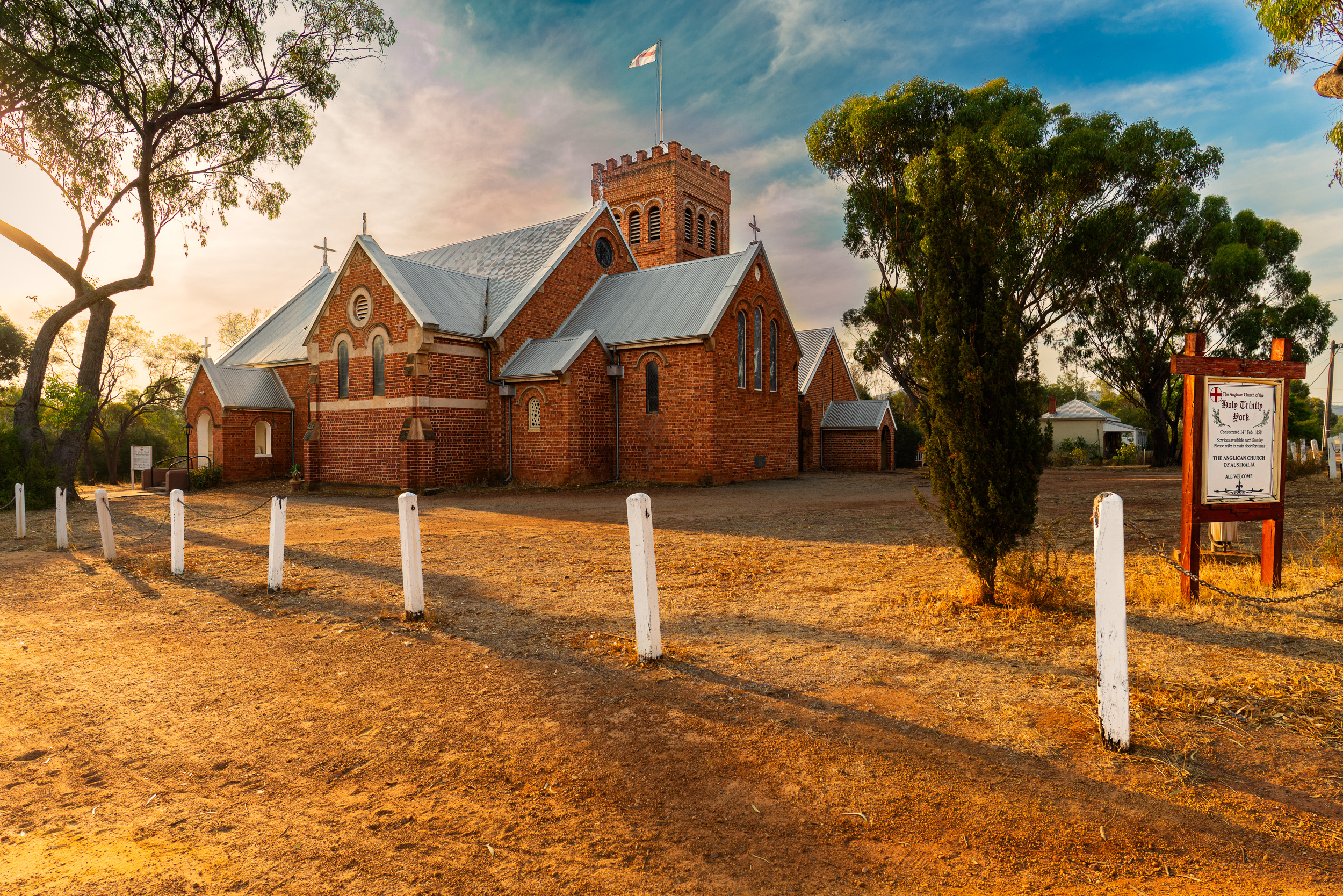
The carowner virus has made its way around the world to York in Western Australia.
This new virus doesn’t originate in Wuhan but comes from Russia. The symptoms are feeling pain radiate down into your pockets, a feeling of tightness in the wallet, feelings of anxiety and rage every time you pass a petrol station and ultimately leads to the demise of your car. It is a disease that could cause the end of civilisation as we know it.
Maybe it’s time to buy shares in bicycle factories.
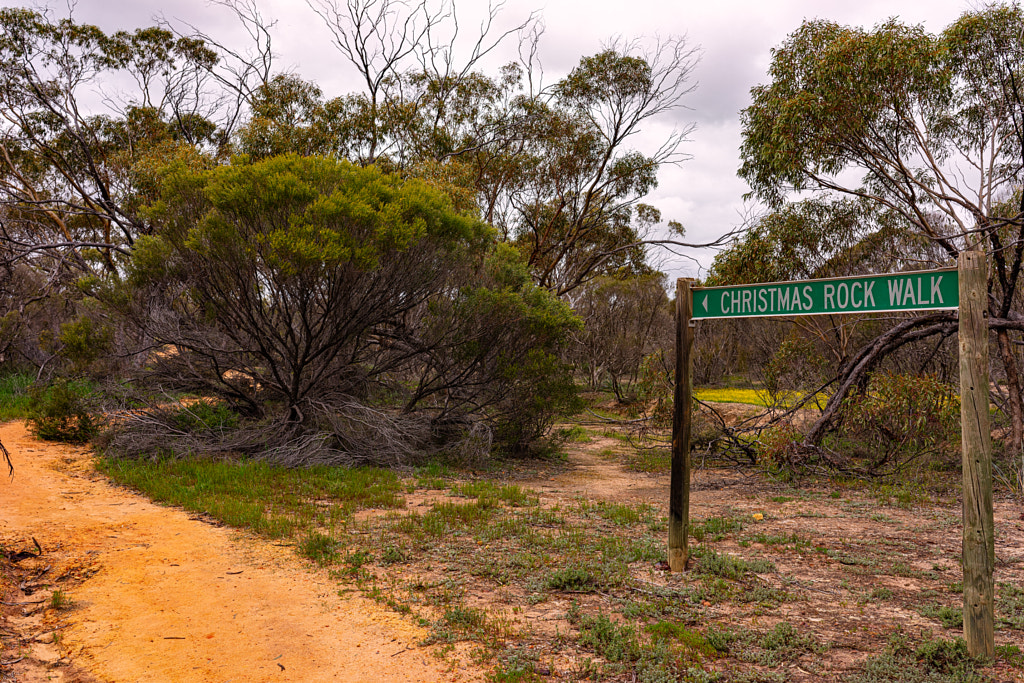
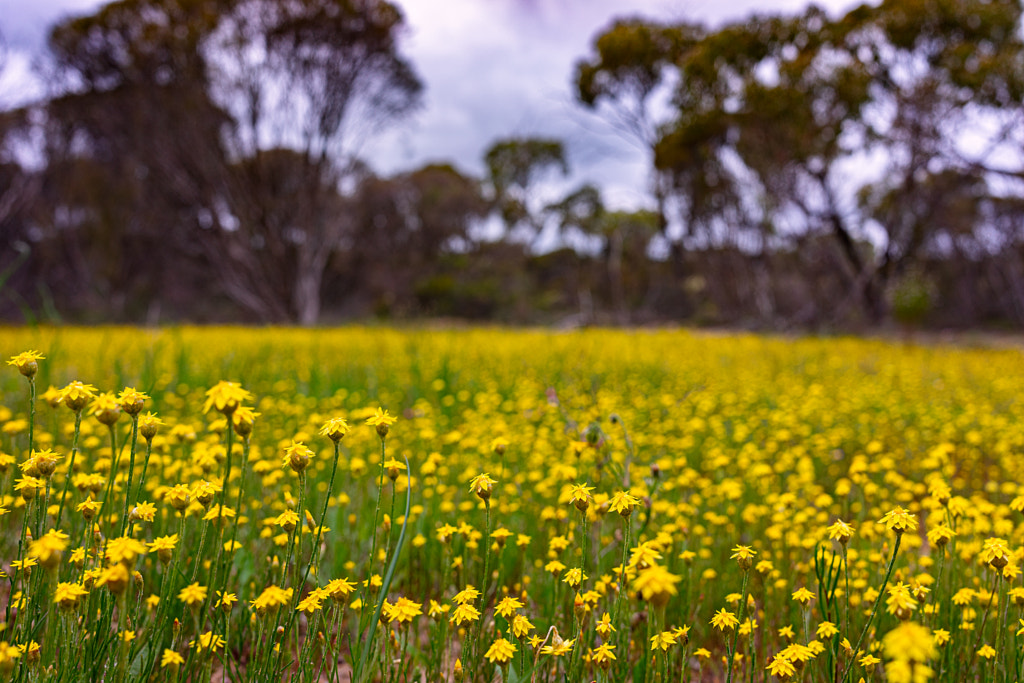
Christmas Rock Walk Trail that is. Christmas Rock is in Wongan Hills and I’ve written about going there before. This time I’m writing about the Christmas Rock walk trail which is located in a 2000 hectare reserve. It is an easy 2.7Km walk along relatively flat well marked paths not far from the centre of the town site. Along the trail are interpretive panels which give insights into the reserve. What makes it worthwhile is that at wildflower time the walk passes through country that is a riot of colourful flowers. It is a gobsmackingly beautiful sight this year as the weather conditions have been ideal. The bird life in the reserve is also pretty impressive and their song provides a fitting score for a very pleasant walk.
Cristmas Rock Walk trail is an enjoyable easy 2.7Km walk trail in the Wheatbelt Town of Wongan Hills. Sony A7r with Tamron 35mm f2.8 lens. Exposure: 1/160 sec, f8 at ISO 100.
Yellow everlastings at Christmas Rock, Wongan Hills. Sony A7r with Tamron 35mm f2.8 lens. Exposure: 1/125 sec, f8 at ISO 100.
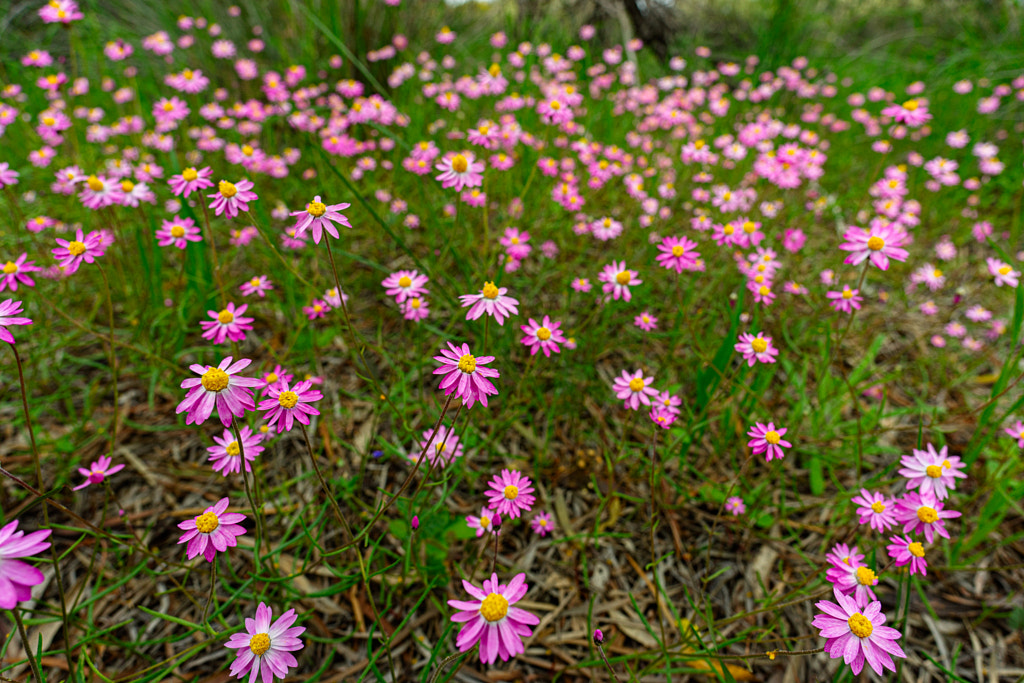
Pink Everlastings, Christmas Rock, Western Australia. Sony A7r with a Tamron 20mm f2.8 lens. Exposure: 1/160 sec, f8 at ISO 100.
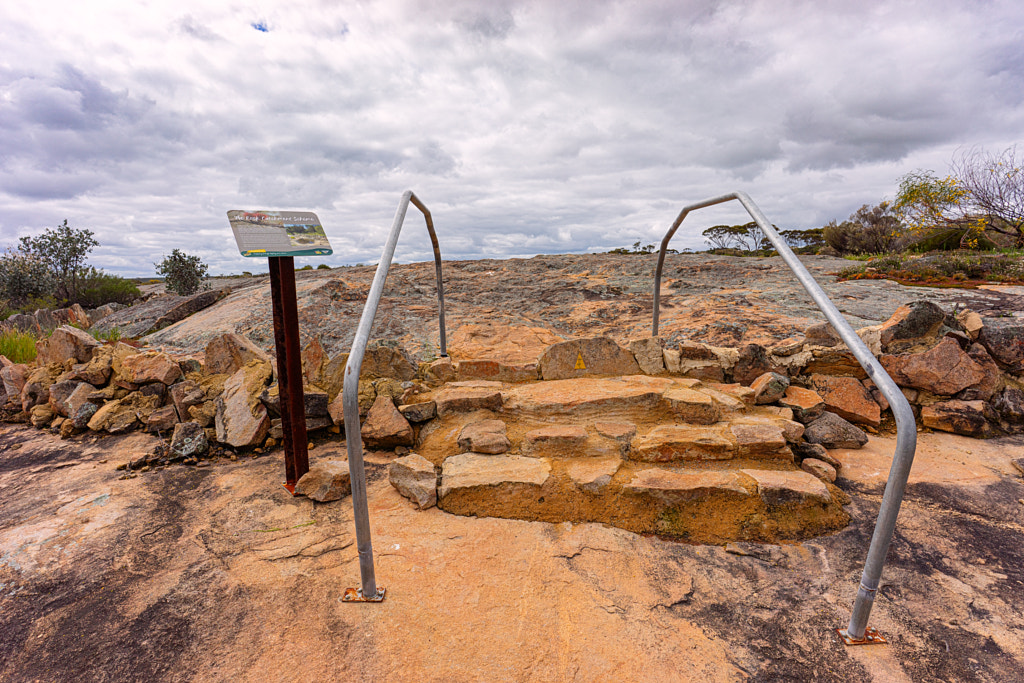
The rock gets its name from the Western Australian Christmas Trees (Nuytsia floribunda) which used to be found there and flowered at Christmas time. On the top of the rock is an elaborate series of channels that were designed to harvest rain water run off for the “Railway Water Supply” which was built in 1916. But the rock is also home to a wide variety of plants such as lichens and mosses. On a warm sunny day if you’re quick enough you might see the lizards who live in the various cracks and crevices.
The walk takes you up on the top of the rock which was part of the “Railway Water Supply” built in 1916. Rainwater runoff was harvested through a series of channels and creeks. Sony A7r with Tamron 20mm f2.8 lens. Exposure: 1/800 sec, f8 at ISO 100.
A suprising number of plants grow on Christmas Rock. Sony A7r with Tamron 20mm f2.8 lens. Exposure: 1/320 sec, f8 at ISO 100.
Rainwater captured on Christmas Rock in natural forming crack, depressions and gullies. Sony A7r with Tamron 20mm f2.8 lens. Exposure: 1/400 sec, f8 at ISO 100.
But for me it is the display of orchids which brings me to Wongan Hills. There are so many different types in large quantities. It made me feel like a kid on Christmas Day. The funny thing is that it could have been very, very different. Prospectors actually dug pits looking for asbestos. Luckily they didn’t find it in large enough quantities to make it a viable commercial operation and went looking elsewhere. So in September give Wongan Hills a visit. This isn’t the only walk as there’s Mount O’Brien Lookout, Gathecole Nature Reserve, and the Mt Matilda walk trail. Then there are the lakes which host lots of water birds. So instead of a day trip why not make a long weekend of it.
Pendant Spider Orchid (Caladenia pendens, subsp pendens). Christmas Rock, Western Australia. Sony A7r2 with a Canon EF 100mm f2.8 IS L macro lens. Exposure: 1/40 sec, f5.6 at ISO 125.
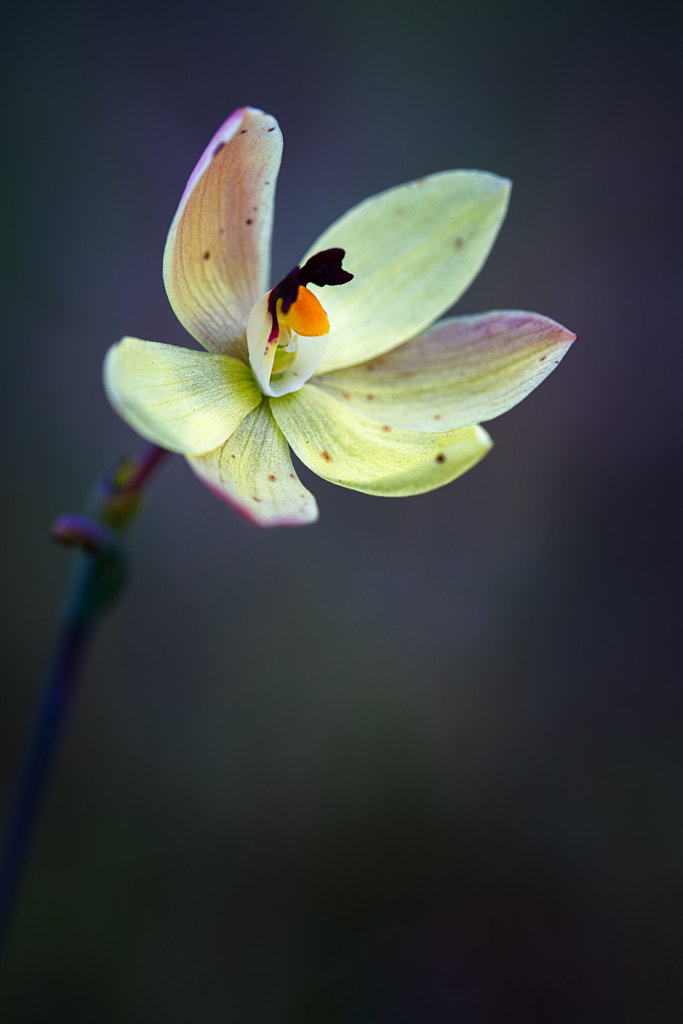
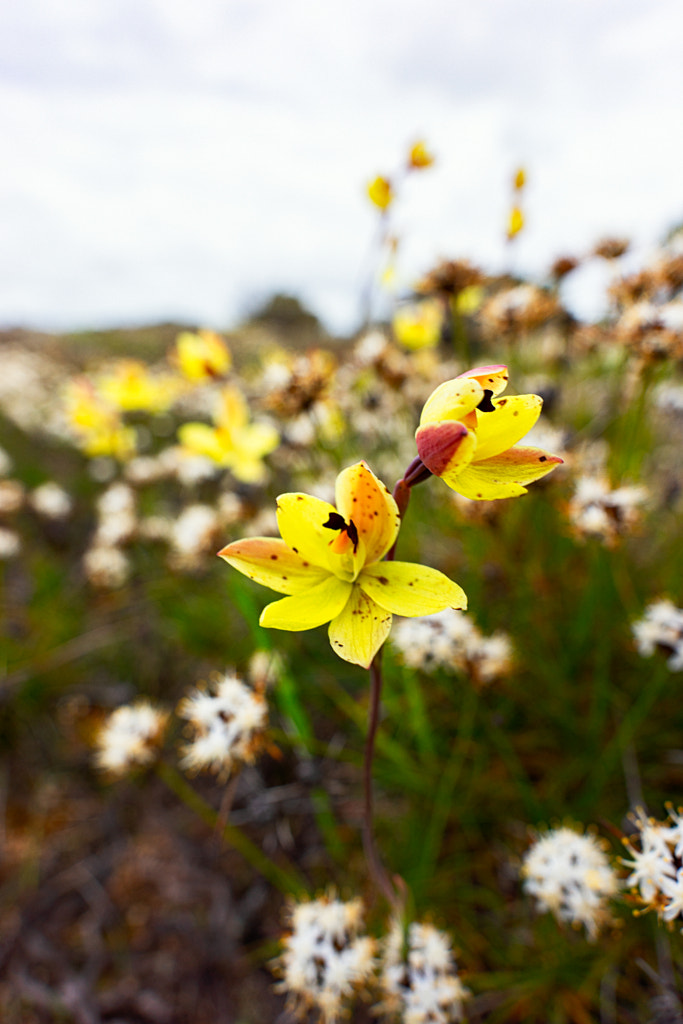
Lemon Scented Sun Orchid aka the vanilla orchid (Thelymitra antennifera). Christmas Rock, Western Australia. Sony A7r2 with a Canon EF 100mm f2.8 IS L macro lens. Exposure: 1/200 sec, f5.6 at ISO 125.
Lemon Scented Sun Orchid aka the vanilla orchid (Thelymitra antennifera). Christmas Rock, Western Australia. Sony A7r with Tamron 20mm f2.8 lens. Exposure: 1/250 sec, f8 at ISO 100.
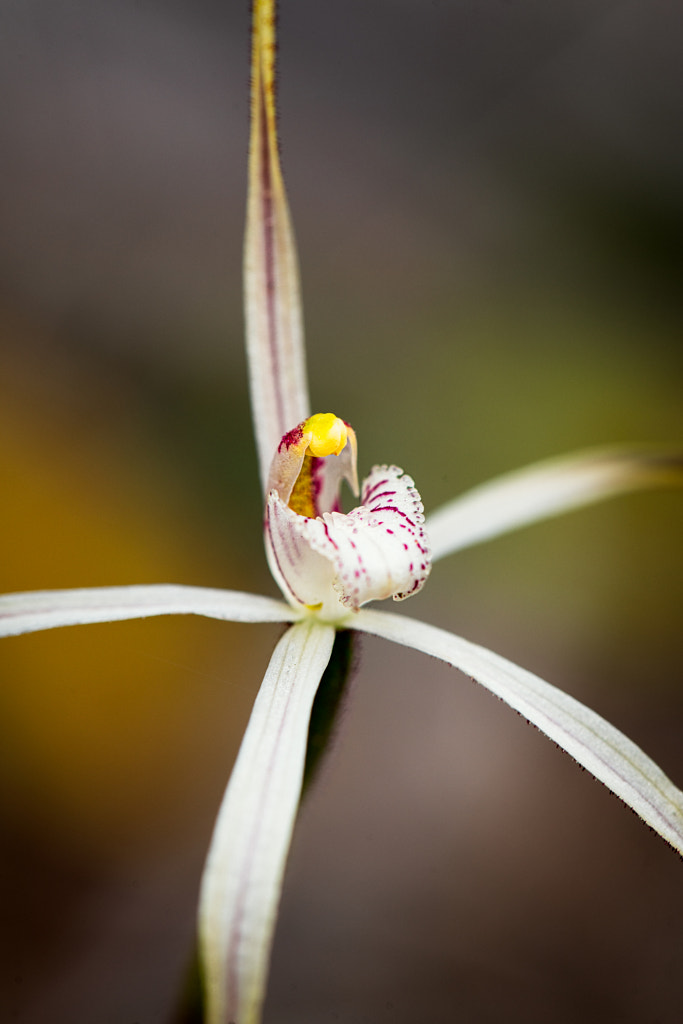
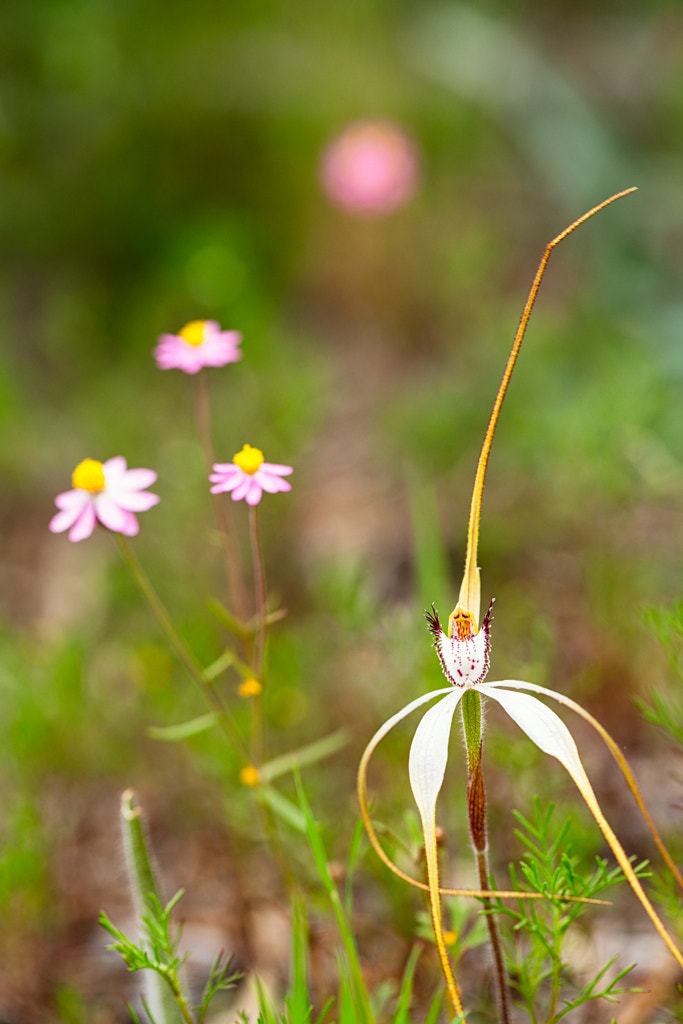
A White Spider Orchid (Caladenia longicauda subsp longicauda) among the everlastings on Christmas Rock in Western Australia. Sony A7r2 with a Canon EF 100mm f2.8 IS L macro lens. Exposure: 1/125 sec, f5.6 at ISO 125.
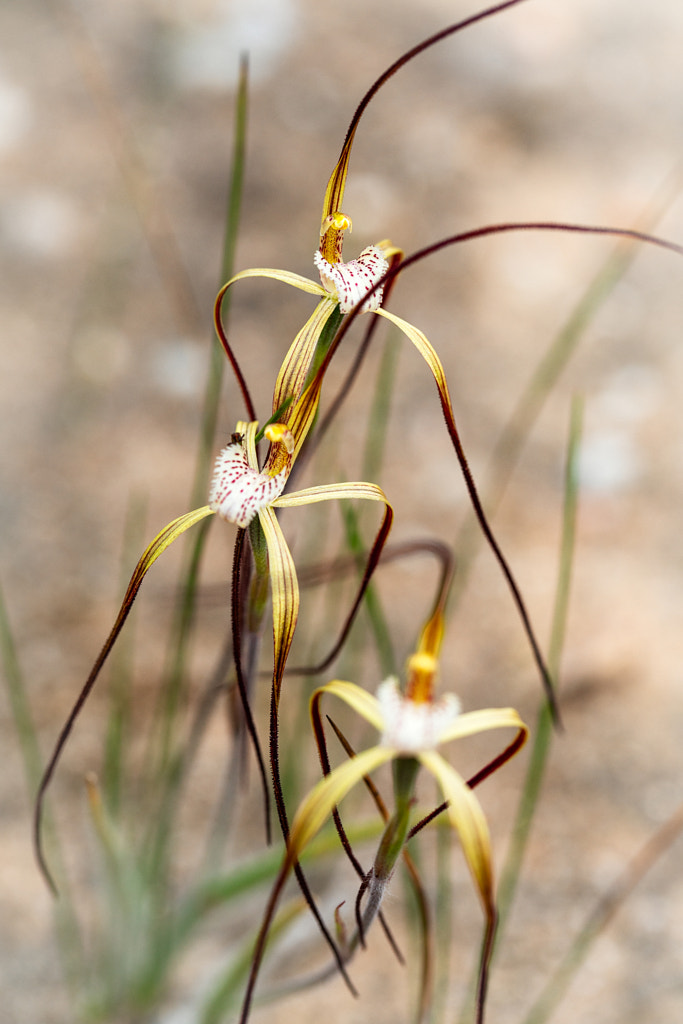
Chameleon Spider Orchid (Caladenia dimidia). Christmas Rock, Western Australia. Sony A7r2 with a Canon EF 100mm f2.8 IS L macro lens. Exposure: 1/800 sec, f5.6 at ISO 200.
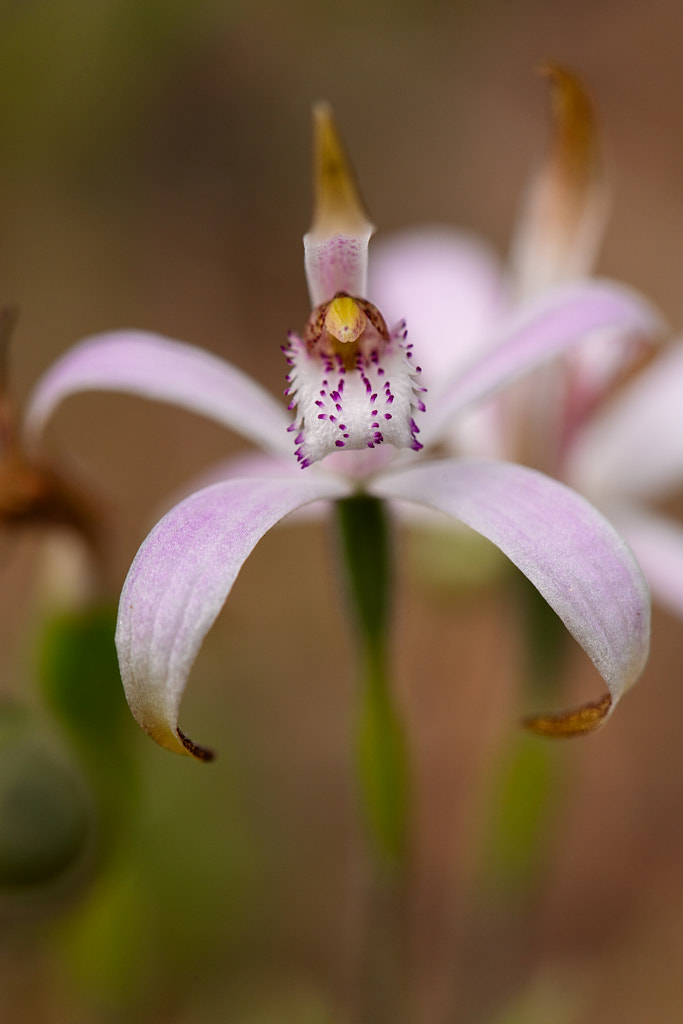
Sugar Candy Orchid, Caladenia hirta subsp. hirta. Christmas Rock, Western Australia. Sony A7r2 with a Canon EF 100mm f2.8 IS L macro lens. Exposure: 1/250 sec, f5.6 at ISO 125.
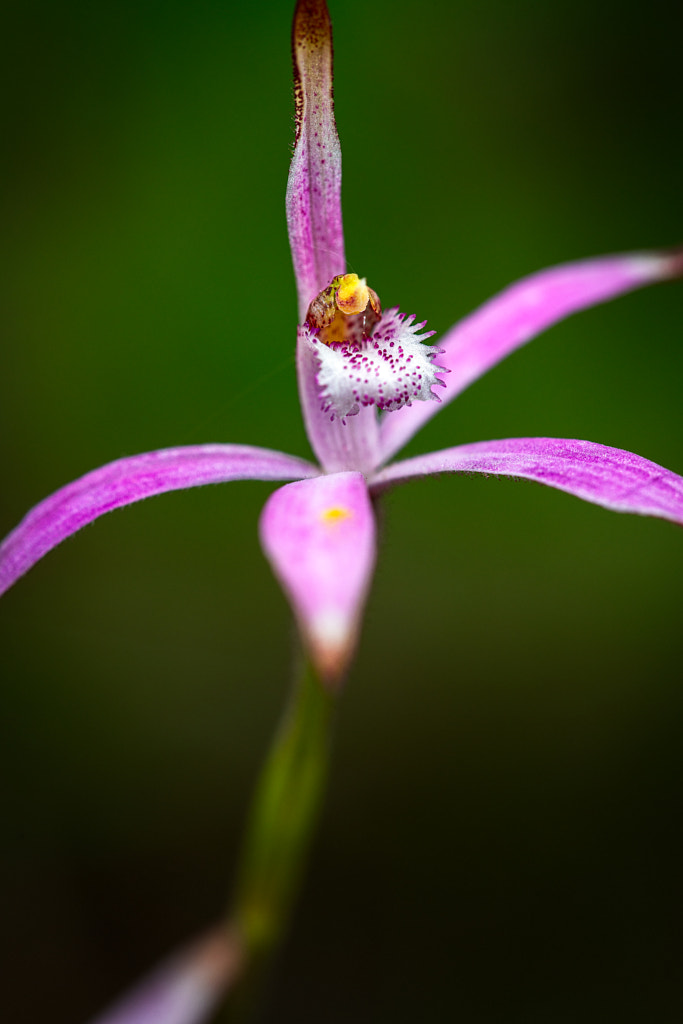
Pink Candy Orchid, Caladenia hirta subsp. rosea. Christmas Rock, Western Australia. Sony A7r2 with a Canon 100mm f2.8 IS L macro lens. Exposure: 1/80 sec, f5.6 at ISO 125.
Cowslip Orchid, Caladenia flava subs. flava. Christmas Rock, Western Australia. Sony A7r with a Tamron 20mm f2.8 lens. Exposure: 1/160 sec, f8 at ISO 100.



















You must be logged in to post a comment.