As I said last week we went to Balingup for a quick getaway. We stayed on a farm outside of town in a converted cowshed. It was an excellent spot. It was nice and quiet, but best of all the surrounding garden and fields were teeming with wildlife so I didn’t feel the need to go anywhere as it was all happening just outside the door. While all the photos in last week’s post we’re taken with my iPhone all the nature stuff was taken with an Olympus EM1x and my Panasonic Leica 100-400mm lens.
Bardinar or Western Rosella (Platycercus icterotis subs icteratis). Balingup, Western Australia.
They get everywhere! Djidi-djidi or Willie Wagtail (Rhipidura leucophrys). Balingup, Western Australia.
I’ve been spotted. Female and joey Yongka or Western Grey Kangaroo (Macropus fuliginosus). Balingup, Western Australia.
Boyidjil or White-breasted Robin (Eopsaltria georgiana). Balingup, Western Australia.
Djer-djer or Splendid Fairy-wren (Malarus splendens subsp splendens). Balingup, Western Australia.
Djangkang or Red Wattlebird (Anthochaera carunculata) feeding on a Silver Princess tree (Eucalyptus caesia).
The guardian of the driveway. Kadjinak or Grey fantail (Rhipidura albiscapa)
“Are you still here?”
A European Honey Bee (Apis mellifera) feeding from the flowers of the Silver Princess tree (Eucalyptus caesia).
Doolor or Silvereye (Zosterops lateralis).
All the other birds went very quiet as this Djandoo or Whistling Kite (Haliastur sphenurus) flew over.
One of the things that I really miss about living in England is autumn. The shift from summer to autumn brings huge changes to natural environment – namely the leaves on the trees turn from green to yellow to reddish orange to brown and then fall. We don’t have that here as Australia’s native forests don’t have deciduous plants due to the milder winters. Yes the trees drop their leaves when they become heat stressed, but you don’t get the transformation that you do in deciduous forests.
Typical south west Western Australian forest. Not a deciduous tree in sight. Balingup Racecourse Flora Reserve. Balingup, Western Australia.
In the south west corner of Western Australia, in the Blackwood Valley lots of settlers planted deciduous trees and they thrived in the cooler damper conditions. Situated in the valley is the small town of Balingup and it has developed a healthy tourism industry based around those trees and that is how we found ourselves in Balingup last week. Just walking along the main street we were treated to a riot of autumnal colour that we had literally not seen for decades. Oak trees and plane trees were in proliferation and it was such a thrill to see them. We took ourselves out to see the Golden Valley Tree Park which is just 1.5Km outside Balingup. The park is a huge arboretum based around the old Golden Valley Homestead and within the sixty hectares there are over 3000 trees made up of some 500 different species. Twenty five hectares is devoted to Australian trees and the remainder to the World Collection. We walked the Oak Grove Walk were there were forty different species of oak tree which was pretty mind boggling.
The start of the Birdwood Park Oaks Walk at the Balingup Village Green. Balingup, Western Australia.
A close up of the glorious plane tree leaves in the Balingup Village Green.
More autumnal colour behind the chromium eagle (Aquilla nitidus). Balingup, Western Australia.
Golden Valley Tree Park in autumn living up to its name. Balingup, Western Australia.
The driveway to the holiday accomodation we had in Balingup, Western Australia.
It was great fun just soaking up all that colour. Funnily enough although I had my photo pack with digital and film cameras the camera that I used to record it all was my iPhone. It was just so convenient.
Our recent trip to Woodman Point wasn’t all walks along the shoreline. The coastal heathland behind the beach is also home to lots of great wildlife.
Mardiyet or Nankeen Kestrel (Falco cenchroides). Woodman Point, Western Australia.
This Nankeen Kestrel was very chilled, it let me approach and take loads of photos and it was still sat there when I walked away.
This was a very busy little Djer-djer or Splendid Fairy-wren (Malarus splendens subs splendens). I ended up with a lot of empty frames as he bounced around looking for insects.
His mate wasn’t nearly so active and was easy to photograph.
One last look of the Nankeen Kestrel before I walk back to the car.
The setting sun at Woodman Point.
As I walked into the car park I noticed this sign. There were a lot people living rough at the reserve whether in cars or or tents hidden in the dunes and woodland. There was an incredible amount of litter.
I must go down to the seas again, to the lonely sea and the sky, And all I ask is a tall ship and a star to steer her by; And the wheel’s kick and the wind’s song and the white sail’s shaking, And a grey mist on the sea’s face, and a grey dawn breaking.
I must go down to the seas again, for the call of the running tide Is a wild call and a clear call that may not be denied; And all I ask is a windy day with the white clouds flying, And the flung spray and the blown spume, and the sea-gulls crying.
I must go down to the seas again, to the vagrant gypsy life, To the gull’s way and the whale’s way where the wind’s like a whetted knife; And all I ask is a merry yarn from a laughing fellow-rover, And quiet sleep and a sweet dream when the long trick’s over.
John Masefield
1878 – 1967
I have no inclination to sail a tall ship, but the lure of the coast, its wildlife and a cool sea breeze was irresistible and so we found ourselves at Woodman Point.
A juvenile Crested Tern hassling its parent for food.
Boodalang or Australian Pelican (Pelecanus conspicillatus). Woodman Point, Western Australia.
Djeringkara or Silver Gull (Larus pacificus). Woodman Point, Western Australia.
Juvenile Kaldjirkank or Crested Tern (Thalasseus bergii). Woodman Point, Western Australia.
Djeringkara or Silver Gull (Larus pacificus). Woodman Point, Western Australia.
Juvenile Karrynekarryne or Caspian Tern (Hydroprogne caspia). Woodman Point, Western Australia.
Karrynekarryne or Caspian Tern (Hydroprogne caspia). Woodman Point, Western Australia.
Karrynekarryne or Caspian Tern (Hydroprogne caspia). Woodman Point, Western Australia.
The Bilya (Noongar – River) Walk Track was created by the Toodyay Friends of the River and follows the Avon River for 6.5Km on its western bank. For me one of the highlights of the walk is walk from from Millard’s Pool (which is the largest pool on the river and was the site of Toodyay’s first swimming pool) to John Masters Bird Hide by Red Banks Pool a Nyoongar heritage site. If the wildlife and the wonderful walk aren’t enough of a draw card then know this – no visit to Toodyay is complete without a stop off at the amazing Toodyay Bakery.
Kakara or Crested Pigeon (Ocyphaps lophotes). Bilya Walk Track, Toodyay, Western Australia.
Wayooda or Hoary-headed Grebe (Podiceps poliacephalus). Bilya Walk Track, Toodyay, Western Australia.
Kakak or Little Pied Cormorant (Phalacrocorax melanoleucos) and Ngalkaning or Australian White Ibis (Threskioris molucca) Bilya Walk Track, Toodyay, Western Australia.
Boodalang or Australian Pelican (Pelecanus conspicillatus). Bilya Walk Track, Toodyay, Western Australia.
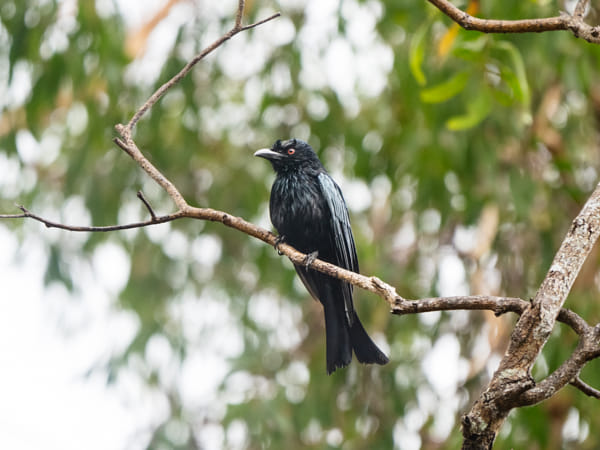
There are some species of bird that are absolutely beautiful to look at. The amazing plumage, incredible display behaviours, and stunning looks. But just like people some are just downright fugly. Some ugliness can be considered characterful, and some just out and out grotesque. This a celebration of the fuglies from Darwin.
Jabiru or Black-necked Stork (Ephippiorhynchus asiaticus)
As I said in my last entry we went to Darwin at the end of the “dry” period, but the build up to the “wet”, the so called “suicide season” (high temperatures and humidity without any rainfall) hadn’t started. It hadn’t rained for many months and had been particularly hot this year. The daily temperature hovered around 35-36ºC (95-96.8ºF) with the night time temperature not dropping below 24ºC (75.2ºF). So it happened that our last day coincided with Darwin’s first real rain since April. People were really happy to see it. When it rains in the tropics it really rains kind of like having a shower with your clothes on, but with the temperatures being in the mid thirties it didn’t matter if you got wet as you didn’t get cold. So that’s how we found ourselves at Buffalo Creek in the Casuarina Coastal Reserve walking in the rain.
Helen studying the information bord at Buffalo Creek.
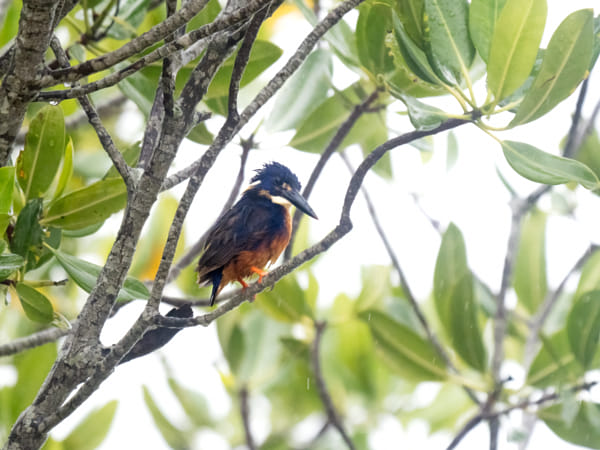
A soggy Azure Kingfisher (Ceyx azureus) greeted us at the parking bay at Buffalo Creek.
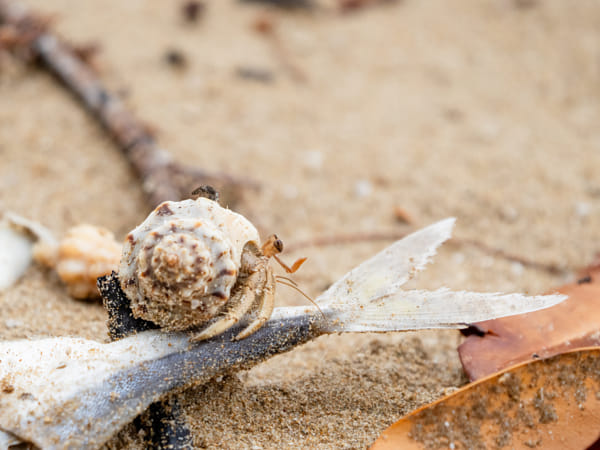
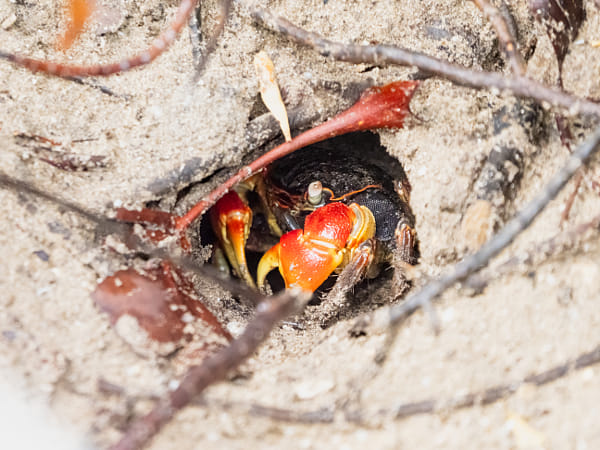
We’d gone to expressly find the Chestnut Rail which is very elusive and guess what? We didn’t see one. What we did see as we left the car was a very bedraggled Azure Kingfisher who was unusually very chilled about our proximity and hung around for quite a long time. I’d made the rookie mistake of taking my camera out of the air-conditioned car into the hot steamy monsoon vine forest and mangroves. Result condensation that took an age to clear so all my first photos have dreamy misty quality. Thank goodness both the camera and the lens have excellent weather sealing. As we walked towards Lee Point we didn’t see many birds, the weather was partly to blame, the other reason was the nature of the forest we were walking through. The vegetation was just so thick. We could hear all manner of bird song, but, just couldn’t’t see who was making it. When we ventured off the path and through the trees onto the foreshore we could see birds there. The exposed mudflats are internationally recognised as an important site for migratory and resident shorebirds and they also provide a nesting area for several marine turtle species. The poor weather and a very low tide meant that conditions weren’t conducive to getting close to where the birds were and there were the ever present warnings about being “crocodile smart”. As we walked along the broad walk through the mangroves we aware of all manner of little animals scuttling about on the mud beneath us. All in all it was a great morning as it was a very different experience.
Australian Terrestrial Hermit Crab, Coenobita variabilis.
We fancied a bit of change in scenery – well to be honest a lot of change. We wanted tropical climes, interesting new animals and places we’d never seen before and we didn’t want a lot of hassle. So we headed off up to Darwin in the Northern Territory of Australia for a few days. Why Darwin? Well it’s within Australia. It has birds from Papua New Guinea and Indonesia as well as quite a few found nowhere else. At the turn of the season – end of the “dry” heading towards the “wet” it was great value for money.
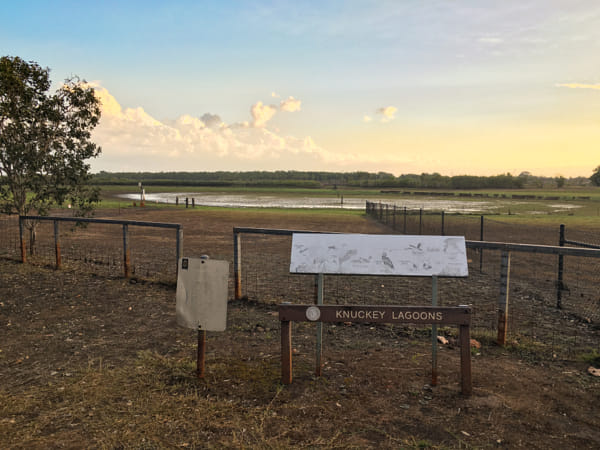
The entry to Knuckey Lagoon.
For photographing birds it is ideal. At the end of the dry there is very little water about so the wildlife tends to concentrate around the few permanent water sources which makes finding them a little easier. More by luck than planning our accommodation was near a pearler of a location – Knuckey Lagoons. We went there twice, once at dawn and the other time at dusk and both time were great with different birds being active.
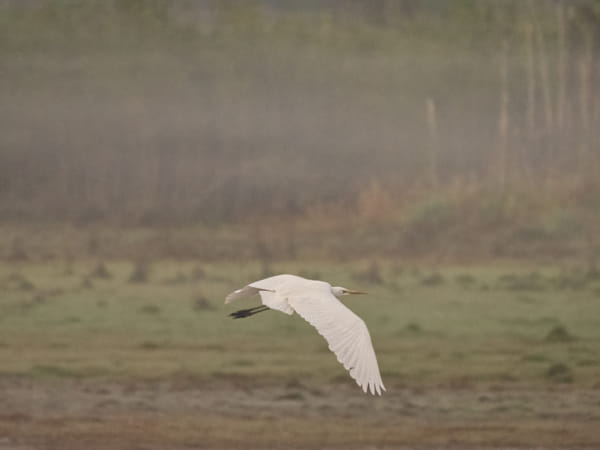
A Great Egret (Ardea alba) flying over Knuckey Lagoon in the early morning mist.
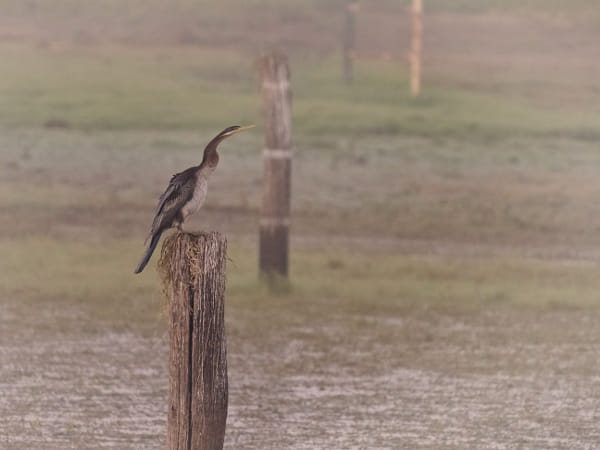
An Australian Darter (Anhinga novaehollandiae) waiting for the sun to burn off the mist.
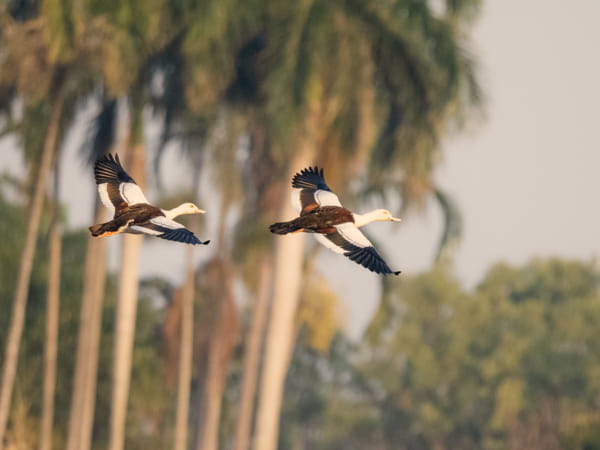
Radjah Shelducks or Burdekin (Tadorna radjah) flying in formation.
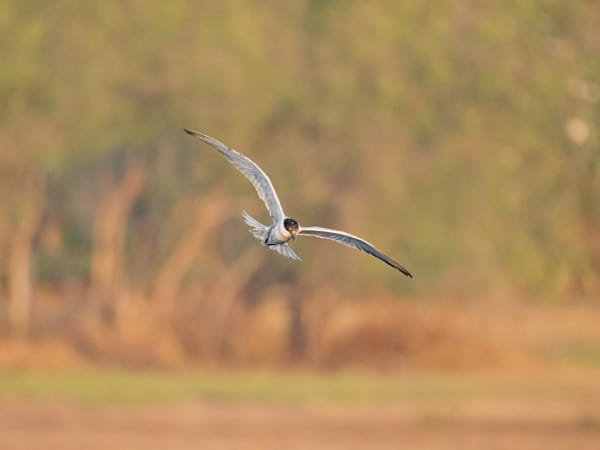
Whiskered Tern, Chlidonias hybrida at Knuckey Lagoons Conservation Reserve.
In the morning when we arrived we initially thought that our presence had spooked the birds, but actually we were the least of their problems as various raptors flew over looking for a meal. I was excited to see a white-bellied sea eagle as I’d never seen one before. Even more exciting was watching the masked lapwings drive it off. Black kites made regular forays, but try as I might I just could not get a good photograph of one – they were either too quick or too faraway. There were wading birds aplenty – Great Egrets, Wood Sandpipers, Sharp-tailed Sandpipers, Comb-crested Jacanas, Straw-knocked Ibis, Pied Herons, White-necked Herons are just a few to mention. This one spot delivered 12 species that I’d never seen before. It was like being a kid in a sweet shop, I didn’t know where to look. In fact for the first hour it was a bit overwhelming as I just didn’t know what to concentrate on.
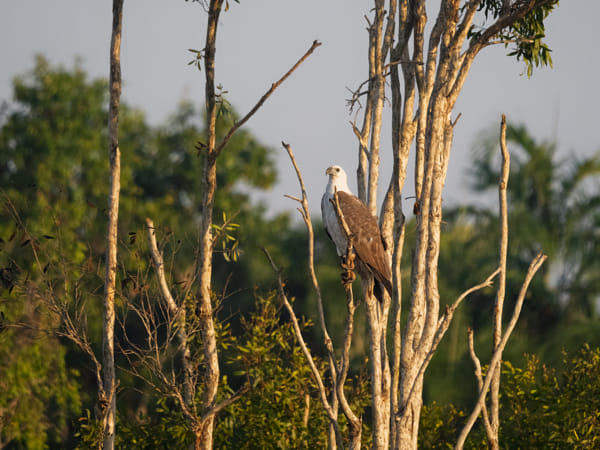
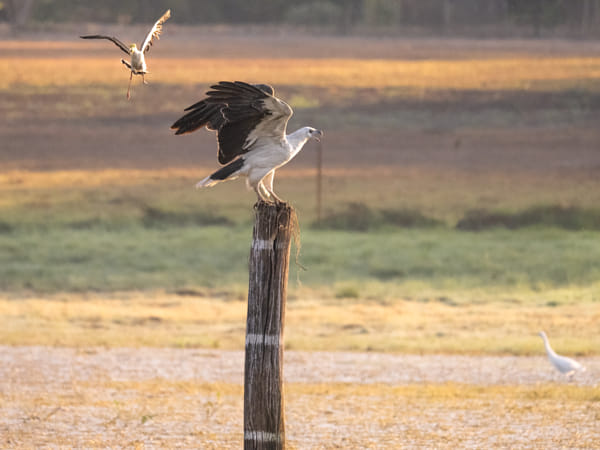
A White-bellied Sea-eagle (Haliaeetus leucogaster) basking in the early morning sun.
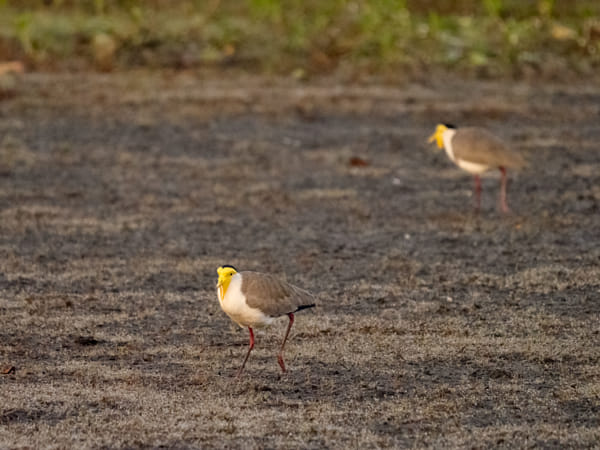
Masked Lapwings on the mudflat of Knuckey Lagoon.
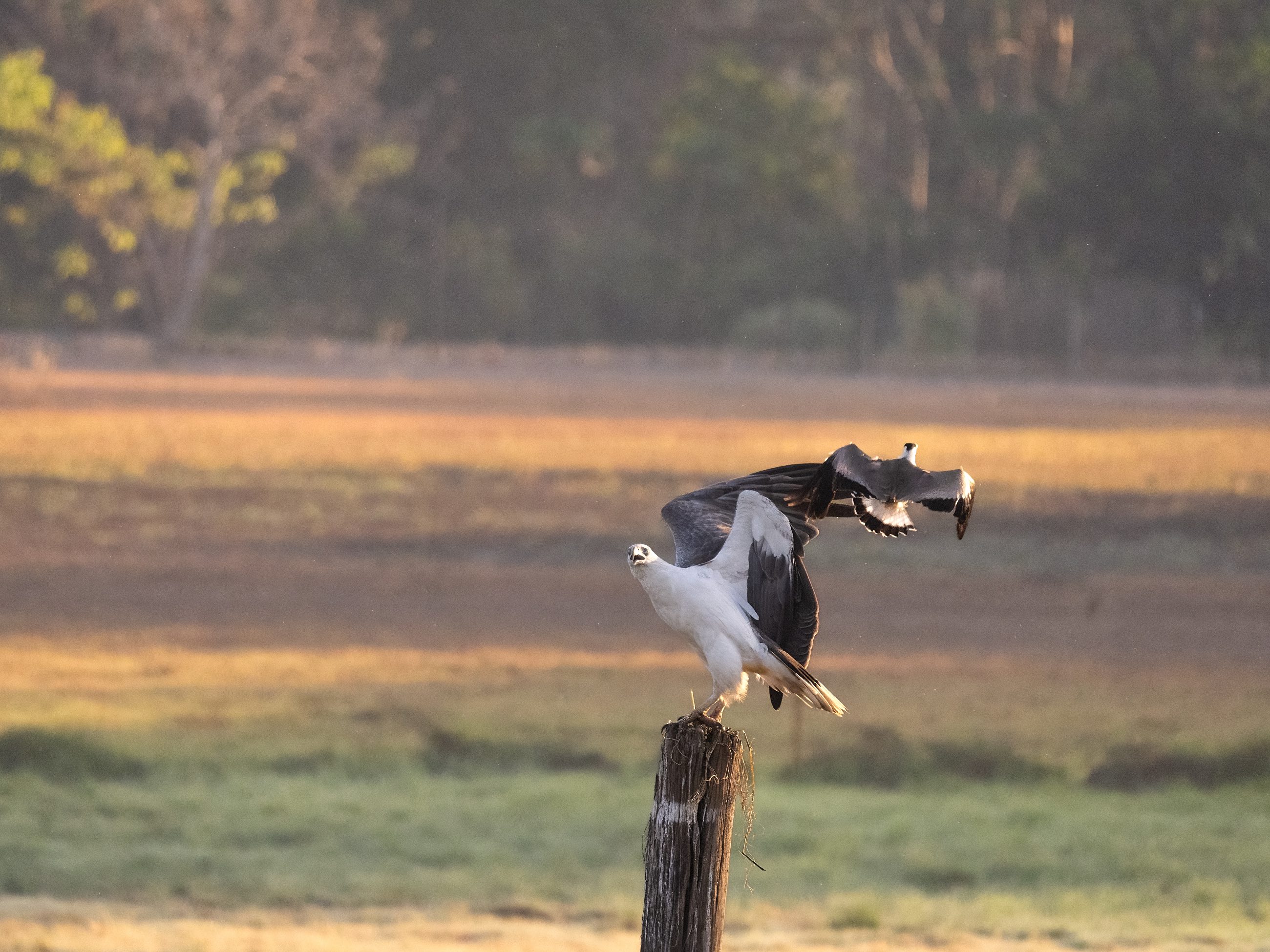
In coming! A Masked Lapwing (Vanellus mile) begins its approach to dive bomb a White-bellied Sea-eagle (Haliaeetus leucogaster).
Contact!
This next run was the final straw and the White-bellied Sea-eagle scarpered.
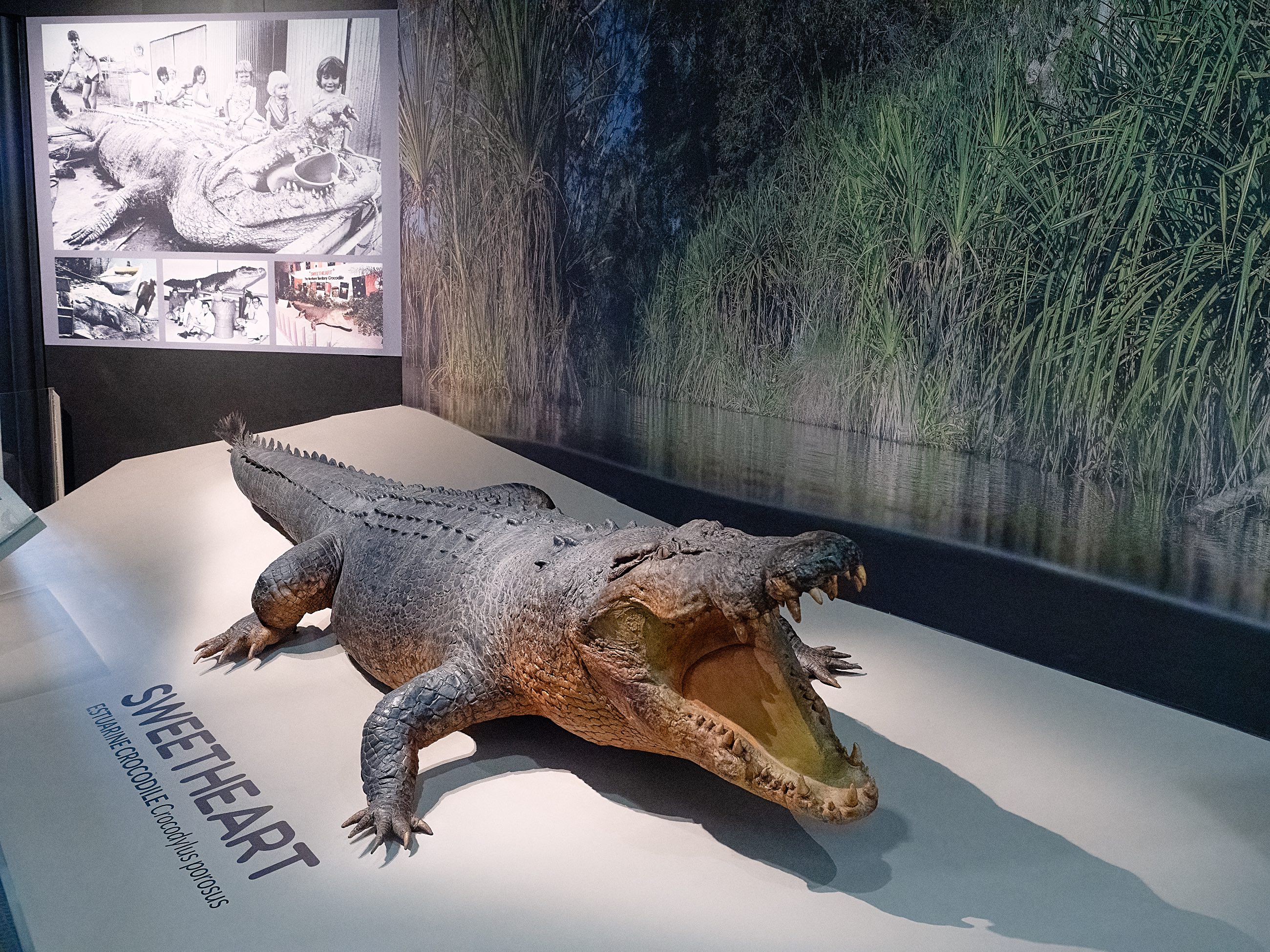
The only drawback was my equipment. I took the Olympus EM1x that I have on loan and wrote about here. It worked very well apart from struggling with autofocus when the the light levels were low and there was a bit of a mist on the lagoon. Lens wise I wish that I’d had something longer than my Panasonic Leica DG Vario 100-400mm f4-6.3. That would mean looking at the OM System M.Zuiko ED 150-600mm F5.0-6.3 IS lens which would give a 35mm equivalent of 1200mm which on paper sounds just the ticket. But the reality is that that it weighs 2.065 Kg. Apparently the lens is based on a Sigma design and I have a similar lens which weighs roughly the same and it is a real chore to take out. OK if I’m working from the back of a car, but a real PITA if I’m having to carry it any distance. So if I bought the OM System 150-600 there is every chanced that I’d end up leaving it at home and taking the the Panasonic 100-400. For those who would say get closer there were signs on the banks of most waterways around Darwin warning about crocodiles so you can understand why I was not so keen to start wading in the water. Having said that the only crocodile we did see was a stuffed on in the Museum and Art Gallery of the Northern Territory (MAGNT Darwin).
One of the many warning signs about crocodiles.
The only crocodile we saw on the trip. The stuffed remains of the salwater crocodile “Sweetheart” at the Museum and Art Gallery of the Northern Territory (MAGNT Darwin).
It was an epic trip and it has really whetted our appetite for more travel and so we’re already planning our next ones.
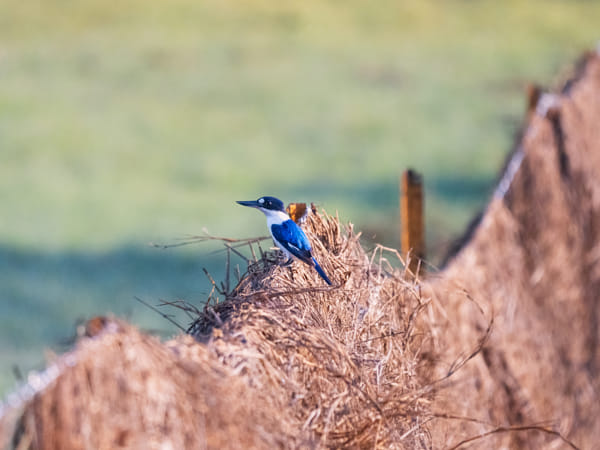
The farewell committee. A Little Kingfisher (Ceyx pusilla) sitting on the fence as I left Knuckey Lagoon.
We’ve been to Nannup in the Blackwood Valley several times before and I’ve written about one of this visits before.Last time I photographed orchids this time I meant to do some bird photography. I only managed to take a couple of bird photos on the first day – of a female Red-winged Fairy-wren (Malurus elegans) – as I got distracted and didn’t take the birding stuff out for the rest of the week.
A female Red-winged Fairy-wren (Malurus elegans) called Djoordjilya by the indigenous Nyoongar. . Nannup, Western Australia.
The cause of this distraction. Well as a last minute decision I’d decided to throw a film camera, a 50mm lens and a couple of rolls of film into my bag. At first I was just going to take nature photos while walking along the river foreshore. It was just initially to explore forms and textures. But, it wasn’t long before I was walking up and down the streets of Nannup (there aren’t many) taking pictures of anything that caught my eye. I have a particular fascination with signage – I often find it quite amusing.Anyway the results are below.
Grasses and Bokeh. Wild grasses growing along the banks of the Blackwood River in Nannup.
Lichen growing on a tree trunk. Nannup, Western Australia.
There were arms and legs all over the place. Nannup, Western Australia.









You must be logged in to post a comment.