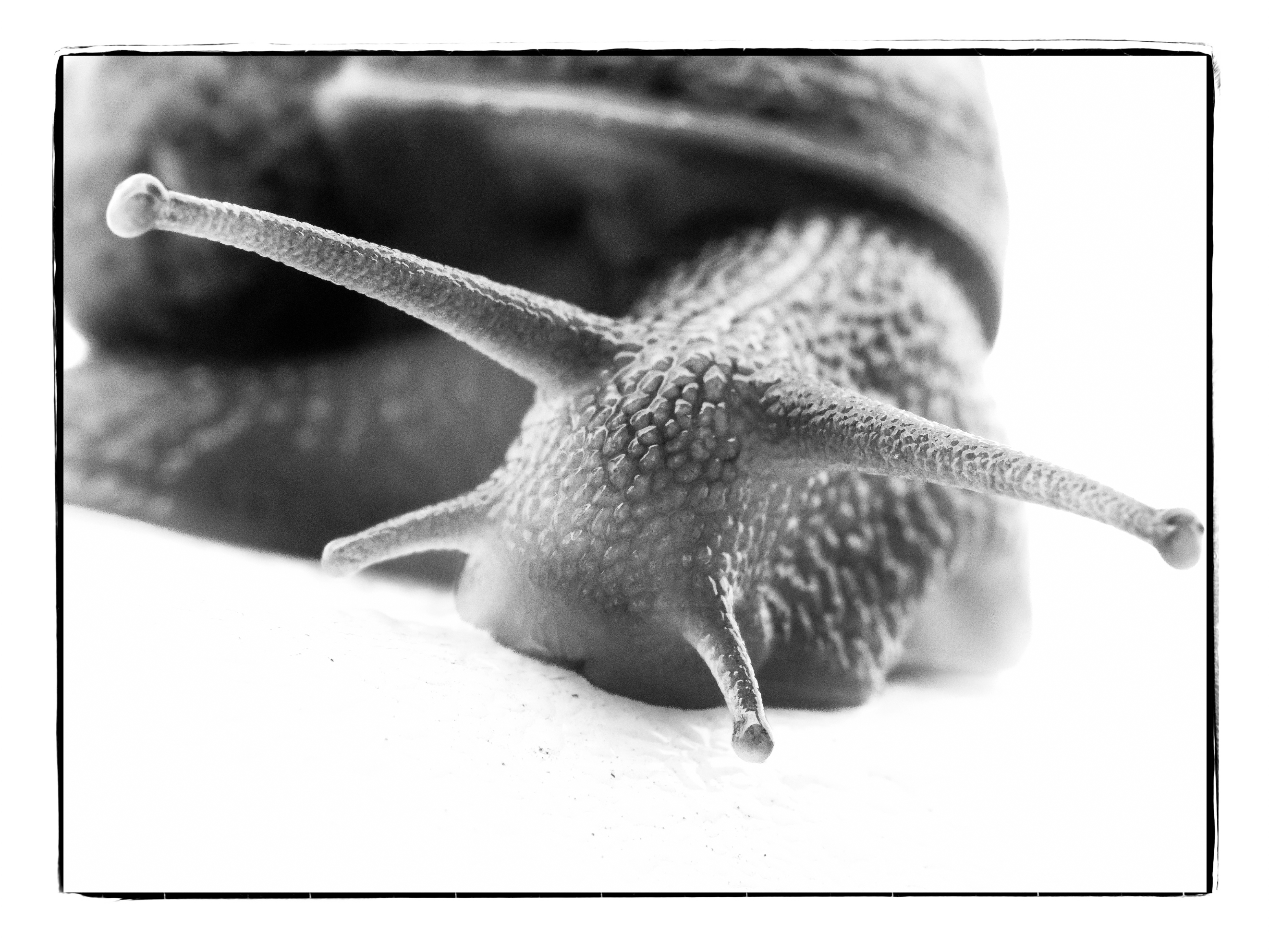
“Stay sill damn it!” Common garden snail, Cornu aspersum.
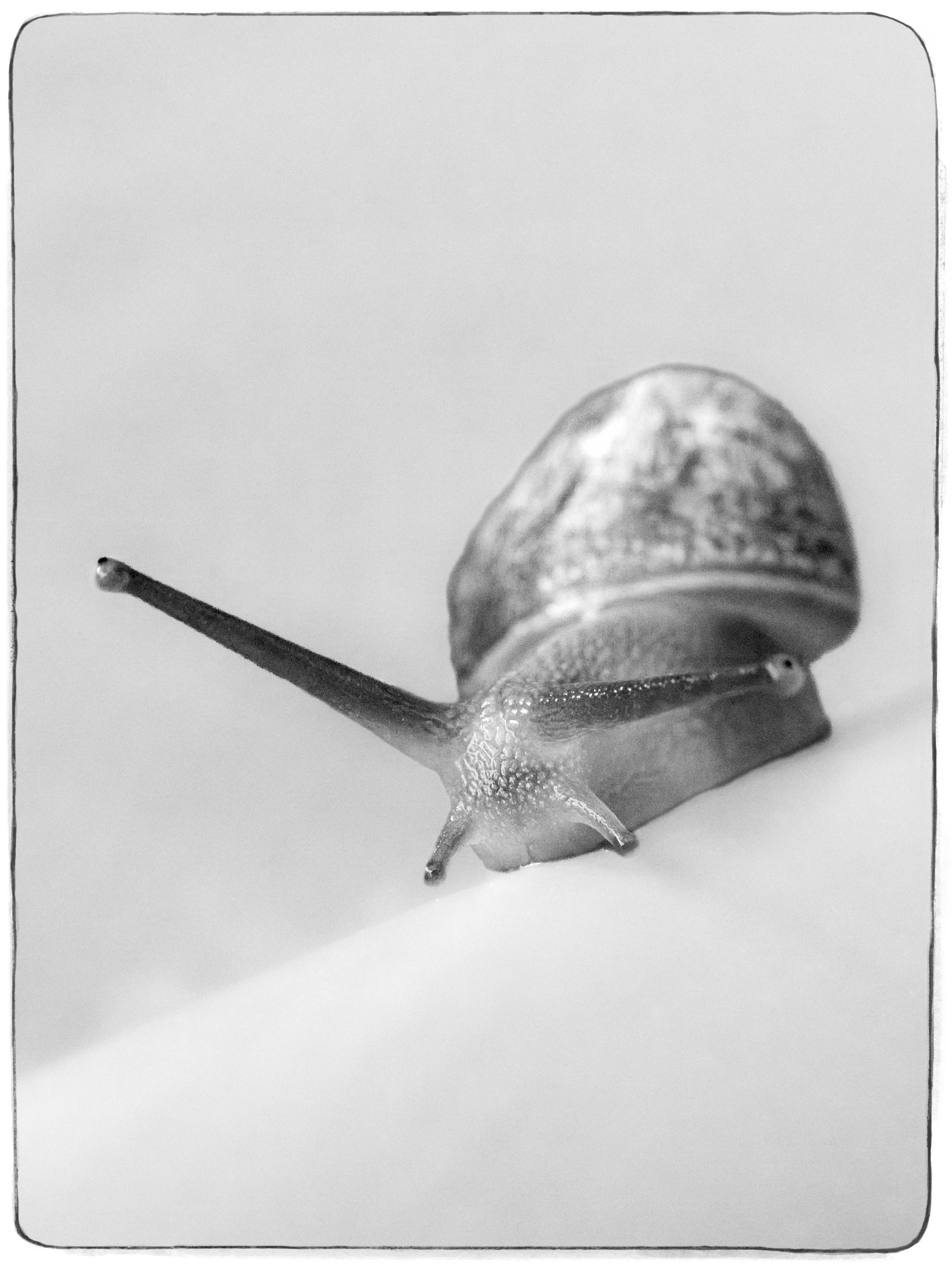
The recent orchid expeditionmade me get my macro lenses and flash out of the cupboard and consequently I’ve been playing around with it in the garden. I had this brilliant idea to improve my focus stacking technique by taking photos of snails. I mistakenly thought that they’d be a good subject as they don’t move much. I was very much mistaken. The little beggars move around quite a lot. The tentacles that their eyes are mounted on are in a constant state of motion and so my attempts at focus stacking failed. Not to be deterred I just stopped the lens down to f11 or f16 (well into diffraction territory on Micro Four Thirds) and just carried on taking picture of little critters in the garden.
Another fidgety snail.
The focus stack even failed on this. Dunno what I’m doing wrong.
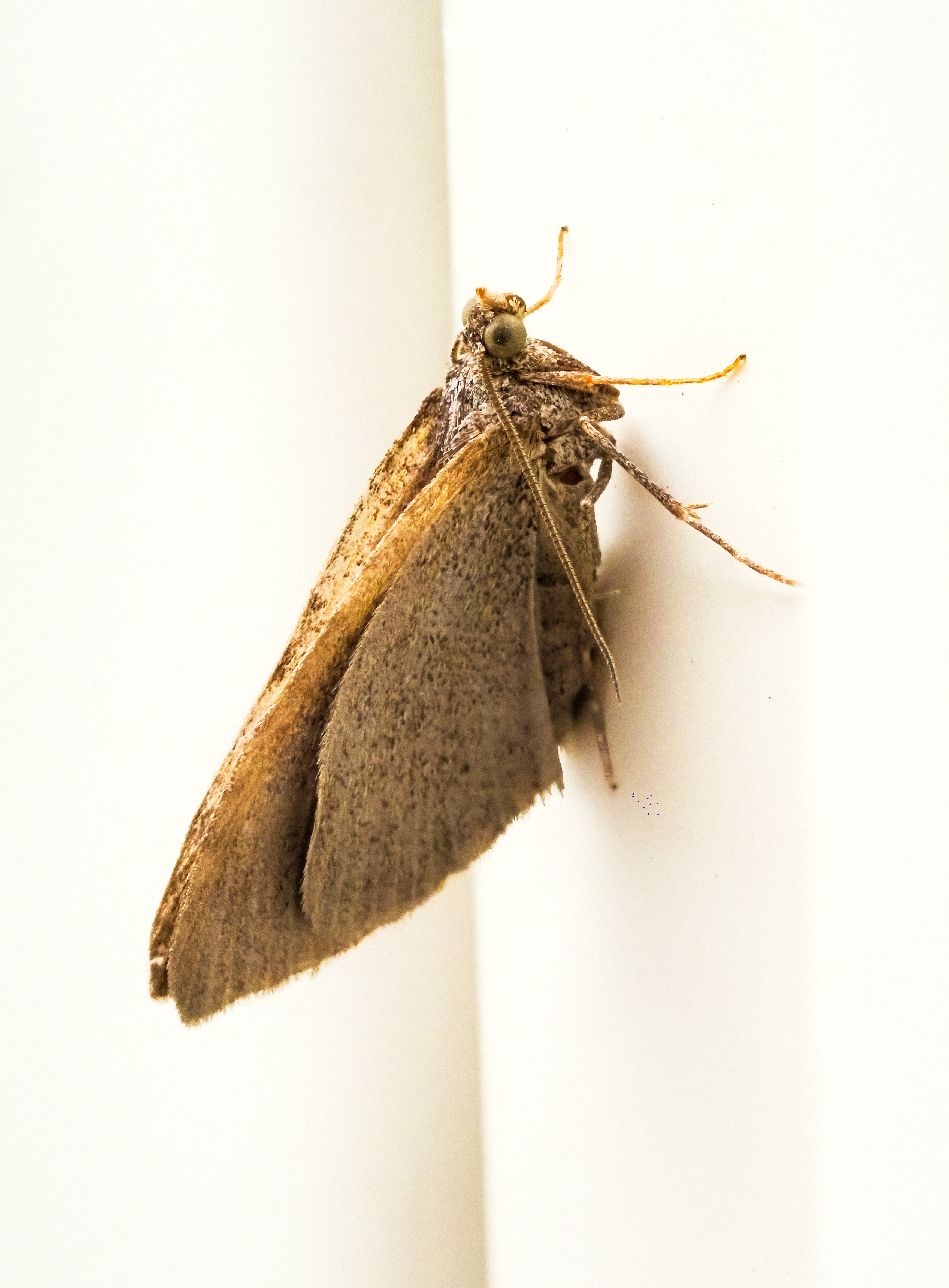
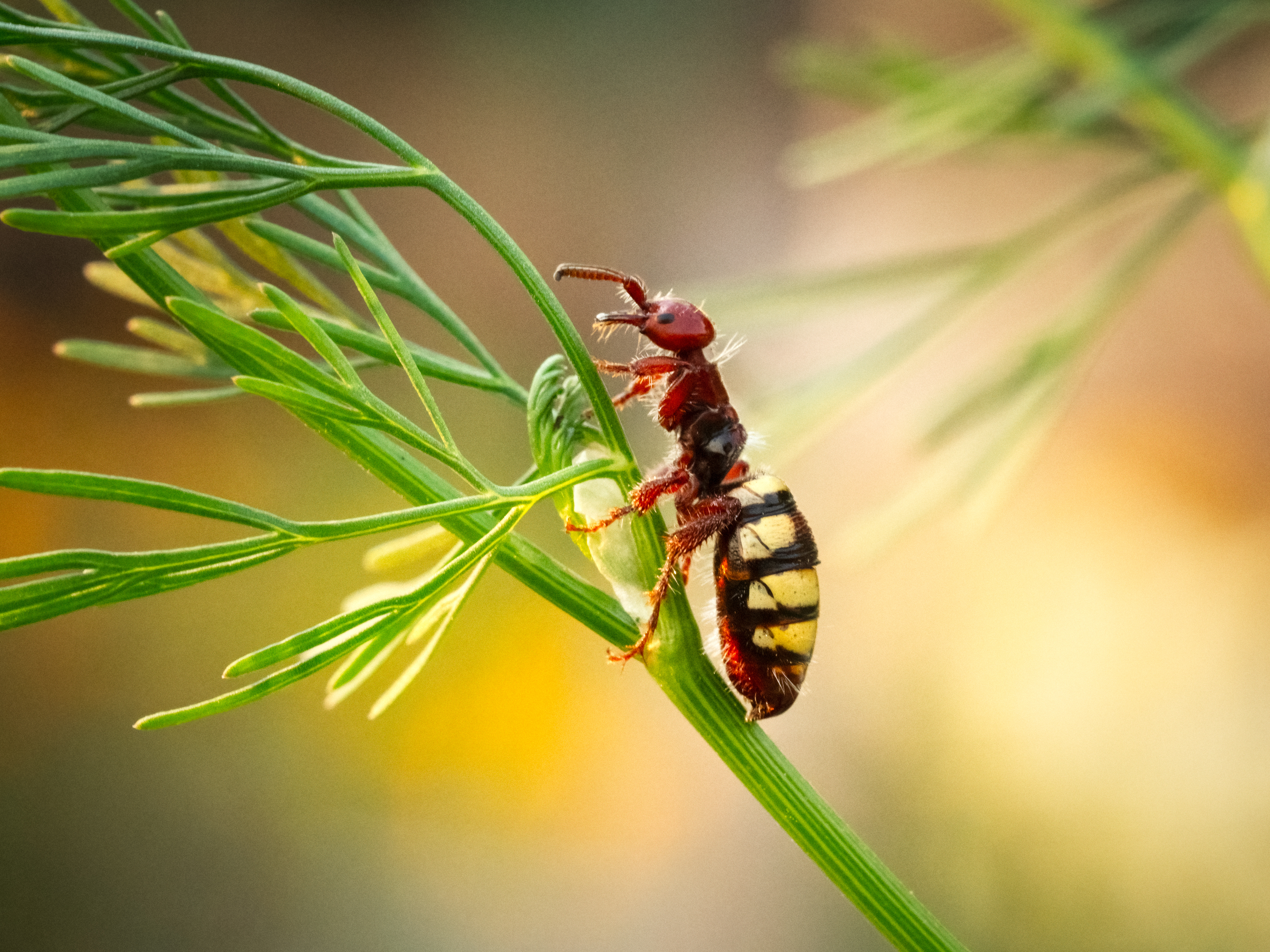
Yikes! Don’t know what this was amongst the coriander.
Looks better in profile.
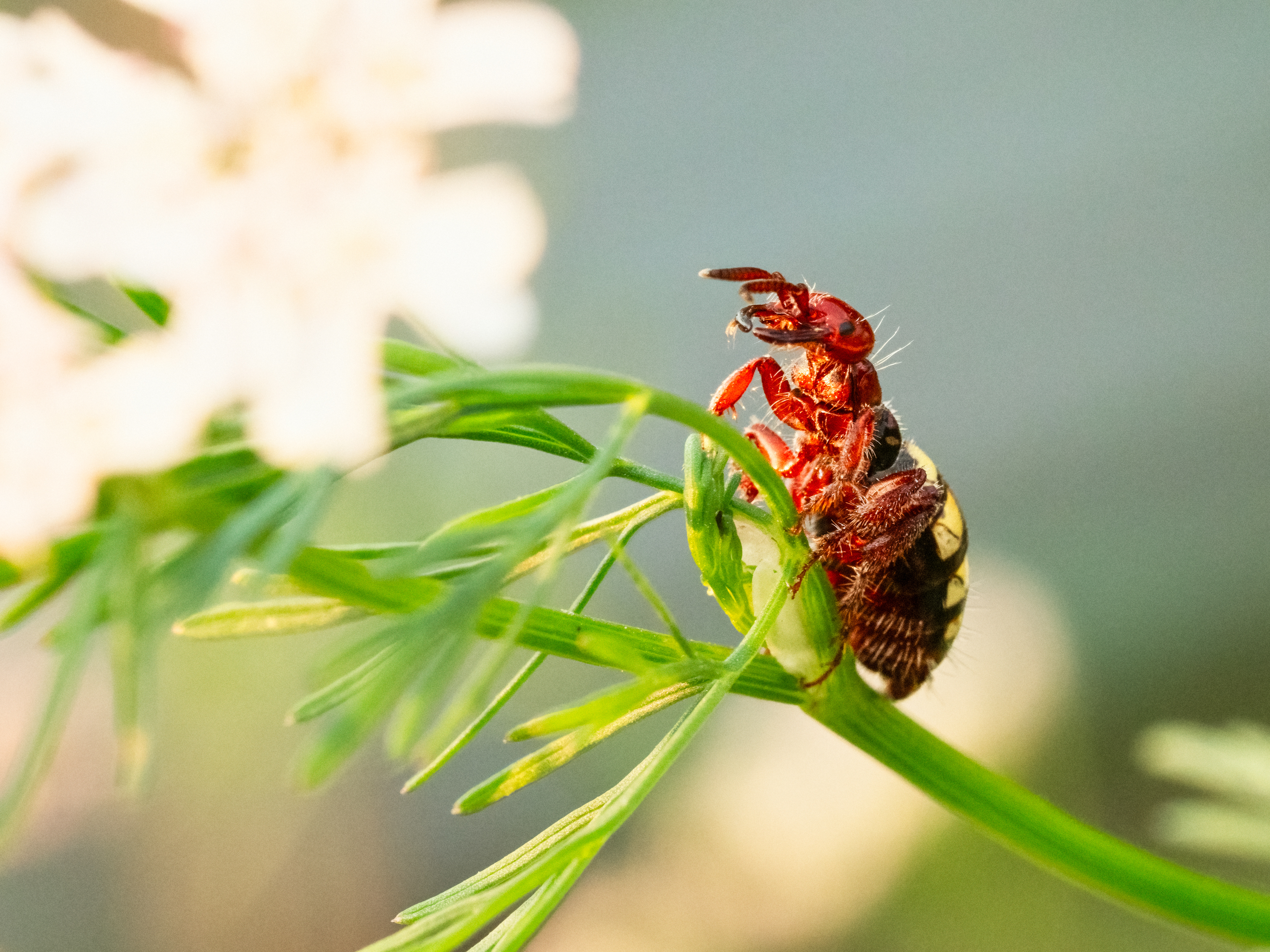
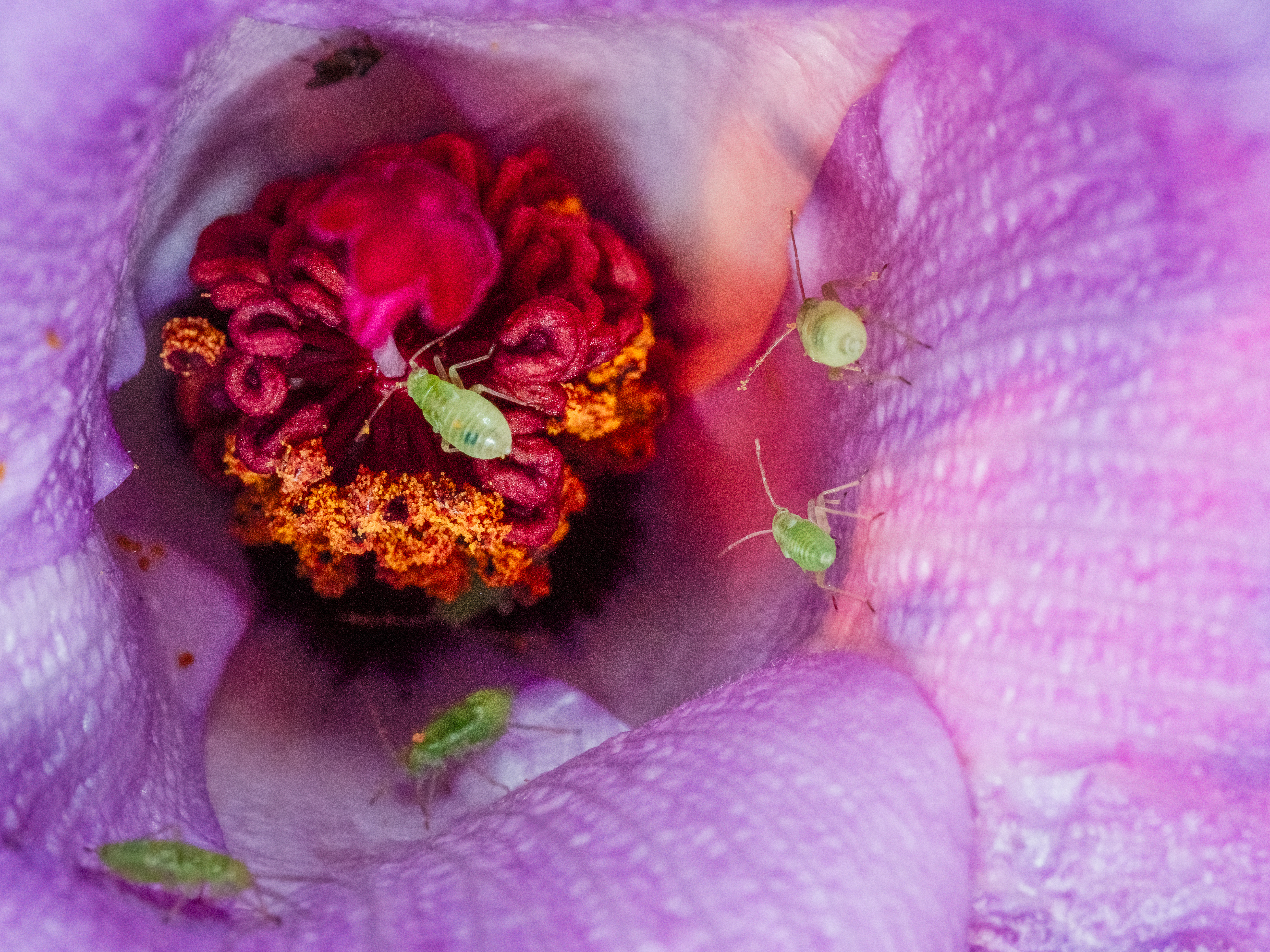
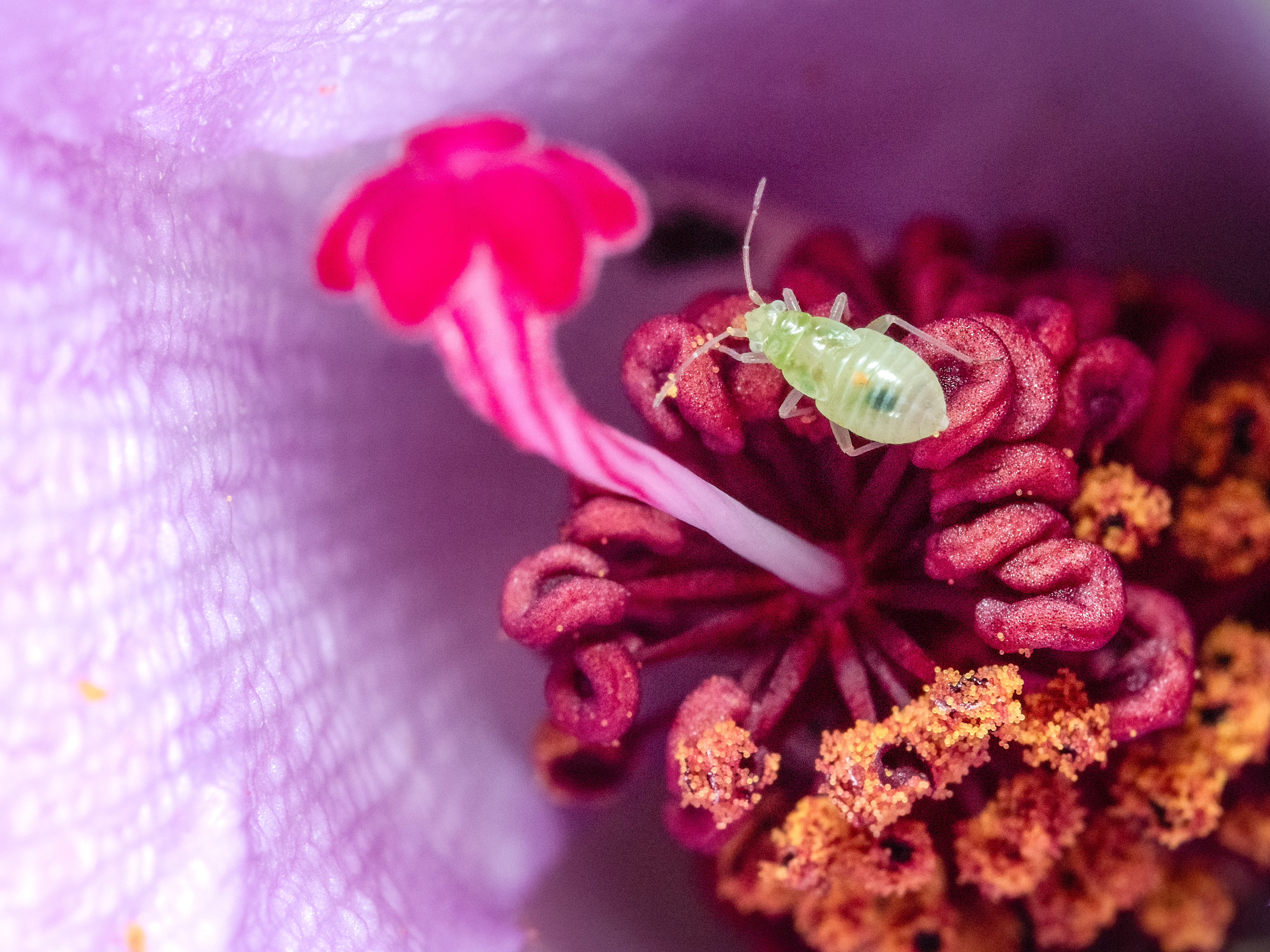
Oh dear! The Beloved Significant Other is not going to be happy with these aphids.
According to the Cambridge Dictionary to say someone is as “high as a kite” is to say they are either intoxicated or extremely happy. Currently I’m in the extremely happy category as we have been having regular visits from a juvenile Black-shouldered Kite. It spends mosts of its time perched on the TV aerial and can often be heard chattering away – sort of a cross between a chirp and a squawk. We had a bit of a mouse plague earlier and this bird is probably the result of that. Normally Black-shouldered kites breed only once a year in the period August to January, but when there is an abundance of food they will breed twice.
A juvenile Black Shouldered Kite, Boorh-ga in Nyoongar, perching on our TV areial. (Elanus axillaris). York, Western australia. Olympus EM1x with OM System 100-400mm lens.
The photos are the best I’ve managed to get so far, but the up the chuff view point (a bird photography technical term) is never a good look. I’ve seen it hunting over the open fields in front of us so hopefully I’ll manage to get some birds in flight shots soon.
The morning mist on the Avon River. Western Australia. Panasonic G9 with Panasonic Leica 12-60mm f2.8-4 lens.
I like the pass of the seasons. I like how everything changes and provides different experiences. I like going out down the Avon River on a cold winters morning with thick mist. The experience is very different – vision is limited to around 5-10m and sounds are strangely muted. When looking for wildlife you think that nothing is near and then suddenly it looms out of mist. Sometimes I wonder who is more surprised at the encounter, me or the animal.
A femaleAustralian Wood Duck (Chenonetta jubata) and her twenty one ducklings swiming in the Avon River. Two weeks later I saw her and had just five remaining ducklings. Panasonic Lumix G9 mk ii with Panasonic Leica 100-400mm f4.5-6.3 lens.
Kakak or Little Pied Cormorant (Phalacrocorax melanoleucos). Panasonic Lumix G9 mk ii with PanaLeica 100-400mm lens.
A male Bambon or Rufous Whistler (Pachycephala rufiventris). Panasonic Lumix G9 mk ii with PanaLeica 100-400mm lens.
A female Bambon or Rufous Whistler (Pachycephala rufiventris). Panasonic Lumix G9 mk ii with PanaLeica 100-400mm lens.
The sun making an effort to break through the mist creates a warm haze. Doornart or Ring-necked Parrot (Barnardius zonarius subspecies semitorquatus). Panasonic Lumix G9 mk ii with PanaLeica 100-400mm lens.
Doolor or Silvereye (Zosterops lateralis) waiting for the sun to break through. Panasonic Lumix G9 mk ii with PanaLeica 100-400mm lens.
Living in a farming community the topic of conversation often turns to the weather. Right now people are talking about how little rain there has been, how cold it is, how they’re looking forward to summer, and how they’re worried about the forthcoming mother of all El Niño’s is coming with forecast temperatures for the Wheatbelt being in the mid to high 40sºC. The local farmers I’ve spoken with are all saying that crop yields will be severely impacted. Generally El Niños don’t effect us in Western Australia like they do in the Eastern States so hopefully this summer won’t too much of a feat of endurance.
I must confess that since we got our new puppy – Bertie – I’ve been rather busy. Time just seems to have slipped away. So the other morning when I was reading the news on ABC I came across a story about how the orchid season in the Wheatbelt had kicked off early. It caught me completely unawares. Normally what I do is draw up a list of what I want to see with when and where and then see where there is an overlap so I can get the most bang for my buck. Then I get my orchid kit together and make sure that everything works and is ready to go. That hasn’t happened this year. A mad whirlwind of frenetic activity saw me pack my bag and find an old list that for some reason I didn’t enact. So quickly organised I headed out on my first orchid hunt of the season.
Eastern Curly-locks. Wandoo National Park, Western Australia. Olympus EM1 mk ii with Olympus M.40-150mm F2.8 + MC-14 teleconverter.
The target species was the Eastern Curly Locks (Thelymitra maculata). I know of two places where they occur. One location, Wandoo National Park, is easy to get to and the plants are easily found near the road. That means orchid poachers often dig them up for selling illegally.The other spot I know (I won’t divulge its location) has more flowers, but,is harder to get to and involves a lot of walking and careful searching. Wandoo National Park was chosen as this was all a bit of a last minute decision.
Dwarf Pink Fairy Orchid, Caladenia reptans subspecies reptans. Olympus EM1 mk ii with Olympus M.40-150mm F2.8 + MC-14 teleconverter.
Dwarf Pink Fairy Orchid. Olympus EM1 mk ii with Olympus 60mm f2.8 macro lens.
Hare Orchid, Leporella fimbriata. Olympus EM1 mk ii with Olympus 60mm f2.8 macro lens
Banded Greenhood, Pterostylis vittata. Olympus EM1 mk ii with Olympus 30mm f/3.5 macro lens
From the description in the ABC article I was expecting to see quite a show as the areas has other species of orchid that should be in flower as well. As I walked through the bush I saw very little orchid activity. Out of the 8 species that should be flowering I saw 3 and there were only a few of those. At one point I wished I’d had my birding kit as I managed to flush several quail as I walked around. The irony being when I’ve gone birding there I didn’t see any. I zig zagged through the bush and didn’t find any Eastern Curly Locks. Dejected I settled for photographing some Dwarf Pink Fairy Orchids (Caladenia reptans subspecies reptans) and some Banded Greenhoods (Pterostylis vittata). I’d promised my partner I’d only be a couple of hours so I packed my kit away and headed back to the car. I took a slightly different route back as I didn’t want to go back through the tangle of sheaoak that had slowed me down while on the outward journey. I stopped to look at some carnivorous Red Ink Sundews (Drosera erythrorhiza) when out of the corner of my eye I spied 2 Eastern Curly Locks. So I had ticked the first orchid off of this years list.
Eastern Curly-locks aka Spotted Curly-locks, Thelymitra maculata. Olympus EM1 mk ii with Olympus 60mm f2.8 macro lens
We had some very co-operative visitors this week in the form of 6 Carnaby’s Cockatoos. They arrived in the garden while I was out with young Bertie our puppy. Normally when I dash back to the house and get a camera the birds disappear before I get back. This little group were very relaxed and hung around for ages letting me get quite close to take their picture. When I went to process the photos I thought the black and white birds would benefit from a monochrome treatment.
Carnaby’s Black-cockatoo, (Zanda latirostris). York, Western Australia.
The other day the Beloved Significant Other (BSO) came home from the local cemetery saying she’d seen lots of crows there with some even sitting on the grave stones. She suggested we go the next morning and try and get some suitably gothic photos.
Australian crows (Corvus coronoides) are not in fact crows, but are in fact ravens. They are highly intelligent birds using tools to help feed themselves, they’ve also been observed softening dried out hard food in water to make it soft enough to eat. As I said, very clever. For the local Nyoongar people the raven is called Waardong – the watcher – and is seen as crafty, cunning and very unpredictable. That is where our plan failed. There was no way we going to get close enough to get a photo. I approached using cover and while just trying to peek around the corner of a wall they’d immediately see me and all take off. I didn’t manage to get one single photo of a raven.
Try as I might this Wardawort or Grey Butcherbird (Cracticus torquatus) just didn’t look gothic enough. York Cemetrey, Western Australia.
There were other birds at the cemetery and I thought that one of them – Wardawort or the Grey Butcherbird (Cracticus torquatus) – would make a suitable replacement for a raven. The Grey butcherbirds were far more approachable than the ravens and it was possible to get quite close which was great for taking photos. The problem was that they didn’t want to sit on top of the grave stones but rather they perched on the wrought iron work that surrounded some of the graves. I still took some pictures but they didn’t match what I’d envisioned – reality seldom does. Getting home I tried processing the the photos as black and white trying to give a suitably dark menacing tone. It just didn’t work. The Grey Butcherbirds didn’t have that spooky/menacing appearance that the ravens have. I also thought that the colour photos looked better, but they did not convey that gothic vibe I was trying to create.
The colour versions just looked better albeit just not spooky enough.
It was a fun exercise. We did talk about how we might get the ravens to hang around. The most logical way would be to put down food for them on a regular basis and so change their behaviour. The ethics of that are a bit suss – get animals habituated to humans and dependent on hand outs just for a photo. Bit dodgy that one. We feed and water birds in our garden, but this is different. It is not our garden and the ravens are naturally wary of people. The birds in our garden are already habituated to us. We didn’t have to put out any food to encourage that. The only other way is to just keep going back over and over again. Who knows we may chance upon a raven that isn’t too fussed about people who is sitting on top of a grave stone and using it as an anvil so they open up snail shells. Preferably on a misty morning. I rather think that pigs might fly first.
As summer draws to a close dawn comes round a little later meaning that I don’t need to get up early. It gives an opportunity to enjoy a leisurely cup of that all important morning coffee and head out.
Wayan or White-faced Heron (Egretta novaehollandiae) greets the new morning. York, Western Australia.
Once down at the river I’m met with sight of the sun just peaking through the clouds and it was a joy to behold. Then the moment is shattered as several hundred Little Corellas take to the air in a whirling squawking mass. Successive waves of birds fly over me each one noisier than the one that preceded it. It was an incredibly intense experience. Eventually the birds all decided to settle in the gum trees along this section of the river bank. Physically they may have settled but their incessant squawking didn’t stop. I was transfixed. I didn’t bother continuing along the river bank I just stayed and watched and photographed.
As the sunrises the Manatj or Little Corellas (Cacatua sanguinea) start to become active.
Then as the sun rises over the horizon the Little Corellas take to the air en masse.
If you are a regular reader you may recall that I recently wrote about having one of those magical days where everything goes right. Well yesterday was the anthesis of that.
Noolarko or Black-faced Cuckoo Shrike (Coracina novaehollandiae) waiting for the clouds to break and the first rays of the sun to light up the day.
We had decided to get up early and walk along the River Avon here in York, so come 5am I bounced out of bed (Haha! As if!) and quickly got dressed. As I quickly had a coffee and piece of toast the rain began to fall. It was one of those summer downpours with big fat lazy raindrops that hit the parched dirt and release that wonderful petrichor. These downpours don’t generally last long and this one was no different so we headed out. On arriving at the river it was quiet, very quiet. In fact unnervingly quite. A complete absence of bird sound apart from a rooster making it’s presence known, but, that doesn’t count. It’s very unusual to be out at dawn and not hear birds singing. I thought normal activity would be resumed when the sun broke through the clouds so we carried on walking. A pair of Black-faced Cuckoo Shrikes perched high up in a dead tree gave me something to point my camera at. Not thrilling photos but a start nonetheless. A bit further on and the clouds had now cleared and we were greeted by a brilliant cobalt blue sky and a steady procession of Galahs flying in formation. I managed to get some photos of them. I’d wanted for ages to get a shot of Galahs flying against a back drop of a brilliant blue sky – the contrast of their pink feathers and the blue. Doing something I never normally do I looked at the rear of the camera and when I saw the sequence of photos I could see that I had achieved that goal. I was at this point feeling rather pleased with myself. The Bible warns us that “Pride comes before a fall” (Proverbs 16:18) and little did I realise that I was about to become literally acquainted with it.
Djakal-ngakal or Galah (Cacatua roseicapilla) fly past.
Turning round we walked back the way we had come and then onto a spot where we could access the river bed. As we broke cover from the bushes we set what seemed like every duck in York flying. Whoops! Then I had this urge to see what if anything was around the corner. When suddenly it happened. You know how people often say that when something catastrophic happens time slows down and everything happens in slow motion? Well that didn’t happen. One minute I’m vertical the next bang and I’m prostrate in the mud with incredible pain shooting up my arm and from my hip. Necessity meant that I just lay still for a bit to see if the pain subsided. I quickly realised at this point that I wasn’t seriously hurt because I was more concerned that my camera had survived the cataclysm than about any injuries I’d sustained. I also became aware of the beloved significant other calling out. She had tried to get over to me but hadn’t got very far as she didn’t want to befall the same fate. Gingerly I got onto all fours and crawled to a firmer spot and got up. I was covered from head to toe in evil smelling river mud – my camera wasn’t much better.
After a dramatic fall while out birding this morning the Olympus EM1x and OM System 100-400mm look a little worse for wear.
Sitting here writing this my camera and I have scrubbed up well. It works perfectly – a testament to ruggedness of Olympus cameras. Me – I’m a bit sore, but there is no major damage.
Note to self: don’t go walking along the river bed just after it has rained – it is very slippy.
… favours the prepared mind.” Louis Pasteur, December 7, 1854, and in 161BC the Roman playwright Terrance said that “fortune favours the brave” in his play Phormio.
All of which basically means that if you have the necessary mind set be bold enough to seize the opportunities that present themselves. That is what happened the other evening. We had found a new possible nesting site for Rainbow Bee-eaters here in York and the beloved significant other suggested we go and have a closer look the other evening. So I picked up my Sony A7r2 with Sigma 150-600mm lens and we drove down to the location. On getting there there was not a Rainbow Bee-eater to be seen. In fact there weren’t many birds about at all. Scanning the tree tops we soon found out why. In the top of a dead tree were a pair of Australian Hobbys. These beautiful birds of prey will take small flying birds so everything had taken cover. The Hobbys looked magnificent against the bright blue sky. I only managed a short burst before they resumed flying up and down the river bank looking for something to eat.
Wowoo or Australian Hobby (Falco longipennis) are often seen in pairs whilst out hunting.
The adapted Sigma 150-600mm doesn’t focus very fast on the Sony A7r2 and the 5 frames per second burst rate isn’t exactly the best, but, it was all good enough for the task in hand.



You must be logged in to post a comment.