The Hidden Danger Of The Bush

Memorial bears for the victims of Drop Bears. York, Western Australia

As I have been tramping around the local woods this spring photographing orchids and birds I noticed something that I’d never seen before. That something was teddy bears tied to trees in odd remote locations. At first I thought it was strange game being played by the local kids, but after I saw my tenth one I decided to ask about and find out what was going on. It took ages to find someone who would answer my questions. Eventually an acquaintance told me to go and see Cliffy. 
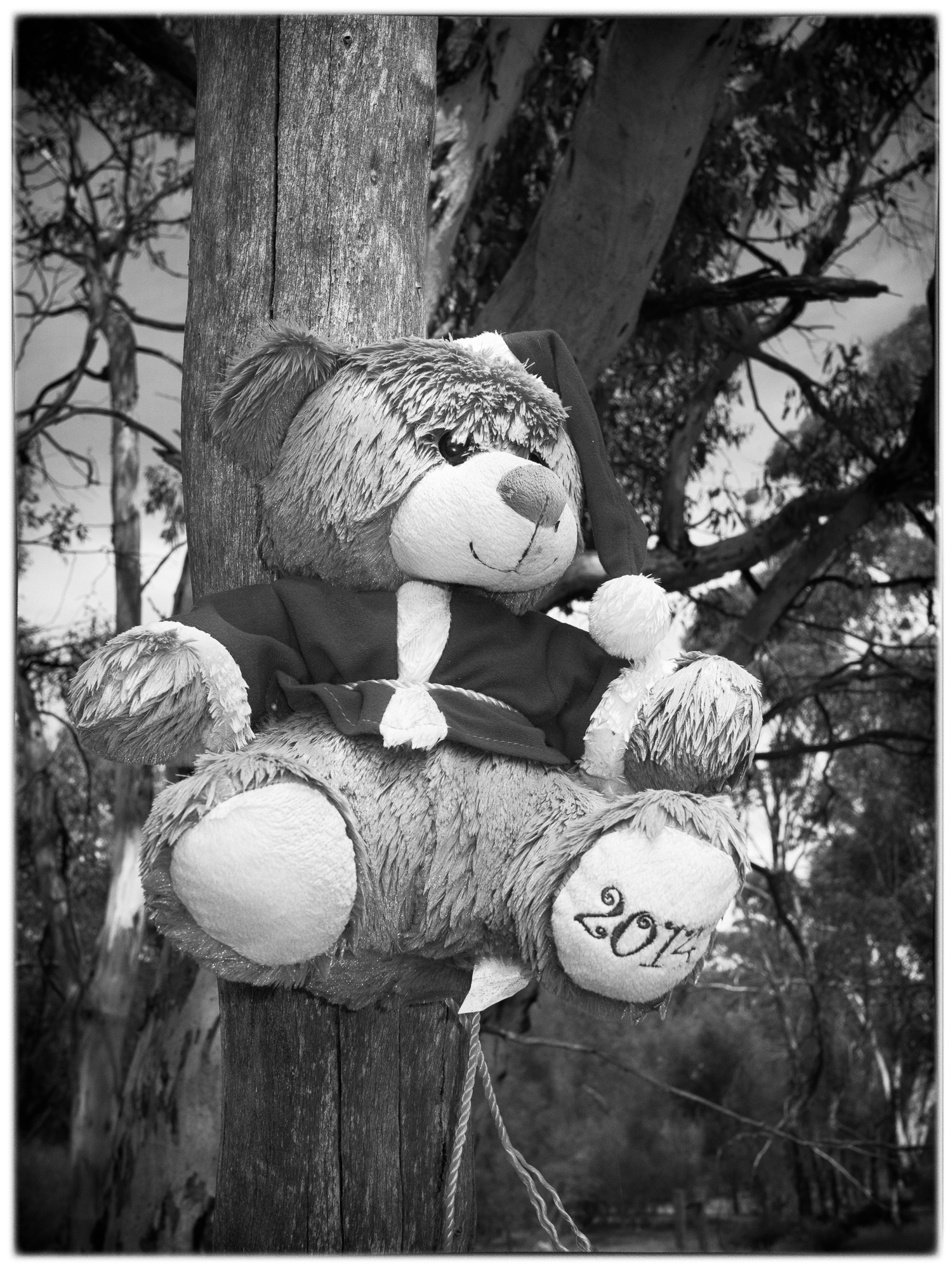
Memorial bears for the victims of Drop Bears. York, Western Australia


Cliffy wasn’t that easy to find. The directions up to his shack in the wandoo forest were very vague – turn off the Great Southern Highway onto Talbot Road, drive for 10 Km and then take the third track on the left. Turn right at the dead tree that looks like an “excited” Tony Abbot in Speedos and then right at the big rock. I found the shack. When I say shack that really sounds better than it is. A few sheets of corrugated tin and some bush poles was all it was. When I saw Cliffy it was plain to see that he’d had a hard life. He is a compact sinewy man with skin the colour of tanned leather and hair like iron filings. His hands were a testament to hard physical labour – even the callouses had callouses. As to his age, well if you told me he was 100 I’d believe it and if you said he was 50 it wouldn’t surprise me either. So after the usual “Howz yer doin’?” Followed by a quick discussion about rainfall and rain gauges* I asked him about the bears. Cliffy sucked his single tooth and rolled a couple of strands of tobacco in some paper that looked like it had been torn from a pocket Bible. Slowly and quietly he says in a voice that sounded like he’d been gargling on razor blades “They’re memorials to victims of Drop Bear attacks”. He lit up and took a long drag and then told me the strangest tale. I scurried home to do some research.
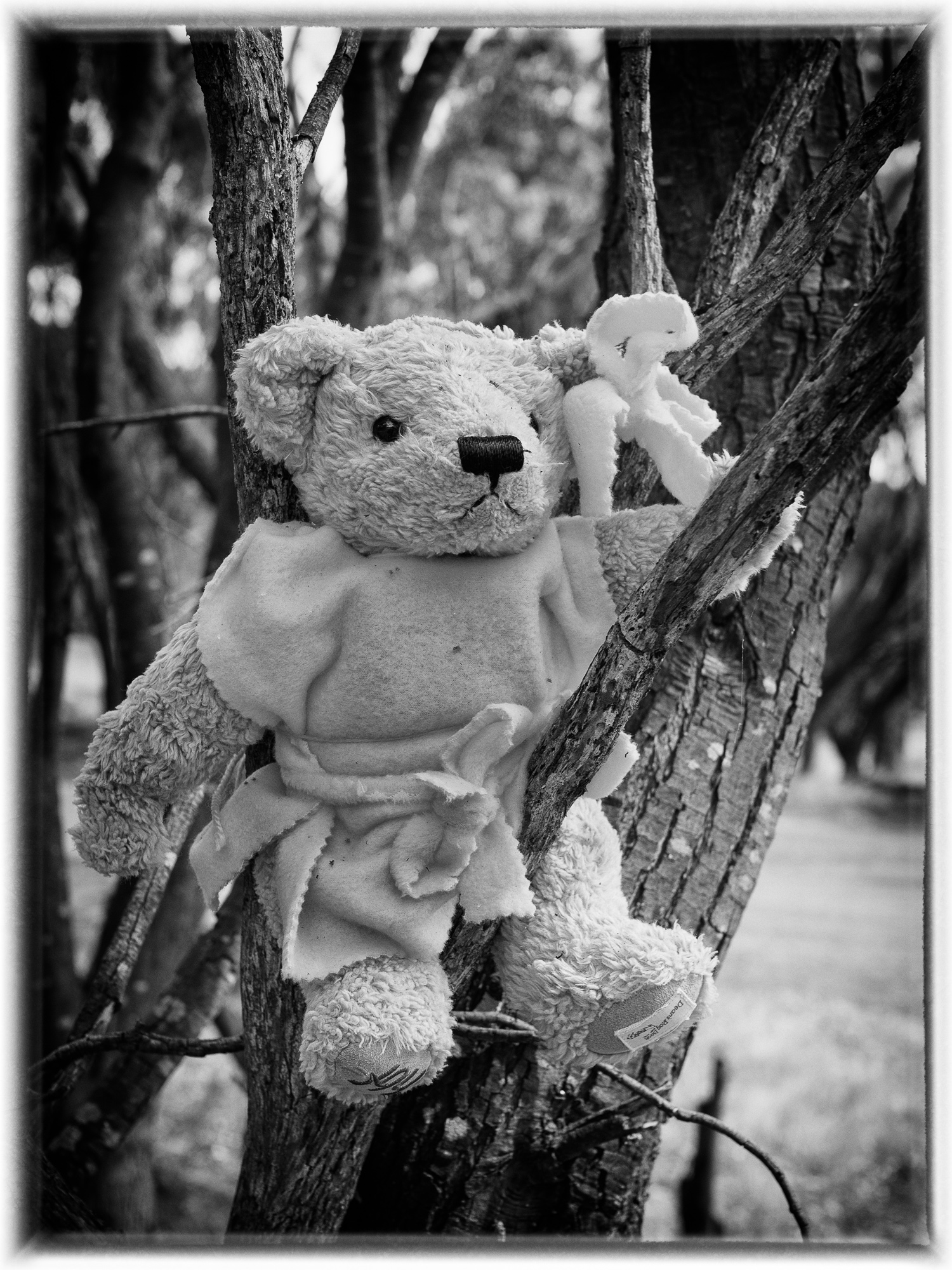
Memorial bears for the victims of Drop Bears. York, Western Australia


Most people throughout the world know about the Koala Bear or to give them their proper scientific name “Phascolarctos cinereus”. Well firstly they are not a bear but a tree-dwelling marsupial that feeds on eucalyptus leaves. Secondly they are relatively harmless because all they do is eat and sleep. Occasionally you come across a grumpy one but all you’ll suffer is a few scratches. Well apparently the koala has an evolutionary cousin, the Thylarctos plummetu. Most animals in Australia are known by their Aboriginal name, but this one hasn’t got one as the Aboriginal Peoples are so scared of it they refuse to talk about it. Colonial settlers came to refer to them as Drop Bears for reasons that will become apparent later. Few people have seen the animal, and of those that have only a couple have lived to tell the tale. I’ll quote the Australian Museum’s description:

Identification

“Around the size of a leopard or very large dog with coarse orange fur with some darker mottled patterning (as seen in most Koalas). It is a heavily built animal with powerful forearms for climbing and holding on to prey. It lacks canines, using broad powerful premolars as biting tools instead.”

Size range

“120kg, 130cm long, 90 cm at the shoulder.”

Habitat type

“Vegetation Habitat: closed forest, tall closed forest, tall open forest, tall open shrubland”

Feeding and Diet

“Examination of kill sites and scats suggest mainly medium to large species of mammal make a substantial proportion of the animal’s diet. Often, prey such as macropods are larger than the Drop Bear itself. Drop Bears hunt by ambushing ground dwelling animals from above, waiting up to as much as four hours to make a surprise kill. Once prey is within view, the Drop Bear will drop as much as eight metres to pounce on top of the unsuspecting victim. The initial impact often stuns the prey, allowing it to be bitten on the neck and quickly subdued. If the prey is small enough Drop Bears will haul it back up the tree to feed without harassment from other predators.”

The Australian Geographic magazine did an article in 2013 about a University of Tasmania (UTAS) research project looking at who were more susceptible to attacks. In 2012 there was a research project looking to track Drop Bears in bush and see how many there actually are. An excerpt from that paper can be read here. I even managed to find online an old public announcement film for new migrants dating from the 1950’s warning of the dangers posed by Drop Bears.


When Cliffy had finished his tale of horror I had to lift my jaw up from the floor. “But why oh way don’t the government send in the police or the army to do something about it?” I say incredulously. This sent the old man into a fit of hysterical laughter. After ten minutes he managed to regain his composure. “Yer dopey pommy bastard, don’t yer know nothin’? The last time the Australian Army was called in to deal with an animal problem was in 1932 when Emus invaded Western Australia and that was a complete fu*king fiasco and made them look like complete idiots. It would be too dangerous to let that mob loose in the bush. The bloody pollies are all too busy guzzling at the trough to care about a few bushies goin’ missing.” 

So if you venture into the Australian bush and see teddy bears tied to the trees be aware that Drop Bear attacks have happened in the area and you’d be best advised to leave.

* All conversations in this part of the world follow this pattern. It’s considered very rude not to ask about someone’s rain gauge.
Wild, go wild

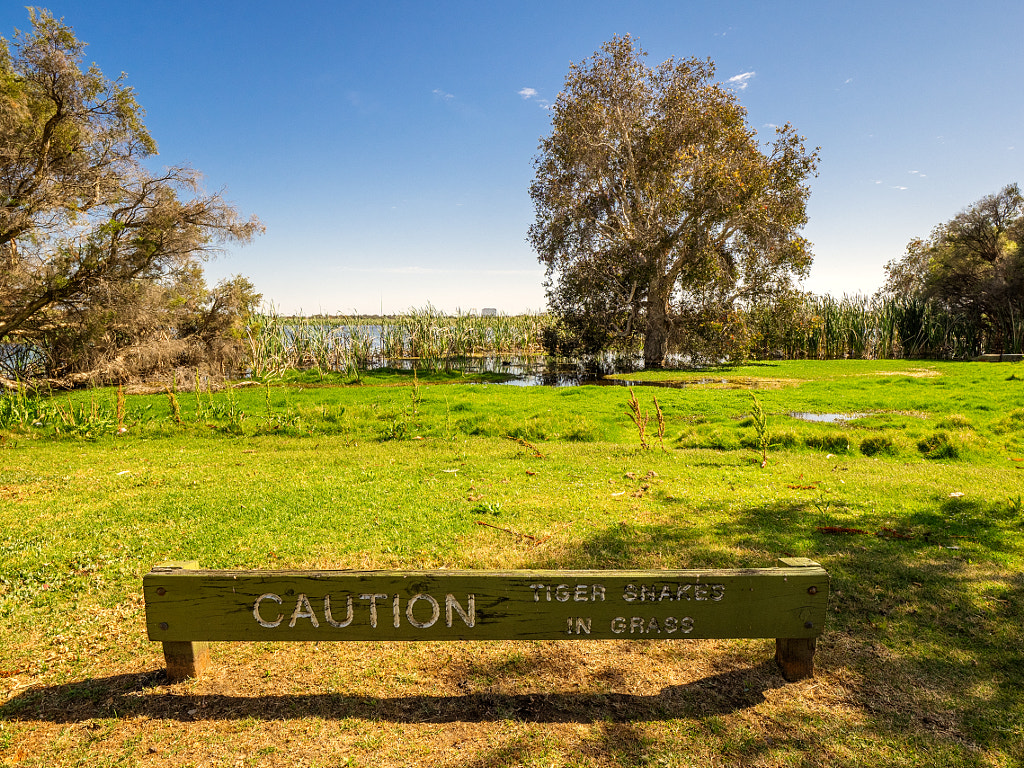
Been out and about a lot the last few weeks trying to get the book finished – hence no blog activity. But yesterday I was at Herdsman Lake Regional Park and saw this and I thought it was blog worthy:


Herdsman Lake Loop Walk by Paul Amyes on 500px.com
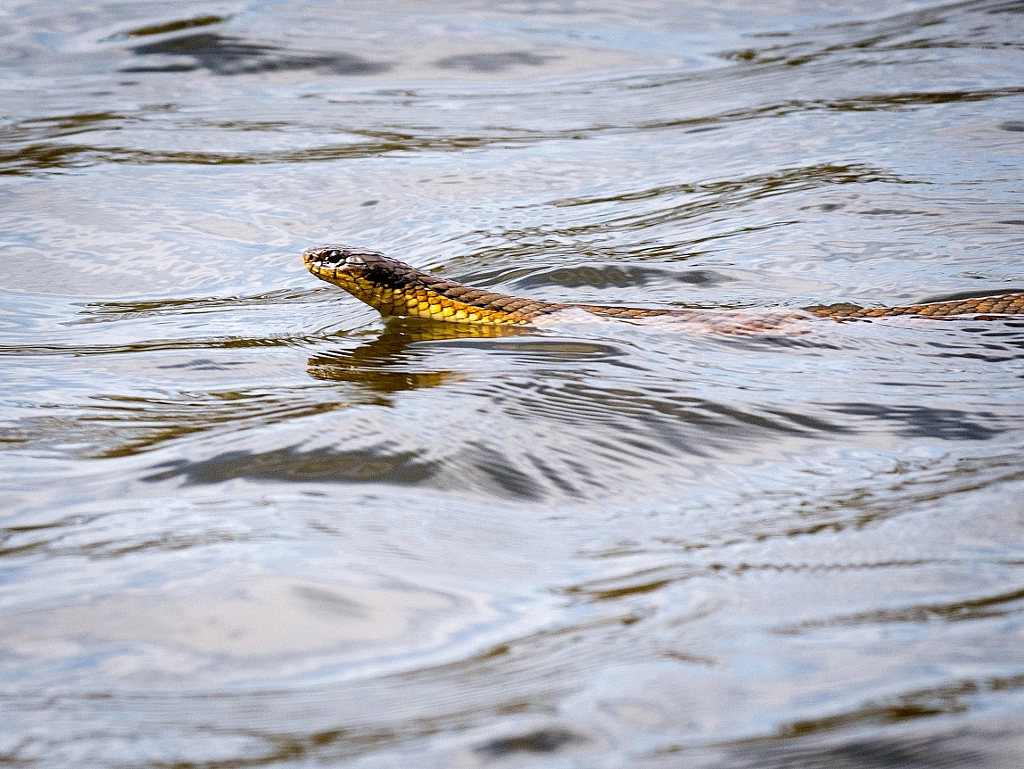
Tiger snakes are very common in Herdsman Lake Regional Park.


Immediately I started singing:

“Wild, go wild, go wild in the country
Where snakes in the grass are absolutely free
Wild, go wild, go wild in the country
Where snakes in the grass are absolutely free”

Songwriters: Malcolm Robert Andrew Mclaren / Matthew James Ashman / Dave Barbarossa / Leigh Roy Gorman
Go Wild in the Country lyrics © Peermusic Publishing, Sony/ATV Music Publishing LLC


Tragic isn’t it. It doesn’t take much to set off the memories of a trashy pop song from 1982. But perhaps it had more to do with the fact that the 14-year-old Annabella Lu Win was seared upon my teenaged hormonally enraged mind. Not hard to see why when the album art by Andy Earl featured a nude Annabella and had Scotland Yard investigate for sexual exploitation of a minor.

In my teenage ignorance I didn’t realise that this was a post modern interpretation of  Édouard Manet’s Le Déjeuner sur l’herbe .  All I thought was “Phwoarrrrrrrrrrrr”. My girlfriend of the time was not impressed to say the least. Anyway my mind was re-focused a few minutes later when I saw this:


Herdsman Lake Loop Walk by Paul Amyes on 500px.com
Tiger snake, Notechis scutatus. Herdsman Lake Regional Park, Western Australia.


“**cking hell!” Can those buggers shift while they swim. More alarming was that it made shore about a metre from my feet in the long grass. I tell you this 55-year-old geezer would have at that moment given Usain Bolt a bloody good run for his money.

Mugged


I was at Lake Leschenaultia and it was a lovely winter’s day, the sun was out I’d just finished a bush walk. I decided to have lunch at one of the picnic shelters by the lake when it happened. There was no warning. One minute I sitting there alone and happy the next minute these two ne’er-do-wells are demanding with menace. To make matters worse I had nothing to give and they just would not accept that. They were merciless in their onslaught. Would I recognise them again? You bet I would! Their visages are engraved indelibly upon my mind. But better than that I managed to get pictures of them so others could be warned. Here they are.


Lake Leschenaultia Lakeside Walk by Paul Amyes on 500px.com
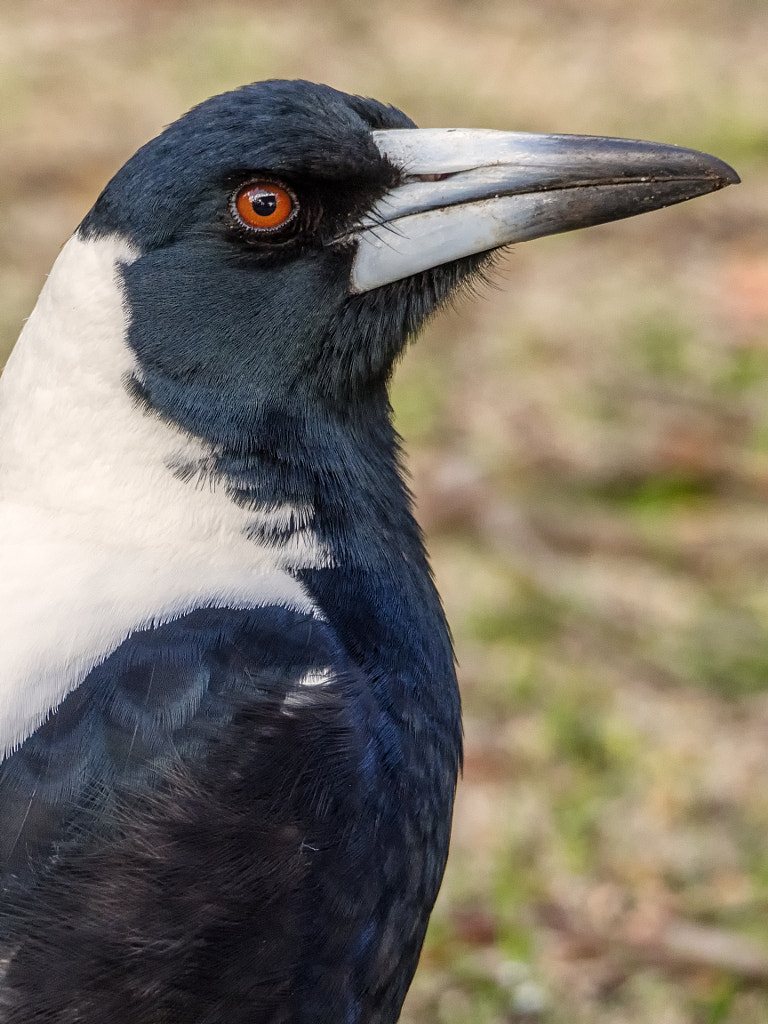
The eponymous Australian magpie (Gymnorhina tibicen) will happily relieve you of your picnic lunch at Lake Leschenaultia.


This was the ring leader. He was ruthlessly determined to relieve me of my lunch. He was brazen in his approach, like he just didn’t care.


Lake Leschenaultia Lakeside Walk by Paul Amyes on 500px.com
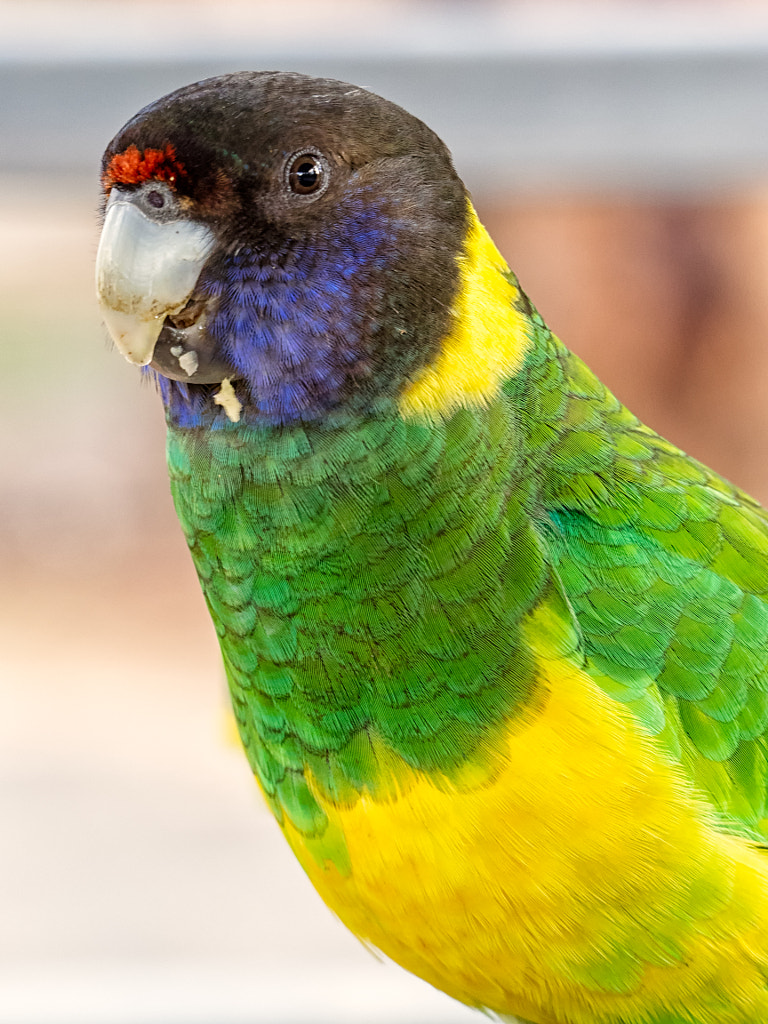
Australian Ringneck (Barnardius zonarius subspecies semitorquatus). One of the cheeky bandits that will help eat your lunch at Lake Leschenaultia


This one was a sly beggar! He quietly got into my bag and ransacked it looking for goodies. When discovered he just countered with a manic laugh.It was like something out of that Hitchcock film The Birds albeit with less blood and more sandwiches.


So if you go to Lake Leschenaultia watch out for these two. They are merciless – no picnic is safe! Be warned, or as the Australian Federal Government would say “Be alert but not alarmed“.

Photography …

… it’s a bit like fishing. There’s always the one that got away. It doesn’t matter how prepared you think you are the opportunity presents and disappears in a nano second. One of my photography lecturers used to talk about what he called ‘the retrospective drive home’ where you analyse everything you did and didn’t do that contrived to create that missed opportunity. The frustrating thing is as you try and tell someone about it they invariably say “A photograph or it didn’t happen”.  Well this time I’ve got the photos to prove it! Sort of.

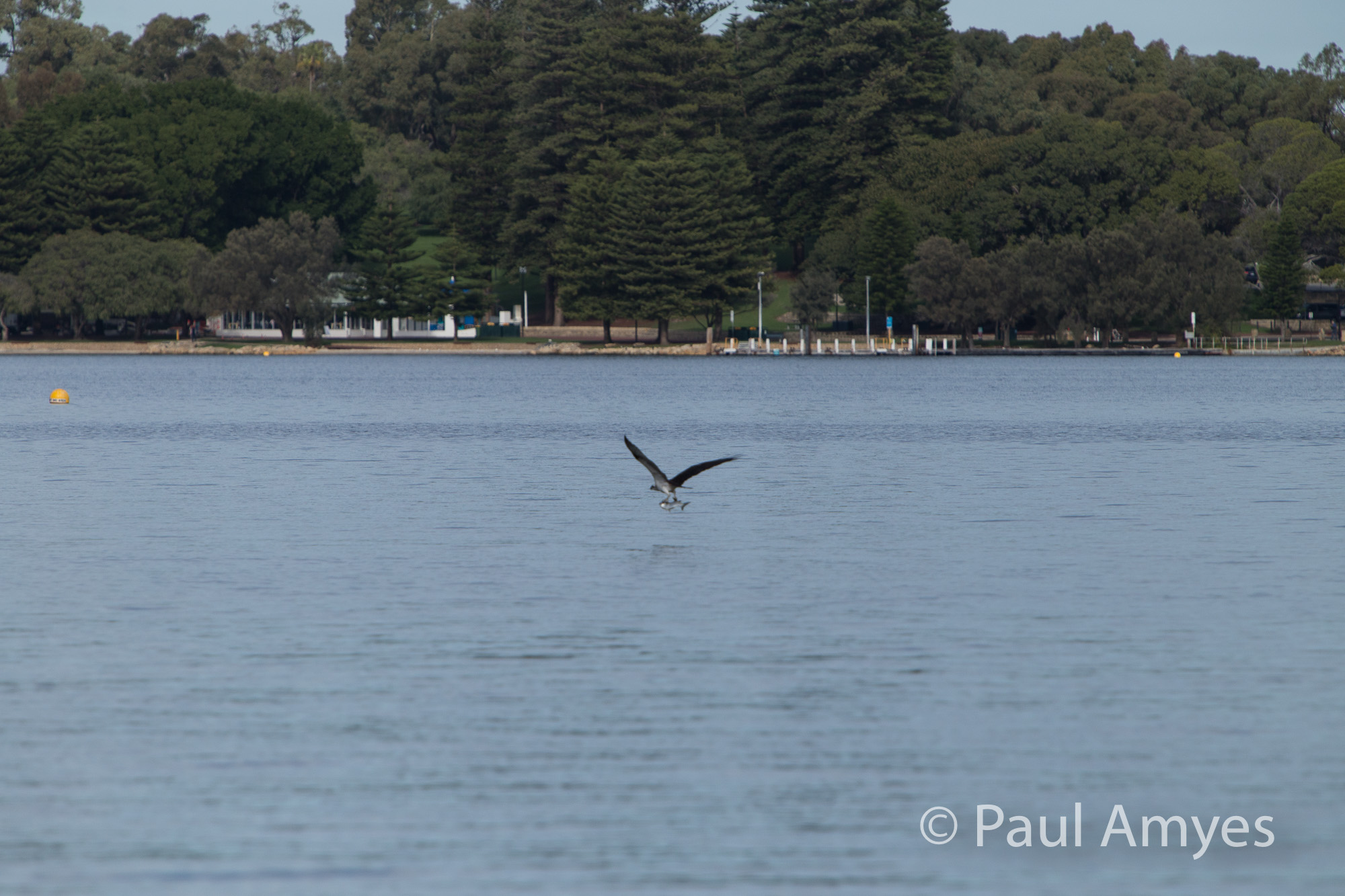
The other day I was walking along the Swan River foreshore at Claremont when I saw an Osprey drop like a stone from the air and scoop up a fish.  In less than the blink of an eye it was over. I was ready the camera was out of the bag and had a long lens fitted, it was switched on and the settings were optimised. So what did I get?

The osprey making its escape with catch of the day.

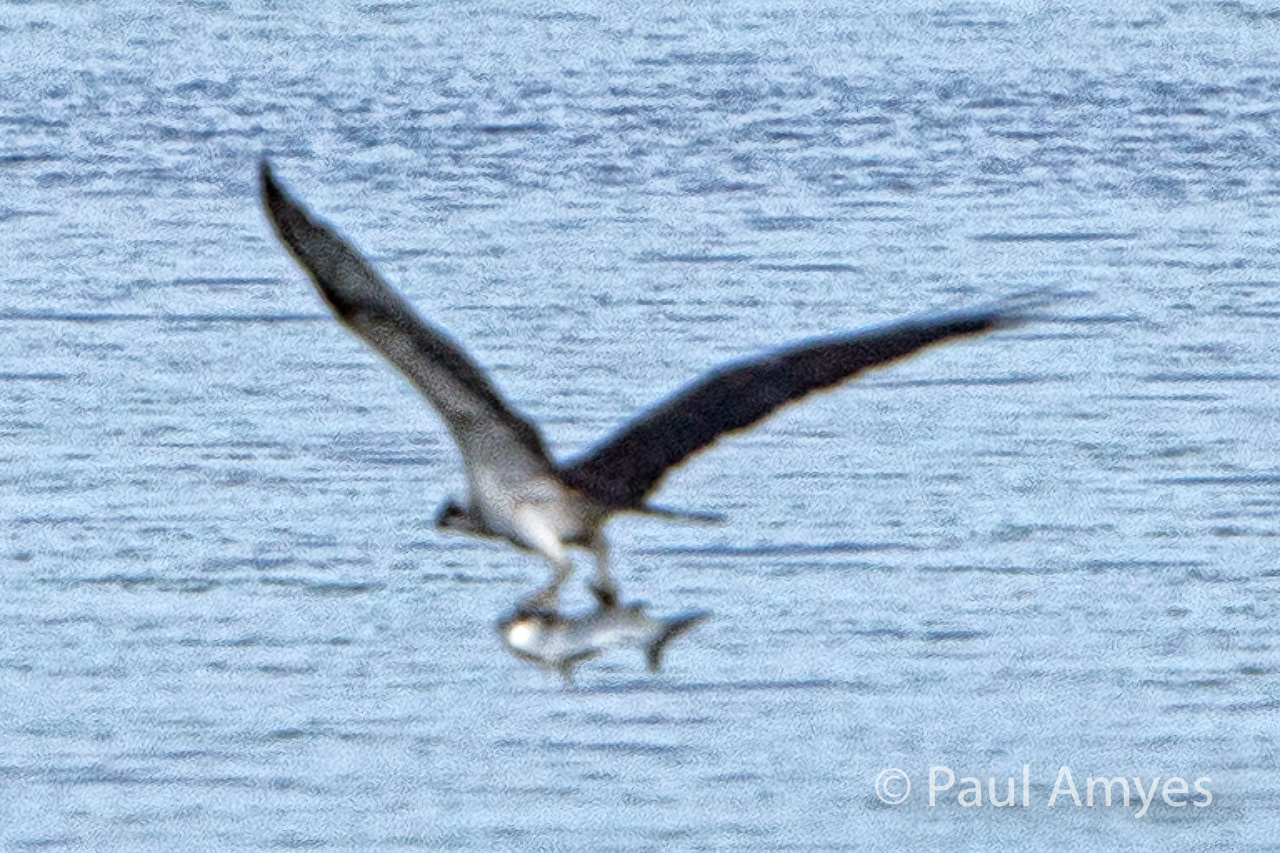
With some Photoshop magic this is what I got.


That was the best I could get – pathetic isn’t it? There I am with (hang on the other half may read this) an untold amount of money tied up in photo equipment and this is it! I remember watching the original Bladerunner where they had a fancy doodad that could extract a useable photo out of some ridiculous enlargement. You know that film was set in 2019 and it is now 2018 and we haven’t got that fancy photo doodad let alone flying cars. The future is such a disappointment. So as I walk away from the scene looking dismally at the LCD on the back of the camera I’m mentally kicking my backside.

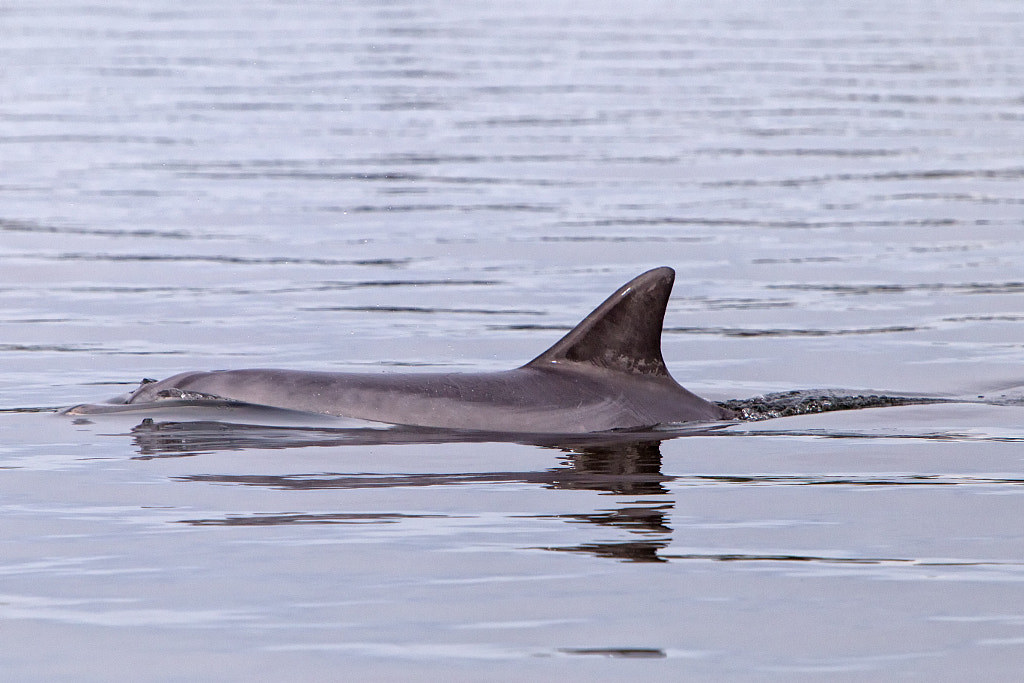
Half an hour later I hear a commotion coming from the water. A shoal of fishing flapping on the surface coming on to the shoreline. Low and behold a fin and then a head break the surface. It’s a pair of bottle nosed dolphins driving fish into the shore. With the relaxes of a dead cat I leap into action and fire off a burst.


Claremont Foreshore Walk by Paul Amyes on 500px.com
Indo-Pacific Bottle Nosed Dolphins can often be seen in in Freshwater Bay. They often drive shoals of fish into towards the shore to make hunting easier. They also feed on the crabs found on the sandbar.


Well this time I got a sharp photo of something recognisable as a dolphin. But that is the best I got. This wildlife photography lark is hard – the wildlife aren’t giving me chance.

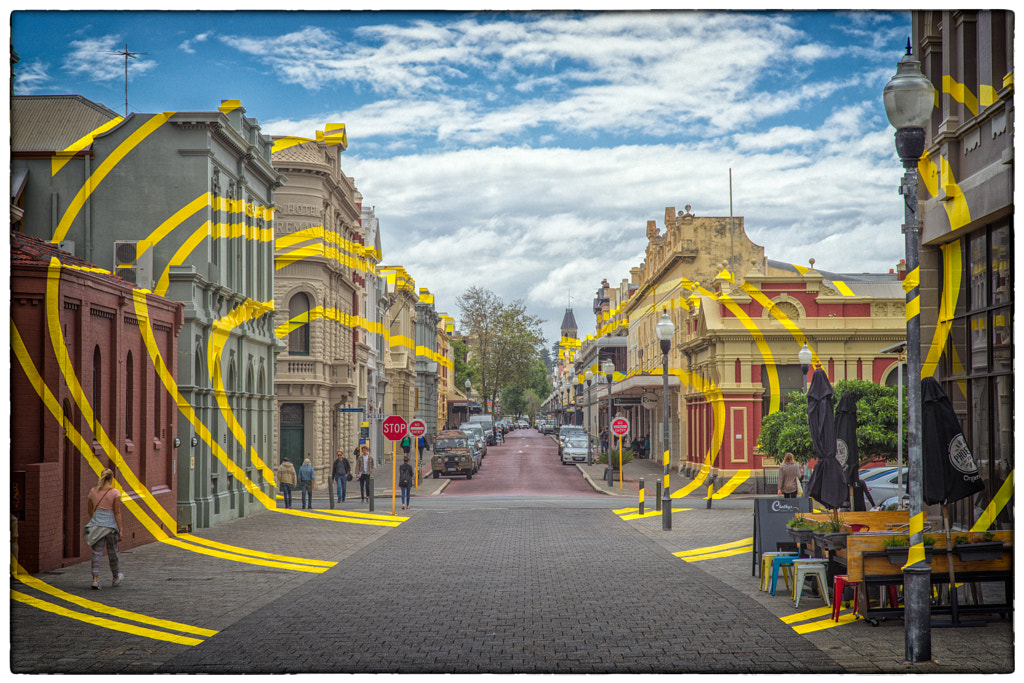
No Parking

No Parking by Paul Amyes on 500px.com
No Parking! Fremantle council has gone a bit overboard with the double yellow lines. In reality is a geometric painting on a massive scale by Swiss artist Felice Varini called Arcs D’Ellipses. Sony A7r with Voigtlander 75mm f2.5 Color Heliar lens. Exposure: 1/640th sec, f8, ISO 100.


Shell Shocked

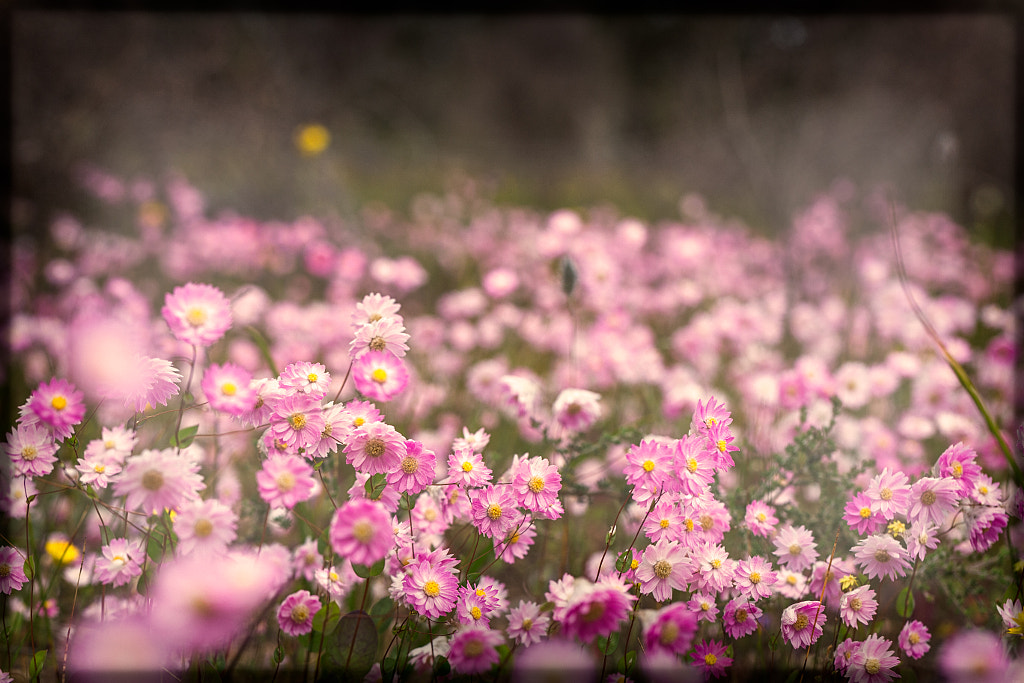
Pink Everlastings by Paul Amyes on 500px.com
Found in abundance across Western Australia in spring are pink everlastings (Helipterum roseum). In many places they can form thick carpets of vibrant colour. York, Western Australia. Canon EOS6d with Canon EF 100mm f2.8 macro IS L lens. Exposure: 1/250th sec, f8, ISO 100.


I’ve written about going to York Golf Course to photograph flowers, particularly orchids, before  and today I’m going to do so again. This time was a little different. Firstly I was looking for pink everlasting daisies (Helipterum roseum) and secondly I went on a Saturday just after lunch instead of early on a weekday morning. It was a bad idea – a very bad idea. It was like something out of the movie Saving Private Ryan. The golf course was full. Here in the Wheatbelt when we say something was overcrowded it means there were three people, so to see roughly thirty people in one place was sensory over load – where had they all come from? To cap it all it was just after lunch the club bar been open and it seemed like everyone had been imbibing freely. Up to this point I thought it was the done thing to shout “Four” upon teeing off. Well at the York Club the word began with F and had four letters but it certainly wasn’t “Four” It was reminiscent of the opening scene from Four Weddings and a Funeral.


It went something like this. “Swish” went the sound of the club as the golfer made his swing, followed by a sharp “thwack”, followed almost immediately by a loud “F**k” as the ball was sliced into the rough. Unfortunately I was, along with the pink everlastings, in the rough. The late Spike Milligan once described an artillery barrage as being like Chinese water torture except with solids in his autobiography “Rommel?” “Gunner Who?”. Well the balls didn’t explode on impact, but they certainly had the effect of making me hit the deck and take cover. The only time I’ve moved faster was when the Rugby club president declared an open bar (my excuse being that I was an impoverished student at the time). After thirty minutes of cowering in the dirt wishing there was an air raid shelter nearby I decided to call it quits and I beat a hasty retreat back to the safety of the car. I did manage to get the two pictures of Everlastings shown on this page.


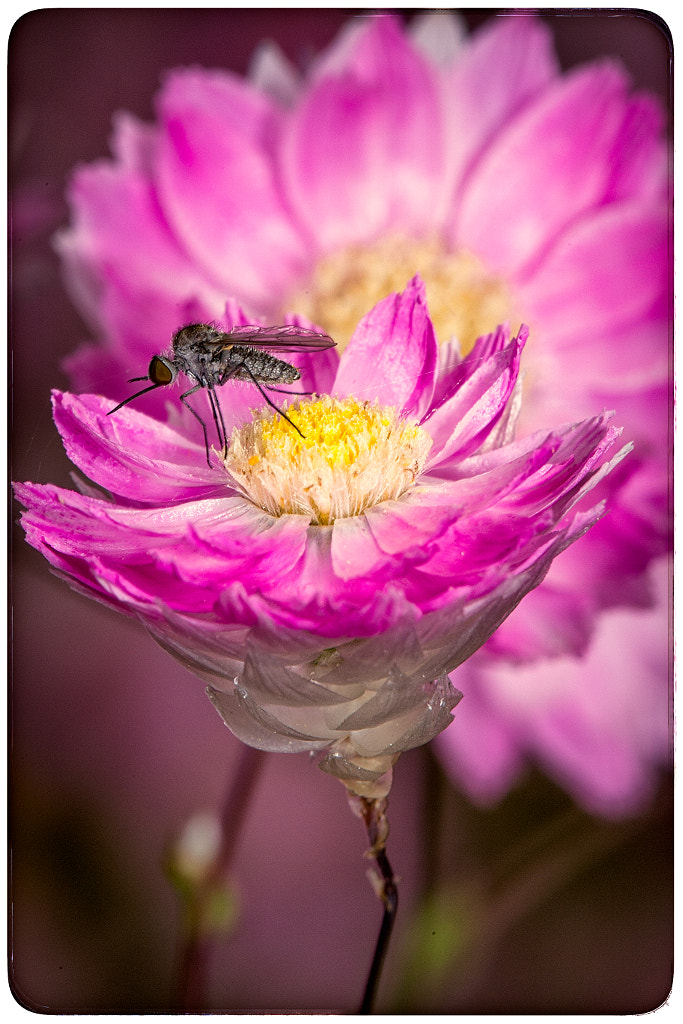
Pink Everlastings by Paul Amyes on 500px.com
Pink everlastings (Helipterum roseum). In many places they can form thick carpets of vibrant colour. York, Western Australia. Canon EOS6d with a Canon EF 100mm f2.8 macro IS L lens. Exposure: 1/60 th sec, f16, ISO 100.

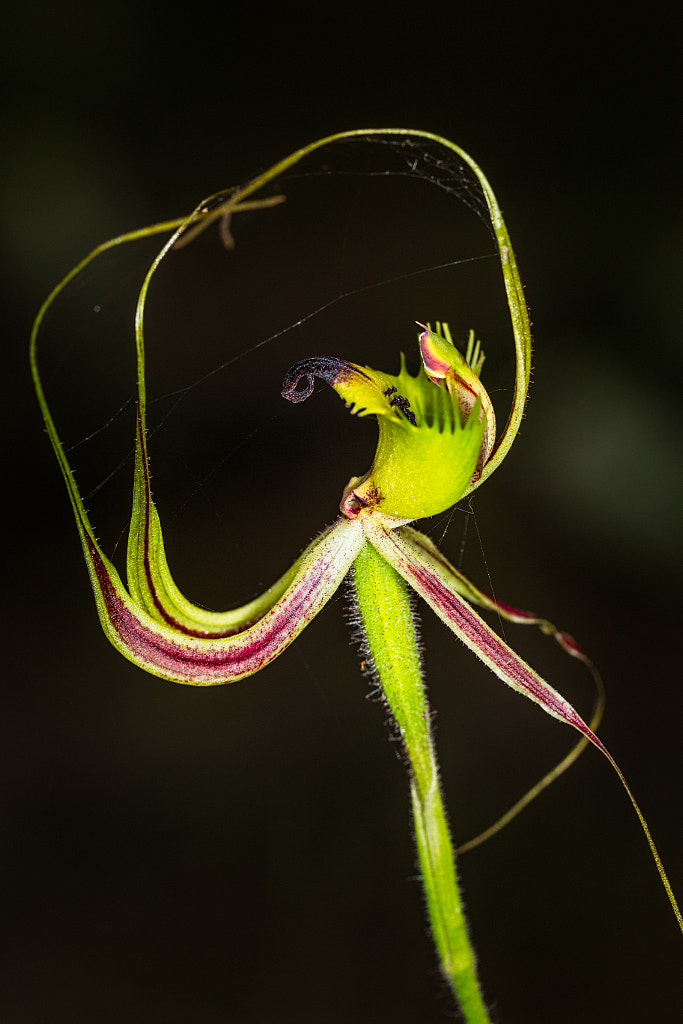
As I made my tactical withdrawal I hit the cover of some bushes where I found a small clump of green spider orchids (aka Fringed Mantis Orchid, Caladenia falcata) so I quickly stopped to grab a couple of photos.


Encircled by Paul Amyes on 500px.com
Fringed Mantis Orchid or Green Spider Orchid, Caladenia falcata, York Golf Course, York, Western Australia. Canon EOS6d with EF 100mm f2.8 IS L macro lens. Exposure: 1/160 sec, f8, ISO 100.

All I can say is was a very traumatic experience. Every time I hear someone hitting a ball I develop a nervous twitch.


Clicking on a photo will take you through to my online gallery.