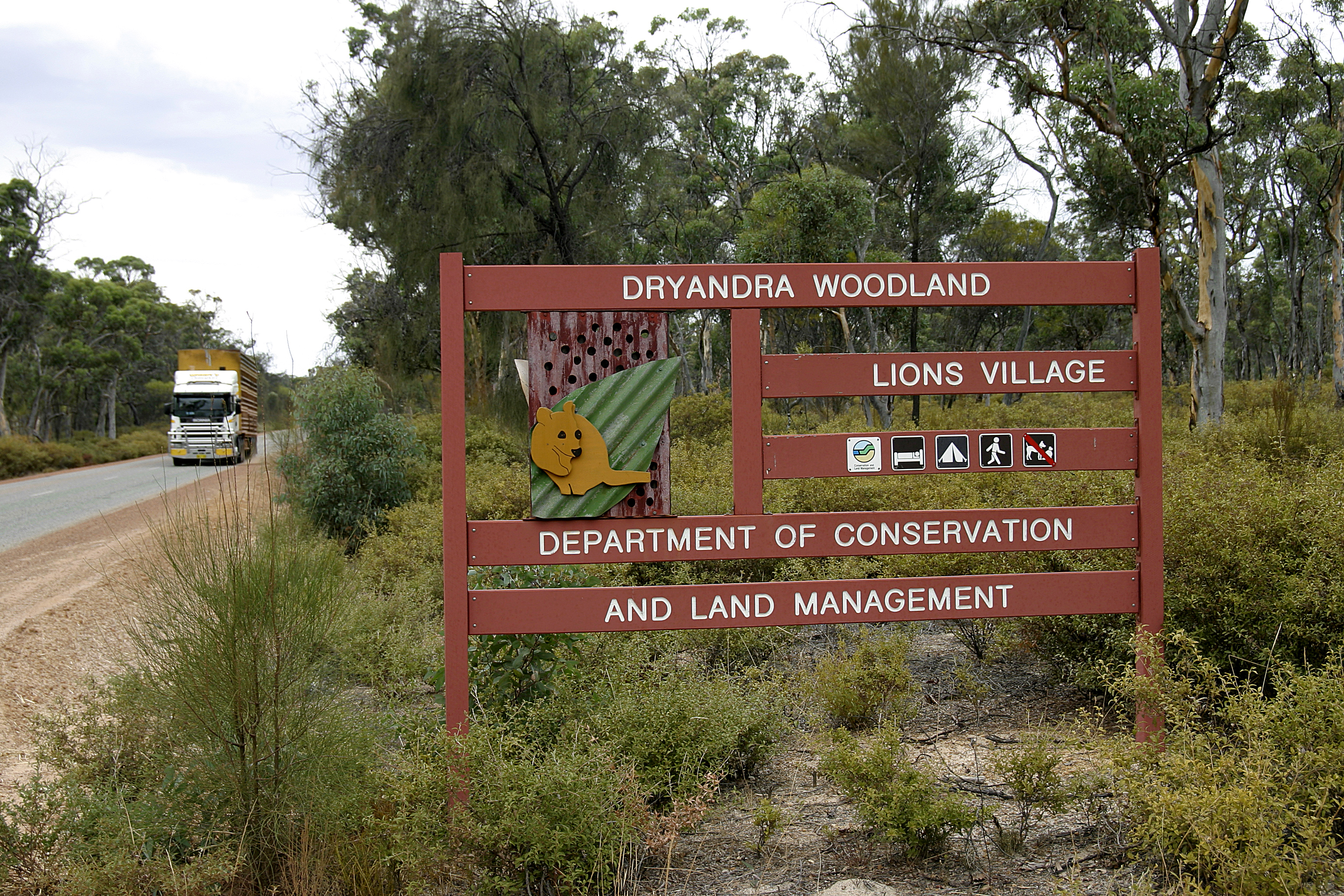
Dryandra Woodland National Park is thirty minute drive from Narrogin or two hours south east of Perth. It is 15,000 hectares of remanent woodland – a taste of what the Wheatbelt was before colonisation. It is the home to some of Australia’s most at risk animals and because of this the Western Shield program was developed to minimise the effects of feral predators – foxes and cats – and allow the native fauna to re-established.
For us Dryandra has attained an almost mythical status. We have been going for years, and we always want to go again. Every time we always have some kind of amazing animal interaction whether it be Wedge-tailed Eagles, Woylies, Echidnas, Ring Tailed Possums or kangaroos.
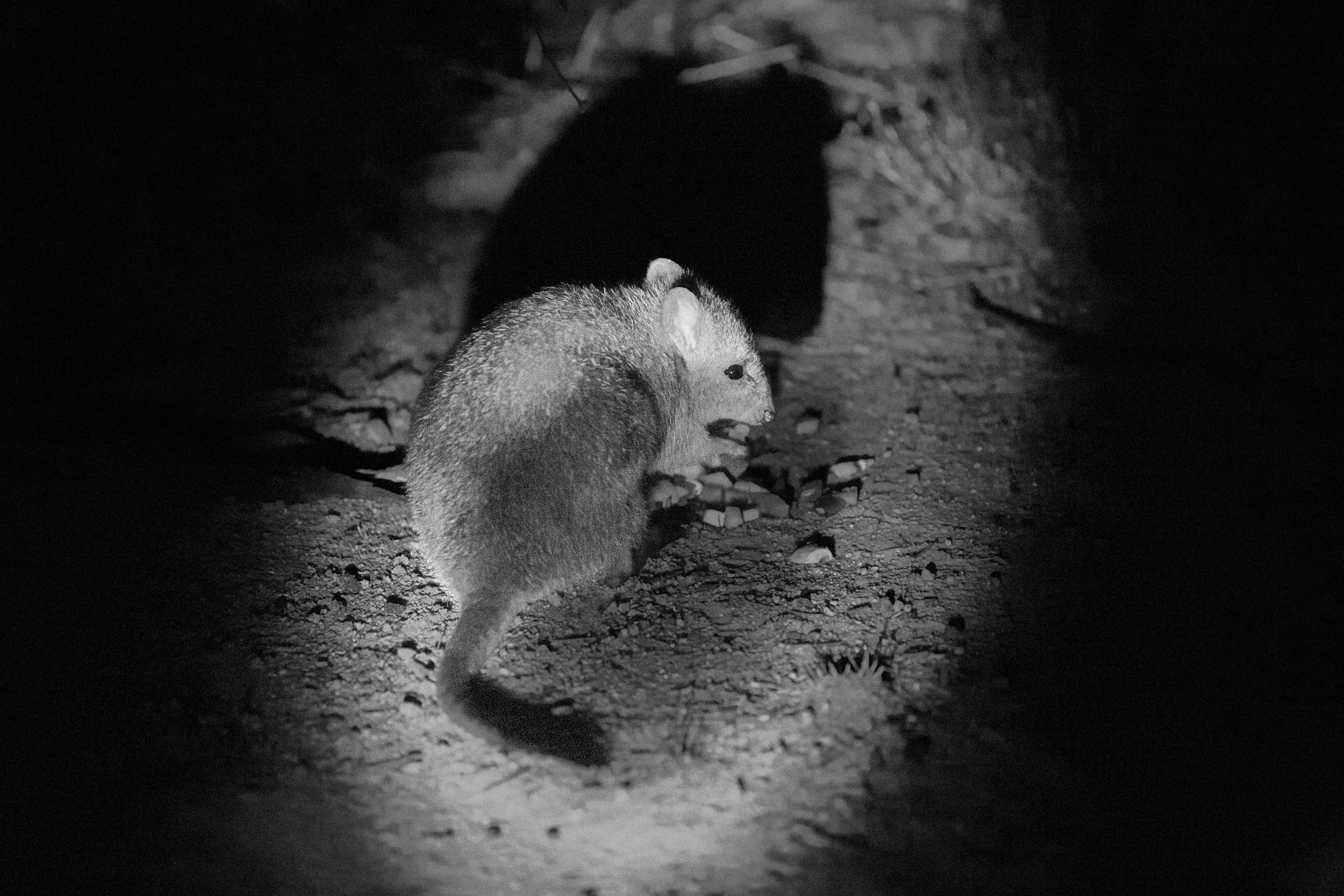
The Woylie or brush-tailed bettong (Bettongia Penicillata) is a small hopping marsupial that stands approximately 30 cm high and weighs up to 1.6 Kg. Once quite common the population has been decimated by the introduction of foxes and the practice of large scale land clearance. The Dryandra Woodland Reserve is an important part of CALM’s Western Shield project which aims to re-establish the species.
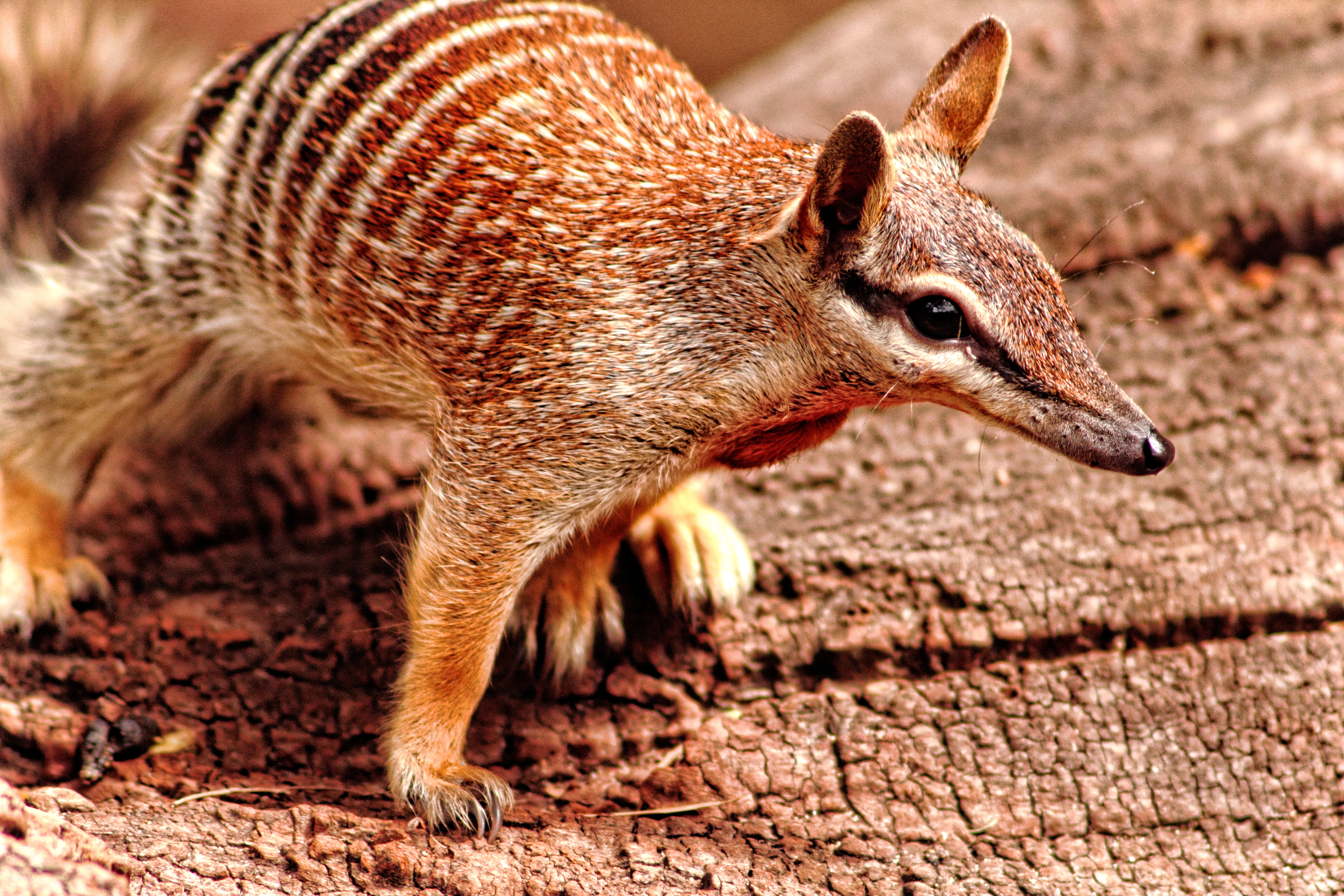
Dryandra is really famous for its Numbats, and in all the years we have been visiting we’ve never seen one. The only Numbat I’ve seen was at Perth Zoo, and they can be tricky to see there too.
A Numbat at Perth Zoo.
This visit the plan was quite simple. After the previous hot day and with another forecast we planned to stake out the Old Mill Dam and try and catch the early morning activity at the waters edge. It was a great morning the only problem photographically was the heat haze over the water, but that only effected the shots where the subject was on the other side of the water. Anything I was close to was pin sharp.
This mother andJoey Yongka or Western Grey Kangaroos (Macropus fuliginosus) were feeding on the side of the track as we entered Dryandra.
Ngoolyak or Carnaby’s Black-cockatoo (Calyptorhynchus latirostris) drinking from the dam.
Miyamit or Yellow-plumed Honeyeater (Ptilotula ornatus).
Djiring-djiring or Restless Flycatcher (Myiagra inquieta). Old Mill Dam, Dryandra.
“I was here before you!!” Miyamit or Yellow-plumed Honeyeater (Ptilotula ornatus) and Djiring-djiring or Restless Flycatcher (Myiagra inquieta). Old Mill Dam, Dryandra.
Djangkang or Red Wattle Bird (Anthochaera carunculata).
Apologies to William Shakespeare – Macbeth Act 2 scene 1
Desperate to get out of the house we grabbed the opportunity to go on an overnight trip to Narrogin. This might surprise people as Narrogin is not really known as a tourist destination and it was forecast to be 40ºC. There was madness in my method. Firstly Narrogin is a good jumping off point for Dryandra (I’ll save that for a later post). Secondly to photograph wildlife in hot weather you really need to find permanent water sources and the locations we’d chosen both had that. Thirdly you have to able to reach those locations at either first or last light. Narrogin fitted the bill. So the plan was to set out mid morning and take a leisurely drive down to Narrogin, get some lunch and check into our accommodation, then about an hour before sunset head out to the Narrogin Railway Dam.
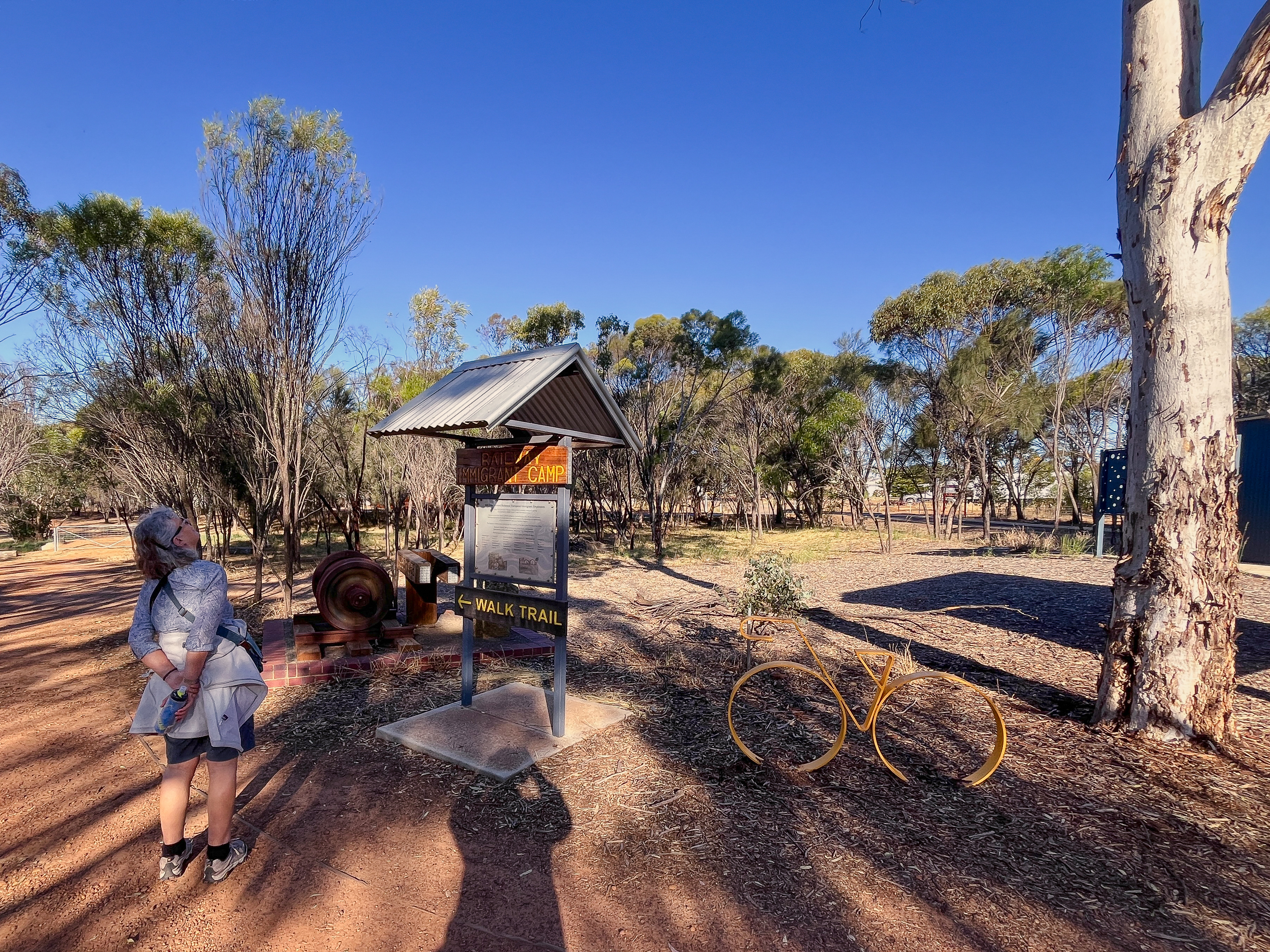
Helen looking for birds. Narrogin Railway Dam, Western Australia.
There’s not a lot of water. Narrogin Railway Dam, Western Australia.
The water level at the dam was very low, but at least there was some. So we followed the 650m Dam Walk keeping a firm eye on the canopy of the surrounding eucalypts. A lot of the birds we did see appeared very heat stressed – holding their wings out and panting. Nothing appeared to be going down to the water’s edge for a drink though. After our first lap my partner decided as it was still very hot that she’d had enough and went back to the car while I started to walk along part of the Archibald Park Trail. This was where things got very interesting.
A Djakal-ngakal or Galah (Cacatua roseicapilla) feeling the effects of the heat. Narrogin Railway Dam, Western Australia.
Kaa-kaa or Laughing Kookaburra (Dacelo novaeguineae). Narrogin Railway Dam, Western Australia.
Juvenile Delyip or Red-capped Parrot (Platycercus spurius). Narrogin Railway Dam, Western Australia.
Noolarko or Black-faced Cuckoo Shrike (Coracina novaehollandiae). Narrogin Railway Dam, Western Australia.
Now I’m in my 60’s and my eyesight isn’t what it once was. This has led to quite a few embarrassing moments when searching for birds. Like the time I followed this small white object moving erratically along a beach thinking it was a dotterel, but, when I finally got close I found it was a scrunched up white paper bag. I’ve lost count of the number of times I’ve stalked what I thought was a bird in a tree only to find out it was part of a dead branch. In fact I’ve come to expect that will happen every time I go out. Well this time I was walking along the path by the bank of the dam and I’d just seen a Black-faced Cuckoo Shrike and a Red Wattle Bird when out of the corner of my eye I spotted a tree with what could be if I squinted a bit a largish bird. My initial reaction come on be serious you’re seeing things again it’s a dead bit of tree. So instead of stalking it I decided to keep walking. It was only just a I drew parallel with the tree that I noticed that the stick blinked (Pro wildlife tip #1 sticks don’t blink).
A Djoowi or Tawny Frogmouth (Podargus strigoides) doing stick impressions. Narrogin Railway Dam, Western Australia.
“Oh my goodness!” Or words to that effect. I had just found a Tawny Frogmouth. Now although Frogmouths are quite common they are a tricky bird to find. Their camouflage is incredible and their habit of roosting in the forks of trees makes them very difficult to see. Their main defence is to sit completely with their head up and eyes shut pretending to be a stick. In fact this was only the third time I’d seen one in the wild. To say I was happy would be an understatement. Unlike metal detectorists birders don’t dance when they find something – we might allow ourselves a quiet smile. I went to bed that night a very happy boy.
So, day one of the birding trip had a brilliant start – couldn’t ask for better.
Events at home over the last few weeks have meant that I haven’t had the opportunity to do very much photography. Most of the blog entries are written a few weeks before they are published because of the vagaries of finding wildlife so that backlog came in handy for when I couldn’t get out and about. But now the well has run dry.
Crusader bug (Mictis profana) instar nymph.
What little photography I have done recently has been in our back garden. Thankfully we have quite a lot of wildlife visit that I can point a camera at. Most of it has been of the usual suspects, the more common species that can be found in gardens in this part of the world, but there have been a couple of unexpected visitors which was very nice. For the best part of a year we had a problem with stray cats killing a lot of the birds and reptiles. But one of our neighbours has taken the main culprit in and the wildlife numbers are climbing back to what they were.
Wall Skink or Fence Skink (Cryptoblepharus buchananii) cooling off in the bird bath.
Yoorn or Bobtailed Lizard (Tiliqua rugosa)
Kanyinak orSacred Kingfisher (Todiramphus sanctus) on our TV aerial with a freshly caught Bombay Runner (Periplaneta americana).
Bambon or Rufous Whistler (Pachycephala rufiventris). It is a joy to hear this bird sing every morning.
Nye-nye or Zebra Finch (Taeniopygia guttata) looking for food on the back lawn
Djida or Yellow-rumped Thornbill (Acanthiza chrysorrhoa).
Cabbage White Butterfly, Pieris rapae.
Giant grasshopper or hedge grasshopper (Valanga irregularis) resting on the garden fence.
The garden provided a great deal of solace over a difficult time and it always amazes me how restorative being in nature can be. Hopefully, over the coming weeks we’ll be able to get out and about more.
Spring is now almost over and most of the wildlife has now settled down to domestic duties – having and raising young.
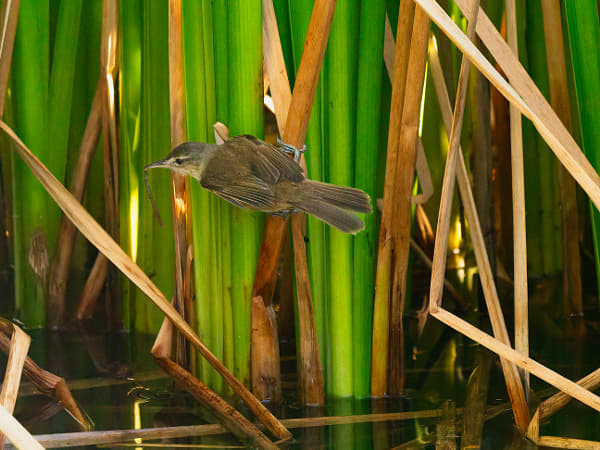
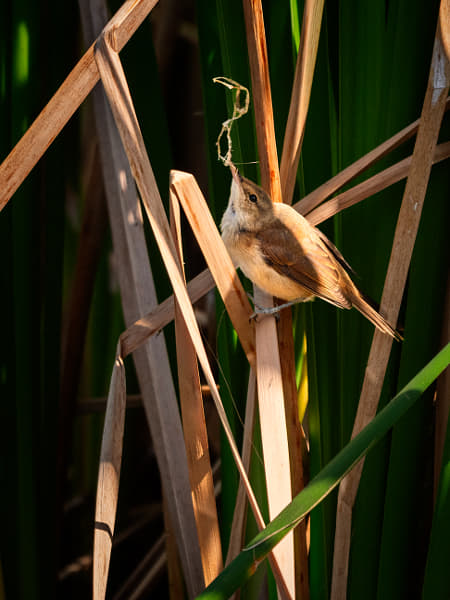
A recent visit to Bernard Park in the Wheatbelt metropolis of Northam showed this to be true. The Australian Reed Warblers were still building nests and it won’t be long before the serious business of egg laying starts.
Koordji-koordji or Australian Reed Warbler (Acrocephalus australis subspecies gouldi) gathering nesting material. Northam, Western Australia.
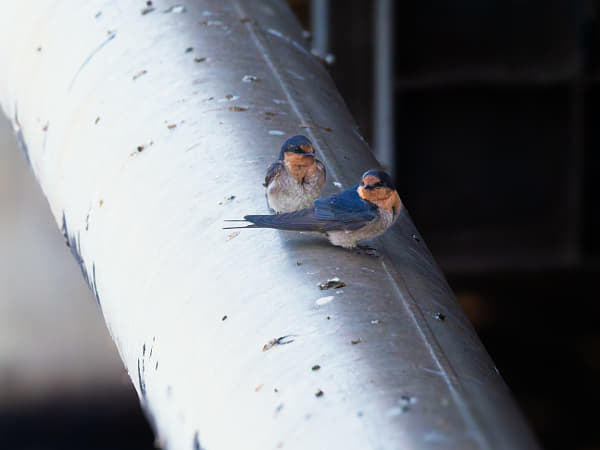
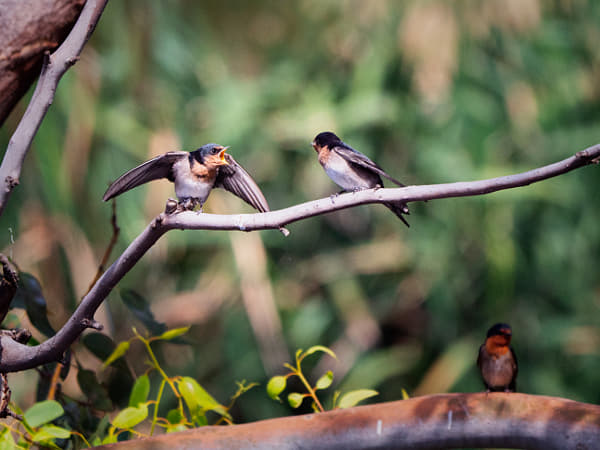
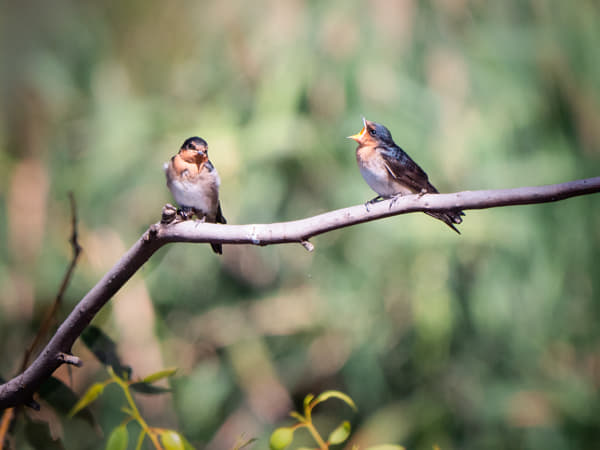
The Welcome Swallows were mostly content to hang out together between hunting forays, but we did see a couple which did seem to be in the middle of a domestic alternately screeching at each other. Do birds separate and divorce? No idea. Perhaps I anthropomorphising them too much, but it is hard not to project human feelings into animal interactions.
A contented pair of Kanamit or Welcome Swallows (Hirundo neoxxena) taking a breather under the Peel Terrace Bridge. Northam, Western Australia
These two seemed to be in some sort of domestic dispute.
It wasn’t one sided either. Both were carrying on like pork chops in a frying pan. Perhaps a referral to Relationships Australia is in order?
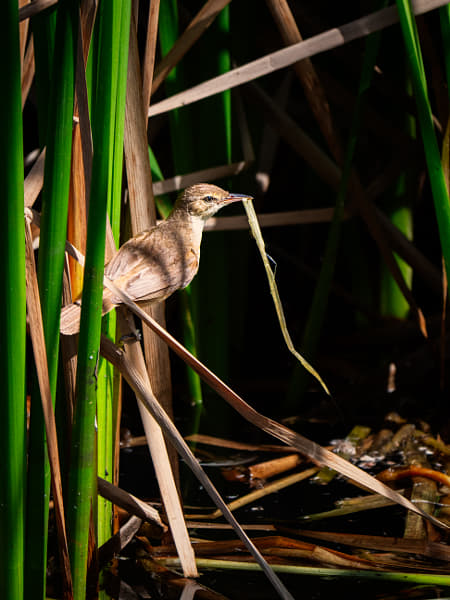
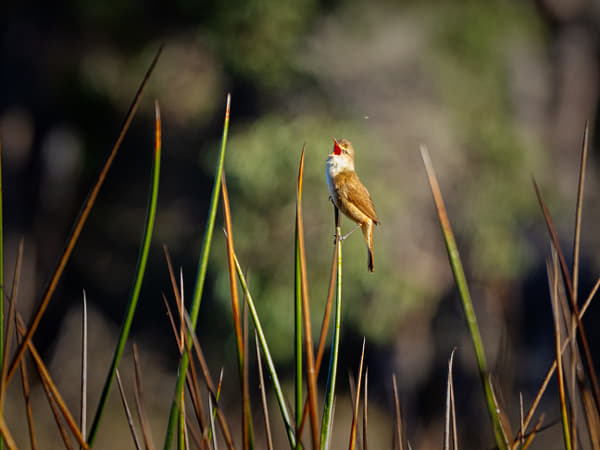
The other morning as I was walking around Lake Leschenaultia I spotted a couple of male Australian Reed Warblers marking out their territories while trying to attract a mate. When both of them were singing the sound was so loud that it almost made my ears hurt. It’s amazing that something so small can produce such a volume of sound. Normally you tend to hear them rather than see them, but this morning the two of them were perched on the very tips of the reeds. It was quite an amazing experience.
Koordji-koordji or Australian Reed Warbler (Acrocephalus australis subspecies gouldi). Lake Leschenaultia, Western Australia.
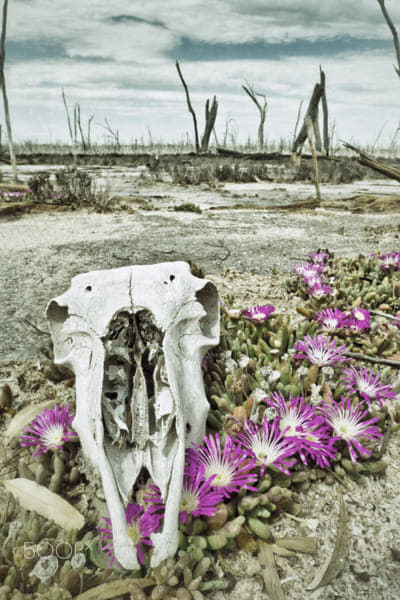
From my last visit to Harrismith in 20212. It all looks a bit apocolyptic.
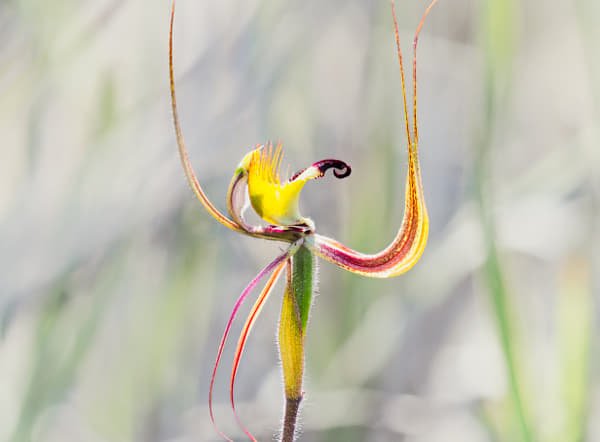
Harrismith is a very small town (population 52)260km east of Perth in the Wheatbelt. Now we went there some thirteen years ago looking for orchids and we didn’t find any as it was too late. I did get the photo of the animal skull on pig face on a dried lake. So this year I’ve been looking for the Western Wispy Spider Orchid (Caladenia microchila) and the Yellow Granite Donkey Orchid and that search took me Harrismith as my last chance.
When I got there it was very apparent I wasn’t going to find much – the bush was very, very dry. Walking through it sounded like walking over Cornflakes – it was so crisp. What I did find was really on it’s last legs. There had been a substantial wildflower display, but it was basically all over. I’d have been better off going at least two weeks earlier. Still it was an enjoyable walk, there was plenty of bird activity and I left feeling I’d of got better photos if I’d taken my bird kit.
Sugar Orchid, Ericksonella saccharata. Harrismith, Western Australia.
There’s always a Green Spider Orchid (Caladenia falcata).
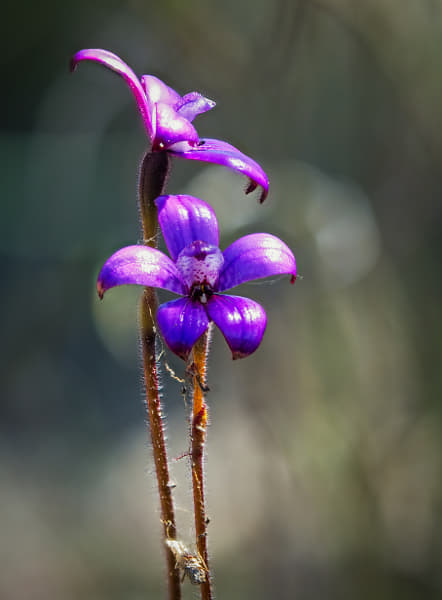
Purple Enamel Orchid, Elythranthera brunonis.
Yellow Granite Donkey Orchid, Diuris hazeliae.
The Western Wispy continues to evade me. I’ll have to wait to early next spring to resume the search.
Bit of an odd morning today. It was a distinctly grey day and I wasn’t intending to take any photos. While getting set to take the dog out for a walk along the river at Blandstown the Beloved Significant Other said she was taking her binoculars to look for birds. I thought about taking mine but when I saw that they were in a pouch with my camera I just grabbed the whole shebang.
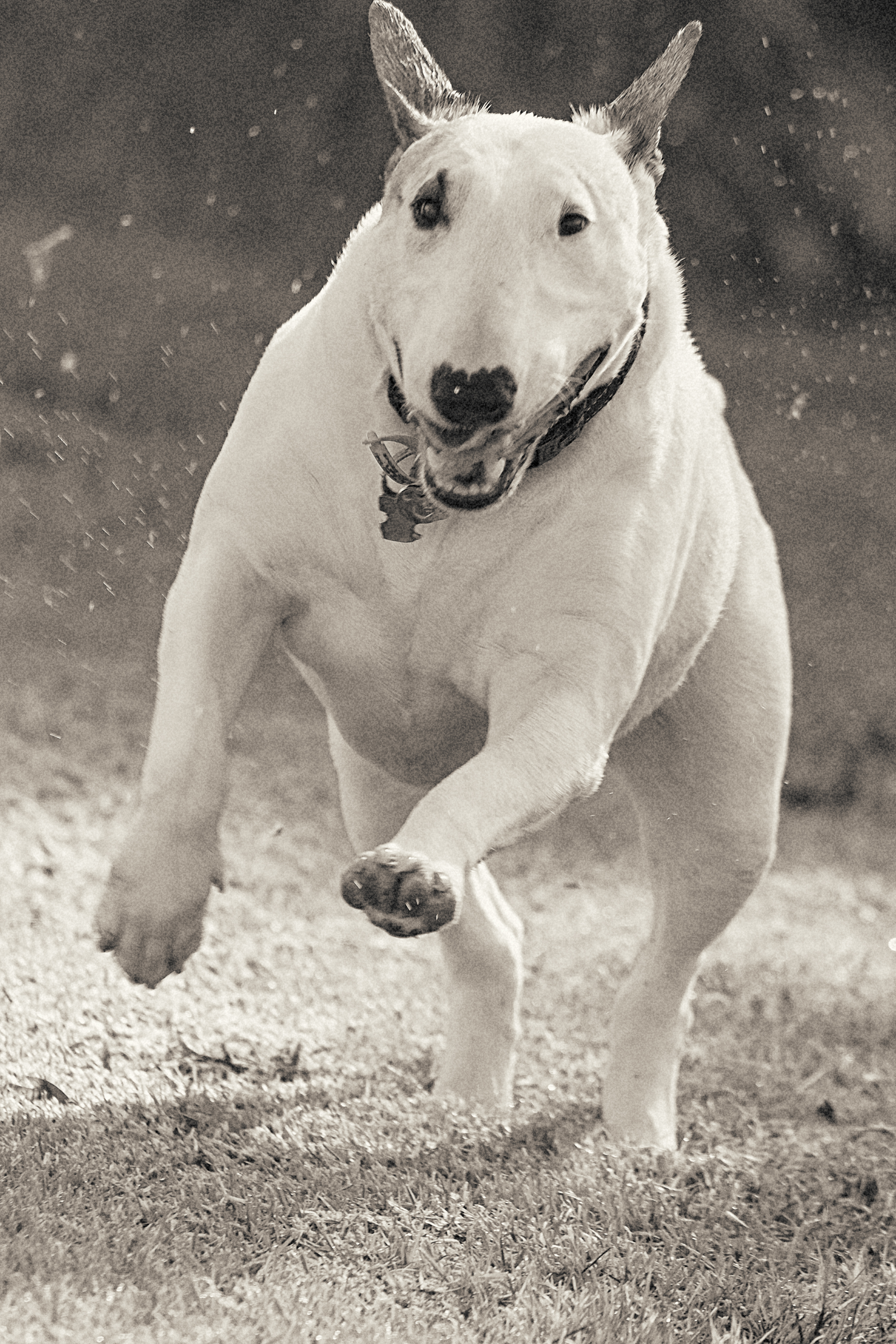
When we got there I wasn’t sure whether Frida – our dog – would walk. She is very old now and has to all intents and purposes given up on walking. She loves a ride in the car, but you can’t guarantee that she’ll get get out for a walk. With a bit of assistance she got out and was quite happy to head towards the river. When she was young long grass would send her silly and she would madly runabout causing mayhem. At 13 with arthritis in one of her back legs and kidney problems it doesn’t happen very often anymore but all that long grass along the river and she was off!
A hairy wrecking ball with four legs. Frida mid bully run when she was a lot younger.
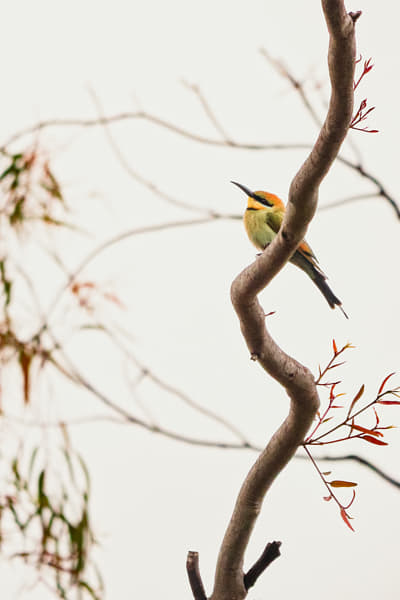
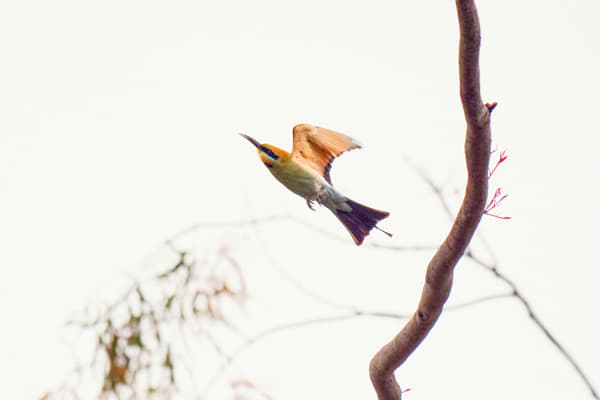
While trying to avoid being bowled over by a deranged bull terrier the Beloved Significant Other said she thought she could see a Rainbow Bee-eater. Oh how I scoffed. “Impossible” said I. “They don’t arrive back from Northern Australia and Papua New Guinea until November.” I added being all ‘knowledgeable’. But when I raised the camera up and looked there was a female Rainbow Bee-eater, and listening very carefully I could just make out the chirping call of another. Never had I seen one this early in York before. I’d read that in some areas of southern Australia the winters are becoming much milder and some of the birds aren’t migrating north in autumn. Whether that applied to these birds I don’t know.
Birin-birin or Rainbow Bee-eater (Merops ornatus). York, Western Australia.
So as we headed home I couldn’t work out what had made me the happier. The fact that Frida had just had a bully run or that I’d seen the Rainbow Bee-eater. Probably both. Oh! I did photograph some other birds. Here they are below.
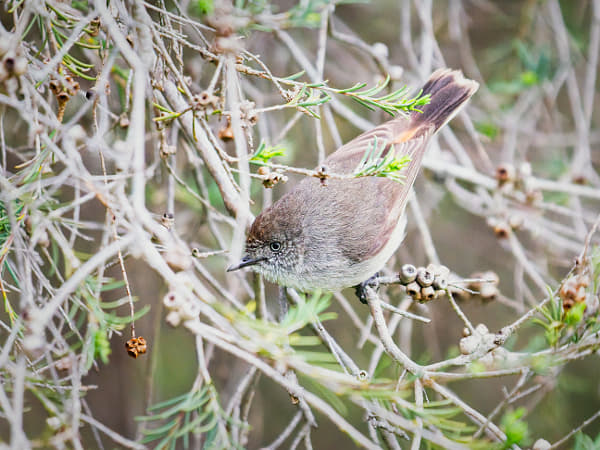
Chestnut-rumped Thornbill, Acanthiza uropygialis. York, Western Australia.
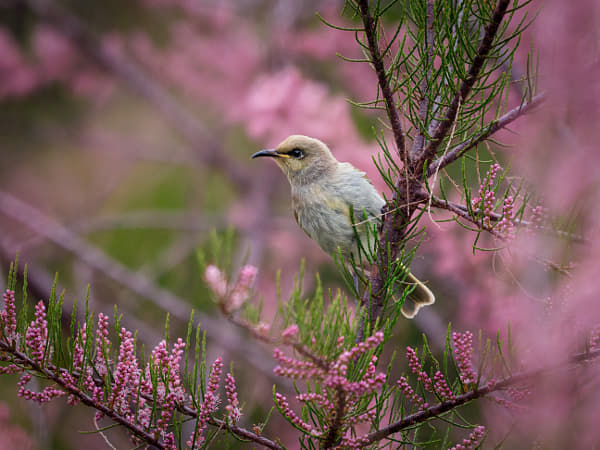
Juvenile Djindjokoor or Brown Honeyeater (Lichmera indistincta). York, Western Australia.
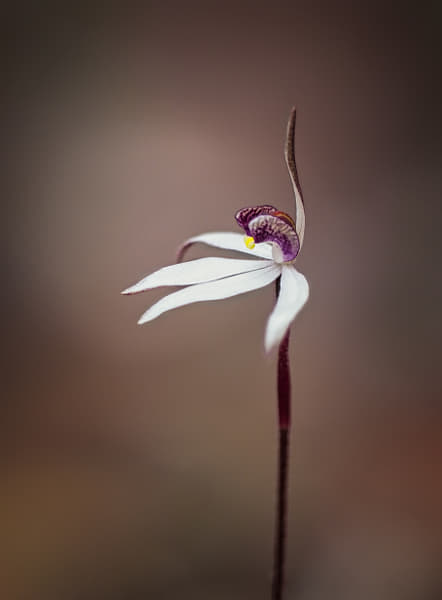
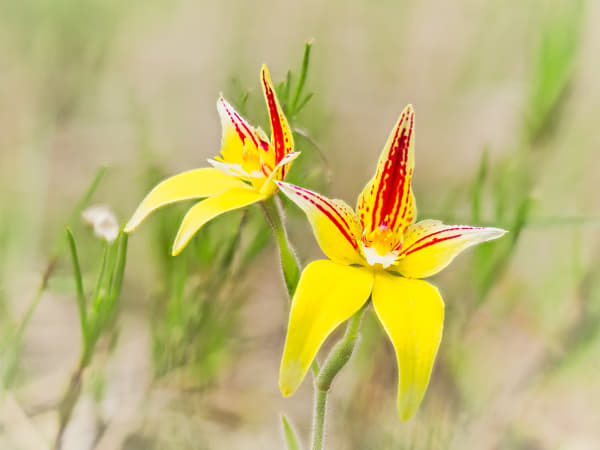
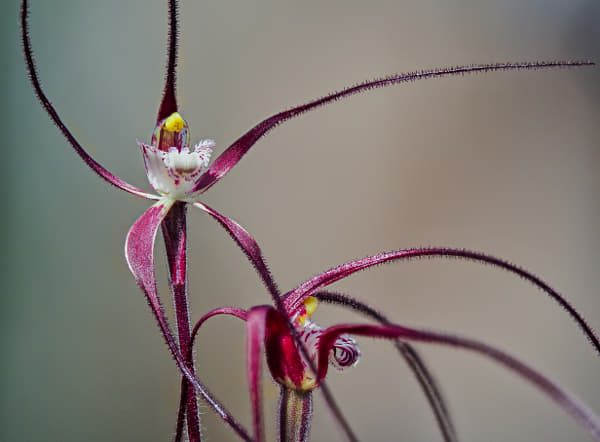
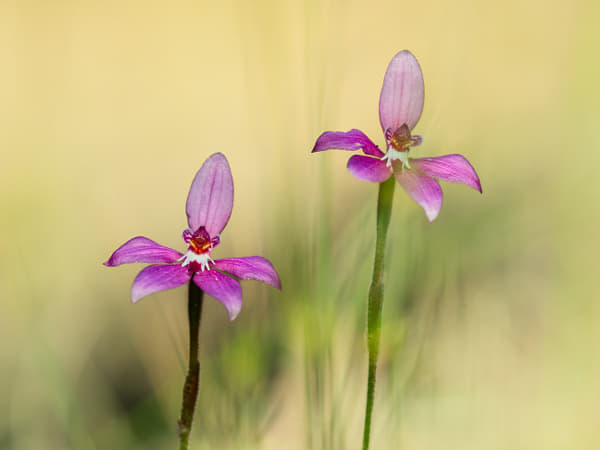
Earlier this month I wrote about my first orchid expedition of the season and I ended it with saying how I really liked the combination of my Olympus 40-150mm f2.8 and the 1.4 teleconverter. Well I’ve just reset the focus stacking mode on my Olympus EM1 mk ii and I went up to the nearbyOswald Sargent Reserve to see whether it worked. I took both my 60mm f2.8 macro and the afore mentioned 40-150mm + teleconverter.
It was a beautiful morning and there were hundreds of orchids out – it was quite a stunning display. There were so many flowers that I could afford to be very fussy pick specimens that had good backgrounds and in good light. It doesn’t always go as well as this.
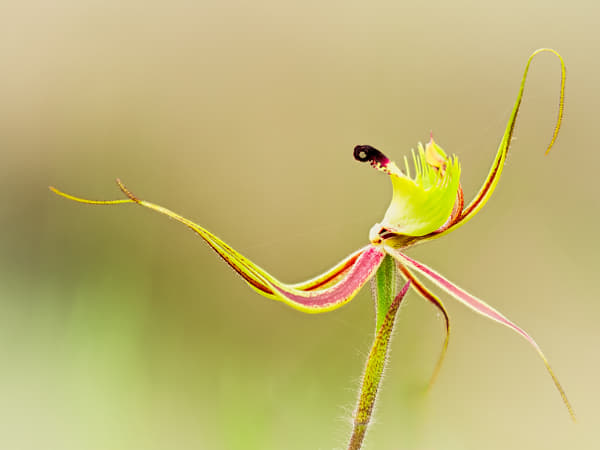
Getting home and processing the photos I have to say that I much prefer the results from the 40-150mm combination. It’s not the sharpness of the lens, both lenses are very sharp. It is the way the lens renders the image. The way the tones in the out of focus areas merge smoothly and don’t draw attention away from the subject. When combined with focus stacking the effect is fantastic.
Oswald Sargent was a very interesting character. While being a pharmacist here in York he was also an eminent amateur botanist and his family were pioneering photographers. His son left a large archive of photos documenting life in the town.







You must be logged in to post a comment.