Well walking around Horse Swamp at Whiteman Park would be correct but it is too long for a title. I’ve written before about walking round the swamp. It’s a great walk and it always seems to offer up something new.
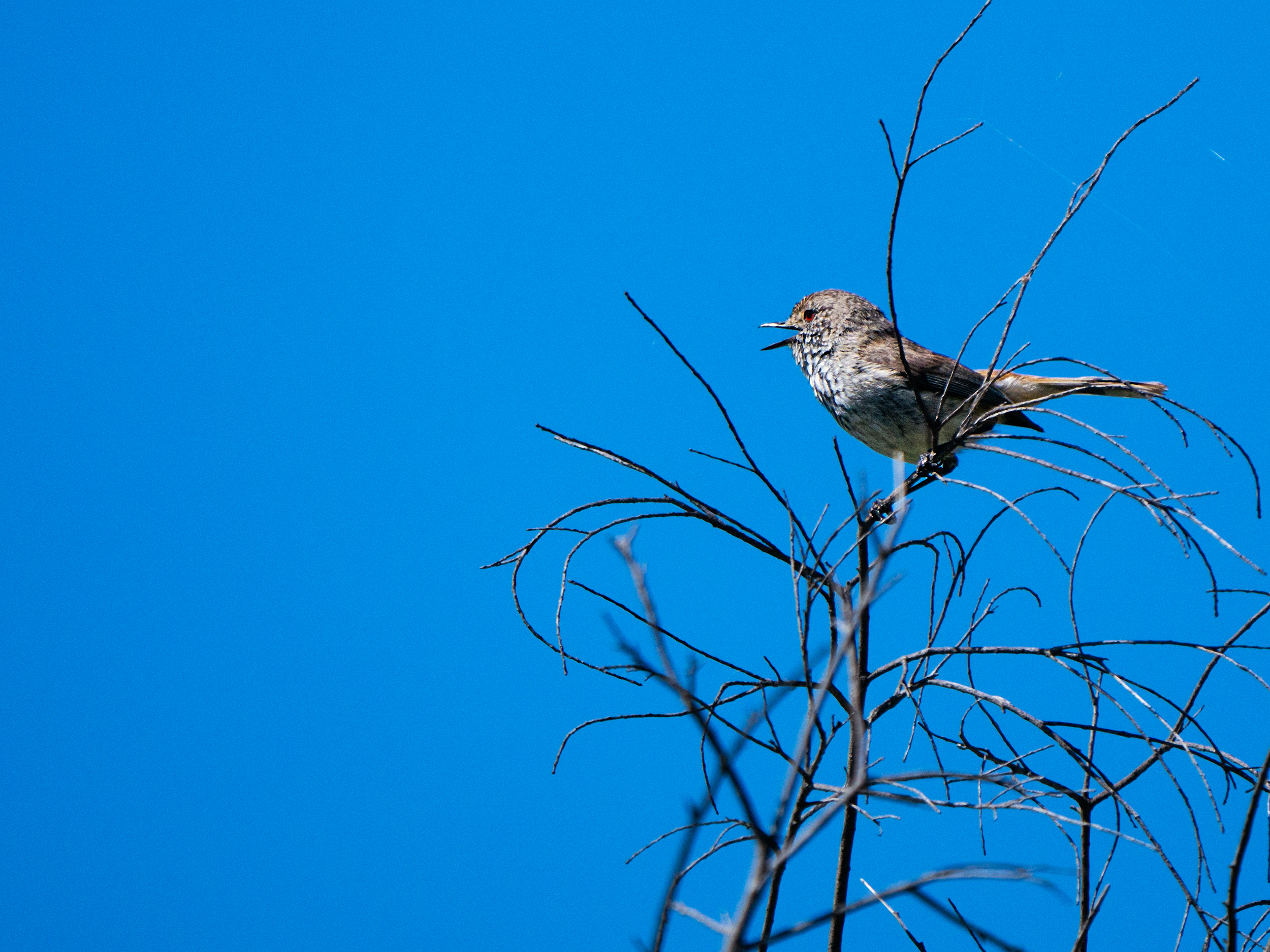
Djoobi-djoolbang or Inland Thornbill (Acanthiza apicalis). Horse Swamp, Whiteman Park, Western Australia.
As we started to walk round we were greeted with an inland thornbill singing its heart out in welcome. It was a good start to what was primarily a bird spotting trip. We went to the hide and while we could see birds out on the water there was nothing close enough to photograph. So we set off to see if we could get closer to them. This is the beauty of this walk as there are heaps of opportunities to get close to the wildlife as you can use the bushes to conceal your approach.
Djandjarak or White-headed Stilts, (Himantopus himantopus subsp. leucocephalus) two juveniles and an adult. Horse Swamp, Whiteman Park, Western Australia.
Djandjarak or White-headed Stilt, (Himantopus himantopus subsp. leucocephalus). Horse Swamp, Whiteman Park, Western Australia.
About halfway round there is an observation platform looking out over the water. It’s not very suited to photography, but it does afford a good view allowing you to observe the comings and goings. Helen took advantage of the platform while I chose to lie down at water level to get some photos.
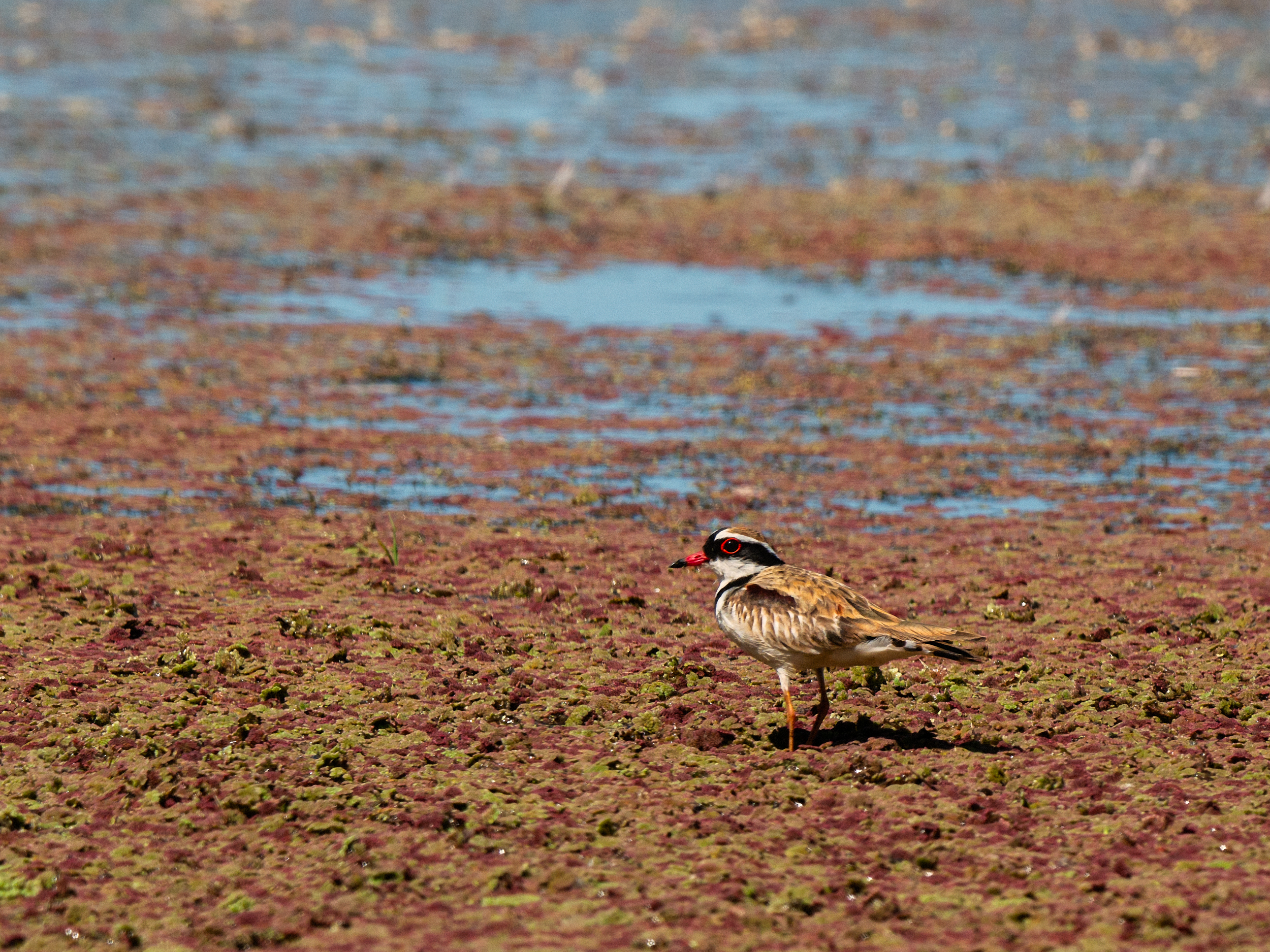
Nidoolyorong or Black-fronted Dotterel, (Elseyornis melanops).Horse Swamp, Whiteman Park, Western Australia.
Wimbin or pink-eared duck (Malacorhynchus membranaceus). Horse Swamp, Whiteman Park, Western Australia.
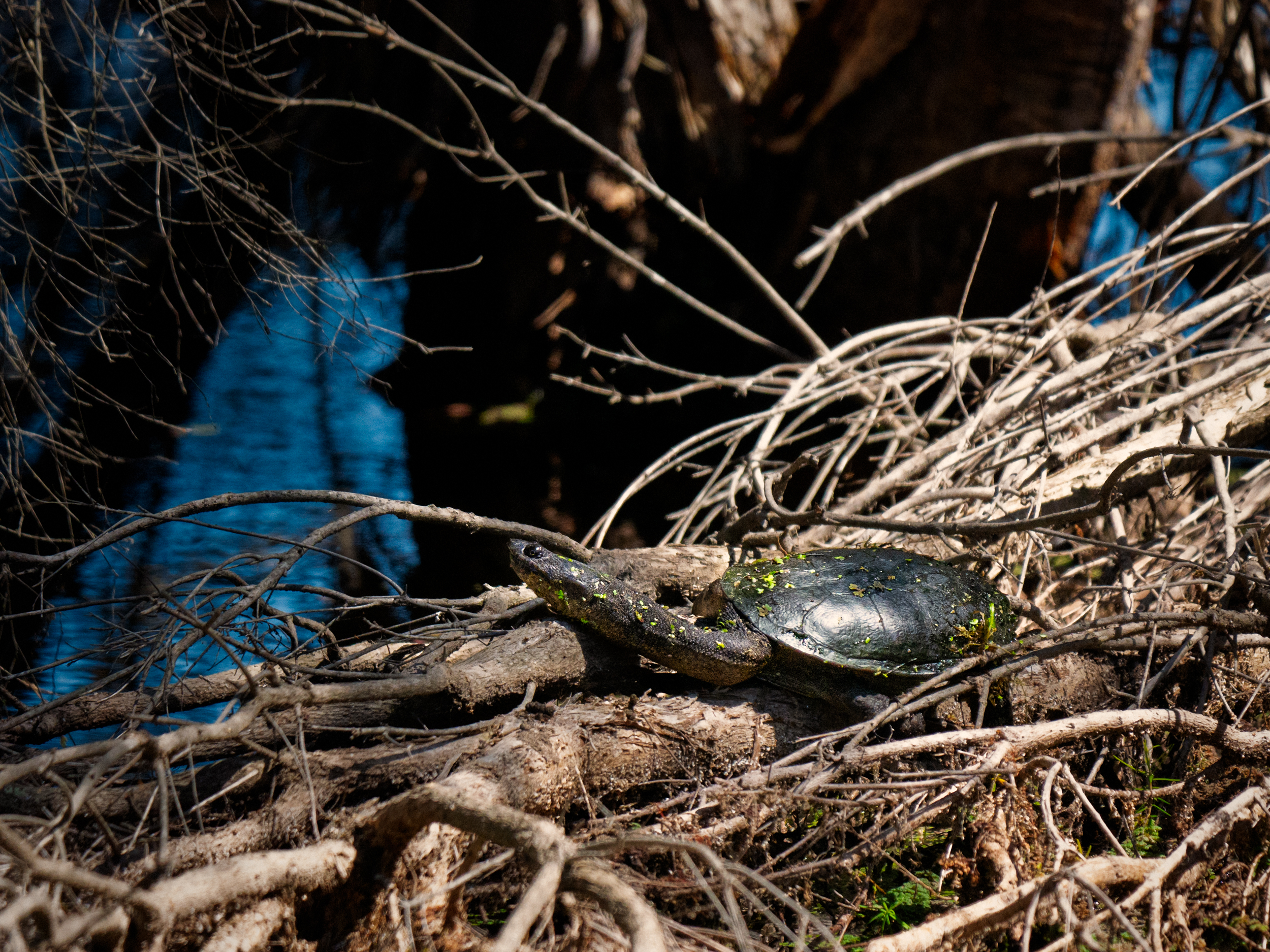
As we headed back to the car we spotted a long necked turtle sunning itself on the roots of a melaleuca tree. Usually you don’t see them but rather hear them as they drop into the water to make their escape, but on this occasion I was lucky enough to grab a couple of photos.
Choonya is the Nyoongar name for the Long-necked turtle, aka the oblong turtle (Chelodina oblonga). Horse Swamp, Whiteman Park, Western Australia.
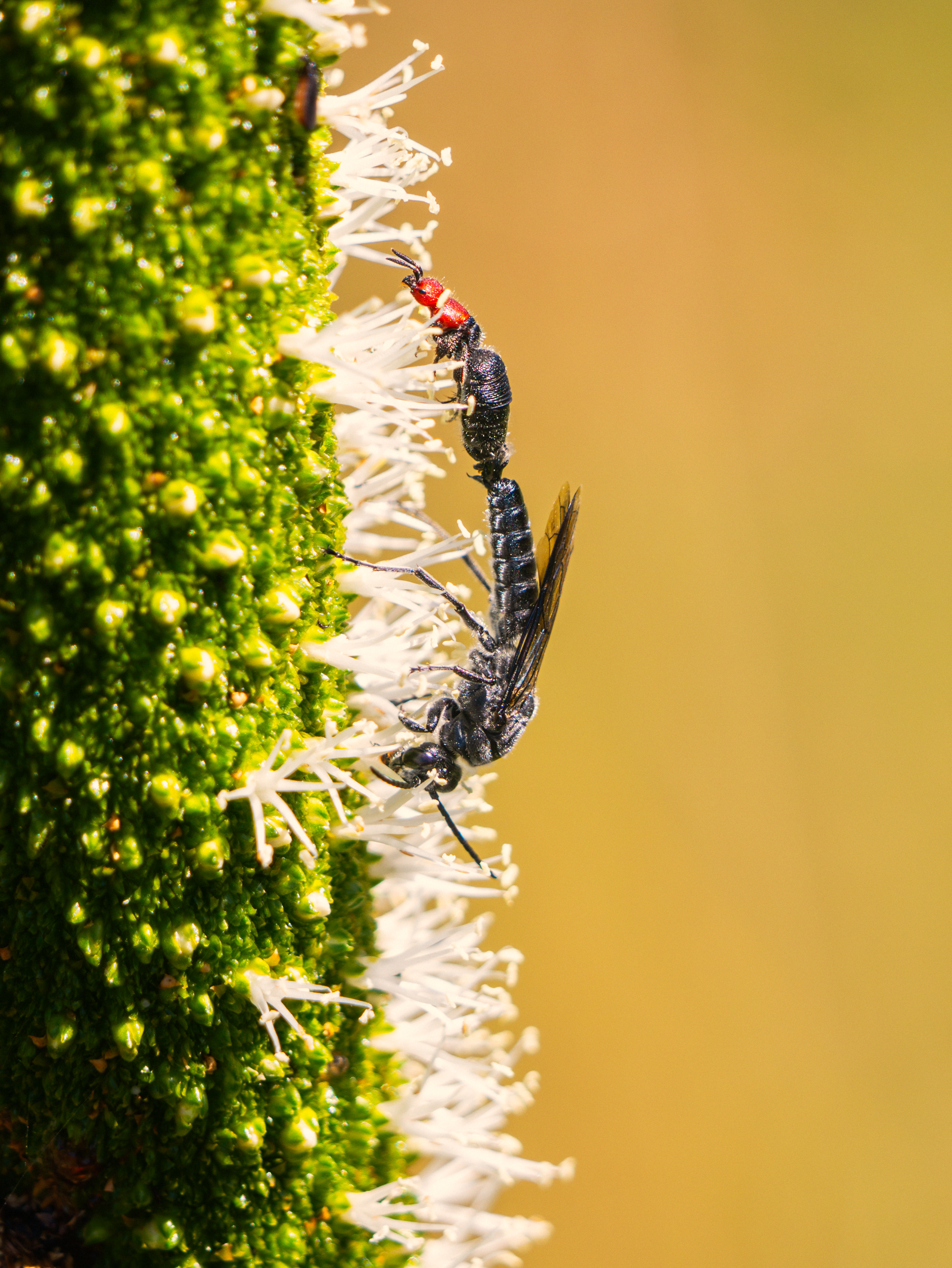
The last thing we saw was a real mystery. On the flower stalks of some grass trees there were these huge insects – about 8cm long – feeding on the flower. They look like someone has stuck the back end of an earwig onto a wasp. Freaky looking things dunno what they are despite trying to find out by looking on Google when we got home. So if anyone out there would like enlighten please contact me.
Freaky looking bug on a grass tree flower spike. Horse Swamp, Whiteman Park, Western Australia.
So there you have it a great morning at a great location.
Augusta is a small coastal town on the furthest southwest corner of Australia – next stop Antartica. It is home to roughly 1000 permanent residents and swells to over 5000 for the Christmas holidays.
When we first visited over thirty years ago we didn’t much care for the place. It looked boring, dreary, dull, and because we went in late winter had crappy weather. Thirty years later we’ve developed a new appreciation of the place. I suppose it seemed to my 28 year old self a bit like the English “Costa Geriatrica”,between Eastbourne and Worthing on the Sussex coast. When I went to Worthing in my late teens and early twenties It appeared that the average age of the population looked as if it was 109. It wasn’t helped by the fact that on the main road into the town was an enormous cemetery and crematorium.But I digress and Augusta isn’t all about prostate problems and incontinence pads. Oh no! It is an amazing place because of it’s rich biodiversity and beautiful scenery. It has taken all these years for me to fully appreciate what it has to offer.
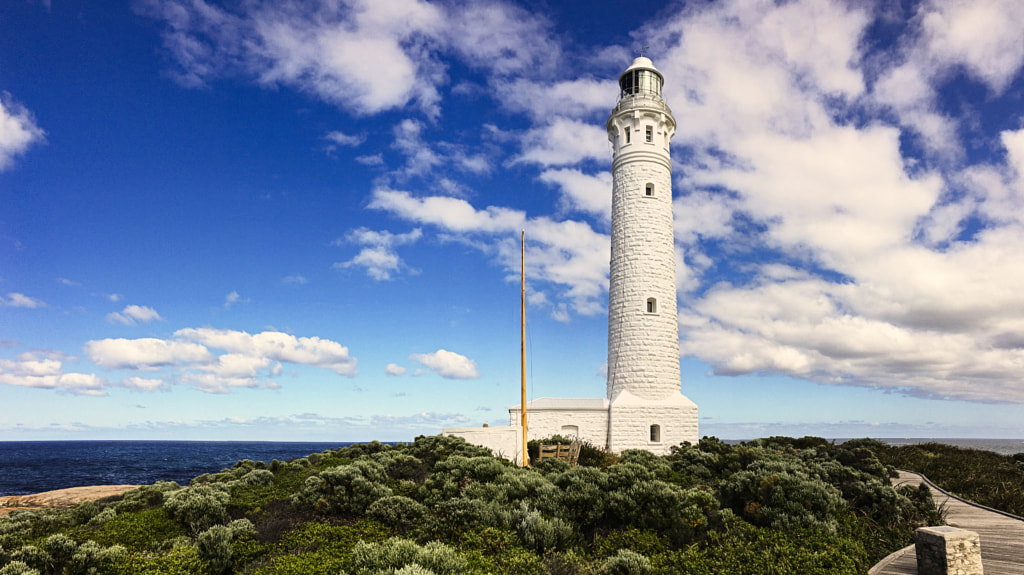
The Cape Leeuwin Lighthouse is continental Australia’s most south westerly point. The 39m tall lighthouse was built in 1895 and automated in 1982. As well as being an important navigational aid it also functiona as a weather station.
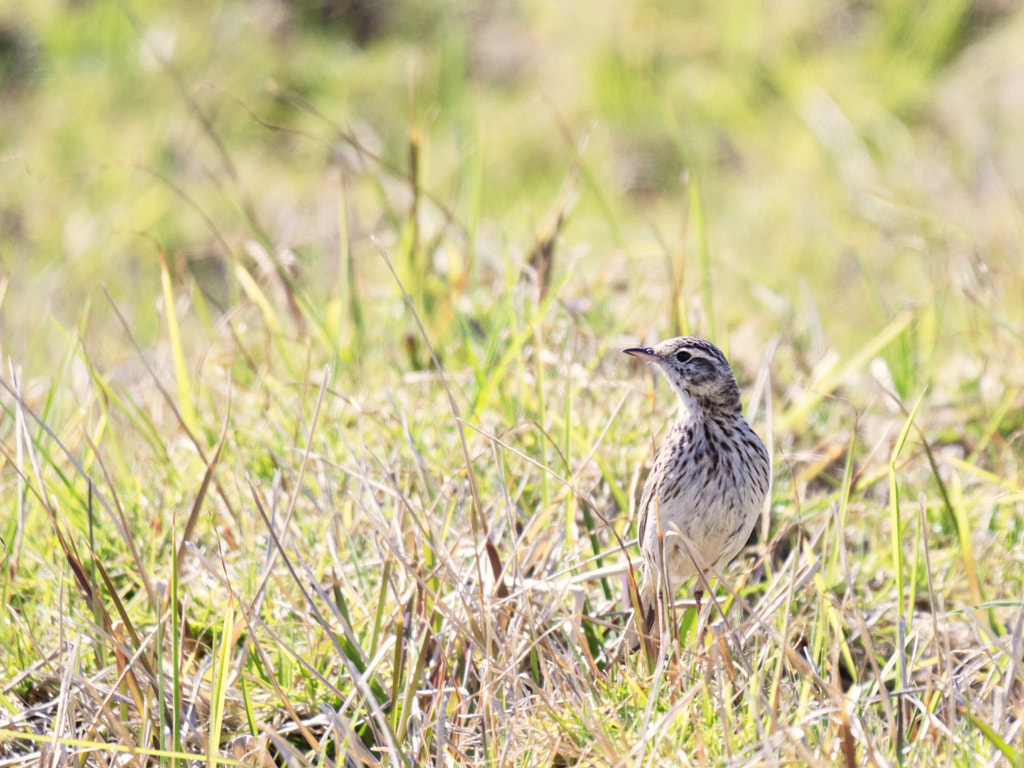
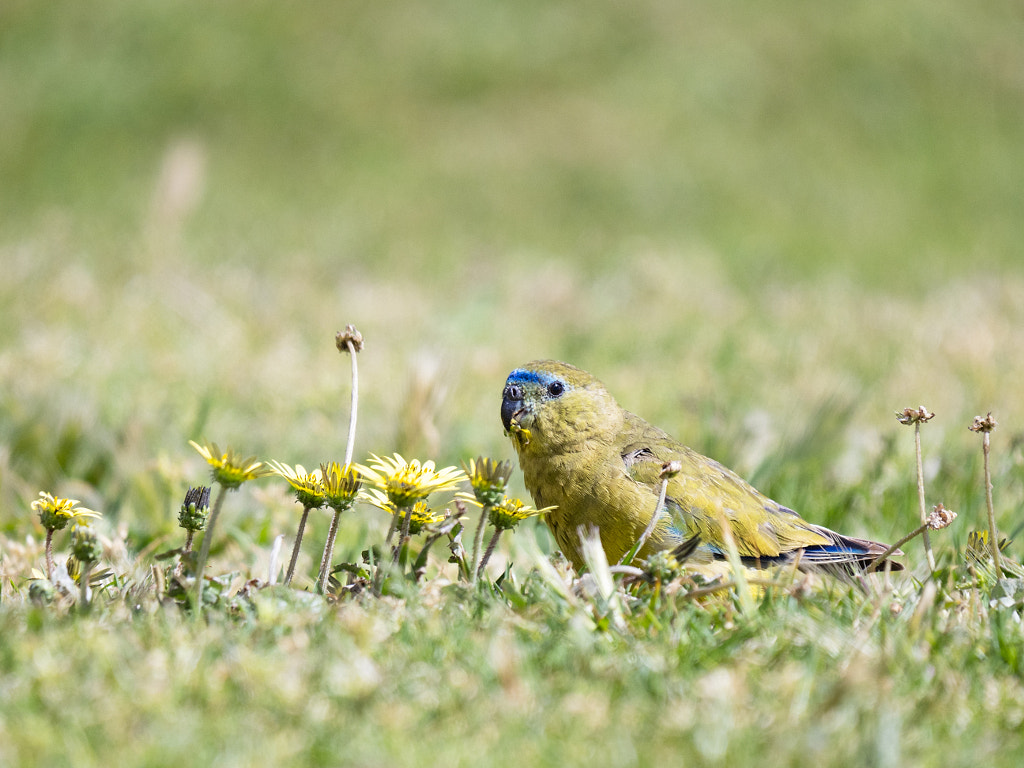
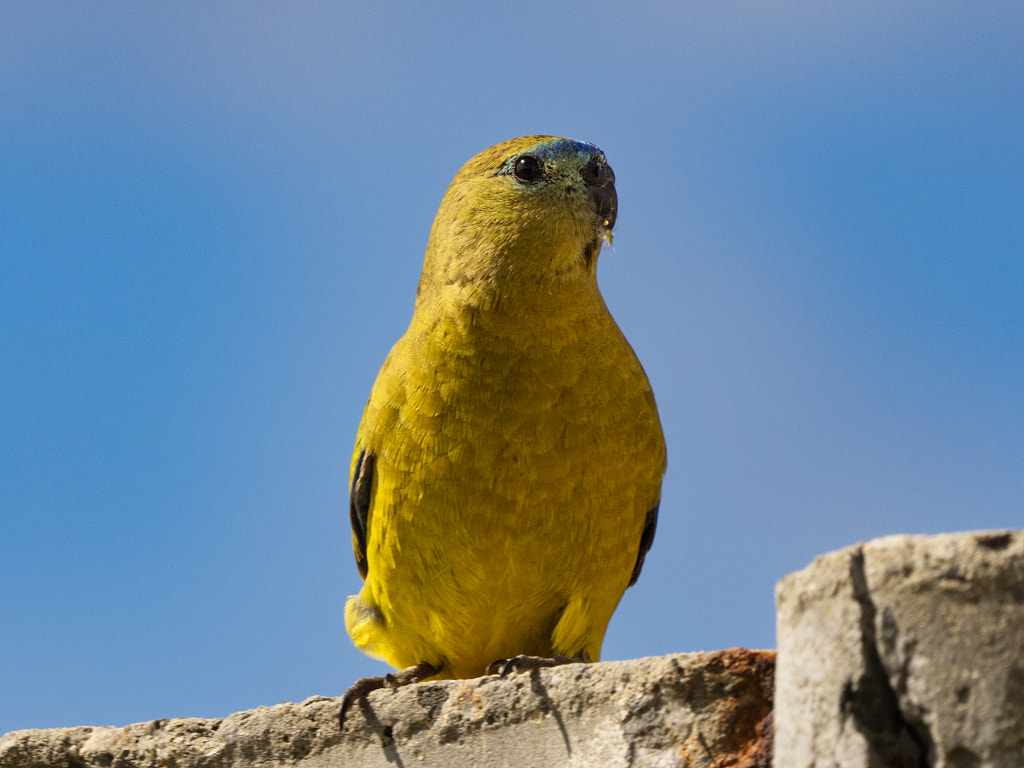
We’ve just got back from a wonderful break down there. It was fantastic to walk in the forest, along the coast and observe nature. Our first port of call so to speak was the Cape Leeuwin Lighthouse. Not because I have a thing about large phallus shaped buildings but because we wanted to see Rock Parrots (Neophema petrophila). I have tried to photograph them before at Denmark but not had much luck. The main reason is that their colouring means that they blend in perfectly with the grasses and sedges found on the coast. At the Cape Leeuwin Lighthouse the parrots often feed on the lawns surrounding the buildings. Well maintained cut lawn would mean less foliage for the parrots to hide in. I settled into place and while I waited an Australian Pippit bobbed around in the longer grass at the edge of the lawn. After a while five or six rock parrots landed and started to feed. I waited patiently and as luck would have they moved closer and closer to me. After a while I had this distinct impression that someone or something was behind me watching. I slowly stood up and turned around and there on the water tank behind me was a solitary rock parrot. I was so close I could have reached out and touch it. Amazing stuff! Thankfully he/she was happy to sit there while I grabbed a few photos.
“You’ll find the rock parrots over there!” Welcome Swallow, Hirundo neoxxena. Cape Leeuwin, Western Australia.
This Australian Pipit, Anthus australis, was the warm up act for the main star of the show. Cape Leeuwin, Western Australia.
Rock Parrot, Neophema petrophila. Cape Leeuwin, Western Australia.
“Whose a pretty boy?” Rock Parrot, Neophema petrophila. Cape Leeuwin, Western Australia.
Our next foray was to Hamelin Bay where we hoped to find Southern Emu-wrens in the bush behind the dunes. Despite it hammering down with rain I did manage to find some, but taking a photo of them was another story. Those little buggers are fast and they don’t sit still for very long at all. All I got for my troubles was very wet and some photos of Silvereyes. We admitted defeat and retreated back to Augusta for an excellent fish and chip lunch.
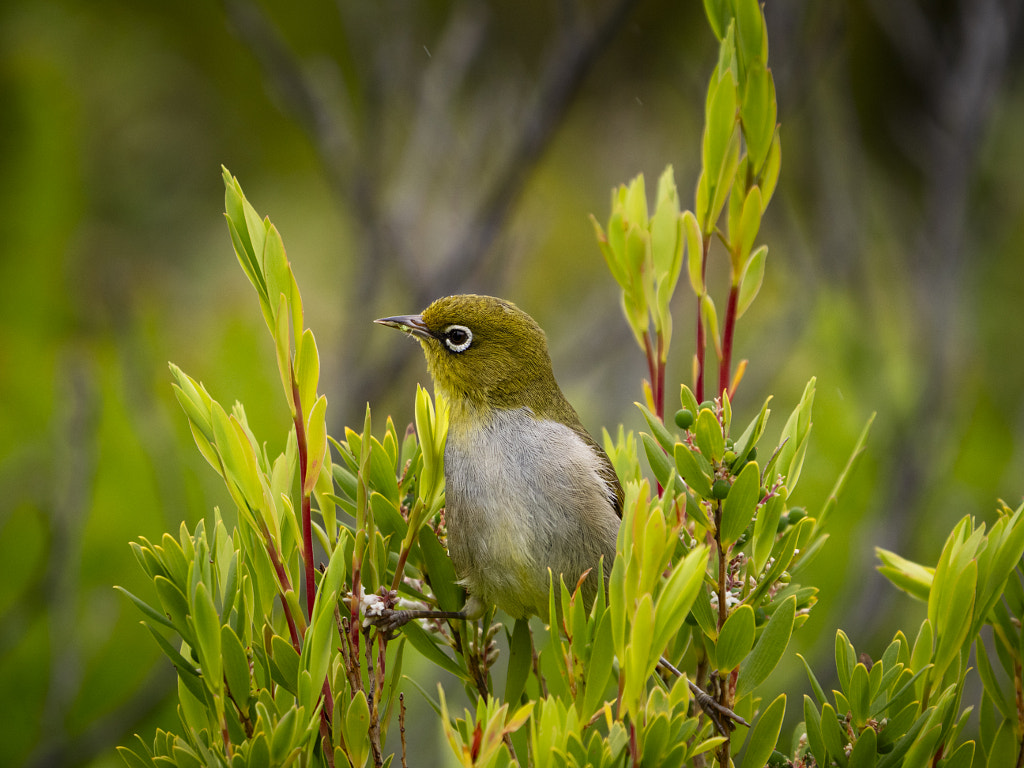
Silvereye, Zosterops lateralis. Hamelin Bay, Western Australia.
In-between looking for birds I also spent some time looking for orchids. It is amazing to go to a place you’ve visited several times before but still find new and unusual species It was also very nice to meet a couple from Queensland who drive over very year to see Western Australia’s orchids. That is dedication!
The albino form of the pink fairies orchid, caladenia latifolia. Jewel Cave, Deepdene, Western Australia.
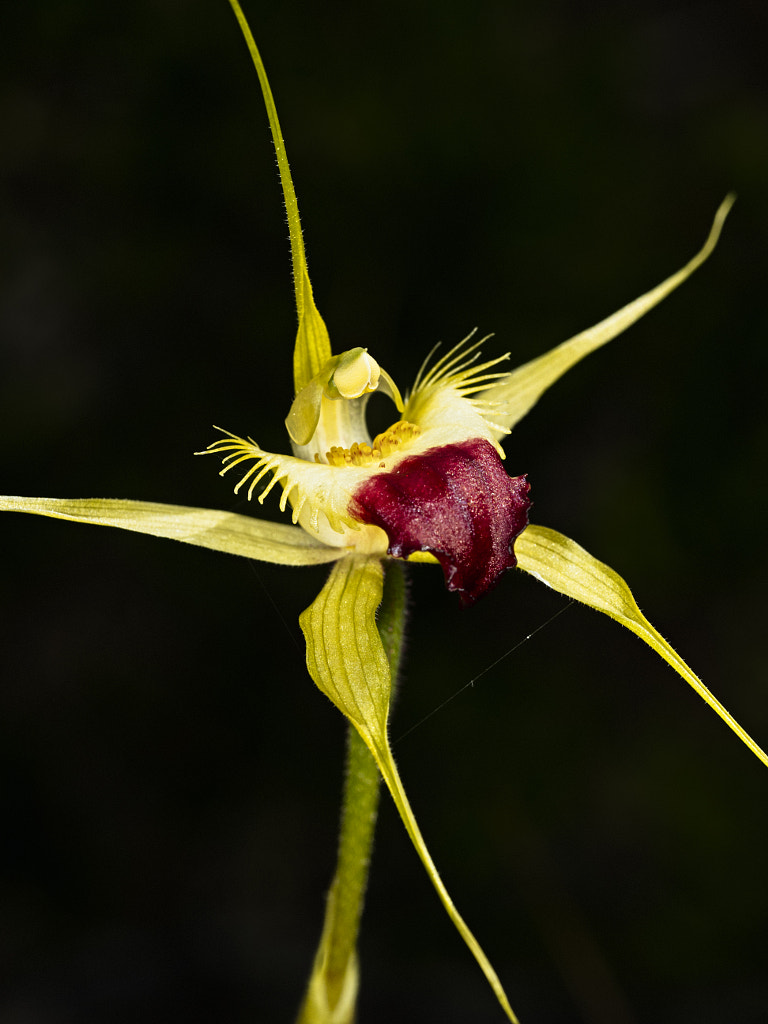
Lodge’s Spider Orchid, Caladenia lodgeana. Flat Rock, Augusta, Western Australia.
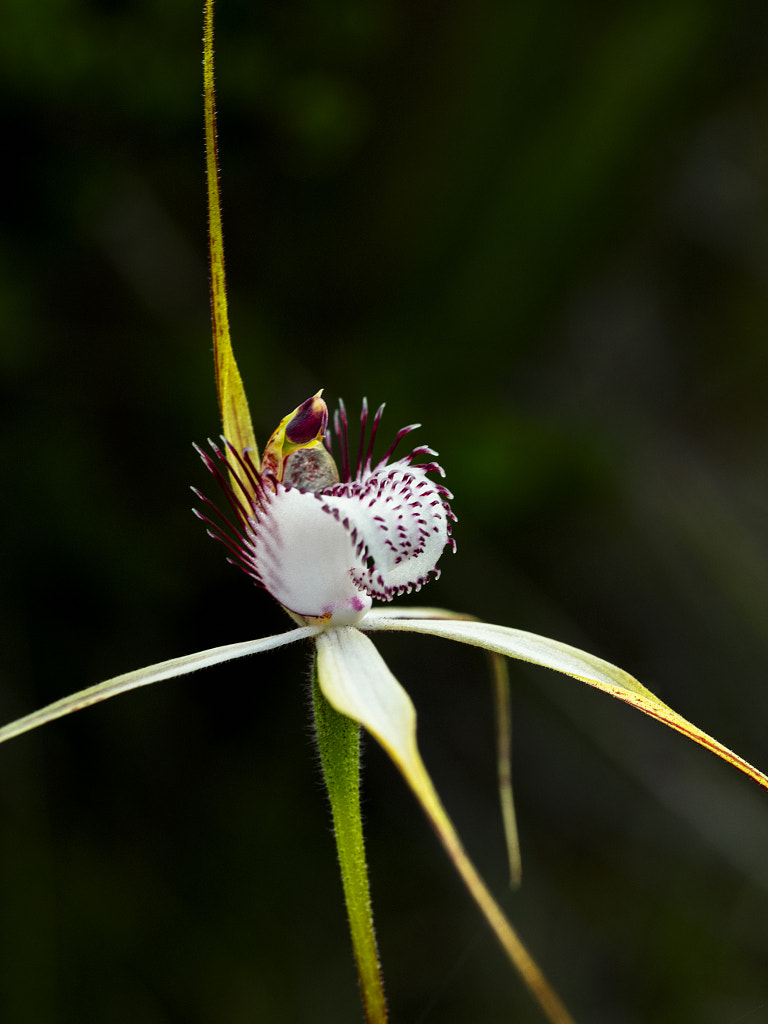
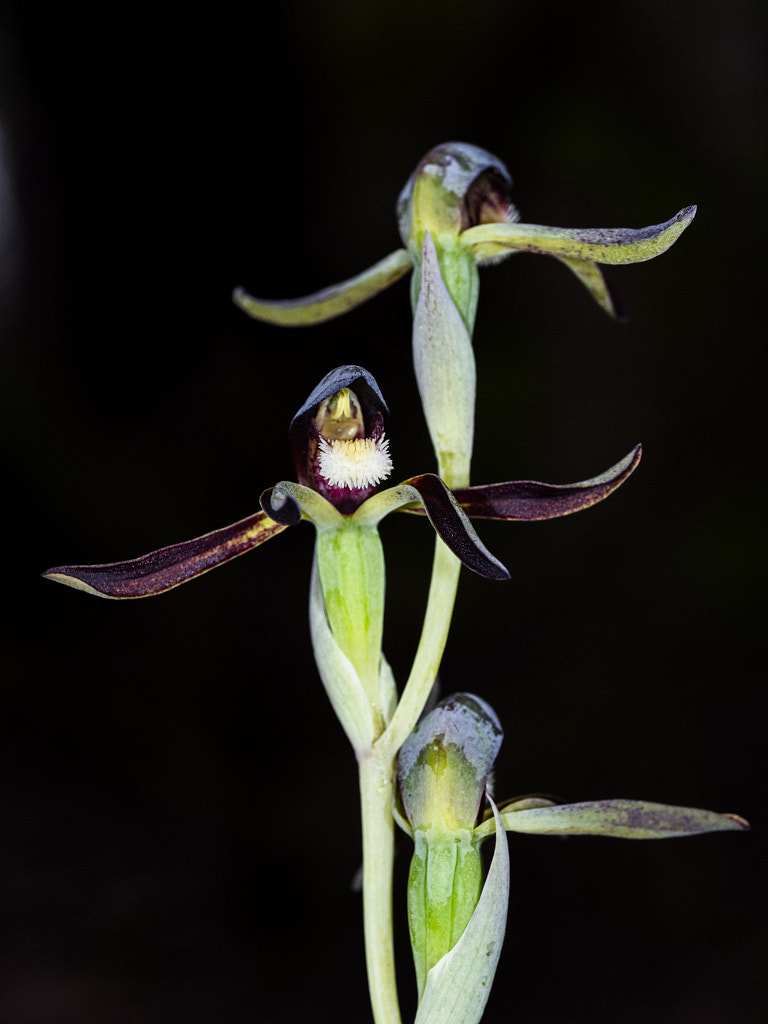
Funnel-tipped Spider Orchid, Caladenia infundibularis. Flat Rock, Augusta, Western Australia.
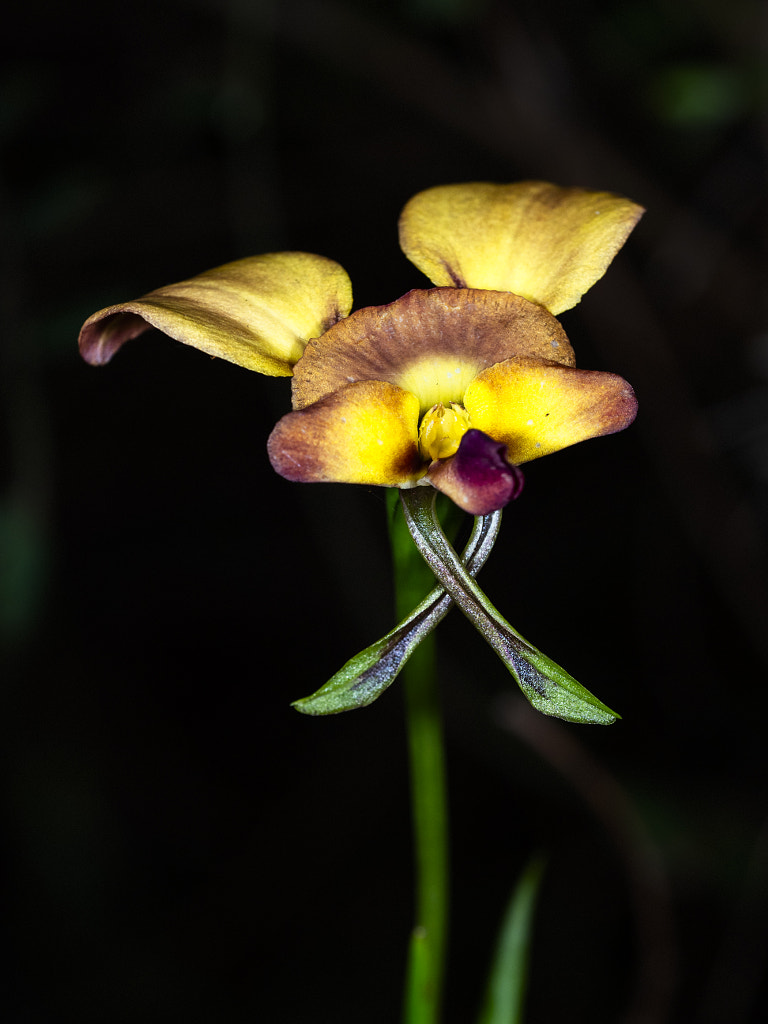
Augusta Bee Orchid, Diuris sp Augusta. Flat Rock, Augusta, Western Australia.
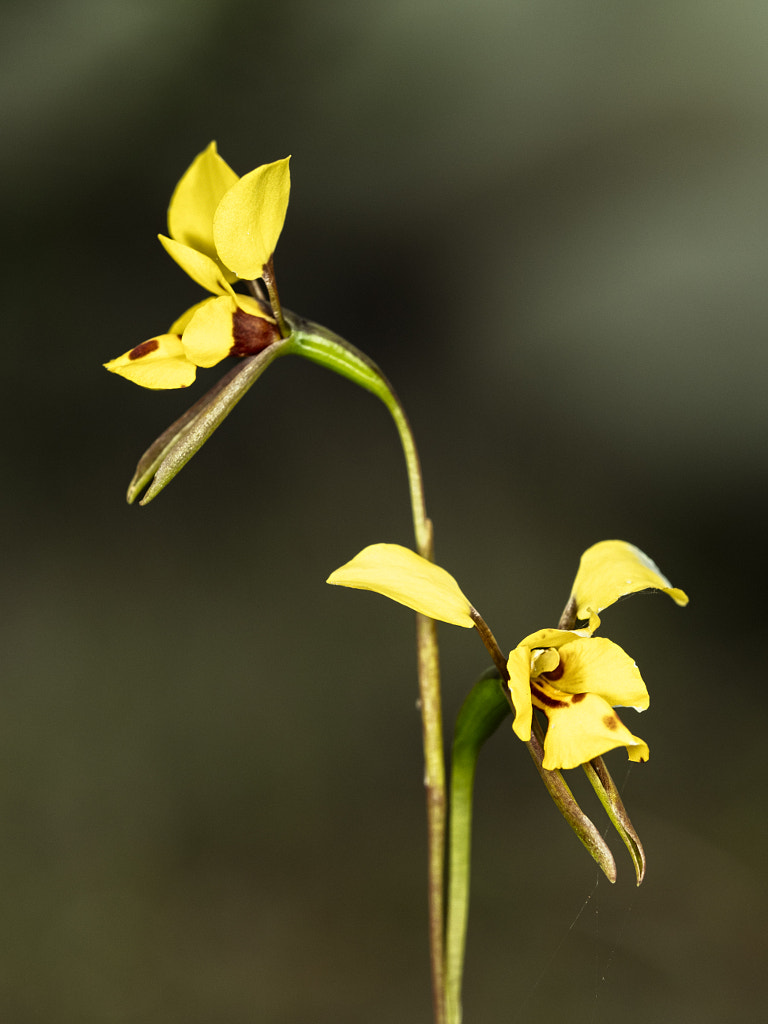
Dusborough Donkey Orchid, Diuris jonesii. Flat Rock, Augusta, Western Australia.
Rattle Beak Orchid, Lyperanthus serratus. Flat Rock, Augusta, Western Australia.
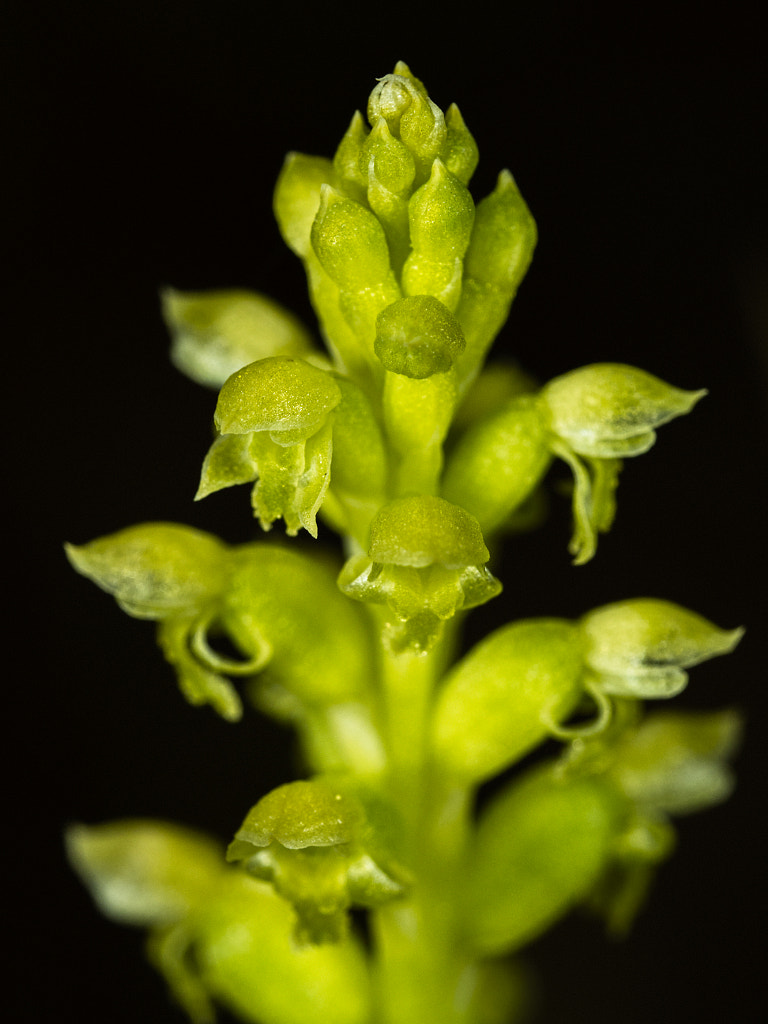
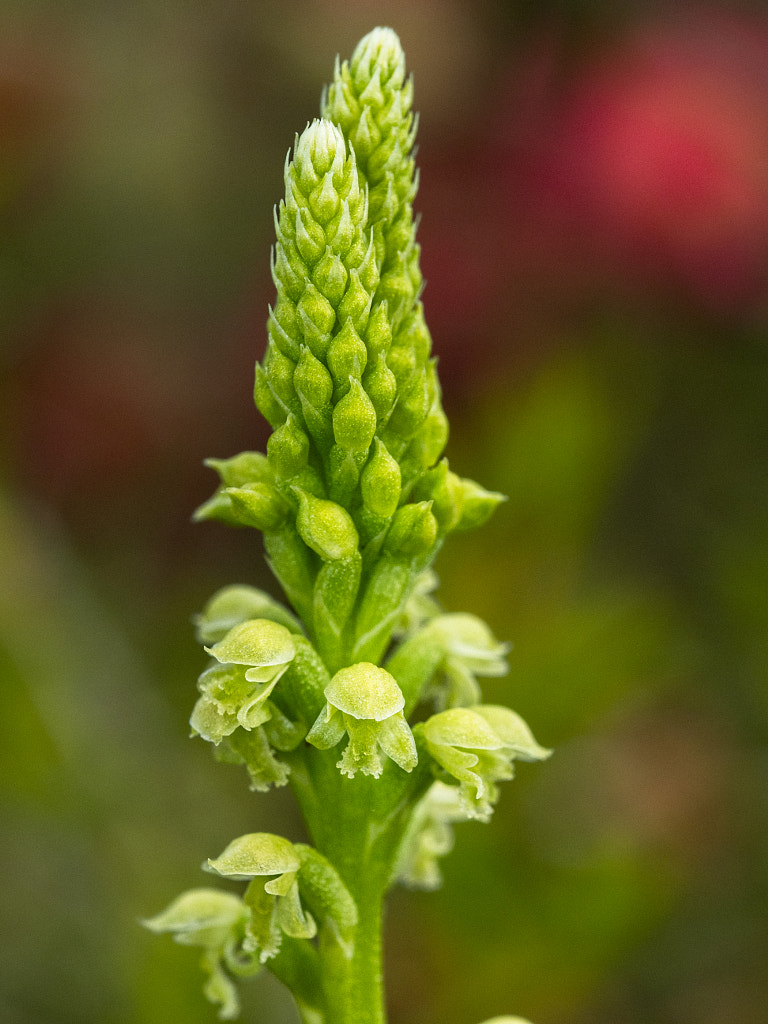
Swamp Mignonette Orchid, Microtis atrata. Flat Rock, Augusta, Western Australia.
Common Mignonette Orchid, Microtis media subsp. media. Flat Rock, Augusta, Western Australia.
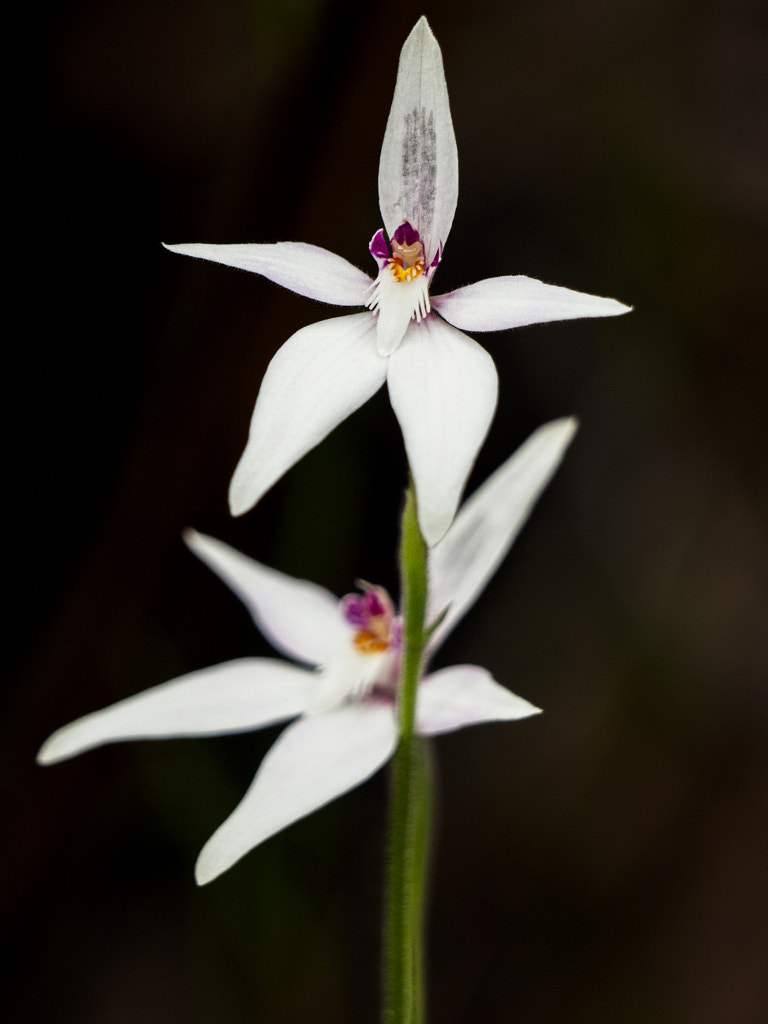
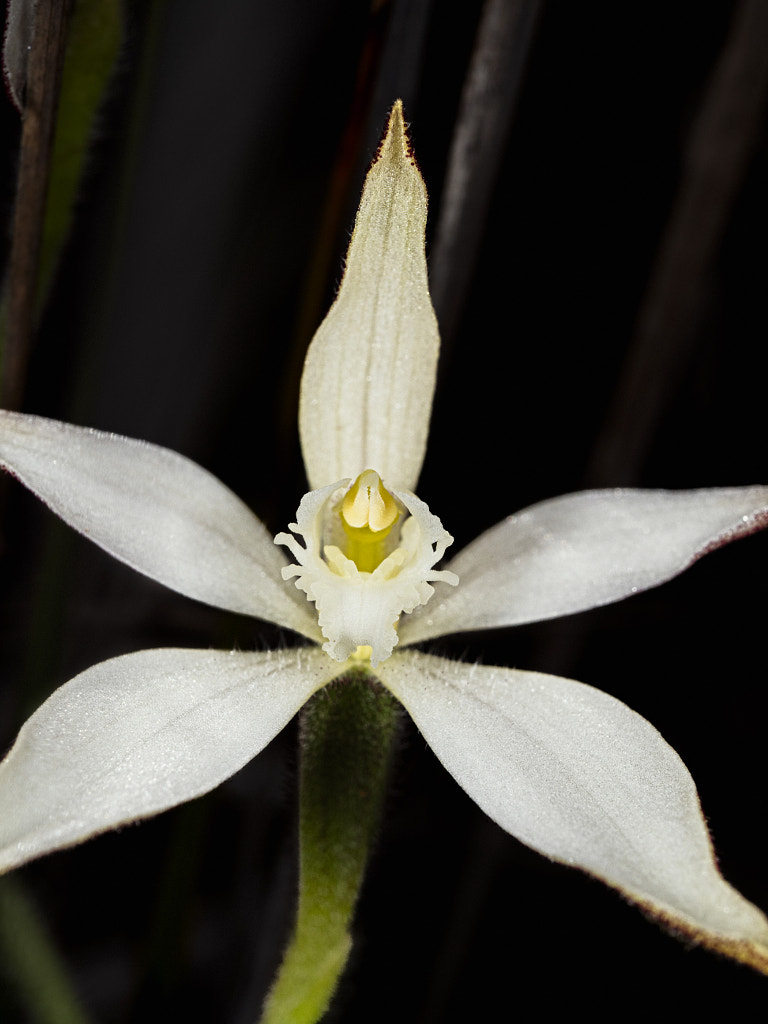
White Fairy Orchid, Caladenia marginata. Flat Rock, Augusta, Western Australia.
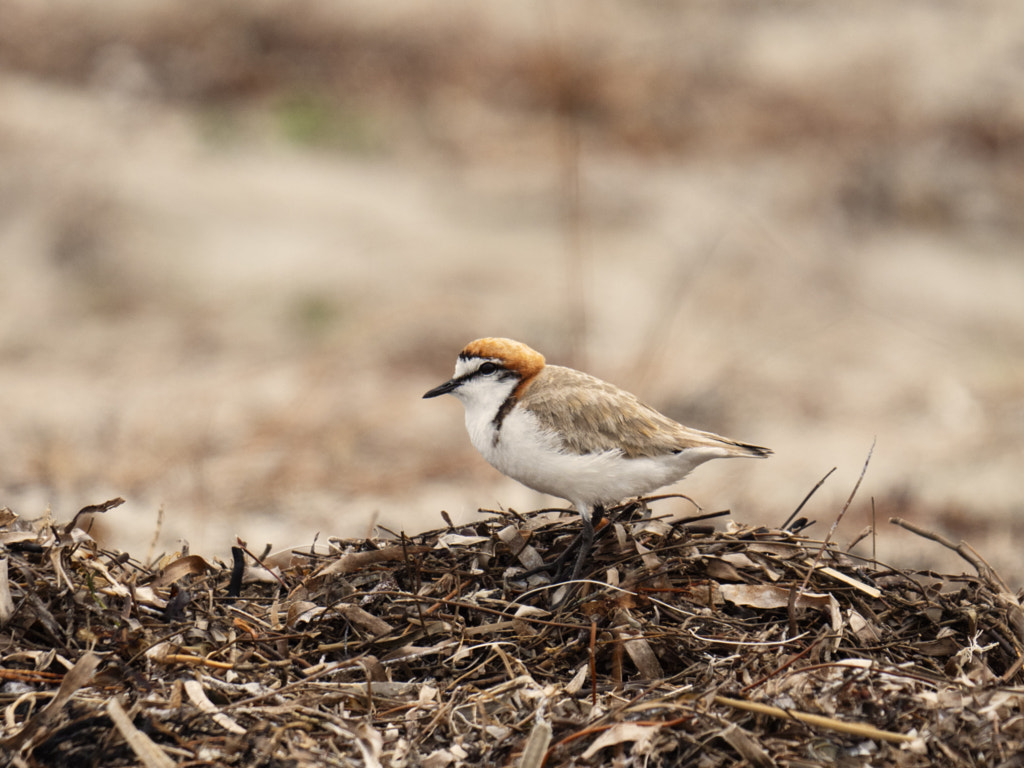
My last session photographing birds came entirely by accident. We were taking Frida, our wayward bull terrier, for her morning walk on the dog beach when we saw some small birds scurrying around among the grasses and washed up seaweed. We took her back to the car and I grabbed my camera. After a bit of a smelly crawl through piles of seaweed I was delighted to find some Red-capped Plovers and proceeded to lie there taking photos for nearly an hour.
Red-capped plover, Charadrius ruficapillus. Augusta, Western Australia.
In many ways it was sad when it came time to leave. Mainly because we’d had a really good time but also with the realisation that the area is about to profoundly change. It seems that every bit of spare land is being turned into housing estates. Hundreds of project homes are being packed eve to eve on small blocks of land. Within a short while this will have a detrimental effect on the environment as forest and coastal heathland is cleared. What is sadder is that the housing isn’t needed. At the start of this article I said that only just over 1000 people live permanently in Augusta and according to Shire of Augusta Margaret River 44% of the buildings are unoccupied. We have watched the suburban sprawl spread in the Cape to Cape region starting at Dunsborough and slowly spreading to Margaret River and now inexorably down to Augusta. Many years ago a friend who worked for what has become Landgate which is the Western Australian’s land management department in charge of surveying, titles and planning. He said he’d seen plans to develop the Cape to Cape region to such an extent that the only forest left would be a thin fringe along the major roads. Then I didn’t want to believe him, but now I can see it is happening. Hopefully it won’t take thirty years for other people to realise what is so special about the region and try and stop this senseless development.
Helen starting the walk up to the summit of Boyagin Rock.
There’s no shortage of granite outcrops to walk up in the Wheatbelt of Western Australia. This time we chose to go to Boyagin Rock. The journey there was a bit eventful as the navigator in charge had me drive up a very steep, narrow and heavily rutted gravel track in the belief that it was the turn off to take us to Boyagin Rock. After a couple of kilometres the track deteriorated even further and it was obviously not the way. With no way of turning round I had to reverse back down the hill avoiding the larger holes all while the navigator in charge was warning me of our impending doom. After a few tense moments we got back onto Boyagin Road, whilst it is also a gravel road it was as smooth as a billiard table compared to what we’d just come down. After a couple more kilometres the sign for the turn off for the rock was visible and we got to the car park and picnic area with no further dramas.
It’s not the first time we’ve visited, but this time it wasn’t wet which made walking across the granite a lot easier because when it is wet it’s like walking across an ice rink . The bush around the base looked terrific with lots of flowers out and birds calling from the trees. We were hoping to see dragon lizards basking on the rock itself, but there was a slight nip to air that was enough to keep the lizards in the shelter of the crevices. We flushed some Australian Pipits as we walked up, unfortunately I didn’t have a long enough lens to photograph them. As we walked up onto the granite Helen had a close encounter of the spiny kind with an echidna – it was a bit on the shy side and curled up in a ball at the bottom of a tree.
Everlastings form in smasll patches of grass between the trees.
Lemon scented orchids could be found growing among the yellow everlastings.
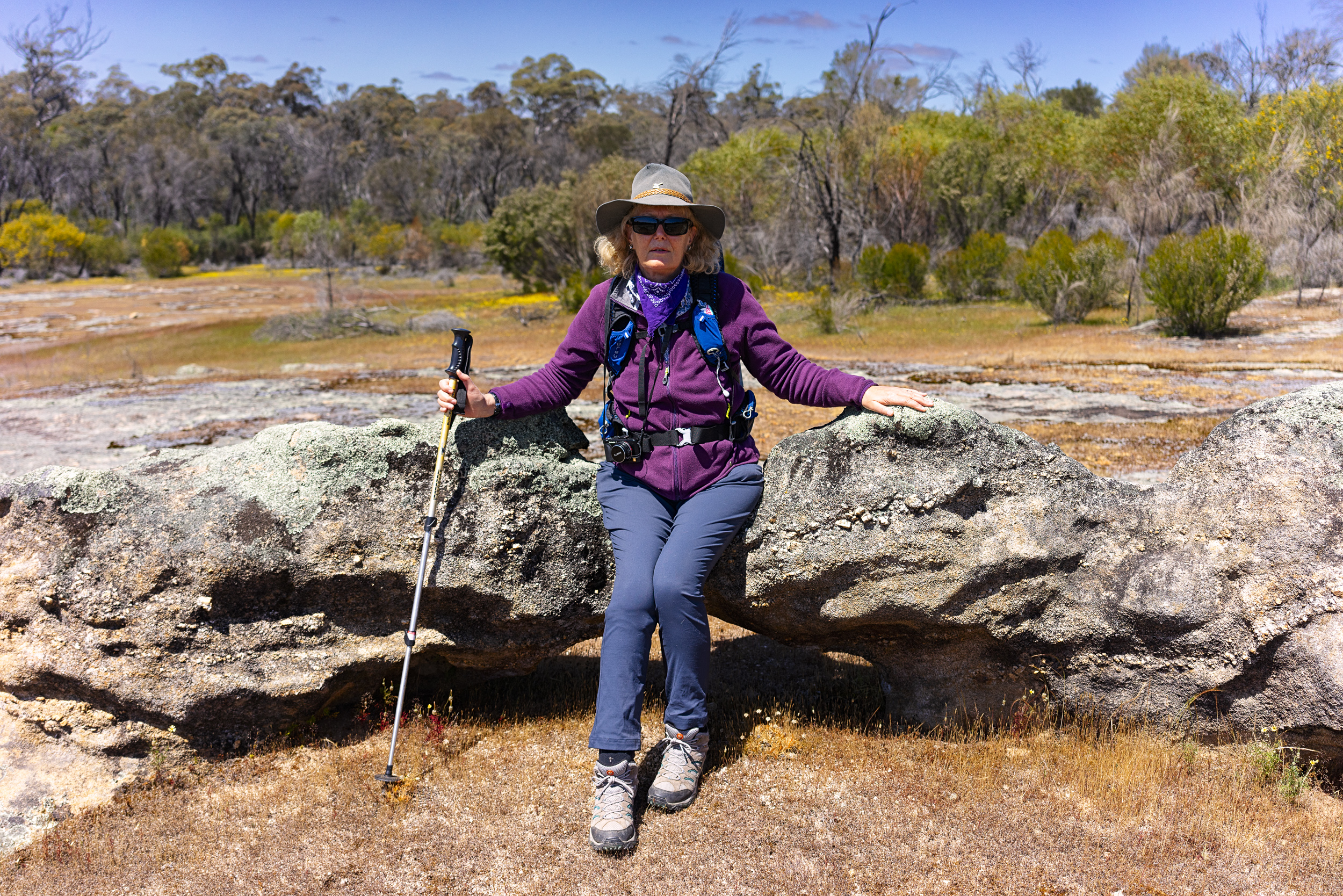
A well earned rest on a convenient rock.
It’s not a difficult walk and the Nyoongar people, who call it “Boogin”, believe that if you walk to the top of the rock without stopping you will live a long life. We’ve now done it twice so we should live to a very ripe old age. When we got to the top I was surprised to see a pool of water, it must be fed totally by rainfall. Even more surprising was the number of tadpoles swimming in it. Australian frogs never cease to surprise me – you find them in all sorts of strange places and you can’t help but wonder how they survive.
The rock pile in the middle of the pool on the top of Boyagin Rock.
Helen celebrates reaching the summit.
A quick jaunt down the rock retracing our tracks and we were back at the car. A leisurely picnic followed and we discussed where we will go for our next trip.
The plan was simple walk the 7.9km Mt Matilda Walk Trail is located in the Wongan Hills Nature Reserve which is 12 km from Wongan Hill’s townsite. Beloved Significant Other (BSO) had a long cherished dream of doing the walk and with nothing on the agenda we set out to fulfil it. Now at this stage I’ll be completely honest and say my intentions were not only of the walking kind. I was hoping to slope off and get some orchid photography in at another nearby reserve. The BSO doesn’t like hanging about while I take photos – she would sooner watch paint dry.
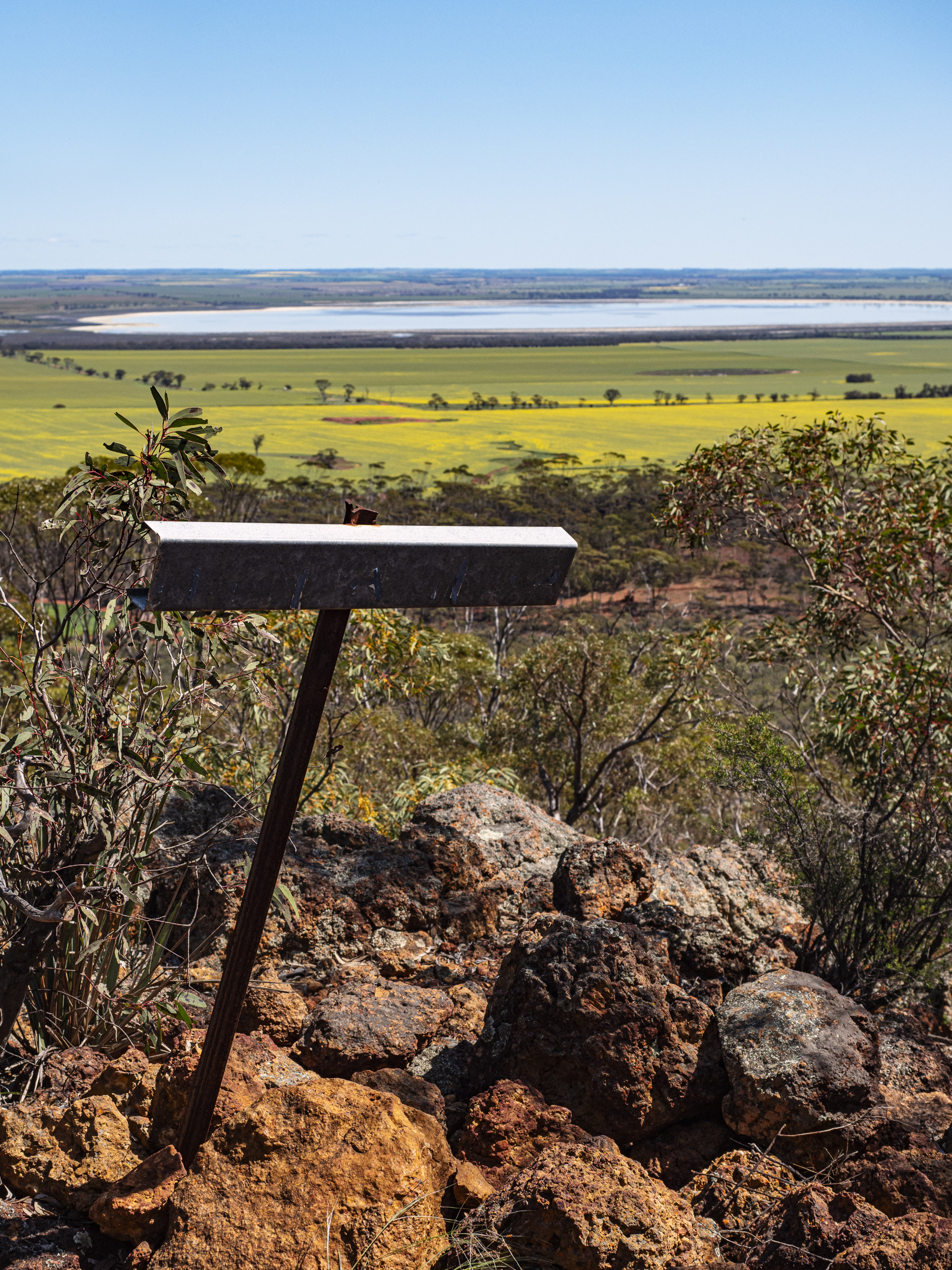
Helen at the Lake Hinds Lookout on Mount Matilda.
How things turned out was another matter. As Rabbie Burns the Scottish poet wrote in his 1785 poem To a Mouse“The best-laid schemes o’ mice an’ men Gang aft agley”or for those nonScotslanguage speakers “The best-laid schemes of mice and men Go oft awry”.
Looking down from the Lake Hinds Lookout at the patterns in the neighbouring farmland.
Paul celebrates reaching the summit of Mount Matilda.
The summit of Mount Matilda. The sign marking the summit has seen better days. Lake Hinds can be seen in the distance.
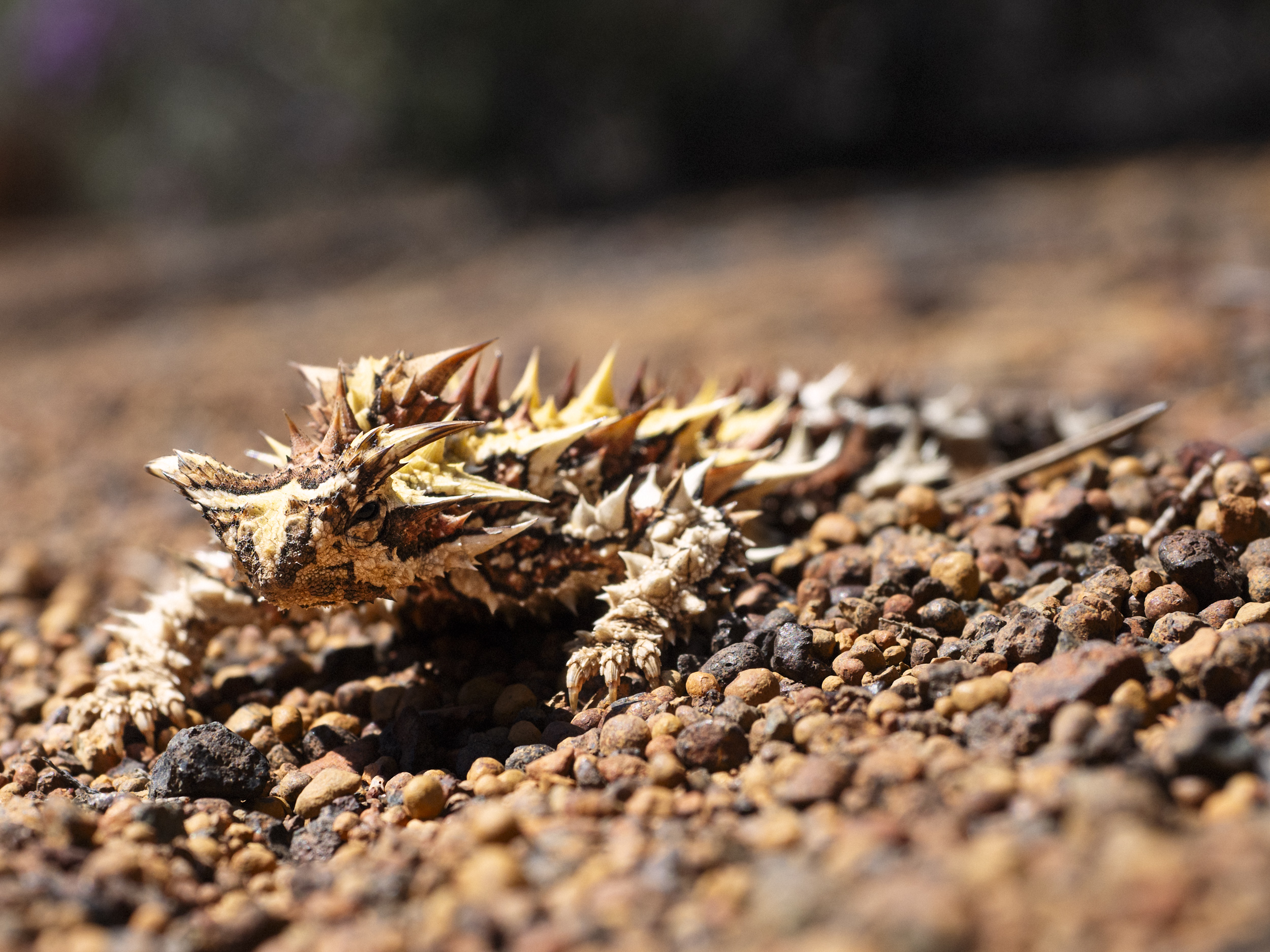
Well we did climb to the summit of Mount Matilda, which at only at 411m isn’t really saying much, but a combination of a dodgy back, grumbling knees and a long drive meant that we didn’t do the full walk. We decided to walk out to the summit and then back track to the turn off for the 4.8 km Wildflower Loop and I’m glad we did because we saw something really special – something we’d only waited 36 years to see. There on the side of the track was a Thorny Devil. We could scarcely believe it. Now Australia is full of weird animals – egg laying mammals, strange birds, bizarre looking insects, but the Thorny Devil is one of the strangest looking I’ve ever seen. Its defence seems to based on the idea that you’ll not want to harm it because it’s covered on big thorns as it made no attempt to move away from us.
Thorny Devil, Moloch horridus. Mount Matilda, Western Australia.
Weird eh? Thorny Devil, Moloch horridus. Mount Matilda, Western Australia.
On completion of the walk we had a nice picnic lunch at the shelter at the start of the walk trail while watching a bunch of blokes head to run the trail. I didn’t slope off to do any orchid photography as I couldn’t be fagged. The walk had been enough.
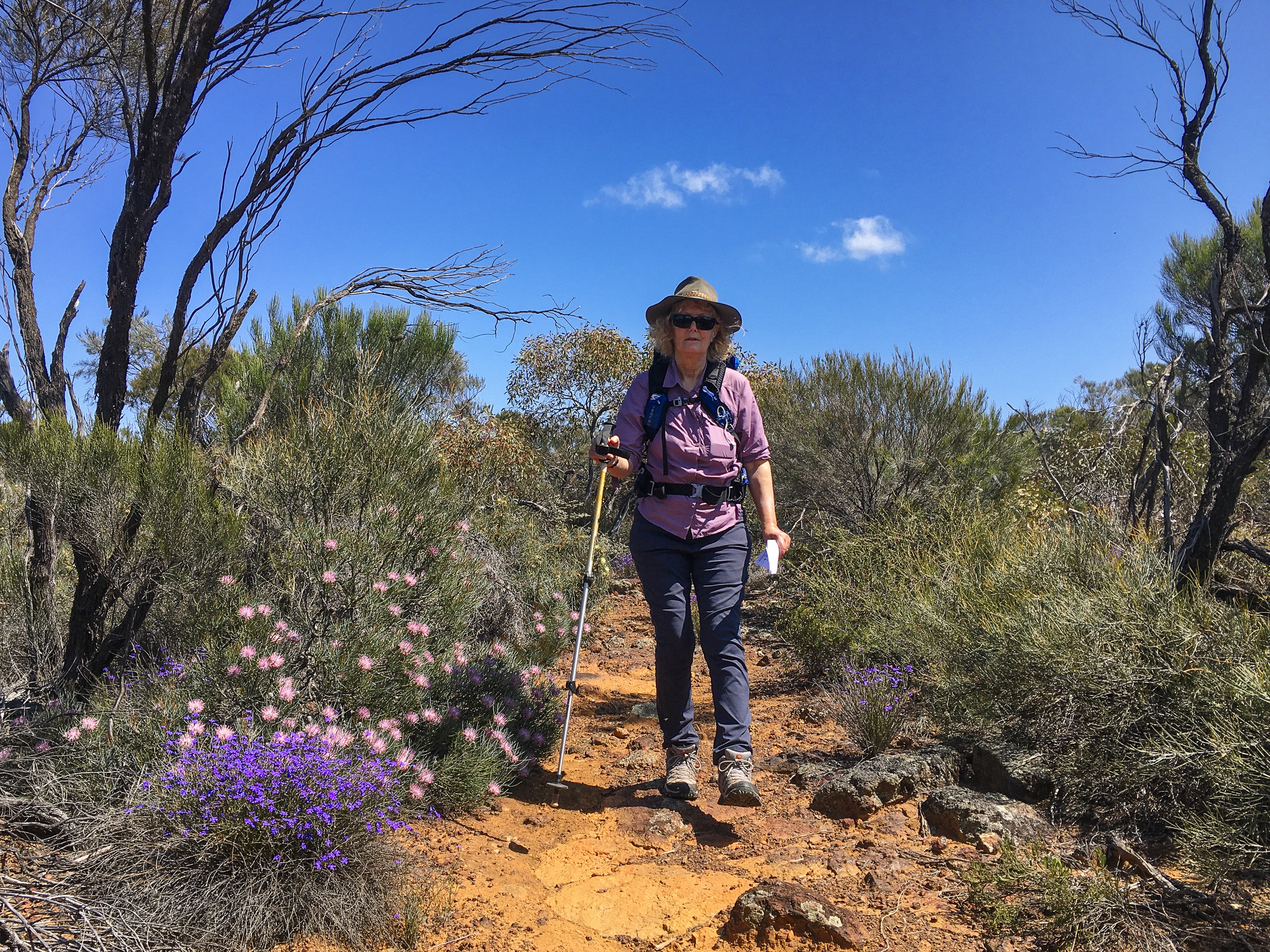
Helen standing next to a Spreading Coneflower.
Spreading Coneflower(Isopogon divergens) is found in Wongan Hills.
Helen walking through a stretch of trail called “A Country Garden” on Mt Matilda.
Pink Pokers (Grevillea petrophiloides) found all over Mount Matilda.
As I sit and write this SBO has announced we’ll have to go back and do the whole walk.
I mentioned a couple of weeks ago we’d gone to Hyden. We’ve been plenty of times before and I have written about those visits here, here and here. Wave Rock doesn’t hold much interest in itself – its just a big rock shaped like a wave. What is more interesting is the nature around the rock. When the winter rains come an incredible amount of water runs off the rock and this means there is a lot of vegetation that has become home to animals around the base. Not far from the rock and the vegetation gives out and you can see a salt plain with Lake Magic. This too is great place for observing animals and seeing wildflowers.
Unfortunately we’d had our beautiful weather on the drive down and the rain really set in – so much so that my walk along the base of Wave Rock, out to Lake Magic and then back via Wave Rock Airport and the Wildlife Park was in danger of becoming an aquatic walk. Thankfully I was dressed for the occasion and swathed in Gore Tex. My Olympus EM 1 mk ii is very well sealed against the elements as are the lenses. Despite my careful preparation the subject matter – orchids and birds – didn’t want to oblige. Regardless of the weather that the walk was really enjoyable.
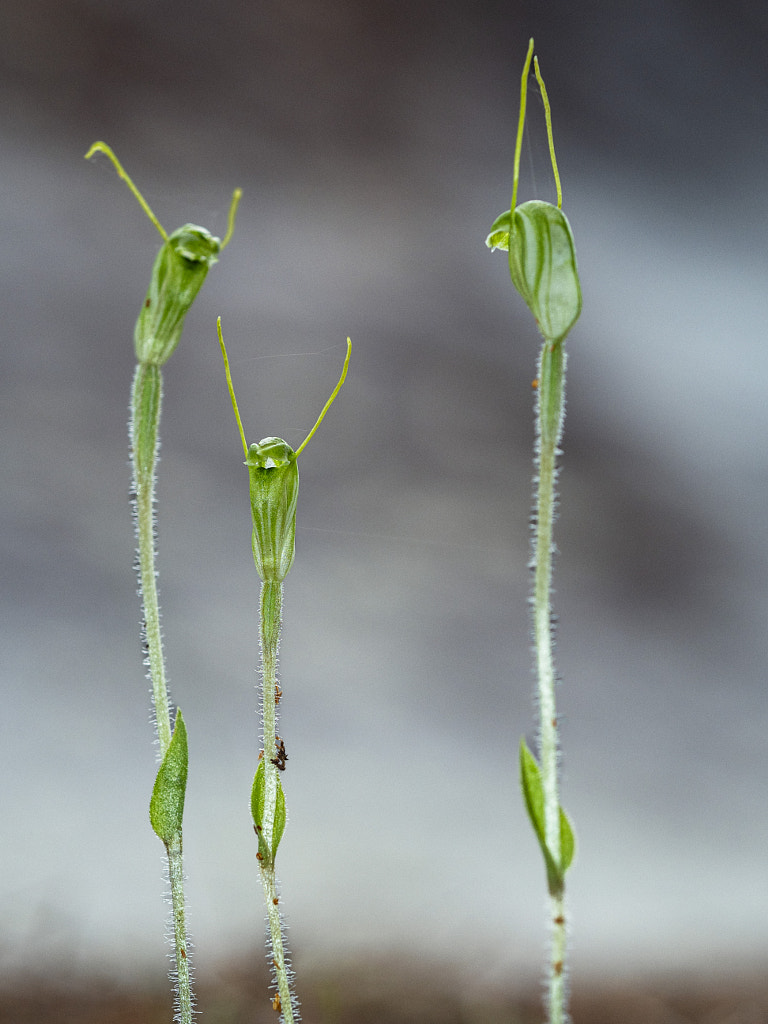
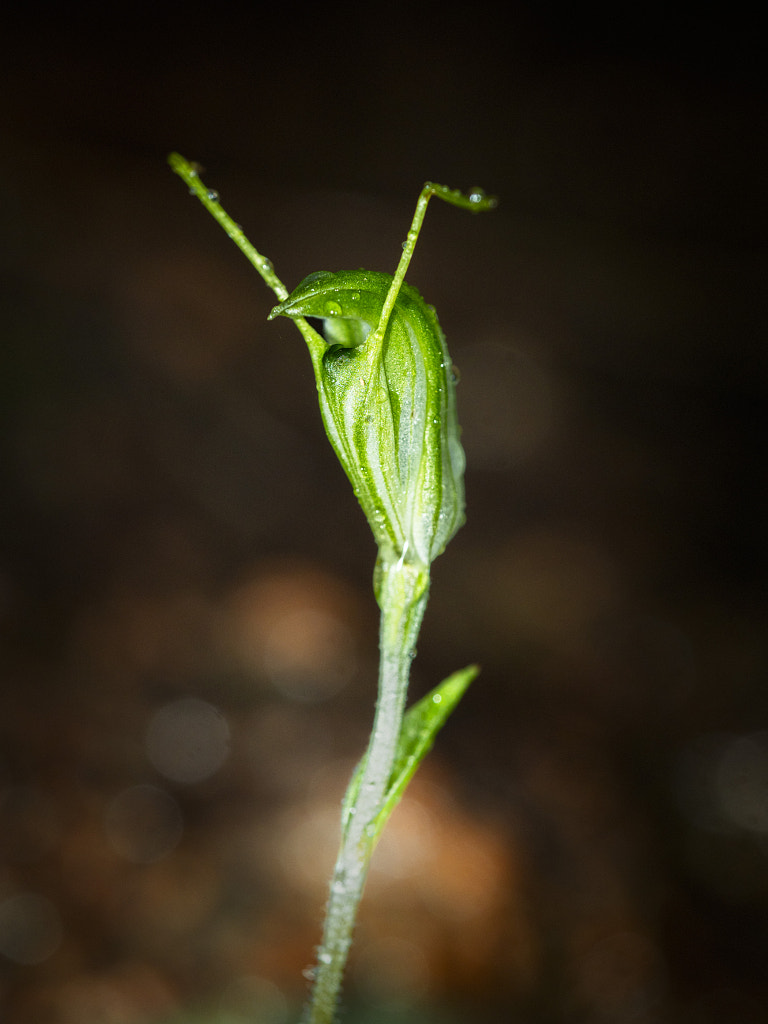
Hairy stemmed snail orchid, Pterostylis sp. ‘hairy’. Hyden, Western Australia.
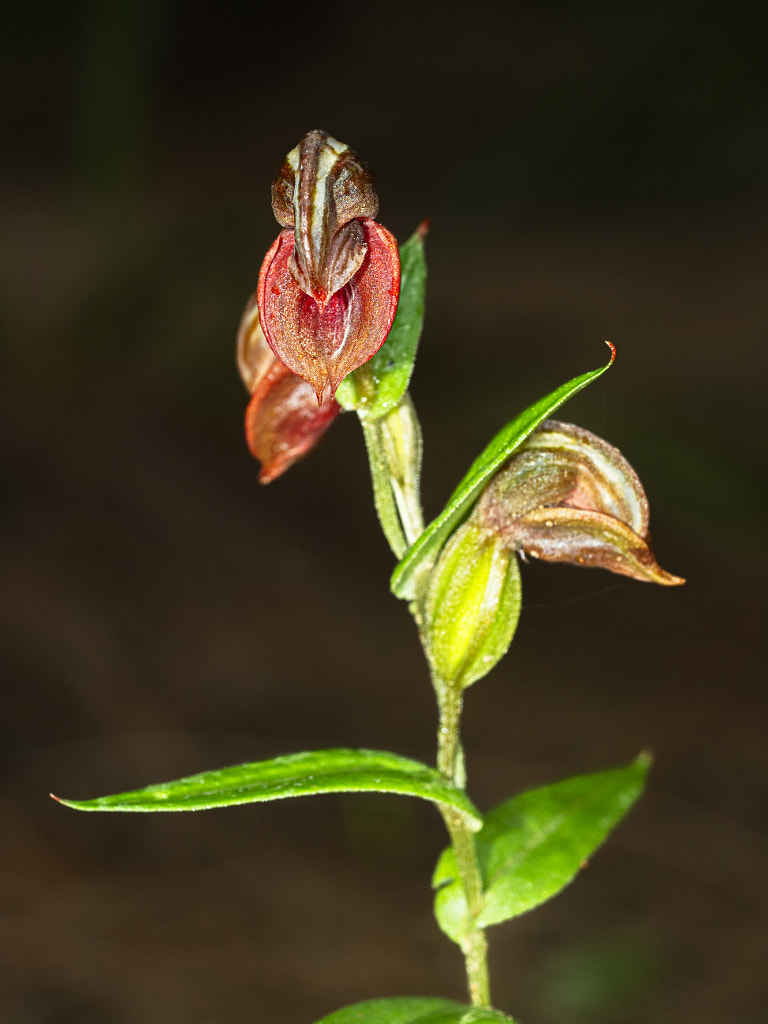
Dark banded greenhood, Pterostylis sanguinea. Hyden, Western Australia.
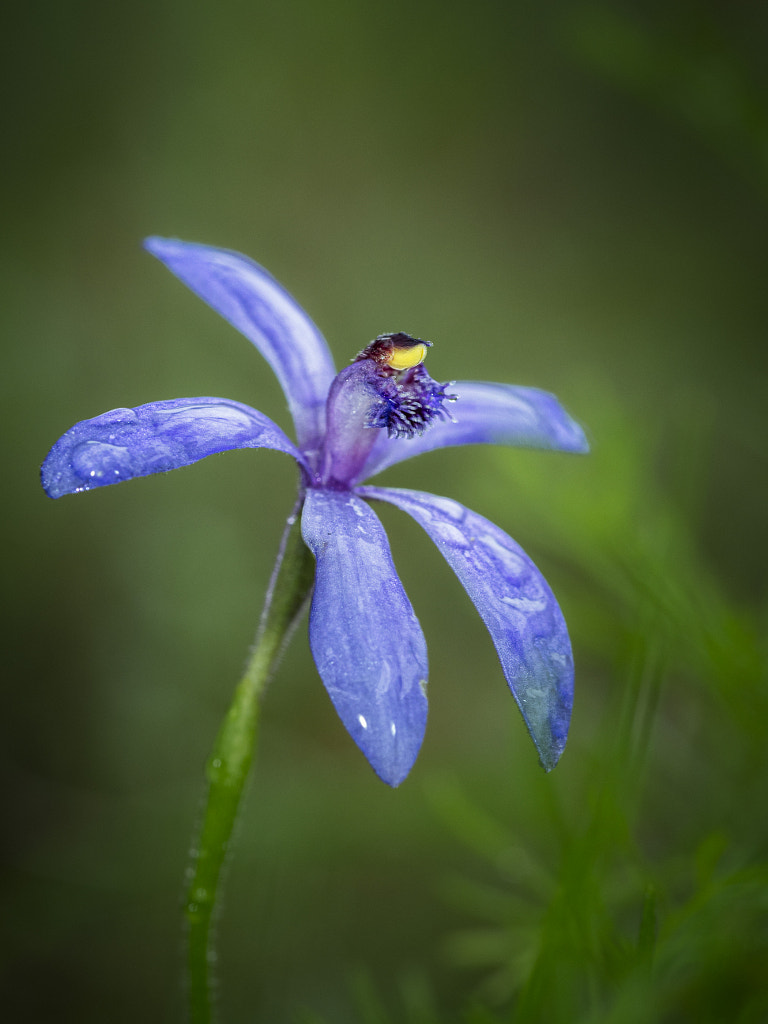
Blue beard or blue fairy orchid (Pheladenia deformis). Hyden, Western Australia.
Hairy stemmed snail orchid, Pterostylis sp. ‘hairy’. Hyden, Western Australia.
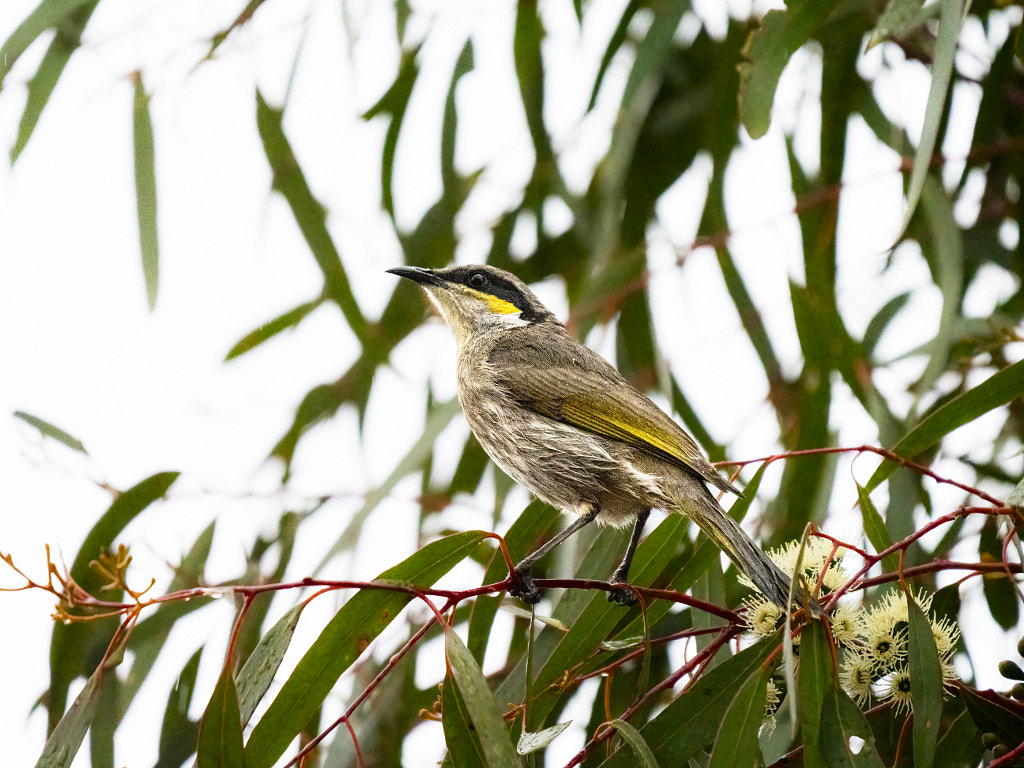
Singing Honeyeater, Gavicalis virescens. Hyden, Western Australia.
Gazanias have overgrown the railway tracks in Quraiding.
We stopped over in Quairading en route to Hyden. Far from being a sprawling metropolis situated in the heart of the Wheatbelt it’s a small town of around 600 people. Its main reason for existence is to service the surrounding farms and act as a distribution point for the grain they produce. The railway line serving the grain bins has been closed since 2013 and the town is trying to re-invent its self as a tourist stop over.
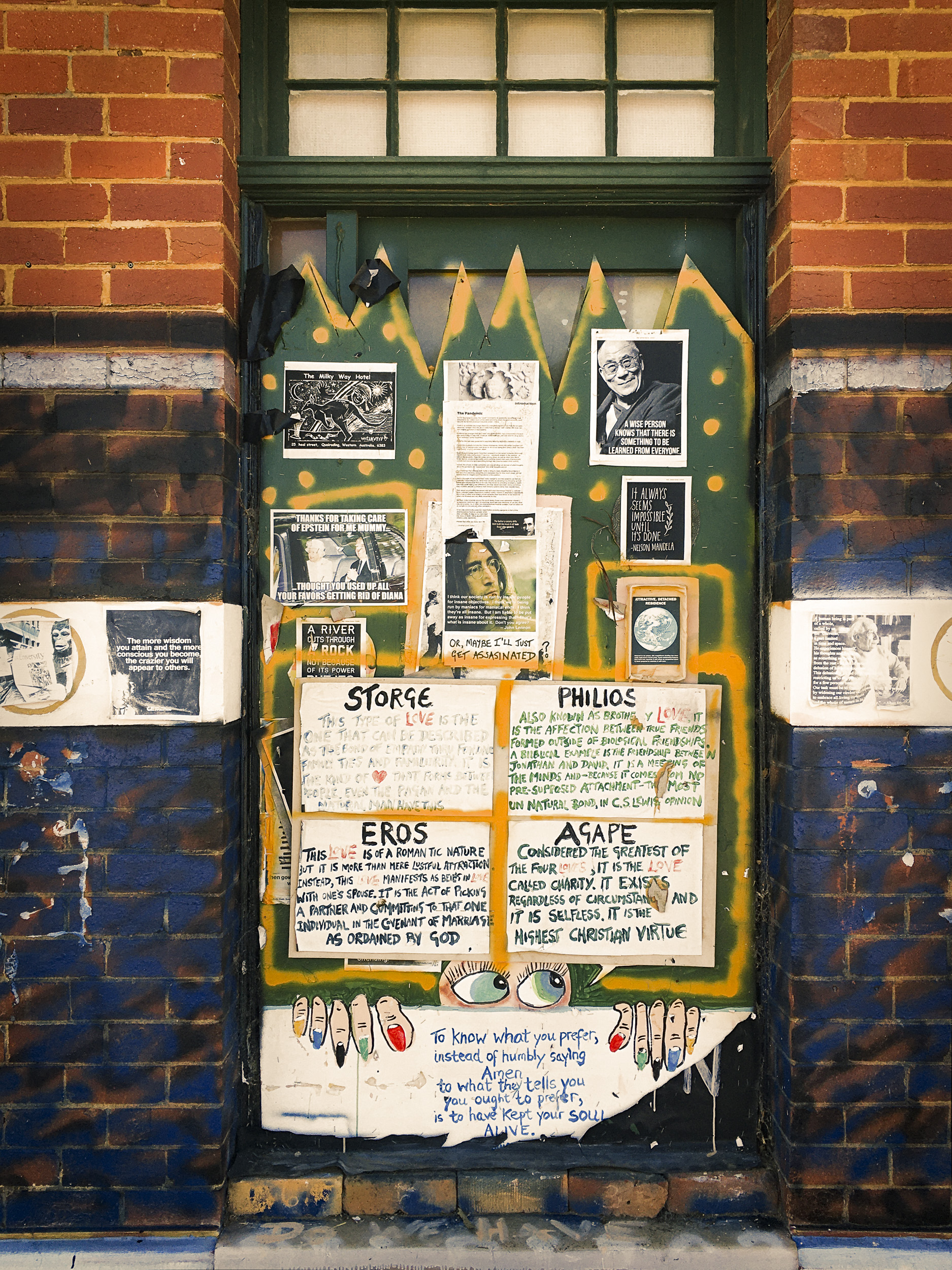
The moment we pulled up in the main drag my attention was caught by this one building, in particular its door. It was covered in flyers about religion and various conspiracies. It was fascinating and I just had to photograph it.
The door of this building is covered in writings about religion and conspiracies. Quraiding, Western Australia.
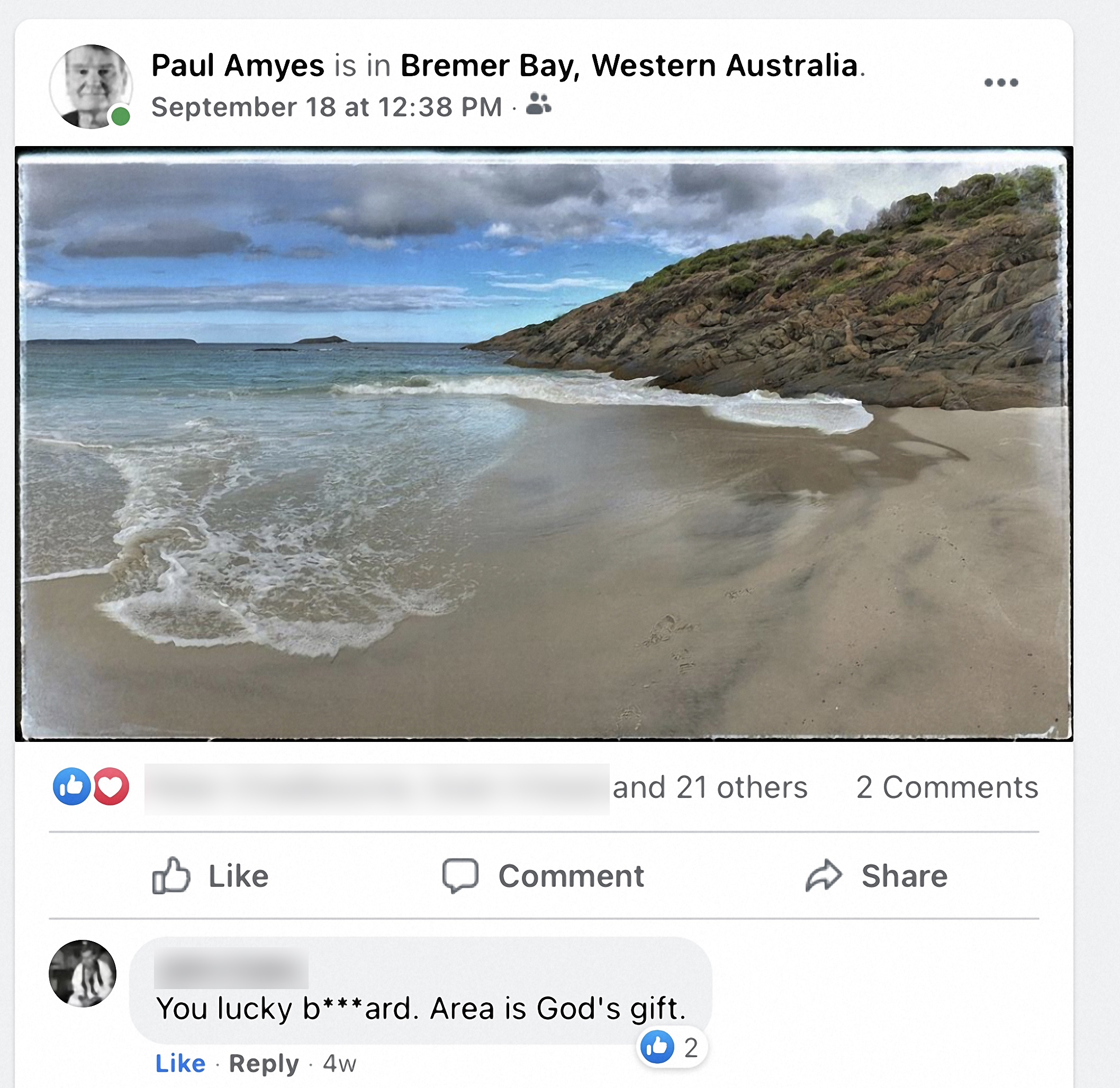
When I put up on Facebook that I was in Bremer Bay this was the reaction I got.
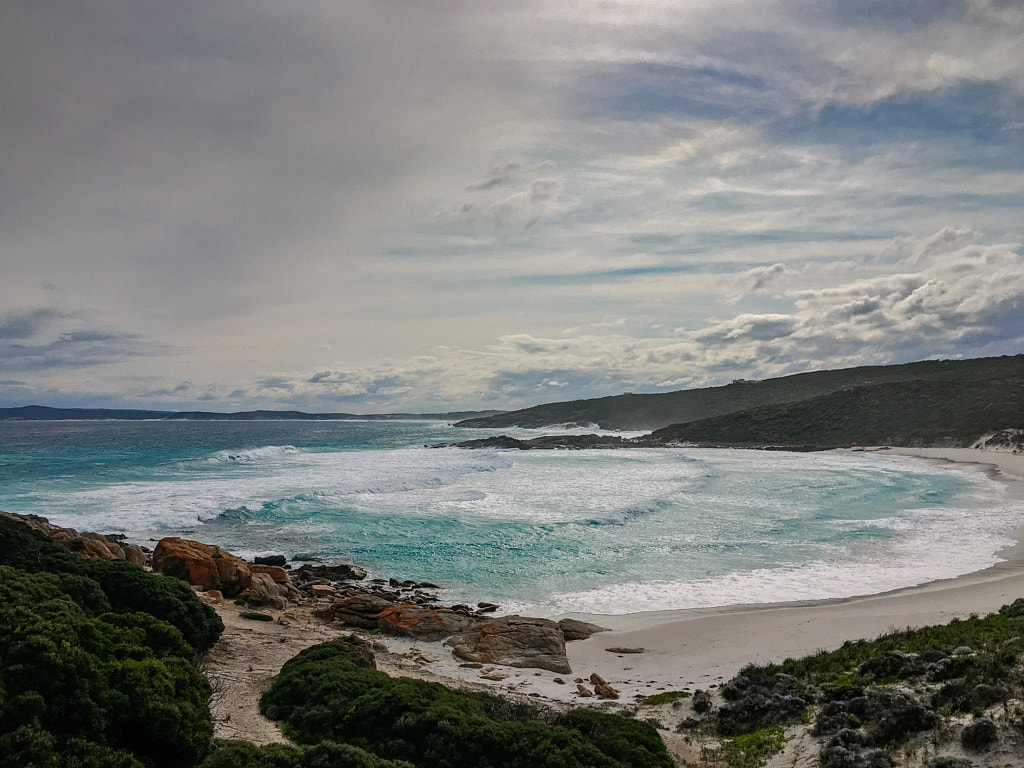
Bremer Bay is down south of Perth. Way down south to the tune of around 6 hours drive. We had been wanting to go for a long time and so we decided to tack on a visit when we last went down to Stirling Range National Park. The aim was to use it as a jumping off point to explore the Fitzgerald River National Park, but with the huge rainfall Western Australia had had this winter when we asked at the local tourist office what the 4WD access roads were like we were told they were impassable. So we made do with exploring around the town and driving out to some of the beaches. The weather, however, was not conducive to going to the beach so we did what generations of English people on holiday have done which drive there and lookout of the windscreen. A thermos flask of Tetley tea and some egg and cress sandwiches and our life would have been complete.
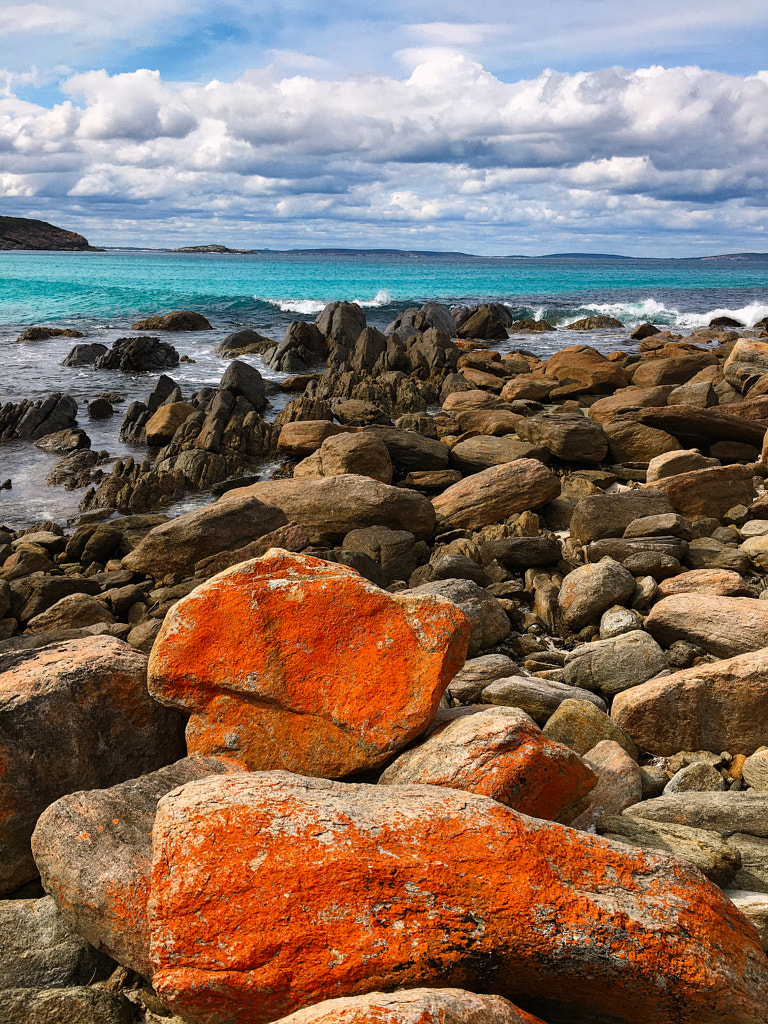
Native Dog Beach, Bremer Bay, iPhone 6s back camera 4.15mm f/2.2. Exposure: 1/7000 sec, f2.2 ISO 25.
Short Beach, Bremer Bay. iPhone 6s. Exposure: 1/2201 sec, f2.2 at ISO 25.
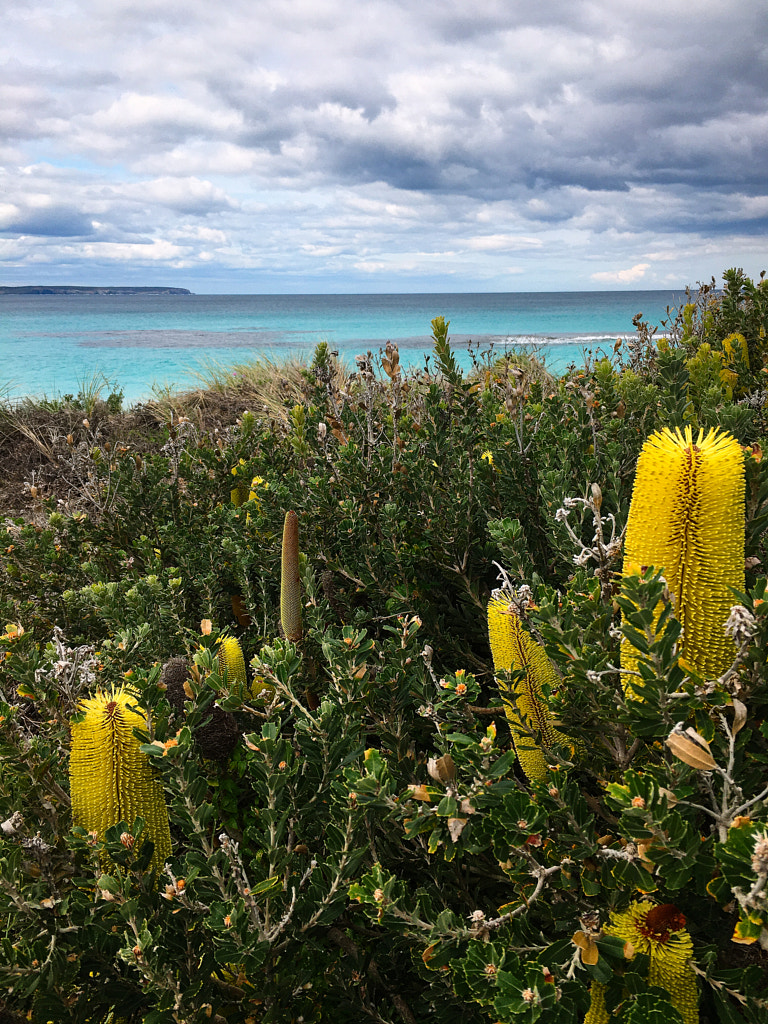
Candle Stick Banksia at Short Beach, Bremer Bay. iPhone 6s. Exposure: 1/1501s, f2.2 at ISO 25.
I did manage to get some orchid photography and manage a few snaps of some species that I’d not seen before.
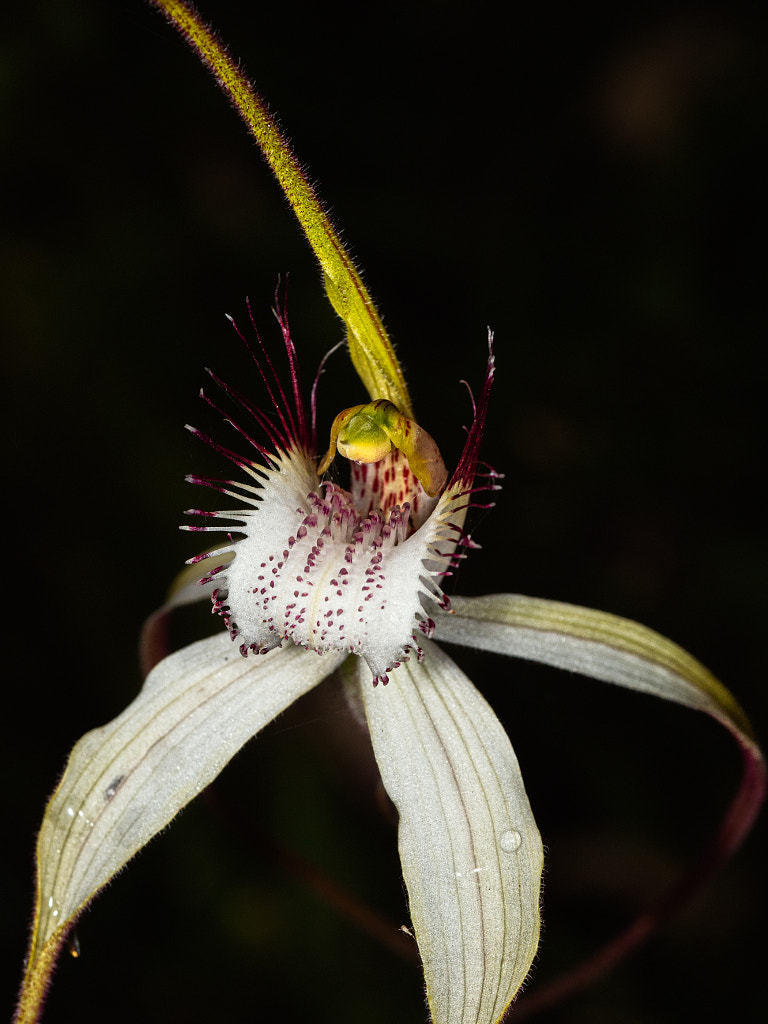
Esperance White Spider Orchid, Caladenia longicauda subsp crasa. Bremer Bay. Olympus OMD EM 1 mk ii with Olympus 60mm f2.8 macro lens. Exposure: 1/250 sec, f8 at ISO 200.
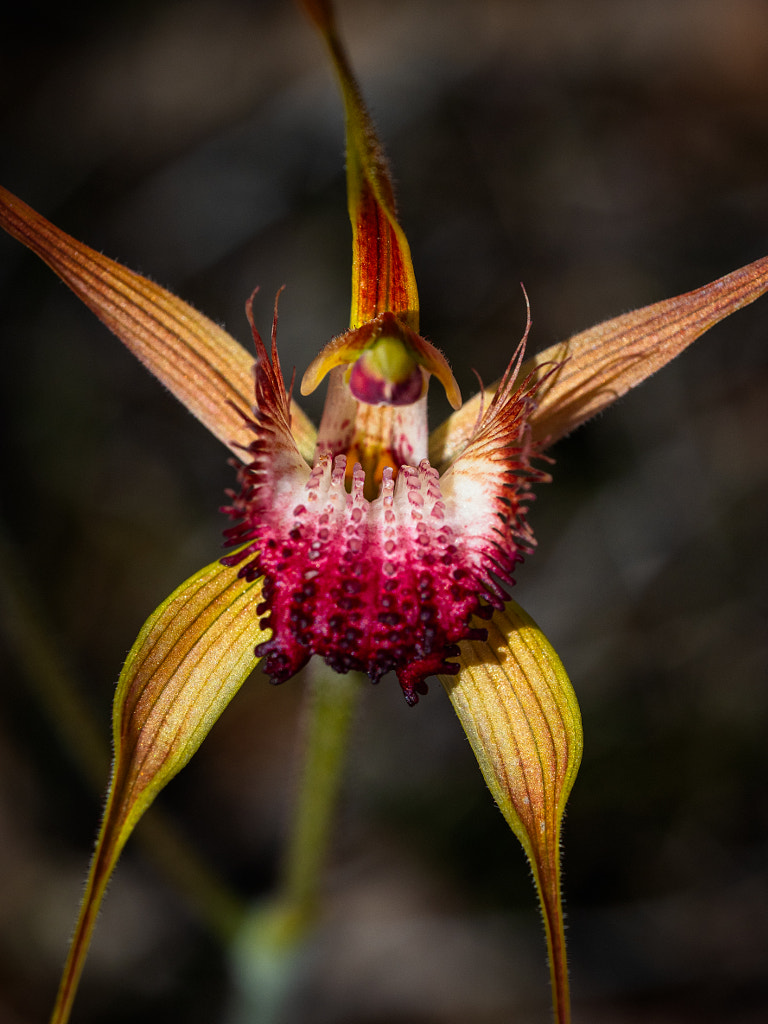
King Spider Orchid, Caladenia pectinata, Bremer Bay. Olympus OMD EM 1 mk ii with an Olympus 60mm f2.8 macro lens. Exposure: 1/640 sec, f5.6 at ISO 200.
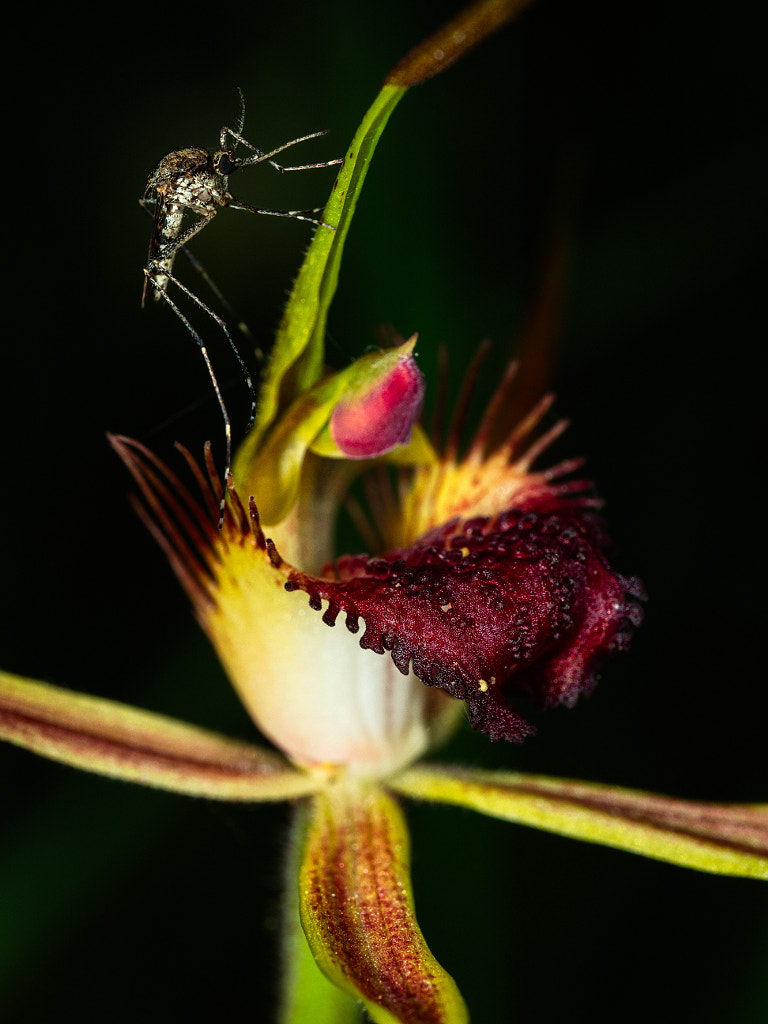
Esperance King Spider Orchid, Caladenia decora, with visitor. Bremer Bay. Olympus OMD EM1 mk ii with Olympus 60mm f2.8 macro lens. Exposure: 1/250 sec, f8 at ISO 200.
The wildflowers in their beauty, the mountain ranges tall, the billabongs and rivers, and friendly birds that call…
by
Brian Black
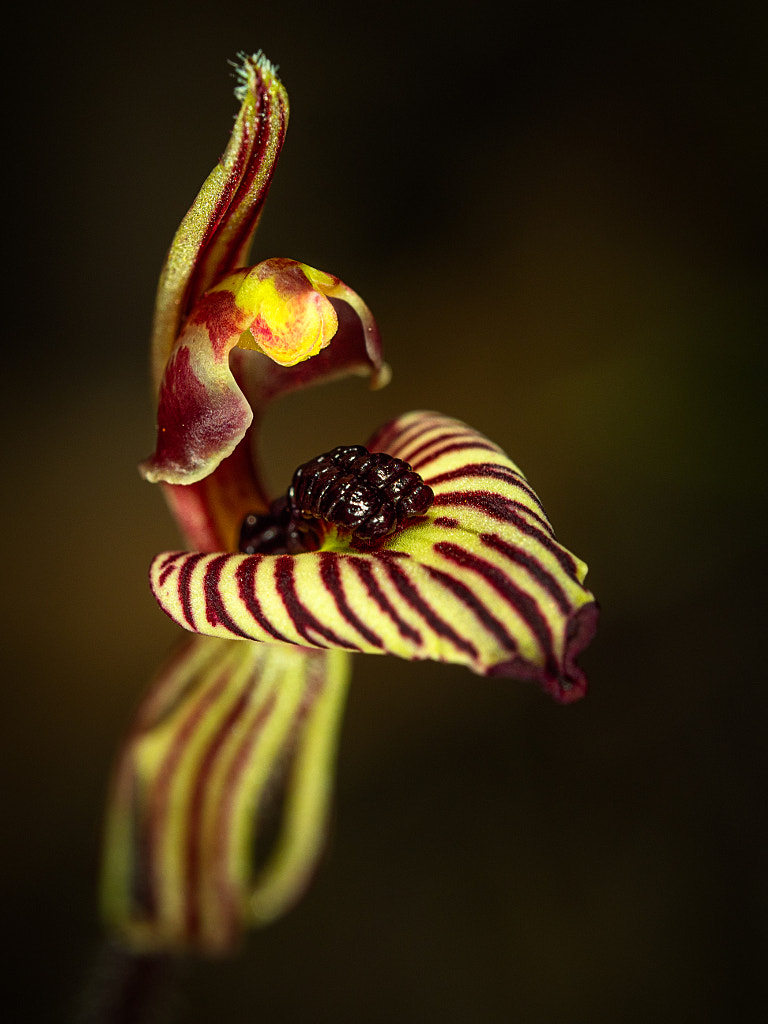
Zebra Orchid, Caladenia cairnsiana. Stirling Range National Park, Western Australia. Olympus OMD EM1 mk ii with Olympus 60mm f2.8 macro lens. Exposure: 1/250 sec, f8 at ISO 200.
Prisoner Orchid – a hybrid between Josephs Spider Orchid (Caladenia polychroma )and the Zebra Orchid (Caladenia carnsiana). Hybridisation occurs due to cross pollination of parent plants by a feral pollinator the European honeybee (Apis mellifera).Olympus OMD EM 1 mk ii with Olympus 60mm f2.8 macro lens. Exposure: 1/250 sec, f8 at ISO 200.
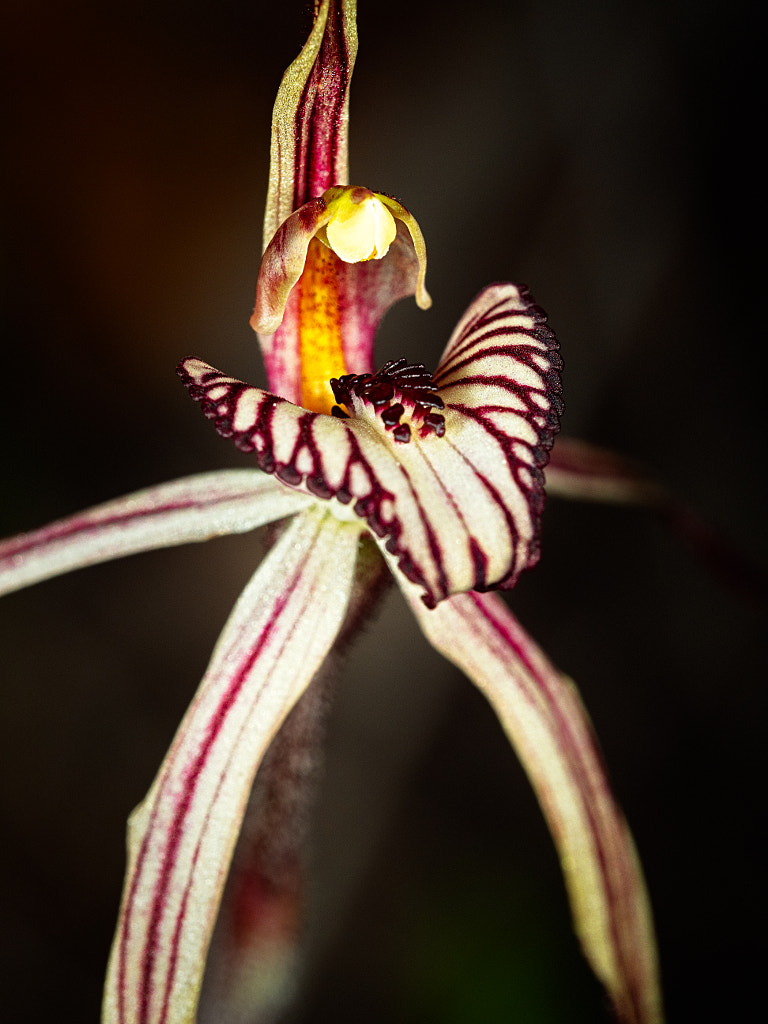
Joseph’s Spider Orchid, Caladenia polychroma. Stirling Range National Park, Western Australia. Olympus OMD EM1 mk ii with Olympus 60mm f2.8 macro lens. Exposure: 1/250 sec, f5.6 at ISO 200.
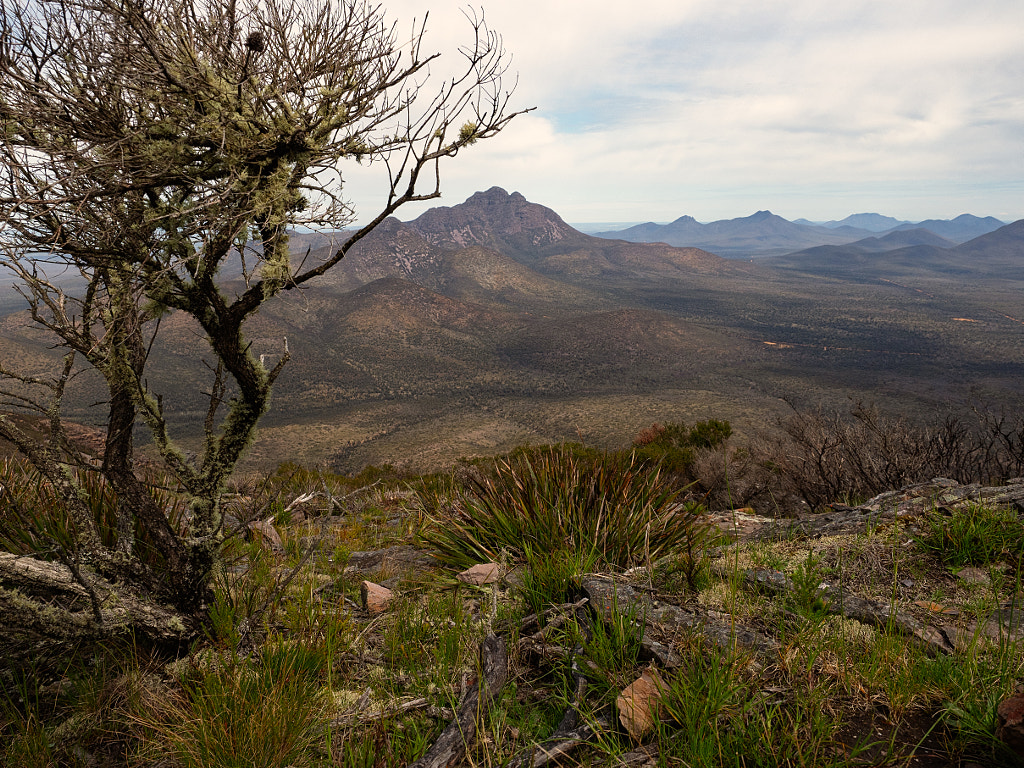
Looking out at Mt Toolbrunup from the summit of Mount Trio. Olympus OMD EM 1 mk ii with Olympus 12-40mm f2.8 lens. Exposure: 1/400 sec, f8 at ISO 200.
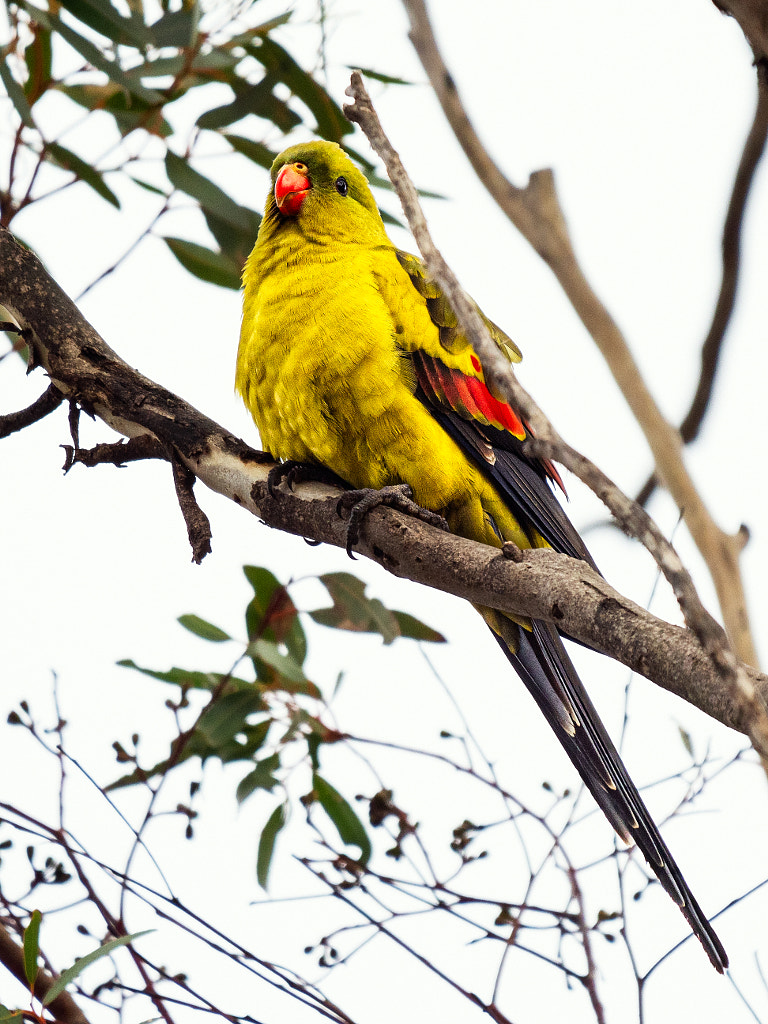
Wookonga or Regent Parrot (Polytelis anthopeplus). Stirling Range Retreat, Western Australia. OlympusOMD EM1 mk ii with Panasonic Leica 100-400mm f4-6.3 lens. Exposure: 1/500 sec, f6.3 at ISO 250.
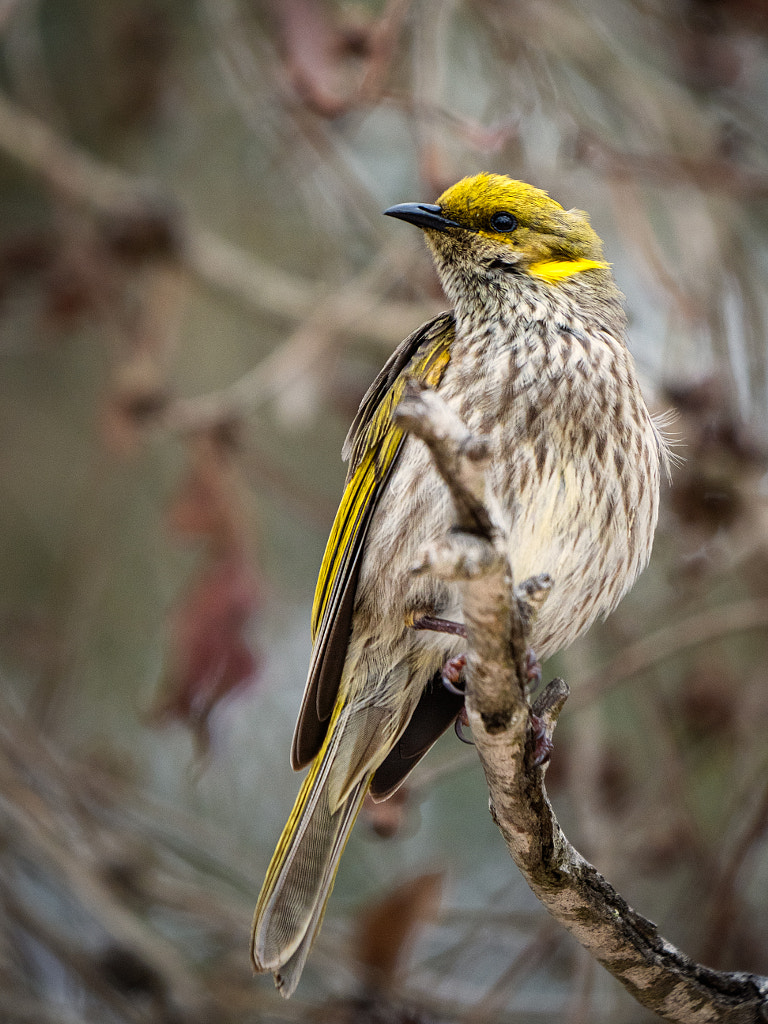
Yellow-plumed Honeyeater (Lichenostomus ornatus) called Miamit by the Nyoongar of Southwest Western Australia. Stirling Range Retreat, Western Australia. Olympus OMD EM 1 mk ii with Panasonic Leica 100-400 f4-6.3 lens. Exposure: 1/500 sec, f6.3 at ISO 800.
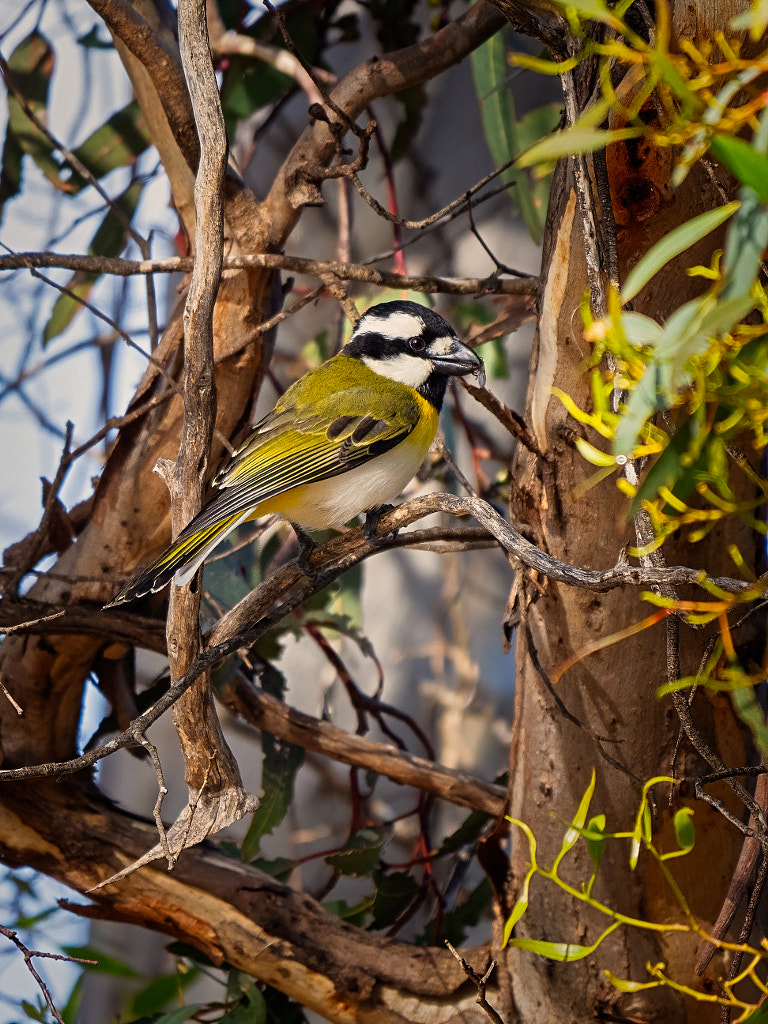
Djoondalkoron or Crested Shrike-tit (Falcunculus frontatus). Stirling Range Retreat, Western Australia. Olympus OMD EM 1 mk ii with Panasonic Leica 100-400mm f4-6.3 lens. Exposure: 1/500 sec, f6.3 at ISO 800.
Some places get all the attention and others are seldom mentioned. In the Sterling Range National Park everyone concentrates on climbing Bluff Knoll, but there is as I’ve said on previous occasions a lot more than Bluff Knoll. Believe it or not Bluff Knoll is one of the easier climbs in the park. Another one is Mount Trio. Climbing up Bluff Knoll is not a wilderness experience as there are far too many people. With Mount Trio if you see more than two other people its a very busy day.
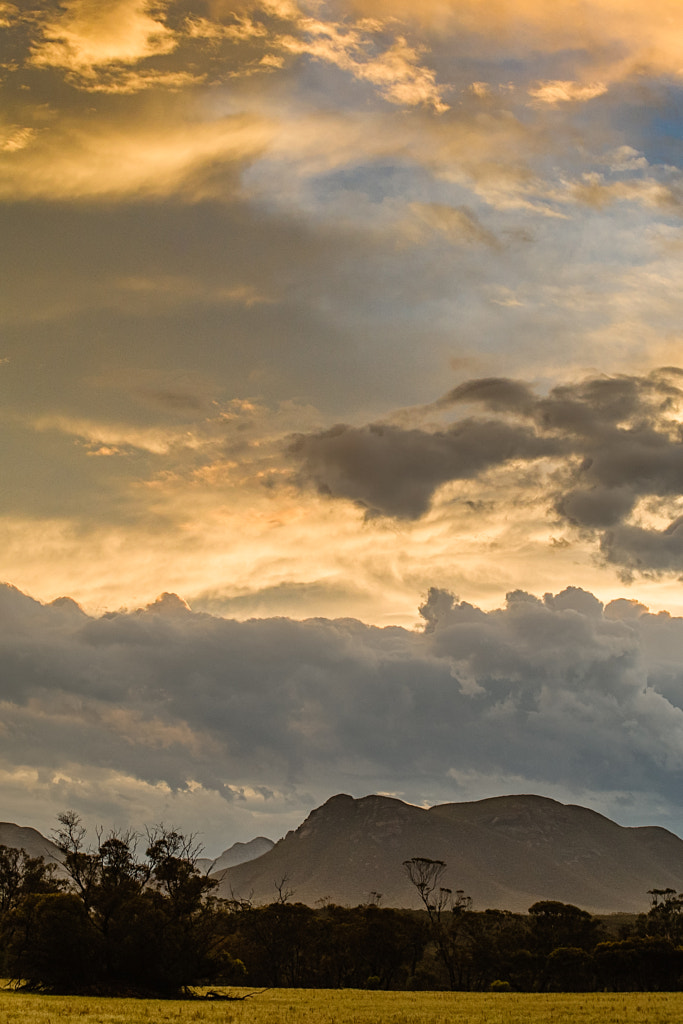
The sun sets behind Mount Trio in the Stirling Ranges of Western Australia.
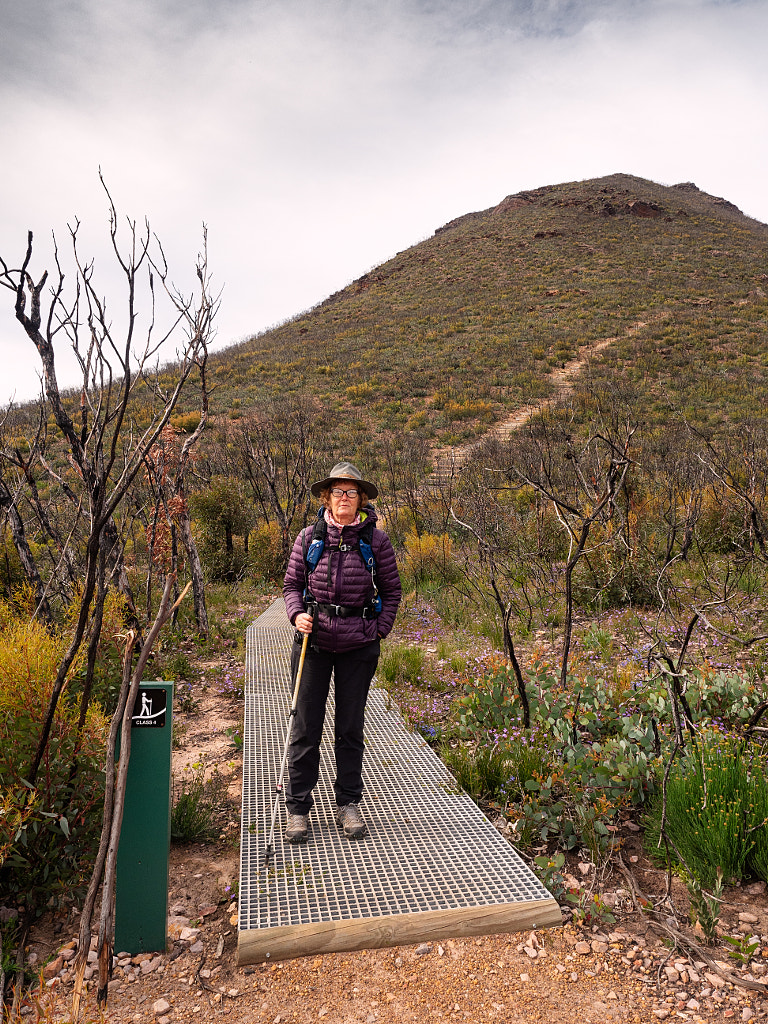
Helen at the start of the Mount Trio walking trail in Sterling Range National Park.
Mt Trio comprises three peaks and was once known by its Aboriginal name Warrungup, meaning “three become”. It is 3.7Km to the top and back with an ascent of 418m. The first third of the walk is very steep with irregularly spaced steps. Wildflowers, including the endemic mountain bells (Darwinia leiostyla), are a feature of this walk. Montane thicket on the upper levels of the peaks puts on a colourful display of wildflowers in spring and early summer although we didn’t see this as the area was still recovering from a devastating bushfire and was like walking through a landscape of charcoal sticks.
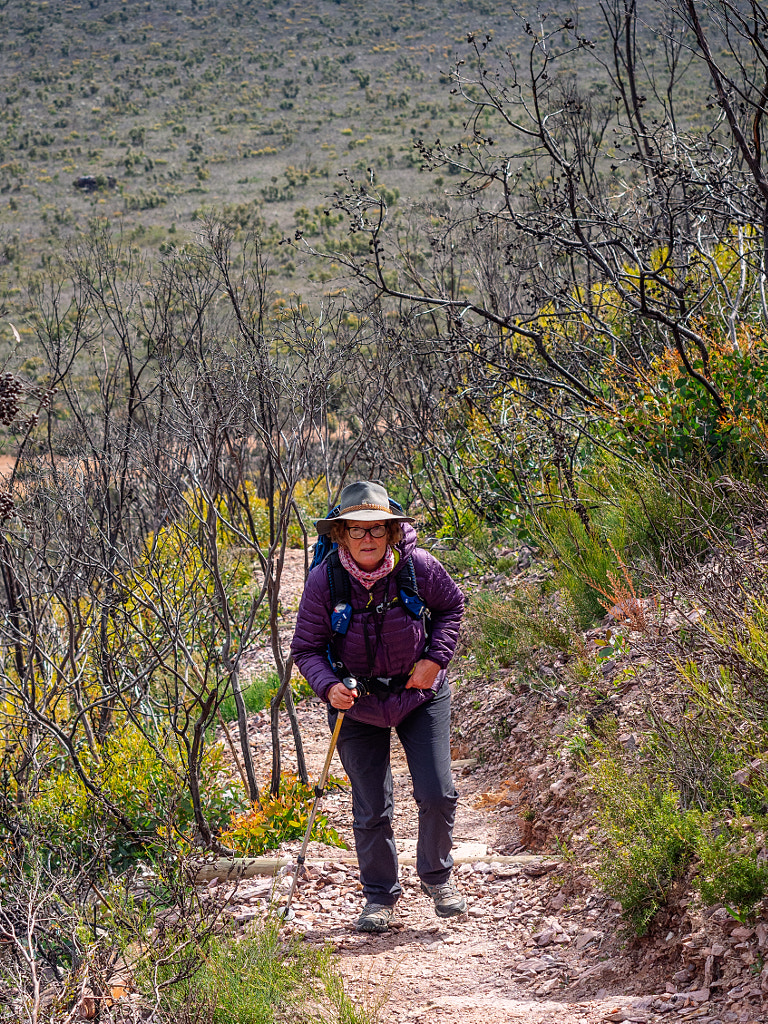
The first third of the walk trail is up a steep section with irregularly spaced steps which makes the going quite hard.
The Common Mountain Bell (Darwinia lejostyla) grows in the eastern and central Stirling Range, and can be readily seen on Bluff Knoll and Mount Trio.
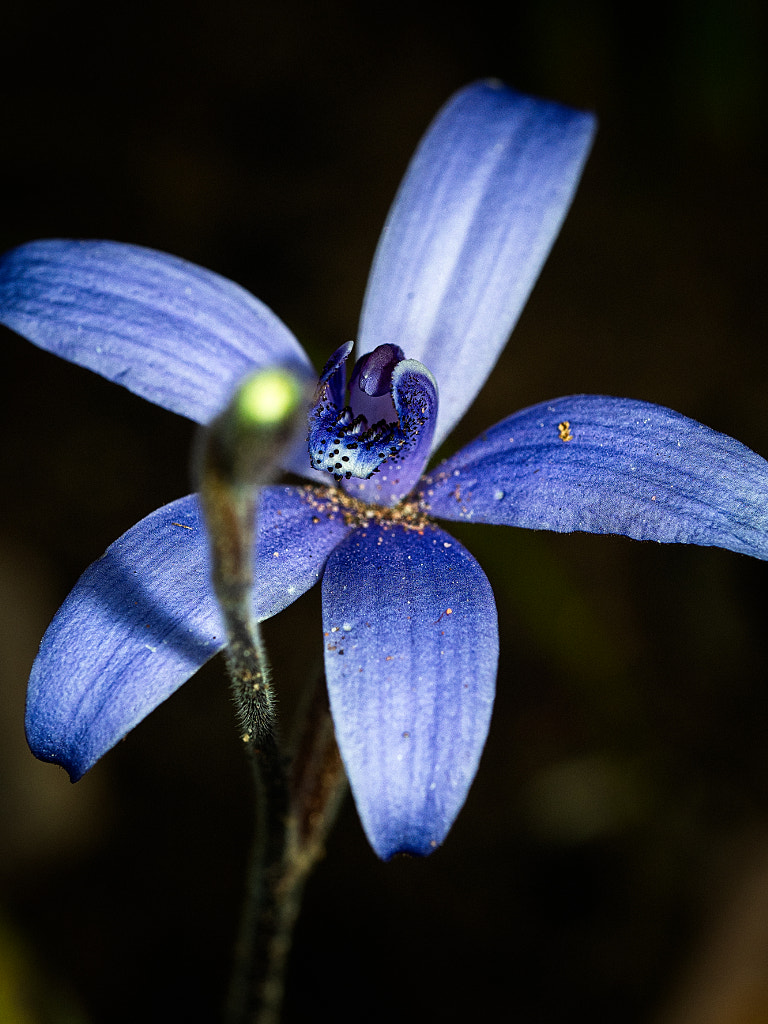
Silky Blue Orchid, Cyanicula sericea. Mount Trio, Western Australia.
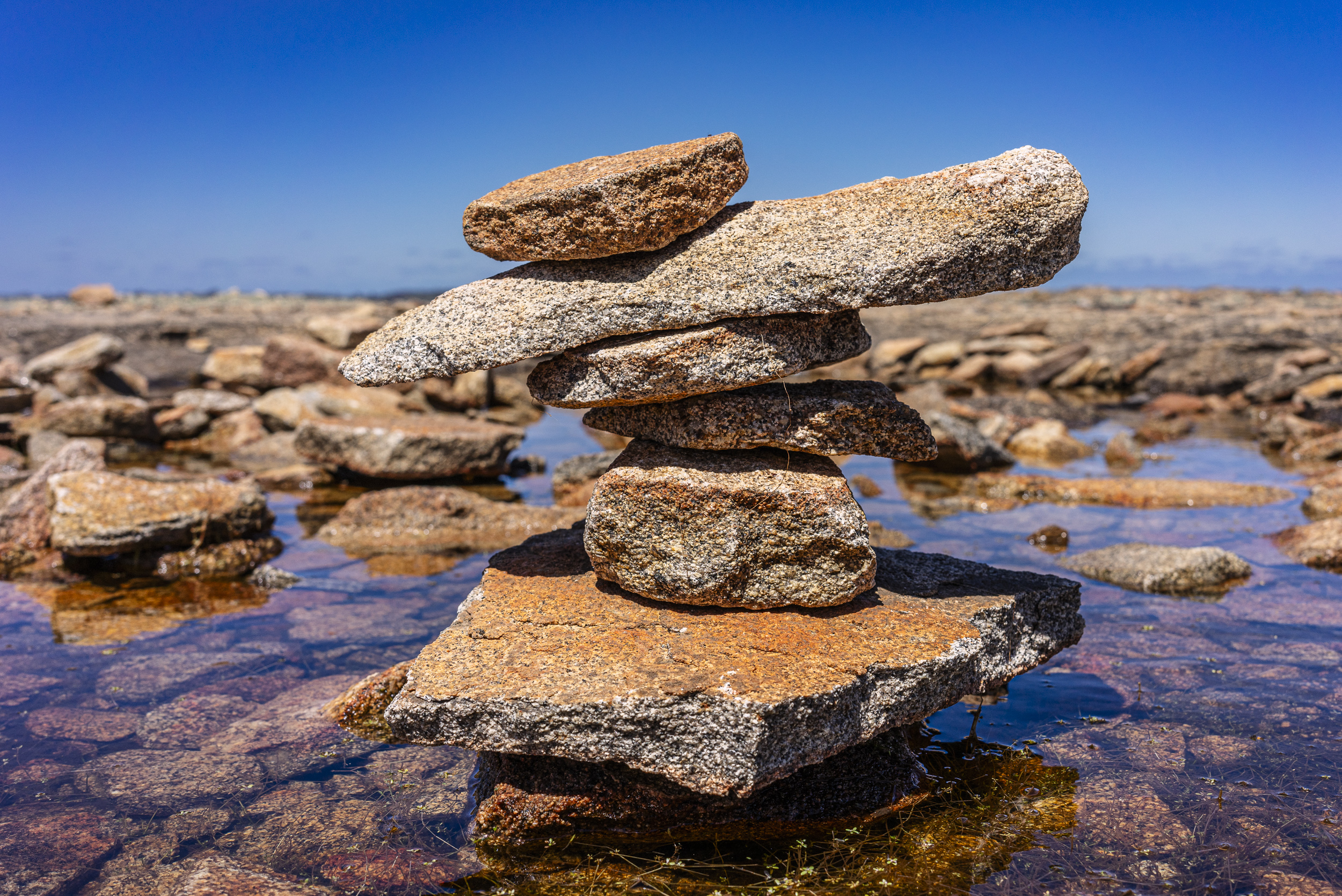
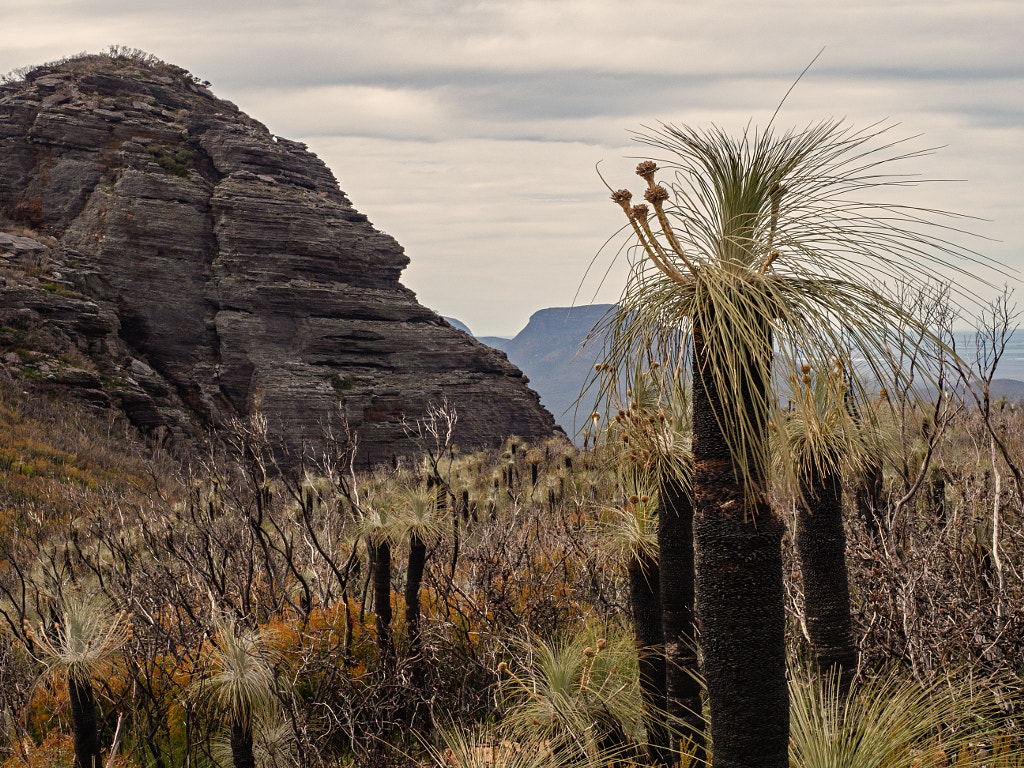
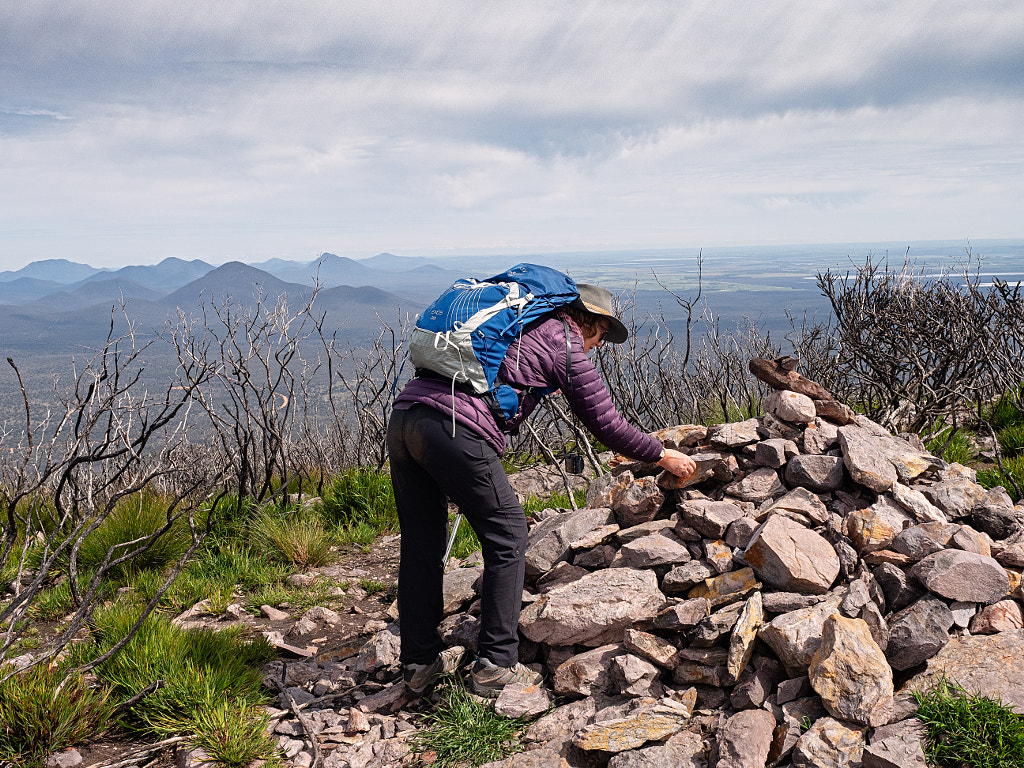
The going gets easier once you hit the saddle between the east peak and the north peak. The saddle between the cols is covered in Drumsticks (Kingia australis). These grass trees were often called Black Gin trees, a derogatory racist term now not used. The Nyoongar name for them is Pulonok. The track then follows a more gentle slope to the highest (northern) point at 856 metres. At the summit there is a small cairn of stones which people add to on getting there. From the summit on a clear day you get views of Mt Toolbrunup the second highest peak in the range at 1052m. Then all it is a matter of retracing your footsteps back to the start.
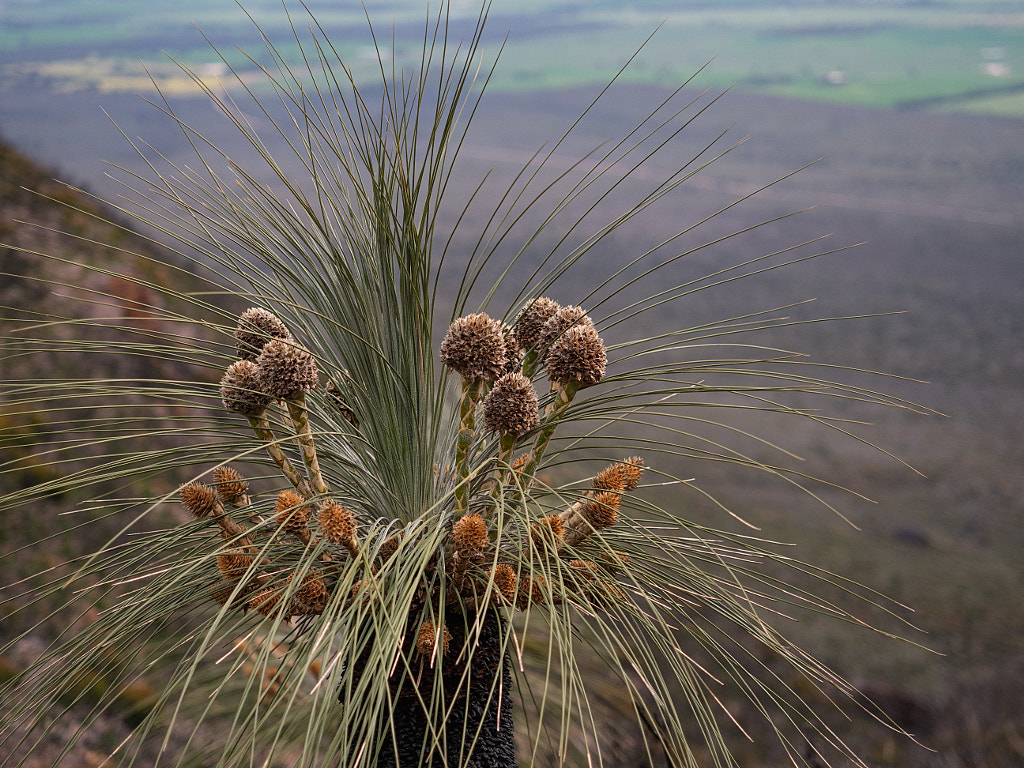
The saddle between the cols is covered in Drumsticks (Kingia australis). The Nyoongar name is Pulonok.
A closer look at some Drumsticks (Kingia australis).
Helen placing another stone on the cairn at the summit of Mount Trio.
Looking out at Mt Toolbrunup from the summit of Mount Trio.
Climbing up was pretty taxing on the legs muscles – all those steps were like a sadistic form of step aerobics. Those steps were even more murderous on the way down. It was the muscles that were complaining this time it was my knee joints. At about 500m from the end my knees announced that they were going to divorce me on the basis of cruelty. Thankfully from this point we could clearly see the car in the car park below us and it spurred us on to one last final effort.















You must be logged in to post a comment.