Crawling Through The Bush

Over this spring it literally feels like I have been crawling through the Western Australian bush on my hands and knees stopping only to take photographs of native orchids. So it was only fitting that I should title this short video “Crawling Through The Bush – one orchid at a time”.

A few highlights from this year’s orchid season would be firstly the albino purple enamel orchids I found quite by accident on Mount Observation when I went for a leak. Yes I know – that’s probably too much information.

Albino purple enamel orchid

Another fave would be the rabbit orchid I photographed near Kojonup.

The Rabbit Orchid (Leptoceras menziesii) only flowers after a disturbance to its environment such as a bush fire. Kojonup, Western Australia.

This next orchid had me well and truly stumped until Andrew Brown , curator of the Orchidaceae and Myoporaceae at the Western Australian Herbarium amongst many other things, kindly identified it for me.

Clubbed spider orchid, Caladenia longiclavata, Kojonup, Western Australia.

This last one I just like from a photographic point of view.

Bee orchid or Diuris laxiflora, Kojonup, Western Australia.

The video as well as showing the locations also shows some of the techniques I use for photographing the orchids. The video was shot using an Olympus Pen EP-2 micro four thirds camera and the audio was recorded directly to the footage using either a Rode Video Mic pro or the Olympus SEMA-1 microphone used as a lavalier mic. One short clip was filmed with a Panasonic Lumix LX-5.

The 2014 Orchid calendar is now available for sale, just click on the image below and you’ll be taken through to my on-line store at RedBubble.


As always if you are interested in purchasing a copy of any of the photos click on the image.

Blimey that was quick!

Spring is here and the bees are hard at work pollinating the almond trees in my garden.

It only seems like the other day I was blogging about winter coming and getting my wood supply in. Now after a very mild winter spring is breaking out all over. The fruit trees in my garden have been keeping the local bees very busy. And further afield the native terrestrial orchids are starting to bloom. I’ve never known them start quite so early, and I thought that last year was a prolific year, but this spring is looking to be even more bountiful.

A cowslip orchid being pollinated. Mokine, Western Australia.


Rosy-cheeked Donkey Orchid, Diuris aff. corymbosa, larger than the common donkey orchid and has reddish-brown labellum lobes hence the name.


A lemon scented sun orchid (Thelymitra antennifera) also known as vanilla orchid. Mokine, Western Australia.

Clicking on the photos takes you through to my gallery if you wish to make a purchase.


Meandering Along The Murray – part 2

Mandurah by Paul Amyes on 500px.com
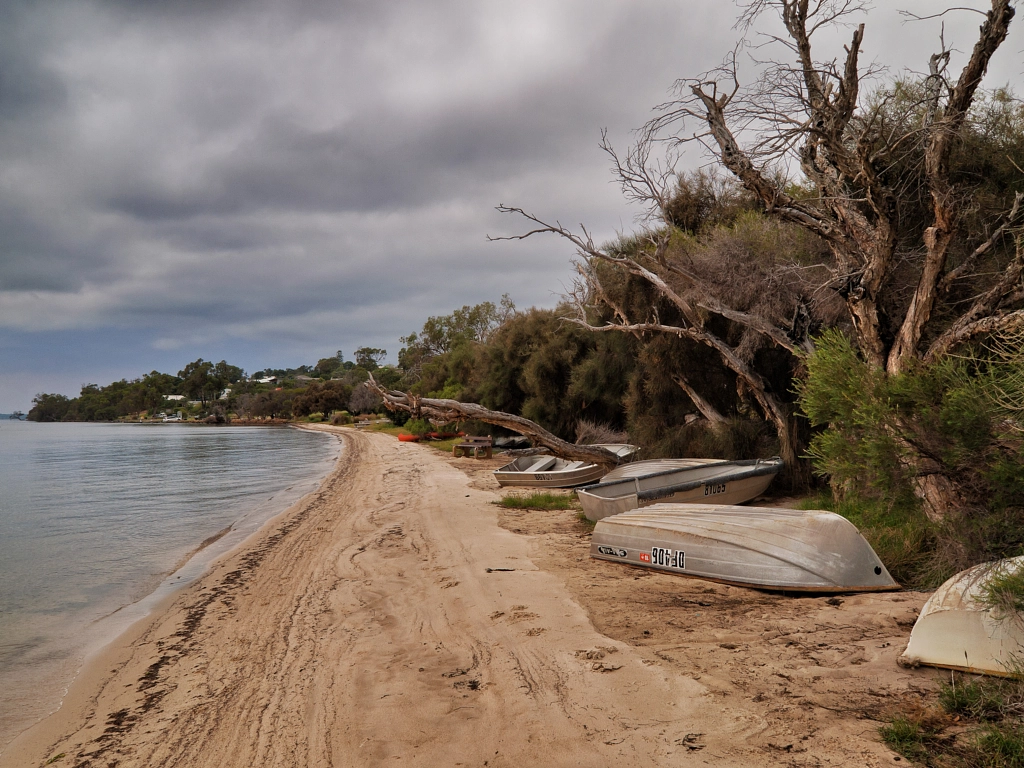
Boats pulled up onto the beach on the Peel Inlet. Mandurah, Western Australia.


The Murray River flows westwards past Pinjarra and into the Peel Inlet, which is a roughly circular body of water covering an area of 75 sq. Km (approx. 29 square miles). Although around 75% of the surrounding land has been cleared for farming or housing the inlet is incredibly rich in wildlife. The Inlet is home to crustaceans such as blue swimmer crabs and  king prawns, and fish species include black bream, tailor and cobbler. Birdlife International has designated it an Important Bird Area because it supports large populations of Fairy Terns and 1% of the world’s population of Red Necked Stints, Sharp Tailed Sandpipers, Banded Stints, Red Necked Avocets and Red Capped Plovers. At the northern end of the inlet a channel passes through Mandurah and runs out into the ocean and this allows dolphins to visit. At the southern end the inlet combines with the Harvey Estuary. The combined waterway covers 136 km², or 52 square miles, and is extensively used for recreational purposes particularly fishing, crabbing, and sailing (including house boating). Because it is sheltered from the sea by a line of very large sand dunes the beaches and bays are popular with families for picnics and barbecues.

Mandurah by Paul Amyes on 500px.com
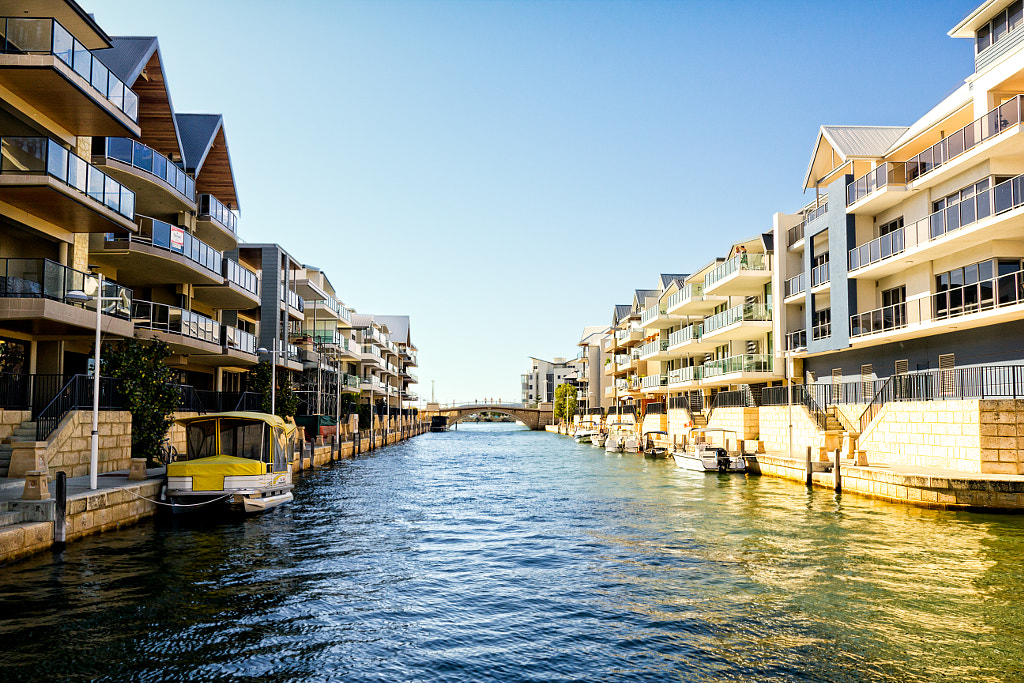
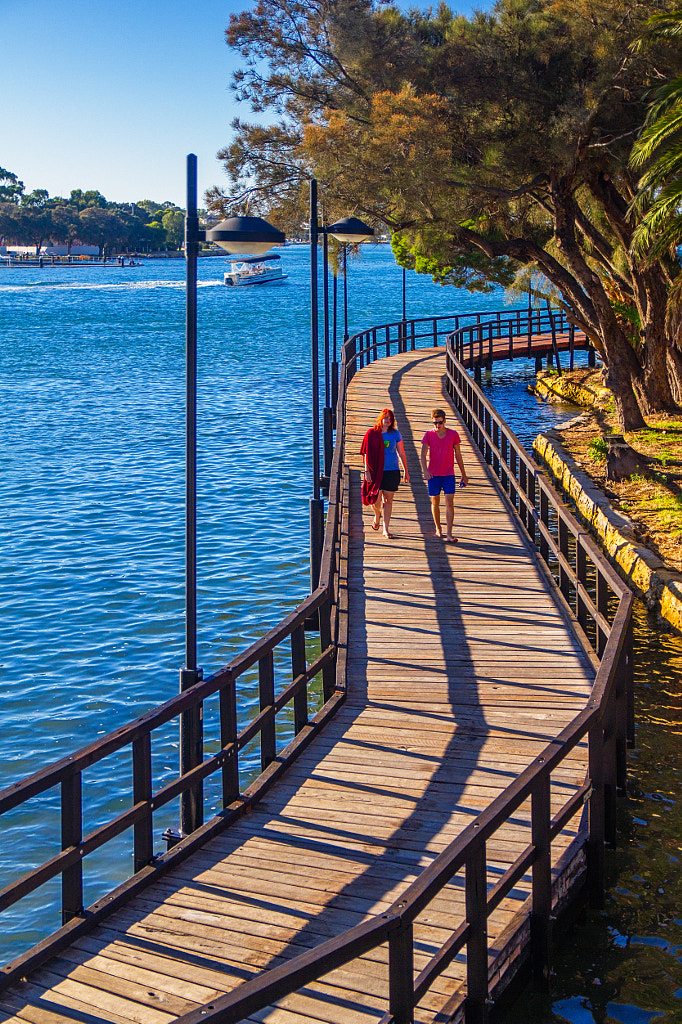
The canal deveolments and waterways around Mandurah make for a very attractive city.


Mandurah by Paul Amyes on 500px.com
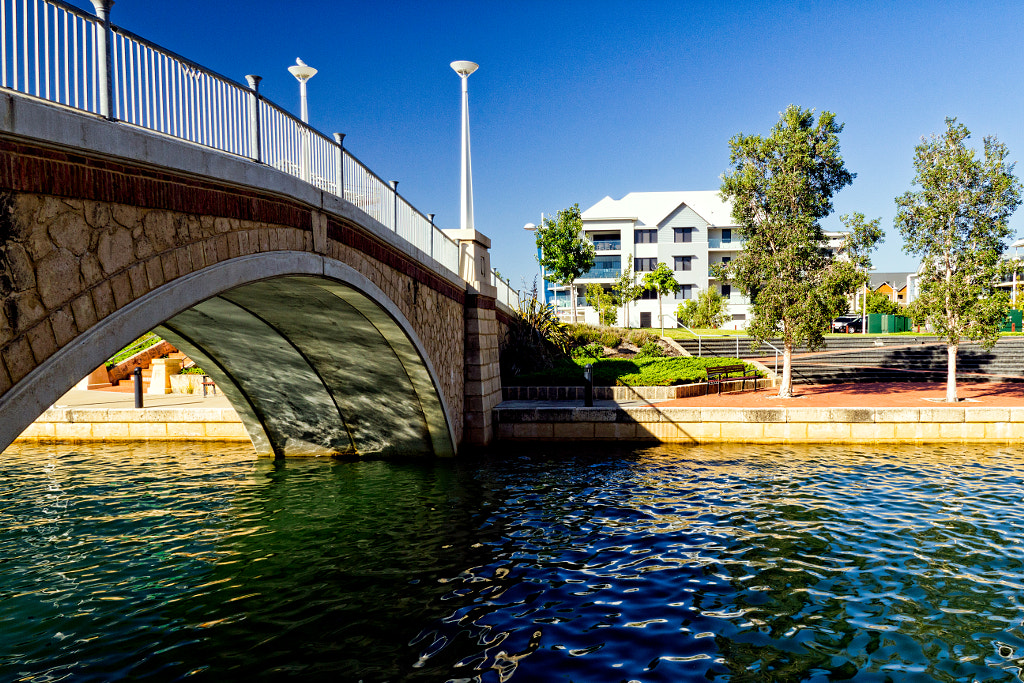
The canal deveolments and waterways around Mandurah make for a very attractive city.


As previously stated the city of Mandurah sits at the top of the Peel Inlet. The name is thought to have come from an Anglicized variant of the Nyoongar word mandjar, which translates as meeting place. European settlement commenced in 1828 when Robert Peel and his workmen arrived from England. Initially the settlement grew very slowly and by 1898 was comprised of 160 people. A mining and industrial boom saw Mandurah grow rapidly from a sleepy beach resort to one of the fastest growing suburbs in Australia. One of the notable features is the canal developments. If nearby Kwinana and Rockingham are synonymous with working class bogan culture then Mandurah is home to the CUB, or Cashed Up Bogan. This can be evidenced by taking a cruise around the Mandurah canals and seeing the opulent houses that line the banks complete with swimming pools, expensive boats, barbecue pontoons and Balinese themed gazebos. In the high-rise developments of the marina precinct it is not unusual to see on a weekend residents dropping a fishing line from their luxury apartment balcony while enjoying a coldie.


Mandurah by Paul Amyes on 500px.com
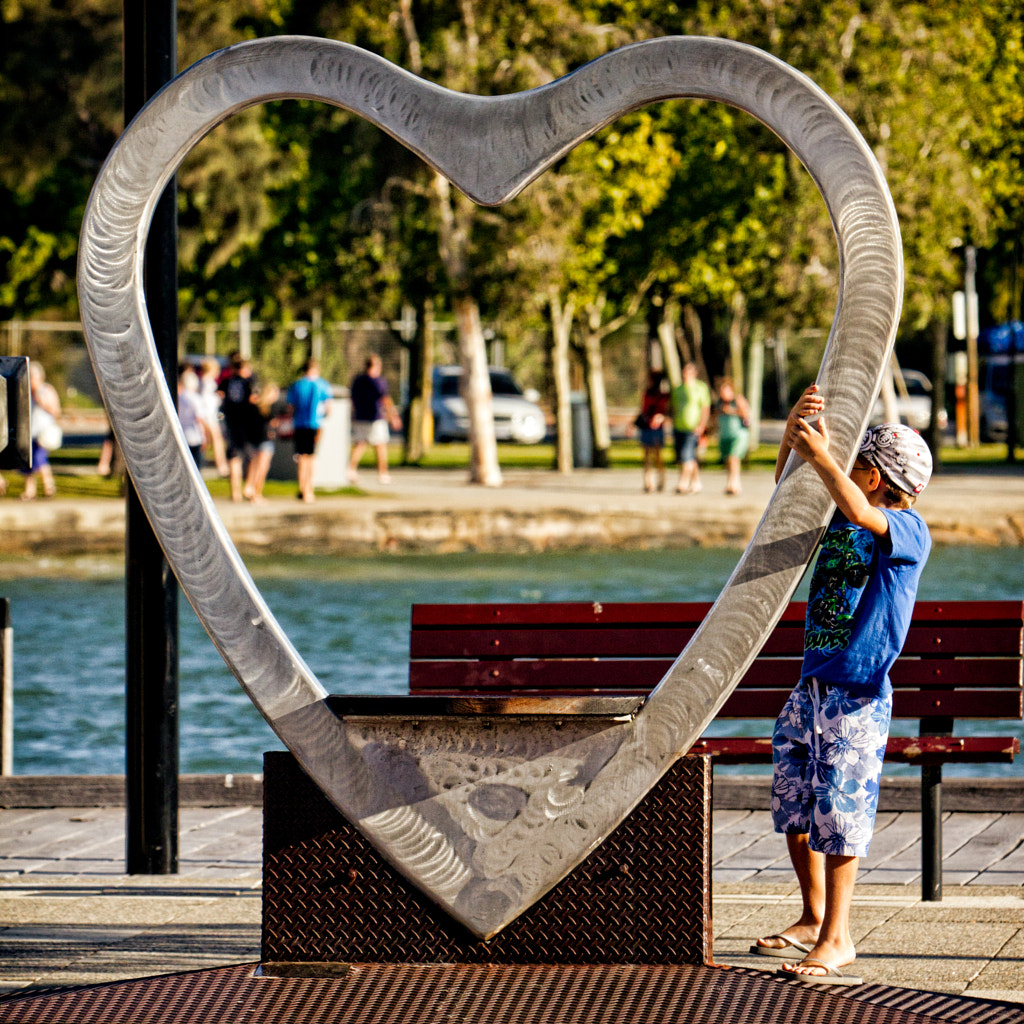
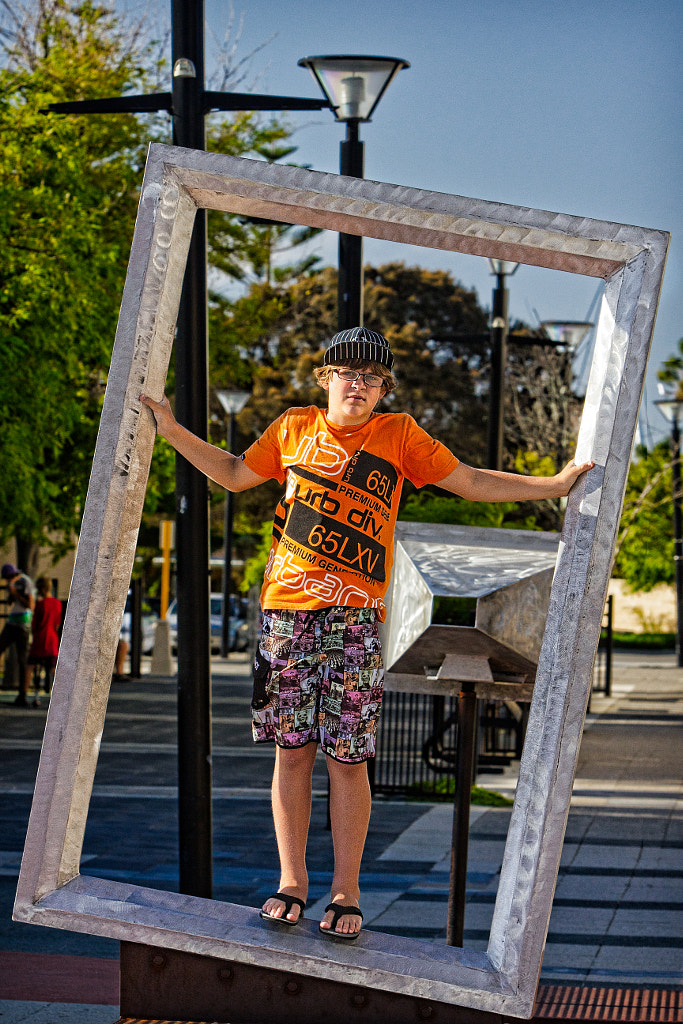
Kids playing on the sculptures on Mandurah’s Broadwalk.

Mandurah by Paul Amyes on 500px.com


Mandurah is now a major tourist destination in Western Australia and is heavily marketed as the gateway to the state’s popular South West Region. Apart from fishing there are also dolphin cruises and the more energetic can hire boats, canoes or jet skis to explore the water ways. In the culinary department there is everything from the usual fast food joints to the finest waterfront dining where it possible to eat locally caught seafood and drink local wines and boutique beers. The Mandurah Performing Arts Centre, near the marina and foreshore, not only plays host to some of the world’s top performing artists but also puts on exhibitions and hosts workshops for the visual arts as well. Take a walk through time with the inner City Heritage walk trail (maps are available from the tourist centre) and see and learn about the notable people and places that shaped Mandurah into what it is today. There is also a public art walk trail along the foreshore and marina that is fun and interactive. Through the year there are several major events that fun for the family to visit, the main one being The Channel Seven Mandurah Crab Fest  that while ostensibly being about enjoying the locally caught crabs actually show cases all that Mandurah has to offer on one glorious day in March. There are cooking demonstrations, arts competitions, children’s stage shows, music and the International Waterski & Wakeboarding Federation (IWWF) World Cup competition which attracts the best competitors from all around the world. For those wishing to visit any time of year is good, but summer is when it all really happens and it seems as if the whole population of Perth comes out to play over the Christmas and New Years holidays and the city basks in its brash exuberance.


Mandurah by Paul Amyes on 500px.com
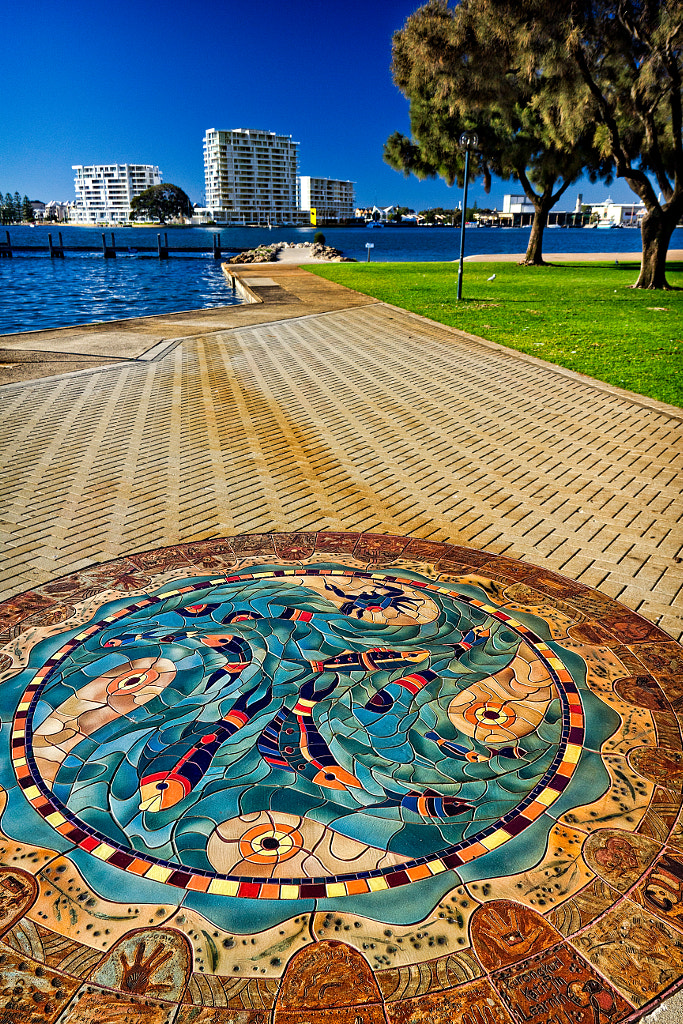
The Foreshore Heritage Trail tells the history of Mandurah’s pioneer settlers and Mandurah’s indigenous cultural history, showing places of historical and cultural interest and community art installations.


Mandurah by Paul Amyes on 500px.com
The Mandurah Foreshore and Inner City Heritage Trail in Mandurah.


The Foreshore Heritage Trail tells the history of Mandurah’s pioneer settlers and Mandurah’s indigenous cultural history, showing places of historical and cultural interest and community art installations.

A journey down the Murray River to the sea is like seeing a microcosm of Western Australia. You have the ancient culture of the indigenous Nyoongar, the story of European settlement, mining and agriculture booms, amazing scenery with incredible biodiversity, and fantastic recreational activities. All this just lies on the southern doorstep of Perth.


Mandurah by Paul Amyes on 500px.com
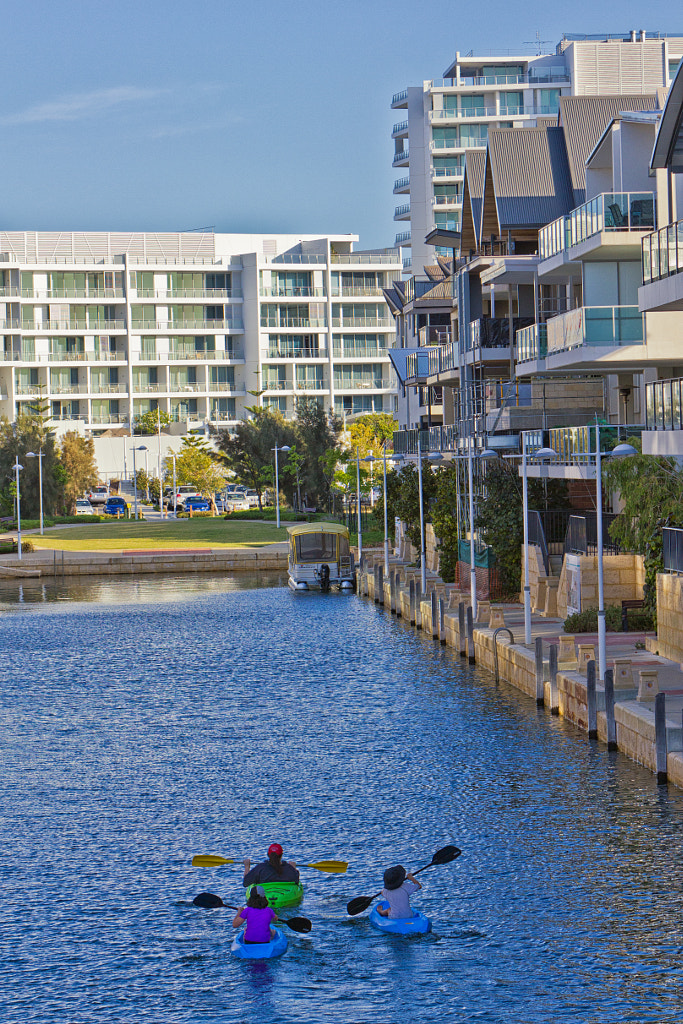
Kayaking along the Mandurah canals.


Mandurah by Paul Amyes on 500px.com
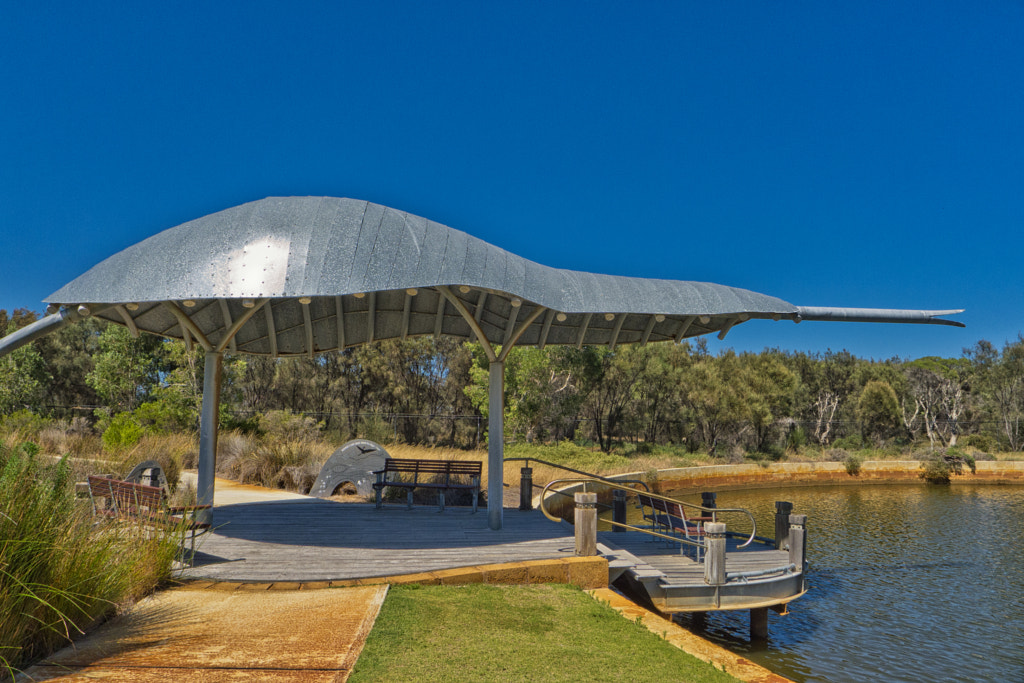
The head of tiger snake sculpture provides shelter in Coodanup Reserve in Mandurah.


Read the book see the movie

Tasmanian Tales has now been released as a movie on YouTube and as a book through Blurb.

Tasmania. Australia’s island state. It’s the little bit off of the south-eastern coast that most people forget about. So what’s it all about then? Join me as I travel the island and make written and photographic observations as I do so.

“Will you walk into my parlor?” said the Spider to the Fly

A photograph to illustrate one of the most mis-quoted pieces of poetry.

“Will you walk into my parlor?” said the Spider to the Fly,”

“Will you walk into my parlor?” said the Spider to the Fly,
“‘Tis the prettiest little parlor that ever you did spy;
The way into my parlor is up a winding stair,
And I have many curious things to show you when you are there.”
“Oh no, no,” said the Fly, “to ask me is in vain;
For who goes up your winding stair can ne’er come down again.”

“I’m sure you must be weary, dear, with soaring up so high;
Will you rest upon my little bed?” said the Spider to the Fly.
“There are pretty curtains drawn around, the sheets are fine and thin;
And if you like to rest awhile, I’ll snugly tuck you in!”
“Oh no, no,” said the little Fly, “for I’ve often heard it said
They never, never wake again, who sleep upon your bed!”

Said the cunning Spider to the Fly, “Dear friend, what can I do
To prove that warm affection I’ve always felt for you?
I have within my pantry, good store of all that’s nice;
I’m sure you’re very welcome – will you please take a slice?”
“Oh no, no,” said the little Fly, “kind sir, that cannot be,
I’ve heard what’s in your pantry, and I do not wish to see!”

“Sweet creature,” said the Spider, “you’re witty and you’re wise;
How handsome are your gauzy wings, how brilliant are your eyes!
I have a little looking-glass upon my parlor shelf;
If you step in one moment, dear, you shall behold yourself.”
“I thank you, gentle sir,” she said, “for what you’re pleased to say;
And bidding good morning now, I’ll call another day.”

The Spider turned him round about, and went into his den,
For well he knew the silly Fly would soon come back again;
So he wove a subtle web in a little corner sly,
And set his table ready to dine upon the Fly.
then he came out to his door again, and merrily did sing,
“Come hither, hither, pretty Fly, with the pearl and silver wing;
Your robes are green and purple, there’s a crest upon your head;
Your eyes are like the diamond bright, but mine are as dull as lead.”

Alas, alas! how very soon this silly little Fly,
Hearing his wily, flattering words, came slowly flitting by;
With buzzing wings she hung aloft, then near and nearer drew, –
Thinking only of her brilliant eyes, and green and purple hue;
Thinking only of her crested head – poor foolish thing! At last,
Up jumped the cunning Spider, and fiercely held her fast.
He dragged her up his winding stair, into his dismal den
Within his little parlor – but she ne’er came out again!

And now, dear little children, who may this story read,
To idle, silly, flattering words, I pray you ne’er heed;
Unto an evil counsellor close heart, and ear, and eye,
And take a lesson from this tale of the Spider and the Fly.

Mary Howitt

Canon EOS550d, Sigma 105mm f2.8 macro, Canon Speedlite 430EX with Stofen Omnibounce. Exposure: Aperture priority, 1/100 s at f/11.0 ISO 800.

Retina Ripping Colour


Mexican Glass by Paul Amyes on 500px.com
Mexican Glass – Fremantle, Western Australia.

Wandering around with some time to kill is always a good excuse to do some photography. Photography gives me the perfect pretext for being nosey and I love roaming down alleys and back streets just in the hope of finding something interesting. I was attracted to this scene because of the big slabs of intense colour. The greens of the wall really made the blue of the rubbish bins vibrate and pulse, and the red accents of the bin lids really set the whole scene off.


We have become so familiar with colour photography that we don’t realise how powerful colour can be so visceral that it’s like being punched in the guts. I first became fully aware of this when I saw some photos of a bull-fight by Ernst Haas and now whenever I think of bull fighting those images are so indelibly etched on brain they come to mind immediately and bring up the raw emotions I felt when I first saw them. At this time I was shooting black and white film because that is what serious photographers did and I really didn’t make the connection between what I was doing photographically and what Haas was doing. Shortly after I started subscribing to the English magazine Creative Camera and that introduced me to the work of American photographer Pete Turner. That had the profound effect of making me buy bucket loads of Kodachrome and Fujichrome 50 RD – the precursor to Fujichrome Velvia.


Nederlandse Fiets – typical Dutch bicycles chained up against a wall in Amsterdam.


My earliest successful purely colour photograph was taken while on honeymoon in Amsterdam in January 1986. I can still remember taking it as if it were yesterday. Shortly after a trip to Santorini in Greece and the discovery of polarizing filters and I was completely hooked. When we moved to Australia I found the intensity of the light could make your eyes hurt while looking at certain colours and that’s when I coined the phrase “retina ripper”.


In a bit of an artistic rut …

… feel lacking in impetus? Want to try something different but aren’t sure where to start?

Well I have a solution for you. For the price of producing a postcard sized piece of work and some postage you could end up part of an international art movement, be blogged about and be part of an exhibition. No I’m not from Nigeria and I don’t need your bank account details. I’m inviting you to participate in the wonderful world of Mail Art and more particularly the Book About Death Australia project.

Now if you want a very wordy definition of Mail Art click on the link. But basically Mail Art is art you send in the mail, or post for non US readers. There are no rights or wrongs, very few rules and everyone who participates seems to be happy and have fun. It’s often said to be some sort of anarchistic hippy activity, but that seems a little bit too condescending and simple. Someone organises a project and the word spreads through a loosely organised network such as Mail Arts Projects or the International Union Of Mail Artists. Usually there is a theme but how you interpret that and using what medium is largely up to you. The projects may be exhibited, blogged about or even disseminated as an artists assembling book or any combination of those.

A Book About Death was a mail art project that didn’t want to end. Originally conceived by Matthew Rose the project was part homage to the American artist Ray Johnson and a celebration of Emily Harvey and was held at the Emily Harvey Foundation, New York, in September 2009. The project attracted contributions from artist from all over the world, some like Yoko Ono were internationally renown artists the majority were not, but they were all given equal attention. My partner Helen took part and for one reason and another I didn’t. It quickly became a global sensation and I kicked myself that I had not got involved. Then a curious thing happened, the project kept being reborn like a phoenix all over the world and I got involved with A Book About Death Omaha in 2010. The concept is still alive and kicking and is now coming to Australia.

What I like about Mail Art is that although I only do a couple of projects a year it allows me be experimental and do things I wouldn’t normally. Don’t feel limited, play with different mediums, write, draw, sculpt , collage, photograph or any combination. Nothing is wrong, everything is accepted. Above all have FUN and enjoy participating.

John Smith, just 18 years old when his car hit a tree and killed him. Australian Book About Death, Tweed River Art Gallery NSW. http://abadaustralia.blogspot.com.au/2013/01/artwork-17-paul-amyes.html .

Breaking News Asylum Seekers. Australian Book About Death, Tweed River Art Gallery NSW. http://abadaustralia.blogspot.com.au/2013/01/artwork-17-paul-amyes.html .

My contributions are already in and have been blogged. So how about it? Give it ago. Who knows what it will bring.

FotoFreo 2012 – the director’s cut


I wasn’t very happy with the first slide show I did of photos from this years FotoFreo. It was unfortunately a rush job and the work wasn’t really up to par and it has been bugging me for a while. Today I sat down and re-edited and I’m much happier with the result.