Welllllllll…not strictly true. This Nankeen Kestrel was on the power pole on the nature strip in front of our house. Another metre and it would have been in the front garden so I’m claiming it. They often perch there in the cooler months to either observe the field opposite for small animals or to eat the small animal they’ve just caught. This one was running an observation post.
A nankeen kestral (Falco cenchroides) uses the power pole on our nature strip to watch for prey in the field oppersite. Canon EOS 6d with Sigma 150-600mm f5-6.3 lens. Exposure: 1/500 sec, f7.1 at ISO 100.
Like many people at this time I’ve had my movements curtailed. Where I live we are allowed out locally for exercise so I’ve been going out for walks along the river to photograph and video the birds that can be found there. This is the third time I’ve tried to video wildlife and it is very hard.I don’t work from a hide so I have to set up quickly and quietly and often the birds will move on before I can get filming. Shooting mainly just after dawn or just before sunset has meant using high ISOs and made focusing difficult. But, the more you do it the better you get. The purpose of the video was to make something, learn something new and help keep me thinking positive thoughts during this time.
Just out of interest I’ll put the stills up below. They were shot on either a Canon EOS6d with the Sigma 150-600mm f4.5-6.3 Contemporary lens or the Olympus OMD EM1 mk ii with the Panasonic Leica 100-400mm f4-6.3 lens. I wonder if you can tell the difference at web size without enlarging to 100% or checking the EXIF data?
A male Rufous Whistler (Pachycephala rufiventris). York, Western Australia.
Laughing kookaburra, dacelo novaeguineae. York, Western Australia
Yellow Rumped Thornbill, Acanthiza chrysorrhoa, York, Western Australia.
Yellow-billed Spoonbill (Platalea flavipes), Avon River, York, Western Australia.
Great egret, Ardea alba, feeding on the Avon River. York Western Australia
Tatty robin. Red-capped Robin (Petroica goodenovii), York, Western Australia.
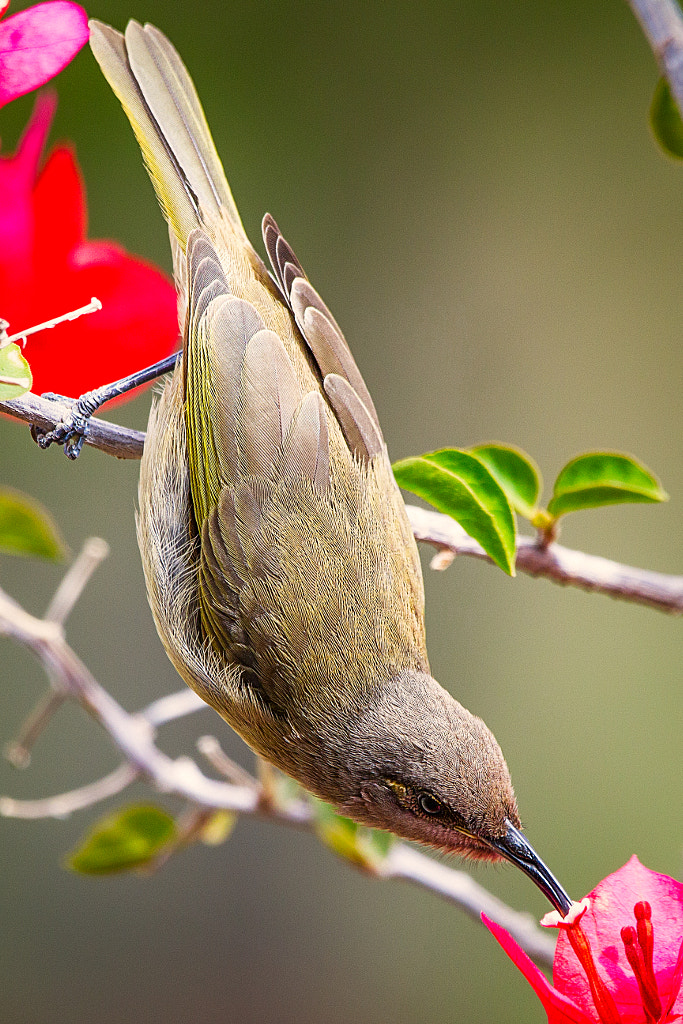
Brown Honeyeater, Lichmera indistincta, York, Western Australia.
A pair of Yellow-billed Spoonbill (Platalea flavipes) feeding on the Avon River in York, Western Australia.
A great egret (Ardea alba) and a white faced heron (Egretta novaeholladiae) hunting in the early morning light on the bank of the Avon River in York, Western Australia.
A great egret (Ardea alba) hunting in the early morning light on the bank of the Avon River in York, Western Australia.
Red-capped Robin (Petroica goodenovii), York, Western Australia.
Well it seems that the COVID-19 restrictions have been in place for an age. Here in Western Australia the social distancing requirements aren’t as strict as some places, but we still aren’t able to go where we want and do what we want. It makes me more appreciative of what my parents went through growing up in the Great Depression and then after that the Second World War. But anyway to keep myself from going totally mad I’ve been working on a few projects. This one is to document all the birds that come into our backyard. I’ve not got them all by any means. Some are very elusive and just don’t want their photos taken for some reason. Can’t imagine why. Here is a selection form the last couple of weeks.
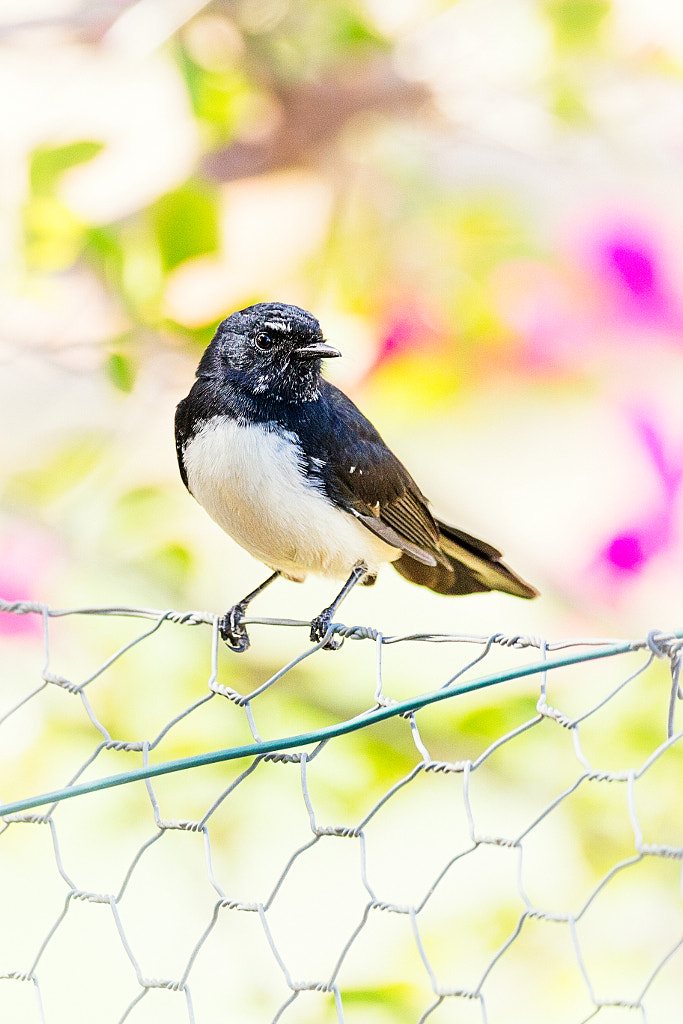
Willie Wagtail on the back fence. York, Western Australia. Canon EOS 6d with Sigma 150-600mm f5-6.3 Contemporary lens. Exposure: 1/500 sec, f7.1 at ISO 1600.
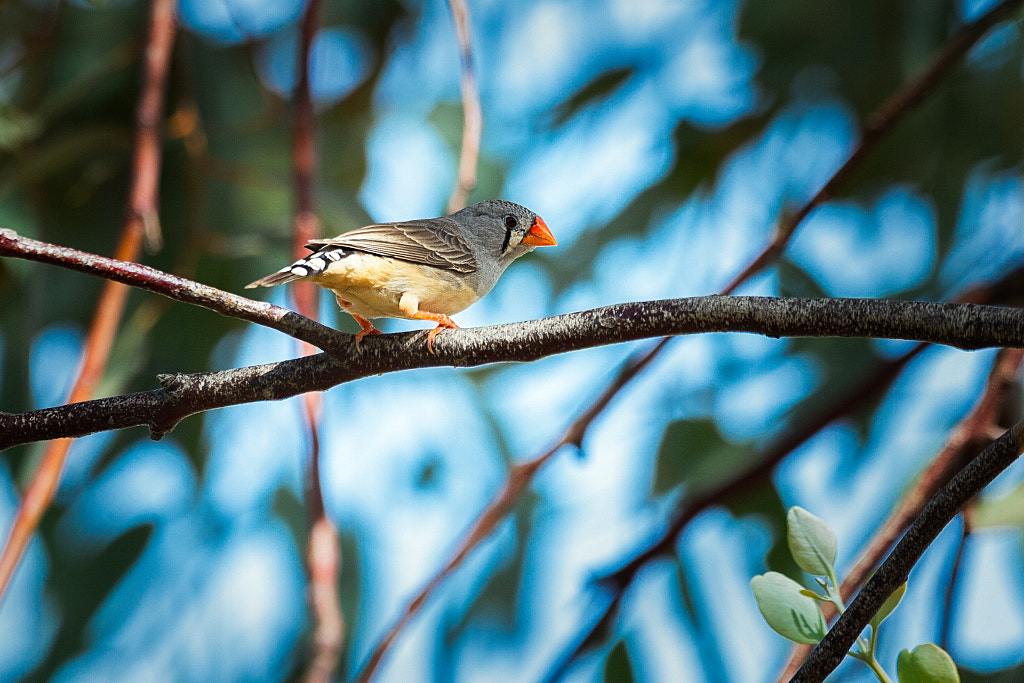
Zebra finch, Taeniopygia guttata. York, Western Australia. Canon EOS 6d with Sigma 150-600mm f5-6.3 Contemporary lens. Exposure: 1/500 sec, f6.3 at ISO 400.
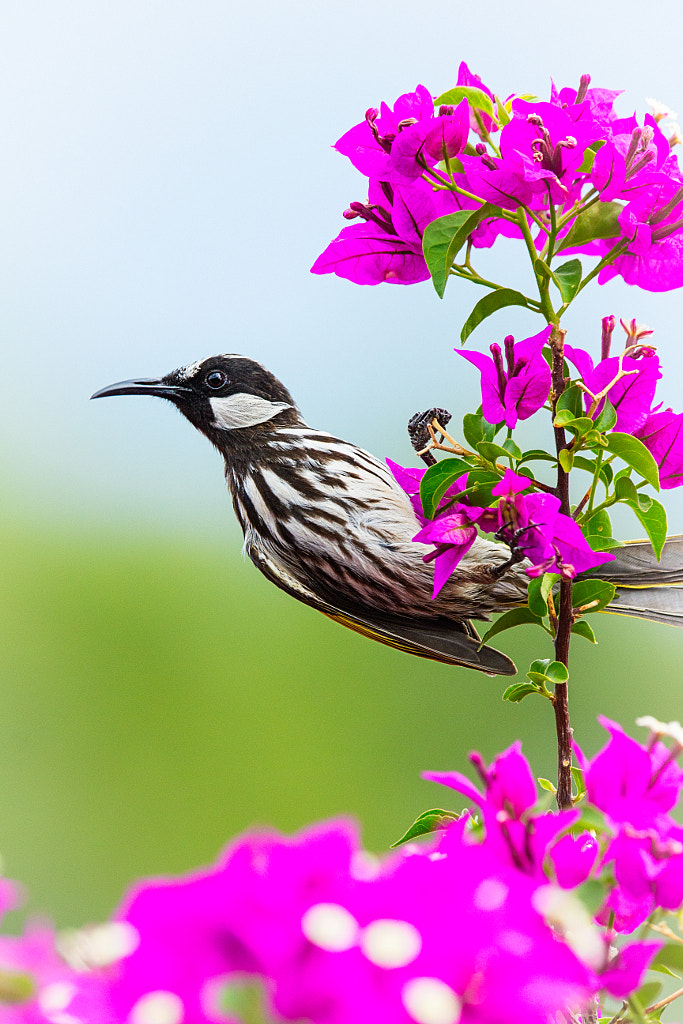
White-cheeked Honeyeater, W, in my back garden. York, Western Australia. Canon EOS550d with Sigma 150-600mm f/5-6.3 DG OS HSM Contemporary lens. Exposure: 1/500 sec, f7.1 at ISO 500.
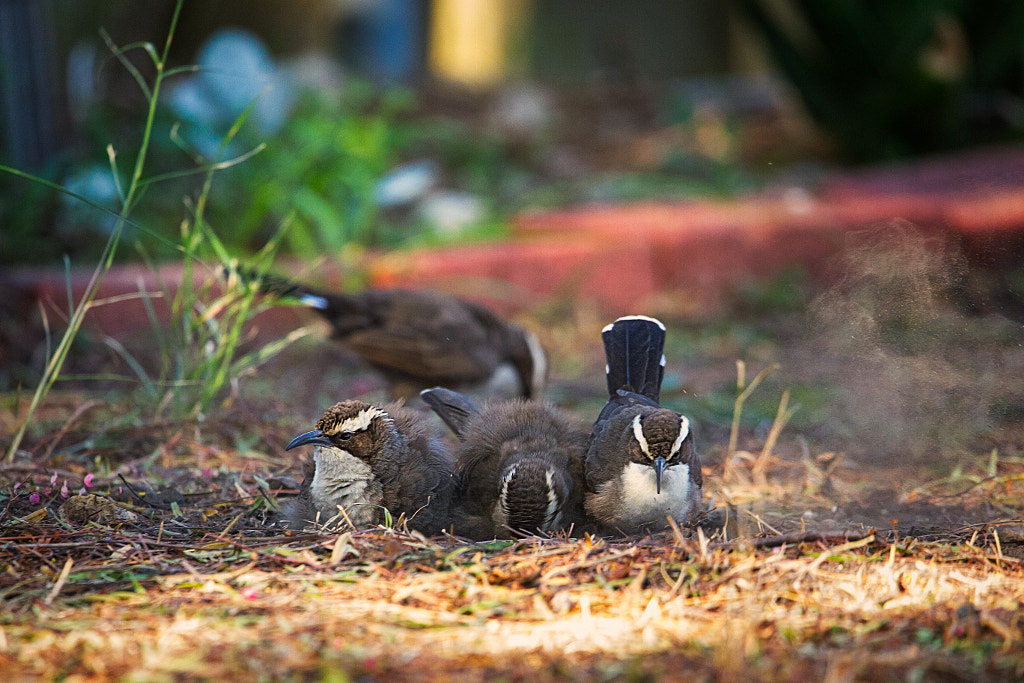
White browed babblers (White) breaking the social distancing rules by communal dust bathing. York, Western Australia. Canon EOS 6d with Sigma 150-600mm f5-6.3 lens. Exposure: 1/500 sec, f6.3 at ISO 5000.
Brown Honeyeater, Brown, in my back garden. York, Western Australia. Canon EOS 550d with Sigma 150-600mm f5-6.3 lens. Exposure: 1/500 sec, f6.3 at ISO 320.
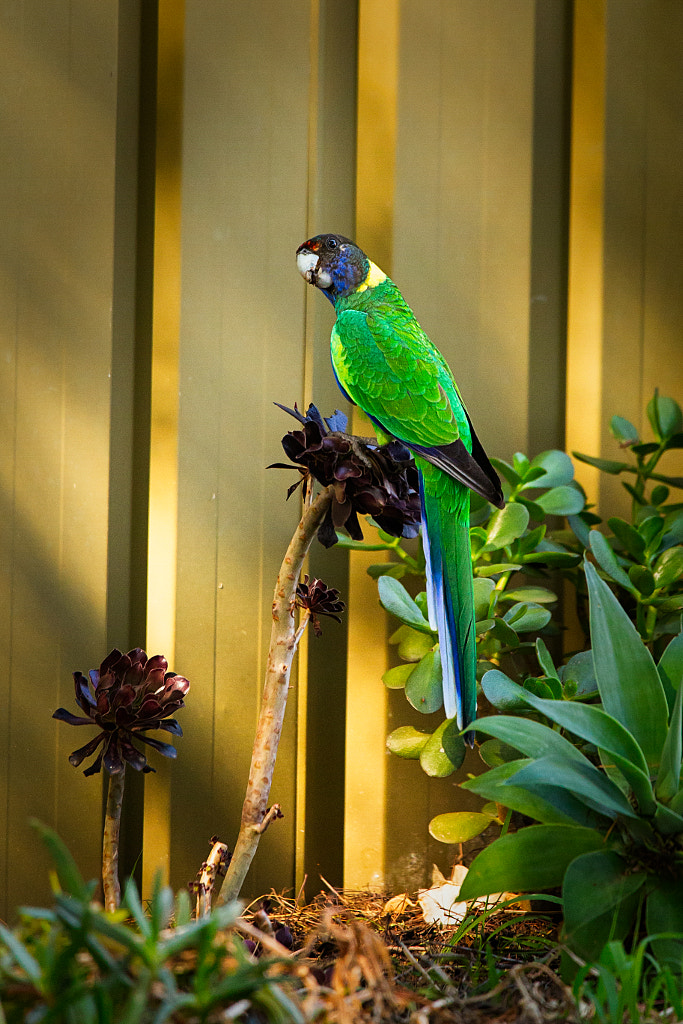
Australian Ringneck aka twenty-eight parrot,Aus. York, Western Australia. Canon EOS 6d with Sigma 150-600mm lens. Exposure: 1/500 sec, f6.3, at ISO 6400.
Well that’s it for this week. Stay safe, keep positive and try and keep busy.
Sorry for the absence of blog posts. On 30th March Optus cut off our phone and internet connection and we have been without ever since. We have been unable to contact them, they don’t answer emails, texts or anything. So over the next few weeks I’ll try and post but at the moment I can’t promise anything.
This last few months have been particularly difficult in the light of climate change induced bushfires here in Australia and now the spread of the Coronavirus (COVID 19). It would in the light of compulsory lockdowns, quarantines and restrictions on social gatherings and travel easy to be filled with dread and let feelings of hopelessness pervade our lives. I myself have had further restrictions imposed as I’m in the process of recovering from spinal surgery and am fighting off the temptation of feeling sorry for myself and collapsing in a heap.
There is an antidote to this. Firstly instead of just being passive and feeding our psyches with all the negative news we can find in the media endeavour to do something creative. Creativity is important, it feeds the soul, gives a sense of achievement and allows you to express yourself. All of this has a positive effect on your psychological well being. It doesn’t matter what it is – paint, draw, knit, cook, write, photograph, sing. Although singing could be problematic depending upon your living arrangements and how well you can sing. My partner has issued me with an ultimatum; if I sing Bohemian Rhapsody at full volume in my usual tone deaf manner then lockdown or not I will be looking for alternative accommodation which I think is a little harsh. Secondly reconnect with nature. This one could be a bit hard depending on what the local authorities are imposing, but it can be done. If confined to the house take time out in the garden, encourage wildlife to come into the garden and watch them. Plant things and watch them grow. If possible go a walk in the park or woods (maintaining correct social distancing of course), go bird watching, fungi spotting it doesn’t really matter. Bonus points if you can combine this with doing some creative as this will allow you to enter a flow state. Sounds poncey but “it is the mental state in which a person performing an activity is fully immersed in a feeling of energized focus, full involvement, and enjoyment in the process of the activity. In essence, flow is characterized by the complete absorption in what one does, and a resulting transformation in one’s sense of time” (Mihály Csíkszentmihályi, 1975). The benefits of this are that intense and focused concentration on the present moment that you become so totally engrossed in the experience to the extent that other needs or concerns become negligible and this makes you feel in control over a situation. Do this a few times a week and your mood will lift.
I’ve taken my own advice this week. As I said I’ve been laid up at home and not doing much so I hauled my carcass down to the Avon River a couple of times to photograph some birds in the dawn light. It was well worth it. Stalking birds and photographing them required too much concentration and I was able to forget about my own circumstances and the worries of the world and just enjoy being in the moment. It was so enjoyable that I’m going to get out and do some more over the next week.
Red-capped Robin (Petroica goodenovii) in the dawn light. York, Western Australia. Olympus OM-D E-M1 with Panasonic Leica DG 100-400/F4.0-6.3 lens. Exposure: 1/500 sec, f6.3 at ISO 1600.
A great egret (Ardea alba) hunting in the early morning light on the bank of the Avon River in York, Western Australia. Canon EOS 6d with Sigma 150-600mm f5-6.3 lens. Exposure: 1/1000 sec, f7.1 at ISO 800.
A male Rufous Whistler (Pachycephala rufiventris). York, Western Australia. Canon EOS 6d with Sigma 150-600mm lens. Exposure: 1/1000 sec, f6.3 at ISO 2000.
Right that’s me done I’m off to try and bake a lumberjack cake.
Time – it is a difficult concept to get to grips with. When I was a kid time used to go so slowly. When I grew up and started working time at work went so slowly and my days off went so quickly. Now as a I edge towards sixty time just seems to keep on accelerating. Time isn’t a constant. Then we have the phenomena of how people interpret time within societal and cultural associations. This was brought home to me the other day when talking with someone about what they considered an old building and they were stating that Holy Trinity York was a very old, historical building that needs preserving.
Holy Trinity Bosham, West Sussex, England.
Here in Western Australia Holy Trinity Church in York is considered an old historic building. The Anglican Church was was established in York in 1831, and the building work on the current building began in the 1850’s. So I guess if were being generous then that’s 189 years.In terms of white colonial Australia that is old but in the big scheme of things it’s just a drop in a bucket. I spent my formative years in Chichester, West Sussex. Down the road is the little town of Bosham and it has a Holy Trinity Church as well. The differentiation is the first church in Bosham was mentioned in an account written by the Venerable Bede about Bishop Wilfrid’s visit in 681 AD – that’s 1339 years ago. The earliest parts of the current building were built in the 11th Century under the patronage of Godwin, Earl of Wessex who was one of England’s richest and most powerful of men. You may have heard of his son Harold Godwinson, better known as the King Harold who was poked in the eye by William the Conqueror at the Battle of Hastings in 1066 (apparently his last words were “Oi William! Be careful with that thing or you’ll have somebody’s eye out.”). Indeed there is an illustration of the church in the opening scenes of the Bayeux Tapestry with the accompanying text ‘Ubi Harold dux Anglorum et sui milites equitant ad Bosham. Ecclesia.’ Translated, this reads ‘Where Harold, Earl of the English, and his retinue ride to Bosham. The church.’ The church has historical associations with another king – King Cnut. Yep he’s the one that tried to turn back the sea as a demonstration to his courtiers of how insignificant his power was. Well it is believed that one of his daughters is buried in the church – local tradition has it she drowned in the nearby millstream aged 8. That’s a lot of history and it was all recorded. The big thing was that when I first saw these buildings they new and fresh to me. It was only as I became more familiar with them did I start to have any inkling of their historical significance.
A marker for the gravesite of one of King Canute’s daughters.
Does something that has been around longer become more valuable than something newer? Does the cultural and societal significance of something increase as it ages? Well I suppose the fact that the church in Bosham has parts of it that have physically been there for a thousand years makes it kind of special. Then add the fact that it is associated with key figures and events in history that makes it somewhat unique. Then stir into the mix the fact that it is still a central part of the community and then you have something really important. It is not just a dead building, a mausoleum to a bygone age, it is something that has come to help define a community over a long period of time and will continue to do so well into the future.
Photography and film/video are art forms that deal in part in capturing and expressing time in a way that other art forms have trouble articulating. You can speed it up, slow it down. You can show the effect of change. You can preserve things and memories. Over the last 150-200 years humans have come to see photos as an adjunct to their memories. I have photos and videos of some of my dogs playing, they’ve been dead a long time yet I find them very comforting and my memories of them somehow seem more real, more valid. Photos can, of course, also evoke sad/negative emotions and memories. A photograph can also be just proof of existence – either the subject or the photographer actually existed. For instance without these photos many of you wouldn’t be aware of these two churches having being built.
My great great grandmother with her dog
This is all getting a bit too metaphysical so lets change tack. If we stop and consider the two photos of the churches they were taken 29 years apart. Things have changed enormously photographically speaking between those photos. The photo of the church in Bosham was taken at the height of the film era using what was then already rather dated equipment – an Olympus OM4 with an Olympus OM Zuiko 35-105mm lens shooting Kodak Kodachrome 200 ASA reversal film. The photo of the church in York was taken well into the digital era on a Canon 6d with Canon 24-70mm lens. So not only are the photos snap shots in time of two churches, but they are all snapshots in terms of photographic equipment and trends. But I know that all said and done how they were captured will matter to very few people in the future. What will matter is that they were captured at all. I have a photo of a relative taken back in the 1880’s. I have no way of knowing what was used to make the photo nor whether it was considered cutting edge at the time. I just know that this woman and her dog existed at some point in time and she is one of my family and that is what makes it so important. I don’t know who she is other than my great great grand mother as there is no one left in my family who remembers who she was. But the important thing is that she existed and we can see that she liked dogs – a trait that still runs in our family. The important thing is that someone decided that wanted a photo of her and her dog as a keepsake and consecutive generations have kept it.
Time. It is a difficult concept to consider or explain but maybe we shouldn’t try. Maybe we should just mark its passing with photos and videos and leave them as gifts for those in the future to make sense of.
It’s always a voyage of discovery walking along the River Avon.
Trees with bras besides the Avon Walk Trail in York.
Trees with bras besides the Avon Walk Trail in York.
Over the next few weeks posts will be a little sporadic as I am having much needed surgery on my back. Please bear with me and I’ll try and post new content as and when I can.
Christmas Tree (Nuytsia floribunda), these are semi-parasitic trees that produce bright orange flowers over the Christmas period. Apparently its the largest parasitic plant in the world.





You must be logged in to post a comment.