Well the garden has sprung into action like a very springy thing. The bees are busy with all the flowers, butterflies are flitting from bloom to bloom. The birds are getting really active. The usual inhabitants, the White Browed Babblers and the New Holland Honeyeaters are in a frenzy of nest building/repairs and generally chasing each other round the garden. We’ve got a new family moved in. A pair of Rufous Whistlers have built a nest in our peppercorn tree and can be regularly seen foraging for insects in the garden beds. The other day there was a commotion – all the small birds were squawking loudly. At first I thought it was the neighbours cat, but when I went outside to have a look I saw this blur descend out of the skies, level off just before hitting the ground and dash back up onto the TV aerial. It was a Nankeen Kestrel feeding off of small skinks and geckos that were foolish enough to sun themselves. The kestrel spent about 30 minutes repeating the behaviour until it flew off. Who needs to go on a wildlife safari with all this happening.
Although considered a pest the cabbage white butterfly (Pieris rapae) is the most conspicuous butterfly in Western Australia and is a sure sign that spring has arrived.
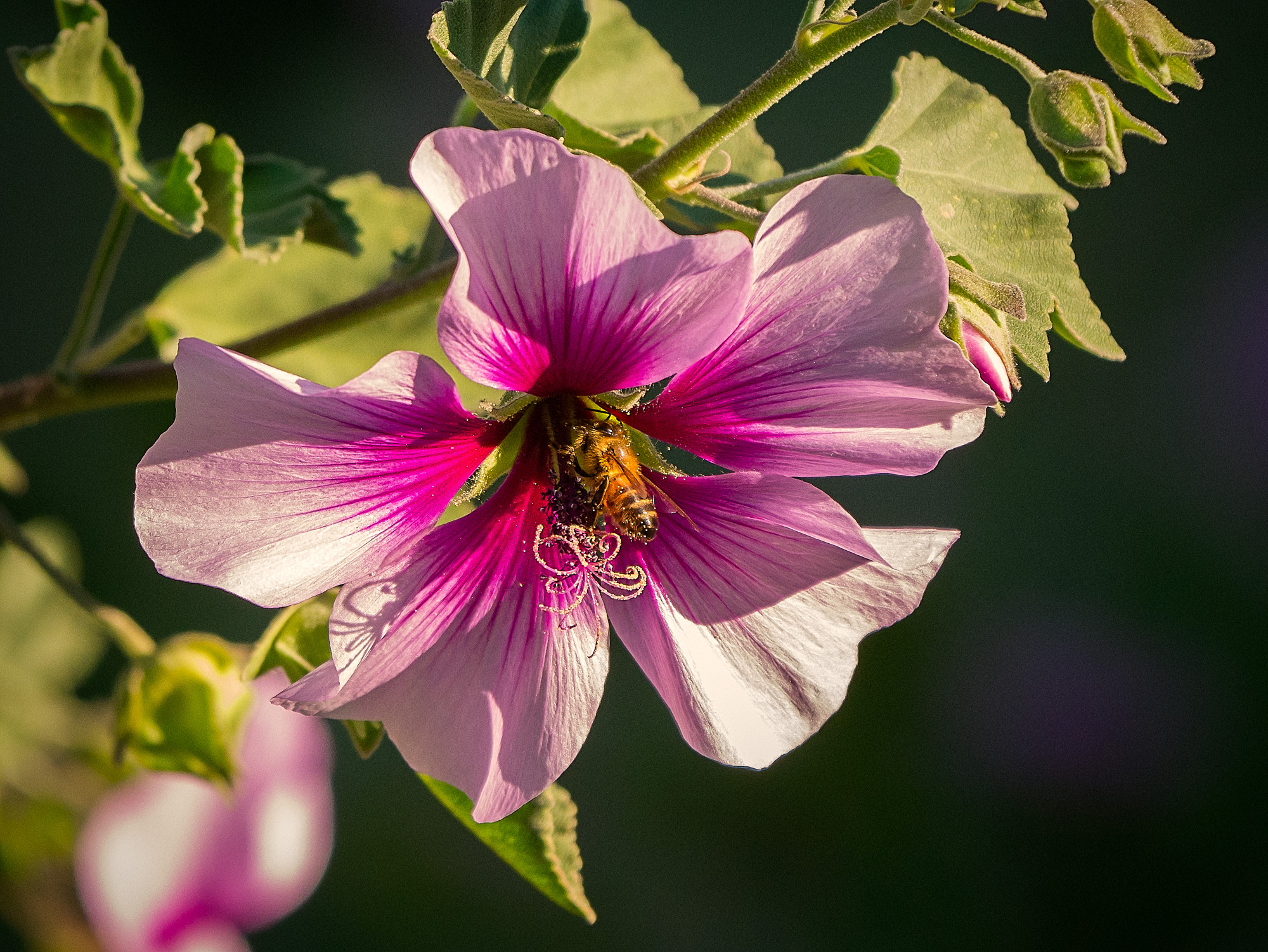
The eponymous New Holland Honeyeaters can be seen feeding off the Geraldton Wax and grevilleas. They are quite territorial and aggressive and they chase each other around incessantly.
One of ever increasing number of White Browed Babblers eating grubs.
The rufous whistlers have made a nest in our peppercorn tree and can be regularly seen foraging in the garden for insects.
A Nankeen Kestrel (Falco cenchroides cenchroides) perching on our TV aerial watching for prey. York, Western Australia.
A Buchanan’s Snake-eyed Skink (Cryptoblepharus buchananii) sunning itself on the trellis of our patio.
* today’s blog title is a quote from the 1975 film Royal Flash which I went and saw on release at the Chichester fleapit I mean Granada Cinema. It was a spectacularly bad film and its only redeeming feature was that it gave work to some actors who would have otherwise been unemployed. The Observer’s review of it said “leaves one breathless not so much with enchantment as with boredom”. It shows how bad it is in that it has never been resurrected as a cult classic that only connoisseurs could enjoy. That I can quote lines from the film is testimony to the fact that I grew up in a town where there was very little in the way of entertainment for young people.
Darling Range Donkey Orchid, Diuris sp. ‘Darling Range’. Woottating, Western Australia.
As you drive from Perth to York you pass an insignificant little lay-by. It’s nothing to look at at first glance. A busted up table and bench, a litter bin and a pile of gravel. Consequently it doesn’t get used much. But if you take a look in the scrubby bush at the right time of year you’ll find it home to some rather uncommon orchids. This is not an isolated occurrence there are quite a few orchid hot spots in the Cape to Cape region on the fringes of rubbish dumps.
Crowded Banded Greenhood Orchid, Pterostylis sp. ‘crowded’. Woottating, Western Australia.
Currently we are living in the COVID 19 crisis which has restricted people’s movements and so many of us have been confined to the area in which we live. Normally people have an under appreciation of the environs in which they live. There is always that feeling somewhere else is better. Here in Western Australia many would rather go to Bali than holiday in their own state. Now thanks to COVID 19 the option of travelling interstate or overseas is just not available for the foreseeable future. One of my big hopes is that we’ll come out of this situation with a greater appreciation of what’s on our own doorstep.
The unusual lutea or “yellow” form of the common donkey orchid (Diuris corymbosa). Woottating, Western Australia.
York and its surroundings have have taken on a definite yellow tinge of late. This is mainly due to the canola crops in the fields but soursob and yellow daisies are also to blame. It’s not a warm and inviting yellow but rather a green tinged acidic looking yellow. Nevertheless it sends the tourists wild and as you drive round you can see countless people standing in canola fields having their picture taken or taking a selfie even though many of the fields have signs up asking people not to. I don’t know when this became a trend – I can’t remember people doing this when I grew up in Kent and Sussex. Mind you back then it wasn’t canola it was oil seed rape. I think it’s probably got something to do with mobile phones and Instagram, but as somebody who has only just started an Instagram account I can’t be too certain of that so don’t quote me.
Oh did I mention I’ve now joined the 21st Century and got an Instagram account? I’m not really au fait with it yet. That’s probably because I don’t really like messing about with images on my phone – I’d rather do it my computer but Instagram won’t let you upload from a computer. If anyone knows of a way to load photos to instagram from a desktop please let me know.
Last week I talked a bit about how the Weald and Downland Museum was a special place for me and how it had a distinct sense of place. Today I want to talk about a favourite place that is a lot closer – 14,500 Km closer to be precise. But first I want to differentiate between sense of place and spirit of place.
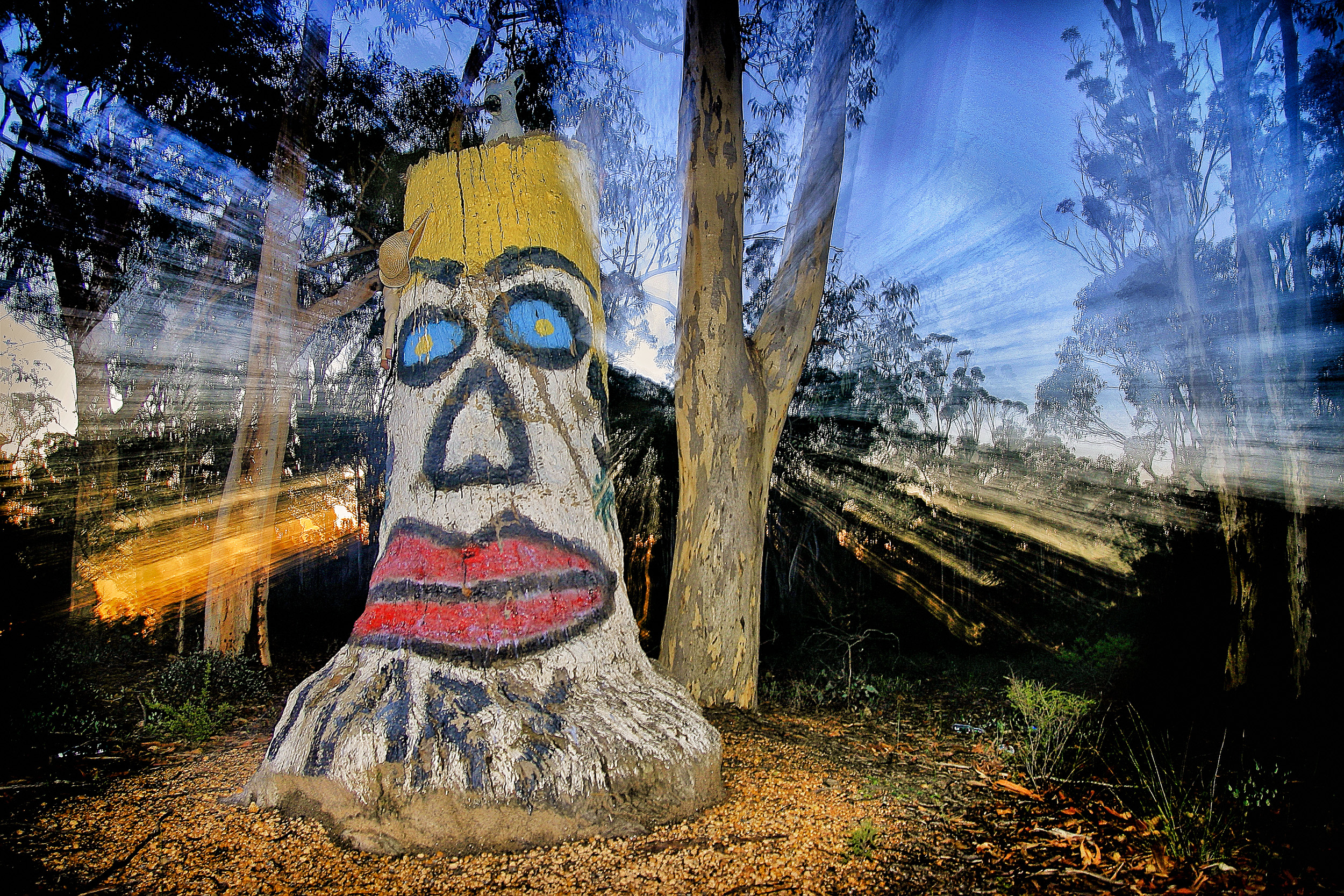
Mary is the tree spirit that lives in the wandoo forest outside of York, Western Australia.
Technically speaking sense of place is typically applied to urban and suburban areas and used to characterize the relationship between people and spatial settings It is the characteristics that make a place special or unique and foster a sense of belonging. Exposure to an environment through childhood play, the role of family, culture and community all combine to establish environmental preferences later in life. Which is a roundabout way of saying that if you were brought up in a certain setting as a child you’d like that setting later in life. This can be seen in a lot of rural communities where young people leave for the economic opportunities offered by cities only to return later when they want to raise a family or eventually retire.
Infra-red photograph of Mount Brown, York WA.
Spirit of place is usually applied to a rural or a relatively unspoiled or regenerated place and is a bit more of an airy fairy concept. The soul, for want of a better word, is formed by the apparent characteristics (both positive and negative) of a place and these qualities are talked about by artists and writers, They are also the subject of myths, folk tales and certain celebrations. The characteristics then help people form associations and attachments with the land. The Romans called the concept Genius loci and believed that every place had a protective spirit which was depicted in their religious iconography as a youth holding an item such as the horn of plenty, a libation bowl, or a snake (symbolising fertility and a connection to Mother Earth). Indigenous peoples see a landscape defined by guardian spirits, supernatural beings, and ghosts. Here in Western Australia the Nyoongar people describe their relationship with the Swan River through the Wagyl or rainbow serpent. Geographical features were created by the Wagyl as it made its way along the river and these sites were considered sacred. It all sounds like a load of cobblers but in the Twenty-first Century we are seeing people who feel a sense of alienation looking to re-establish a connection with the natural world with a combination of environmentalism and spiritual beliefs such as religious naturalism.
Canola fields at the foot of the Dyotts.
We came to live in York in 2004 and we both fell in love with the landscape – the rolling hills, the farmland and the wandoo forest. In fact we developed such a deep connection with the landscape that when we moved to Tasmania for a couple of years we pined for it. The sense of dislocation was visceral and we found it exceedingly difficult to adjust our arts practice to the Tasmanian landscape – we missed the big blue skies and the open woodland, the smells, the sounds, the red dirt and the quality of the light. To put it bluntly we felt like we didn’t belong in Tasmania – we belonged in York. So we returned and the relief we felt on doing that was palpable.
A walk down the lane at sunset.
I have a couple of places that are really special – they are both patches of remanent woodland with granite outcrops, amazing varieties of orchids and birds. I’ve had many magical moments in them like when an echidna literally bumped into me as I was photographing, or the time when I was so engrossed photographing some flowers that I didn’t notice the mob of kangaroos that settled around me and I only noticed them when I stopped and it only seemed right to stay there sitting on the ground with them. Last week I was out photographing orchids in the late afternoon, the light was turning golden and the shadows were lengthening. A couple of kookaburras were calling out to each other. It was nice to lie under the wandoo tress and look at the clouds scudding across the sky. A sublime experience and I couldn’t think of any better place to be. A spiritual experience? Yes most definitely.
Walking back to the car after an afternnon a video on how to photograph orchids.
Carnaby’s black-cockatoos, Zanda (Calyptorhynchus) latirostris, preening prior to roosting. York, Western Australia. Canon EOS 6d with Sigma Contemporary 150-600mm f5-6.3 lens. Exposure: 1/250 sec, f6.3 at ISO 6400.
Ok Ok if the last backyard birds was a little stretch over what is my backyard this one is a huge leap – across the road. From my neighbour across the road’s front garden came this delightful occurrence – Carnaby’s Black-cockatoos roosting. These large cockatoos are now endangered thanks to widespread land clearing so it was fantastic to have them visit the neighbourhood.
Black-fronted Dotterel (Elseyornis melanops), Avon River, Northam, Western Australia. Panasonic Lumix G85 with Panasonic Leica 100-400mm f4-6.3 lens. Exposure: 1/500 sec, f6.3 at ISO 250.
What do you do when you’ve got 2 hours to kill while in the Wheatbelt metropolis of Northam? Go looking for Black-fronted Dotterels that’s what! These busy little birds can be found on the muddy shoreline looking for insects and small molluscs.
Black-fronted Dotterel (Elseyornis melanops), Avon River, Northam, Western Australia. Panasonic Lumix G85 with Panasonic Leica 100-400mm f4-6.3 lens. Exposure: 1/500 sec, f6.3 at ISO 250.
OK that maybe a little bit melodramatic, but there was no doubt that getting out and about after a few weeks of lockdown was a bit of a rush! So where did I go? What did I do with this new found liberty? Well I went to Wongamine Reserve near Toodyay to look for two types of orchid and do the walk trail. Pretty sad eh?
The main entrance to Wongamine Nature Reserve, Toodyay, Western Australia.
The reserve isn’t really visited any more the gates are locked and many of the signs broken or over grown. In fact speaking of overgrown the walk trail is so overgrown in places that I suggest that if you do want to visit and walk there that you take a GPS and download the walk track from Trails WA and follow that.
The reserve was closed a while ago and many of the trails and signs have fallen into a state of disrepair. Wongamine Nature Reserve, Toodyay, Western Australia.
Some of the vehicle tracks have not been used for a long time allowing termites to build mounds on them. Wongamine Nature Reserve, Toodyay, Western Australia.
This was one of only two trail markesr on the walk trail. Wongamine Nature Reserve, Toodyay, Western Australia.
Was there anything positive about the visit? Well yes there was actually. The woodland is home to quite a variety of bird life – I didn’t photograph any as I was not carrying a suitable lens as I had gone to photograph orchids. I would expect from walking through the bush that would be quite a display of wildflowers in spring which would make the journey well worth while. There were quite a few species of dragonflies as well which at the time surprised me for some reason.
Australian Emperor Dragonfly (Anax papuensis) Wongamine Nature Reserve, Toodyay, Western Australia.
Did I find the orchids? Well the Winter Spider Orchid is only 6cm tall with a 2cm flower and the Crinkle-leafed Bunny Orchid is 10cm tall with a 9mm flower and considering that the reserve is 330 ha of bushland I think I did well to find anything at all. I didn’t find any Winter Spider Orchids, I have photographed them before at Babakin, but I found lots of the Bunny Orchids. In fact I never seen so many Crinkle-leafed Bunny Orchids before. So all in all it was a great day out.
As the nights are getting longer and colder the local horses have been put into their winter coats. Another two photos from the shoot with the Olympus OM Zuiko 50mm f1.4 lens.
*This week’s post title was inspired by Paul Kelly’s song “Winter Coat”
Seen Better Days. An old car wreck on the banks of the River in York, Western Australia. Sony A7R with Olympus OM Zuiko 50mm f1.4 lens. Exposure: 1/320 sec, f4 at ISO 100.
It would be tempting to say that this picture is a metaphor for these COVID19 times, but actually that would be quite crass. While all the restriction have been in place I’ve been determined to have some creative output and this is part of it. Over the last week I’ve been making myself go out in the evening to photograph. To make things a little more interesting I decided to impose a restrictions on myself. In this case I would use a focal length that I don’t particularity like (50mm) and an old vintage lens on a digital camera.I’ve walked past this wreck many times with the dog and really not taken any notice of it. Well on this particular evening the local farmers had been burning off and the smoke in the air was creating a nice warm light as the setting sun shone through it. I thought that the rust of the car complemented the warm lighting.







You must be logged in to post a comment.