We had some very co-operative visitors this week in the form of 6 Carnaby’s Cockatoos. They arrived in the garden while I was out with young Bertie our puppy. Normally when I dash back to the house and get a camera the birds disappear before I get back. This little group were very relaxed and hung around for ages letting me get quite close to take their picture. When I went to process the photos I thought the black and white birds would benefit from a monochrome treatment.
Carnaby’s Black-cockatoo, (Zanda latirostris). York, Western Australia.
Like most things in Australia the Clackline Refractory came into being more by luck than planning. In 1898 Western Australia was undergoing a gold rush and two blokes by the names of John Ford and James Murray were prospecting in the eastern end of the Darling Range. About 80Km east of Perth they decided to sink an exploratory shaft and instead of finding gold they found fire-clay. Disappointed they moved on. Fast forward a couple of years and it must of dawned upon them that they had stumbled upon a valuable commodity as they decided to extract the clay from what on closer inspection was a limitless supply. Why was the clay so valuable? Well fire-clay is used to make bricks for furnaces and kilns. It is used in the manufacture of crucibles for smelting. Before this discovery Australia was having to import bricks made of fire-clay from Britain at some considerable cost. The refractory was built to produce the bricks and it was found they were more durable than the imported ones. You’d think that having a ready made monopoly would have meant that Messrs Ford and Murray would be laughing all the way to bank. Well no and the refractory changed hands several times before being completely shut down in 1992.
The suns rays reflected on the white walls of a derelict brick kiln at the Clackline Refractory.
The remains of an electrical control panel at the Clackline Refractory.
I discovered the Refractory completely by accident. I was cycling along the Kep Track and as I was approaching Clackline I saw an enormous brick chimney rising out of the trees. It was definitely industrial looking so I decided to have a shufty and found this huge post industrial site. It had only been shut for a couple of years at that stage and everything looked pretty intact. I went back a few days later and photographed the place early in the morning and the sunlight shining through the huge kilns was magical. On further research I wasn’t surprised to learn that it had been given a heritage listing.
I didn’t think about the refractory again until a couple of months ago. I just purchased a new to me secondhand camera and I wanted to put a roll of film through it to see if it was working OK. My partner wanted to visit Clackline to get some material for a project she’s working on so I decided that the refractory was where I’d test the new camera. When we got there I wasn’t prepared for how much the site had changed. Everything of value had been stripped out, the buildings were in a dreadful state, there was graffiti everywhere along with drug paraphernalia. To add to the sombre mood we met a family there who were visiting to see where a relative had died just a couple of days previously. You couldn’t more get a more gothic atmosphere if you tried and this suited the black white film perfectly. All in all it was quite a strange experience and we moved on after I had shot the roll.
One of the old kilns at Clackline Refractory.
SOOT. Clackline Refractory.
Exit. Clackline Refractory.
Where the clay was mixed prior to being moulded and then fired.
My friend Adrian practicing the Japanese art of sword drawing. Taken with an Olympus OM 4 with a Tamron 28 mm lens, using Ifford Delta 3200. Scanned using an Olympus ES-10 scanner and edited using Adobe Photoshop Elements 2 and Genuine Fractuals.
I first posted this photo of my late friend Adrian ten years ago, but it was already 10 years old then. I’ve not had a look at the rest of the negatives since then. It was scanned with an Olympus ES-10 scanner which I owned for a number of years, by then it was already long in the tooth and struggled to produce a file suitable for printing an A4 print. Fast forward 20 years and I’m experimenting with scanning negatives and slides with a camera and macro lens. It’s early days so far – mainly because you need to hold the film perfectly flat. There are quite a few contraptions on the market that claim to be able to do this, but quite a few of them cost more than a dedicated film scanner which to me negates the whole process entirely. The other factor is converting the negative into a positive. So far I’m just limiting myself to black and white film and am doing the conversion manually in Lightroom. If I decide to move onto colour film then I will have to look at some form of software solution to do this to get good quality results. So anyway here a few photos of Adrian I’ve scanned using my Canon EOS6d and the Canon EF 100mm f2.8 L macro lens.
Adrian Dobson practicing the Katori Shinto Ryu sword kata for Ikkyu Tsutsumi Jujitsu. Olympus OM4 camera and Ilford Delta 3200 film.
These were tricky to scan – Delta 3200 is pretty grainy, although not as bad as HP5 pushed to 3200 ISO, and developing the film in Rodinal hasn’t helped. But overall I’m happy with the result so far. They are certainly better than that original scan and are better than those I used to produce with my CanoScan 9900f flatbed scanner.
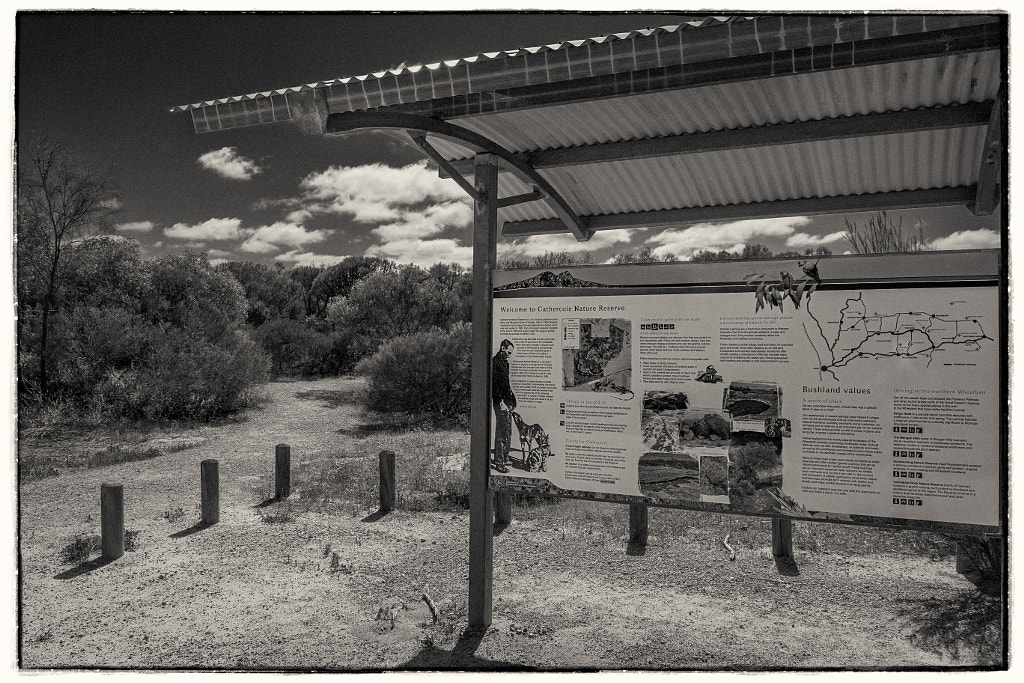
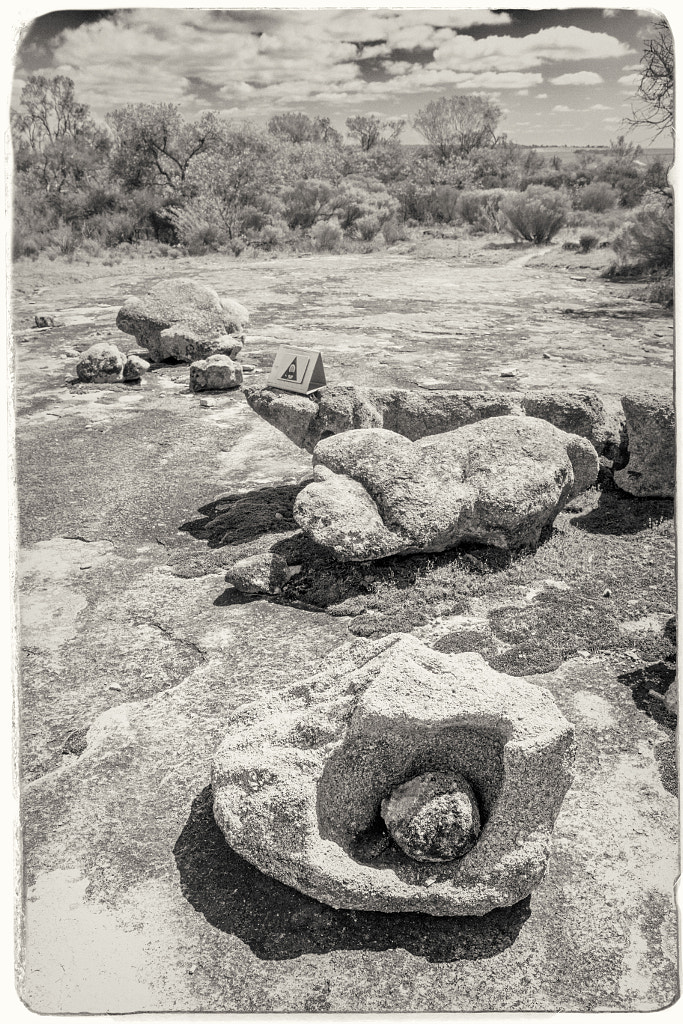
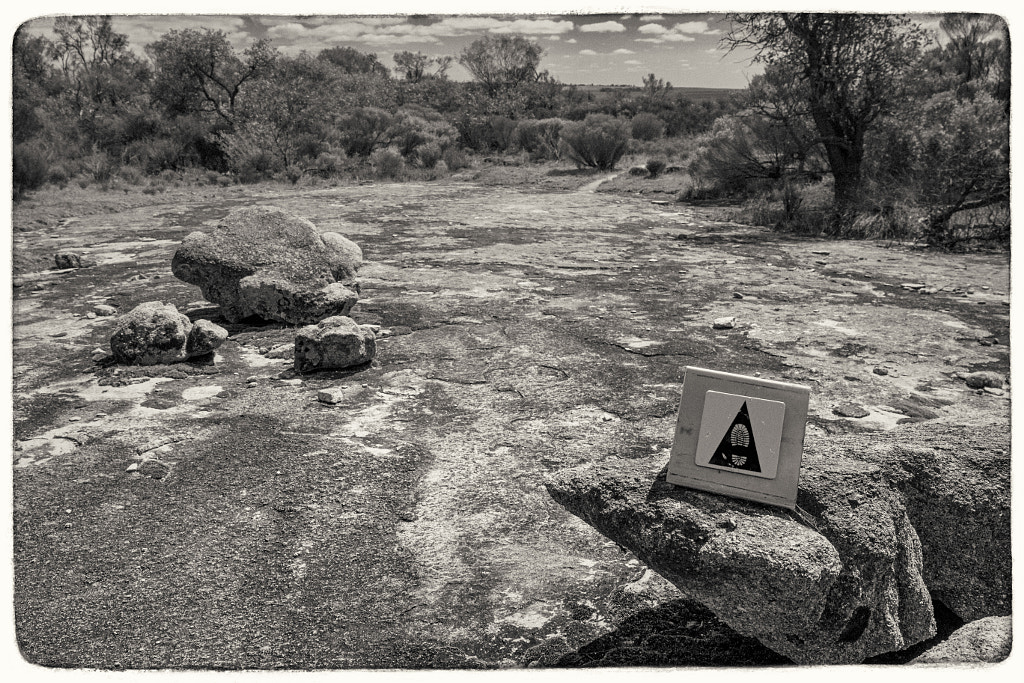
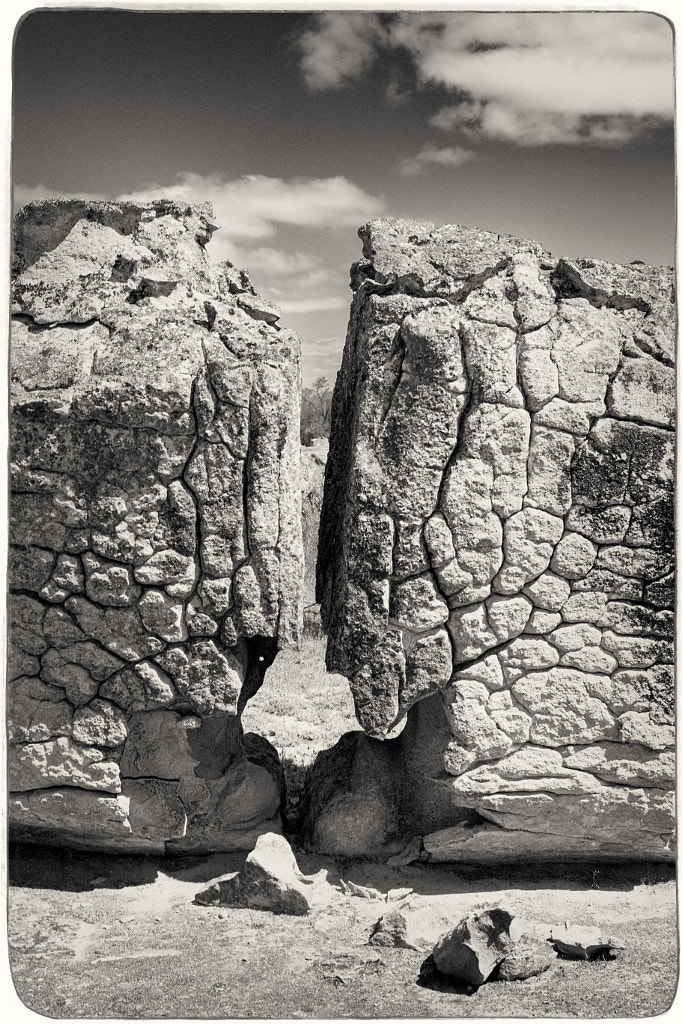
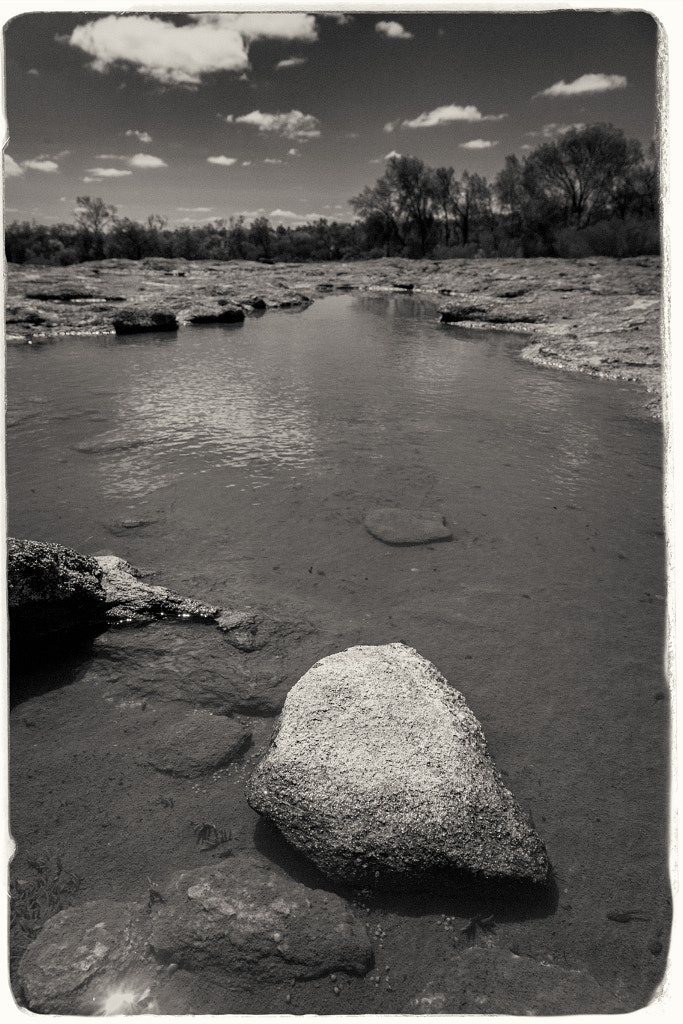
This year our annual visit to the amazing nature hotspot of Wongan Hills took us to the Gathercole Reserve which is a 141 hectare granite out crop 10Km east of the Wongan Hills townsite. At the centre of the reserve is a large granite outcrop, but what makes this one so interesting is that it is unlike most others in Western Australia. Usually granite outcrops are devoid of vegetation but Gathercole has a rich variety of vegetation that forms a fringe around the rock – Rock Sheoak, Silver Princess, Sea-urchin Hakea, Scarlet Honey Myrtle are just a few of the species – and other plants such as Granite Kunzea that have adapted to actually live on the rock outcrop drawing their water and nutrients from the very shallow pockets of soil found in cracks and depressions. It all sounded wonderful, but with this years very dry winter the local flora wasn’t putting on much of a show. We then decided to concentrate on doing the walk trail which is an easy 2 hour walk around the rock. There are 12 interpretive panels on the trail to tell you what you are looking at. These explain how the rock outcrop was formed, how it was shaped by wind and rain, and details of the fauna and flora found there.
The information board at the start of the Gathercole Reserve Walk Trail in Western Australia.
The Gathercole Reserve Walk Trail is a 3.1 km walk throgh the Gathercole Reserve and explores the granite outcrop.
The walk trail is clearly sign posted and it is easy to follow.
As you walk over the granite outcrop you can see different rock formations. This was caused by rapidly cooling molten rock and millenia of exposure to the elements.
On the top of the granite outcrop water collects in the hollows during winter. These pools form the habitat for tadpoles and freshwater shrimp.
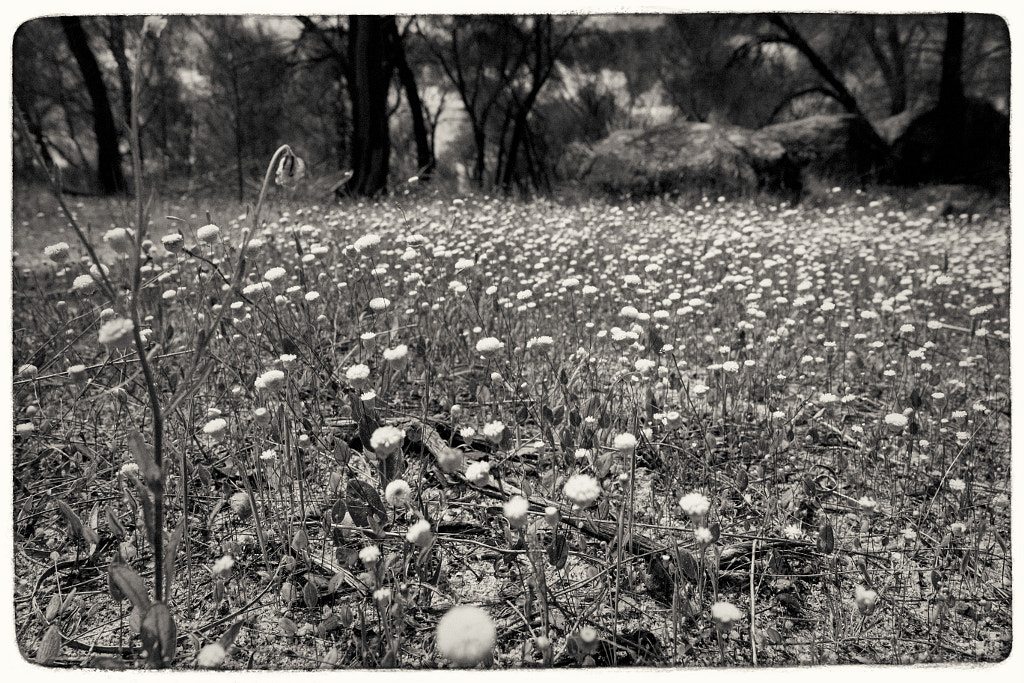
In spring the reserve puts on a spectacular show of wildflowers as evidenced by the everlasting shown here.
Photographically I felt in a bit of a rut so I decided to ditch the normal approach and just take a DSLR and one lens and shoot everything in black and white. Back in the film days I was particularly enamoured by Ilford SFX. It’s a bit of an odd ball film in that due to its extended sensitivity into the red spectrum of light it gave a mild “infrared” look without all the hassles of using infrared film which makes it ideal for day to day use. When I printed it I used glossy Ilford Multigrade FB Warmtone paper which produced a luxuriously rich image. I’ve not shot any film in over a decade and I’ve not had access to a darkroom for nearly twenty years so I decided to shoot digitally and emulate the look in Exposure 7. It doesn’t look quite right but it has made me think about shooting some film again. I’ve still got a couple of film cameras all I’ll need to do is find a way of scanning the negatives as I don’t want to get an enlarger and start printing again at this stage.
Mounted archery demonstration at the 2017 York Medieval Fayre. Western Australia. Sony A7r with Cosina Voigtlander 75mm f2.5 Color-Heliar lens. Exposure: 1/1600 sec, f4, ISO 200.
The other morning I took the dog for her usual perambulation along the river, as we were walking along deep in thought (well I was I can’t vouch for the dog) our tranquility was disrupted by the sound of thundering hooves and the odd sound of something being hit at high velocity. Getting closer I was met with a sight redolent of the medieval Eastern European steppes – not what you expect to see in Western Australia in Twenty First Century. But little did I realise that actually mounted archery or more specifically horse archery is quite a popular pastime. It is a new sport in WA, only 5 years old but is quickly attracting enthusiastic participants some of whom are jetting off to South Korea to represent Australia at the World Horseback Archery Championships. What I was seeing was a demonstration that was part of the 2017 York Medieval Fayre. If you are interested you can contact the fine people at the Western Australian Horse Archery Association via their Facebook page and they have regular events at the State Equestrian Centre in Brigadoon.
Mounted archery demonstration at the 2017 York Medieval Fayre. Sony A7r with Cosina Voigtlander 75mm f2.5 Color-Heliar lens. Exposure: 1/1600, f4, ISO 200.
Dead trees on a winters misty morning in Yenyenning Lake. Beverley, Western Australia. Sony A7r with Sony FE 28-70mm F3.5-5.6 OSS lens, and Cokin 3 stop graduated neutral density filter and a circular polarizing filter. Exposure: 0.3 sec, F16, ISO 100.
Pie Melons or Citrullus lanatus (Thunb.) Matsum. & Nakai are an introduced pest in Western Australia. Sony A7r with Voigtlander 75mm f2.5 Color-Heliar lens. Exposure: 1/640th sec, f2.8, ISO 100.
Much is written about “Tasmanian Gothic” – a dark soberness that has its roots in the landscape and the colonial history. Personally I’m not a fan as I feel it colours much of modern-day Tasmania and restricts progress. But, there is no doubt that the weather and the landscape do particularly suit black and white or monochrome photography.
Wooden tender beached at Pirates Bay, Tasmania. Canon EOS 5D with Canon EF20mm f/2.8 USM lens. Exposure: 1/30 s at f/16.0 ISO 100
When I worked with film I loved the whole process for black and white photography. Picking a film and developer combination, then choosing a paper and then finally whether to tone the image or not. The whole process was magical and working in the darkroom, whether it was a commandeered bathroom or a purpose-built one was like a going back to the womb to create something wonderful. Admittedly an awful lot of the time I seemed to turn out a lot of dross, but it was an enjoyable process. To misquote Kilgore’s eulogy in the Coppola classic film Apocalypse Now“I love the smell of fixer in the morning,”.
Kite surfing off Park Beach in Tasmania. Olympus E-M10 and OLYMPUS M.75-300mm F4.8-6.7 II lens. Exposure: 1/1600 s at f/6.3 ISO 200.
I would love to work with black and white film again – but living with a rainwater tank for our supply and with a septic tank for waste water management means that I cannot develop film at home and there are no labs in Tasmania that develop the film. So for now it is the digital option, which is not as magical and mystical as the darkroom, is in its own way just as satisfying. No longer following the Zone Systemlaid down by St Ansel, I now expose to the right (ETTR) to get the maximum amount of tonal information in my RAW file and then process in Lightroom. The final black and white conversion is done in NikSoft’s Silver Efx Pro 2, which is always done the same way and mimics what I used to get with Ilford Delta 400 developed in Rodinol and then printed on Ilford FB Warmtone Multigrade paper. My Canon Pixma Pro9000 does a fantastic job of monochrome printing on Harman Gloss Baryta Warmtone. I’ve done two exhibitions using this combination and been delighted with the results.
Yachts moored on King George Bay Murdunna, Tasmania. Canon EOS 5D with Canon EF28-135mm f/3.5-5.6 IS USM lens. Exposure: 1/640 s at f/11.0 ISO 800.
Thankfully working digitally means that we can work in both colour and black and white at once, just making the decision of which way to go at the time of processing. It is a great time to be a photographer.
As always clicking on an image will take you through to my online gallery.





You must be logged in to post a comment.