Sometimes when I read the photography forums I wonder how we managed to make pictures in the past. No auto focus, shooting film so there was no instant feedback on exposure and content, being limited to 36 exposure rolls of film rather than 128Gb memory cards, frame rates of only 3 fps rather than 11. But make photos we certainly did. Going through my Lightroom catalogue the other day I looked at this short series I shot. The assignment was to make a short photo essay of six photos using black and white film and produce six prints. The equipment used was fairly basic by todays comparison, an Olympus OM4 fitted with an autowinder, an Olympus 35-105mm lens, an Olympus 65-200mm lens, and four rolls of Ilford HP5. The film was developed in D76 and the prints were made on Ilford Multigrade RC. The images below were from scans of the actual prints.
The steward walking the dogs out to the start line. Greyhound racing at Cannington in Western Australia.
Preparing the dogs at the starting gates. Greyhound racing at Cannington in Western Australia.
They’re off chasing the electric hare. Greyhound racing at Cannington in Western Australia.
Into the final straight. Greyhound racing at Cannington in Western Australia.
The winners on the podium being photographed. Greyhound racing at Cannington in Western Australia.
The punters watch the action on screens in side the bar. Greyhound racing at Cannington in Western Australia.
I won’t say any more because I feel I’m in danger of becoming the photographic equivalent of:
We all love a bargain and what better bargain is there when it is absolutely free? There’s no doubt about it – photography can be an incredibly expensive pastime. The cost of a pro body, the so-called holy trinity of 2.8 zooms, and some fast primes could pay for you to do a degree or buy a good car. The real kicker is that as soon as the latest models come out your kit is “made” redundant and stops taking good photos so you have to do it all over again. Insane isn’t it? Well I have the answer for you and it won’t cost a single penny. Actually I have to confess that I didn’t devise this myself, a clever Hungarian bloke by the name of André Friedman is responsible for it and it goes like this:
“If your pictures aren’t good enough, you’re not close enough.”
Mrs Friedman’s little boy changed his name to Robert Capa because he felt having an American sounding name would earn him more money (it did), he went on to found the famous photo agency Magnum (so named after the size of champagne bottle he was fond of buying), one of the most famous and highly regarded conflict photographers in the world, and one that is arguably the most controversial as many believe that his most famous works are fakes. Chris Boot in his excellent book “Magnum Stories” (and I would recommend any serious photographer to at least read this book or better still buy it) wrote:
“Capa’s photography is all about being there, close. His art lay in risking where to be and when, in how he built and conducted the relationships that enabled him to be there, and in how he shaped and presented the narrative of events he witnessed.”
Boot, Chris; Magnum Stories p.66. Phaidon, New York 2004.
So does it mean that we all have to pack our bags and head for the nearest God forsaken war zone just to get some decent photos? Have no fear gentle reader we at Paul Amyes Photography (PAP) know that pain hurts and death can be fatal and so prefer to find our photographic subjects in safer environments. So what was Capa on about? Well firstly you should be in close proximity to your subject so that it fills the frame. There are times when the subject (i.e. wildlife or sports) may dictate that you use a long lens, but the principle still holds true position yourself so you can fill the frame. Generally the most drama can be had by using wide angled lenses and filling the frame. It gives impact and intimacy. While speaking of intimacy get to know your subject really well and look to capture a side of it that isn’t so well-known. It may be necessary to find people who can help you gain access to a subject and that these relationships may need to be cultivated over a period of time so you can build trust. For quite a while I followed the rodeo circuit around in Western Australia. I just didn’t want the standard pictures of the participants in the ring, I wanted to get behind the chutes to where the contestants got ready. I wanted to experience and so record the emotions that they felt – the tension, the elation, the sense of relief, and the disappointment. It took a lot of emails, phone calls, and offers of photos for publicity to get there, but it was so worth it. Some photographers choose to live like their subjects in order to get that closeness. Magnum photographer Antoine d’Agata is one such photographer. He photographs people on the margins of society such as sex workers and drug addicts and he participates fully in their world.
“It’s not how a photographer looks at the world that is important. It’s their intimate relationship with it. ”
Antoine d’Agata
Magnum photographer Antoine d’Agata giving a floor talk at the opening of his exhibition Until The World No Longer Exists at the Moores Building.
His work is confronting to say the least and his approach may and subject matter may not be to everyone’s taste but the images are arresting and powerful.
So improving your photography considerably won’t require you to spend a penny on equipment, but it will cost you in terms of time, commitment, and perhaps a bit of courage.
As a middle-aged bloke taking pictures of kids in public is fraught with difficulties, but in situations such as this you just have to summon up the courage and ask the parent.
This young cowboy is nervously waiting behind the chutes for his turn in the bull riding competition. Forming relationships with the organisers of the rodeos was the only way I was going to get access to these moments.
God Loves Everyone – Even Christians. South Beach, Fremantle, Western Australia. Voigtlander Bessa R2 & Voigtlander 35mm f2.5 Colour Skopar . Ilford Delta 400 developed in D76.
Now it has been nearly 4 weeks since my last post, but far from sitting around and just doing nothing myself and the myriad of staff here at the head quarters of the global juggernaut that is Paul Amyes Photography have been remodelling the commodious facility. Endeavouring to maintain our cutting edge style we undertook the massive task. At times I must confess that it seemed like a Sisyphean task, but now basking in freshly designed and decorated centre of operations , I can say that it was all worth it.
Sisyphys (1548–49) by Titian, Prado Museum, Madrid, Spain
Having just posted after a long absence I must confess that the blog will be taking another break of 3 weeks while I go and intrepidly explore the Tasmanian wilderness. Now observant regular readers will note that it was not even 12 months ago that we visited that far off land. Well the pull of the wonderful scenery, excellent food and the outstanding beverages is too great to resist. The trip will not be all beer and skittles though, no my shutter finger will be getting a very strenuous workout as I endeavour to capture the beauty that is ubiquitous in Tassie.
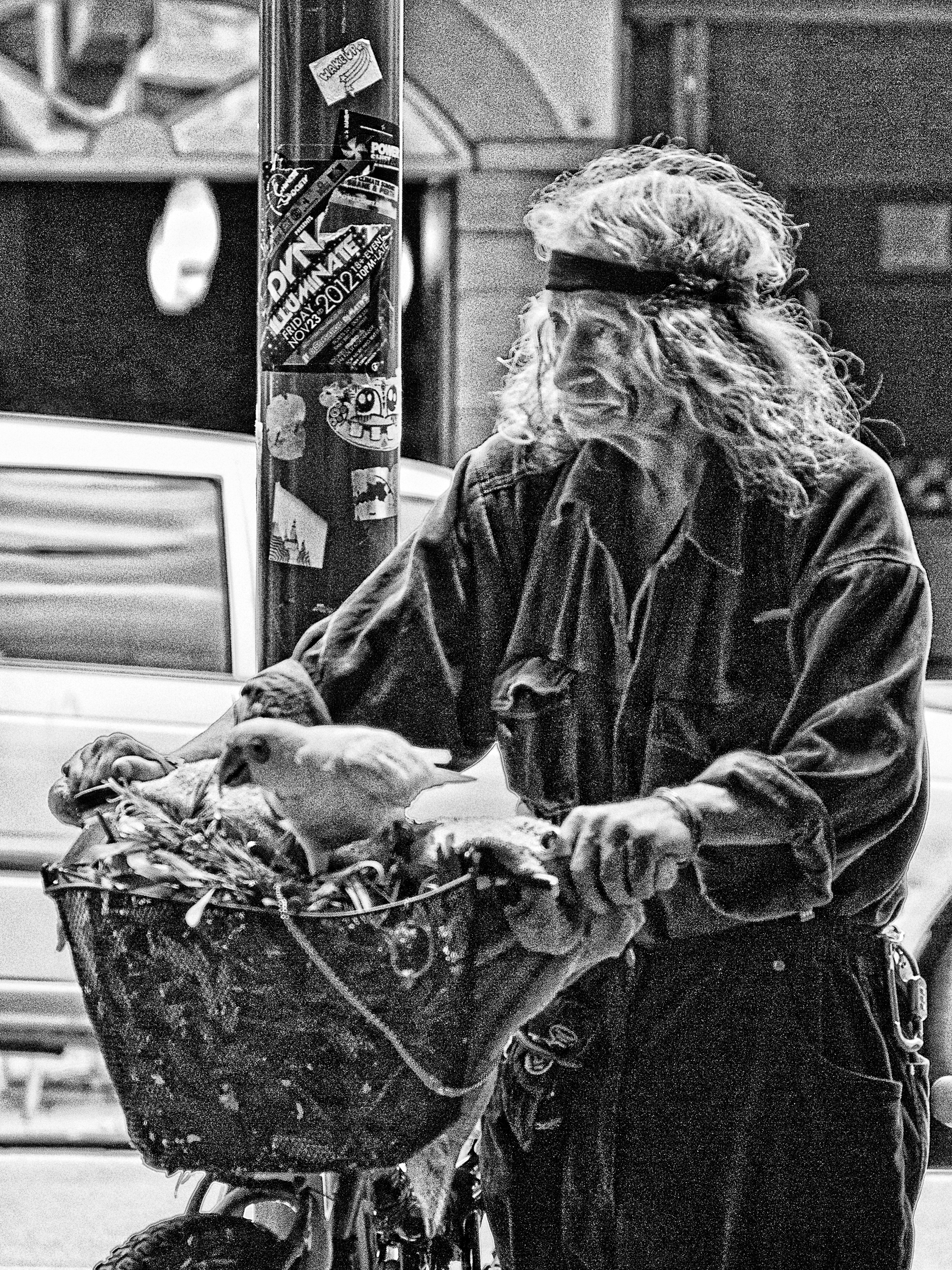
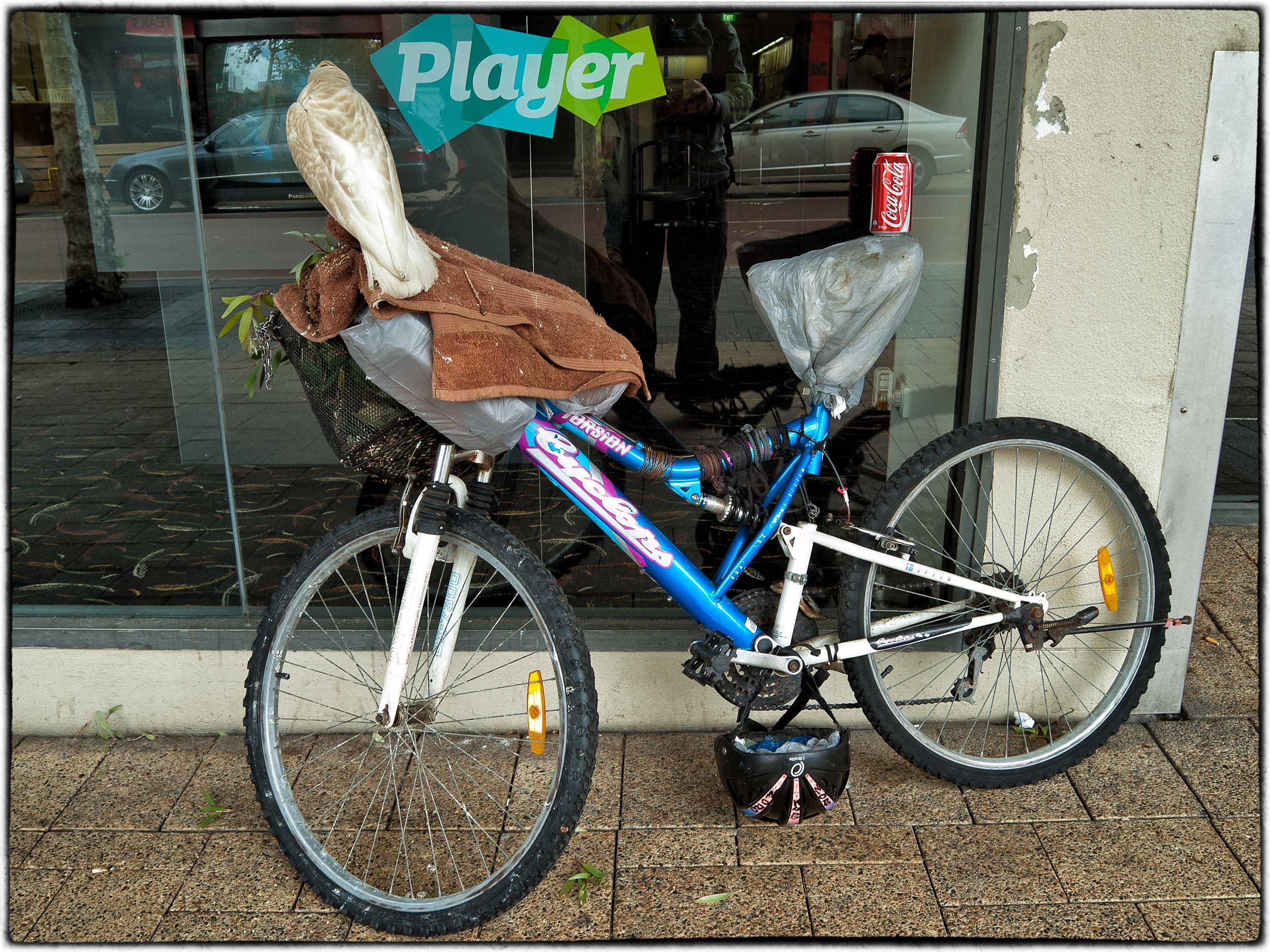
I see this bloke and his pet parrot all over Northbridge. In fact it is common to see just the parrot and the bicycle outside the Northbridge TAB (betting shop or bookies for the non-Aussies).




You must be logged in to post a comment.