Roaming Rottnest Island

Rottnest Island - Perth's summer island playground by Paul Amyes on 500px.com
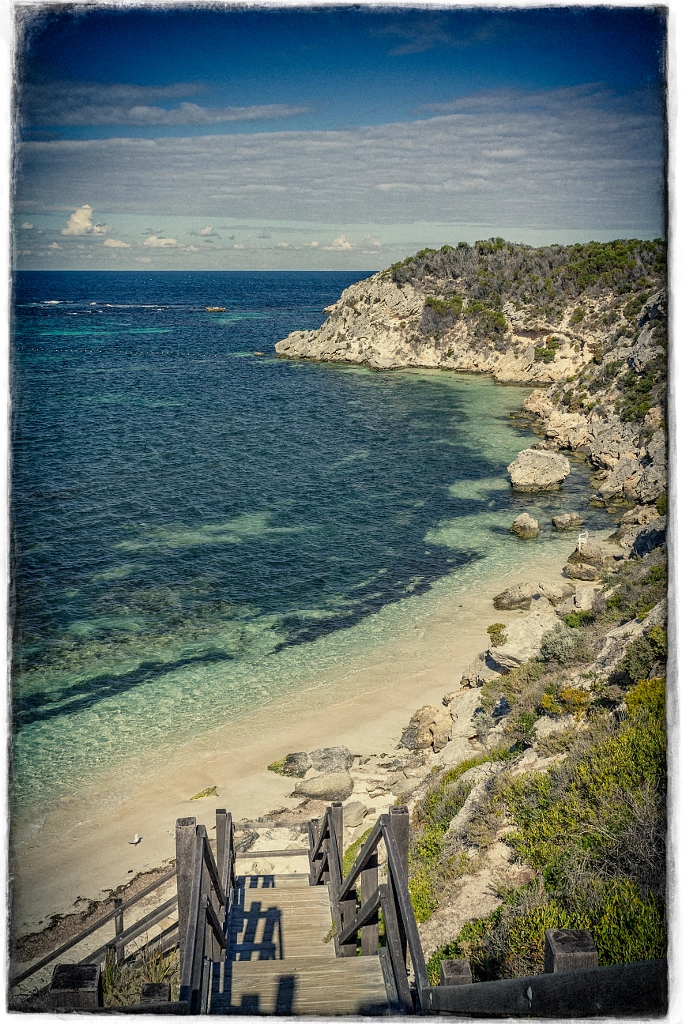
Rottnest Island’s beaches are its big draw card. The many small bays around the island make for delightful sheltered beaches that safe for swimming.


Eighteen Kilometres off the Western Australian coast near Fremantle is an island. It’s name is Rottnest Island. In terms of size it’s not very significant – just 11 Km long and 4.5 Km wide. It has just one settlement and that has a permanent population of around 300 people. But for all its insignificance it receives about 500,000 visitors a year. On a busy day 15,000 can be on the island at one time. It’s most famous residents aren’t even people, they are Quokkas (Setonix brachyurus) a small marsupial animal in the same family as Kangaroos and Wallabies. They are so important to Western Australia that they are the face of the current tourism campaign in the media with the hope that possibility of taking a selfie with one of cute critters will bring legions of overseas tourists who will enrich the coffers of the state government now the mining boom is over. For young people finishing school Rottnest is a right of passage where the teenagers go for a booze fuelled week-long party to mark the transformation from school kid to adult. For other Perth residents a trip to the island is what summer is all about.
 

Rottnest Island - Perth's summer island playground by Paul Amyes on 500px.com
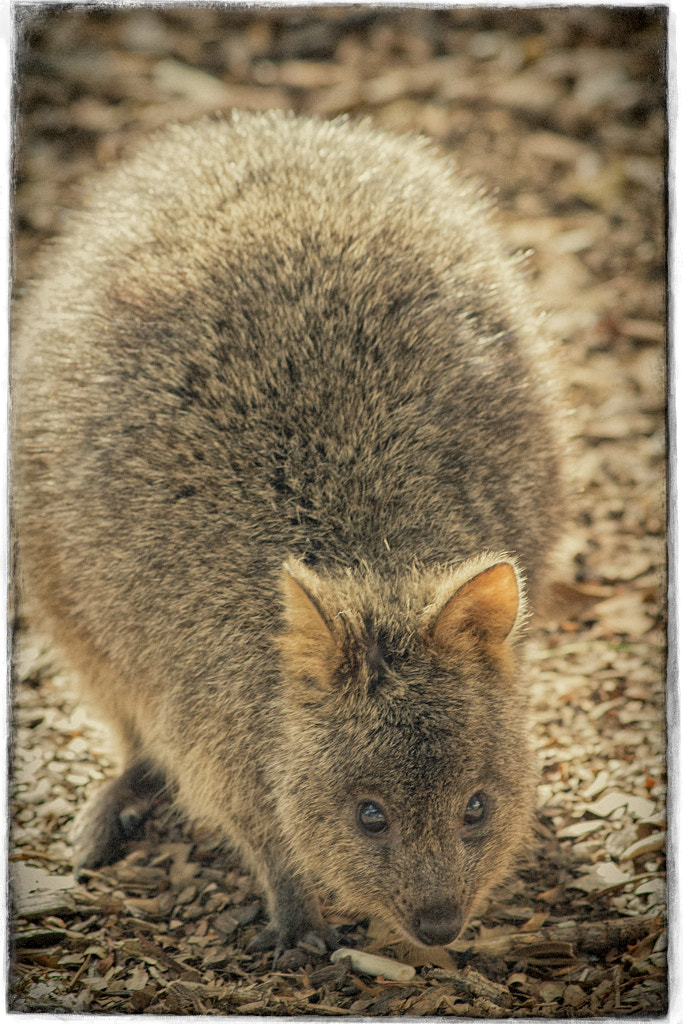
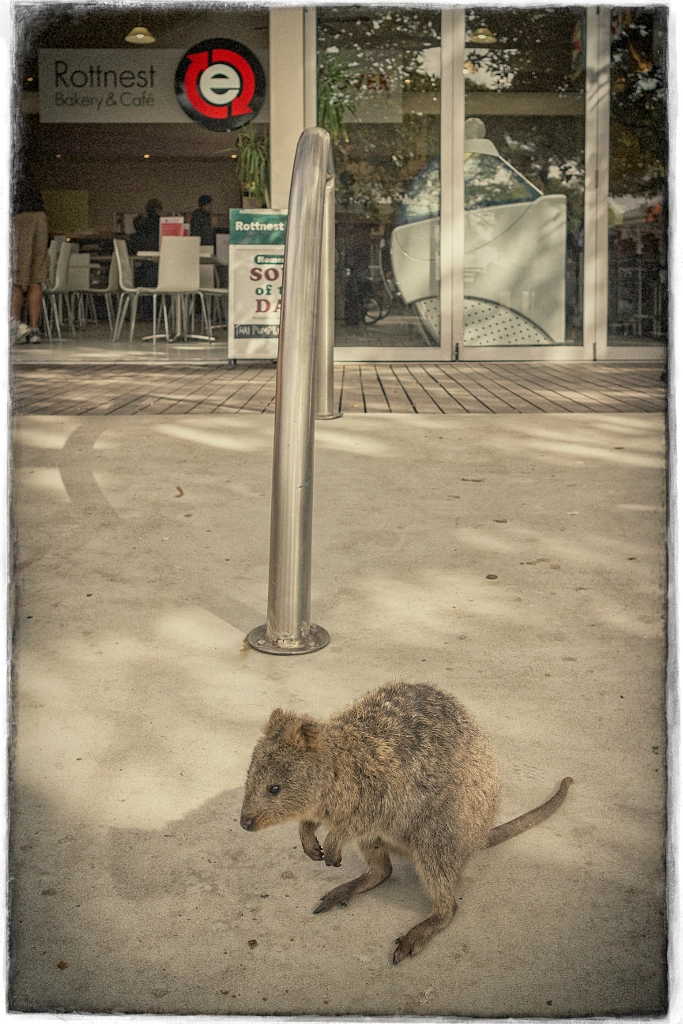
Quokkas are a small marsupial that inhabit Rottnest Island and they have now become the islands icon.


Rottnest Island - Perth's summer island playground by Paul Amyes on 500px.com
Quokkas can be found all over Rottnest Island even in the Thomson Bay Settlement during day light.


Rottnest Island - Perth's summer island playground by Paul Amyes on 500px.com
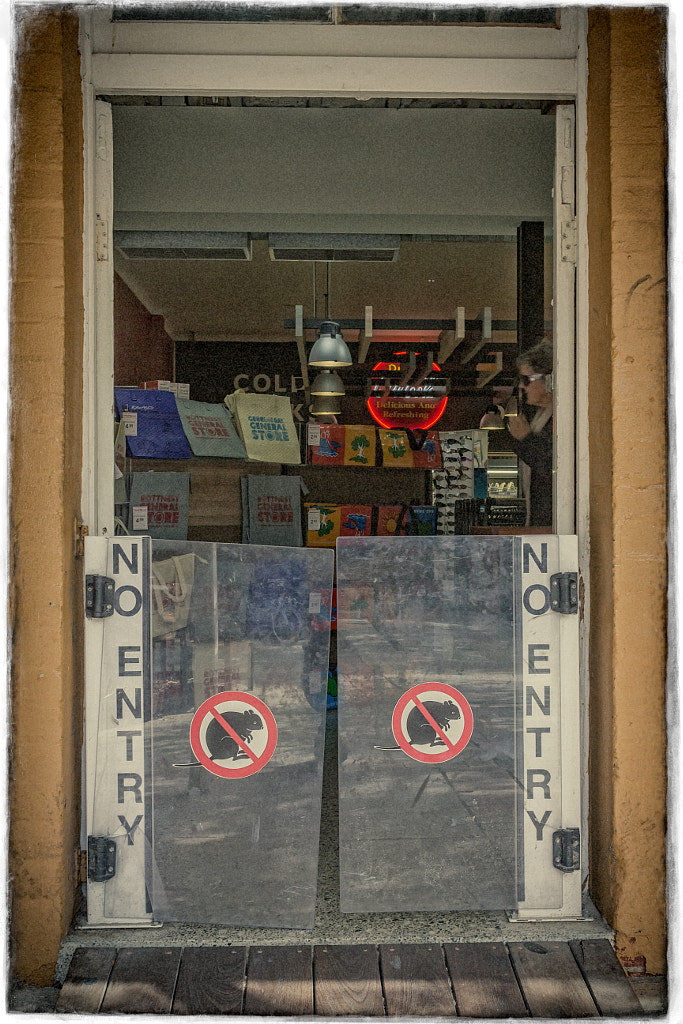
The supermarket in Thomson Bay Settlement has a strict no quokka policy.


You get to the island via a ferry. Rottnest Express has ferry services leaving Barrack Street Jetty in Perth, the B-Shed Fremantle Harbour and Northport Rouse Head. As well as the ferry service they run a variety of package tours to the island and you can rent  snorkeling equipment from them. Rottnest Fast Ferries  sails out of Hillary’s Boat Harbour and they also run a variety of day tours and cruises.
 

Rottnest Island - Perth's summer island playground by Paul Amyes on 500px.com
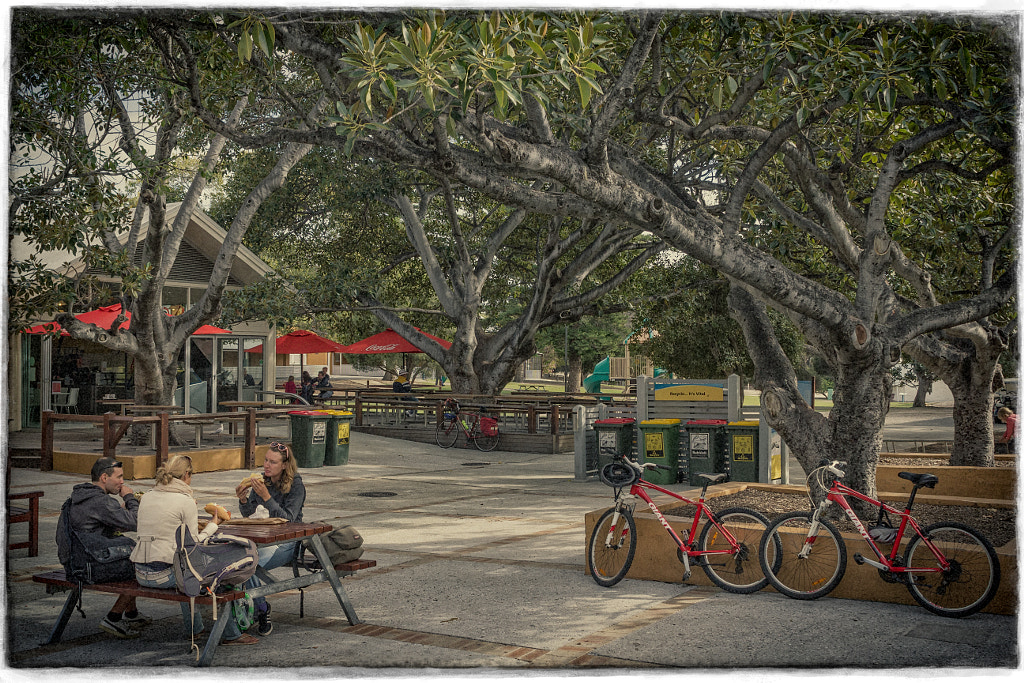
There are no cars on Rottnest Island, cycling is the main form of transport.


The best thing about Rottnest is that there are no cars!!!! I’ll say that again. No cars!!!! Cycling is the main form of transport. Brilliant. You can either bring your own bike on the ferry at an extra charge or rent one from either Rottnest Express (if you travelled with them) or get one from Rottnest Island Bike Hire located behind the Hotel Rottnest on Bedford Avenue. The last time I visited the island I took my own bike and did an abbreviated circuit of the island.

Distances are not vast, but before you set off make sure you take plenty of food and water with you as there is none out- side Thomson Bay Settlement.

1. Starting at the Visitor Centre head south following the signs for Hotel Rottnest. After 200 metres take the left fork that runs along the beachfront in front of the hotel. Turn left into Forrest Avenue and  this swings round into McCullum Avenue. At the end of McCullum turn left into Parker Point Road.

2. Follow the signs for Kingston Barracks and after 870 metres go past the turn off for Kingston Road and go over the railway crossing heading for Parker Point. After a little while you pass Henrietta Rocks where the wreck of the vessel Shark can be seen from the look out point. The wrecks of the Lady Elizabeth and the Raven also lie off this point. If you are lucky you may see a sea-lion or two.

3. After 4 Km you arrive at a junction, take the left turn and follow the Parker Point Loop. If you have brought a mask, snorkel and flippers with you a stop here is a must as there is a snorkel trail that takes you out on the coral. After 2 Km you are back at the junction, take the left turn and ride along the edge of Salmon Bay.

4. At the 9 Km point you reach the intersection of Parker Point Road and Digby Drive. If you have had enough turn right onto Digby Drive and follow it back to Thomson Bay Settlement, otherwise turn left and then 1 Km later take the right fork following the Geordie Bay sign.
Rottnest Island - Perth's summer island playground by Paul Amyes on 500px.com
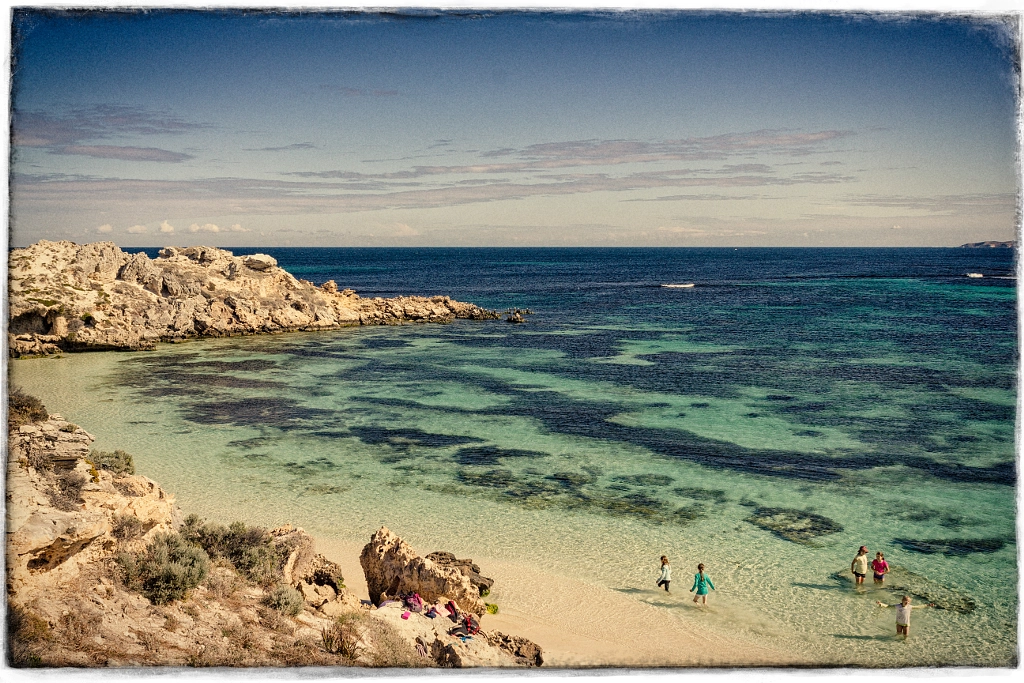
Rottnest Island is Perth’s summer playground as families look to escape the heat of the mainland and enjoy the relaxed carefree beachlife of the island. Geordie Bay is one of many safe swimming beaches on the island.

5. Turn right into Bovell Way and follow the road back to the settlement on the northern side of the island. After 5 1⁄2 Km you reach Geordie Bay which is another good spot for swimming and snorkeling. Keep going along Bovell Way until it ends at the intersection with Geordie Bay Road where you turn right onto it and cycle along the edge of Herschell Lake. After 600 metres you reach a cross-road, turn right onto Digby Drive and cycle back through the settlement.
Rottnest Island - Perth's summer island playground by Paul Amyes on 500px.com
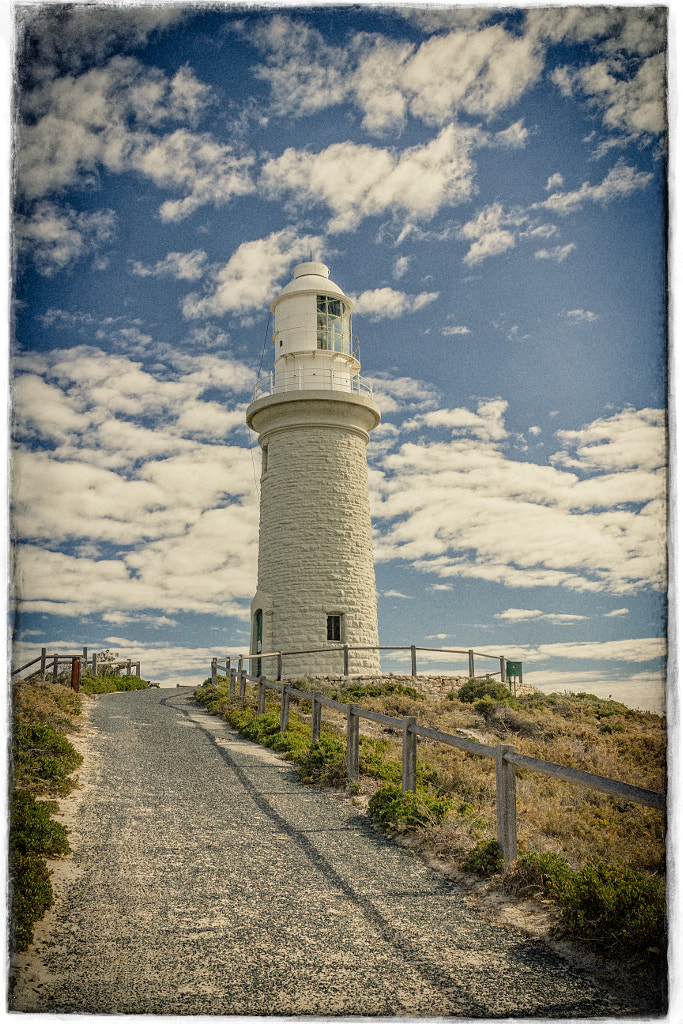
Bathurst light house on Rottnest Island guides boats safely into Thomson Bay.

When you’ve returned to Thompson Bay you will in serious need of some refreshment. The Hotel Rottnest is in the old governor’s summer residence. The hotel used to be called the Quokka Arms and most of the locals still use that name. A great location for a quiet coldie on a hot summers day or for a gourmet meal. Another popular  eatery is the Rottnest Bakery – a visit to the bakery is considered mandatory for every visitor to the island and it is famous for its fresh bread, pies, slices, and cakes. It is the perfect place to refuel after surfing, snorkeling, swimming or cycling. It is also the most likely place you will meet a quokka.
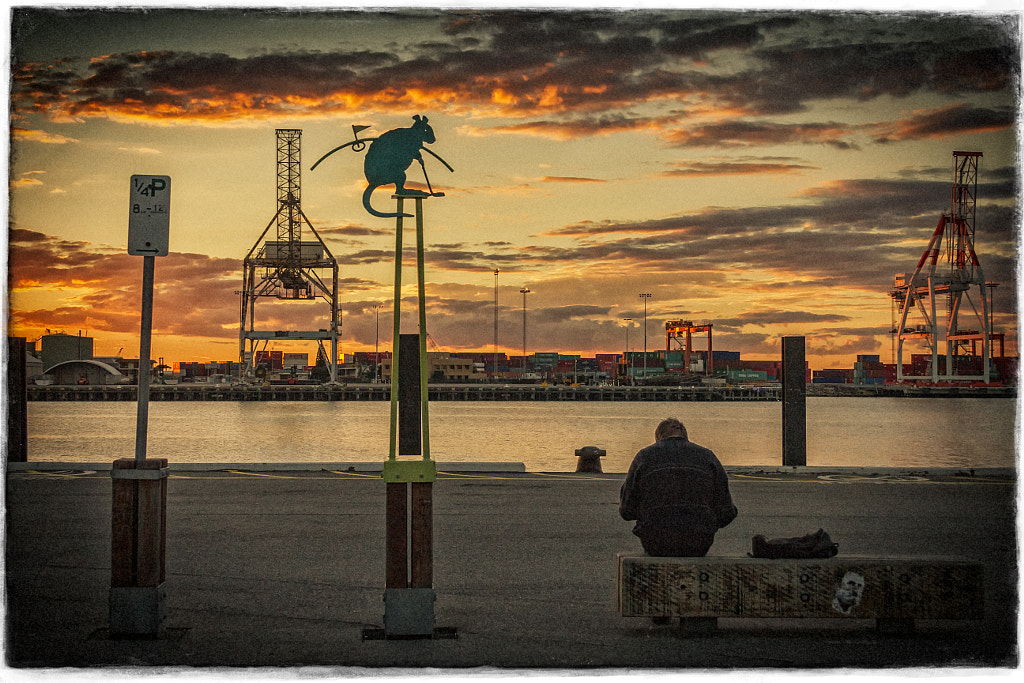
 

Rottnest Island - Perth's summer island playground by Paul Amyes on 500px.com
Waiting for the last ferry to arrive from Rottnest Island at the B Shed Fremantle Docks. Fremantle, Western Australia.


Bleedin’ Taters*

The secret to time lapsing is having a comfortable chair to sit in while you wait for the shoot to finish.

Got up at “stupid o’clock” the other morning to try out a new bit of time lapsing equipment. Streuth it was cold, and as I drove down to Monger’s Crossing I mused that the brass monkey would be tucked up at home in bed if he was sensible. A Swedish friend of mine once told me that there’s no such thing as cold weather just poor clothing choices. Well I took Matts’ advice to heart and I had more layers  than an onion.  On reaching the river it was dark and foggy, not the most photogenic conditions, but I thought for the purpose of this test it would be OK.  So I set  up the camera and sat down to wait for it to shoot one frame every twenty seconds for one hour.

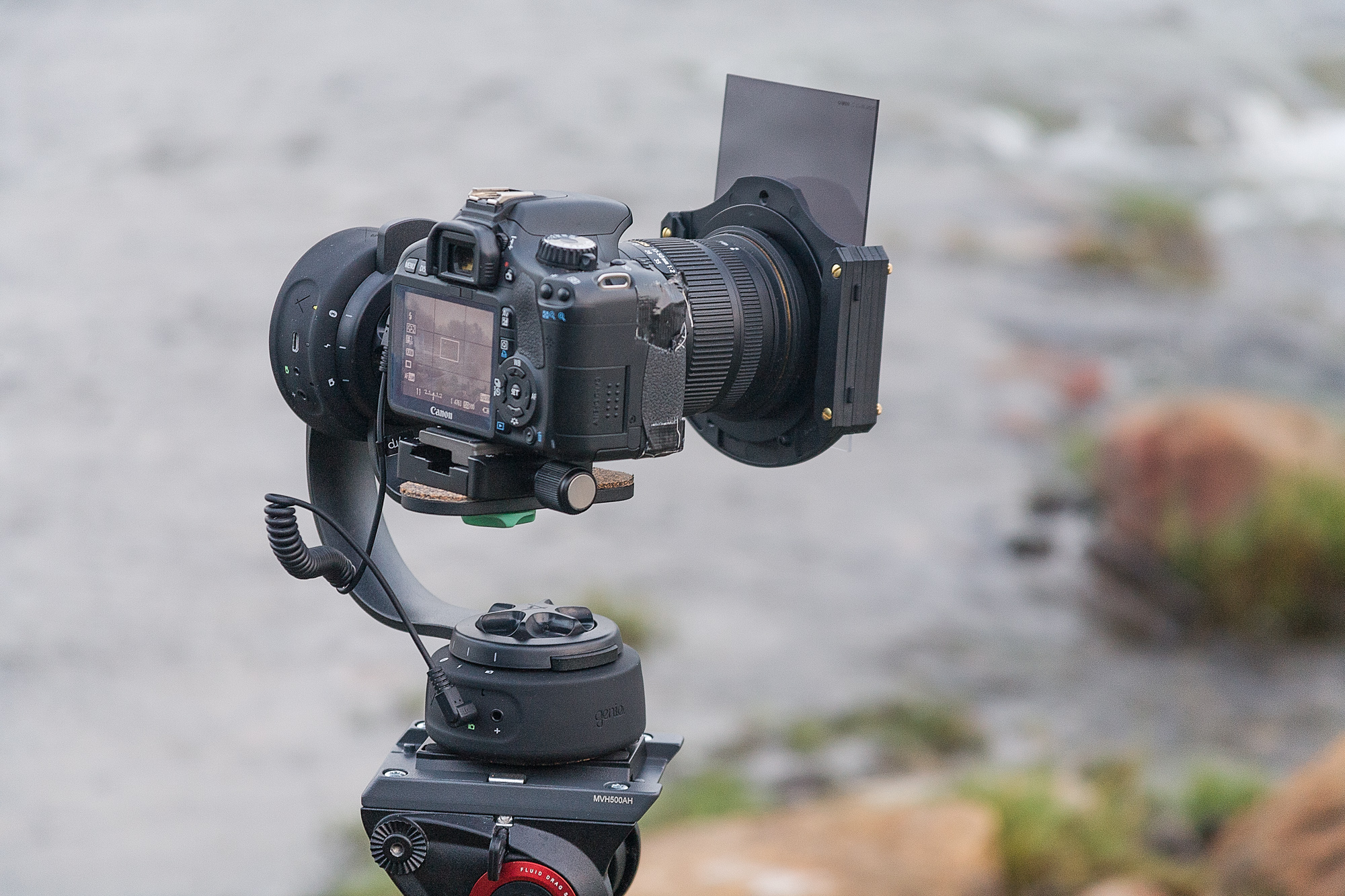
The Canon EOS 550d and Sigma 17-50mm f2.8 OS on the Syrp Genie Mini pan and tilt kit.The observant will have noticed that the camera is held together with gaffer tape.

I tried watching a video on my iPod but it was so cold that the battery ran flat real quick so I thought I’d take a few pictures of my companions on the river bank.


A yellow billed spoon bill searching for food on a cold and misty morning on the banks of the River Avon. York, Western Australia.


A white-faced heron wading on the banks of the River Avon on a misty winter’s morning. York, Western Australia.

As to the time-lapse, well bearing in mind it was just a test to see how it worked, well it was a reasonable first attempt. The only downside was that the camera sensor was filthy and that meant a lot of cloning in Photoshop.


* English is pretty confusing at the best of times for non native speakers. “Taters in mould” is Cockney rhyming slang for cold.

Welcome

Welcome Swallows
Nesting Welcome Swallows (Hirundo neoxena) on Avon Terrace, York WA. Canon EOS 550d with Canon EF70-200mm f/2.8L IS USM +2.0x Extender. Exposure: 1/200 sec f8 at ISO 1600.


Most days post canine perambulation I call in on at my favourite cafe for a drink. The last few weeks I have been enthralled with the activities of the Welcome Swallows (Hirundo neoxena) which have nested under the eaves. The parents have for the last for the last three weeks been frantically working to feed the chicks. The chicks fledged this week – tentatively making their first flights anxiously watched by mum and dad on Monday – and when I went for my morning drink the nest was quiet and empty. Job done!


Welcome Swallows
Welcome Swallows on Avon Terrace, York, Western Australia.


Quirky Quairading

Quairading Railway Station
Aboriginal art at Quairading Railway Station, Western Australia. Sony A7r with Olympus OM Zuiko 24mm f2.8 lens. Exposure 1/4000 f8 ISO 400.


Situated 166 Km (or 103 miles for the imperially minded) east of Perth is the small Wheatbelt town of Quairading. If you can’t pronounce it you’re not a local! Really it is just a blip on the map, one of countless small Australian country towns. Gazetted in 1907 the town was built around the rail terminus. Typical of many Wheatbelt towns is the CBH grain handling facility built near the station to ship the crop out at harvest time. The railway line has since closed and the grain moved by road. For many towns this would possibly be the last straw, but Quairading carries on. As you drive into town you are met


Quairading CBH Grain Bins
The land around Quairading was cleared for farming and in 1932 two grain elevators were built and wheat from the district was transported via rail. The railway shut in 2013 and now the grain travels by road. Canon EOS 550d with Sigma 17-50mm f2.8 OS EX lens. Exposure: 1/100, f8, at ISO 400.


by members of the grain family – cartoon characters based on grains of wheat created by local artist Lyn Whyte. Some of the businesses in the town centre shut down long ago but their buildings have been repurposed. The old bank is now someone’s home and has been called the Brass Razoo Bank, which is Australian slang for having no money and is kind of appropriate.


Wesley Wheat
Wesley Wheat a member of the Grain Family. He and his siblings Basil Barley, Ollie Oat and Lucy Lupin are the concept of local artist Lyn Whyte, the family can be seen in quite a few locations around the Quairading district.


One of the old shops has a huge street frontage and this now houses a collection of cars straight out of the 1970’s. Just a few doors down is the antique/collectables shop whose contents spill out onto the pavement. The items displayed are often arranged in odd juxtapositions which often cause passers-by to do a double take to see what is going on.


Flowers of Quairading
Flowers of Quairading. A street side shop display from the antique shop in Quairading. Sony A7r with Voigtlander 15mm f4.5 Super Wide – Heliar. Exposure: 1/5000 sec, f16 at ISO 6400.


The Car Dealership From The 1970's.
The Car Dealership From The 1970’s. Sony A7r with Olympus OM Zuiko 24mm f2.8 lens. Exposure: 1/200 sec, f16, ISO 1600.


Mercedes Truck
An old Mercedes truck sits in a paddock slowly rusting. Quairading, Western Australia. Sony A7r with Voigtlander 75mm f2.5 Color-Heliar lens. Exposure: 1/4000, f2.5 at ISO 400.


100 Years of ANZAC
The Anzac memorial in Quairading. Western Australia. Sony A7r with Voigtlander 15mm f4.5 Super Wide – Heliar lens. Exposure: 1/250 sec, f16 at ISO 1600.


The real highlight is the people – friendly, upbeat and generous. My partner walked into the local tourist office cum art centre cum civic museum and walked out with a free pumpkin. What more could you want?


Entropic Boats

Opossum Bay
Opossum Bay

On Thursday we drove down to the South Arm Peninsular and visited Opossum Bay. It is a beautiful bay with great views across the water to Mount Wellington. Like many such places in Tasmania it has become a popular spot for beachside holidays and retirement. Unlike many Australian beachside settlements the housing is not flat but tiered up the dunes, the resulting vernacular architecture is like a cross between Australian beach culture and Greek Island chic.

Beach House
Beach House, Opossum Bay, Tasmania.
Beach Hut
Beach Hut, Opossum Bay, Tasmania.

As I was walking up and down the beach admiring the view and looking at the houses I noticed something. A lot of the gardens had a row-boat or a tiny in the garden. In many cases the boat was almost new and in good condition. The boat represents a dream to spend time in this beautiful spot and go out on the water fishing – an antidote to the stress and bustle of the world many of us live in.

Garden Rowing Boat #1

After a while the boat doesn’t get used that much, time commitments probably prevent the owners getting out to the beach house as often as they like. Slowly the garden plants start to encroach upon the boat.

Garden Rowing Boat #2. Over time and with lack of use the boat starts to be covered by the shrubs and bushes in the garden. Opossum Bay, Tasmania.

Eventually the holiday or retirement dream of spending time at the beach house fishing in the bay becomes a long forgotten idea and nature reclaims the boat and it becomes as though it had never existed as either an idea or a physical reality.

Garden Rowing Boat #3
Garden Rowing Boat #3. Eventually the materials from which the boat is made begin to rot and break down and it becomes a dim and distant memory of what it once was. Opossum Bay, Tasmania.

Diminishing Returns

A bloke I know has just got into photography and has bought an Olympus OMD EM1 with the 12-50 kit lens. By his own admission he knows very little about photography and hasn’t settled into any specific genre. He now wants some more lenses, specifically the so-called Olympus Holy Trinity of f2.8 zooms – the 7-14mm f/2.8, the 12-40mm F2.8 and the 40-150mm F2.8. Nice lenses and in Australia you expect to pay around $4000 for them, and that is the problem. He is pretty convinced that he “needs” these lenses to be a good photographer and has read countless gear oriented forums about them. The major hurdles are that he can’t afford them, and he doesn’t know what to do with them. All he knows is that he wants to post the shots on a photo sharing web site and maybe make the occasional 10×15 cm print. Pushed hard he said that if he were to only have the one it would be the 40-150, but the reality is that he can’t afford even that on its own. I suggested he look at the 40-150mm F4.0-5.6 R which can be picked up for around $200 AUD, sometimes less if a white box special. The look on his face gave the impression that he thought I was stark raving bonkers. He then went onto to site all the usual internet complaints about the lens – its cheap and nasty, slow maximum aperture, unpleasant bokeh, plastic body and lens mount, soft at the longest end. My answer was that the f2.8 model costs around 8 times more than the cheaper one and I doubted whether he would see 8 times difference in terms of optical quality.

I don’t own or have access to the 40-150 f2.8, but I do own the 40-150mm f/4.0-5.6 R and I then decided to test it against a comparable lens from another manufacturer that costs nearly $3000 AUD. The pictures were processed exactly the same way in Lightroom and because the non m4/3 camera had a different aspect ration its image was cropped and sized to same as that from my Pen EP-5. I’m not saying which is which, that’s for you to decide. All I will say is that the 40-150mm f/4.0-5.6 R comes out of the test quite well.

Park Beach Surf #1

Park Beach Surf #2All this reminds me of a conversation I had many years ago with a work colleague Steve. We were chewing the fat one boring night shift and he let on that he had been a full on Hi Fi tragic and had spent an absolute fortune on buying the ultimate set up. I nearly choked when he told how much he spent on speaker cables. I thought that photographers were gear obsessives. Anyway after a while of swapping components in and out and reading lots of technical papers he had the realisation that he was forking out literally thousands of dollars to gain frequencies that only dogs and bats could hear. After that epiphany he settled on the equipment that he had and used it for what it was designed for – listening to music. It’s the same here, you could spend thousands on a lens and most people would not be able to tell the difference. Therein lies the problem for my acquaintance. He is new to the hobby and has been led to believe that to be any good he has to go out and spend a bucket load of whonga on buying the best lenses. He doesn’t have the cash and so he will probably give photography away as he will feel he can’t afford it. My advice was to buy the cheaper alternative and really use it. Push the lens as hard as you can in a variety of situations and then see is you like the focal range, and if that lens prevents you from getting any pictures. If after a year or so you feel that the lens is a must have and that you absolutely need the extra performance and can use it then buy the expensive version. Just to finish I’ll post a picture taken with a camera that internet forums love to hate – the Canon EOS 550d. Its plastic, has a slow frame rate, a poor sensor with little dynamic range, dog slow auto focus, and a minuscule buffer.

Park Beach Surf #4

Coal Mines Historic Site

Coal Mines Historic Site
The entrance to the Coal Mines Historic Site on the Tasman Peninsula.

For the majority of tourists coming to the Tasman Peninsula the only reason visit is the Port Arthur Historic Site with its colonial convict history. Some will venture to Taranna for the Tasmanian Devil Conservation Park, and a few others will head out to bush walk in the national park. Very few tourists head out past Salt River to the Coal Mines Historic Site on the North West of the Peninsula on Norfolk Bay.

Driving out through the little hamlet of Salt River I was struck by the beauty and serenity of the place. Even now in the Twenty First Century this is an isolated spot, it seems light years away from Hobart. How it must have appeared to the first settlers and convicts in early Nineteenth Century one can only surmise that it must have seemed like the very ends of the world and that home and family in England were something they would never see again. As I walked down the path into the site one could be lulled into thinking it was some kind of Antipodean Garden of Eden. There were Bennett’s wallabies grazing on the grass, small birds flew amongst the low-lying bushes, and a possum wandered lazily up to within a meter of me to check me out before shambling off to a nearby tree seemingly without a care in the world. This quickly evaporated as I started exploring the ruins.


Coal Mines Historic Site
The Coal Mines Historic site does not receive as many visitors as the Port Arthur site. Consequently the animals that live around the site almost appear to be surprised when the see visitors. This Brushtail Possum (Trichosurus vulpecula) took a good look at me before casually walking off along the ground seemingly without a care in the world. Tasman Peninsular, Tasmania.


The whole reason why convicts were brought here was to punish them. It wasn’t enough that they’d been sent to the Hell hole of Port Arthur and put to spirit crushing hard labour in horrendous conditions. No a new more terrible fate had to be used for those prisoners who bucked the regime. Coal was found here, if you walk along the beach you can see it just lying on the surface, smooth, black and shiny among the other pebbles lying in the sand. That meant that the seams would have been just below the surface which meant that you didn’t need complicated pit heads with lifts and pumping stations. All you needed were men with picks and shovels and a few people to supervise them. It must have seemed the perfect plan – put your trouble makers out to an even more remote spot, make them labour in incredibly harsh conditions with a horrific punishment system for those who wouldn’t toe the line, and then have them mine something that was needed badly in colony so that the scheme would pay for itself. Very ingenious. So in 1833 the coal mines were opened up. The interpretive panels tell of some of the heart wending stories of those who were sent there and the deprivations that they suffered. as I read more and more about the site the beauty of the location receded into the background and was replaced by story of man’s incredible cruelty to his fellow-man. Even in colonial times government was not capable of running an economic enterprise and making money, so in 1848 the mine was privatized, but the logistics of running such a business in such a remote location were so difficult that it was never economically viable and in just another ten years, 1858, the mine working were shut down. Some of the infrastructure was dismantled the rest was left to decay in the harsh conditions with the wooden buildings and fittings being destroyed by bush fires. The building which were constructed from stone fared better than those that were made from convict brick, which because it was not fired at high enough temperatures was soft and crumbly.


Coal Mines Historic Site
As you walk along the path the first buildings you see are the remains of the ‘the settlement’ or ‘square’. This was where the stores, the chapel, the prisoners accommodation and the punishment cells were located.


Coal Mines Historic Site
The reason that the site was established was coal. On the beach you can see lumps of coal just lying on the surface. The seams were not very deep.


Port Arthur, just down the road receives most of the tourist attention – and in many cases quite rightly so as the scale of the place, it’s location, and many of the buildings are still intact making it a tourist experience par excellence. But for me it is the Coal Mines Site that typifies the brutality of the convict era. It’s sole purpose was to strike fear into an existing convict population and to punish and brutalize them even more. Most of the colonial penal systems victims were people whose only crime was to try to alleviate the crushing poverty they were born into with criminal acts that were incredibly petty by nature – stealing food, stealing small items to exchange for food, vagrancy, non-payment of debt etc. Now nearly two hundred years later their history, their lives, their suffering has been made into a tourist industry to entertain people. What is even more puzzling is that in today’s Australia it is now considered very desirable to be able to show that you are descended from convict stock. Perhaps this should be something to ponder as we visit Tasmania’s convict heritage sites.


Coal Mines Historic Site
The Settlement at the Coal Mines Historic Site overlooks Little Norfolk Bay on the Tasman Peninsula.


Visitors to the site should take care to stay on the paths as some old shafts are still open and others have caved in leaving sink holes that unwary could fall into.

Christmas On The Tasmanian Savannah

Not So Happy Christmas
On the Tasmanian Savannah the elephants, despite the best efforts of the Zebra, went off in a huff.


Not many people realise that the scope of Tasmania’s wildlife and fauna far exceeds that of the Australian mainland. Where I live we are close to the Tasmanian Savannah which has an abundance of big game animals that are usually associated with Africa. The animals here though are particularly fond of Christmas, and every year if you know where to go, you can observe them going about their Christmas celebrations.


Christmas On The Tasmanian Savanah
All in all considering how much sherry was in the trifle everyone was remarkably well-behaved.

Just like us humans the animals experience Christmas in the same way. Some times family tensions can boil over and harsh words are said and inevitably some one takes offence and heads off home early. Alcohol is always a big problem for the animals – if too much sherry is added to the truffle then you better watch out as a tiddly elephant or silverback gorilla can wreak havoc. But Christmas is really about the kids and seeing them so happy is really what makes Christmas so special.

Christmas Excitement.
Timmy the baby elephant found Christmas so exciting he couldn’t contain himself.

The animals on the Tasmanian Savannah are a little different from humans with regards to the Christmas story. They do not of course believe in Santa Claus. For them the Christmas Zebra is the bringer of good cheer and presents, and the children all pester their parents for weeks wanting to know when the Zebra is coming and if they have been good enough to get presents.

The Christmas Zebra
The Christmas Zebra

So I hope that everyone had a good Christmas this year, and apart from the incident with the elephants, the animals of the Tasmanian Savannah certainly did.

Blood Moon


The “blood moon” or the red lunar eclipse brought out the apocalyptic in me.

According to Wikipedia…”A lunar eclipse occurs when the Moon passes directly behind the Earth into its umbra (shadow). This can occur only when the Sun, Earth, and Moon are aligned exactly, or very closely so, with the Earth in the middle. Hence, a lunar eclipse can only occur the night of a full moon… the red colouring arises because sunlight reaching the Moon must pass through a long and dense layer of the Earth’s atmosphere, where it is scattered…Several cultures allude to the lunar eclipse as being a good or bad omen. For example, in some Chinese cultures, people would ring bells to remove wild animals that bit the moon. During the Zhou Dynasty in the Book of Songs, the sight of a red moon engulfed in darkness led them to believe the sign as a foreshadowing of famine or disease.”  SPOOKY!
Thankfully we all woke up happy and well the next morning.

The weather conspired against me. I had planned my shoot using The Photographer’s Ephemeris, got my angles and location sorted out and then just half an hour before heading out I stuck my head outside and we have thick cloud cover. Bugger! What to do? I didn’t want to drive out to my location, walk to the point and stand in cold wind coming straight off of the Antarctic for nearly 3 hours with the chance of getting nothing. So I decided to set up my cameras on my deck and only start filming when there was a break in the cloud cover. So out of 3 hours and 20 minutes of potential eclipse action I got in total about 30 minutes.  Ah well I shall wait until the next one on the 04/04/2015.

Filmed using the time-lapse movie function on the Olympus OMd EM-10 with a 75mm f2.5 Color-Heliar and a Zuiko 40-150mm f4-5.6 lens. Additional footage filmed on a Canon 550d with 70-200mm f2.8 L IS lens