Time

Sorry for the absence of a post last weekend – my trusty laptop had pass away and gone to Silicon Heaven. It may come as a shock to many people that there is an afterlife for electric and electronic appliances.

So I had to get myself another computer, this time I bought myself a desktop. All very swish looking with lots of brushed aluminium and shiny glass. The OS interface is all very futuristic looking in that sleek modern shiny way. Of course it wasn’t just a straight forward turn the thing on and then install my apps – no my last machine was a little on the ancient side and things had moved on and I had to search for updates, patches and firmware revisions. It’s amazing what a time sink a computer can be, I first started working with them in the mid 1980’s and we were promised a lot of things like they’d make us more efficient and we’d have a paperless office. Well thirty years on the paperless office still hasn’t arrived and anything involving a computer still takes longer than it did without one. In 1985 2013 sounded so futuristic and full of possibilities, yet now we’re here it is all a bit of an anticlimax. Whatever happened to the 3 day working week we were promised? I distinctly remember watching a TV program aired on the BBC called Tomorrow’s World which said that we’d all have flying cars. I suppose somethings did change – if you’d have told me thirty years ago I’d be taking photos with a phone I’d have thought that:

  1. you’re nutty as squirrel pooh
  2. I’d need a jolly long cable just get the phone out of the house

Well here I am and although it is possible to take photos with a phone I’m not actually doing it because a smart phone would be pretty pointless as there’s no 3G coverage where I live. I suppose I could get one just to take photos with, then it would become a camera with an optional phone built in.

Talking about all things “timey-whimey”, as Doctor Who might say (you can see from this post that I spend too much time watching sci-fi from the BBC) the town of York in Western Australia suffered a huge temporal disturbance and was transported back to the middle ages, and more to the point it wasn’t Medieval Australia but Medieval Europe. I walked down to the park besides the River and there were all manner of people walking about in suits of armour,  there were jesters hey nony no-ing and all manner of other Olde Worlde frippery. I quickly came to my senses and realised that it wasn’t a temporal disturbance after all but the 2013 York Medieval Fayre.  There was a Medieval market where you could get the latest in Long Bows, armour, heraldic devices and even toys. I avoided the stall selling Medieval German sausages as they were probably past their sell by date – I know I know that was the wurst joke ever!!! 🙂 There were the good people of the Grey Company who put on displays of historical re-enactment focusing on the Dark Ages and Medieval times. Then there was the The Free Company who’re a group of biffologists who dress up in armour and give each other a serious belting as the YouTube clip below shows.


I fear that at this point in time I must make a confession – I strayed from the  micro four thirds path and returned to full frame goodness. I broke out the 5d and the 70-200 f2.8 IS L because I knew that it would be difficult to isolate subjects from crap distracting backgrounds with the smaller format but easy to do with the larger format and fast glass.  Does this mean that I will stop using m4/3? No, I’m just using the appropriate tools for the job. If anyone would like to see the stills outside of the video clip they can be seen here.


20131103-York_Medieval_Fayre-3077 by Paul Amyes on 500px.com


20131103-York_Medieval_Fayre-3077
by
Paul Amyes

Crawling Through The Bush

Over this spring it literally feels like I have been crawling through the Western Australian bush on my hands and knees stopping only to take photographs of native orchids. So it was only fitting that I should title this short video “Crawling Through The Bush – one orchid at a time”.

A few highlights from this year’s orchid season would be firstly the albino purple enamel orchids I found quite by accident on Mount Observation when I went for a leak. Yes I know – that’s probably too much information.

Albino purple enamel orchid

Another fave would be the rabbit orchid I photographed near Kojonup.

The Rabbit Orchid (Leptoceras menziesii) only flowers after a disturbance to its environment such as a bush fire. Kojonup, Western Australia.

This next orchid had me well and truly stumped until Andrew Brown , curator of the Orchidaceae and Myoporaceae at the Western Australian Herbarium amongst many other things, kindly identified it for me.

Clubbed spider orchid, Caladenia longiclavata, Kojonup, Western Australia.

This last one I just like from a photographic point of view.

Bee orchid or Diuris laxiflora, Kojonup, Western Australia.

The video as well as showing the locations also shows some of the techniques I use for photographing the orchids. The video was shot using an Olympus Pen EP-2 micro four thirds camera and the audio was recorded directly to the footage using either a Rode Video Mic pro or the Olympus SEMA-1 microphone used as a lavalier mic. One short clip was filmed with a Panasonic Lumix LX-5.

The 2014 Orchid calendar is now available for sale, just click on the image below and you’ll be taken through to my on-line store at RedBubble.


As always if you are interested in purchasing a copy of any of the photos click on the image.

I’m Back!

Tasmanian Devil sheltering under a fern during the normal Tasmanian weather – rain.


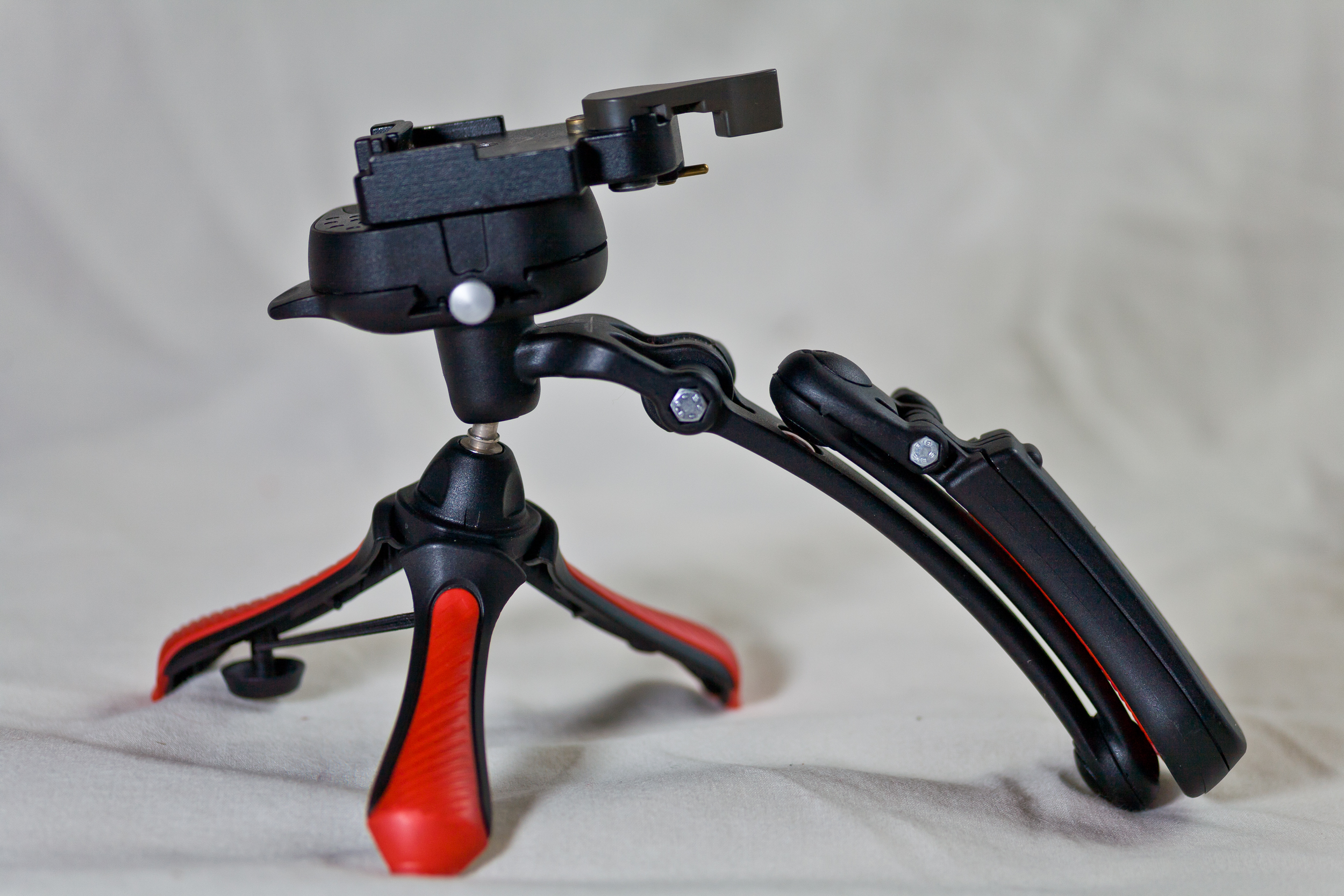
Well two weeks in Tasmania went faster than an Essex girl can drop her draws. Tasmania is photographic Nirvana and this wasn’t a management sanctioned photo expedition, but rather a holiday. This meant a tripod, full set of filters, an audio recorder and decent microphone were all left at home. All I took was the micro four thirds kit , with  circular polarizing filters and variable neutral density filters, and a tripod substitute in the form of the Manfrotto 585 Modosteady 3-in-1 Support Tripod. It’s a crap steadicam but works well as a light weight video rig and table top tripod. I’ve modified mine by adding a Manfrotto 323 Quick Release Plate Adapter so all my cameras can use a standard quick release mount.

Manfrotto 585 Modosteady 3-in-1 Support Tripod. It’s a video rig, table top tripod and steadicam all in one.


So with some guile and cunning I managed to maximise my photographic success rate by shooting a lot. I’m not us usually a spray and pray photographer, but this time the situation demanded it, but it was well thought out as I bracketed each shot by +/- one stop. This meant that for the landscapes and detail shots I could turn them into HDR images using Nik Software’s HDR Efex Pro 2 when I got back home. I also shot a lot of panoramas, these were also bracketed, handheld. I’ve found using the rear LCD screen of my Olympus Ep-2 with the grid overlay means I can get reasonably level shots with sufficient overlap so Photoshop’s photo merge function can do a good job of lining everything up. The photo below was done handheld and was a total of 6 exposures with the bracketing. I first produce the HDR segment and then shove it Photoshop for the panorama.


South Bruny Lighthouse situated on Cape Brunny overlooking Lighthouse Bay.


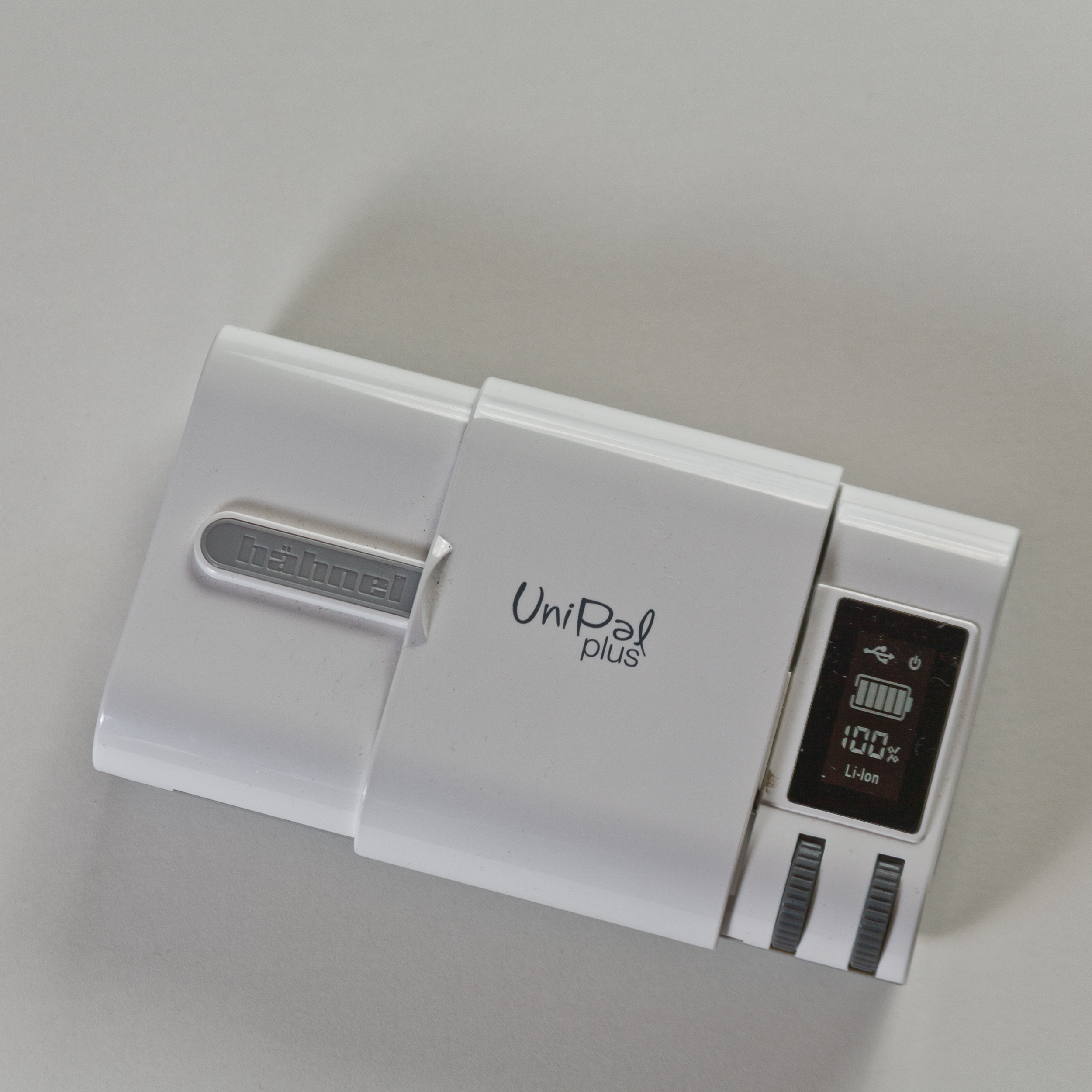
I also shot a lot of 20 second video clips with the intent of using them along with the stills in a multi media presentation and video eats memory cards like Lance Armstrong takes steroids. In all I used up 60 Gb worth of memory cards. Thankfully class 6 memory cards are really cheap now so I was well stocked up with them. The other aspect of shooting lots is battery consumption. The battery life of mirrorless cameras is pants. Olympus reckon 300 shots from a fully charged battery but I’ve never got anywhere near that so I took six batteries with me and a charger. The most I used in one day was 3 batteries and that was on a very cold day and I’d shot a lot of video. I also took a battery charger with me, not the stock supplied one but a Hahnel Unipal Plus. This charged my camera batteries, the AAs in my torch and shaver, my phone and iPad. It’s a brilliant bit of kit and any travelling photographer should really consider getting one.

Universal charger from Hahnel. Indispensible for travelling.


Over the next few weeks as I process the images I’ll post them on the blog and talk about the hows and the whys.

Very Adaptable

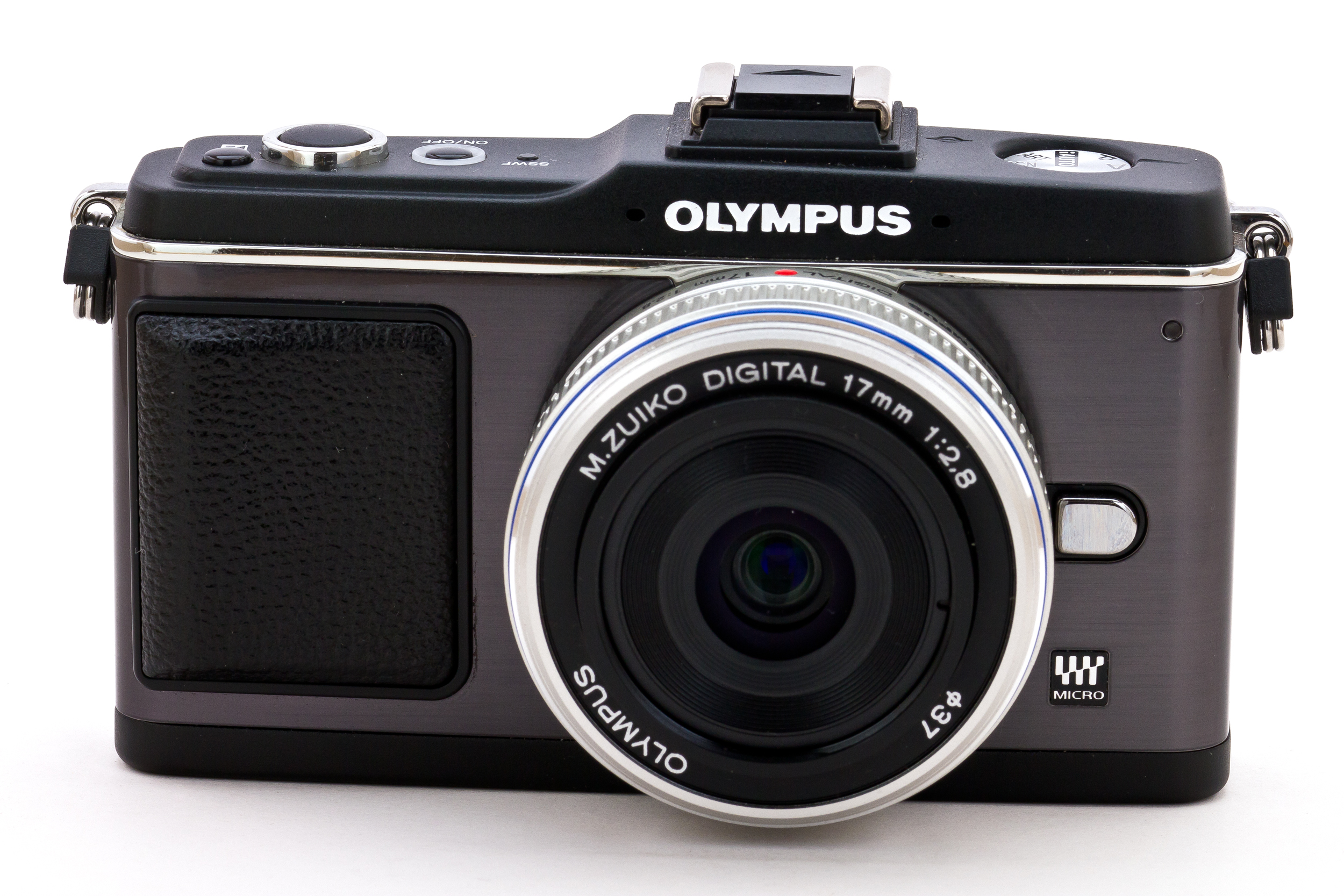
Olympus Pen EP-2 with a 17mm lens. This gives a 35mm equivalent. For wide angle lenses it is cheaper and easier to use native m4/3 lenses.

Not so long ago I was lucky enough to be given an Olympus Pen EP-2, it was an old superseded model, but still a very fine camera. My eyes were quickly opened up to the advantages of having a small light high quality camera with interchangeable lenses and it became, and still is, my most used camera. A little while later I was having a clear out of stuff and I “found” six “orphaned” lenses from film cameras that I no longer had. They were to me so good that I could never bring myself to part with them so I had kept them with the vague notion that one day if I ever got some surplus cash I would get a film body for them. However despite my nostalgia for film the reality is that I live a long way from any lab and I no longer wish to run a darkroom so any new found enthusiasm for film would quickly evaporate because of the inconvenience. One day while perusing a forum dedicated to M4/3 I discovered the whole subculture of using adapted lenses. My interest was piqued. There are a couple of reasons to use adapted lenses. The first and most sensible is that you do so because an equivalent focal length is not yet manufactured for your camera. The second reason is that it is just good fun to use old lenses that you already own or can get very cheaply.

From left to right is a 75mm Color-Heliar, a Sigma 70-210, an Olympus Zuiko 50mm, on the camer is a 35mm Color-Skopar, Olympus Zuiko 35-105, and a Tamron 28mm.

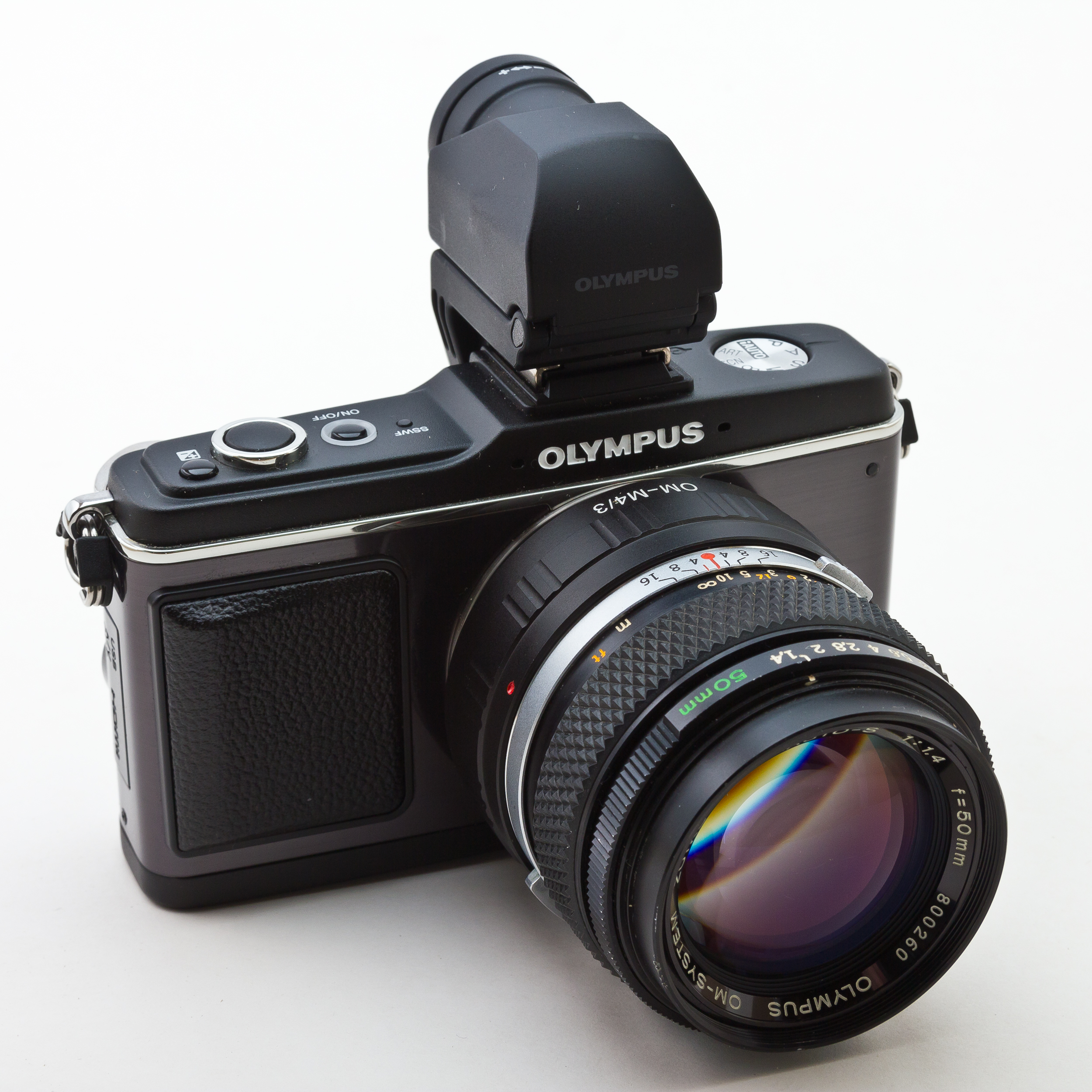
Olympus made adaptors for OM and 4/3, Panasonic for Leica R and M, and Novoflex and Voigtländer make adapters for older manual focus legacy lenses, but they are in the $200 bracket. If you look on E-Bay there are a myriad of adaptors all hailing from China and Hong Kong with prices starting at $12 AUD. So here is what to look for. For manual focus lenses the basic requirement is a rigid body and a well-built lens mount that allows infinity focus.  I would recommend either a chrome plated brass or stainless steel mount as they are more resistant to wear. Cheaper adaptors are often built deliberately to focus beyond infinity as it means tolerances do not have to be so tight. Initially this is a little disconcerting in use but you get used to it. Some of the cheaper makes can be a bit sloppy and this makes focusing accurately difficult. Forums such as Micro Four Thirds User have discussions on how to fix this quite easily, but this can be avoided by buying better quality ones such as those made by Metabones. If you believe the sales pitch by Voigtländer and Novoflex  you are risking your camera to cheap Chinese adaptors as swarf and dirt can fall onto your sensor and ruin it. The easiest thing to do is give them a wipe with a cloth and then a blast of compressed air to dislodge anything prior to mounting. In the end only you can decide on how much you want to spend, personally I took the view that this would be an experiment and I bought two $12 jobs in OM and M mount with the thought that if they were duff I could replace them and they had not cost a lot. With more modern auto focus lenses with stabilization and electronic aperture control things are a little more complicated. Firstly you will have to accept the loss of AF and IS. The cheaper adaptors also offer no control over the aperture, so the lens defaults to its widest aperture.

The Olympus Pen EP-2 with optional viewfinder and an Olympus Zuiko Om 50 mm f1.4 lens mounted via an adapter.

In day-to-day use is all this worth the hassle? Well there is no easy answer, it all depends upon whether you are prepared to accept work arounds and sometimes less than perfection. Digital capture does impose a lot of demands upon a lens as the sensor behaves very differently from film. The sensor is actually a very reflective surface and this means that modern lenses made for the digital era are multi-coated on the rear lens elements as well as the front to prevent glare. Some lenses, especially single coated ones, are also very susceptible to glare so I would definitely use a lens hood and be prepared for less than stellar images when shooting into the light. Older lenses designed for film are sharp in the centre but the edges and corners can let them down. Thankfully as of this time all the CSCs use a sensor that is smaller than 35mm film, and this means that the sensor is only using the best part of the lens. Talking of sensor size it is the crop factor of the various digital formats that causes the biggest problem for many users of adapted lenses as your wide angles cease to be wide angles.  A moderate wide-angle of 28mm becomes a short standard on APS having the same field of view as a 42 mm lens on full frame, or a long standard on M4/3 with a field of view similar to a 56mm. My favourite 35mm Color-Skopar is now a short telephoto on my EP-2, and my old Olympus Zuiko OM 35-105 ceases to be standard zoom but becomes a telephoto zoom. Voigtländer made a 12mm and 15mm lenses in either Leica screw (L39) or Leica M, but their performance on smaller formats leaves lots to be desired with most users complaining of excessive smearing in the corners. So the loss of wide angles is a problem for many, but on the other hand the multiplying effect of the smaller formats also brings many benefits. My 75mm f2.5 Color-Heliar becomes a very nice compact 150mm equivalent, and my Sigma 70-210mm becomes a very small 140-400mm equivalent. So if you are a frequent long lens user you will be very happy. Older manual lenses are also very suited to video usage because the focusing action has a long throw and is damped making it easy to get very precise manual focus. Throw in wide aperture lenses and your mirrorless camera becomes a very capable tool for giving beautiful “filmic’ footage. The biggest hurdle to using adapted lenses is manual focusing. I am at that age where my arms are not long enough to use the rear LCD screen for focusing so an electronic viewfinder that allows me to magnify the subject is a must. Thankfully the EP-2 and all the later variants can all take one. An alternative to an LCD viewer is a loupe designed to go over the rear LCD screen. The brand named one is by Hoodman  and sells in Australia for about $110, if that is a bit steep for you there are plenty of cheap Chinese knock offs for the $20 mark on E-Bay.

Olympus EP-2 in video mode showing the Zuiko 50 mm f1.4 mounted via an adapter, a Hoodman Loupe and the Olympus SEMA external microphone.

All in all my own personal conclusion is that it has been great fun to re-visit some old lenses I’d already got and use them in different ways. Plus there is the added fun of trawling through websites such as E-Bay and Gumtree looking for cheap interesting lenses. The other thing in its favour is that if you are a little financially embarrassed and you want to explore digital photography as a hobby then using old lenses maybe just the ticket.

Frida, my Bull Terrier co-operating nicely. Olympus EP-2 with OM Zuiko 50mm f1.4 lens. Exposure 1/60 sec, f1.4 at ISO 3200 processed in Lightroom and Silver Efx Pro 2 by Google.

Pure Magic

Reading Harry Potter And The Deathly Hallows by JK Rowling.

A few days ago I got an email newsletter from an online book retailer that I use and the thing that caught my eye was a photo competition for a new camera. Now I need a new camera like I need a hole in the head, it was the brief that captured my imagination and that was to produce a self-portrait while reading your favourite book in a favourite location. The above photo was my entry.

Now a little while ago I wrote a blog entry about becoming a retrogrouch using older film cameras again and enjoying the stripped back experience. Well this shot was all about technology.I used a Canon EOS5d, with a Canon EF28-135mm f/3.5-5.6 IS USM lens. The camera was tethered to my MacBook and I was shooting to Adobe Lightroom. The lighting was to provide the real story here and a Canon 550EX with CTO fired into the book and bouncing back to my face was the key light. I wanted it to look like a warm magic light pouring out of the Harry Potter book. A Canon 430EX with blue filter bounced off the opposite wall at – 2 stops provided the fill light. The on camera WB was set for tungsten as I wanted this to provide a cold foreboding atmosphere. The camera was triggered by a wireless controller so I did not have to keep getting up and I was able to watch the images on my screen and this enabled me to play around with my positioning and facial expressions. Once I was happy I then processed the RAW file in Lightroom and then exported to Photoshop where I used AlienSkin’s Exposure to enhance the look and then added the stars and lightning bolts. It all sounds very complicated but in a little over an hour I had shot the image, processed it and uploaded to the competition site on Flickr. I took up photography in the early 1980’s with an old Praktika SLR and would have regarded all the above as magic … pure magic.