Street Photography

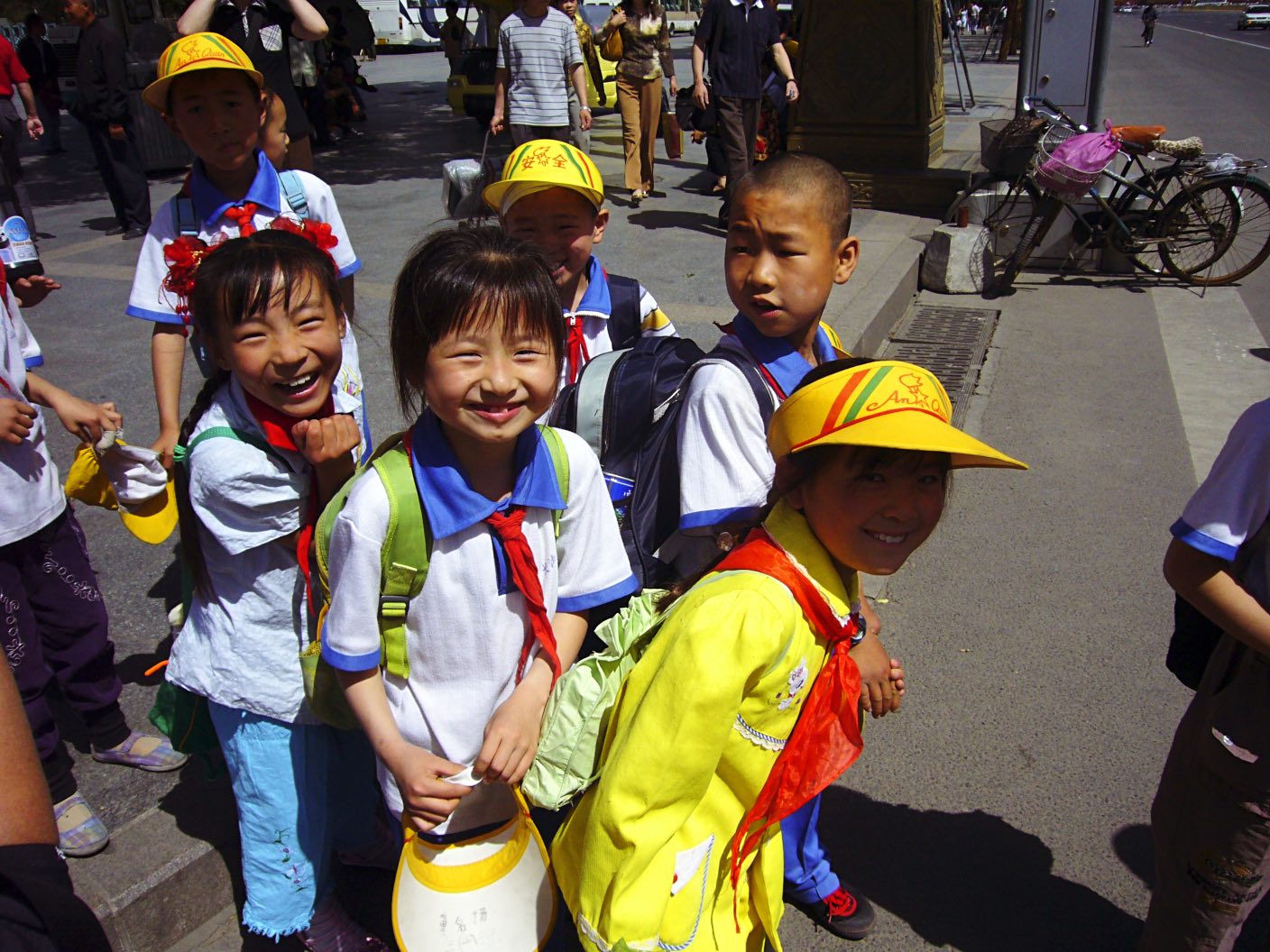
Children on a school visit to Tiananmen Square.


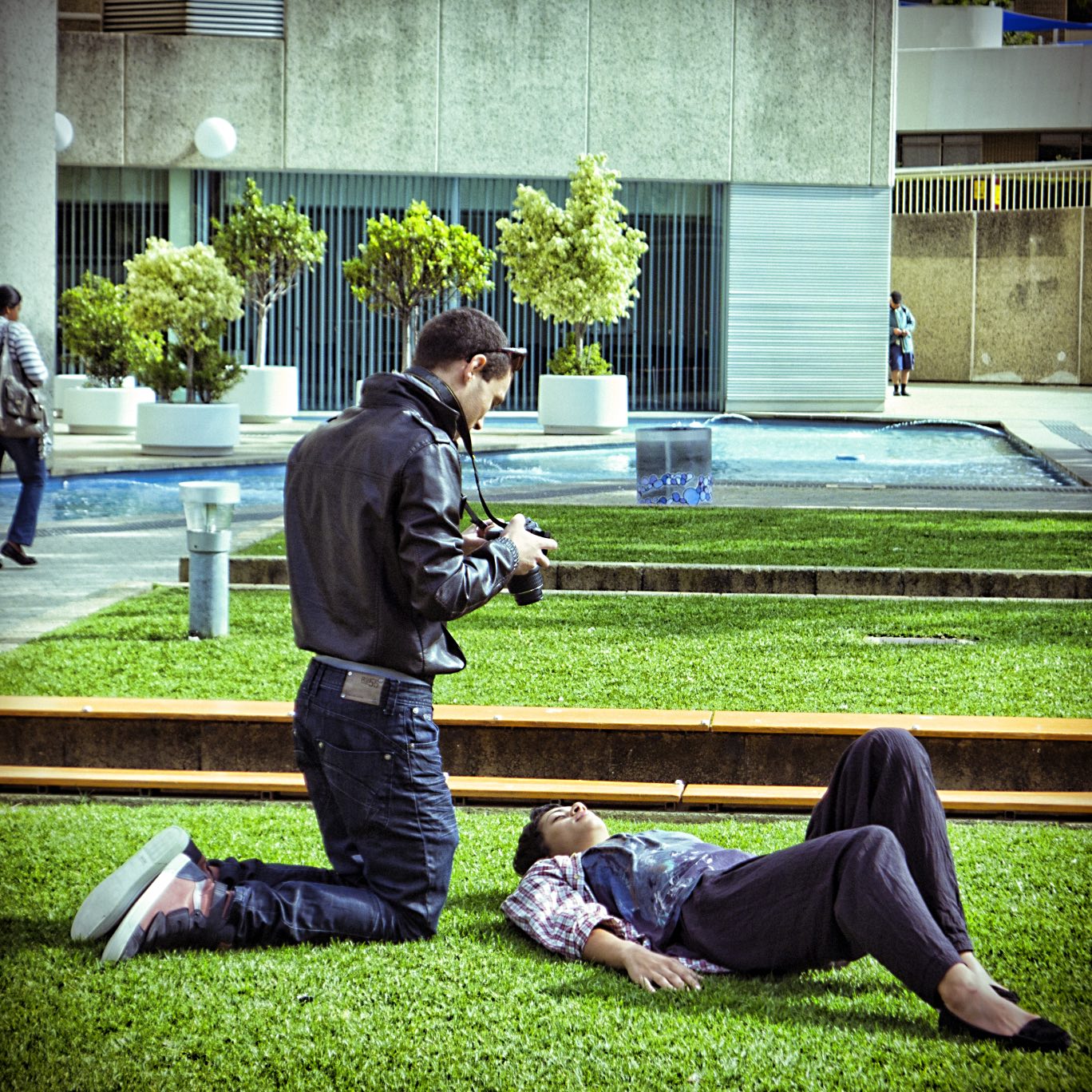
I have a long and complicated relationship with street photography and I want to try and articulate that here. Wikipedia defines street photography as “photography conducted for art or enquiry that features unmediated chance encounters and random incidents within public spaces”. It does not have to  have people as the subject matter, but most of it does. The history of street photography is really tied to the technology of photography – once cameras and film became portable and quick to use then people started taking photos of the things that were happening around them. The genre really started in the inter war period, but it was the end of the Second World War that really kick started it. World War Two had seen death and destruction carried out on an enormous industrial scale – the methods of modern mass production lines had been used to exterminate millions of people. The American-Luxenbourgish photographer Edward Steichen, who at the time was the director of photography at the Museum of Modern Art (MOMA) in New York, decided to curate an exhibition based upon the universality of the human experience as a counter to the war. Dorothea Lange, a leading light in photographic reportage, assisted Steichen in his project and on January 16, 1953 she sent out a recruitment letter to photographers asking them to “show Man to Man across the world. Here we hope to reveal by visual images Man’s dreams and aspirations, his strength, his despair under evil. If photography can bring these things to life, this exhibition will be created in a spirit of passionate and devoted faith in Man.”. In all 273 photographers from 68 countries contributed 503 photos. The exhibition opened at MOMA on January 24 1955 and then went on to tour the world for eight years making stops in thirty-seven countries on six continents. More than 9 million people viewed the exhibit, which is still in excess of the largest audience for any photographic exhibition since. The book from the exhibition has never been out of print and has sold more than 4 million copies. The impact was colossal – it exposed people to the idea of looking at photos of people doing the things that make us human and encouraged them to make their own photos.

 

Studio 798 East meets west. Coke and tagging in Beijing.


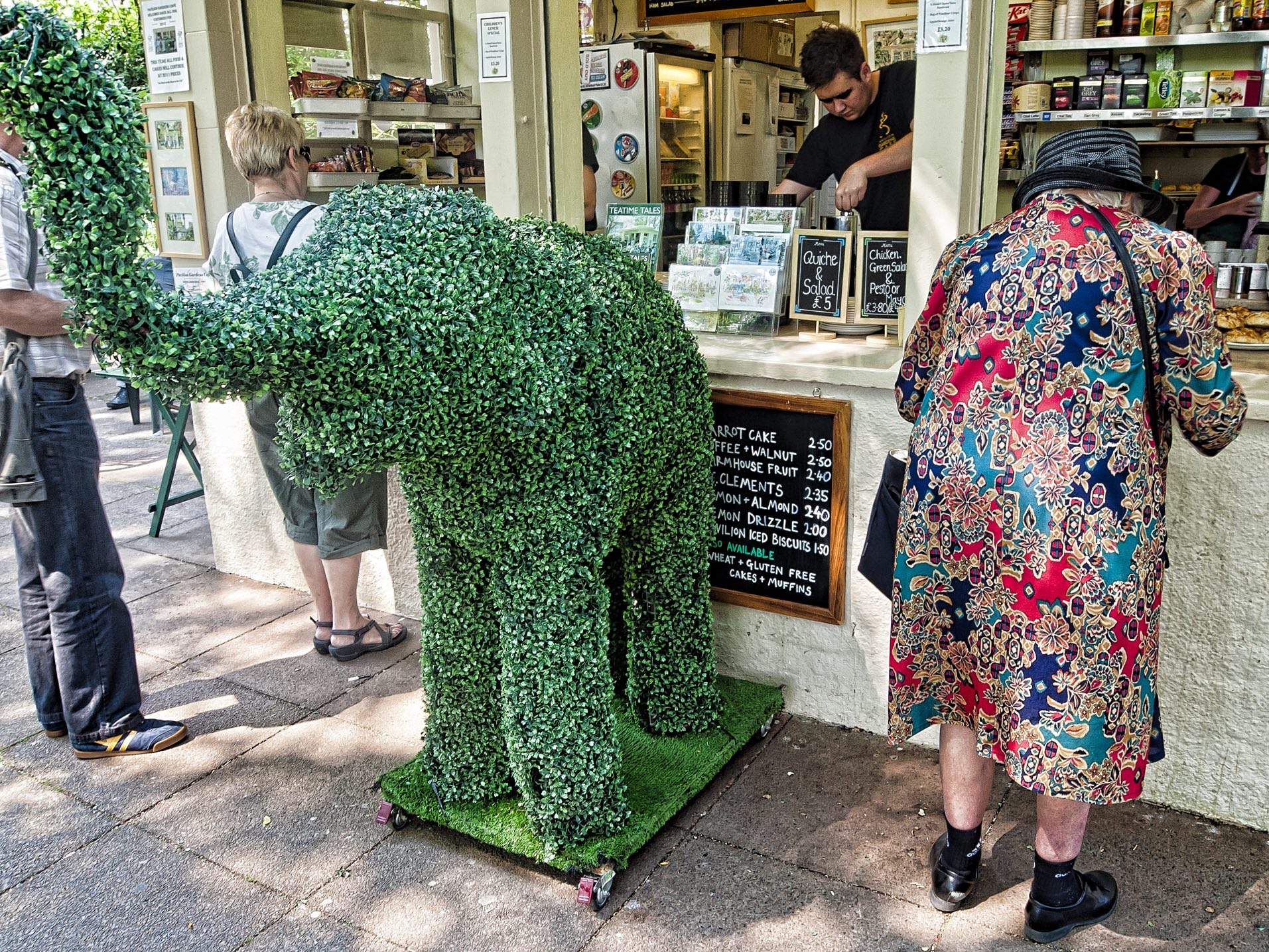
Topiary at the Pavillion Gardens Cafe, Brighton.


When I look at my bookshelves the bulk of them are of street photography. Ever since I saw the exhibition Another Country by Chris Killip and Graham Smith in 1985 I wanted to try and produce work that showed that ordinary people and things are important. So I started buying books by people such as Henri Cartier-Bresson, Robert Doisneau, Elliott Erwitt, and Robert Frank. At the same time I started loitering on streets with a camera trying to summon up the courage to take pictures of strangers. I’ve referred to this previously as having delusions of Bresson. In the 1980’s photography was expensive – every shot cost money – and this meant that I had to ration my picture taking to 2 or 3 rolls of film a month which meant that progression was a very slow process. Digital changed that and you could go out for the day and take hundreds of photos and get instant feedback on how they looked. It was a fantastic time to be a street photographer and the result is that there was another explosion of interest in the genre as millions of people world wide embraced it as a life style. 
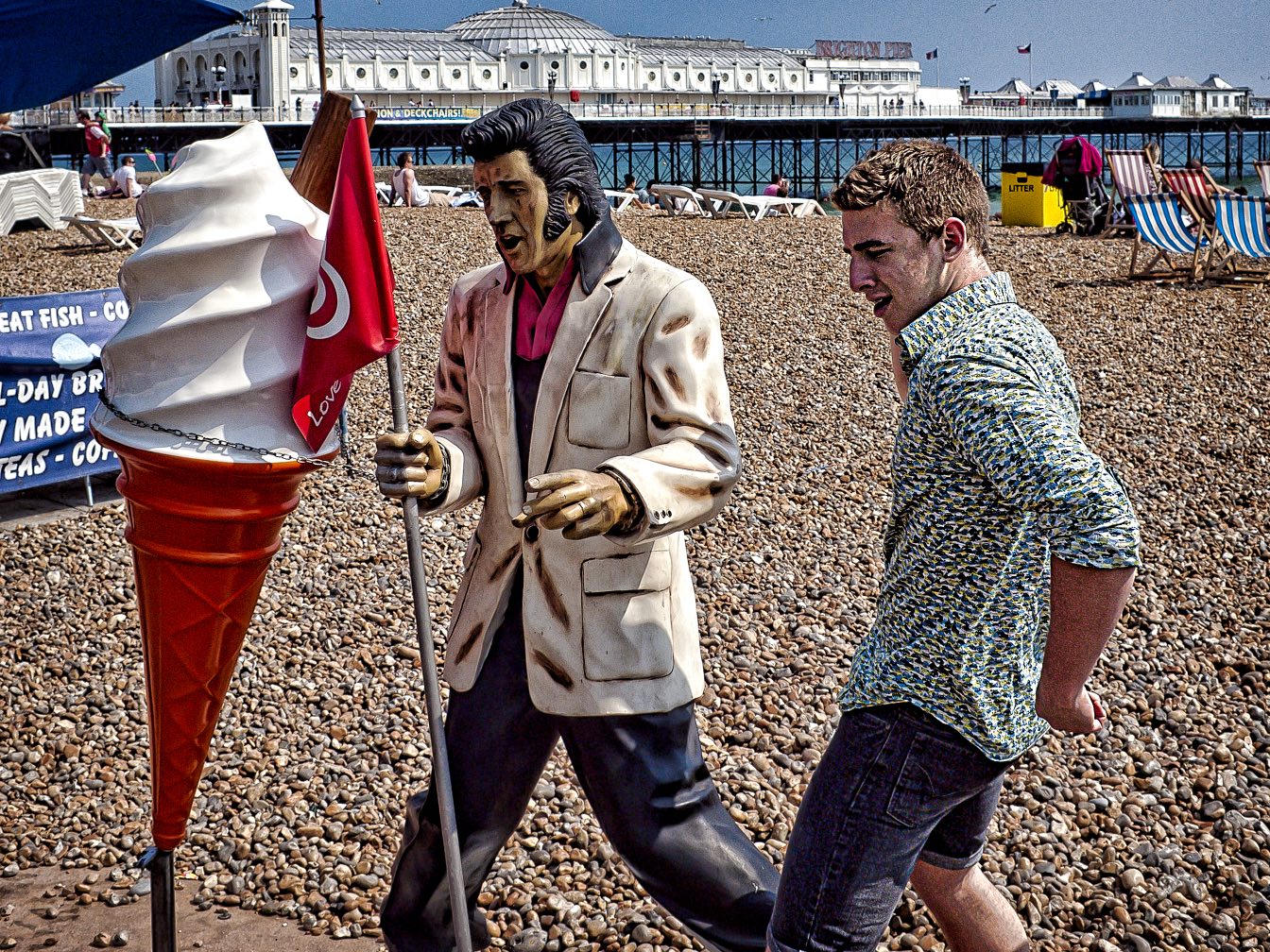
 

Getting in touch with his inner Elvis on Brighton Beach.


Goofing around with the camera in the Perth Cultural Precinct.


Things began to sour for me in 2007. After 9/11 the world was gripped with paranoia and virtually every country in the western world started bringing in counter terrorism legislation which meant every police officer and every security guard saw anyone carrying a camera as a potential terrorist. Some were OK and were polite and friendly. Some just over reached themselves and saw themselves as judge jury and executioner. In 2007 I went back to England as my father was dying. A few days after he died I wanted to go out and do something creative. Now the town we’re from attracts tourists from all over the world and so you’d think it would be safe to wander around taking photos. Well no and I had an extremely unpleasant encounter with a police officer who was convinced I was Osama Bin Laden scoping out the local shops for a potential suicide bombing. After threats of violence against my person he dragged me off to the police station and proceeded to threaten me some more for another couple of hours. It was only when I started asking the desk sergeant to see the Australian consul that things started to improve and I was eventually released and told to get on the next available plane. So that started to make me wary of taking photos out in public. The next year, 2008, Australia was gripped by the Bill Henson scandal and suddenly every photographer was not just a potential terrorist but also a paedophile. I attended the Earth From Above exhibition by Yann Arthus-Bertrand some of which was held outside in Perth’s Cultural Precinct. I took some photos of people interacting with the exhibits outside and while doing so I was accosted by a women who accused me of being a paedophile which led to an unpleasant encounter with the police. So with that I decided to hang up my rangefinder and 35mm lens and concentrate on subjects that weren’t people. But it wasn’t just the problems with the police it was also the fact that at this time I also felt that the world’s culture was beginning to change – it was becoming more homogeneous and it was difficult to see any difference in photos. The final straw was the ubiquity of the mobile phone. Everyone seems to walk around staring at this thing they carry. The little spontaneous connections and reactions have now disappeared as everyone just stares at the screen on their mobile phone. I’m not the only person who feels this way. Joel Meyerowitz the doyen of New York street photography said in an interview with the Guardian newspaper “In the 60s and 70s you could look at my street photographs and trace lines from the eyes of people connecting with other people’s eyes, setting up these force fields.” Of now he says “Nobody’s looking at each other. Everybody’s glued to their phones…The street has lost its savour.” Meyerowitz has now largely given up on it and concentrates on still life.
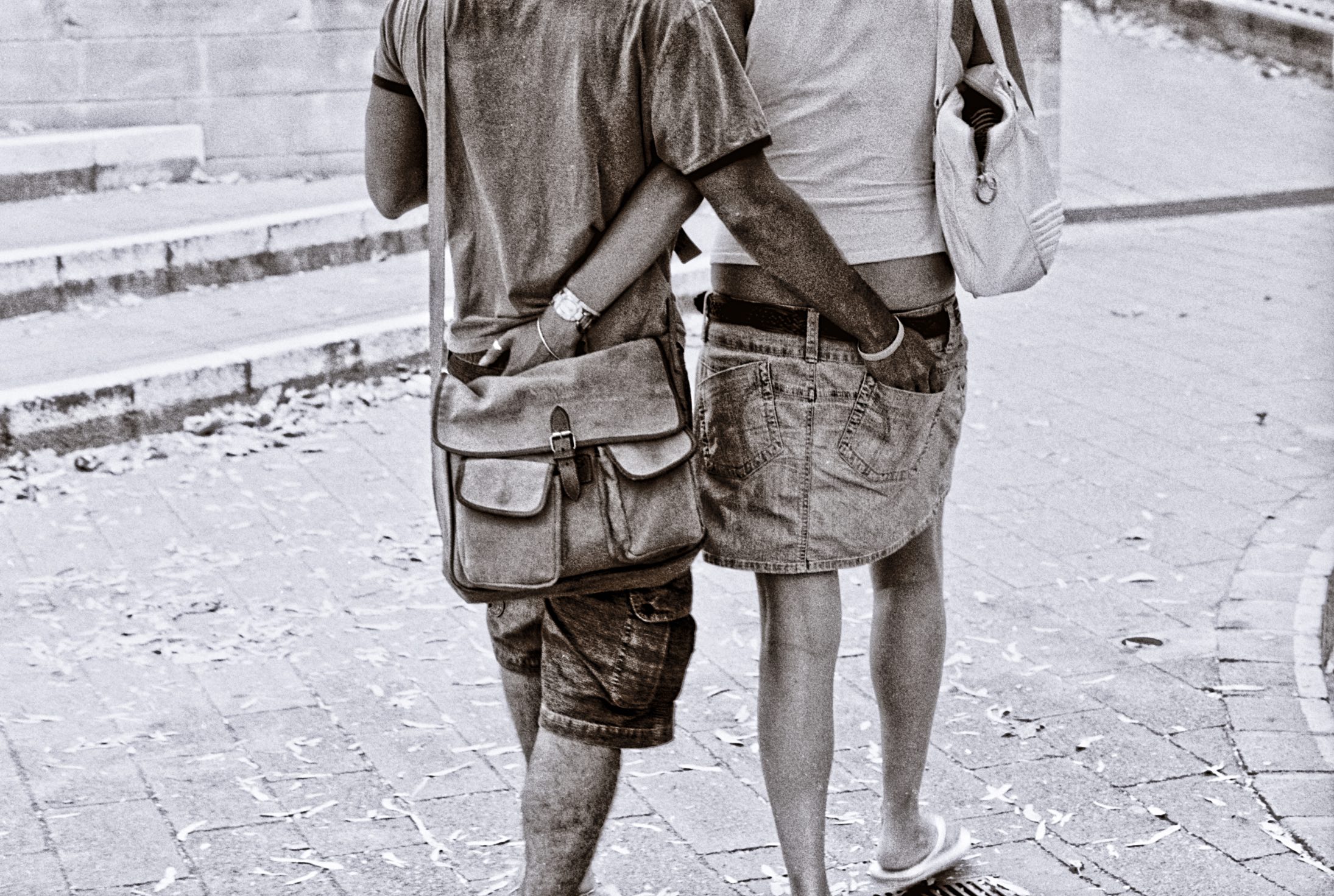
 

Young lovers walk arm in arm through Northbridge in Perth, Western Australia.


Palm Sunday walk for justice for refugees. Perth, Western Australia.


So what is my relationship with street photography now? Well I’m not buying the books or looking at other peoples work, but I am starting to re-engage. By any stretch of the imagination it is not my oeuvre anymore, but it is something I quite like to do when I’m in Perth and got a couple of hours to fill. I stay well clear of the police and make sure that no children are in the shot and I make sure I wander around looking like a tourist.


Busking in Elizabeth Street Mall, Hobart.
 

Water playground in Forest Place, Perth, Western Australia.
 

First Contact , Elizabeth Quay in Perth, is a five metre tall artwork by Nyoongar artist Laurel Nannup. The work depicts the arrival of European settlers to Perth. As the European boats arrived, the local Nyoongar people believed that these ships, were their past ancestors returning from the sea.


Sometimes you need help with taking your selfie.


Fortress England – smile you’re on CCTV. Chichester West Sussex.

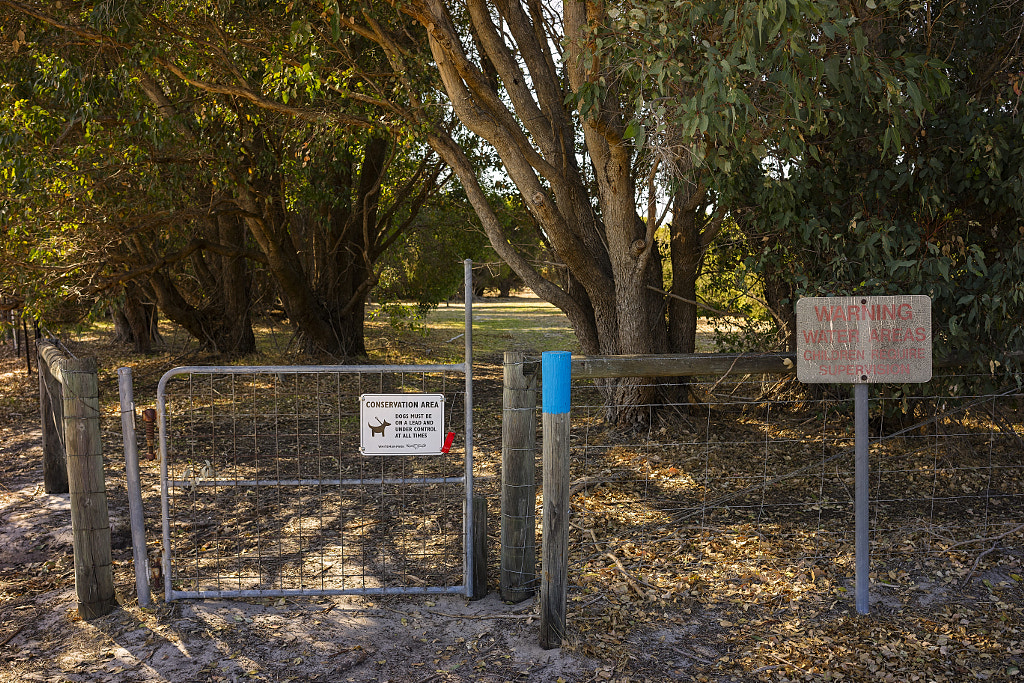
The Werillyiup Trail


Werillyiup Trail by Paul Amyes on 500px.com

Follow the blue poles for the Werillyiup Trail in Whiteman Park.


The Werrillyiup Trail in Whiteman Park is a 3Km jaunt around an area called Horse Swamp. So called because back in the early days of the Swan River Colony if horses escaped they invariably ended up at the swamp. The word Werrillyiup is is Nyoongar for “a swampy place” so from all this you’d expect to see quite a bit of water. Well for much of the year it is dry and really only fills in June with the coming of the winter rains. Each time I’ve been it’s been akin to walking around a large puddle. That’s not to detract anything away from  it, it is just a statement of fact. What you will see though is an important wildlife refuge in a large ever-growing city. Western Grey Kangaroos are the most visible residents but there is a huge variety of birdlife here particularly in winter, spring and early summer. I’ve had more luck seeing raptors here than at any other location in Perth. EBird Australia has a listing of 101 species that can be seen at various times of the year around the swamp.


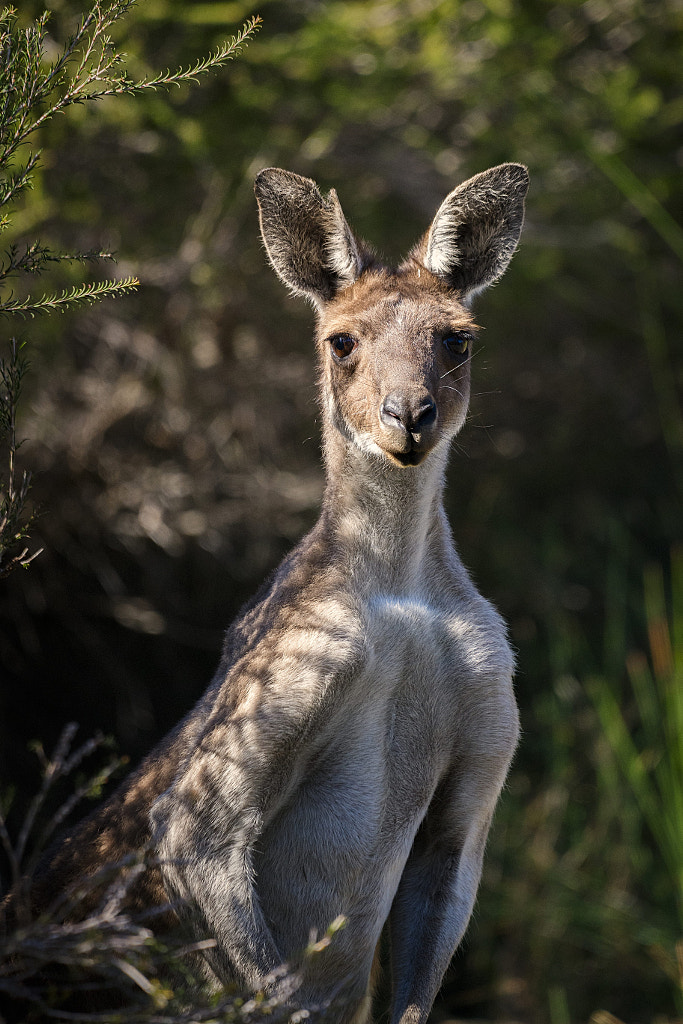
Yongka by Paul Amyes on 500px.com

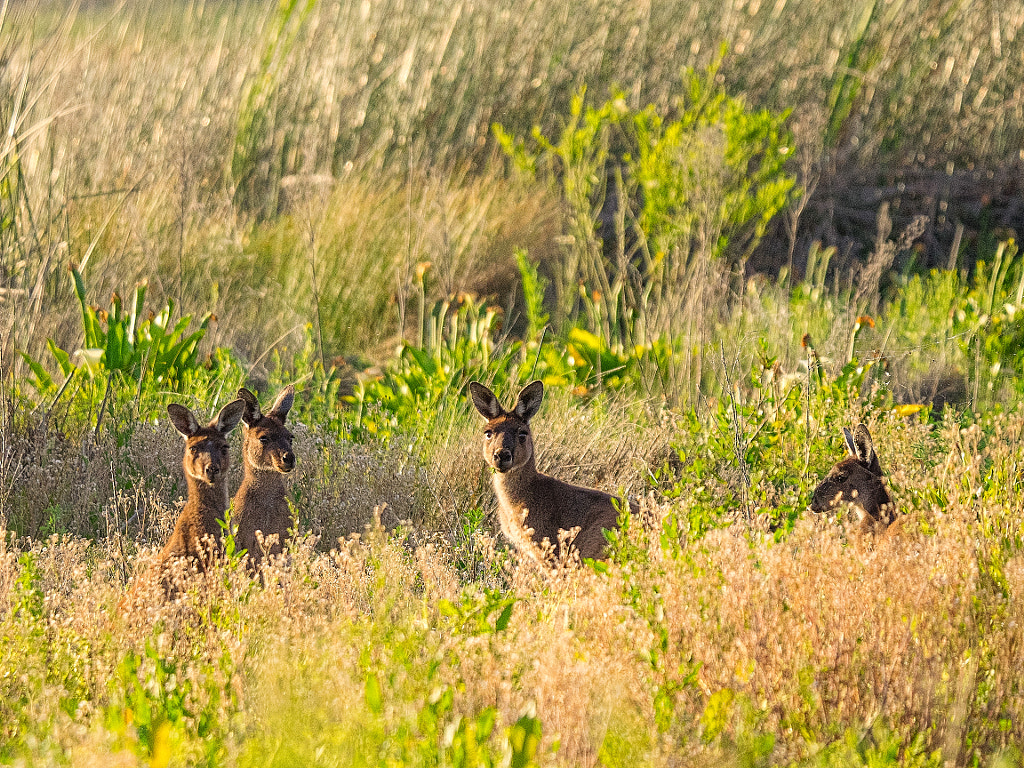
Western Grey Kangaroo, macropus fuliginosus, Whiteman Park, Western Australia.


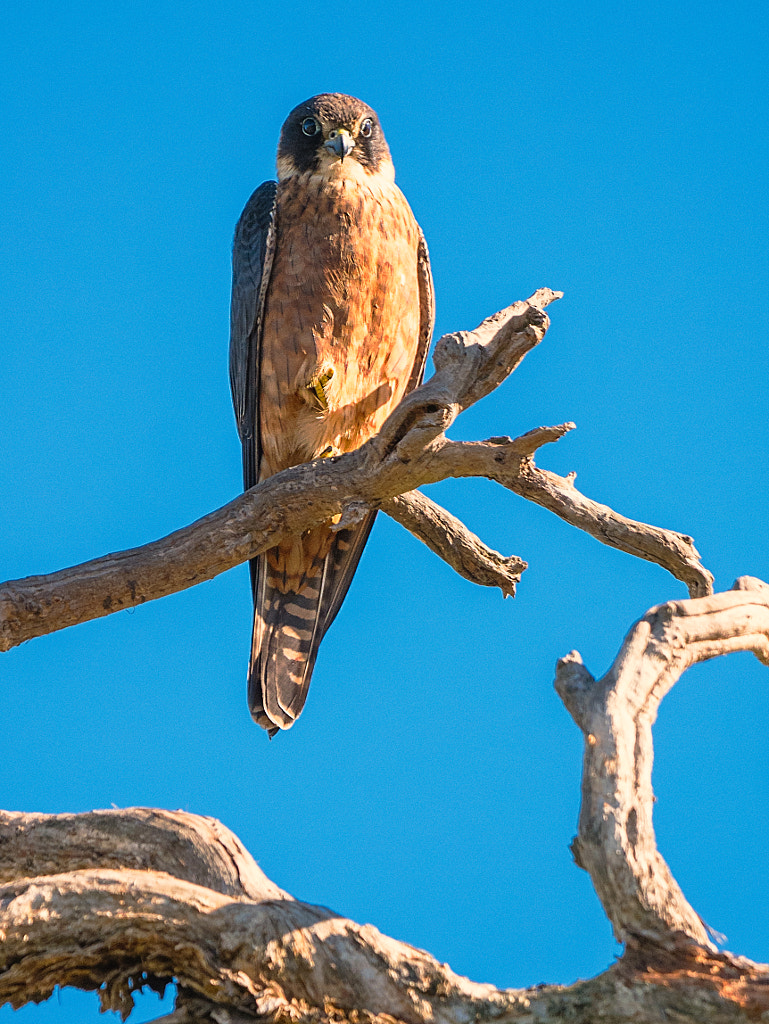
Australian Hobby by Paul Amyes on 500px.com

Australian Hobby (Falco longipennis longipennis). Whiteman Park, Western Australia.


Djando by Paul Amyes on 500px.com
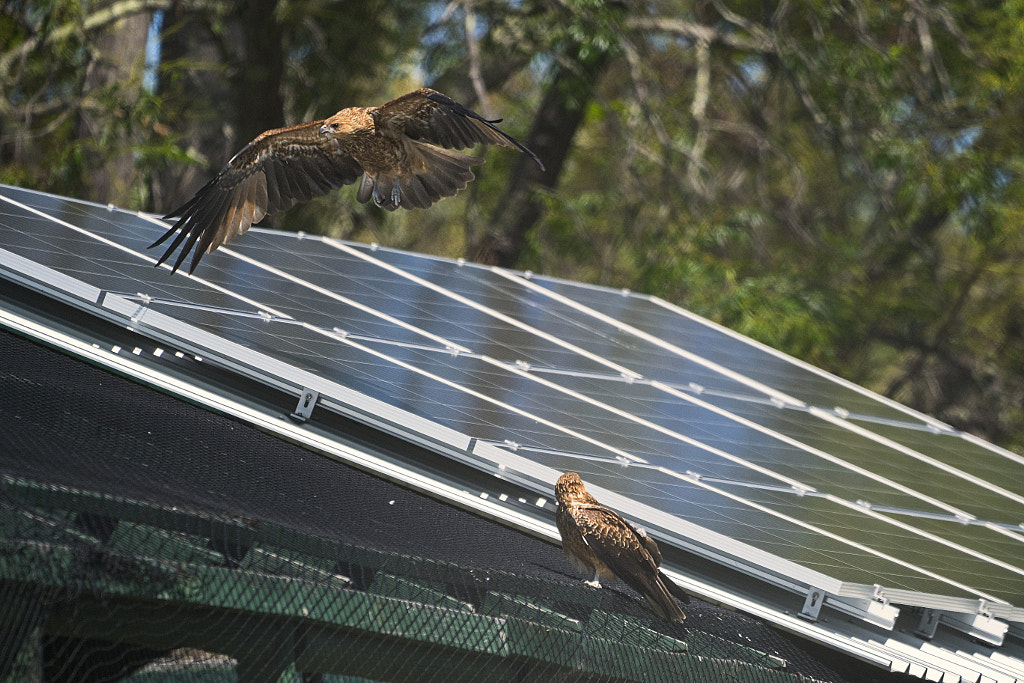
A pair of Whistling Kites seen flying round the aviaries on the edge of Whiteman Park.


Wyan by Paul Amyes on 500px.com

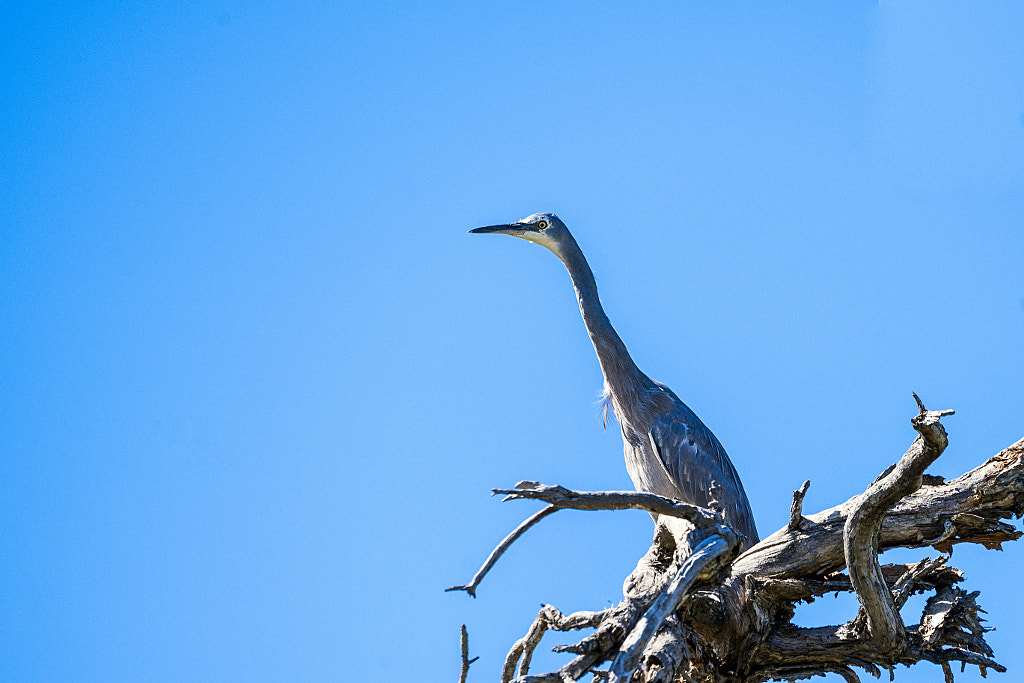
A white-faced heron looks out from its tree top perch over Horse Swamp. Whiteman Park, Western Australia.


Australian Shelduck by Paul Amyes on 500px.com
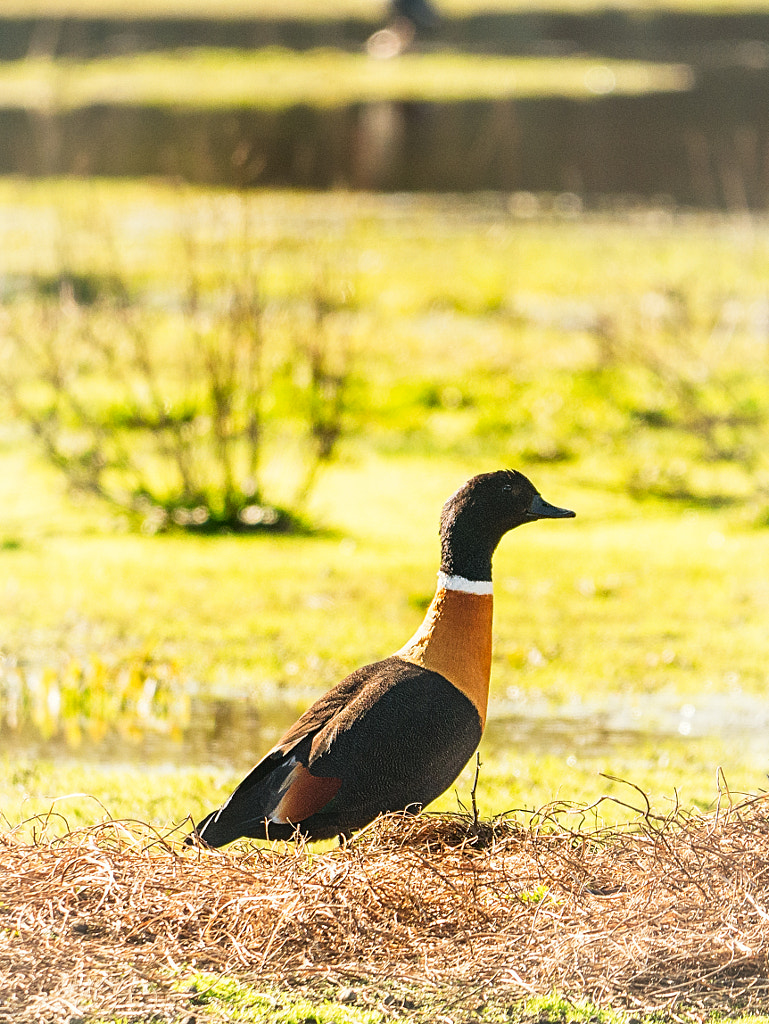
Australian Shelduck, Tadorna tadornoides, Whiteman Park, Western Australia.


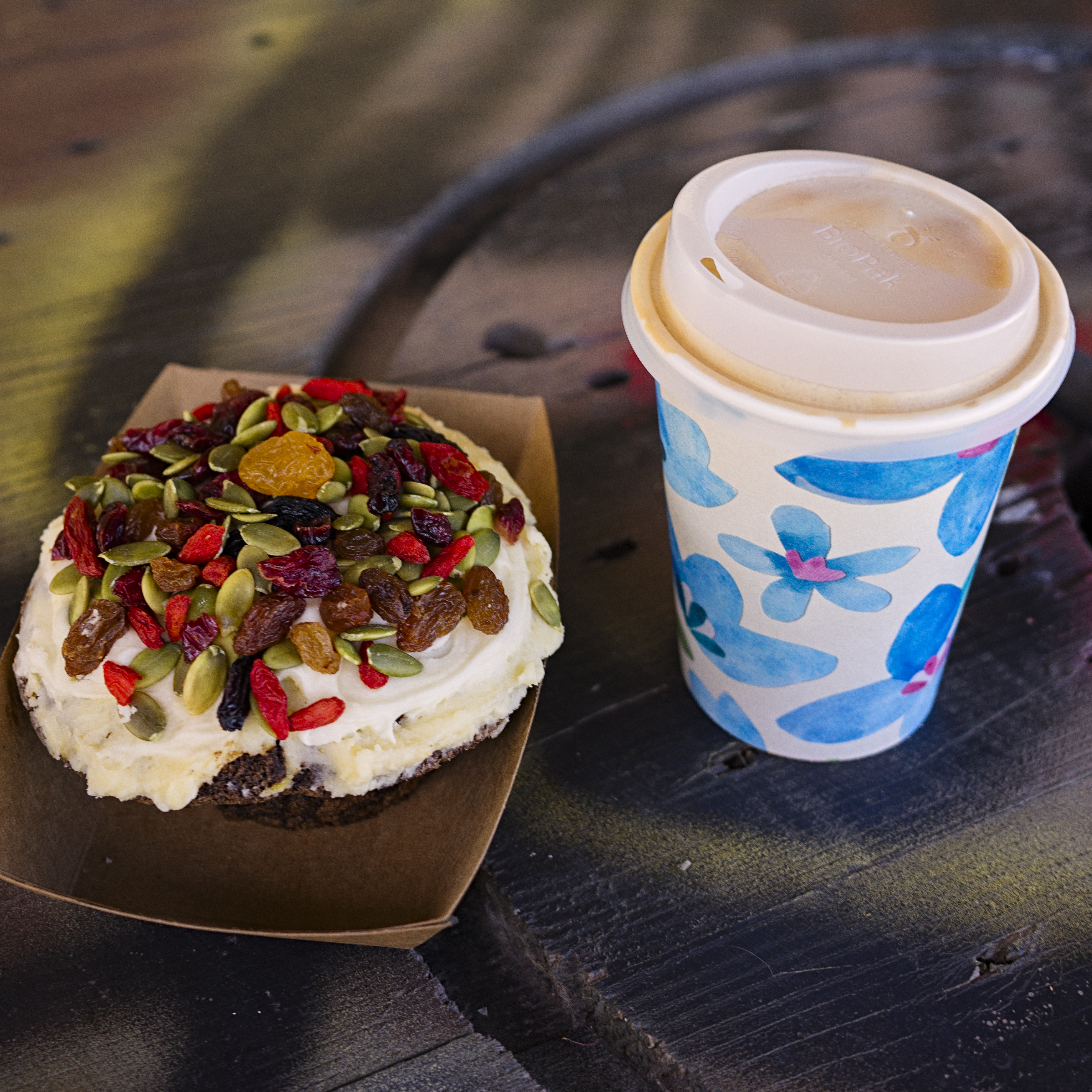
After your leisurely walk around the swamp you can be revived at the excellent Guerrilla Hub Kiosk with a great coffee and some of their wonderful food. And if after all that you feel as if you’ve not communed enough with the wildlife you can always nip up to Caversham Wildlife Park and have your picture taken with a wombat.


Refreshment after a hard mornings walking and bird watching at the Guerrilla Hub kiosk in Whiteman Park.


Yours truly with one of Caversham Wildlife Park’s staff and a wombat.

Perry’s Paddock and Beenyup Swamp Walk

Yellagonga Regional Park by Paul Amyes on 500px.com
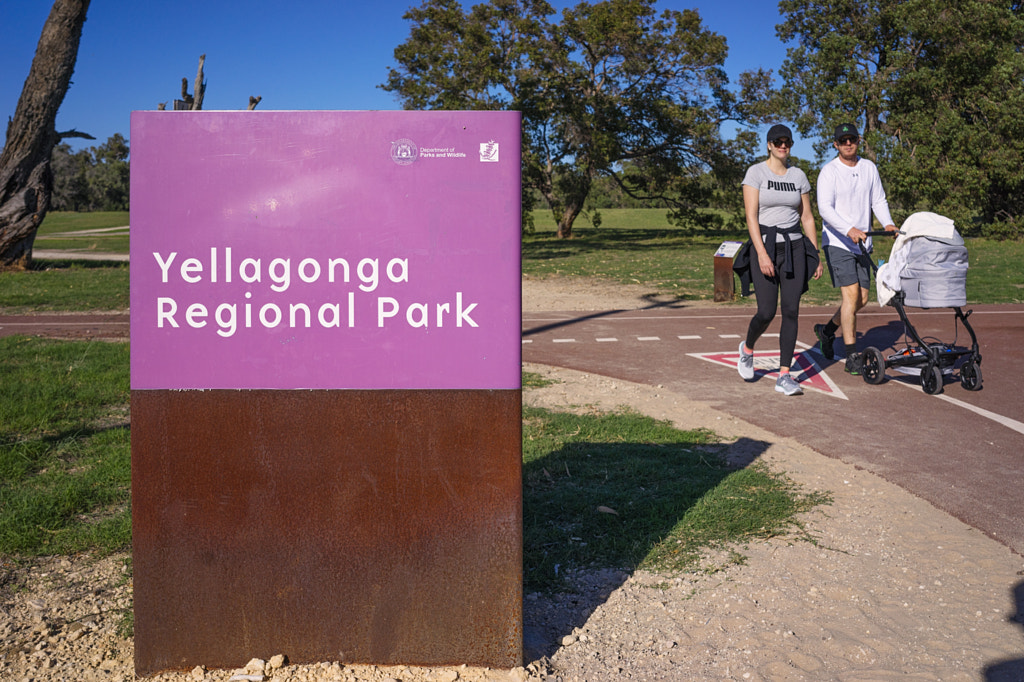
The trails around the southern end of Lake Joondalup are popular with walkers and cylists alike.


Last August I went up to Lake Goollelal in Yellagonga Regional Park and the other day while my partner was enacting her plan for total world domination in croquet I decided to visit the Park again but this time I thought I’d give the southern end of Lake Joondalup a go.


It’s a nice 4 1/2 Km walk taking in Perry’s Paddock, the southern part of the lake and Beenyup Swamp. I didn’t stick to the main paths but followed the smaller paths around as I wanted to see the local wildlife, and as it was a Sunday avoid the MAMILs thinking they’re riding the the Tour de France – more like the Tour de Farce from the look of some of them.


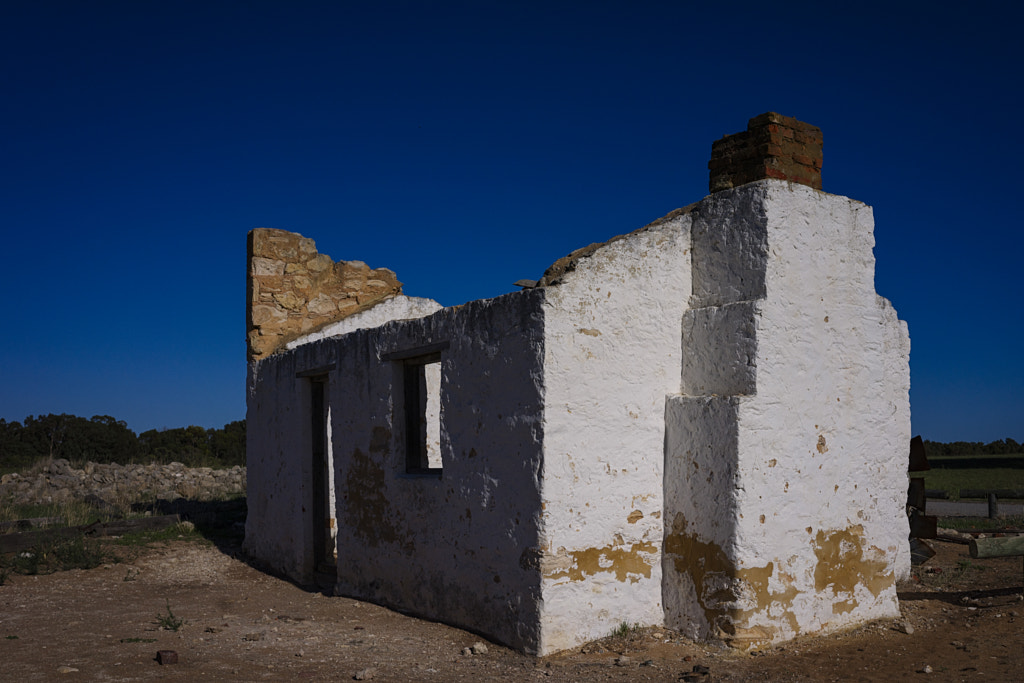
Linhay Cottage by Paul Amyes on 500px.com
This building is known by a variety of names Linhay, LinhayCottage, Linhay Perry’s Shed. It was built in the 1860’s by George Shenton at Perry’s Paddock. The Paddock was one of the first land grants in Wanneroo area made in 1838.


Near the start of the walk there are some buildings, well the remains of them. They’re not building projects waiting for tradies to finish them but they are some of the earliest buildings to have been built in Wanneroo. The field they’re in is known as Perry’s Paddock and was one of the first land grants in the area made back in 1838. This isn’t what I came for as I was hoping to see birds on and around the lake.


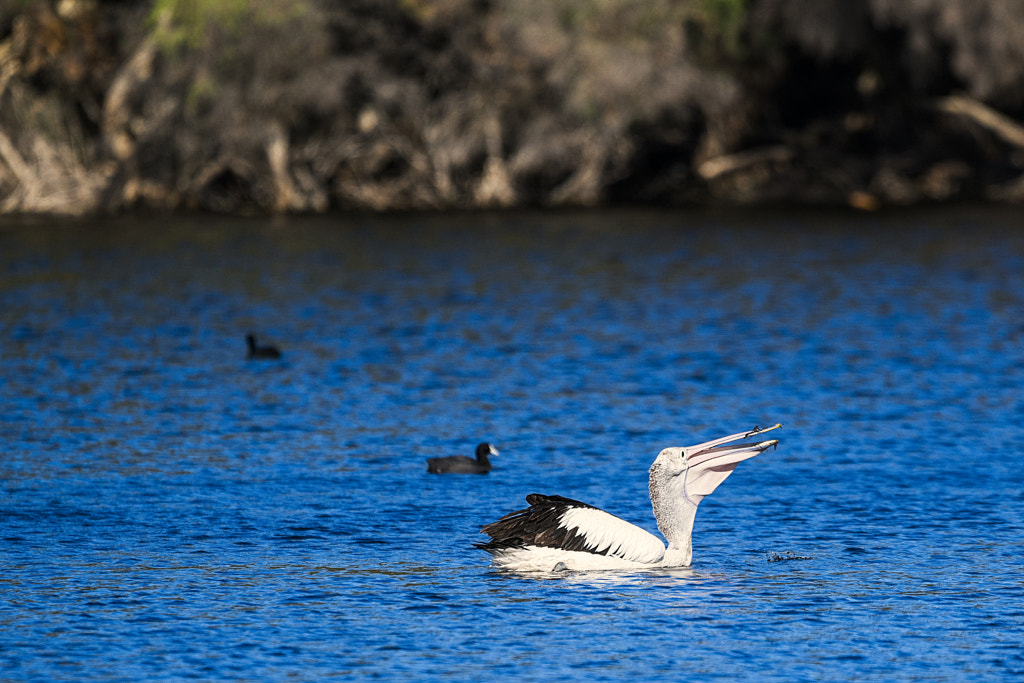
Boodelong by Paul Amyes on 500px.com
Boodelong or Australian Pelican (Pelecanus conspicillatus) feeding on Lake Joondalup in Yellagonga Regional Park.

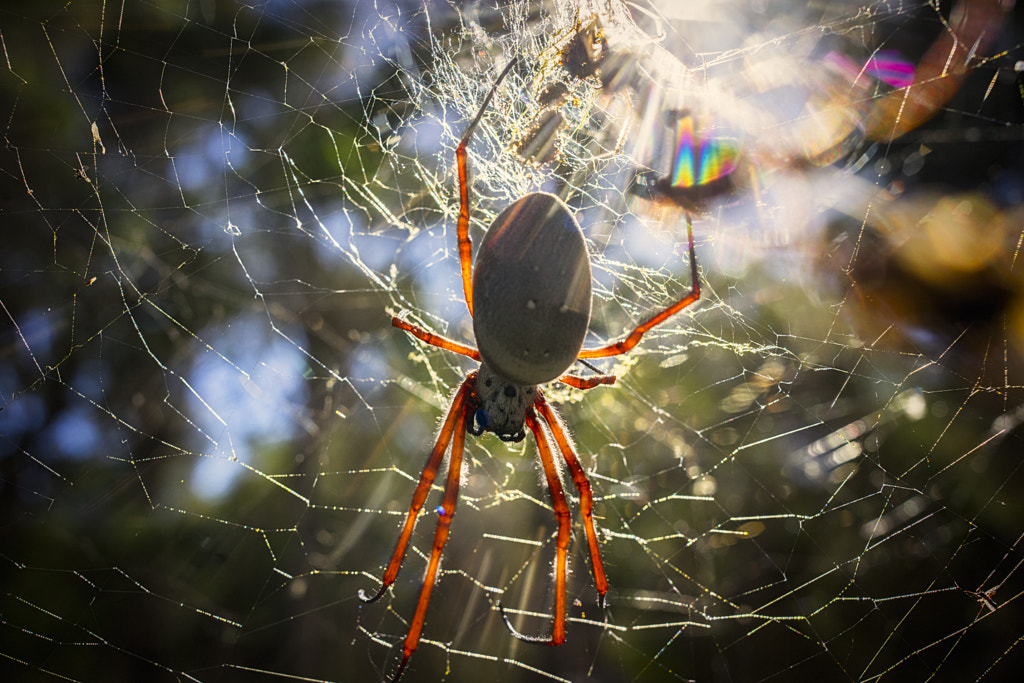
Unfortunately it’s not that easy to get to the lake side – it involves trying to creep through the thick bush on the lakeside without making any noise. One crack of dry twig and you’re rumbled and every birder miles around does a runner. The thick bush has other hazards – they’re thick with spider’s webs – really BIG webs. Where there are big spider’s webs there are BIG spiders. In this case they Golden Orb-Weaving Spiders so named as the webs have a slight gold hue to them. The webs are surprising tough and the female spiders that make them are not shy and are very visible which makes it difficult for those of a more nervous disposition not to scream when blundering through them like something out of Harry Potter. Screaming like a “girlie man” also does not help you creep up on birds unnoticed. Your fearless correspondent was undeterred as he knew that despite their size Golden Orb-Weaving Spiders are harmless unless you are an insect or a male of the species looking for an amorous liaison.


Golden Orb-Weaving Spider by Paul Amyes on 500px.com

Golden Orb-Weaving Spider, Nephila edulis. Despite its size and their massive webs they are harmless to humans. Yellagonga Regional Park, Western Australia.


Manyt by Paul Amyes on 500px.com
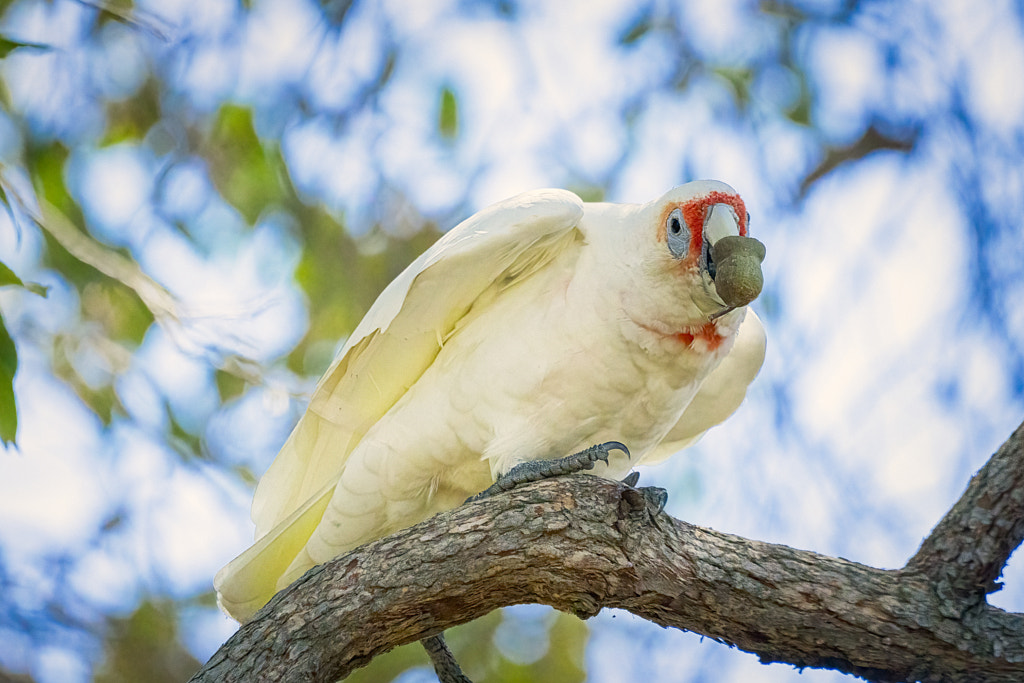
Manyt or the Western Corella (Cacatua pastinator subsp. derbyi). Yellagona Regional Park, Western Australia.


Three Wise Corellas by Paul Amyes on 500px.com
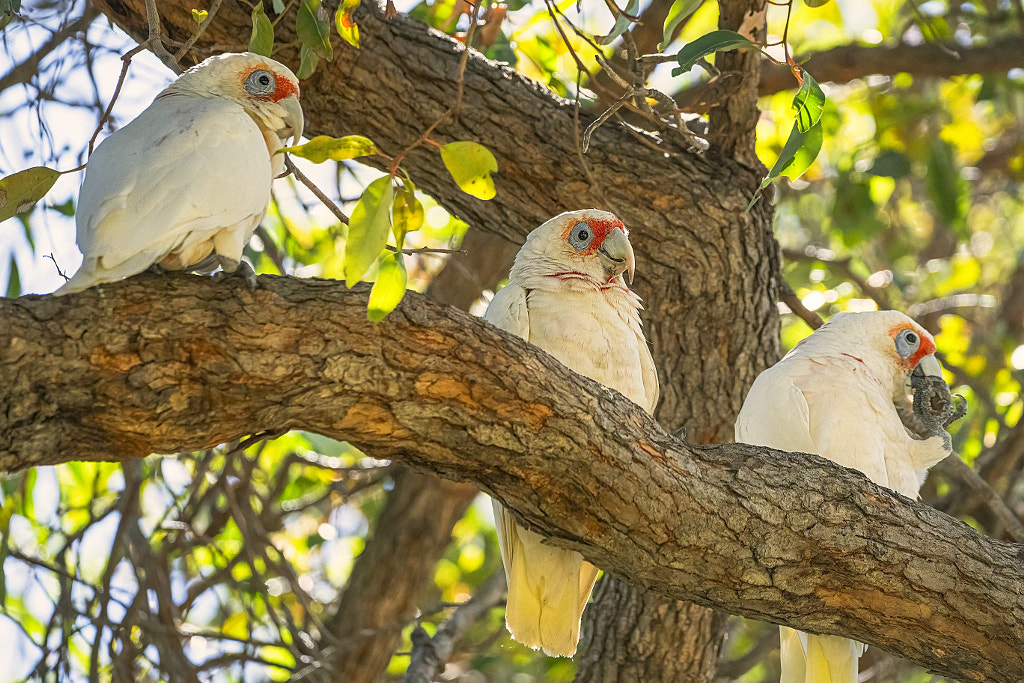
Three wise corellas – hear no evil, see no evil, and sorry my mouth is full. Yellagona Regional Park, Western Australia.


At least the corellas found my mad dance of jumping up and down and flapping my arms about while shrieking entertaining. Ah! I didn’t mean to say that! They would have if they’d have actually seen me do it – which of course they didn’t. Leaving the lake and heading down south takes you to Beenyup Swamp which provided an opportunity to see more birds and less spiders.


Yellagonga Regional Park by Paul Amyes on 500px.com
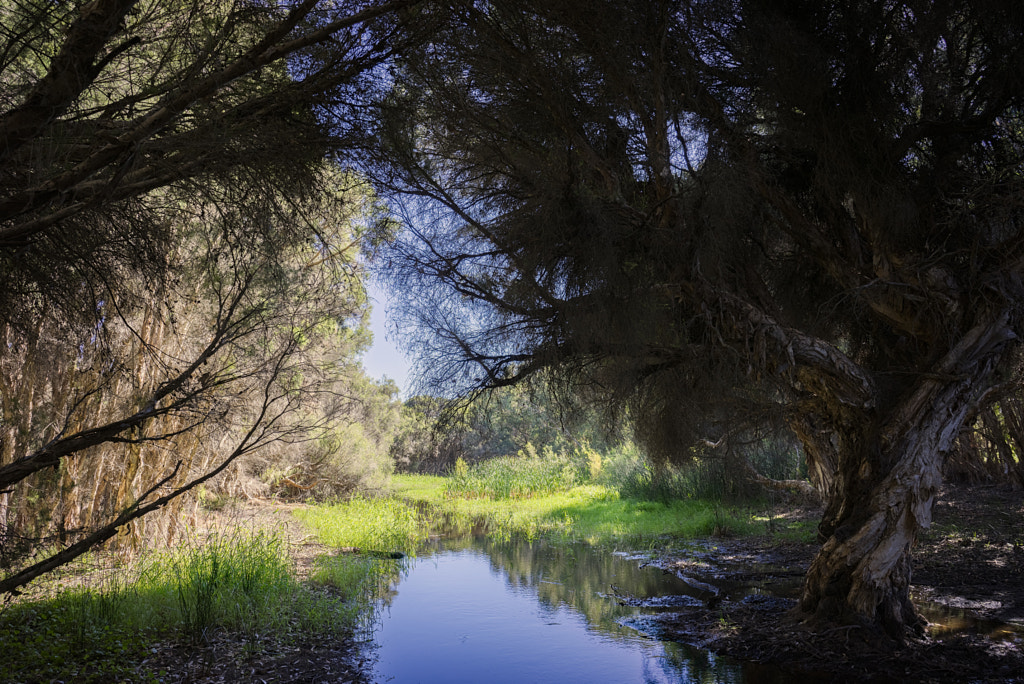
Beenyup Swamp in Yellagonga Regional Park.


Melkullya by Paul Amyes on 500px.com
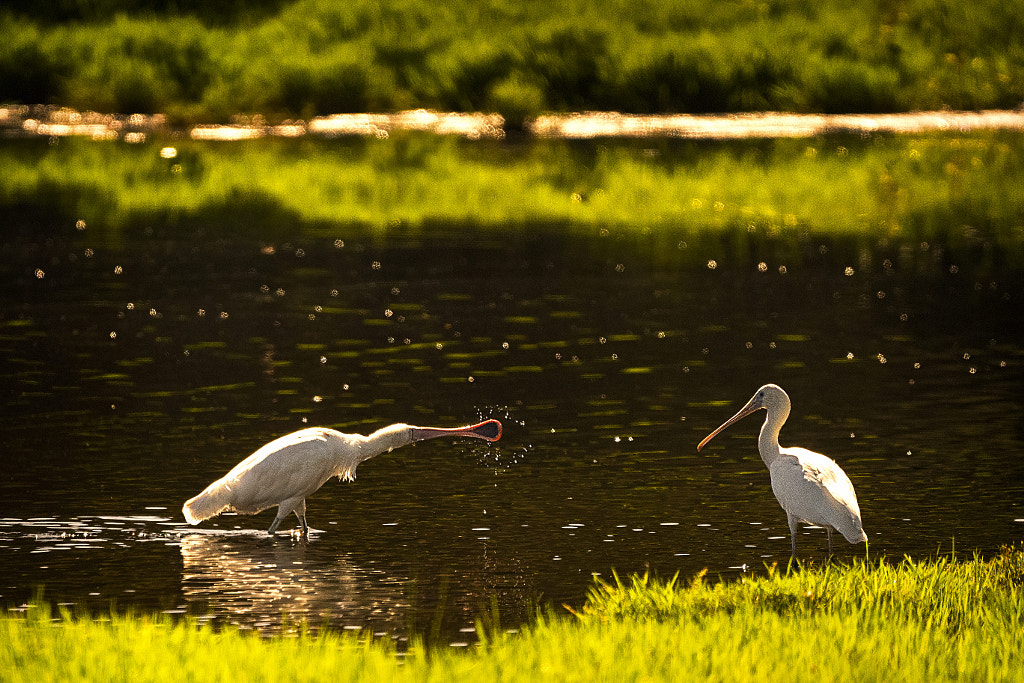
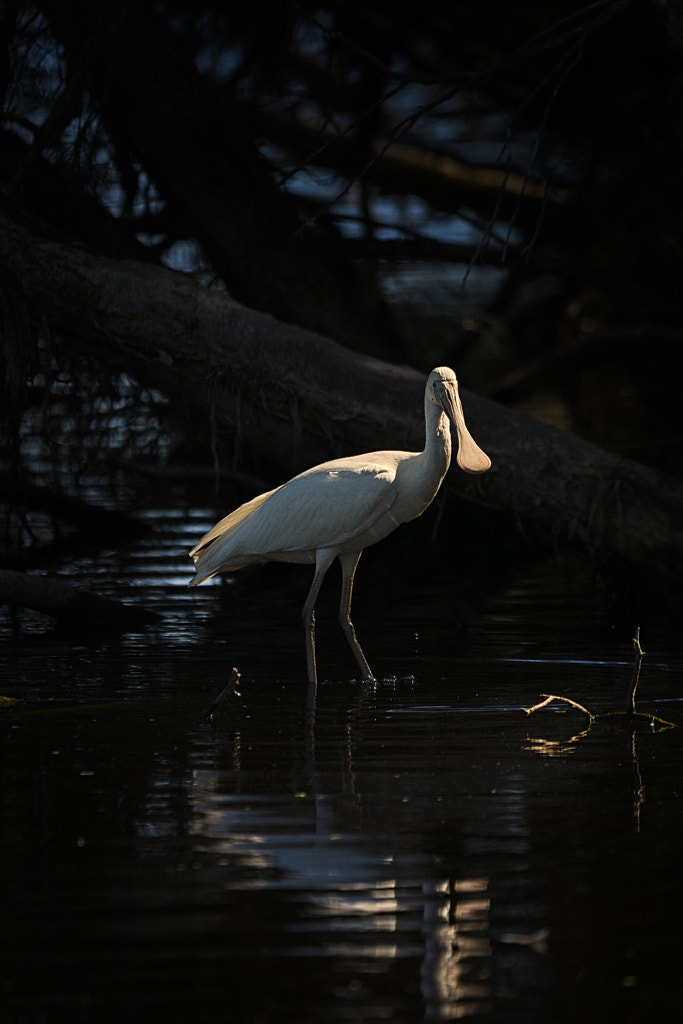
Melkullya or Yellow-billed Spoonbills, Platalea flavipes, feeding at Lake Joondalup in Yellangonga Regional Park.


Melkullya by Paul Amyes on 500px.com
Lurking in the shade of the swamp paperbark trees.


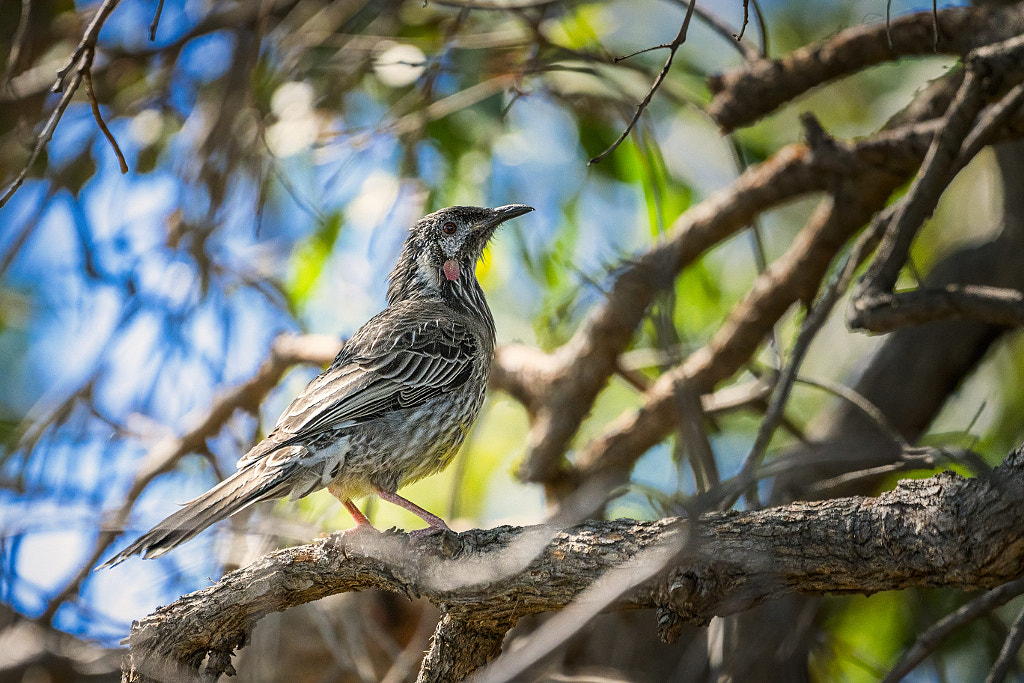
Wodjalok by Paul Amyes on 500px.com
Red Wattle bird (Anthochaera carunculata subsp. woodwardi) known to the Nyoongar people as wodjalok. Yellagonga Regional Park.


Djitidjiti by Paul Amyes on 500px.com
Djitidjiti . The eponymous Willie Wagtail, Rhipidura leucophrys leucophrys. Yellagonga Regional Park, Western Australia.
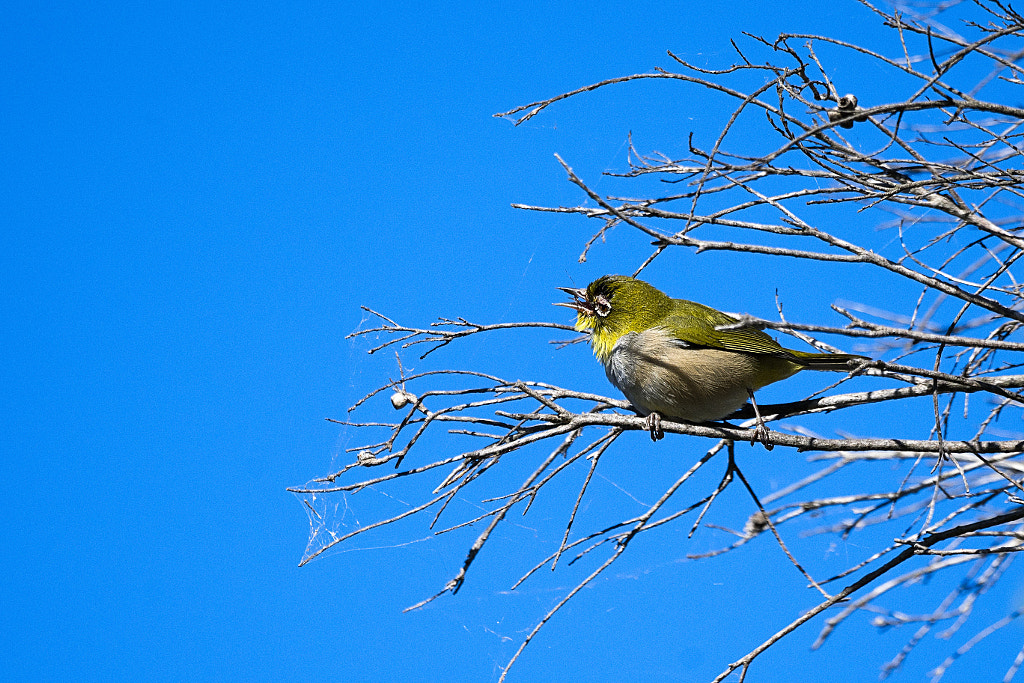
Boang by Paul Amyes on 500px.com
Despite their small size the Silvereye, Zosterops lateralis, has an incredibly loud birdsong. Yellagonga Regional Park, Western Australia.


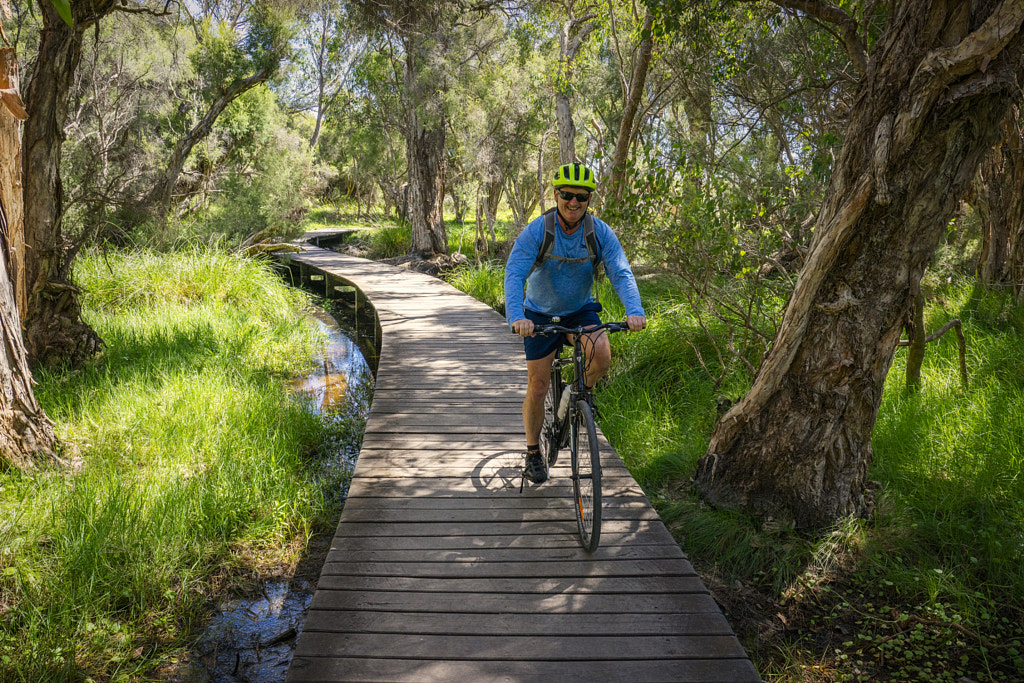
While walking along the Beenyup Swamp Broadwalk I did meet my first cyclist of the day who was definitely not a MAMIL and who was very apologetic for startling me. All in all a very pleasant walk and hopefully I’ll get back at a better time of year when there’ll be more bird activity.


Yellagonga Regional Park by Paul Amyes on 500px.com
Not a MAMIL. Cycling along the Beenyup Swamp Boardwalk in Yellagonga Regional Park.

Lake Gwelup


Lake Gwelup by Paul Amyes on 500px.com
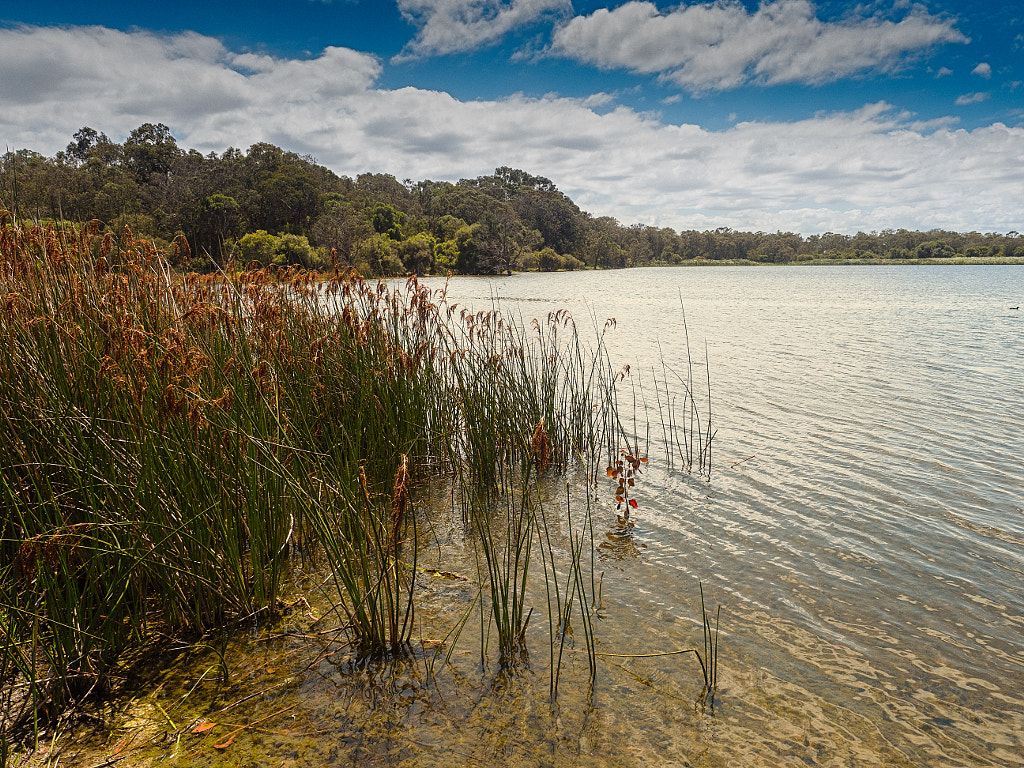
The south east bank of Lake Gwelup in Western Australia.


Lake Gwelup by Paul Amyes on 500px.com
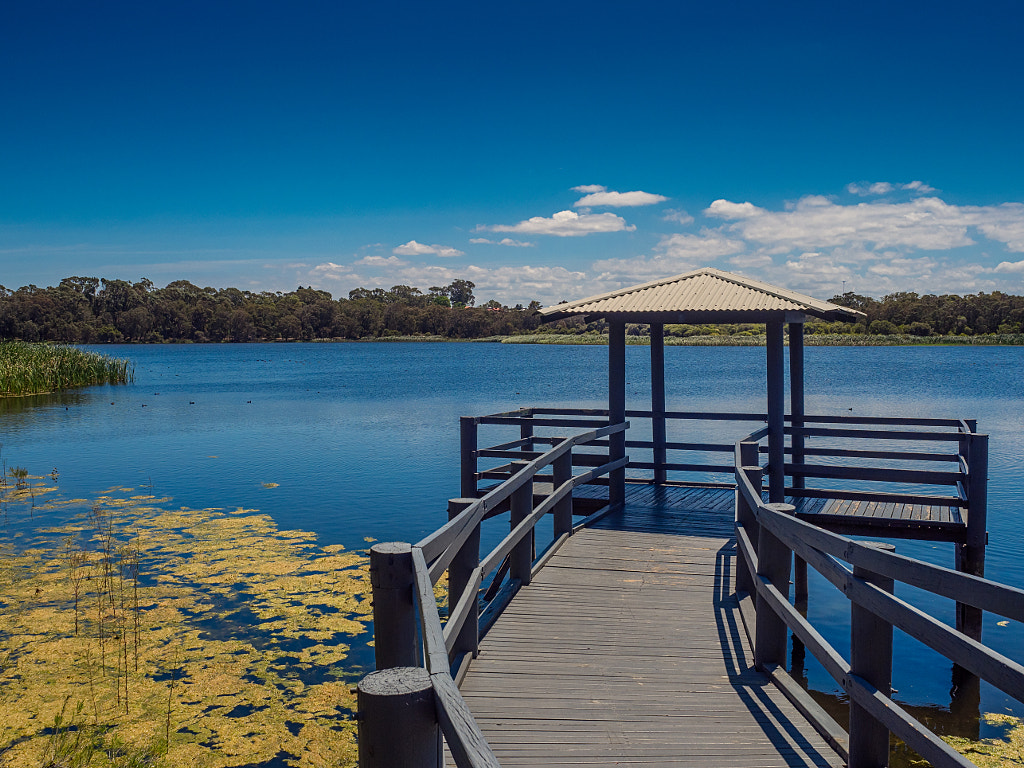
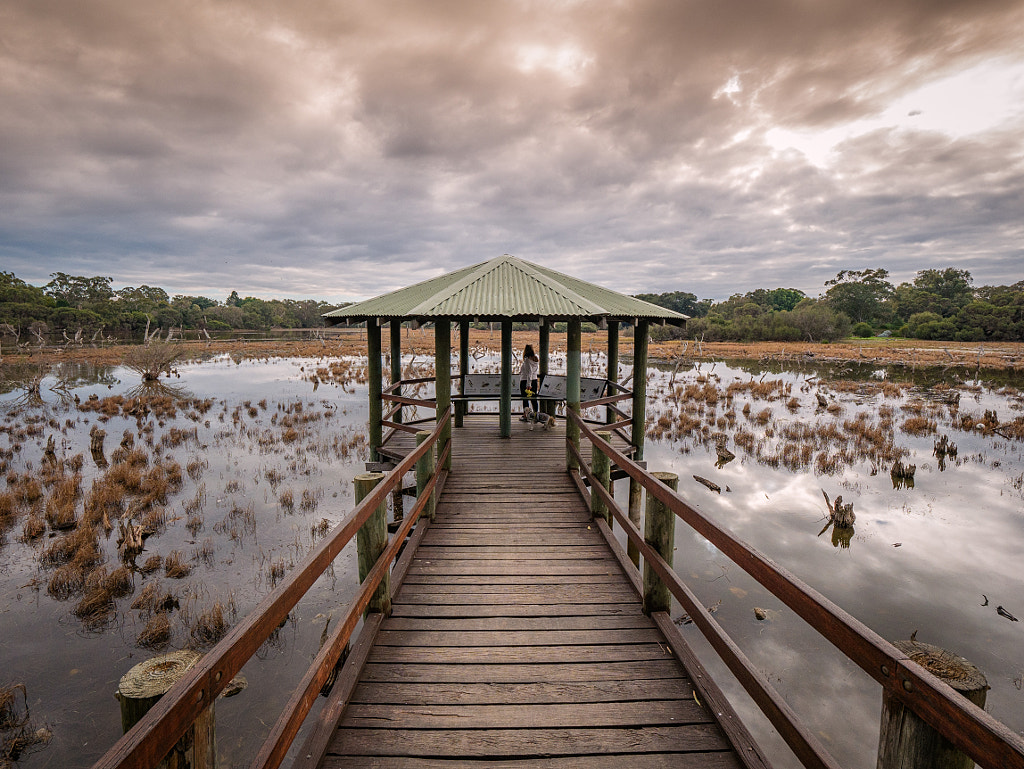
The bird observation platform that forms part of the Lake Gwelup Reserve Broadwalk on the south eastern shore of Lake Gwelup.


Lake Gwelup and the reserve that surrounds it is one of the few areas of wetland that is still relatively intact. This means that it is home to a wide variety of flora and fauna which is all the more surprising considering it is just 12 Km north of Perth’s CBD in the City of Stirling which with a population of 210,000 (2016 Census) is the largest local government area by population in Western Australia. The bush around the lake is comprised of Marri, Jarrah, Flooded Gum, Tuart (, Swamp Paperbark and several species of Banksia. The bush and the lake provided a habitat for birds (according to eBird Australia 110 species of bird have been sighted there), frogs (notably Moaning Frogs), and reptile species (e.g. dugites, skinks and long necked turtles). One of the strange facts that has prevented the land from being developed is that the peaty soils around the lake if disturbed release arsenic and iron sulphates. In the areas nearby that have been drained and reclaimed they have the highest concentrations of dissolved arsenic in the world – some 25000 ug/L (some 400 times higher than that identified as safe levels for drinking water).


Swamp Paperbark Flowers by Paul Amyes on 500px.com
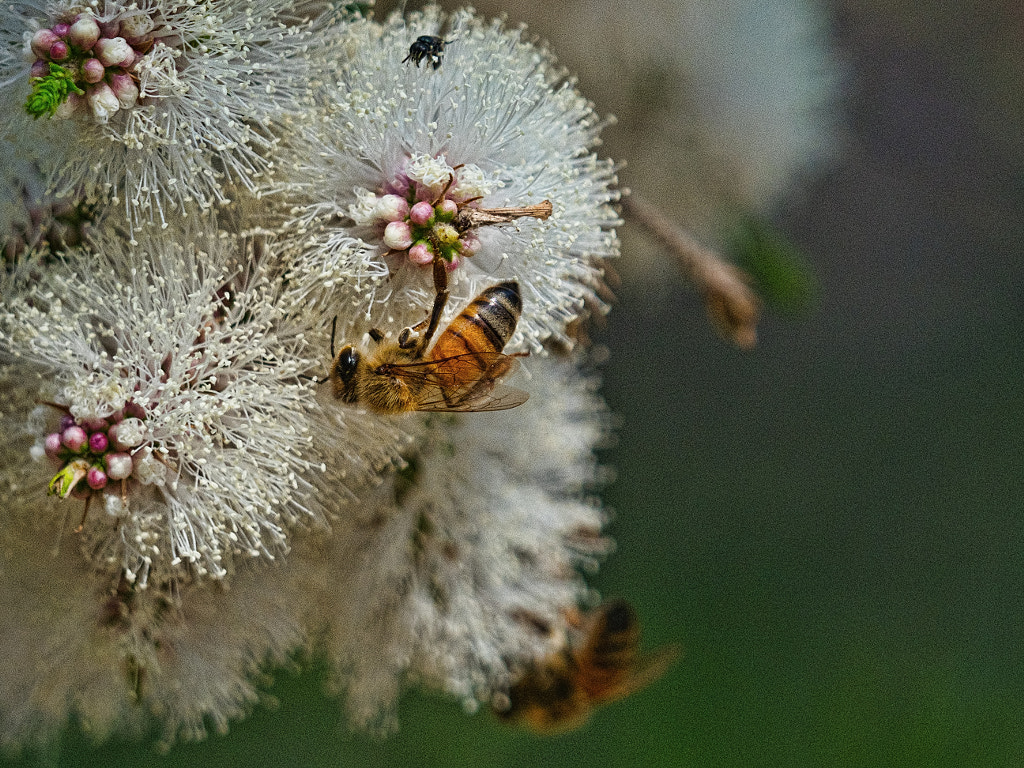
Bees feeding on the flowers of the Swamp Paperbark (Melaleuca rhaphiophylla). Lake Gwelup Reserve, Western Australia.


Blue-billed Duck by Paul Amyes on 500px.com
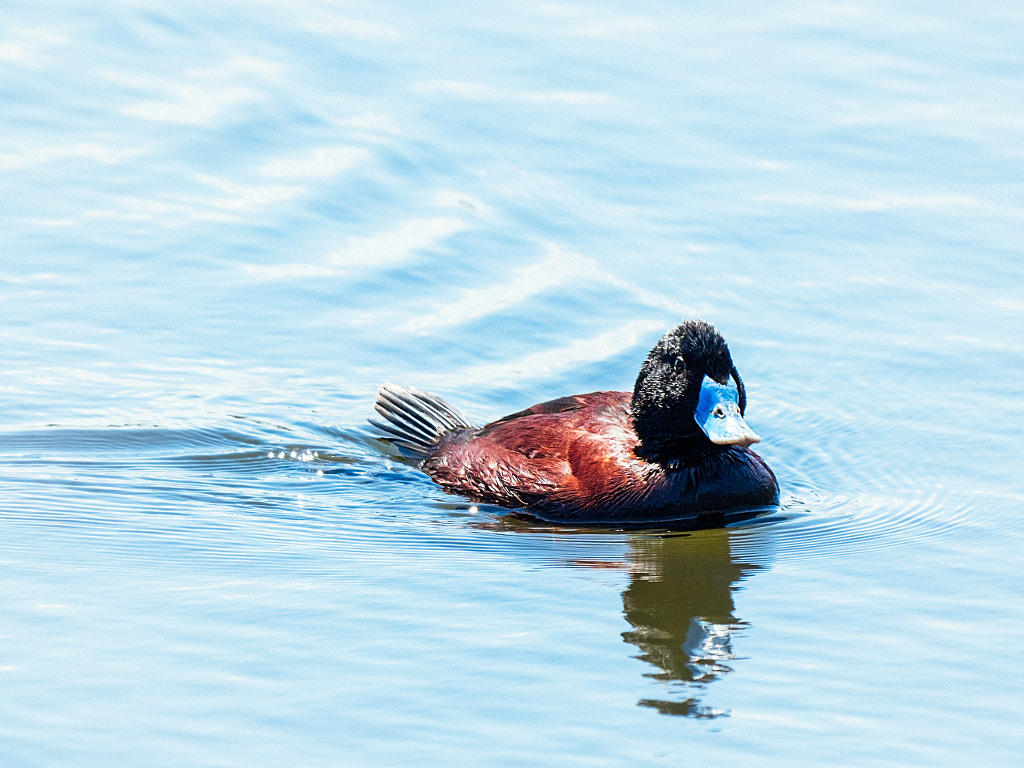
A male Blue-billed Duck (Oxyura australis) on Lake Gwelup in Western Australia.


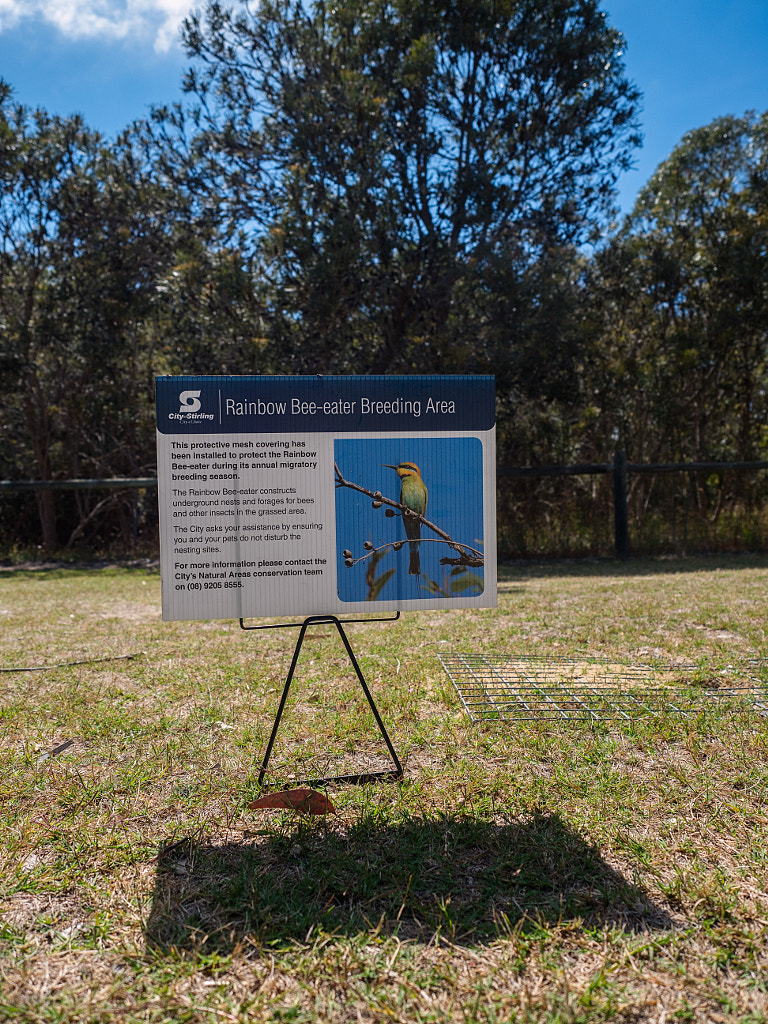
So what is there to see and do? Well there is a networks of paths around the lake and through the surrounding bushland and you can bring your best canine friend with you. There are BBQ’s and picnic shelters, public bathrooms, sail-shaded playground, sporting grounds and cricket nets for those who don’t feel the need to connect with nature. For those wanting a nature fix on the southern side is a broad walk and viewing platform that allows you to get up lose and personal with the wildlife. An interesting development is that the bush northwest of the lake is a breeding ground for Rainbow Bee-eaters. These migratory birds come from Papua New Guinea and Tropical Australia and build their nesting burrows in our summer time.  The City of Stirling has taken measures to protect the nesting sites and at the same time promote them as a feature of the reserve encouraging people to come and see them. Something that the City of Armadale could learn from with their management of Forrestdale Lake. Conservation and protection doesn’t mean you have to fence people out. So when I went the other week I put together a 3.75 Km walk around the lake that also took in the Rainbow Bee-eater nesting site. It was a loverly walk and it was great to see people out enjoying the sunshine in such beautiful surroundings.


Rainbow Bee-eater by Paul Amyes on 500px.com

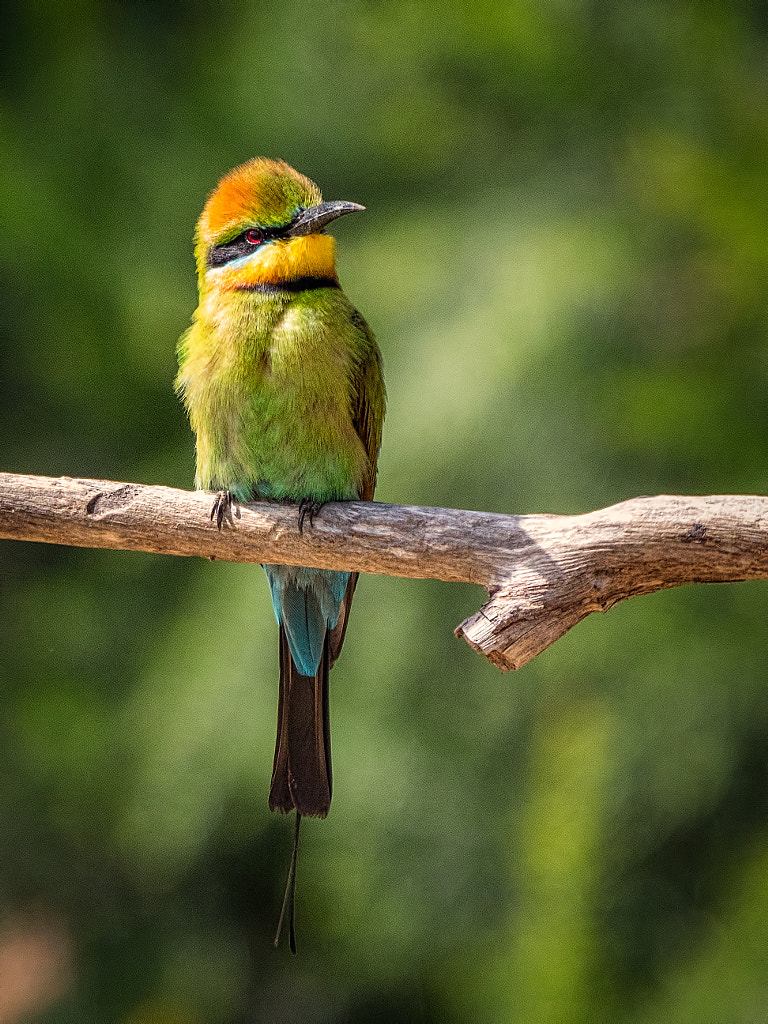
The breeding colony of Rainbow Bee-eaters (Merops ornatus) is quite a feature of the Lake Gwelup Reserve in Western Australia.


Rainbow Bee-eater by Paul Amyes on 500px.com
The City of Stirling, who administer Lake Gwelup Reserve, place signage up warning people of the presence of Rainbow Bee-eaters’ underground nests.


Birding by Paul Amyes on 500px.com

Skateaway*

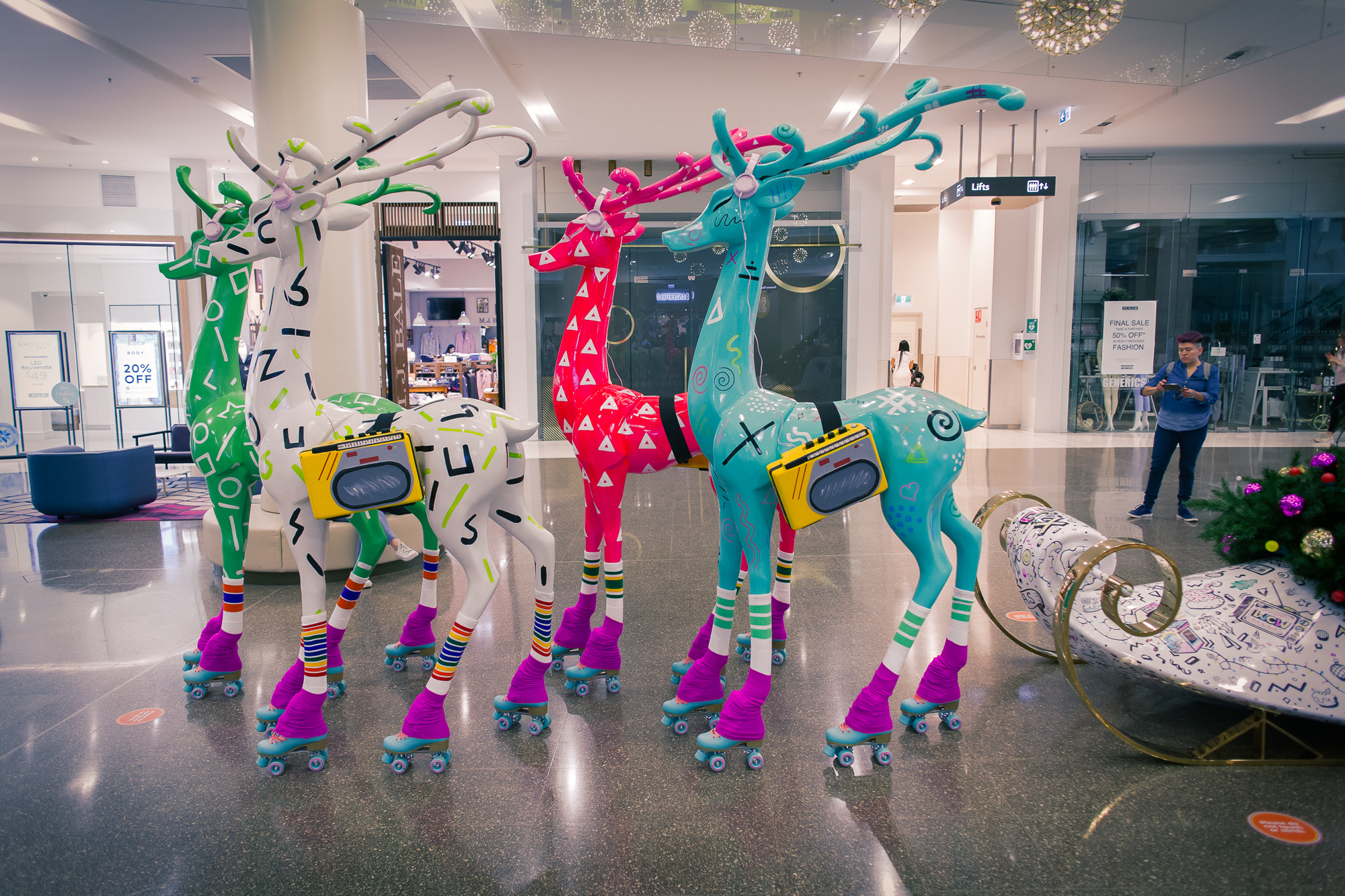
Santa’s reindeer channelling a distinct 1980’s vibe with their Walkmen and roller skates.


This year the Christmas decorations have taken on a definite 1980’s vibe.  Look at Santa’s Reindeer in the above shot. Walkman. Check. Roller-skates. Check. Leg warmers. Check. If reindeer could have big hair and shoulder pads then it would be complete.


*Of course with a title like Skateaway we are referencing Dire Straits song of the same name from their huge selling Making Movies albums from 1980. The video clip starred Jayzik (Jay) Azikiwe as the skater girl. She was a performance poet, singer, actress and daughter of a former Nigerian president who sadly passed away in January 2008.


Thomsons Lake – Lakeside Walk


Lakesided Walk - Thomsons Lake by Paul Amyes on 500px.com
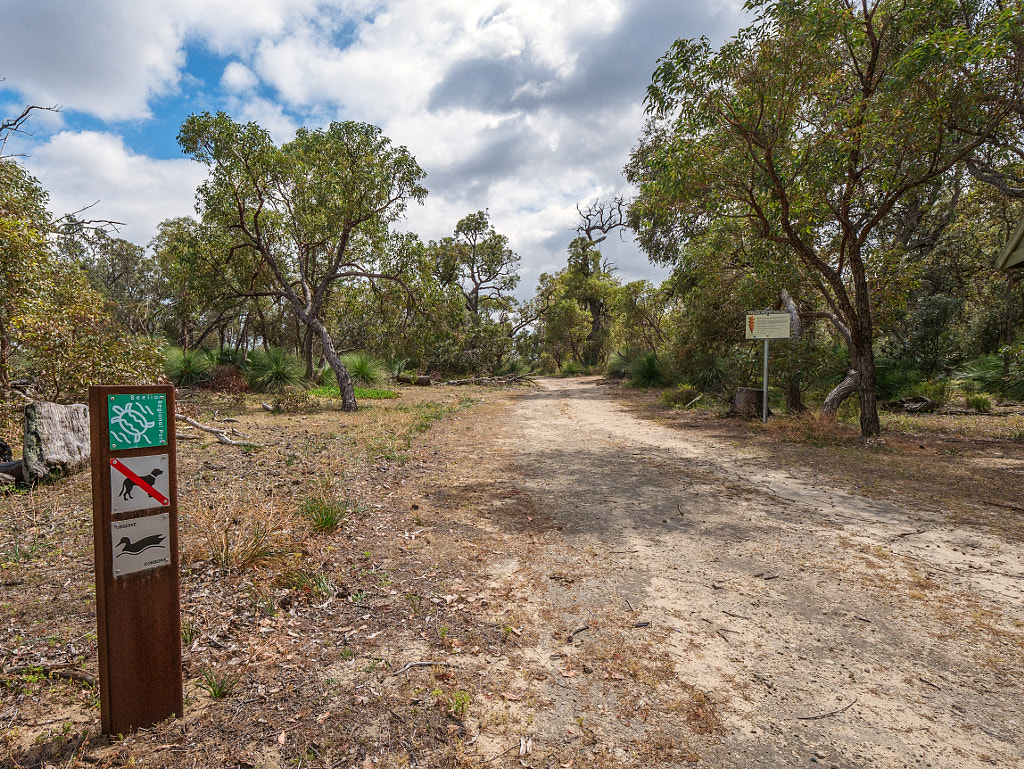
Once inside the reserve the walk trail is clearly signposted making it easy to enjoy the walk.


In my last blog post I gave a bit of a mauling to  Forrestdale Lake as I found the whole nature walk experience quite unsatisfactory and frustrating. I mentioned that it was part of the Forrestdale and Thomsons Lakes Ramsar Site and that the experience at Thomsons Lake was much better. So this week I’ve decided to put up an excerpt about Thomsons Lake from my book Perth’s Best Bush, Coast and City Walks 2nd Edition. The Department of Commerce and Financial Affairs would have me remind you this book would make a  perfect Christmas gift for anyone interested in walking in the Perth Metro Area and can be bought at all good bookstores or online for the bargain price of $29.99.


Lakesided Walk - Thomsons Lake by Paul Amyes on 500px.com
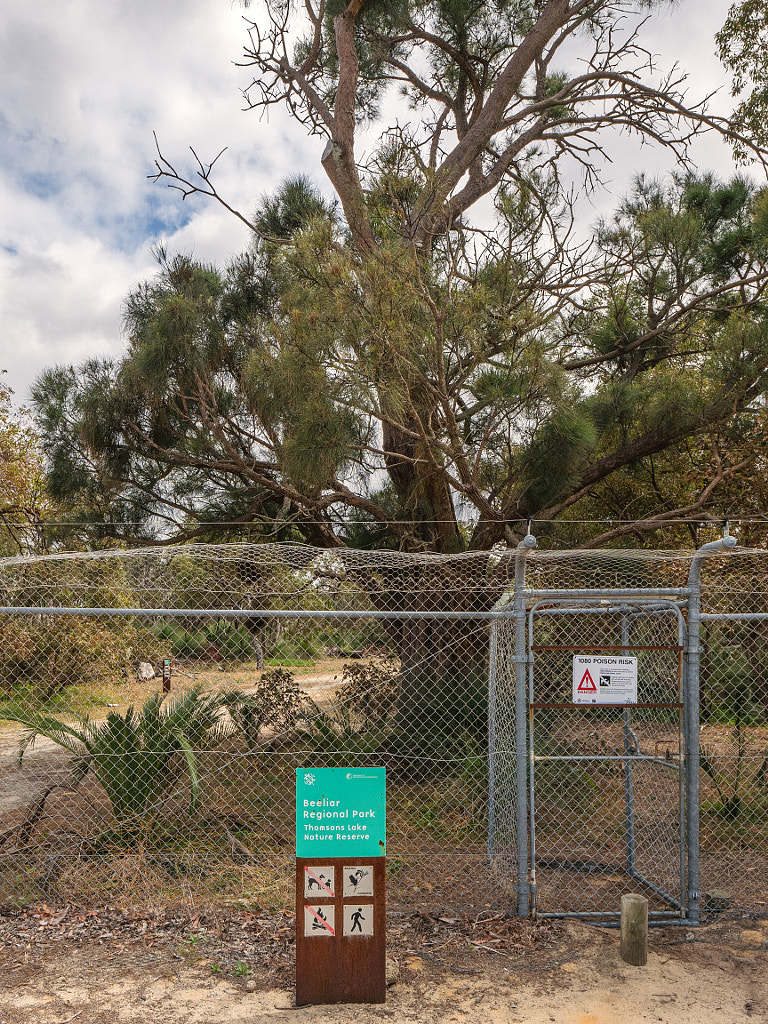
The entrance to Thomsons Lake reassembles that of a high security compound with its high electrified fence. This is to keep feral animals such as cats, dogs, and foxes out.


Grade: Medium

Time: 2 hours

Distance: 6.56Km

Season: Autumn, spring and summer. In late November the land around the lake can still be flooded. January to March and the lake dries up.

Where is it? 25Km south of Perth in Beeliar. Drive down the Kwinana Freeway and take the Russell Road exit.

Public Transport: Catch the 525 bus to Russell Rd After Hammond Rd (Stop Number 23864) and then walk 1.5Km to Thomsons Lake.

Parking: Yes

Dogs: No

Further Information: https://parks.dpaw.wa.gov.au/site/thomsons-lake . For more information on birdwatching in the park http://birdingwa.iinet.net.au/sites/beeliar.htm


Lakesided Walk - Thomsons Lake by Paul Amyes on 500px.com
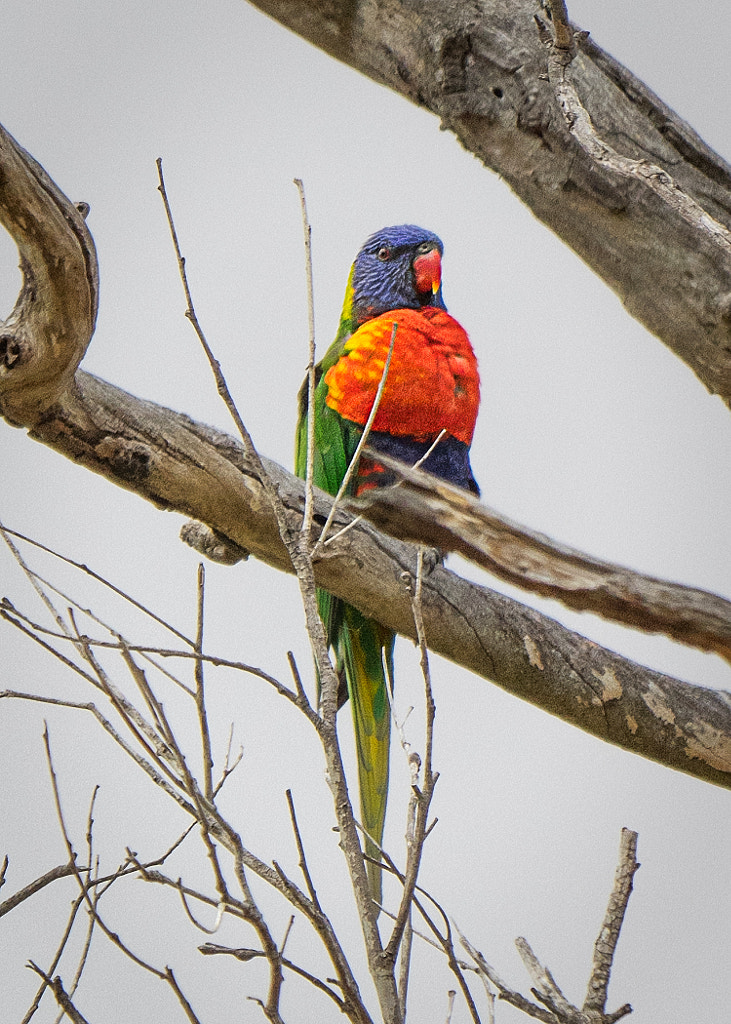
Rainbow Lorikeet, Trichoglossus moluccanus. Thomsons Lake, Western Australia.


Thomsons Lake (aka Jilbup Lake) is perhaps one of the most important freshwater lakes on the Swan Coastal Plain. Since the days of first European settlement 75% of the coastal plain has been drained for urban development. Thomsons Lake is an A class nature reserve of 509 ha of wetland. The lake supports around 10,000 waterbirds, of which are more than 1% of the world’s population of long toed stints (Calidris subminuta) which is a small wading bird that migrates from northern Asia to winter in Australia. The park is home to more than 50 species of waterbird, 86 species of “bush bird”, 9 species of frogs, 23 species of reptiles, 6 species of mammal and 15 species of ground orchid. Consequently getting into the park is like entering a maximum security prison, the reserve is encircled by 9.2 km of 2 m high electrified fence.


Lakesided Walk - Thomsons Lake by Paul Amyes on 500px.com
Australian painted lady (Vanessa kershawi). Thomsons Lake, Western Australia.


This walk ostensibly takes you around the lake’s shoreline, but as you walk round you pass through several distinct eco-systems. On the higher ground is the jarrah / banksia woodland of the coastal plain, there is a zone of flooded gums and swamp paperbarks, and particularly on the eastern side of the lake is a thick belt of rushes and grasses. Tiger snakes are common in wetlands and areas with an abundance of prey such as Thomsons Lake can support large populations. Their venom is very potent and the mortality rate for people who do not receive treatment is over 60%. Thankfully they are a shy creature and it is unlikely you will see one, but it pays to watch where you put your feet when walking through long grass at the lakeside.


Lakesided Walk - Thomsons Lake by Paul Amyes on 500px.com
Western Gerygone (Gerygone fusca). Lakesided Walk – Thomsons Lake


  1. From the car park enter through the double gate, there is an information board just inside on your right. Walk along the track and after 170m you reach a fork in the track take the left down to the lakeside. At the lake turn right.
  2. During winter and spring this area is prone to flooding – I walked here in early November after a wet winter and I thought I was in a remake of the 1951 movie “The African Queen”. The water was knee deep in places and wellingtons would have been more appropriate than the walking shoes I had on. If you are here in late spring in the wet look in the mud at your feet carefully. You might notice small things hoping about. When I first noticed I thought they were just bugs but on closer inspection they were very small black frogs- smaller than a little finger nail. The bush on the lakeside of the path starts to thin out in places and using the cover of the reeds it is possible to move closer to the waterbirds on the lake shore and observe them.
  3. The path dries out here and you return to a mixed woodland of flooded gum and jarrah.
  4. At the Thomsons Lake Drainage Pumping Station you come to a crossroads. The left turning takes you down to the lake and when I went down I noticed a lot of quenda (southern brown bandicoot, Isoodon obesulus fusciventer) diggings along the path edge. As I got closer to the water I started to see the quenda in the long grass. Unfortunately they were too quick for me to take a photograph of them. Carry on straight over at the cross roads to continue the walk.
  5. Another of the park’s access points, keep following the path you are on.
  6. Turn right and follow the path back to where you parked your car.


Lakesided Walk - Thomsons Lake by Paul Amyes on 500px.com
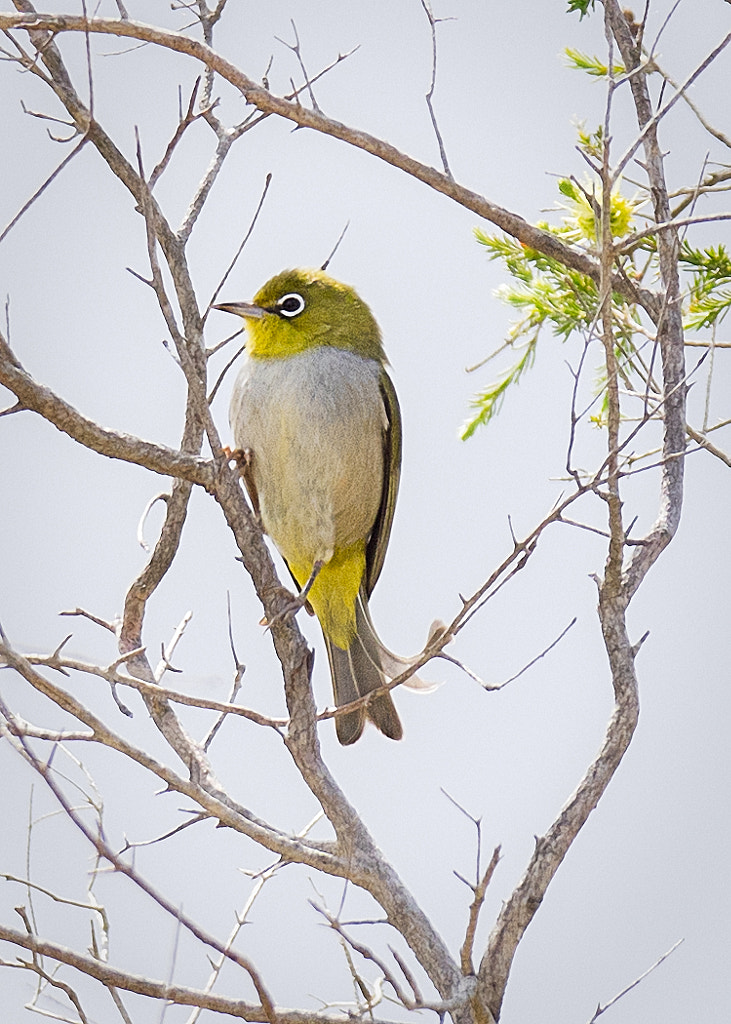
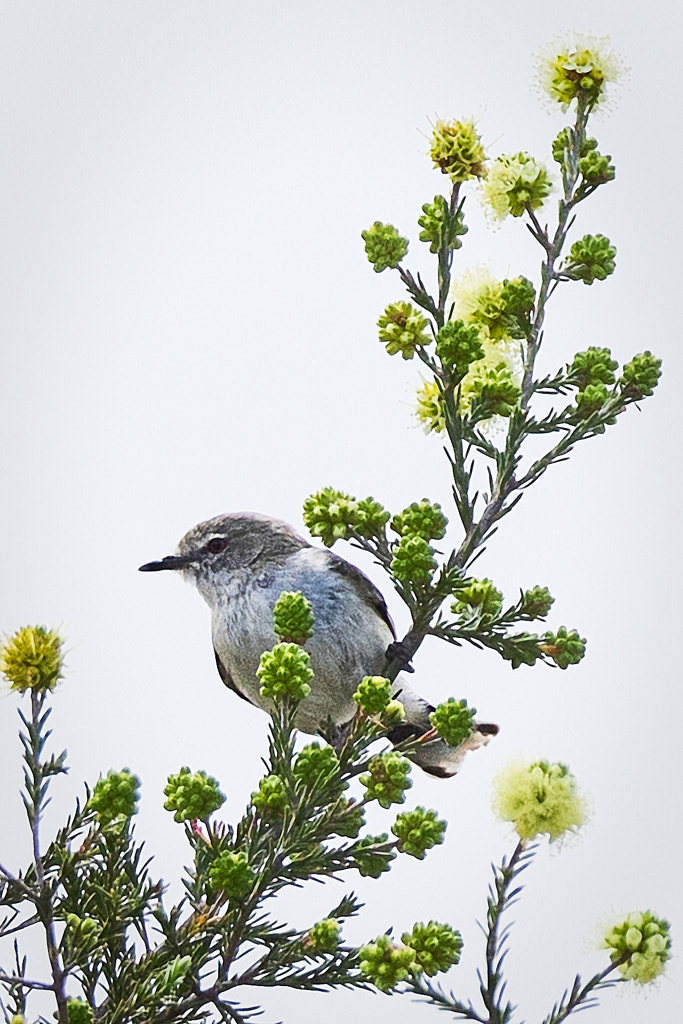
Silvereye, Zosterops lateralis. Thomsons Lake, Western Australia.


Lakesided Walk - Thomsons Lake by Paul Amyes on 500px.com
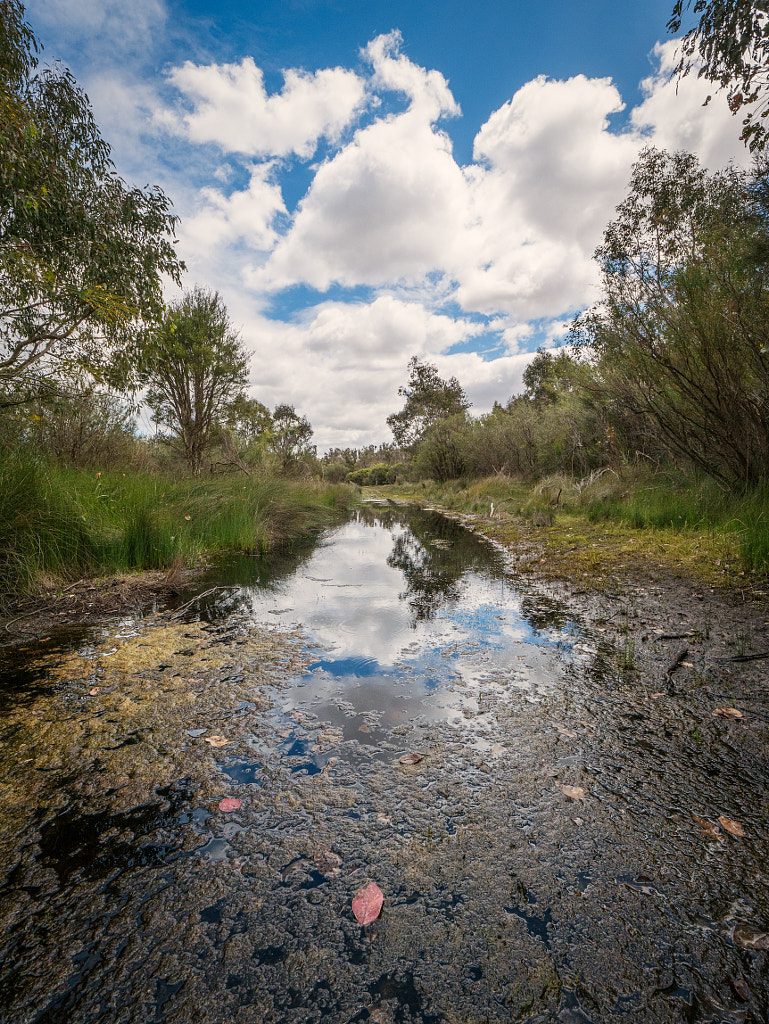
In winter and spring the track can be covered in water in places. A good excuse to break out the wellies.


Lakesided Walk - Thomsons Lake by Paul Amyes on 500px.com
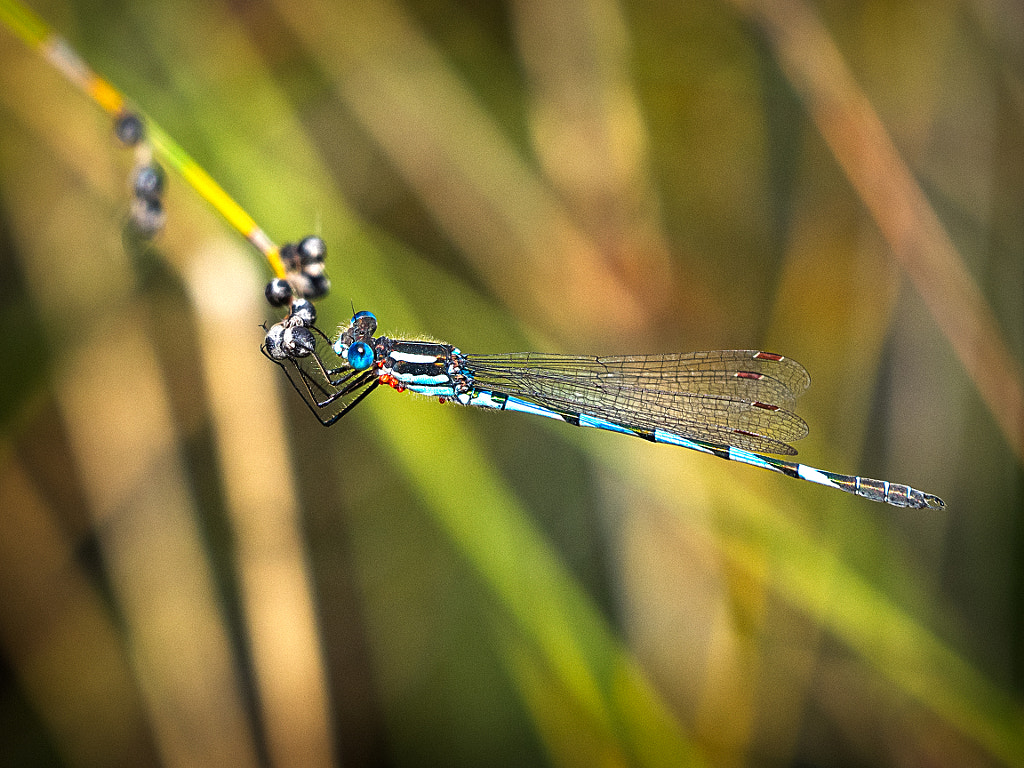
Blue Ringtail, Austrolestes annulosus. Thomsons Lake, Western Australia.


Lakesided Walk - Thomsons Lake by Paul Amyes on 500px.com
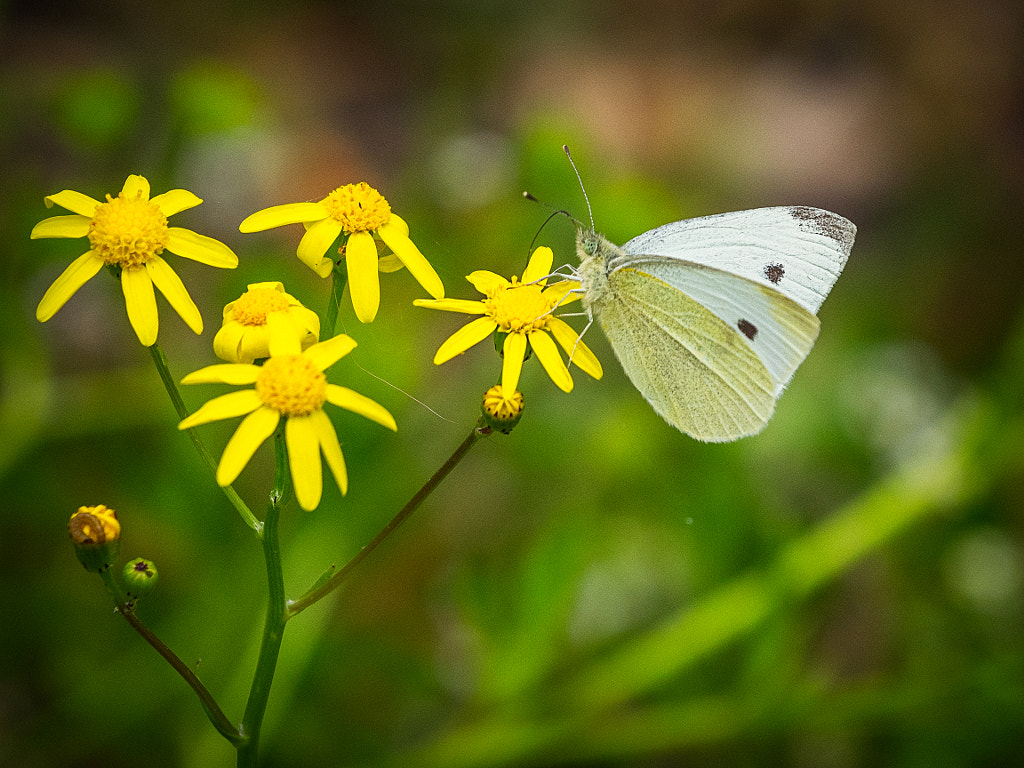
Small White (Pieris rapae). Thomsons Lake, Western Australia.


Lakesided Walk - Thomsons Lake by Paul Amyes on 500px.com
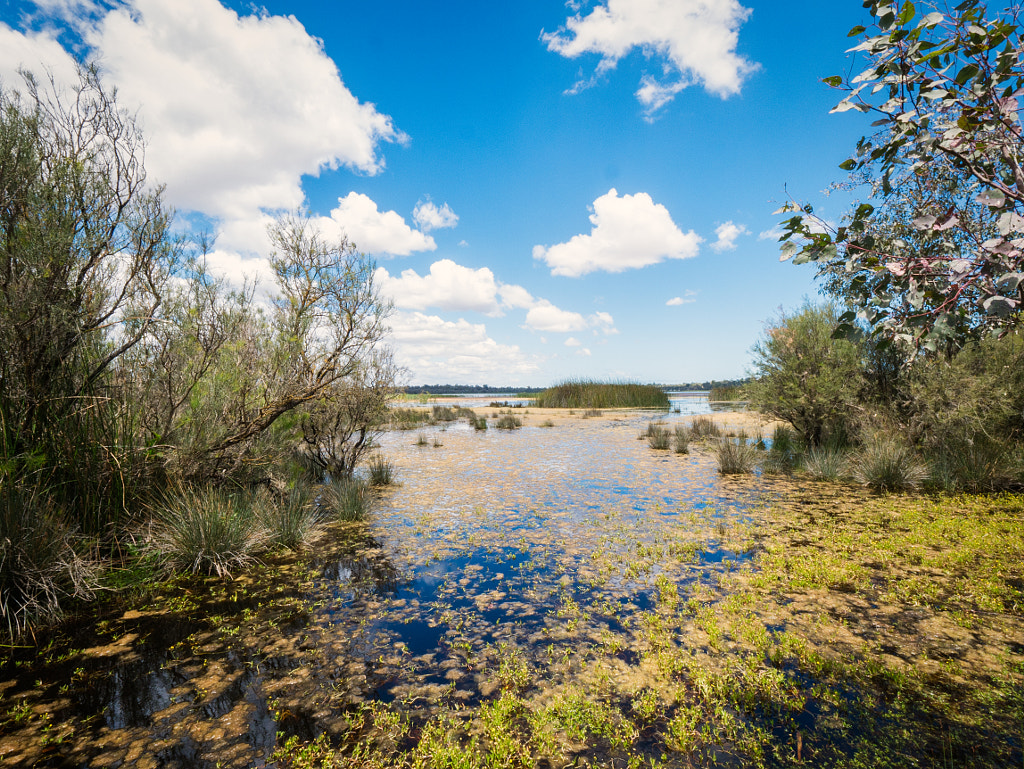
Thomson’s Lake is one of the most important freshwater lakes on the Swan Coastal Plain. It is an A Class nature reserve of 5099 hectares that supports 50 species of waterbird, 86 species of bushbird, 9 species of frogs, 23 species of reptiles, 6 species of mamals, and 15 species of ground orchids.


Lakesided Walk - Thomsons Lake by Paul Amyes on 500px.com
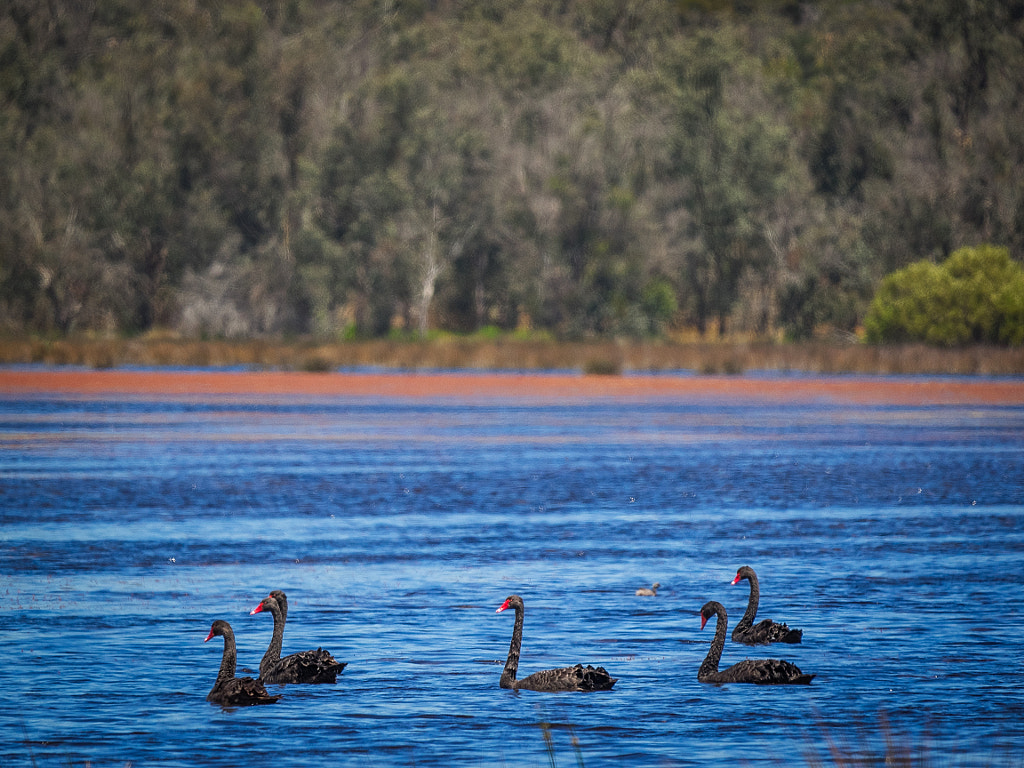
Black swans, Cygnus atratus. Thomsons Lake, Western Australia.


Lakesided Walk - Thomsons Lake by Paul Amyes on 500px.com
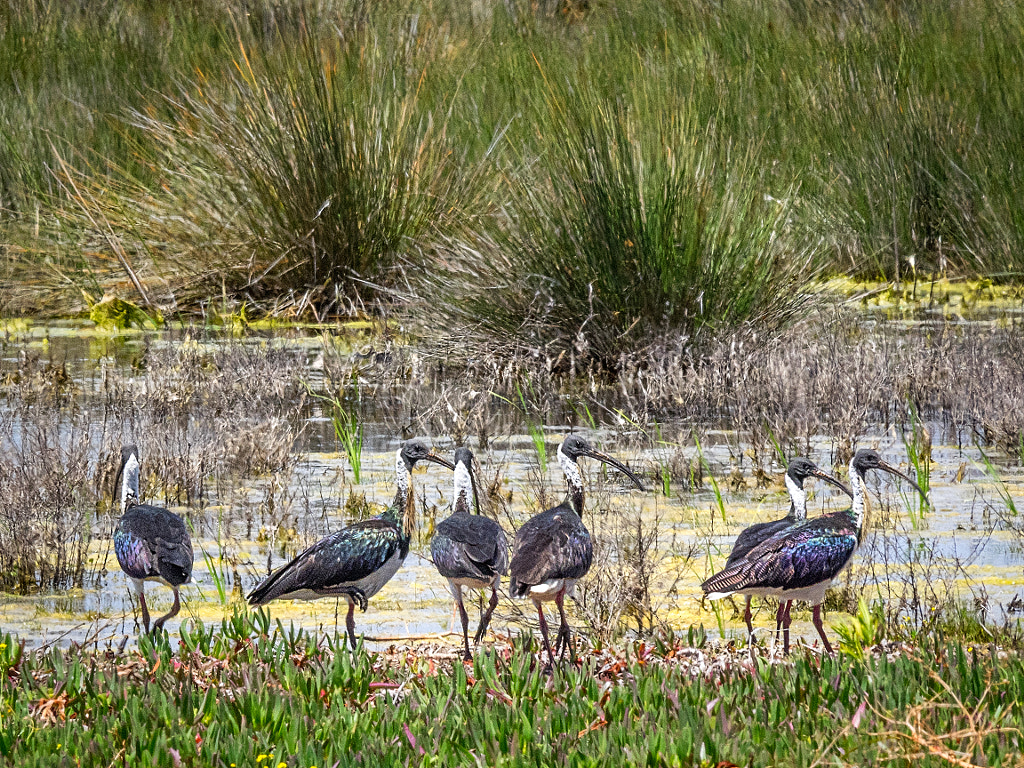
Straw-necked Ibis, Threskiornis spinicollis. Thomsons Lake, Western Australia.


Lakesided Walk - Thomsons Lake by Paul Amyes on 500px.com
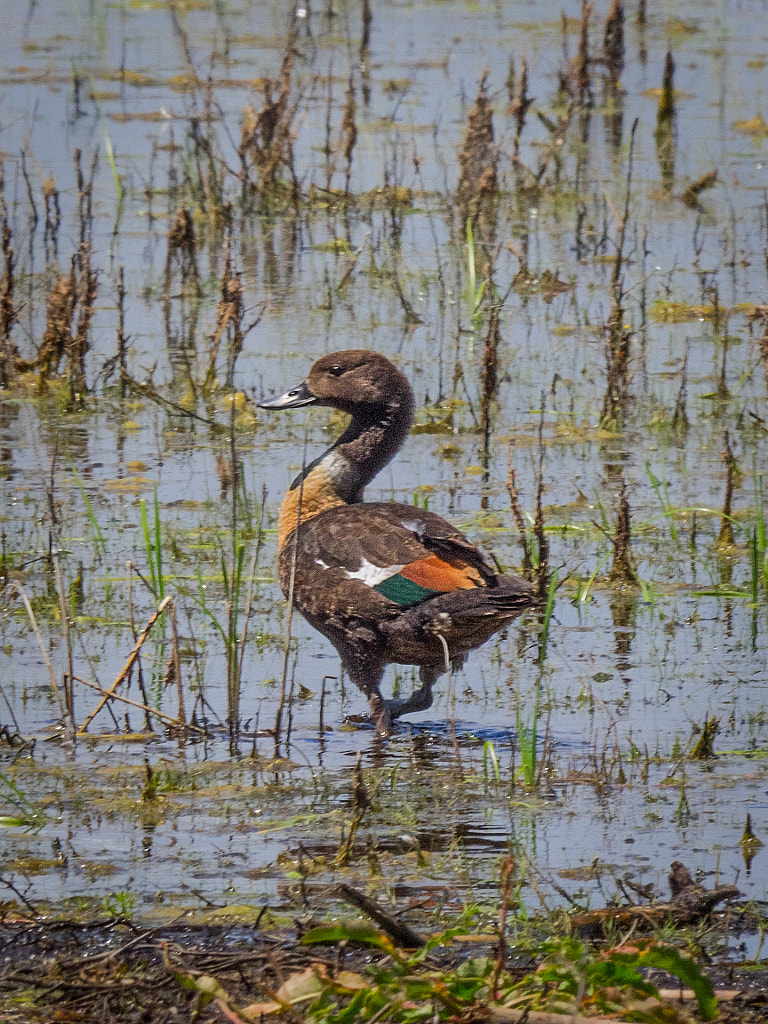
Australian Shelduck, Tadorna tadornoides. Thomsons Lake, Western Australia.


Choonya by Paul Amyes on 500px.com
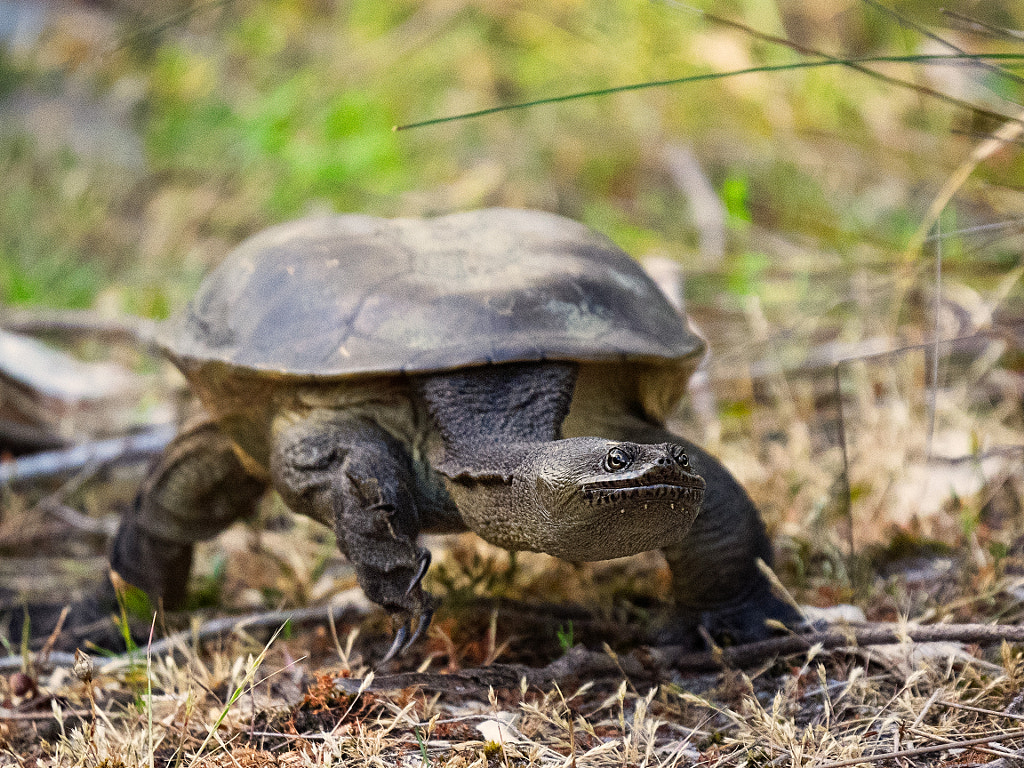
Choonya is the Nyoongar name for the Long-necked turtle, aka the oblong turtle (Chelodina oblonga). Thomsons Lake, Western Australia.


Sundown Mob* by Paul Amyes on 500px.com
Sundown Mob*. Kangaroos out grazing in the evening at Thomsons Lake, Western Australia. * the collective term for a group of Kangaroos is “mob”.


Boornarr Dreaming by Paul Amyes on 500px.com
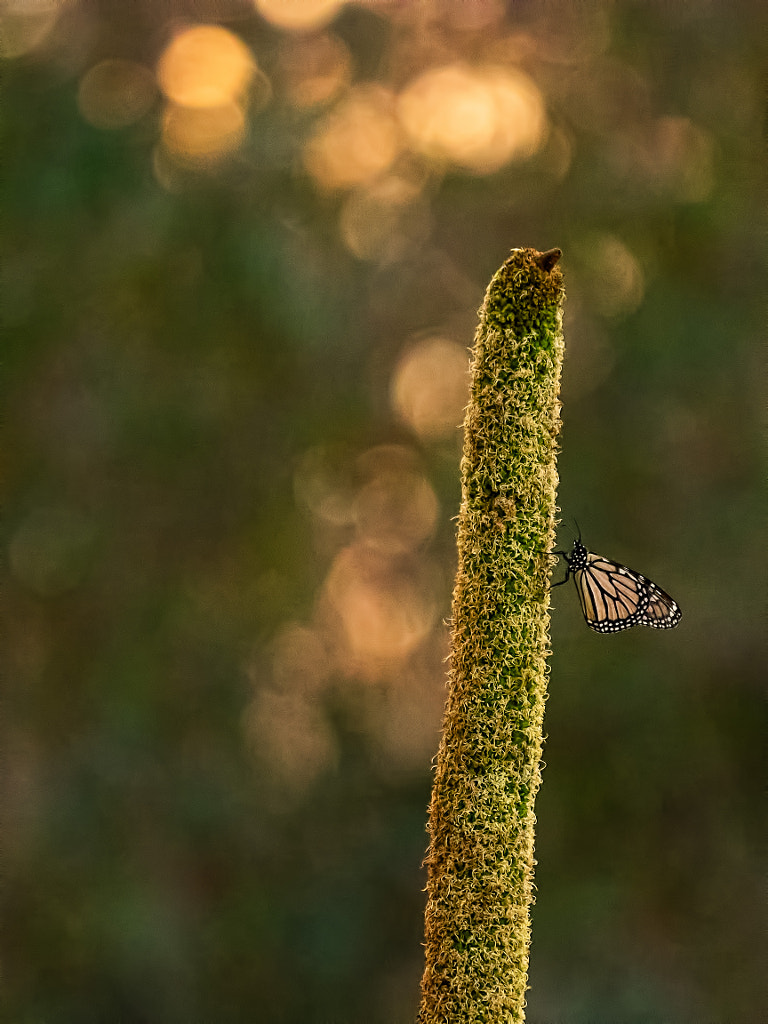
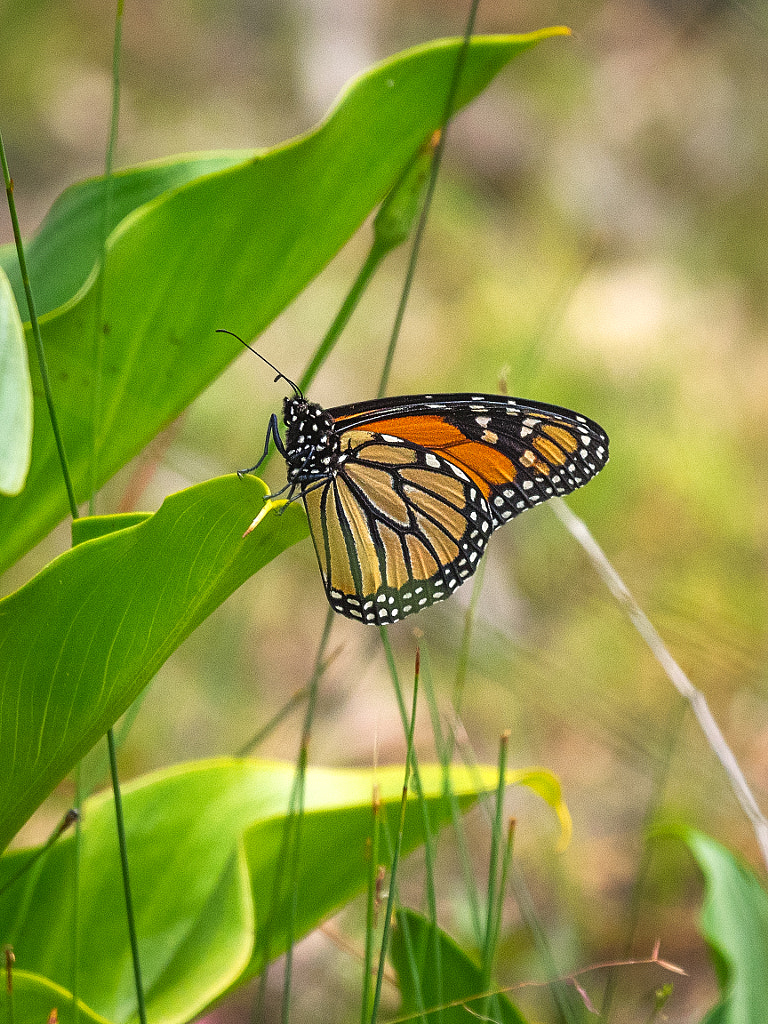
This Monarch butterfly, Danaus plexippus, prepares to roost for the night on a grass tree (Xanthorrhea preissii) flower spike. Thomsons Lake, Western Australia.


As I mentioned before this is an excerpt from my latest walking guide to Perth. It would make a wonderful Christmas present for anyone with an interest in walking.

What The Duck!?!


Kodara by Paul Amyes on 500px.com
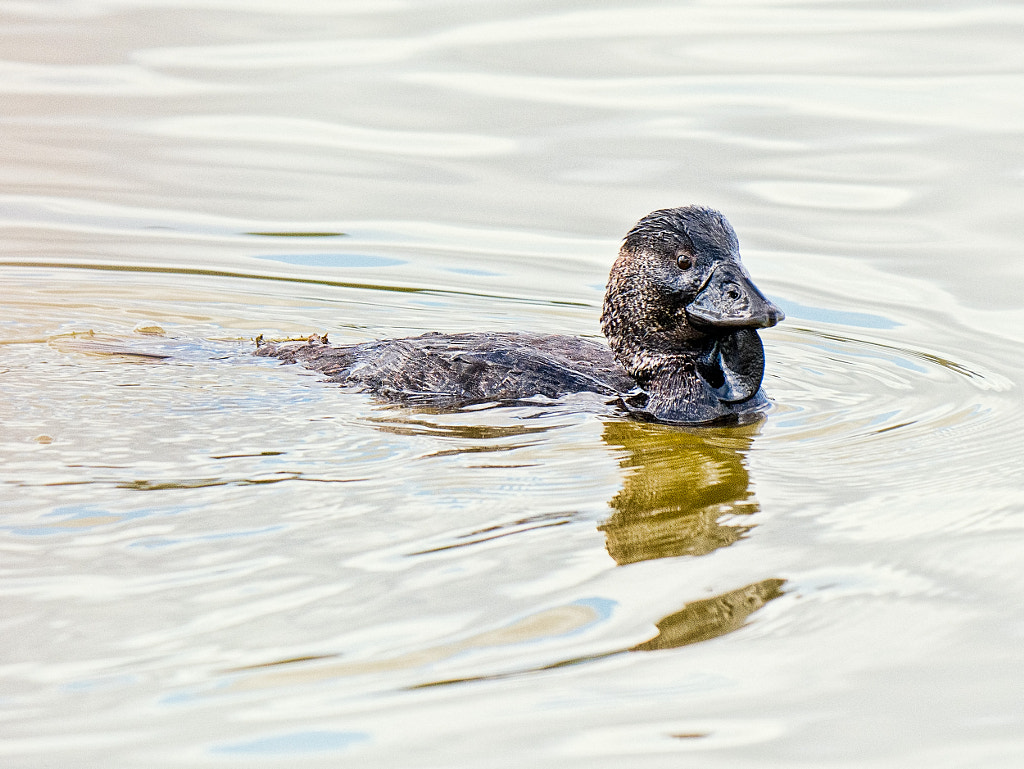
A male musk duck (Biziura lobata) swiming on Lake Goollelal in Yellagonga Regional Park, Western Australia


Now it is fair to say that Australia is home to some pretty strange animals. One only has to look at the Platypus, the echidna and even the humble kangaroo. To my mind one of the strangest is the musk duck (Biziura lobata). They can be found on fresh water lakes in the southwest corner of Western Australia.

What makes them so strange? Well to start with they don’t quack like a duck. They emit a sound that is more akin to a demented sonar. They are rarely seen on land and are reluctant fliers. On the water they float very low in the water often giving the impression that just their head is above the waterline. They are prolific underwater swimmers staying under for as long as a minute and diving up to a depth of 6m and demonstrate incredible agility as they do so. In appearance they are a very dark grey to black, have a stiff tail and broad heavy bill. The males are considerably larger than the females and weigh over 3Kg while the females can weigh up to 1.5 Kg. This makes them the second heaviest diving duck in the world. The males also have a strange leathery lobe under the bill, and in the breeding season they have a very strong musk odour hence the name. The courting behaviour of the males is quite striking – they strike the surface of the water with their feet then immediately after make a couple of clucking sounds followed by a lot of whistles and a grunt. This is repeated very five seconds or so for as long as half an hour. The first time I encountered this was at Lake Seppings in Albany. I heard these odd splashes and weird sounds repeatedly coming from just beyond the reed beds but couldn’t see what was causing the commotion. As I continued walking the reeds parted sufficiently and with the help of standing on a nearby bench I was able to see what was going on. It really is quite a performance and once seen never forgotten. In Perth Musk Ducks can be seen on both lakes in the Yellagonga Regional Park and Herdsman Lake. Hard to see at first so listen for the strange noise and you’ll soon find them.

They are not hunted as they are not considered nice enough to eat and the only thing that threatens their status is the clearing and draining of wetlands.


This slideshow requires JavaScript.

Lake Claremont


Originally what is now Lake Claremont was a swamp with a series of small pools edged with reeds and then surrounded by paperbark trees. There was abundant plant an animal life and it was an important hunting and gathering place for the Mooro clan of the Nyoongar in the warmer months of the year.


Lake Claremont by Paul Amyes on 500px.com
The bird observation platform allows visitors to watch the birds in the grasses and reeds at Lake Claremont.


In 1831 European settlers began to clear the land for farming and by the 1890’s there were market gardens and a then state of the art dairy farm. Things looked good and the area prospered. However, this state of affairs was short lived as by the turn of the Twentieth Century the water level rose and the farms were flooded and a permanent lake which rises and falls with the seasons was formed. In the 1950’s Claremont Town Council reclaimed large areas for a rubbish tip and renamed it Lake Claremont in the process. In the 1960’s it was decided to beautify the lake and its surrounds. Sections were infilled to create a golf course and the school playing fields. In time two small bird sanctuary islands were created and there has been a move to manage the the lake in a more ecological manner. The Friends of Lake Claremont are an enthusiastic and very active bunch of local residents and volunteers who have undertaken to assist in the conservation and enhancement of Lake Claremont. There activities have been crucial in weed eradication programs and revegetation projects working in tandem with pupils from  Scotch College and Graylands Primary School. They also have annual public events including Clean Up Australia Day, National Tree Day and Celebrate Lake Claremont Day (community fair). More details can be found on their website.


Lake Claremont by Paul Amyes on 500px.com
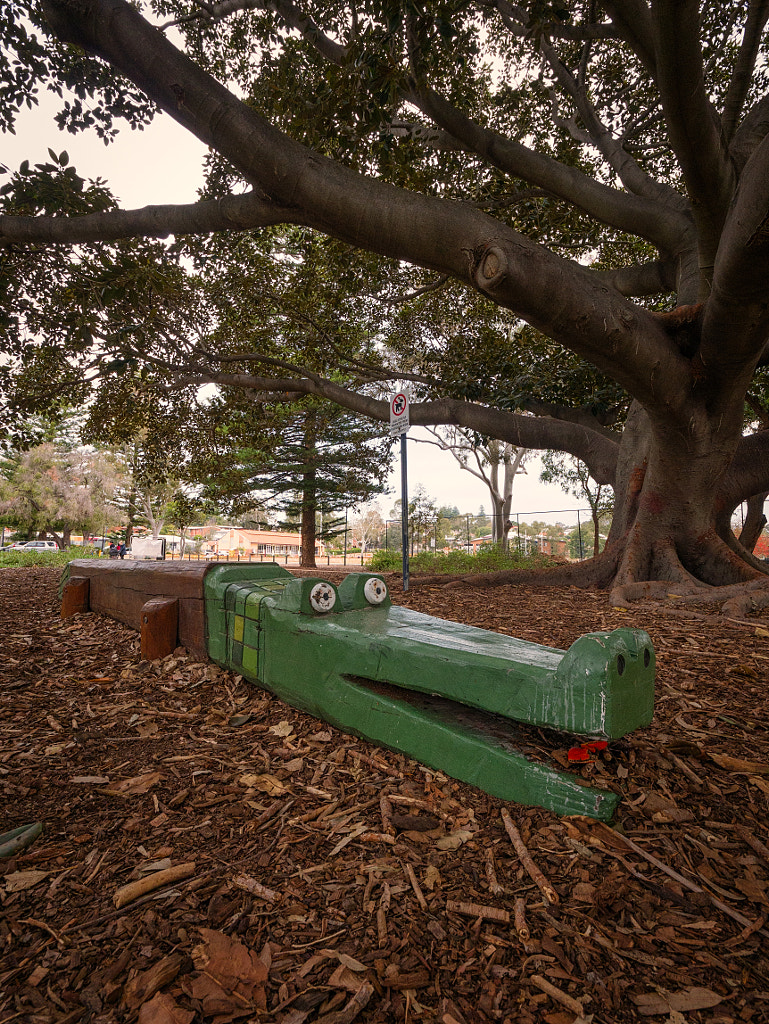
The infamous Lake Claremont crocodile. Lake Claremont, Western Australia.

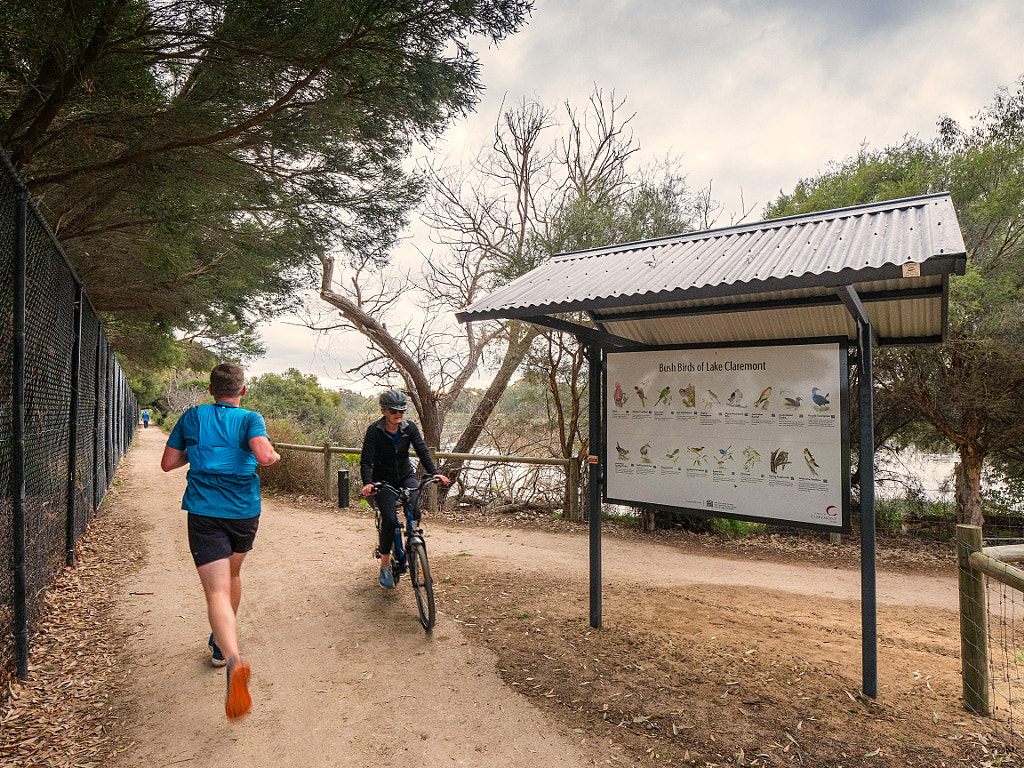
So that was then and this is now. What does the lake offer today? Well the wetlands of the Swan Coastal Plain are internationally acknowledged as a bio-diversity hotspot having a greater number of endemic species than most other regions in Australia. Since colonisation three quarters of the wetlands have been drained for urban development. Those that remain are adversely effected by the introduction of feral animals and plants. In this context Lake Claremont is like a biosphere. In the past ten years or so eBird Australia has listed 116 species of bird that can be found on or around the lake which makes it somewhat of a birders paradise. The path around the lake and the bird observation platform make it easy to spot birds all year round. To make it so that you know what you are looking for you can down load an illustrated brochure listing the birds from the Town of Claremont website.


Lake Claremont by Paul Amyes on 500px.com
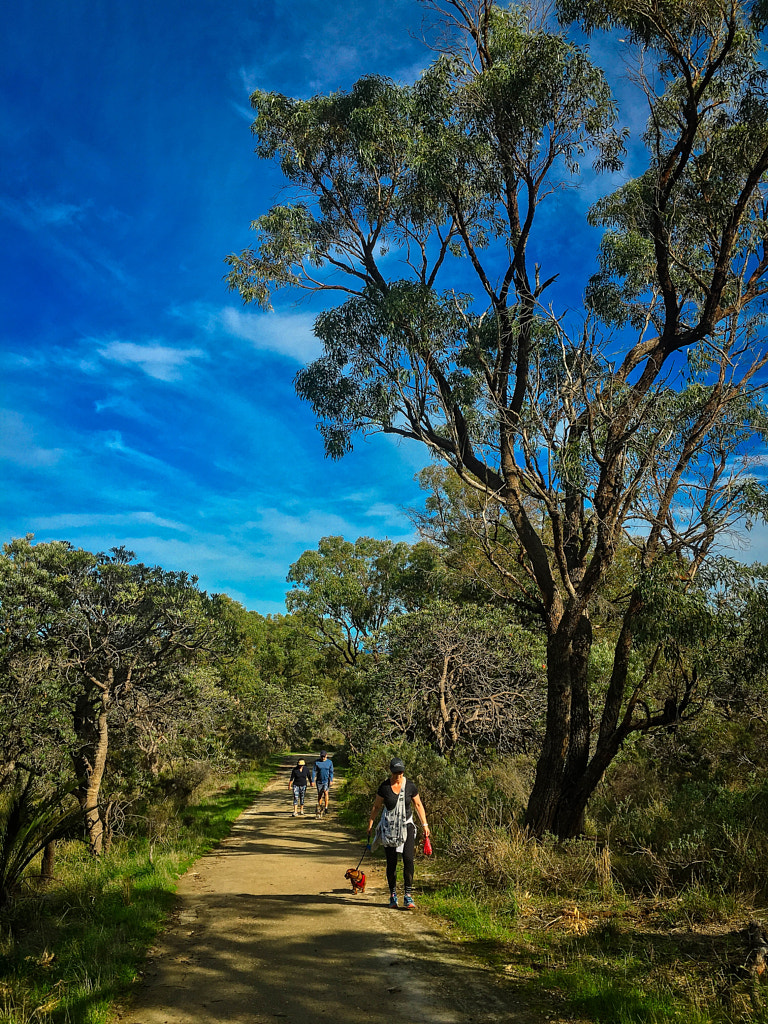
Lake Claremont has a dual use path around its edge which is popular with runners and cyclists.

In addition to the nature based activities there is a 3 Km dual use path that circumnavigates the lake which is very popular with walkers, runners and cyclists. Dogs are welcome on a lead. The walk is enjoyable all year round and if you start the car park and head off in a clockwise direction then you can stop at the TeeBox Cafe shortly before returning to the car park. For the youngsters who need to burn off some energy before looking at the ducks there are two playgrounds. If dad doesn’t care for looking at the ducks then he has the option of playing a quick nine holes of golf.


Dit by Paul Amyes on 500px.com
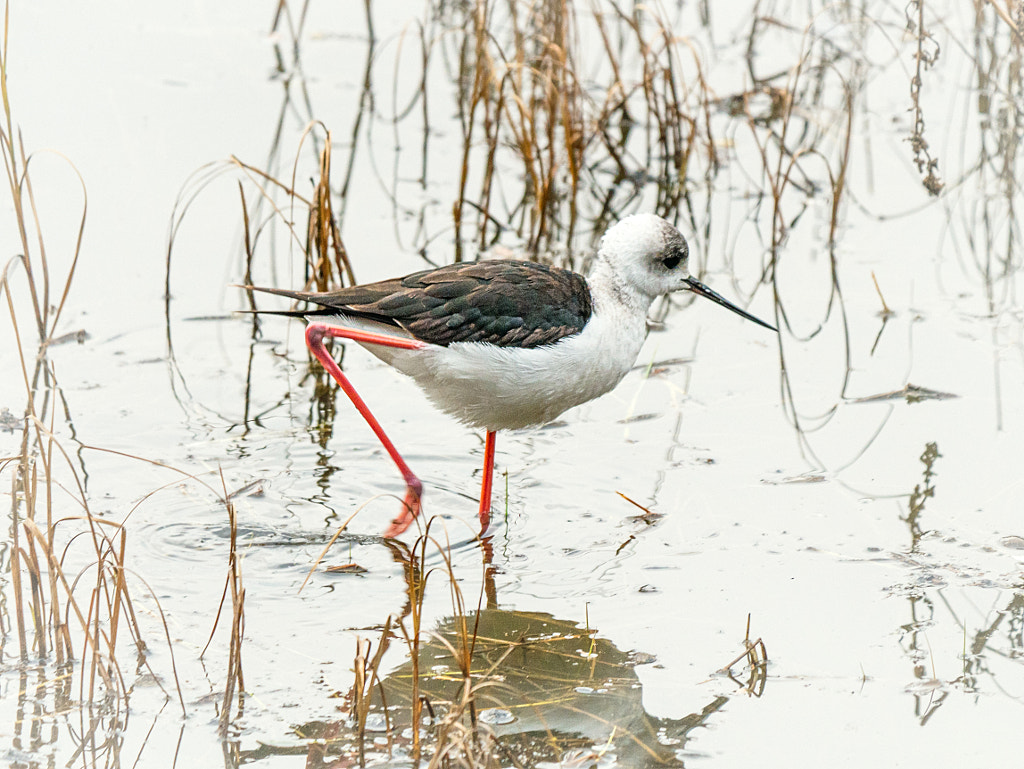
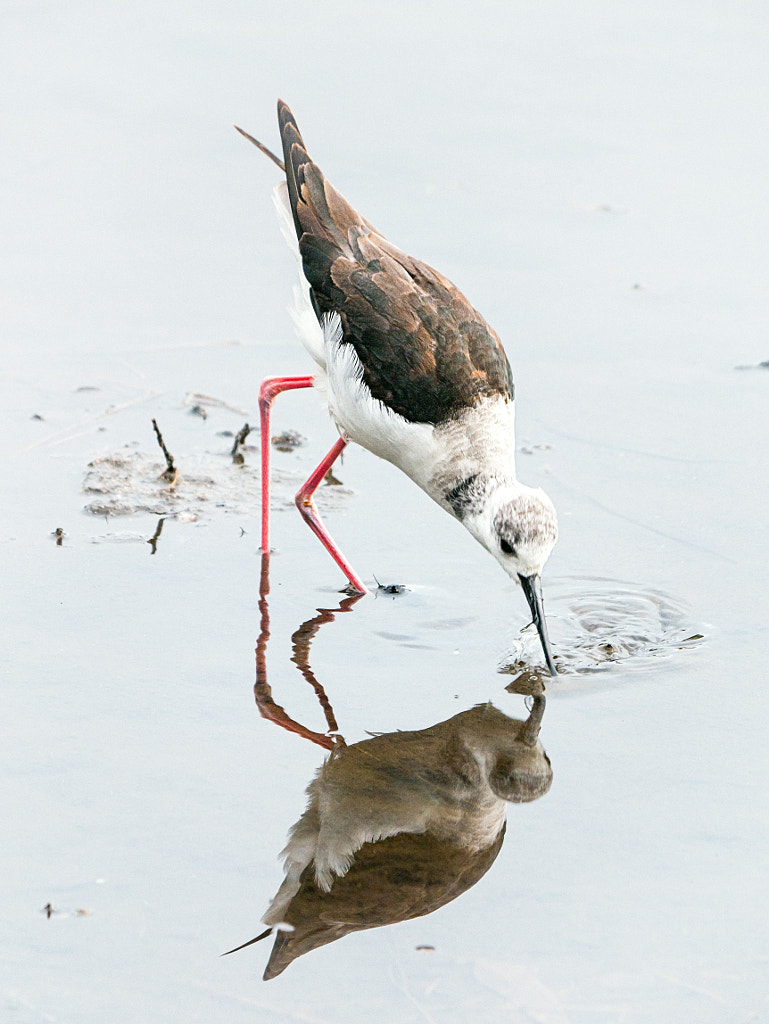
A juvenile pied stilt (Himantopus himantopus) at Lake Claremont, Western Australia.


Marli by Paul Amyes on 500px.com
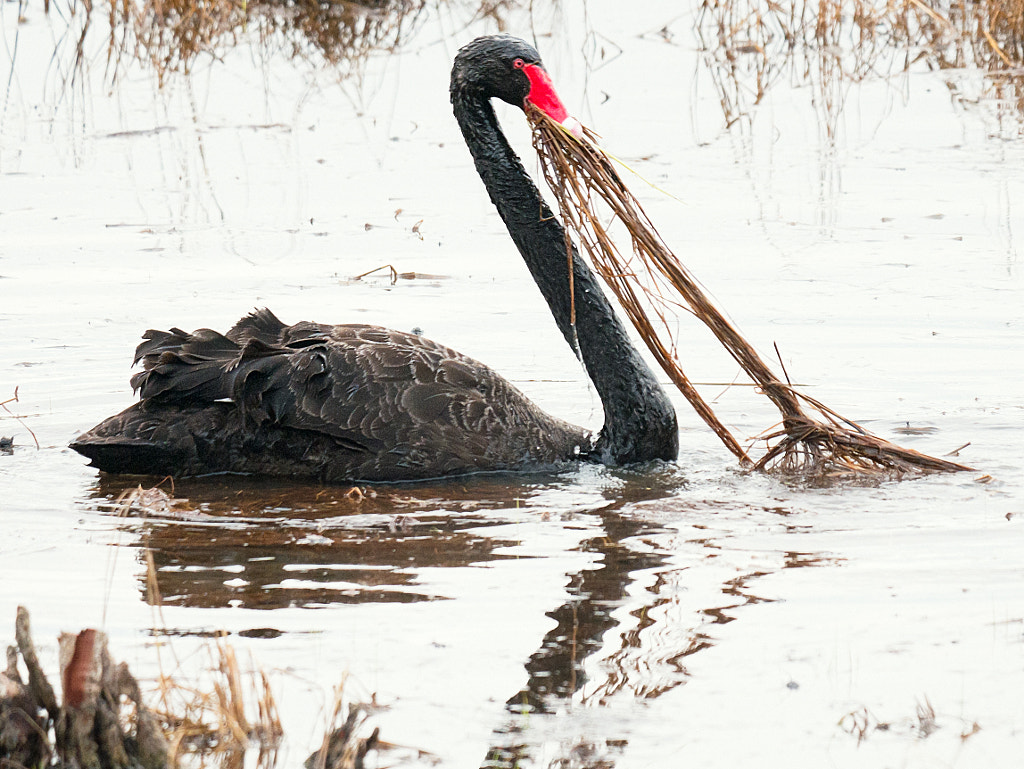
A black swan (black ) gathering nesting material at Lake Claremont, Western Australia.


Bardoongooba by Paul Amyes on 500px.com
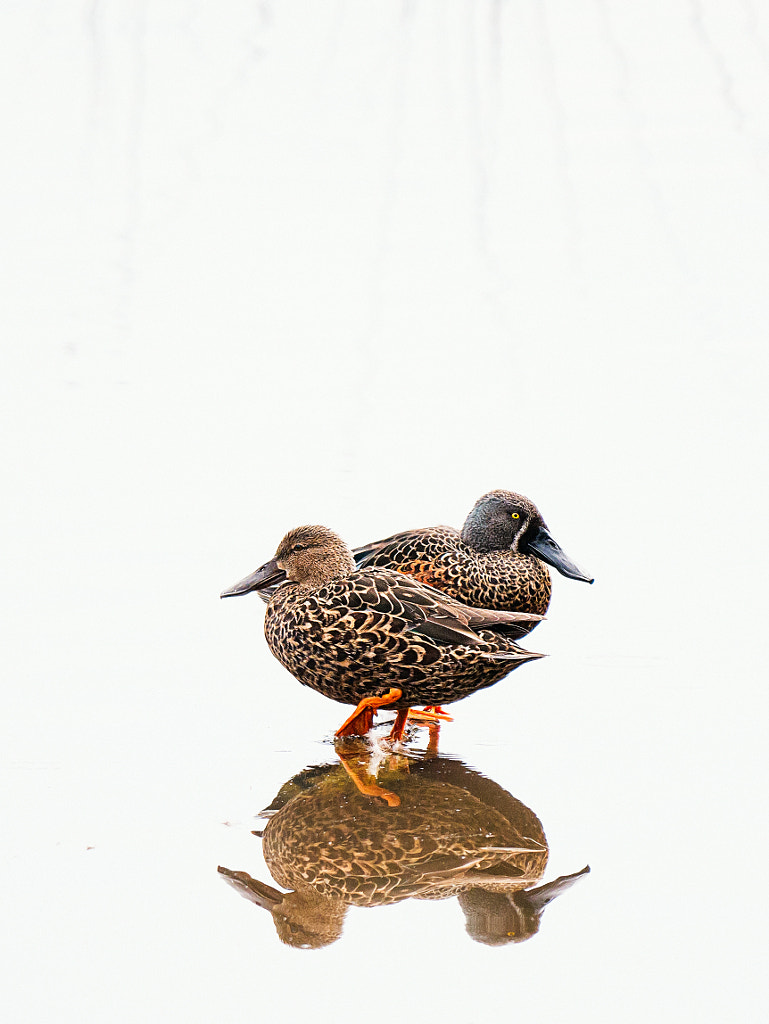
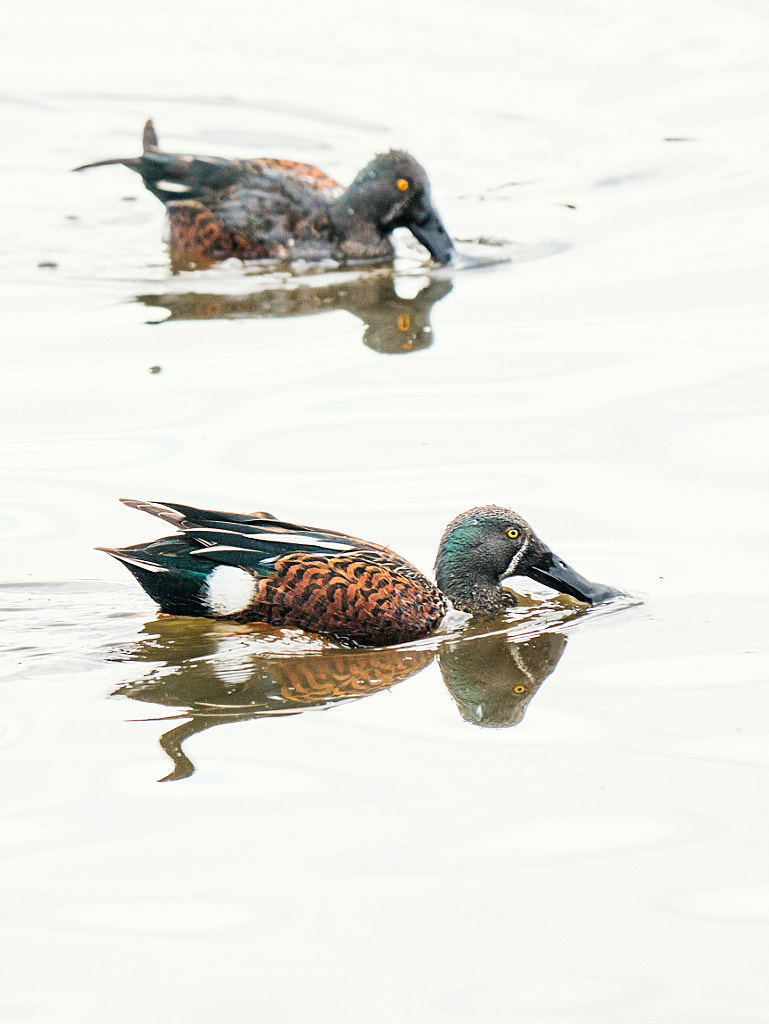
A pair of Australian Shovelers (Australian) at Lake Claremont, Western Australia.


Kalyong by Paul Amyes on 500px.com
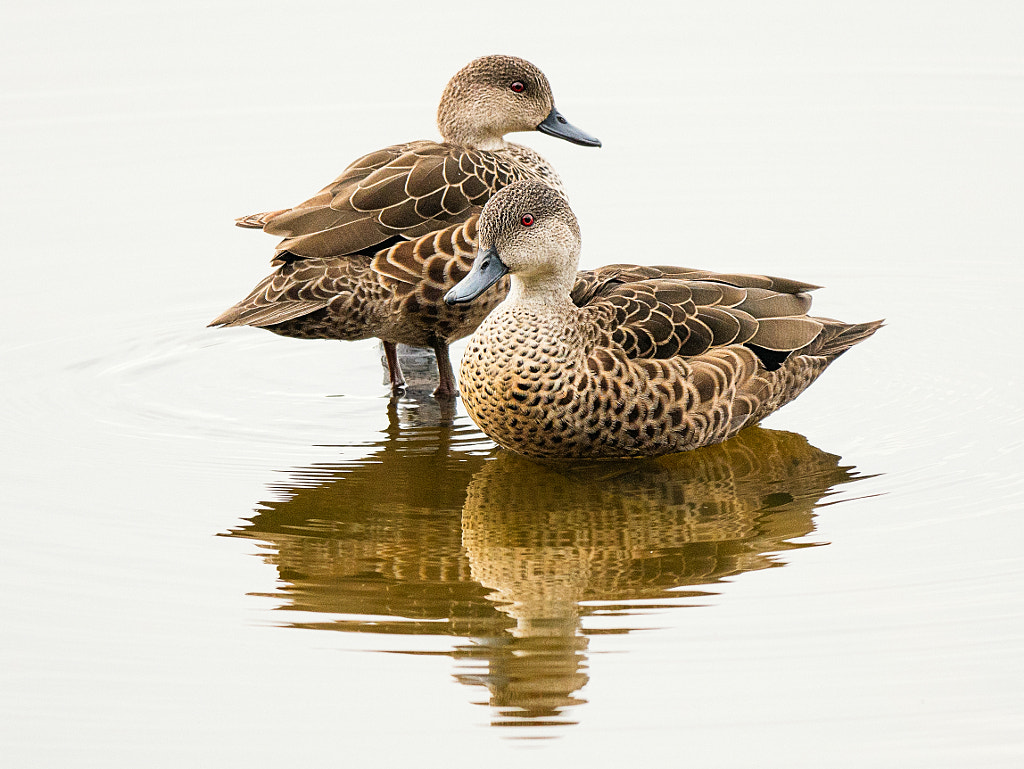
A pair of grey teals (Anas gracilis) at Lake Claremont in Western Australia.


Kwilom by Paul Amyes on 500px.com
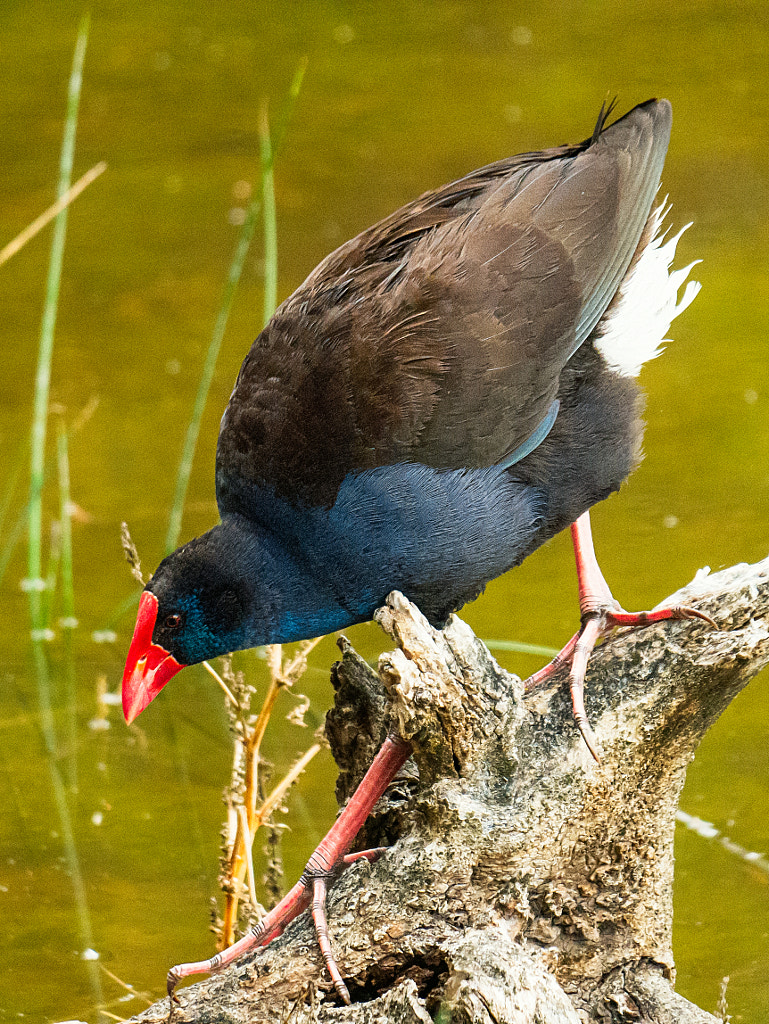
A purple swamp hen (Purple), Lake Claremont, Western Australia.


Rainbow Lorikeet by Paul Amyes on 500px.com
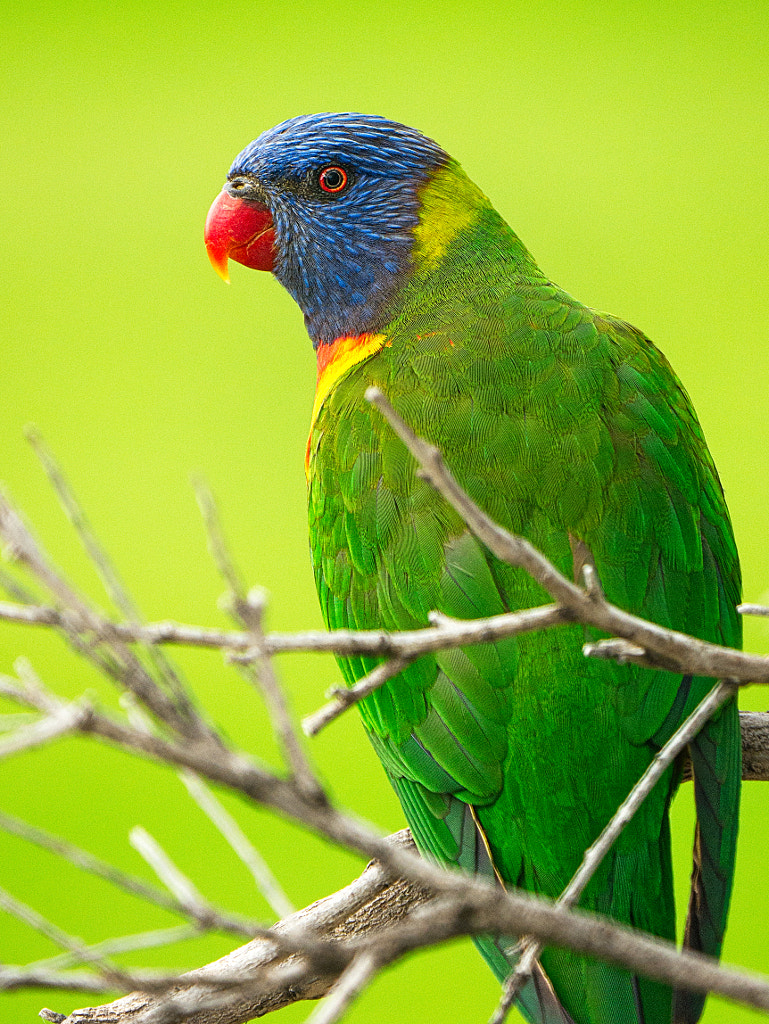
Rainbow lorikeets (Rain) were introduced to Western Australiafrom the eastern states of Australia. Lake Claremont, Western Australia.


Wimbin by Paul Amyes on 500px.com
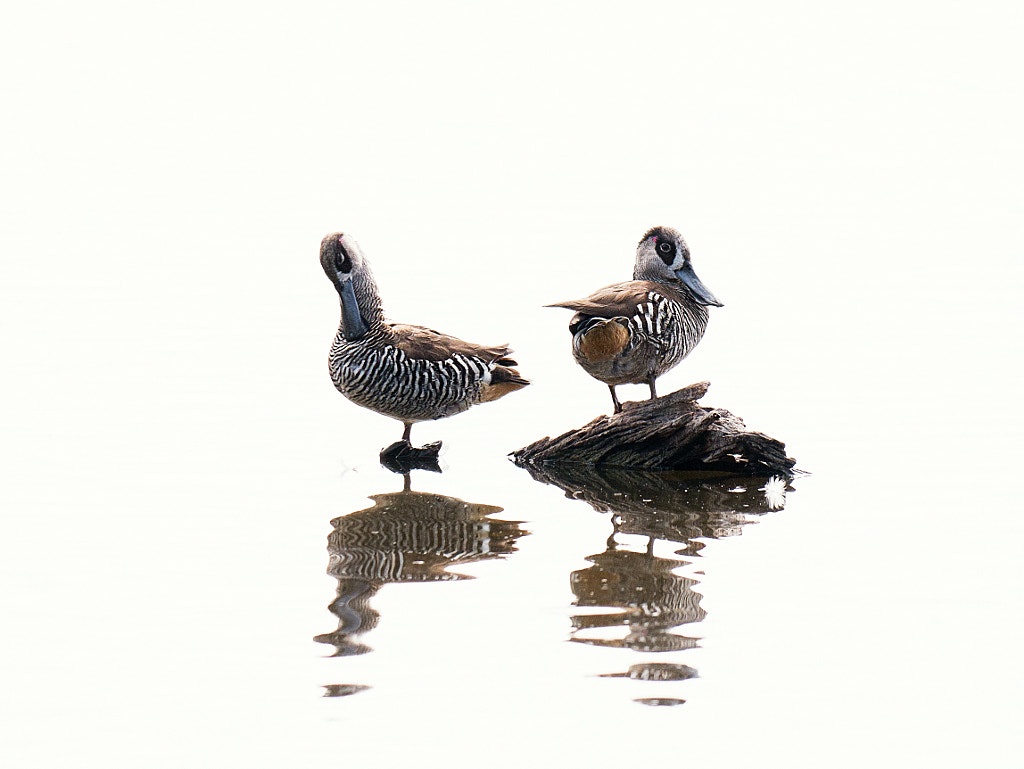
Pink-eared ducks (Malacorhynchus membranaceus) at Lake Claremont in Western Australia.


Dit by Paul Amyes on 500px.com
Called Dit by the Nyoongar this juvenile pied stilt (Himantopus himantopus) feeds at Lake Claremont, Western Australia.


Bardoongooba by Paul Amyes on 500px.com
Bardoongooba called Australian Shovelers (Anas rhynchotis) by European settlers can be readily seen on Lake Claremont.


To Boldly Go …


Zamia Trail by Paul Amyes on 500px.com
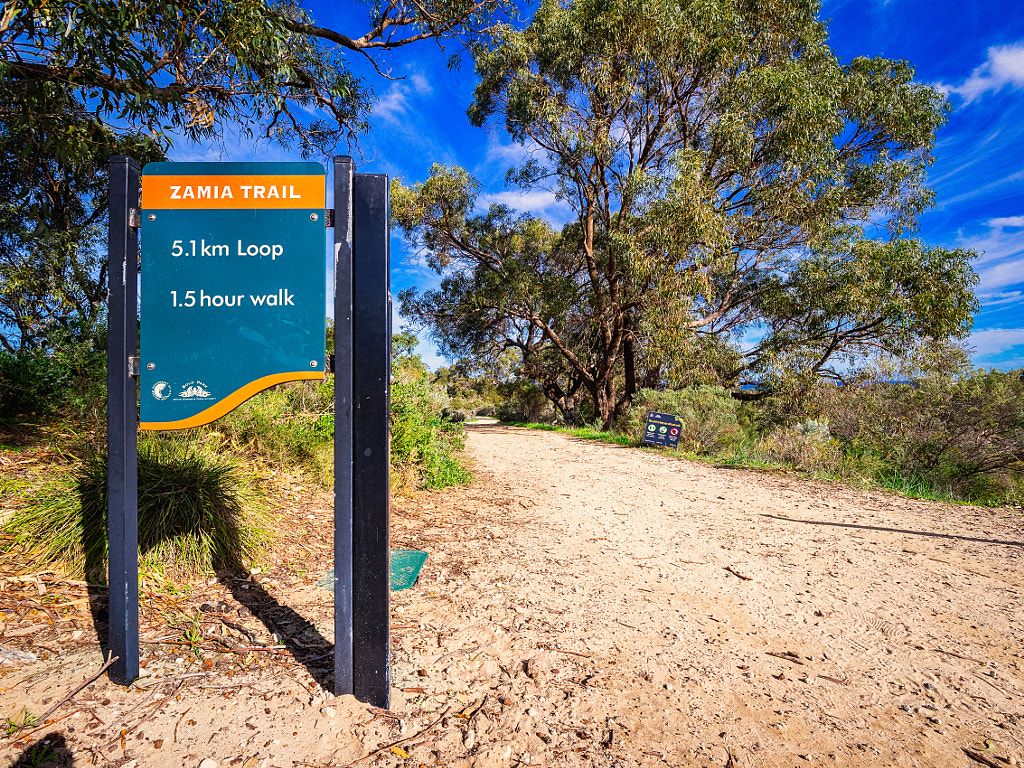
Bold park and its assorted trails are a very popular weekend destination for people living in Perth. The Zamia Trail is a 5.1Km trail that allows walkers to explore the Banksia and tuart woodland of Perth.


…where lots of people have gone boldly before.


That destination is Bold Park which is quite a unique place in the Perth Metropolitan Area. The park was established in 1936 and named after some bloke who had put in lots of time in the City of Perth local government – which is all a bit  boring. Much more interesting is that it is 437 hectares of remnant bushland on the Swan Coastal Plain comprised of banksia and tuart woodland. Tuart forest (Eucalyptus gomphocephala) was once a major feature of the Swan Coastal Plain with trees of up to 40m in height and providing a unique ecosystem. On colonisation most of the tuart trees were cleared for farming and for it valuable timber which is dense, hard, water resistant and resists splintering. The last remaining tall tuarts are found in the Tuart Forest National Park. There a couple of remnants of smaller trees around the Perth Metro Area such as those found at Mindarie Dunes and Bold Park. The park is situated in City Beach just off Oceanic Drive and can be reached by public transport.To say that the park is popular is an understatement, I went on a Saturday morning and it was absolutely heaving – so this is not a wilderness experience, but an urban walk on the wild side. 


Zamia Trail by Paul Amyes on 500px.com
The start of the Zamia Trail on Reabold Hill in Bold Park.


Reabold Hill by Paul Amyes on 500px.com
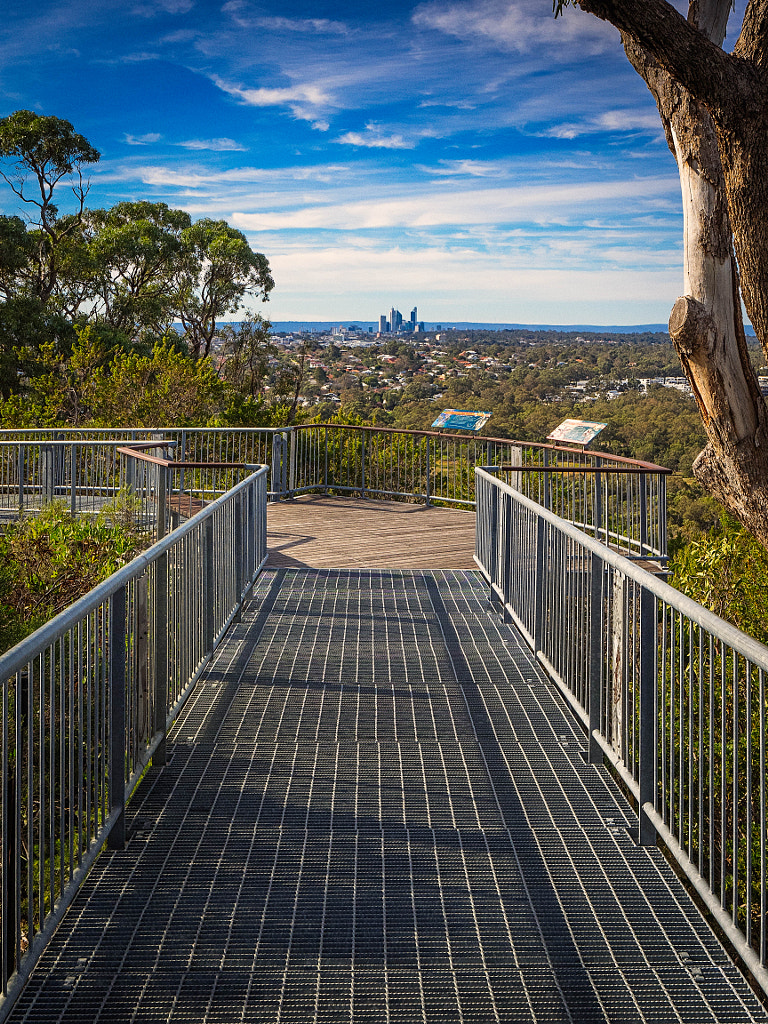
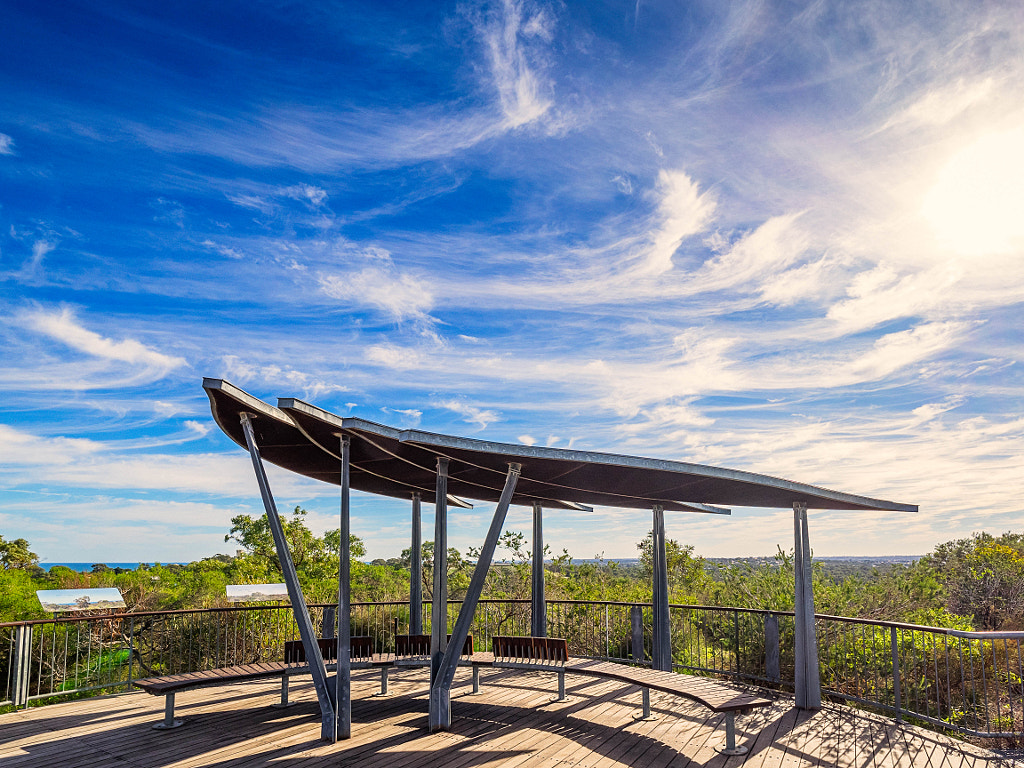
Reabold Hill is the highest natural point on the Swan Coastal Plain in the metropolitan area at 85 metres. There is a boardwalk to the summit to allow for disabled access and a sheltered viewing platform at the top. On a clear day you can see the Indian Ocean, Perth city, Rottnest Island, Kings Park and Botanic Garden, and even glimpses of the Swan River.


Reabold Hill by Paul Amyes on 500px.com
The shelter on the viewing platform at the top of Reabold Hill.


Reabold Hill by Paul Amyes on 500px.com
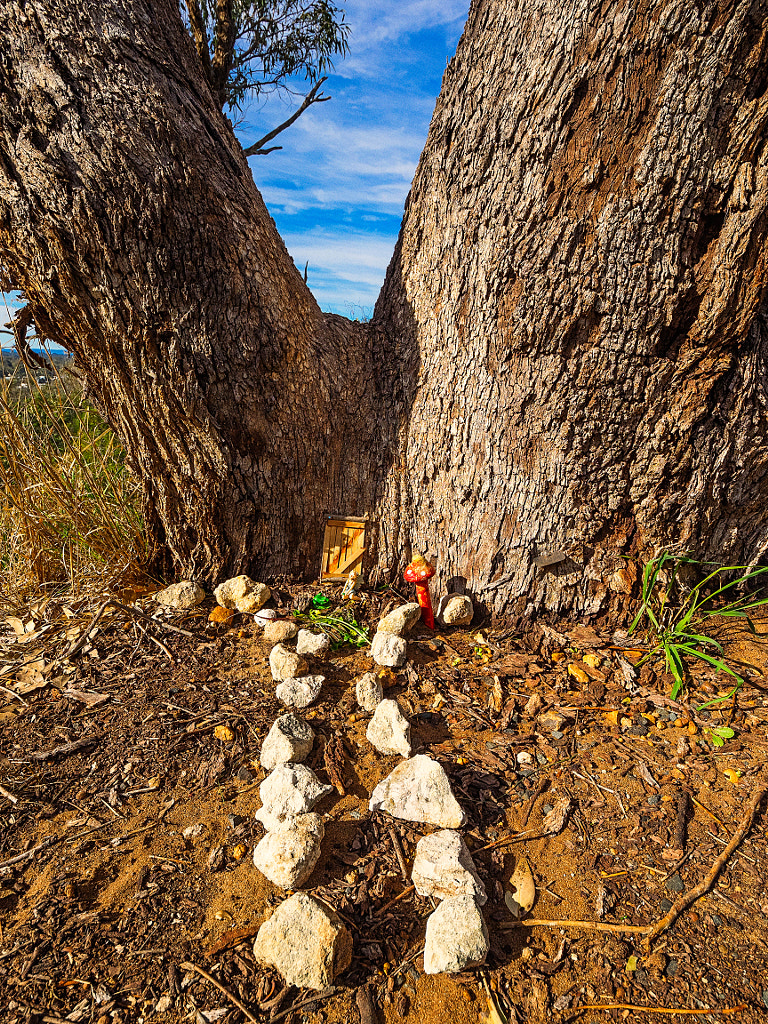
A fairy house on the path to the summit of Rebold Hill in Bold Park.


Speaking of walking there are over 15Km of walking trails of varying distances – the longest one, which I just did, is the Zamia Trail which is 5.1Km long over rolling terrain on a crushed limestone base which means you can comfortably push a stroller or pusher. If you are going to do the walk I suggest parking at Reabold Hill car park. This is a good place to commence the trail, but also it enables you to make a side trip unto the summit of the hill where there is a viewing platform. This is the highest natural point on the Swan Coastal Plain at 85 metres above sea level. This means on a nice clear day you can see the Indian Ocean, Perth CBD, Rottnest Island, Kings Park, and the Swan River. While pedestrians and cyclists can access the park at all times vehicular access is limited as follows:

  • 1 April to 31 October – 5.30 am to 7.00 pm
  • 1 November to 31 March – 5.30 am to 8.00 pm.

The trail is well sign posted so there is no need of a mud-map which means you can just get out and enjoy it. I walked this in winter so there weren’t many flowers out – a few banksias, grevilleas and cockies tongue. I was more interested in the bird life and the Botanic Gardens and Park Authority put out an excellent brochure you can download detailing all 91 species that can be found. There are numerous other animals such as brush-tail possums, bats, loads of reptiles including snakes of varying descriptions. Considering how many people were about I was surprised at how many different species of birds I saw. I even literally stumbled over a very sleepy and grumpy bob tailed lizard (Tiliqua rugosa), trying to warm up on the path in the sun having woken up from brumation.


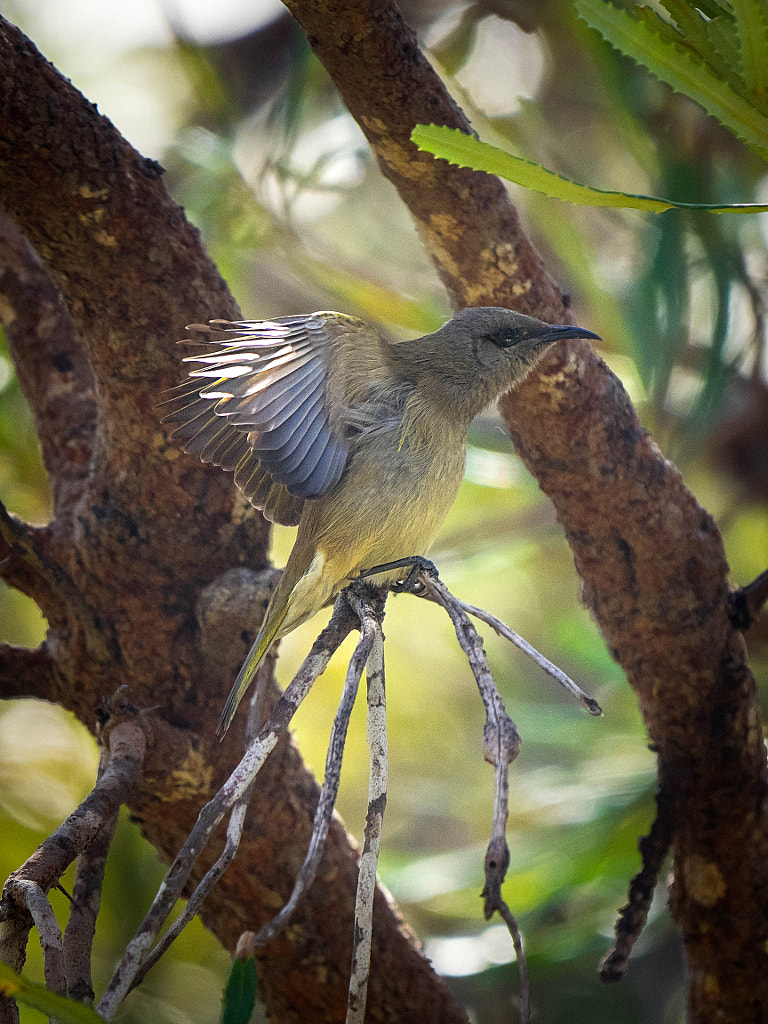
Djindjoko by Paul Amyes on 500px.com
Djindjoko called the Brown Honeyeater (Lichmera indistincta) by European settlers. Bold Park, Western Australia.


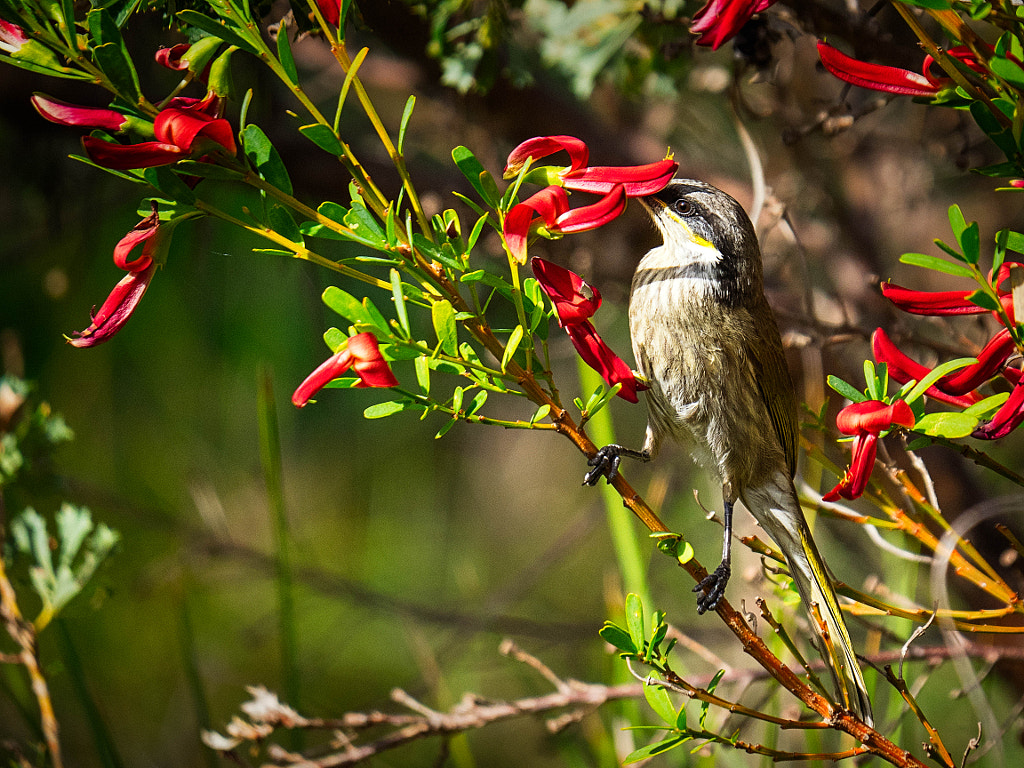
Dooromdorom by Paul Amyes on 500px.com
Dooromdorom or Singing Honeyeater (Lichenostomus virescens virescens) feeding on Yackal Djarr or Cockies Tongues (Templetonia retusa). Bold Park, Western Australia.


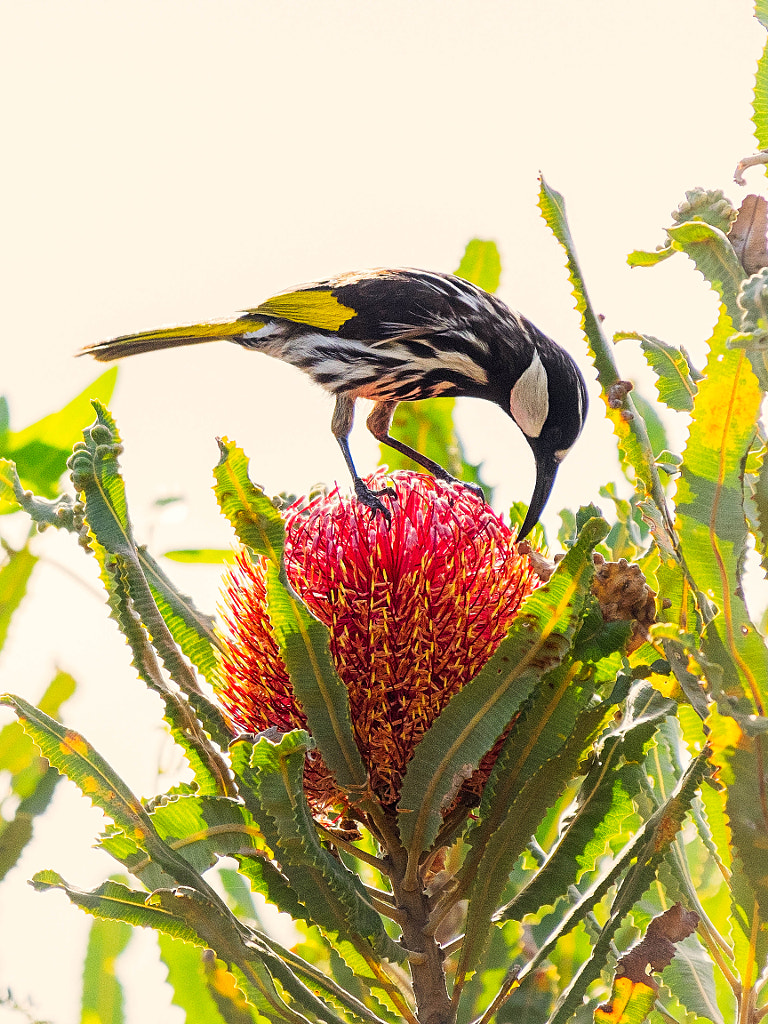
Bandin by Paul Amyes on 500px.com
Bandin also called the White-cheeked honeyeater (Phylidonyris nigra) feeding on Menzies Banksia (Banksia menziesii) in Bold Park, Western Australia.


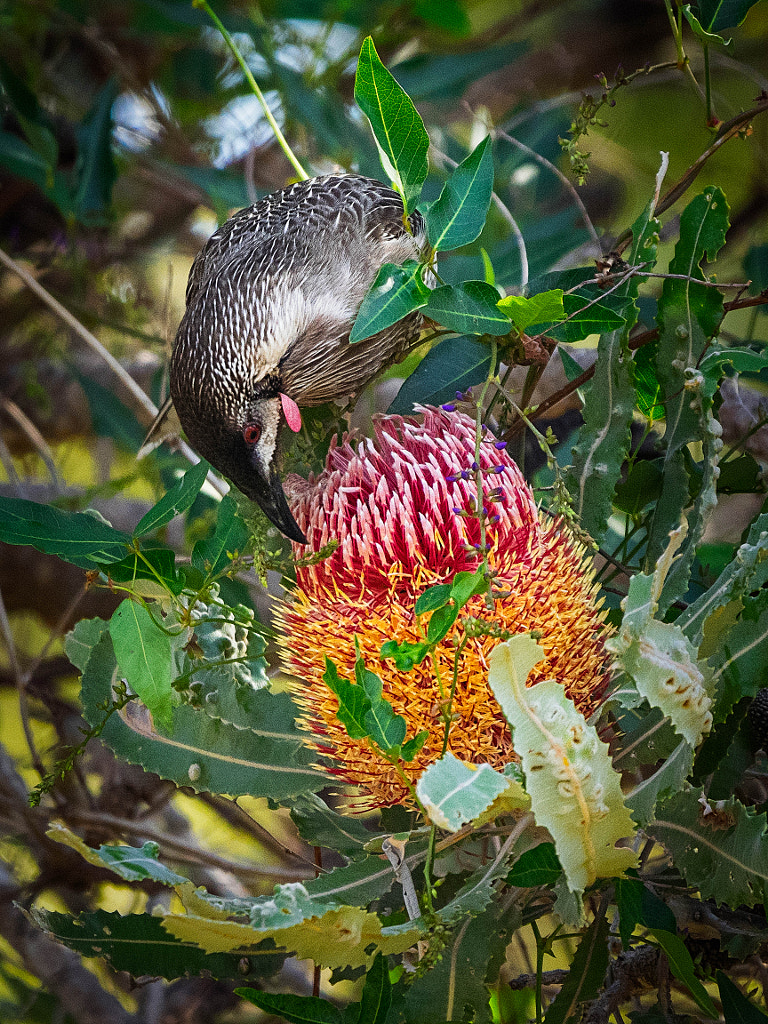
Doongorok by Paul Amyes on 500px.com
Doongorok also called the red wattlebird (Anthochaera carunculata subsp. woodwardi) feeding on Menzies Banksia (Banksia menziesii). Bold Park, Western Australia