Boodalang is the Nyoongar name for the Australian Pelican (Pelecanus conspicillatus). Woodman Point, Western Australia.
A trio of Australian pelicans swimming in formation off Point Walter on the Swan River.
The Australian Pelican is a familiar sight and can be found in waterways and coastal areas all around Australia. Basically where there are fish there are pelicans. I’m sure that I’m not alone in being slightly amused by the sight of them. That large beak and pouch looks somewhat comical and birds that size shouldn’t really be able to fly – how do they get airborne?
Australian Pelican, Pelecanus conspicillatus, Lake Seppings, Western Australia.
Australian pelicans are the second largest flying bird in Australia, only the brolga is bigger. Although on the small size compared to other pelican species the Aussie comes in 4-13Kg (males are larger than females) and have a wing span of up to 2.5m. That’s a lot of bird. That bill is the largest of any bird measuring up to 50cm in length. They are highly evolved animals that owe their success to a number of strange features.
Trawling at Two Peoples Bay, Western Australia.
That distinctive bill and pouch is not for storing fish to eat later, but is rather used as a net to trap fish and other marine life. As the pelican trawls the pouch can hold up to 13 litres of water and food. When it is time to eat the bird lifts its bill out of the water and pushes it against its chest to expel the water and then it flips its prey around so that it can be swallowed head first. They don’t just eat marine life, they will eat small ducks, seagulls and small mammals. They will even steal the fish that other birds, such as ospreys, have caught. In all an adult pelican will eat up to 2Kg of fish a day. On a hot day the pouch is also used as a cooling system – the bird swings it about to cool down.
Effortlessly swimming along the Serpentine River in Mandurah, Western Australia.
Despite their size they have a light weight skeleton that has air pockets. This means that it weighs less than 10% of the total body weight which enables them to fly and remain buoyant in water. They also have a number of air cells under their skin which are connected to the respiratory system and act as floats. This gives the pelican the ability to float with very little of its body below the surface of the water which has the effect of minimising energy expenditure when swimming.
Getting ready. Alcoa Wellard Wetlands, Western Australia.
“We’re off!”
Heading home.
Perhaps the most amazing facts about the Australian pelican are when it comes to flight. Their large wings enable them to soar on thermal currents at altitudes up to 3000m and they can stay airborne like this for up to 24 hours. It makes for an incredibly efficient means of flying. When taking off a pelican will often fly incredibly low over water – they almost skim the surface. By this they take advantage of the “ground effect” which reduces drag and increases lift. The air flows between the wings and the water’s surface where it is compressed and exerts a strong upward force pushing the bird up and this again minimises the amount of energy expended. This energy efficiency is important because an adult pelican will often commute from its nesting site 150Km to find food.
Nearly a thousand Australian pelicans use Penguin Island as a nesting site and breeding colony.
The Australian pelican maybe cut a comical figure, but they look like that for very specific reasons.
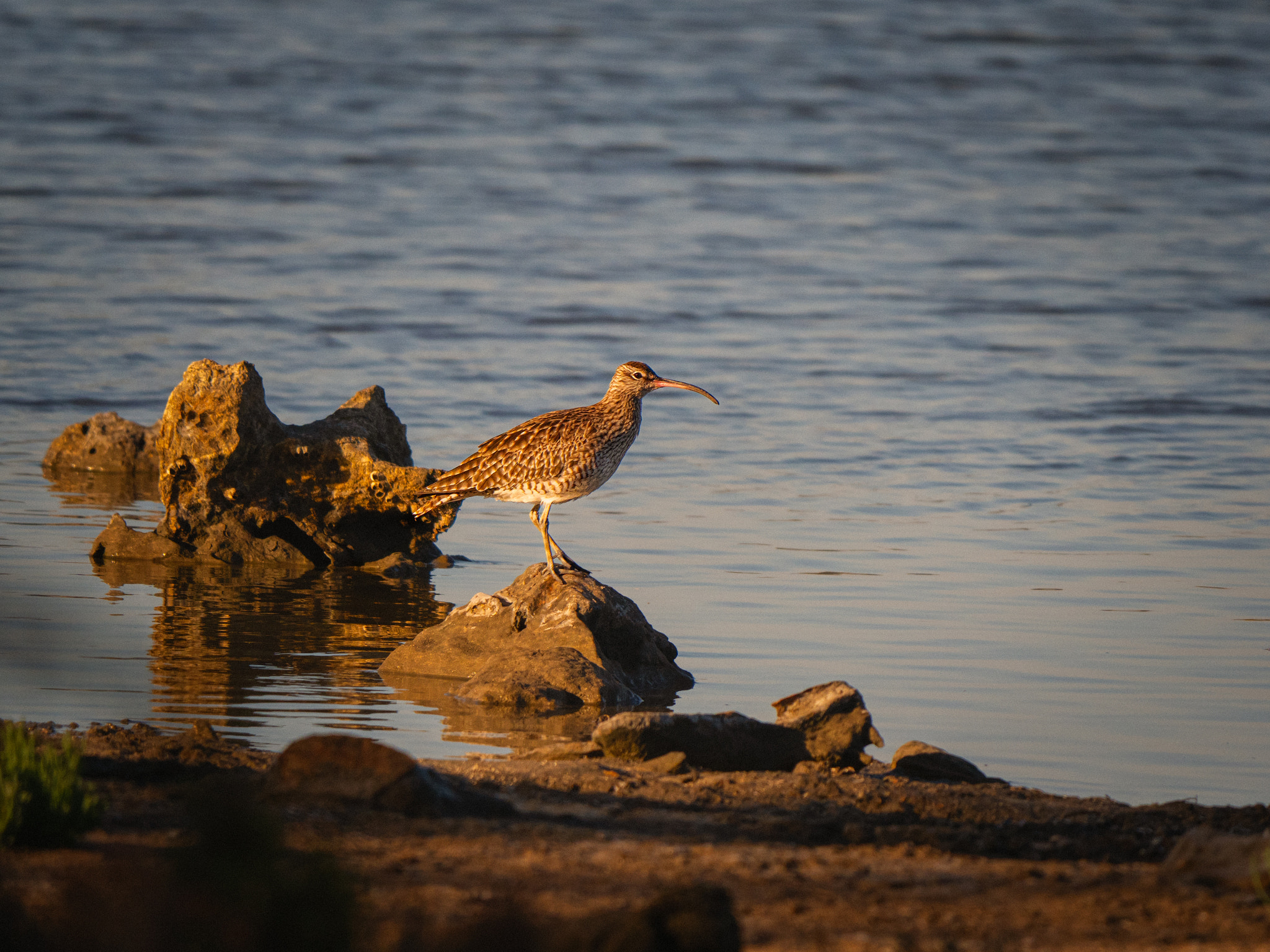
Whimbrel, Numenius phaceopus. Samphire Cove Nature Reserve, Westerm Australia. Olympus EM 1 mk ii with Panasonic Leica 100-400mm f4-6.3 lens. Exposure: 1/1250s, ƒ/7.1, ISO 500.
Every year it is reckoned that 50 million migratory water birds migrate from artic Russia and north eastern Asia southwards looking to winter in warmer countries such as Australia and New Zealand. This is the East Asian–Australasian Flyway and the West Pacific Flyway. About 35 or 36 species of waterbirds migrate to Australia on an annual basis involving approximately over 2 million birds and flights of up to 26,000 kilometres, it is a staggering number. Now I’m sure that if the leader of opposition Peter Dutton, Australia’s very own Lord Voldemort, found out there is 2 million migrants coming into Australia every year he would have a conniption fit and demand that they all be taken off to Nauru for mandatory indefinite detention. Cheap cracks at Peter Dutton aside the phenomenon of these bird migrations is absolutely amazing.
Some of the birds are small, really small. A MacDonalds Chicken McNugget has more meat on it than some of these birds, and yet every year they can fly from the Artic Circle to Australia and back. It makes me feel tired just thinking about it. I must say I hadn’t really given this very much consideration until recently. I mean I knew birds migrate – the Rainbow Bee-eaters I regularly photograph migrate from Papua New Guinea and Northern Australia, a relatively short jaunt in comparison – but I hadn’t really thought about the waterbirds who come in their hundreds of thousands to Western Australia. I think that’s because I don’t see them – they don’t come to winter on the idyllic waters of the Avon River. A recent trip to the Peel Inlet and Alfred Cove changed this. As usual I was looking for something else when I came across Whimbrels (Numenius phaceopus) and the Common Greenshank (Tringa nebularia) and because I wasn’t prepared for the encounter I just blundered in and they spooked resulting in only a couple of pictures of each. Despite returning on subsequent occasions I still only managed a grab shot of the Whimbrel and none of the Common Greenshank. Interestingly both birds don’t have Nyoongar(the original inhabitants of the south west of Western Australia) names.
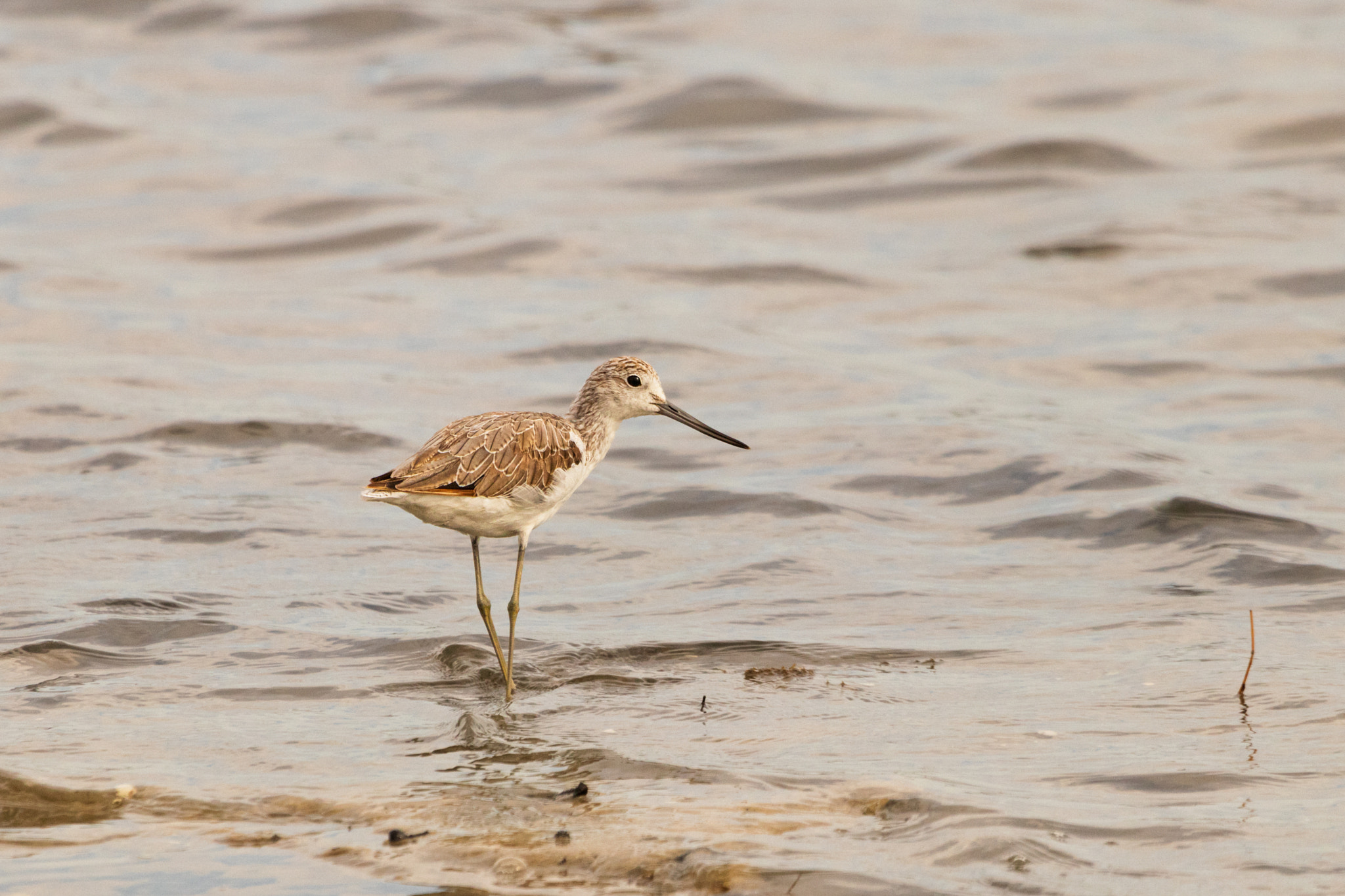
Common Greenshank, Tringa nebularia. Alfred Cove, Western Australia. canon 80d with Sigma 150-600mm f5-6.3 lens. Exposure: 1/2000 sec, f6.3, ISO 400.
The timing of migration seems to be controlled primarily by changes in day length and the birds navigate using celestial cues from the Sun and stars, the Earth’s magnetic field, and mental maps.In some birds the route is genetically programmed– these tend to be the shorter lived species – whilst the longer lived species are socially programmed ie they learn the route of of the older birds. All I know is that their ability to find their way from one end of the globe to the other is amazing. I have enough trouble navigating round my neighbourhood without Google maps.
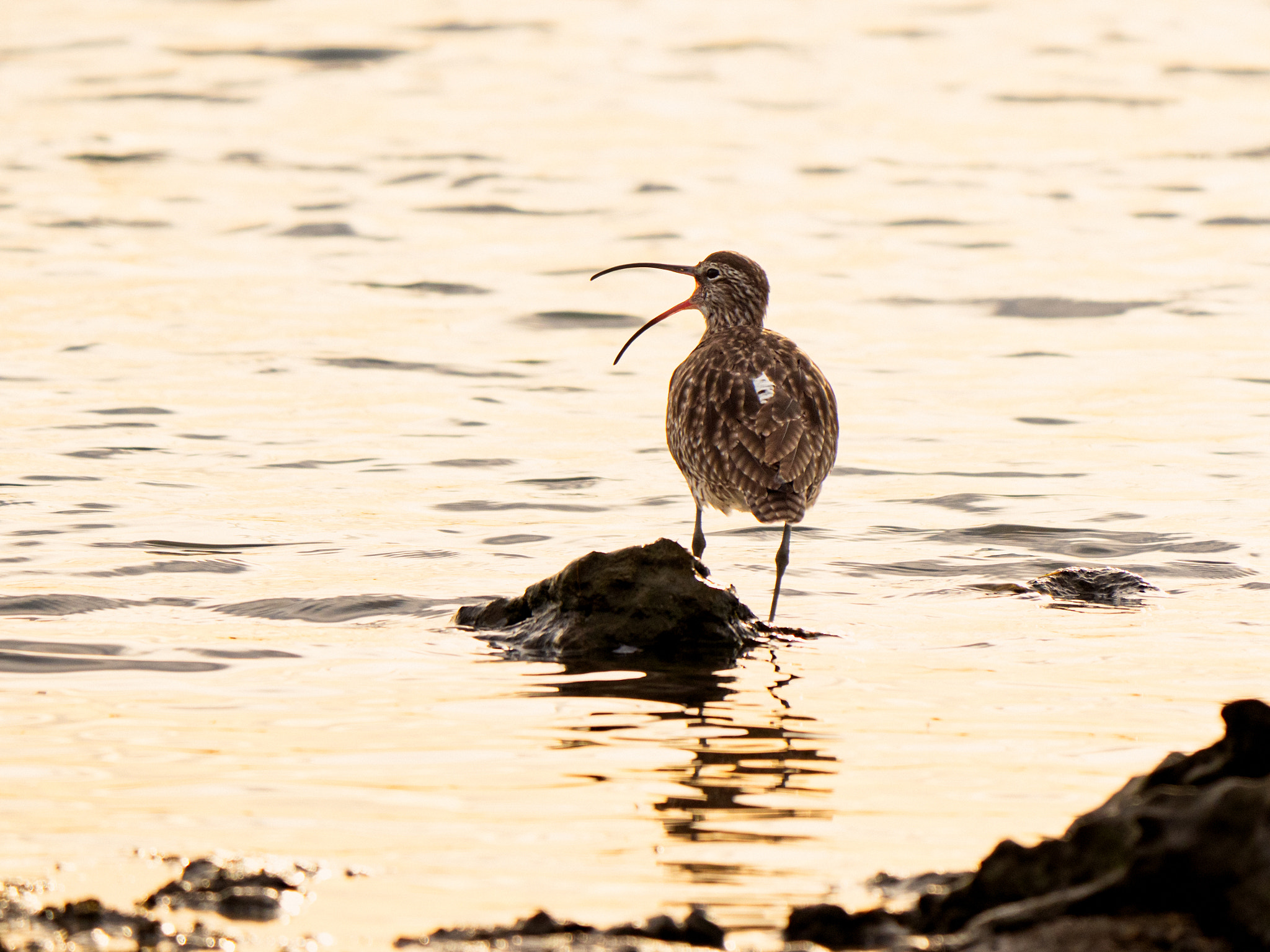
Whimbrel, Numenius phaceopus. Samphire Cove Nature Reserve, Westerm Australia. Olympus EM 1 mk ii with Panasonic Leica 100-400mm f4-6.3 lens. Exposure: 1/500 sec, f6.3, ISO 250.
Up at dawn to catch the early bird. Bandin or White-cheeked honeyeater (Phylidonyris nigra). York, Western Australia.
It’s a well established wisdom that to photograph most wildlife you have to be in the field at sunrise or just before. I have to say that this is quite pleasurable in summer as it is the coolest part of the day. In fact the last few days it has almost felt cold at just 20ºC. I’ve been heading out looking for black shouldered kites and rainbow bee-eaters. I’ve done my homework found the trees that the kites nest in and the burrows that the rainbow bee-eaters are currently using. I’ve also found out which trees that they like to perch in. Sounds like it is done and dusted, but photographing wildlife is seldom straight forward.
The only photos of Black Shouldered Kites (Elanus axillaris) I’ve got are a sequence of one hunting but I was too far away to get a good photos and this is a heavy crop. The photo does show the distinctive pose of the black shouldered kite when hunting.
The black shouldered kites are incredibly skittish. The closest I’ve ever got to one was while walking the dog. Needless to say I didn’t have a camera with me. So far my efforts have come to naught – the closest I’ve managed to get with a camera is 30 metres. It’s a work in progress.
Birin-birin or Rainbow Bee Eater (Merops ornatus). York, Western Australia.
The Rainbow bee-eaters are in full swing with raising chicks so both parents will be out hunting and returning to the nest with food roughly every 15 minutes. So all that was necessary was to get into position as the sun’s rising and wait for them to appear. Except they didn’t. Seems like I picked the morning when they decided to have a lie in. After an hour an a half I decided to move to “Plan B” which was to cross the river and go to another site I’ve been watching. Here the birds were early risers and were already full swing into the routine for the day. Photographing them in York is more difficult than at Lake Gwelup where they have been habituated to a human presence and perching posts have been put at lower heights – approximately 1-1.5 metres above the ground. The open terrain means that capturing them flying and hunting is easier. Here in York they favour larger trees, but occasionally will perch lower.This particular morning I came across a male bird perched in the top of a dead tree. He wasn’t exhibiting the usual behaviour – in fact he looked downright uncomfortable. After a while it became apparent what was causing his discomfort. He had indigestion. His last meal wasn’t going down smoothly at all and was trying to escape! When they catch something like a dragonfly they take it to their favoured perching spot and then beat it against the branch to kill it. Obviously this bird hadn’t thumped the hapless insect hard enough. Eventually the bird sorted the problem out and flew off looking more comfortable. This was the sort of digestion problem that wouldn’t be fixed with a bit of Mylanta.
“I feel a bit funny. I think something I’ve eaten is disagreeing with me.”
The Welcome Swallow (Hirundo neoxena subs. carteri and called Kanamit by the Nyoongar of Western Australia) is a small bird approximately 14cm long and weighing up to 20g. They are an attractive looking bird with a glossy blue-black body and crown, dark brown wings, and a rusty red face, neck and upper breast. They have a forked dark grey tail which forms two streamers when flying. They are very fast and acrobatic in flight swooping on their insect prey and they often drink water while flying over bodies of water.
An adult Kanamit or Welcome Swallow (Hirundo neoxxena) taking a breather from catching insects and feeding chicks. York, Western Australia.
When Europeans first colonised Western Australia Welcome Swallows were confined to coastal areas. As land clearing progressed they spread further inland and northwards. They differ from their Eastern State cousins in that they are not migratory. They have readily adapted to human habitation and can be easily found in urban areas. To thrive they require substantial insect populations and large flocks can be commonly found near water. They are often seen perching on fences and overhead power lines. They nest in a cup shaped structure made by both parents from mud and grass and is lined with feathers and fur. This typically takes between 8 and 23 days to make. The nests are often attached to walls, rafters, cranes, bridges, rock faces, and dead trees.The monogamous pairs will re-use their old nest. A warming climate has meant that Swallows in Western Australia are having 2-3 broods per year and lay a clutch of up to 5 eggs. The female incubates the eggs for around 3 weeks and when they hatch they are fed by both parents. The young fledge after a further 3 weeks and become independent after 35 days.
An adult Kanamit or Welcome Swallow (Hirundo neoxxena) perched on the nest. York, Western Australia.
Juvenile Kanamit or Welcome Swallows (Hirundo neoxxena) impatiently waiting to be fed by their approaching parent. York, Western Australia.
“Where’s my dinner!!!” Welcome Swallow (Hirundo neoxxena) demanding to be fed by it’s parent. York, Western Australia.
A juvenile Kanamit or Welcome Swallow (Hirundo neoxxena) demanding to be fed by it’s parent.
A couple of weeks ago I posted about all the Ibis nesting at Tomato Lake and how it heralded the start of the breeding season for them. Well this week the Black Swans at lake Claremont were building nests and pairing off and spring is just round the corner. It was an uninspiring morning, the rain was bucketing down and the usually frenetic Welcome Swallows looked unimpressed.
Kanamit or Welcome Swallow (Hirundo neoxxena) looking unhappy in the rain. Lake Claremont, Western Australia.
A bit further on amongst the reeds the swans were busy in spite of the inclement weather.
This swan was very obliging and allowed me to take its photo.
A female black swan sits on the nest while the male gathers more nesting material.
Elsewhere on the lake things were much more advanced with the Shelducks as there were several mothers escorting very young ducklings out on the water.
No water wings in sight. A Shelduck takes her young brood out for a swim on Lake Claremont.
I was a bit apprehensive about walking in the rain. My usual camera – an Olympus OMD EM1 mk ii and its Panasonic Leica 100-400mm f4-6.3 – are incredibly resistant to rain fall, but this time I was out with my Sony A7r2 and the Sigma 150-600mm whose weather sealing leaves a bit to be desired. Thankfully the combination worked flawlessly and lived to tell the tale. It was, however, its last outing. I’ve developed quite bad arthritis in my right hand, elbow, and shoulder and find the larger full frame cameras too much to handle so I’m going to put it all up for sale. Getting older really sucks sometimes.
I’ve not been very active of late. I’ve had a few niggling injuries that’ve meant that I’ve not been able to get out and about much. What little photography I’ve done, and it is very little, has been taking piccies of the garden birds. Hopefully over the next week or so I’ll start getting out and about again.
Kool-boort or Singing Honeyeater (Gavicalis virescens) in my back garden.
Bandin or White-cheeked honeyeater (Phylidonyris nigra) in my back garden.
This is the second part of an ongoing series called “Birds On A Budget”. It really should be “Can You Do Wildlife Photography On A Limited Budget?”, but that’s not as catchy or succinct.
TLDR
When looking for secondhand cheaper alternatives for wildlife photography it is all too easy to get preoccupied with specifications sheets without looking at the whole picture. It can mean that just because Camera X does have a specific feature that Camera Y has then it must be inferior. Well let’s look at an example.
The cameras I’ve chosen to look at are the Canon EOS 80d and the Sony A6500. Both were introduced in 2016, both have 24Mp sensors, and both can be found second hand for about the same price. The 80d is a DSLR and is probably considered retro-tech now and the A6500 being mirrorless is seen as the more up to date technology. Let’s see how the specs compare.
Sony A6500
Canon EOS 80d
Introduced
December 2016
February 2016
Resolution
24 Megapixels
24 Megapixels
Camera type
Mirrorless interchangeable lens camera
DSLR
Sensor size
APSC (23.5 x 15.6mm)
APSC (22.5 x 15mm)
In Body Image Stabilisation
Yes
No
ISO range
100-256,000 which can be extended to 512,000
100-16,000 which can be extended to 25,600
Dynamic Range
13.67 EV
13.17 EV
Autofocus
425 AF points covering the whole sensor.
On sensor phase detect AF supplemented with contrast detect AF.
Multi area, centre zone and single point modes.
Tracking
Single AF
Continuous AF
Face detection
Live view
45 AF points clumped in the centre of the frame when using the optical viewfinder
Phase detect AF
Multi area, centre zone and single point modes
Tracking
Single AF
Continuous AF
Face detect in live view only
Live view AF with ‘Dual Pixel CMOS AF’ which means every pixel can be used for phase detect auto focus
Rear LCD panel
Tilting 3 inch touch screen with 921,600 dots
Fully articulating 3 inch touch screen with 1,040,000 dots
Viewfinder
Electronic viewfinder with 100% coverage with 1.07 magnification (0.71 x 35mm) and 2,359,296 dots.
Optical viewfinder with 100% coverage at 0.95 magnification.
Shutter speed range
30 sec – 1/4000 sec
30 sec – 1/8000 sec plus ‘B’
Built in flash
Yes
Yes
Flash synchronisation speed
1/160 sec
1/250 sec
Frames per second
11 frames per second in both mechanical and electronic shutter modes with no live view and 8 fps with live view.
7 frames per second using the optical viewfinder and 2.4 fps when using live view.
Buffer
100 frames in RAW or RAW + jpg
300 frames in jpg only
When using the optical viewfinder:
Unlimited frames at 7fps in jpg
24 frames in RAW
20 framesin RAW and jpg
When using live view:
Unlimited in jpg
Unlimited in RAW
36 images in RAW + jpg
Metering modes
Multi-zone
Centre weighted
Spot
Highlight weighted
Multi-zone
Centre weighted
Spot
Video
Available codecs AVCHD, XAVCS, H264, MP4
4K (3840 x 2160) 30p, 25p, 24p
HD (1920 x 1080) 120p, 100p, 60p, 50p, 30p, 25p, 24p
Available codecs MPEG-4, H264 with a choice of all I or IPB
HD (1920 x 1080) 60p, 50p, 30p, 25p, 24p
Storage
SD card (UHS-1)
SD card (UHS-1)
Connectivity
USB 2.0 (480 Mbit/sec)
3.5mm microphone port
Micro HDMI
WiFi – 802.11b/g/n + NFC
Remote control via a smartphone
Tethered shooting to a computer
USB 2.0 (480 Mbit/sec)
3.5mm microphone port
3.5mm headphone port
802.11/b/g/n with NFC
Wired remote control
Remote control via a smart phone
Tethered shooting to a computer
Battery
NP-FW50 battery with CIPA rating of 350
LP-E6N battery with a CIPA rating of 960
Weather sealing
Yes
Yes
Construction
Magnesium alloy
Composite construction with an alloy chassis with plastic shell
Weight
453g
730g
Dimensions
120 x 67 x 53mm
139 x 105 x 79mm
Other functions
Inbuilt Timelapse function
On the whole the Sony seems the better camera as it has an electronic viewfinder that provides realtime exposure feedback, better video capabilities, better ISO range, better dynamic range and In Body Image Stabilisation (IBIS) all in a smaller and lighter package.
Sony A6500 real world usage
The A6500 body is not overly small, but the button and dial placements leave a little to be desired. There are twin control dials but they are both on the rear of the camera meaning your thumb has to do double duty. To me the lack of a front dial around or near to the shutter button is a big handicap. Now when it comes to using Sony cameras this is not my first rodeo. I have an A7r and A7r ii so I am quite familiar with the idiosyncrasies of the menu system. But, having said that I still find them labyrinthine and illogically laid out and the paucity of physical buttons and dials means that menu diving on the A6500 is quite frequent.
There is only one SD slot on the A6500 and although I prefer 2 slots it is not a big consideration. The SD card slot is located in the battery compartment and this is major pain. Even when shooting handheld it is fiddly to change cards and shooting on a tripod makes it downright frustrating. Often I find myself having to take the battery out to access the SD card. Speaking of the the battery compartment the battery in itself is hopeless. If I go out for the day shooting photos then I have to take 2 spares and if I intend to shoot any video I take at least 4. Luckily they are readily available and reasonably priced.
The LCD EVF on the left side of the body is good – for its time it is nice and detailed while being responsive. The rear LCD is of the flip up variety. I prefer the fully articulated type but it’s no big deal and I can work with both. The quality of the screen is abysmal – it is very hard to see in bright sunshine and it becomes very dim when shooting 4K video making it all but useless. Sony claims it is a touch screen but it is very limited in function. It can only be used for selecting AF points and nothing else and the implementation of that is pretty poor as it is laggy when working well and down right unresponsive when it isn’t. I’ve been in situationswhere I’m repeatedly touching the screen and the focus point is not moving meaning I’ve lost the shot.
Speaking of autofocus it works very well. Having AF points spread over the whole sensor is great which means you can really concentrate on composition. The AF is very quick and locks on moving subjects. Another nice feature is that you can link spot metering to the active AF point. The electronic shutter is another feature that I really like and although the rolling shutter is quite pronounced when shooting moving subjects I like to use it with shy wildlife as it means I won’t disturb it. In Body Image Stabilisation (IBIS) is fantastic. While not as good as that on other cameras I’ve used (Olympus and Panasonic) it works well and is very welcome when shooting handheld video.
Image quality is impressive. Shooting RAW the files are very malleable in processing as long as you get your exposure right. The high ISO performance is quite impressive and the dynamic range is such that I don’t feel the need to blend exposures to get details in the shadows and highlights when shooting scenes with a high subject brightness range. When shooting video the story is a little complicated. The 4K is nice and detailed and looks very good, but it is only 8-bit and so can’t be pushed too much in post. The provision of flat profilesSLOG 2 and 3 is good to have when shooting contrasty scenes outside. Shooting HD the footage is softer and doesn’t look so good. It’s OK but I prefer to shoot 4k and downsize to HD on export. Focus peaking, zebras, and a live histogram are features that make shooting video easier and it is good to see them on the A6500.
All these points are well documented so why did I get the A6500? Well I’d switched from Canon full frame cameras to a Sony A7r ii a couple of years ago and I’ve really enjoyed the whole experience. Initially I was using adapted lenses but gradually I switched over to native Sony EF mount lenses with the exception of my 150-600mm. Just for giggles I started doing some bird photography with the A7r ii and I found myself using the crop mode a lot which gave me a 15 Mp image. After 18 months of doing this I thought well why not get a second hand A6500 and have a quicker camera that has electronic shutter and more importantly has 24 Mp. I was also toying with the idea of shooting more wildlife video and the A6500 fit the bill for that as well. Overall I persevere with the A6500 because I like the final image, but it is a real effort as I just find the camera so awkward to use.
Nidoolyorong or Black-fronted Dotterel (Elseyornis melanops). Monger’s Crossing, York, Western Australia. Sony A6500 with Sigma MC-11 and Sigma 150-600mm f5-6.3 OS lens.
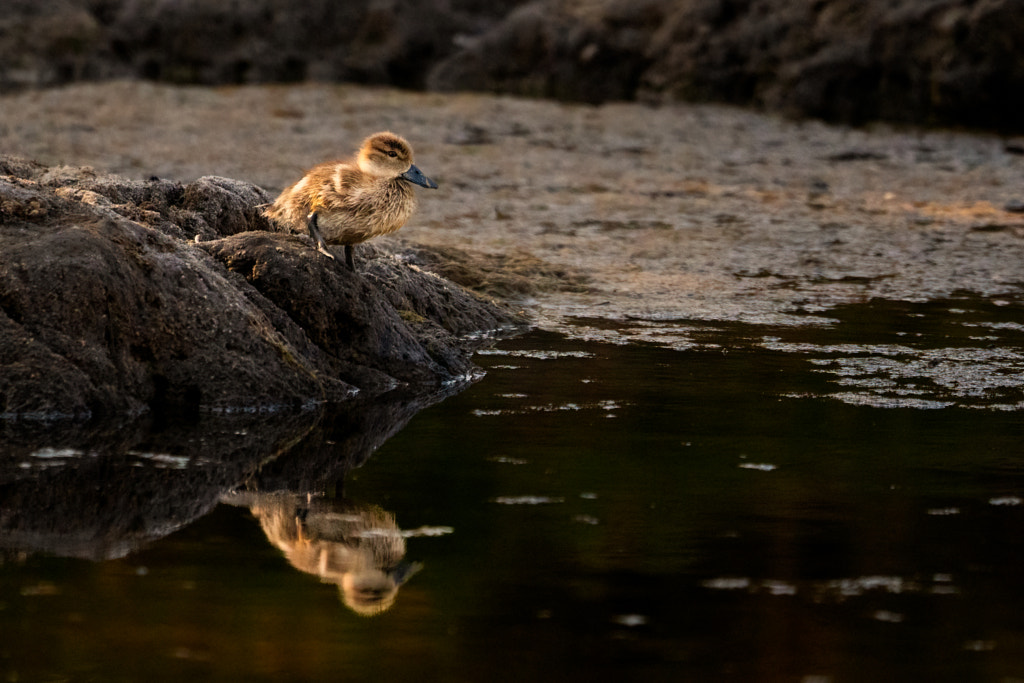
Pacific Black Duck (Anas superciliosa) duckling. Avon River, York, Western Australia. Sony Alpha a6500, Sigma MC-11, Sigma 150-600mm f/5-6.3 DG OS HSM Contemporary.
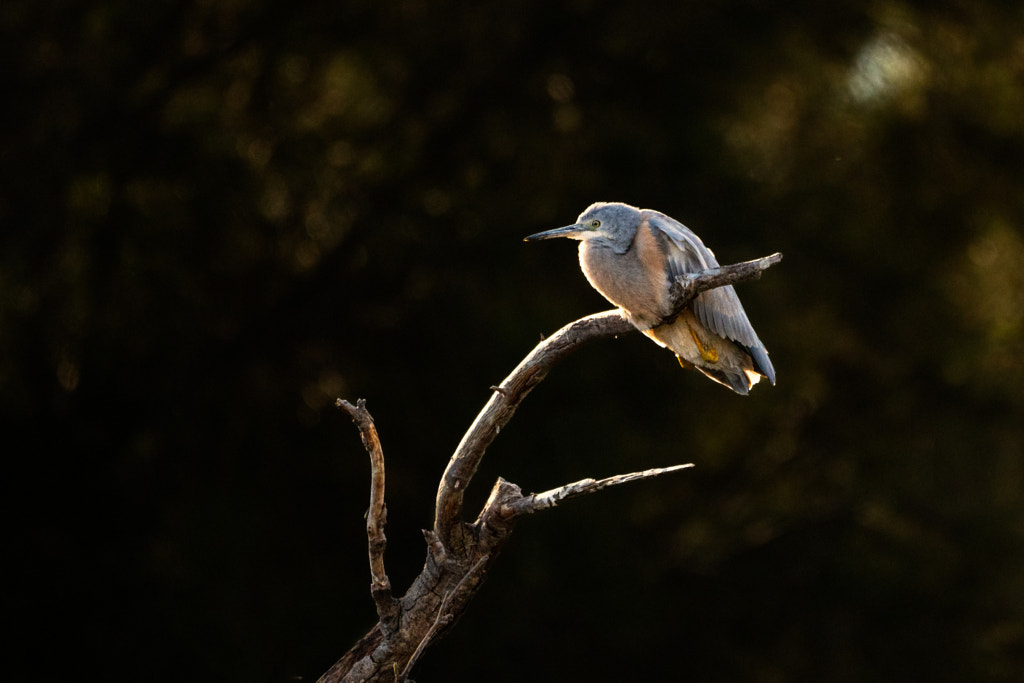
A juvenille White-faced Heron (Ardea novaehollandiae) roosting in a dead sheaoak tree. Monger’s Crossing, York, Western Australia. Sony A6500, Sigma MC-11 and Sigma 150-600mm f5-6.3 OS lens.
Canon EOS 80d real world use
During the later part of the Film Age (1822 to 2000) I used Olympus OM4s, but by 2003 I could no longer get them repaired and my father-in-law generously gave me a Canon EOS3 SLR. Whenever I pick up any Canon camera from the EOS 650 introduced in 1987 to the Canon EOS 5d iv introduced in 2016 I feel immediately familiar with the control layout, the handling and the operation of the camera. Canon, for all their faults, of which there are many, has always produced well sorted nice handling cameras. The 80d is no different. The camera fits perfectly in the hand, the buttons and dials are well laid out and intuitive to use. This attention to the user experience extends to the camera menus which are simply and logically laid out.
Like the Sony A6500 there is only one card slot, but it is positioned on the side of the handgrip behind its own door. It is easy to access under all scenarios. The battery is the venerable Canon LP-E6 and it lasts forever. Sure this is partly down to the fact that SLRs draw less power than mirrorless cameras, however, it is also gutsier at 7.2V, 1800mAh and 13Wh compared to 7.4V, 1080mAh and 7.3Wh of the Sony NP-FW50 which is in the A6500. The upside of this is that I’ve rarely used more than one battery for a full day of shooting.
The optical viewfinder is nice and large and clear. Although I now prefer EVFs because of the realtime exposure feedback the 80ds viewfinder is very pleasant to use. The rear LCD screen is of the fully articulated flippy flappy type which I really like not just for shooting video but also for shooting landscapes and macro in the vertical orientation.The screen has a teensy-weeny bit more resolution than the A6500s, but more importantly it is bright and clear when using in bright sunlight. It is also a touchscreen– you can control the camera, go through the menus and review images with it. While there is no joystick to select autofocus points you can use the screen to do this and it is responsive. While we’re talking about autofocus it helps to view it as two cameras in one body. Using it as a SLR with the optical viewfinder the 45 AF points are all centrally grouped. If when composing an image your subject is outside of that area then you have to focus and recompose. The autofocus is quick and with a well calibrated lens very accurate. When using the rear LCD screen in “Live View” the performance is like a mirrorless camera with every pixel on the sensor doing double duty as an AF point. The 80d has face detection that works well. Although how responsive this is will depend on the lens – those with STM motors work the best. I did consider just using the camera in the live view mode but there is a significant performance hit with the maximum frames per second of 7 reduces to 2.4. I also find it hard to track birds using the rear screen and a super telephoto lens. Another much missed feature is In Body Image Stabilisation so you have to depend upon the IS in the lens if it has it.
The image quality is good – a real leap up from the 18Mp sensor that Canon seemingly used forever. But with that said it is not as good as that in the A6500. The dynamic range of the Canon 80d is 13.17EV as opposed to the 13.67EVof the Sony as measured by DXO. The amount is paltry and in real life terms negligible. If we look at ISO performance and particularly noise then both cameras are fairly equal up to ISO 800. At 1600 the A6500 is about a stop better and at 3200 is 1 1/2 stops better. The highest maximum native ISO on the 80d is 16,000 and this can be extended to 25,600. The A6500 tops out natively at 256,000 which can be extended by a stop to 512,000. In reality the highest ISOs on both cameras aren’t much chop, on the 80d the furthest I’d go is 6400 and the A6500 can be used up to 12800. But having said this I am using Topaz DeNoise AI to clean the images up. Your tolerances to noise maybe a lot lower than mine. If you shoot RAW colour output is pretty much the same, you should be able to get the results you want in post. Shooting jpgs well if you like punchy reds and warmer looking images then you’ll prefer the Canon. For video the lack of 4k can be seen as a major drawback. I shoot 4k and then in post will often crop in because I’ll output the final file as HD. The HD video on the 80d is an improvement on the previous 18 and 20Mp sensors that Canon used. It is also better than the HD from the Sony. There is no flat profile on the camera, but I solved that by installing the Cinestyle Profile from Technicolor and I am getting great results. The video output is again 8-bit so can’t be pushed around too much in post.
When shooting video the lack of an EVF is a bit of hindrance, but, thankfully the rear LCD screen is of high quality. The touch screen implementation makes operating the camera a doddle. Another feature I really like is the ability to create a ‘My Menu’ spread over three pages and I’ve made one of the pages dedicated to video. The AF in video works much better than I expected but again this is really lens dependent. While it is quick to acquire and initially lock on it does have the annoying tendency to drift off the subject and onto the background. You need to keep taping the touch screen to maintain focus on the subject. Unfortunately Canon doesn’t provide any focus peaking for help with manual focusing and no zebras to warn about clipping. Also Canon’s pre-amps are not the best.
I bought the Canon EOS 80d with the sole intention of testing cameras at various price points to see how they’d fare for nature and wildlife photography. I fully intended to sell the camera once I’d finished with it. Now having used it for several months it has become one of my favourite cameras (my favourite being the Olympus EM 1 mk ii). The 80d is such a well thought out camera that it is above all fun to use to use. No it’s not a hybrid camera as the video implementation doesn’t perform well enough, but it is certainly an excellent tool for the photographer on a budget. It has certainly piqued my interest in the 90d which addresses some of the limitations of the 80d.
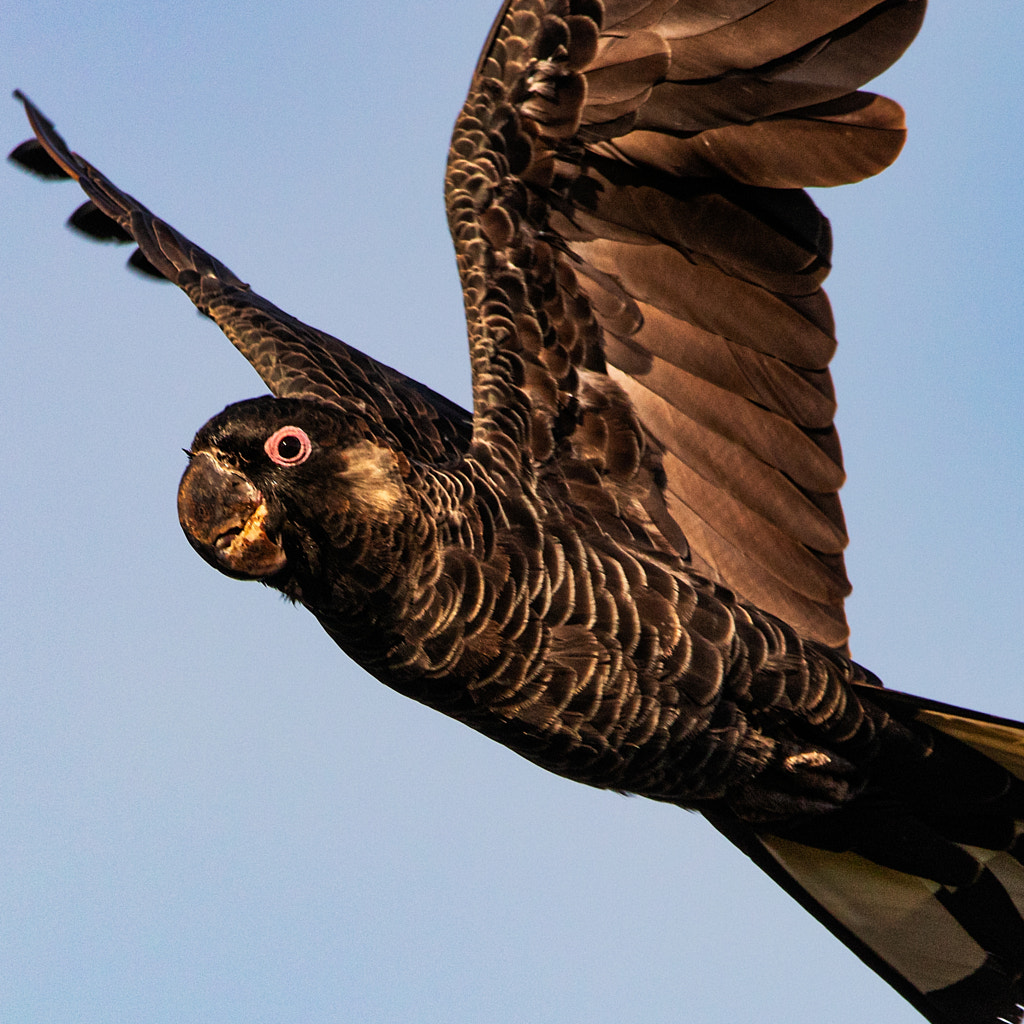
Ngoolyak or Carnaby’s Black-cockatoo (Calyptorhynchus latirostris). Yanchep National Park, Western Australia. Canon 80d with Sigma 150-600mm f5-6.3 OS lens.
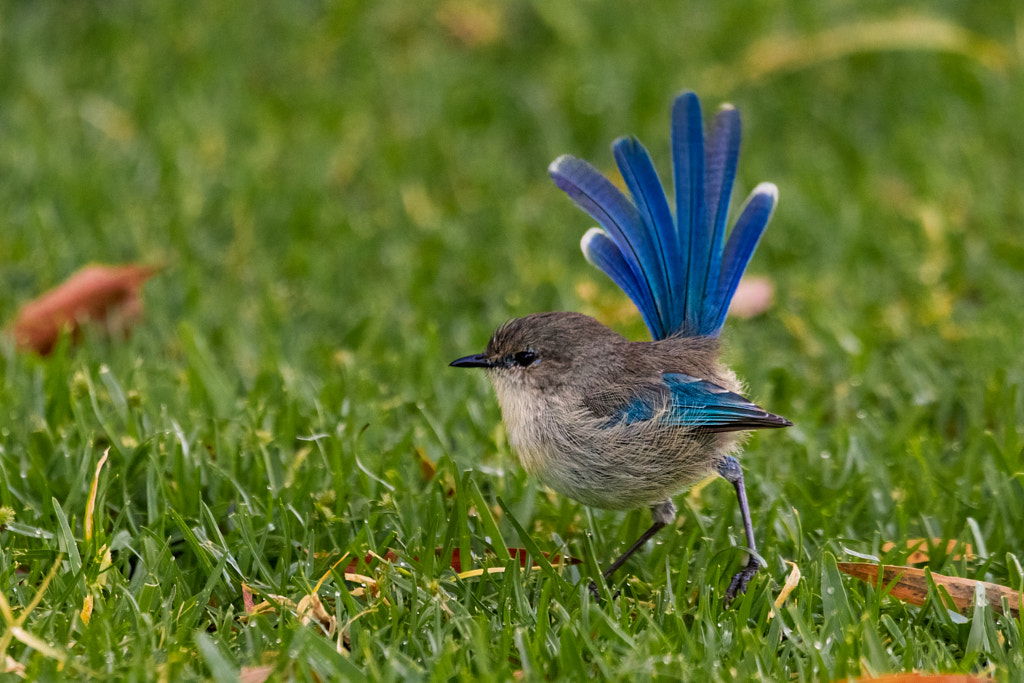
Djer-djer or Splendid Fairy-wren (Malurus splendens). Yanchep National Park, Western Australia. Canon 80d with Sigma 150-600mm f5-6.3 OS lens.
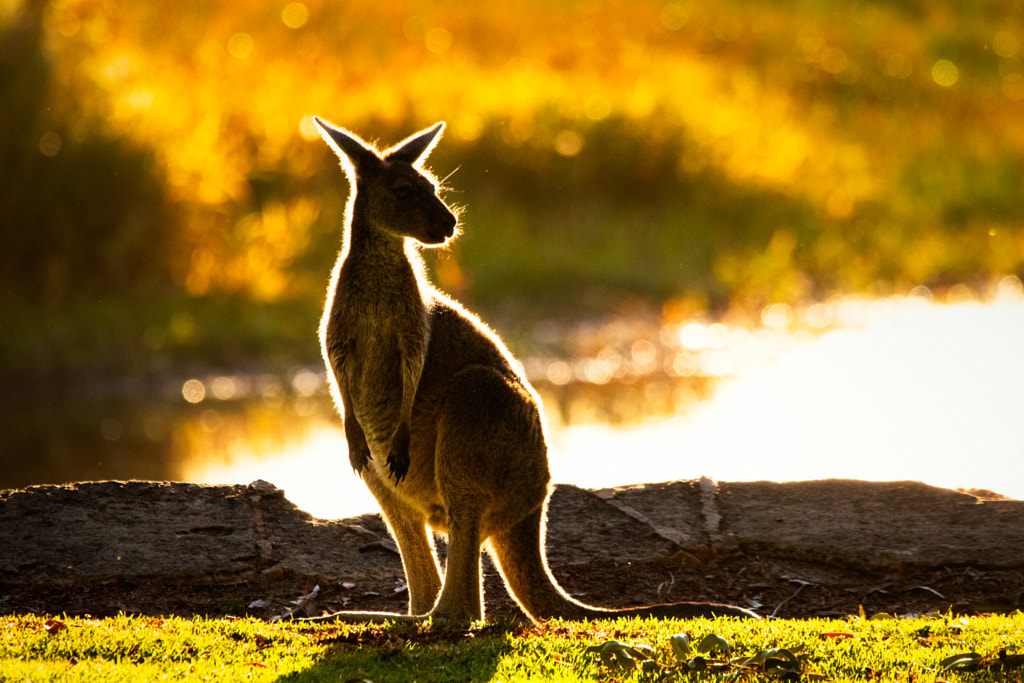
Yongka or Western-grey Kangaroo(Macropus fuliginosus). Yanchep National Park, Western Australia.
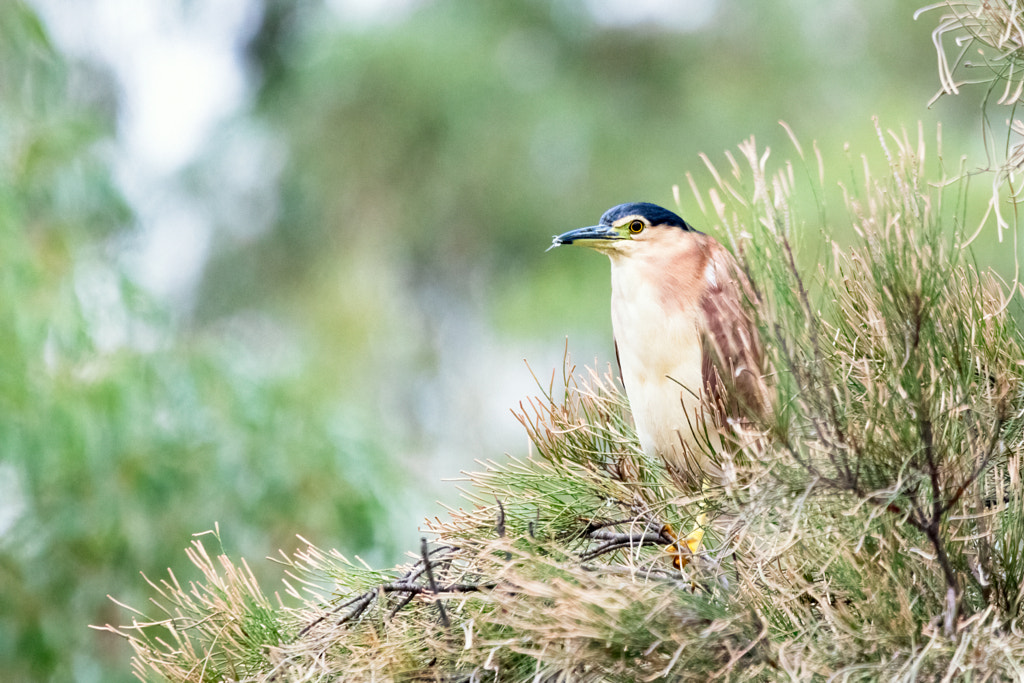
Ngalkaning or Nankeen Night Heron (Nycticorax caledonicus subsp mannillenis). York, Western Australia.
Conclusion
The thing that became very apparent when using both of these cameras is that user experience plays an important part. Canon and Sony have very different design philosophies. Sony is more a technology company and looks to throw as much technology into a product without any consideration of the users experience when using it. Canon take a conservative approach to technology – nothing cutting edge – and look to bundle it in a product that is pleasant to use and reliable. Both cameras are very suitable for nature and wildlife photography, but the user experience is very different. The technology of the A6500 is negated by poor design and handling. I feel I’m fighting the A6500 every inch of the way to get it to work and that is miserable. The 80d overcomes its shortcomings by being a joy to use – it disappears allowing me to concentrate on photography. Unfortunately when it comes to wildlife videography both are wanting. The Canon needs more technology in the form of 4k video, focus peaking and waveforms. The A6500 needs a better touchscreen, a better rear LCD panel and better menus to make it more useful.
So when buying a camera, whether it be new or second hand, while the specification sheet maybe useful as a guide I think more attention should be given to the ergonomics. What does it feel like in the hand? What’s it feel like to use? These are the questions that need to be addressed rather than how many megapixels or how much dynamic range.
By Western Australian standards it is freezing – well 2ºC – and just after dawn. I find myself sitting in a reed bed wondering why I abandoned a nice warm bed to be wet and cold.
Waradja or Spotless Crake (Porzana tabuensis). Lake Leschenaultia, Western Australia. A bit of a grab shot. It was taken with a geriatric Canon EOS 300d and an equally old Canon EF 75-300mm lens. Unfortunately the bird moved too quickly and the camera’s autofocus system wasn’t able to keep up.
Well the answer to that is four weeks ago I was here at Lake Leschenaultia mucking about with an old camera and lens when I spotted a small bird in the reeds that I’d not seen before. I grabbed a quick photo but it disappeared back into the reeds before I could properly sort myself out. When I got home I identified the bird from the blurry grab shot as a Waradja or spotless crake. Since then I’d been full of good intentions to go back and try to get a better photo, but,they were sabotaged by a great deal of procrastination until the other day when I’d decided to resurrect an old favourite camera of mine – the original Canon EOS 5d from 2005. The original batteries had perished and would no longer hold a charge so I got a set of replacements and found a couple of memory cards at the back of a drawer. I just needed something to point it at, and that is when I remembered the spotless crake.
A flotilla of Ngoonan or Australasian grebe (Tachybaptus novaehollandiae) came to check out what I was doing.
After a quick shufti they headed off to the centre of lake.
Things had changed considerably in the ensuing four weeks. There had been a lot of rain and the water levels had risen considerably. So much so that the area where I saw the bird was now under water. The other thing that had changed was that there was a lot of noisy building work going on – and when I mean noisy I mean really loud. Combine this with the cold and it was no surprise that there were no birds on the lake, not even the Eurasian Coots. Undeterred I parked myself in among the reeds as close as I could to the place where I’d seen the spotless crake and just waited. Some large jarrah trees cast their shade over me so I didn’t get the warming effect of the rising sun. After a couple of hours a flotilla of Australasian Grebes approached and gave me the once over and then made off to centre of lake to be in the sun. By now I was really cold and miserable. It was obvious that the spotless crakes weren’t going to put in an appearance so I decided to walk down the other side of the lake to warm up in the sun and restore some feeling back to my feet.
This Kakak or little pied cormorant (Phalacrocorax melanoleucos)was glad to see me move as I was disturbing its morning.
As walked past the dam wall I could hear the commotion of a whole heap of passerine birds moving through the forest understory. There were New Holland Honeyeaters, assorted thornbills, grey fantails and weebills. But, what really caught my attention were the splendid fairy wrens chasing insects at the waters edge. They were chasing small insects and occasionally they would perch on an old log or tree stump. For text twenty minutes or so I just took photos of them and then as quick as you like they were gone.
Bandiny or New Holland Honeyeater (Phylidonyris novaehollandiae) was one of the small passerine birds flitting about in the understory.
Djer-djer or Splendid Fairy-wren (Malurus splendens)catching the warmth of the sun.
Time out from chasing insects.
Is a splendid fairy wren on a log worth an invisible spotless crake in the reed beds ? Yes it was this time.










You must be logged in to post a comment.