Golden Morning Light

Wayan by Paul Amyes on 500px.com
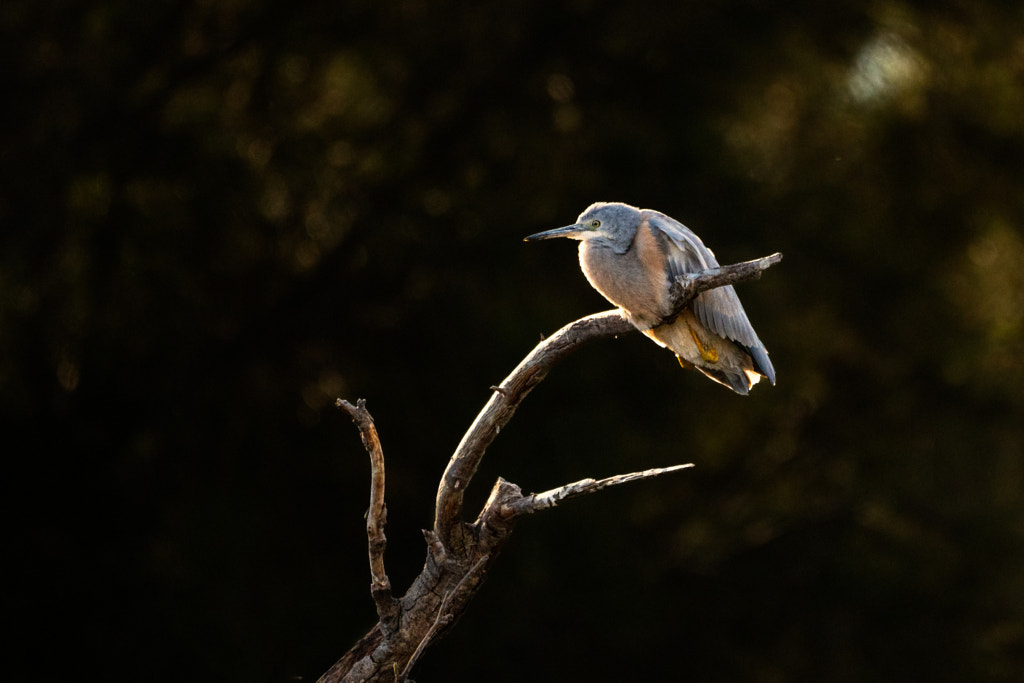
Wayan or White-faced Heron (Ardea novaehollandiae) taking in the suns rays. York, Western Australia.


As we approach winter it is now easier to get up before first light as it gets light so much later. On Thursday, which just happened to be my 60th birthday, I got up and head down to the river just getting there as the sun started to rise above the tree line. I was hoping to see some Nankeen Night Heron’s but couldn’t find them, but I did find a strangely cooperative White-faced Heron who was happy to sit on a branch and allow me to get close enough to photography. The bird was looking into the rising sun and the warm glow was reflected off his feathers. The heron looked very majestic just perched there. A wonderful start to the day.


Geat Egret by Paul Amyes on 500px.com
Geat Egret, Ardea alba. York, Western Australia.


Geat Egret by Paul Amyes on 500px.com
Put to flight.


Geat Egret by Paul Amyes on 500px.com
Feeling safer.


Walking up past Monger’s Weir I didn’t see anything more so I decided to head back and grab a coffee at the local bakery. As I was walking back I spied a Great Egret in one of the billabongs beside the main river. We’ve recently had a lot of rain so it was full and the egret was in the cooler shade of the trees while the golden light played on the foliage. Again another magical moment. Although Great Egrets are fairly common along the river it had been ages since I’d last photographed one. Again it was quite happy to let me sit quietly and take its picture. It knew I was there as occasionally it would stare at me as if to say “You still here?”. Eventually a boisterous dog burst through the undergrowth and put the bird to flight. It didn’t fly far – just 10 metres or so to the top of a dead sheaoak tree. By now the sun was well and truly up and we had the most brilliant blue sky so I quickly grabbed some shots of the egret against it.


Djakal-ngakal by Paul Amyes on 500px.com
Playing silly buggers in the trees. Djakal-ngakal or Galah (Cacatua roseicapilla). York, Western Australia


As I got near to the swing bridge to cross over into town some galas were playing around in the trees so I spent the next half hour photographing their antics. After a coffee I walked back to the car and saw four Nankeen Night Herons – three adults and a juvenile – so I grabbed a few shots  of them. A perfect end to a great photo session and a perfect start to a great day.


Ngalkaning by Paul Amyes on 500px.com

A juvenile Nankeen Night Heron, (Nycticorax caledonicus subsp mannillenis). York, Western Australia.


Ngalkaning by Paul Amyes on 500px.com

Ngalkaning or Nankeen Night Heron (Nycticorax caledonicus subsp mannillenis). York, Western Australia.
 

Ngalkaning by Paul Amyes on 500px.com

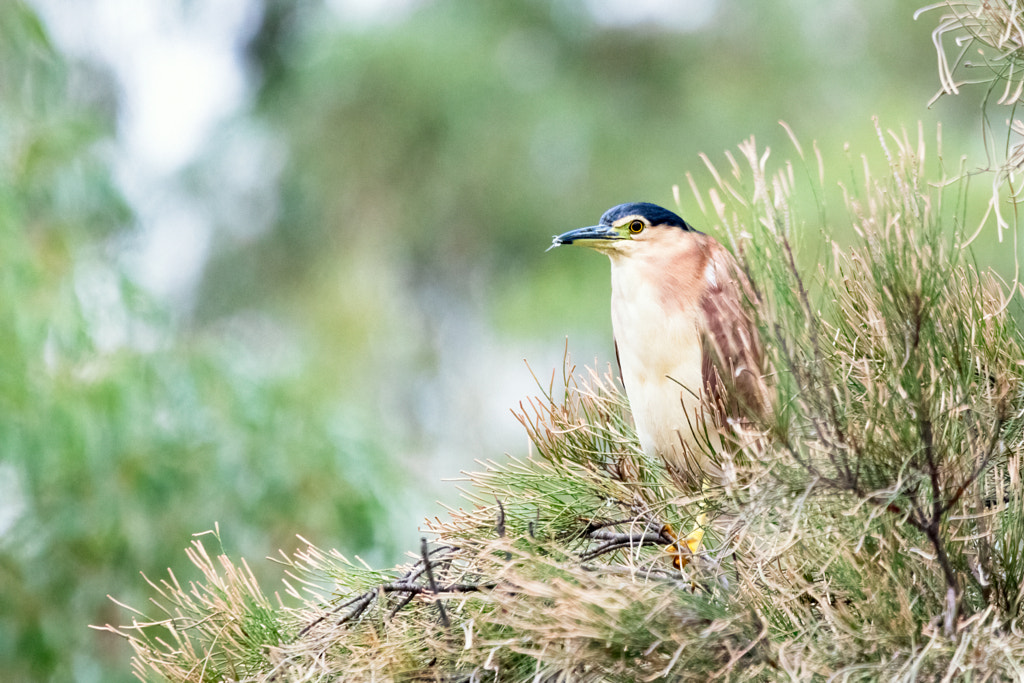
Ngalkaning or Nankeen Night Heron (Nycticorax caledonicus subsp mannillenis). York, Western Australia.

Friends, Westralians…

…give me your Parmigiana (with apologies to William Shakespeare).

After a warm day of setting up the tent and wandering around looking at the wildlife opportunities we repaired to the Yanchep Inn for a cooling beverage and a meal. As we were entering a notice on the door caught my eye. It was a warning about the kookaburras and how they were mugging patrons for their food – they particularly liked to rob children of their burgers and chips. I thought at the time it was amusing and didn’t think anything of it.


One of the Parma Purloiners of Yanchep.

Twenty minutes later I heard a whooshing sound and felt wings just graze my head. Fast reactions meant that the bandit had to retire to a nearby pole with nothing. Ten minutes later there were half a dozen of them. Meanwhile a group of four on the table just opposite had had their meals delivered by the waitress. All of a sudden the birds scramble and then dive for the table like Stukas on a bombing run. Hermann Göring would have been impressed. It was a close run thing and the kookaburras were only just repelled. Realising that discretion was the better part of valour they beat a hasty retreat back inside with cries of “F**king vermin!!!!”

It is obvious that just a sign casually warning about the kookaburras isn’t sufficient. I think there should be air raid sirens, ack ack guns, and Anderson shelters. While helmets might be a requirement I don’t think gas masks need be issued.

Black And White

Ngoolyak by Paul Amyes on 500px.com
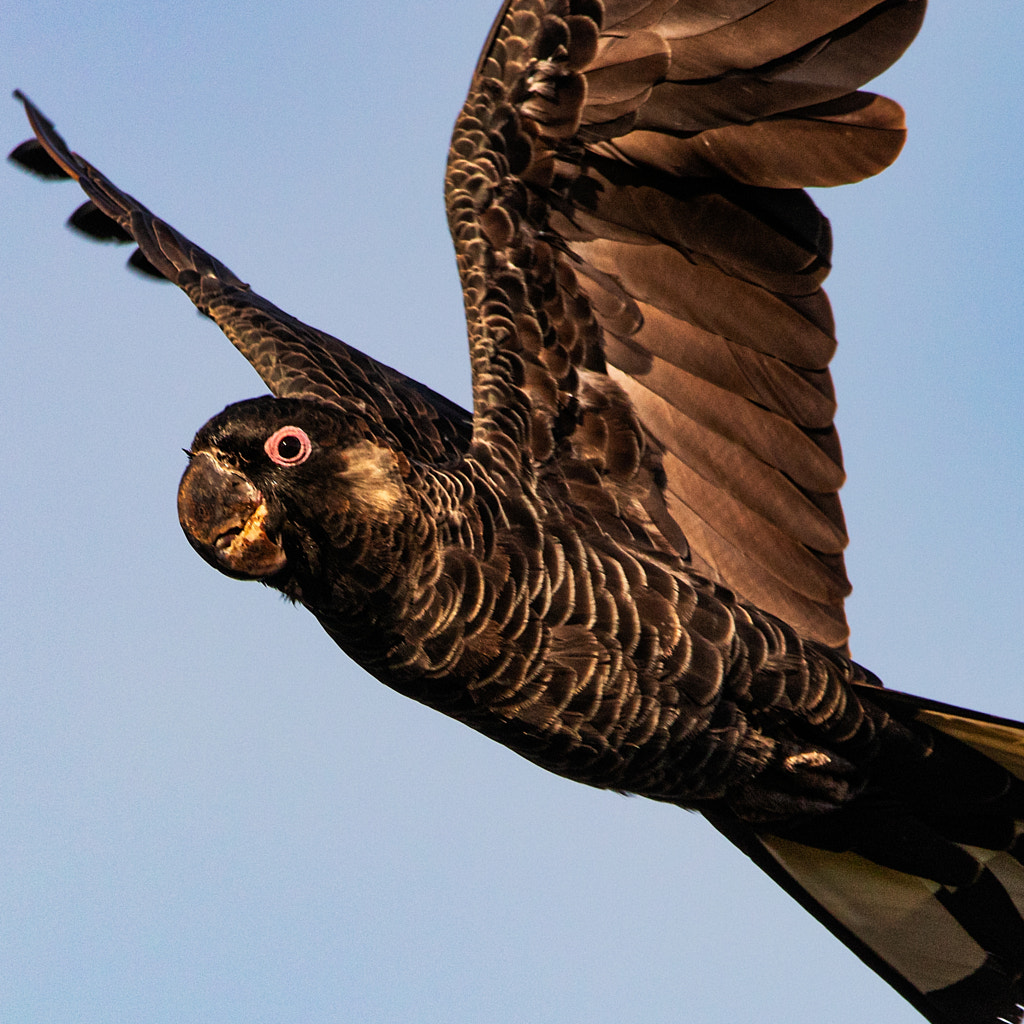
Ngoolyak or Carnaby’s Black-cockatoo (Calyptorhynchus latirostris). Yanchep National Park, Western Australia.


Last week I wrote about the Little Corellas causing problems. This week I’m talking about the anthesis – Carnaby’s Black-cockatoo (Calyptorhynchus latirostris). So while the Carnaby’s Black Cockatoo is just as noisy and destructive, yet the Corellas are disliked while the Black Cockatoos (Red-tailed, Carnaby’s and Baudin’s) are much loved. The International Union for Conservation of Nature has classified them as endangered and so have the Western Australian and Federal government has followed suit.  They’re a bird more associated with the Wandoo forests of the Wheatbelt, but with large scale land clearing they are now becoming more common on the Northern Swan Coastal Plain where it is estimated that there are between 4600 and 15000 birds outside the breeding season. Overall it is estimated that over the last 45 years the state wide population has been halved and continues to fall at the rate of 10% per year.


Ngoolyak by Paul Amyes on 500px.com
Ready, Steady…


Ngoolyak by Paul Amyes on 500px.com
…Go!


We were up at Yanchep National Park the other day and walking along the banks of Loch McNess in the gumtrees were hundreds of them. The noise was incredible – it was like something out of Alfred Hitchcock’s movie The Birds. As you walked along the path under the trees I got showered with leaves, twigs, gum nuts and flowers the detritus of their feeding in the tree tops. Periodically large groups of them would fly out over the water and land on the island to drink. It was an amazing spectacle and great fun to photograph. Normally I don’t do well with Bird In Flight (BIF) photos but here it was easy as there were so many birds flying around. I enjoyed it so much that I almost forgot I was there to walk around the wetland and look for Masked lapwings and Buff-banded Rails.


This Means War!!!

Manatj or Little Corella (Cacatua sanguinea). York Western Australia.


It’s got nothing to do with the Ukrainian situation. Nothing to do with Taiwan, China or submarines. No this is a crisis which threatens the very fabric of the Australian way of life. It is Western Australia’s corella problem. Huge flocks of corellas are causing havoc. They dig up lawns, dance around on TV aerials causing havoc with the reception, they make a noise early in the morning meaning the great Sunday lie in is disturbed. Locals are so incensed that they have taken to calling them flying cane toads and want to blast them out of the skies with shotguns. The Western Australian government sensing a potential vote winning platform for the next election has set up a new task force headed up by a former police commissioner to deal with the corella plague. This probably means they’ll spend a fortune on cars, helicopters, four wheel drives, a snazzy para military looking uniform, and lots of media releases. It will probably go massively over budget long before it gets round to tackling the feathered little blighters. 


Flocks of vociferous Little Corellas are disturbing the peace.


It’s not the fault of the corellas. They’re just doing what they have to do to survive. Originally found in great numbers further inland, but climate change and lessening rainfall means they are moving to more populous areas where people have provided an environment that they thrive in. We get them here in York because there is water in the Avon River and there is plenty to eat in the form of grain spilt while being transported to the grain bins.  People water their gardens which means there are succulent roots to be dug up and there are a lot of tall eucalypts for roosting.


The corellas cause all sorts of mischief – digging up lawns, stripping the insulation off electrical cables, and chewing TV aerials are just a few of their crimes against humanity.


Having said all that I actually like the flocks of corellas. To me the sound of summer isn’t the thwack of a leather ball on a willow bat, it’s not the sound of surf breaking on a beach. It is the sound of the corellas. When me moved to Tasmania we really missed it.


You can’t watch the cricket when you’ve got a corella dance party on your TV aerial.


Just as a final note –  the last time a war was declared against an avian foe was in 1932 with the “Great Emu War”. The Royal Australian Artillery was sent into bat against the wily emus armed with machine guns. It wasn’t pretty. After a month and only 50 emus killed the army withdrew conceding that the emus guerrilla tactics and high speed manoeuvrability meant that it wasn’t a fair fight.

Worth The Effort

One of the hardest birds to photograph on the Avon River is the white-faced heron. On the face of it that sounds absurd seeing as they are quite a large bird that can be found in significant numbers. Size isn’t really a factor. Some of the small ‘bush’ birds such as the red capped robin or the rufous whistler are quite easy to photograph as the males let you get as close as a couple of metres and will sit and look at you. The white-faced heron on the other hand is incredibly skittish and will take off at the slightest sound or movement. For that reason I get a great feeling of satisfaction in being able to get close enough to photograph them. The other evening I tried a new spot that allowed me to make a good approach with out been seen and this gave me the opportunity to photograph an adult and a juvenile.


Wayan by Paul Amyes on 500px.com
Wayan or White-faced Heron (Ardea novaehollandiae) hunting in the Avon River.


Wayan by Paul Amyes on 500px.com
Wading in the last of the evening light.


As the light was going I started to he’d back to the car when I noticed three yellow-billed spoonbills roosting in a dead sheaoak tree. On the branch above was another bird which at first glances I didn’t recognise. As I got closer I saw that it was a juvenile white-faced heron roosting with its leg folded up. I’ve never seen one do that before.


Roosting by Paul Amyes on 500px.com
A juvenille White-faced Heron (Ardea novaehollandiae) sharing a dead sheaoak tree with three yellow-spoonbills (Platalea flavipes). Monger’s Crossing,


Time For Bed by Paul Amyes on 500px.com
Time For Bed

Riverside Evening Walks

Now we’re into the later part of January we’re having the summer we had to had – hot days with temperatures hovering in the late thirties. The Avon River is now rapidly drying out with the only water left in a series of deep pools. These pools become oasis’s for a lot of wildlife from damsel and dragon flies, turtles, water fowl and even the occasional fox. If you don’t like getting up at stupid o’clock in the morning then the best time to see all the activity is in the evening. Sometimes the temperatures don’t drop before the sun goes down and then you’re hard pushed to see any animal activity. Thankfully we’ve had some quite cool nights over the last couple of weeks and so the opportunity to photograph down at Monger’s Crossing presented itself.


Wayan by Paul Amyes on 500px.com

Wayan, aka White-faced Heron (Ardea novaehollandiae). Monger’s Crossing, York, Western Australia.
 

Nidoolyorong by Paul Amyes on 500px.com

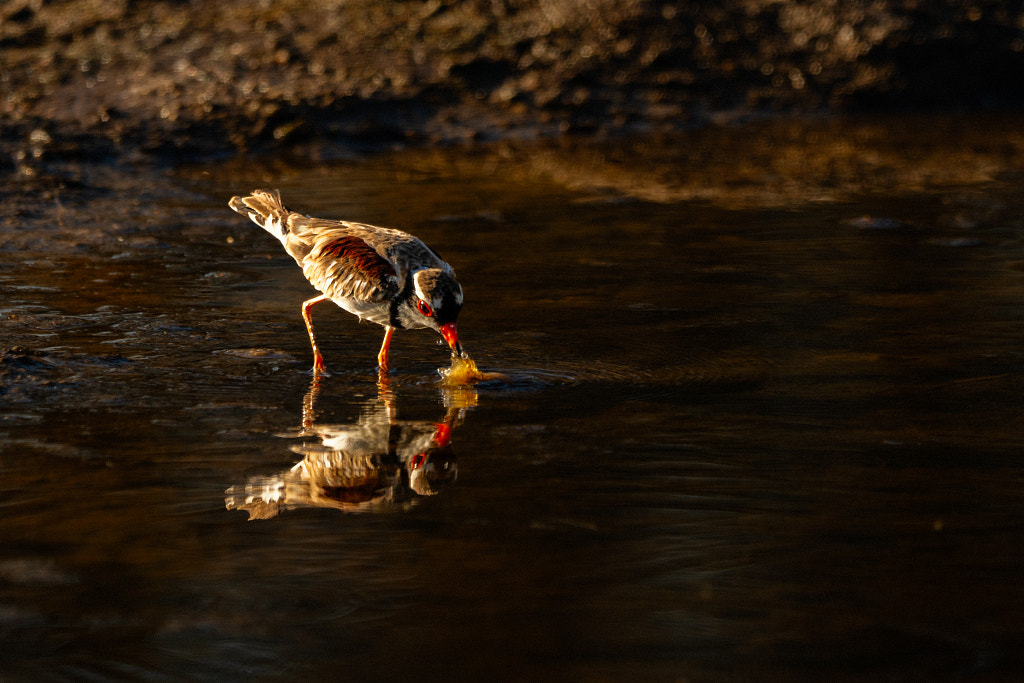
Nidoolyorong or Black-fronted Dotterel (Elseyornis melanops). Monger’s Crossing, York, Western Australia.


Koordjokit by Paul Amyes on 500px.com

Koordjokit aka Little Black Cormorants (Phalacrocorax sulcirostris). Monger’s Crossing, Western Australia.


Someone To Watch Over Me by Paul Amyes on 500px.com

Pacific Black Duck (Anas superciliosa) ducklings swiming under the watchful eye of their mother. Monger’s Crossing, York, Western Australia.


Ngowonan by Paul Amyes on 500px.com

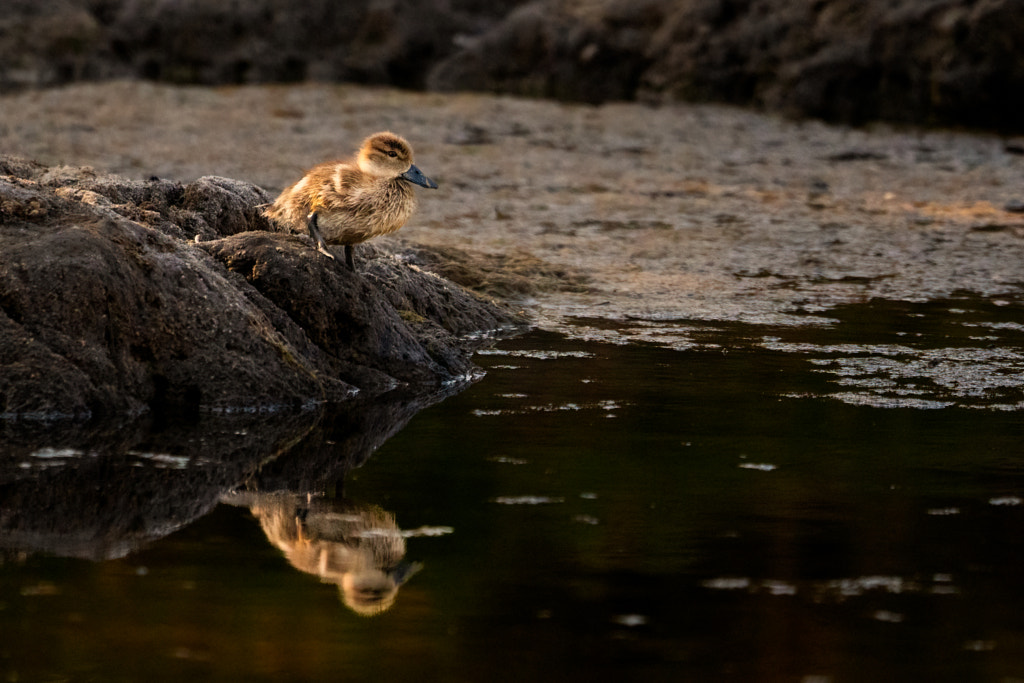
Pacific Black Duck (Anas superciliosa) duckling. Avon River, York, Western Australia.
Missing Wildlife

Recently we had a few days in Albany on the south coast of Western Australia. The opportunity to experience a 10ºC drop in temperature was too good to miss. I wanted to go and visit an Eastern Osprey nest that I’ve visited before. When I got there it was obvious that the nest had not been used for a while. This can happen for a number of reasons – the obvious is that the birds got old and died. But there maybe other reasons such as too much competition for food resources caused them to relocate. Also the tree that they’d built the nest in was no longer the best vantage point, other trees had grown around it obscuring the view. Who knows why they up and went but it does illustrate the fact that where wildlife is concerned nothing is guaranteed.

We headed out to a new location – a bird hide out at Rushy Point. Nice location but nothing was happening. Things were beginning to get a bit desperate. As we drove around there were all these road hazard signs warning about wildlife and yet we were’t seeing anything. By the last day I was feeling decidedly jacked off. It was a grotty day weather wise – windy with intermittent rain.


Warning – kangaroos. Albany, Western Australia.


Warning – turtles. Albany, Western Australia.


Warning – bandicoots. Albany, Western Australia.


Warning – pensioners. Albany, Western Australia.


Come the afternoon we were sitting around killing time and I just wanted to get out and have a walk. Despite the weather I headed off to Lake Seppings just to walk around it as something to do. Out of habit I picked up my camera and took it with me. When I got out of the car I received a very enthusiastic welcome from a lady in the carpark wanting to know if I was there to photography the blue billed ducks. I said I would photograph anything that showed up and stood still long enough. I set out with very little expectation of finding anything worth pointing the camera when almost immediately I saw some blue ducks. I always have a feeling of anxiety when I go out to photograph, a fear of not finding anything. Getting the first image under my belt and breaking the duck (sorry about the pun) helps me relax and enjoy myself. I knew the shots wouldn’t be any great shakes, it was just important to get the process underway.Two hours I got back to the car, wet but happy that I’d seen some wildlife and managed to photograph it.


Boodoo by Paul Amyes on 500px.com
Boodoo or Blue-billed Duck (Oxyura australis). Lake Seppings, Western Australia.


Bandiny. by Paul Amyes on 500px.com

Bandiny or New Holland Honeyeater, (Phylidonyris novaehollandiae). Lake Seppings, Western Australia.


Djoordjilya by Paul Amyes on 500px.com
An immature male Red-winged fairywren (Malarus elegans), called Djoordilya by the Nyoongar of south west Western Australia. Lake Seppings, Western Australia.


Koolyidarang by Paul Amyes on 500px.com

Koolyidarang or Elegant Parrot (Neophema elegans). Lake Seppings, Western Australia.


 Ngalkaning by Paul Amyes on 500px.com

An adult Australian white ibis (Threskioris molucca) feeding a juvenile. Lake Seppings, Western Australia.


Wandy by Paul Amyes on 500px.com

Wandy or King’s Skink (Egernia kingii). Lake Seppings, Western Australia.


Bardinar by Paul Amyes on 500px.com

Bardinar or Western Rosella (Platycercus icterotis subs icteratis). Lake Seppings, Western Australia.


Djindjokoor by Paul Amyes on 500px.com

Djindjokoor or Brown Honeyeater (Lichmera indistincta). Lake Seppings, Western Australia.

Wandering Around Waroona


Waroona is a small town some 113 Km south of Perth in Western Australia. It’s a town that we’ve not previously had much to do with. We stayed at the Lake Navarino campsite about 25 years ago for one night when we cycle toured the region. Other than that we’ve just driven through it on the way to somewhere else.


Waroona by Paul Amyes on 500px.com
Waroona’s entry statement.


Waroona by Paul Amyes on 500px.com
A yarn bomb installation outside the Waroona Visitors Centre.


Helen visiting a roadside plant stall in Waroona.

Again this time we arranged to stay at the Lake Navarino Holiday Park, but this time rather than camp for just one night we booked a cabin. Lake Navarino itself is the body of water behind Waroona Dam and it is very popular for water skiing and freshwater fishing. What makes it a bit confusing is that there are two Waroona Dams – the other is also referred to as the Drakesbrook Dam. The Drakesbrook Dam is a delightful little spot with a a swimming beach, BBQ and toilet facilities, and a nature trail that takes you in search of the Noisy Scrub bird. Good luck with that as they are incredibly elusive and are more likely to be heard rather than seen. I did catch a glimpse of one in the understory along the walk trail but it was impossible to photograph.


Waroona by Paul Amyes on 500px.com
A tau emerald dragondly (Hemicordulia tau). Hemel Wetland Walk Trail, Waroona, Western Australia.


Waroona by Paul Amyes on 500px.com
Only found in Western Australia the Western Xenica (Geitoneura minyas) can be found at the Hemel Wetlands.


Another nature trail in the locality is the Hamel Wetland Walk Trail in the small hamlet of Hemel just outside of Waroona. The wetland only stays wet over winter and spring and then dries out over summer. It is home to numerous species of frog including the Quacking Frog, Motorbike Frog, Slender Tree Frog, Clicking Froglet, Lea’s Froglet, Moaning Frog and the Banjo Frog. If fogs aren’t your jam then the wetland hosts a variety of bird species such as white Ibis, straw neck ibis Black Swans, Hardhead, Pacific Black Duck, Grey Teal, Musk Duck, Australasian Grebe, Hoary-headed Grebe, Black Cormorant, Pied Cormorant, and Black-shouldered Kites. Unfortunately the wetland had dried out for our visit and there wasn’t much bird activity about – just some rufous whistlers and red-tailed black cockatoos.


Waroona by Paul Amyes on 500px.com
Red-tailed Black Cockatoo (Calptorthychus banksii). Hemel, Western Australia.


If you’re willing to travel a bit further then heading out to Preston Beach and Yalgorup National Park is worth it. The wetlands in the park are home to 67 species of water bird and have been listed as a Ramsar site. The forest within the park contains fauna including western grey kangaroos, emus, brush wallabies, brush-tailed possums, echidnas and bandicoots.


Helen at Preston Beach.


Waroona by Paul Amyes on 500px.com
The three bears made from straw bales. Waroona, Western Australia.


So if you find your self driving down the South Western Highway take some time to stop in Waroona and explore what it has to offer.

Surprise Visitors

Carnaby’s Black Cockatoo (Zanda [Calyptorhynchus] latirostris] called Ngolak by the Nyoongar of Western Australia.

The other I was sat in my office pouring over the incomprehensible bumf sent out from an insurance company when I heard a commotion outside. There was a load of raucous squawking coming from the back garden. I picked up a camera and ran out to see what was going on. To my delight it was a flock of Carnaby’s Black Cockatoos. They are classified as an endangered species but are commonly seen in the Wheatbelt. I get quite a thrill seeing flocks of them flying but it was taken to another level to see them in the garden.


Sitting in the peppercorn tree.


No sooner had they all settled than they were off again heading towards bigger gum trees on neighbouring properties.


… and then they were gone.