… favours the prepared mind.” Louis Pasteur, December 7, 1854, and in 161BC the Roman playwright Terrance said that “fortune favours the brave” in his play Phormio.
All of which basically means that if you have the necessary mind set be bold enough to seize the opportunities that present themselves. That is what happened the other evening. We had found a new possible nesting site for Rainbow Bee-eaters here in York and the beloved significant other suggested we go and have a closer look the other evening. So I picked up my Sony A7r2 with Sigma 150-600mm lens and we drove down to the location. On getting there there was not a Rainbow Bee-eater to be seen. In fact there weren’t many birds about at all. Scanning the tree tops we soon found out why. In the top of a dead tree were a pair of Australian Hobbys. These beautiful birds of prey will take small flying birds so everything had taken cover. The Hobbys looked magnificent against the bright blue sky. I only managed a short burst before they resumed flying up and down the river bank looking for something to eat.
Wowoo or Australian Hobby (Falco longipennis) are often seen in pairs whilst out hunting.
The adapted Sigma 150-600mm doesn’t focus very fast on the Sony A7r2 and the 5 frames per second burst rate isn’t exactly the best, but, it was all good enough for the task in hand.
One of the delights of walking through any natural environment at this time of year is seeing male Splendid Fairy Wrens in their breeding plumage. I regularly walk along the Avon River photographing the birds I see, and I hadn’t seen one for a couple of years. Usually they can be seen in the dense low level foliage or on the ground feeding on insects, but over the last few years the wonderful folk at the York River Conservation Society have been clearing out the feral plants and replanting natives. This unfortunately meant that there wasn’t a lot of undergrowth to provide suitable habitat. But joy of joys now that the bush is growing nicely and maturing the Splendid Fairy Wrens are back! It is terrific to see them again.
They’re back! Djer-djer or Splendid Fairy-wren (Malurus splendens). Avon Walk Trail, York, Western Australia.
The Welcome Swallow (Hirundo neoxena subs. carteri and called Kanamit by the Nyoongar of Western Australia) is a small bird approximately 14cm long and weighing up to 20g. They are an attractive looking bird with a glossy blue-black body and crown, dark brown wings, and a rusty red face, neck and upper breast. They have a forked dark grey tail which forms two streamers when flying. They are very fast and acrobatic in flight swooping on their insect prey and they often drink water while flying over bodies of water.
An adult Kanamit or Welcome Swallow (Hirundo neoxxena) taking a breather from catching insects and feeding chicks. York, Western Australia.
When Europeans first colonised Western Australia Welcome Swallows were confined to coastal areas. As land clearing progressed they spread further inland and northwards. They differ from their Eastern State cousins in that they are not migratory. They have readily adapted to human habitation and can be easily found in urban areas. To thrive they require substantial insect populations and large flocks can be commonly found near water. They are often seen perching on fences and overhead power lines. They nest in a cup shaped structure made by both parents from mud and grass and is lined with feathers and fur. This typically takes between 8 and 23 days to make. The nests are often attached to walls, rafters, cranes, bridges, rock faces, and dead trees.The monogamous pairs will re-use their old nest. A warming climate has meant that Swallows in Western Australia are having 2-3 broods per year and lay a clutch of up to 5 eggs. The female incubates the eggs for around 3 weeks and when they hatch they are fed by both parents. The young fledge after a further 3 weeks and become independent after 35 days.
An adult Kanamit or Welcome Swallow (Hirundo neoxxena) perched on the nest. York, Western Australia.
Juvenile Kanamit or Welcome Swallows (Hirundo neoxxena) impatiently waiting to be fed by their approaching parent. York, Western Australia.
“Where’s my dinner!!!” Welcome Swallow (Hirundo neoxxena) demanding to be fed by it’s parent. York, Western Australia.
A juvenile Kanamit or Welcome Swallow (Hirundo neoxxena) demanding to be fed by it’s parent.
A couple of weeks ago I posted about all the Ibis nesting at Tomato Lake and how it heralded the start of the breeding season for them. Well this week the Black Swans at lake Claremont were building nests and pairing off and spring is just round the corner. It was an uninspiring morning, the rain was bucketing down and the usually frenetic Welcome Swallows looked unimpressed.
Kanamit or Welcome Swallow (Hirundo neoxxena) looking unhappy in the rain. Lake Claremont, Western Australia.
A bit further on amongst the reeds the swans were busy in spite of the inclement weather.
This swan was very obliging and allowed me to take its photo.
A female black swan sits on the nest while the male gathers more nesting material.
Elsewhere on the lake things were much more advanced with the Shelducks as there were several mothers escorting very young ducklings out on the water.
No water wings in sight. A Shelduck takes her young brood out for a swim on Lake Claremont.
I was a bit apprehensive about walking in the rain. My usual camera – an Olympus OMD EM1 mk ii and its Panasonic Leica 100-400mm f4-6.3 – are incredibly resistant to rain fall, but this time I was out with my Sony A7r2 and the Sigma 150-600mm whose weather sealing leaves a bit to be desired. Thankfully the combination worked flawlessly and lived to tell the tale. It was, however, its last outing. I’ve developed quite bad arthritis in my right hand, elbow, and shoulder and find the larger full frame cameras too much to handle so I’m going to put it all up for sale. Getting older really sucks sometimes.
This is the second part of an ongoing series called “Birds On A Budget”. It really should be “Can You Do Wildlife Photography On A Limited Budget?”, but that’s not as catchy or succinct.
TLDR
When looking for secondhand cheaper alternatives for wildlife photography it is all too easy to get preoccupied with specifications sheets without looking at the whole picture. It can mean that just because Camera X does have a specific feature that Camera Y has then it must be inferior. Well let’s look at an example.
The cameras I’ve chosen to look at are the Canon EOS 80d and the Sony A6500. Both were introduced in 2016, both have 24Mp sensors, and both can be found second hand for about the same price. The 80d is a DSLR and is probably considered retro-tech now and the A6500 being mirrorless is seen as the more up to date technology. Let’s see how the specs compare.
Sony A6500
Canon EOS 80d
Introduced
December 2016
February 2016
Resolution
24 Megapixels
24 Megapixels
Camera type
Mirrorless interchangeable lens camera
DSLR
Sensor size
APSC (23.5 x 15.6mm)
APSC (22.5 x 15mm)
In Body Image Stabilisation
Yes
No
ISO range
100-256,000 which can be extended to 512,000
100-16,000 which can be extended to 25,600
Dynamic Range
13.67 EV
13.17 EV
Autofocus
425 AF points covering the whole sensor.
On sensor phase detect AF supplemented with contrast detect AF.
Multi area, centre zone and single point modes.
Tracking
Single AF
Continuous AF
Face detection
Live view
45 AF points clumped in the centre of the frame when using the optical viewfinder
Phase detect AF
Multi area, centre zone and single point modes
Tracking
Single AF
Continuous AF
Face detect in live view only
Live view AF with ‘Dual Pixel CMOS AF’ which means every pixel can be used for phase detect auto focus
Rear LCD panel
Tilting 3 inch touch screen with 921,600 dots
Fully articulating 3 inch touch screen with 1,040,000 dots
Viewfinder
Electronic viewfinder with 100% coverage with 1.07 magnification (0.71 x 35mm) and 2,359,296 dots.
Optical viewfinder with 100% coverage at 0.95 magnification.
Shutter speed range
30 sec – 1/4000 sec
30 sec – 1/8000 sec plus ‘B’
Built in flash
Yes
Yes
Flash synchronisation speed
1/160 sec
1/250 sec
Frames per second
11 frames per second in both mechanical and electronic shutter modes with no live view and 8 fps with live view.
7 frames per second using the optical viewfinder and 2.4 fps when using live view.
Buffer
100 frames in RAW or RAW + jpg
300 frames in jpg only
When using the optical viewfinder:
Unlimited frames at 7fps in jpg
24 frames in RAW
20 framesin RAW and jpg
When using live view:
Unlimited in jpg
Unlimited in RAW
36 images in RAW + jpg
Metering modes
Multi-zone
Centre weighted
Spot
Highlight weighted
Multi-zone
Centre weighted
Spot
Video
Available codecs AVCHD, XAVCS, H264, MP4
4K (3840 x 2160) 30p, 25p, 24p
HD (1920 x 1080) 120p, 100p, 60p, 50p, 30p, 25p, 24p
Available codecs MPEG-4, H264 with a choice of all I or IPB
HD (1920 x 1080) 60p, 50p, 30p, 25p, 24p
Storage
SD card (UHS-1)
SD card (UHS-1)
Connectivity
USB 2.0 (480 Mbit/sec)
3.5mm microphone port
Micro HDMI
WiFi – 802.11b/g/n + NFC
Remote control via a smartphone
Tethered shooting to a computer
USB 2.0 (480 Mbit/sec)
3.5mm microphone port
3.5mm headphone port
802.11/b/g/n with NFC
Wired remote control
Remote control via a smart phone
Tethered shooting to a computer
Battery
NP-FW50 battery with CIPA rating of 350
LP-E6N battery with a CIPA rating of 960
Weather sealing
Yes
Yes
Construction
Magnesium alloy
Composite construction with an alloy chassis with plastic shell
Weight
453g
730g
Dimensions
120 x 67 x 53mm
139 x 105 x 79mm
Other functions
Inbuilt Timelapse function
On the whole the Sony seems the better camera as it has an electronic viewfinder that provides realtime exposure feedback, better video capabilities, better ISO range, better dynamic range and In Body Image Stabilisation (IBIS) all in a smaller and lighter package.
Sony A6500 real world usage
The A6500 body is not overly small, but the button and dial placements leave a little to be desired. There are twin control dials but they are both on the rear of the camera meaning your thumb has to do double duty. To me the lack of a front dial around or near to the shutter button is a big handicap. Now when it comes to using Sony cameras this is not my first rodeo. I have an A7r and A7r ii so I am quite familiar with the idiosyncrasies of the menu system. But, having said that I still find them labyrinthine and illogically laid out and the paucity of physical buttons and dials means that menu diving on the A6500 is quite frequent.
There is only one SD slot on the A6500 and although I prefer 2 slots it is not a big consideration. The SD card slot is located in the battery compartment and this is major pain. Even when shooting handheld it is fiddly to change cards and shooting on a tripod makes it downright frustrating. Often I find myself having to take the battery out to access the SD card. Speaking of the the battery compartment the battery in itself is hopeless. If I go out for the day shooting photos then I have to take 2 spares and if I intend to shoot any video I take at least 4. Luckily they are readily available and reasonably priced.
The LCD EVF on the left side of the body is good – for its time it is nice and detailed while being responsive. The rear LCD is of the flip up variety. I prefer the fully articulated type but it’s no big deal and I can work with both. The quality of the screen is abysmal – it is very hard to see in bright sunshine and it becomes very dim when shooting 4K video making it all but useless. Sony claims it is a touch screen but it is very limited in function. It can only be used for selecting AF points and nothing else and the implementation of that is pretty poor as it is laggy when working well and down right unresponsive when it isn’t. I’ve been in situationswhere I’m repeatedly touching the screen and the focus point is not moving meaning I’ve lost the shot.
Speaking of autofocus it works very well. Having AF points spread over the whole sensor is great which means you can really concentrate on composition. The AF is very quick and locks on moving subjects. Another nice feature is that you can link spot metering to the active AF point. The electronic shutter is another feature that I really like and although the rolling shutter is quite pronounced when shooting moving subjects I like to use it with shy wildlife as it means I won’t disturb it. In Body Image Stabilisation (IBIS) is fantastic. While not as good as that on other cameras I’ve used (Olympus and Panasonic) it works well and is very welcome when shooting handheld video.
Image quality is impressive. Shooting RAW the files are very malleable in processing as long as you get your exposure right. The high ISO performance is quite impressive and the dynamic range is such that I don’t feel the need to blend exposures to get details in the shadows and highlights when shooting scenes with a high subject brightness range. When shooting video the story is a little complicated. The 4K is nice and detailed and looks very good, but it is only 8-bit and so can’t be pushed too much in post. The provision of flat profilesSLOG 2 and 3 is good to have when shooting contrasty scenes outside. Shooting HD the footage is softer and doesn’t look so good. It’s OK but I prefer to shoot 4k and downsize to HD on export. Focus peaking, zebras, and a live histogram are features that make shooting video easier and it is good to see them on the A6500.
All these points are well documented so why did I get the A6500? Well I’d switched from Canon full frame cameras to a Sony A7r ii a couple of years ago and I’ve really enjoyed the whole experience. Initially I was using adapted lenses but gradually I switched over to native Sony EF mount lenses with the exception of my 150-600mm. Just for giggles I started doing some bird photography with the A7r ii and I found myself using the crop mode a lot which gave me a 15 Mp image. After 18 months of doing this I thought well why not get a second hand A6500 and have a quicker camera that has electronic shutter and more importantly has 24 Mp. I was also toying with the idea of shooting more wildlife video and the A6500 fit the bill for that as well. Overall I persevere with the A6500 because I like the final image, but it is a real effort as I just find the camera so awkward to use.
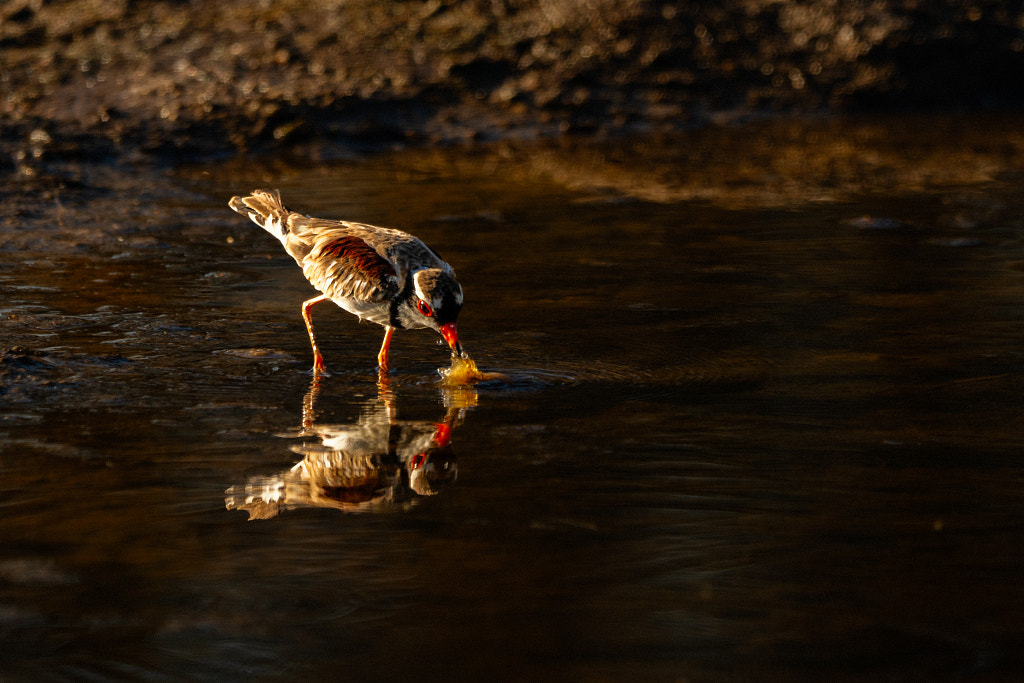
Nidoolyorong or Black-fronted Dotterel (Elseyornis melanops). Monger’s Crossing, York, Western Australia. Sony A6500 with Sigma MC-11 and Sigma 150-600mm f5-6.3 OS lens.
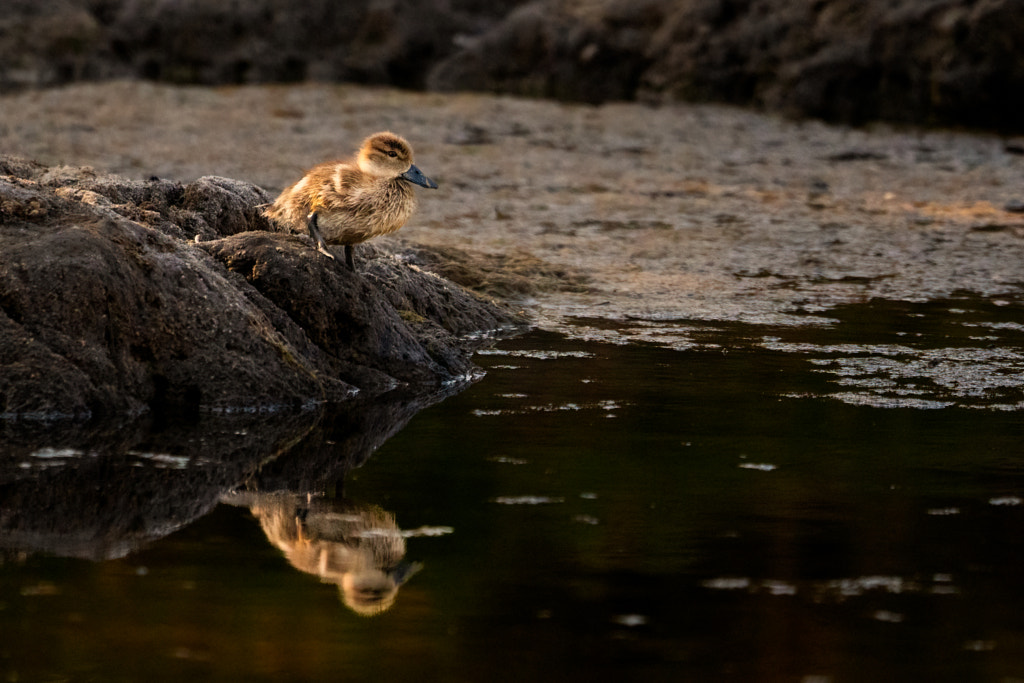
Pacific Black Duck (Anas superciliosa) duckling. Avon River, York, Western Australia. Sony Alpha a6500, Sigma MC-11, Sigma 150-600mm f/5-6.3 DG OS HSM Contemporary.
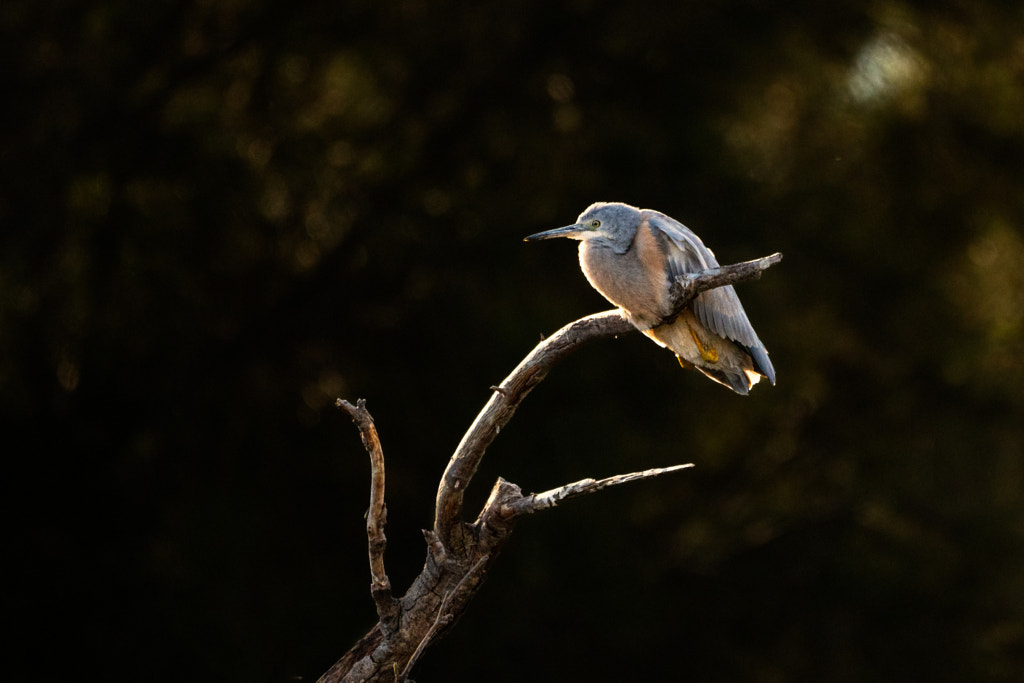
A juvenille White-faced Heron (Ardea novaehollandiae) roosting in a dead sheaoak tree. Monger’s Crossing, York, Western Australia. Sony A6500, Sigma MC-11 and Sigma 150-600mm f5-6.3 OS lens.
Canon EOS 80d real world use
During the later part of the Film Age (1822 to 2000) I used Olympus OM4s, but by 2003 I could no longer get them repaired and my father-in-law generously gave me a Canon EOS3 SLR. Whenever I pick up any Canon camera from the EOS 650 introduced in 1987 to the Canon EOS 5d iv introduced in 2016 I feel immediately familiar with the control layout, the handling and the operation of the camera. Canon, for all their faults, of which there are many, has always produced well sorted nice handling cameras. The 80d is no different. The camera fits perfectly in the hand, the buttons and dials are well laid out and intuitive to use. This attention to the user experience extends to the camera menus which are simply and logically laid out.
Like the Sony A6500 there is only one card slot, but it is positioned on the side of the handgrip behind its own door. It is easy to access under all scenarios. The battery is the venerable Canon LP-E6 and it lasts forever. Sure this is partly down to the fact that SLRs draw less power than mirrorless cameras, however, it is also gutsier at 7.2V, 1800mAh and 13Wh compared to 7.4V, 1080mAh and 7.3Wh of the Sony NP-FW50 which is in the A6500. The upside of this is that I’ve rarely used more than one battery for a full day of shooting.
The optical viewfinder is nice and large and clear. Although I now prefer EVFs because of the realtime exposure feedback the 80ds viewfinder is very pleasant to use. The rear LCD screen is of the fully articulated flippy flappy type which I really like not just for shooting video but also for shooting landscapes and macro in the vertical orientation.The screen has a teensy-weeny bit more resolution than the A6500s, but more importantly it is bright and clear when using in bright sunlight. It is also a touchscreen– you can control the camera, go through the menus and review images with it. While there is no joystick to select autofocus points you can use the screen to do this and it is responsive. While we’re talking about autofocus it helps to view it as two cameras in one body. Using it as a SLR with the optical viewfinder the 45 AF points are all centrally grouped. If when composing an image your subject is outside of that area then you have to focus and recompose. The autofocus is quick and with a well calibrated lens very accurate. When using the rear LCD screen in “Live View” the performance is like a mirrorless camera with every pixel on the sensor doing double duty as an AF point. The 80d has face detection that works well. Although how responsive this is will depend on the lens – those with STM motors work the best. I did consider just using the camera in the live view mode but there is a significant performance hit with the maximum frames per second of 7 reduces to 2.4. I also find it hard to track birds using the rear screen and a super telephoto lens. Another much missed feature is In Body Image Stabilisation so you have to depend upon the IS in the lens if it has it.
The image quality is good – a real leap up from the 18Mp sensor that Canon seemingly used forever. But with that said it is not as good as that in the A6500. The dynamic range of the Canon 80d is 13.17EV as opposed to the 13.67EVof the Sony as measured by DXO. The amount is paltry and in real life terms negligible. If we look at ISO performance and particularly noise then both cameras are fairly equal up to ISO 800. At 1600 the A6500 is about a stop better and at 3200 is 1 1/2 stops better. The highest maximum native ISO on the 80d is 16,000 and this can be extended to 25,600. The A6500 tops out natively at 256,000 which can be extended by a stop to 512,000. In reality the highest ISOs on both cameras aren’t much chop, on the 80d the furthest I’d go is 6400 and the A6500 can be used up to 12800. But having said this I am using Topaz DeNoise AI to clean the images up. Your tolerances to noise maybe a lot lower than mine. If you shoot RAW colour output is pretty much the same, you should be able to get the results you want in post. Shooting jpgs well if you like punchy reds and warmer looking images then you’ll prefer the Canon. For video the lack of 4k can be seen as a major drawback. I shoot 4k and then in post will often crop in because I’ll output the final file as HD. The HD video on the 80d is an improvement on the previous 18 and 20Mp sensors that Canon used. It is also better than the HD from the Sony. There is no flat profile on the camera, but I solved that by installing the Cinestyle Profile from Technicolor and I am getting great results. The video output is again 8-bit so can’t be pushed around too much in post.
When shooting video the lack of an EVF is a bit of hindrance, but, thankfully the rear LCD screen is of high quality. The touch screen implementation makes operating the camera a doddle. Another feature I really like is the ability to create a ‘My Menu’ spread over three pages and I’ve made one of the pages dedicated to video. The AF in video works much better than I expected but again this is really lens dependent. While it is quick to acquire and initially lock on it does have the annoying tendency to drift off the subject and onto the background. You need to keep taping the touch screen to maintain focus on the subject. Unfortunately Canon doesn’t provide any focus peaking for help with manual focusing and no zebras to warn about clipping. Also Canon’s pre-amps are not the best.
I bought the Canon EOS 80d with the sole intention of testing cameras at various price points to see how they’d fare for nature and wildlife photography. I fully intended to sell the camera once I’d finished with it. Now having used it for several months it has become one of my favourite cameras (my favourite being the Olympus EM 1 mk ii). The 80d is such a well thought out camera that it is above all fun to use to use. No it’s not a hybrid camera as the video implementation doesn’t perform well enough, but it is certainly an excellent tool for the photographer on a budget. It has certainly piqued my interest in the 90d which addresses some of the limitations of the 80d.
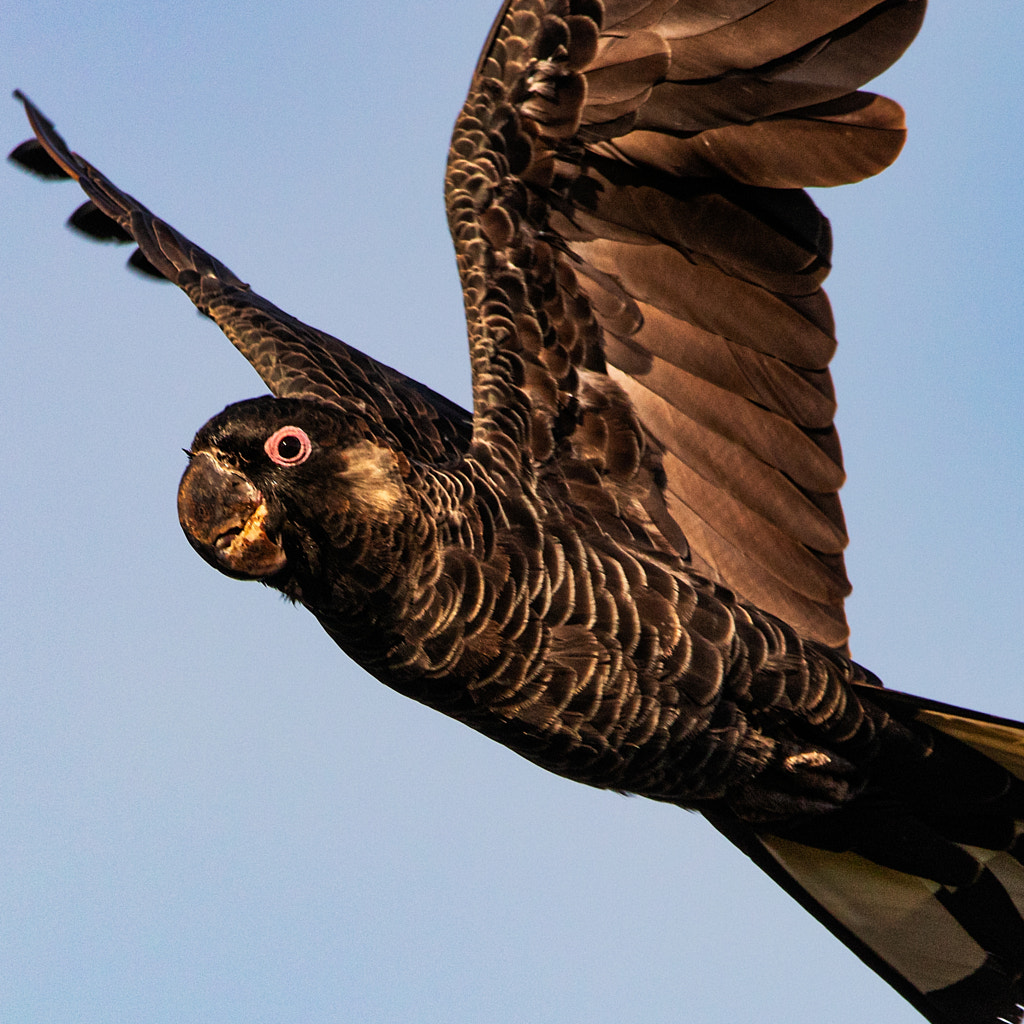
Ngoolyak or Carnaby’s Black-cockatoo (Calyptorhynchus latirostris). Yanchep National Park, Western Australia. Canon 80d with Sigma 150-600mm f5-6.3 OS lens.
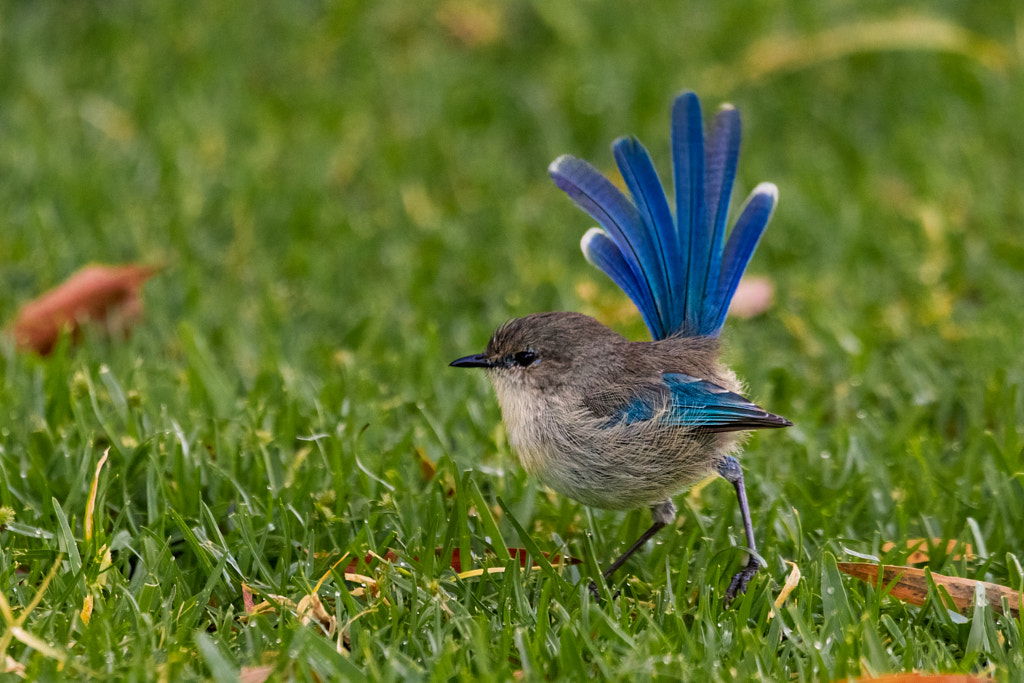
Djer-djer or Splendid Fairy-wren (Malurus splendens). Yanchep National Park, Western Australia. Canon 80d with Sigma 150-600mm f5-6.3 OS lens.
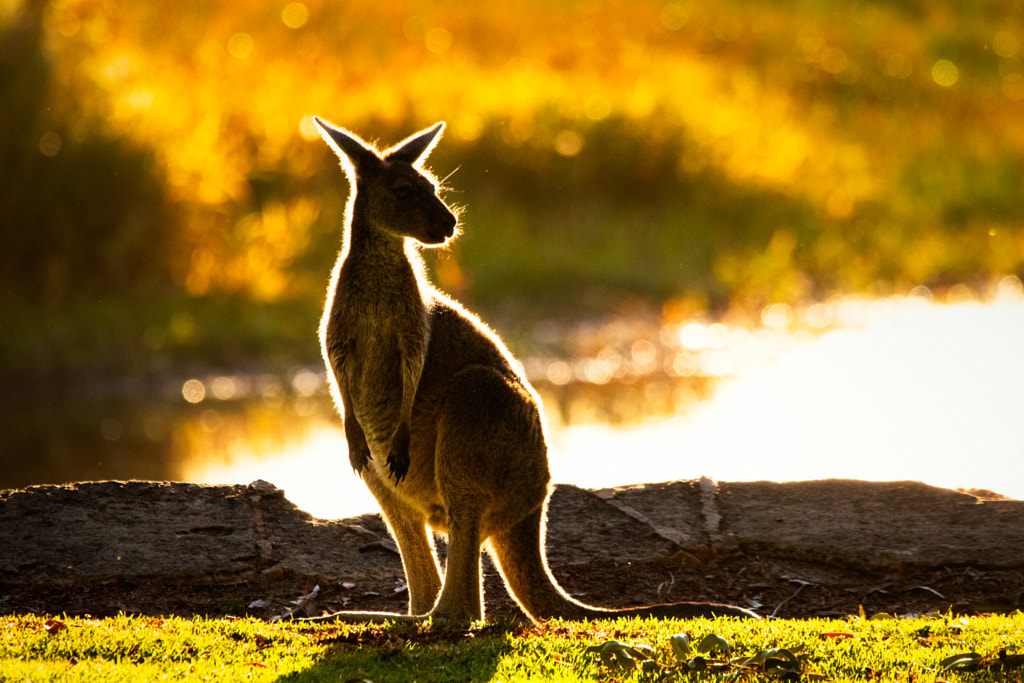
Yongka or Western-grey Kangaroo(Macropus fuliginosus). Yanchep National Park, Western Australia.
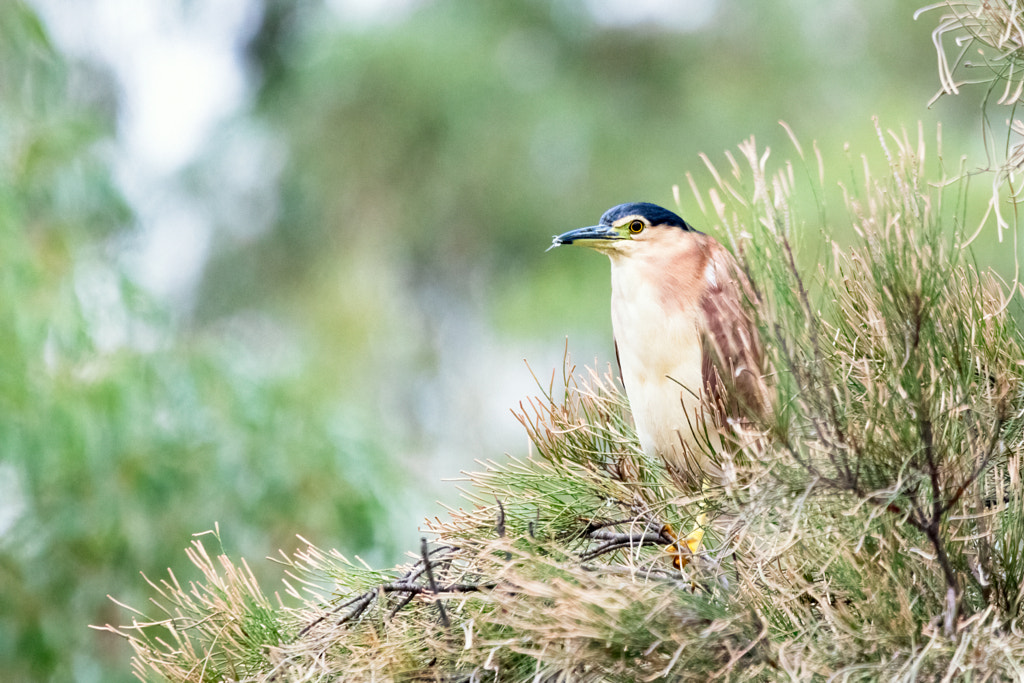
Ngalkaning or Nankeen Night Heron (Nycticorax caledonicus subsp mannillenis). York, Western Australia.
Conclusion
The thing that became very apparent when using both of these cameras is that user experience plays an important part. Canon and Sony have very different design philosophies. Sony is more a technology company and looks to throw as much technology into a product without any consideration of the users experience when using it. Canon take a conservative approach to technology – nothing cutting edge – and look to bundle it in a product that is pleasant to use and reliable. Both cameras are very suitable for nature and wildlife photography, but the user experience is very different. The technology of the A6500 is negated by poor design and handling. I feel I’m fighting the A6500 every inch of the way to get it to work and that is miserable. The 80d overcomes its shortcomings by being a joy to use – it disappears allowing me to concentrate on photography. Unfortunately when it comes to wildlife videography both are wanting. The Canon needs more technology in the form of 4k video, focus peaking and waveforms. The A6500 needs a better touchscreen, a better rear LCD panel and better menus to make it more useful.
So when buying a camera, whether it be new or second hand, while the specification sheet maybe useful as a guide I think more attention should be given to the ergonomics. What does it feel like in the hand? What’s it feel like to use? These are the questions that need to be addressed rather than how many megapixels or how much dynamic range.
One of the hardest birds to photograph on the Avon River is the white-faced heron. On the face of it that sounds absurd seeing as they are quite a large bird that can be found in significant numbers. Size isn’t really a factor. Some of the small ‘bush’ birds such as the red capped robin or the rufous whistler are quite easy to photograph as the males let you get as close as a couple of metres and will sit and look at you. The white-faced heron on the other hand is incredibly skittish and will take off at the slightest sound or movement. For that reason I get a great feeling of satisfaction in being able to get close enough to photograph them. The other evening I tried a new spot that allowed me to make a good approach with out been seen and this gave me the opportunity to photograph an adult and a juvenile.
Wayan or White-faced Heron (Ardea novaehollandiae) hunting in the Avon River.
Wading in the last of the evening light.
As the light was going I started to he’d back to the car when I noticed three yellow-billed spoonbills roosting in a dead sheaoak tree. On the branch above was another bird which at first glances I didn’t recognise. As I got closer I saw that it was a juvenile white-faced heron roosting with its leg folded up. I’ve never seen one do that before.
A juvenille White-faced Heron (Ardea novaehollandiae) sharing a dead sheaoak tree with three yellow-spoonbills (Platalea flavipes). Monger’s Crossing,
Now we’re into the later part of January we’re having the summer we had to had – hot days with temperatures hovering in the late thirties. The Avon River is now rapidly drying out with the only water left in a series of deep pools. These pools become oasis’s for a lot of wildlife from damsel and dragon flies, turtles, water fowl and even the occasional fox. If you don’t like getting up at stupid o’clock in the morning then the best time to see all the activity is in the evening. Sometimes the temperatures don’t drop before the sun goes down and then you’re hard pushed to see any animal activity. Thankfully we’ve had some quite cool nights over the last couple of weeks and so the opportunity to photograph down at Monger’s Crossing presented itself.
Wayan, aka White-faced Heron (Ardea novaehollandiae). Monger’s Crossing, York, Western Australia.
Nidoolyorong or Black-fronted Dotterel (Elseyornis melanops). Monger’s Crossing, York, Western Australia.
Koordjokit aka Little Black Cormorants (Phalacrocorax sulcirostris). Monger’s Crossing, Western Australia.
Pacific Black Duck (Anas superciliosa) ducklings swiming under the watchful eye of their mother. Monger’s Crossing, York, Western Australia.
Pacific Black Duck (Anas superciliosa) duckling. Avon River, York, Western Australia.
Recently we had a few days in Albany on the south coast of Western Australia. The opportunity to experience a 10ºC drop in temperature was too good to miss. I wanted to go and visit an Eastern Osprey nest that I’ve visited before. When I got there it was obvious that the nest had not been used for a while. This can happen for a number of reasons – the obvious is that the birds got old and died. But there maybe other reasons such as too much competition for food resources caused them to relocate. Also the tree that they’d built the nest in was no longer the best vantage point, other trees had grown around it obscuring the view. Who knows why they up and went but it does illustrate the fact that where wildlife is concerned nothing is guaranteed.
We headed out to a new location – a bird hide out at Rushy Point. Nice location but nothing was happening. Things were beginning to get a bit desperate. As we drove around there were all these road hazard signs warning about wildlife and yet we were’t seeing anything. By the last day I was feeling decidedly jacked off. It was a grotty day weather wise – windy with intermittent rain.
Warning – kangaroos. Albany, Western Australia.
Warning – turtles. Albany, Western Australia.
Warning – bandicoots. Albany, Western Australia.
Warning – pensioners. Albany, Western Australia.
Come the afternoon we were sitting around killing time and I just wanted to get out and have a walk. Despite the weather I headed off to Lake Seppings just to walk around it as something to do. Out of habit I picked up my camera and took it with me. When I got out of the car I received a very enthusiastic welcome from a lady in the carpark wanting to know if I was there to photography the blue billed ducks. I said I would photograph anything that showed up and stood still long enough. I set out with very little expectation of finding anything worth pointing the camera when almost immediately I saw some blue ducks. I always have a feeling of anxiety when I go out to photograph, a fear of not finding anything. Getting the first image under my belt and breaking the duck (sorry about the pun) helps me relax and enjoy myself. I knew the shots wouldn’t be any great shakes, it was just important to get the process underway.Two hours I got back to the car, wet but happy that I’d seen some wildlife and managed to photograph it.
Boodoo or Blue-billed Duck (Oxyura australis). Lake Seppings, Western Australia.
Bandiny or New Holland Honeyeater, (Phylidonyris novaehollandiae). Lake Seppings, Western Australia.
An immature male Red-winged fairywren (Malarus elegans), called Djoordilya by the Nyoongar of south west Western Australia. Lake Seppings, Western Australia.
Koolyidarang or Elegant Parrot (Neophema elegans). Lake Seppings, Western Australia.
An adult Australian white ibis (Threskioris molucca) feeding a juvenile. Lake Seppings, Western Australia.
Wandy or King’s Skink (Egernia kingii). Lake Seppings, Western Australia.
Bardinar or Western Rosella (Platycercus icterotis subs icteratis). Lake Seppings, Western Australia.
Djindjokoor or Brown Honeyeater (Lichmera indistincta). Lake Seppings, Western Australia.







You must be logged in to post a comment.