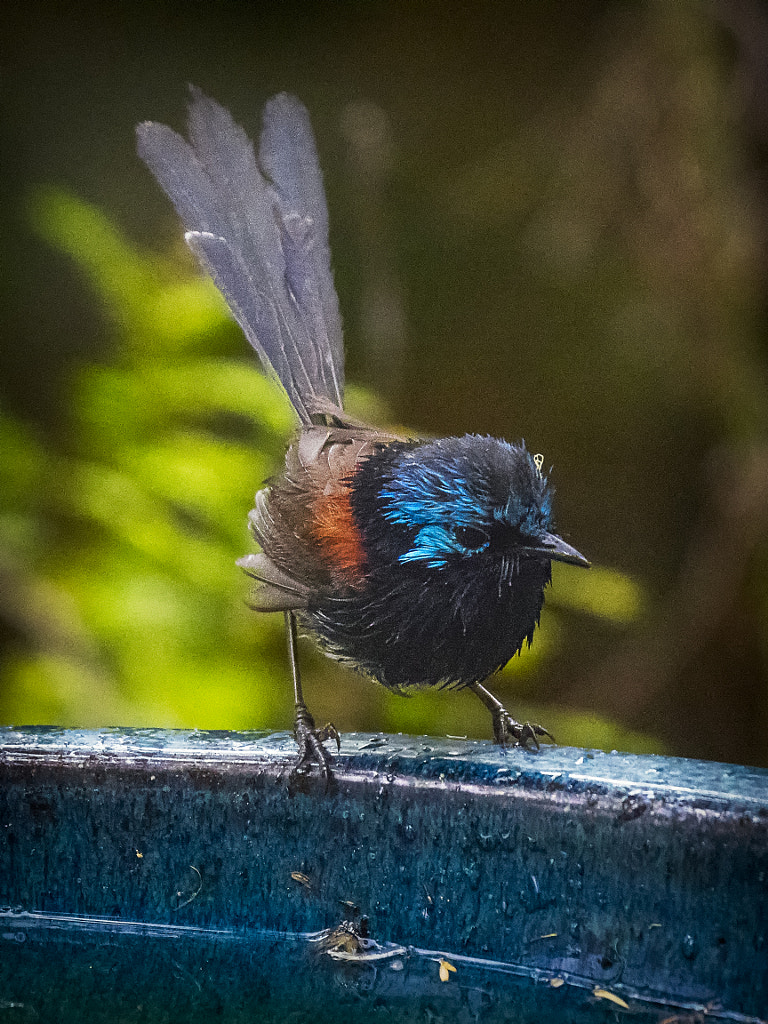
Blue-breasted Fairy Wren, Malurus pulcherrimus. Denmark, Western Australia.
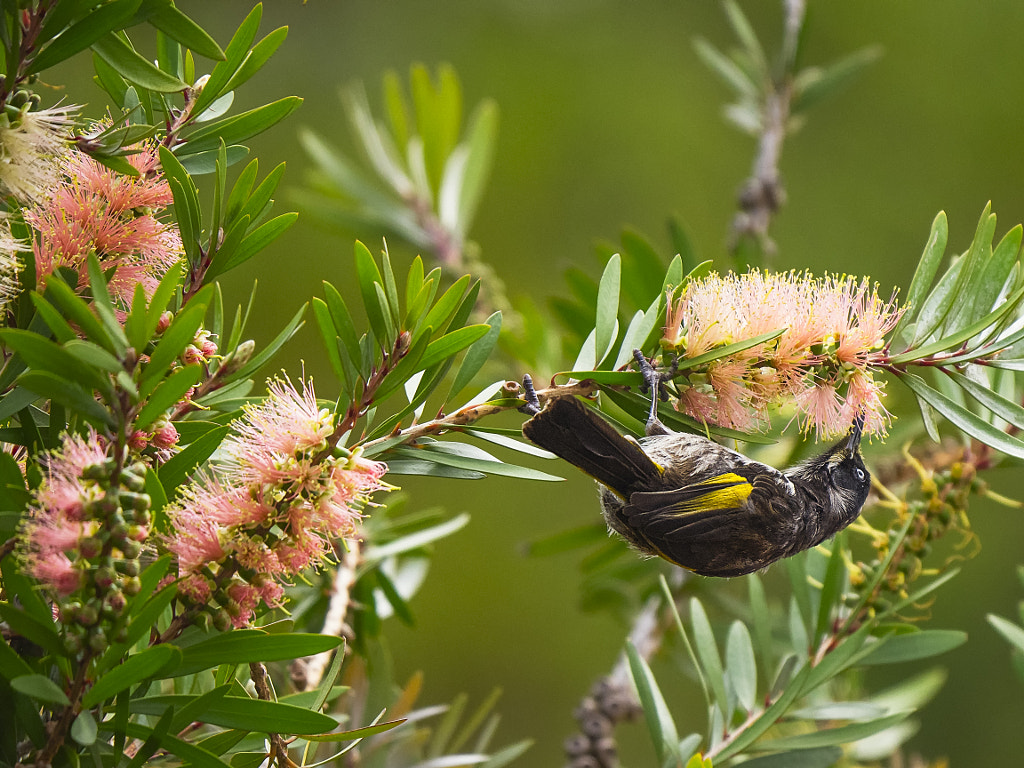
A New Holland Honeyeater feeding on a bottlebrush. Walpole, Western Australia.
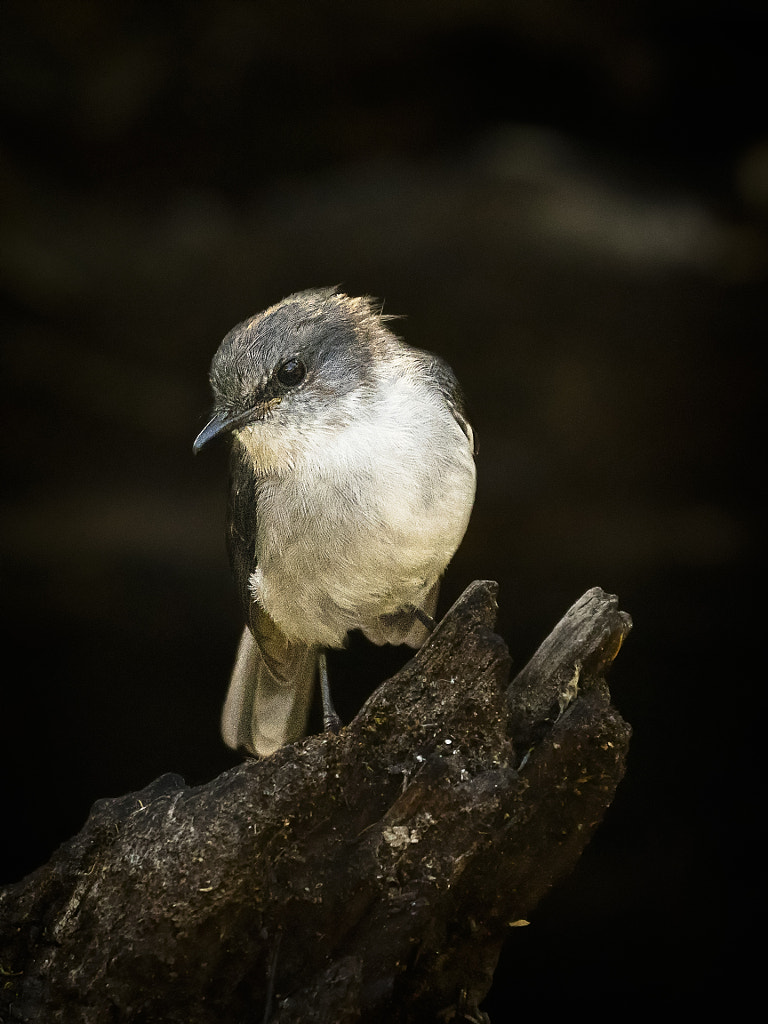
White-breasted Robin, Eopsaltria geogiana, at the Denmark ornitarium, Western Australia.
Away down south in the DenmarkWalpole region the other week. It was blissful with temperatures in the low 20s rather than the high 30s and low 40s we have in York. We had a great deal of fun walking around Wilson and Nornalup Inlets spotting and photographing birds. Here are three of the photos I took. All of them were taken with the Olympus OMD EM1 and the Panasonic Leica 100-400mm f4-6.3 Asph Vario-Elmar lens, of which I’ll have more to say in a little while. It is a lightweight combination that makes wandering around like this much more enjoyable than carrying my full frame Canon set up.
Originally the song was a track on the 1977 album Exodus and its release as a single in 1980 was somewhat of a surprise as Marley had released the Uprising album also that year. The song was well liked globally and is one Marley’s most popular songs – it’s feel good factor and catchy melody puts an instant smile on your face and before you can catch your self you find your self singing the chorus. Within 8 months Bob Marley had died from malignant melanoma. I remember the day very well, in fact I was still at school, Chichester High School for Boys Sixth form, and the next day one of my class mates, Chris Goodwin, gave a eulogy for him in the sixth form assembly much to the consternation of some of the staff. Chichester was an incredibly conservative place back then, people would joke that if there was a pig wearing a tory blue rosette it would be voted in as the Conservative MP for the town. Bob Marley left a powerful legacy as a third world performer who transcended his start as a niche world music performer to become a global superstar who spread a message of hope and love.
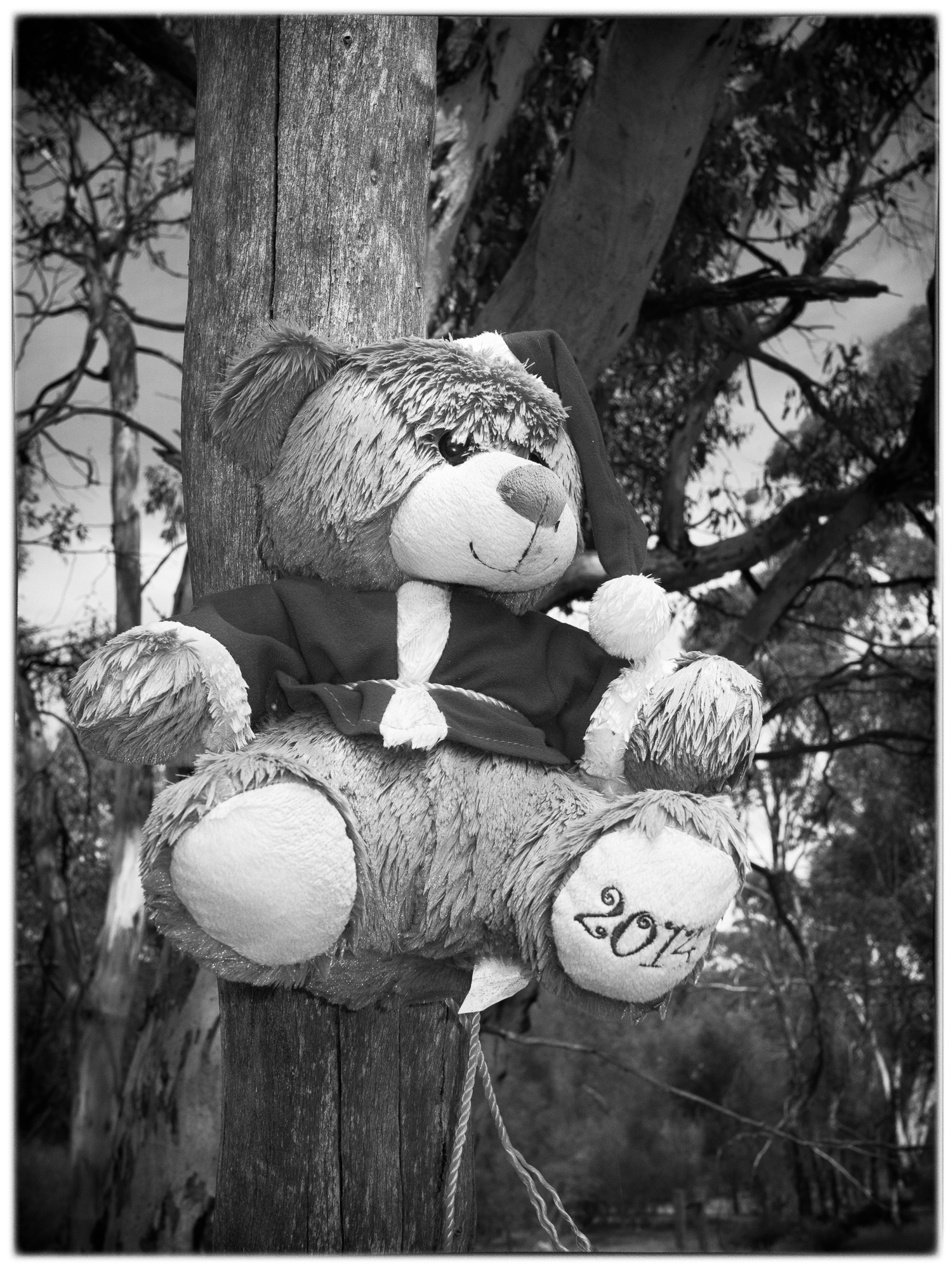
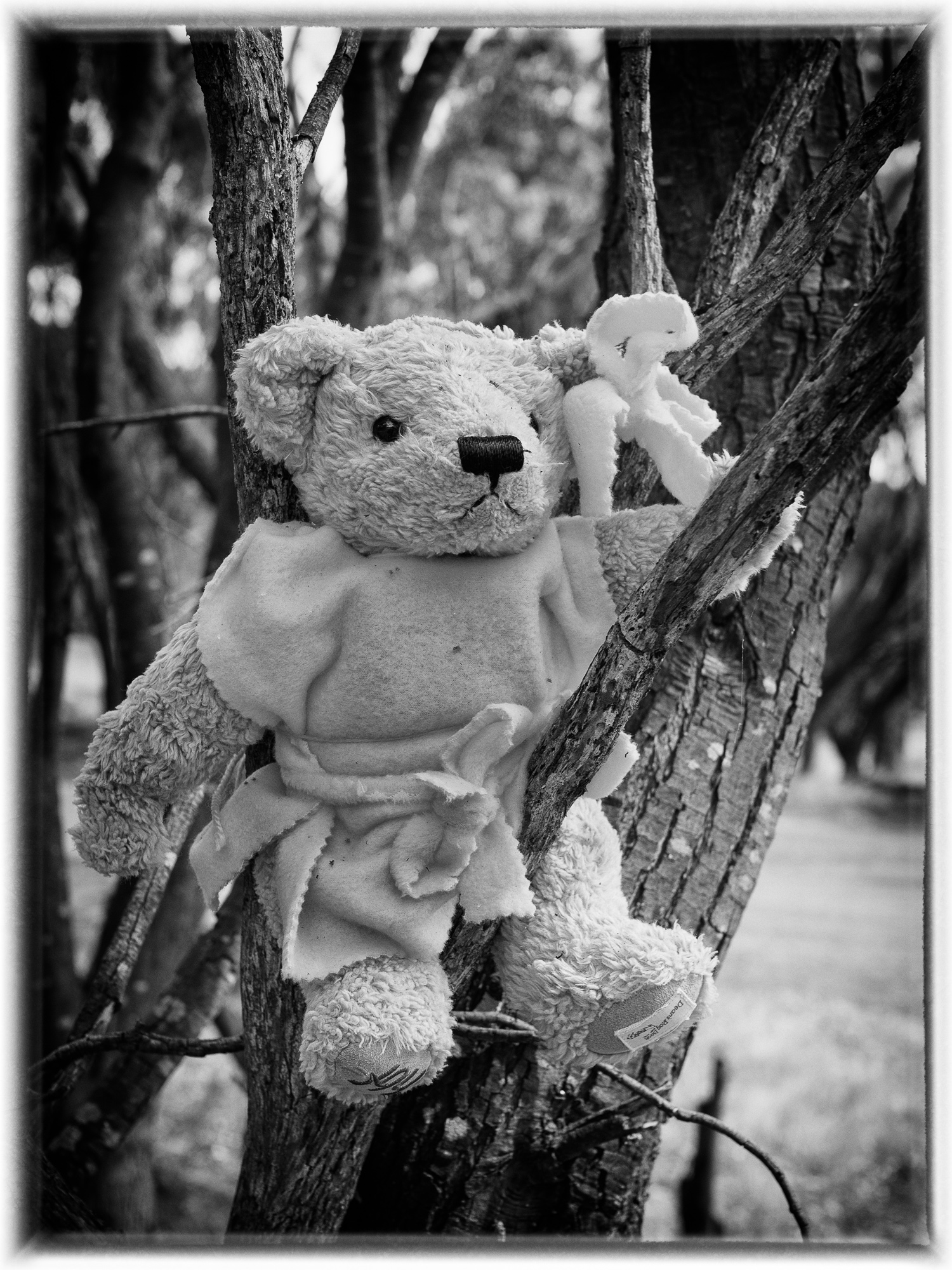
Memorial bears for the victims of Drop Bears. York, Western Australia
As I have been tramping around the local woods this spring photographing orchids and birds I noticed something that I’d never seen before. That something was teddy bears tied to trees in odd remote locations. At first I thought it was strange game being played by the local kids, but after I saw my tenth one I decided to ask about and find out what was going on. It took ages to find someone who would answer my questions. Eventually an acquaintance told me to go and see Cliffy.
Memorial bears for the victims of Drop Bears. York, Western Australia
Cliffy wasn’t that easy to find. The directions up to his shack in the wandoo forest were very vague – turn off the Great Southern Highway onto Talbot Road, drive for 10 Km and then take the third track on the left. Turn right at the dead tree that looks like an “excited” Tony Abbot in Speedos and then right at the big rock. I found the shack. When I say shack that really sounds better than it is. A few sheets of corrugated tin and some bush poles was all it was. When I saw Cliffy it was plain to see that he’d had a hard life. He is a compact sinewy man with skin the colour of tanned leather and hair like iron filings. His hands were a testament to hard physical labour – even the callouses had callouses. As to his age, well if you told me he was 100 I’d believe it and if you said he was 50 it wouldn’t surprise me either. So after the usual “Howz yer doin’?” Followed by a quick discussion about rainfall and rain gauges* I asked him about the bears. Cliffy sucked his single tooth and rolled a couple of strands of tobacco in some paper that looked like it had been torn from a pocket Bible. Slowly and quietly he says in a voice that sounded like he’d been gargling on razor blades “They’re memorials to victims of Drop Bear attacks”. He lit up and took a long drag and then told me the strangest tale. I scurried home to do some research.
Memorial bears for the victims of Drop Bears. York, Western Australia
Most people throughout the world know about the Koala Bear or to give them their proper scientific name “Phascolarctos cinereus”. Well firstly they are not a bear but a tree-dwelling marsupial that feeds on eucalyptus leaves. Secondly they are relatively harmless because all they do is eat and sleep. Occasionally you come across a grumpy one but all you’ll suffer is a few scratches. Well apparently the koala has an evolutionary cousin, the Thylarctos plummetu. Mostanimals in Australia are known by their Aboriginal name, but this one hasn’t got one as the Aboriginal Peoples are so scared of it they refuse to talk about it. Colonial settlers came to refer to them as Drop Bears for reasons that will become apparent later. Few people have seen the animal, and of those that have only a couple have lived to tell the tale. I’ll quote the Australian Museum’s description:
Identification
“Around the size of a leopard or very large dog with coarse orange fur with some darker mottled patterning (as seen in most Koalas). It is a heavily built animal with powerful forearms for climbing and holding on to prey. It lacks canines, using broad powerful premolars as biting tools instead.”
Size range
“120kg, 130cm long, 90 cm at the shoulder.”
Habitat type
“Vegetation Habitat: closed forest, tall closed forest, tall open forest, tall open shrubland”
Feeding and Diet
“Examination of kill sites and scats suggest mainly medium to large species of mammal make a substantial proportion of the animal’s diet. Often, prey such as macropods are larger than the Drop Bear itself. Drop Bears hunt by ambushing ground dwelling animals from above, waiting up to as much as four hours to make a surprise kill. Once prey is within view, the Drop Bear will drop as much as eight metres to pounce on top of the unsuspecting victim. The initial impact often stuns the prey, allowing it to be bitten on the neck and quickly subdued. If the prey is small enough Drop Bears will haul it back up the tree to feed without harassment from other predators.”
The Australian Geographic magazine did an article in 2013 about a University of Tasmania (UTAS) research project looking at who were more susceptible to attacks. In 2012 there was a research project looking to track Drop Bears in bush and see how many there actually are. An excerpt from that paper can be read here. I even managed to find online an old public announcement film for new migrants dating from the 1950’s warning of the dangers posed by Drop Bears.
When Cliffy had finished his tale of horror I had to lift my jaw up from the floor. “But why oh way don’t the government send in the police or the army to do something about it?” I say incredulously. This sent the old man into a fit of hysterical laughter. After ten minutes he managed to regain his composure. “Yer dopey pommy bastard, don’t yer know nothin’? The last time the Australian Army was called in to deal with an animal problem was in 1932 when Emus invaded Western Australia and that was a complete fu*king fiasco and made them look like complete idiots. It would be too dangerous to let that mob loose in the bush. The bloody pollies are all too busy guzzling at the trough to care about a few bushies goin’ missing.”
So if you venture into the Australian bush and see teddy bears tied to the trees be aware that Drop Bear attacks have happened in the area and you’d be best advised to leave.
* All conversations in this part of the world follow this pattern. It’s considered very rude not to ask about someone’s rain gauge.
… with flowers. Definitely not Julie Andrews and the ghastly singing Von Trapps.
When people think about Australian biodiversity and nature hot spots they automatically think of the rainforests of North Queensland, Kakadu National Park in the Northern Territory or Cradle Mountain-Lake St. Clair National Park in Tasmania. If prodded a little bit Western Australians might mention the Stirling Ranges National Park. But what if I were to tell you that there is a very significant region of biodiversity, a landscape that is still in its pristine state (i.e. has never been cleared) that is less than two hours drive from Perth? That it contains more than 1400 species of flowering plant, 24 of which are unique and not found anywhere else, there are 78 different species of bird, and there are ancient Aboriginal artefacts. So where is this place? Wongan Hills.
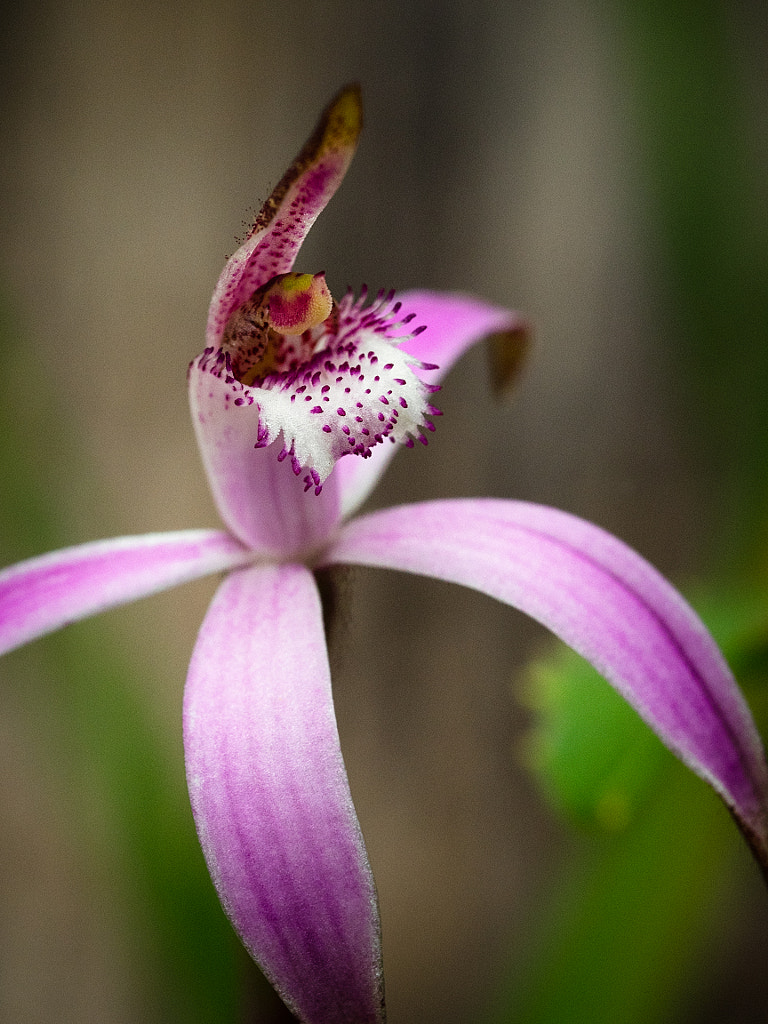
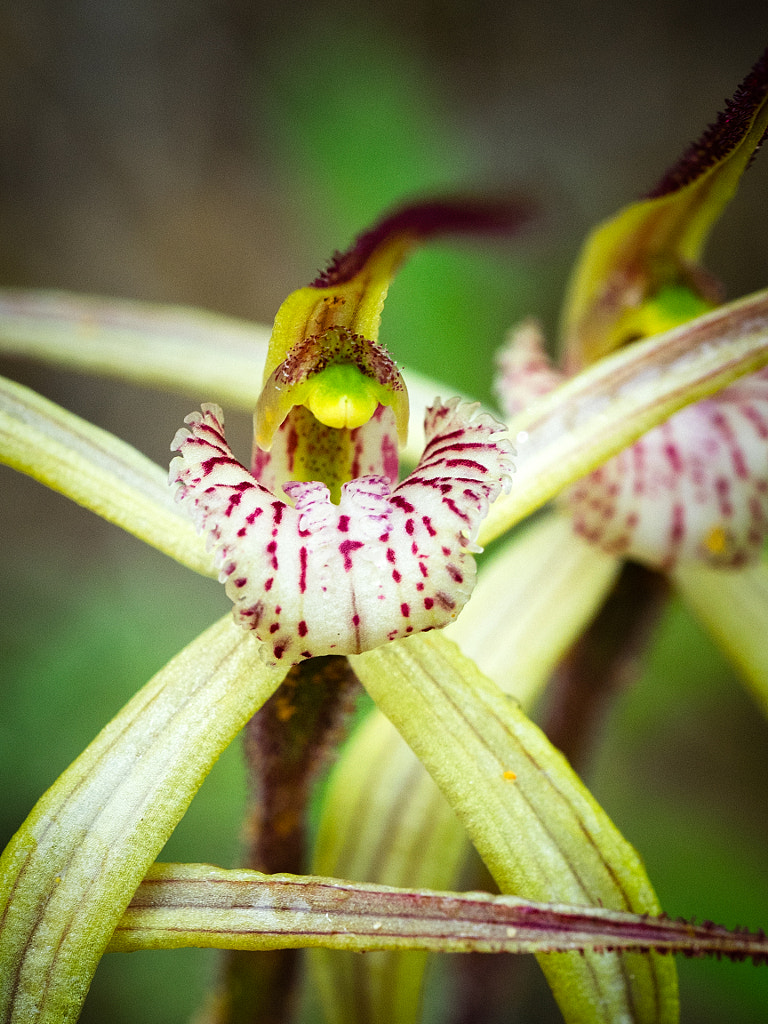
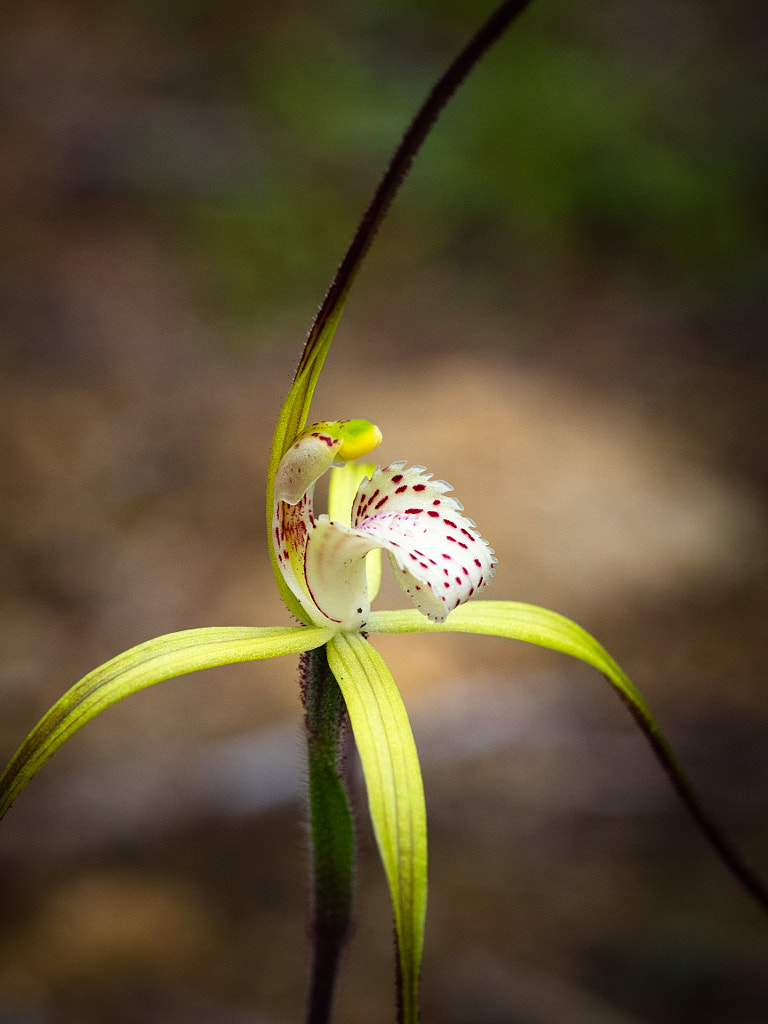
The name Wongan Hills comes from the Nyoongar Wongan Katta which means talking or whispering hills. The range of hills, which are about 10 north-west of the townsite are the largest single area of natural vegetation remaining in the northern wheatbelt. It is spring when everything happens – there is a truly spectacular display of wildflowers. I focus on native orchids and it is absolutely gobsmacking the number of different species and the sheer quantity of them. In the space of a morning’s walk around we found ten different species and they were totally new to me. Below are the fruits of that trip.
Pink Candy Orchid, Caladenia hirta subsp. rosea. Christmas Rock, Wongan Hills, Western Australia.Exposure: manual 1/125 s at f/8.0, Iso 200. Olympus OMD EM1 with OLYMPUS M.60mm F2.8 Macro lens, TTL fill flash provided by Metz 15 MS-1 ring flash.
Chameleon Spider Orchid, Caladenia dimidia. Christmas Rock, Wongan Hills, Western Australia. Olympus OMD EM1 with Olympus 60mm f2.8 macro lens, with Metz 15 MS-1 ring flash. Exposure: aperture priority 1/80 s at f/8.0 with -1 stop exposure compensation and TTL flash.
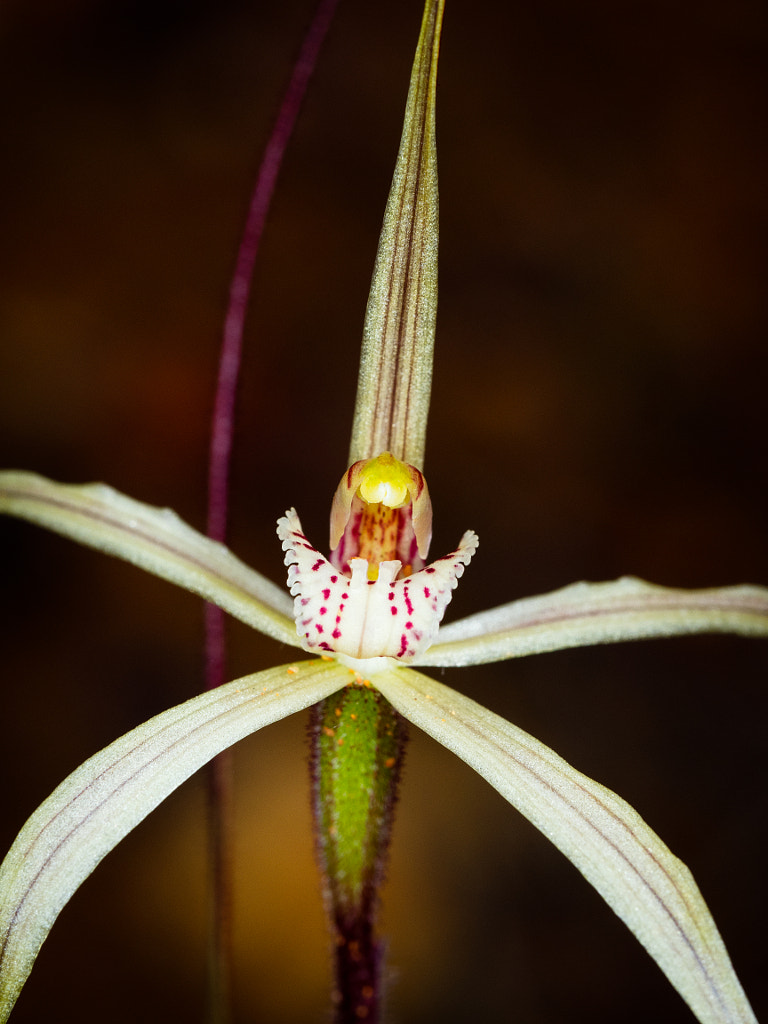
Yellow Spider Orchid, Caladenia denticulata subsp. denticulata. Christmas Rock, Wongan Hills, Western Australia. Exposure: manual 1/160th sec, f8, ISO 200 with TTL flash. Olympus OMD EM1, OLYMPUS M.60mm F2.8 Macro lens, Metz mecablitz 15 MS-1 ringflash.
Salt lake spider orchid ( Caladenia exilis subsp. exilis). Roger’s Reserve, Wongan Hills, Western Australia. Olympus OMD EM1 with OLYMPUS M.60mm F2.8 Macro lens and Metz 15 MS-1 ring flash. Exposure: Manual mode, 1/250 s at f/8.0 ISO 200.
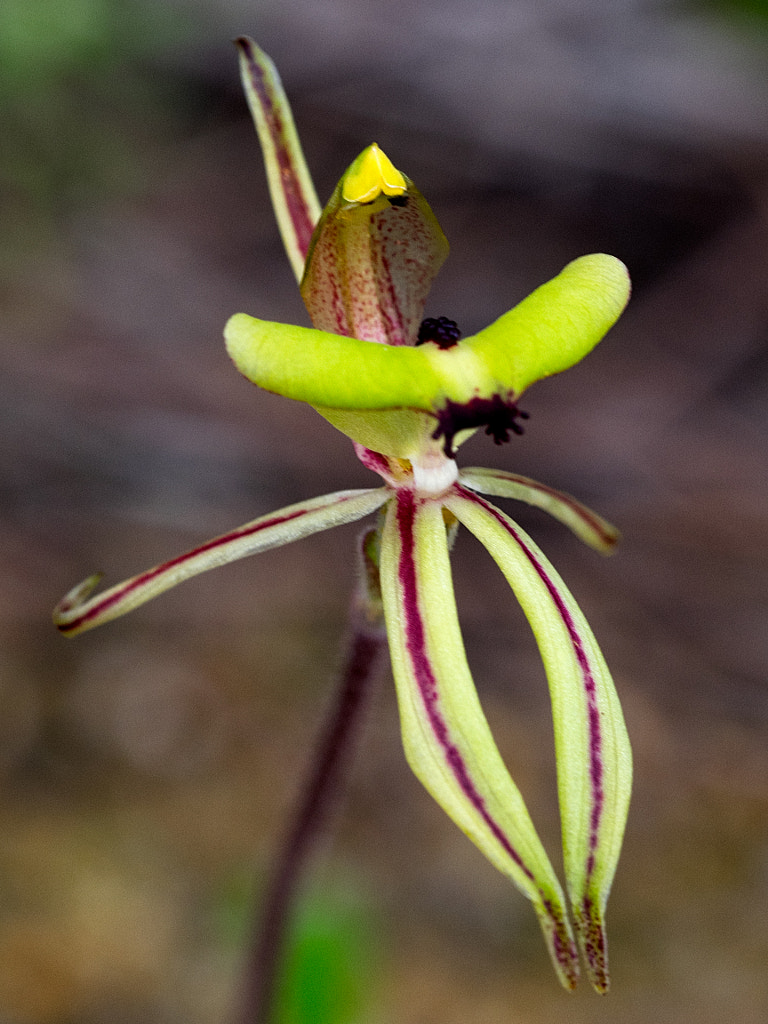
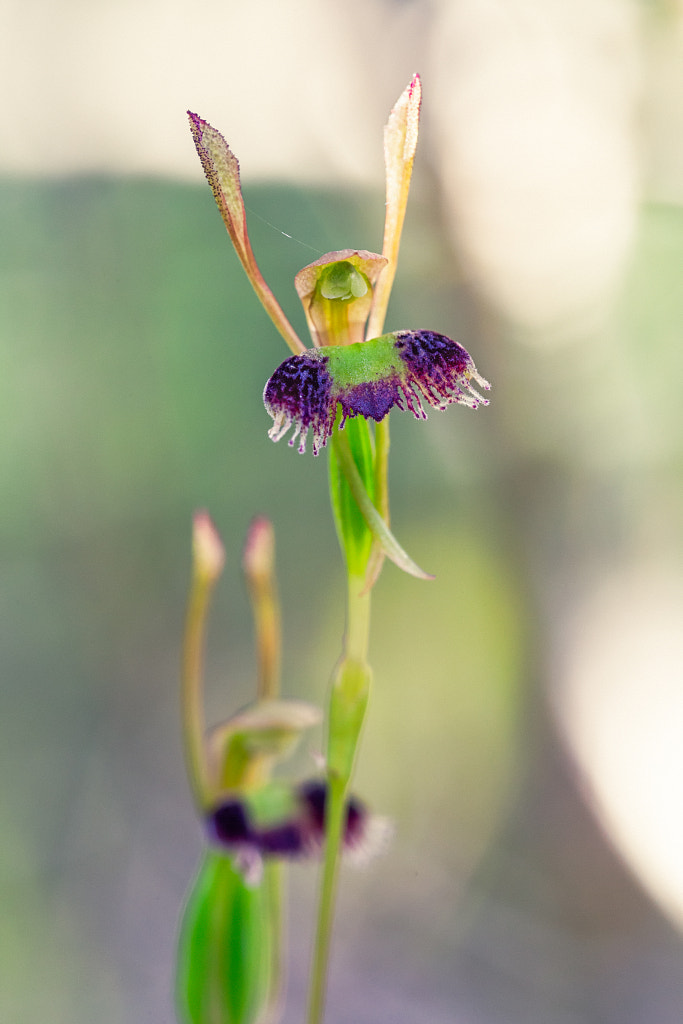
Clown orchid (Caladenia roei) also known as ant orchid, man orchid and jack-in-the-box orchid. Christmas Rock, Wongan Hills, Western Australia. Olympus OMD EM1 with OLYMPUS M.60mm F2.8 Macro lens and Metz 15 MS-1 ring flash. Exposure: aperture priority 1/50 s at f/8.0 at ISO 200 with -1 stop exposure compensation.
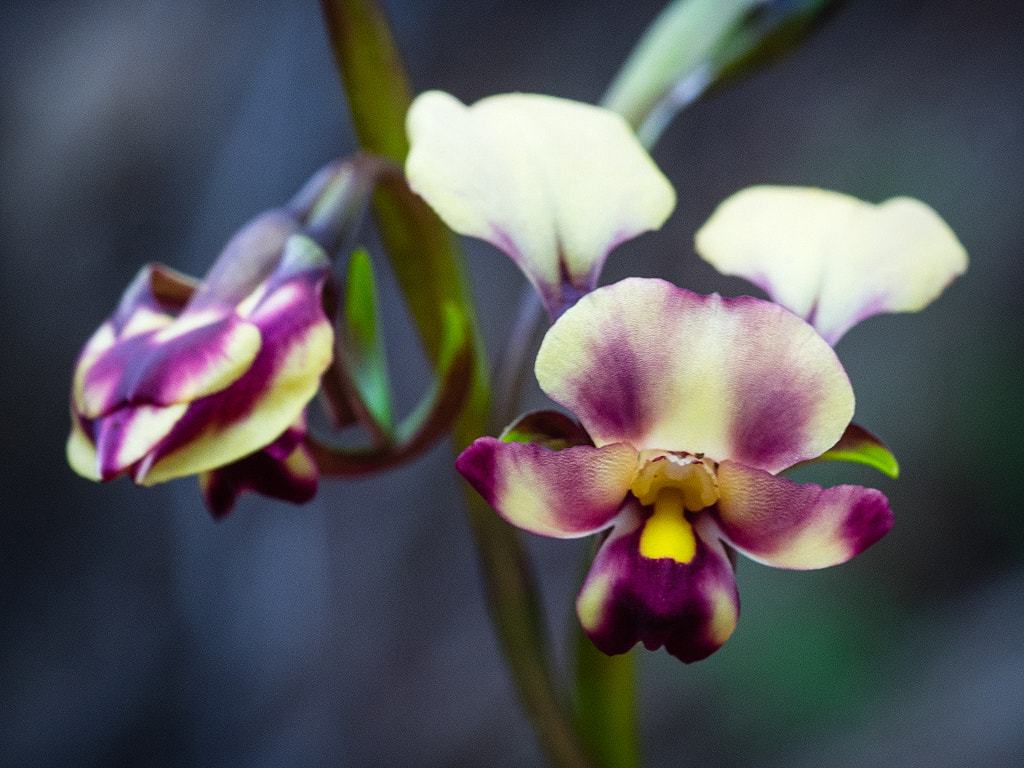
Mottled donkey orchid, Diursis sp. ‘Wyalkatchem’. Christmas Rock, Wongan Hills, Western Australia. Olympus EM1 with OLYMPUS M.60mm F2.8 Macro lens. Exposure: aperture priority mode 1/80 s at f/8.0 ISO 200 with -1 stop exposure compensation and flash from Metz 15MS-1 ring flash.
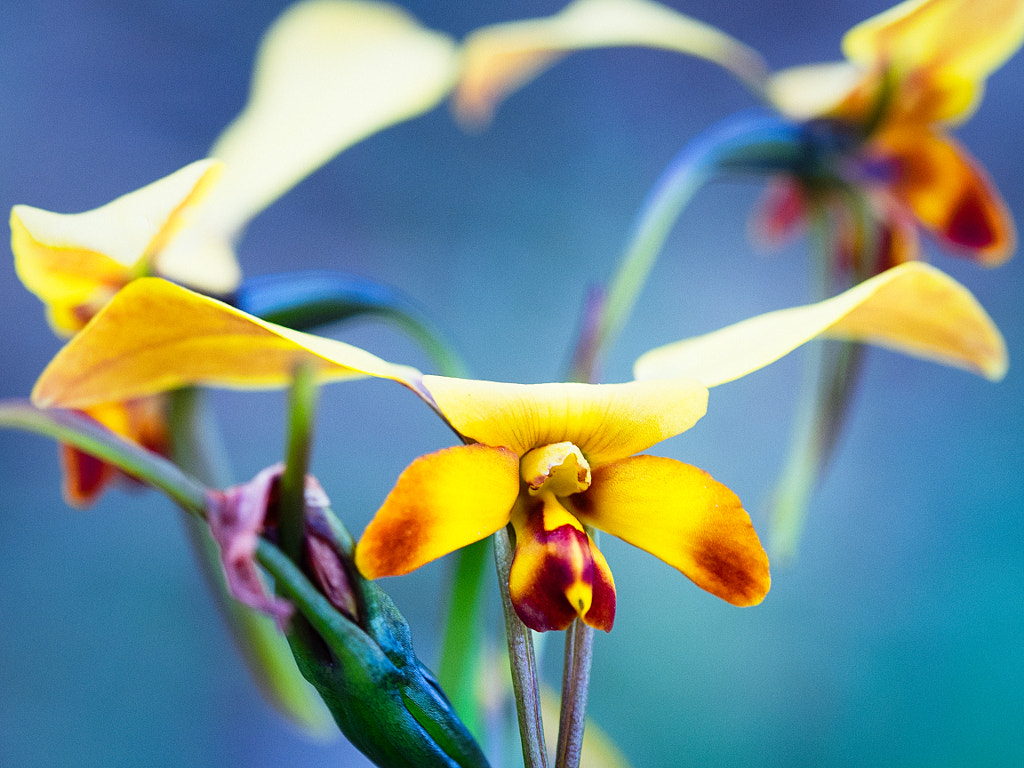
Yellow Granite Donkey Orchid, Diursis hazelii. Mount Matilda, Wongan Hills, Western Australia. Olympus OMD EM1 with OLYMPUS M.60mm F2.8 Macro lens and Metz 15 MS-1 ring flash. Exposure: Manual mode 1/100 s at f/4.0 ISO 200.
Sugar Orchid, Ericksonella saccharata. Mount Matilda, Wongan Hills, Western Australia. Olympus OMD EM1 with OLYMPUS M.60mm F2.8 Macro lens and Metz 15 MS-1 ring flash. Exposure: Manual mode, 1/80 s at f/5.6 ISO 200.
Dainty donkey orchid, Diuris sp. ‘north-western wheatbelt’. Rogers Reserve, Wongan Hills, Western Australia. Olympus OMD EM1 with OLYMPUS M.60mm F2.8 Macro lens and Metz 15 MS-1 ring flash. Exposure: aperture priority with -2 stops exposure compensation 1/125 s at f/5.6 ISO 200.
Crimson spider orchid, Caladenia footeana. Rogers Reserve, Wongan Hills, Western Australia. Olympus OMD EM1 with OLYMPUS M.60mm F2.8 Macro lens and Metz 15 MS-1 ring flash. Exposure: Manual mode, 1/200 s at f/8.0 ISO 200.
We decided to walk along the Bilya Walk Track on the banks of the Avon River in Toodyay ostensibly looking for birds. Although it was a fine winter’s day the ground was yes wet, flooded in places, and the river very high from the winter rains.
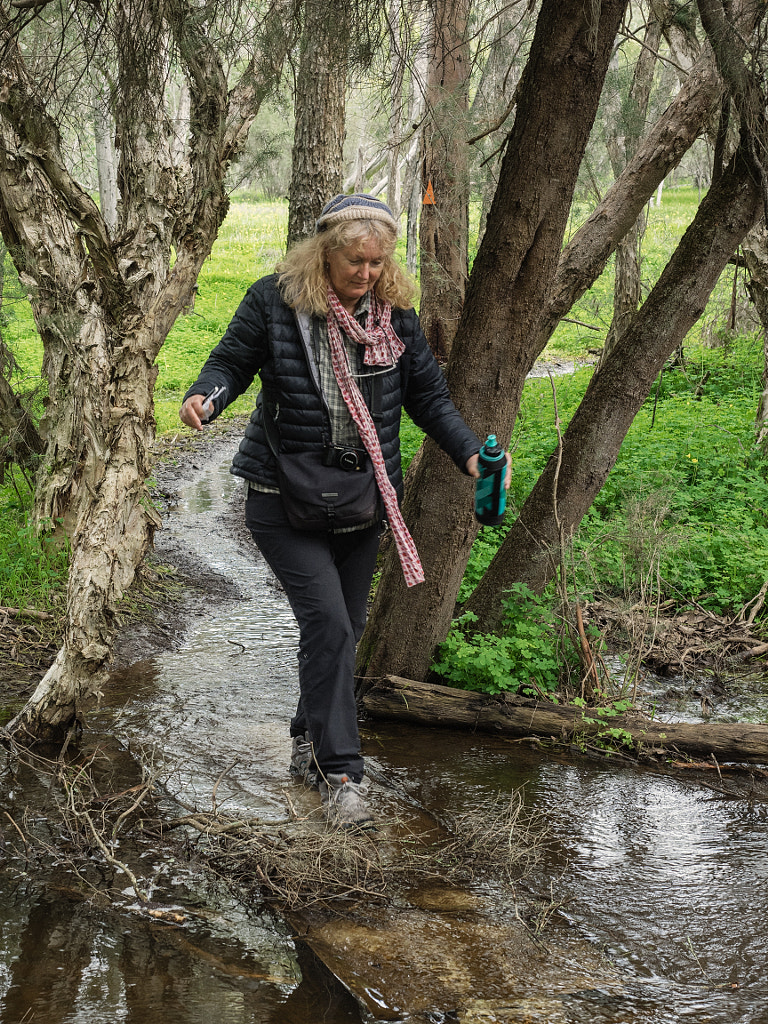
Helen and Frida out looking for birds along the Avon River.
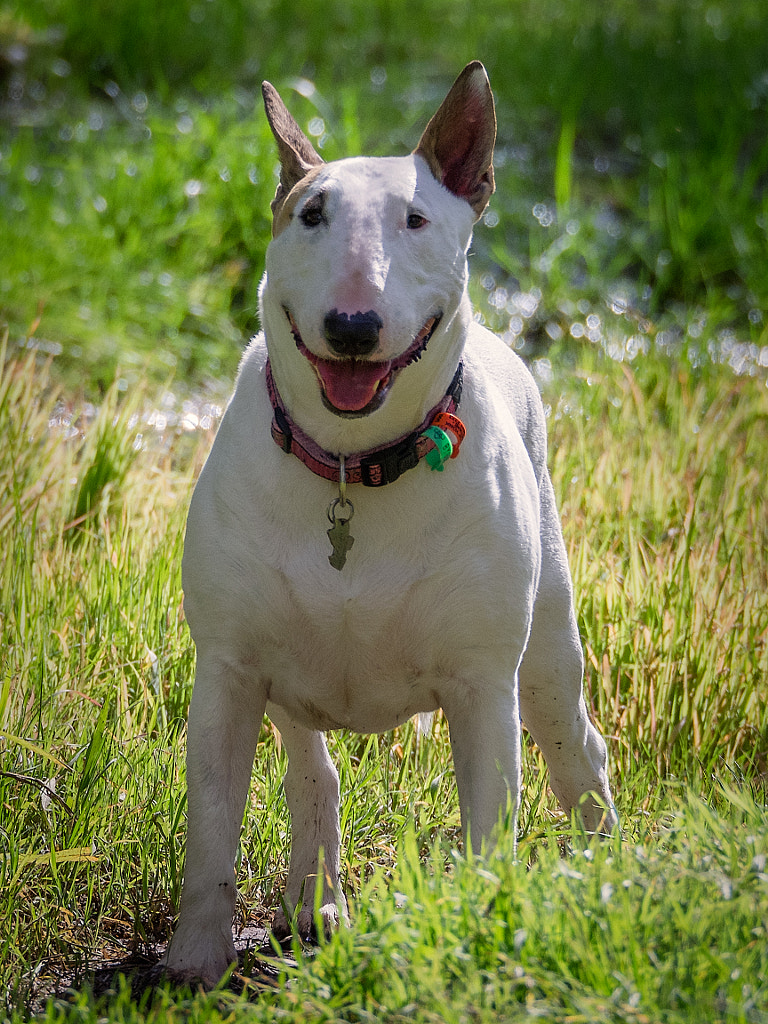
Gratuitous shot of Frida
The track was flooded in places necessitating some paddling.
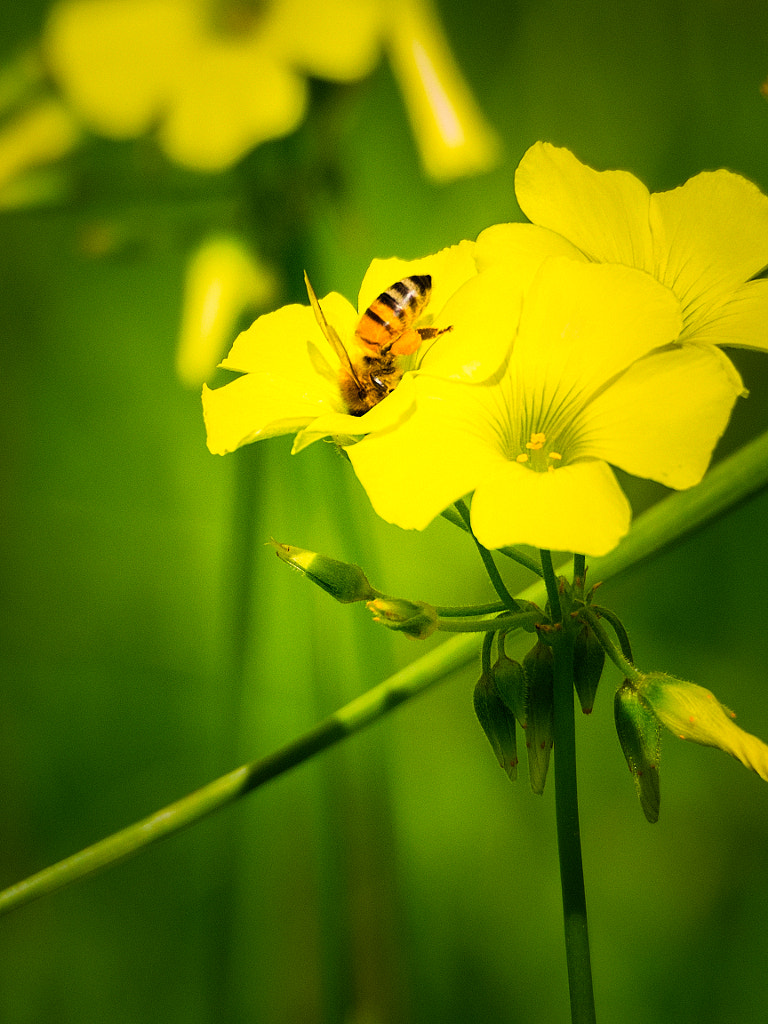
A bee pollinating Oxalis pes-caprae. Also known as Bermuda buttercup, African wood-sorrel, Bermuda sorrel, buttercup oxalis, Cape sorrel, English weed, goat’s-foot, sourgrass, soursob and soursop. It is a noxious weed introduced from South Africa to Australia. Toodyay, Western Australia.
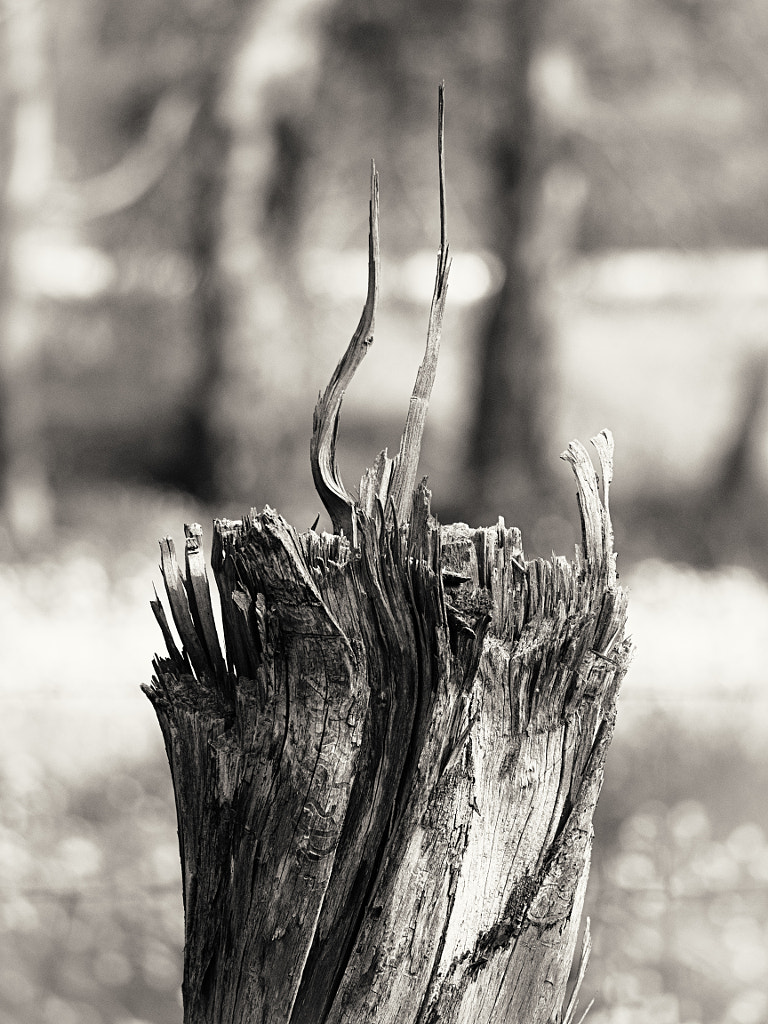
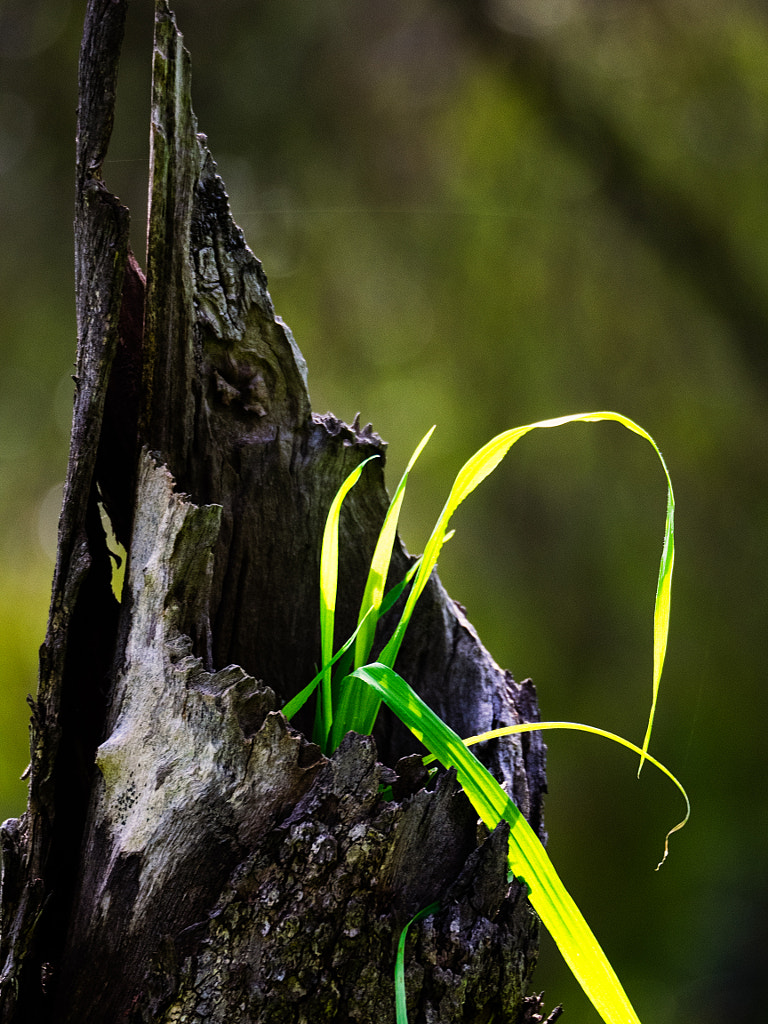
Toodyay Stump #1 Tree stump, Toodyay, Western Australia.
Toodyay Stump #2
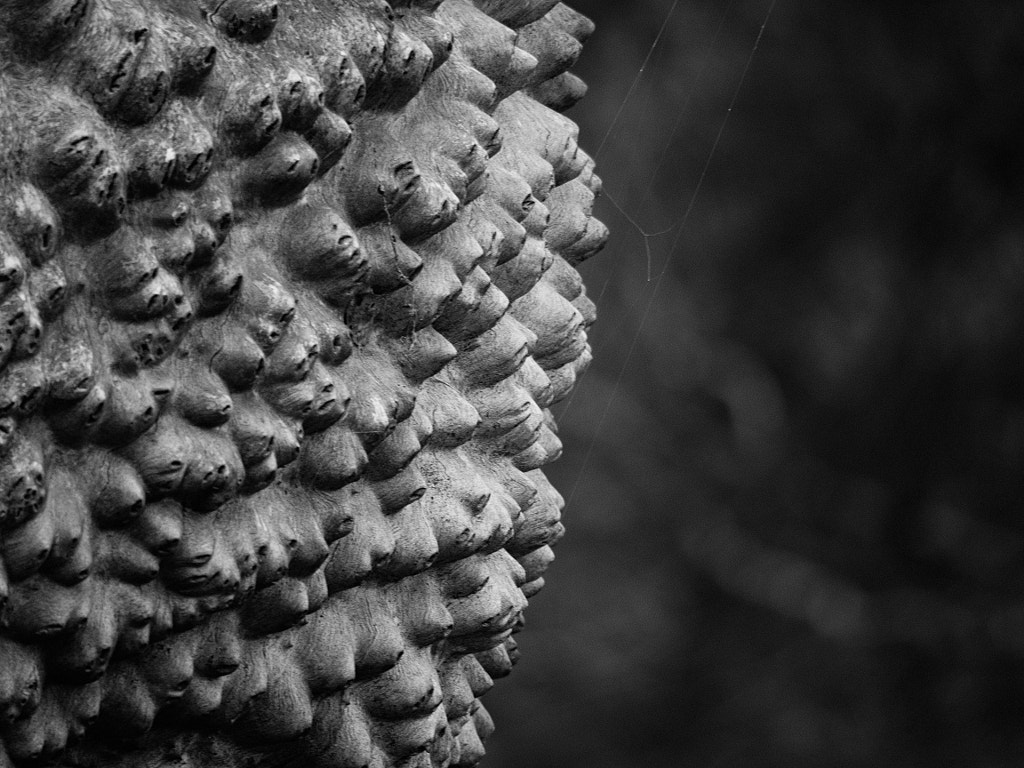
Knobbly Close up of a tree trunk. Toodyay, Western Australia.
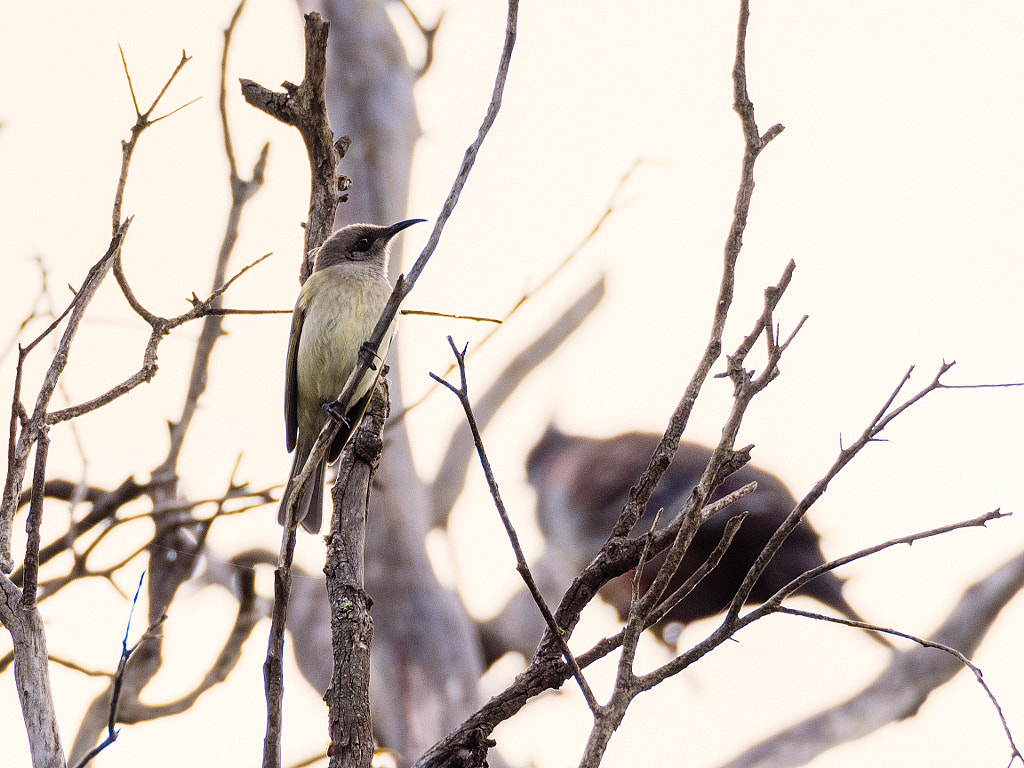
Brown honeyeater, Lichmera indistincta, Toodyay, Western Australia.
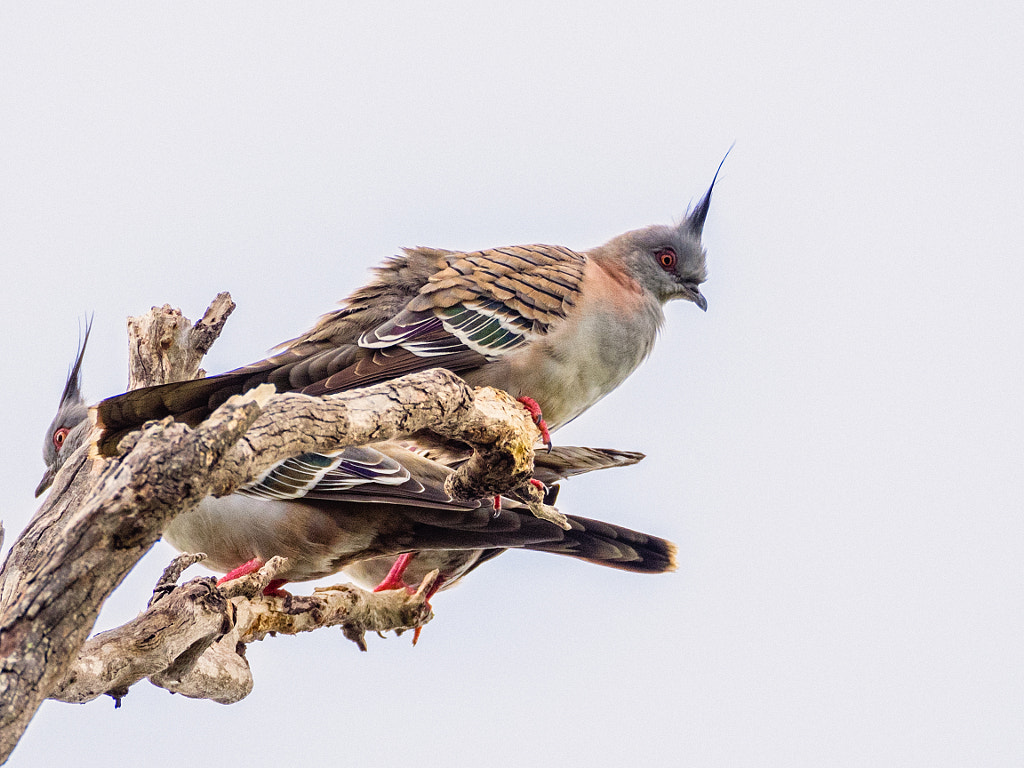
Crested pigeon (Ocyphaps lophotes), Toodyay, Western Australia.
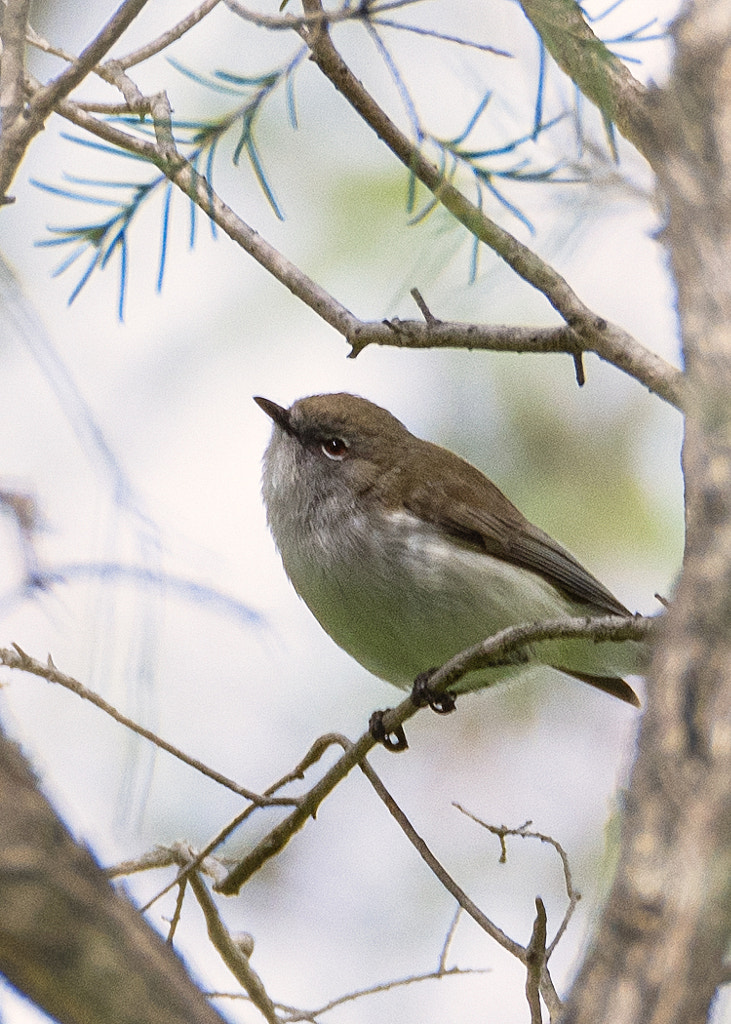
Weebill, , Australia’s smallest bird. Toodyay, Western Australia.
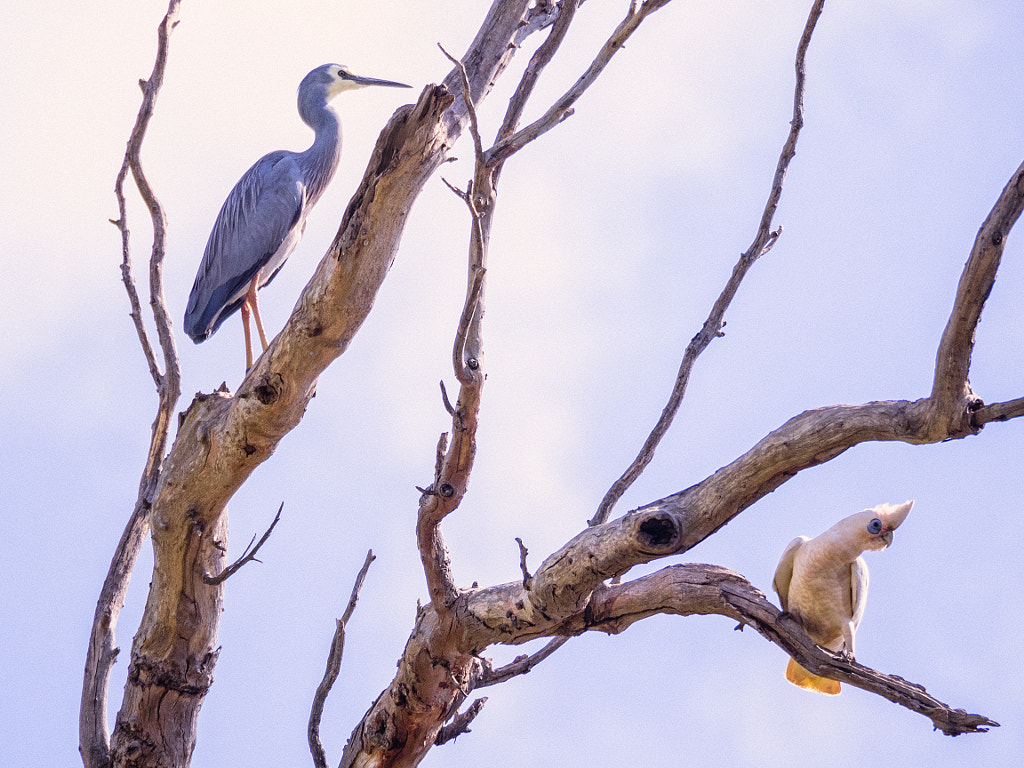
White-faced heron (Egretta novaehollandiae) and a western corella (Cacatua pastinator subsp. derbyi), Toodyay, Western Australia.
I was at Lake Leschenaultia and it was a lovely winter’s day, the sun was out I’d just finished a bush walk. I decided to have lunch at one of the picnic shelters by the lake when it happened. There was no warning. One minute I sitting there alone and happy the next minute these two ne’er-do-wells are demanding with menace. To make matters worse I had nothing to give and they just would not accept that. They were merciless in their onslaught. Would I recognise them again? You bet I would! Their visages are engraved indelibly upon my mind. But better than that I managed to get pictures of them so others could be warned. Here they are.
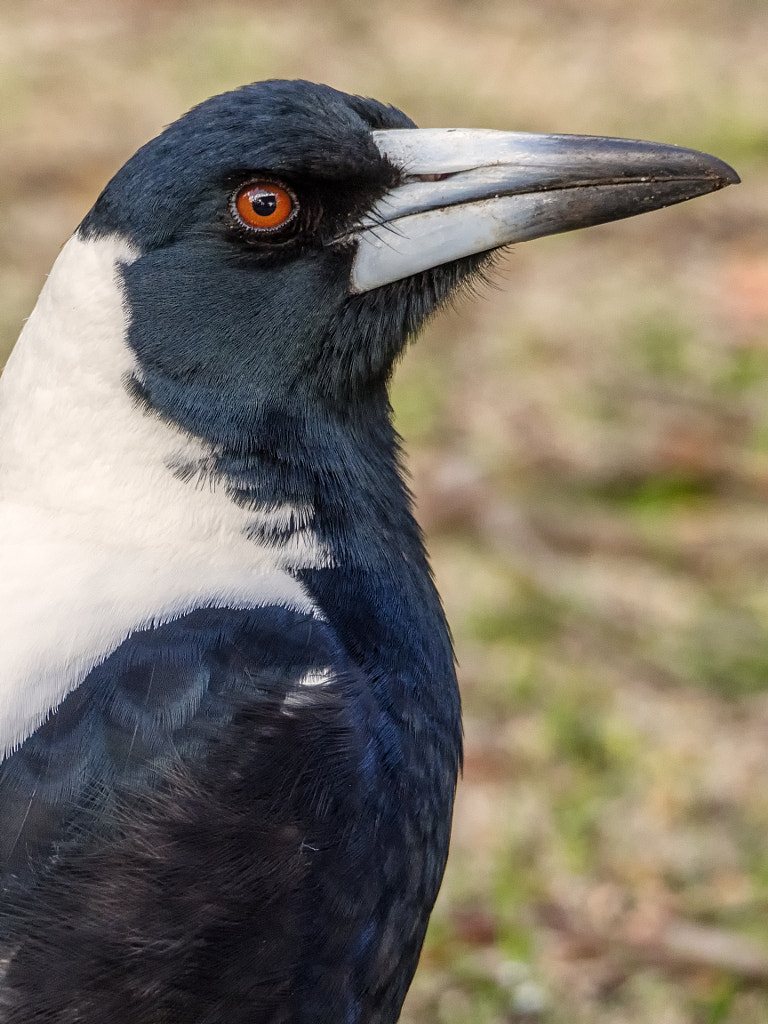
The eponymous Australian magpie (Gymnorhina tibicen) will happily relieve you of your picnic lunch at Lake Leschenaultia.
This was the ring leader. He was ruthlessly determined to relieve me of my lunch. He was brazen in his approach, like he just didn’t care.
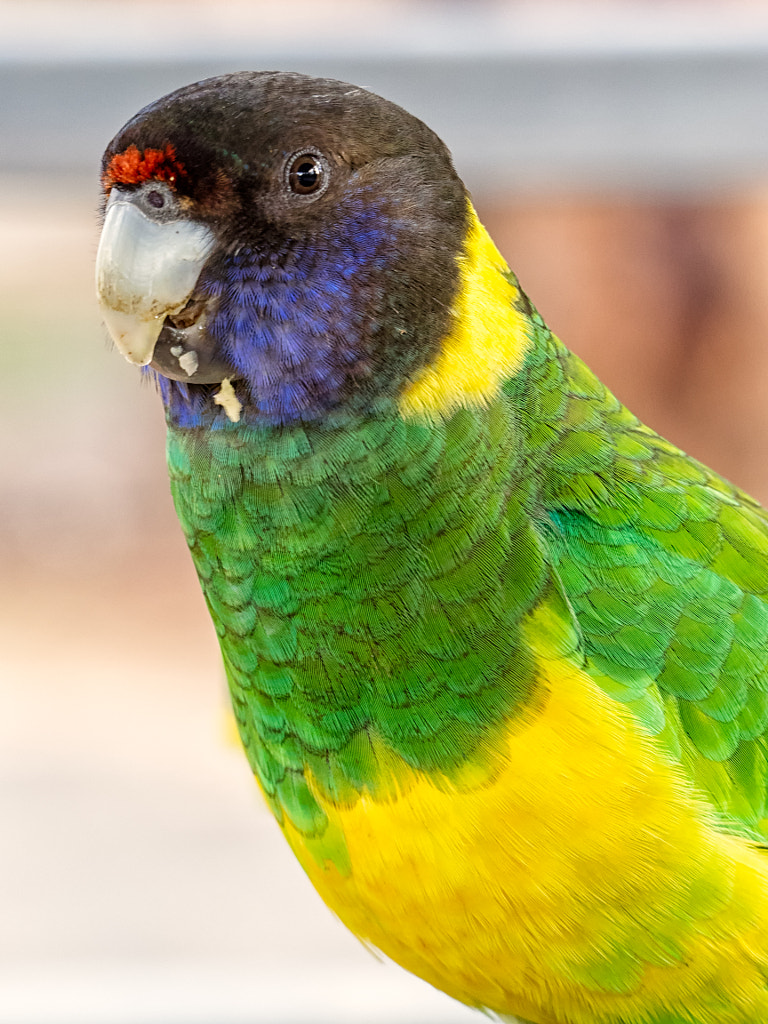
Australian Ringneck (Barnardius zonarius subspecies semitorquatus). One of the cheeky bandits that will help eat your lunch at Lake Leschenaultia
This one was a sly beggar! He quietly got into my bag and ransacked it looking for goodies. When discovered he just countered with a manic laugh.It was like something out of that Hitchcock film The Birds albeit with less blood and more sandwiches.
So if you go to Lake Leschenaultia watch out for these two. They are merciless – no picnic is safe! Be warned, or as the Australian Federal Government would say “Be alert but not alarmed“.
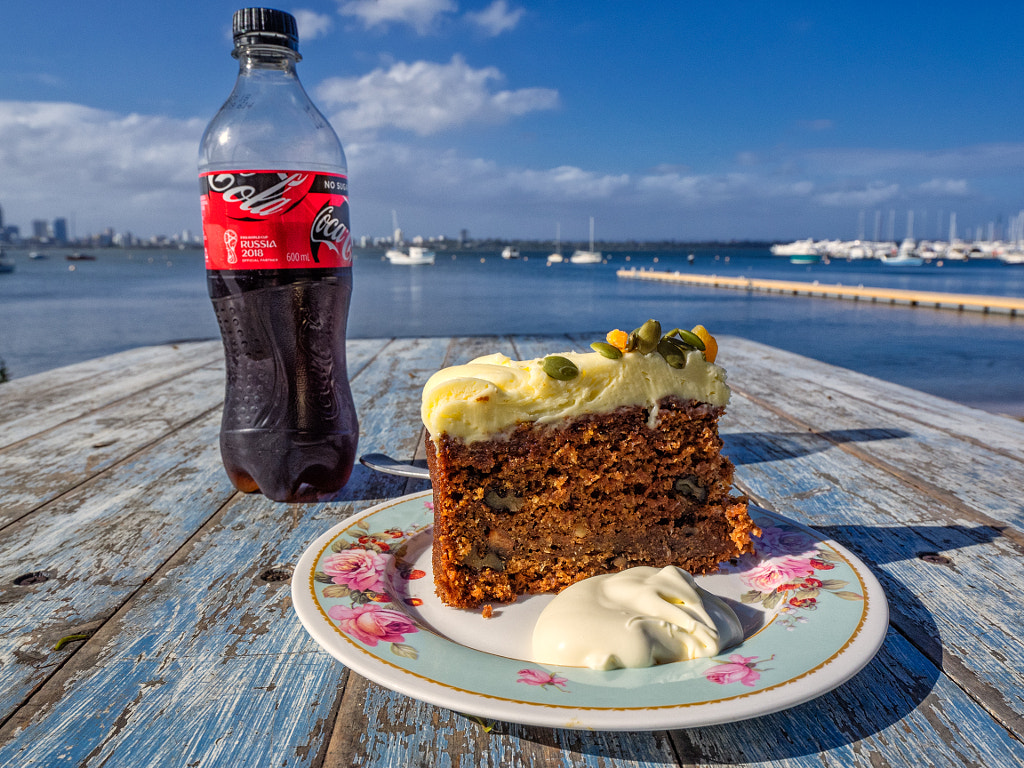
Carrot cake and a drink at the Bayside Kitchen Cafe, Matilda bay. Olympus OMD EM1 mk i with Panasonic Leica 8-18mm f2.8-4 lens. Exposure: 1/800, f8, ISO 200.
The posts have been a bit sporadic and short of late and for that I apologise. I’ve been working on a book project and have been very busy. Indeed the above photie was taken while on a field trip. It’s a hard life ehh?
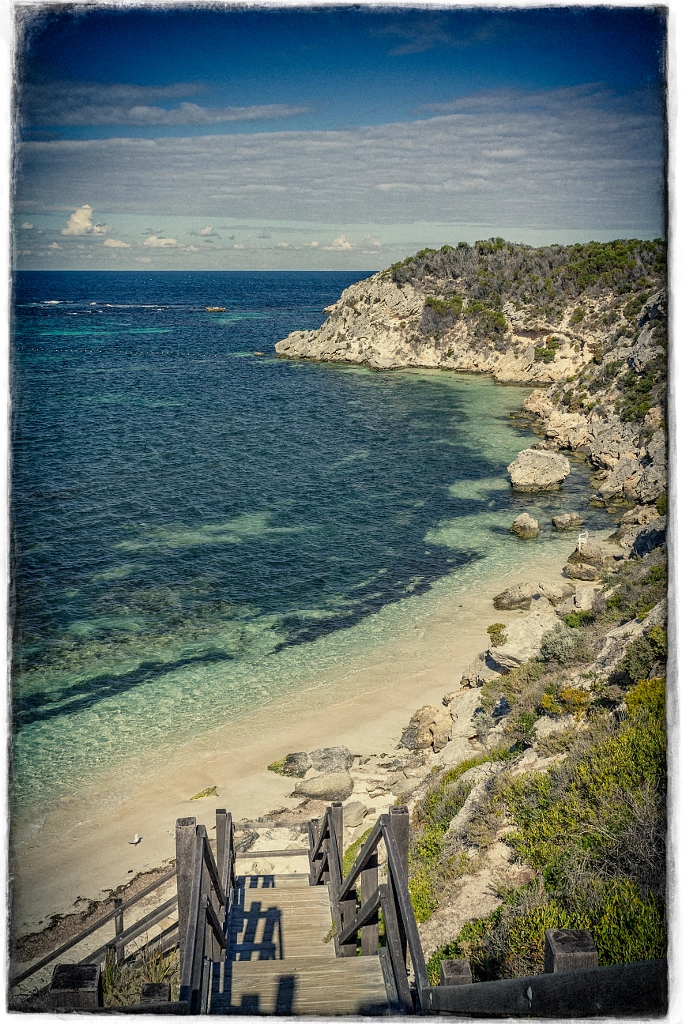
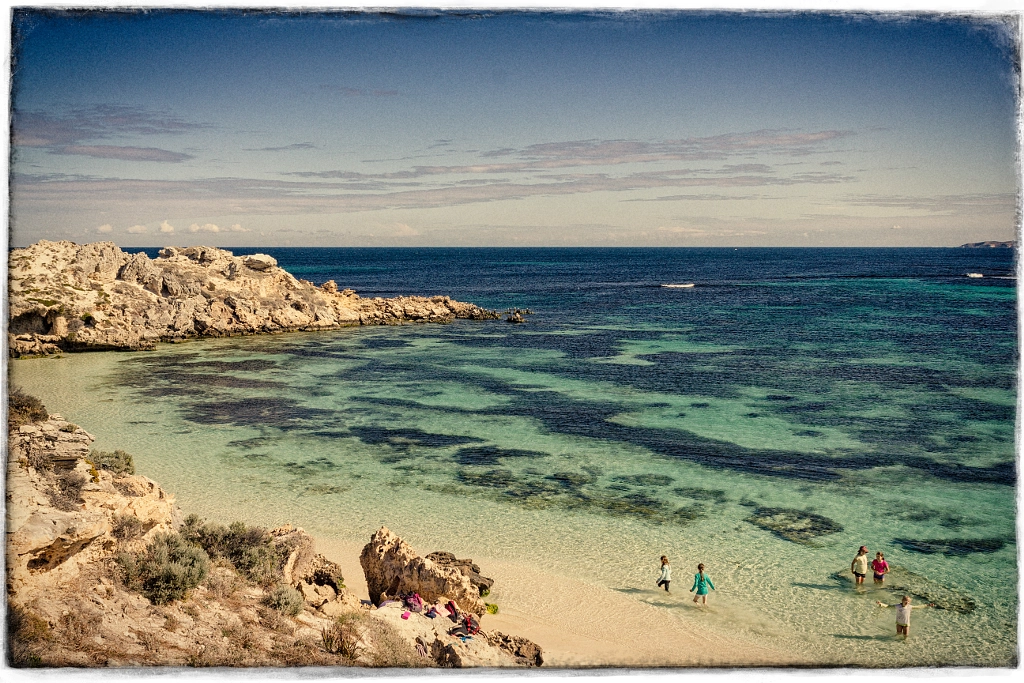
Rottnest Island’s beaches are its big draw card. The many small bays around the island make for delightful sheltered beaches that safe for swimming.
Eighteen Kilometres off the Western Australian coast near Fremantle is an island. It’s name is Rottnest Island. In terms of size it’s not very significant – just 11 Km long and 4.5 Km wide. It has just one settlement and that has a permanent population of around 300 people. But for all its insignificance it receives about 500,000 visitors a year. On a busy day 15,000 can be on the island at one time. It’s most famous residents aren’t even people, they are Quokkas (Setonix brachyurus) a small marsupial animal in the same family as Kangaroos and Wallabies. They are so important to Western Australia that they are the face of the current tourism campaign in the media with the hope that possibility of taking a selfie with one of cute critters will bring legions of overseas tourists who will enrich the coffers of the state government now the mining boom is over. For young people finishing school Rottnest is a right of passage where the teenagers go for a booze fuelled week-long party to mark the transformation from school kid to adult. For other Perth residents a trip to the island is what summer is all about.
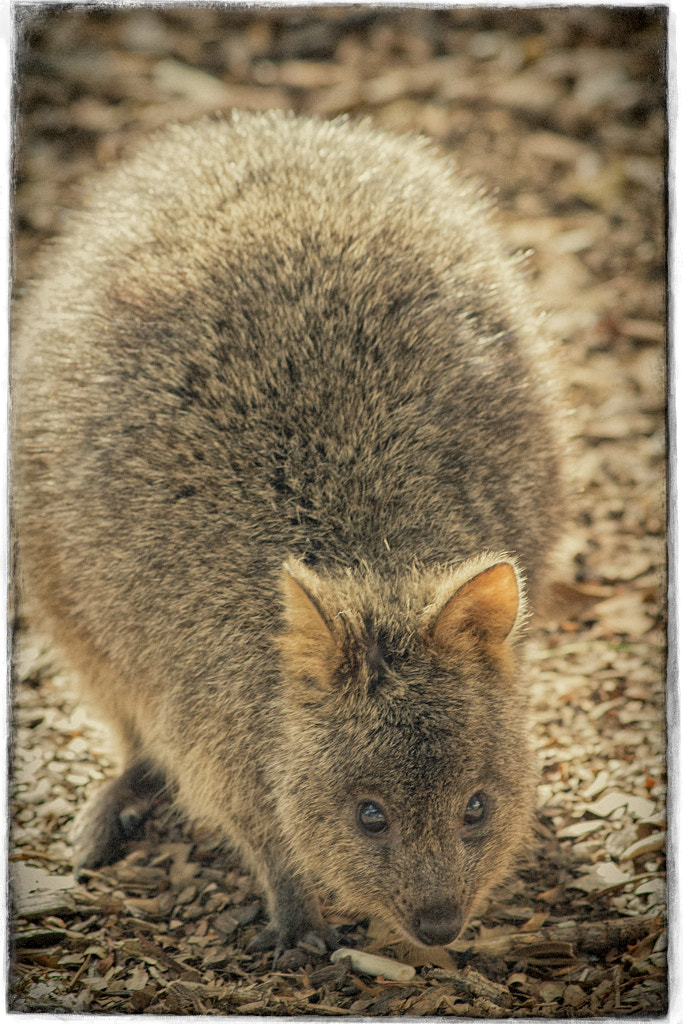
Quokkas are a small marsupial that inhabit Rottnest Island and they have now become the islands icon.
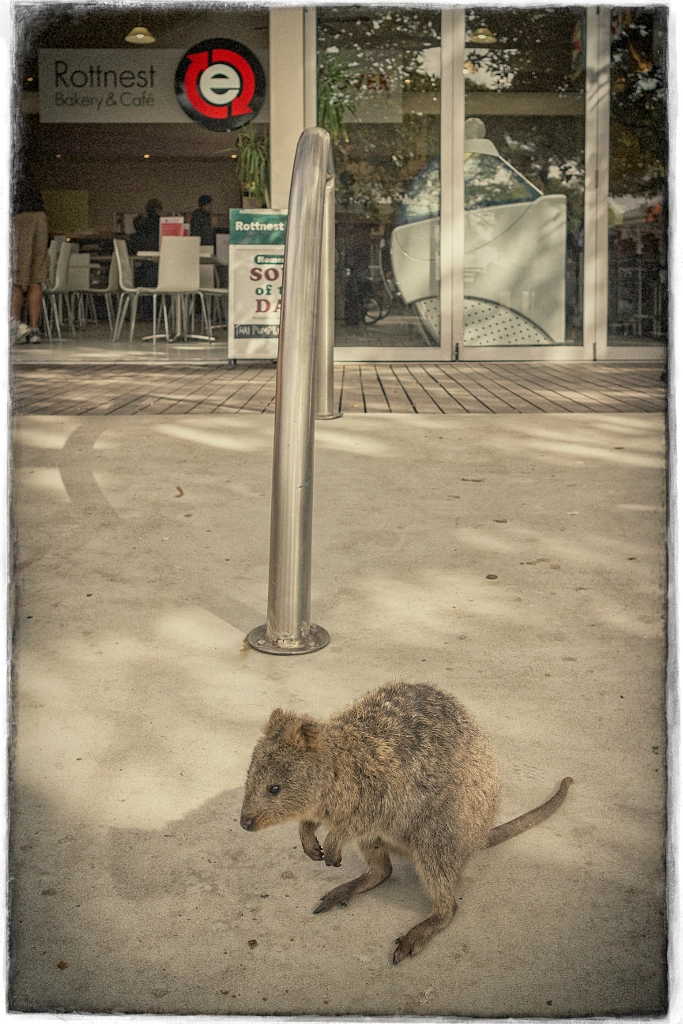
Quokkas can be found all over Rottnest Island even in the Thomson Bay Settlement during day light.
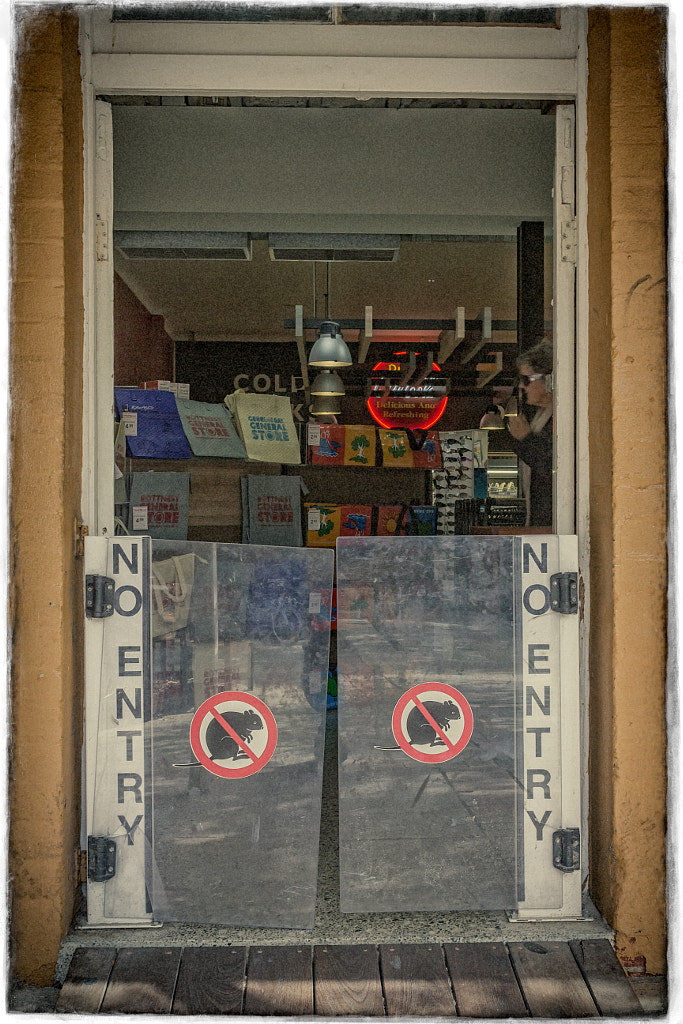
The supermarket in Thomson Bay Settlement has a strict no quokka policy.
You get to the island via a ferry. Rottnest Express has ferry services leaving Barrack Street Jetty in Perth, the B-Shed Fremantle Harbour and Northport Rouse Head. As well as the ferry service they run a variety of package tours to the island and you can rent snorkeling equipment from them. Rottnest Fast Ferries sails out of Hillary’s Boat Harbour and they also run a variety of day tours and cruises.
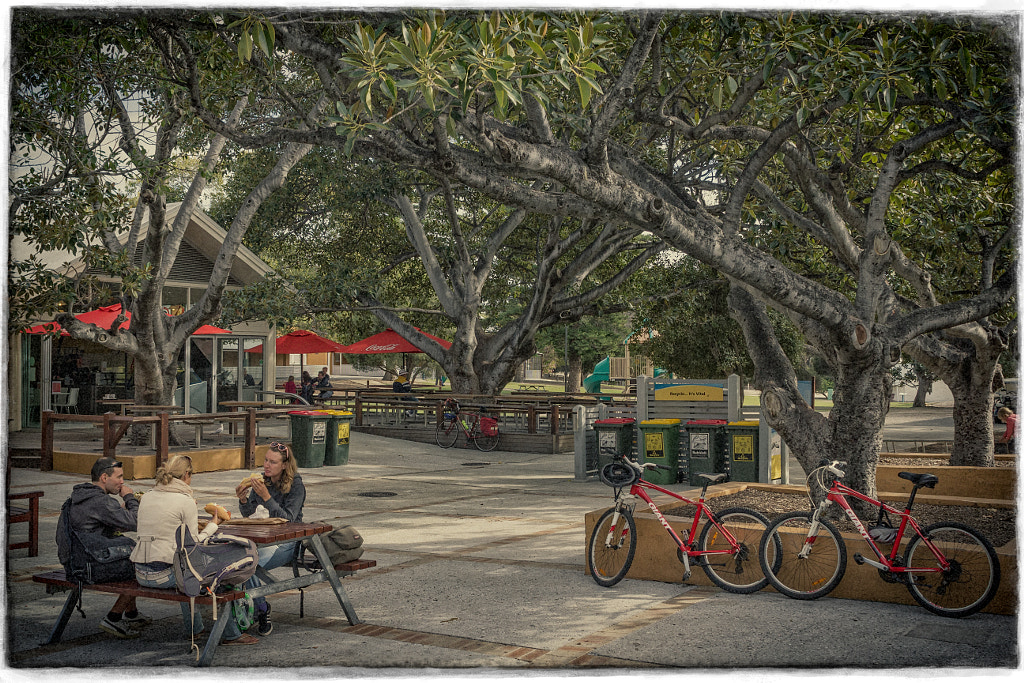
There are no cars on Rottnest Island, cycling is the main form of transport.
The best thing about Rottnest is that there are no cars!!!! I’ll say that again. No cars!!!! Cycling is the main form of transport. Brilliant. You can either bring your own bike on the ferry at an extra charge or rent one from either Rottnest Express (if you travelled with them) or get one from Rottnest Island Bike Hire located behind the Hotel Rottnest on Bedford Avenue. The last time I visited the island I took my own bike and did an abbreviated circuit of the island.
Distances are not vast, but before you set off make sure you take plenty of food and water with you as there is none out- side Thomson Bay Settlement.
1. Starting at the Visitor Centre head south following the signs for Hotel Rottnest. After 200 metres take the left fork that runs along the beachfront in front of the hotel. Turn left into Forrest Avenue and this swings round into McCullum Avenue. At the end of McCullum turn left into Parker Point Road.
2. Follow the signs for Kingston Barracks and after 870 metres go past the turn off for Kingston Road and go over the railway crossing heading for Parker Point. After a little while you pass Henrietta Rocks where the wreck of the vessel Shark can be seen from the look out point. The wrecks of the Lady Elizabeth and the Raven also lie off this point. If you are lucky you may see a sea-lion or two.
3. After 4 Km you arrive at a junction, take the left turn and follow the Parker Point Loop. If you have brought a mask, snorkel and flippers with you a stop here is a must as there is a snorkel trail that takes you out on the coral. After 2 Km you are back at the junction, take the left turn and ride along the edge of Salmon Bay.
4. At the 9 Km point you reach the intersection of Parker Point Road and Digby Drive. If you have had enough turn right onto Digby Drive and follow it back to Thomson Bay Settlement, otherwise turn left and then 1 Km later take the right fork following the Geordie Bay sign.
Rottnest Island is Perth’s summer playground as families look to escape the heat of the mainland and enjoy the relaxed carefree beachlife of the island. Geordie Bay is one of many safe swimming beaches on the island.
5. Turn right into Bovell Way and follow the road back to the settlement on the northern side of the island. After 5 1⁄2 Km you reach Geordie Bay which is another good spot for swimming and snorkeling. Keep going along Bovell Way until it ends at the intersection with Geordie Bay Road where you turn right onto it and cycle along the edge of Herschell Lake. After 600 metres you reach a cross-road, turn right onto Digby Drive and cycle back through the settlement.
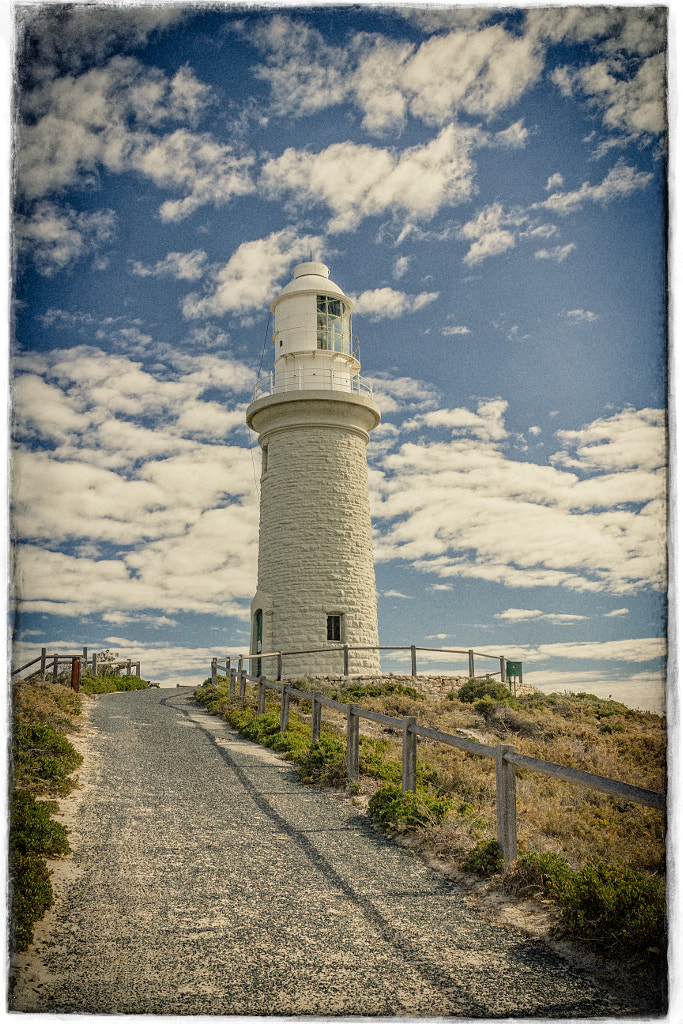
Bathurst light house on Rottnest Island guides boats safely into Thomson Bay.
When you’ve returned to Thompson Bay you will in serious need of some refreshment. The Hotel Rottnest is in the old governor’s summer residence. The hotel used to be called the Quokka Arms and most of the locals still use that name. A great location for a quiet coldie on a hot summers day or for a gourmet meal. Another popular eatery is the Rottnest Bakery – a visit to the bakery is considered mandatory for every visitor to the island and it is famous for its fresh bread, pies, slices, and cakes. It is the perfect place to refuel after surfing, snorkeling, swimming or cycling. It is also the most likely place you will meet a quokka.
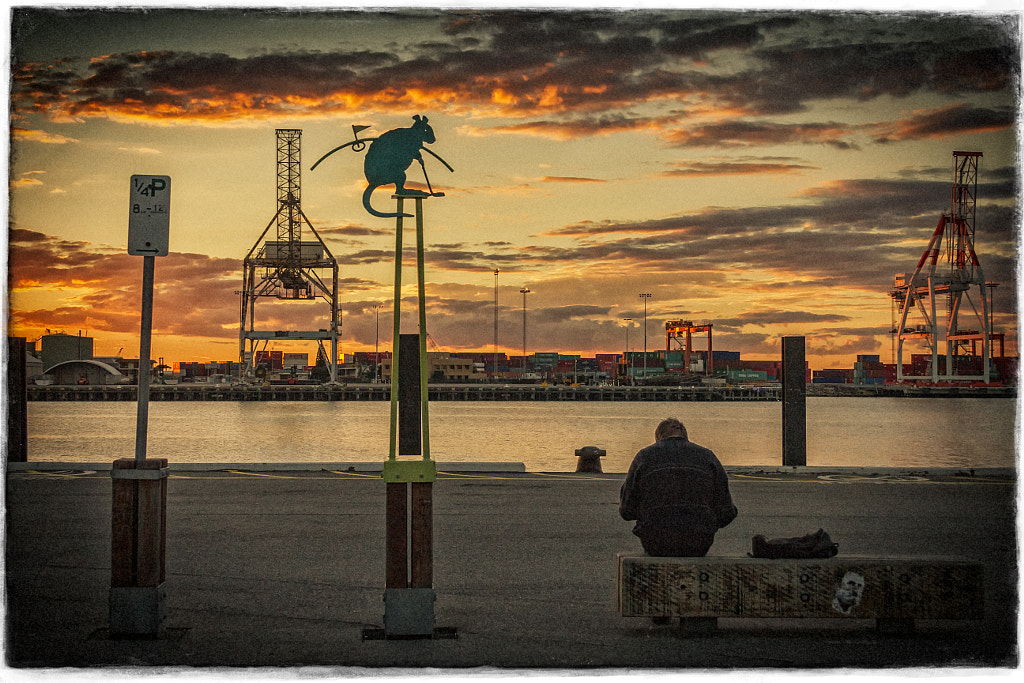
Waiting for the last ferry to arrive from Rottnest Island at the B Shed Fremantle Docks. Fremantle, Western Australia.
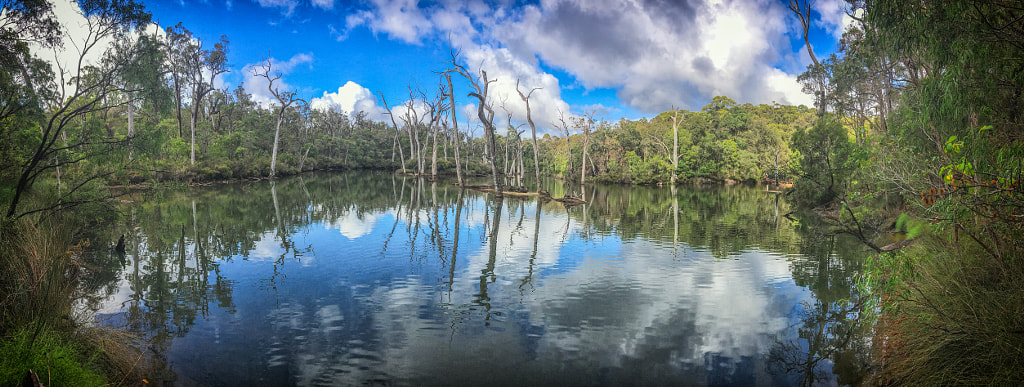
Warperup Creek, Margaret River, Western Australia. Apple iPhone SE panoramic mode. Exposure: 1/1000, f2.2 at ISO 40.
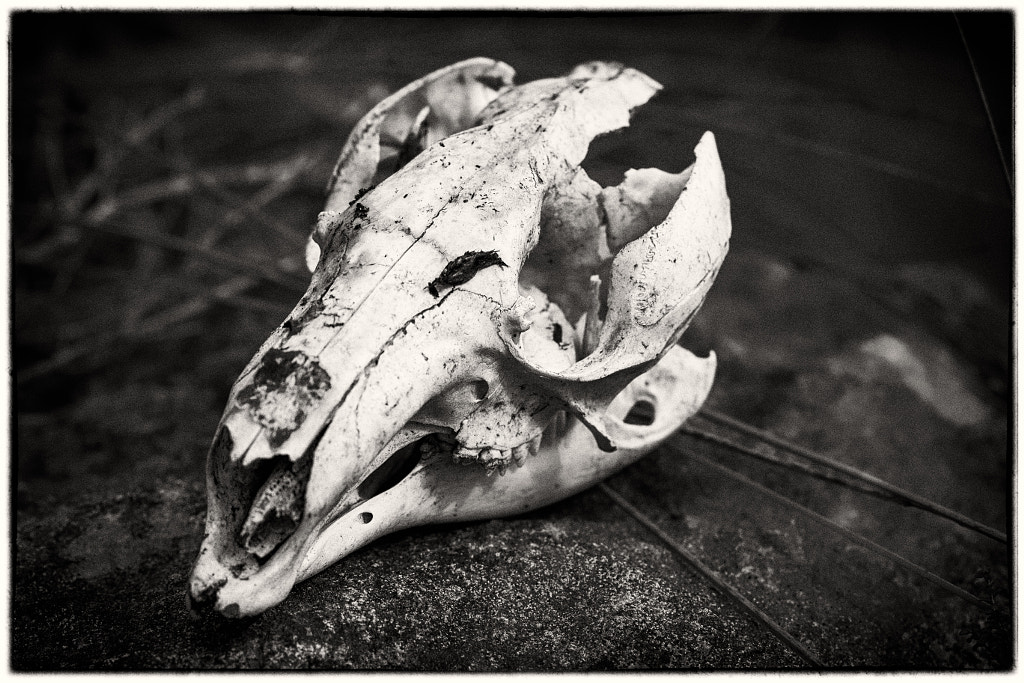
I had the chance to nip down to Margaret River for the day while my partner, Helen, was playing croquet in Bunbury. Most people when they think of Margaret River think about wine or surfing but there is more to the area than that. It is a beautiful part of the world with forests and beaches that are home to some very spectacular flora and fauna. I was looking for orchids, but as I had the dog with me I wanted to tire her out before so she would be more settled while I was on the hunt. I don’t know whether you, my dear readers are fans of so-called cosy crime TV such as Morse, Lewes, Midsummer Murder, or Endeavour, but when you watch those it is always the dog walker that finds the body. To be more precise it is the dog who finds the body. Well we were just walking along a track when Frida – the dog – took off like a rocket into the undergrowth and after much thrashing around emerged holding a large femur. As far as she was concerned she had found treasure and after a couple of minutes later thundered back into the bush and reappeared with another. At this stage I was wondering whether she had found a body and whether I should have a look, but I decided to have a look to see what sort of bones they were. Now whenever Frida gets a bone she becomes very possessive and develops a level of distrust befitting a paranoid schizophrenic. Fortunately she hands over the bone nicely as she obviously feels that she a great big pile of the things and again dives into the bush to return with the skull. Definitely not human, much to my relief, it was a western grey kangaroo which had obviously been hit by a car and managed to drag itself to these bushes to die. My overseas readers may not realise this but ‘roos are a bit like rabbits, if they get dazzled by car headlights they will just sit in the road rather than take off. Unlike rabbits they make more of a mess of your car.
Frida’s treasure. The skull of a western grey kangaroo round near the busy Caves Road, Margaret River, Western Australia. Canon EOS 6D with a Canon EF 100mm f/2.8L Macro IS USM lens. Exposure: 1/400, f5.6 at ISO 100.
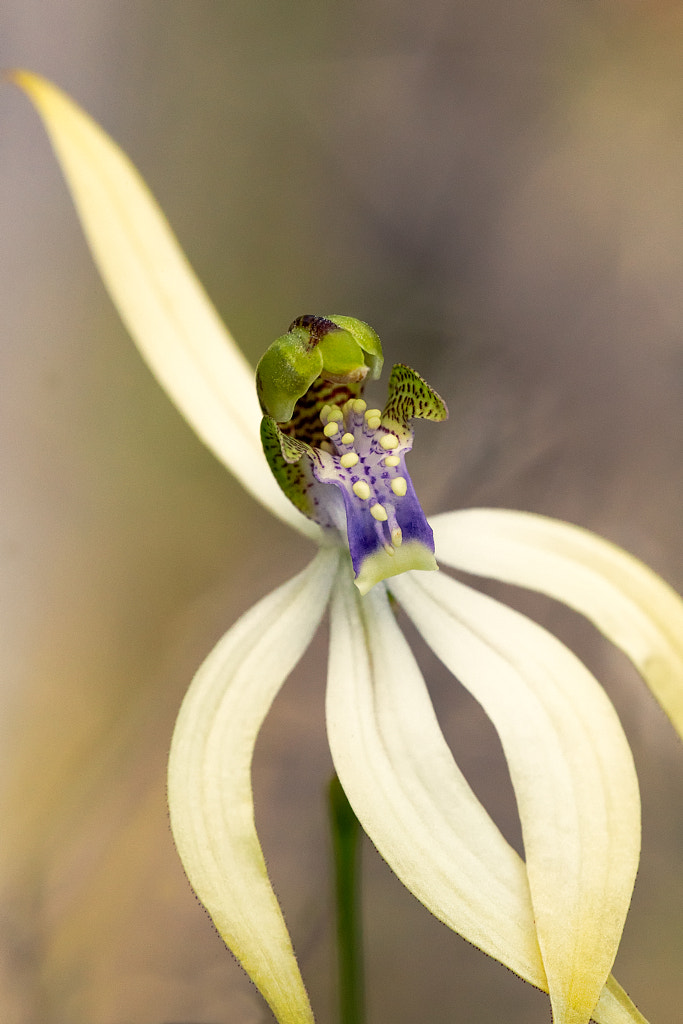
Thankfully after all that excitement we managed to find what we were looking for which were leafless and hare orchids.
Leafless orchid (Praecoxanthus aphyllus), Margaret River, Western Australia. Canon EOS6d with Canon EF 100mm f2.8 IS L macro lens. Exposure: 1/100, f11, at ISO 1600.
Hare orchid (Leporella fimbriata), Margaret River, Western Australia. Canon EOS6d with Canon EF 100mm f2.8 IS L macro lens. Exposure: 1/60, f8, ISO 800.
My latest pootle took me to Woodman Point south of Fremantle. It’s a very pleasant walk around an area with important Aboriginal, historic and environmental significance. Well worth a visit.
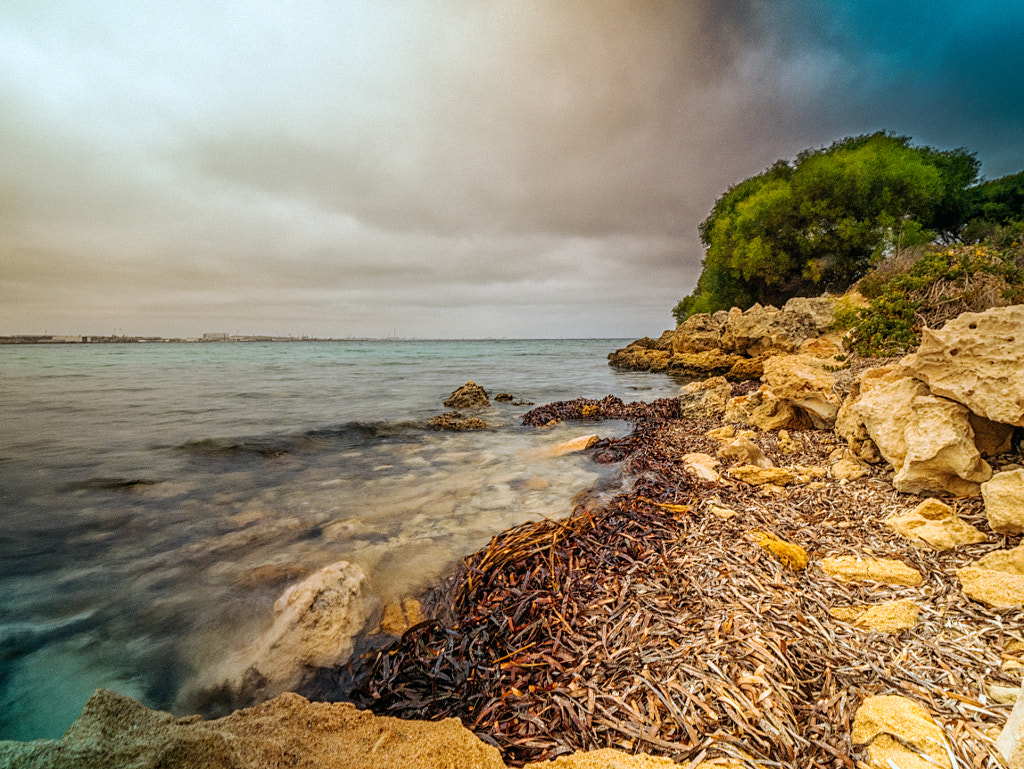
Woodman Point, Western Australia. Panasonic G85 with Panasonic LEICA DG 8-18/F2.8-4.0 lens with a Cokin Harmony variable neutral density filter. Exposure:: 1/3 sec, f16 at ISO 200.
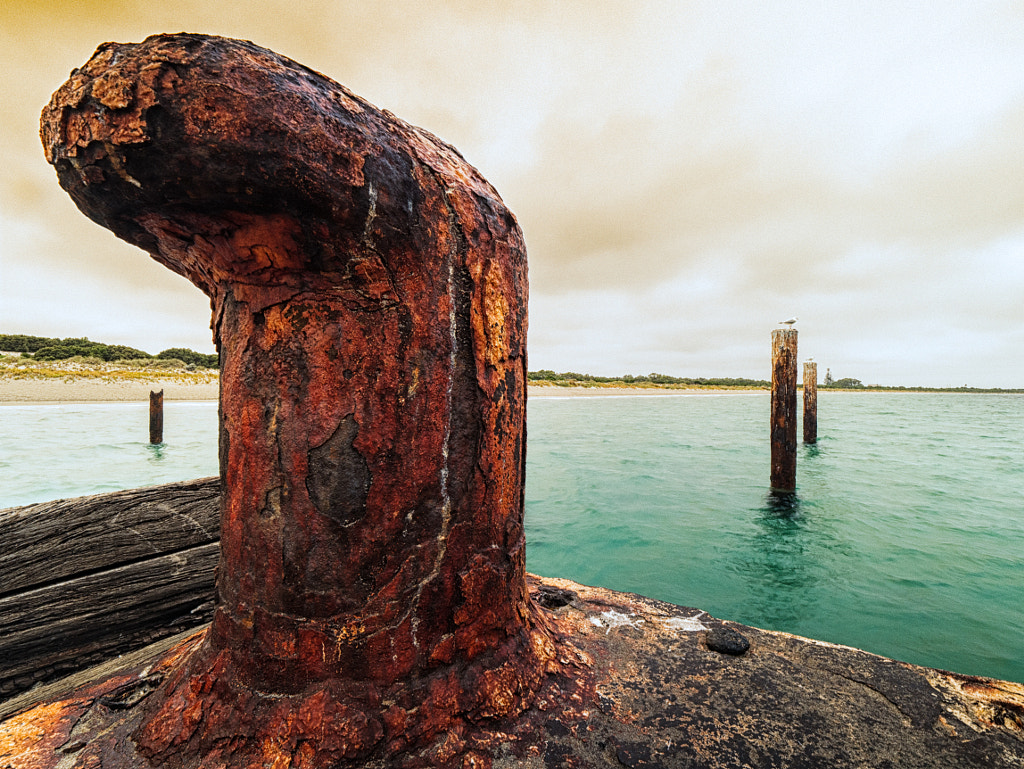
Woodman Point Jetty. Panasonic G85 with Panasonic LEICA DG 8-18/F2.8-4.0 lens with a Cokin Harmony variable neutral density filter. Exposure: 1/3 sec, f16 at ISO 200.
This walk was also from my book Perth’s Best Bush, Coast, and City Walks, published by Woodslane (ISBN 9781921606793 ) in 2010. It’s available from all good bookstores.




You must be logged in to post a comment.