It’s Christmas


Christmas Rock Walk Trail that is. Christmas Rock is in Wongan Hills and I’ve written about going there before. This time I’m writing about the Christmas Rock walk trail which is located in a 2000 hectare reserve. It is an easy 2.7Km walk along relatively flat well marked paths not far from the centre of the town site. Along the trail are interpretive panels which give insights into the reserve. What makes it worthwhile is that at wildflower time the walk passes through country that is a riot of colourful flowers. It is a gobsmackingly beautiful sight this year as the weather conditions have been ideal. The bird life in the reserve is also pretty impressive and their song provides a fitting score for a very pleasant walk.


Christmas Rock Walk Trail by Paul Amyes on 500px.com
Cristmas Rock Walk trail is an enjoyable easy 2.7Km walk trail in the Wheatbelt Town of Wongan Hills. Sony A7r with Tamron 35mm f2.8 lens. Exposure: 1/160 sec, f8 at ISO 100.
Yellow Everlastings by Paul Amyes on 500px.com

Yellow everlastings at Christmas Rock, Wongan Hills. Sony A7r with Tamron 35mm f2.8 lens. Exposure: 1/125 sec, f8 at ISO 100.


Everlastings by Paul Amyes on 500px.com
Pink Everlastings, Christmas Rock, Western Australia. Sony A7r with a Tamron 20mm f2.8 lens. Exposure: 1/160 sec, f8 at ISO 100.


The rock gets its name from the Western Australian Christmas Trees (Nuytsia floribunda) which used to be found there and flowered at Christmas time. On the top of the rock is an elaborate series of channels that were designed to harvest rain water run off for the “Railway Water Supply” which was built in 1916. But the rock is also home to a wide variety of plants such as lichens and mosses. On a warm sunny day if you’re quick enough you might see the lizards who live in the various cracks and crevices.


Christmas Rock Walk Trail by Paul Amyes on 500px.com
The walk takes you up on the top of the rock which was part of the “Railway Water Supply” built in 1916. Rainwater runoff was harvested through a series of channels and creeks. Sony A7r with Tamron 20mm f2.8 lens. Exposure: 1/800 sec, f8 at ISO 100.


Christmas Rock by Paul Amyes on 500px.com
A suprising number of plants grow on Christmas Rock. Sony A7r with Tamron 20mm f2.8 lens. Exposure: 1/320 sec, f8 at ISO 100.


Christmas Rock Walk Trail by Paul Amyes on 500px.com

Rainwater captured on Christmas Rock in natural forming crack, depressions and gullies. Sony A7r with Tamron 20mm f2.8 lens. Exposure: 1/400 sec, f8 at ISO 100.


But for me it is the display of orchids which brings me to Wongan Hills. There are so many different types in large quantities. It made me feel like a kid on Christmas Day. The funny thing is that it could have been very, very different. Prospectors actually dug pits looking for asbestos. Luckily they didn’t find it in large enough quantities to make it a viable commercial operation and went looking elsewhere. So in September give Wongan Hills a visit. This isn’t the only walk as there’s Mount O’Brien Lookout, Gathecole Nature Reserve, and the Mt Matilda walk trail. Then there are the lakes which host lots of water birds. So instead of a day trip why not make a long weekend of it.


Pendant Spider Orchid by Paul Amyes on 500px.com
Pendant Spider Orchid (Caladenia pendens, subsp pendens). Christmas Rock, Western Australia. Sony A7r2 with a Canon EF 100mm f2.8 IS L macro lens. Exposure: 1/40 sec, f5.6 at ISO 125.


Lemon Scented Sun Orchid by Paul Amyes on 500px.com

Lemon Scented Sun Orchid aka the vanilla orchid (Thelymitra antennifera). Christmas Rock, Western Australia. Sony A7r2 with a Canon EF 100mm f2.8 IS L macro lens. Exposure: 1/200 sec, f5.6 at ISO 125.


Lemon Scented Sun Orchid by Paul Amyes on 500px.com

Lemon Scented Sun Orchid aka the vanilla orchid (Thelymitra antennifera). Christmas Rock, Western Australia. Sony A7r with Tamron 20mm f2.8 lens. Exposure: 1/250 sec, f8 at ISO 100.


White Spider Orchid by Paul Amyes on 500px.com

A White Spider Orchid (Caladenia longicauda subsp longicauda) among the everlastings on Christmas Rock in Western Australia. Sony A7r2 with a Canon EF 100mm f2.8 IS L macro lens. Exposure: 1/125 sec, f5.6 at ISO 125.


Chameleon Spider Orchid by Paul Amyes on 500px.com

Chameleon Spider Orchid (Caladenia dimidia). Christmas Rock, Western Australia. Sony A7r2 with a Canon EF 100mm f2.8 IS L macro lens. Exposure: 1/800 sec, f5.6 at ISO 200.


Sugar Candy Orchid by Paul Amyes on 500px.com

Sugar Candy Orchid, Caladenia hirta subsp. hirta. Christmas Rock, Western Australia. Sony A7r2 with a Canon EF 100mm f2.8 IS L macro lens. Exposure: 1/250 sec, f5.6 at ISO 125.


Pink Candy Orchid by Paul Amyes on 500px.com

Pink Candy Orchid, Caladenia hirta subsp. rosea. Christmas Rock, Western Australia. Sony A7r2 with a Canon 100mm f2.8 IS L macro lens. Exposure: 1/80 sec, f5.6 at ISO 125.


Cowslip Orchid by Paul Amyes on 500px.com

Cowslip Orchid, Caladenia flava subs. flava. Christmas Rock, Western Australia. Sony A7r with a Tamron 20mm f2.8 lens. Exposure: 1/160 sec, f8 at ISO 100.
Fifty Shades of …

… Yellow

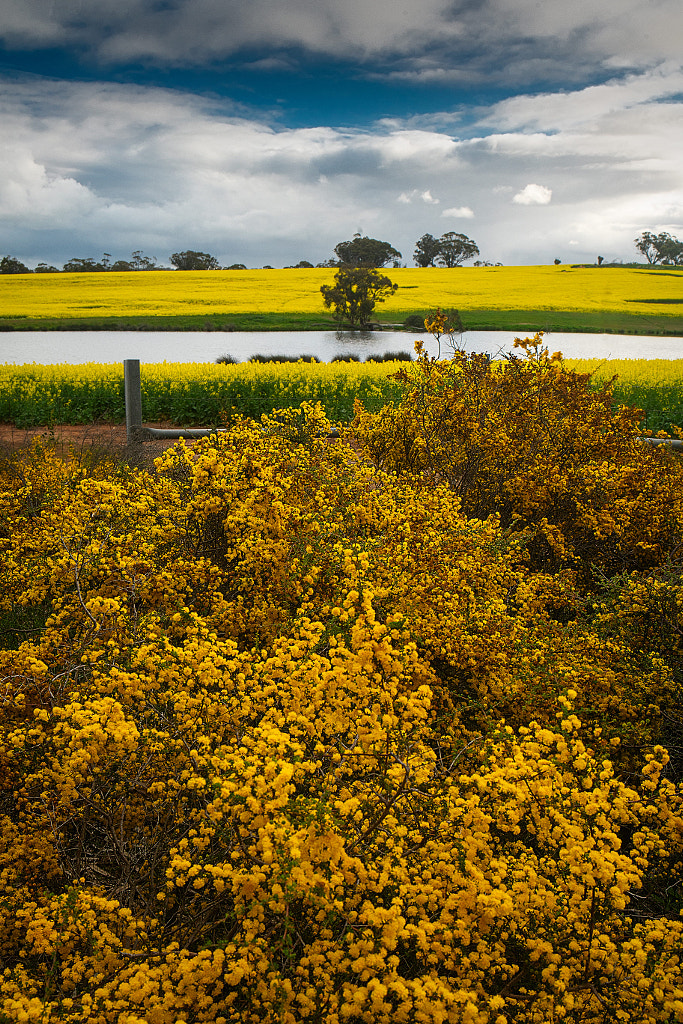
No this isn’t a new trilogy of mummy porn it’s because everything round here has turned a shade of yellow. Mostly that acid yellow that is canola, but the wattles give a nice counter point.


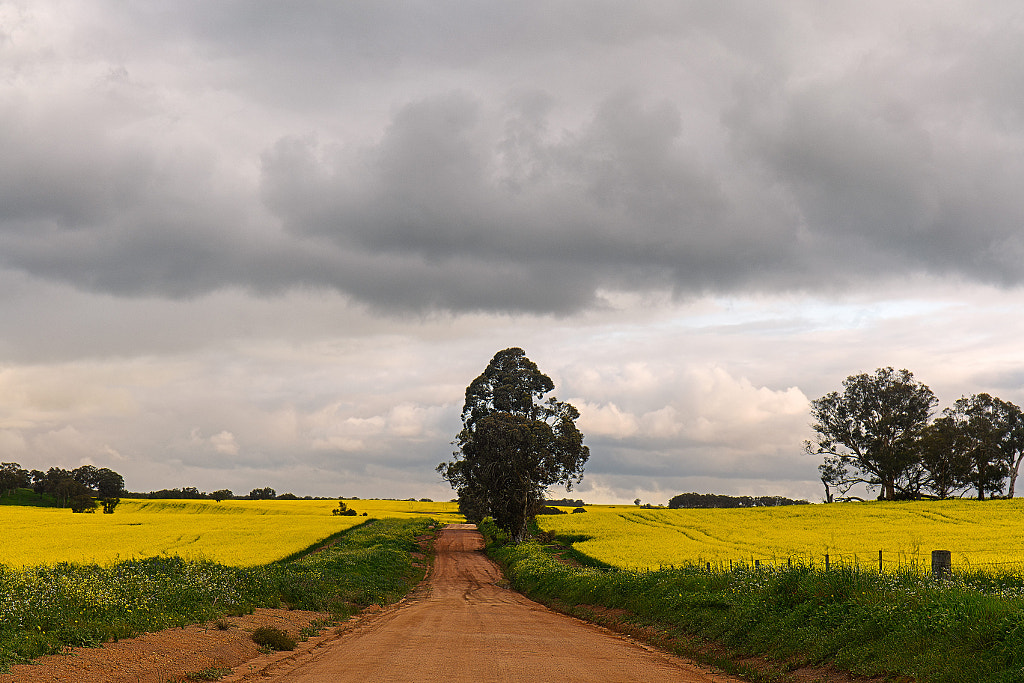
Helena Road by Paul Amyes on 500px.com

Canola fields flanking Helena Road. York, Western Australia. Sony A7 r ii, Metaboned V smart adapter, Canon EF 24-70mm f4 L lens. Exposure: 1/20 sec, f11, at ISO 100.


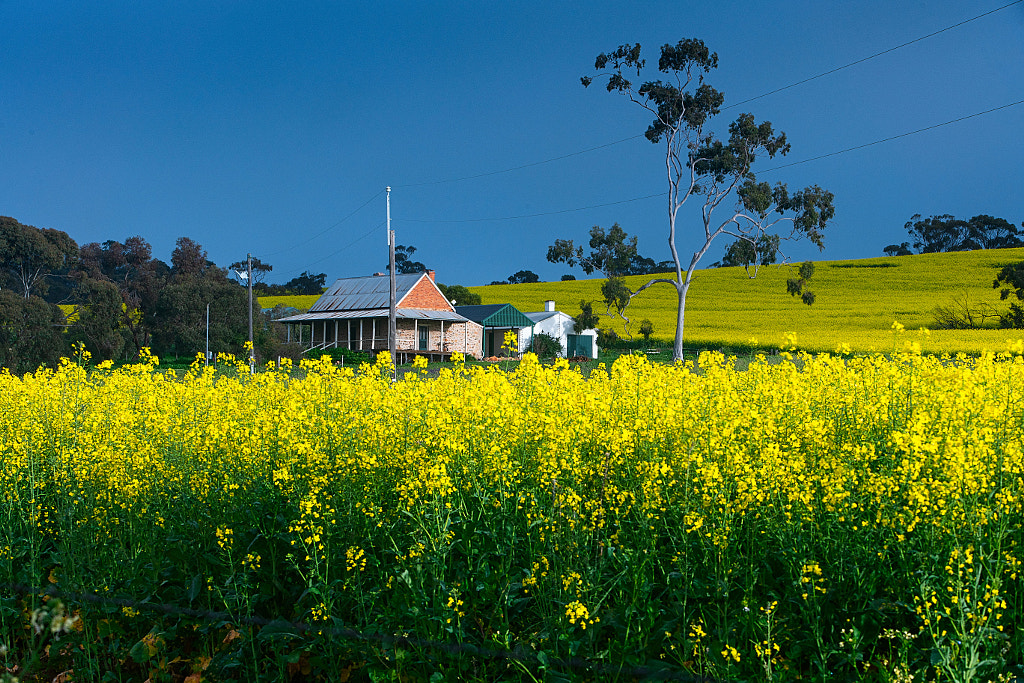
Canola by Paul Amyes on 500px.com
A farmhouse surrounded by canola in York, Western Australia. Sony A7 r ii, Metabones V Smart Adapter, Canon EF 70-200mm f2.8 IS L lens. Exposure: 1/60 sec, f16 at ISO 320.


Yellow by Paul Amyes on 500px.com

Yellow wattle and yellow canola fields. York, Western Australia. Sony A7 r ii, Metabones V Smart Adapter, Canon EF 24-70mm f4 IS L lens. Exposure: 1/30 sec, f16, ISO 500

Wet Wet Wet

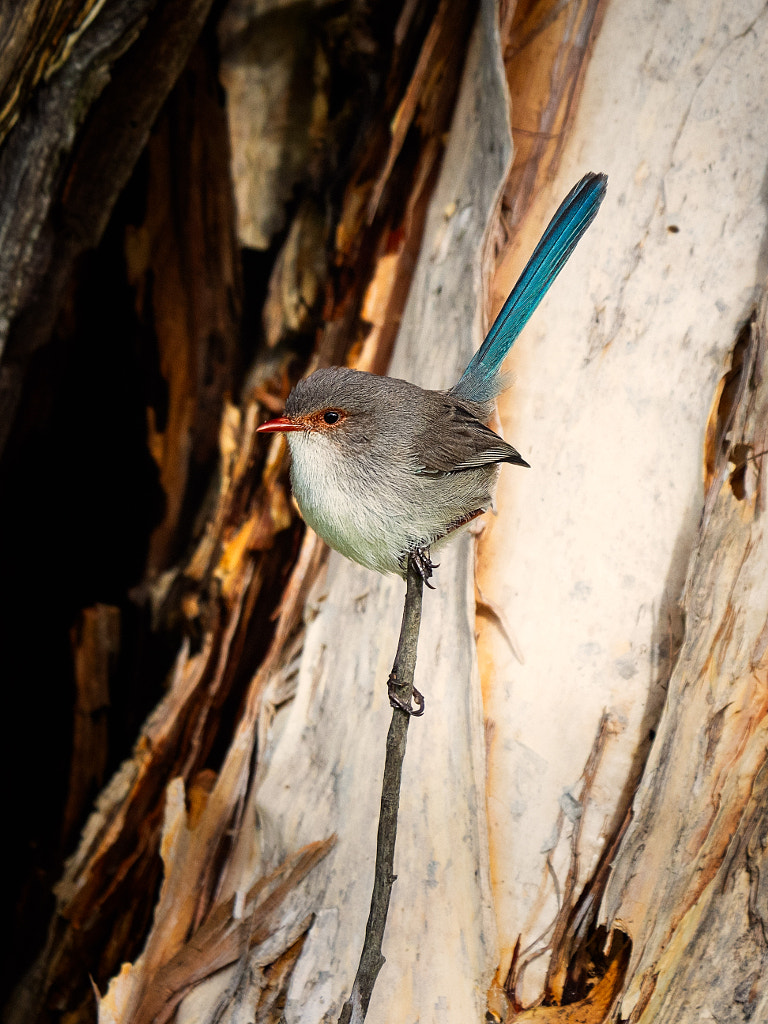
A gratuitous wren shot as wrens make everything better.


Djorrdjilya by Paul Amyes on 500px.com
A bird on a stick – more specifically a female Splendid Fairy-wren, Malurus splendens subsp splendens. Whiteman Park, Western Australia. Olympus OMD EM1 mk ii with Panasonic Leica 100-400mm f4-6.3 lens. Exposure: 1/500 sec, f6.3 at ISO 320.


It has rained and rained here. I know not as much as in Germany, China or India, but it has rained a lot for here.It feels like I should be starting a DIY project – Ark building for dummies. Nah! I’ll skip that as I flunked woodwork at school. The Avon River burst its banks which drew lots of people in wanting to take photos of it. I even took a few myself.


The Avon River burst its banks in the recent rains. This park bench is normally a good 10m from the water. Sony A7 r ii with Canon EF 24-70mm f4 lens. Exposure: 1/80 sec, f8, at ISO 100.


The dog exercise area is now an aquatic park. Sony A7 r ii with Canon EF 24-70mm f4 lens. Exposure: 1/40 sec, f8 at ISO 125.


Despite all the wetness I’ve managed to grab a few sunny moments and head off to the local reserves. They are saying that all this rainfall is going to produce an amazing abundance of wildflowers this year. From what I’ve seen it looks to be true for our local reserves. Hopefully we’ll see some varieties come up that haven’t been seen for a few years – I’m looking at you Eastern Curlylocks.


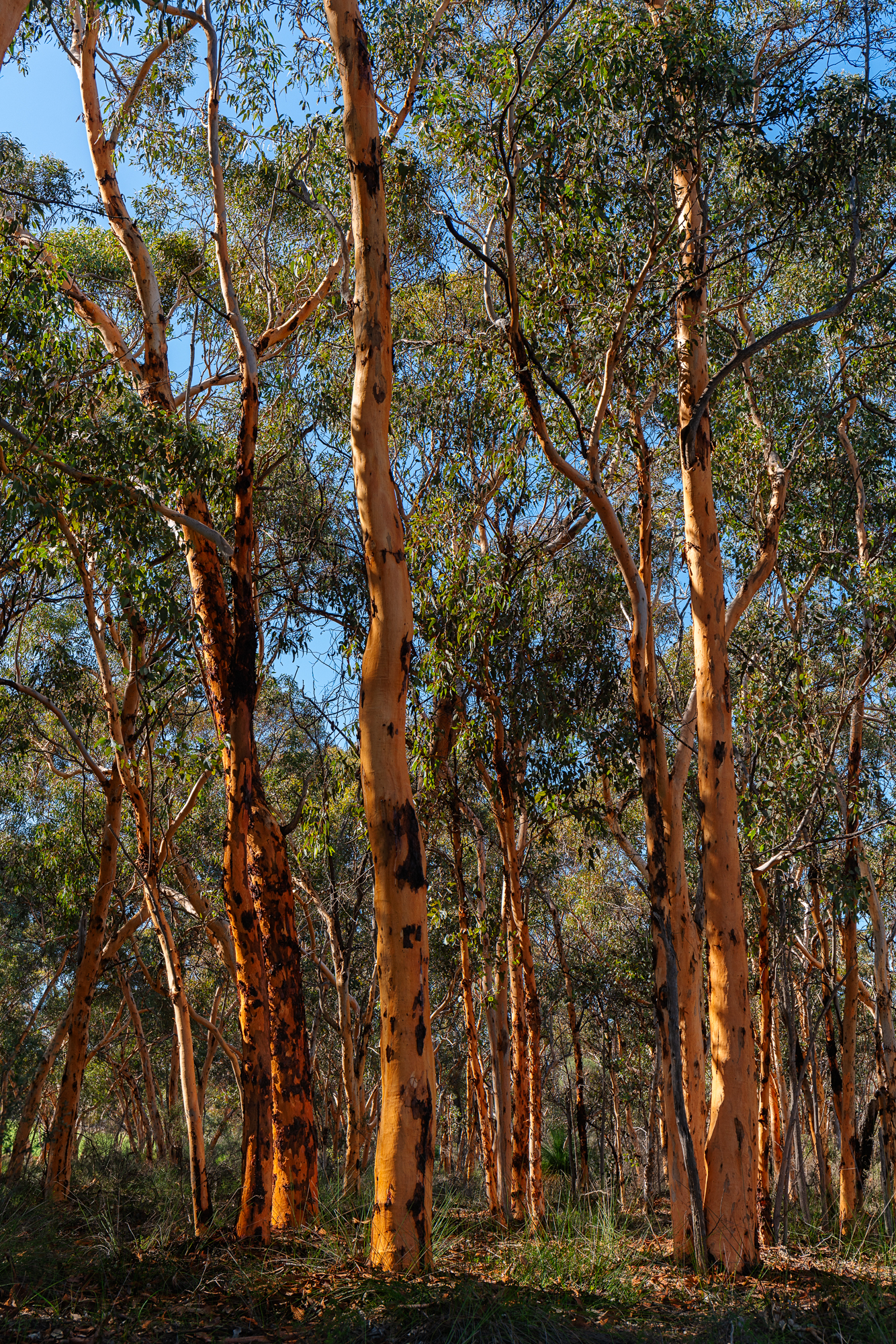
The wandoo woodland that makes up St Ronan’s Nature Reserve.


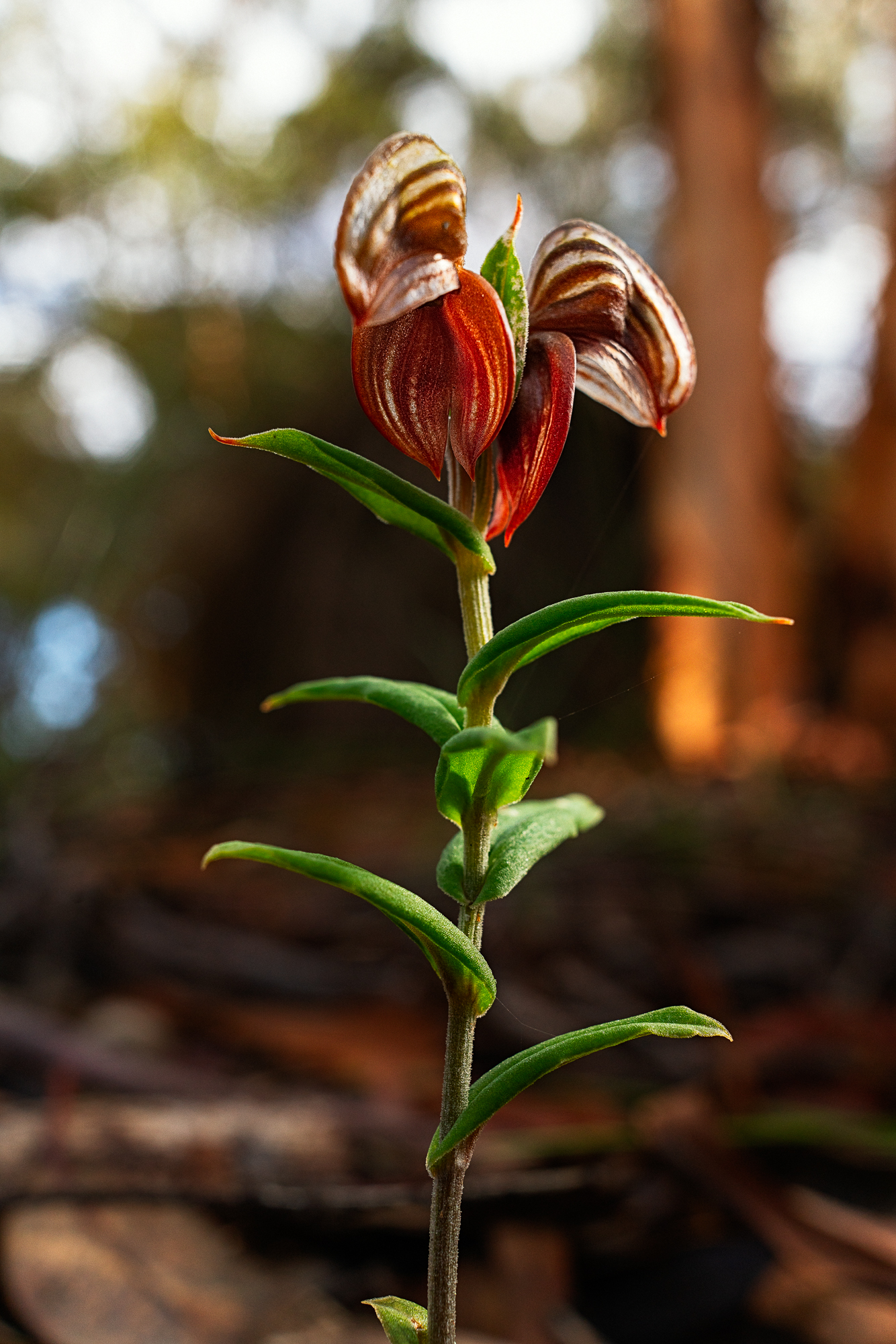
This dark banded greenhood is one of the many orchid species that can be found in the understory.


The last couple of days have been fine and tomorrow we head off to the Stirling Ranges where the weather forecast is rain for the whole time we’ll be there. I suppose I should be used to it now. Thank goodness for Goretex and the weather proofing on my Olympus camera.

Cataby Peregrination


Cataby 170Km north of Perth in Western Australia could hardly be called the epicentre of the universe. There’s a titanium mine to the north and a mineral sands operation just south. There is the Cataby Important Bird Area just 2Km outside the settlement. None of these were the reason for my visit. I was there to explore the scrubland that runs along side the Brand Highway looking for orchids, in particular the Arrowsmith Pansy – insert politically incorrect joke here. I must say that when I first pulled up I didn’t expect to find much. The low lying scrub was difficult to walk in and it was very difficult to see the smaller plants. Here’s what I found.


Arrowsmith Pansy Orchid by Paul Amyes on 500px.com

Arrowsmith Pansy Orchid, Diuris sp ‘Arrowsmith’. Cataby, Western Australia.


Autumn Leek Orchid, by Paul Amyes on 500px.com

Autumn Leek Orchid, Prasophyllum parvifolium. Cataby, Western Australia.


Winter Donkey Orchid by Paul Amyes on 500px.com

Winter Donkey Orchid, Diuris brumalis. Cataby, Western Australia.


Hairy-stemmed Snail Orchid by Paul Amyes on 500px.com

Hairy stemmed snail orchid,Pterostylis sp. ‘hairy’. Cataby, Western Australia.


Northern Banded Greenhood by Paul Amyes on 500px.com

Northern Banded Greenhood, Pterostylis sp ‘Dongara’. Cataby, Western Australia.


Down by the Riverside*


I’ve got a confession to make. I’ve lived in and around Perth since 1988 and the first time I went to Riverside Gardens in Bayswater was in 2017 when I was making a video about that year’s Avon Descent – it is the finishing line. I didn’t pay much attention to the surroundings as I was concentrating on the event. Recently I went again, but this time I was using the garden’s carpark as a jumping off point to explore the Eric Singleton Bird Sanctuary.


Eric Singleton Bird Sanctuary by Paul Amyes on 500px.com
The entrance to the Eric Singleton Bird Sanctuary in Bayswater, Western Australia.


Eric Singleton was an avid bird watcher from Embleton. In the 1970’s he observed over 70 species of bird in the area and his efforts led to the City of Bayswater deciding to preserve the wetlands in 1977. After a few wobbly patches the council and the Department of Parks and Wildlife in 2014 embarked upon a $3 million project to increase the biodiversity and improve the the water quality in the sanctuary and consequently the Swan River. Apparently it prevents a staggering 40 tonnes of sediment and rubbish, 1.35 tonnes of nitrogen, and 200 Kg of phosphorus from reaching the river each year. It does this by diverting water from the Bayswater Brook and directing it through a series of marshes  which filter the pollutants out. So while you may think that you are looking a bird sanctuary comprised of a series of marshland and pools what you are actually looking at is a cunningly disguised water treatment facility. The system works well and the wetland has seen a huge upswing in the amount of wildlife species that use it. One hundred and four bird species have been sighted there. All of this in an urban setting is quite remarkable. Some of the animals you can expect to see are:

  • Purple swamp hen
  • Little pied cormorant
  • White-faced heron
  • Black fronted dotterel
  • Australian white ibis
  • Dusky moorhen
  • Grey fantail
  • motorbike frog
  • Dwarf skink
  • Oblong turtle


Eric Singleton Bird Sanctuary by Paul Amyes on 500px.com
Great Egret (Ardea alba modesta). Eric Singleton Bird Sanctuary.


Eric Singleton Bird Sanctuary by Paul Amyes on 500px.com
Yellow billed spoonbill, Platalea flavipes. Eric Singleton Bird Sanctuary, Western Australia.


Eric Singleton Bird Sanctuary by Paul Amyes on 500px.com
Little Pied Cormorant (Microcarbo melanoleucos) called kokoko by the original Nyoongar inhabitants.


Eric Singleton Bird Sanctuary by Paul Amyes on 500px.com
Mimal or Australian Darter (Anhinga melanogaster subspecies novaehollandiae). Eric Singleton Bird Sanctuary, Western Australia.

I visited on a Saturday and I was not prepared for what I saw. It was absolutely chockers. There were dog walkers galore, cyclists, picnickers, kids playing, kayakers on the river. The car park was used by a huge variety of food trucks doing a roaring trade selling to the hungry masses. There were even stalls selling dog treats. Once I got clear of the gardens and into the bird sanctuary proper it was a totally different story. I was the only person there. Just me and the birds. You could still hear the noise from the gardens and the surrounding suburbs, but you still had the feeling of getting away. I think to get the most out of the location in terms of seeing wildlife you’d be looking at visiting at dawn or dusk during the week. After a leisurely walk back to the car park I enjoyed a very nice Bánh mì from the Vietnamese food truck for lunch. 


Riverside Gardens by Paul Amyes on 500px.com
Riverside Gardens in Bayswater is a popular paddle sport venue and clubs such as the Bayswater Paddle-sports Club maintain facilities there.


Riverside Gardens by Paul Amyes on 500px.com
On the weekends visitors can enjoy the numerous food trucks at the Riverside Gardens in Bayswater.

* Todays musical reference is to the Afro-American spiritual “Down by the Riverside” (also known as “Ain’t Gonna Study War No More” and “Gonna lay down my burden”). The song originates from the American Civil War (1861-1865) but wasn’t published until 1918. It’s pacifist imagery has seen it used as an anti-war protest song and included in collections of socialist and labour songs. Over the years it has been recorded by hundreds of different artists but my current favourite version is this one by Ben and Micah Hester as part of the “Southern Gospel Revival”.


A Path Less Travelled

Nancy Peak by Paul Amyes on 500px.com

The Nancy Peak Circuit takes you through dense Karri forest and up on to the granite dome of the Porongurups.


Last week I wrote about walking uptown Castle Rock and the Granite Skywalk in Porongurup National Park, this post is about the Nancy Peak Circuit also in the Porongurups.


The Porongurup National Park is 359km (or 4 hours) south of Perth near Mt Barker. This 5.5 Km walk starts at the Tree-in-the-Rock car parking area which can be accessed via Bolganup Road which is a turn off from the main Porongurup Road. Until the opening of the Granite Skywalk this used to be the main entrance to the park and where the visitors came. When we went the other week the car park was deserted and we only saw one other walker on the trail. At the information area take the path for the Nancy Peak Circuit and walk on past the Tree In The Rock through the Karri Forest.


Nancy Peak by Paul Amyes on 500px.com

The walk takes you past the Tree in The Rock. Impressive that a tree so big could grow out of a crack in the rock.


Nancy Peak by Paul Amyes on 500px.com

Karri trees can easily grow up to 60m in height, some have been known to reach 90m.


Nancy Peak by Paul Amyes on 500px.com

Some of the Karri trees along the trail have been damaged by bush fires. This one has had its trunk hollowed out and yet amazingly it continues to grow.


The forest was almost like a temperate rainforest – moist with a thick understory that supports mosses ferns and a huge number of fungi. It is not something you typically associate with Western Australia. In fact it felt more like Tasmania once it started raining! After about an hour you emerge from the forest onto granite ridge which connects to Nancy Peak and Morgans Peak.Once you climb up to the peaks they afford fantastic views  to the Stirling Ranges in the north and Southern Ocean to the south. Of course this depends upon the weather, and as luck would have when we came out of the forest we were greeted by white out conditions caused by low lying cloud and could only see about 5m in front of us. As we slowly made our way up to Nancy Peak the clouds did part and grant us glimpses of the views.


Nancy Peak by Paul Amyes on 500px.com

Russula persanguinea in Porongurup National Park, Western Australia.


Nancy Peak by Paul Amyes on 500px.com

Pausing for a breather in whiteout conditions on the way up to Nancy Peak.


Nancy Peak by Paul Amyes on 500px.com

Looking back from Nancy Peak towards Castle Rock in the distance during a rare break in the cloud.


Carrying along the ridge from Nancy Peak across the granite outcrops, then descend into a steep valley between Nancy Peak and Devils Slide. Eventually you’ll hit a fire road that takes you back through the karri forest and on to the car park. This will take about 4 hours depending on the weather. It rained pretty hard on and off when we did the walk and this made sections of the granite incredibly slippery – it was like walking on ice – and this slowed us down a lot. The highlight of the walk was watching two wedge tailed eagles ride the thermals below us as we stood on the summit.


Nancy Peak by Paul Amyes on 500px.com

Granite boulders on top of Nancy’s Peak.


Porongurup National Park by Paul Amyes on 500px.com

Helen enjoying the view from Nancy Peak back in 2004.

The Lone Piper

The Lone Piper by Paul Amyes on 500px.com

Just before sunset a lone piper can be heard at the Stirling Range Retreat.


We’ve just come back from the Stirling Range. While we were there every evening just before the sunset we could hear the skirl of the pipes. At first we thought it was the bloke a few doors down playing Scottish music in his chalet, but on further inspection we found that it was indeed the bloke a few doors down but he was standing in the middle of the field next door playing the bagpipes. He did this  every day we were there come rain or shine.


While the British were in India they were responsible for some awful things but to my mind the worst crime against humanity they perpetrated was the introduction of bagpipes. Anyone who has been in India during wedding season will have witnessed or heard wedding processions through the streets which were accompanied by marching bands containing at least one bagpiper. If you were exceptionally lucky the piper was half way competent but the usual pattern was to have several pipers who were barely able to play. What they lacked in skill they made up for in enthusiasm. The thing was they’d play with great gusto but none of them in time and seldom in tune. It was absolute torture as it would go on all night. We thought we’d escaped the pipers clutches when we went to Nepal. Oh no dear reader. Despite having never been part of the British Empire Nepal has firmly embraced the bagpipes during wedding season. Since then the sound of bagpipes has always made me grit my teeth.
Now it may surprise you to know that the Scots don’t have a monopoly on the pipes and indeed didn’t even invent them. The earliest reference to bagpipes is a sculpture that has been found on a Hittite slab at Euyuk in Anatolia, dated to 1000 BC. The Roman emperor Nero who enjoyed burning Christians so as to provide garden lighting at his parties, who also murdered his mother, and who early commentators described as having been dressed in fancy costume playing the fiddle while singing  the “Sack of Ilium” as Rome burnt down around him. But his biggest crime, according to the Roman historian Suetonius is that he played the tibia an ancient form of pipes that he played by tucking a bladder beneath his armpit – in other words bagpipes. The first reference to Scottish bagpipes was their use at the Battle of Pinkie in 1547. My last fun packed bagpipe fact is that Pakistan is the world’s biggest producer of the instrument where the industry was worth $6.8 million in 2010. So not only did Pakistan shelter Osama Bin Laden but it is responsible for exporting terror in the form of Bagpipes.
Enough of the rant lets get back to the Lone Piper of the Stirling Range. What was he doing? Well, it has become a tradition in Scottish regiments that a lone piper takes the place of a bugler to signal the day’s end to the troops. While he was marking the end of the day he was facing Bluff Knoll the highest mount in the Stirling Range. The colours of the sunset are reflected on Bluff Knoll and are truly wonderful and if anything deserves an accompaniment it is that.
Bluff Knoll by Paul Amyes on 500px.com

Bluff Knoll, in the Stirling Range, reflecting the sunset.


Corrigin Peregrination

A few days ago I made the 260Km round trip out to Corrigin to try and find the Pygmy Orchid, Corunastylis tepperi. I’d never seen it before and it is an early start to the orchid season. I also wanted to try out some new ideas for photographing orchids before the season proper starts. I knew roughly where to look, but once there it was like looking for a needle in a haystack. The plant lives up to its name – it is very small. The flowers are about 3mm and they can be found on a stalk 2-3 cm tall. As the the orchid prefers leaf litter found in mallee woodlands this makes them even harder to find.


Pygmy Orchid by Paul Amyes on 500px.com
Pygmy Orchid, Corunastylis tepperi. Corrigin, Western Australia.


When I drove up to the spot my heart sank a little as I had hoped that having just come up a fresh green plant would be fairly easy to spot, but as luck would have thanks to some rains we had a few weeks ago some grasses had begun to sprout as well. The area was covered in litter – not recent, it was old, very old. There were rusty steel ring pull cans all over the place. Now I’ve been in Australia thirty three years and drinks cans were aluminium back then, so I would say they were forty years old at least. The beer bottles looked even older. Take your litter home folks and then you can collect the 10c deposit on each item. As luck had it I found a whole patch of the pygmy orchids about 700m from where I’d parked the car.  Having finished so quickly I decided to head off to experience the delights of downtown Corrigin.


Pygmy Orchid by Paul Amyes on 500px.com
Pygmy Orchid, Corunastylis tepperi.


Now besides orchids Corrigin’s other claim to fame is its association with dogs. The town holds the world record for the most dogs in a ute. Non Australians probably will be a bit perplexed by this but for a few years it seemed like very country town wanted to cram as many dogs as physically possible into a ute. The town also has a dog cemetery which has become quite a big tourist attraction so I made a quick stop there. It’s not the first time I’ve visited but I wanted to see if there was anything new as the owners of the dogs erect memorials and I’m fascinated with how their love for their dogs expresses itself.


Corrigin Dog Cemetery by Paul Amyes on 500px.com
The entrance to Corrigin Dog Cemetery, Western Australia.


One of the good things with photographing orchids as opposed to photographing wildlife and in particular birds is that you don’t have to get up at stupid o’clock. In fact some species of orchids will only be at their best in the middle of a bright sunny day. So by the time I hit down town Corrigin it was well past lunch time so I went into one of the two cafes and ordered a BLT sandwich. Two minutes later the waitress informs me that there is no sliced bread would I mind it being in a roll. Another two minutes and I’m informed there’s no lettuce. A further two minutes passes and I’m told there’s no tomato. At this point I’m starting to think that I’ll be told there’s no bacon when the waitress brings this enormous baguette with half a pig in it. It is literally the biggest bacon roll I’ve ever seen.


Hooch by Paul Amyes on 500px.com
Hooch’s grave in Corrigin Dog Cemetery.


The night before we’d watched the movie “The Dry” staring Eric Bana. Although we’ve not had a drought the drive out to Corrigin reminded me very much of the movie. I love driving through the Wheatbelt – you get the feeling that the roads could go on forever and  the movie very much captured that feeling. If you’ve never seen the movie give it a watch as I thought it was very good.