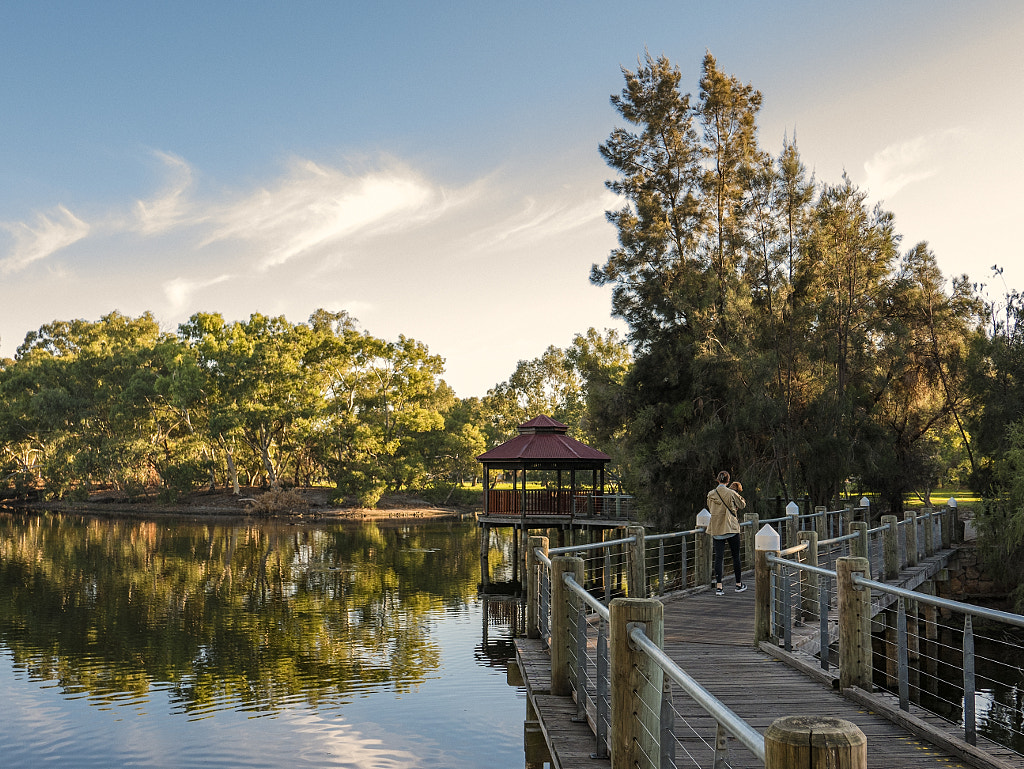
Situated in Kewdale, Tomato Lake Reserve contains a wetland, a central lake, 1.6km walking trail, nature sanctuary island and boardwalk across the lake. The gazebo on the boardwalk is popular for watching the birds on the lake and it also used as a wedding venue.
Tomato Lake is situated in the Perth suburb of Kewdale and has like many places in Western Australia been known by an assortment of names. On settlement it was called Smith’s Swamp because it was owned by a Mr Smith. Come the early 1900’s it became known as Craig’s Swamp because it was owned by a Mr Stephen Craig and it continued this way until the 1960’s when it became known by its current name Tomato Lake. No it isn’t owned by Mr Tomato! It got the name Tomato Lake because Mr Craig grew tomatoes there. Urban clearing around the lake meant it eventually dried up and became no good for market gardening and the whole place got really neglected and riddled with duckweed, an imported feral species, which choked the remaining water killing off native flora and fauna. By the mid 1970’s a local action group formed to rehabilitate the lake and now it is an important nature reserve as well as being a very popular recreational facility.
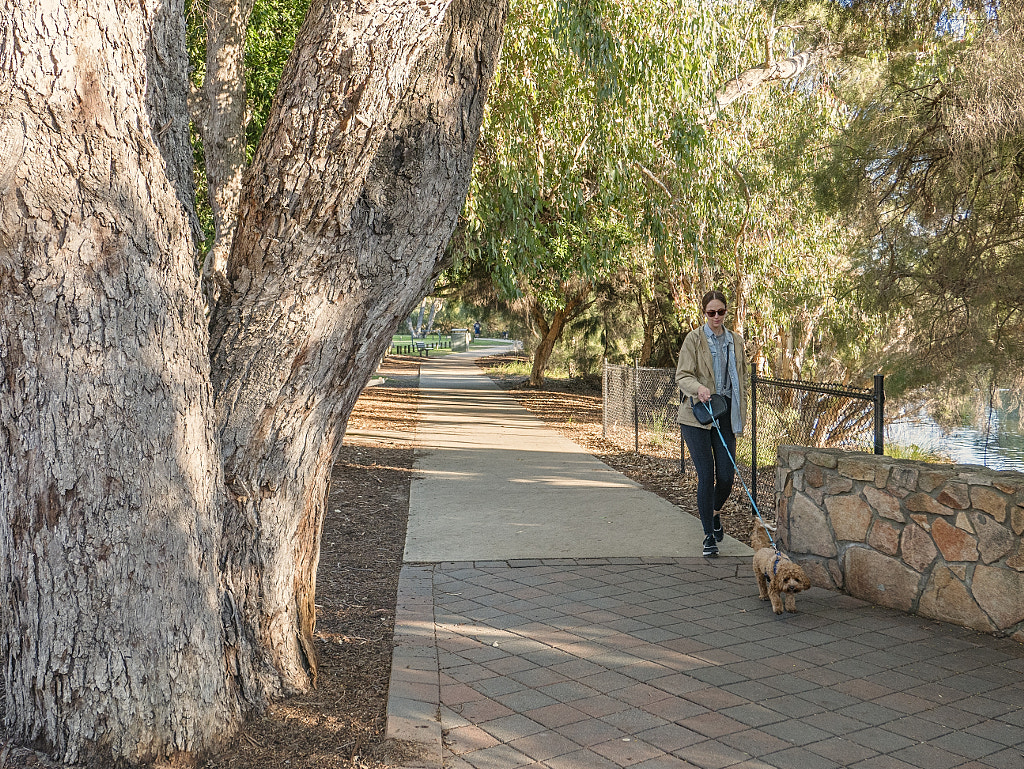
Tomato Lake in the Perth suburb of Kewdale is a popular spot with walkers.
So what’s there? Well the lake is in the middle of a large reserve and it is bisected by a broad walk with pergola. There is an island in the lake which provides a breeding area for the waterbirds. The lake is circumnavigated by a 1.6 Km paved path. There are also some unpaved trails through different parts of the reserve which I added to the walk to make a 2.5Km loop. At the top of the park on the corner of Oats Street and Scenic Drive there is a cafe, BBQs and playground. The southern end of the lake is where you’ll see the bushbirds while the waterfowl can be seen over the entire lake. According to EBird Australia 83 different species of bird have been sighted there which is quite a number for such a small area. As it can be very busy at weekends, especially in wedding season, it would be best to visit midweek early in the morning or an hour before sundown.
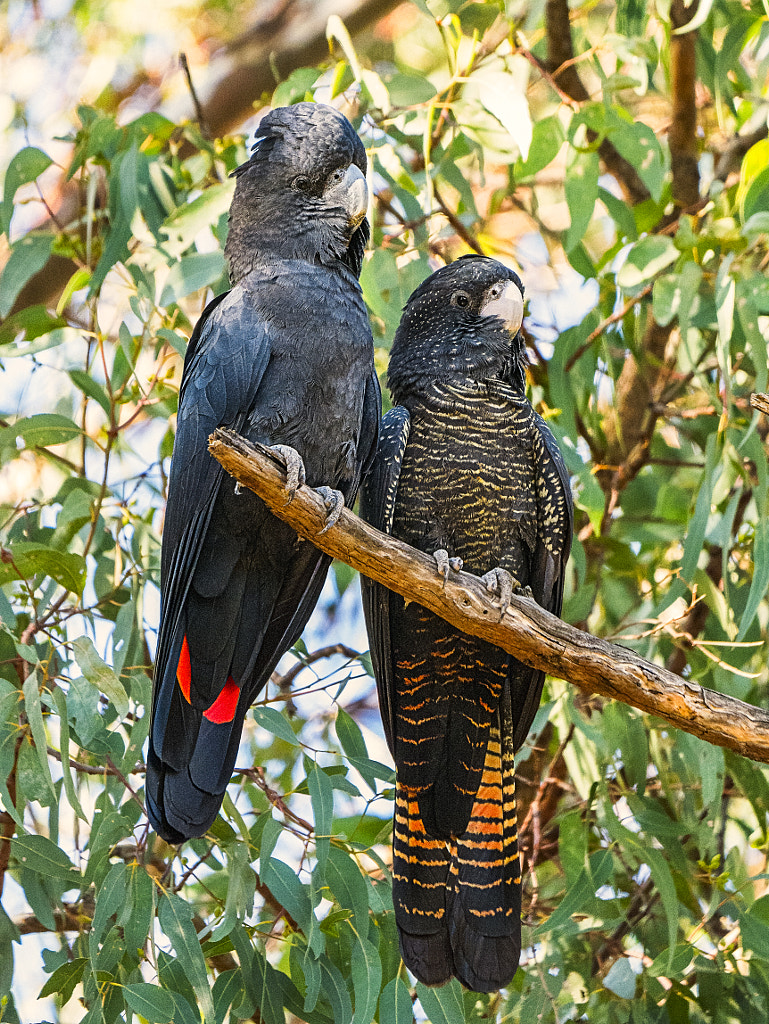
A pair of Red-tailed Black Cockatoos (Calyptorhynchus banksii subs samueli). Tomato Lake, Western Australia.
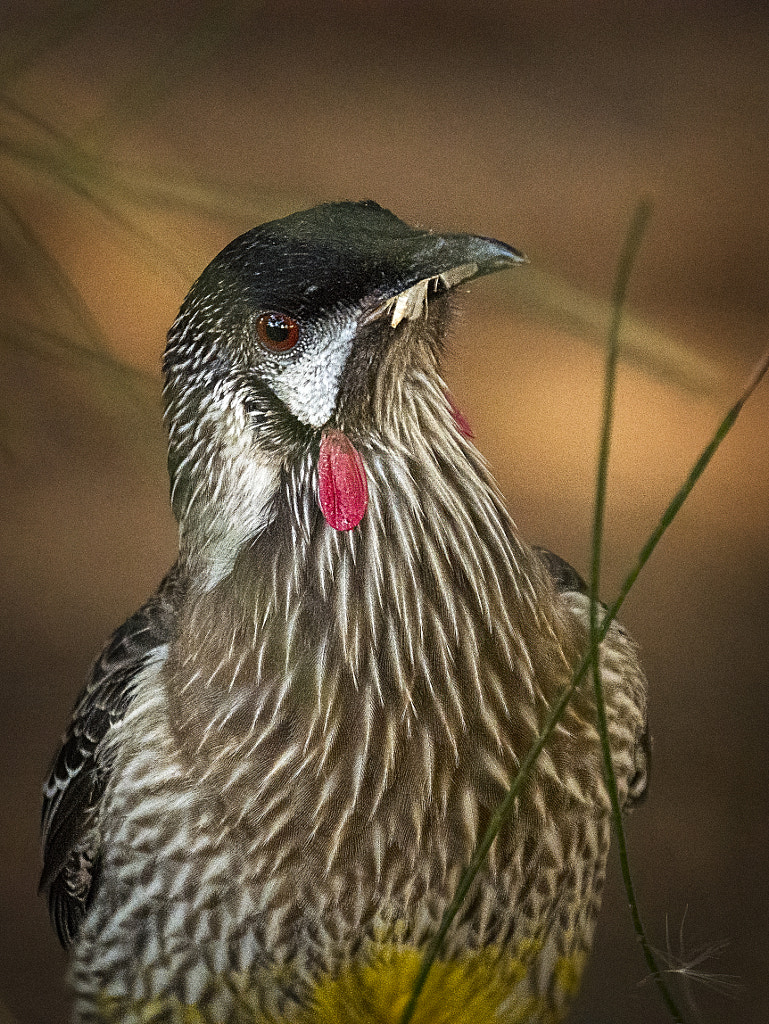
Wodjalok called the red wattle bird (Anthochaera carunculata subs woodwardi) by European settlers.
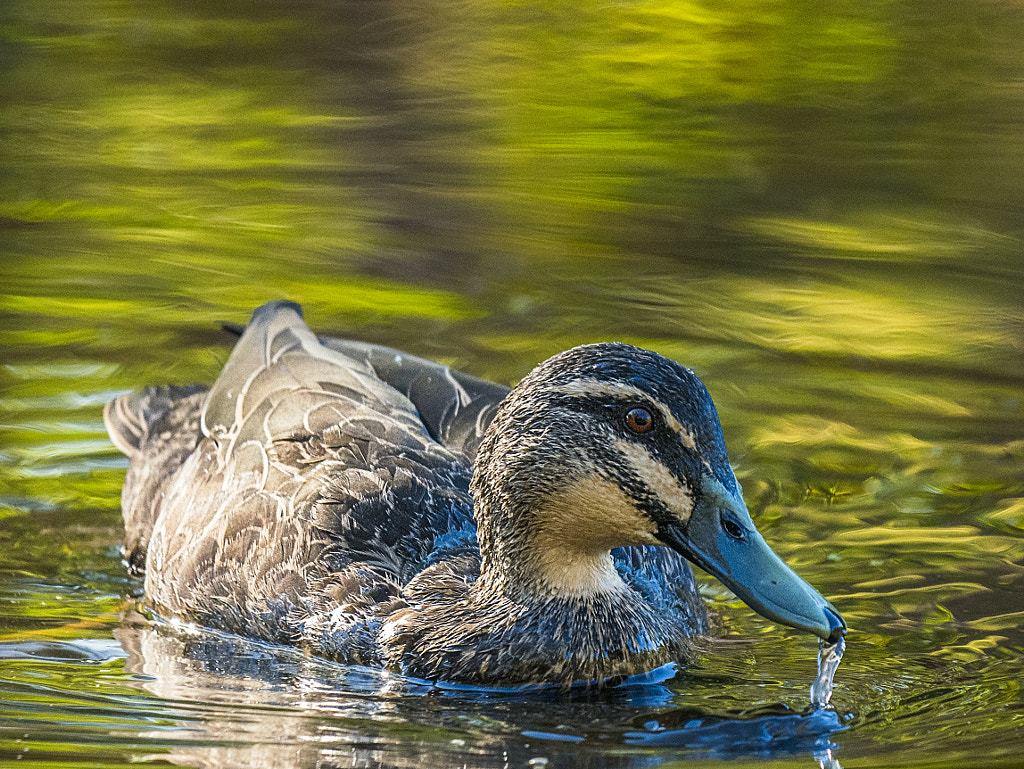
Yet called the pacific black duck (Anas superciliosa) by colonialists. Tomato Lake, Western Australia.
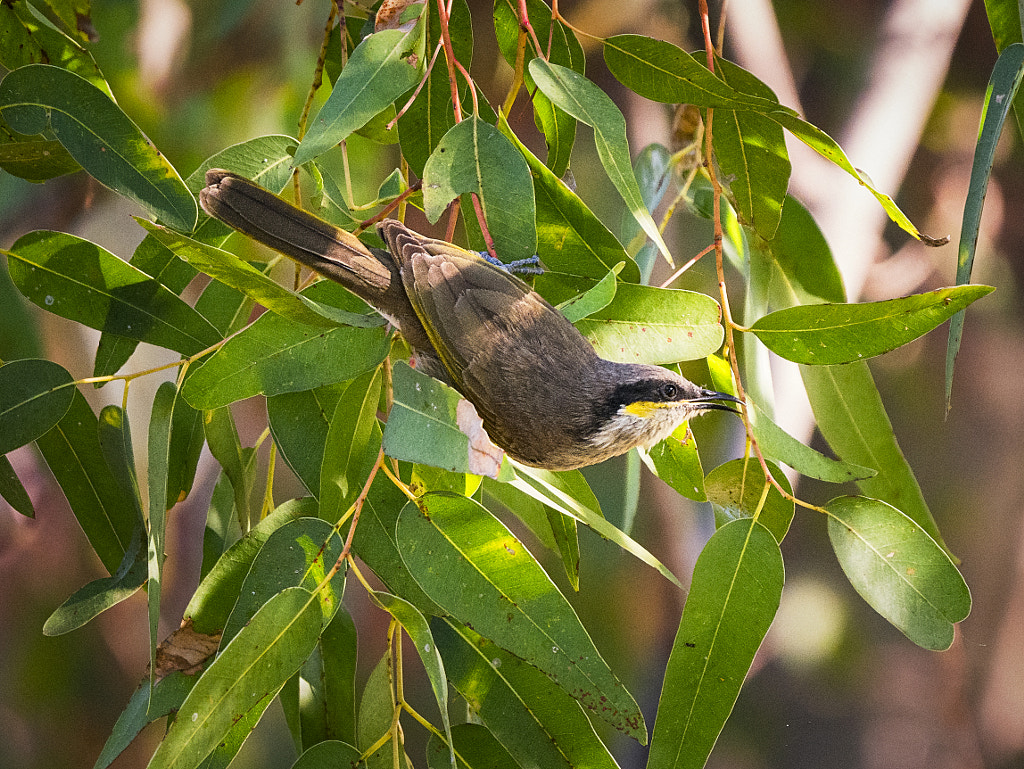
Dooromdorom called the Singing Honeyeater (Lichenostomus virescens virescens) by colonialists. Tomato Lake, Western Australia.
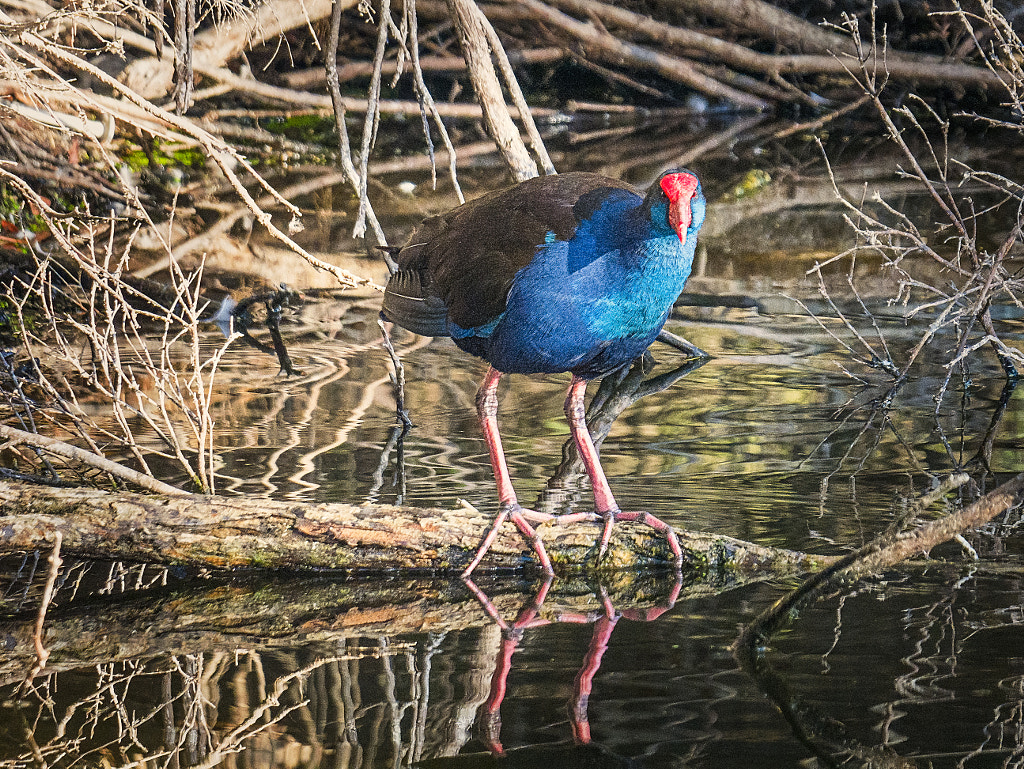
Kwilom or purple swamp hen (Porphyrio porphyrio). Tomato Lake, Western Australia.
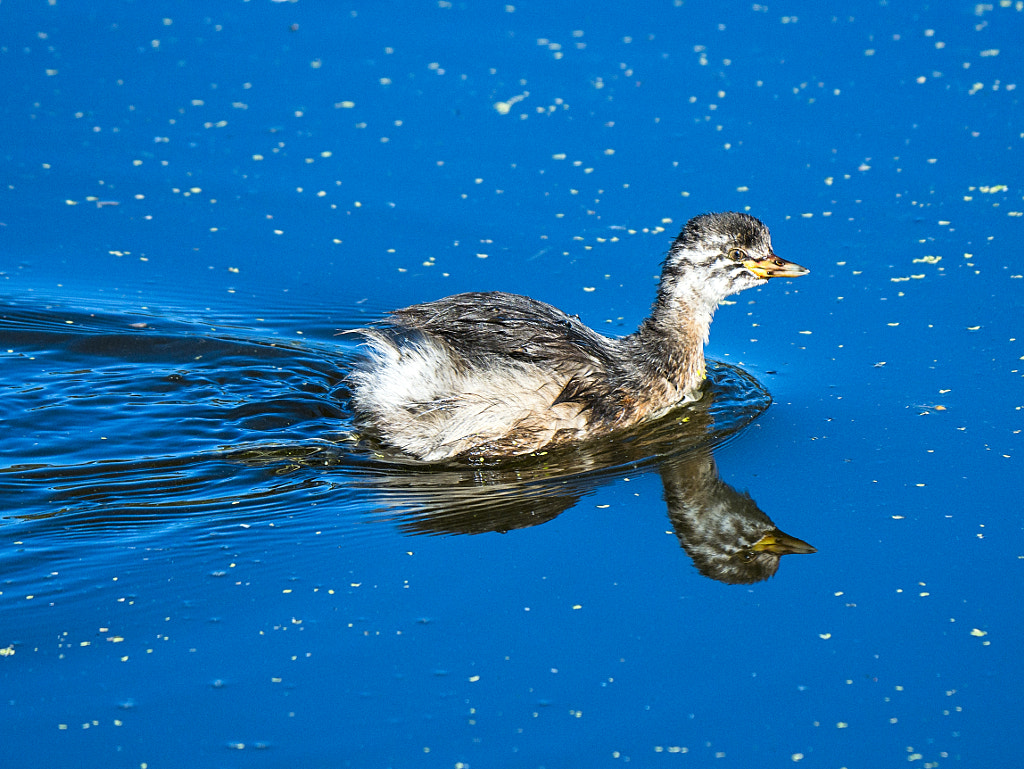
Wyooda aka the Hoary-headed Grebe (Poliocephalus poliocephalus). Tomato Lake, Western Australia.
Little Egret, Egretta garzetta subsp. nigripes. Tomato Lake, Western Australia.
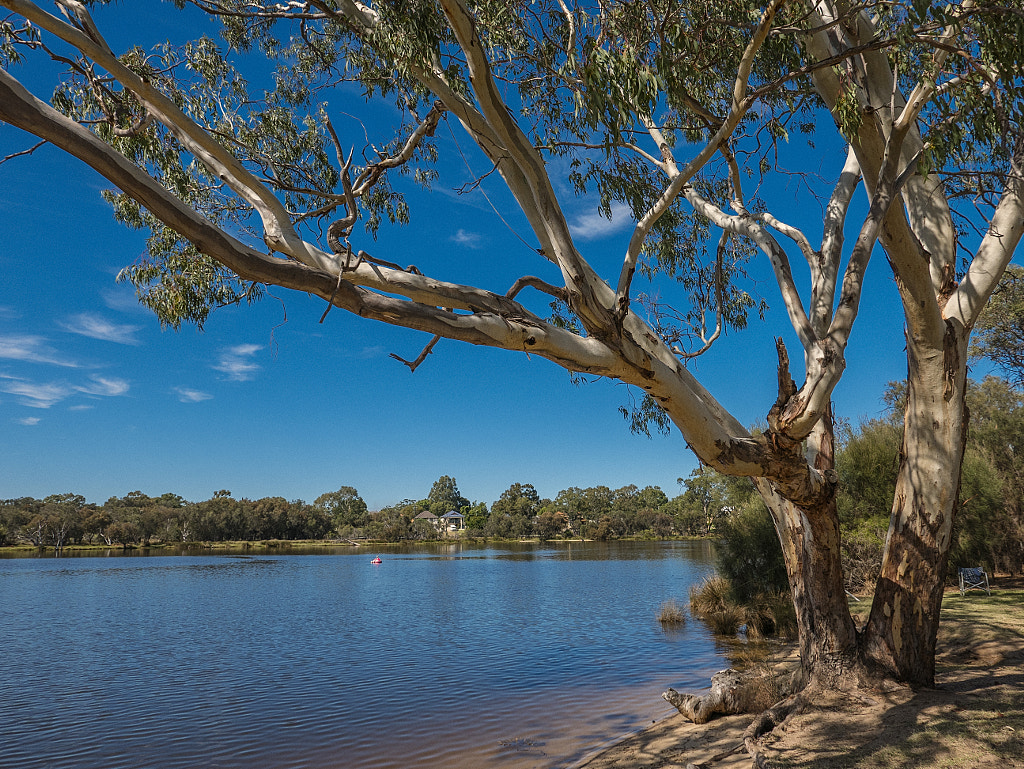
A tranquil spot by the Swan River at Ashfield Flats in Western Australia.
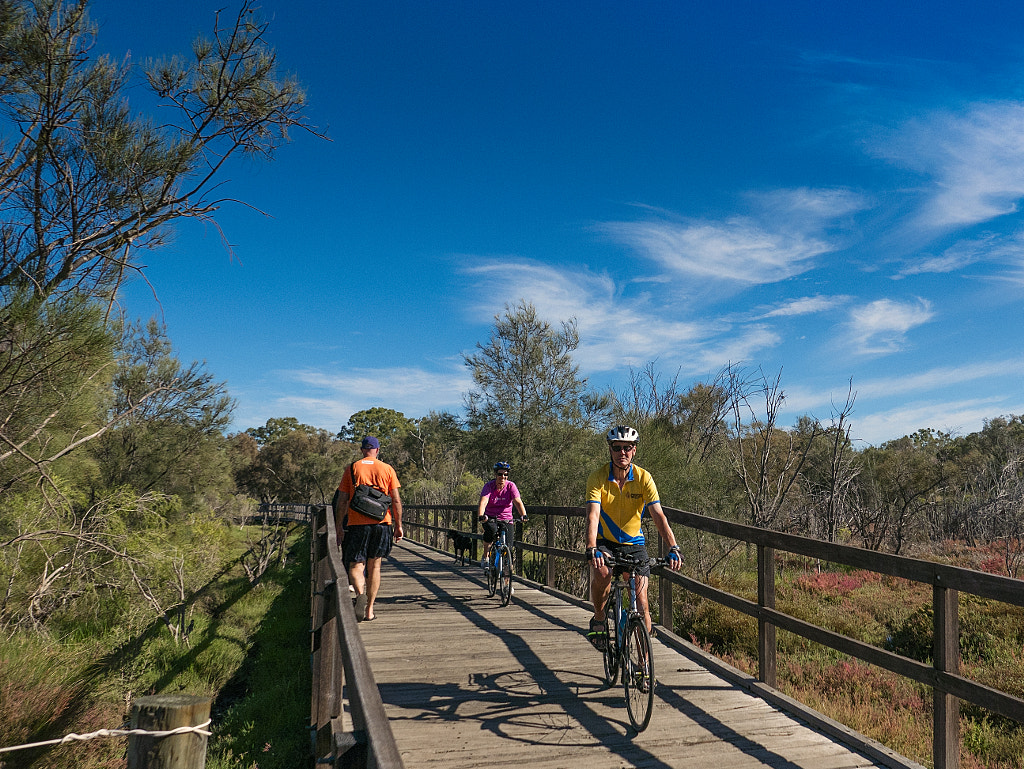
The dual use paths along the river at Ashfield are popular with cyclists and walkers alike
This 6Km walk takes you through the area between Sandy Beach Reserve and Claughton Reserve. Heading out westwards from Sandy Beach Reserve the walk takes you through areas of open grassland and salt marsh interspersed with stands of paperbarks and bulrushes. When you get to Claughton Reserve you will see grasslands and mature flooded gums. At the weekends it is a popular recreational area attracting walkers, cyclists, and various paddle sports.
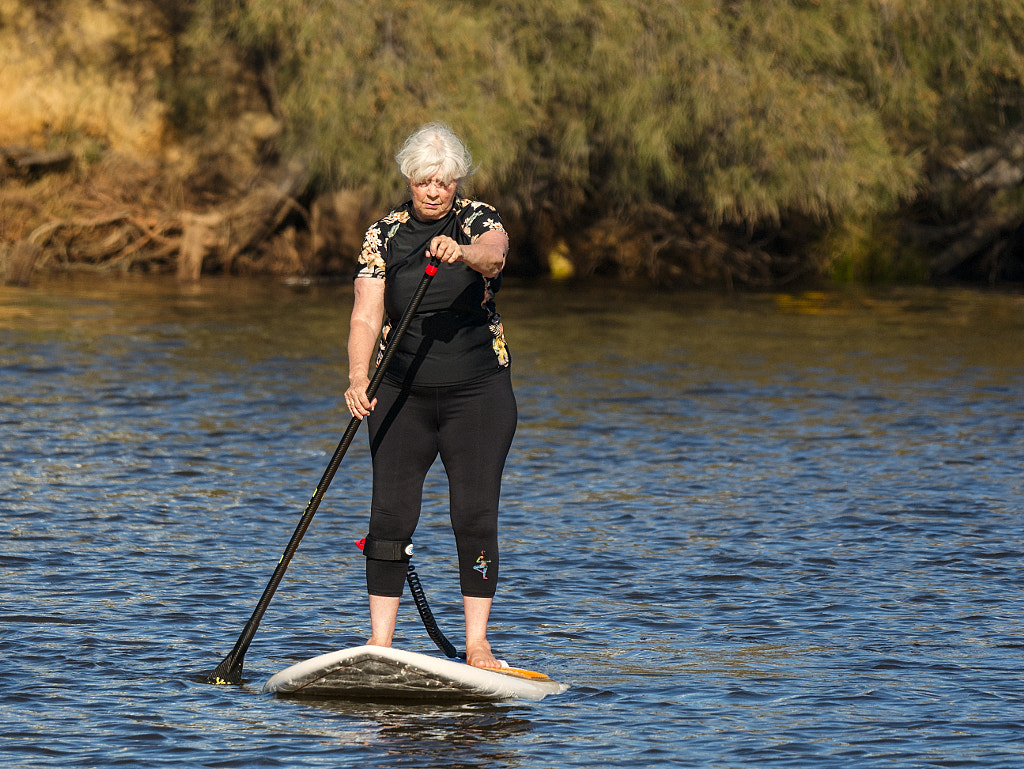
The Swan River by Ashfiled Flats is a popular location for canoeists and stand up paddle boarders.
The best time to visit and see wildlife is early morning midweek and take time to explore the stands of trees and scrub off of the trail. What can you expect to see? Well EBird Australia have a list of 95 different species that have been recorded in the area. Birds that are regularly seen include:
Pacific Black Duck
White-faced Heron
Red Wattle Bird
Singing Honeyeater
Brown Honeyeater
Great Egret
Black-shouldered Kite
Nankeen Kestrel
Galah
Australian Ringneck
Sacred Kingfisher
Magpie-lark
Black-faced Cuckoo-shrike
Grey Butcherbird
Richard’s Pipit
Welcome Swallow
Silvereye
On my visit I managed to spot 18 different species on a busy Saturday morning so I was happy with that and I’ll try and get back earlier in the morning midweek next time.
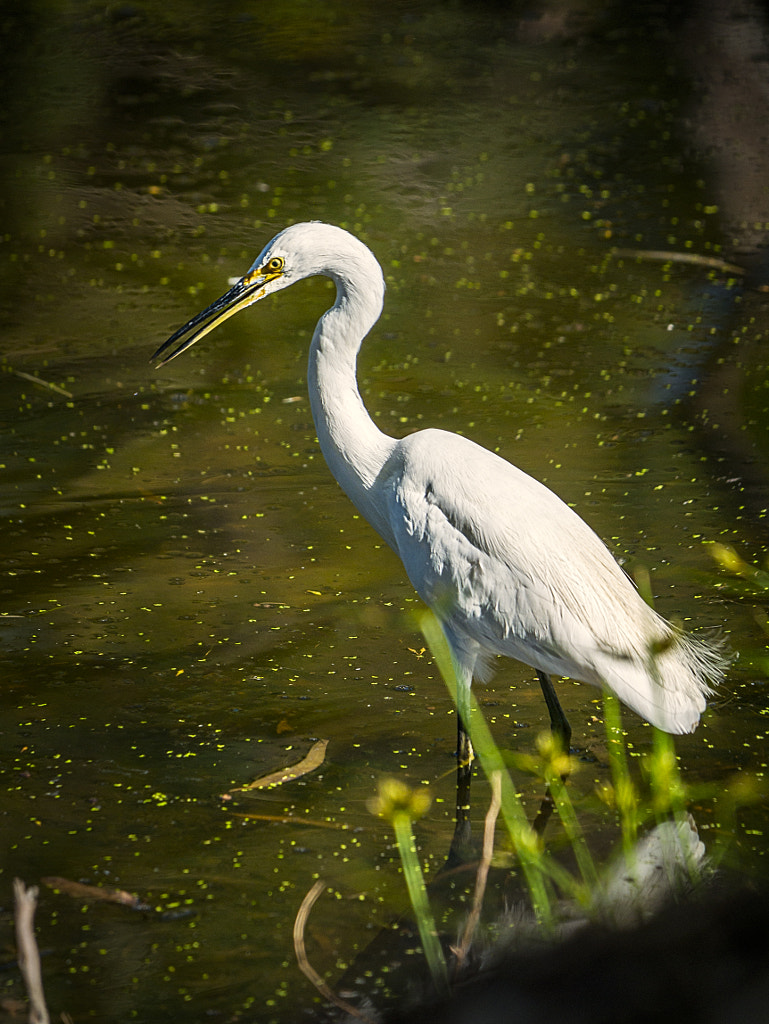
Great egret (Ardea alba modesta) fishing at Ashfield Flats, Western Australia.
Australian Pied Cormorant,Phalacrocorax various. Ashfield Flats, Western Australia.
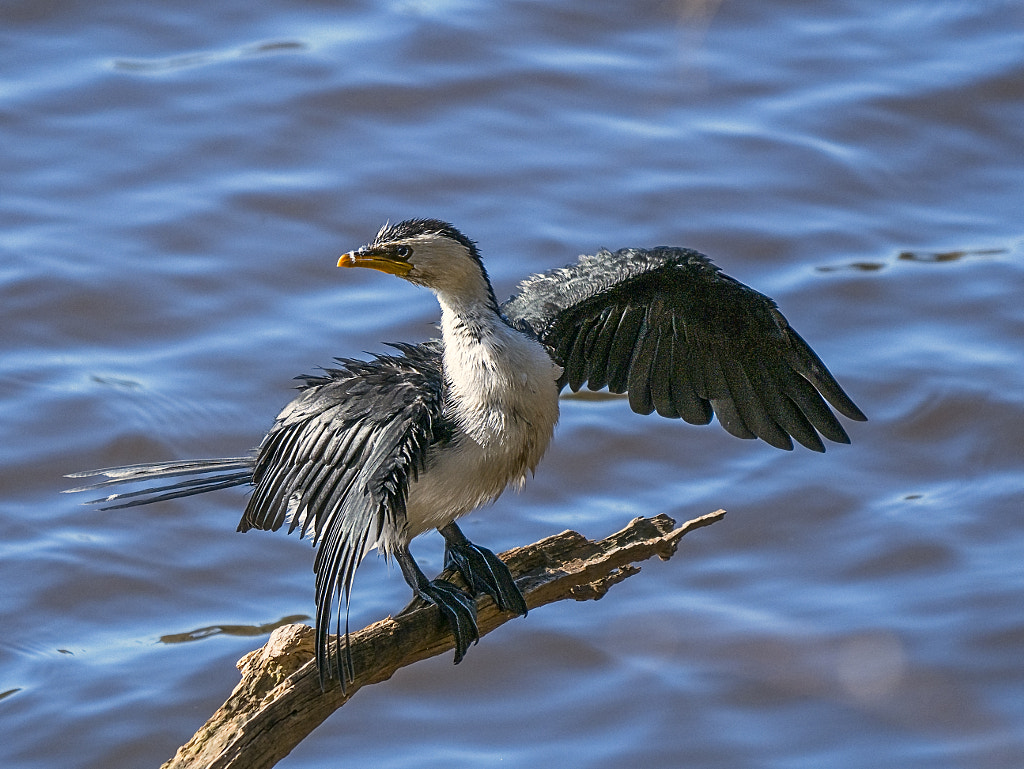
Little pied cormorant, Microcarbo melanoleucos, drying out in the sun. Ashfield Flats, Western Australia.
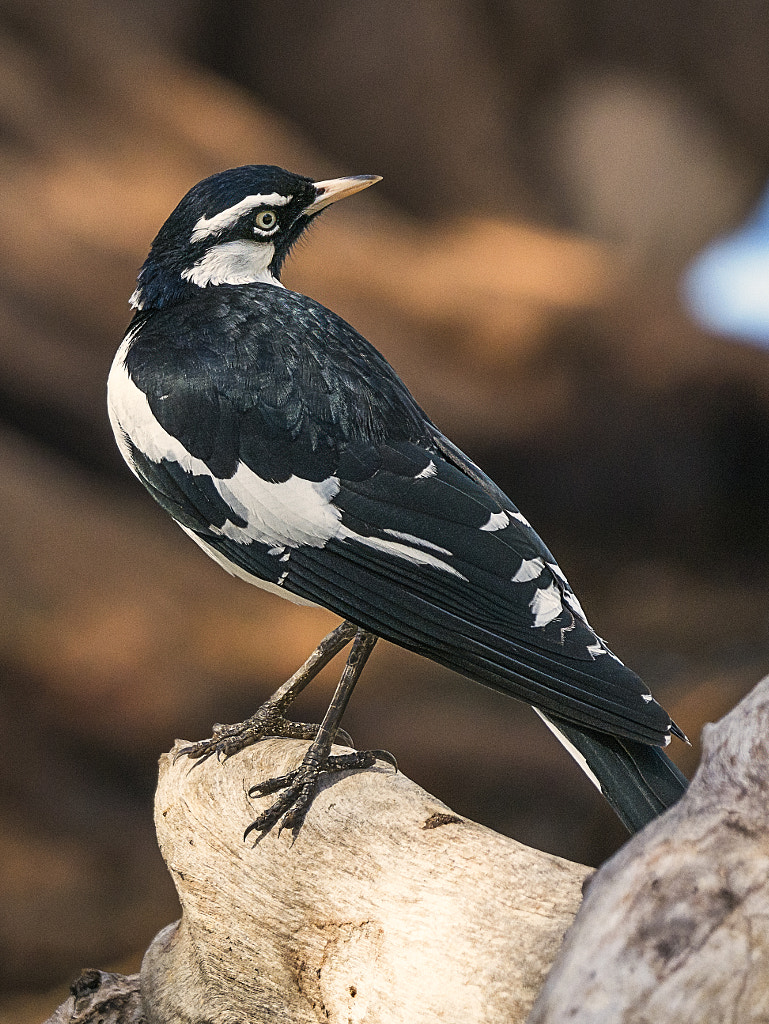
Magpie-lark, Grallina cyanoleuca. Ashfielde Flats, Western Australia.
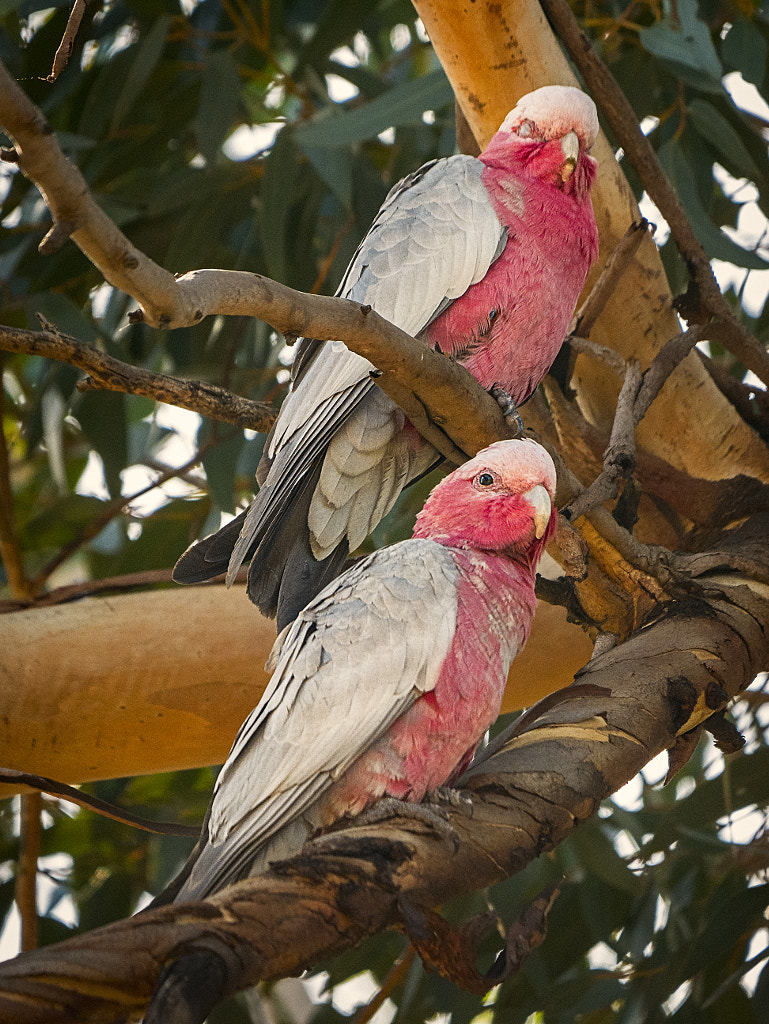
A pair of Galahs, Eolophus roseicapilla, at Ashfield Fats, Western Australia.
Singing Honeyeater, Lichenostomus virescens virescens. Ashfield Flats, Western Australia.
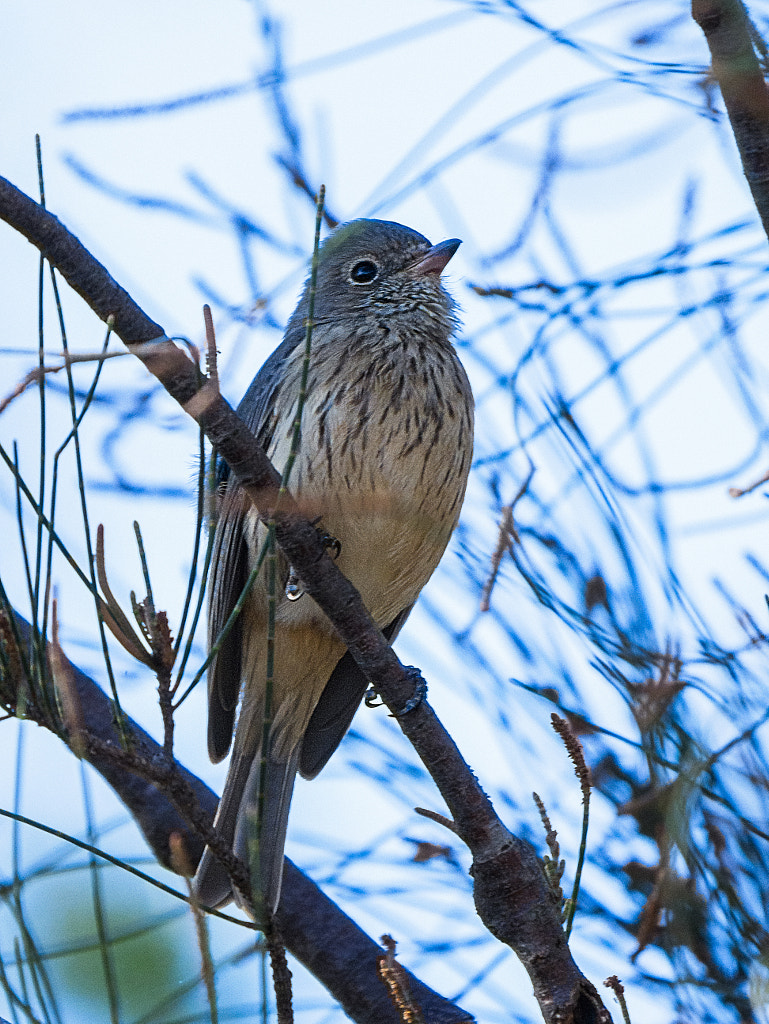
A female Rufous Whistler, Pachycephala rufiventris, at Ashfield Flats, Western Australia.
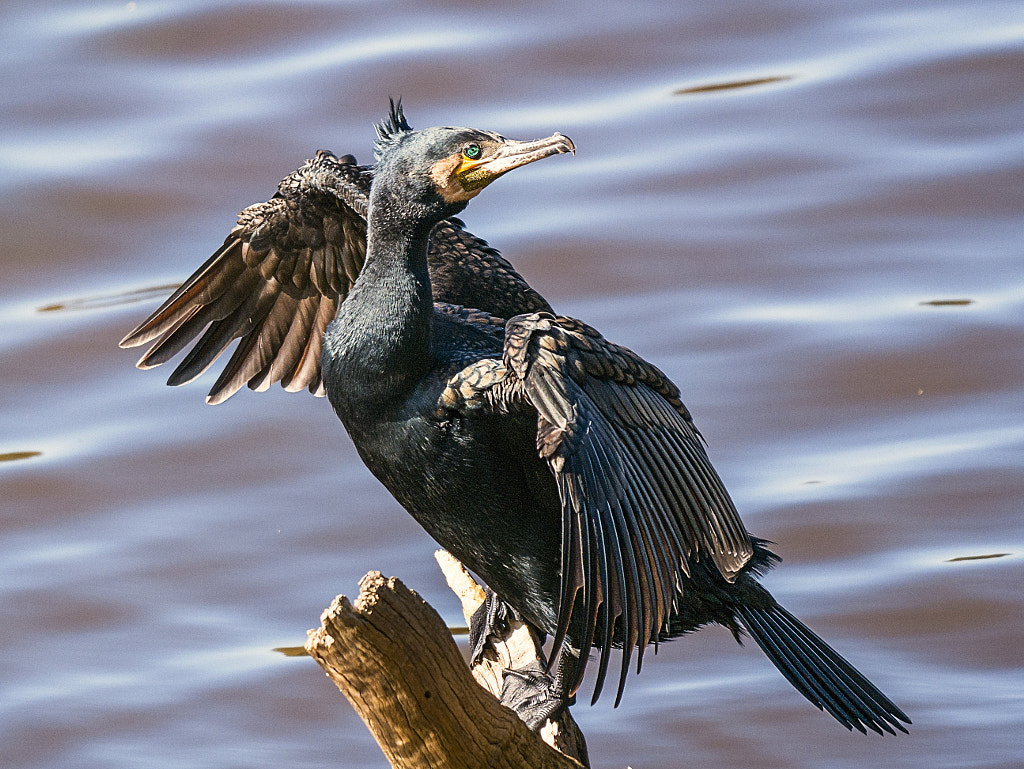
Karbanga or great cormorant (Phalacrocorax carbo subsp. carboides) , sunning itself. Ashfield Flats, Western Australia.
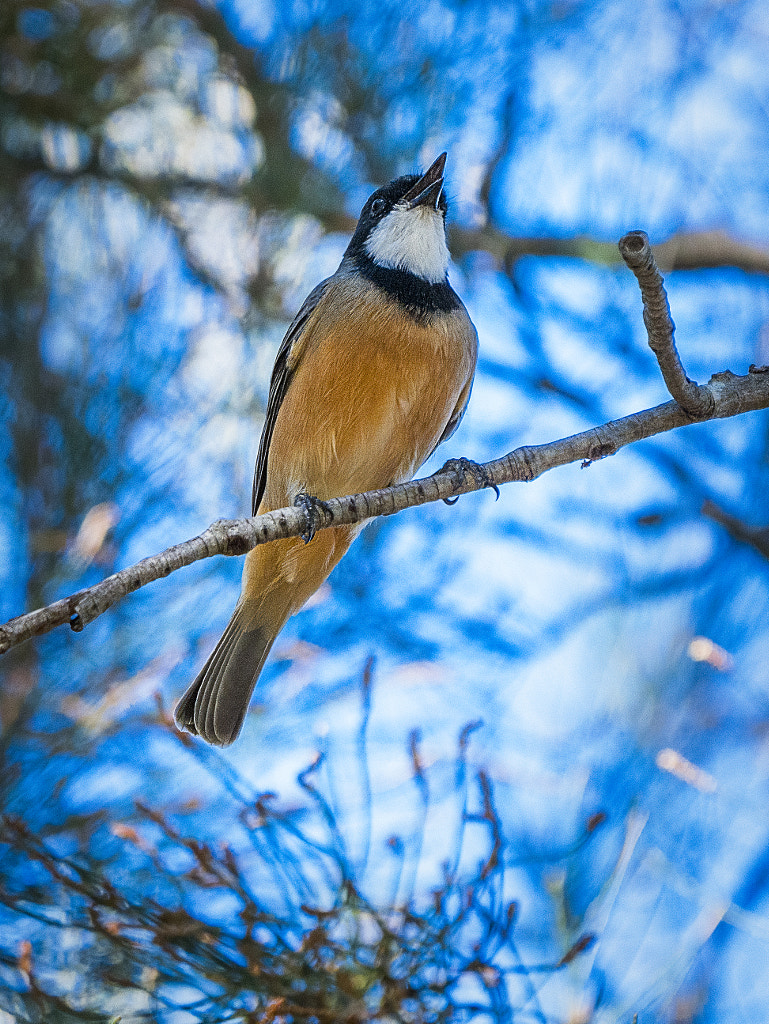
A male Rufous Whistler, Pachycephala rufiventris, singing. Ashfield Flats, Western Australia.
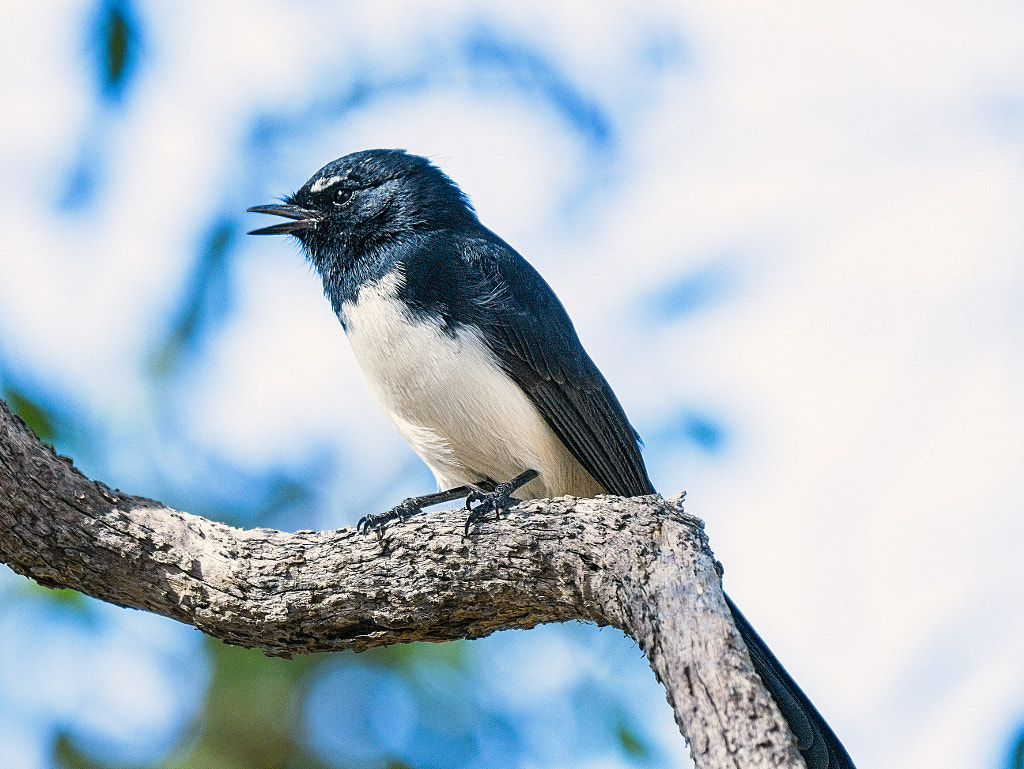
Willie Wagtail, Rhipidura leucophrys leucophrys, singing. Ashfield Flats, Western Australia.
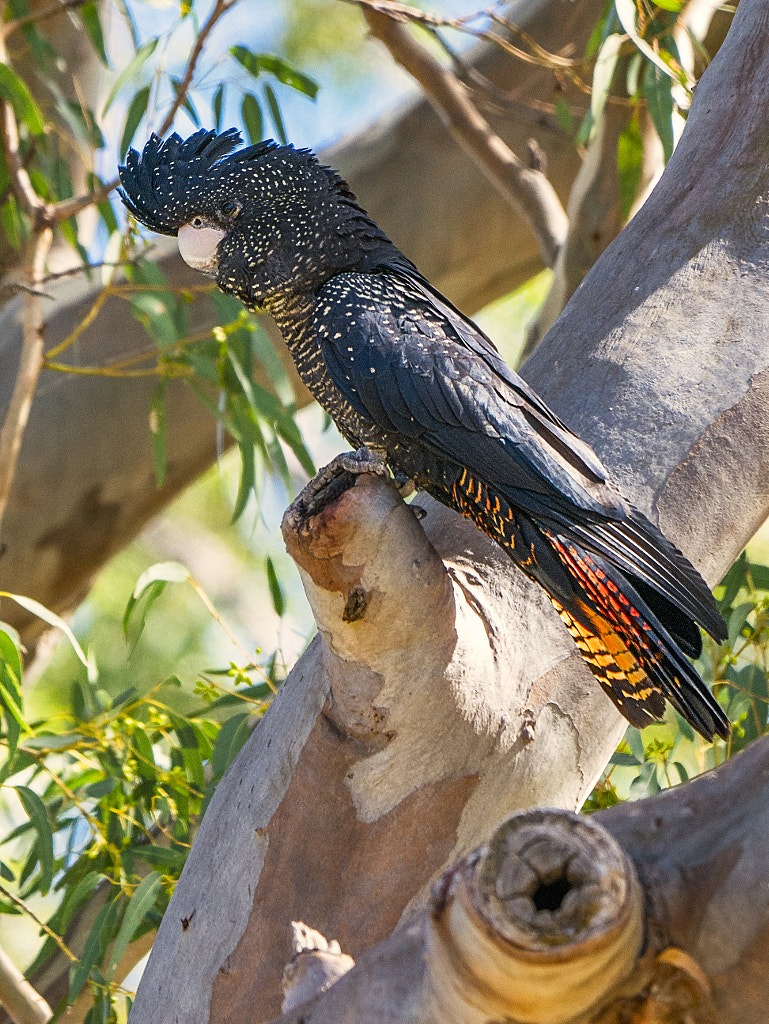
Red-tailed Black Cockatoo, Calyptorhynchus banksii subs samueli. Ashfield Flats, Western Australia.
I have a long and complicated relationship with street photography and I want to try and articulate that here. Wikipedia defines street photography as “photography conducted for art or enquiry that features unmediated chance encounters and random incidents within public spaces”. It does not have tohave people as the subject matter, but most of it does. The history of street photography is really tied to the technology of photography – once cameras and film became portable and quick to use then people started taking photos of the things that were happening around them. The genre really started in the inter war period, but it was the end of the Second World War that really kick started it. World War Two had seen death and destruction carried out on an enormous industrial scale – the methods of modern mass production lines had been used to exterminate millions of people. The American-Luxenbourgish photographer Edward Steichen, who at the time was the director of photography at the Museum of Modern Art (MOMA) in New York, decided to curate an exhibition based upon the universality of the human experience as a counter to the war. Dorothea Lange, a leading light in photographic reportage, assisted Steichen in his project and on January 16, 1953 she sent out a recruitment letter to photographers asking them to “show Man to Man across the world. Here we hope to reveal by visual images Man’s dreams and aspirations, his strength, his despair under evil. If photography can bring these things to life, this exhibition will be created in a spirit of passionate and devoted faith in Man.”. In all 273 photographers from 68 countries contributed 503 photos. The exhibition opened at MOMA on January 24 1955 and then went on to tour the world for eight years making stops in thirty-seven countries on six continents. More than 9 million people viewed the exhibit, which is still in excess of the largest audience for any photographic exhibition since. The book from the exhibition has never been out of print and has sold more than 4 million copies. The impact was colossal – it exposed people to the idea of looking at photos of people doing the things that make us human and encouraged them to make their own photos.
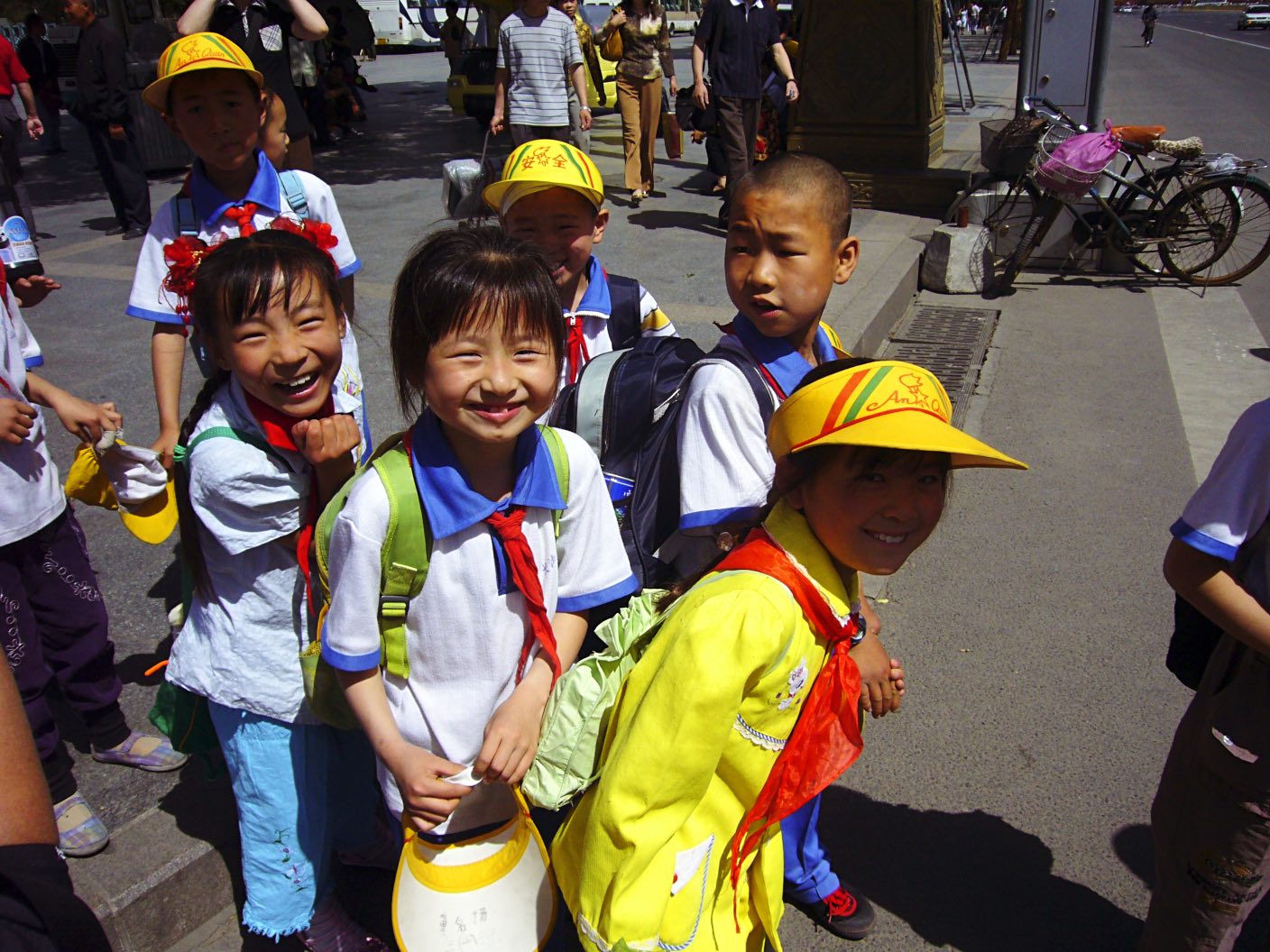
Studio 798 East meets west. Coke and tagging in Beijing.
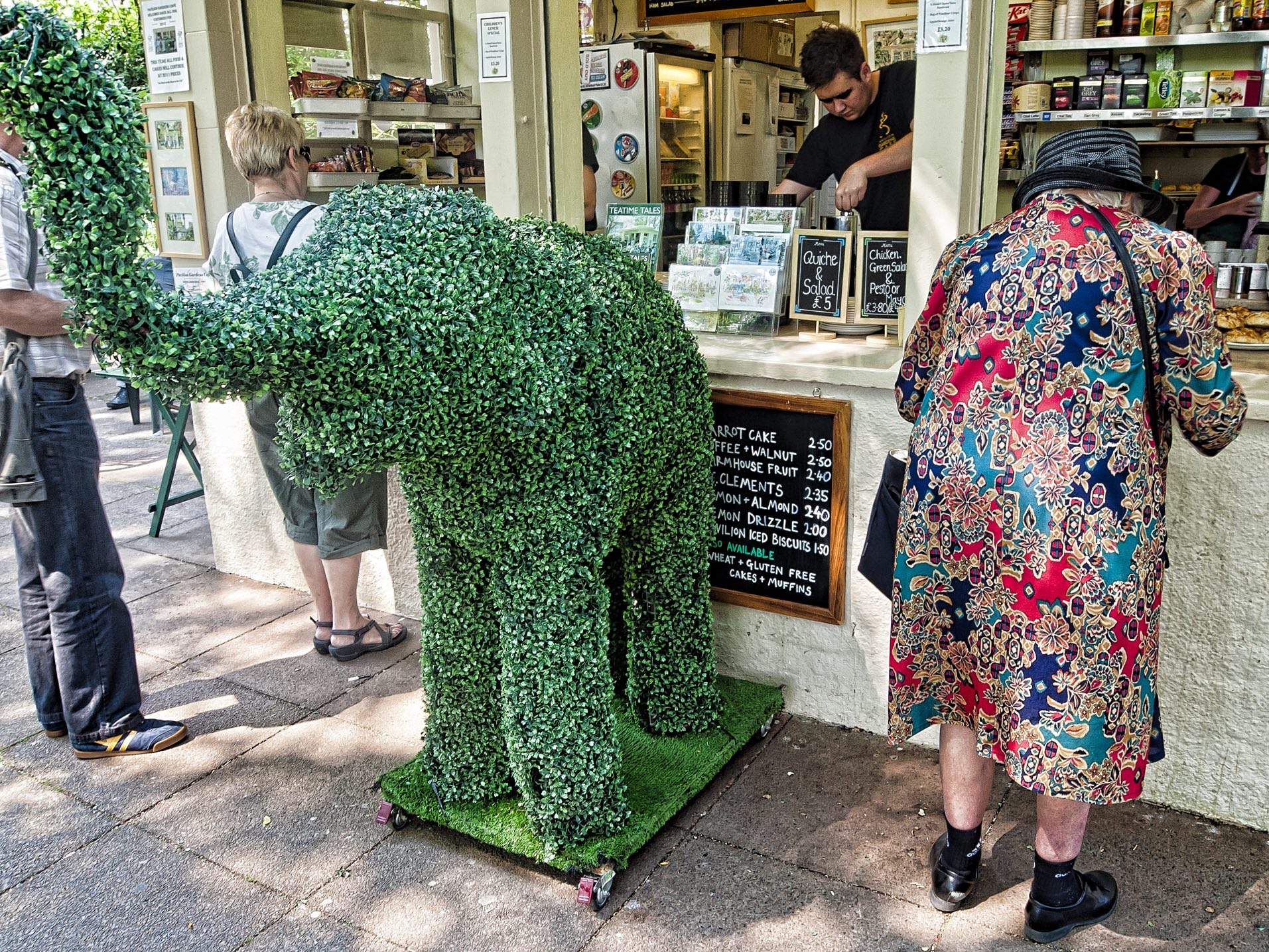
Topiary at the Pavillion Gardens Cafe, Brighton.
When I look at my bookshelves the bulk of them are of street photography. Ever since I saw the exhibition Another Country by Chris Killip and Graham Smith in 1985 I wanted to try and produce work that showed that ordinary people and things are important. So I started buying books by people such as Henri Cartier-Bresson, Robert Doisneau, Elliott Erwitt, and Robert Frank. At the same time I started loitering on streets with a camera trying to summon up the courage to take pictures of strangers. I’ve referred to this previously as having delusions of Bresson. In the 1980’s photography was expensive – every shot cost money – and this meant that I had to ration my picture taking to 2 or 3 rolls of film a month which meant that progression was a very slow process. Digital changed that and you could go out for the day and take hundreds of photos and get instant feedback on how they looked. It was a fantastic time to be a street photographer and the result is that there was another explosion of interest in the genre as millions of people world wide embraced it as a life style.
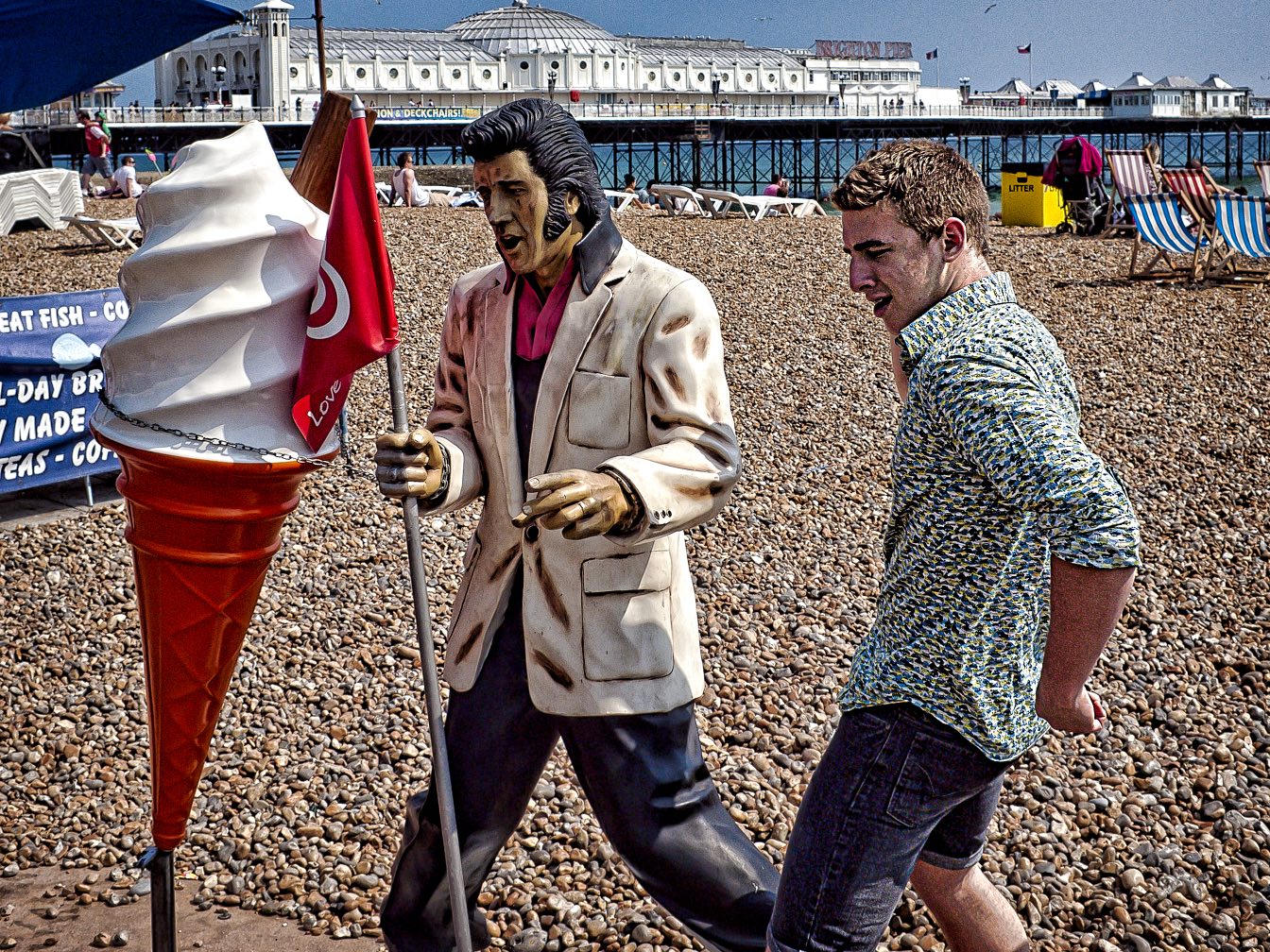
Getting in touch with his inner Elvis on Brighton Beach.
Goofing around with the camera in the Perth Cultural Precinct.
Things began to sour for me in 2007. After 9/11 the world was gripped with paranoia and virtually every country in the western world started bringing in counter terrorism legislation which meant every police officer and every security guard saw anyone carrying a camera as a potential terrorist. Some were OK and were polite and friendly. Some just over reached themselves and saw themselves as judge jury and executioner. In 2007 I went back to England as my father was dying. A few days after he died I wanted to go out and do something creative. Now the town we’re from attracts tourists from all over the world and so you’d think it would be safe to wander around taking photos. Well no and I had an extremely unpleasant encounter with a police officer who was convinced I was Osama Bin Laden scoping out the local shops for a potential suicide bombing. After threats of violence against my person he dragged me off to the police station and proceeded to threaten me some more for another couple of hours. It was only when I started asking the desk sergeant to see the Australian consul that things started to improve and I was eventually released and told to get on the next available plane. So that started to make me wary of taking photos out in public. The next year, 2008, Australia was gripped by the Bill Henson scandal and suddenly every photographer was not just a potential terrorist but also a paedophile. I attended the Earth From Above exhibition by Yann Arthus-Bertrand some of which was held outside in Perth’s Cultural Precinct. I took some photos of people interacting with the exhibits outside and while doing so I was accosted by a women who accused me of being a paedophile which led to an unpleasant encounter with the police. So with that I decided to hang up my rangefinder and 35mm lens and concentrate on subjects that weren’t people. But it wasn’t just the problems with the police it was also the fact that at this time I also felt that the world’s culture was beginning to change – it was becoming more homogeneous and it was difficult to see any difference in photos. The final straw was the ubiquity of the mobile phone. Everyone seems to walk around staring at this thing they carry. The little spontaneous connections and reactions have now disappeared as everyone just stares at the screen on their mobile phone. I’m not the only person who feels this way. Joel Meyerowitz the doyen of New York street photography said in an interview with the Guardian newspaper “In the 60s and 70s you could look at my street photographs and trace lines from the eyes of people connecting with other people’s eyes, setting up these force fields.” Of now he says “Nobody’s looking at each other. Everybody’s glued to their phones…The street has lost its savour.” Meyerowitz has now largely given up on it and concentrates on still life.
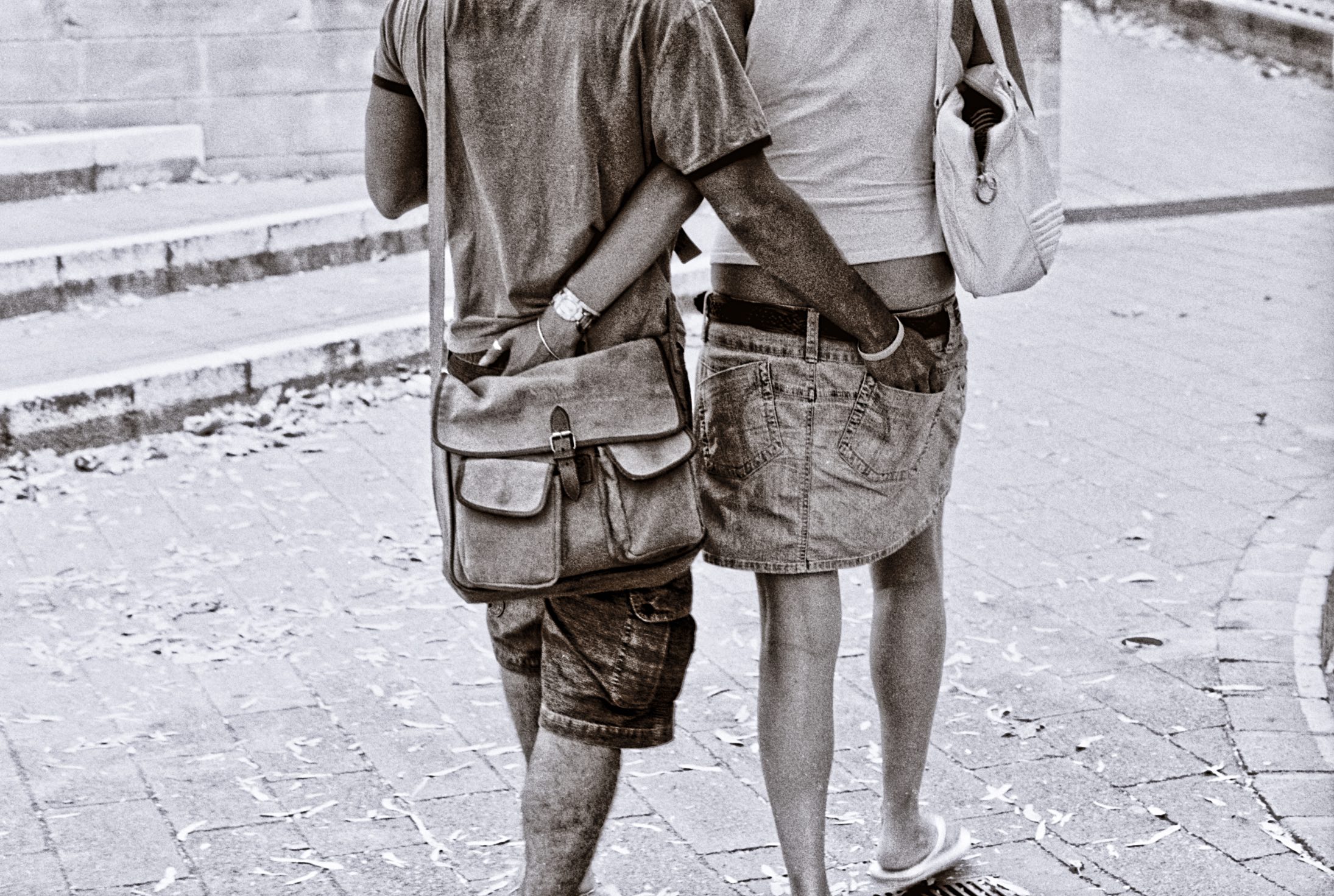
Young lovers walk arm in arm through Northbridge in Perth, Western Australia.
Palm Sunday walk for justice for refugees. Perth, Western Australia.
So what is my relationship with street photography now? Well I’m not buying the books or looking at other peoples work, but I am starting to re-engage. By any stretch of the imagination it is not my oeuvre anymore, but it is something I quite like to do when I’m in Perth and got a couple of hours to fill. I stay well clear of the police and make sure that no children are in the shot and I make sure I wander around looking like a tourist.
Busking in Elizabeth Street Mall, Hobart.
Water playground in Forest Place, Perth, Western Australia.
First Contact , Elizabeth Quay in Perth, is a five metre tall artwork by Nyoongar artist Laurel Nannup. The work depicts the arrival of European settlers to Perth. As the European boats arrived, the local Nyoongar people believed that these ships, were their past ancestors returning from the sea.
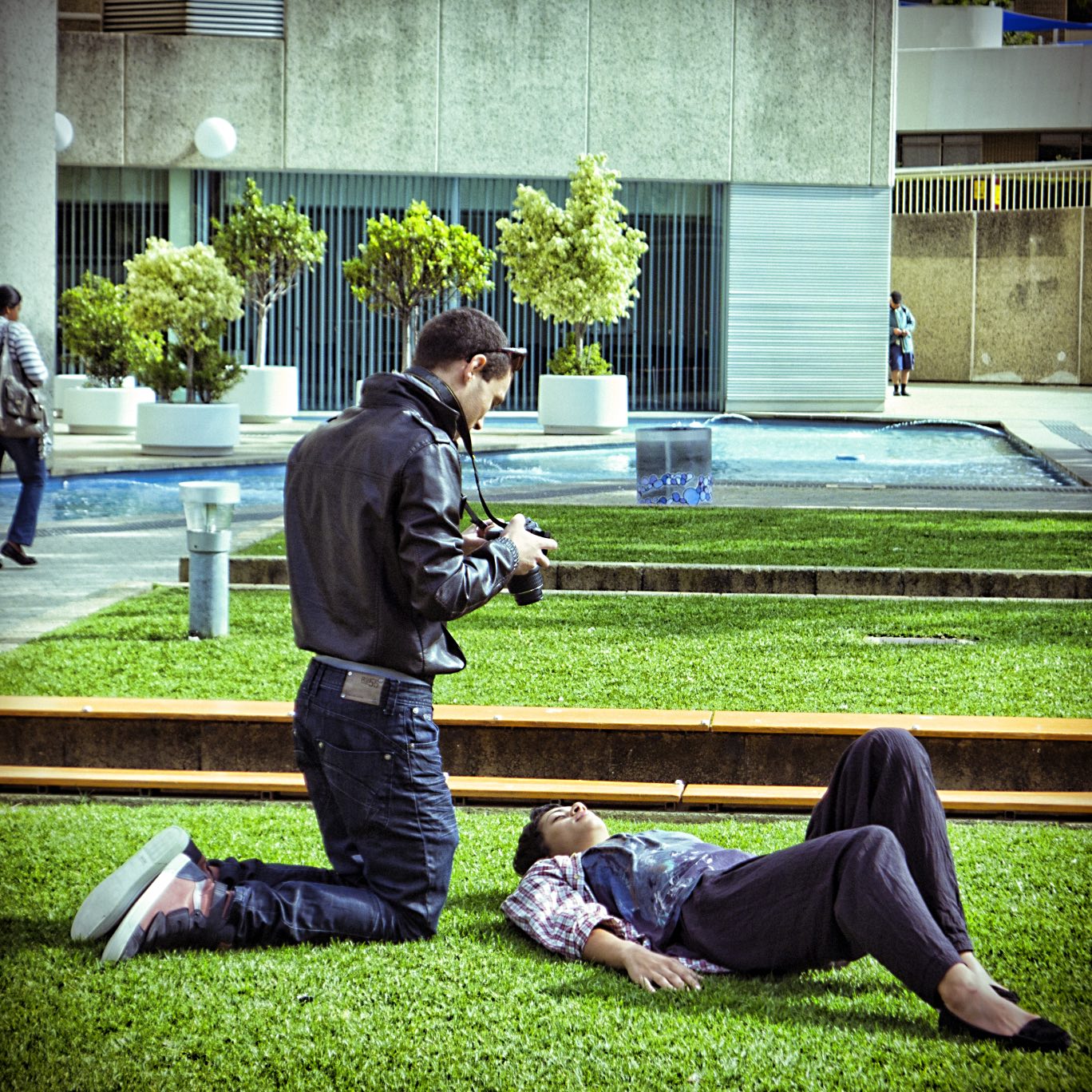
Sometimes you need help with taking your selfie.
Fortress England – smile you’re on CCTV. Chichester West Sussex.
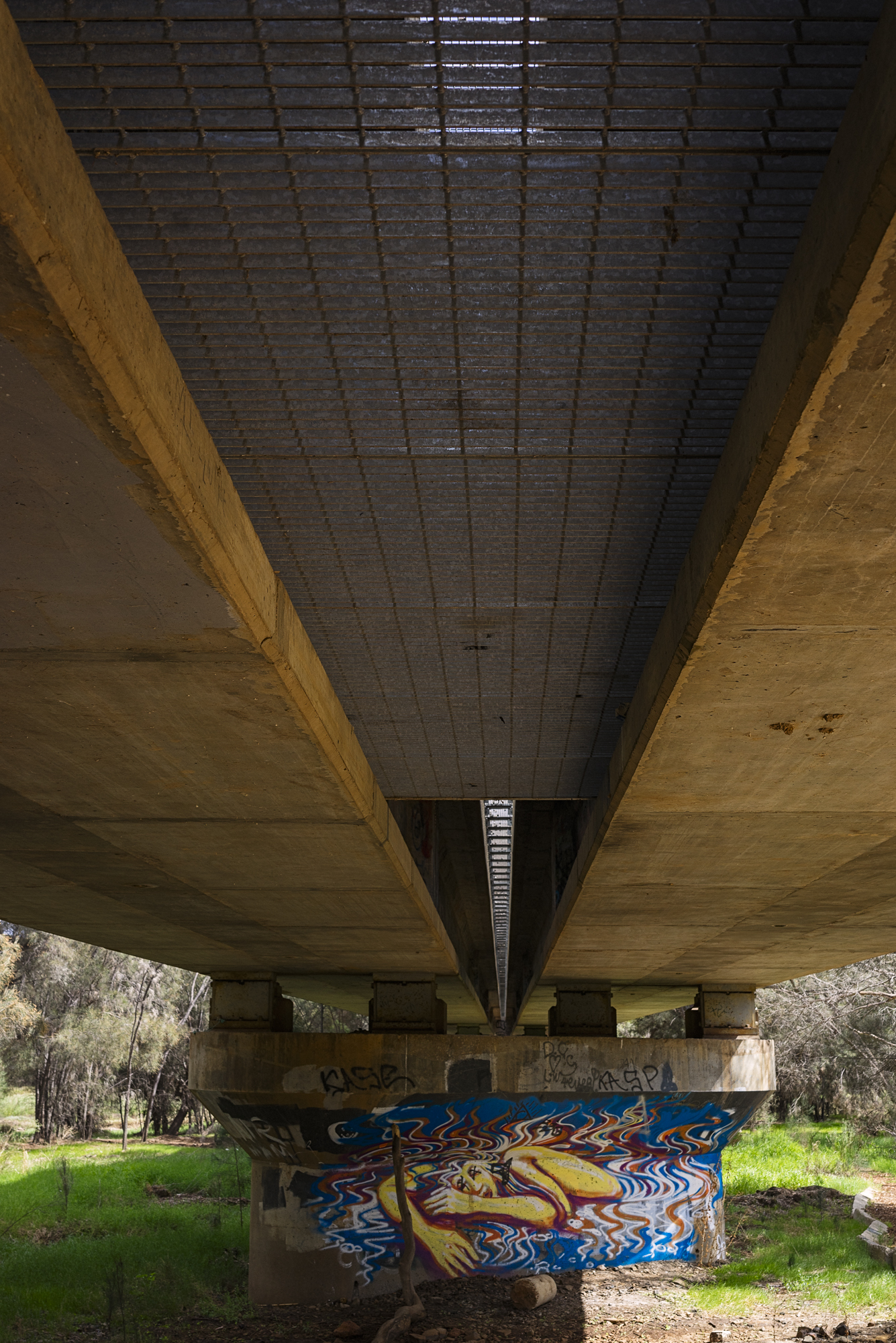
Graffiti is a subject that seems to upset a lot of people – especially members of the “hang ’em high” brigade. Personally I don’t get bent out of shape by it, and in fact some I even enjoy. The other day we were walking in Enright Park in Northam and we ventured under the Brookfield Railway Bridge and we were treated with an extensive graffiti gallery which I quite liked.
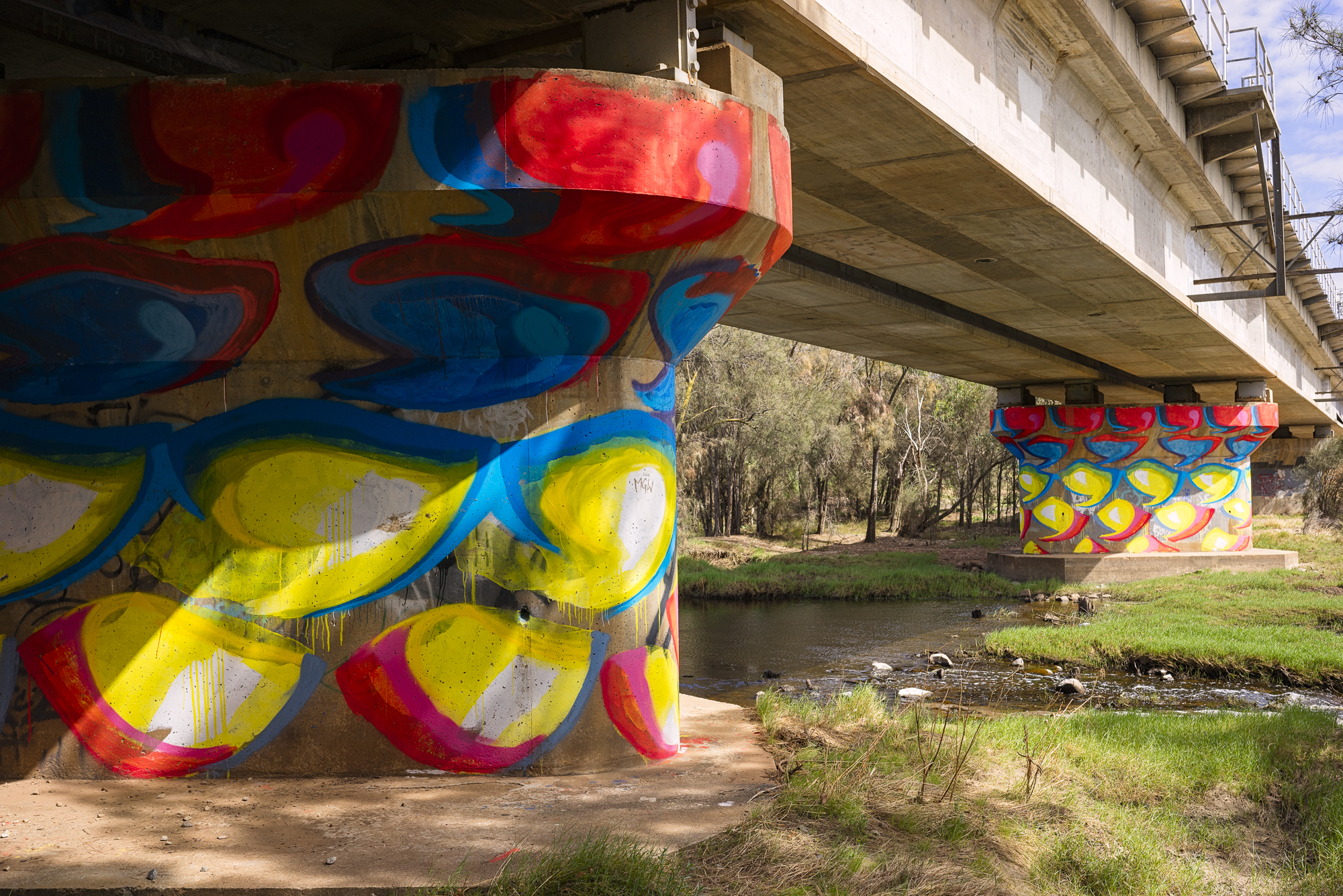
These colourful pieces on the bridge piers where what caught our eye and encouraged us to explore under the bridge.
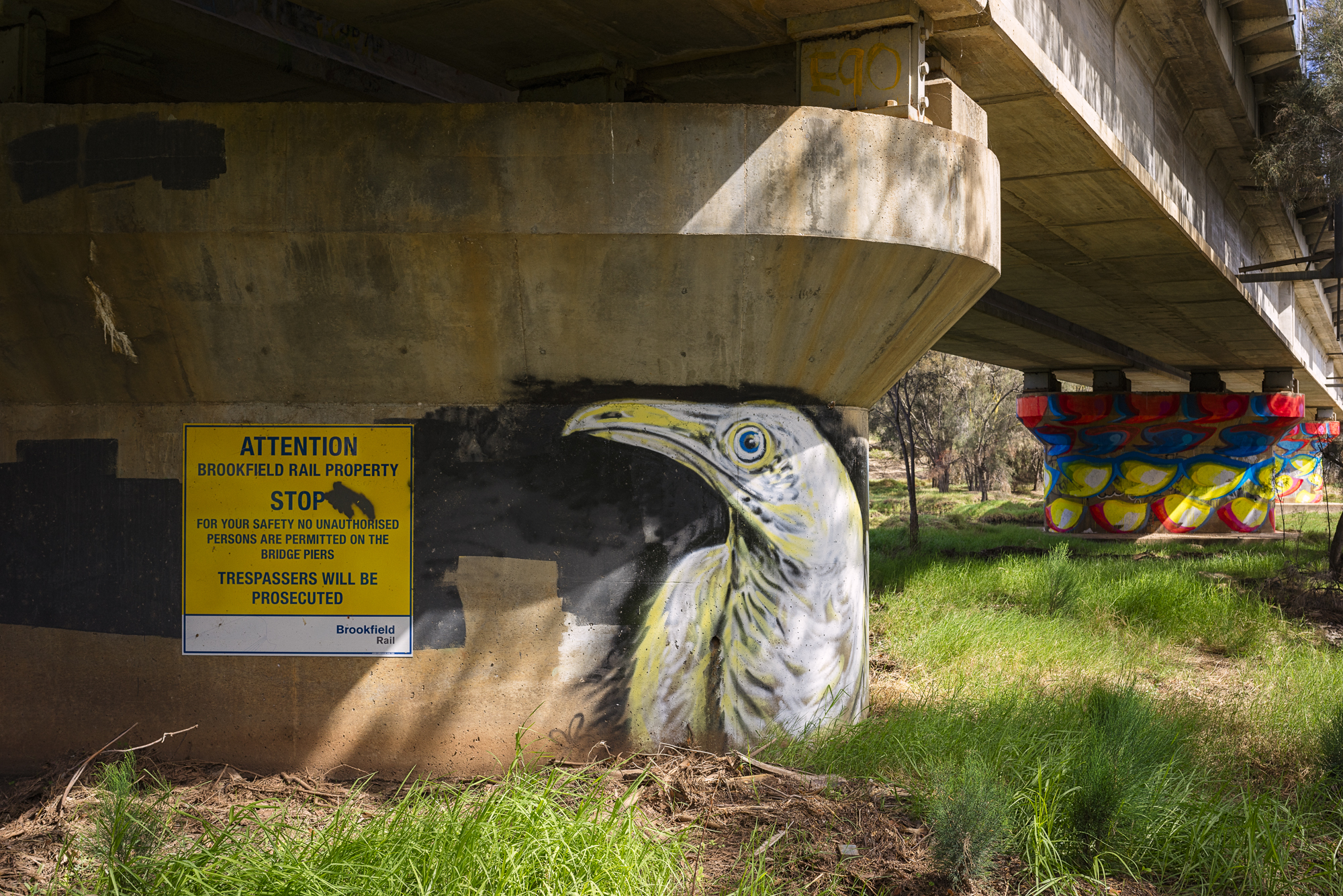
White Crow and a white face.
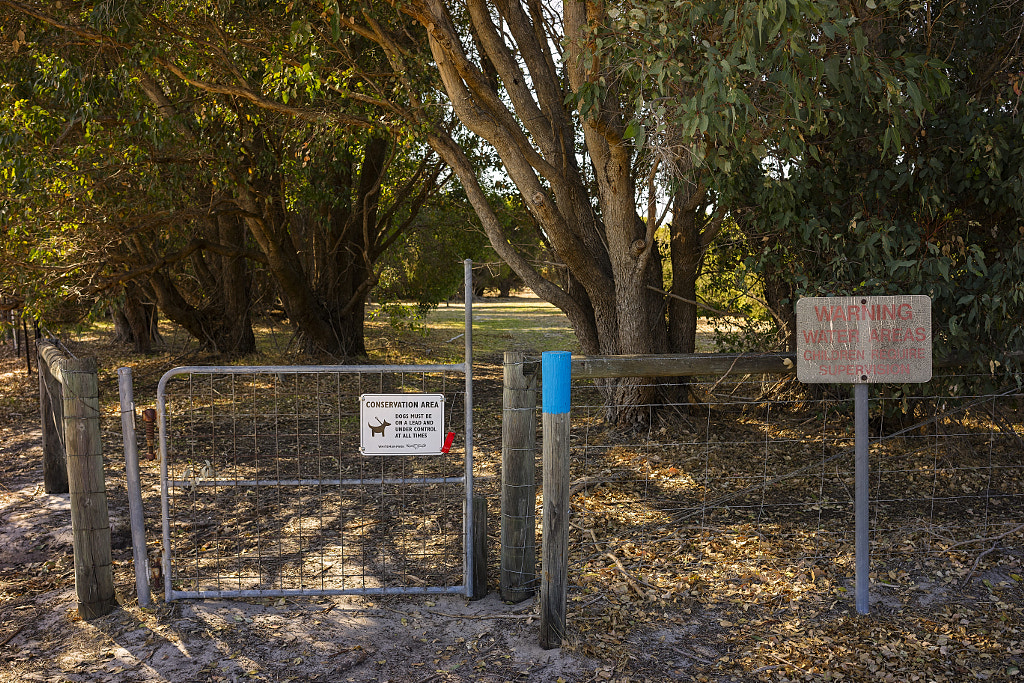
I don’t think the artists are paying attention to the warning signs.
Graffiti on the Brookfield Railway Bridge near Enright Park in Northam, Western Australia.
For those that complain about graffiti and demand the death penalty for it here’s a few facts. The only known written material in the ancient Safaitic language (an early form of Arabic) comes from graffiti. In the classical era most graffiti was rather sophisticated and demonstrated a very high level of literacy and a deep appreciation of art and poetry which indicates that it was done by the elites in society (Ponnamperuma, Senani (2013). Story of Sigiriya. Melbourne, Australia: Panique Pty Ltd. p. 157). In the Nineteenth Century Lord Byron avoiding his creditors, ex-lovers and looking for lots of non-binary rumpy pumpy graffitied his way round Europe in-between writing poetry and fighting for Greek independence (Shanks, Michael (1996). Classical Archaeology of Greece: Experiences of the Discipline. London, New York: Routledge. p. 76). I don’t know where Byron got the time and all the energy from.
Follow the blue poles for the Werillyiup Trail in Whiteman Park.
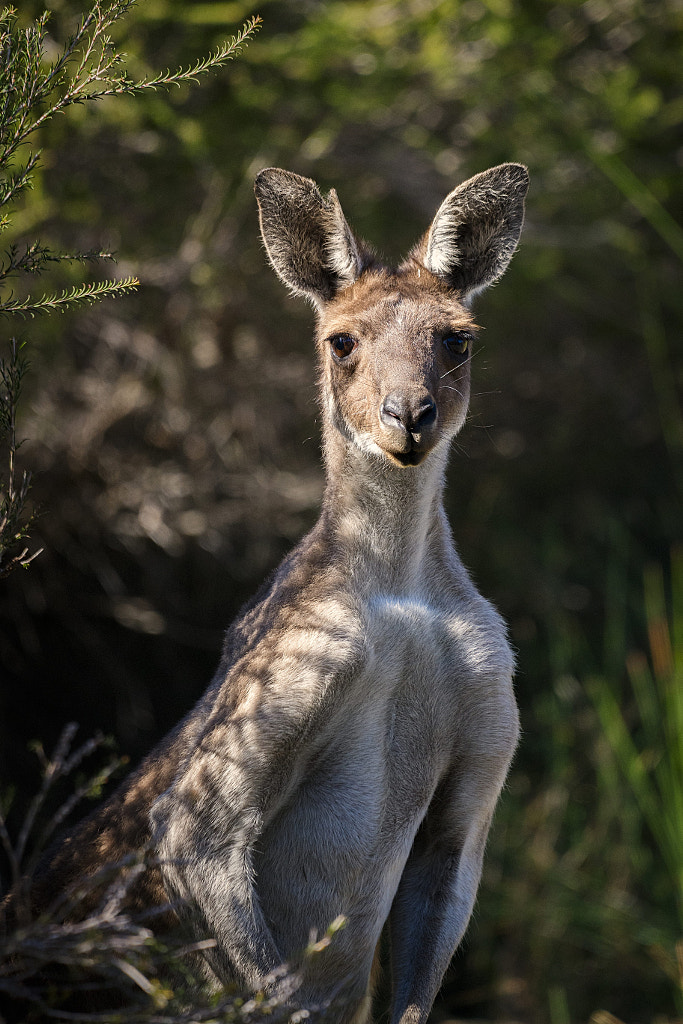
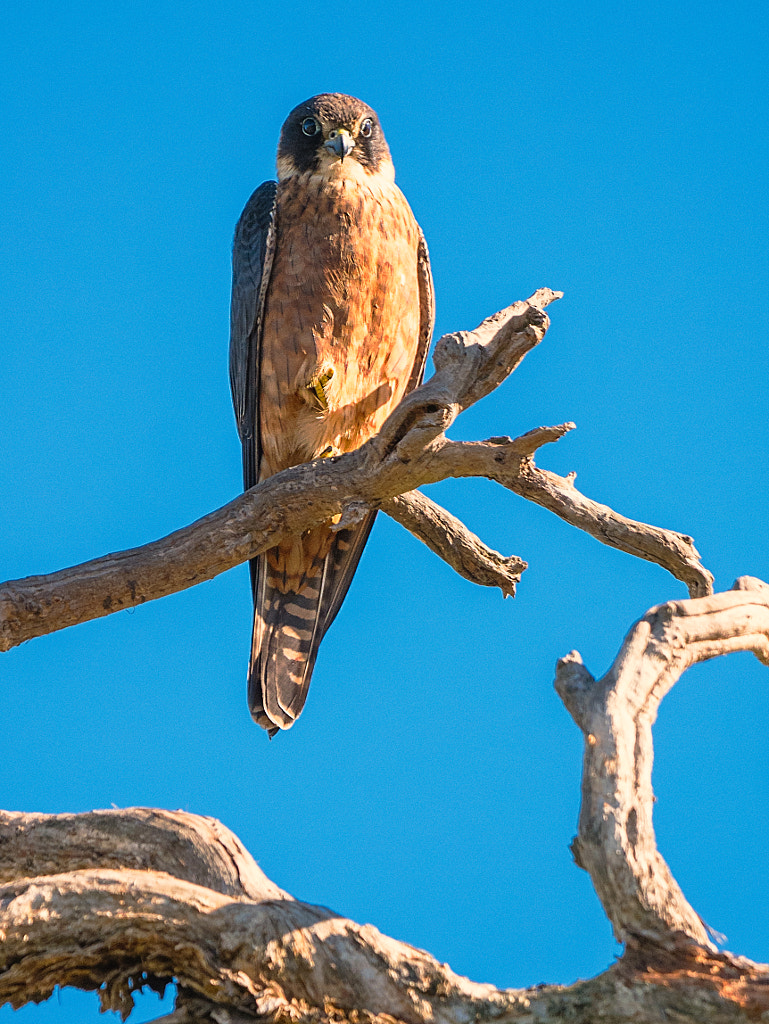
The Werrillyiup Trail in Whiteman Park is a 3Km jaunt around an area called Horse Swamp. So called because back in the early days of the Swan River Colony if horses escaped they invariably ended up at the swamp. The word Werrillyiup is is Nyoongar for “a swampy place” so from all this you’d expect to see quite a bit of water. Well for much of the year it is dry and really only fills in June with the coming of the winter rains. Each time I’ve been it’s been akin to walking around a large puddle. That’s not to detract anything away from it, it is just a statement of fact. What you will see though is an important wildlife refuge in a large ever-growing city. Western Grey Kangaroos are the most visible residents but there is a huge variety of birdlife here particularly in winter, spring and early summer. I’ve had more luck seeing raptors here than at any other location in Perth. EBird Australia has a listing of 101 species that can be seen at various times of the year around the swamp.
Western Grey Kangaroo, macropus fuliginosus, Whiteman Park, Western Australia.
Australian Hobby (Falco longipennis longipennis). Whiteman Park, Western Australia.
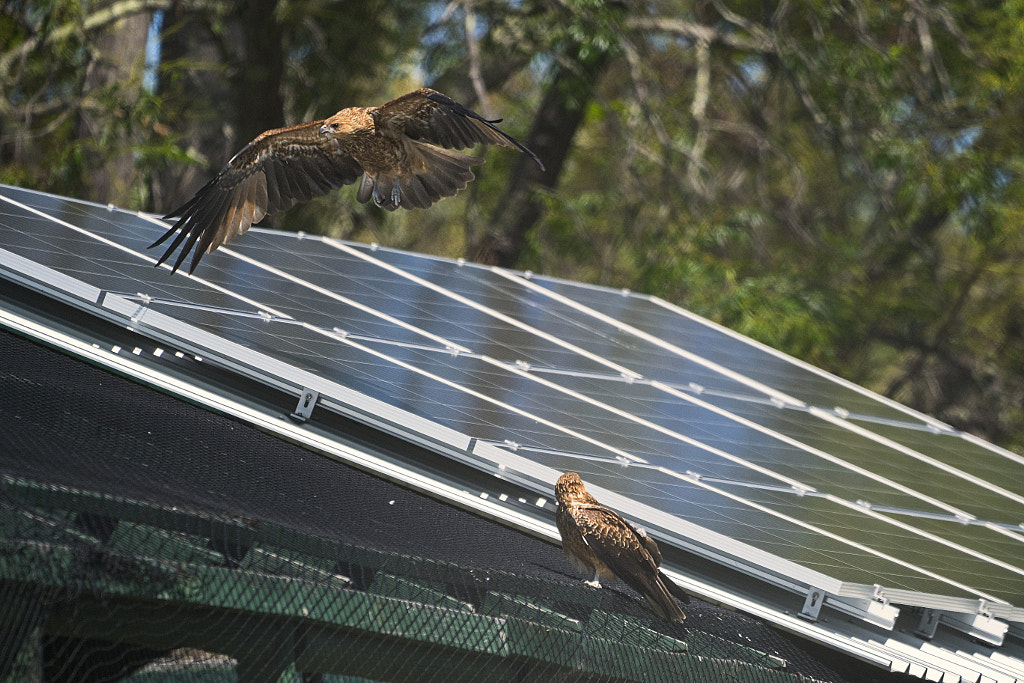
A pair of Whistling Kites seen flying round the aviaries on the edge of Whiteman Park.
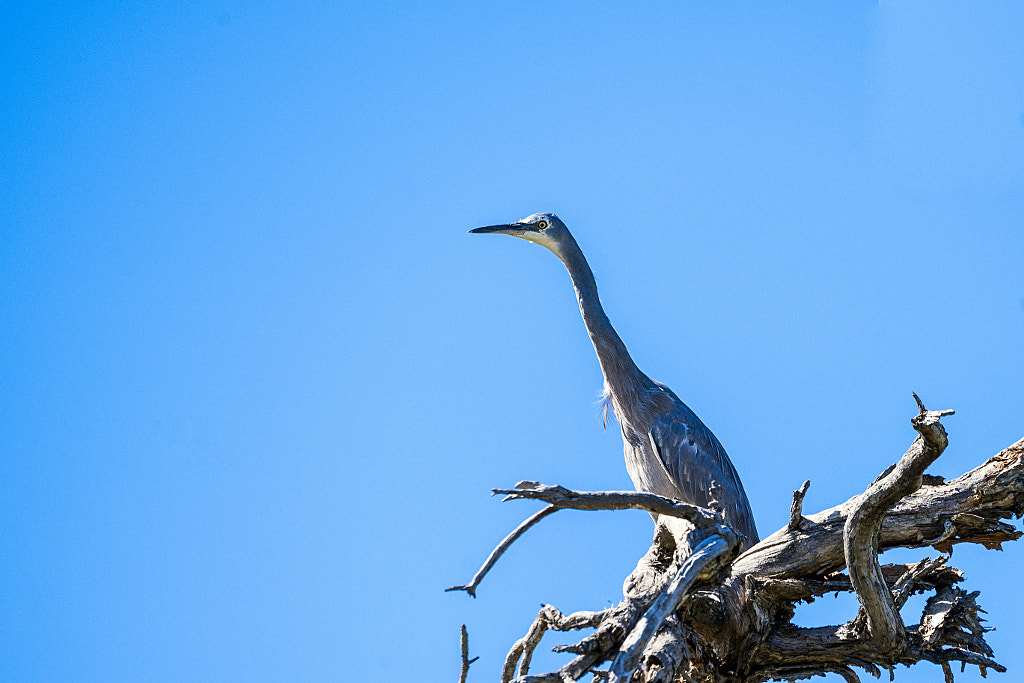
A white-faced heron looks out from its tree top perch over Horse Swamp. Whiteman Park, Western Australia.
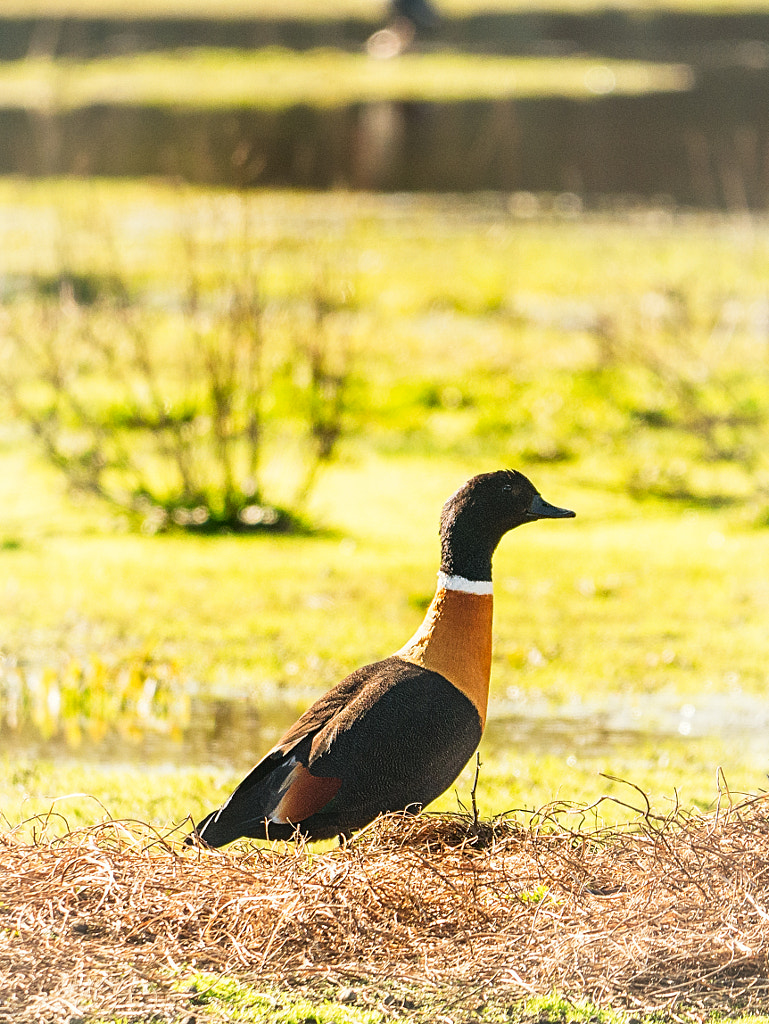
Australian Shelduck, Tadorna tadornoides, Whiteman Park, Western Australia.
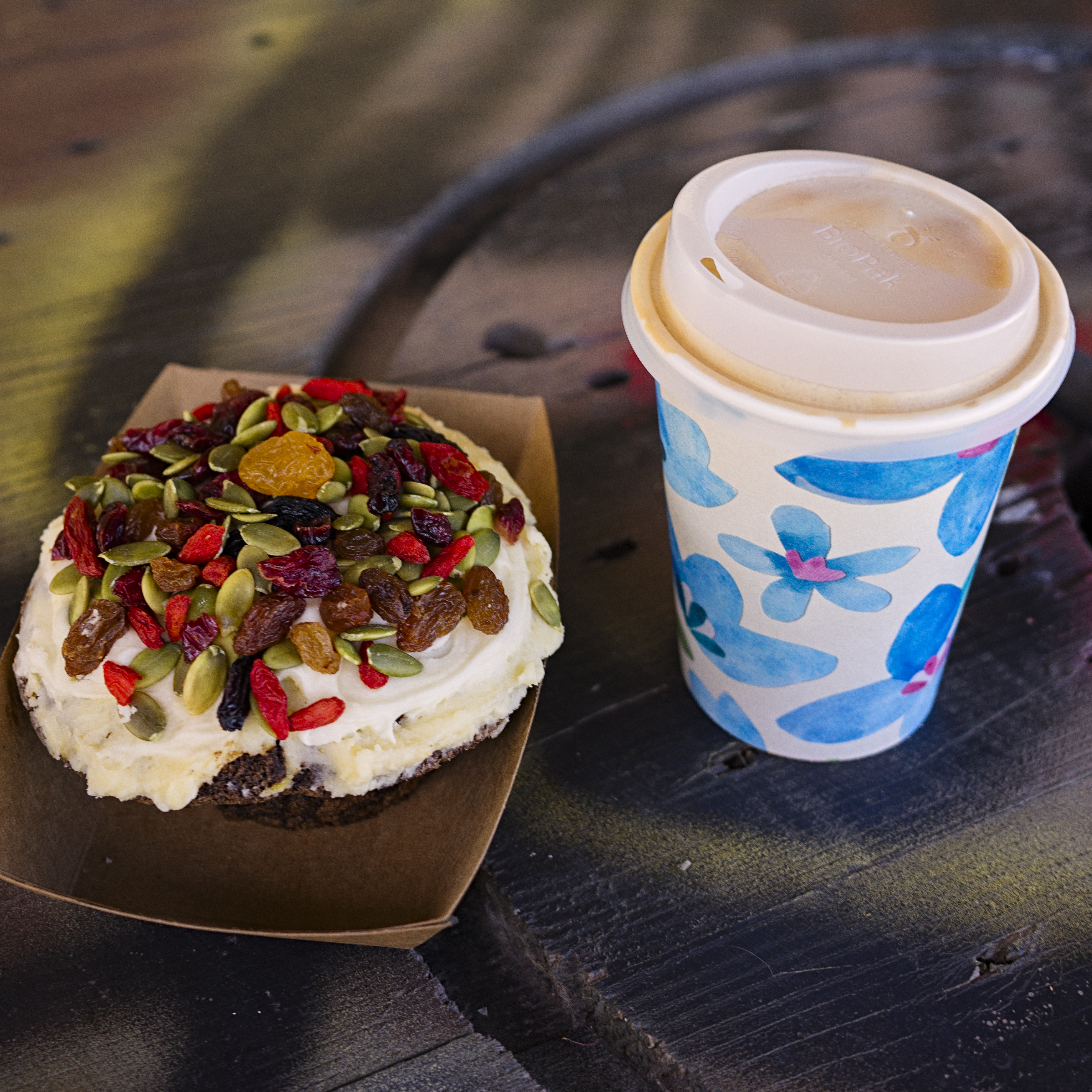
After your leisurely walk around the swamp you can be revived at the excellent Guerrilla Hub Kiosk with a great coffee and some of their wonderful food. And if after all that you feel as if you’ve not communed enough with the wildlife you can always nip up to Caversham Wildlife Park and have your picture taken with a wombat.
Refreshment after a hard mornings walking and bird watching at the Guerrilla Hub kiosk in Whiteman Park.
Yours truly with one of Caversham Wildlife Park’s staff and a wombat.
The trails around the southern end of Lake Joondalup are popular with walkers and cylists alike.
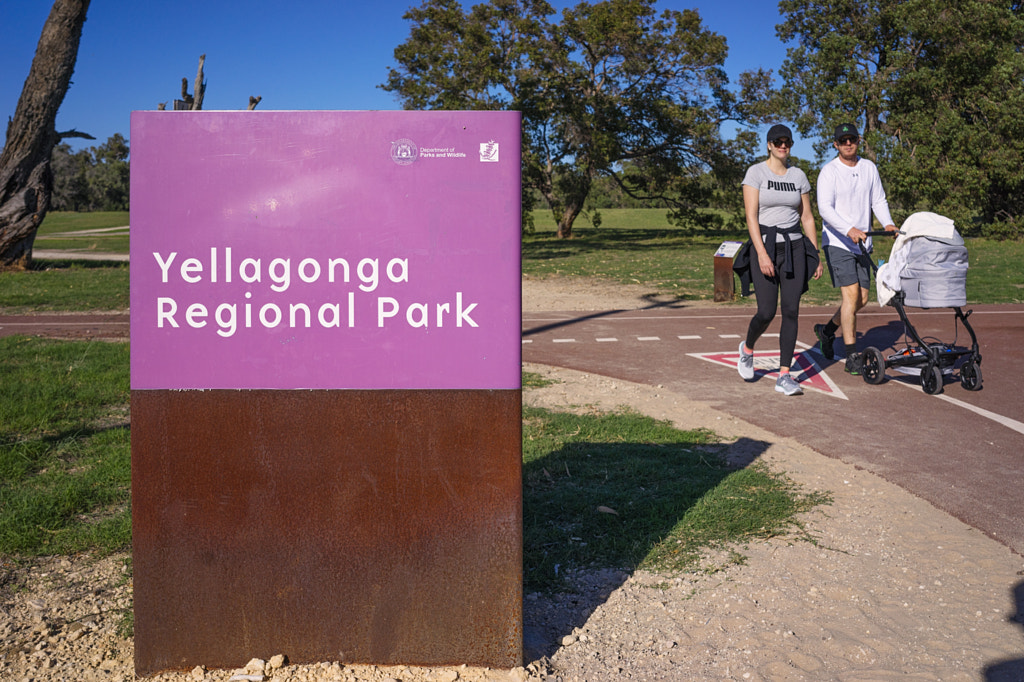
Last August I went up to Lake Goollelal in Yellagonga Regional Park and the other day while my partner was enacting her plan for total world domination in croquet I decided to visit the Park again but this time I thought I’d give the southern end of Lake Joondalup a go.
It’s a nice 4 1/2 Km walk taking in Perry’s Paddock, the southern part of the lake and Beenyup Swamp. I didn’t stick to the main paths but followed the smaller paths around as I wanted to see the local wildlife, and as it was a Sunday avoid the MAMILs thinking they’re riding the the Tour de France – more like the Tour de Farce from the look of some of them.
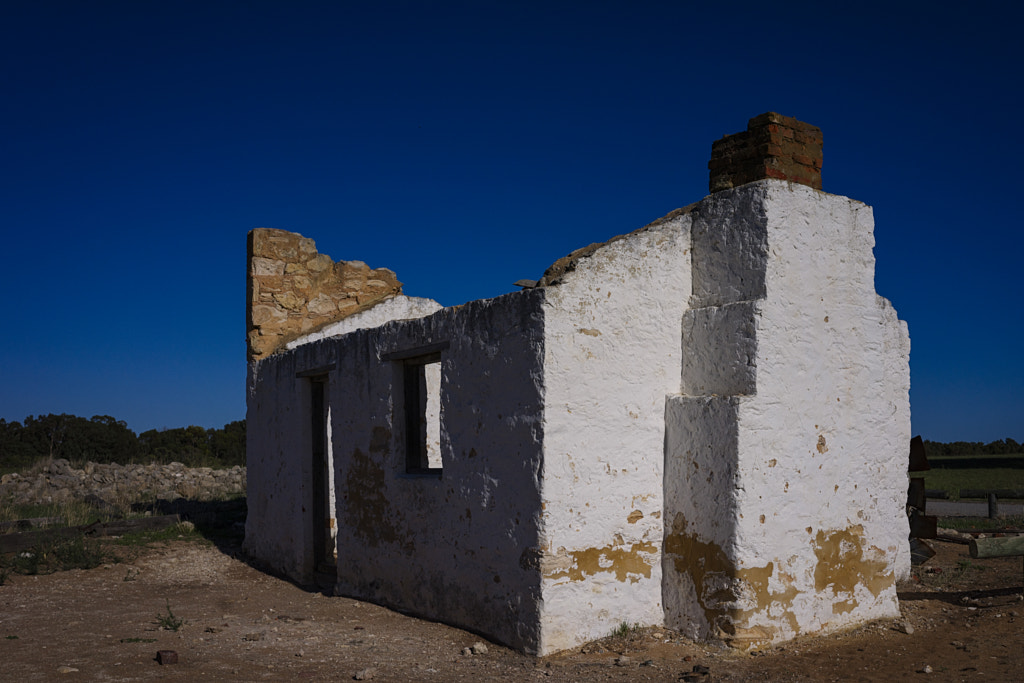
This building is known by a variety of names Linhay, LinhayCottage, Linhay Perry’s Shed. It was built in the 1860’s by George Shenton at Perry’s Paddock. The Paddock was one of the first land grants in Wanneroo area made in 1838.
Near the start of the walk there are some buildings, well the remains of them. They’re not building projects waiting for tradies to finish them but they are some of the earliest buildings to have been built in Wanneroo. The field they’re in is known as Perry’s Paddock and was one of the first land grants in the area made back in 1838. This isn’t what I came for as I was hoping to see birds on and around the lake.
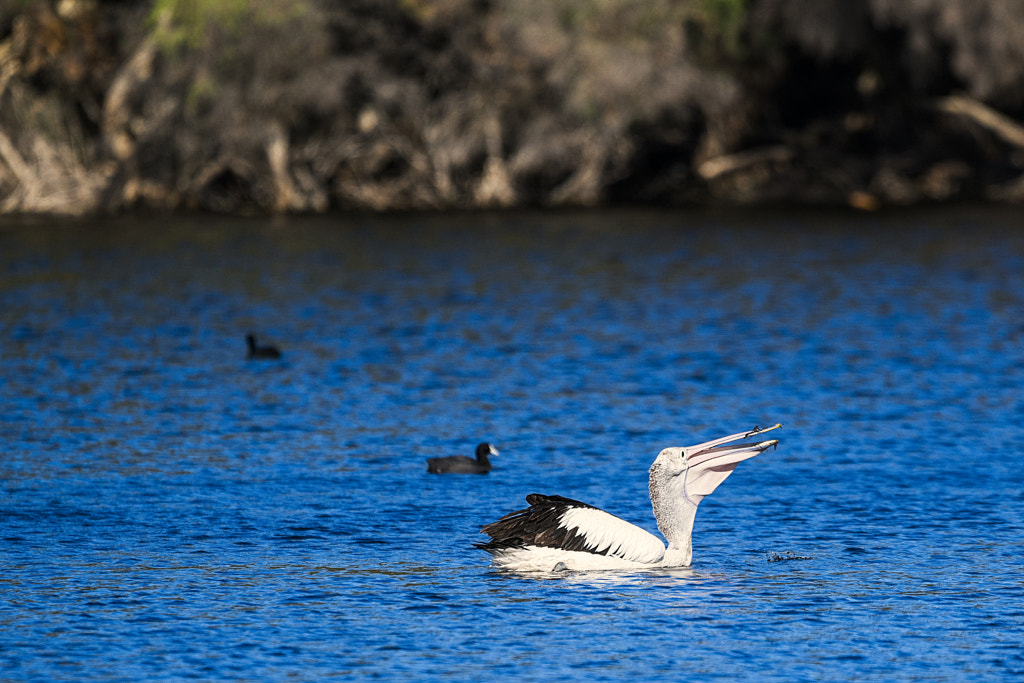
Boodelong or Australian Pelican (Pelecanus conspicillatus) feeding on Lake Joondalup in Yellagonga Regional Park.
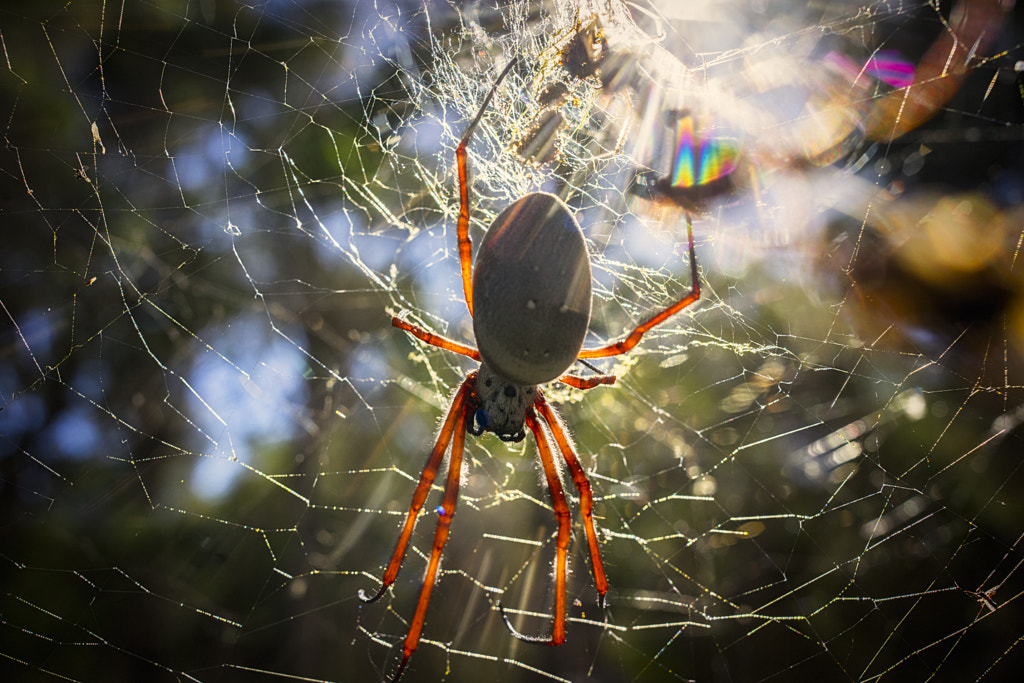
Unfortunately it’s not that easy to get to the lake side – it involves trying to creep through the thick bush on the lakeside without making any noise. One crack of dry twig and you’re rumbled and every birder miles around does a runner. The thick bush has other hazards – they’re thick with spider’s webs – really BIG webs. Where there are big spider’s webs there are BIG spiders. In this case they Golden Orb-Weaving Spiders so named as the webs have a slight gold hue to them. The webs are surprising tough and the female spiders that make them are not shy and are very visible which makes it difficult for those of a more nervous disposition not to scream when blundering through them like something out of Harry Potter. Screaming like a “girlie man” also does not help you creep up on birds unnoticed. Your fearless correspondent was undeterred as he knew that despite their size Golden Orb-Weaving Spiders are harmless unless you are an insect or a male of the species looking for an amorous liaison.
Golden Orb-Weaving Spider, Nephila edulis. Despite its size and their massive webs they are harmless to humans. Yellagonga Regional Park, Western Australia.
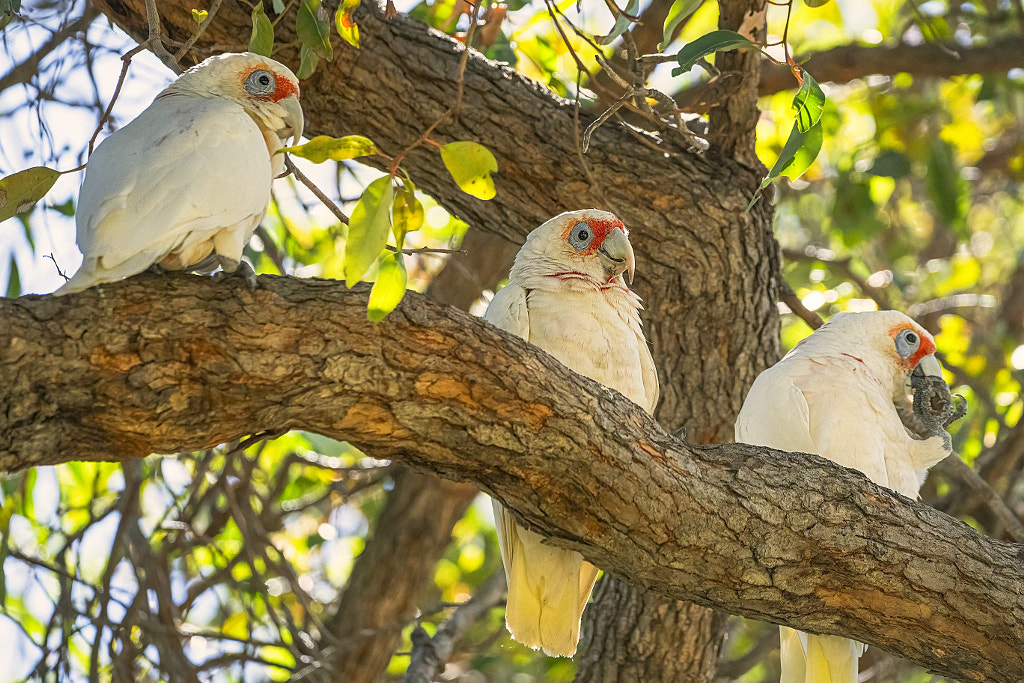
Manyt or the Western Corella (Cacatua pastinator subsp. derbyi). Yellagona Regional Park, Western Australia.
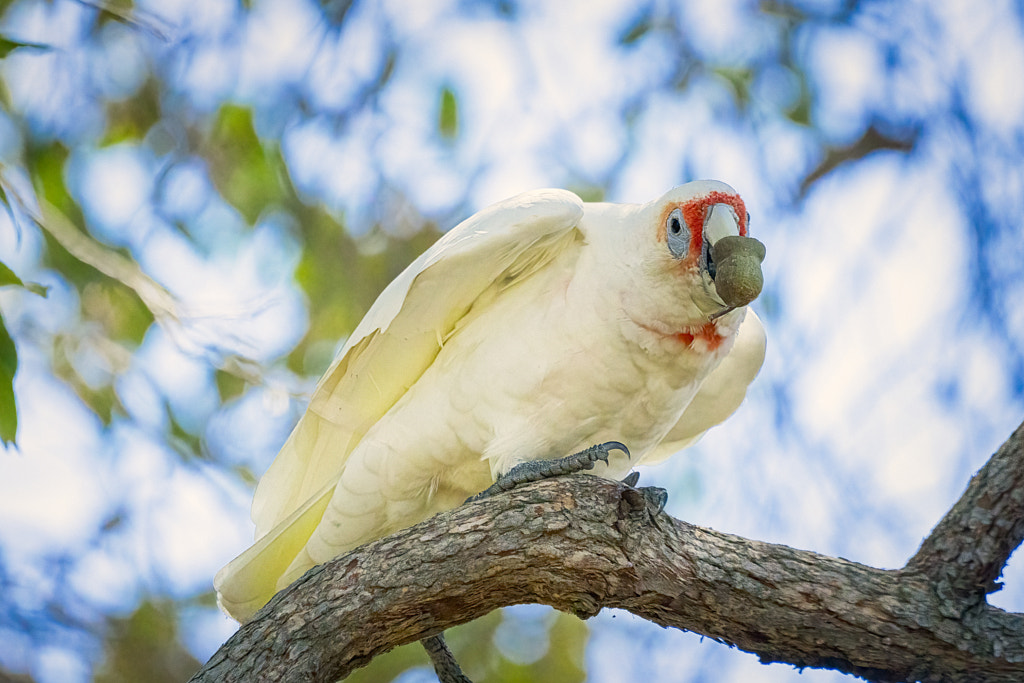
Three wise corellas – hear no evil, see no evil, and sorry my mouth is full. Yellagona Regional Park, Western Australia.
At least the corellas found my mad dance of jumping up and down and flapping my arms about while shrieking entertaining. Ah! I didn’t mean to say that! They would have if they’d have actually seen me do it – which of course they didn’t. Leaving the lake and heading down south takes you to Beenyup Swamp which provided an opportunity to see more birds and less spiders.
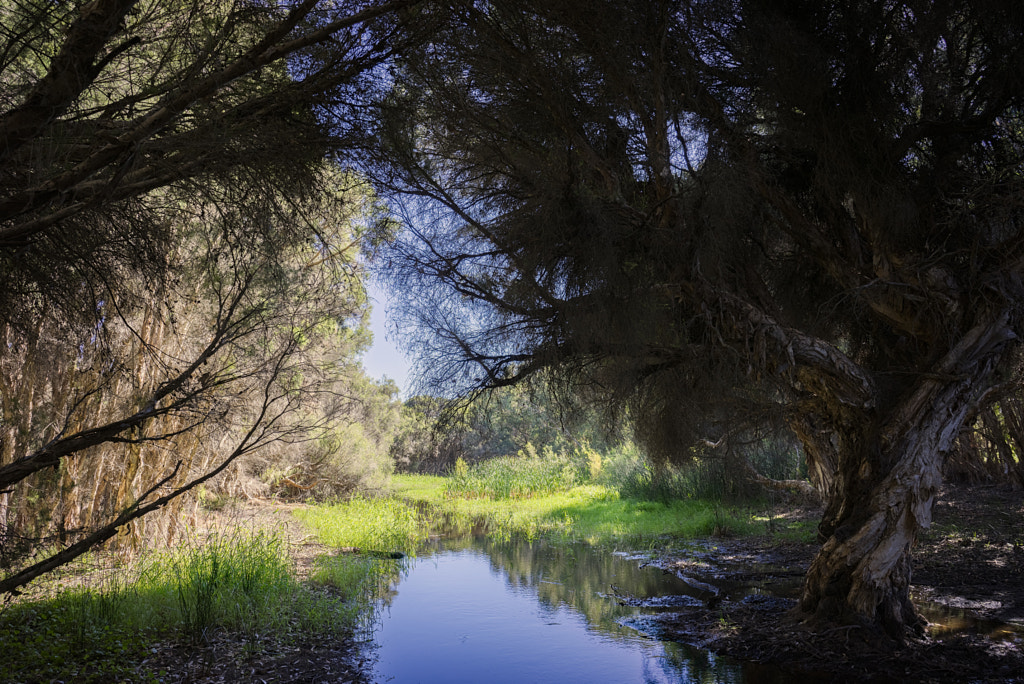
Beenyup Swamp in Yellagonga Regional Park.
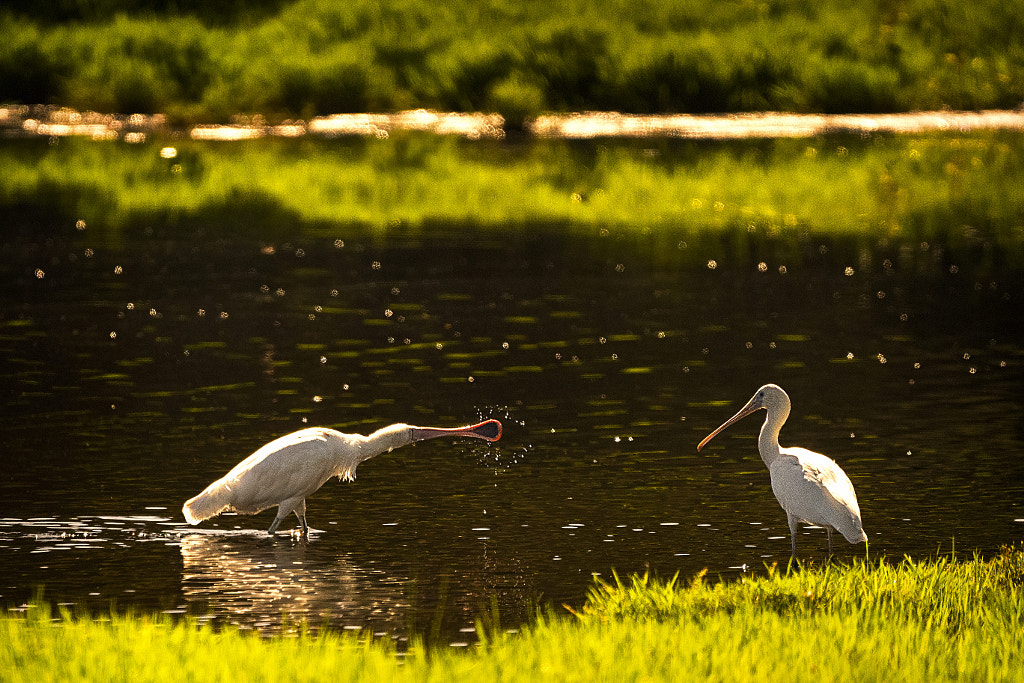
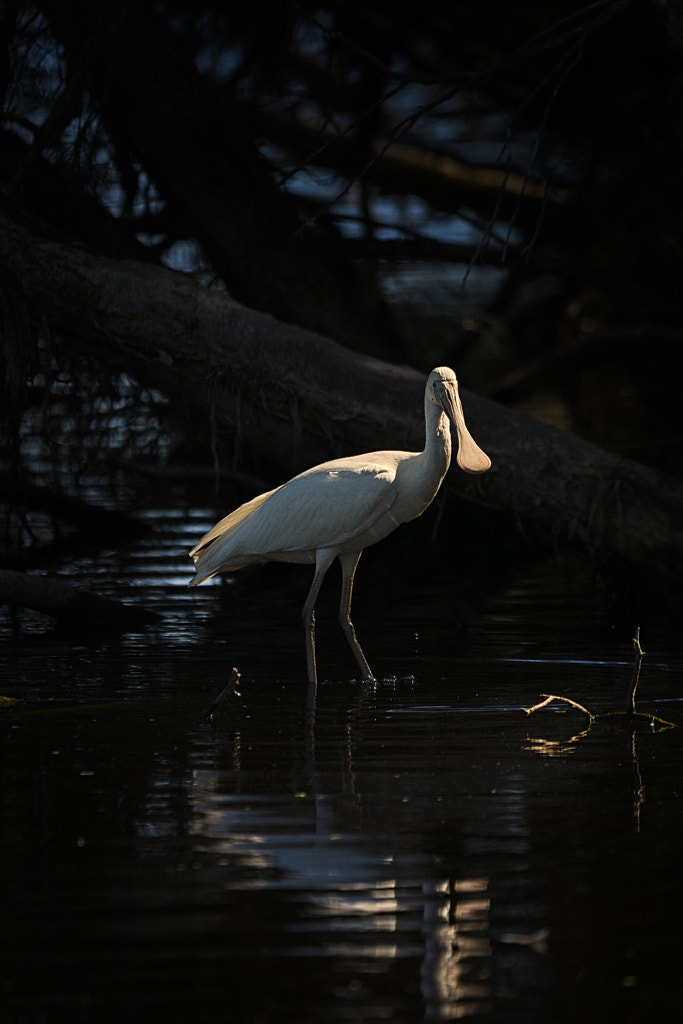
Melkullya or Yellow-billed Spoonbills, Platalea flavipes, feeding at Lake Joondalup in Yellangonga Regional Park.
Lurking in the shade of the swamp paperbark trees.
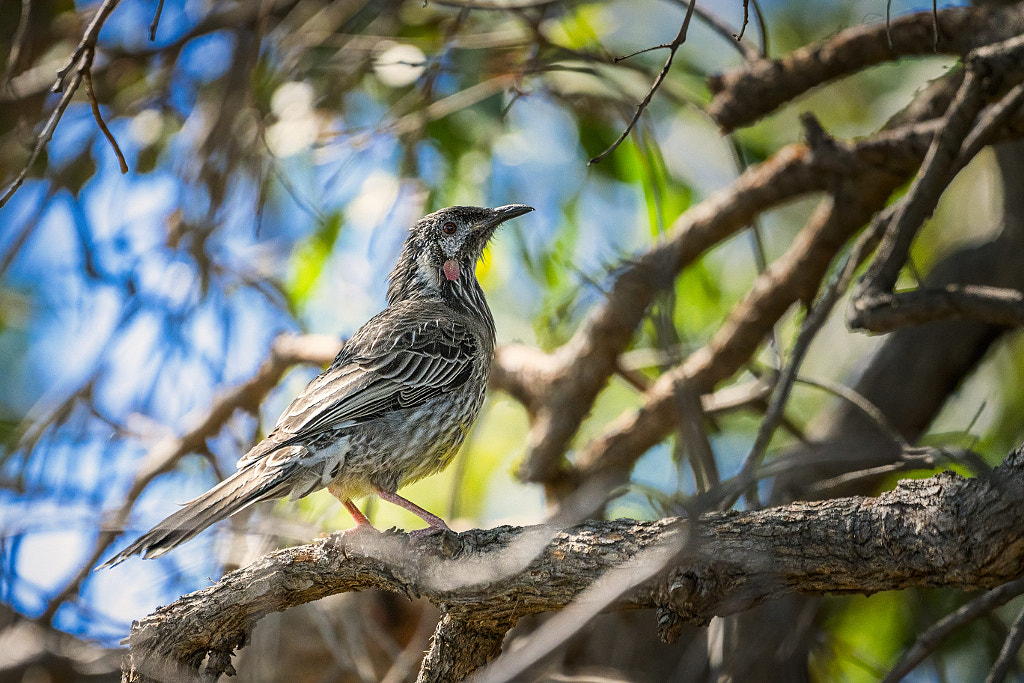
Red Wattle bird (Anthochaera carunculata subsp. woodwardi) known to the Nyoongar people as wodjalok. Yellagonga Regional Park.
Djitidjiti . The eponymous Willie Wagtail, Rhipidura leucophrys leucophrys. Yellagonga Regional Park, Western Australia.
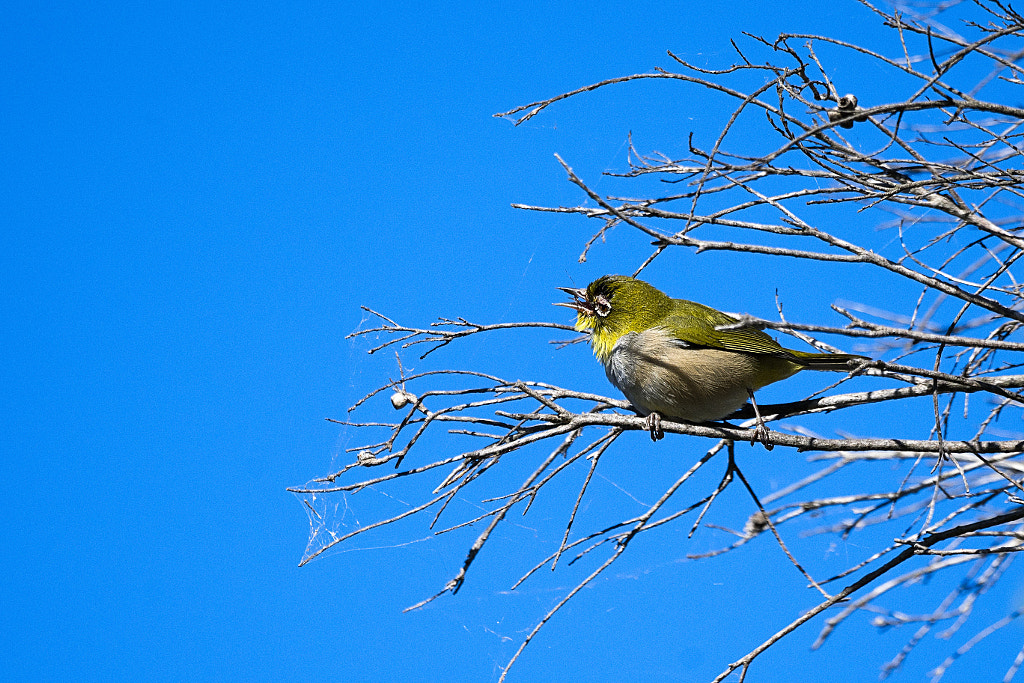
Despite their small size the Silvereye, Zosterops lateralis, has an incredibly loud birdsong. Yellagonga Regional Park, Western Australia.
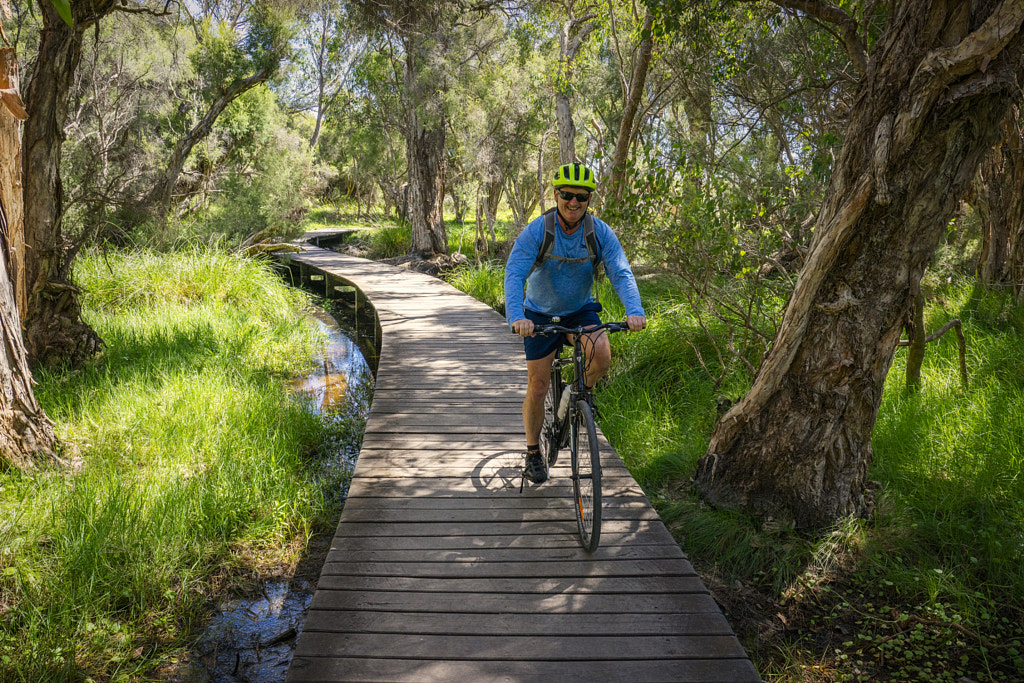
While walking along the Beenyup Swamp Broadwalk I did meet my first cyclist of the day who was definitely not a MAMIL and who was very apologetic for startling me. All in all a very pleasant walk and hopefully I’ll get back at a better time of year when there’ll be more bird activity.
Not a MAMIL. Cycling along the Beenyup Swamp Boardwalk in Yellagonga Regional Park.
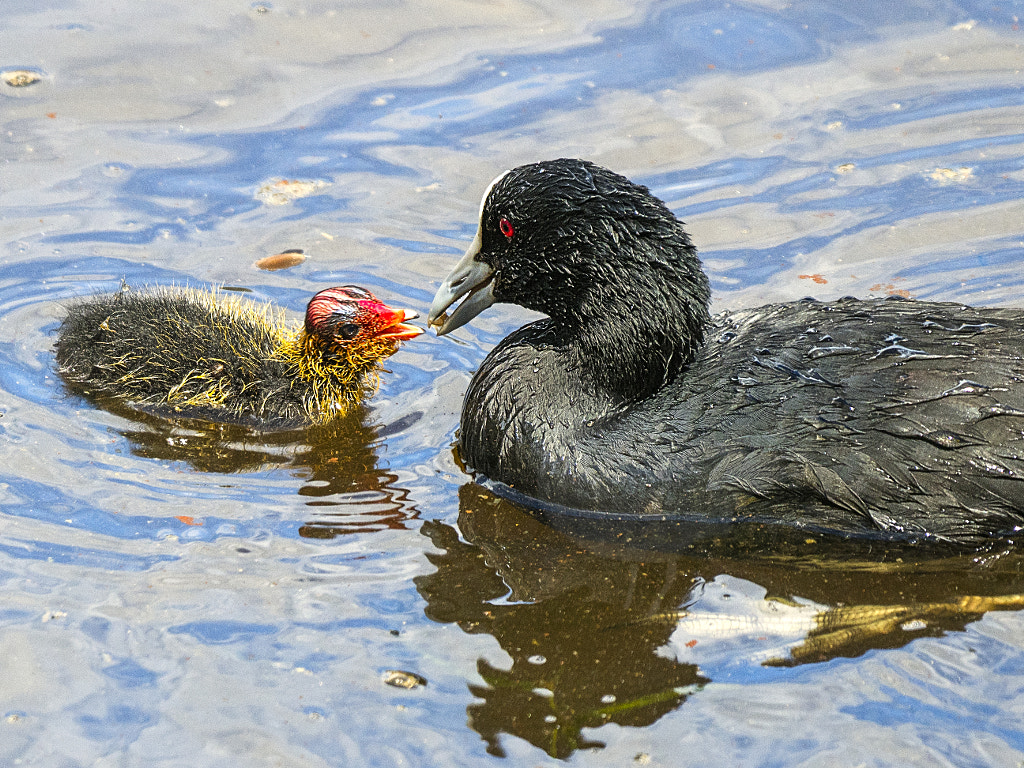
Female Eurasian Coot feeding its young at Lake Leschenaultia in Western Australia.
I haven’t managed to get out and about for the last month. The recent bout of flu I’ve had just knocked the stuffing out of me for the last 4 or 5 weeks. Well this week feeling considerably better I went out to Lake Leschenaultia to photograph birds. We got there too late in the morning and there was nothing really interesting happening. So I just spent the morning watching this Eurasian Coot feeding her chicks. After being stuck at home feeling Moby it was a delightful way to spend a morning.
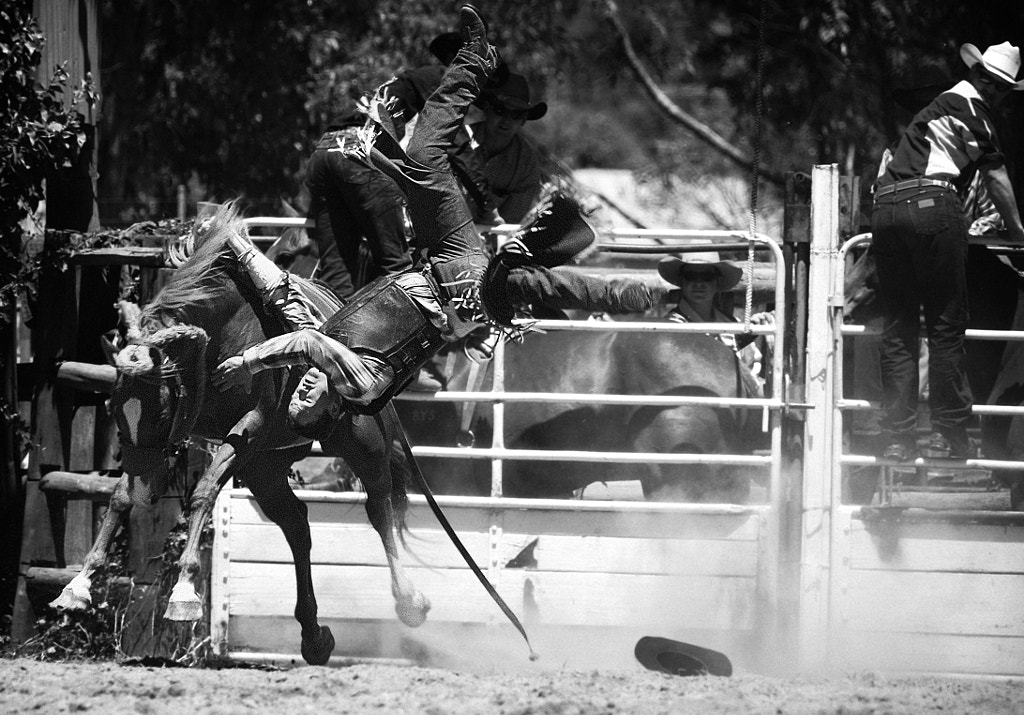
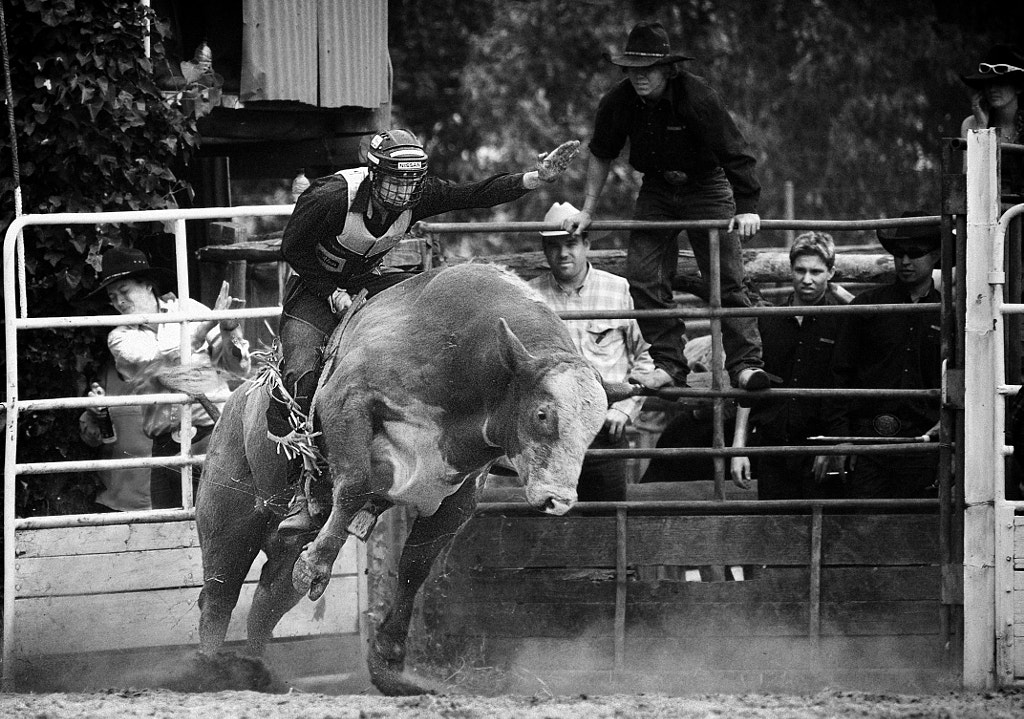
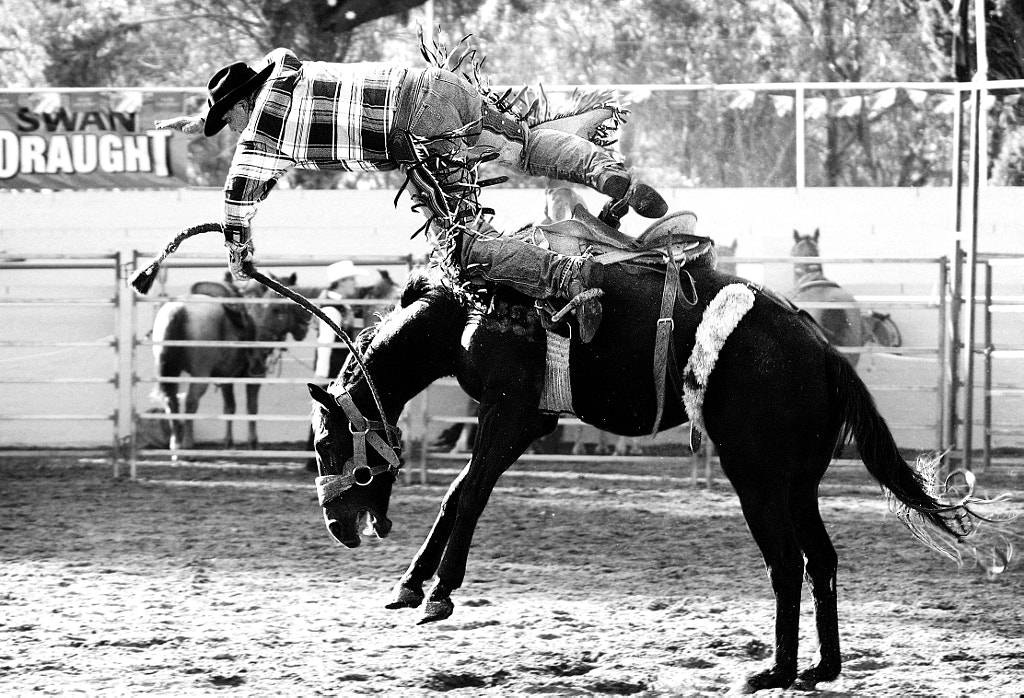
They say that Bronco riding is like holding on to the exterior door handle of a car doing 50 Km per hr. No wonder that 8 seconds seems such a long time.
Recently I put the above image up on my Instagram feed from a project I did back in 2004-8 called Broncos and Bulls. It elicited the following response:
“the rodeo is ALWAYS going to give you the opportunity of dramatic photos. …”
Initially I was going to put a short witty reply up, but then I started to think about it. “Will the rodeo always give the opportunity of dramatic photos?”.
In 1952 a French photographer by the name of Henri Cartier-Bresson is credited with coming up with the notion of the decisive moment. In fact it was the English title of his book of photographs. The original French title was “Images à la Sauvette” which is quite an awkwardphrase to translate into English. It has been variously translated as “images on the run”, “stolen images” and “images on the fly”. In the end it was Bresson’s American publisher who settled on the phrase the “decisive moment“. The book is hugely influential and Bresson has become one of the Titans of Twentieth Century photography and the phrase has come to define a whole genre of photography. Unfortunately it is misunderstood because it doesn’t just mean capturing the apex of action but rather it is “the instant when a prescient photographer anticipates a significant moment in the continuous flux of life and captures it in a fraction of a second”. (p 104 Badger, G. 2007 “The Genius of Photography – how photography has changed our lives” Quadrille Publishing Ltd, London). Or to put it another way when all the individual elements of a photograph come together to create meaning. Reams and reams of literature have been published by far cleverer people than I debating the whole notion and Bresson himself was only too aware that the whole concept could be corrupted.
Behind the Gare Saint-Lazare by Henri Cartier-Bresson. Considered by many to be one of the most influential photos of the Twentieth Century because it became the epitome of Cartier-Bresson’s “Decisive Moment”.
Jean Clair (Director of the Musée Picasso in Paris) in his essay that is included in the major retrospective book about Bresson ( pp47-55 Galassi, P; Delpire, R. et al, 2003, ‘Henri Cartier-Bresson – the man, the image, and the world’ Thames Hudson, London) likened the decisive moment to the ancient Greek word kairoswhich was used to describe how an archer using intuition would let an arrow fly to hit the right spot.This I feel is a flawed analogy because it reinforces the notion of the photographer as hunter stalking his prey with the one singular intention, but photography is not that simple. The American photographer Sam Abel in his 2008 book ‘The Life of a Photograph’ (National Geographic Society, Washington) states that are a whole series of acts which culminate in a photograph.Firstly the photographer has to pre-visualise the photo, then they have to seek out the opportunity and put themselves into the position when all the elements of lighting and composition come together, and then after the picture has been taken select the picture that most captures the intention. So rather than a singular point of time the photographer is looking at a series of decisive moments which have to evolve. After the photograph has been taken and published/viewed then the photograph takes on a whole new life and is imbued with new meaning by its viewers.
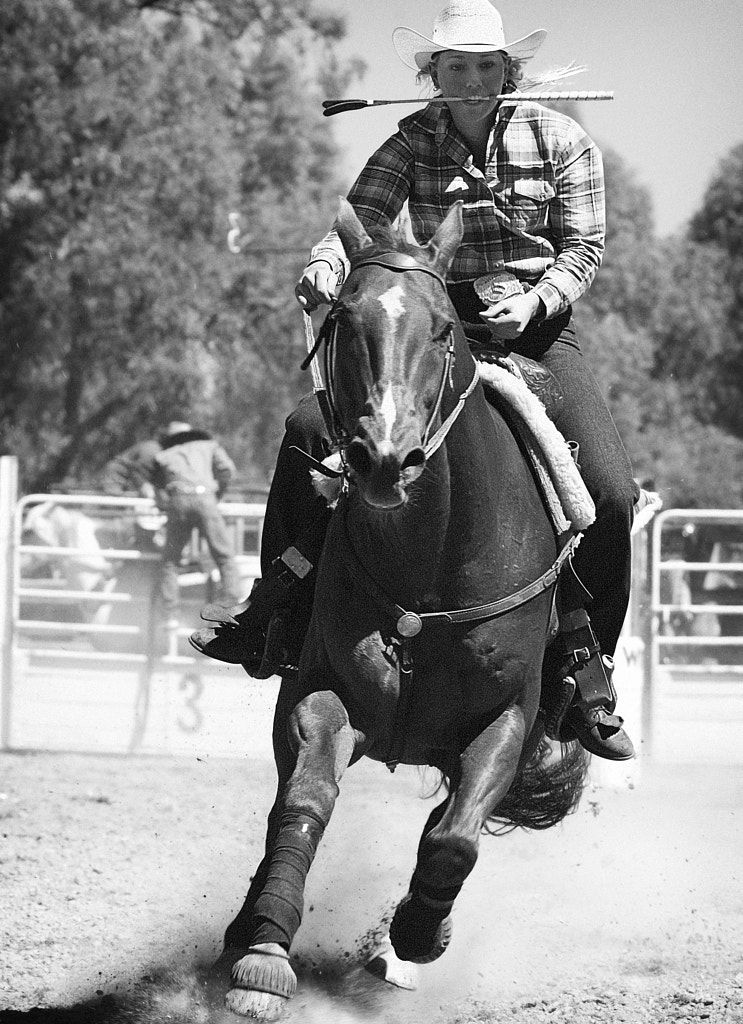
Barrel racing at Boddington Rodeo.
So getting back to the original statement “the rodeo is ALWAYS going to give you the opportunity of dramatic photos. …” the answer is yes and no. The event gives an opportunity it is up to the photographer to seize that opportunity through preparation, creative vision, and technical capability. Just turning up at a rodeo with a camera doesn’t mean that you’ll come away with a good photo. Just like going to MacDonalds won’t make you a hamburger.
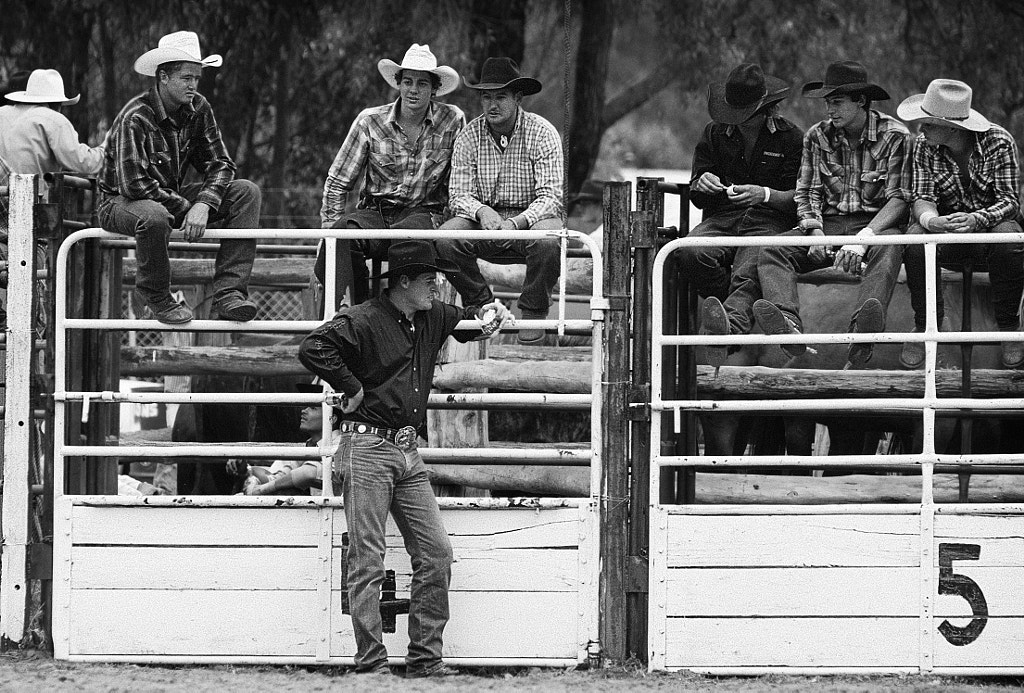
Waiting for the start.
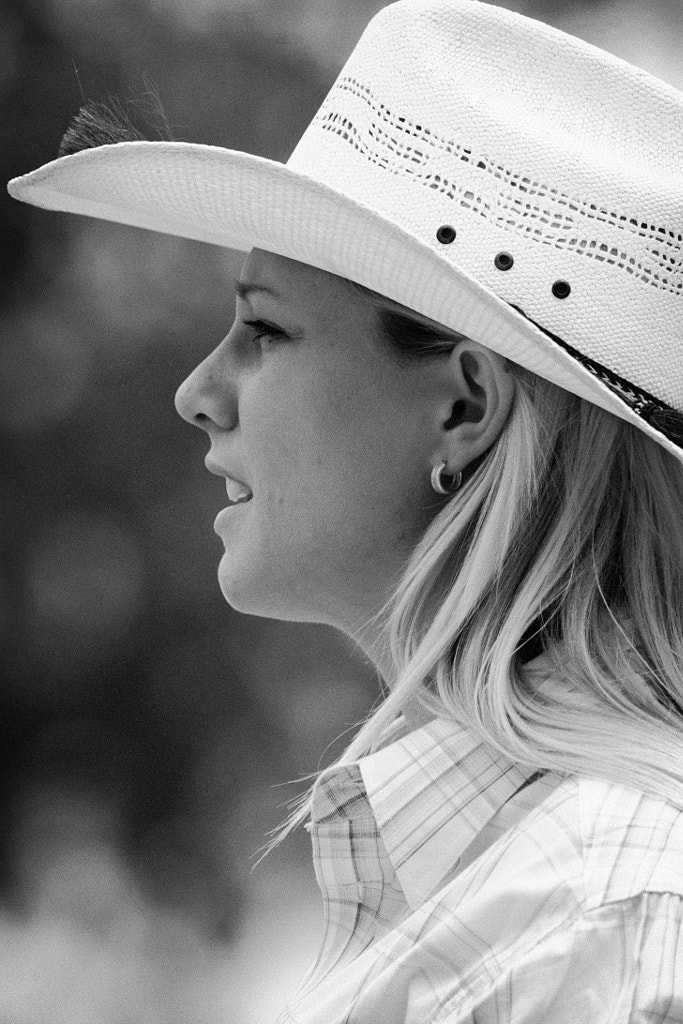
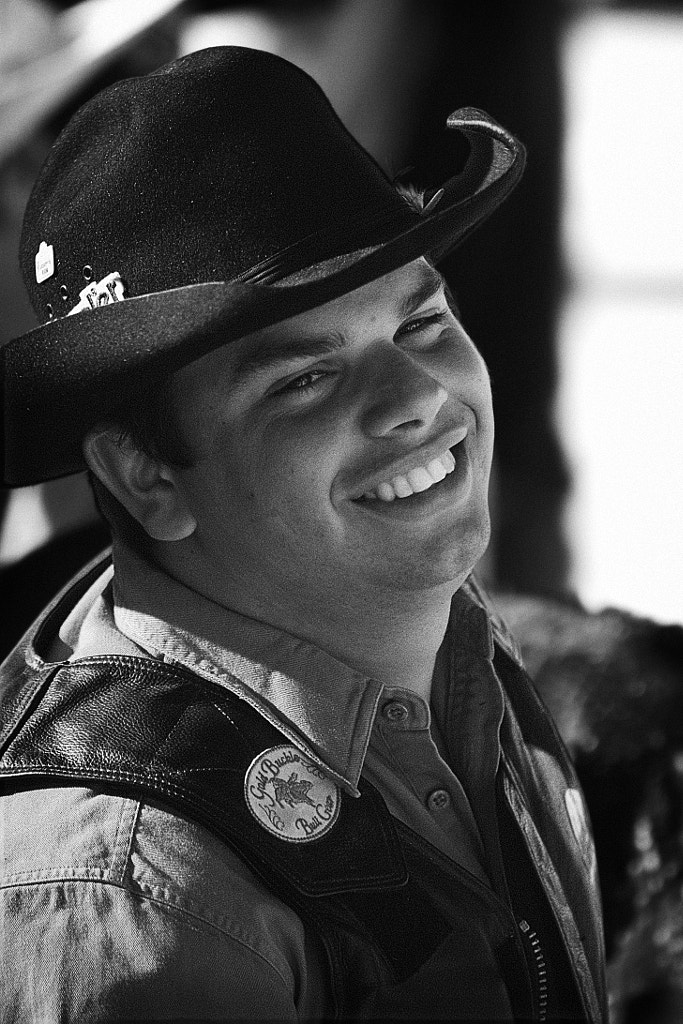
I’ve included the rest of the photos from the project Broncos and Bulls because the whole series was shot using the principle of the decisive moment to form a visual story. As I said previously this was done in 2004-8 and since then I have moved away from the subject and the style, but my current photographic interests are still based upon Bresson’s ideas.
The Next Generation. Rodeos are are big event in Western Australian country towns and attract an audience of all ages.
Nice Hat! Spectators dress for the occaision at the Boddington Rodeo.
Matt’s Free Fall. Matt, El Caballo’s Extreme Rodeo compere tries his hand at bronco riding with catastrophic results.
Damon Metcalf relaxes behind the chutes before the pro bull riding event.
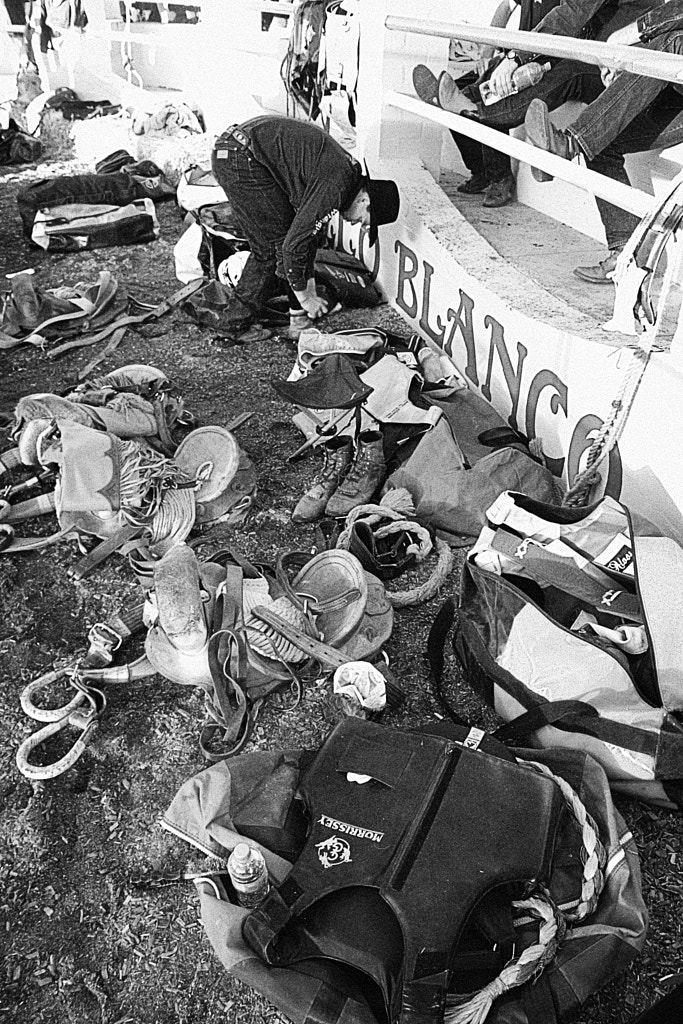
Preparation is the name of the game and the competitors at El Caballo Rodeo meticulously sort through their kit before competing.
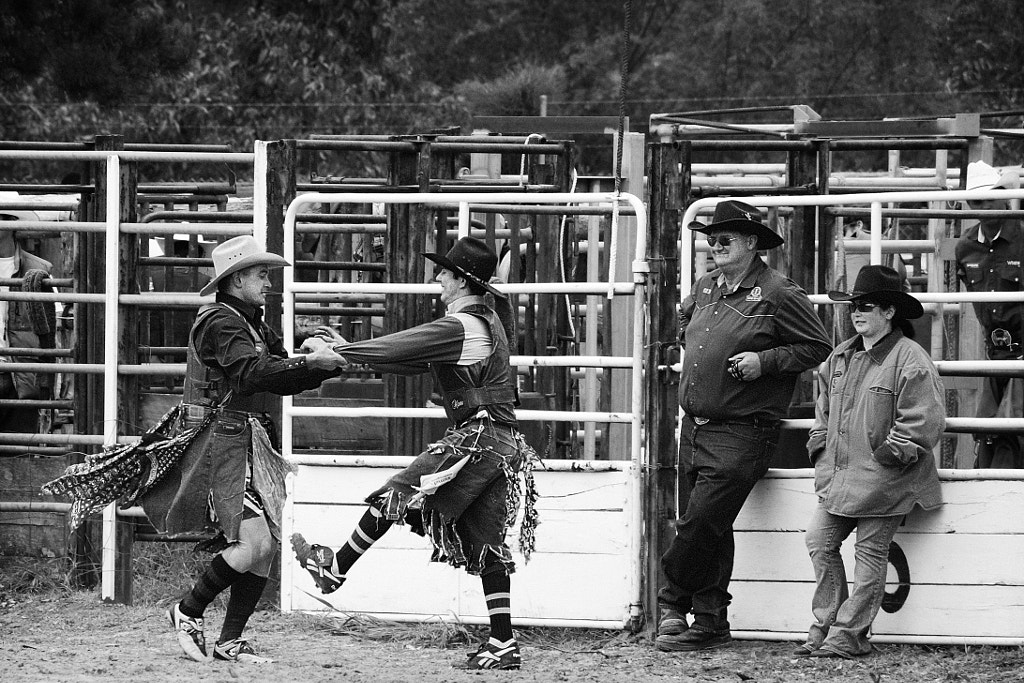
The rodeo clowns had a ball.
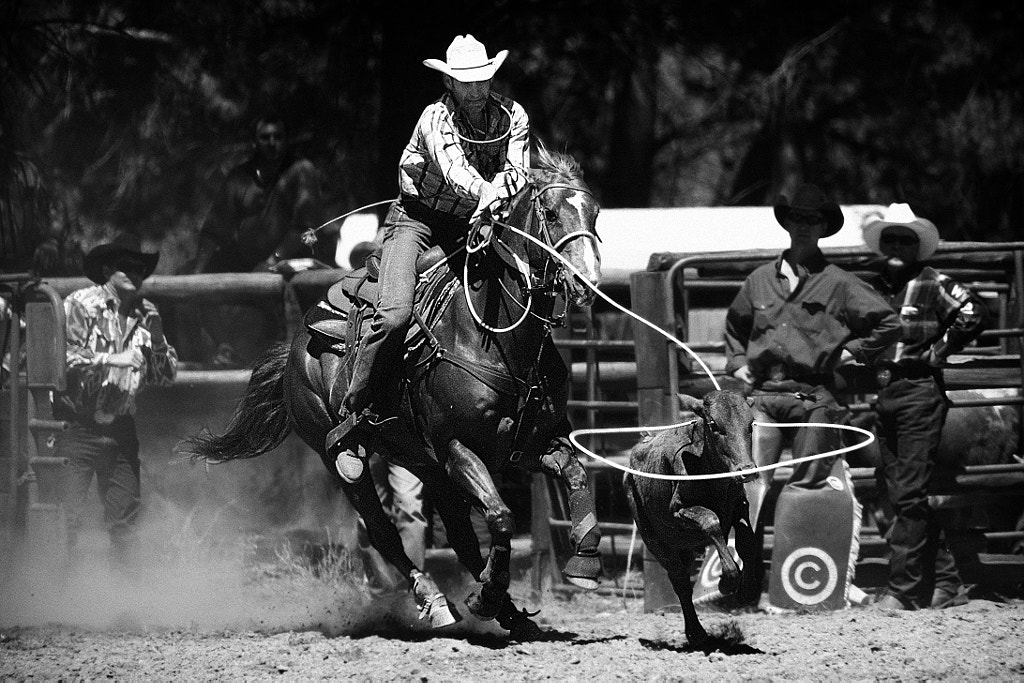
Gotcha!!! Steer roping competition. Boddington Rodeo, Western Australia.
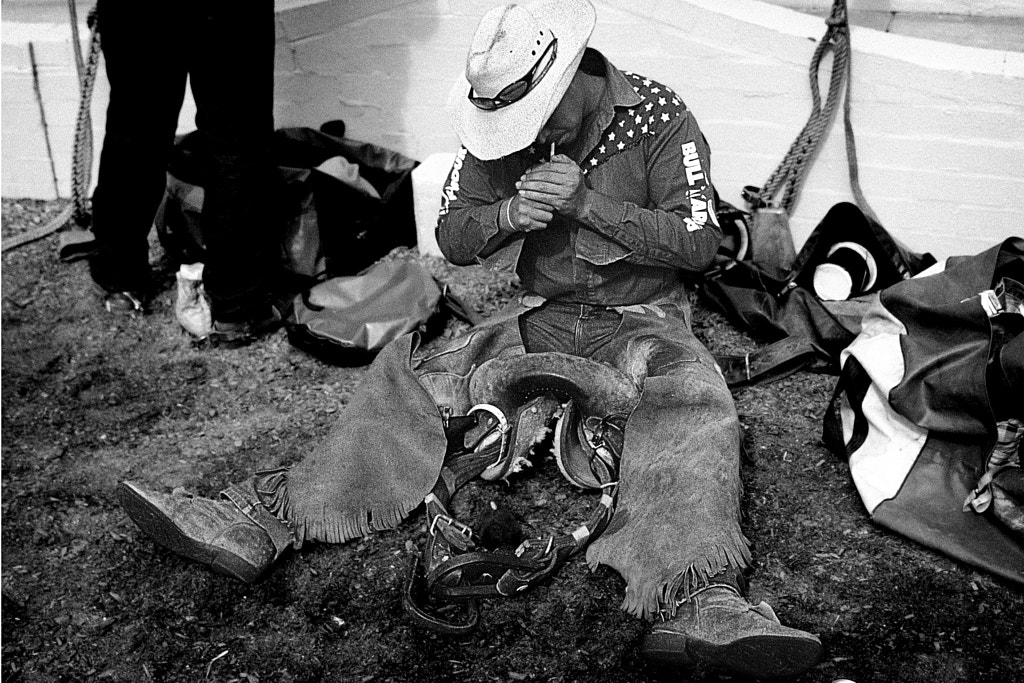
Having a quick smoko while getting ready. El Caballo.
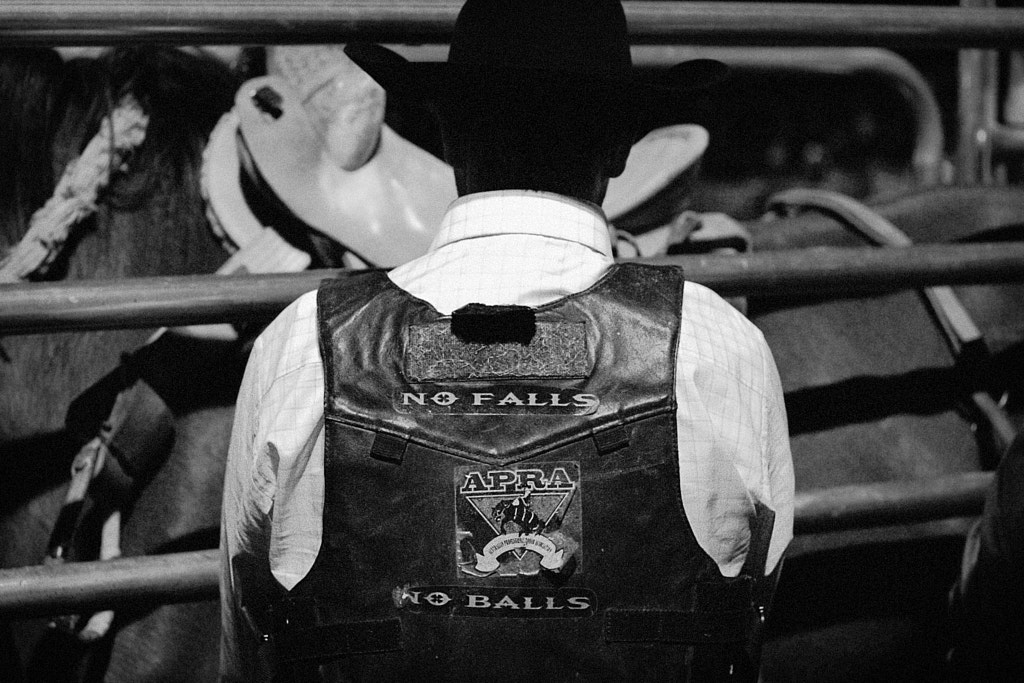
No Falls No Balls. Attitude is everything at the rodeo. El Caballo, Western Australia.
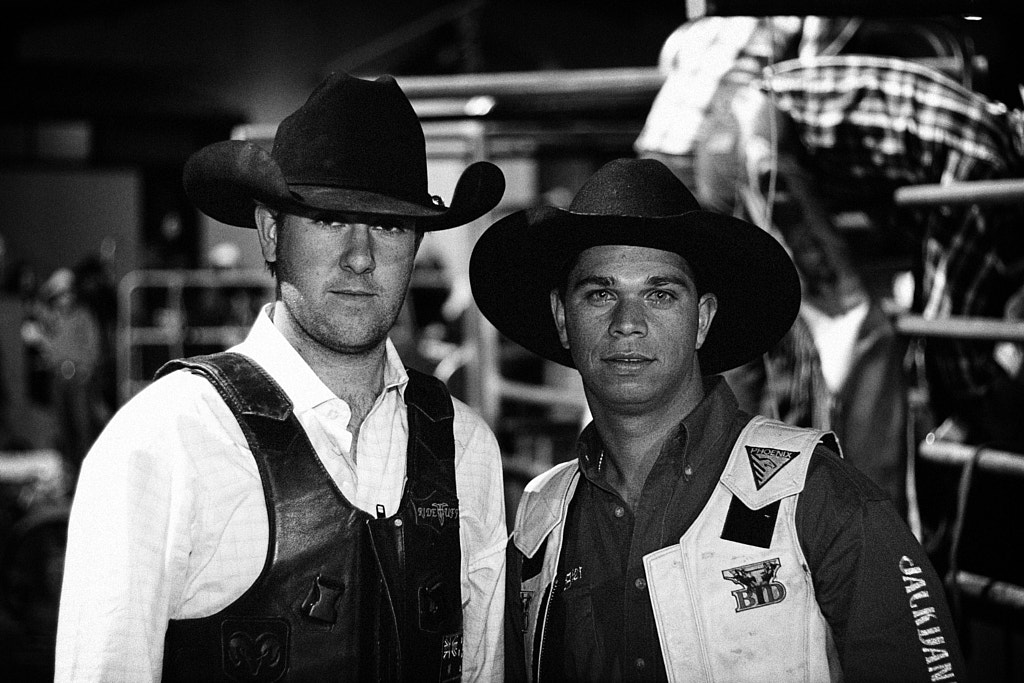
These two called themselves liquorice all sorts. El Caballo, Western Australia.
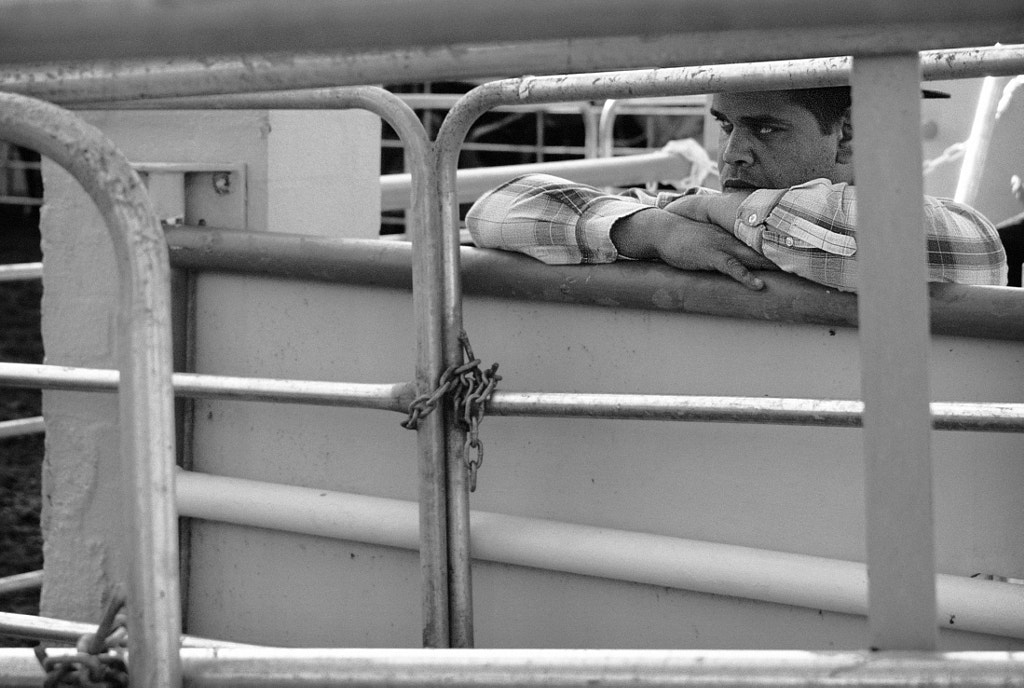
Waiting in the chutes. El Caballo, Western Australia, 2007
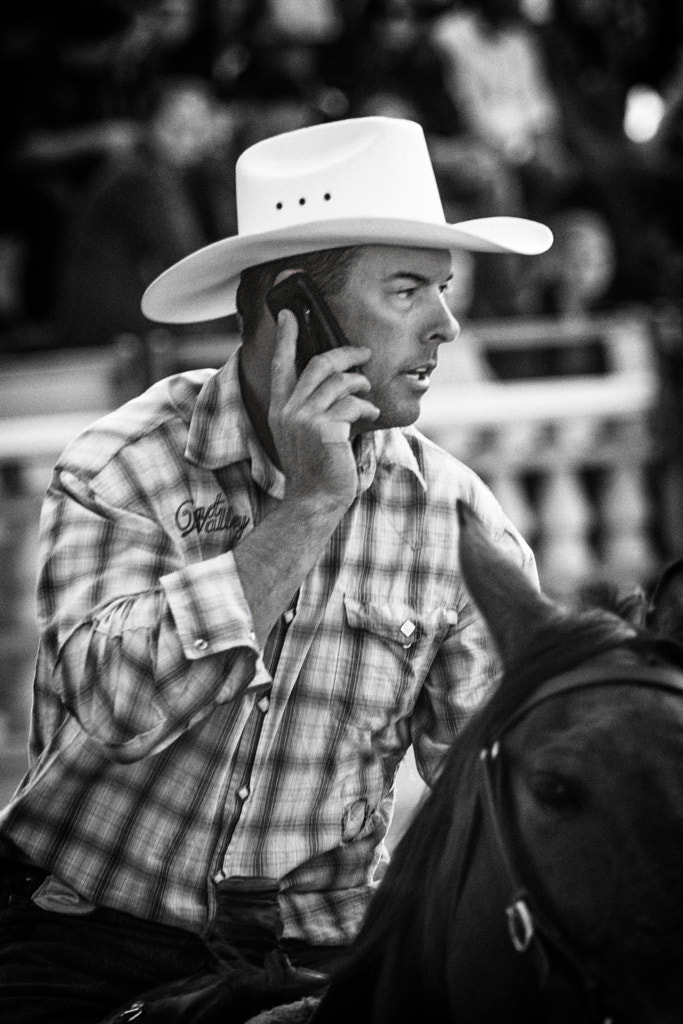
No Hands Free On A Horse. “Can you call back later – I’m kinda busy.”
At the Casa del Amyes we’ve gone a bit mad for things Spanish. The Spanglish is flying thick and fast and we’re even thinking of actually going there COVID 19 permitting. What’s brought on all this exuberant celebration of all things Iberian? Well a little while ago I posted about a Spanish inheritance. Well we’ve not inherited anything yet despite it going on for two years now. It’s what you get when your father-in-law played Monopoly in a small Spanish village with real houses and who developed the local aversion to all things to do with property titles, land taxes and capital gains taxes. Throw into the mix a convoluted legal system, dodgy Spanish lawyers weird inter family dynamics and we’ll probably not get our hands on anything for a few decades yet.
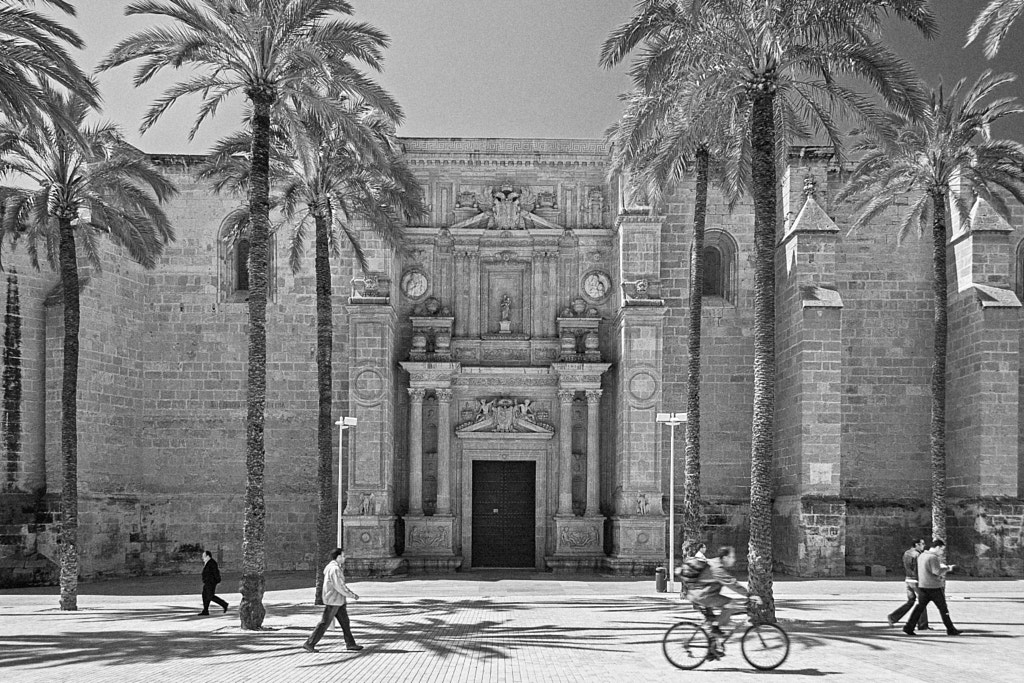
Catedral de la Encarnación de Almería.
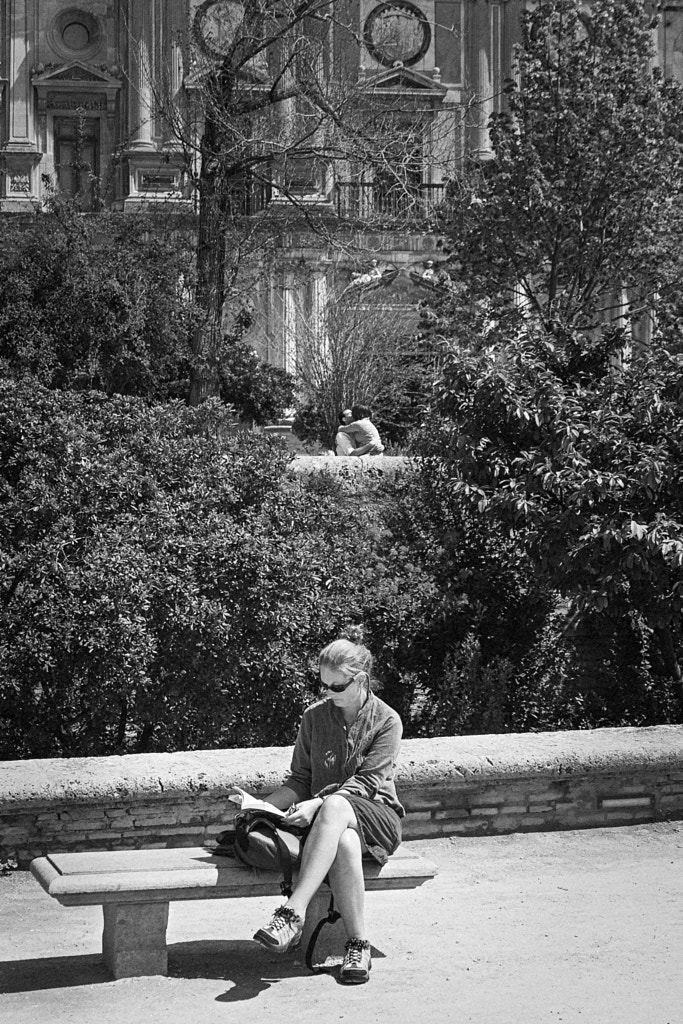
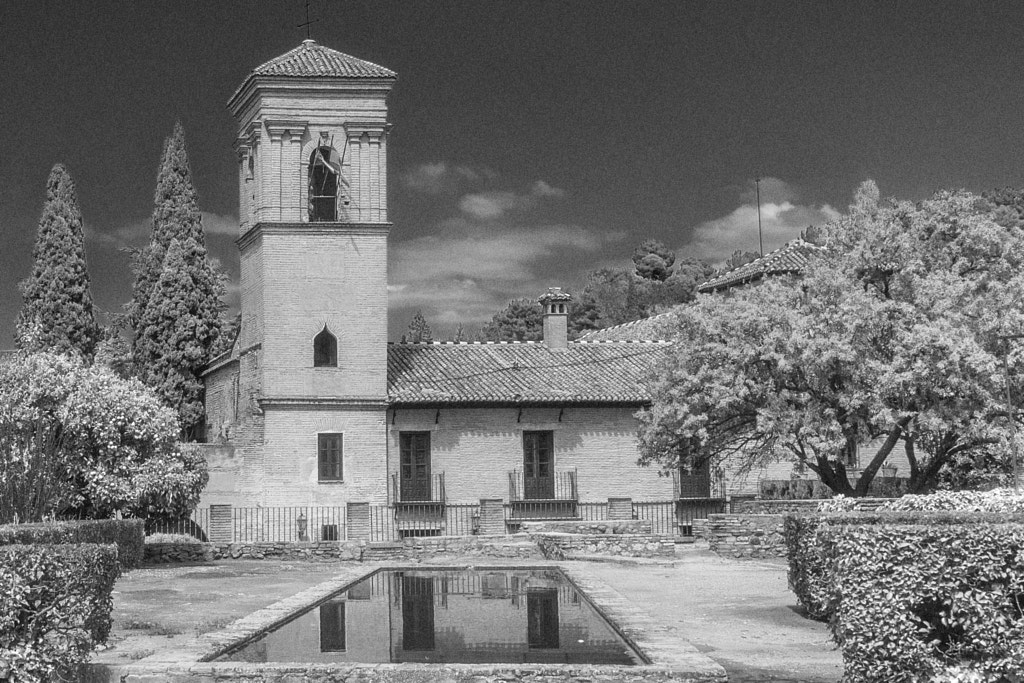
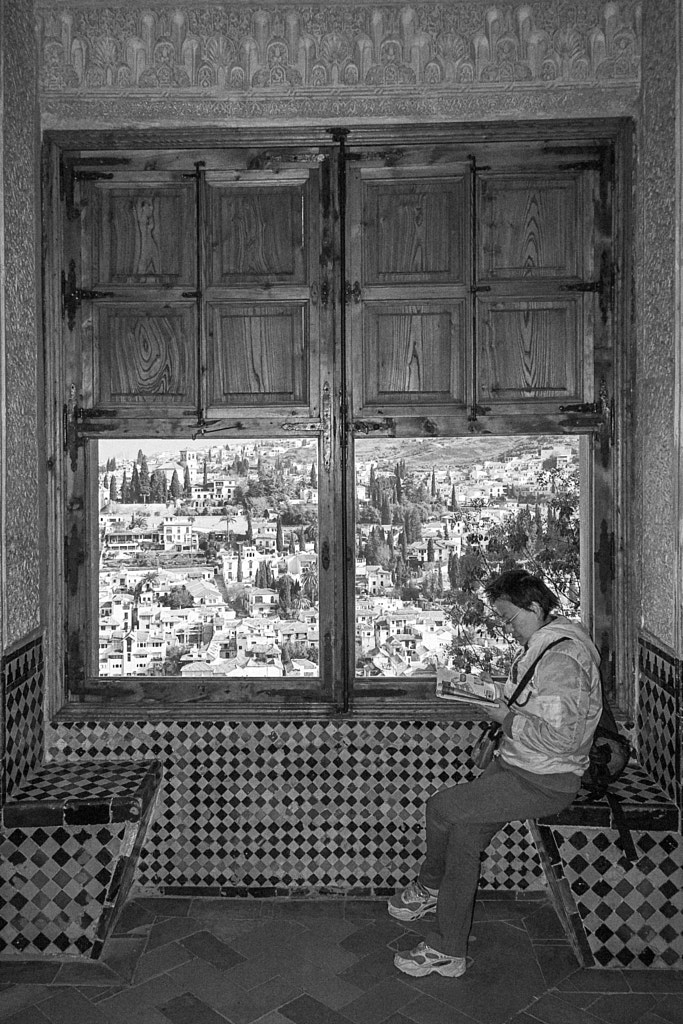
We’ve been to Spain before. I can’t say it’s my favourite country to visit, but that’s probably due to the fact on my first visit a member of the Spanish Guardia Civil (the ones who wear Micky Mouse ears) was under the misapprehension that I was an English football hooligan and decided to introduce me to his truncheon – repeatedly – when I was really an innocent British InterRail tourist who was having a kip on a bench. I digress. So as I practically go everywhere with a camera I’ve started looking at my Spanish photos. A lot were taken on film (black and white, colour slide, and colour print) and then as technology advanced digitally. Now as the last time we visited was 2004, which was back in the Stone Age as far as digital photography is concerned, a lot has changed especially when it comes to software used to edit photos. So I’ve been re-interpreting those old 6 Mp (which was pretty bloody cutting edge back in 2004) with the latest iterations of Adobe Lightroom, AlienSkin’s Exposure and Topaz DeNoise AI.
Reading in the gardens outside the Charles V Palace – Alhambra, Granada.
The Convento de San Francisco in the gardens of the Alhambra in Granada.
A tourist pauses to study the guidebook in La torre de Comares at the Alhambra. It’s amazing how using up to date applications such as Lightroom can recover highlight and shadow detail.
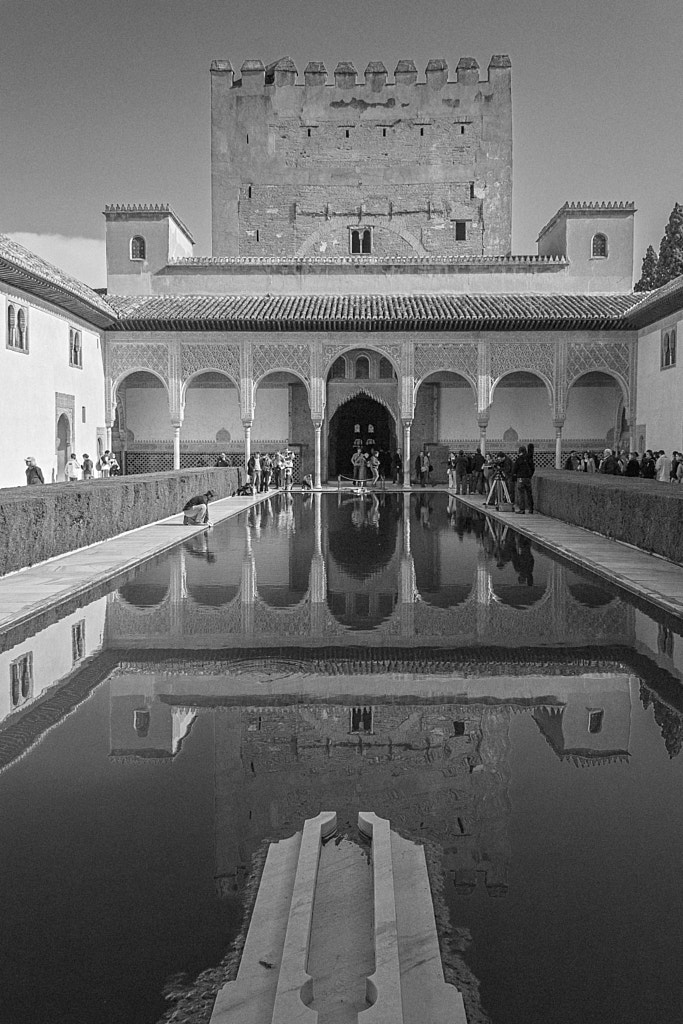
Tourists and a film crew visit the Court of the Myrtles in the grounds of the Alhambra.
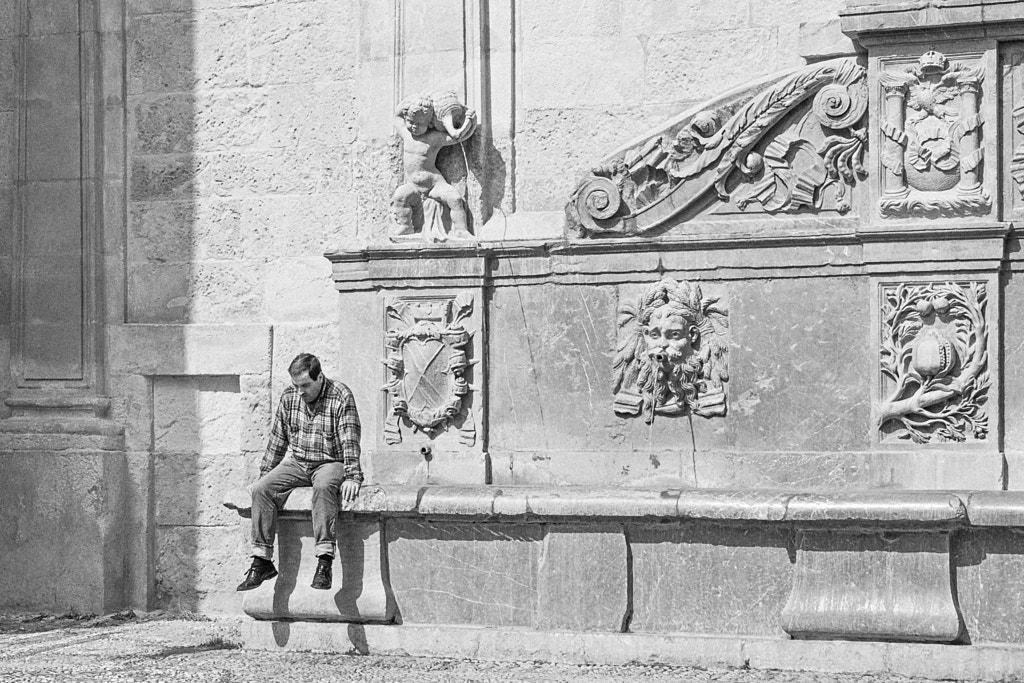
Sitting on the fountain at the Pilar de Carlos V at the Alhambra in Spain.
All the above photos were taken using a Canon EOS 300d which had by today’s standard poor dynamic range and poor high ISO performance. The difference is quite marked. So I’d honestly say it is worth revisiting your picture archive to see the quality you can wring out of those files using modern software.
Todays title is of course from the 1974 hit song Y Viva España, performed in English by Sylvia Vrethammar which was a cover of the Dutch song Eviva España by Belgian singer Samantha (Christiane Bervoets). It became a staple of drunken British tourists on the Costa Del Sol.











You must be logged in to post a comment.