The last 2 1/2 weeks I’ve been laid up at home with the flu. After a year of social distancing and scrupulous was of hands, the use of copious amounts of hospital grade hand sanitizer, and a flu jab I’ve gone down with the most persistent of bugs that just won’t leave me alone. Consequently I’ve been stuck at home and not up to much photographically.
Just before Christmas we managed to get away for a few days and one of those days was spent in Mandurah. It was a good place to start a trip that was to be primarily focused on bird photography. For a bit of a change I decided to leave the micro four thirds kit at home and take my Canon DSLR and relevant lenses. I did this for a number of reasons:
I fancied a change
With the collapse of Olympus and the future of the brand uncertain and Panasonic’s recent statements about concentrating predominantly on full frame cameras geared at video usage I felt that perhaps I should move away from micro four thirds and look at another system.
Curiosity as to whether the difference between the two formats is actually that apparent in real world usage. The key board warriors on the photographic forums are so specification orientated that they have lost sight of the fact that cameras are just a tool to produce photographs not endlessly obsess over minute details that make no real world difference.
I’m thinking about selling off surplus equipment and just concentrating on one system. So I was trying to decided which one was I prepared to get rid of.
Boring really for you guys, but as I’ve said I’ve been laid up at home for a couple of weeks with nothing much to think about. So without further ado here are some of the photos.
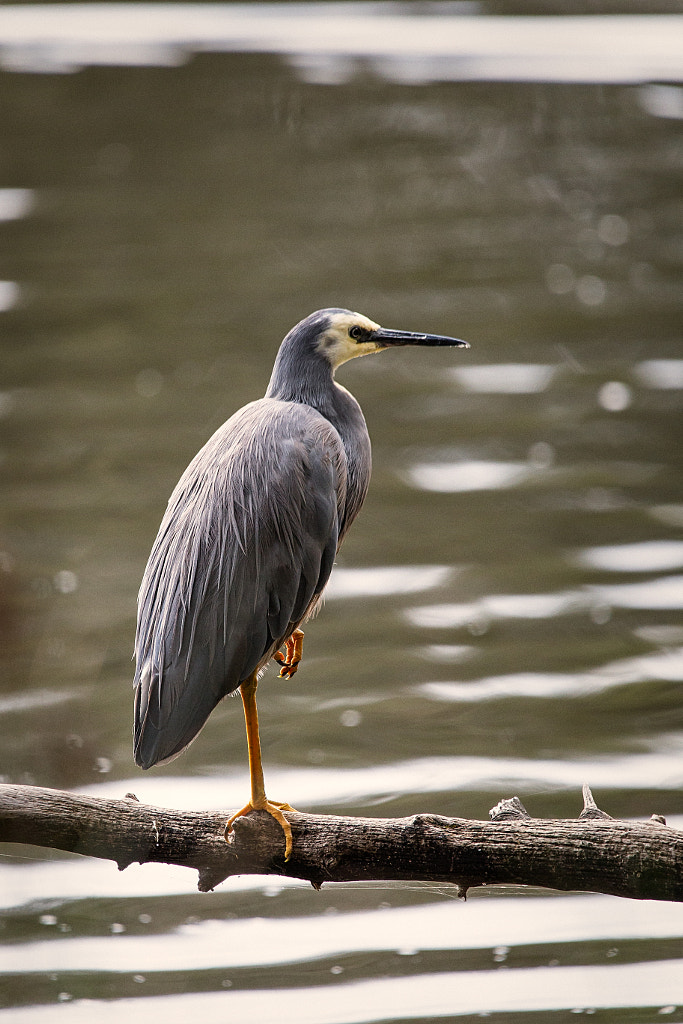
White-faced heron, Ardea novaehollandiae. Mandurah, Western Australia.
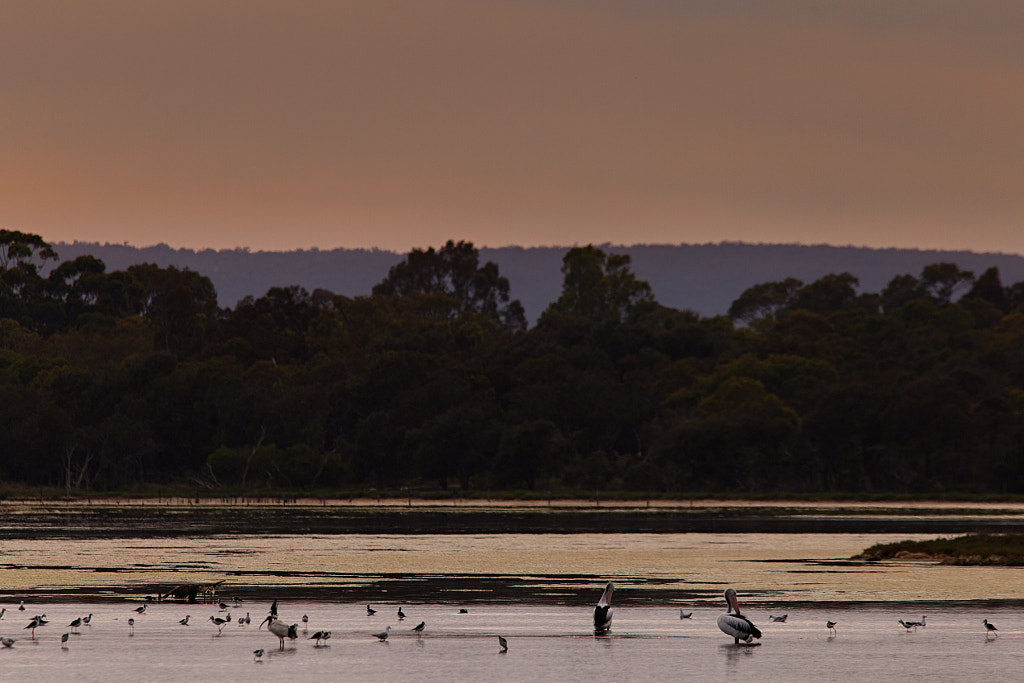
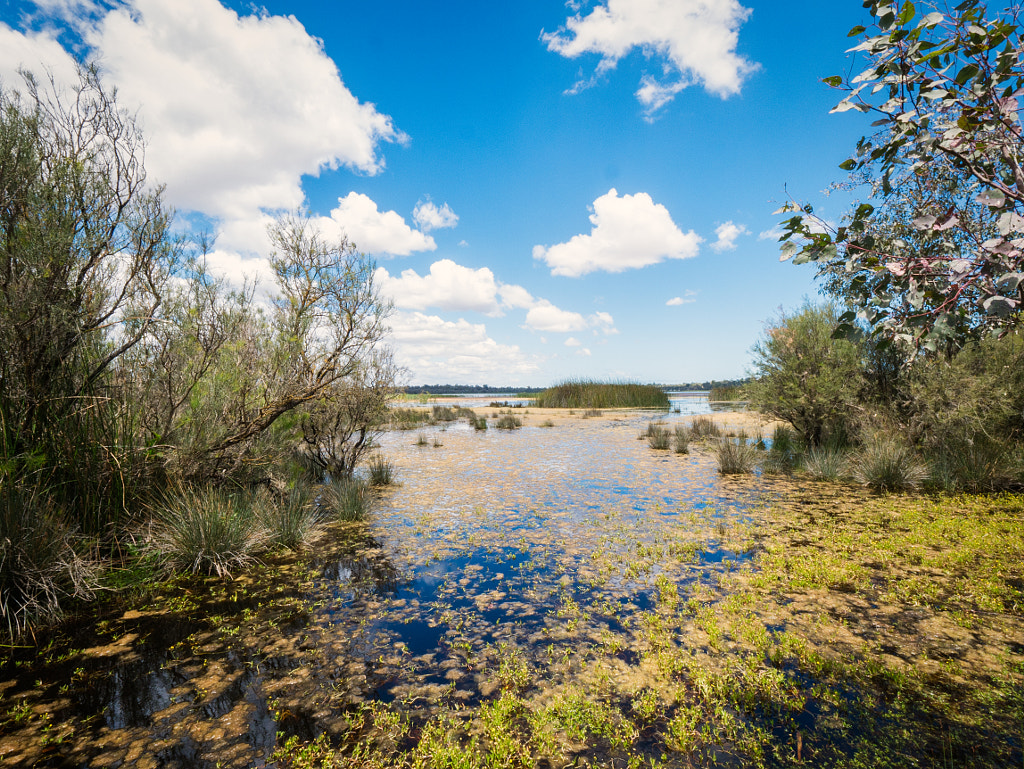
Goegrup Lake Nature Reserve in the morning light.
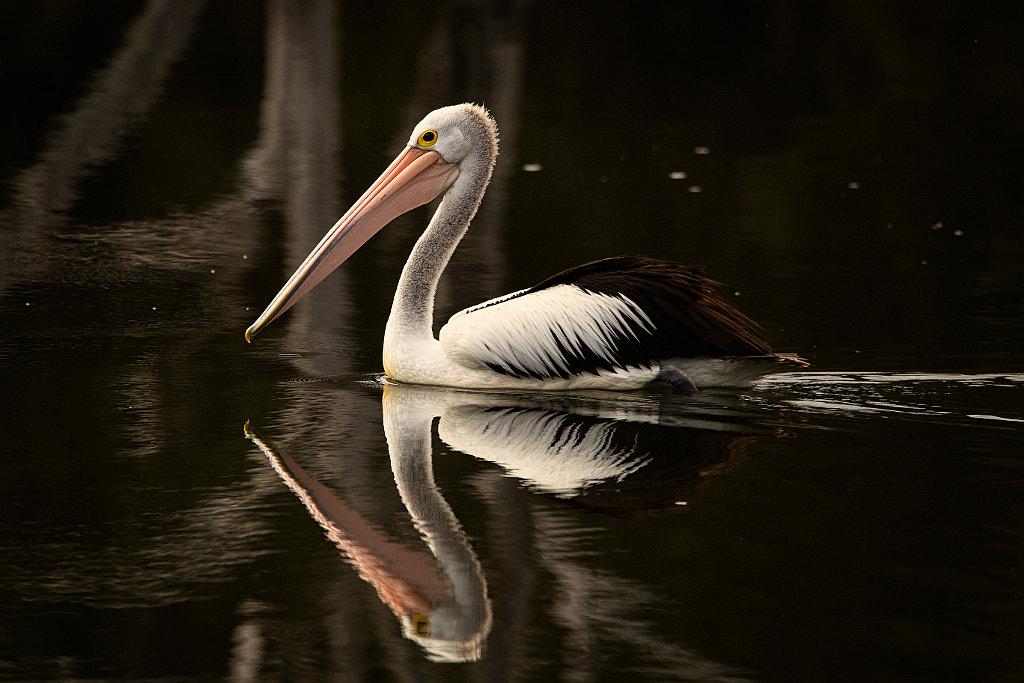
Australian Pelican, Pelecanus conspicillatus. Serpentine River in Mandurah, Western Australia.
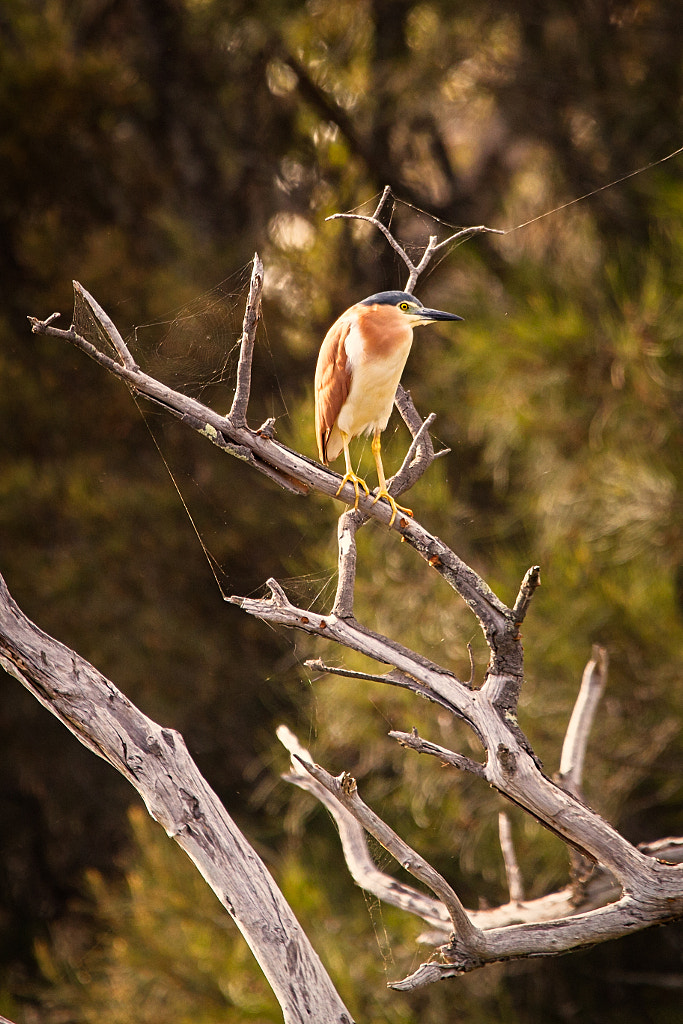
Nankeen Night Heron, Nycticorax caledonicus subsp mannillenis. Mandurah, Western Australia.
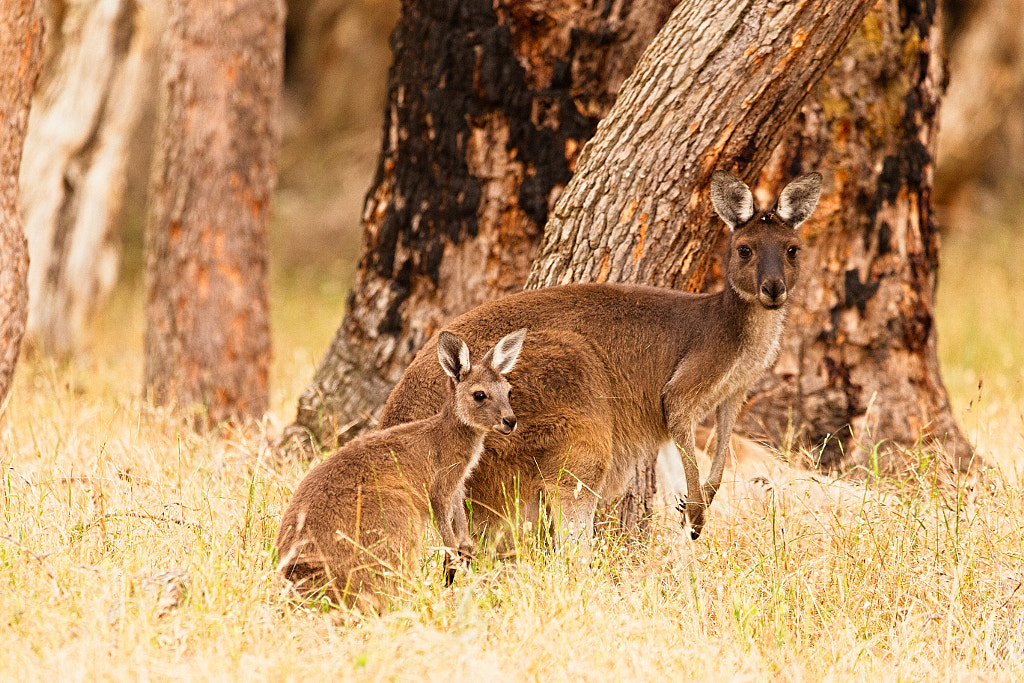
Mother and nearly fully grown joey in the Len Howard Conservation Park in Western Australia.
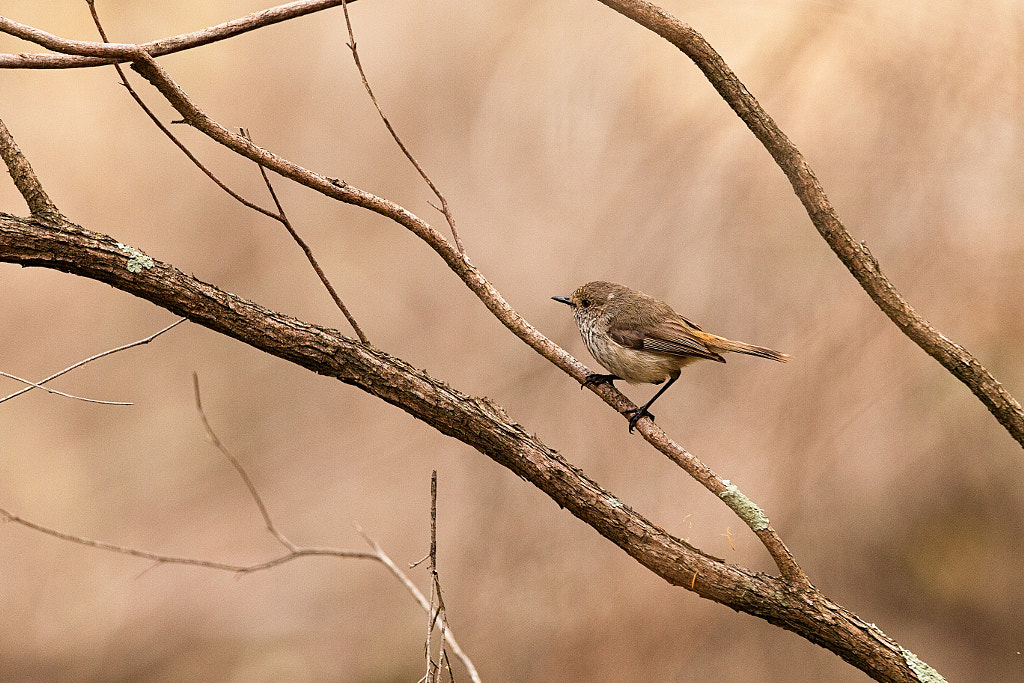
Inland Thornbill, Acanthiza apicalis. Len Howard Conservation Park, Western Australia.
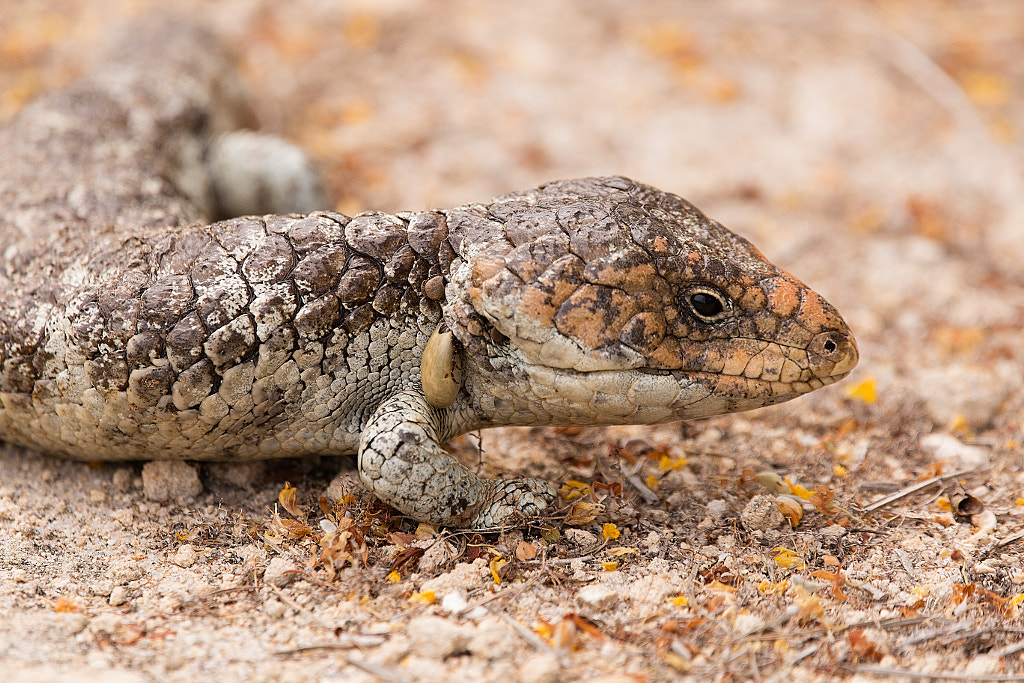
This bob tailed lizard, Tiliqua rugosa, has a bad tick infestation. Note the engorged female tick on the shoulder – these can grow up to 2.5cm long. There is a smaller tick above and one in the ear canal behind the jaw. Older lizards or those with lower imune responses are more prone to them.
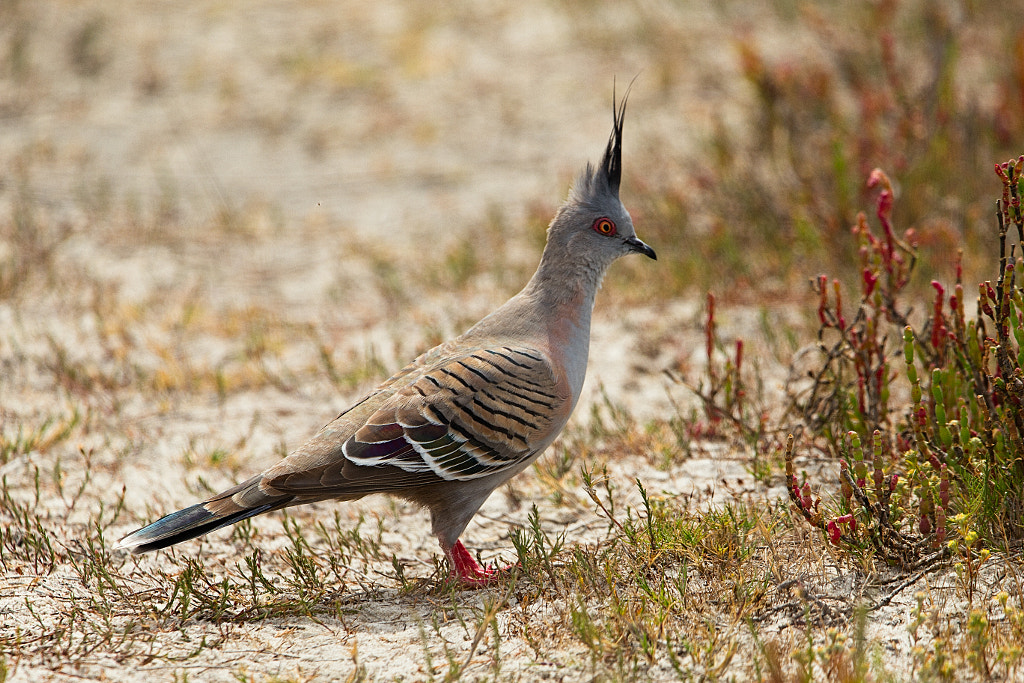
Crested Pigeon, Ocyphaps lophotes. Len Howard Conservation Park in Western Australia.
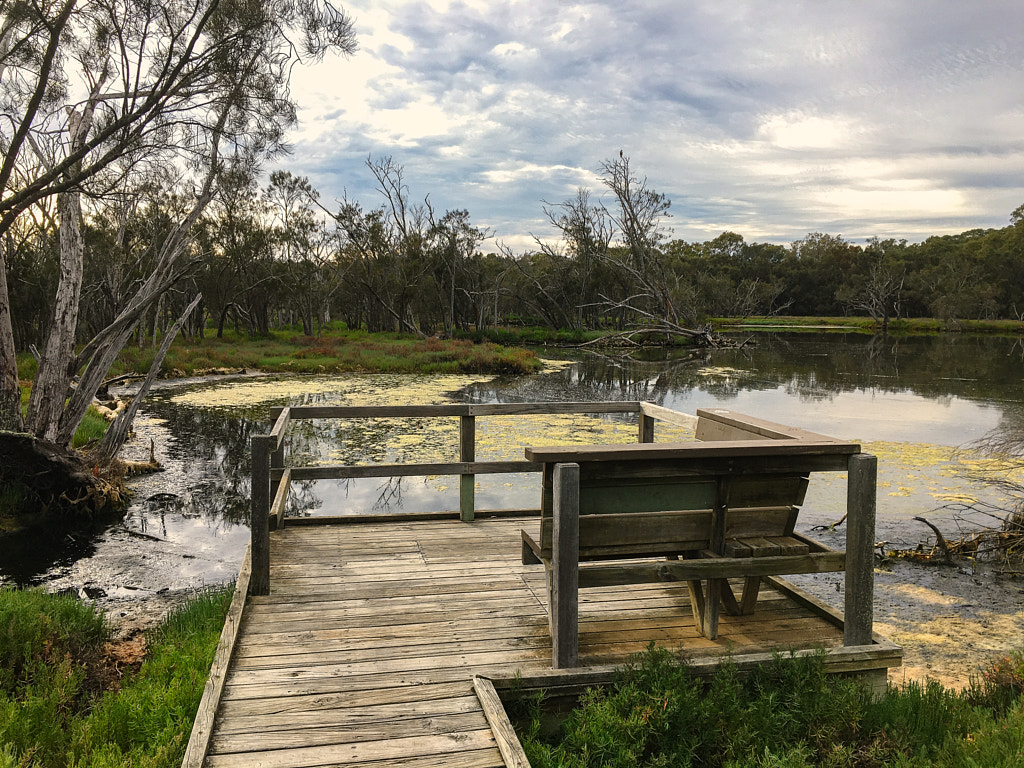
An observation platform on the southern end of Lake Geogrup just before it joins the Serpentine River. Mandurah, Western Australia,
So did I come to any conclusions? Yes – a Canon EOS 6d plus Sigma 150-600mm lens is heavy. I missed the reach of micro four thirds lenses.
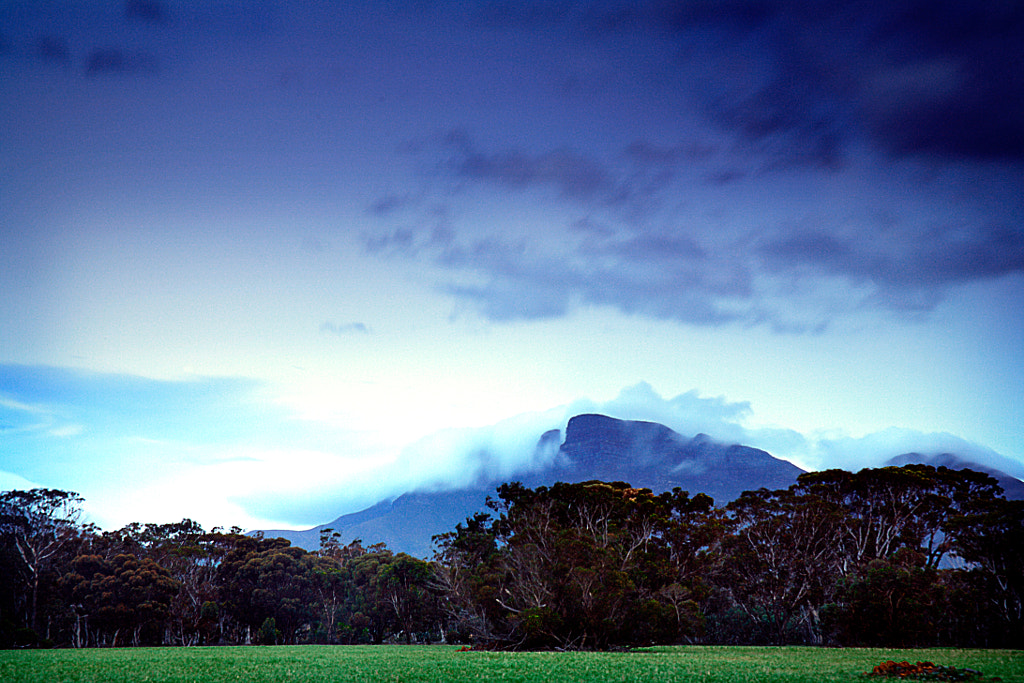
Low level cloud brings white out conditions to Bluff Knoll. Even in late spring the weather can be incredibly unpredictable. The Stirling Range is one of only a few places in Western Australia where snow falls.
Stirling Range National Park lies approximately one hours drive north of Albany in Western Australia’s Great Southern region. The reason most people visit the park is to climb Bluff Knoll which they believe to be the highest peak in Western Australia. Bluff Knoll is an imposing structure – it rises dramatically above the pan flat agricultural land surrounding the park – but the highest point in Western Australia it is not. That honour goes to Mount Meharry in Karijini National Park which is 1245m compared to Bluff Knoll’s 1093m. The other reason people visit Bluff Knoll is that it is the most easily accessible walk in the park being serviced by a road, having parking and a cafe. The trail is well signposted and is comparatively well surfaced and above all despite being steep in places anyone of reasonable fitness can do it. That cannot be said of some of the other walking routes within the park. There is good reason why Australia’s Special Air Service Regiment (SASR) train there.
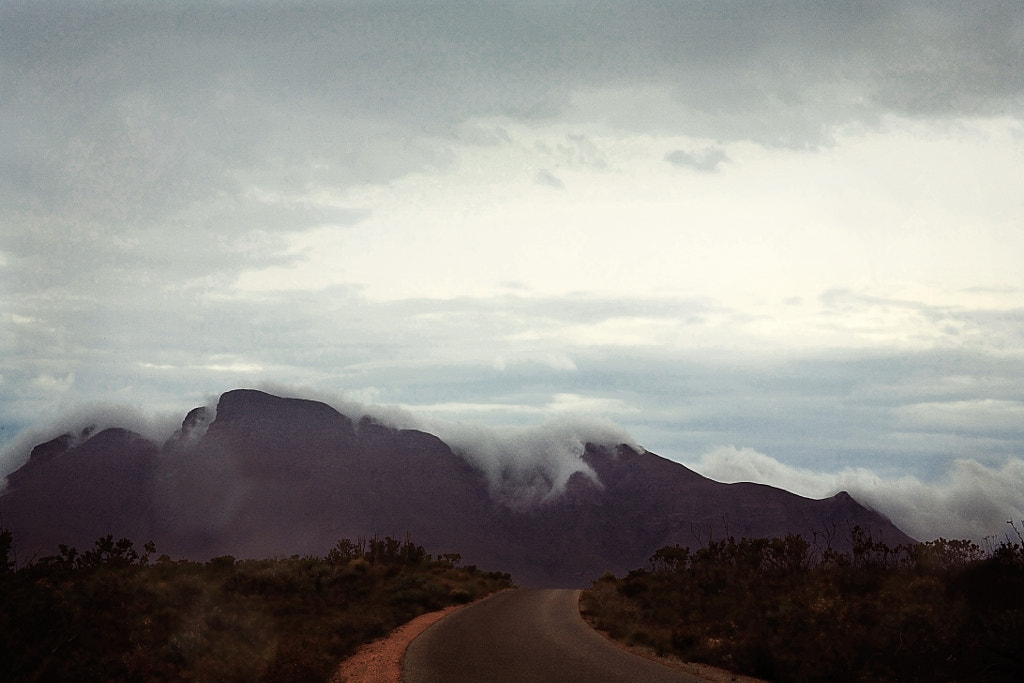
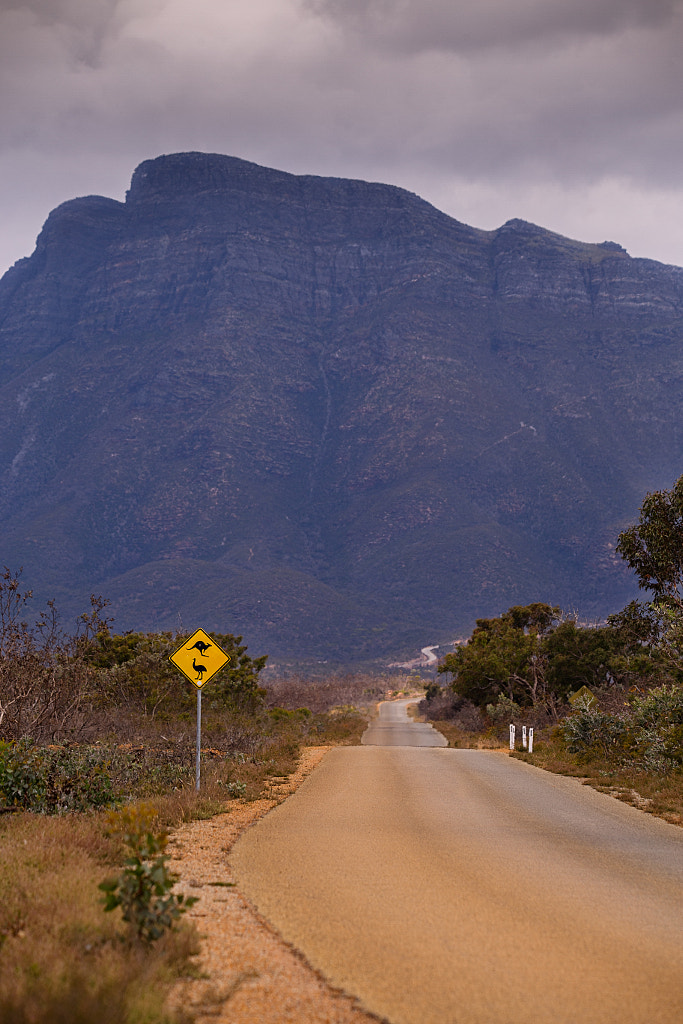
The road to Bluff Knoll in the Stirling Range National Park. At 1099m it is the highest peak in the Stirling Range. It is often surrounded by mist and low lying cloud.
Twilight in the Stirling Range and the peak of Bluff Knoll is being buffetted by a storm.
Highland areas such as the Stirling Range always have very variable weather and often in the extremes. The Qaaniyan and Koreng groups of the Nyoongar called Stirling Range Koikyennuruff or place of the swirling mist. Low lying cloud and mist often shroud the peaks even on bright sunny days. The Nyoongar believe Noatch, the spirit of the dead, lived in the mist and that evil witches lived on the high ridges and so tended to avoid going up onto the peaks. All I know is that it can be shorts and tee shirt weather at the base of Bluff Knoll but when you get to the top it can be very cold and wet. The fact that it is the only place where it snows with any regularity in Western Australia (any time between April and November) shows how difficult the weather can be. The weather is one of the main reasons why people get into strife when climbing Bluff Knoll, most are simply under equipped and under prepared. A Swedish acquaintance once told me there was no such thing as bad weather just poor choices of clothing and that is certainly borne out here. Things aren’t much better in summer as the park is very prone to bush fires so if you wish to visit make sure you are aware of what is happening in the park and whether the trails are open by checking with the Department of Biodiversity, Conservation and Attractions Parks Alerts System and then plan accordingly. The other reason why people get into trouble is that they leave the trail looking to find a short cut and then get disorientated and lost in the scrub.
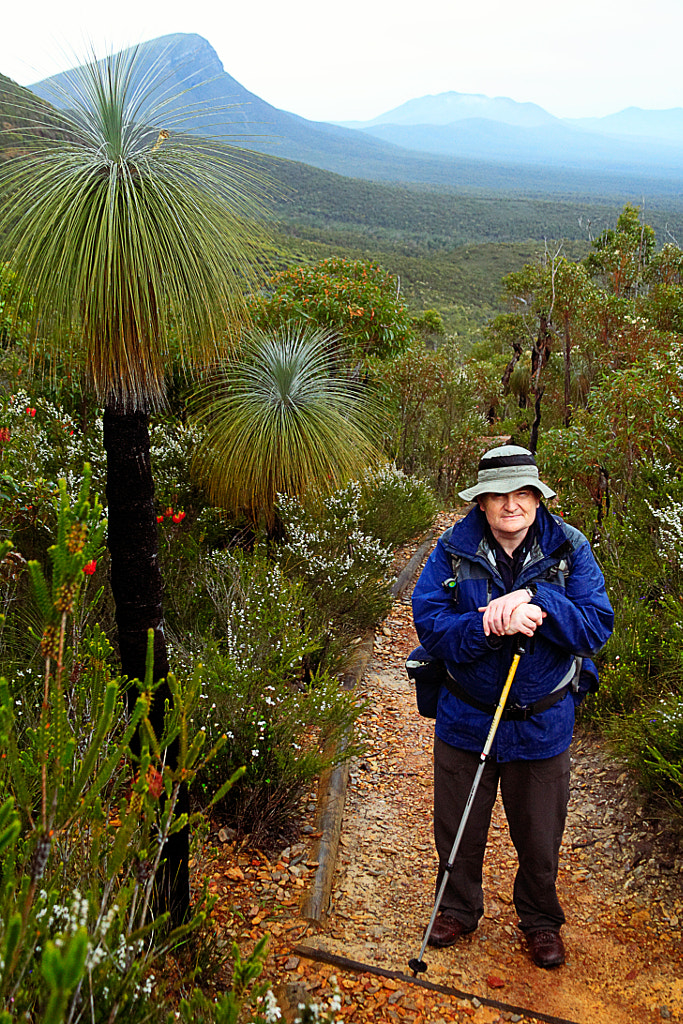
Pausing for a quick breather by a grass tree (xanthorrhoeaceae drumondii) while trudging up Bluff Knoll on a rainy morning.
I first intended to climb Bluff Knoll with my partner back in September of 2000 to celebrate her fortieth birthday but we never did it as I was run over by car. It wasn’t until October 2008 that we finally got round to doing it. Better late than never I suppose. It was a bit of a slog in cold wet weather but it was well worth the effort. We were staying at the Stirling Range Retreat which was then run by Ayleen Sands and her husband Tony. Ayleen ran orchid spotting trips and we did one and that opened my eyes to the biodiversity of the region and more specifically the amazing orchids that are found in Western Australia and I’ve been photographing orchids ever since. It was from Ayleen that we learnt that Stirling Range is an incredible biodiversity hotspot. In spring and early summer the 1500+ species of plants that can be found within the Park’s boundaries come into bloom. To put that into perspective the 1,159 km2 of the Stirling Range National Park contains more species of wildflowers that the 315,159 km2 of the British Isles.Some of these plants, such as the mountain bell (Darwinia leiostyla), are found no where else in the world. A staggering 123 species of orchid have been found in the Stirling Range National Park which works out to be about one third of the total number of orchid species that can be found inWestern Australia. There are more than 140 bird species, approximately 20 species of native animal – the most likely to be seen are western grey kangaroos. Rottnest Island isn’t the only place with quokkas they have been seen on the slopes of Bluff Knoll. The are more than 30 species of reptile and of course it would not be Australia without poisonous snakes. I initially went to climb Bluff Knoll but found so much more and have been back since and intend to go back again and again.
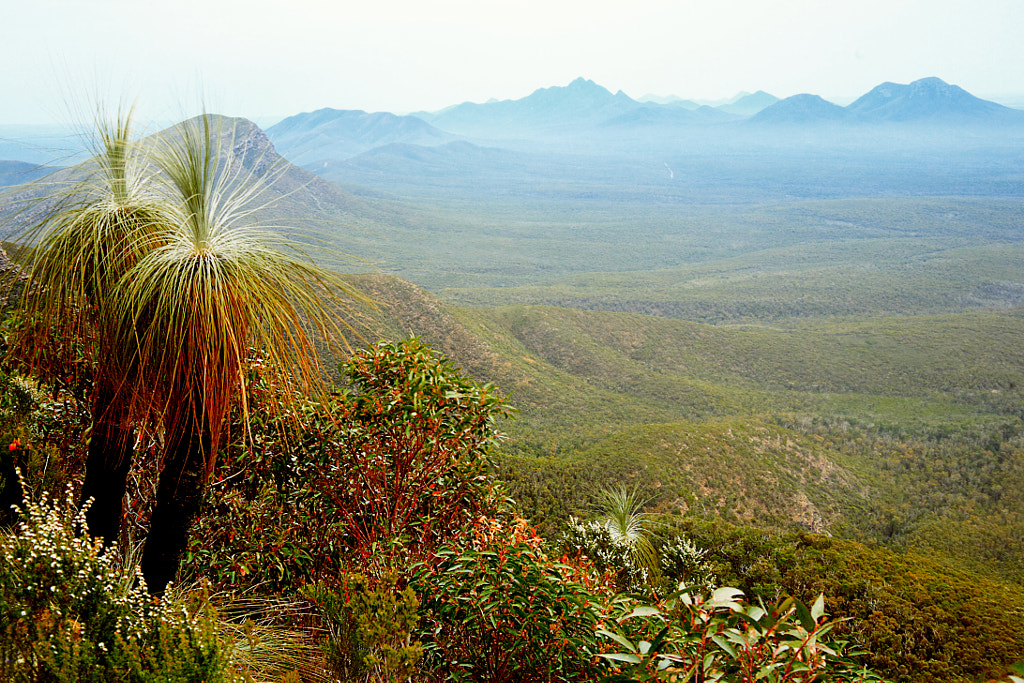
Looking west towards Yungermere Peak, Mount Success, and Coyanarup Peak while walking the traverse of Bluff Knoll. In the distance some of the early morning low lying cloud can still be seen fringing the mountain tops.
The Common Mountain Bell (Darwinia leiostyla) grows in the eastern and central Stirling Range, and can be readily seen on Bluff Knoll and Mount Trio.
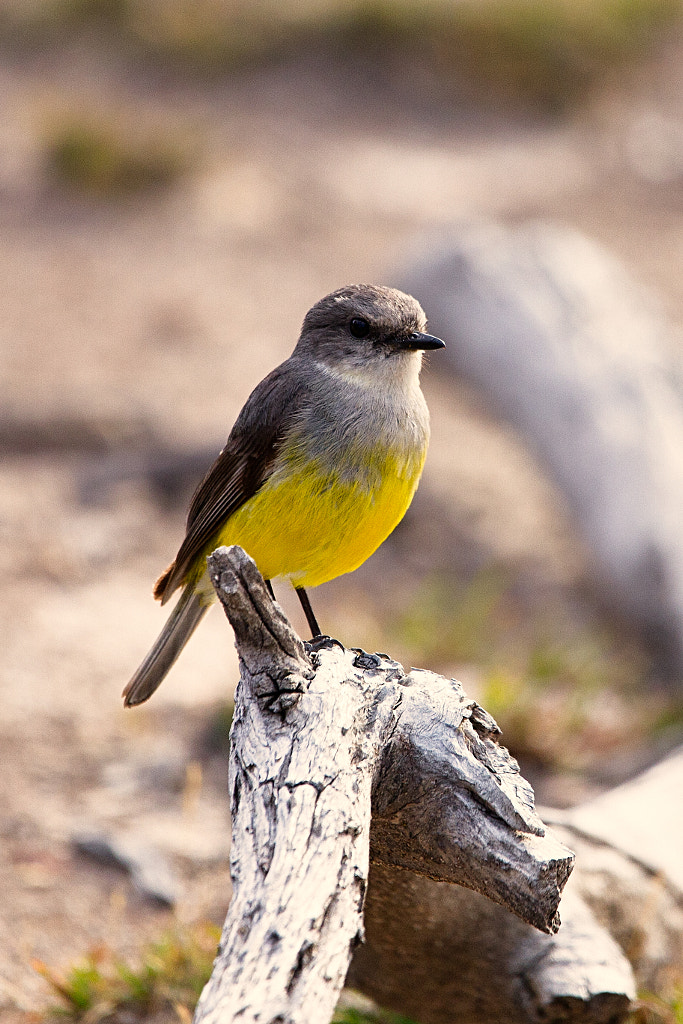
Western Yellow Robin, Eopsaltria griseogularis. Stirling Range National Park, Western Australia.
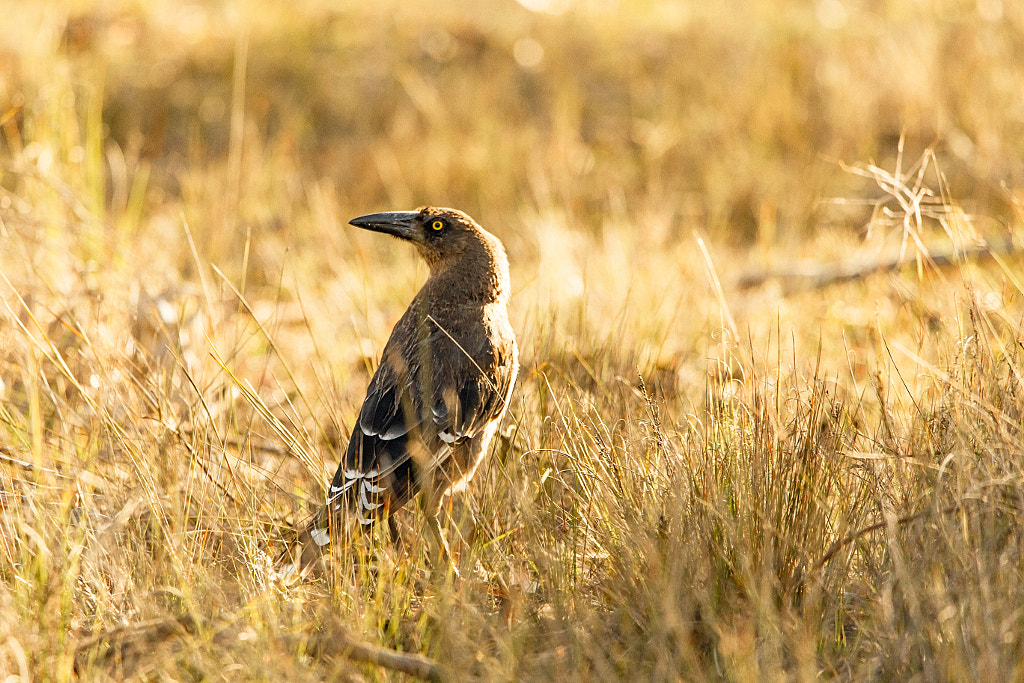
Grey Currawong, Strepera versicolor. Stirling Range National Park, Western Australia.
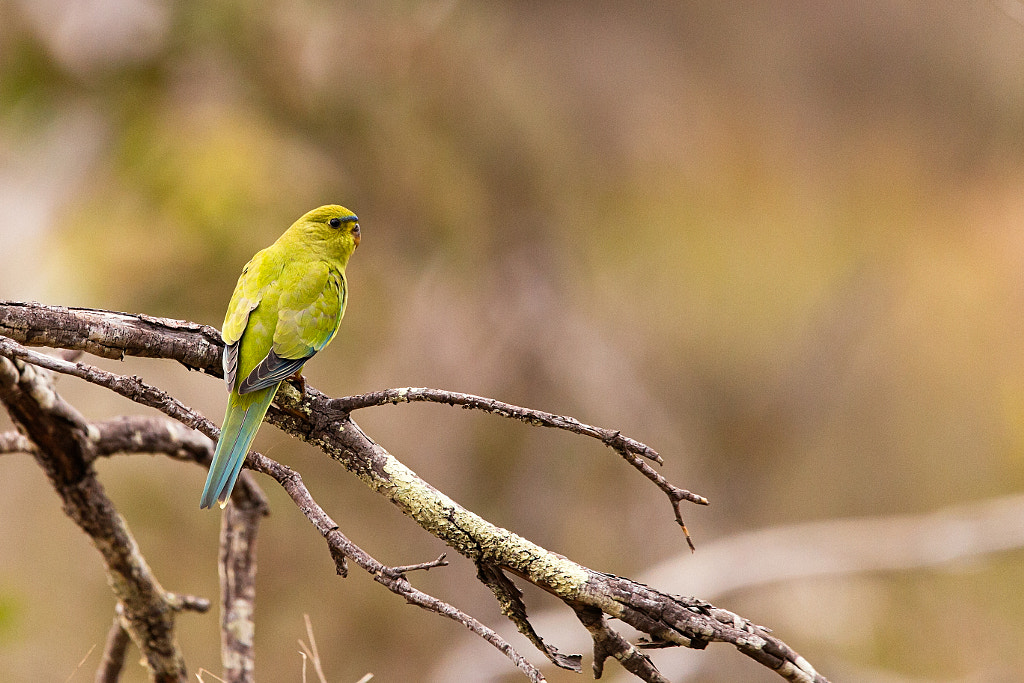
Elegant parrot, Neophema elegans subsp. carteri. Stirling Range National Park, Western Australia.
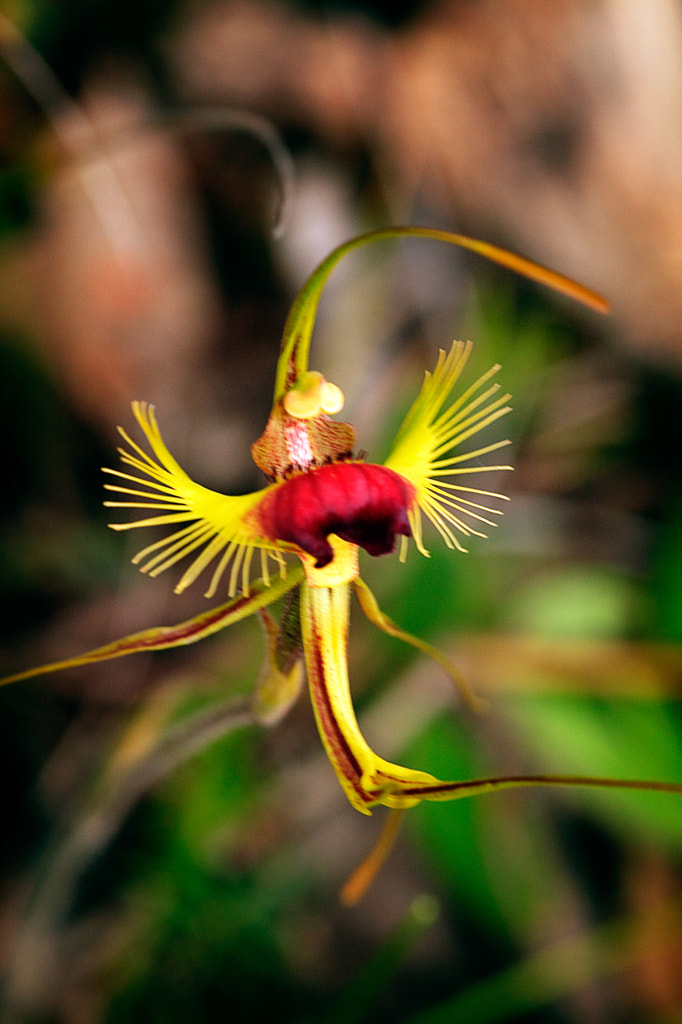
The Butterfly Orchid ((calendenia lobata)) is uncommon and rarely seen, it was first observed on Mt Toolbrunup in the Stirling Range National Park in 1991.
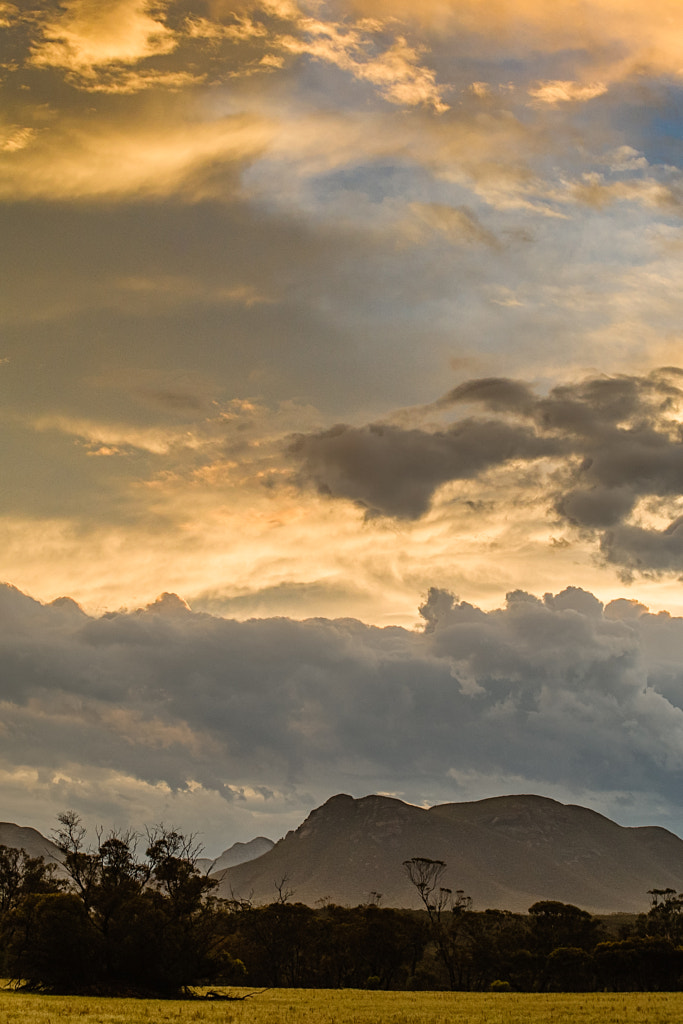
The sun sets behind Mount Trio in the Stirling Ranges of Western Australia. The everchanging weather in the Stirling Ranges can produce some dramatic skyscapes at sunset with spectacular cloud formations over the mountains.
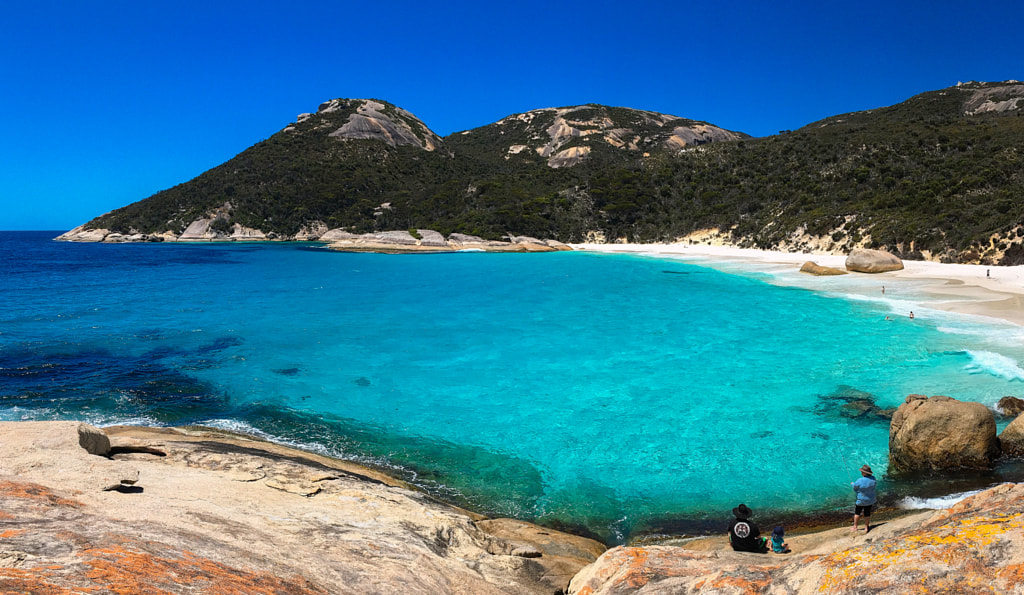
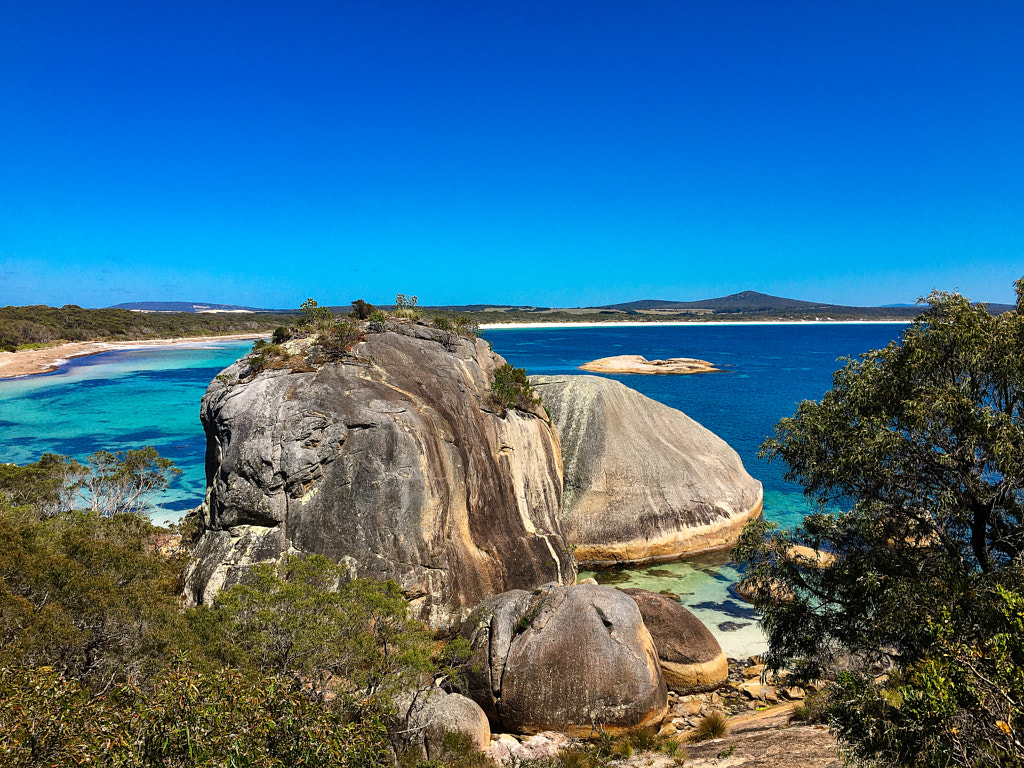
Sometimes you come across a place so stunningly beautiful words cannot describe it adequately. Two Peoples Bay is one of those places. I’m not going to write anymore.
Little Beach at Two Peples Bay in Western Australia.
Two Peoples Bay in Western Australia
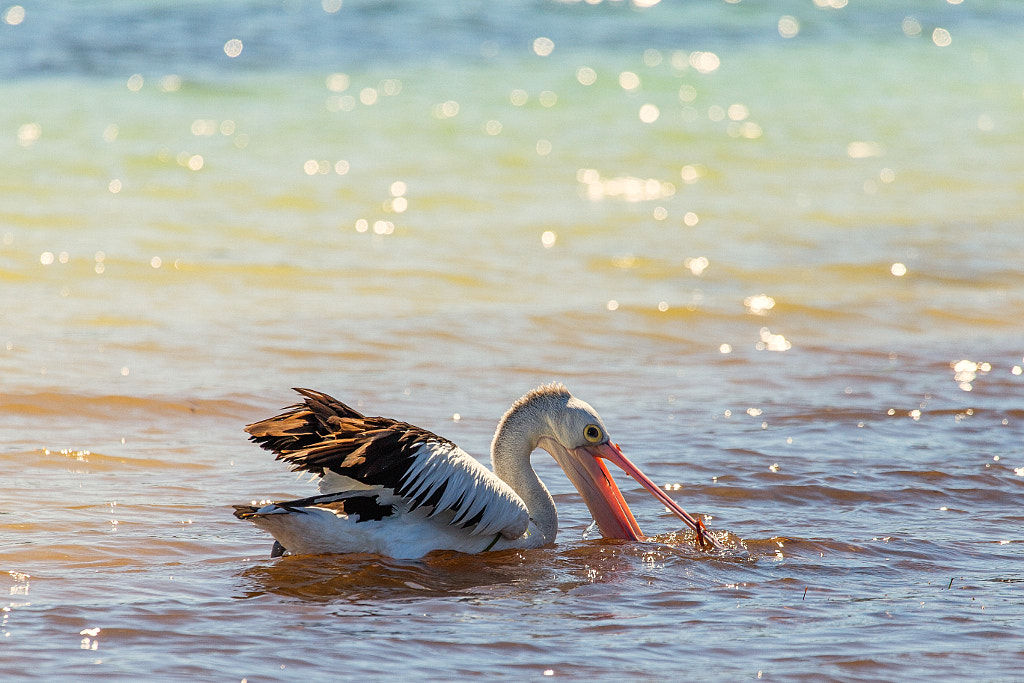
Australian Pelican, Pelecanus conspicillatus.
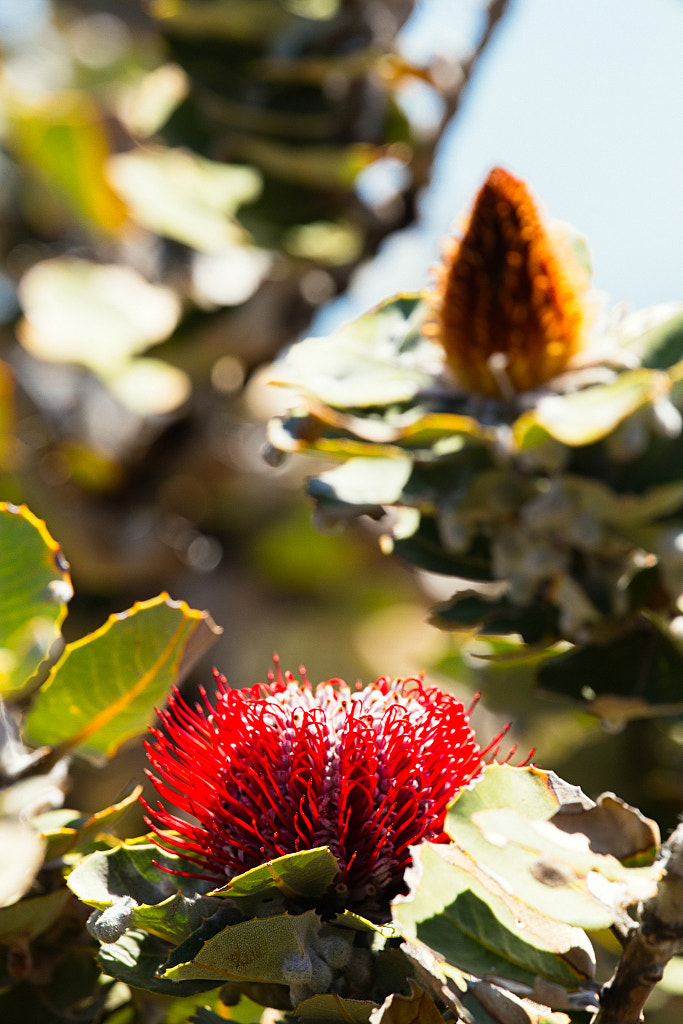
Scarlet Banksia, Banksia coccinea. Two Peoples Bay, Western Australia.
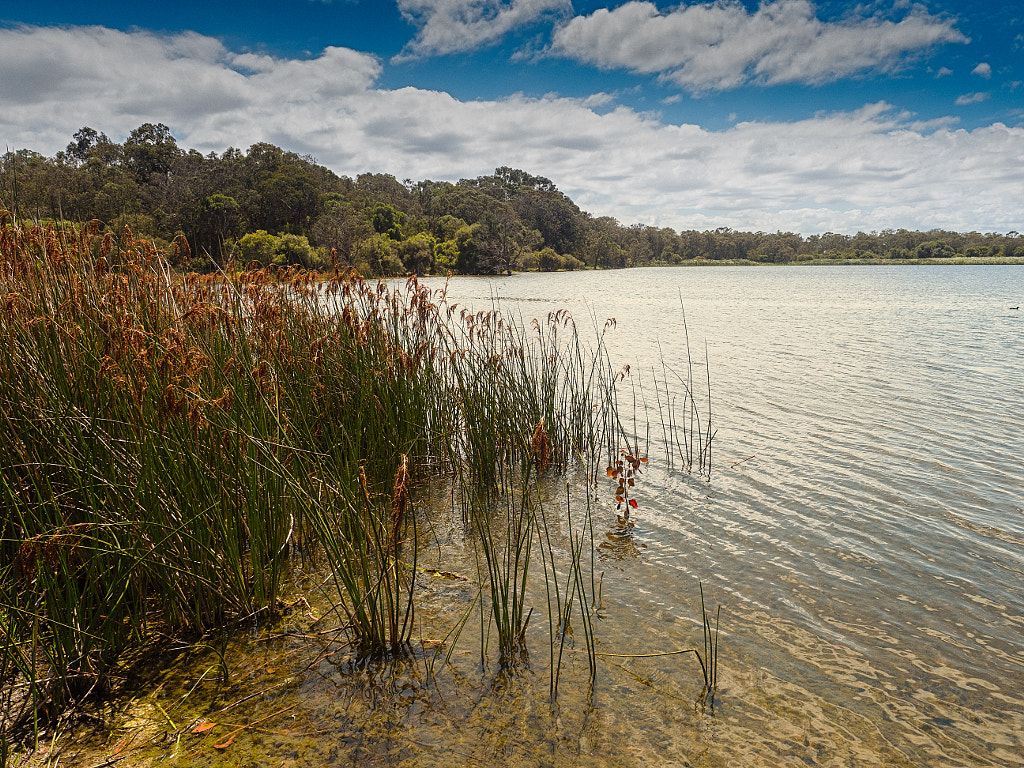
The south east bank of Lake Gwelup in Western Australia.
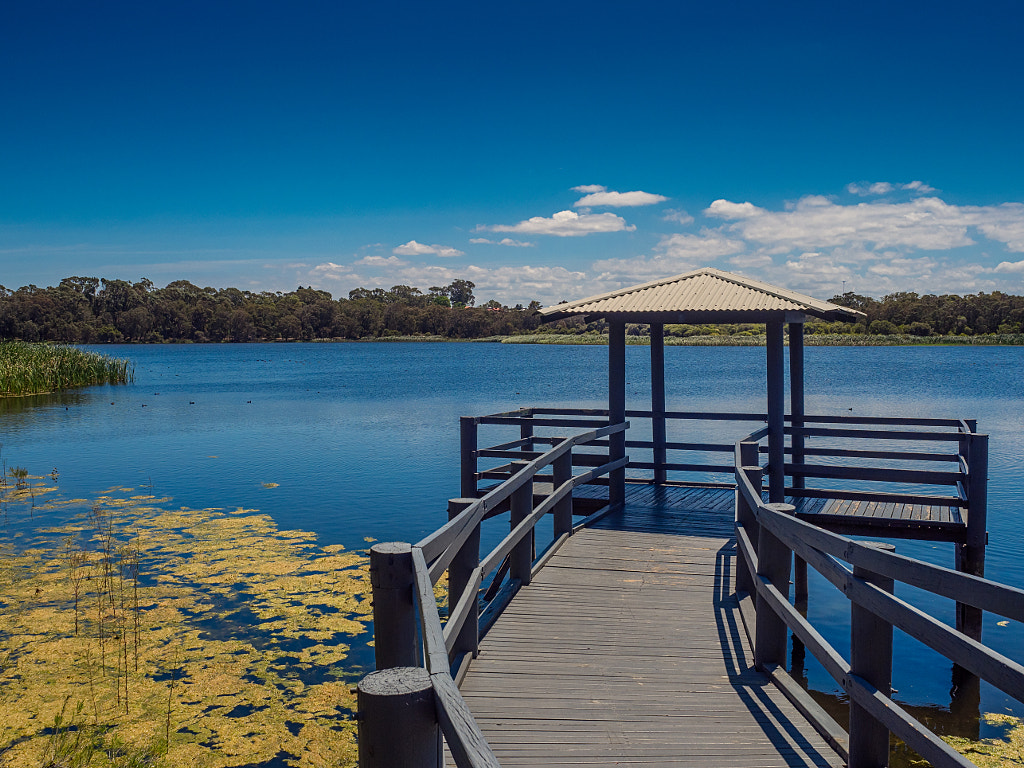
The bird observation platform that forms part of the Lake Gwelup Reserve Broadwalk on the south eastern shore of Lake Gwelup.
Lake Gwelup and the reserve that surrounds it is one of the few areas of wetland that is still relatively intact. This means that it is home to a wide variety of flora and fauna which is all the more surprising considering it is just 12 Km north of Perth’s CBD in the City of Stirling which with a population of 210,000 (2016 Census) is the largest local government area by population in Western Australia. The bush around the lake is comprised of Marri, Jarrah, Flooded Gum, Tuart (, Swamp Paperbark and several species of Banksia. The bush and the lake provided a habitat for birds (according to eBird Australia 110 species of bird have been sighted there), frogs (notably Moaning Frogs), and reptile species (e.g. dugites, skinks and long necked turtles). One of the strange facts that has prevented the land from being developed is that the peaty soils around the lake if disturbed release arsenic and iron sulphates. In the areas nearby that have been drained and reclaimed they have the highest concentrations of dissolved arsenic in the world – some 25000 ug/L (some 400 times higher than that identified as safe levels for drinking water).
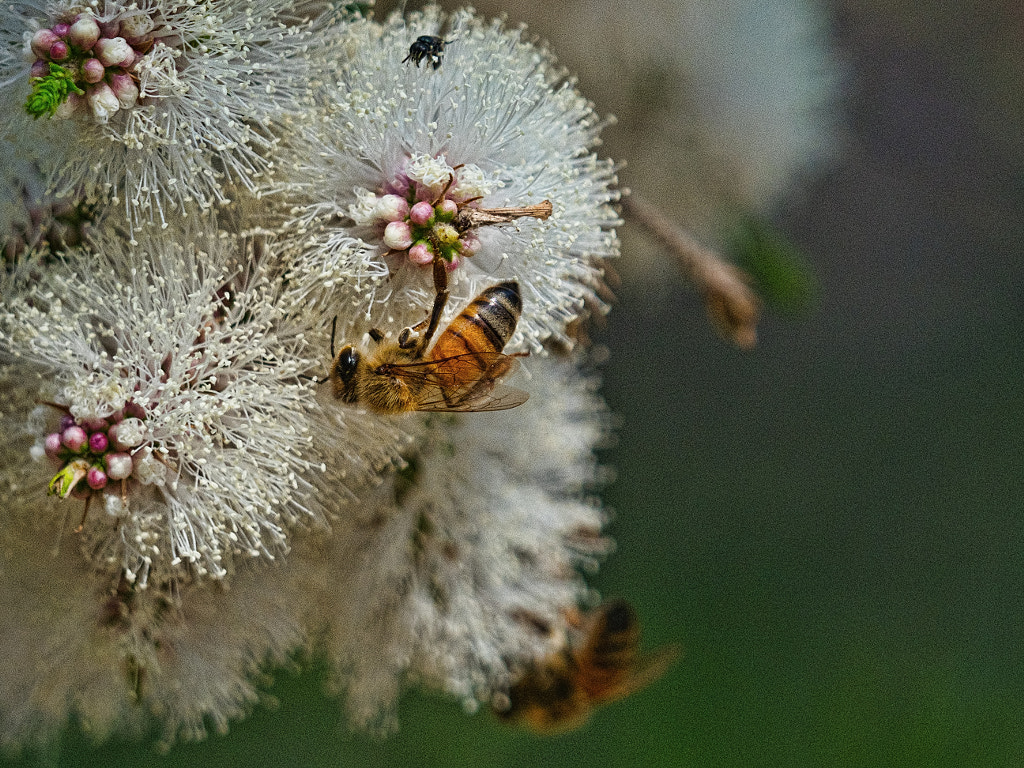
Bees feeding on the flowers of the Swamp Paperbark (Melaleuca rhaphiophylla). Lake Gwelup Reserve, Western Australia.
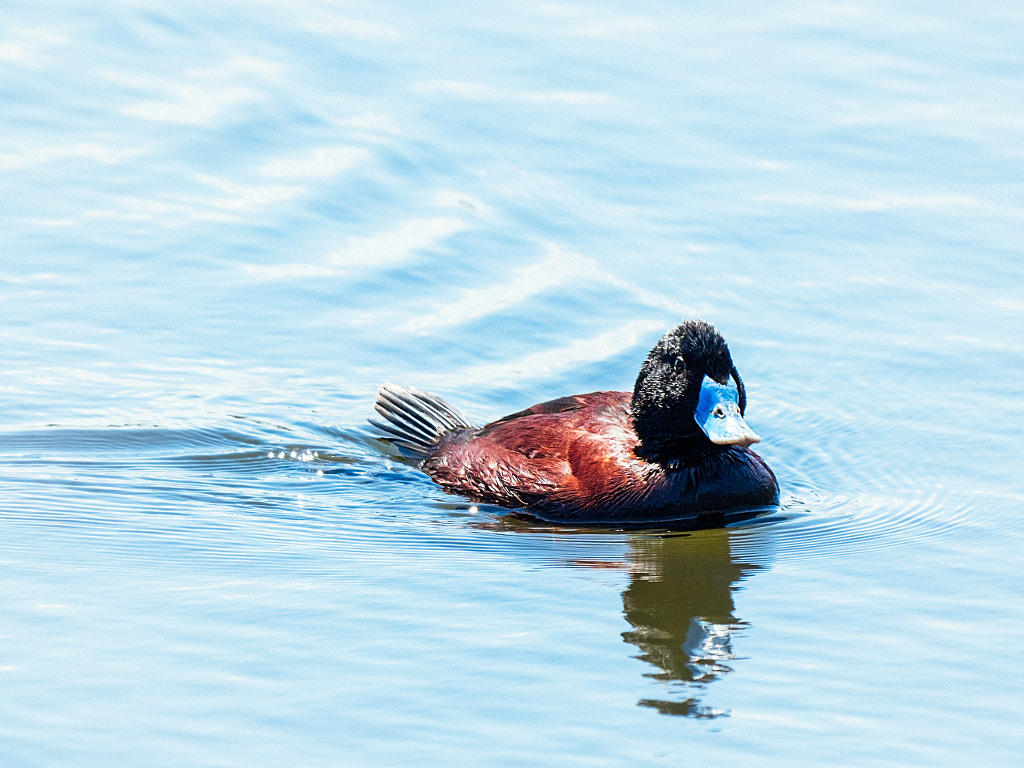
A male Blue-billed Duck (Oxyura australis) on Lake Gwelup in Western Australia.
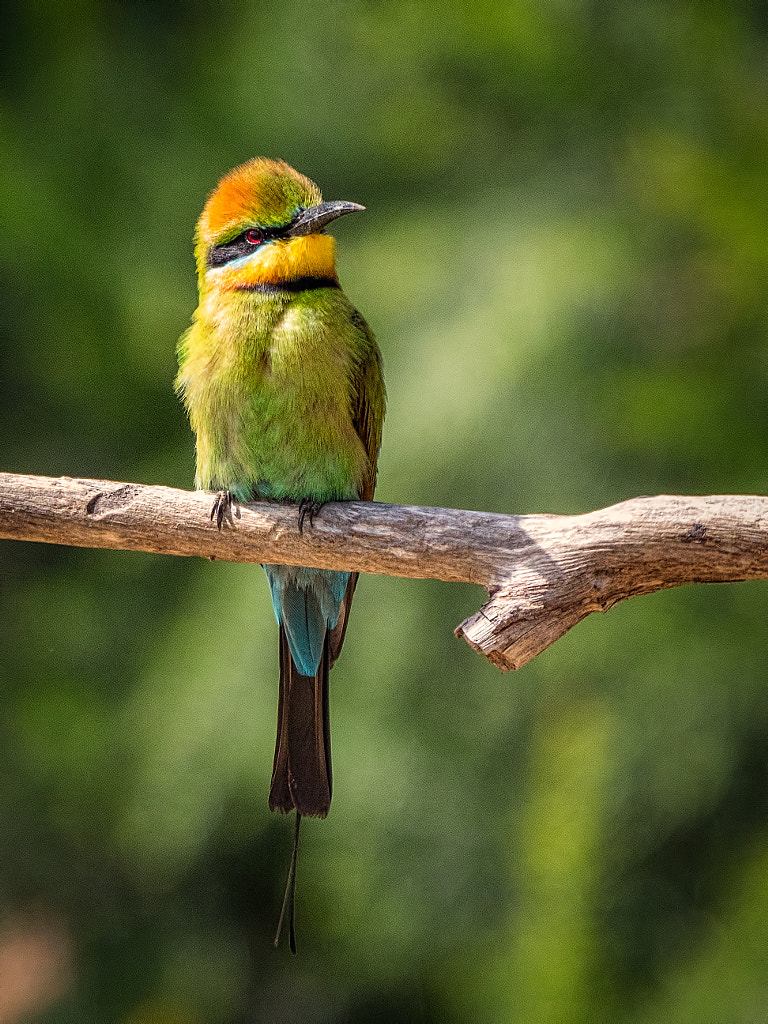
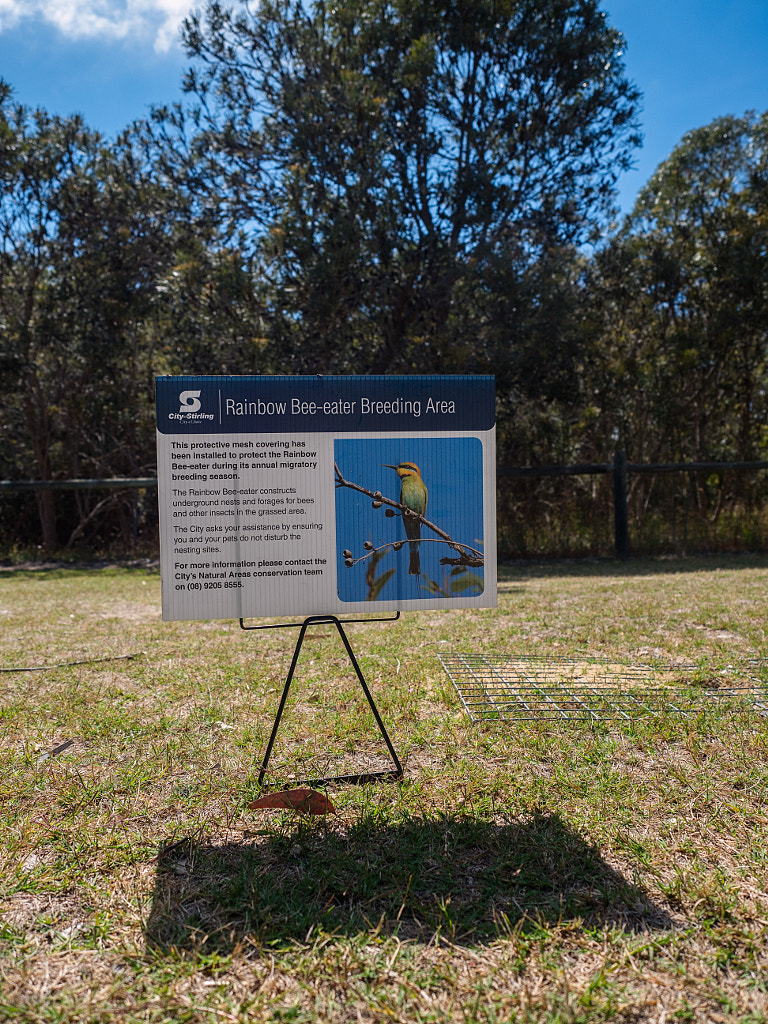
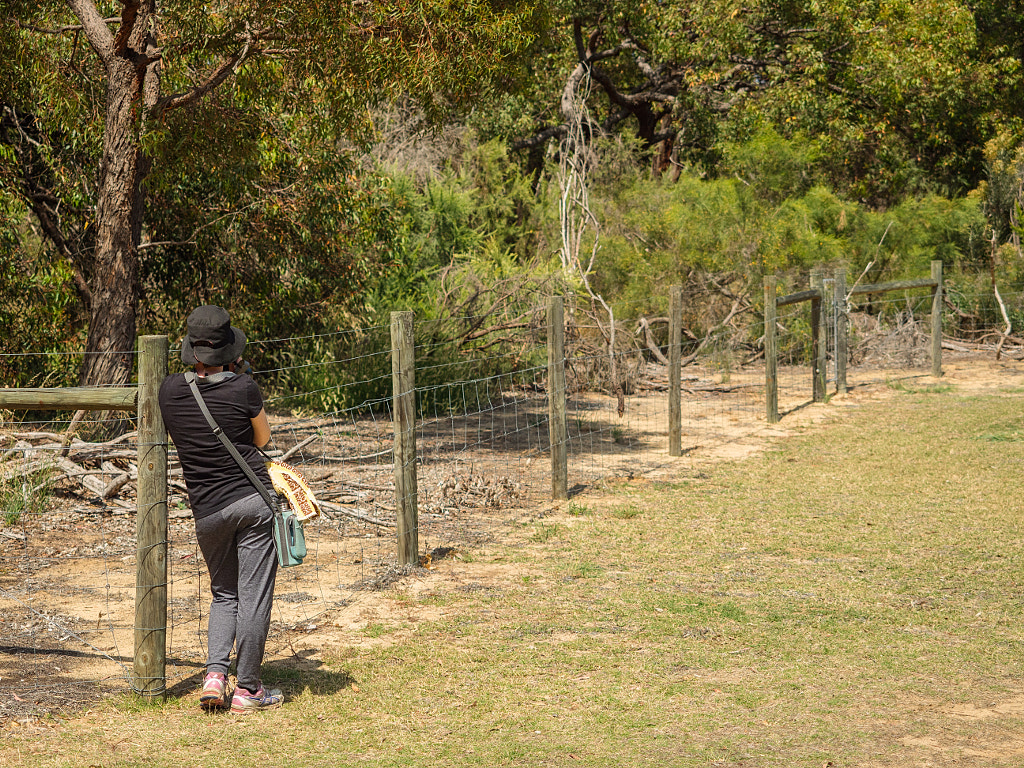
So what is there to see and do? Well there is a networks of paths around the lake and through the surrounding bushland and you can bring your best canine friend with you. There are BBQ’s and picnic shelters, public bathrooms, sail-shaded playground, sporting grounds and cricket nets for those who don’t feel the need to connect with nature. For those wanting a nature fix on the southern side is a broad walk and viewing platform that allows you to get up lose and personal with the wildlife. An interesting development is that the bush northwest of the lake is a breeding ground for Rainbow Bee-eaters. These migratory birds come from Papua New Guinea and Tropical Australia and build their nesting burrows in our summer time.The City of Stirling has taken measures to protect the nesting sites and at the same time promote them as a feature of the reserve encouraging people to come and see them. Something that the City of Armadale could learn from with their management of Forrestdale Lake. Conservation and protection doesn’t mean you have to fence people out. So when I went the other week I put together a 3.75 Km walk around the lake that also took in the Rainbow Bee-eater nesting site. It was a loverly walk and it was great to see people out enjoying the sunshine in such beautiful surroundings.
The breeding colony of Rainbow Bee-eaters (Merops ornatus) is quite a feature of the Lake Gwelup Reserve in Western Australia.
The City of Stirling, who administer Lake Gwelup Reserve, place signage up warning people of the presence of Rainbow Bee-eaters’ underground nests.
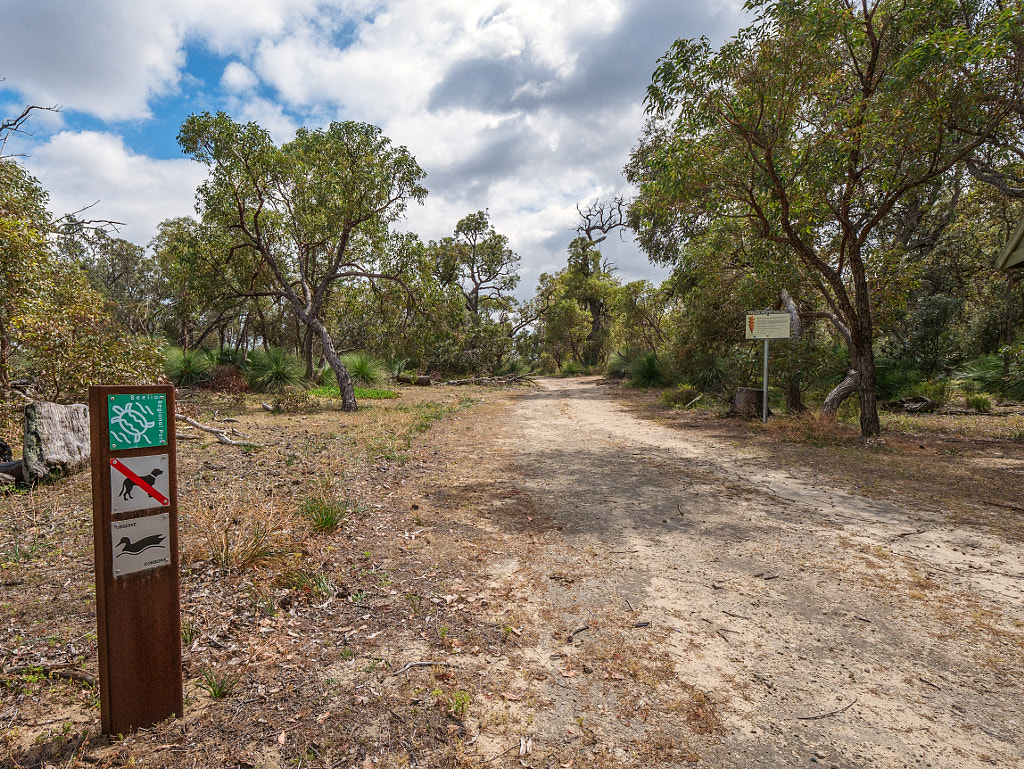
Once inside the reserve the walk trail is clearly signposted making it easy to enjoy the walk.
In my last blog post I gave a bit of a mauling to Forrestdale Lake as I found the whole nature walk experience quite unsatisfactory and frustrating. I mentioned that it was part of the Forrestdale and Thomsons Lakes Ramsar Site and that the experience at Thomsons Lake was much better. So this week I’ve decided to put up an excerpt about Thomsons Lake from my book Perth’s Best Bush, Coast and City Walks 2nd Edition. The Department of Commerce and Financial Affairs would have me remind you this book would make aperfect Christmas gift for anyone interested in walking in the Perth Metro Area and can be bought at all good bookstores or online for the bargain price of $29.99.
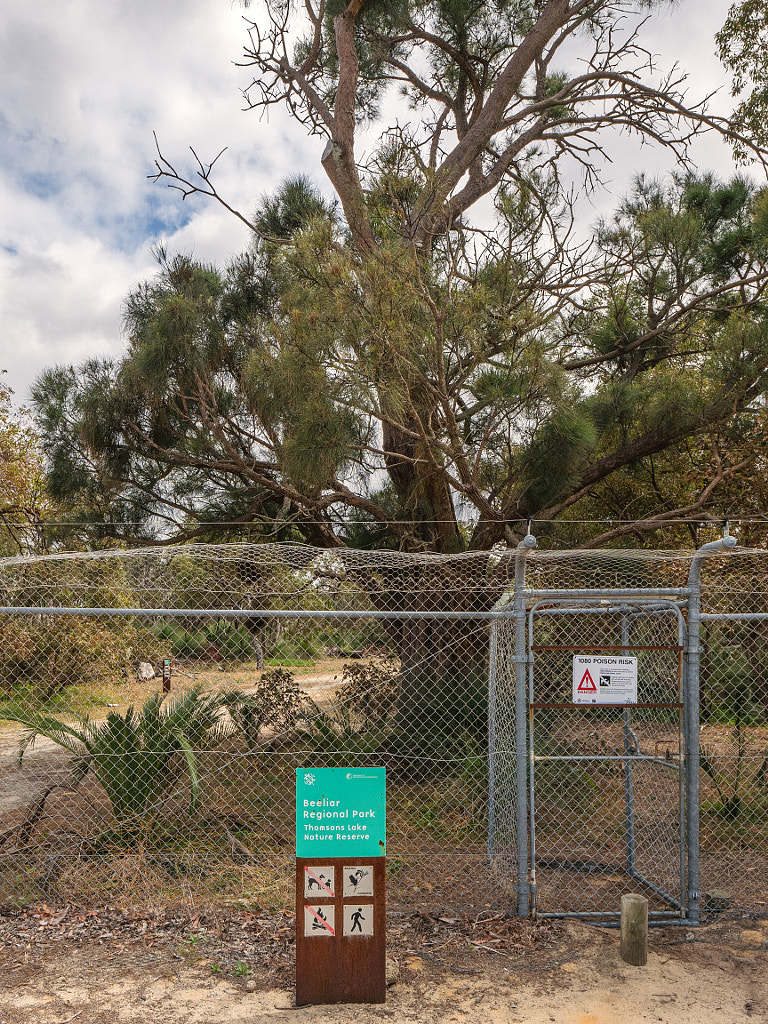
The entrance to Thomsons Lake reassembles that of a high security compound with its high electrified fence. This is to keep feral animals such as cats, dogs, and foxes out.
Grade: Medium
Time: 2 hours
Distance: 6.56Km
Season: Autumn, spring and summer. In late November the land around the lake can still be flooded. January to March and the lake dries up.
Where is it? 25Km south of Perth in Beeliar. Drive down the Kwinana Freeway and take the Russell Road exit.
Public Transport: Catch the 525 bus to Russell Rd After Hammond Rd (Stop Number 23864) and then walk 1.5Km to Thomsons Lake.
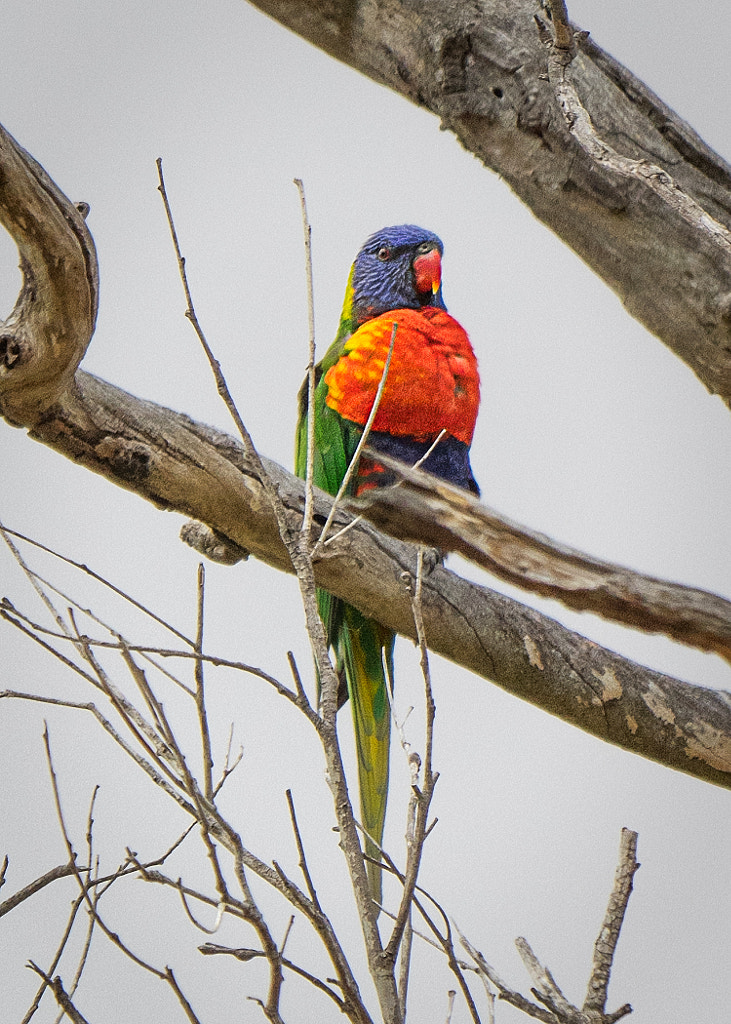
Rainbow Lorikeet, Trichoglossus moluccanus. Thomsons Lake, Western Australia.
Thomsons Lake (aka Jilbup Lake) is perhaps one of the most important freshwater lakes on the Swan Coastal Plain. Since the days of first European settlement 75% of the coastal plain has been drained for urban development. Thomsons Lake is an A class nature reserve of 509 ha of wetland. The lake supports around 10,000 waterbirds, of which are more than 1% of the world’s population of long toed stints (Calidris subminuta) which is a small wading bird that migrates from northern Asia to winter in Australia. The park is home to more than 50 species of waterbird, 86 species of “bush bird”, 9 species of frogs, 23 species of reptiles, 6 species of mammal and 15 species of ground orchid. Consequently getting into the park is like entering a maximum security prison, the reserve is encircled by 9.2 km of 2 m high electrified fence.
Australian painted lady (Vanessa kershawi). Thomsons Lake, Western Australia.
This walk ostensibly takes you around the lake’s shoreline, but as you walk round you pass through several distinct eco-systems. On the higher ground is the jarrah / banksia woodland of the coastal plain, there is a zone of flooded gums and swamp paperbarks, and particularly on the eastern side of the lake is a thick belt of rushes and grasses. Tiger snakes are common in wetlands and areas with an abundance of prey such as Thomsons Lake can support large populations. Their venom is very potent and the mortality rate for people who do not receive treatment is over 60%. Thankfully they are a shy creature and it is unlikely you will see one, but it pays to watch where you put your feet when walking through long grass at the lakeside.
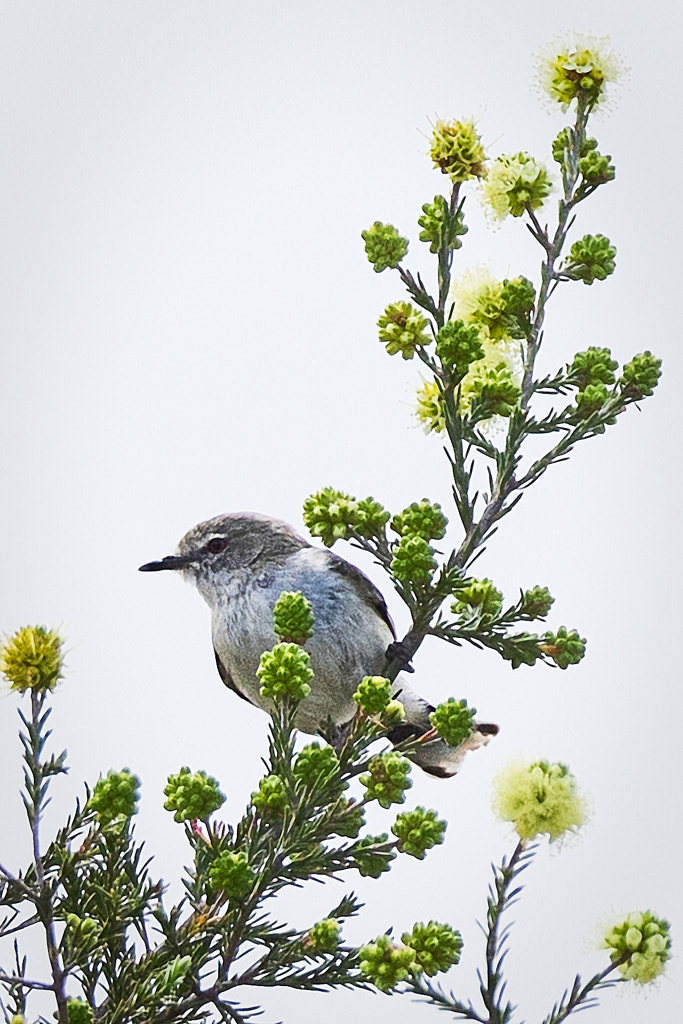
Western Gerygone (Gerygone fusca). Lakesided Walk – Thomsons Lake
From the car park enter through the double gate, there is an information board just inside on your right. Walk along the track and after 170m you reach a fork in the track take the left down to the lakeside. At the lake turn right.
During winter and spring this area is prone to flooding – I walked here in early November after a wet winter and I thought I was in a remake of the 1951 movie “The African Queen”. The water was knee deep in places and wellingtons would have been more appropriate than the walking shoes I had on. If you are here in late spring in the wet look in the mud at your feet carefully. You might notice small things hoping about. When I first noticed I thought they were just bugs but on closer inspection they were very small black frogs- smaller than a little finger nail. The bush on the lakeside of the path starts to thin out in places and using the cover of the reeds it is possible to move closer to the waterbirds on the lake shore and observe them.
The path dries out here and you return to a mixed woodland of flooded gum and jarrah.
At the Thomsons Lake Drainage Pumping Station you come to a crossroads. The left turning takes you down to the lake and when I went down I noticed a lot of quenda (southern brown bandicoot, Isoodon obesulus fusciventer) diggings along the path edge. As I got closer to the water I started to see the quenda in the long grass. Unfortunately they were too quick for me to take a photograph of them. Carry on straight over at the cross roads to continue the walk.
Another of the park’s access points, keep following the path you are on.
Turn right and follow the path back to where you parked your car.
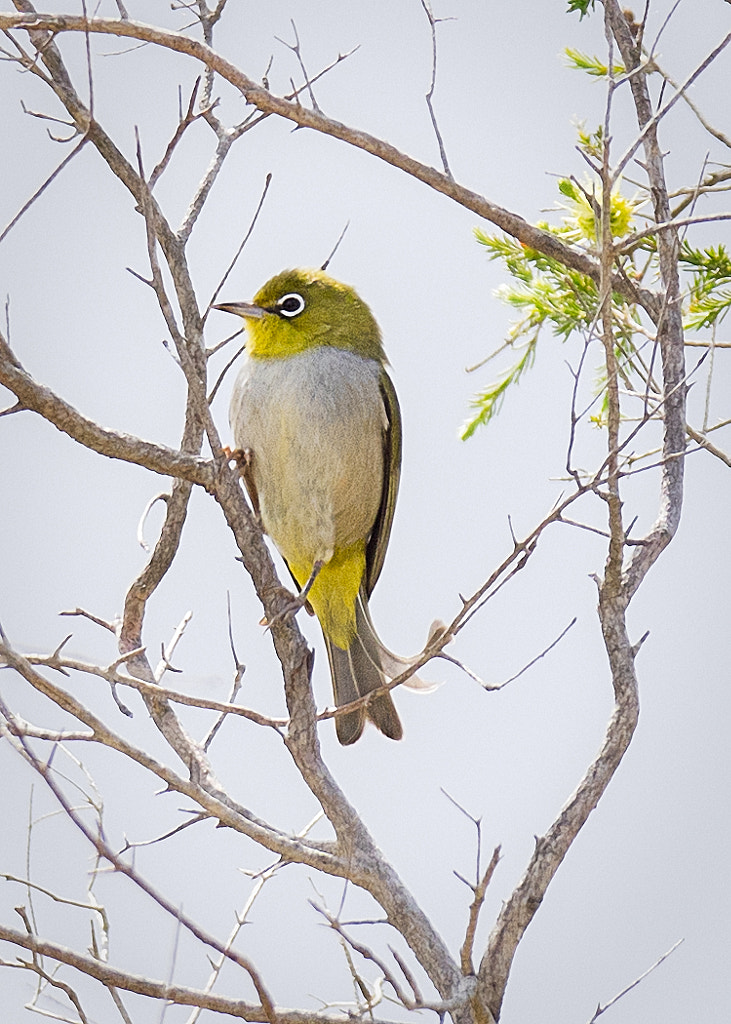
Silvereye, Zosterops lateralis. Thomsons Lake, Western Australia.
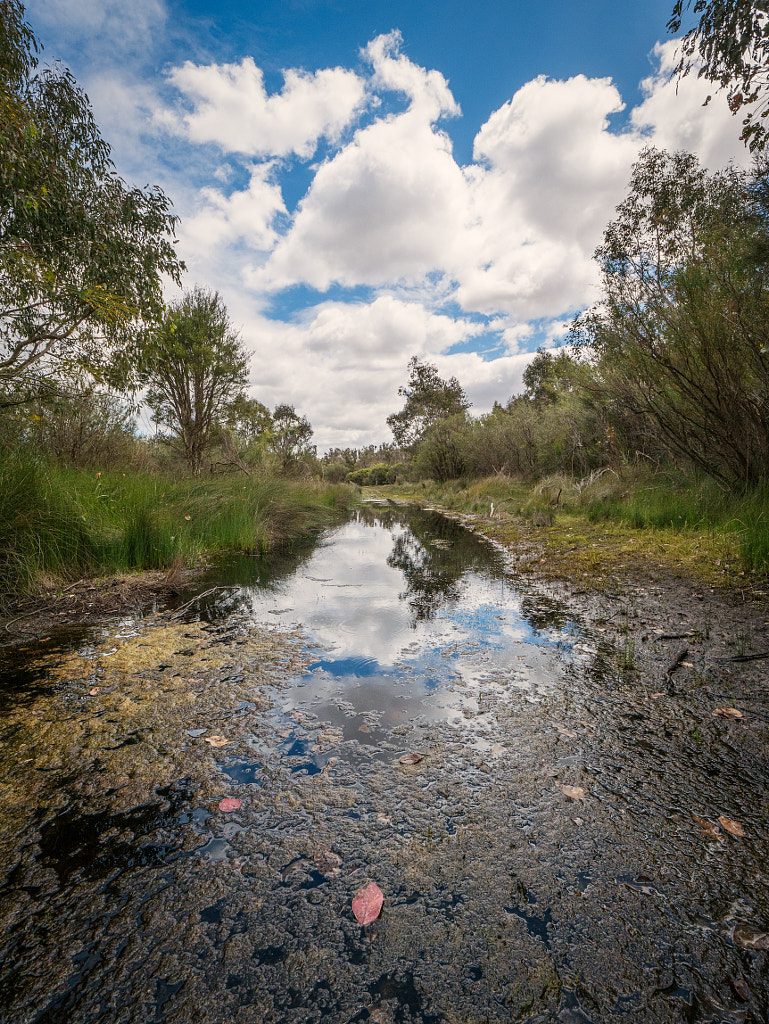
In winter and spring the track can be covered in water in places. A good excuse to break out the wellies.
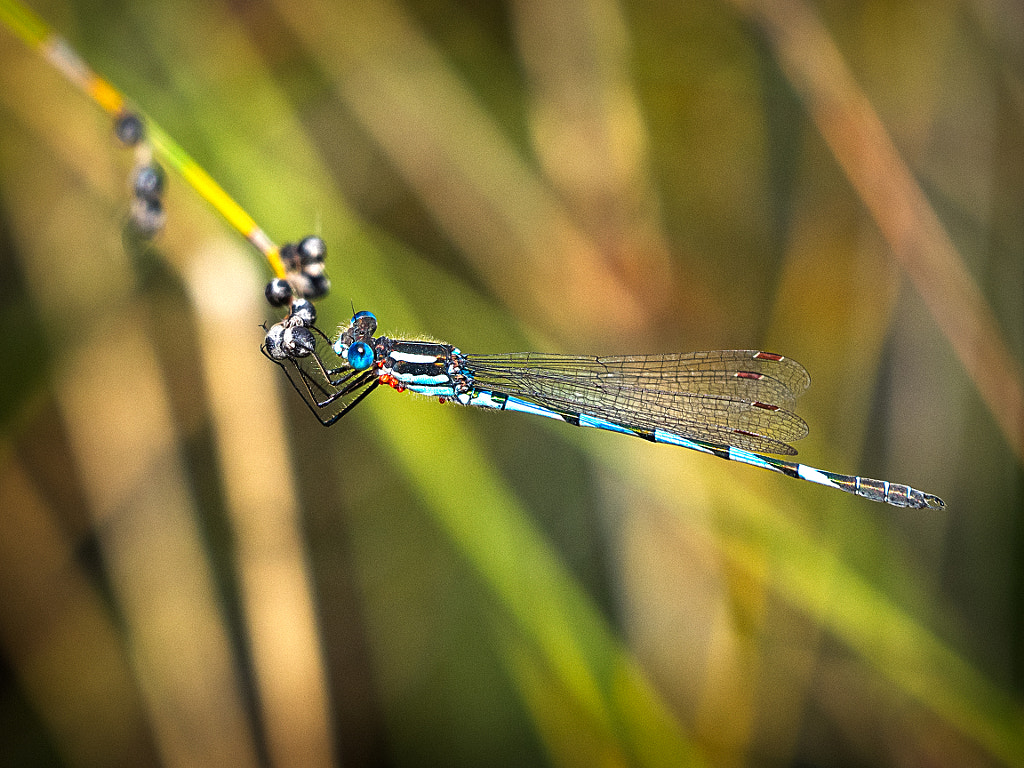
Blue Ringtail, Austrolestes annulosus. Thomsons Lake, Western Australia.
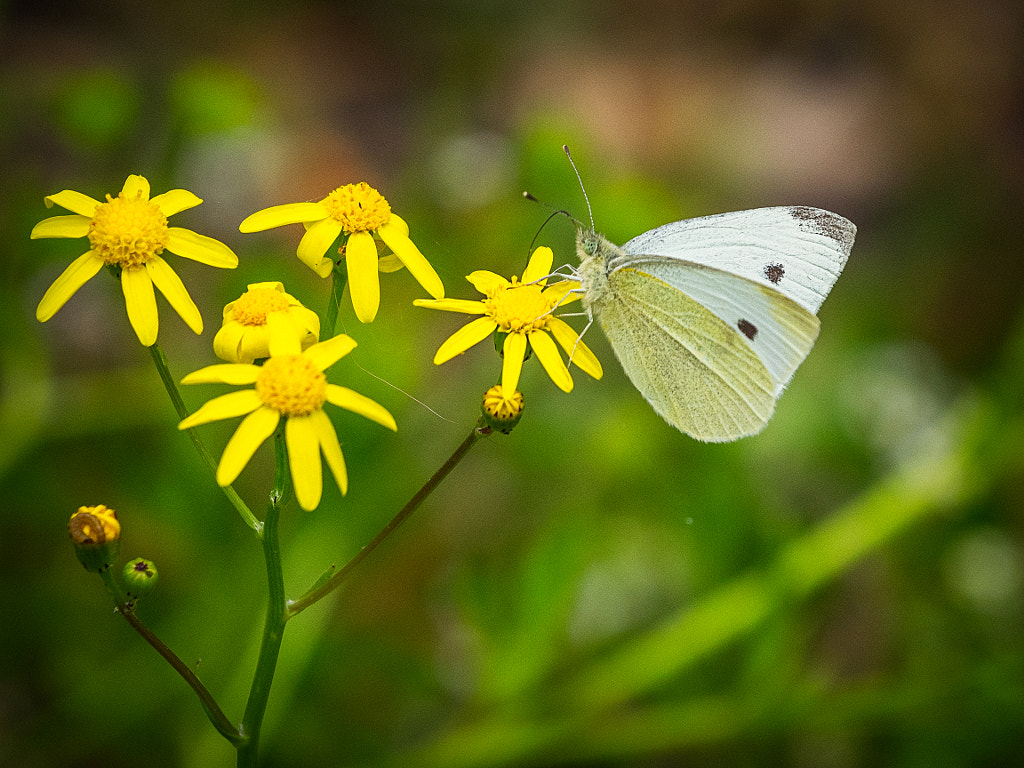
Small White (Pieris rapae). Thomsons Lake, Western Australia.
Thomson’s Lake is one of the most important freshwater lakes on the Swan Coastal Plain. It is an A Class nature reserve of 5099 hectares that supports 50 species of waterbird, 86 species of bushbird, 9 species of frogs, 23 species of reptiles, 6 species of mamals, and 15 species of ground orchids.
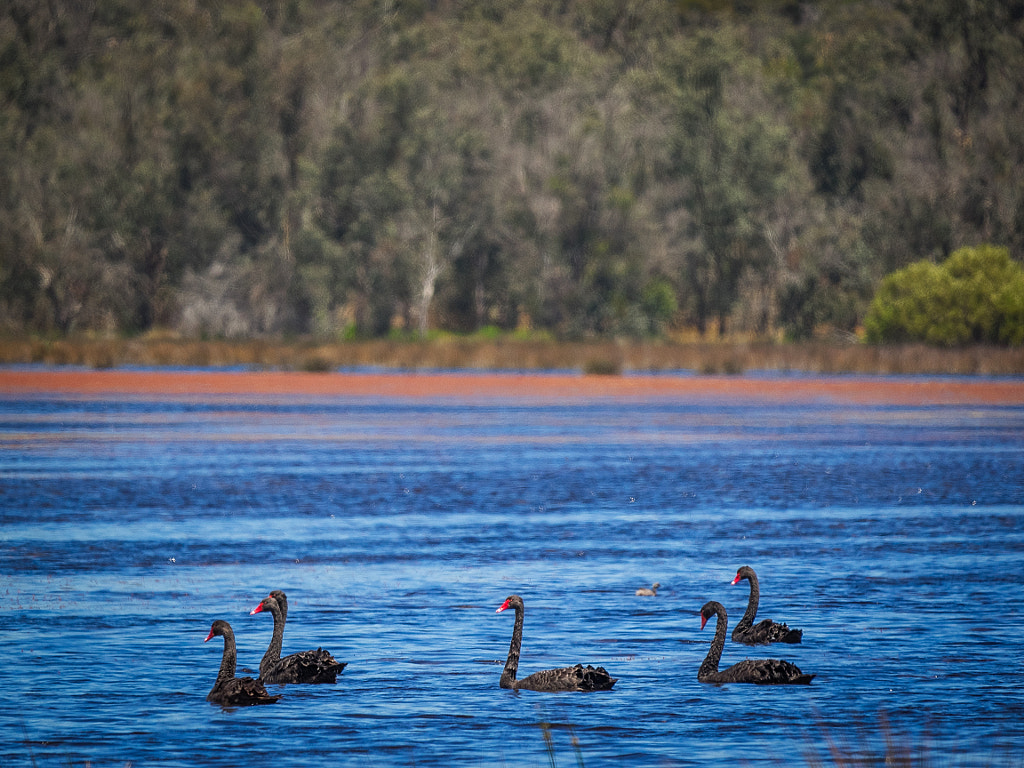
Black swans, Cygnus atratus. Thomsons Lake, Western Australia.
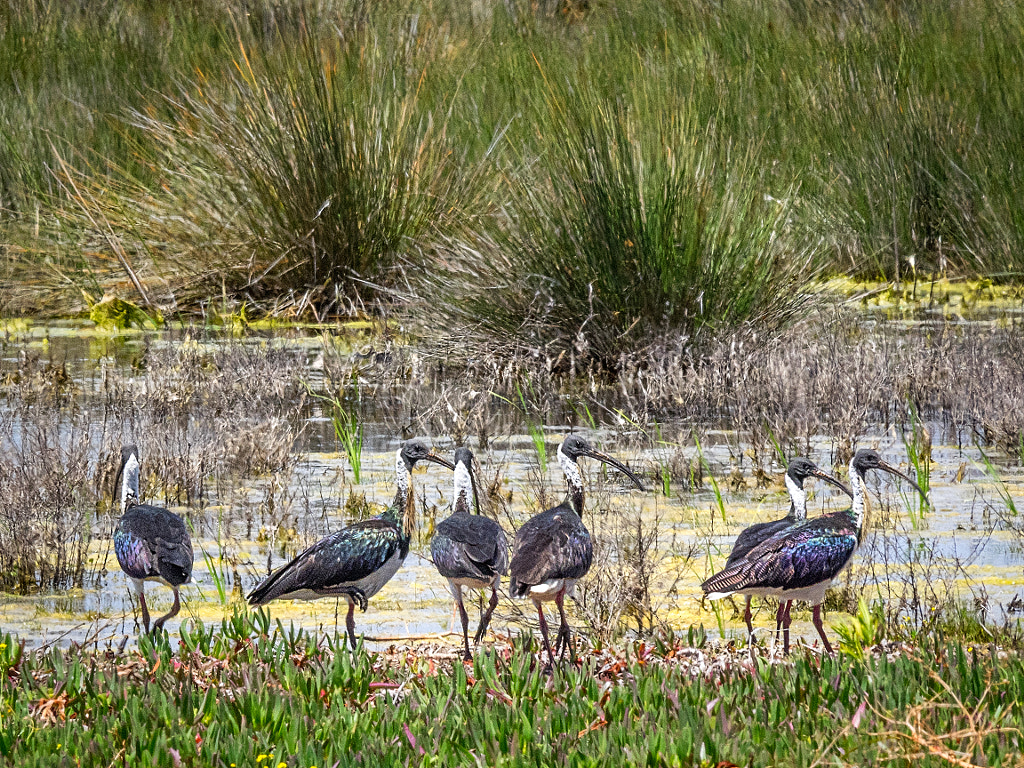
Straw-necked Ibis, Threskiornis spinicollis. Thomsons Lake, Western Australia.
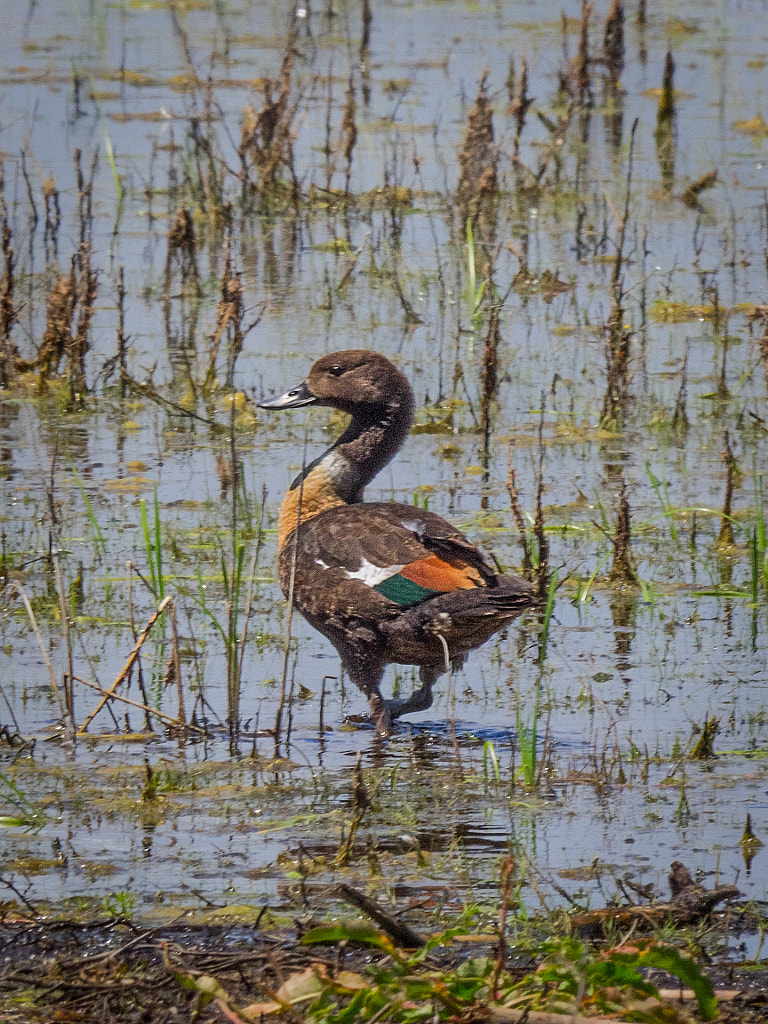
Australian Shelduck, Tadorna tadornoides. Thomsons Lake, Western Australia.
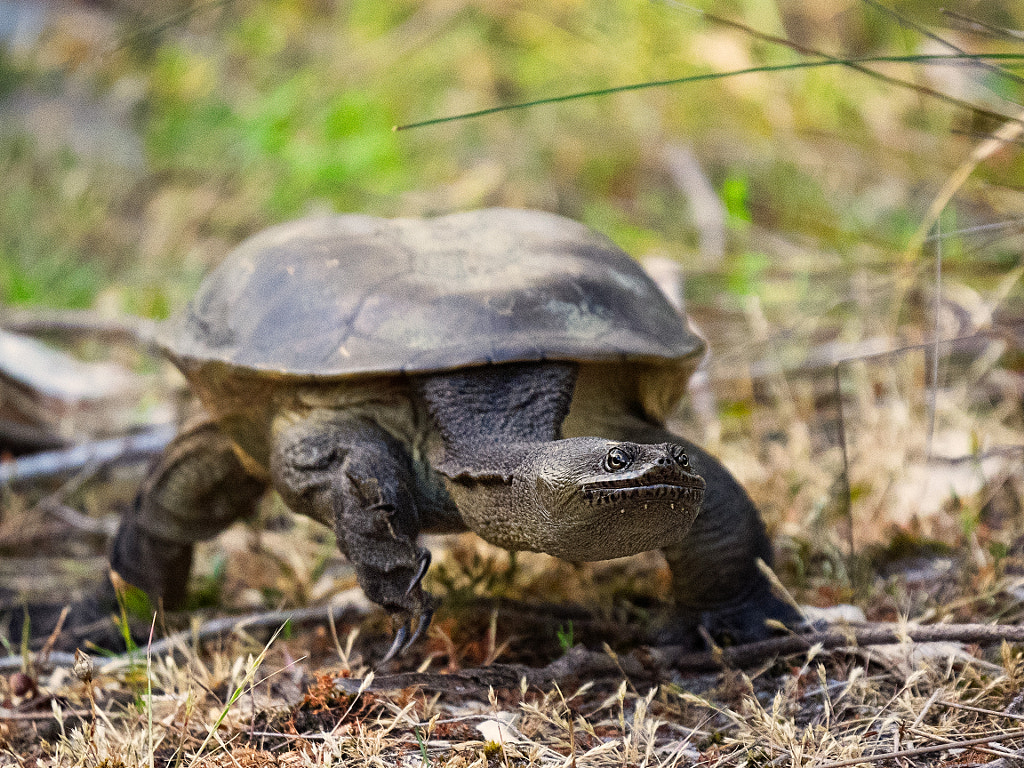
Choonya is the Nyoongar name for the Long-necked turtle, aka the oblong turtle (Chelodina oblonga). Thomsons Lake, Western Australia.
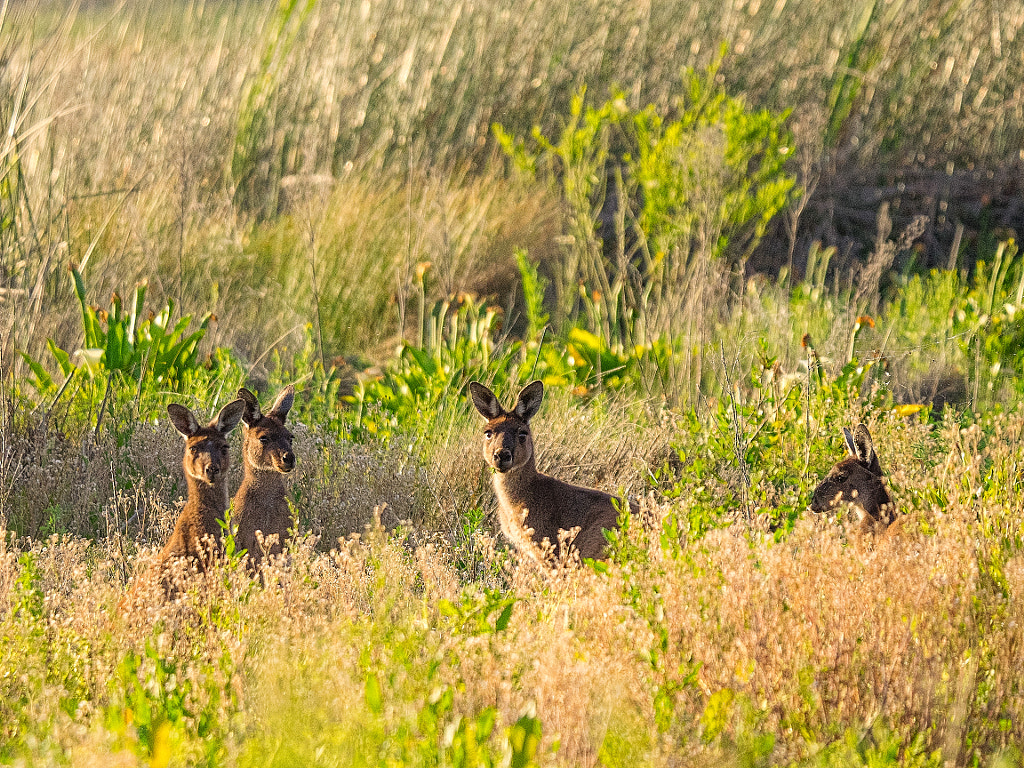
Sundown Mob*. Kangaroos out grazing in the evening at Thomsons Lake, Western Australia. * the collective term for a group of Kangaroos is “mob”.
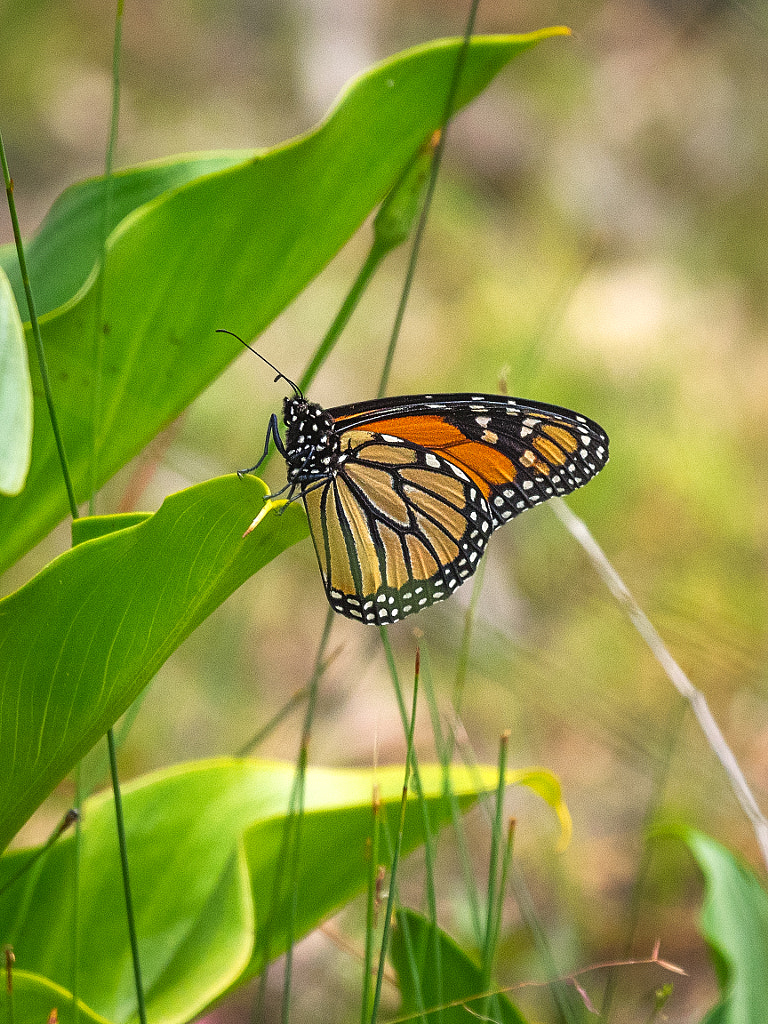
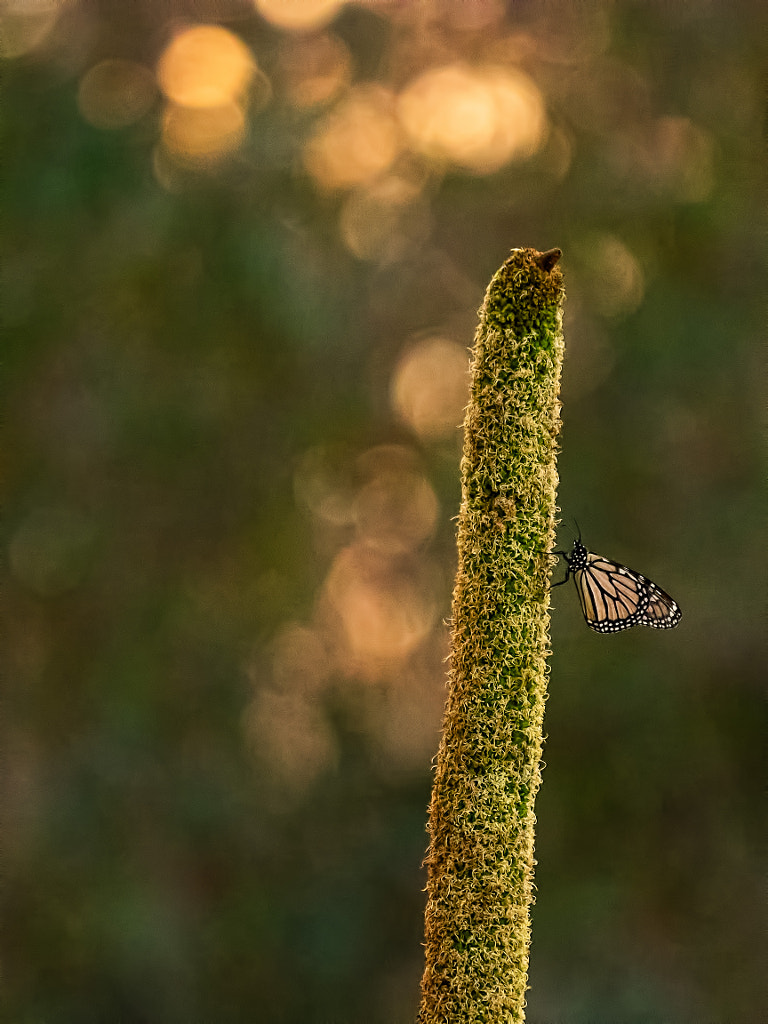
This Monarch butterfly, Danaus plexippus, prepares to roost for the night on a grass tree (Xanthorrhea preissii) flower spike. Thomsons Lake, Western Australia.
As I mentioned before this is an excerpt from my latest walking guide to Perth. It would make a wonderful Christmas present for anyone with an interest in walking.
Forrestdale Lake (originally Lake Jandakot, it was renamed in 1973) lies within the Forrestdale Lake Nature Reserve which is about 25 kilometres south of the Perth CBD on the southern fringes of the Perth metropolitan area. The lake is shallow and seasonal with a large area 220 to 245 hectares of open water when full. In June or July, Lake Forrestdale starts to fill, and about the end of September, it reaches its maximum depth which is somewhere between 200 and 500mm depending upon the winter rains and it usually dries out by mid-summer. That was not always the case as the lake used to hold a lot more water than it does now, and some years it did not dry up at all. Diminishing rainfall, and ground water extraction from government and private bores are some of the reasons for the lake’s decreasing water levels.
Before white fellas came Lake Forrestdale was a special place for the Whadjuk Nyoongar who camped around its shores and hunted long-necked turtles, waterfowl and their eggs; koonacs and gilgies, possums, kangaroos, quendas and many other animals that are now locally extinct. The first white settlers were William and Alfred Skeet in 1885 and they had a licence to fell and sell timber. Shortly after most of the land around the lake was cleared for farming and grazing despite that the lake continued to be a major breeding site, migration stop-over and semi-permanent drought refuge area for waterbirds so in 1957 the lake was gazetted as an “A” class nature reserve for the conservation of flora and fauna and to provide a location for recreational sailing. On 7 June 1990, along with Thomsons Lake 10 kilometres to the west, it designated under the Ramsar Convention as a wetland of international importance and both lakes form the Forrestdale and Thomsons Lakes Ramsar Site. It’s easy to see why. More than 20,000 waterbirds have been recorded on Forrestdale Lake. It regularly supports more than 1% of the national population of five shorebirds: red-capped plover (with up to 1,300 recorded at any one time), black-winged stilt (3,840), red-necked avocet (1,113), long-toed stint (up to 80), and curlew sandpiper (2,000). In some years it supports more than 10,000 ducks, including Australian shelduck (up to 1,650 counted), Pacific black duck (5,500), grey teal (9,000), Australasian shoveler (2,000), and hardhead (1,053). The lake is one of the few sites in Western Australia where little ringed plover and little stint have been recorded more than once, and it is the only location in the state where white-rumped sandpiper has been recorded. A comprehensive list of all the bird species seen at the reserve can be seen at eBird Australia.
The entyrance to the Forrestdale Lake Nature Reserve.
So when BSO (Beloved Significant Other) announced she was mounting a campaign to achieve croquet world domination I would use the opportunity of a weekend in Perth to have a gander at Forrestdale Lake Nature Reserve. So a quick peruse of the interwebs told me that the best place to start was was at the parking bay at the Skeet Memorial Park on Moore Street in Armadale. There I would find a comprehensive information board about the area and would also give me quick access to the bird observation platform. Having read all about all the different birds that use the lake I was expecting a birding nirvana. Unfortunately we’d had a dry winter and the water line was a good 600m from the platform which meant I had Buckley’s chance of seeing any water birds up close and personal.
The bird observation platform at Forrestdale Lake.
Fall back plan was to walk around the lake and just photograph what I found on the way. Once you leave the main entrance area there is little signage except for the keep out variety which is attached to the continuous fence designed to, funnily enough, keep people out. It was quite a frustrating experience – I could hear plenty of bird activity on the other side of the fence but I had no way of getting closer. For much of the walk you are in a narrow corridor of about 5 or 6 metres between two substantial fences with signs saying you are under surveillance – it’s hardly a nature experience. I’ve been to military bases which are more friendly. I feel this is a hugely wasted opportunity. Thomson’s Lake is much more accessible to visitors, and the Spectacles also makes much of it Aboriginal cultural significance. I’ve written previously that if people are having less and less opportunities to interact with nature that will create an antipathy towards the natural world and consequently they will cease to care about it. So to get people to be more aware of environmental issues they must be encouraged to reconnect with nature. There is very little opportunity for the casual visitor to interact with all that Forrestdale Lake offers so in many ways it defeats its stated purpose of raising public awareness about the importance of this chain of wetlands. Normally I am very positive about these types of reserves and have written about them in the past in glowing terms. I don’t like being negative or critical, but I really do feel that this is a waste of resources.
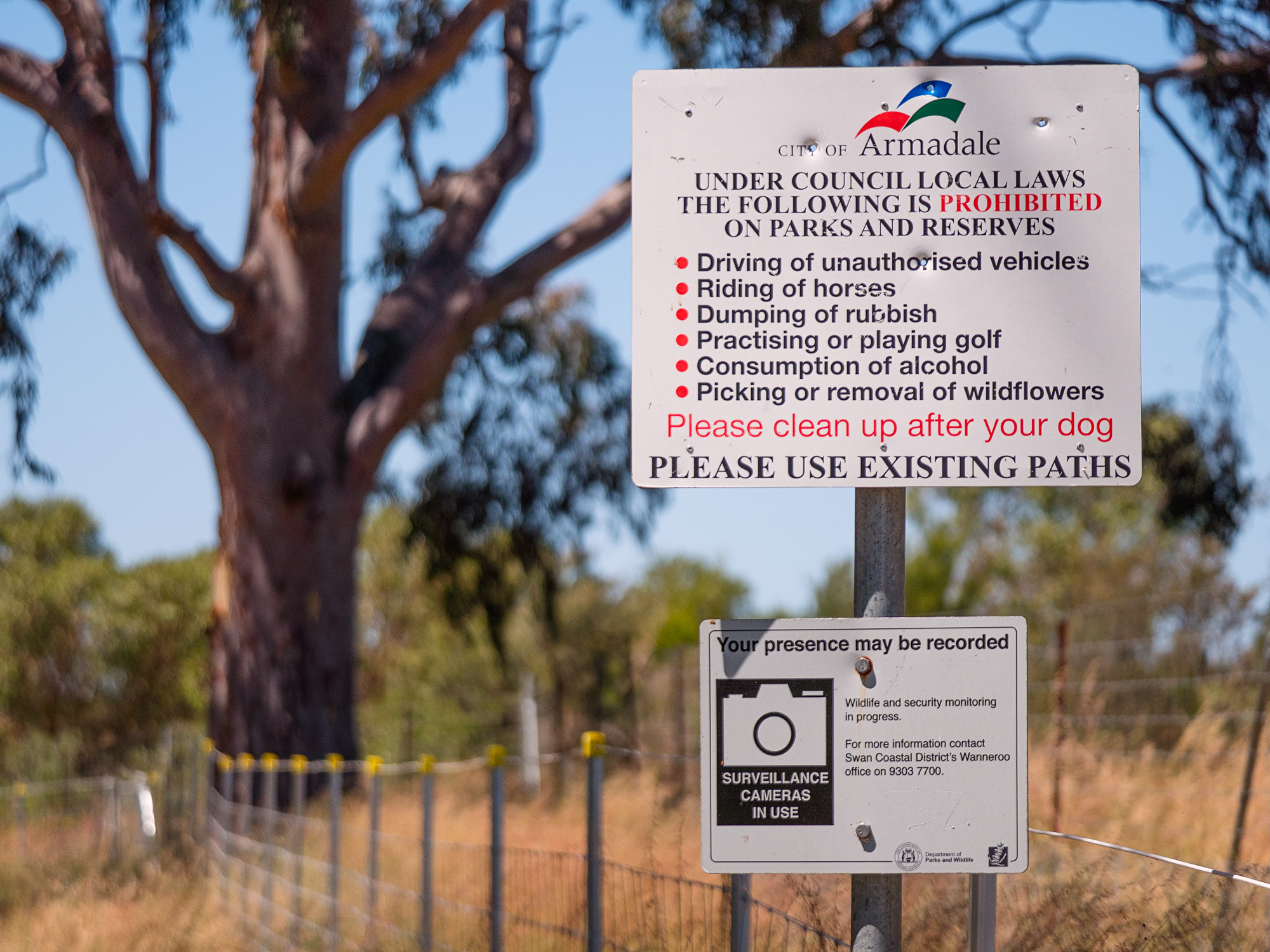
One of the many signs that warn you about unauthorised access.
The fence that rings the lake preventing unauthorised access.
Big brother is in full surveillance mode at Forrestdale Lake Nature Reserve.
Can I recommend the place as worth a visit? If you want a a bit of a walk with a nature experience then I would suggest that are better places and I’ve written about quite a few of them. If you are a die hard birder then I’d find out what the water levels are before visiting. There is little point in visiting if there is no water in the lake.
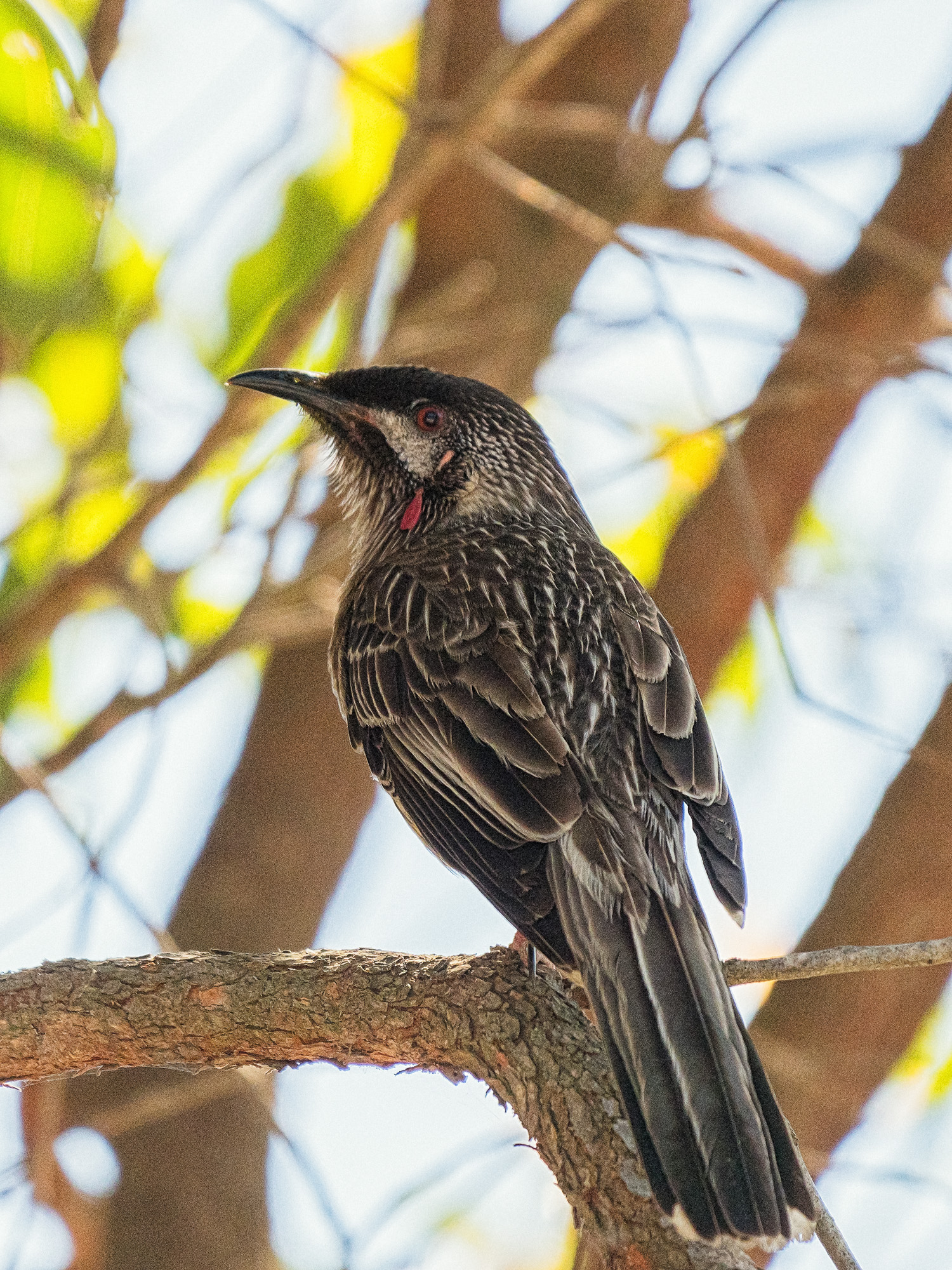
Red Wattlebird, Anthochaera carunculata subspecies woodwardi, at Forrestdale Lake Nature Reserve.
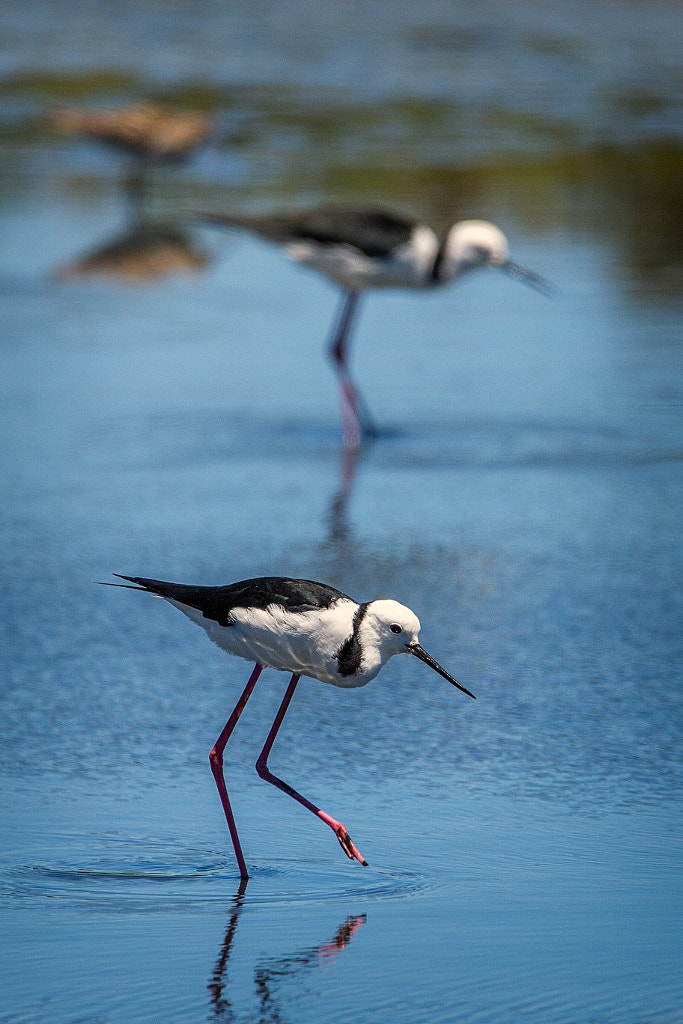
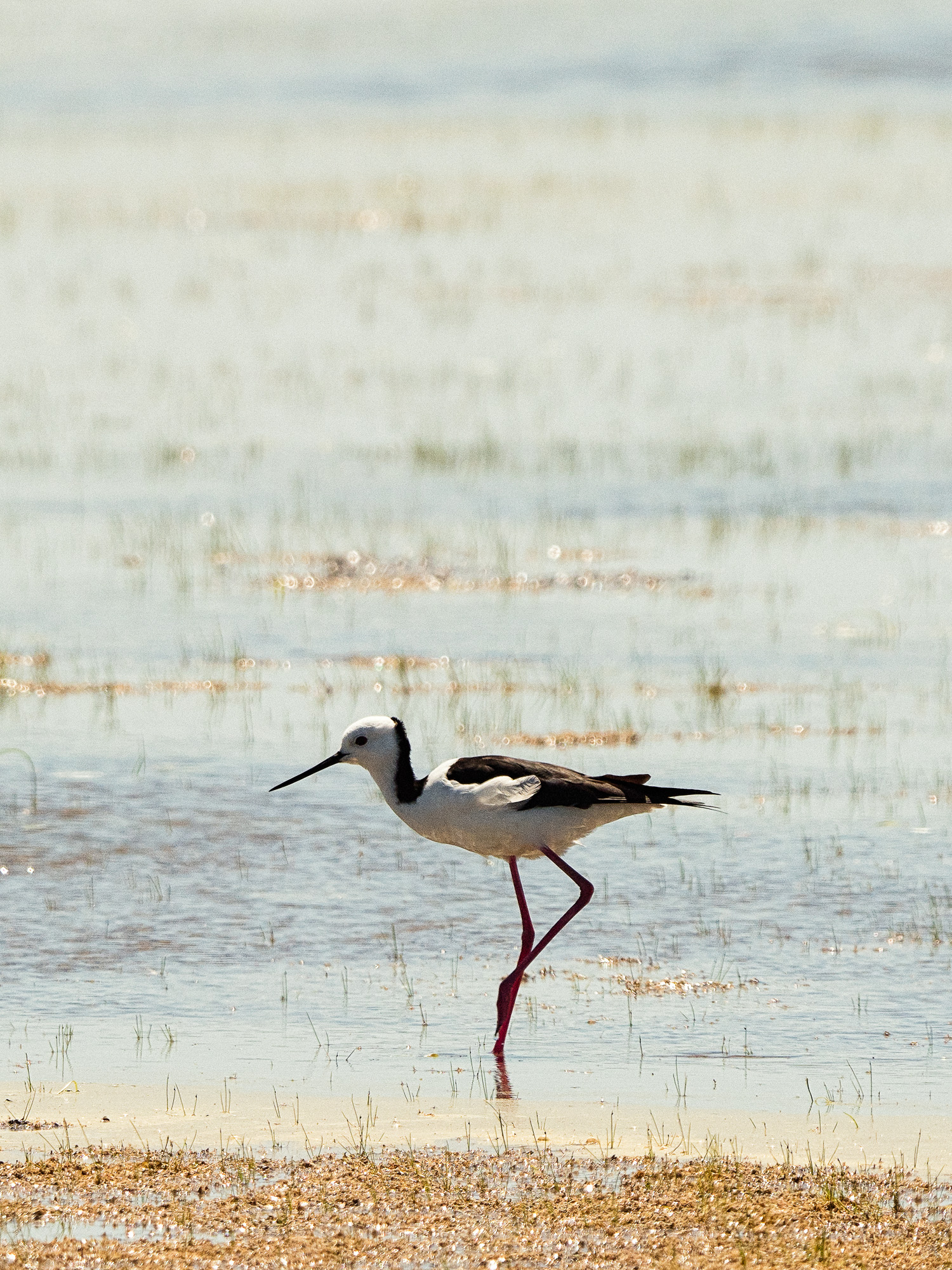
White-headed Stilt, Himantopus himantopus subsp. leucocephalus, Forrestdale Lake Nature Reserve.
Grey fantail, Rhipdiura albiscapa, Forrestdale Lake Nature Reserve.
Grey Butcherbird, Cracticus torquatus, Forrestdale Lake Nature Reserve.
Oh and BSO (Beloved Significant Other had a better time of it than I did and achieved world croquet domination – well she won the State Mixed Doubles for Golf Croquet.
2020 Croquetwest GC State Mixed Doubles. Forest Park Croquet Club, Mount Lawley, Western Australia.
2020 Croquetwest GC State Mixed Doubles. Forest Park Croquet Club, Mount Lawley, Western Australia.
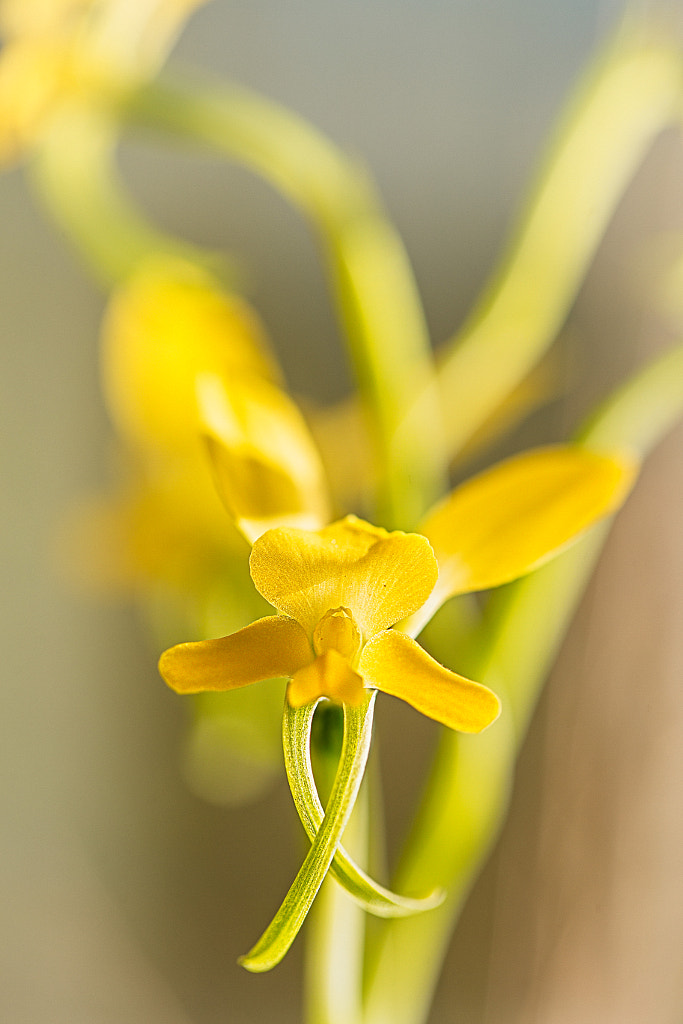
Darling Range Donkey Orchid, Diuris sp. ‘Darling Range’. Woottating, Western Australia.
As you drive from Perth to York you pass an insignificant little lay-by. It’s nothing to look at at first glance. A busted up table and bench, a litter bin and a pile of gravel. Consequently it doesn’t get used much. But if you take a look in the scrubby bush at the right time of year you’ll find it home to some rather uncommon orchids. This is not an isolated occurrence there are quite a few orchid hot spots in the Cape to Cape region on the fringes of rubbish dumps.
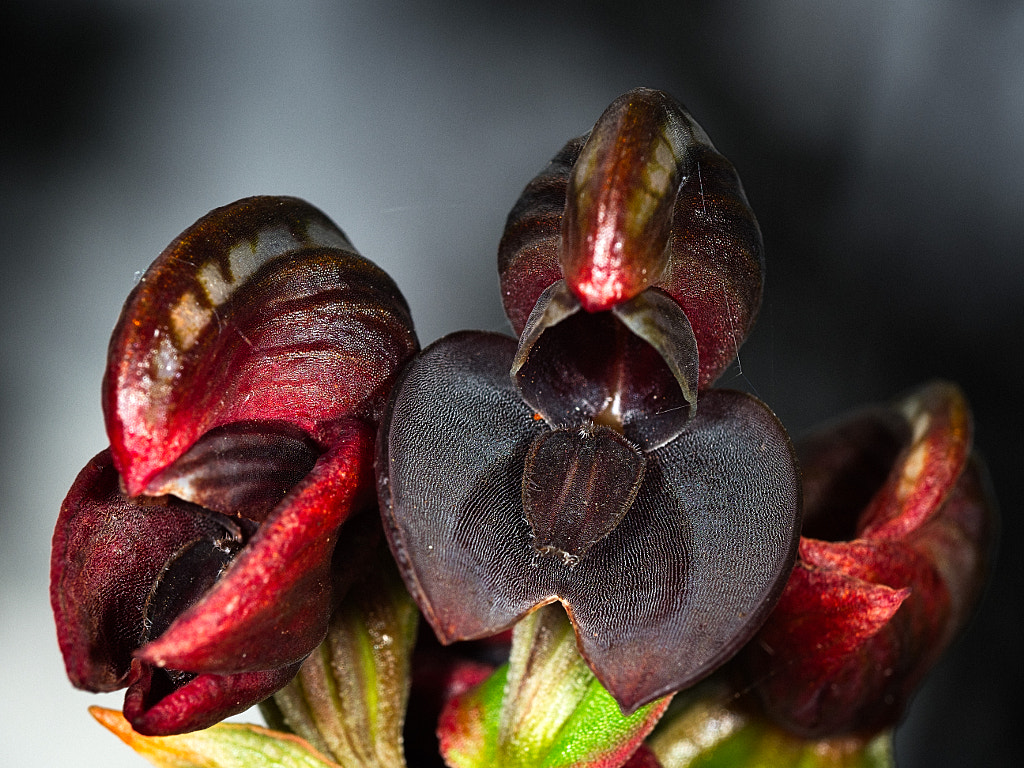
Crowded Banded Greenhood Orchid, Pterostylis sp. ‘crowded’. Woottating, Western Australia.
Currently we are living in the COVID 19 crisis which has restricted people’s movements and so many of us have been confined to the area in which we live. Normally people have an under appreciation of the environs in which they live. There is always that feeling somewhere else is better. Here in Western Australia many would rather go to Bali than holiday in their own state. Now thanks to COVID 19 the option of travelling interstate or overseas is just not available for the foreseeable future. One of my big hopes is that we’ll come out of this situation with a greater appreciation of what’s on our own doorstep.
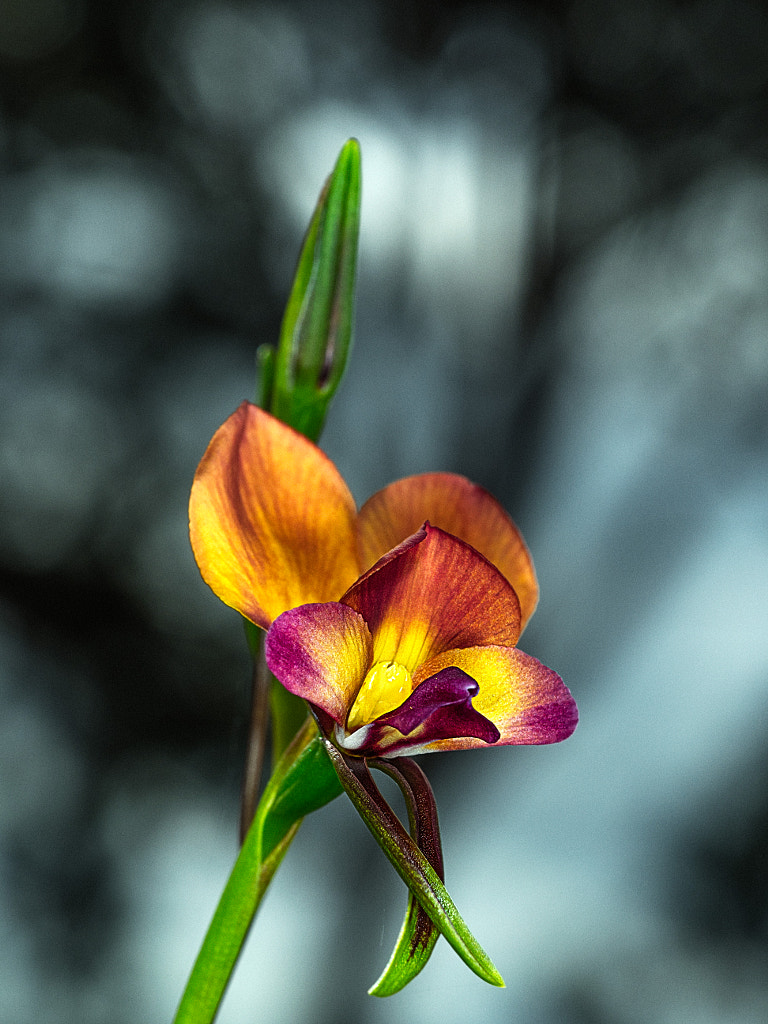
The unusual lutea or “yellow” form of the common donkey orchid (Diuris corymbosa). Woottating, Western Australia.
Last week I talked a bit about how the Weald and Downland Museum was a special place for me and how it had a distinct sense of place. Today I want to talk about a favourite place that is a lot closer – 14,500 Km closer to be precise. But first I want to differentiate between sense of place and spirit of place.
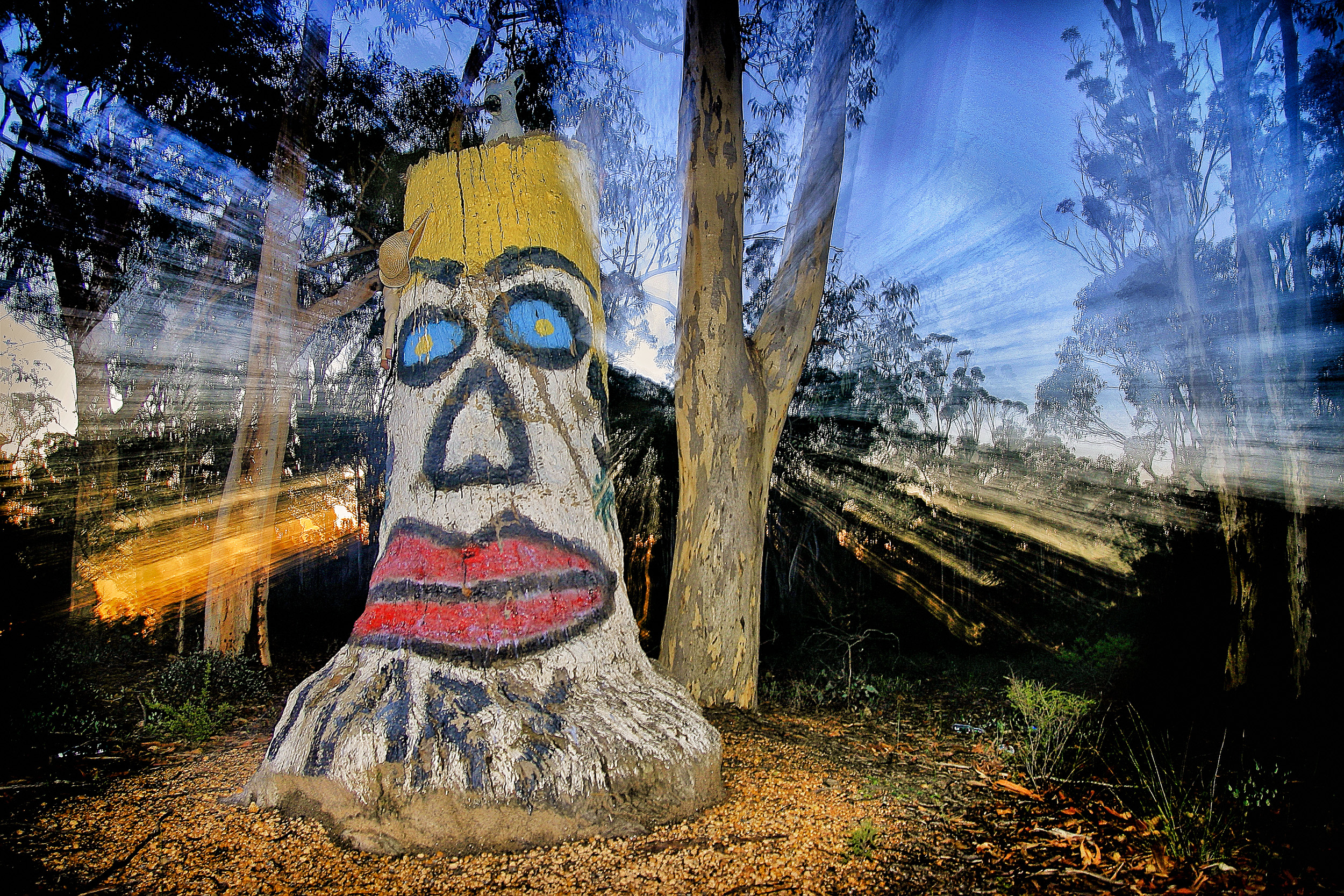
Mary is the tree spirit that lives in the wandoo forest outside of York, Western Australia.
Technically speaking sense of place is typically applied to urban and suburban areas and used to characterize the relationship between people and spatial settings It is the characteristics that make a place special or unique and foster a sense of belonging. Exposure to an environment through childhood play, the role of family, culture and community all combine to establish environmental preferences later in life. Which is a roundabout way of saying that if you were brought up in a certain setting as a child you’d like that setting later in life. This can be seen in a lot of rural communities where young people leave for the economic opportunities offered by cities only to return later when they want to raise a family or eventually retire.
Infra-red photograph of Mount Brown, York WA.
Spirit of place is usually applied to a rural or a relatively unspoiled or regenerated place and is a bit more of an airy fairy concept. The soul, for want of a better word, is formed by the apparent characteristics (both positive and negative) of a place and these qualities are talked about by artists and writers, They are also the subject of myths, folk tales and certain celebrations. The characteristics then help people form associations and attachments with the land. The Romans called the concept Genius loci and believed that every place had a protective spirit which was depicted in their religious iconography as a youth holding an item such as the horn of plenty, a libation bowl, or a snake (symbolising fertility and a connection to Mother Earth). Indigenous peoples see a landscape defined by guardian spirits, supernatural beings, and ghosts. Here in Western Australia the Nyoongar people describe their relationship with the Swan River through the Wagyl or rainbow serpent. Geographical features were created by the Wagyl as it made its way along the river and these sites were considered sacred. It all sounds like a load of cobblers but in the Twenty-first Century we are seeing people who feel a sense of alienation looking to re-establish a connection with the natural world with a combination of environmentalism and spiritual beliefs such as religious naturalism.
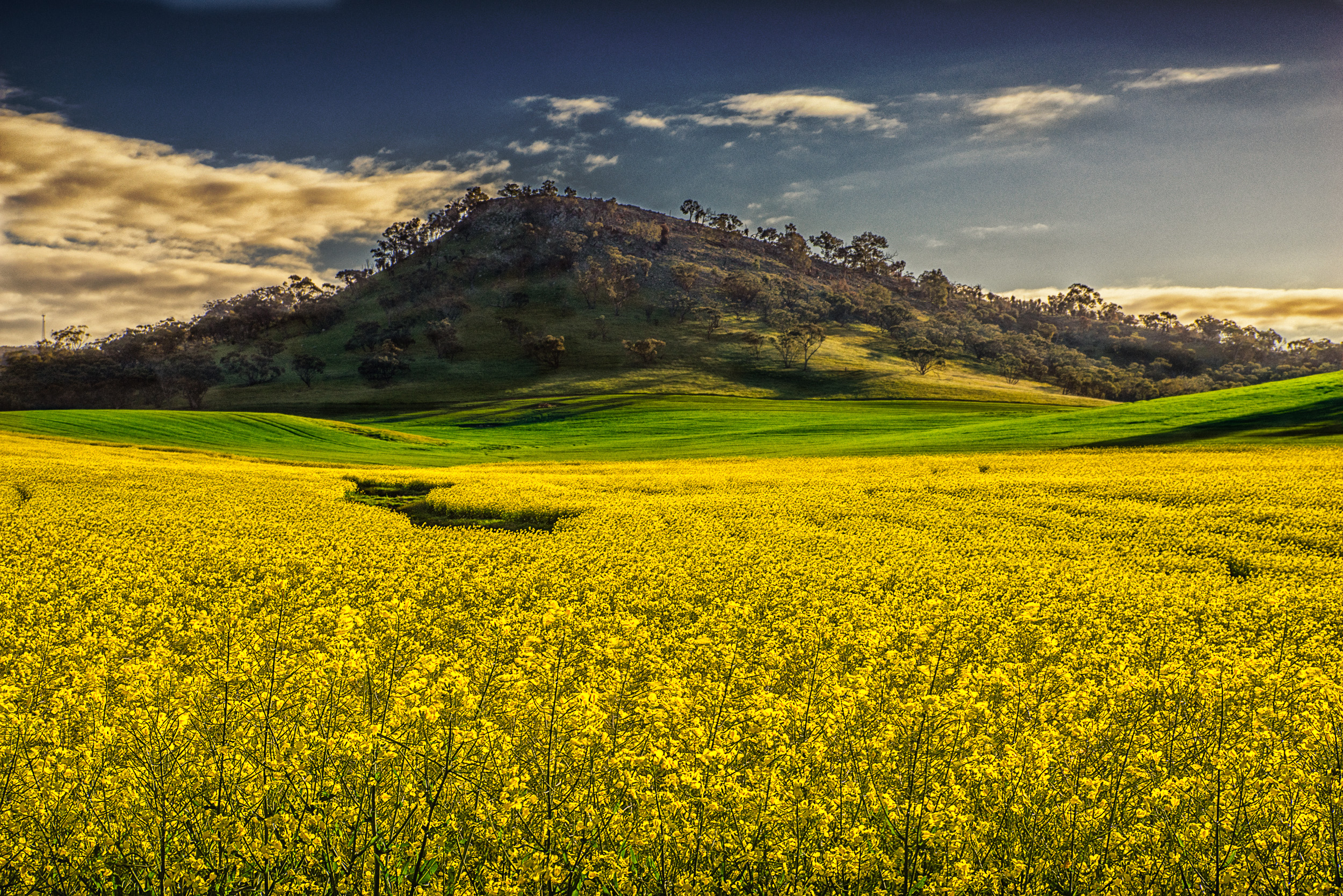
Canola fields at the foot of the Dyotts.
We came to live in York in 2004 and we both fell in love with the landscape – the rolling hills, the farmland and the wandoo forest. In fact we developed such a deep connection with the landscape that when we moved to Tasmania for a couple of years we pined for it. The sense of dislocation was visceral and we found it exceedingly difficult to adjust our arts practice to the Tasmanian landscape – we missed the big blue skies and the open woodland, the smells, the sounds, the red dirt and the quality of the light. To put it bluntly we felt like we didn’t belong in Tasmania – we belonged in York. So we returned and the relief we felt on doing that was palpable.
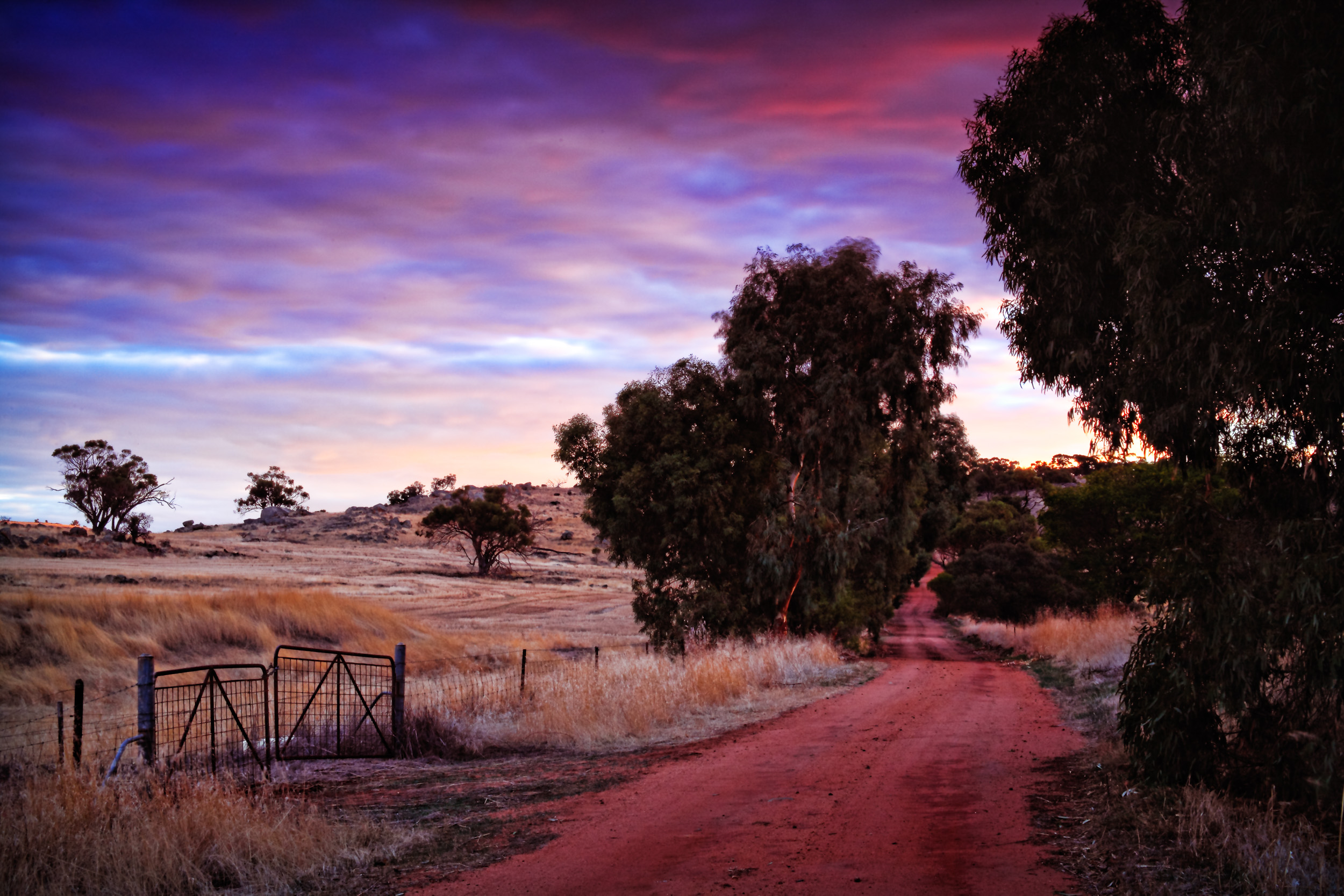
A walk down the lane at sunset.
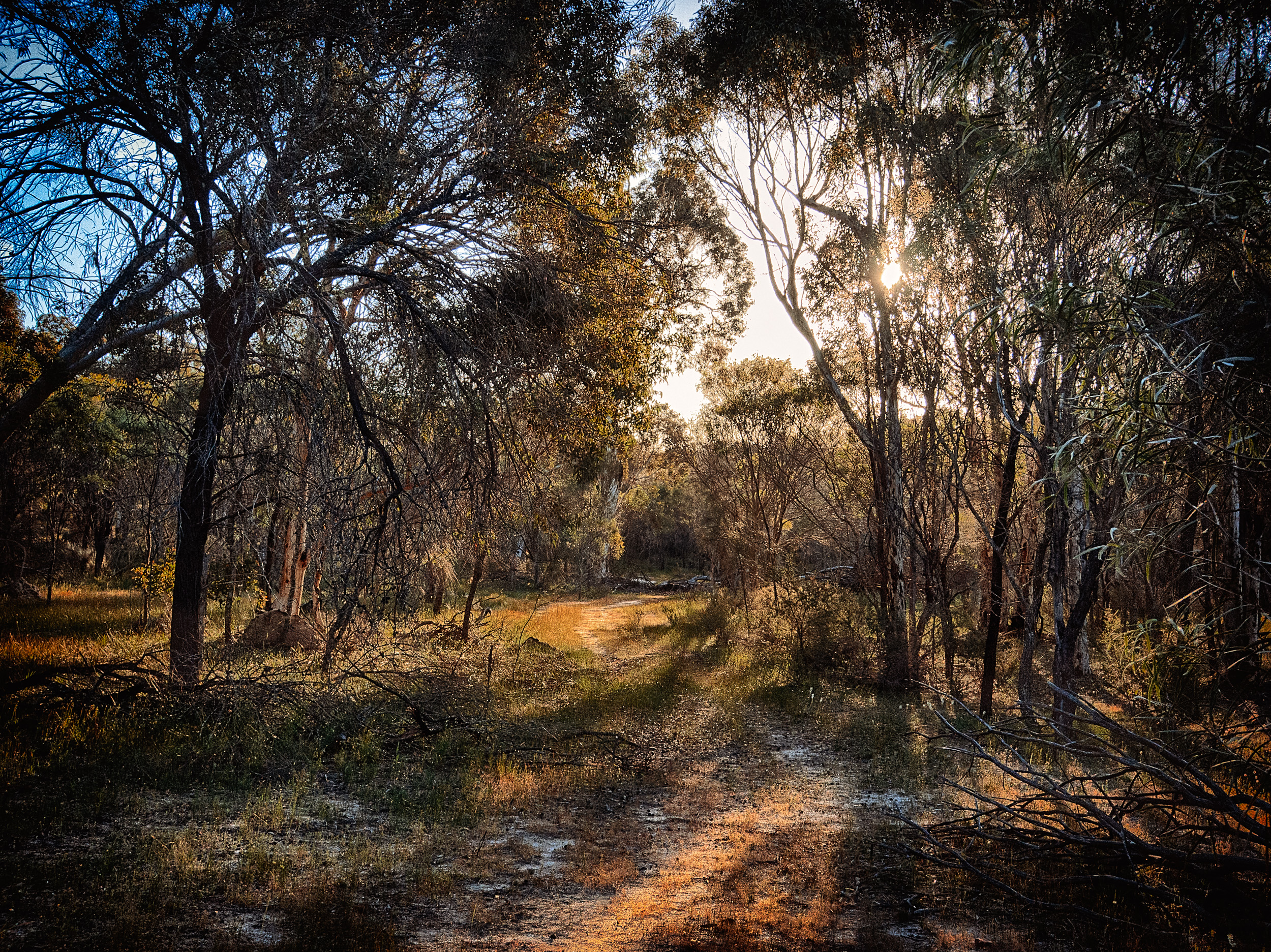
I have a couple of places that are really special – they are both patches of remanent woodland with granite outcrops, amazing varieties of orchids and birds. I’ve had many magical moments in them like when an echidna literally bumped into me as I was photographing, or the time when I was so engrossed photographing some flowers that I didn’t notice the mob of kangaroos that settled around me and I only noticed them when I stopped and it only seemed right to stay there sitting on the ground with them. Last week I was out photographing orchids in the late afternoon, the light was turning golden and the shadows were lengthening. A couple of kookaburras were calling out to each other. It was nice to lie under the wandoo tress and look at the clouds scudding across the sky. A sublime experience and I couldn’t think of any better place to be. A spiritual experience? Yes most definitely.
Walking back to the car after an afternnon a video on how to photograph orchids.
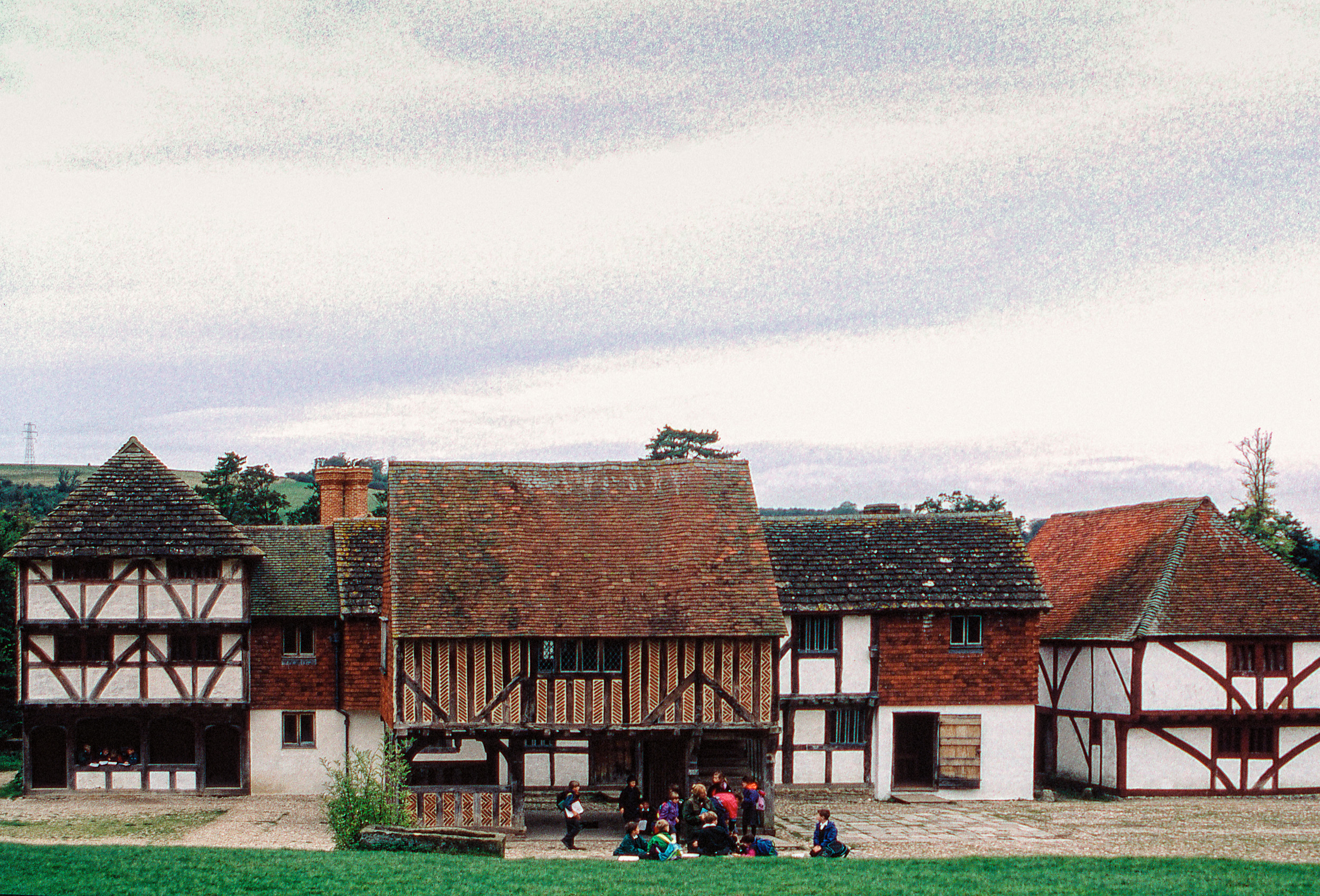
Not a quaint English village but a museum. The Weald and Downland Museum at Singleton in West Sussex.
The other night I had trouble getting off to sleep so I had a look at Australia’s National Broadcaster’s – the ABC – catch up TV service on the internet which is called iView. I was looking for something not too exciting, that would be soothing and comfortable. So I was trawling through the arts documentaries and I found a program called the Repair Shop and the one particular episode that appealed featured the restoration of a 1930’s portrait of Shihan Yukio Tani who is the man largely credited with introducing and establishing Japanese martial arts in England so I tuned in to watch. The history of the painting and its restoration was vaguely interesting but it was the location of the filming that was particularly engrossing. It was filmed at one of my favourite places – The Weald and Downland Museum in Singleton, West Sussex, England. The museum is comprised of a collection of fifty vernacular buildings from the south-east of England that were built between 950AD and the 19th century, along with gardens, farm animals, walks and a mill pond. I was last there in 1991 and so the the TV program was a huge nostalgia trip for me.
The market square with from left to right Horsham Medieval Shop, Titchfield Market Hall, Crawley Hall and North Cray Medieval House.
As a consequence I started thinking about the museum, the village it is based in and when I worked there in 1981. The next morning I scuttled off to look at my photo archive and find some pictures that I took on my last visit. It was really nice to revisit through those photos, it was almost like reliving the past. Gerry Badger the photographic curator and critic in his 2007 book “The Genius of Photography – how photography has changed our lives” said that there were “basically three photographic subjects – people, things and places” (page 131). So obviously my photos of the museum fall into the places category. However Badger goes onto quote from the American landscape photographer Robert Adams who said:
“Landscapes can offer us, I think, three verities – geography, autobiography and metaphor. Geography is, if taken alone, sometimes boring, autobiography is frequently trivial, and metaphor can be dubious. But taken together … the three kinds of representation strengthen each other and reinforce what we all work to keep intact – an affection for life” Robert Adams (p 154, Badger, G: 2007, The Genius of Photography)
The mill pond
The geography is simple the museum is located in Singleton which I’ve always regarded as the quintessential Sussex village. Well it was until the mega rich started buying rows of cottages and knocking them into one large house only then not to live in them but visit once in a blue moon. The village is roughly seven miles north of Chichester, the town where I lived from age 10 to 23, on the South Downs. The autobiography is that I went to work at the museum as a summer job in 1981 with my then girlfriend. She worked in the tearooms and I was a general dogsbody. It is the job I’ve enjoyed the most out of all the jobs I have done and I really enjoyed working with the people there. The dubious metaphor I suppose is that the museum presents an idealised view of what the ideal English village should be like – quaint old buildings nestled among bucolic rolling green hills inhabited by happy people. But all that doesn’t matter in many ways because to me it was and is a special place and the fact that 57 year old self still appreciates it as much as my 18 year old self is important.











You must be logged in to post a comment.