Mid August. Get the orchid books out. Find the maps. Load the coordinates into the GPS. Dust off the macro lens. Kweda here I come!!!
It was a hair raising journey. After our heavy winter rains the dirt roads resembled cold lumpy gritty porridge and for the last 10km the car fish tailed along the road the tyres struggling to get a grip at times. It was a relief to stop and park up by the mobile phone tower which was the only bit of hard ground. Considering the conditions I was amazed that there were any orchids out as most species don’t like getting their feet wet at all.
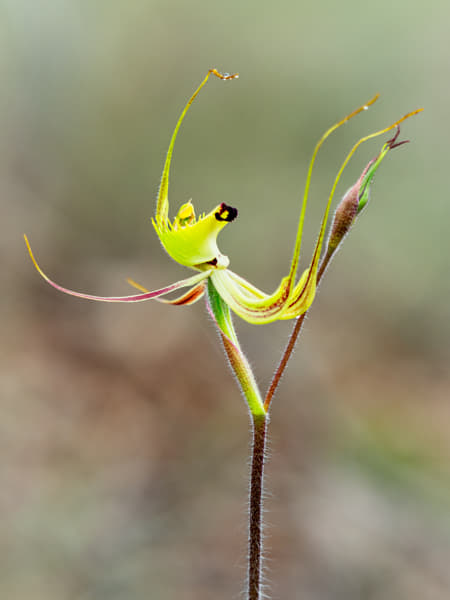
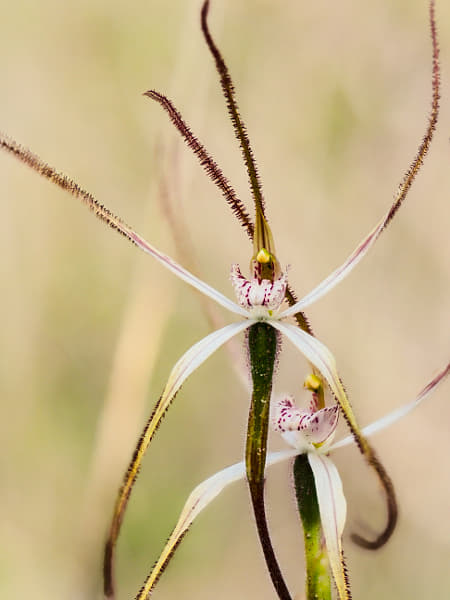
Fringed Mantis Orchid or Green Spider Orchid (Caladenia falcata). Kweda, Western Australia.
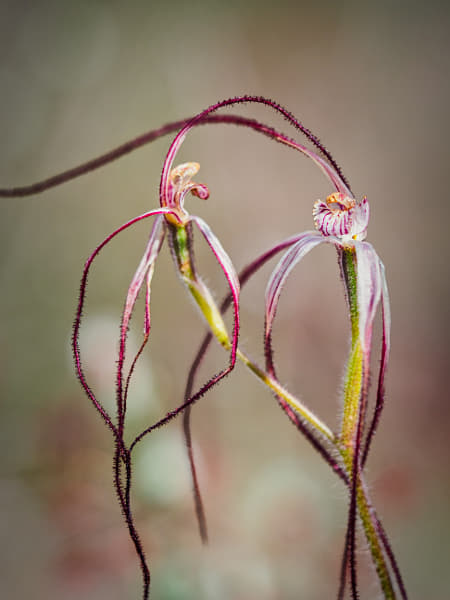
Talbot's Spider Orchid, Caladenia pendens subsp talbotii. Kweda, Western Australia.
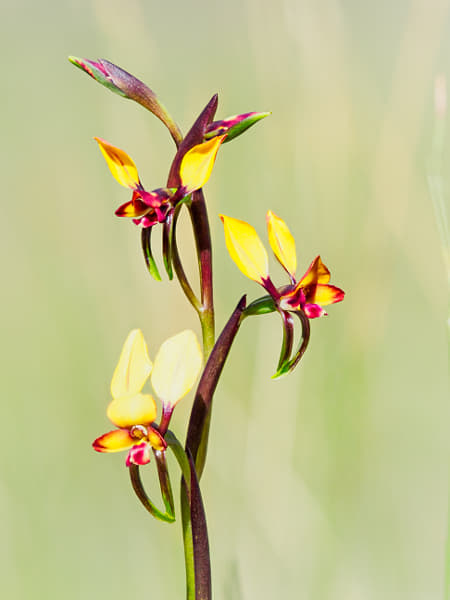
Winter Donkey Orchid, Diuris brumalis. Kweda, Western Australia.
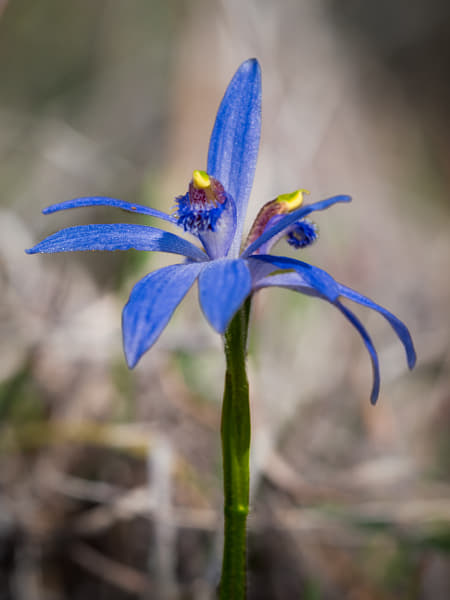
Blue Fairy Orchid or Blue Beard (Pheladenia deformis). Kweda, Western Australia.
Early Wheatbelt Spider Orchid, Caladenia sp.’early wheatbelt’. Kweda, Western Australia.
I must say I’m really, really liking using the Olympus m.Zuiko 40-150mm f2.8 with the Olympus 1.4 Teleconverter MC-14 for focus stacking. It is a beautiful lens, probably the best one I’ve got.
At last a morning with no rain or mist. It was definitely on the chilly side, but the most important thing was the sun was out. What a difference the sun makes. Everything looked new and clean.
The morning saw us walking along the river bank in the Wheatbelt Metropolis of Northam. There was definitely a hint of spring being around the corner. Lots of birds gathering material for nests. Birds calling out to each other and pairing up. So much activity. It was just wonderful to see.
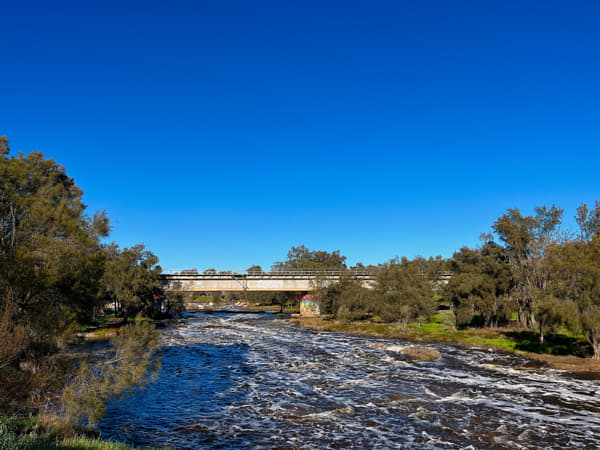
The rail bridge over the Avon River in Northam. The water levels bode well for the forth coming Avon Descent White Water Race.
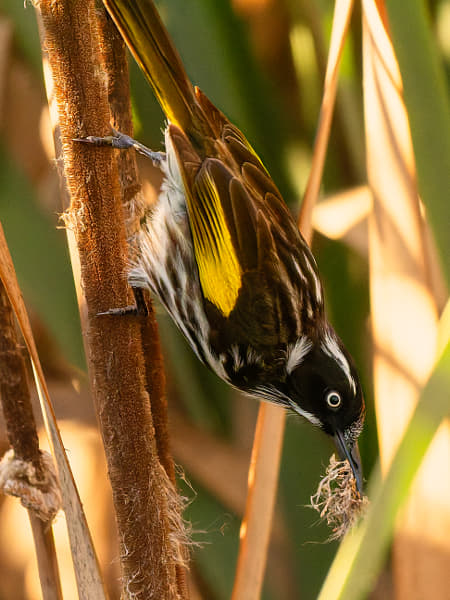
Bandiny or New Holland Honeyeater (Phylidonyris novaehollandiae) collecting nesting material from the reeds. Northam, Western Australia.
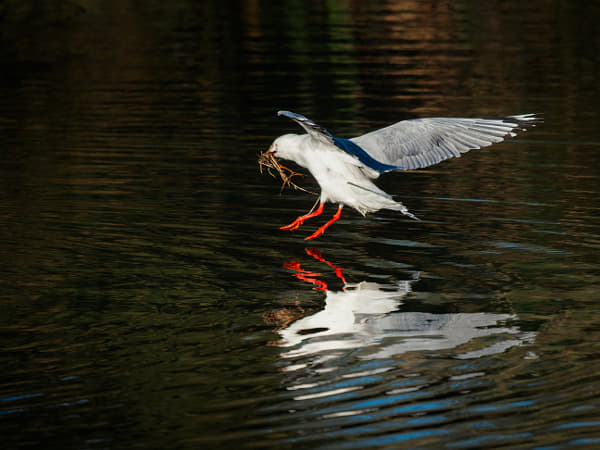
This Djeringkara or Silver Gull (Larus novaehollanddiae) was also collecting nesting material. Northam, Western Australia.
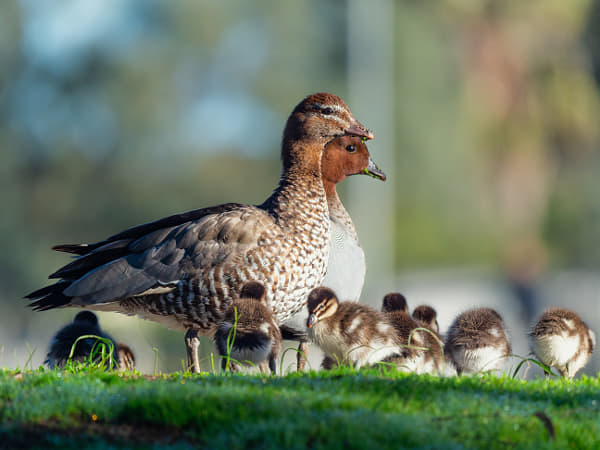
Forget building nests. This pair of Marangana or Australian Wood Ducks (Chenonetta jubata) were walking around with their newly hatched clutch of 10 ducklings
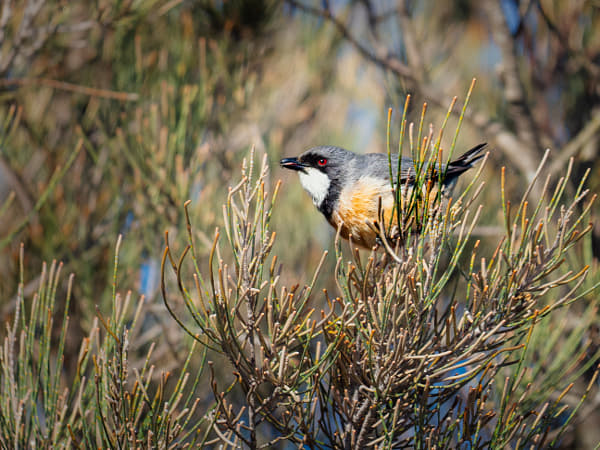
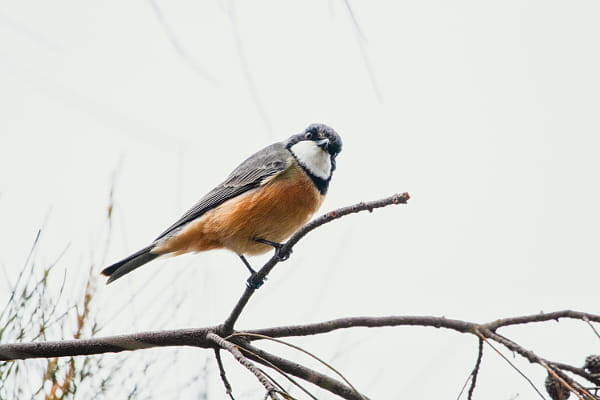
Just past the weir the trees were full of Bambon or Rufous Whistlers (Pachycephala rufiventris) noisily calling out to each other trying to attract a mate. Northam, Western Australia.
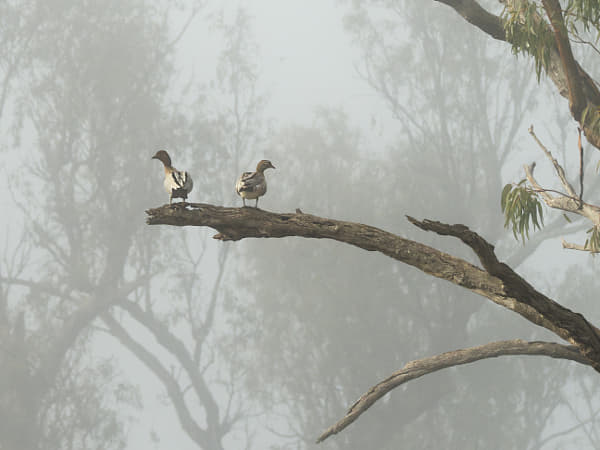
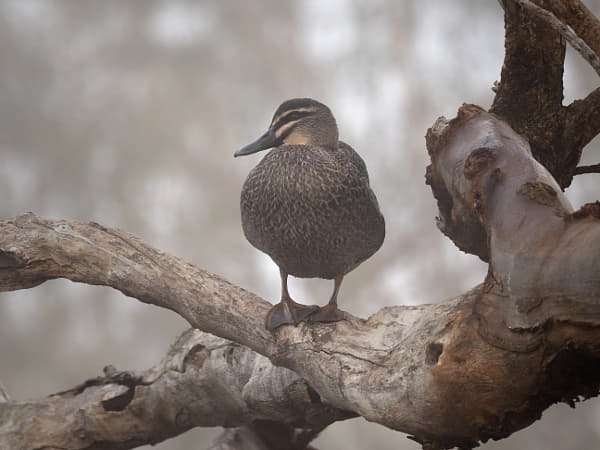
We’ve had a lot of cold, dank, foggy mornings along the Avon River lately. It must be cold as most of the duck population has taken to perching in trees while waiting for the day to warm up.
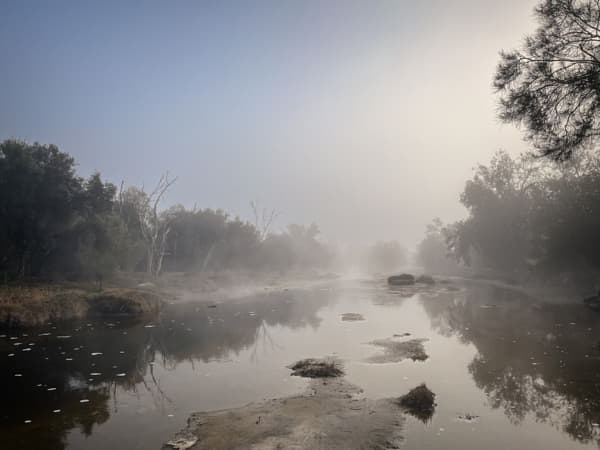
The weak winter sun tries to burn off the thick winter mist in the Avon Valley.
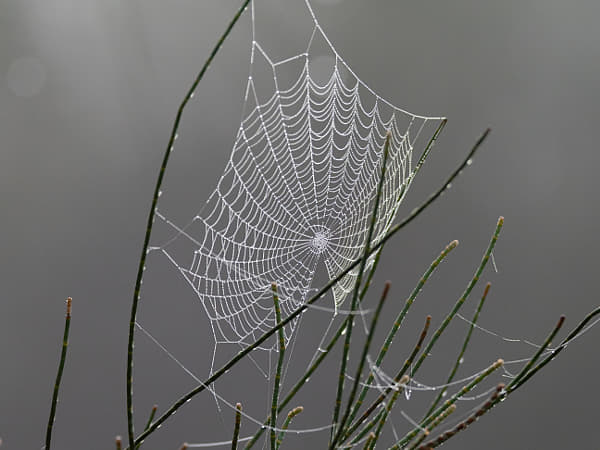
The mornings dew on a spider’s web. Avon Walk Trail, Western Australia.
Marangana or Australian Wood Duck (Chenonetta jubata).
Ngowonan or Pacific Black Duck (Anas superciliosa).
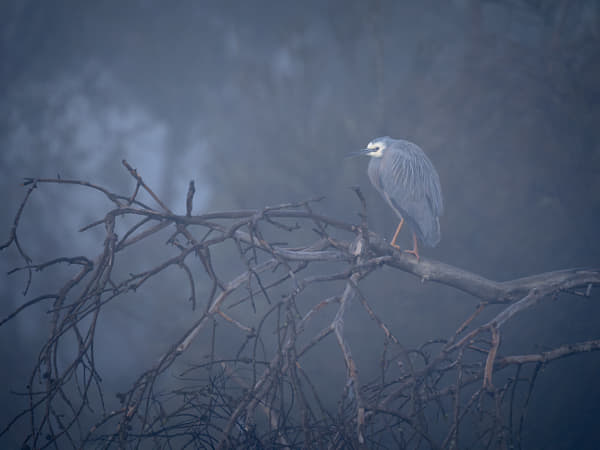
Wayan or White Faced Heron (Ardea novaehollandiae) hunkered down against the cold.
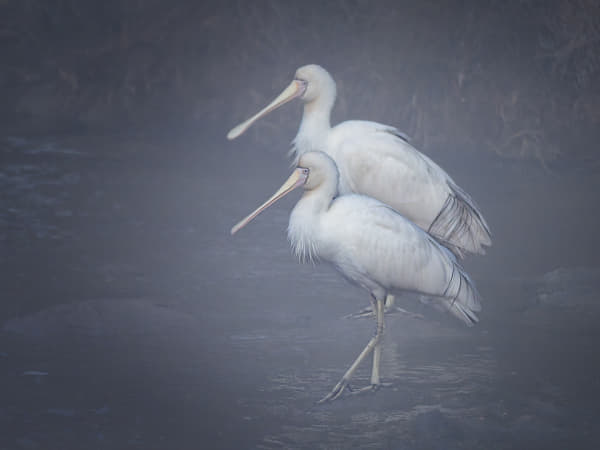
This pair of Kaaka-baaka or Yellow-billed Spoonbills (Platalea flavipes) braved the cold and were wading in the river looking for food.
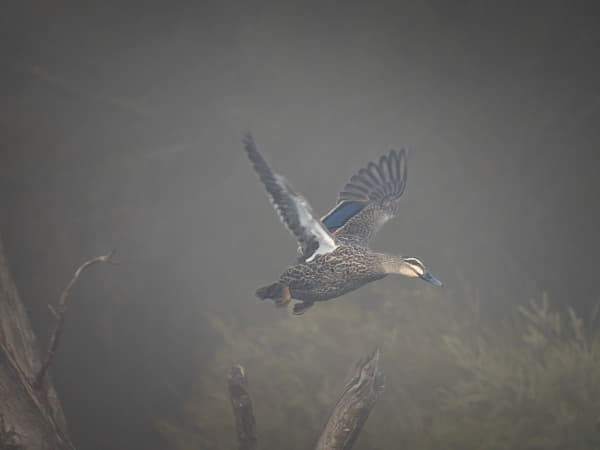
“Time I was off”. Ngowonan or Pacific Black Duck (Anas superciliosa).
Overall I was actually quite impressed that my Olympus EM1x could find focus in these dark low contrast situations.
The weather has finally broken and we’ve had some decent rain. Around Easter time York shifts into gear by acting as the host for numerous weekend events. The York Motorcycle Festival being the first one this year. Now to be perfectly honest motor vehicles have no allure for me at all – to be totally frank they bore the faecal matter out of me – but, I often attend the festival just for the photographic opportunities and this year was no different. What was different was that I used two cameras, one a Sony A6500 with Sigma 23mm f1.4 lens and the other a Canon EOS 30 with a Canon EF 24-70mm f4 lens loaded with Ilford FP4+ . I’m not going to say which was which because that’s not the point. I didn’t come away with anything breathtaking but it was fun couple of hours walking up and down taking photos.
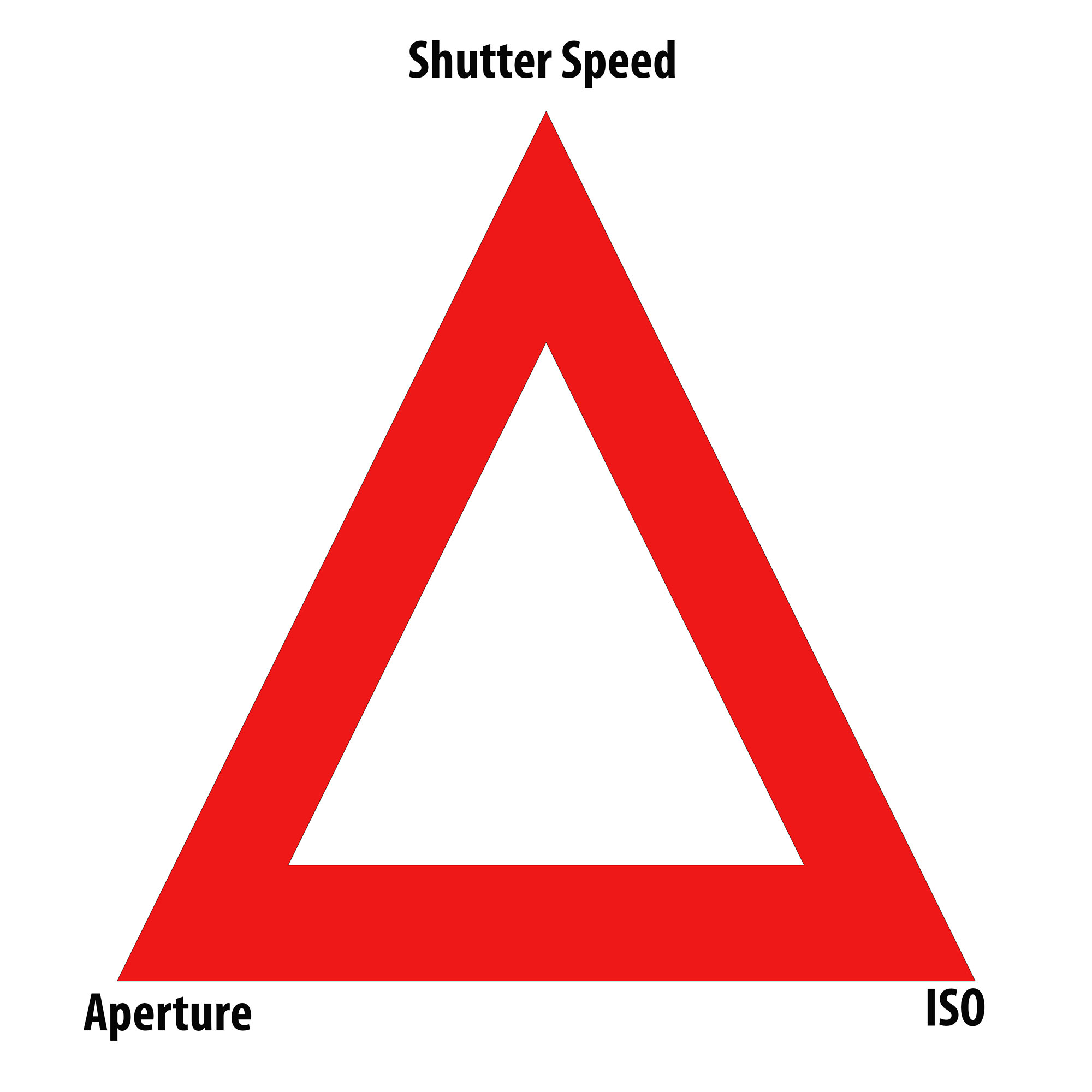
The Exposure Triange. All values have a reciprocal relationship.
Reciprocity in photography is where if you make one change to the exposure triangle – shutter speed, ISO, aperture – then you have to change one of the others by a corresponding amount to compensate for it. So if I have an exposure value of 1/125 sec, f4, ISO 400 and I want a shutter speed of 1/1000 then I’d either have to open the aperture to f1 or increase the ISO to 6400 or a combination of the two. The problem with wildlife photography is that it is often done in low light and has a need to use fast shutter speeds as the critters won’t sit still for very long. It is surprising to see how much a bird moves while sitting on a stick. This was my problem the other day when I returned to Northam to have another go at getting a photos of an Australian Spotted Crake (Porzana fluminea) .
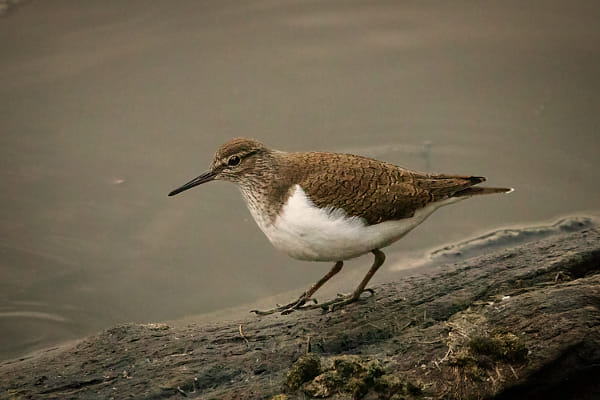
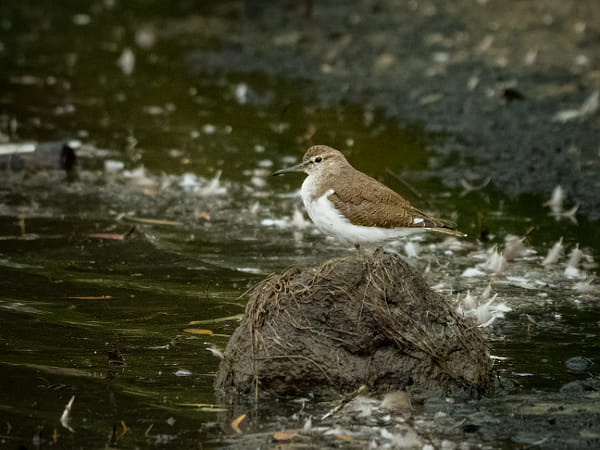
Common Sandpiper, Actitis hypoleucos. Northam, Western Australia. Exposure: 1/200 sec, f6.3 ISO 10000. Topaz DeNoise AI saved the day!
As regular readers may remember in a previous post I said that I didn’t have a long enough lens for my usual Micro Four Thirds camera – the Olympus EM1x. My lens is a 100-400mm which gives me a reach of 800mm in 35mmm full frame terms. The lens won’t take a teleconverter and even if it did that would entail a further loss of light and image quality. So after some thought I decided to use my Canon 80d and Sigma 150-600mm lens which would give a reach equivalent to 960mm. Not a lot more but sometimes you’ve got to take all you can get. So with that we headed off to Northam and I sat on the river bank waiting for that elusive little spotty bird to make an appearance. My big problem was light – well to be more precise the lack of it. I warmed up with shots of a Common Sandpiper with an exposure value of 1/200, f6.3, ISO 10,000. I was lucky as the Sandpiper was content to sit still. When I did finally get a glimpse of the Australian Spotted Crake it was in deep shade so I had to drop the shutter speed to 1/60. I couldn’t open the lens up any more as I was wide open and I couldn’t use a higher ISO as I’d reached the limit. I shot several bursts in the hope I’d get at least one sharp image. A quick look at the rear LCD panel gave me a bit of hope for a result. By now the bird had taken itself back into the undergrowth not to emerge again. After waiting for a while we continued walking down the river to see if anything else was about.
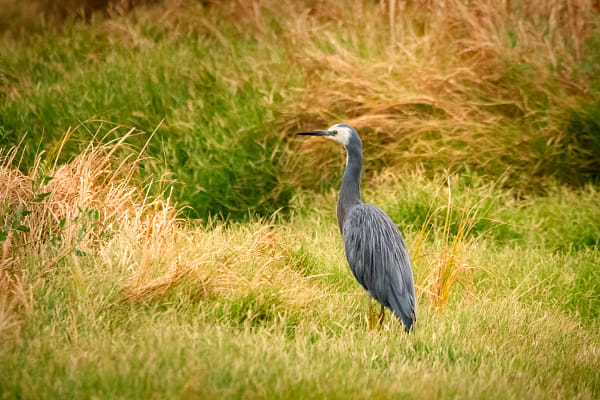
Wayan or White-faced Heron (Ardea novaehollandiae). Northam, Western Australia. Even in the open 1/250 sec, f6.3, ISO 5000.
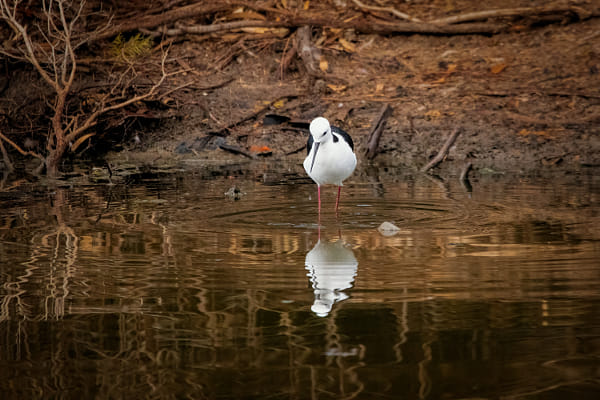
Djandjarak or Black-winged Stilt (Himantopus himantopus). Northam, Western Australia. Exposure: 1/160 sec, f6.3, ISO 3200.
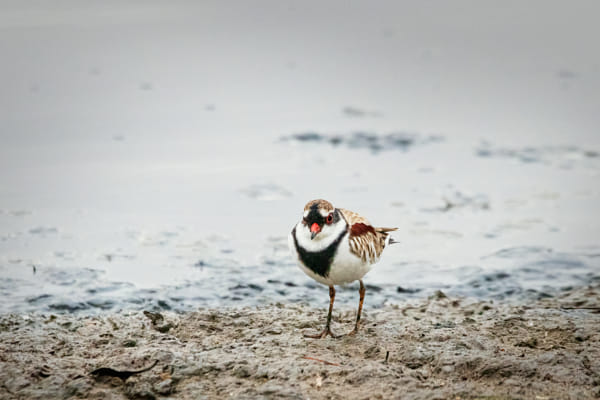
Nidoolyorong or Black-fronted Dotterel (Elseyornis melanops). Northam, Western Australia. Now we’re talking, light levels are starting to improve. Exposure: 1/500 sec, f7.1, ISO 2000.
Bambon or Rufous Whistler (Pachycephala rufiventris). Northam, Western Australia. Exposure: 1/500 sec, f6.3, ISO 200.
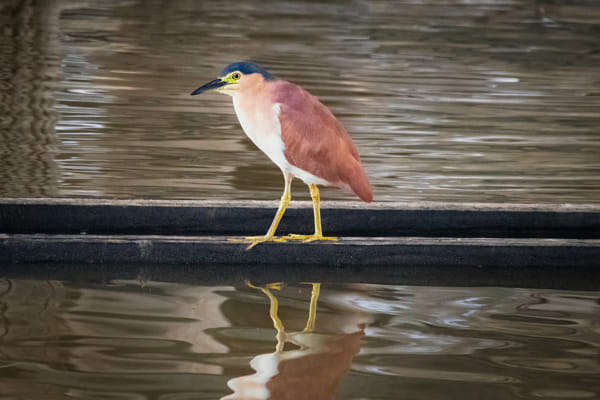
Ngalkaning or Nankeen Night Heron AKA Rufous Night Heron (Nycticorax caledonicus subsp mannillenis). Northam, Western Australia. A bit on the dark side under the bridge so 1/250, f6.3, ISO 8000.
Getting home and looking at the photos none of the images of the Spotted Crake were sharp, there was motion blur and grain the size of golfballs. I tried every trick I know to try and rescue the images. But, as my dad used to say “No matter how hard you polish a turd it will always be a turd”. That flipping bird has become my nemesis. On the positive side I did get the nicest images of a Sacred Kingfisher that I’ve ever taken.
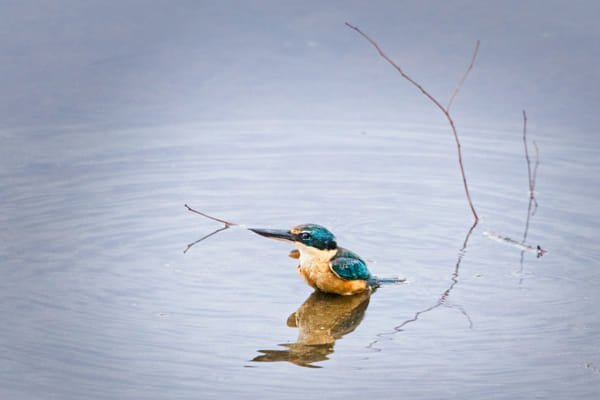
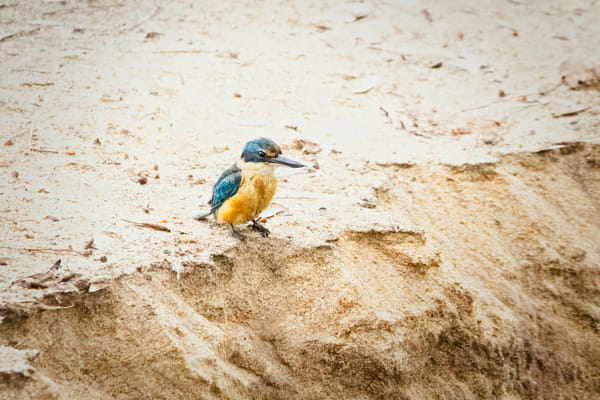
Kanyinak or Sacred Kingfisher (Todiramphus sanctus). Northam, Western Australia. Exposure: 1/1000 sec, f6.3, ISO 1250.
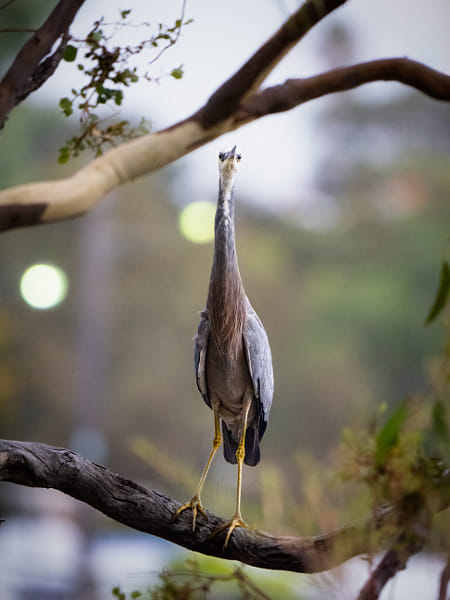
Wayan or White-faced Heron (Egretta novaehollandiae). Northam, Western Australia.
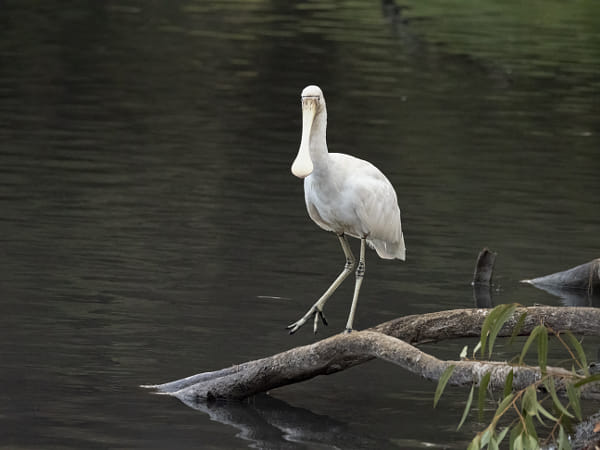
Kaaka-baaka or Yellow-billed Spoonbill (Platalea flavipes). Northam, Western Australia.
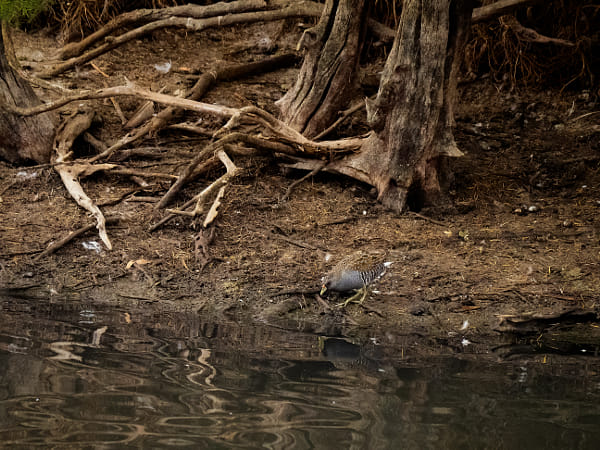
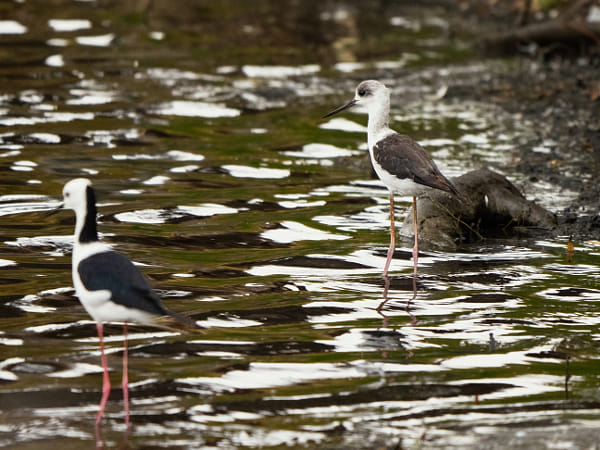
I’ve been writing about visiting the great Wheatbelt Metropolis of Northam for birding several times this year and I thought I’d got a good handle on what there was to be found along the Avon River there. But this last visit I was genuinely surprised. We’d parked the car at Enright Park with the intention of walking along one bank towards the weir and the Peel Terrace traffic bridge, cross the river and walk back on the other side. The light wasn’t particularly nice – in fact it was quite overcast and dark. There wasn’t much to see – a couple of White-faced Herons (Egretta novaehollandiae), Yellow-billed Spoonbills (Platalea flavipes) and a few Silver Gulls (Larus pacificus). At that point I was a bit bored and my mind was drifting off with thoughts of coffee and cake at the bakery. Then as we crossed the traffic bridge I noticed a tiny little blob bouncing around on the island in the middle of the river. As I walked to get a better look I saw that it was an Australian Spotted Crake. Well that was a first. I was, I have to admit pretty excited after that. As we crossed the weir I saw Common Sandpipers (Actitis hypoleucos), Black-winged Stilts (Himantopus himantopus) and Black-fronted Dotterels. By then I was fully engaged and all thoughts of leaving had evaporated. Northam – you never know what you may find.
Australian Spotted Crake (Porzana fluminea). Northam, Western Australia.
Djandjarak or Black-winged Stilt (Himantopus himantopus). Northam, Western Australia.
Common Sandpiper (Actitis hypoleucos). Northam, Western Australia.
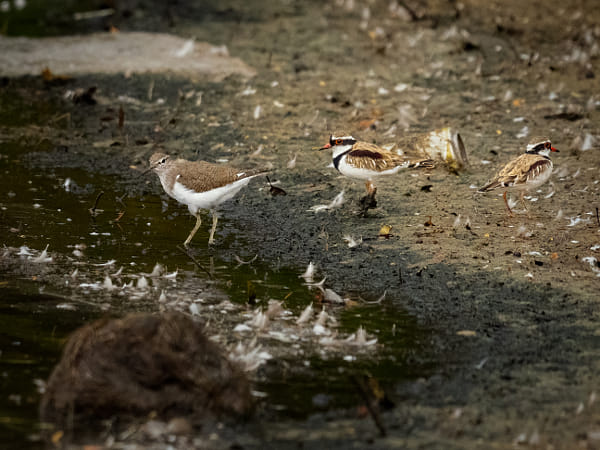
Common Sandpiper (Actitis hypoleucos) and Nidoolyorong or Black-fronted Dotterel (Elseyornis melanops). Northam, Western Australia.
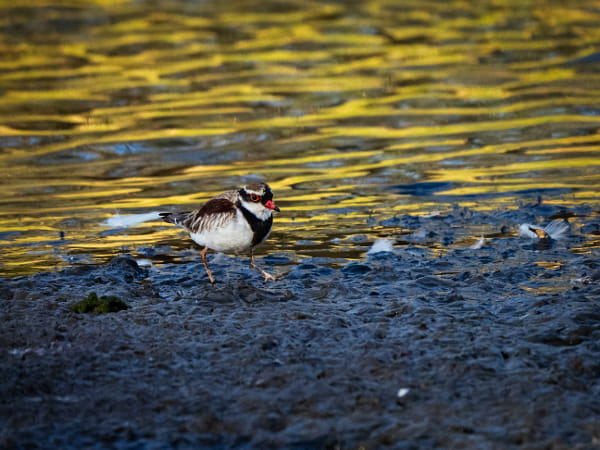
Nidoolyorong or Black-fronted Dotterel (Elseyornis melanops). Northam, Western Australia.
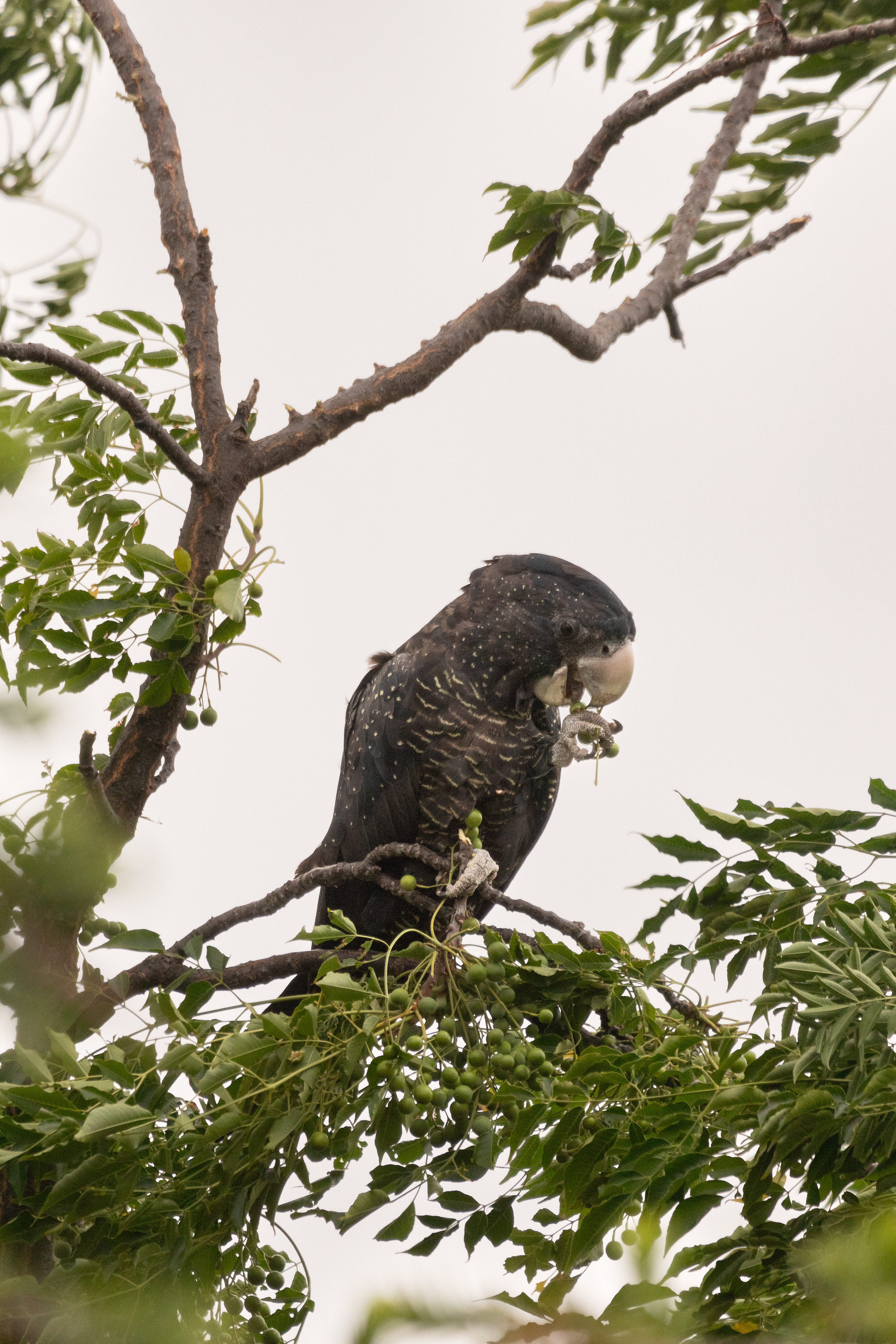
Karak or Red-tailed Black Cockatoo (Calyptorhynchus banksii subs samueli) feeding on Cape Lilac AKA WhiteCedar (Melia azedarch). York, Western Australia.
The last couple of weeks I’ve been thrilled to see Red-Tailed Cockatoos (Calyptorhynchus banksii), called Karrak by the Nyoongar, feeding in the Cape Lilac trees of our neighbours.
Karak or Red-tailed Black Cockatoo (Calyptorhynchus banksii subs samueli) feeding on Cape Lilac AKA WhiteCedar (Melia azedarch). York, Western Australia.
There are four subspecies found in Western Australia – Cb. Naso (referred to as the Forest Red-tailed Black Cockatoo), Cb. Samueli (the Inland Red-tailed Black Cockatoo), Cb. macrorhynchus (sometimes referred to as the Great-billed Cockatoo, Banksian Black-Cockatoo, or Banks’ Black-Cockatoo), and the recently discovered Cb. Escondidusa. Now which species the ones in our neighbourhood are I couldn’t tell you – probably Inland or Forest Red-Tailed Black Cockatoos. All I know that is according to the experts we shouldn’t have any, but here they are.
The Nyoongar creation story for the Red-Tailed Black Cockatoo.
Ngoolyak or Carnaby’s Black-cockatoo (Calyptorhynchus latirostris). Yanchep National Park, Western Australia.
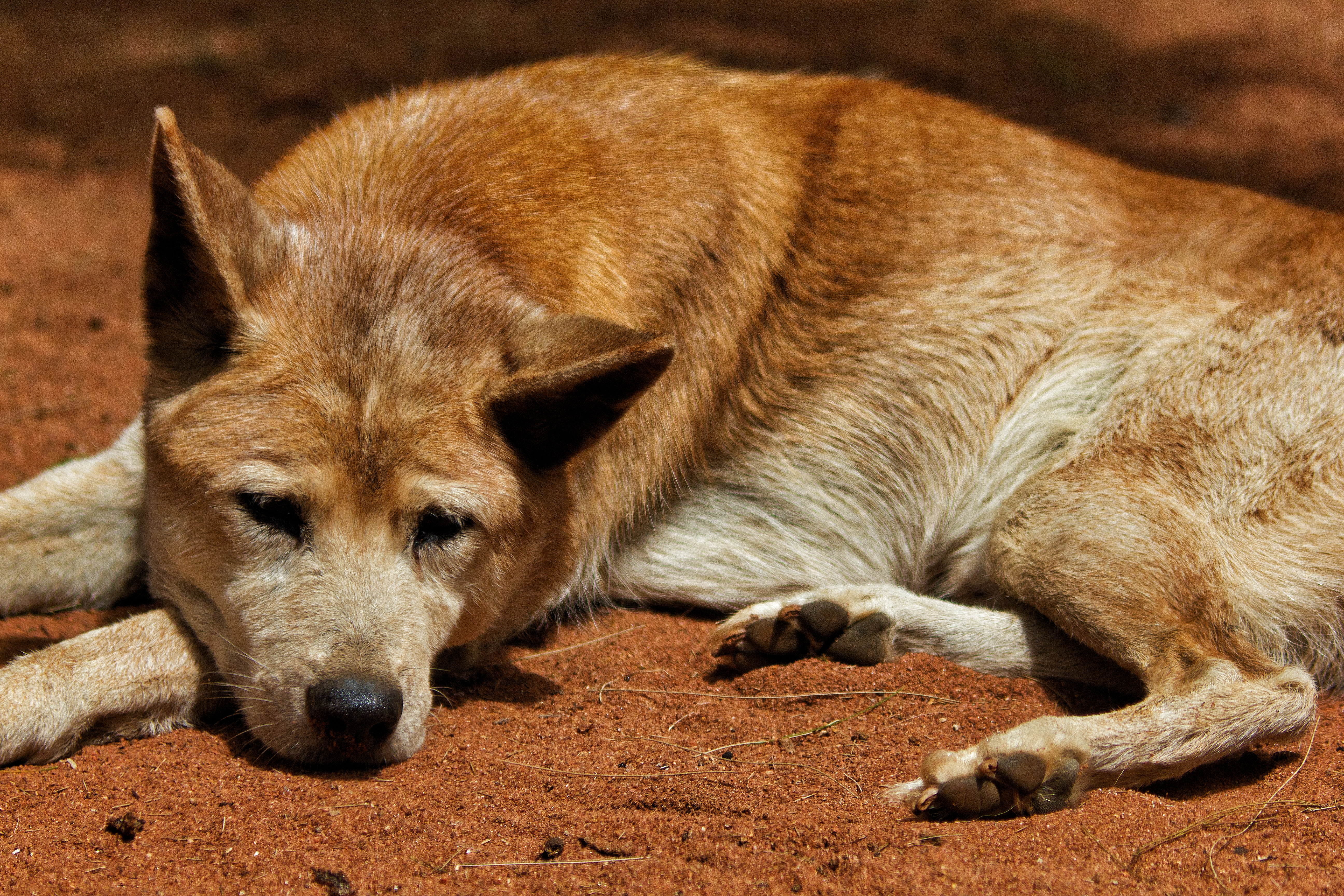
Dwert the Dingo
Djidi-djidi or Willie Wagtail (Rhipidura leucophrys). Avon Walk Trail, York, Western Australia.
Kwilom or purple swamp hen (Porphyrio porphyrio subsp bellus) picking over vegetation on shore of the lake. Lake Leschenaultia, Western Australia.
One day Ngoolyak the white-tailed black cockatoo saw a fight between Dwert the Dingo and Djidi-djidi the Willie Wagtail. Ngoolyak sided with Dwert and joined the fight. Kwilom the Purple Swamp Hen saw the commotion and tried to break them up. He picked some sedge and started beating Ngoolyak across his back to get him to back off. Ngoolyak started screaming and tried to fend off the blows by raising his tail. The sedge oozes red sap when it is cut and it left great red marks where it struck. As he screamed Ngoolyak’s voice became hoarse and he could no longer make his normal call of “wola” and the screeching sounded more like “Karrak!” instead, and that is how Ngoolyak the White-tailed Cockatoo became Karrak the Red-tailed Cockatoo.
Karak or Red-tailed Black Cockatoo (Calyptorhynchus banksii subs samueli) feeding on Cape Lilac AKA WhiteCedar (Melia azedarch). York, Western Australia.
Karak or Red-tailed Black Cockatoo (Calyptorhynchus banksii subs samueli) feeding on Cape Lilac AKA WhiteCedar (Melia azedarch). York, Western Australia.
Burlong Pool is about 4.5 Km south west of the Wheatbelt Metropolis of Northam and is one of the termini of the Dorntj Koorliny or Walking Together Track. The Ballardong Nyoongarbelieve that it is a significant place for the Dreamtime Wagyl or Rainbow Serpent. The Wagyl created the landscape of the South West of Western Australia, looks after the fresh water and also helps bring the rains. Burlong pool was/is the Wagyl’s summer resting place and is regarded as a sacred site.
We’ve been visiting the site for years as we often take the dog with us to Northam when we go shopping (not in summer) and we use it as a walk place for her and to stretch our legs. Every time we went we’d see a lot of wildlife and I always came away thinking I must go and take some photos. Well that time came and we headed out early one morning. On getting there we were met with raucous calling from an enormous flock of corellas. We stayed for a bit watching them and the other birds and then we started walking the Dorntj Koorliny Track towards Northam. Even though the weather was very warm it was an enjoyable walk and we saw heaps.
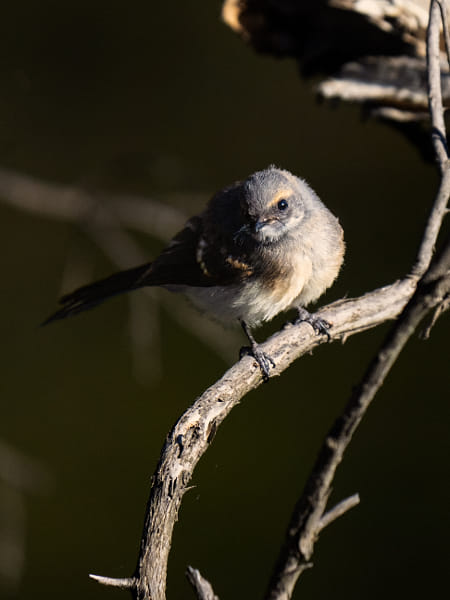
Kadjinak or Grey Fantail (Rhipidura albiscapa). Dorntj Koorliny, Burlong Park, Northam, Western Australia.
Dorntj Koorliny, Burlong Park, Northam, Western Australia.
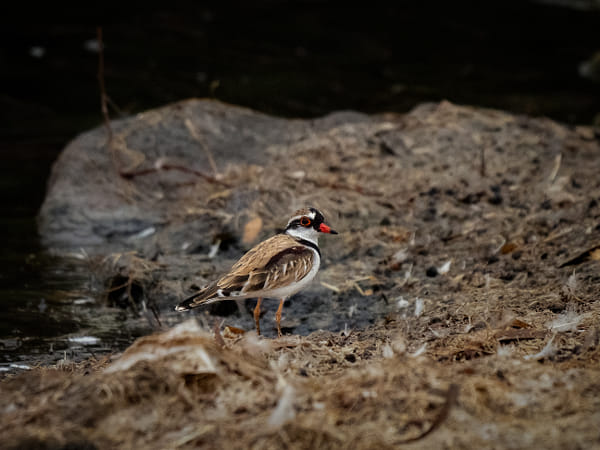
Nidoolyorong or Black-fronted Dotterel (Elseyornis melanops). Dorntj Koorliny, Burlong Park, Northam, Western Australia.
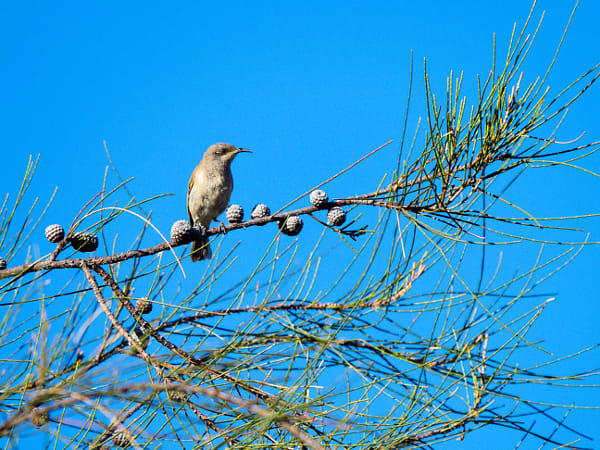
Djindjokoor or Brown Honeyeater (Lichmera indistincta). Dorntj Koorliny, Burlong Park, Northam, Western Australia.
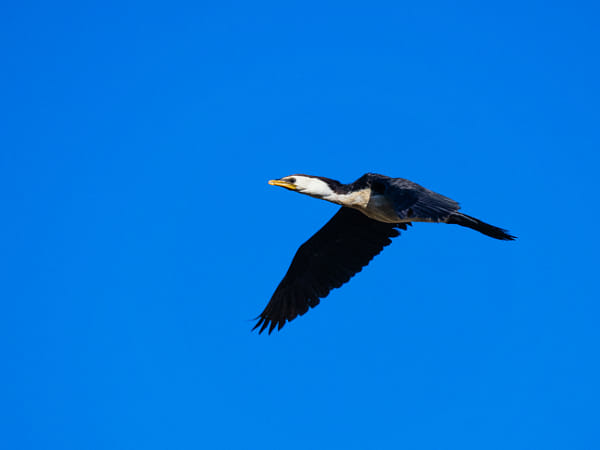
Kakak or Little Pied Cormorant (Phalacrocorax melanoleucos). Dorntj Koorliny, Burlong Park, Northam, Western Australia.
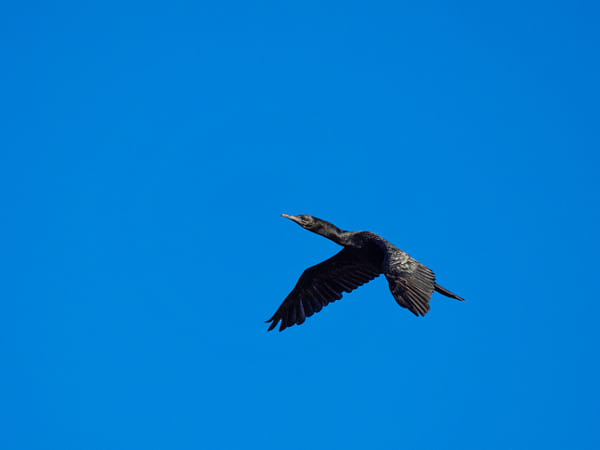
Koordjokit or Little Black Cormorant (Phalacrocorax sulcirostris). Dorntj Koorliny, Burlong Park, Northam, Western Australia.
The Bilya (Noongar – River) Walk Track was created by the Toodyay Friends of the River and follows the Avon River for 6.5Km on its western bank. For me one of the highlights of the walk is walk from from Millard’s Pool (which is the largest pool on the river and was the site of Toodyay’s first swimming pool) to John Masters Bird Hide by Red Banks Pool a Nyoongar heritage site. If the wildlife and the wonderful walk aren’t enough of a draw card then know this – no visit to Toodyay is complete without a stop off at the amazing Toodyay Bakery.
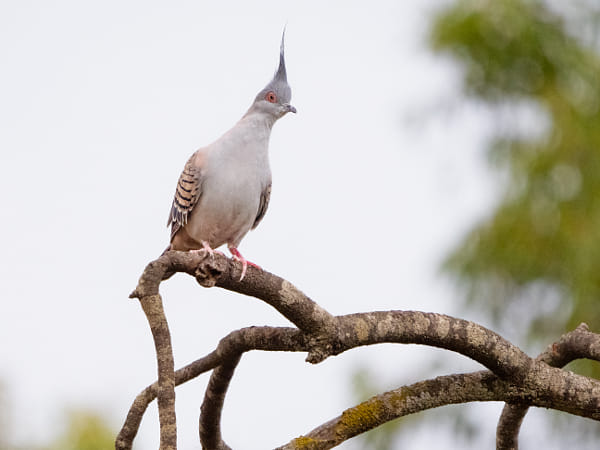
Kakara or Crested Pigeon (Ocyphaps lophotes). Bilya Walk Track, Toodyay, Western Australia.
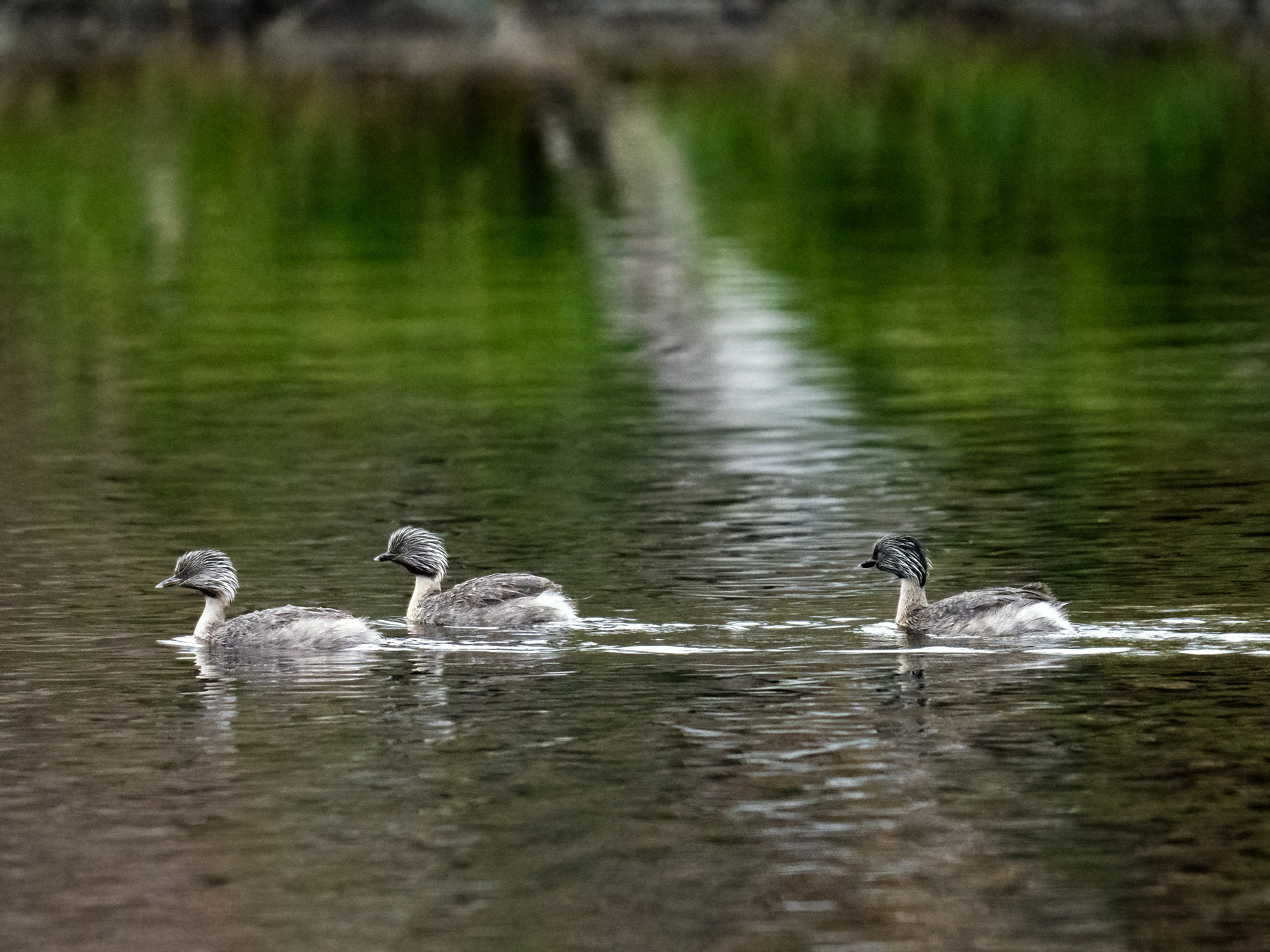
Wayooda or Hoary-headed Grebe (Podiceps poliacephalus). Bilya Walk Track, Toodyay, Western Australia.
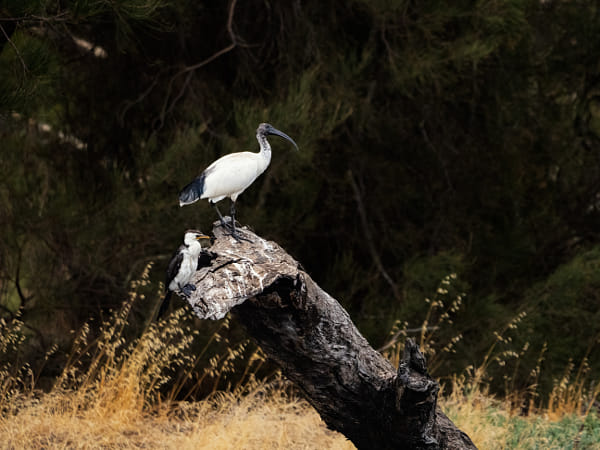
Kakak or Little Pied Cormorant (Phalacrocorax melanoleucos) and Ngalkaning or Australian White Ibis (Threskioris molucca) Bilya Walk Track, Toodyay, Western Australia.
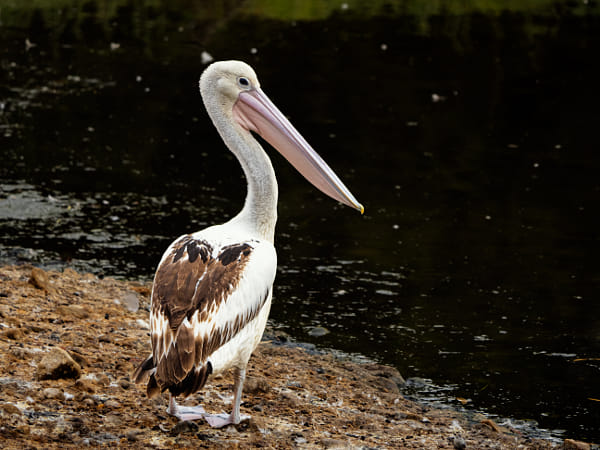
Boodalang or Australian Pelican (Pelecanus conspicillatus). Bilya Walk Track, Toodyay, Western Australia.







You must be logged in to post a comment.