
Koobanmokin or Red-capped Robin (Petroica goodenovil).

Gotta confess that it’s getting hard to get up at 4am to go and photograph birds, so of late I’ve started going out in the evening. Living at this latitude I’m envious of those who live further away from the equator as their dawn and dusk lasts longer. Here it’s done and dusted in less than an hour. Anyways we have to make the most of what we have and I’m quite enjoying the evening walks along the river.

Last Monday as I was driving down to the river I noticed that the car had got a new bonnet mascot in the shape of a giant grasshopper (that’s the species name and an apt description). Initially I thought it will be blown off or it would abandon ship after a few minutes, but it resolutely clung on the windscreen wipers and was there when I reached the river.


Heading down the river it quickly became apparent that as far as the birds were concerned things were winding down for the day. A pair of Australian Wood Ducks promenading along the river bank caught my eye. Normally quite skittish they were accepting of my presence and allowed me to get a few photos. Mindful of the disappearing light I pressed on. At the swing bridge I met the psycho Willie Wagtail that resides there. He really is the most belligerent little bird I’ve met. He chases off all threats to his territory with great gusto. Even as far as having a go at people and dogs on the other side of the river. He really has a go at our dog Frida. Fifty grams of feathers and fury hurls itself at Frida pecking her face and backside. Frida for her part just wears this bewildered expression and good-naturedly just walks on trying to ignore it.

When I got to Monger’s Crossing the dropping water levels had brought the white-faced herons out in numbers. There were nine or ten of them there looking for food in the shallows. I couldn’t get close enough to them to take any photos, so I just watched them from a distance. As the sun started to dip below the horizon they started looking for a roost and I was able to photograph them as they did this. I stayed till dark and then walked back to the car.


Earlier in the day I was feeling a little jaded with going to the river. I felt it was becoming boring photographing the same area over and over again, This evening reminded me of how lucky I am to live here and have access to all this wildlife.
Not The Wild West Show, but the York Show. We’ve lived in York for nearly twenty years and this was the first time I’d been. The York Show is your typical Australian country town agricultural fair. There are displays of livestock, trade stands for agricultural machinery, arts and crafts exhibitions and awards, and most importantly for the kids a bit of a fun fair with a fireworks display in the evening. I didn’t really know what to expect, so I took my Olympus OM40 and two lenses – a 35 and a 135. I loaded up with Ilford XP2 and decided to photograph anything that took my fancy. The show was held in September and it’s taken me this long to get the film developed and scanned. The following are just a few of my favourites from the day.


My last wander about the local Wandoo forest didn’t yield anything much. The only plants worth getting the camera out for were some Leopard Orchids. So I did my usual full length portrait using my 40-150mm f2.8 plus MC-14 teleconverter with focus stacking. Then a tighter “head and shoulders” shot with the 60mm f2.8 macro and flash. I finished up with really tight detail shot at close to 1:1 again with the 60mm macro.
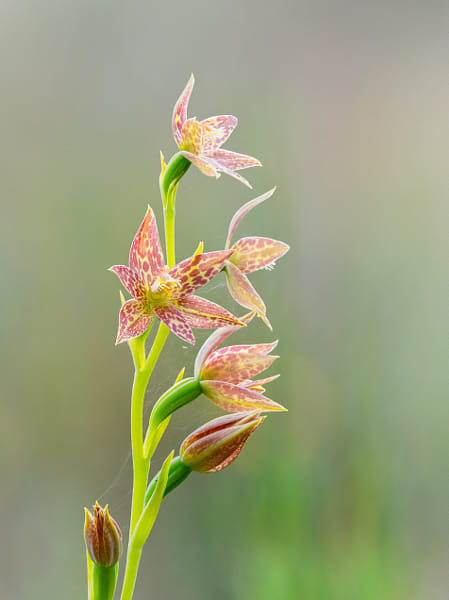
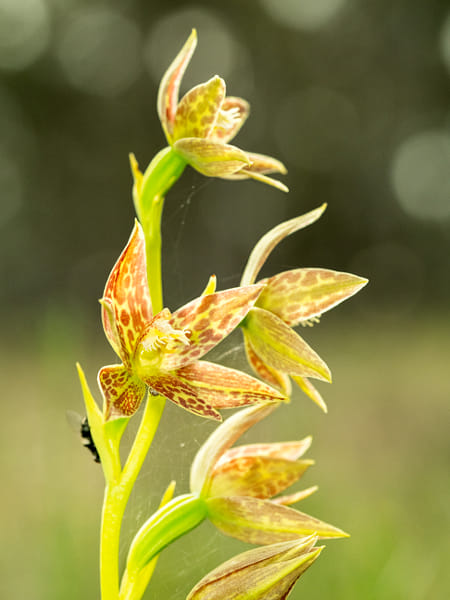
In the past I’ve used OM Workspace to do the focus stacks, but after it’s latest update it has become so slow – glaciers move quicker. So I decided to to do the stack using Adobe Lightroom and Photoshop. To say it was much faster would be a massive understatement, but the final result was a lot better as well. For the life of me I can’t work out why camera manufacturers software is so bad. It should be better as they know all the features of the cameras and how to get the best out of them. This isn’t just a whinge directed at OM Systems. Canon’s DPP is absolutely appalling as well. Adobe would’t have such a stranglehold on the market if the camera manufacturers could develop good software.
Most people think ducks are quasi comical animals that are quite cute. This perception comes from being taken to feed the ducks at a local pond when we were small children and watching cartoons such as Donald Duck or Daffy Duck. Psychologist Richard Wiseman and colleagues at the University of Hertfordshire, UK, finished a year-long LaughLab experiment, concluding that of all animals, ducks attract the most humour and silliness; he said, “If you’re going to tell a joke involving an animal, make it a duck.” The word “duck” may have become an inherently funny word in many languages, possibly because ducks are seen as silly in their looks or behaviour. But ducks, particularly the males aka drakes have a very, very dark side.
In the duck world males, or drakes, outnumber females, or hens, by a considerable margin. This means that females can afford to be very choosey. Indeed, according to Yale ornithology Professor Richard O. Prum “For a male duck to land a female, he must boast colourful plumage plus have an elaborate dance mating ritual and beautiful mating calls. In other words, he needs to be a beauty, plus a great singer and dancer.” Unfortunately most drakes don’t make the grade. So what’s a terminally frustrated young drake going to do? Well they hang out with a bunch of other drakes and wait for a hen to get within range and then they gang rape her. According to Professor Prum “These are socially organised ‘gang rapes’ that are ‘violent, ugly, dangerous and even deadly’ and even sometimes end in the death of the female.”.

This was precisely the scenario that played out on my visit to Bernard Park the other day to photograph Australian Reed Warblers. In the swan enclosure at the eastern end of the park, there were a number of ducks. The first I saw was a Hardhead hen and her brood of ducklings calmly cruising and looking for food. There were also four Pacific Black Duck drakes milling around on the water. I didn’t pay much attention because they are ubiquitous on Australian waterways and I was there photographing Reed Warblers. Suddenly a huge commotion erupts when a hen Pacific Black Duck lands on the water. The drakes suddenly spring into action and give chase. All four proceed to rape her. It was incredibly violent and the poor hen was left barely able to drag herself to shore and hide under some bushes.


Nearly every week my partner and I go to the vast teeming Wheatbelt Metropolis of Northam to do our weekly shop. We often take Frida, our English Bull Terrier and take her for a walk in Bernard Park which is by the Avon River. At the far eastern end of the park is an enclosure for the white swans that were introduced here and now breed along the river. As you walk round the enclosure there is a walkway that takes you through some reed beds and we often stop here to hear the Australian Reed Warblers sing. They are quite rare in the Wheatbelt preferring the coastal wetlands. Last week we noticed that they were becoming very active as it was the start of the breeding season so we decided to go on a dedicated trip early one morning to see and photograph them.
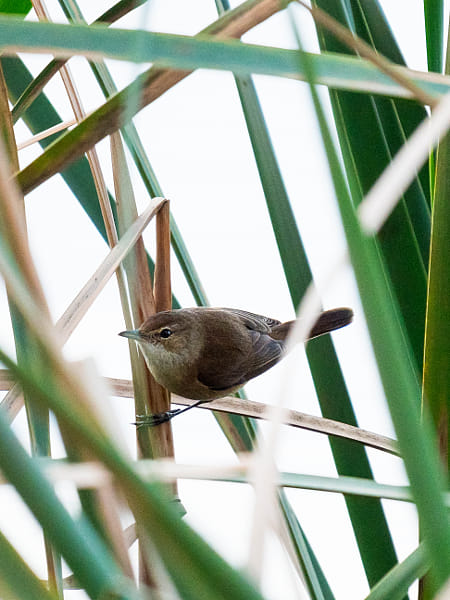
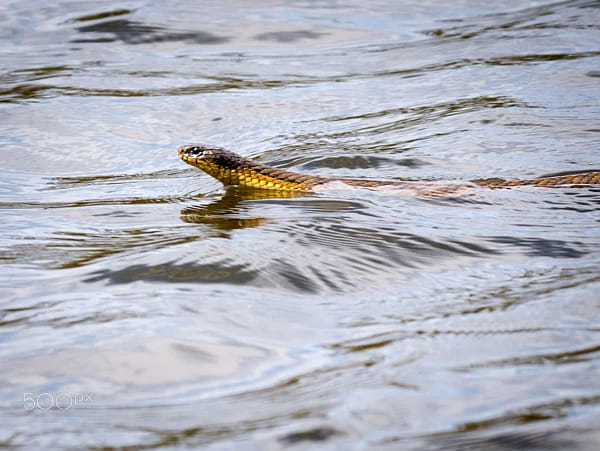
Now I’ve been trying to photograph the Australian Reed Warbler for some time. They are very small and as the name suggests live in dense reed beds which makes them incredibly difficult to photograph. They are also always on the move and don’t settle in one spot for very long which doesn’t help matters. My best previous attempt at photographing them was four years ago at Herdsman Lake where if the birds were on the waters side of the reeds you could not see them at all and you had to be aware of Tiger Snakes which can often be found around the waters edge or actually swimming in the water. A bite from one of those can seriously ruin your day. The situation at Bernard Park’s swan enclosure is very different as there are two viewing platforms either side of the pond and there is the walkway at the eastern end and these give good views of the reeds. So it was a case of getting there, listening to determine which clump of reeds had the most singing and then position myself accordingly. Then it was a question of waiting for the birds to break cover. I observed that they’d sing while deep in cover for about 10-15 minutes then fly out to another reed bed and then almost straight away up into one of two trees and then head back to where they started. So it was a case of staking out the spots and waiting for them to do their circuit. They are very quick – blink and you’ve missed it.
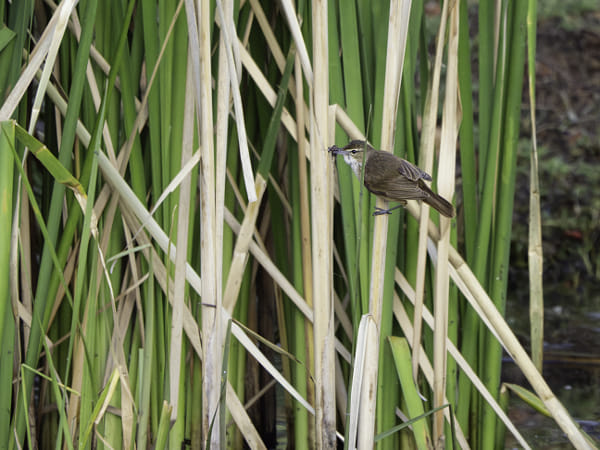
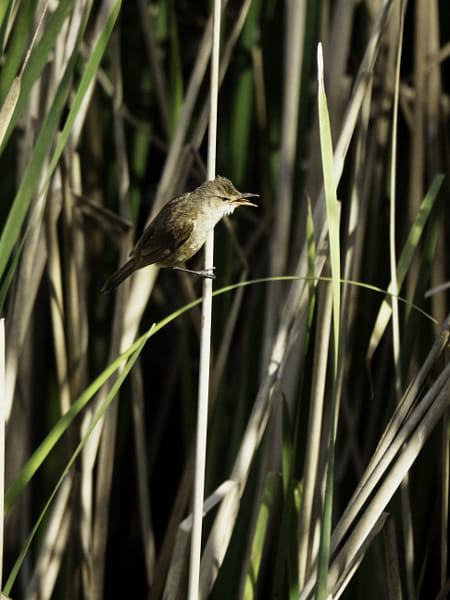
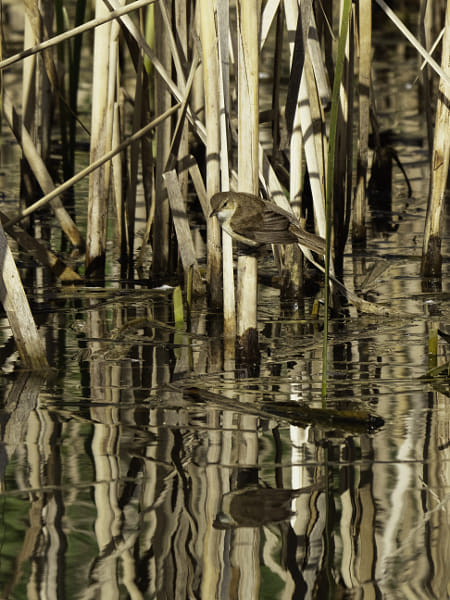
It was a nice morning. I got a few shots that were OKish that’s all, but more importantly I learnt a bit more about their behaviour through observing it and that means next time I stand a bit more a chance of getting a good photo. Again like the situation in Darwin I was left feeling I wanted more focal length. This could get expensive!
Whenever I’ve stopped in Williams it always been on the way to somewhere else and I’ve always been quick to get a move on. Well the other day I gave Williams my full attention. There are a few good spots for orchids there and I wanted to visit one in particular as it is the home to the Common Dragon Orchid. Despite its name I’ve never found the Common Dragon Orchid to be very common – in fact I’d only seen a rather manky looking one some twenty years ago. That, as they say, is a long time between drinks.
The bit of scrubby land that is home to the flowers is pretty ordinary to look at. It’s situated on the corner of a busy highway and a dirt track. Judging from the car bodies, rusted metal, bottles and corrugated asbestos it’s been used for fly tipping for years. But situated under the sheaoak trees in amongst the needles were an amazing variety of orchids. Common Dragon Orchids, well they were certainly common there. There were hundreds of them.
The first three images are pretty straight photos using the Olympus 60mm f2.8 macro lens and STF-8 flash or the Olympus 40-150mm f2.8 with no flash.


The last couple were done as focus stacks using the Olympus 40-150mm f2.8 and MC-14 1.4x teleconverter. The stacks were assembled in Photoshop.


When you arrive at Toolibin Lake it’s hard not to be underwhelmed. It’s a smallish fresh water lake fringed by scrubby trees and populated by voracious mosquitos. While I was there only two other vehicles pulled up, the first visitor walked over to the information board and then got straight back in his car and drove off. A couple got out of the second car and walked down to the waters edge and then they too got back in their car and headed off. Perhaps it was the mosquitoes or perhaps their expectations did not match the reality of the place. Don’t know. All I do know is that it’s a fantastic nature reserve with plenty of nature.


What makes Toolibin Lake so special? There used to be lots of lakes like this throughout the Wheatbelt, but agricultural land clearances have rendered them saline which has killed off the vegetation around them and destroyed the native animals habitats. Toolibin has miraculously managed to survive and has become an oasis for rare and threatened flora and fauna. If you want to see a Freckled Duck or a Red-tailed Phascogale then Toolibin Lake Nature Reserves is one of your best bets for finding them. I wasn’t there for the wildlife, I was looking for the wild orchids that can be found in the surrounding woodland of flooded gum, acorn banksia and rock sheoak. What I found was nothing short of spectacular. While species like Cowslip Orchids are ten a penny in the South West of Western Australia it was the quantity of them that was amazing. It was a magnificent sight. I was looking for two species – the Clown Orchid (Caladenia roei) and its cousin the Purple-veined Spider Orchid (Caladenia doutchiae) both of which I found pretty quickly. The Clown Orchid I’d seen before at Wongan Hills, which is quite hike from where I live, but, the Purple-veined Spider Orchid was completely new to me and was the one I particularly wanted to photograph. I decided to photograph both as they can be a bit difficult to tell apart. As it was I passed up a Common Dragon Orchid as I thought it was a damaged Fringed Mantis Orchid. Note to self: next time photograph everything that you find.


Toolibin Lake is definitely a place I’ll be visiting again, although the next time I’ll forego the orchids and look for the Freckled Duck and the Red-tailed Phascogale. For anyone interested in visiting be aware that Toolibin Lake lies in a low rainfall area of the Wheatbelt and consequently it usually only holds water at certain times of year and some years it may not have any water at all. This year while the rains have been late they have been very heavy so everything was in top shape.

It’s that time of year – the natural world here in Western Australia has started to step up a gear and it is time to get out and see it and more importantly photograph it.
I was recently reading a book on Western Australian orchids and I discovered within it mention of a few species that are found in the Wheatbelt, where I live, that I had never heard of before let alone seen. After a bit more research and a consultation with Florabase and Atlas of Living Australia I was all set to head off to Kweda.


It was nice to get out and about again, but after seeing a couple of road signs I wasn’t so sure I’d made the right decision. Kweda Reserve is located on the corner of an intersection of two dirt roads and apart from the reserve the only other feature of note was a mobile phone tower. Getting out of the car it seemed as if the bottom end of the reserve once played host to a railway siding. The tracks were long gone only the embankments and a few bridges over creek lines remained. There was quite a bit of water about thanks to the late heavy rains and I was quite surprised as the genus of orchids I was looking for tend to favour drier sandy soils rather than the heavy wet clay that was at Kweda. There were a lot of birds and dragonflies about and I saw a bob tailed lizard happily grazing on some mushrooms.


Did I find what I was looking for? No. But, I did find a couple of species I’d not photographed before so it was worth the effort. I’m also hoping to visit again, and the nearby Lake Mears, looking for wildlife.
The title for this blog entry came from the song by Misty In Roots.
You must be logged in to post a comment.