It’s safe to say this summer has been hotter than a very hot thing that is feeling hot. The knock on effect of all that heat is that motivation evaporates – literally. It is very hard to get out and about when temperatures are above 40ºC (104ºF). The UV index is so high that if you’ve been outside for longer than 5 minutes you need to see a dermatologist to have skin cancers removed.
Frida trying to trying to escape the summer heat in what’s left of the Avon River
So summer days are spent dreaming up ways to keep cool. You can go for the psychological approach like my Beloved Significant Other (BSO) – she is reading Scandi noir books set in chilly sub Arctic nordic climes hoping that she can convince her body that it is cold. I’ve tried watching a few films along those lines but my body is not easily fooled. Next is the physical approach. The BSO has also taken to spending as much time as possible at the swimming pool. I don’t go as when I get into the pool the water gets out. More seriously the pool isn’t heated in any way and the cold water has me shrieking like a teenage girl at a Beatles concert. So I’ve given up on that idea. I’ve taken to hanging around the freezer cabinet in the local super market along with the rest of the town. The competition for the best spots can be brutal. The little old ladies are the worst – they’ve got sharp pointy elbows that they use to great effect to secure prime position and maximum coolness. The best place to go is the bottle shop’s (liquor store or off-licence for non Aussies) coolroom. Absolutely blissful. Unfortunately I was banned after I tried to smuggle in a chair and a TV. The best strategy is to get up early and try and do everything before it gets too hot. Then you retreat back to the sanctity of home and crank up the air con. This is why I’ve been printing photos lately.
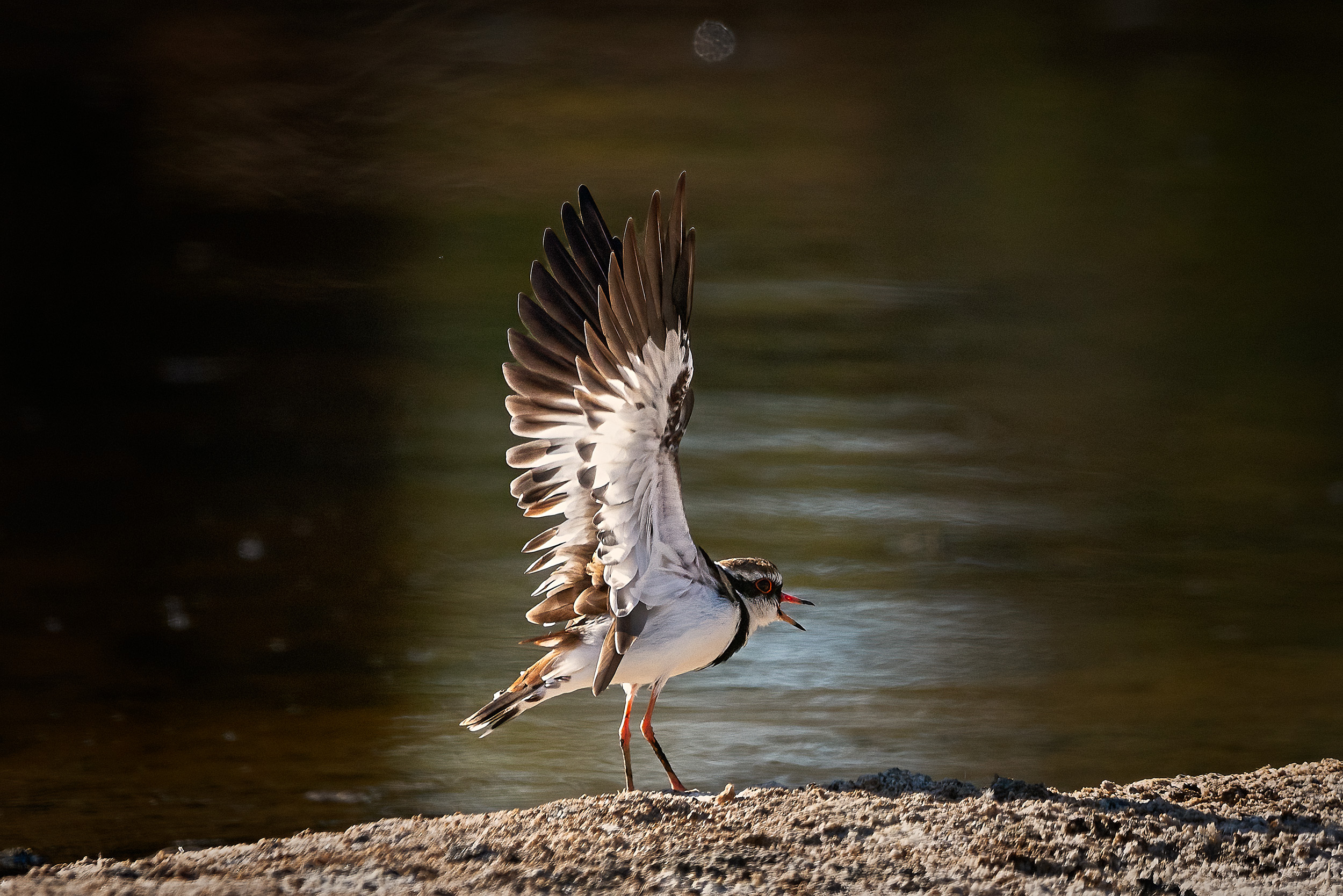
Nidoolyorong or Black-fronted Dotterel (Elseyornis melanops). York, Western Australia.
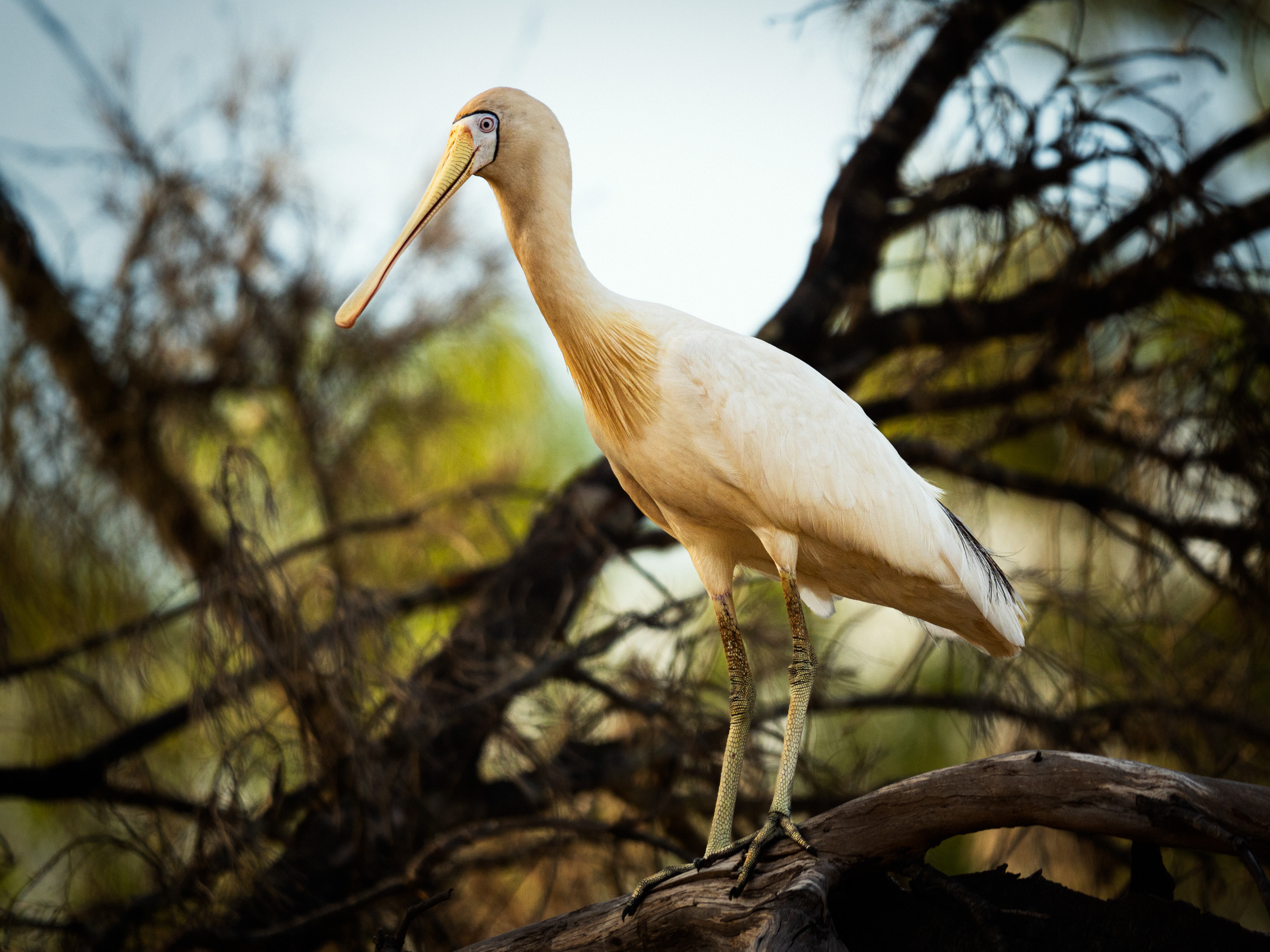
Yellow billed Spoonbill, Platalea flavipes. York, Western Australia.
A Willie Wagtail wondering if the Rainbow Bee Eater is going to share its dragon fly.
The impact of all this hot weather on the local wildlife has been considerable. The numbers of birds around is quite low. Lack of food and water. Even along the river, which now no longer resembles a river but a series of small fetid murky pools, there seems to be less activity. It has been a bumper year for dragon flies. I guess they must like it a little on the warm side. Once a week I’ve been going out to a large freshwater lake about 50Km from here to work on a new project. There’s been a bit more activity there but not much. Early in the mornings there is no vehicular access so you have to walk in through the bush and a couple of times I’ve come across a mob of kangaroos sparked out in the shade under the trees. They’re so hot and lethargic they can’t summon up the energy to move and they just lazily watch as I walk past. The only real activity at the lake has come in the form of a randy male musk duck desperately swimming up and down looking for a victim – err I mean prospective breeding partner. That duck can certainly move fast. Funnily enough I’ve not yet spotted a female musk duck – I guess they must be too hot and bothered and are avoiding him by hiding in the reed beds.
A male musk duck – not the randy one mentioned above.
Thankfully it is the end of February. That means we’ve only got to survive March and the the weather will start to cool in April. Can’t wait!!
White-cheeked honeyeater, Phylidonyris niger. York, Western Australia.
Well we’re at the start of another year. I’d like to think that it’s going to be better than the last two, but that does not seem likely. In another four weeks our borders will open and COVID will come flooding in. Most years we like to plan projects and trips, but this we haven’t as so many things get cancelled due to COVID. My partner and I have decided that the priorities for this next year will be to get the booster shot – not easy in rural Western Australia – and to hole up at home for the duration. Anything that we do undertake will be either based at home or in the locality of York. Last year I started documenting the birds that come to our garden. This next year I’m casting the net wider and am going to include all animals. In fact I’ve already started so here are few photos of our visitors.
A less than graceful landing on the fence by a juvenile Zebra Finch (Taeniopygia guttata). York, Western Australia.
Yellow paper wasp, Polistes dominulus. York, Western Australia.
Feral honeybee (Apis mellifera) feeding on sap from a Brazillian Peppercorn tree (Schinus molle). York, Western Australia.
Blue ringtail damselfly, Austrolestes annulosus. York, Western Australia.
Gum tree Shield Bug (Poecilometis spenceri) aka stink bug. York, Western Australia.
Crusader bug (Mictis profana) instar nymph. York Western Australia.
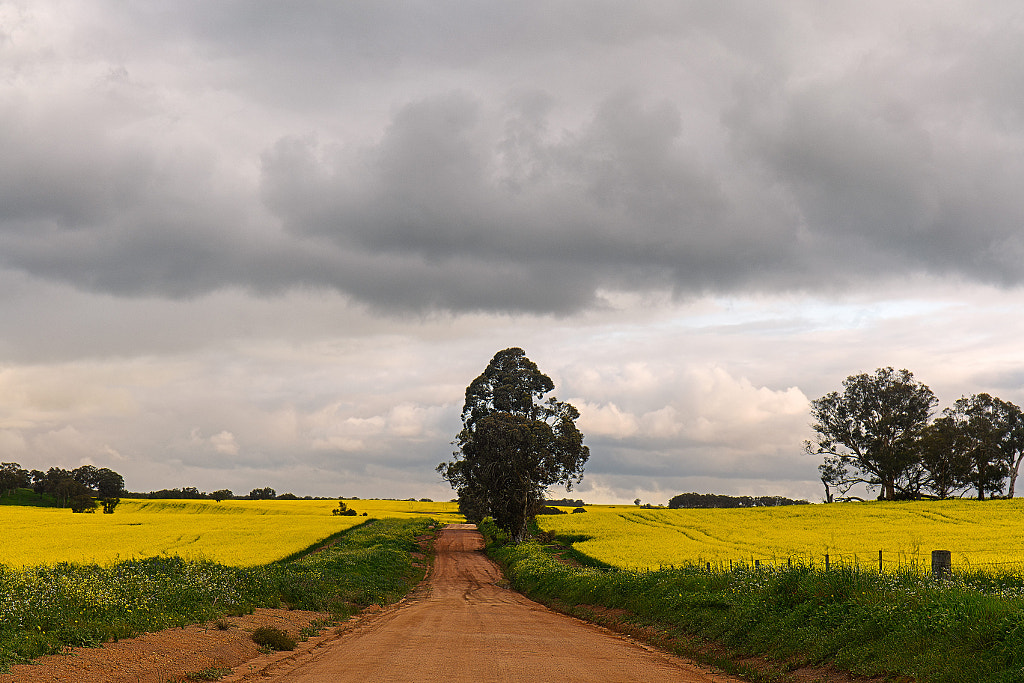
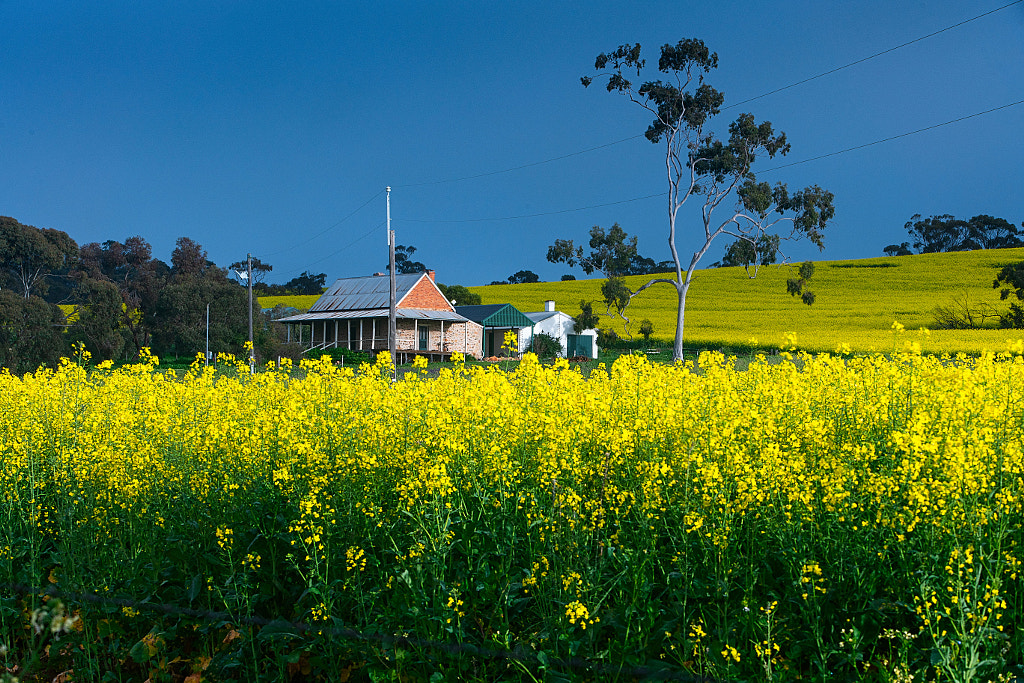
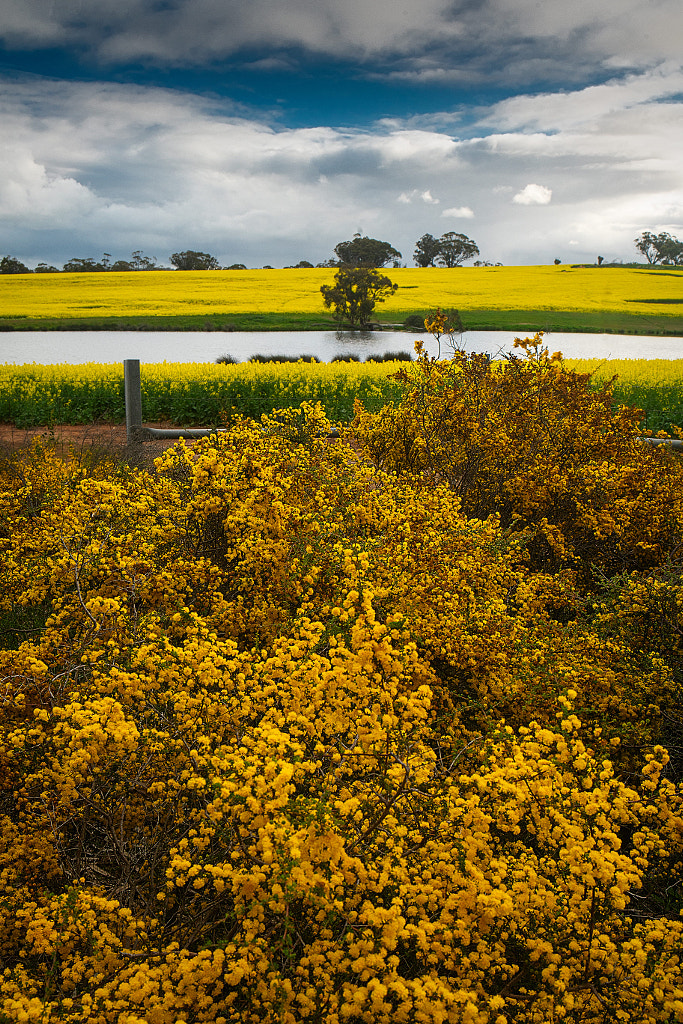
No this isn’t a new trilogy of mummy porn it’s because everything round here has turned a shade of yellow. Mostly that acid yellow that is canola, but the wattles give a nice counter point.
Canola fields flanking Helena Road. York, Western Australia. Sony A7 r ii, Metaboned V smart adapter, Canon EF 24-70mm f4 L lens. Exposure: 1/20 sec, f11, at ISO 100.
A farmhouse surrounded by canola in York, Western Australia. Sony A7 r ii, Metabones V Smart Adapter, Canon EF 70-200mm f2.8 IS L lens. Exposure: 1/60 sec, f16 at ISO 320.
Yellow wattle and yellow canola fields. York, Western Australia. Sony A7 r ii, Metabones V Smart Adapter, Canon EF 24-70mm f4 IS L lens. Exposure: 1/30 sec, f16, ISO 500
The past week has been very difficult in terms of feeling motivated and optimistic. The news about COVID 19 in the Eastern Staes of Australia is not good. While we are nowhere near having the deaths that other places have had the walls of fortress Australia have been well and truly breached and the virus has established a beachhead in New South Wales and is fanning out to Victoria and Queensland.
Standing Out From The Crowd. Little Pink Fairy Orchid aka the dwarf pink fairy orchid, Caladenia reptans subspecies reptans.
To make matters even worse The United Nations’ Intergovernmental Panel on Climate Change (IPCC) has released a report warning that the Earth’s temperature will have risen since industrialisation 1.5ºC within the next decade and that it was a “code red for humanity”. If that wasn’t bad enough the Australian government responded in itspredictable manner. Firstly some elements of the government dismissed the report as “fear porn”. Then our erstwhile prime minister Scott Morrison announced announced that Australia won’t be setting any goals to reduce greenhouse emissions but would rather rely on technology to solve the problem. Except that they won’t because this week it was also announced that those who have adopted solar panels to generate electricity will now be slugged with a “sun tax”. Australia “has the highest uptake of solar globally” with around 29% of homes with rooftop solar PV providing 28% of Australia’s electricity. This has placed the electricity utilities under considerable strain as the coal powered electricity stations have become unprofitable and the networks will need to be upgraded to cope with any further expansion of alternative energy generation. The choice was upgrade and reduce profitability or place a charge on solar panel owners to offset the costs. So now we have a situation where the government is impeding the uptake of technology that can reduce CO2 emissions. This isn’t the only area where our government has stepped in to make new technologies unappealing. Australia has one of the lowest uptakes of electric vehicles in the world yet according to an article on the ABC “since 2018, the proportion of Australians who would consider buying an electric vehicle as their next car has stayed at about 50 per cent” yet our government refuses to provide incentives for the purchase. This takes the form of the government refusing to adopt carbon targets for the reduction of greenhouse emissions and increase fuel efficiency standards. Morrison also ran an anti electric car campaign at the last election. The current managing director of Nissan Australia Stephen Lester has said “Clear and consistent direction from governments is a critical signal to car makers to prioritise the importation of the latest low and zero-emissions vehicles for Australian consumers.”. Volkswagen the world’s largest EV maker will not export any to Australia, their Australian general manager Michael Bartsch has said “Australia has some of the most lax environmental standards in the world …We are a Third World dumping ground in terms of automotive technology.”. So when Scott Morrison says we will do our bit globally by adopting the latest technology he is patently lying. Current government policy is just to keep the mining industry profitable so our political classes can retire onto the boards of the mining companies.
Eastern Curly-locks, Thelymitra maculata.
So after all this I wasn’t in the best frame of mind and I decided to out go to a local reserve and look for some orchids and just generally hang out in nature and recharge. Unfortunately when I got there the ground had been all churned up by 4WDs and the signs and fence posts had been used for a bonfire. At this point despair well and truly took over and I felt there was little point to anything because it seemed that if COVID didn’t get you then climate change certainly would and the behaviour of people would only accelerate this. I have been environmentally aware and trying my best to reduce my carbon foot print since the early 1980’s but it now seemed all in vain and that we’re going backwards. I walked around the Wandoo woodland for a couple of hours just thinking everything is futile.
After 14 years of looking I found it! Eastern Curly-locks, Thelymitra maculata.
Come Friday I went out to another reserve, one that is harder to access. It was just marvellous. Within minutes of getting out of the car I found a hard to find orchid that I’d been looking for over the past 14 years. That certainly improved my mood. I followed a Kangaroo trail for a couple of hundred metres and found an incredible display of little pink fairy and cowslip orchids. A close encounter with a bob tailed lizard sunning itself and then an echidna only further enhanced my mood. Since then I realised that the natural world is spectacular and being out in it can restore the psyche. The environment is not yet dead as I had just experienced. Give it a chance and it will continue to support and amaze us. We, that is everyone, just have to give it a helping hand.
A hybrid of Cowslip Orchid (Caladenia flava subs. flava) and the little pink fairy orchid (Caladenia reptans subspecies reptans).
Apparently according to the Australia Talks National Survey 72% of Australians say climate change is a big concern but this doesn’t change the way we vote. It seems that we’d all much rather vote for a tax break rather a better environmental policy. If we think about the Earth as our home it seems that we would rather vote for someone who promised an extra $5 a week but would bulldoze our house rather than vote for someone who’d protect our home but make us pay and extra $5 a week in tax. At this stage you probably think I’m just anti the current Liberal Nationals Coalition Government, but the truth is Labour are no better. Both parties fudge the issue of climate change and don’t offer any practical solutions. So if elections aren’t the answer what is?
Winter Donkey Orchid, Diuris brumalis.
Mahatma Gandhi famously said “Be the change that you wish to see in the world.” So the change stars with us. Our actions no matter how small and insignificant they may appear magnify exponentially when we all do them. If you want some help on things to do to make the world a better place then I suggest the The Lazy Person’s Guide to Saving the World from the United Nations Sustainable Development Goals. Another good place to start is the #youneedtoknow 170 actions to transform our world. You don’t have to do them all just pick a couple of suggestions at first and see how you go. As you do this make sure you spend some time in the natural environment. Firstly because it will make you feel better, calmer and more relaxed. Secondly to experience and see what you’re hoping to save.
Little Pink Fairy Orchid aka the dwarf pink fairy orchid, Caladenia reptans subspecies reptans.
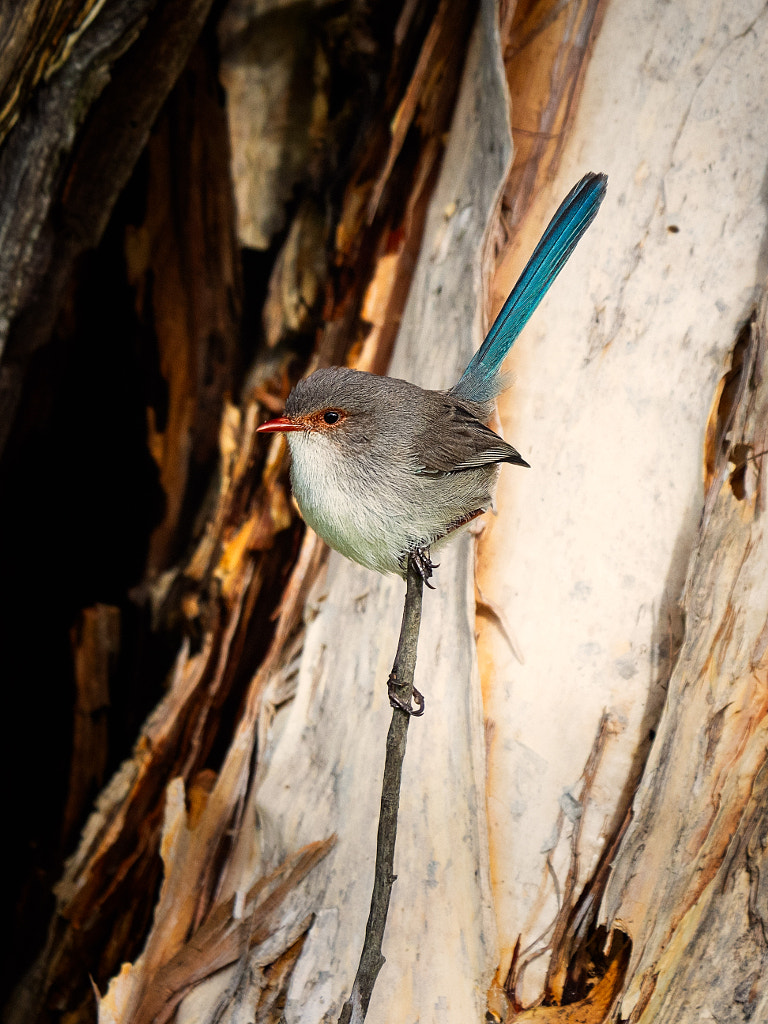
A gratuitous wren shot as wrens make everything better.
A bird on a stick – more specifically a female Splendid Fairy-wren, Malurus splendens subsp splendens. Whiteman Park, Western Australia. Olympus OMD EM1 mk ii with Panasonic Leica 100-400mm f4-6.3 lens. Exposure: 1/500 sec, f6.3 at ISO 320.
It has rained and rained here. I know not as much as in Germany, China or India, but it has rained a lot for here.It feels like I should be starting a DIY project – Ark building for dummies. Nah! I’ll skip that as I flunked woodwork at school. The Avon River burst its banks which drew lots of people in wanting to take photos of it. I even took a few myself.
The Avon River burst its banks in the recent rains. This park bench is normally a good 10m from the water. Sony A7 r ii with Canon EF 24-70mm f4 lens. Exposure: 1/80 sec, f8, at ISO 100.
The dog exercise area is now an aquatic park. Sony A7 r ii with Canon EF 24-70mm f4 lens. Exposure: 1/40 sec, f8 at ISO 125.
Despite all the wetness I’ve managed to grab a few sunny moments and head off to the local reserves. They are saying that all this rainfall is going to produce an amazing abundance of wildflowers this year. From what I’ve seen it looks to be true for our local reserves. Hopefully we’ll see some varieties come up that haven’t been seen for a few years – I’m looking at you Eastern Curlylocks.
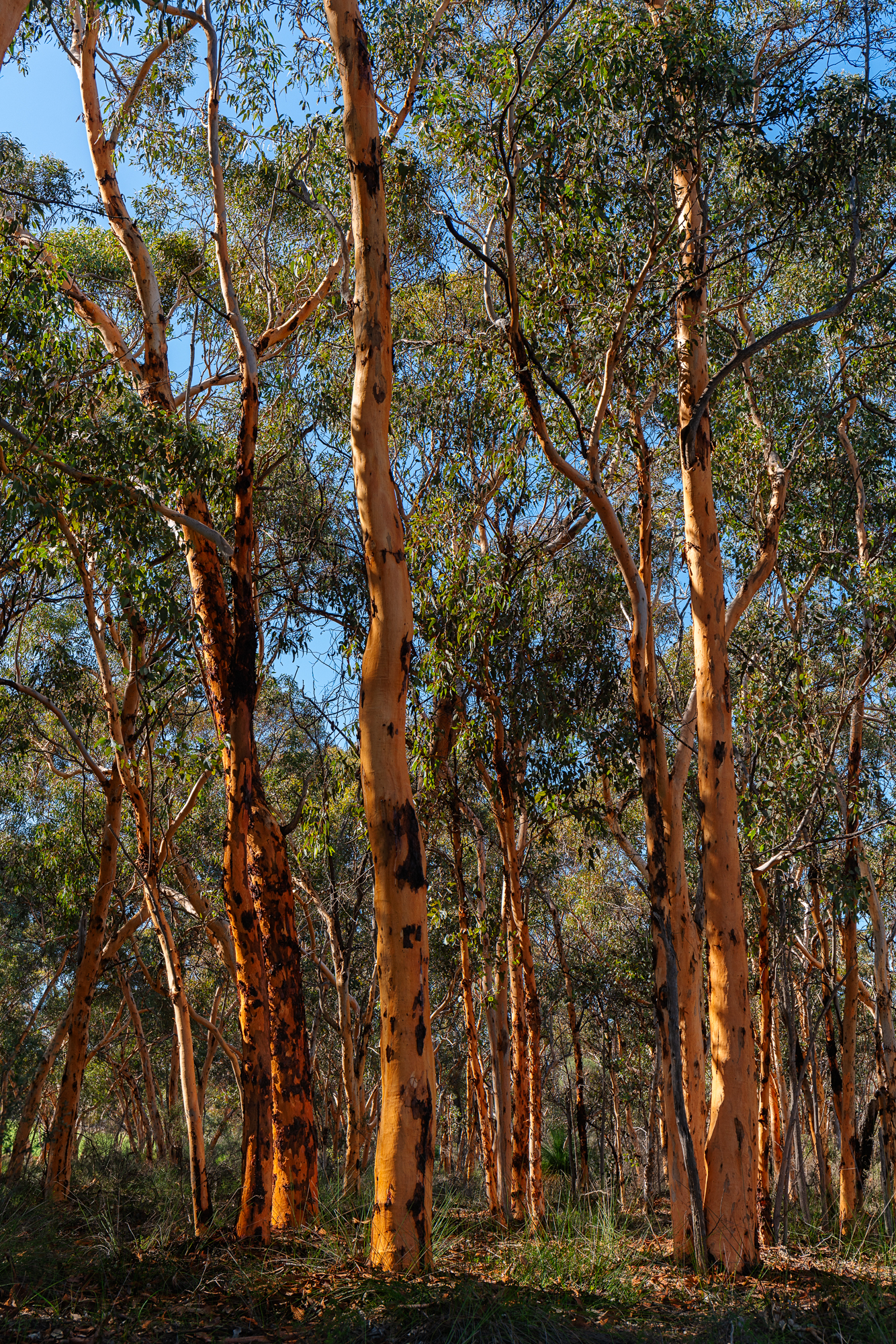
The wandoo woodland that makes up St Ronan’s Nature Reserve.
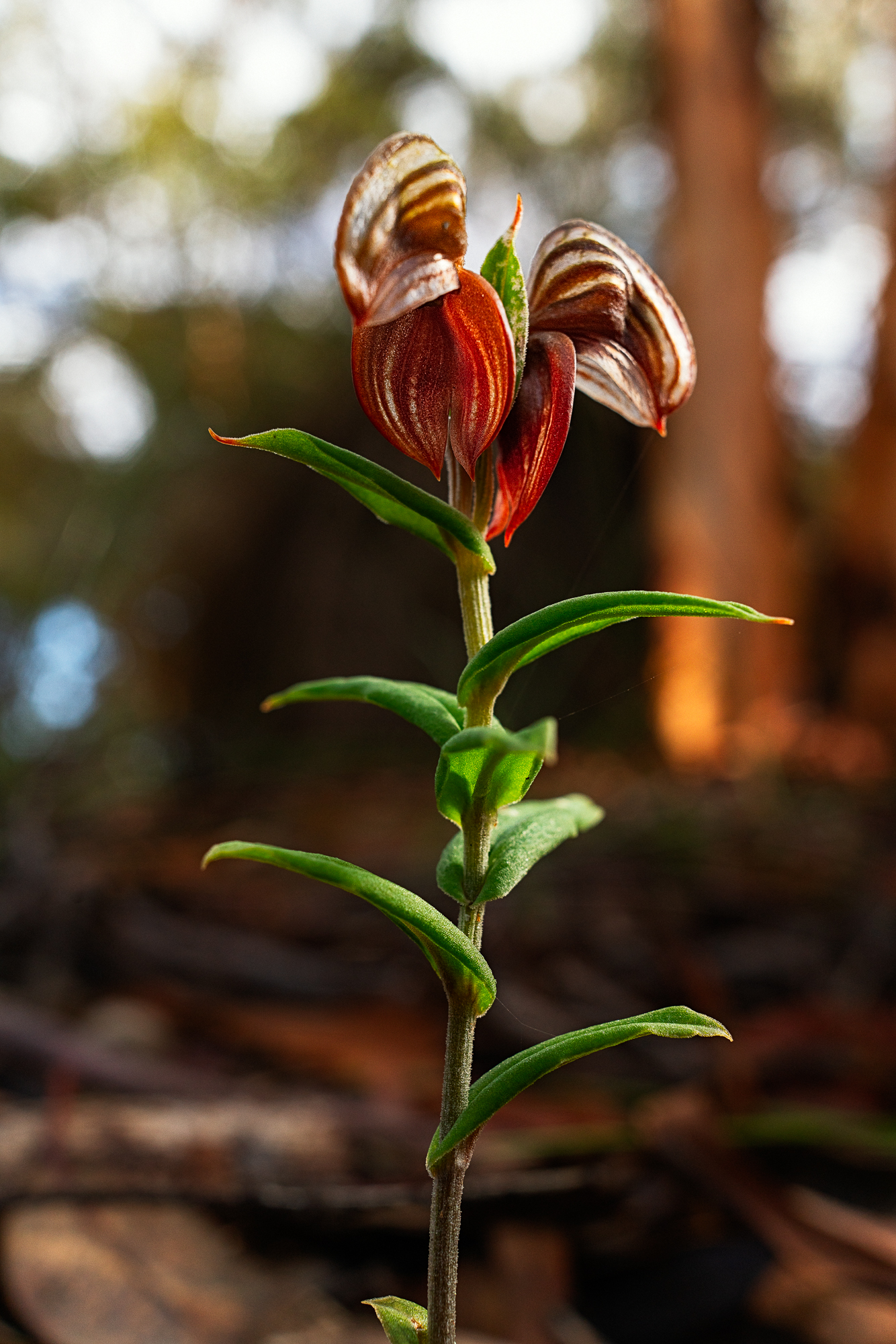
This dark banded greenhood is one of the many orchid species that can be found in the understory.
The last couple of days have been fine and tomorrow we head off to the Stirling Ranges where the weather forecast is rain for the whole time we’ll be there. I suppose I should be used to it now. Thank goodness for Goretex and the weather proofing on my Olympus camera.
It seems ages since I last posted. Things have been a bit quiet because of the cold wet weather and I’ve missed a few opportunities which have all contributed to making me feel a bit blah.
We went to Bickley looking for these Red-eared Firetaisl (Stagonopleura oculata).
We went to the New Victoria Dam at Bickley in search of Red-eared Firetails but all we found were lots of butterflies. It’s amazing that a lot of Western Australia’s butterfly species can be found all year round. Even on a freezing winters day.
What we found were Australian painted lady butterflies, Vanessa kershawi. New Victoria Dam, Bickley, Western Australia.
We also saw a lot of these. Monarch butterfly, Danaus plexippus.
On the home front we had a new visitor to the garden in the form of an Australian Hobby. It also looks like a pair of Nankeen Kestrels have nested in a tall tree on the land opposite us. They can be regularly seen hunting over the fields and gardens and they use our TV aerial as an observation platform. Hopefully, if I can swing it with the landowner, I’ll get some photos of them rearing chicks over the next few months.
Australian hobby(Falco longipennis) perched on our TV aerial.
Nankeen kestra (Falco cenchroides cenchroides), York, Western Australia.
Nankeen kestra (Falco cenchroides cenchroides), York, Western Australia.
Nidoolyorong. Black-fronted Dotterel, Elseyornis melanops. Mongers Crossing, Western Australia.
We’ve lived in York since 2004 and this is the first time I’ve seen these birds. They are classified as being nomadic when it comes to habitat which obviously means they move around as conditions dictate. Both require aquatic invertebrates to feed off which means that the river is in a healthy state. As I’ve said before in previous posts the Avon largely dries up over summer leaving a series of deep pools and In the past at this time of year they tend to be stagnant, have algal blooms and stink. This year they have largely been free of algae, don’t smell and the larger ones are full of small fish, dragonfly and damsel fly nymphs which are all indicators of a healthy river. The arrival of the Black-fronted Dotterels and Black-winged Stilts confirms this.
Dit. Black-winged Stilt, Himantopus himantopus, Mongers Crossing, York, Western Australia.
This is the natural state of the English Bull Terrier. Most people have this image of them being highly aggressive canine fighting machines, but the reality is that they prefer comfortable beds, cuddling up to blankets or preferably people, and sleeping.
…to this
A rare moment – Frida running along the Avon River bed.
Every now and then something miraculous happens and the Bull Terrier will erupt into a highly excited state where it runs at full tilt round and round. Heaven help anyone who gets in the way as its like being hit by a fury anti-tank missile. This is known as the “bully run“. It usually lasts about 2 minutes then the normal state is resumed.
A female Brown Goshawk, Accipiter fasciatus. York, Western Australia. Olympus OMD EM1 mk ii with Panasonic Leica 100-400mm f4-6.3 lens. Exposure: 1/1000 sec, f6.3 at ISO 3200.
While day time temperatures have ranged from hot to bloody hot (46ºC) here in the Wheatbelt metropolis of York we have had some very cool mornings around the 14ºC mark. I was out the other day on one of those mornings, it was almost too cold and I was tempted to go back to the car. A few days prior while walking the dog along the Avon River I’d noticed piles of feathers underneath a couple of tall trees. At first I thought that the birds had been killed by a fox or a cat but a closer look convinced me that the birds hadn’t been killed there and there were no wings, legs or head. Just a pile of feathers. So I decided to to go out and see if I could find the culprits. As I got close to where I’d previously found the bird remains I could hear a couple of goshawks calling out to each other – they can be quite vociferous – but I was quite confused as to where they were. I was scanning the the branches above me without seeing anything and as I kept walking the noise got louder. Then I realised that the calls weren’t coming from above me, but rather to the left and slightly below the river bank. So I got down on the ground and slowly crept towards the source of the noise and there on a paperbark tree were a male and female Brown Goshawk. The smaller male took off almost immediately but the female was all puffed up against the cool air just sat there watching me and continuously calling out to her mate. I stayed for about half an hour and then headed back to the car and home.










You must be logged in to post a comment.