I like the changes in the seasons and particularly look forward to the arrival of autumn. In fact spring and autumn are what living here are all about – fantastic weather with near perfect temperatures.
The Autumn burn off in the fields of the Western Australian Wheatbelt has left its distinctive stripes on the landscape.
The farmers have launched into a frenzy of activity – the fields are being burnt in preparation for the next crop. They are hoping that the war in the Ukraine and the sanctions against Russia will bring about record wheat prices. That optimism is being tempered by rising costs of fuel, fertiliser and pesticides. As usual for this time of year the valley fills with palls of smoke leading to some spectacular sunsets.
In the garden the bob tailed lizards are nowhere to be seen. While they don’t exactly hibernate they go into torpid state where they hide up and live off the fat reserves in their tails. The white browed babblers have upped sticks and moved to another garden and the only real activity is coming from the white-cheeked honeyeaters. They had a bit of a population explosion over summer so there are lots of adolescents chasing one another around the garden. This has led to some spectacular demonstrations of flying with some very close calls with windows and near misses while dodging around the rear veranda. Just as dawn breaks lots of them sit on the fence outside my bedroom window and make a tuneless racket. What they lack in musical ability they make up for with enthusiasm.
White-cheeked Honeyeater (Phylidonyris niger).
Yes I like autumn it marks the start of more activity out in nature.
It’s safe to say this summer has been hotter than a very hot thing that is feeling hot. The knock on effect of all that heat is that motivation evaporates – literally. It is very hard to get out and about when temperatures are above 40ºC (104ºF). The UV index is so high that if you’ve been outside for longer than 5 minutes you need to see a dermatologist to have skin cancers removed.
Frida trying to trying to escape the summer heat in what’s left of the Avon River
So summer days are spent dreaming up ways to keep cool. You can go for the psychological approach like my Beloved Significant Other (BSO) – she is reading Scandi noir books set in chilly sub Arctic nordic climes hoping that she can convince her body that it is cold. I’ve tried watching a few films along those lines but my body is not easily fooled. Next is the physical approach. The BSO has also taken to spending as much time as possible at the swimming pool. I don’t go as when I get into the pool the water gets out. More seriously the pool isn’t heated in any way and the cold water has me shrieking like a teenage girl at a Beatles concert. So I’ve given up on that idea. I’ve taken to hanging around the freezer cabinet in the local super market along with the rest of the town. The competition for the best spots can be brutal. The little old ladies are the worst – they’ve got sharp pointy elbows that they use to great effect to secure prime position and maximum coolness. The best place to go is the bottle shop’s (liquor store or off-licence for non Aussies) coolroom. Absolutely blissful. Unfortunately I was banned after I tried to smuggle in a chair and a TV. The best strategy is to get up early and try and do everything before it gets too hot. Then you retreat back to the sanctity of home and crank up the air con. This is why I’ve been printing photos lately.
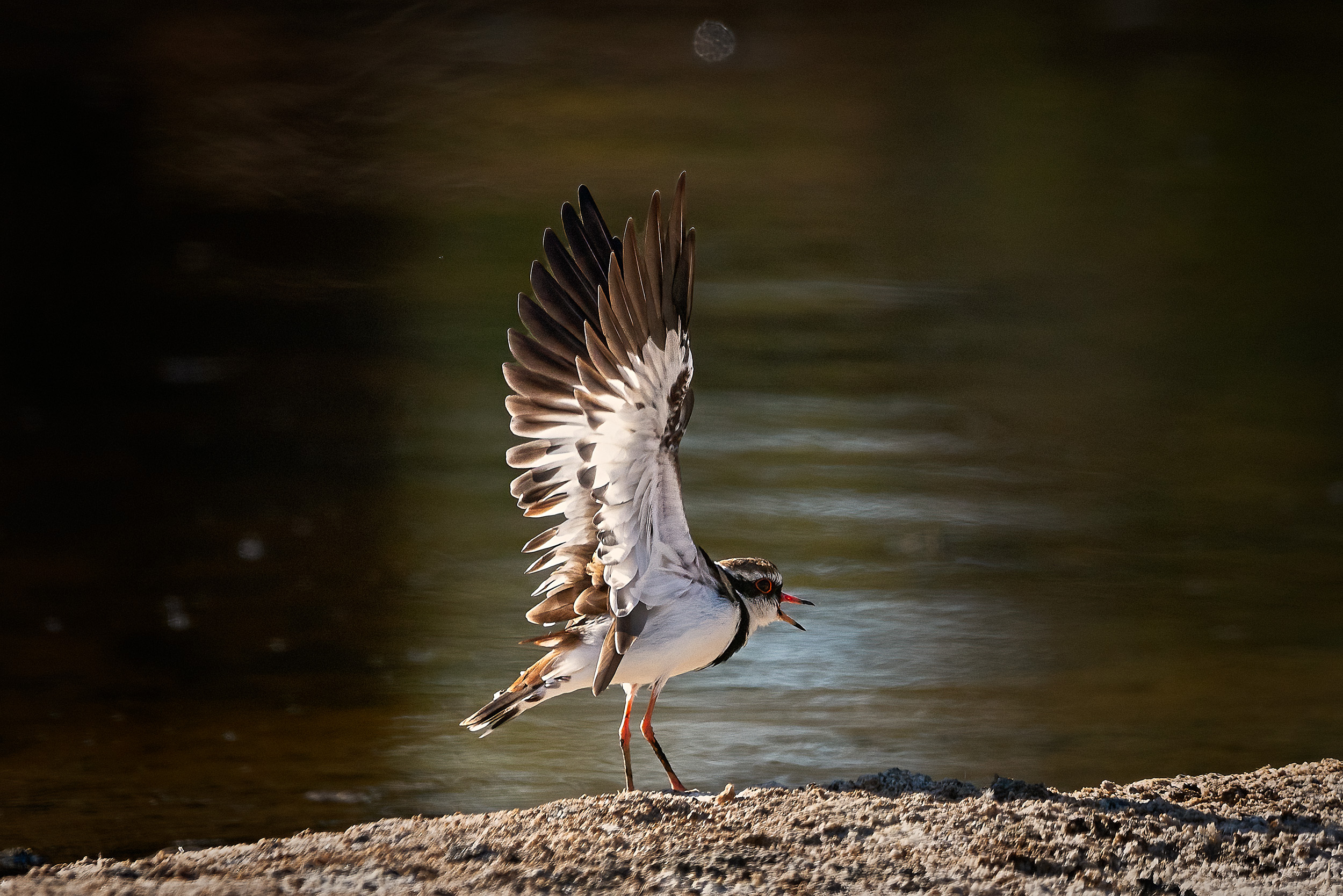
Nidoolyorong or Black-fronted Dotterel (Elseyornis melanops). York, Western Australia.
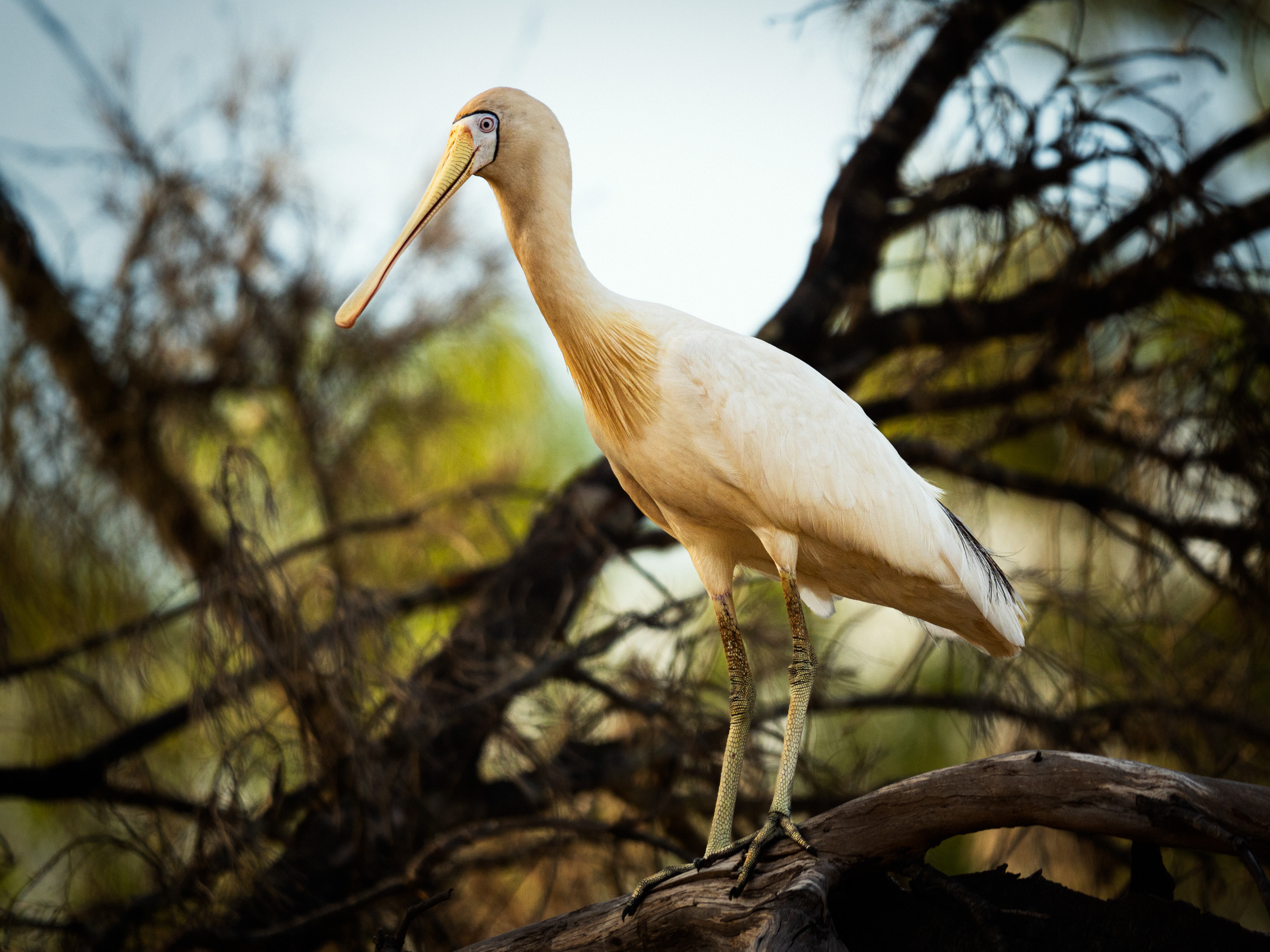
Yellow billed Spoonbill, Platalea flavipes. York, Western Australia.
A Willie Wagtail wondering if the Rainbow Bee Eater is going to share its dragon fly.
The impact of all this hot weather on the local wildlife has been considerable. The numbers of birds around is quite low. Lack of food and water. Even along the river, which now no longer resembles a river but a series of small fetid murky pools, there seems to be less activity. It has been a bumper year for dragon flies. I guess they must like it a little on the warm side. Once a week I’ve been going out to a large freshwater lake about 50Km from here to work on a new project. There’s been a bit more activity there but not much. Early in the mornings there is no vehicular access so you have to walk in through the bush and a couple of times I’ve come across a mob of kangaroos sparked out in the shade under the trees. They’re so hot and lethargic they can’t summon up the energy to move and they just lazily watch as I walk past. The only real activity at the lake has come in the form of a randy male musk duck desperately swimming up and down looking for a victim – err I mean prospective breeding partner. That duck can certainly move fast. Funnily enough I’ve not yet spotted a female musk duck – I guess they must be too hot and bothered and are avoiding him by hiding in the reed beds.
A male musk duck – not the randy one mentioned above.
Thankfully it is the end of February. That means we’ve only got to survive March and the the weather will start to cool in April. Can’t wait!!
Now for a word from the marketing director of the global empire that is Paul Amyes Photography (PAP).
No doubt as you walk around the shops you’ll have noticed that it is the season for spending or “Spendmas” as Christmas has become known. With the disruptions that COVID 19 has brought to supply chains it will be prudent to start thinking about Christmas a bit earlier than usual.
A fine Christmas present for the walkers in your life.
Well if you have a walker in your life consider giving them a copy of my book “Perth’s Best Bush, Coast and City Walks” which can now be ordered directly from the publisher. Further more if you click on the photo above, use this link or the promotional code PAULA15 at checkout then you will get a 15% discount.
The Christmas Star.
Don’t have a walker well Paul Amyes Photography has a store packed full of original art work available as well art, stationary, household items and clothing. Clicking on the photo above or the banner below will take you to my online store.
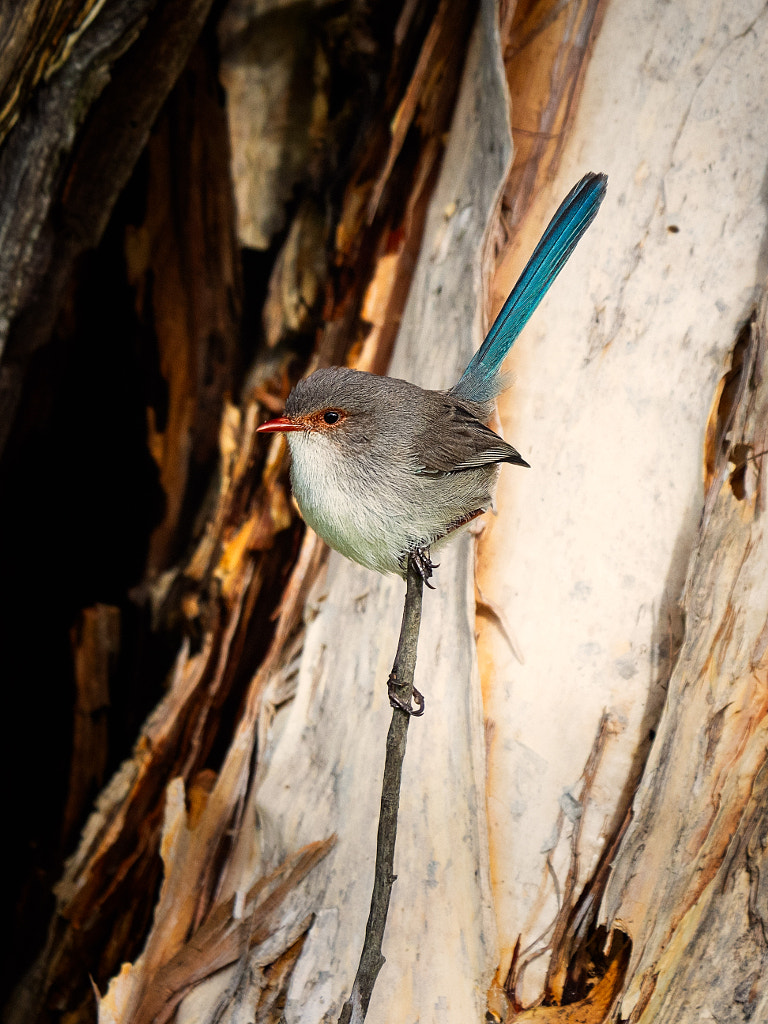
A gratuitous wren shot as wrens make everything better.
A bird on a stick – more specifically a female Splendid Fairy-wren, Malurus splendens subsp splendens. Whiteman Park, Western Australia. Olympus OMD EM1 mk ii with Panasonic Leica 100-400mm f4-6.3 lens. Exposure: 1/500 sec, f6.3 at ISO 320.
It has rained and rained here. I know not as much as in Germany, China or India, but it has rained a lot for here.It feels like I should be starting a DIY project – Ark building for dummies. Nah! I’ll skip that as I flunked woodwork at school. The Avon River burst its banks which drew lots of people in wanting to take photos of it. I even took a few myself.
The Avon River burst its banks in the recent rains. This park bench is normally a good 10m from the water. Sony A7 r ii with Canon EF 24-70mm f4 lens. Exposure: 1/80 sec, f8, at ISO 100.
The dog exercise area is now an aquatic park. Sony A7 r ii with Canon EF 24-70mm f4 lens. Exposure: 1/40 sec, f8 at ISO 125.
Despite all the wetness I’ve managed to grab a few sunny moments and head off to the local reserves. They are saying that all this rainfall is going to produce an amazing abundance of wildflowers this year. From what I’ve seen it looks to be true for our local reserves. Hopefully we’ll see some varieties come up that haven’t been seen for a few years – I’m looking at you Eastern Curlylocks.
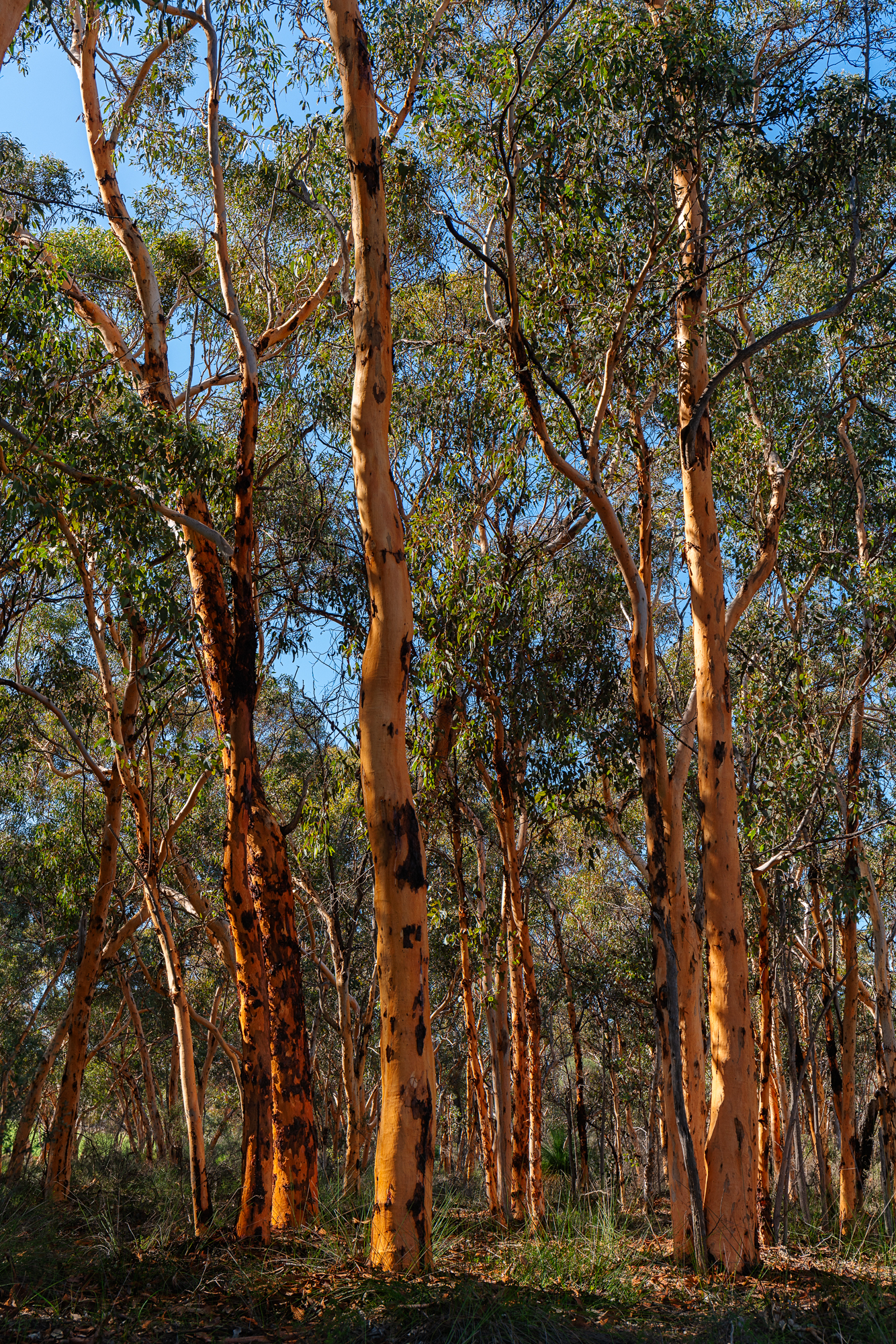
The wandoo woodland that makes up St Ronan’s Nature Reserve.
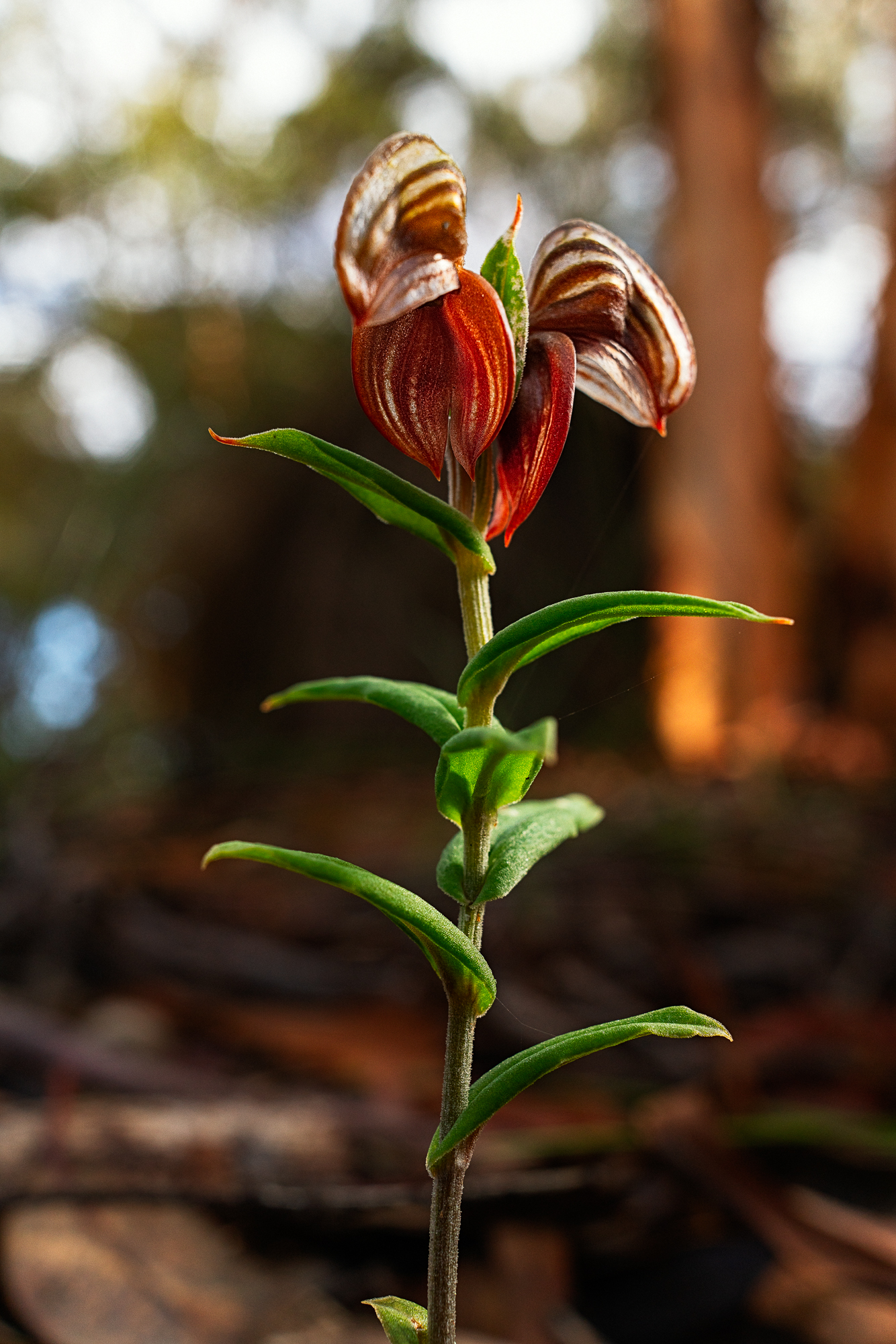
This dark banded greenhood is one of the many orchid species that can be found in the understory.
The last couple of days have been fine and tomorrow we head off to the Stirling Ranges where the weather forecast is rain for the whole time we’ll be there. I suppose I should be used to it now. Thank goodness for Goretex and the weather proofing on my Olympus camera.
It seems ages since I last posted. Things have been a bit quiet because of the cold wet weather and I’ve missed a few opportunities which have all contributed to making me feel a bit blah.
We went to Bickley looking for these Red-eared Firetaisl (Stagonopleura oculata).
We went to the New Victoria Dam at Bickley in search of Red-eared Firetails but all we found were lots of butterflies. It’s amazing that a lot of Western Australia’s butterfly species can be found all year round. Even on a freezing winters day.
What we found were Australian painted lady butterflies, Vanessa kershawi. New Victoria Dam, Bickley, Western Australia.
We also saw a lot of these. Monarch butterfly, Danaus plexippus.
On the home front we had a new visitor to the garden in the form of an Australian Hobby. It also looks like a pair of Nankeen Kestrels have nested in a tall tree on the land opposite us. They can be regularly seen hunting over the fields and gardens and they use our TV aerial as an observation platform. Hopefully, if I can swing it with the landowner, I’ll get some photos of them rearing chicks over the next few months.
Australian hobby(Falco longipennis) perched on our TV aerial.
Nankeen kestra (Falco cenchroides cenchroides), York, Western Australia.
Nankeen kestra (Falco cenchroides cenchroides), York, Western Australia.
Cleopatra’s Needles, Thelymitra apiculata. Western Australia.
I’ve been looking for the Cleopatra’s Needles orchid (Thelymitra apiculata) for at least five years and I’ve written about that search previously. It is only found in a small area and it is not very common. Its location is about a couple of hours drive from where I live so it’s not something you can do on an off chance – it is a dedicated expedition. Well yesterday I went out and after a pretty dispiriting hour I found plenty of orchids but not the one I was looking for. As I was walking back to the car I noticed a couple further up the hill who were paying close attention to an area around a small bush. I hoped they had found it and so I made a mental note of where they were and aimed to make my way up there slowly. You may ask why I didn’t just walk up and have a look. Well in Western Australia the orchid hunting community is quite secretive and often bordering on the paranoid. Sites are not shared and it is considered very bad form to crash somebody’s find. As I slowly sauntered through the scrub they called out to me asking if I’d found anything when I said no the young woman invited me over saying that they had not only found one plant, but three others. Orchid El Dorado!!!
I spent over an hour photographing the plants. I t was quite a challenge as the conditions were quite changeable, sunny one minute and overcast the next because Cleopatra’s Needles are in the “sun orchid” family and if the sun isn’t out then the flower can close up. It was also very sociable. The young couple were from Germany and had only got the orchid bug last year and she in particular was pretty elated to find Cleopatra’s Needles especially when she found out that I had been looking for so long. As I packed up and thanked them profusely for letting me in on their find and went home feeling very happy.
Sometimes you come across a place so stunningly beautiful words cannot describe it adequately. Two Peoples Bay is one of those places. I’m not going to write anymore.
Little Beach at Two Peples Bay in Western Australia.
Two Peoples Bay in Western Australia
Australian Pelican, Pelecanus conspicillatus.
Scarlet Banksia, Banksia coccinea. Two Peoples Bay, Western Australia.
Well the garden has sprung into action like a very springy thing. The bees are busy with all the flowers, butterflies are flitting from bloom to bloom. The birds are getting really active. The usual inhabitants, the White Browed Babblers and the New Holland Honeyeaters are in a frenzy of nest building/repairs and generally chasing each other round the garden. We’ve got a new family moved in. A pair of Rufous Whistlers have built a nest in our peppercorn tree and can be regularly seen foraging for insects in the garden beds. The other day there was a commotion – all the small birds were squawking loudly. At first I thought it was the neighbours cat, but when I went outside to have a look I saw this blur descend out of the skies, level off just before hitting the ground and dash back up onto the TV aerial. It was a Nankeen Kestrel feeding off of small skinks and geckos that were foolish enough to sun themselves. The kestrel spent about 30 minutes repeating the behaviour until it flew off. Who needs to go on a wildlife safari with all this happening.
Although considered a pest the cabbage white butterfly (Pieris rapae) is the most conspicuous butterfly in Western Australia and is a sure sign that spring has arrived.
The eponymous New Holland Honeyeaters can be seen feeding off the Geraldton Wax and grevilleas. They are quite territorial and aggressive and they chase each other around incessantly.
One of ever increasing number of White Browed Babblers eating grubs.
The rufous whistlers have made a nest in our peppercorn tree and can be regularly seen foraging in the garden for insects.
A Nankeen Kestrel (Falco cenchroides cenchroides) perching on our TV aerial watching for prey. York, Western Australia.
A Buchanan’s Snake-eyed Skink (Cryptoblepharus buchananii) sunning itself on the trellis of our patio.
* today’s blog title is a quote from the 1975 film Royal Flash which I went and saw on release at the Chichester fleapit I mean Granada Cinema. It was a spectacularly bad film and its only redeeming feature was that it gave work to some actors who would have otherwise been unemployed. The Observer’s review of it said “leaves one breathless not so much with enchantment as with boredom”. It shows how bad it is in that it has never been resurrected as a cult classic that only connoisseurs could enjoy. That I can quote lines from the film is testimony to the fact that I grew up in a town where there was very little in the way of entertainment for young people.
York and its surroundings have have taken on a definite yellow tinge of late. This is mainly due to the canola crops in the fields but soursob and yellow daisies are also to blame. It’s not a warm and inviting yellow but rather a green tinged acidic looking yellow. Nevertheless it sends the tourists wild and as you drive round you can see countless people standing in canola fields having their picture taken or taking a selfie even though many of the fields have signs up asking people not to. I don’t know when this became a trend – I can’t remember people doing this when I grew up in Kent and Sussex. Mind you back then it wasn’t canola it was oil seed rape. I think it’s probably got something to do with mobile phones and Instagram, but as somebody who has only just started an Instagram account I can’t be too certain of that so don’t quote me.
Oh did I mention I’ve now joined the 21st Century and got an Instagram account? I’m not really au fait with it yet. That’s probably because I don’t really like messing about with images on my phone – I’d rather do it my computer but Instagram won’t let you upload from a computer. If anyone knows of a way to load photos to instagram from a desktop please let me know.











You must be logged in to post a comment.