I’ve had a Røde Stereo VideoMic Pro since December 2017. I’ve been absolutely delighted with it. This is not a microphone for interviews or blogging, no it’s forte is picking up ambient sound with “a wide stereo image with natural depth”. I use it when I’m out in the bush trying to get wildlife and scenic footage. So I was a little upset when it developed a problem and would only record sound on one channel. I decided to send it back to Røde, who are an Australian company, and see if it could be repaired. The customer service rep was straight onto the case and really helpful and because I’d registered for the ten year warranty they would take a look at it. After a few days I was sent an email saying that they’d fixed it and it was in the post. I was at this stage well impressed. But wait – more was to come. When the parcel from Røde turned up on my doorstep imagine my surprise when I opened it and found a brand new microphone. A great product backed with great service.
Røde Stereo VideoMic Pro mounted on a Panasonic Lumix G85 camera.
As the nights are getting longer and colder the local horses have been put into their winter coats. Another two photos from the shoot with the Olympus OM Zuiko 50mm f1.4 lens.
*This week’s post title was inspired by Paul Kelly’s song “Winter Coat”
Seen Better Days. An old car wreck on the banks of the River in York, Western Australia. Sony A7R with Olympus OM Zuiko 50mm f1.4 lens. Exposure: 1/320 sec, f4 at ISO 100.
It would be tempting to say that this picture is a metaphor for these COVID19 times, but actually that would be quite crass. While all the restriction have been in place I’ve been determined to have some creative output and this is part of it. Over the last week I’ve been making myself go out in the evening to photograph. To make things a little more interesting I decided to impose a restrictions on myself. In this case I would use a focal length that I don’t particularity like (50mm) and an old vintage lens on a digital camera.I’ve walked past this wreck many times with the dog and really not taken any notice of it. Well on this particular evening the local farmers had been burning off and the smoke in the air was creating a nice warm light as the setting sun shone through it. I thought that the rust of the car complemented the warm lighting.
Like many people at this time I’ve had my movements curtailed. Where I live we are allowed out locally for exercise so I’ve been going out for walks along the river to photograph and video the birds that can be found there. This is the third time I’ve tried to video wildlife and it is very hard.I don’t work from a hide so I have to set up quickly and quietly and often the birds will move on before I can get filming. Shooting mainly just after dawn or just before sunset has meant using high ISOs and made focusing difficult. But, the more you do it the better you get. The purpose of the video was to make something, learn something new and help keep me thinking positive thoughts during this time.
Just out of interest I’ll put the stills up below. They were shot on either a Canon EOS6d with the Sigma 150-600mm f4.5-6.3 Contemporary lens or the Olympus OMD EM1 mk ii with the Panasonic Leica 100-400mm f4-6.3 lens. I wonder if you can tell the difference at web size without enlarging to 100% or checking the EXIF data?
A male Rufous Whistler (Pachycephala rufiventris). York, Western Australia.
Laughing kookaburra, dacelo novaeguineae. York, Western Australia
Yellow Rumped Thornbill, Acanthiza chrysorrhoa, York, Western Australia.
Yellow-billed Spoonbill (Platalea flavipes), Avon River, York, Western Australia.
Great egret, Ardea alba, feeding on the Avon River. York Western Australia
Tatty robin. Red-capped Robin (Petroica goodenovii), York, Western Australia.
Brown Honeyeater, Lichmera indistincta, York, Western Australia.
A pair of Yellow-billed Spoonbill (Platalea flavipes) feeding on the Avon River in York, Western Australia.
A great egret (Ardea alba) and a white faced heron (Egretta novaeholladiae) hunting in the early morning light on the bank of the Avon River in York, Western Australia.
A great egret (Ardea alba) hunting in the early morning light on the bank of the Avon River in York, Western Australia.
Red-capped Robin (Petroica goodenovii), York, Western Australia.
The Eastern Osprey (Pandion cristatus) is known to the Nyoongar people of the south west of Western Australia as yoondoordo. Oyster Bay, Lower King, Western Australia. Olympus OMD EM 1 mk 2 with Panasonic Leica 100-400mm f4-6.3 lens. Exposure: 1/2000 sec, f6.3 at ISO 400.
I’ve got to say of the bird types raptors, or birds of prey, are my favourite. The way they hover above the landscape looking for prey or ride the thermals brings a quickening to my heart. Probably a corny thing to say but I really enthralled by their power and majesty – they are the epitome of an apex predator. It’s not just the large raptors like wedge tailed eagles that do this but the smaller species such as falcons and kites as well. I’m lucky that where I live I often see birds of prey hunting and I’ve shared some photos on the blog of collared sparrowhawks, nankeen kestrels, and brown goshawks over the years.
Look at the talons on that! Eastern Osprey (Pandion cristatus), Oyster Bay, Lower King, Western Australia. Olympus OMD EM1 mk 2 with Panasonic Leica 100-400mm f4-6.3 lens. Exposure: 1/1000 sec, f6.3 at ISO 400.
When we started making plans to spend Christmas in Albany I was excited because it would mean that I’d be able to photograph Eastern Ospreys at a nest site near where we staying. So when we set out I made sure I had the necessary kit to take advantage of the opportunity. I spent a very happy Christmas Day filming these wonderful animals.
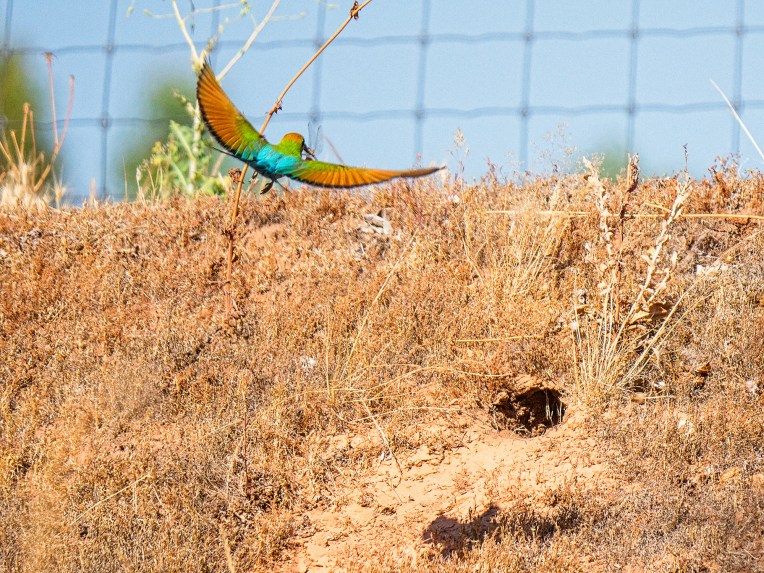
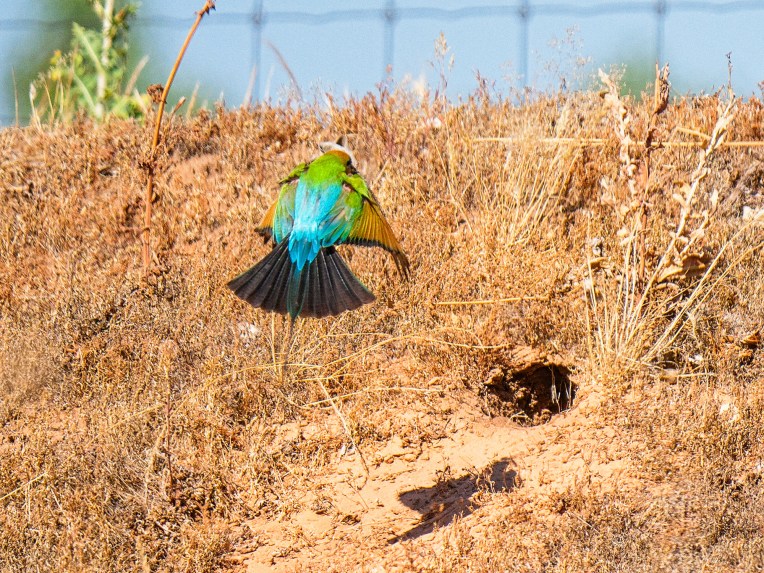
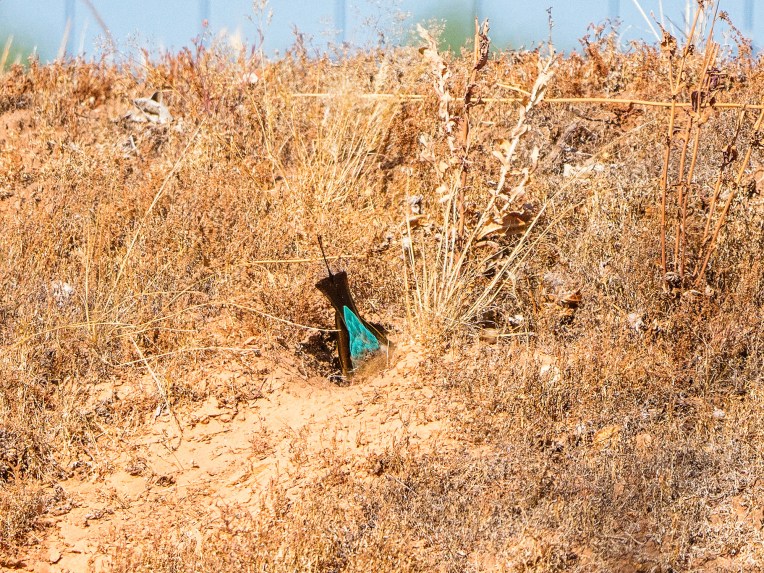
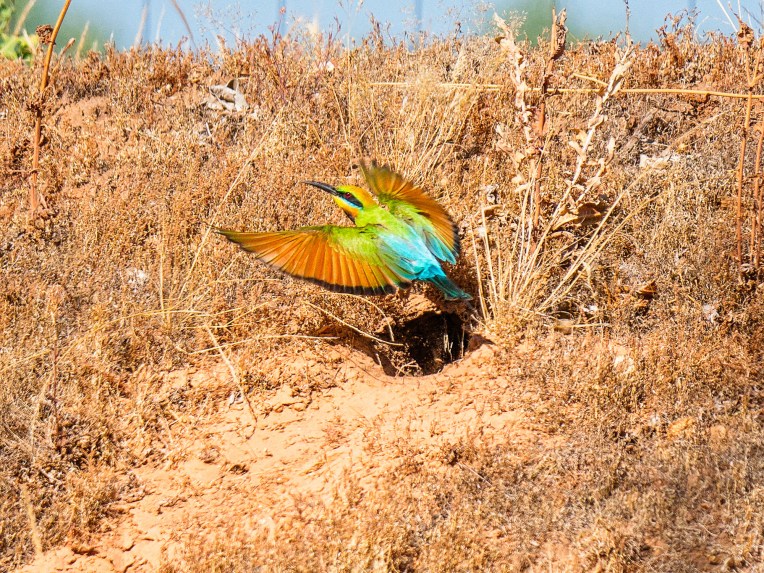
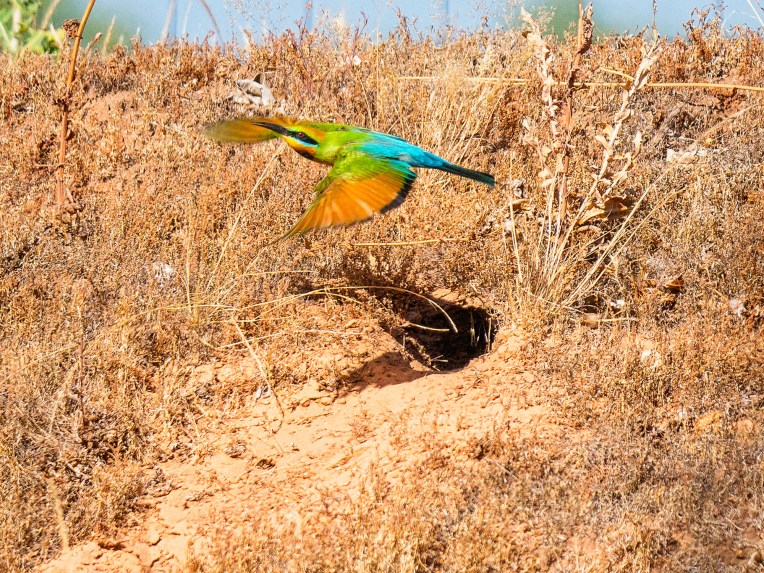
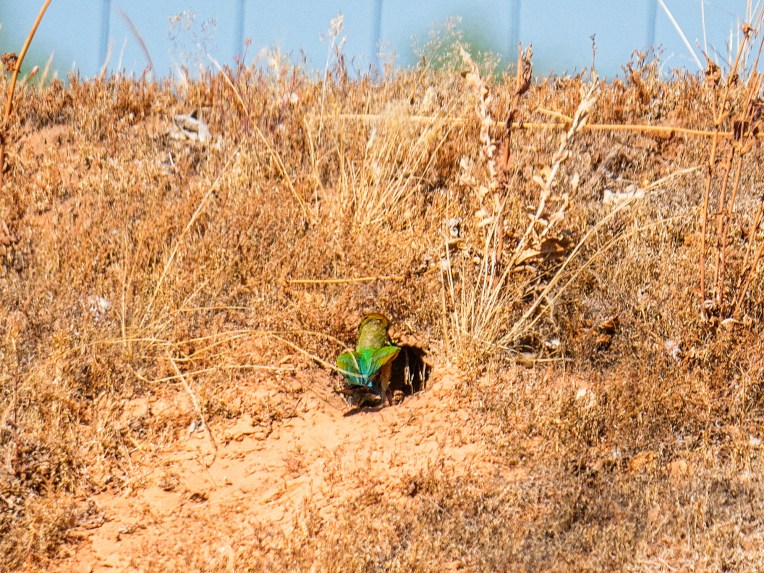
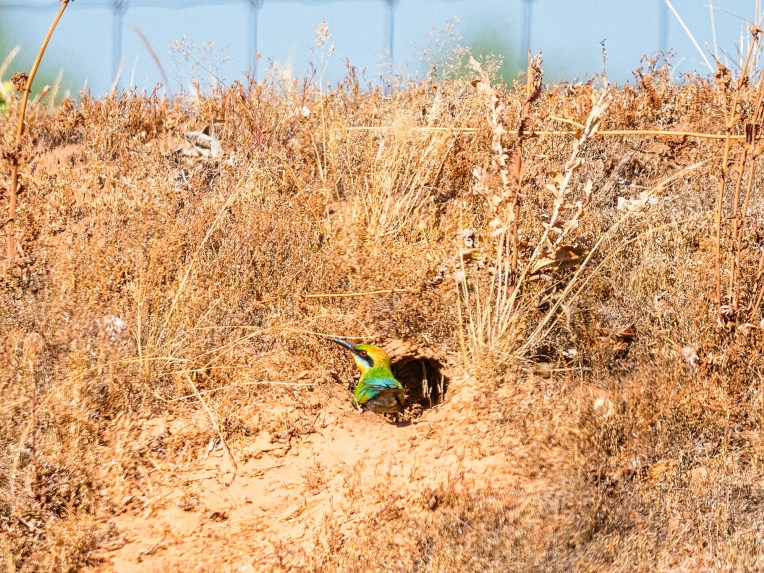
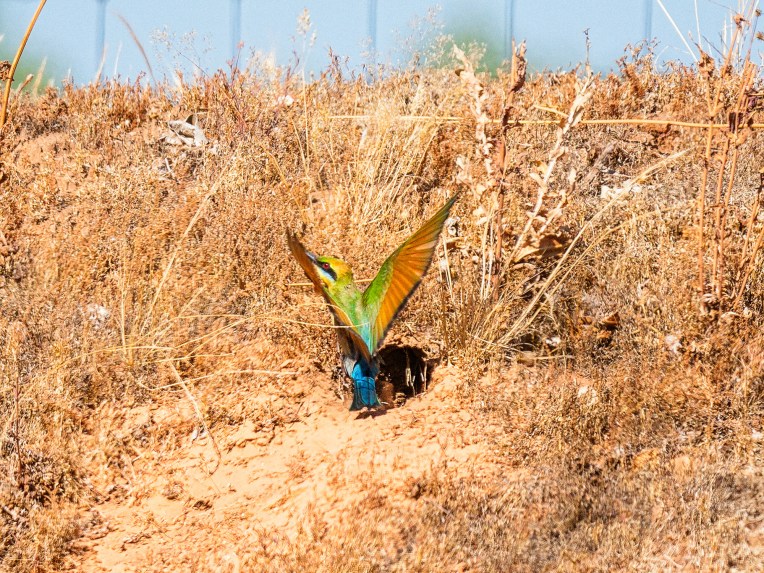
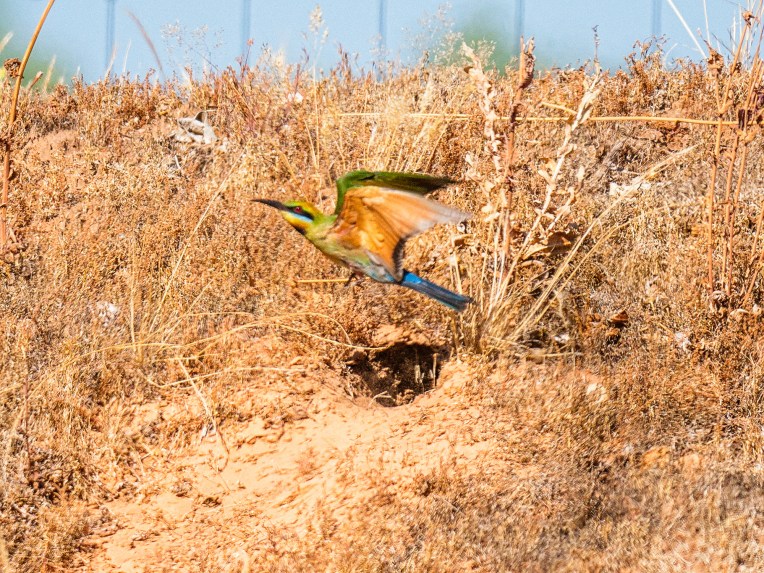
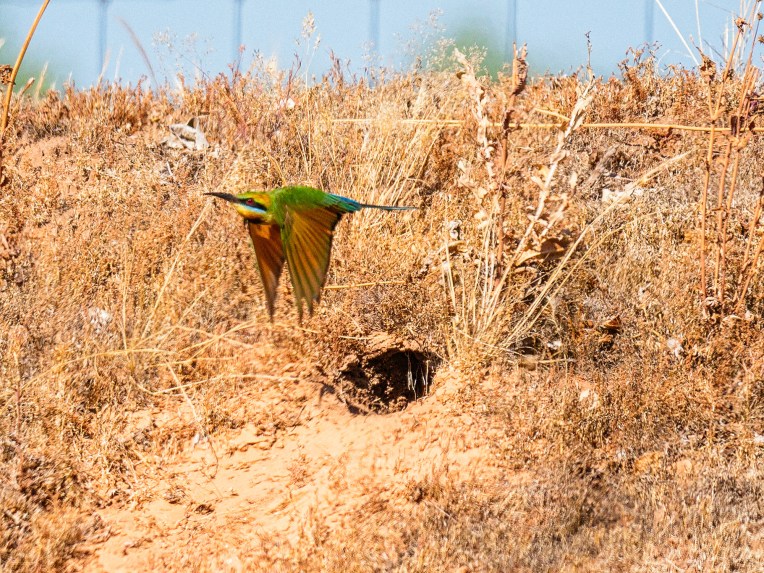
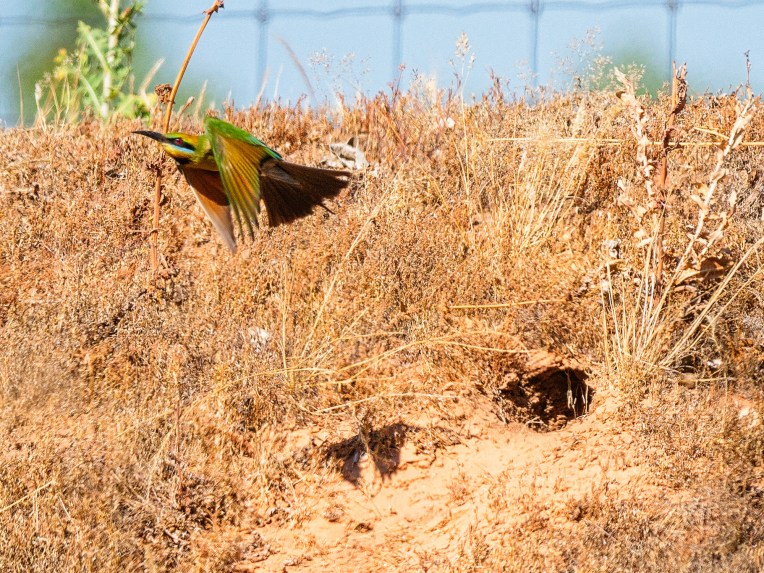
Rainbow Bee Eaters (Merops ornatus) catching insects and taking them to their chicks in their burrows.
Walking down by the Avon this morning there was a lot of commotion. A steady “prrrp-prrrp” sound followed by a flash of bright colour. Scanning the trees I found what I was looking for in the branches of a big old dead gum tree. A male rainbow bee eater bashing a large insect on the branch till it was dead so it could take it to its young brood. On further inspection I noticed that there was a holding pattern going on with mum and dad taking it in turns to take food to their ever demanding young.
Mum taking off to make the delivery while dad waits patiently to be cleared for take off.
A further shufti and I find the burrow and settle myself in to watch the parents fly in the food supplies. It was non stop, no let up at all. First off we see dad make a trip.
Rainbow Bee Eaters (Merops ornatus) catching insects and taking them to their chicks in their burrows.
Rainbow Bee Eaters (Merops ornatus) catching insects and taking them to their chicks in their burrows.
Rainbow Bee Eaters (Merops ornatus) catching insects and taking them to their chicks in their burrows.
Rainbow Bee Eaters (Merops ornatus) catching insects and taking them to their chicks in their burrows.
Rainbow Bee Eaters (Merops ornatus) catching insects and taking them to their chicks in their burrows.
Rainbow Bee Eaters (Merops ornatus) catching insects and taking them to their chicks in their burrows.
Rainbow Bee Eaters (Merops ornatus) catching insects and taking them to their chicks in their burrows.
As soon as he is clear it’s mum turn.
Rainbow Bee Eaters (Merops ornatus) catching insects and taking them to their chicks in their burrows.
Rainbow Bee Eaters (Merops ornatus) catching insects and taking them to their chicks in their burrows.
Rainbow Bee Eaters (Merops ornatus) catching insects and taking them to their chicks in their burrows.
Rainbow Bee Eaters (Merops ornatus) catching insects and taking them to their chicks in their burrows.
Rainbow Bee Eaters (Merops ornatus) catching insects and taking them to their chicks in their burrows.
Rainbow Bee Eaters (Merops ornatus) catching insects and taking them to their chicks in their burrows.
Rainbow Bee Eaters (Merops ornatus) catching insects and taking them to their chicks in their burrows.
All pictures taken with a Panasonic Lumix G85 with Panasonic Leica Vario Elmar 100-400mm f4-6.3 lens.
Below is a short video clip containing footage of the birds and some more stills.
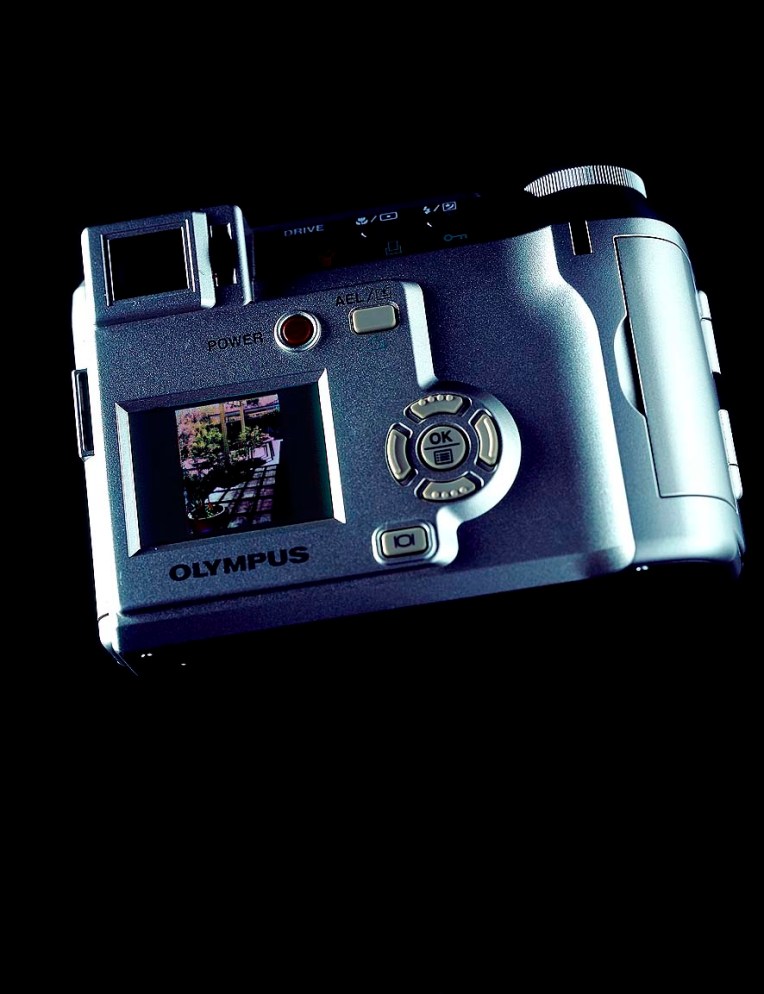
I’ve been missing in action over the last few weeks. Partly due to health reasons (which I won’t bore you with), partly due to computer meltdown when I upgraded to Mac OSX Catalina (what an unmitigated disaster that was and still isn’t solved) and partly because some chump cut through the telephone line while digging a hole. The whole experience has meant that I’ve been seriously considering going retro i.e. reading books, watching DVDs, listening to CDs and shooting film again. So I’ve ordered some books off of Booktopia, dug out the CD collection and loaded some film into an old camera. I’ve even found myself looking at kits to develop film at home. Scary stuff. Don’t know how far I’ll follow through with idea, and I don’t know if it’s still possible to get my favourite film and developer, but I’m certainly keen to give it a go. So I thought todays pic would be appropriate – a photo of a digital camera taken with a large format film 5×4 camera shooting Fuji Provia.
The video is the short version of this article with a slide show of the best of this year’s orchids at the end.
It’s not for nothing that Western Australia is referred to as the “Wildflower State”. There are over 13,000 species of plant to be found, with new discoveries added every year. If we narrow it down to my particular area of interest – orchids – there are 394 species of terrestrial orchids in the South West Corner of the state. Some of these species are so specialised that are confined to very small areas and found nowhere else. Some species will not bloom unless there has been a bush fire the summer before, others if the winter rains are delayed or are insufficient will not put a show on either. This means that no two years are the same. An example of this is my favourite spot near where I live is prolific with the number of orchid species found there. When I first went I was simply amazed by the number of fringed mantis and white spider orchids that were flowering. Over the ensuing ten years I’ve seen such a display of those species since. This year there was a carpet of purple and pink enamels like I’ve never seen before. So this not knowing quite what you are going to find adds to the whole experience. On a few occasions I may be lucky enough to be able to access the flowers by car and a short walk, but most of the time I end up walking through the bush for anything up to four hours.
Pink enamel orchid, Elythranthera emarginata. Mokine, Western Australia. Olympus OMD EM 1 mk ii with Olympus 60mm f2.8 macro lens. Aperture priority, exposure: 1/800 sec, f5.6 at ISO 400.
Purple Enamel Orchid, Elythranthera brunonis. Mokine, Western Australia. Olympus OMD EM 1 mk ii with Olympus 60mm f2.8 macro lens and Metz 64AF-1 flash. Exposure: Aperture priority mode, 1/40 sec, f8 at ISO 200 with -1 stop exposure compensation.
The Canon EOS 6d camera with 100mm f2.8 macro lens that I used to use for photographing orchids alongside the Olympus EM 1 mk ii with 60mm f2.8 macro lens that I use now.
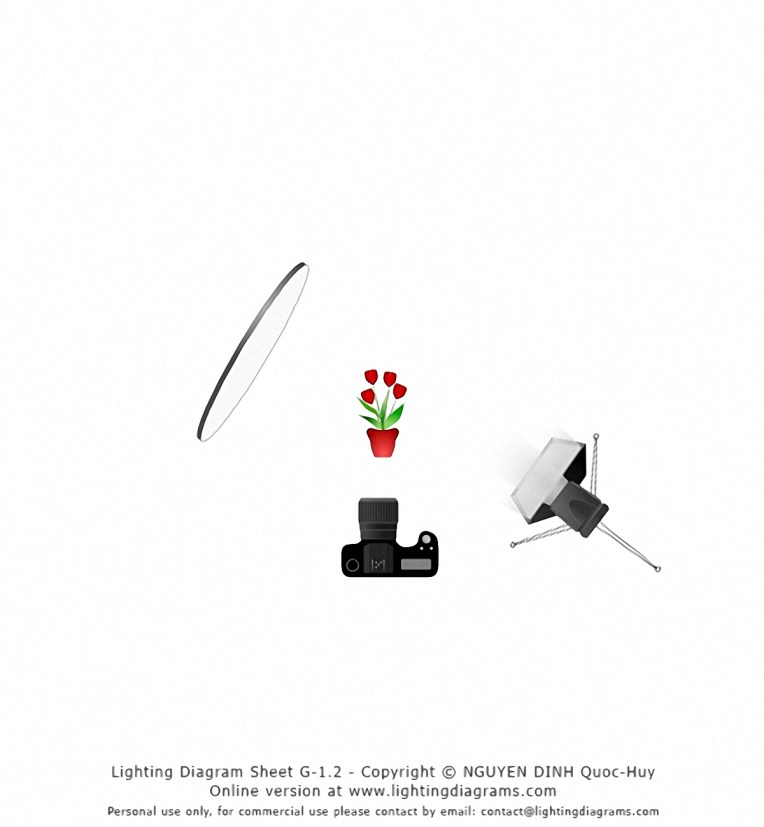
I approach photographing orchids as I would shooting a person’s portrait – using off camera flash and reflectors to fill shadows, separate from the background, bring out the shape and textures. Too many botanic studies show indistinct photos where the subject does not fill the frame and the background is intrusive. To that end I use a macro lens of around 100 -120mm (35mm equivalent). It’s not because I’m necessarily shooting at a 1:1 ratio, it’s just because I’ve found there are very few zoom lens that focus close enough and have a fast aperture to allow control of depth of field.I used to use a Canon DSLR with a Canon EF 100mm f2.8 IS L lens and carry around a Manfrotto 143 Magic Arm Kit to support the lights. I made a video about using that setup some 7 years ago and that can be seen just below. Since making that video I added a full frame 6d, the Canon macro lens, and extra light and a set of TTL wireless flash triggers and consequently found myself schlepping 10-12Kg of kit into the bush on longer and longer forays. Something had to give – and my back did! So fast forward 7 years and I’m now using an Olympus OMD EM1 mk ii with Olympus 60mm f2.8 macro lens. I’ve not given anything up in terms of image quality with this change because I’m generally working at a base ISO of 200 with lighting which means all the usual objections to m4/3 about excessive noise and poor dynamic range have been taken out of the equation. The Olympus 60mm f2.8 is easily the optical equal of Canon’s EF 100mm f2.8 IS macro L lens at less than 1/2 the price and about 1/3 of the weight. The Manfrotto Magic Arm got binned as it was very heavy at 2.7 Kg and replaced with a Manfrotto Table Top Tripod Kit 209, 492 Long which weighs 454g. As far as lighting goes I’m using a Metz 64AF – 1 and an Olympus FL-600R flash with small soft box, snoot and honeycomb grid. The only thing that I have given up is radio TTL triggers for the flash, I’m using a TTL flash sync cable at the moment. I prefer to use the Metz unit when doing a lot of high speed sync work as it is the more powerful of the two. This may change in the New Year, it may not.
Lighting diagram for my basic lighting of an orchid.
The FL-600R is a flash with a guide number of of 50 (ISO200/m). In addition, it comes with a LED lightt for use when shooting video.
Other things in the bag include an 80cm 5 in 1 reflector – I only use the white reflector as the silver is too strong, the gold too garish. Some times I use the diffuser over a plant to cut down on ambient light levels. A Vittorinox CyberTool L is there. It has a good selection of small screwdriver bits that can most screws on a camera body, a set of pliers, wood saw, metal saw and file and a host of other doodads. I once re-assembled my Voigtländer 35mm f2.5 Color-Skopar with it while in on holiday in Beijing. Water – this can be in a 1L bottle for shorter expeditions or a 3L water bladder for longer ones. Extra clothing if needed, sunscreen and insect repellent to avoid nasty encounters. Batteries for camera and flash. Wallet of memory cards. That’s it. The whole process is very simple.
The Sigma 150-600mm f5-6.3 DG OS Contemporary lens is part of Sigma’s Global Vision line of lenses. It offers an inexpensive way of getting into wildlife photography.
Not so long ago I looked at the the Panasonic Leica DG Vario-Elmar 100-400 f4-6.3 ASPH Power OIS lens for micro four thirds, well today I’m looking at an alternative lens for APS and full frame cameras – the Sigma 150-600mm f5-6.3 DG OS Contemporary lens. Now confusingly Sigma make two versions of the 150-600 and they are labelled the Sport and Contemporary. The-Digital-Picture.com has put up a good article explaining the difference between the two. The main ones are price and weight with the Contemporary being a 1Kg lighter and $1200 AUD cheaper. This is quite a significant difference and I for one prefer a lighter lens and a heavier wallet. The Contemporary is part of Sigma’s Global Vision line of lenses and is thus compatible with the Sigma TC-1401 1.4x Teleconverter which allows auto focus to work to a maximum of f8 while wide open if your camera supports this feature. This is an interesting option as it allows a reach of 860mm on full frame and a humongous 1376mm on an APSC sensor which is impressive reach for a lens and converter costing less than $2000 AUD. I didn’t happen to look at this option because none of my Canon DSLRs allow f8 auto focusing. shuttermuse.com has an article on f8 focusing with extenders or teleconverters and a list of compatible Canon DSLRs. This does not apply to the mirrorless R and RP which have f11 auto focusing.
Lens mounts available
Canon EF
Nikon F
Sigma SA
Focal length
150-600mm
Angle of view
4.1° – 16.4°
Aperture range
f5/6.3 to f22/27
Filter size
95mm
Minimum focusing distance
2.8 metres
Maximum magnification
1:4.9
Focusing
Silent HSM with internal focusing and manual override
Aperture blades
9
Lens construction
20 elements in 14 groups with 1 FLD and 3 SLD elements
Image stabilisation
Yes – 3 stops equivalent
Length
26cm
Diameter
10.5cm
Weight
1.93Kg without lens hood and tripod collar.
Fully extended to the 600mm focal length the lens is a beast. There is no sign of any wobble in the zoom extension.
Physically this is a large lens, it stands head and shoulders above my Canon 70-200mm f2.8 IS L lens which in itself quite a large lens. The 150-600 is also 500g heavier. At 2.1 Kg with lens hood and tripod collar attached it definitely has heft to it. Interestingly Sigma refer to it as a lightweight lens, I suppose it’s all a matter of perspective as the Panasonic Leica 100-400 is 0.985 Kg so the Sigma feels gargantuan compared to it while the Canon EF 600 mm f4L IS is over 3Kg so the Sigma then seems svelte and compact. The lens body is made out of what Sigma calls a Thermally Stable Composite (TSC) which is substantially stronger than conventional polycarbonates while having similar thermal expansion properties to aluminium. The lens mount is made of chromium plated brass which should ensure a long life. All in all it feels a well made and rugged lens, it may feel like plastic but the TSC body feels substantial and gives the impression of being very durable with no creaking or flexing. The Sigma 150-600 is advertised as being dust and splash proof but on closer reading of Sigma’s spec sheet there is only one seal and that is at the lens mount. If you want better then you’ll have to spring for the Sports version.
The Canon EF lens mount is made of chromium plated brass.
When looking at the lens from the front there is a large ribbed rubber zoom ring that has a long throw of about 160º. The action is smooth and feels not too tight nor too loose. As you rotate the zoom ring the lens barrel extends by 8cm. The extension feels secure with no slop or wobble. Just behind the zoom ring on the lefthand side is a zoom lock switch which can lock the zoom ring at the 150mm focal length to prevent zoom creep while carrying the lens. The focusing ring is narrow ribbed rubber and allows you to manually adjust focus while the lens is in the autofocus mode. There are no hard stops which might concern you if you were to use the lens for video. Behind the focusing ring is a panel of four switches and they are:
An AF switch allowing to choose between AF, MF and MO (Manual Override)
A focus limiter switch allowing a choice of full range, 10m to ∞, and 2.8 to 10m.
An optical stabilisation switch that gives a choice of off, on and a panning mode.
A custom switch that allows you to select two custom modes that can be programmed using the Sigma FD-11 USB Dock
There are three switches on the lens barrel. One fotr focus modes, the second a focus limiter and the third is for the optical stabilisation.
The focus distance scale is behind a window just below the the focus ring.
Above the switches is a window showing the focusing scale and then behind that is the lens collar. The lens collar allows you to turn the camera from horizontal to vertical while mounted on a tripod, but, unfortunately there are no detents to allow you to do this while looking through the viewfinder of the camera, you have to align the marks on the collar with those on the lens body. The tripod collar can be detached and thoughtfully Sigma provide a cosmetic rubber ring to slide over the lugs that hold the collar in place. The lens comes with a large plastic lens hood the size of a flower pot, it seems sturdy enough and bayonets into place and a nice touch is that is ribbed internally to prevent reflections. The 150-600 has a 95mm filter thread which means filters will be expensive and potentially hard to get. In terms of accessories Sigma provide a nice well padded lens case, a shoulder strap for it and a Sigma branded camera strap. Like all Sigma lenses you get a lot for the money you spend. Nice one Sigma!
The 150-600 has a 95mm filter thread which means filters will be the size of dinner plates, be expensive and potentially hard to get.
I tested the lens on a Canon EOS 6d and an EOS 550d to see how it would perform on both crop and full frame cameras. In terms of AF performance as neither of those cameras have what can be considered state of the art AF systems, in fact it is over twelve years old, the lens did very well. The single point AF using the centre point was fast and precise and well capable of fixing on small birds amongst foliage. In terms of continuous AF on the EOS 550d the camera was the limitation being only able to shoot 6 frame bursts in RAW, but out of my six shots when tracking my dog trotting five of the six would be in focus. The 6d is able to shoot 4.5 frames per second for 15 frames and on the trotting bull terrier test it managed 12 frames in focus.
This slideshow requires JavaScript.
When it came to BIF (birds in flight not fisticuffs) the AF was more than capable of focusing on and tracking medium to large birds. It really struggled with small birds especially swallows. Put it on a better camera and I’m sure you’d get better results.
Australian white ibis, Threskiornis molucca, Herdsman Lake, Western Australia.
My primary use for a lens like this is handheld bird photography, and as such I didn’t really give the image stabilisation a workout as I seldom use a shutter speed below 1/500 sec. But messing around at home in the house and garden I figured it was good for three stops. Mind you I do have steady hands so your experience may differ from mine.
The optical construction of the lens is twenty elements in fourteen groups with 1 FLD and 3 SLD elements. The FLD (“F” Low Dispersion) glass element, which offers performance equivalent to fluorite. Canon and other manufacturers have used synthetically grown crystals of calcium fluoride components in lenses to aid apochromatic design, and to reduce light dispersion so lenses made from it exhibit less chromatic aberration. What Sigma has done is use newer glasses and computer-aided design to render the use of fluorite crystals unnecessary. Sigma claim that the FLD element is “highly transparent, its refractive index and dispersion are extremely low as compared to conventional types of glass. It offers characteristics very similar to those of fluorite, which is valued for its anomalous dispersion. These characteristics minimize residual chromatic aberration (secondary spectrum), which cannot be corrected by ordinary optical glass, while helping to produce sharp, high-contrast images.” (https://sigmaphoto.com.au). The three SLD (Special Low Dispersion) glass elements also help to minimize chromatic aberration. To help achieve attractive out of focus transitions there are nine rounded aperture blades which should help achieve nice round bokeh balls when shooting specular highlights.
In terms of optical performance well I’ll deal with full frame and crop separately. First up using the lens on the crop framed 550d. At 150mm the centre of the lens wide open was sharp and contrasty and stayed A as such until f22 when it softened due to the effects of diffraction. At the edges the peak performance was attained at f11 and remained until f22 when it softened again. At 600mm the centre wide open was a little soft and lacking in contrast. This improved by f8 and then deteriorated at f22. The edges weren’t so good – wide open they were soft and lacking contrast and remained so until f22 when they got worse. As for vignetting well at the short end wide open it was apparent, about 1/2 to 1 stop and this disappeared by f8. It was the same story at the long end. Throughout the focal range there is slight pin cushion distortion and some chromatic aberration can also be seen. Open the files up in Lightroom and apply the lens profile and things improve nicely. On the full frame 6d the story is the same except for the vignetting which is naturally worse at around 1-1 1/2 stops which is totally understandable as you are using the whole frame rather than just the central part of the lens coverage.
100 % crop from the centre of a New Holland Honeyeater to show how detail is rendered by the Sigma 150-600mm f5-6.3 Contemporary lens.
What’s all this mean in real life. Well if we look at the image for the New Holland Honeyeater which I took at a distance of around 3.5 to 4 metres and then enlarge the section around the head you can see that there is nice feather detail and that the eye is sharper than a very sharp thing. To get much better you’d have to spend an awful lot of money and if we look at the Canon 600mm f4 lens I mentioned earlier that has an eye watering price of $18,500 AUD which is over 11 times the cost of the Sigma. Personally I know that if I plonked $18 K down on a lens I’d be heading for the divorce court which would make the Canon a doubly expensive lens. So for what it costs the Sigma is amazing value.
Below are some examples of bird photography shot with the lens on both a Canon EOS 6d and 550d.
Welcome Swallow, Hirundo neoxxena, Herdsman Lake, Western Australia. Canon 6d with Sigma 150-600mm Contemporary. Exposure: 1/500 sec, f7.1 at ISO 250.
Red capped robin, Petroica goodenovi, Avon Walk Trail, York, Western Australia. Canon 550d with Sigma 150-600mm Contemporary lens. Exposure: 1/500, f6.3 at ISO 160.
Chestnut-rumped Thornbill (Acanthiza uropygialis), York, Western Australia. canon 550d with Sigma 150-600mm Contemporary lens. Exposure: 1/1000 sec, f6.3 at ISO 320.
Mistletoebird, Dicaeum hirundinaceum. The Nyoongar name is Minnijit. York, Western Australia. Canon 6d with Sigma 150-600mm Contemporary lens. Exposure: 1/1000 sec, f8 at ISO 1600.
So would I recommend the lens? Yes without hesitation. It performs very well and is sold at a very good price and you can’t argue with that.










You must be logged in to post a comment.