A Small Surprise

The Olympus 25mm f1.8 standard lens. Small but beautifully formed. Olympus even give you a lenshood!

The other day I was sitting at my desk just idly surfing the net when a courier van pulls up and leaves a small box. Once unwrapped it revealed an even smaller box containing  the Olympus m.Zuiko Digital 25mm f1.8 lens. Now for a long time I’ve always believed that every photographer should own a fastish standard lens. In fact I also believe that if should ever find yourself in the photographic doldrums then just committing to use a standard lens for a period of 12 months will see your photography improve no end. I had one for my OM film system (and still have and use it) and I have one for my Canon EOS digital kit, but a little while back I had a dalliance with film range finder cameras and I eschewed the fast 50mm in favour of a pancake 35mm moderate wide-angle. In fact I was so smitten with the focal length that when I adopted the m4/3 system the Olympus 17mm f2.8 pancake was a must have, and if I look through my Lightroom catalogue over half the picture I’ve taken with my Pen and OMD have been with that lens. So now I’m in possession of a fast standard again.

No obvious lens distortion.

My initial impressions are that although it has a plastic body it is well made, although not as well made as say the 60mm f2.8 macro. It continues with the clean modern lines that Olympus adopted with the launch of the EM-5 and it feels well-balanced on both my EP-2 and EM-10. The other small thing that makes feel very positive about the lens is that Olympus have finally stopped being tight and are including lens hoods. The hood is hard plastic and bayonets securely on to the lens after the front cosmetic rim of the lens has been removed. Nice – a good lens should have a lens hood to get the best out of it. After a couple of days of shooting stills out and about I found that the focal length took a little adjusting to, it is a bit narrow for my tastes, but I quickly adapted and started looking for subjects that would play into its strengths.

DOF comparison 1 Olympus Zuiko 25mm f1.8 lens wide open at f1.8
DOF comparison 2 Olympus Zuiko 25mm f1.8 lens at f8
DOF comparison 3 Olympus Zuiko 25mm f1.8 lens at f22

So optically how did it fare? Very well. There is no distortion worth talking about and although shooting wide open there is some slight chromatic aberration but this disappears very quickly and by f4 it is gone. Sharpness is good with the centre of the lens performing very well wide open with some softening towards the corners again things improve quickly as you stop down, but get down past f11 and things start to soften up again as diffraction rears its ugly head. Diffraction isn’t a fault of the lens it is a problem with the size of the sensor, and all sensor and film sizes suffer from it. The lens isn’t what I would call “clinically” sharp in the way a lot of modern lenses are, it renders nicely and has a nice fall off from sharp edges to the out of focus areas. I’m not by any means a bokeh slut but this lens does render out of focus specular highlights in a very pleasing way. It made me want to go out and look for images that would give me those velvety smooth transitions.

Decentering test on the Olympus 25mm f1.8 at f1.8.
Decentering test on the Olympus 25mm f1.8 at f5.6.
Beachside Bully Run. The autofocus is quick and accurate and was able to track my dog running erratically on the beach.

The lens focuses insanely quickly on the EM-10, which is as it should be on the latest generation of m4/3 cameras and is no slouch on my first generation EP-2. The worrier of DPReview now obsess over centring and on the micro four thirds forum the hysteria regarding the Olympus 25mm is something to behold. A few people there are expecting lens perfection from this lens and unfortunately no lens is perfect. Does the lens suffer excessively from being de-centred – well according my exhaustive testing of just one sample lens the answer is no. The lens is well within acceptable and I have seen much worse on lenses that cost ten times the amount this one does. My advice is that if you spend all day shooting pictures of brick walls and sheets of newspaper right way up and upside down then blow the resulting shots up to 3 or 400 % and then worry continually that you have a bad copy, or your rate of return rate of “faulty” products is so high that the customer service people know who is on the line just from the sound of your voice then you need a new hobby, therapy or both. Life is short, hobbies are supposed to bring enjoyment and fulfilment not create endless gear angst.

White flowers with bokeh balls. Dodges Ferry, Tasmania.
Tea Strainers
Banoffee pie Banjo’s Bakery, Hobart, Tasmania.
Liberal Party Hobart, Tasmania.
Coffee Lovers Hobart, Tasmania.
On location filming at the Bellerive Yacht Club with the Olympus EM-10 and 25mm f1.8 lens.

For video the lens is a very good choice. I shot the video clip below to test the lens’ resistance to flare, how it coped with continuous focus in video, close focusing and bokeh rendition.

Now there are some lenses which are so good that people buy into the system just to have a copy of that lens. Is the Olympus 25mm one of those? The short answer is no, but that is a disservice to this lens. It is a very capable performer and I think it should be given serious consideration by anyone who is already invested in the micro four thirds system. I really must say I was pleasantly surprised at how well the 25mm performed. It’s not the fastest lens, it’s not the most expensive, nor is it the cheapest. There are other m4/3 lens that are optically superlative and there are those whose performance is less than stellar to put it mildly. The Olympus m.Zuiko Digital 25mm f1.8 lens is a “Goldilocks” lens – just right.

Ouch! Don’t headbutt the buildings – it hurts.
Blowing in the Wind Bellerive Yacht Club, Tasmania.
The SS Kosciusko part of the facade of the Waterfront Hotel in Bellerive.
Looking out over the marina at Bellerive Yacht Club.
Stool Samples Hobart, Tasmania.

It’s Still Raining


Well in my last entry I said that it was raining and a week or so later it still is. The talk in the vast wheat belt metropolis that is York is all about rain gauges and how much has fallen in the last 24 hours. Serious stuff round these parts are rain gauges. We at Paul Amyes Photography (PAP) Towers don’t have a rain gauge as Frida, my bull terrier, ate it and so we’re now no longer able to participate in conversations about precipitation but just have to listen and nod sagely.


Lady Baron Falls in Mount Field National Park, Tasmania. Olympus EP-2 with OLYMPUS M.12-50mm F3.5-6.3 lens.


Speaking of things rain, this neatly segues  into rain forests – notably the temperate rain forests of Tasmania. Before I went to Tasmania the only experience I’d had of rain forest was of the tropical variety which have voracious thirsty insects the size of small helicopters making you anaemic and the heat and humidity has you drowning in your own sweat. So the temperate rainforest came as quite a nice surprise. Cool temperate rainforest is characterised by an open and verdant, cathedral-like quality; a silent, cool, dark and damp place where both the trunks of trees and the forest floor are festooned with a luxuriant carpet of mosses and lichens. The first of these forests we encountered was at St Columba Falls, which is really just a short walk to the base of the waterfall which is quite impressive. But the best bit for me was walking along the creek amongst the myrtle (Nothofagus cunninghamii) and  tree ferns (Dicksonia antarctica) and rock hoping on the boulders in the stream. The creek is home to duck-billed platypuses (platypi?) and they make their burrows in the banks but we didn’t see any. This heavily forested area was once home to the thylacines, commonly called the Tasmanian Tigers, which was once Australia’s largest carnivorous marsupial and has been listed as “presumed extinct” since 1986, fifty years after the last documented thylacine died at Hobart Zoo in 1936. There have been some 4,000 reported sightings of thylacines over the past 50 years, many in the north-east region and St Columba Falls was the scene of one famous 1995 sighting, when a local ranger reported spotting a tiger sitting on a rock ledge near the falls. It is very easy to imagine that this incredibly primeval environment could be home to the last of almost mythological creatures.


Russell Falls in Mount Field National Park. Tasmania. Olympus EP-2 with OLYMPUS M.12-50mm F3.5-6.3 lens.


The next place we experienced the rain forest was in Mount Field National Park. The park is one of Tasmania’s oldest national parks and within its boundaries has a number of different ecosystems ranging from temperate rain forest, eucalyptus forest and alpine heath. The rain forest is located in the lower reaches of the park and probably the most visited area as there are a series of short easy walks that take you to such features as Russell falls, Horseshoe Falls, Lady Baron Falls and Pandani Grove. There is an excellent campsite within the park which allows visitors the opportunity to stay for a few days to really explore. True to its name – rainforest it was raining and my gore-tex was completely overwhelmed by the rain and I was soaked through to the skin. The sights and sounds were overwhelming. The sound of flowing water was never far away and this quickly turned into a roar as we approached the water falls. The tree ferns towered above us, I had always associated ferns with being pot plants and seeing these altered my perception. The tree trunks are so covered in lichens and mosses it is like they have a green fur coat on. These forests are the last remnants of those found the supercontinent of Gondwana and date back an incredible 110 million years. Again like Columba Falls this area was home to the thylacine and the last known wild one was captured in the park in 1933.


A particularly moth-eaten stuffed thylacine, or Tasmanian Tiger, in the Tasmanian state museum.


St Columba Falls State Reserve


Photographically speaking these were quite challenging conditions. Firstly under the tree canopy not a lot of light reaches the forest floor so high ISO and or tripods are the order of the day. Occasionally you’ll frame up a scene that has a small clearing which allows sunlight to shine through and this plays havoc with your metering as the highlights in the clearing to shadow can exceed 13 or 14 stops far beyond what any camera sensor or film (if you’re old school) can record. If you meter for the shadow the highlights are lost forever, and if you meter for the highlights the shadows block up. I’m quite addicted to HDR photography at the moment (as if you hadn’t noticed!) so I was easily able to overcome those problems. The other problem is that there is a fair amount of moisture in the air especially near the waterfalls. I don’t baby my equipment at all, and have never cocooned my equipment in plastic and have never had a problem. The was beads of water forming or condensation on the front element of the lens. The only solution is to keep wiping this off with a lens cloth. I was wearing shirts by Rohan and one of the ingenious features of these shirts is that on the shirt tail on the button edge they have sewn in a lens cloth. They market the feature for glasses wearers but I reckon it is great for photographers. It means I can never lose my lens cloth as nearly every shirt I have has one built in. Brilliant!


St Columba Falls State Reserve (295 ha), where the cascading waters of St Columba Falls plunge nearly 90 m from the Mt Victoria foothills to the valley of the South George River.A short walking track through a forest of tree ferns, sassafras and myrtle takes you to the falls. Olympus EP-2 with OLYMPUS M.17mm F2.8 lens.


Why I Love Tasmania

On the last weekend of our trip to Tasmania we got the weekend paper and saw they were running a video competition on the theme “Why I Love Tasmania”. Bugger! If I’d known I would have taken a lot more kit, recorded in 1080, used an external recorder with better microphones and written a proper story board and script. Why didn’t I find out about this at the beginning of the trip.  Ah well I thought you’ve got to be in it to win it and I put together a short video with what I had shot on my Olympus EP-2 with the SEMA-1 mic which is only marginally better than the built in camera mic, and the four lenses that I always carry when on holiday – the Olympus 17mm f2.8, the 12-50mm f3.5-6.3, the 40-150mm f4-5.6 and the 60mm f2.8 macro. This trip was the first trip I’d taken my tripod, thankfully with a fluid head, and my video monopod (which I happen to think is one of the best accessories I have bought for doing run and gun video). In my wildest dreams I don’t expect to do well in the competition let alone win it, but it was a bit of a larff doing it and it was good experience to work to a deadline on a project.

New Arrival

The EM-10 fitted with the Olympus m4/3 Zuiko 12-50 f3.5-6.3 lens. A good walk around combination for stills and video.

It has been a very exciting two weeks here at Paul Amyes Photography Towers. A little note from the Fed-Ex man turned up in the mail box saying he wanted to deliver me something. To say I was perplexed was an understatement as I hadn’t been bashing the plastic in an orgy of online shopping. So I dutifully walked up to the depot (its only 500m) up the road, and collected it. On getting it home I found inside a was a shiny new Olympus OM-D EM-10 (which shall just be referred to as the EM-10 henceforth) and an offer to have for long-term testing and evaluation. Woooohooo! A new toy to play with.

The EM-10 is smaller than the EP-2 with the VF2 viewfinder attached.

So two weeks later I’m siting down and trying to marshal my thoughts about the experience thus far. I think that I should give a little background. My first 35mm camera was an Olympus XA2 and since then I have owned OM1, 2, 4, 20, and 40’s, an XA4, an AF10, a C720 UZ and more recently an EP-2. I was shooting weddings professionally with my OM4 up until 2005 when one sad day it broke down and the repairman said there were no more parts to fix it. I then had an expensive dalliance with Canon, which no matter how hard I tried I could not turn into fully fledged relationship because the spark just wasn’t there. I’ve used other cameras and I really enjoyed them – Voigtlander Bessas, Pentax 645, Panaonic LX-5 all spring to mind, but I have to confess that the EM-10 is the first camera I’ve ever used that has made me want to hurl it across the room and then jump up and down on the pieces in sheer frustration. My EP-2 is my all time favourite camera to use. I accept its idiosyncrasies and can work round them because the whole process is so enjoyable. I use it as my travel camera and for multimedia projects. The EM-10 I thought would be an ideal replacement.


The pop up flash can also act as a remote control for off camera speedlites.

Well lets talk about the good stuff. The camera looks drop dead gorgeous and it feels just right in the hands. My father always used to say that I had hands like bunches of bananas yet this small camera feels just right. In fact it such a tactile experience I’ve found that I often just pick it up to fondle and just hold. I know, I know it just sounds so wrong, but for me a camera has to actually feel good in the hand. I like cameras that become transparent and don’t get in the way of taking photos.

Portrait of my bully, Frida, using m4/3 Olympus 17mm f2.8 on the Olympus EM-10. Exposure 1/100 sec, f2.8 ISO 1600.

Olympus when they introduced the 16Mp sensor with the EM-5 were onto a sure-fire winner. Its origins were, and still are hotly debated on internet forums and while most accept that it is from Sony a few diehards are like the Birthers in the US arguing that it comes from Panasonic. Personally I don’t care where it comes from, all I know is that the latest iteration in the EM-10 is very good. The dynamic range and the pixel amount are just about perfect for my needs. If you want more details then DXO or DPReview can shed more light on the technical aspects.

Using the built in pop up flash as in RC mode to controll a Metz 44AF1 speedlite.

I very much like the EVF. When I bought the C720 UZ in 2002 I was convinced that EVFs were the future. The EVF in the EM-10 is not the same as the one in the flagship EM-1 or in the VF4, but it is better than the VF2 and the one in the EM-5. It is crisp, has a good refresh rate, and I find that I can focus manually quite accurately which is better than I can say for the viewfinders on many dSLRs. Where my EP-2 used to frustrate me was that I could not use the viewfinder and a flash, it had to be either or. I like having the EVF built in to the camera. Speaking of flash the EM-10 is the first in the series to have a pop up flash. I can’t see myself using it as a flash, but it can be used as a remote control for off camera flashguns and in that mode it works excellently and I can see myself using the function a lot when I start photographing orchids in spring. The rear screen is nice, it is the first tilt and touch screen that I’ve used and I like both features. The aspect ratio of the screen is 3:2 rather than 4:3 so you have black bars at the edges when shooting in the native 4:3 format. In the strong Aussie sun the screen is hard to see, I think this to do with it being a LCD rather than an OLED as in the other OMDs.

The 3 axis IBIS is a down grade from the previous models 5, but it works very well and the video below demonstrates that. With my 17mm f2.8 I’m able to get sharp images at 1 second which I find amazing. It works very well in video mode in conjunction with digital image stabilisation and it possible to capture steady video without the need for a rig or monopod. Many have poo pooed the video quality of Olympus cameras as being not suitable for serious work because there is only 30fps and a maximum bit rate of 24Mb/s in 1080p. Well I would have to say that while I do shoot a fair bit of video it is only destined for YouTube or converting to SD for DVDs that my elderly relies can play. So for those purposes it is more than adequate. The video clips below are straight out of the camera, nothing has been done to them apart from adding subtitles and a sound track. I’ve uploaded them to YouTube in 1080 so you can see what the camera actually produces. Any artefacts you may see will be a result of the compression YouTube uses. The only thing about the video function I don’t like is that there is nowhere to plug an external mic or recorder in. Yup no accessory port under the hot shoe and no 3.5mm socket. Bad Olympus, very bad!


Ok as I have just started with a fault I’ll move on to them. I like shooting HDR panoramas. I know many will consider that as a crime against humanity, but I like doing it. The EM-10 has both HDR and panorama modes. Can they be used in conjunction? NO! Ah well back to shooting them manually. I’ve programed the function button on my 12-50mm lens to turn exposure bracketing on. Nice it means I don’t have to delve deeply through the notorious Olympus menus. Not so nice is that the bracketing is still limited to 3 frame at -1, 0, and +1 EV. Come on Olympus it is 2014, your sensor has great dynamic range lets at least have 2 stop intervals.

While the EM-10 has both a HDR mode and panoramic function they cannot be used together. This handheld panorama is made up of 12 frames put together in CS5 and HDR Efex Pro 2. The 3 axis stabilisation works very well and makes this sort of work a doddle.

Focus peaking is a very nice feature and it works very well, but as a default straight out of the box it will only work with native m4/3 lenses that have electronic contacts in the lens mount. I searched the manual and there is no mention of focus peaking with legacy glass. I searched the internet high and low and there seemed to be a great deal of confusion as to whether focus peaking could be activated with old lenses. After some fiddling around I found that if you assign a button to activate it you can use it with adapted lenses. Hoorah! But you can’t use it in video. Boo!


Nodding Jesus. Using legacy glass on the EM-10 is a breeze with the new focus peaking function. Shot wide open on an Olympus Zuiko 50mm f1.4 lens.

Speaking of the manual it deserves special mention. It should be held up as an example to all consumer manufacturers as an example of how not to write a manual. I wanted to test the new live composite function. I shoot a lot of night photos and this looked like it could really be good and save time faffing around in Photoshop with blending layers. Did the instructions tell you how to use it? No. Did Olympus Australia’s website shed any light on how to use it? No. After searching for ½ a day on the internet I found a photo forum in Singapore where one of its members had posted some shots using the function and enough information for me to work it out. Unfortunately since then the local farmers have been burning off their fields and the Avon Valley is choking to death on the smoke haze which means no clear night skies. Hopefully in the next couple of weeks I’ll be able to see the stars and photograph them.

I won’t say any more at the moment as I want to use the camera some more. However, I find the EM-10 to be a curious beast. Olympus is going after the first time DSLR buyer with this model, you know the people who buy something like a Canon Rebel or the Nikon equivalent because they want to be able take better pictures while on holiday, or photograph the kids sports day etc. Well both Canon and Nikon know that market very well and they sell their cameras by the boat load because they are relatively cheap, easy to use and can still satisfy the user as their skills grow. The EM-10 is a bit more expensive but thanks to the awful menu structure Olympus insists on continuing to use and poor instructions it is not easy to use. I have a feeling that there will be a lot of EM-10s for sale on EBay in six months time with a lot of frustrated buyers being either put off photography as a whole or buying something from Canikon. I think it is a great shame. The EM-10 could have the makings of a great camera, the sensor is terrific, it looks great, it handles well, but the user interface is absolutely appalling. I’m all for giving people the option of custom configuration, but on a camera targeted at the beginner who doesn’t know their f stops from their ISOs it is not as it just adds to confusion with such a frustrating UI. The EM-10 is like the curates egg – good in parts.


Crawling Through The Bush

Over this spring it literally feels like I have been crawling through the Western Australian bush on my hands and knees stopping only to take photographs of native orchids. So it was only fitting that I should title this short video “Crawling Through The Bush – one orchid at a time”.

A few highlights from this year’s orchid season would be firstly the albino purple enamel orchids I found quite by accident on Mount Observation when I went for a leak. Yes I know – that’s probably too much information.

Albino purple enamel orchid

Another fave would be the rabbit orchid I photographed near Kojonup.

The Rabbit Orchid (Leptoceras menziesii) only flowers after a disturbance to its environment such as a bush fire. Kojonup, Western Australia.

This next orchid had me well and truly stumped until Andrew Brown , curator of the Orchidaceae and Myoporaceae at the Western Australian Herbarium amongst many other things, kindly identified it for me.

Clubbed spider orchid, Caladenia longiclavata, Kojonup, Western Australia.

This last one I just like from a photographic point of view.

Bee orchid or Diuris laxiflora, Kojonup, Western Australia.

The video as well as showing the locations also shows some of the techniques I use for photographing the orchids. The video was shot using an Olympus Pen EP-2 micro four thirds camera and the audio was recorded directly to the footage using either a Rode Video Mic pro or the Olympus SEMA-1 microphone used as a lavalier mic. One short clip was filmed with a Panasonic Lumix LX-5.

The 2014 Orchid calendar is now available for sale, just click on the image below and you’ll be taken through to my on-line store at RedBubble.


As always if you are interested in purchasing a copy of any of the photos click on the image.

Urgent Response Required

I don’t know about you but I’m absolutely swimming, if not drowning, in unsolicited mail whether it be spam emails, junk mail via the post or texts on my mobile. The other day I got the envelope in the mail in the video above and the only urgent response that seemed fitting was to burn it.

It seems like every day I get an email from a kind soul in Nigeria who wishes to inform me that my dear father has passed away leaving me with squillions and all I have to do is send them a nice fat cheque and they will transfer the money to me. These emails are always a surprise to me.


Roy Amyes, my father, in 1945 while recovering at a military hospital.


Roy Amyes’ photo taken nearly 60 years after the one above.

Firstly I didn’t realise my father was a black African from Nigeria. You wouldn’t be able to pick from the photos of him would you? I was always under the illusion he was from Rochdale in Lancashire, England. The other think that strikes me as odd is that if he was stinking rich, and I mean the figures these emails always quote look international telephone numbers, how come he lived in a council house. The emails always make reference to him having just passed away, but it was in March 2007, I was there at his bedside and the doctor definitely said he was dead. I’m pretty sure that he didn’t fake his death and go and move to Nigeria, and it does seem odd that he seems to die nearly every week and that I’ve got so many relatives in Nigeria that I’ve never heard of.

Read the book see the movie

Tasmanian Tales has now been released as a movie on YouTube and as a book through Blurb.

Tasmania. Australia’s island state. It’s the little bit off of the south-eastern coast that most people forget about. So what’s it all about then? Join me as I travel the island and make written and photographic observations as I do so.

I’m Back!

Tasmanian Devil sheltering under a fern during the normal Tasmanian weather – rain.


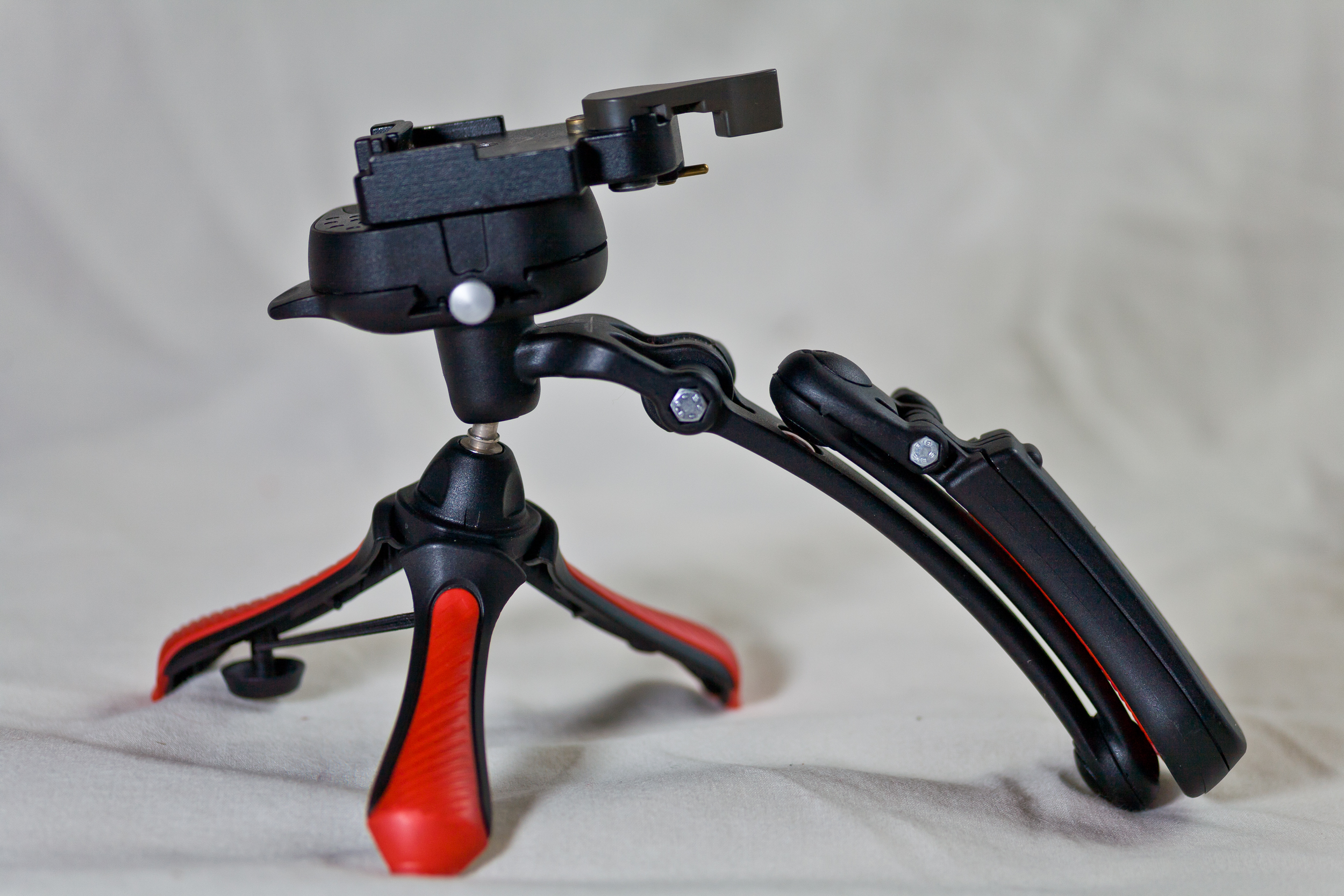
Well two weeks in Tasmania went faster than an Essex girl can drop her draws. Tasmania is photographic Nirvana and this wasn’t a management sanctioned photo expedition, but rather a holiday. This meant a tripod, full set of filters, an audio recorder and decent microphone were all left at home. All I took was the micro four thirds kit , with  circular polarizing filters and variable neutral density filters, and a tripod substitute in the form of the Manfrotto 585 Modosteady 3-in-1 Support Tripod. It’s a crap steadicam but works well as a light weight video rig and table top tripod. I’ve modified mine by adding a Manfrotto 323 Quick Release Plate Adapter so all my cameras can use a standard quick release mount.

Manfrotto 585 Modosteady 3-in-1 Support Tripod. It’s a video rig, table top tripod and steadicam all in one.


So with some guile and cunning I managed to maximise my photographic success rate by shooting a lot. I’m not us usually a spray and pray photographer, but this time the situation demanded it, but it was well thought out as I bracketed each shot by +/- one stop. This meant that for the landscapes and detail shots I could turn them into HDR images using Nik Software’s HDR Efex Pro 2 when I got back home. I also shot a lot of panoramas, these were also bracketed, handheld. I’ve found using the rear LCD screen of my Olympus Ep-2 with the grid overlay means I can get reasonably level shots with sufficient overlap so Photoshop’s photo merge function can do a good job of lining everything up. The photo below was done handheld and was a total of 6 exposures with the bracketing. I first produce the HDR segment and then shove it Photoshop for the panorama.


South Bruny Lighthouse situated on Cape Brunny overlooking Lighthouse Bay.


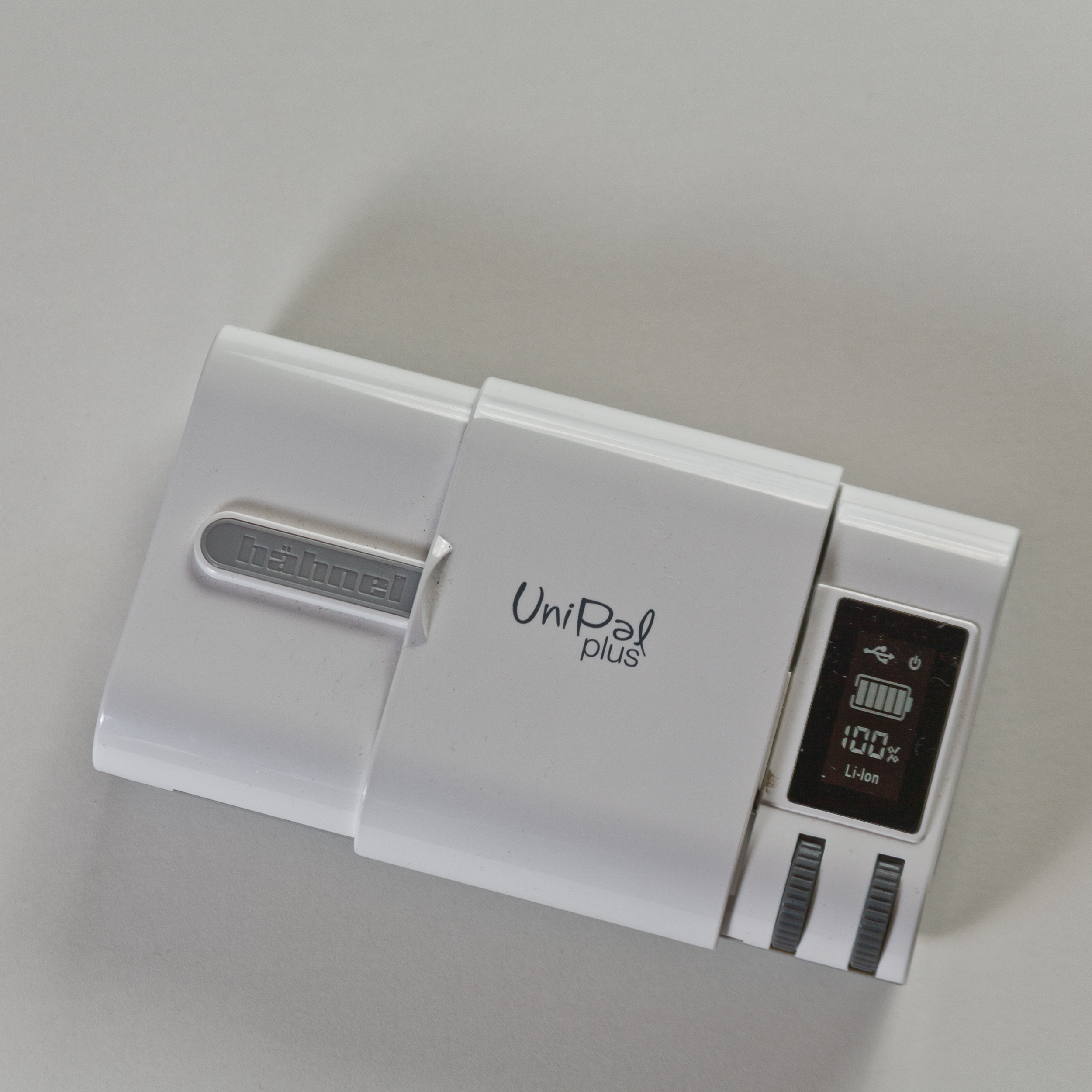
I also shot a lot of 20 second video clips with the intent of using them along with the stills in a multi media presentation and video eats memory cards like Lance Armstrong takes steroids. In all I used up 60 Gb worth of memory cards. Thankfully class 6 memory cards are really cheap now so I was well stocked up with them. The other aspect of shooting lots is battery consumption. The battery life of mirrorless cameras is pants. Olympus reckon 300 shots from a fully charged battery but I’ve never got anywhere near that so I took six batteries with me and a charger. The most I used in one day was 3 batteries and that was on a very cold day and I’d shot a lot of video. I also took a battery charger with me, not the stock supplied one but a Hahnel Unipal Plus. This charged my camera batteries, the AAs in my torch and shaver, my phone and iPad. It’s a brilliant bit of kit and any travelling photographer should really consider getting one.

Universal charger from Hahnel. Indispensible for travelling.


Over the next few weeks as I process the images I’ll post them on the blog and talk about the hows and the whys.