Augusta

Augusta is a small coastal town on the furthest southwest corner of Australia – next stop Antartica. It is home to roughly 1000 permanent residents and swells to over 5000 for the Christmas holidays.


When we first visited over thirty years ago we didn’t much care for the place. It looked boring, dreary, dull, and because we went in late winter had crappy weather. Thirty years later we’ve developed a new appreciation of the place. I suppose it seemed to my 28 year old self a bit like the English “Costa Geriatrica”,between Eastbourne and Worthing on the Sussex coast. When I went to Worthing in my late teens and early twenties It appeared that the average age of the population looked as if it was 109. It wasn’t helped by the fact that on the main road into the town was an enormous cemetery and crematorium.  But I digress and Augusta isn’t all about prostate problems and incontinence pads. Oh no! It is an amazing place because of it’s rich biodiversity and beautiful scenery. It has taken all these years for me to fully appreciate what it has to offer.


Cape Leeuwin Lighthouse by Paul Amyes on 500px.com
The Cape Leeuwin Lighthouse is continental Australia’s most south westerly point. The 39m tall lighthouse was built in 1895 and automated in 1982. As well as being an important navigational aid it also functiona as a weather station.

We’ve just got back from a wonderful break down there. It was fantastic to walk in the forest, along the coast and observe nature. Our first port of call so to speak was the Cape Leeuwin Lighthouse. Not because I have a thing about large phallus shaped buildings but because we wanted to see Rock Parrots (Neophema petrophila). I have tried to photograph them before at Denmark but not had much luck. The main reason is that their colouring means that they blend in perfectly with the grasses and sedges found on the coast. At the Cape Leeuwin Lighthouse the parrots often feed on the lawns surrounding the buildings. Well maintained cut lawn would mean less foliage for the parrots to hide in. I settled into place and while I waited an Australian Pippit bobbed around in the longer grass at the edge of the lawn. After a while five or six rock parrots landed and started to feed. I waited patiently and as luck would have they moved closer and closer to me. After a while I had this distinct impression that someone or something was behind me watching. I slowly stood up and turned around and there on the water tank behind me was a solitary rock parrot. I was so close I could have reached out and touch it. Amazing stuff! Thankfully he/she was happy to sit there while I grabbed a few photos.


“You’ll find the rock parrots over there!” Welcome Swallow, Hirundo neoxxena. Cape Leeuwin, Western Australia.


Waradjoolon by Paul Amyes on 500px.com
This Australian Pipit, Anthus australis, was the warm up act for the main star of the show. Cape Leeuwin, Western Australia.


Rock Parrot by Paul Amyes on 500px.com
Rock Parrot, Neophema petrophila. Cape Leeuwin, Western Australia.


Rock Parrot by Paul Amyes on 500px.com
“Whose a pretty boy?” Rock Parrot, Neophema petrophila. Cape Leeuwin, Western Australia.


Our next foray was to Hamelin Bay where we hoped to find Southern Emu-wrens  in the bush behind the dunes. Despite it hammering down with rain I did manage to find some, but taking a photo of them was another story. Those little buggers are fast and they don’t sit still for very long at all. All I got for my troubles was very wet and some photos of Silvereyes. We admitted defeat and retreated back to Augusta for an excellent fish and chip lunch.


Doolor by Paul Amyes on 500px.com
Silvereye, Zosterops lateralis. Hamelin Bay, Western Australia.


In-between looking for birds I also spent some time looking for orchids. It is amazing to go to a place you’ve visited several times before but still find new and unusual species It was also very nice to meet a couple from Queensland who drive over very year to see Western Australia’s orchids. That is dedication!


Pink Fairies Orchid by Paul Amyes on 500px.com
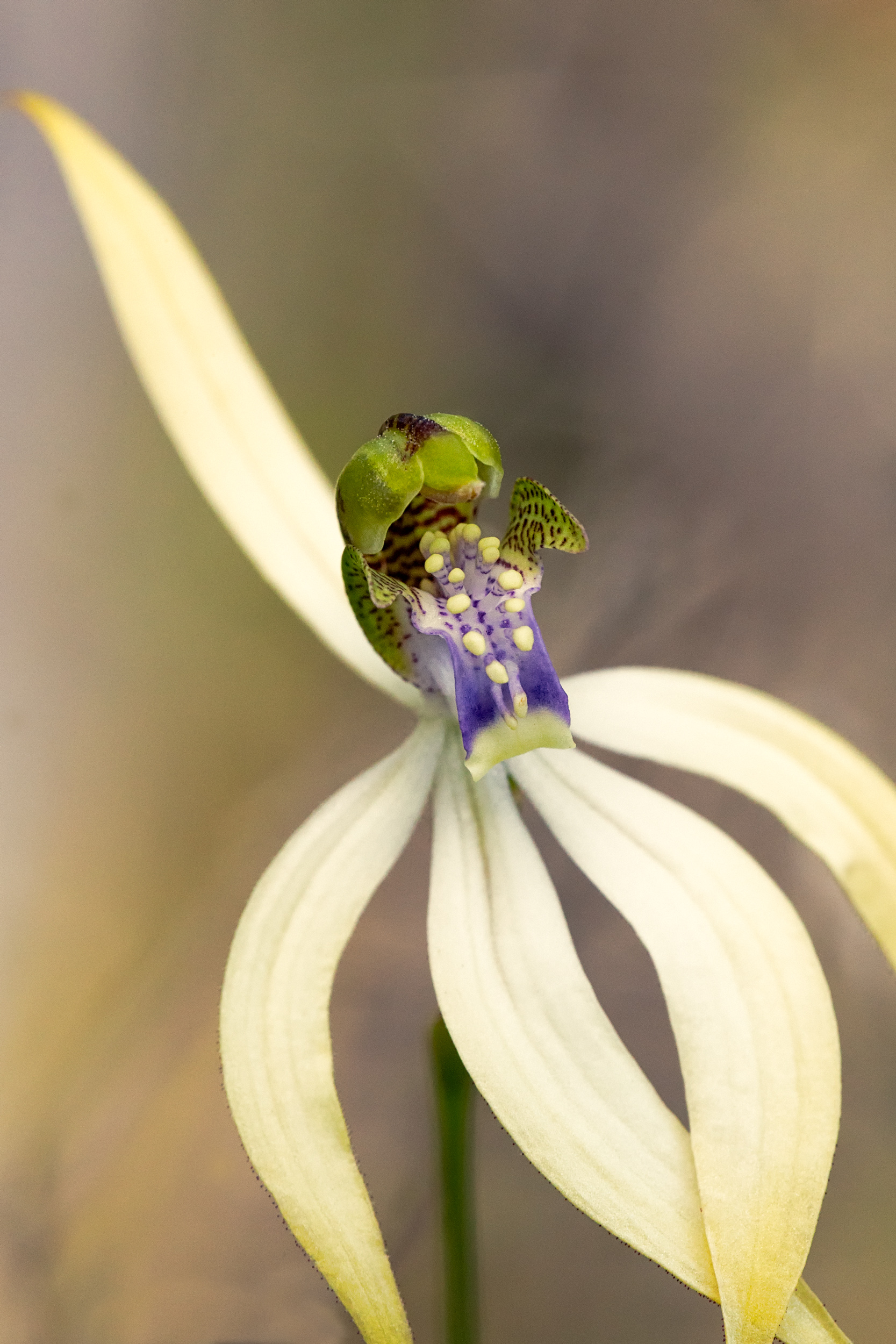
The albino form of the pink fairies orchid, caladenia latifolia. Jewel Cave, Deepdene, Western Australia.


Lodge's Spider Orchid by Paul Amyes on 500px.com
Lodge’s Spider Orchid, Caladenia lodgeana. Flat Rock, Augusta, Western Australia.


Funnel-tipped Spider Orchid by Paul Amyes on 500px.com
Funnel-tipped Spider Orchid, Caladenia infundibularis. Flat Rock, Augusta, Western Australia.


Augusta Bee Orchid by Paul Amyes on 500px.com
Augusta Bee Orchid, Diuris sp Augusta. Flat Rock, Augusta, Western Australia.


Dusborough Donkey Orchid by Paul Amyes on 500px.com
Dusborough Donkey Orchid, Diuris jonesii. Flat Rock, Augusta, Western Australia.


Rattle Beaks by Paul Amyes on 500px.com
Rattle Beak Orchid, Lyperanthus serratus. Flat Rock, Augusta, Western Australia.


Swamp Mignonette Orchid by Paul Amyes on 500px.com
Swamp Mignonette Orchid, Microtis atrata. Flat Rock, Augusta, Western Australia.


Common Mignonette Orchid by Paul Amyes on 500px.com
Common Mignonette Orchid, Microtis media subsp. media. Flat Rock, Augusta, Western Australia.


White Fairy Orchid by Paul Amyes on 500px.com
White Fairy Orchid, Caladenia marginata. Flat Rock, Augusta, Western Australia.


My last session photographing birds came entirely by accident. We were taking Frida, our wayward bull terrier, for her morning walk on the dog beach when we saw some small birds scurrying around among the grasses and washed up seaweed. We took her back to the car and I grabbed my camera. After a bit of a smelly crawl through piles of seaweed I was delighted to find some Red-capped Plovers and proceeded to lie there taking photos for nearly an hour.


Red-capped Plover by Paul Amyes on 500px.com
Red-capped plover, Charadrius ruficapillus. Augusta, Western Australia.


In many ways it was sad when it came time to leave. Mainly because we’d had a really good time but also with the realisation that the area is about to profoundly change. It seems that every bit of spare land is being turned into housing estates. Hundreds of project homes are being packed eve to eve on small blocks of land. Within a short while this will have a detrimental effect on the environment as forest and coastal heathland is cleared. What is sadder is that the housing isn’t needed. At the start of this article I said that only just over 1000 people live permanently in Augusta and according to Shire of Augusta Margaret River 44% of the buildings are unoccupied. We have watched the suburban sprawl spread in the Cape to Cape region starting at Dunsborough and slowly spreading to Margaret River and now inexorably down to Augusta. Many years ago a friend who worked for what has become Landgate which is the Western Australian’s land management department in charge of surveying, titles and planning. He said he’d seen plans to develop the Cape to Cape region to such an extent that the only forest left would be a thin fringe along the major roads. Then I didn’t want to believe him, but now I can see it is happening. Hopefully it won’t take thirty years for other people to realise what is so special about the region and try and stop this senseless development.

Waltzing Mount Matilda


The plan was simple walk the 7.9km Mt Matilda Walk Trail is located in the Wongan Hills Nature Reserve which is 12 km from Wongan Hill’s townsite. Beloved Significant Other (BSO) had a long cherished dream of doing the walk and with nothing on the agenda we set out to fulfil it. Now at this stage I’ll be completely honest and say my intentions were not only of the walking kind. I was hoping to slope off and get some orchid photography in at another nearby reserve. The BSO doesn’t like hanging about while I take photos – she would sooner watch paint dry.


Helen at the Lake Hinds Lookout on Mount Matilda.

How things turned out was another matter. As Rabbie Burns the Scottish poet wrote in his 1785 poem To a Mouse “The best-laid schemes o’ mice an’ men Gang aft agley”  or for those non Scots language speakers “The best-laid schemes of mice and men Go oft awry”.


Looking down from the Lake Hinds Lookout at the patterns in the neighbouring farmland.


Paul celebrates reaching the summit of Mount Matilda.


The summit of Mount Matilda. The sign marking the summit has seen better days. Lake Hinds can be seen in the distance.

Well we did climb to the summit of Mount Matilda, which at only at 411m isn’t really saying much, but a combination of a dodgy back, grumbling knees and a long drive meant that we didn’t do the full walk. We decided to walk out to the summit and then back track to the turn off for the 4.8 km Wildflower Loop and I’m glad we did because we saw something really special – something we’d only waited 36 years to see. There on the side of the track was a Thorny Devil. We could scarcely believe it. Now Australia is full of weird animals – egg laying mammals, strange birds, bizarre looking insects, but the Thorny Devil is one of the strangest looking I’ve ever seen. Its defence seems to based on the idea that you’ll not want to harm it because it’s covered on big thorns as it made no attempt to move away from us. 

Thorny Devil, Moloch horridus. Mount Matilda, Western Australia.


Weird eh? Thorny Devil, Moloch horridus. Mount Matilda, Western Australia.

On completion of the walk we had a nice picnic lunch at the shelter at the start of the walk trail while watching a bunch of blokes head to run the trail. I didn’t slope off to do any orchid photography as I couldn’t be fagged. The walk had been enough.

Helen standing next to a Spreading Coneflower.


Spreading Coneflower(Isopogon divergens) is found in Wongan Hills.


Helen walking through a stretch of trail called “A Country Garden” on Mt Matilda.


Pink Pokers (Grevillea petrophiloides) found all over Mount Matilda.

As I sit and write this SBO has announced we’ll have to go back and do the whole walk.

Off Course

Helen watching birds and basking in the winter sun at the York Golf Club.


This autumn and winter we’ve been spending quite a bit of time at the local golf course – not playing golf at all but walking in the woods at the back of the course. It is a fantastic piece of Wandoo forest with rocky out crops and steep gullies cut by water erosion.  In fact that’s probably why it still exists as the land wouldn’t be fit for any commercial purpose. For us it is a wonderful place where we can walk the dog and view native flora and fauna. The other great thing is other than seeing the occasional golfer on the fairways as we drive in there is nobody around.


Frida looking in holes at the York Golf Course.


Frida our wayward and reluctant Bull Terrier loves it. There are rocky outcrops to stand on and strike a heroic pose, holes to look down and lots and lots of interesting things to smell. It is the one place where she enthusiastically jumps out of the car rather than having to be enticed out with bribes.


Me I go there to photograph flowers and animals and just generally get away from everything. I find it so peaceful and relaxing. Here are a selection of photos I’ve taken this winter.


Djakal-ngakal by Paul Amyes on 500px.com
Djakal-ngakal or pink and grey galah enjoying the last warmth of the winter’s sun as it goes down.


Golden Orb Weaving Spider by Paul Amyes on 500px.com

The early morning sun highlights the golden web of the Golden Orb Weaving Spider.


Green-veined Shell Orchid by Paul Amyes on 500px.com

Green-veined Shell Orchid, Pterostylis scabra, growing just off the fairway in the rough.


Yongka by Paul Amyes on 500px.com

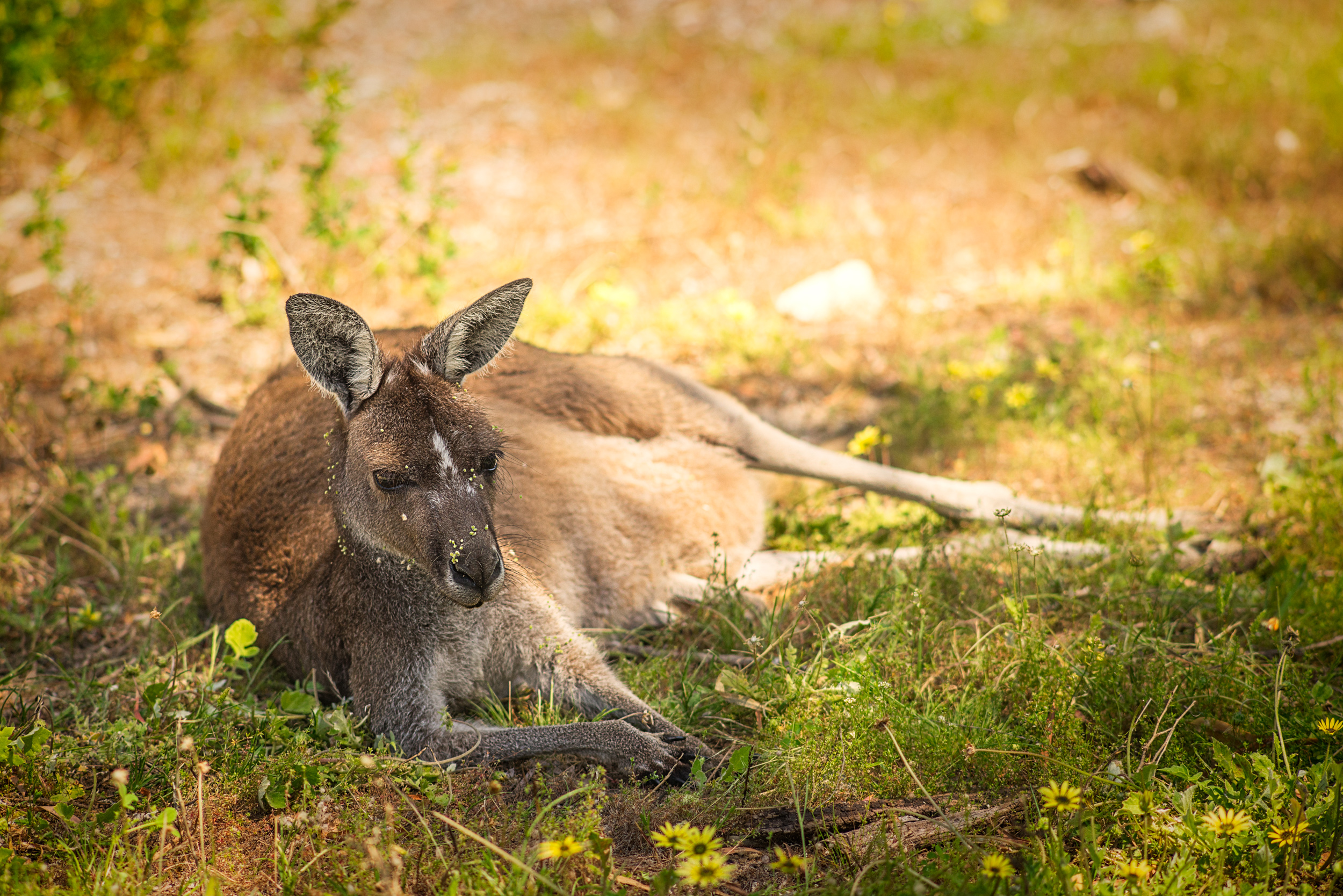
You never know who you’ll meet in the rough. Female western grey kangaroo aka sooty kangaroo (Macropus fuliginosus).


Fringed Mantis Orchid by Paul Amyes on 500px.com

Fringed Mantis Orchid, or Green Spider Orchid, (Caladenia falcata).


Cowslip Orchid by Paul Amyes on 500px.com

Cowslip Orchid, Caladenia flava subs. flava.


Sugar Orchid by Paul Amyes on 500px.com

Hundreds of Sugar Orchids, Ericksonella saccharata, can be seen growing in the bark and leaf litter beneath the wandoo trees.


Winter Donkey Orchid by Paul Amyes on 500px.com

Winter donkey orchid, Diuris brumalis.


Chapman's Spider Orchid by Paul Amyes on 500px.com

Chapman’s Spider Orchid, Caladenia chapmanii.


Yongka by Paul Amyes on 500px.com

A quick bite to eat.


Fridas enjoying a morning run in the bush at the York Golf Club.

New Neighbours

We’ve had a new family move in and they have been delighting us with their behaviour. The family in question are Mistletoebirds. There is a male, a female both mature adults and at least one juvenile male. They are a very striking looking bird. When you first see the male you could be mistaken for thinking it is a Robbin, but they are a distinct species that have evolved a symbiotic relationship with mistletoe – hence the name. The birds only eat the fruit of the mistletoe and they spread the seeds to other trees. We don’t have any mistletoe in our garden but we do put out water and that is what attracts them.


Minnijit by Paul Amyes on 500px.com

Minnijit or Mistletoebird, Dicaeum hirundinaceum. This is an adult male. York, Western Australia.


Minnijit by Paul Amyes on 500px.com

Female adult Mistletoebird, Dicaeum hirundinaceum. York, Western Australia.


Minnijit by Paul Amyes on 500px.com

Juvenile male Mistletoebird, Dicaeum hirundinaceum. York, Western Australia.


Now most people associate mistletoe being a northern hemisphere thing where you end up kissing people under bunches of it at Christmas, but, Australia is the land of mistletoe  and has over 90 species. There is a belief that mistletoe kills the host tree, but that is a bit like saying fleas kill dogs. The tree only suffers harm if there is something else wrong with it – usually isolated in a paddock and suffering from heat stress. These beliefs persist among farmers who see the only solution as hunting mistletoebirds and so they are frequently shot. One farmer in Australia in the 1930s claimed to have killed over 1200 mistletoebirds in a 6-year period. Unfortunately this has the exact opposite effect for which it is intended as the presence of the bird and the plant in the eucalyptus forest encourages a rich biodiversity and in a recent study in southern Australia, 217 species of Australian arboreal birds were reported nesting in mistletoe, including the mistletoebird.

We’re happy that the birds come to our garden and hope that they remain a feature.

Hyden – the return


I mentioned a couple of weeks ago we’d gone to Hyden. We’ve been plenty of times before and I have written about those visits here, here and here. Wave Rock doesn’t hold much interest in itself – its just a big rock shaped like a wave. What is more interesting is the nature around the rock. When the winter rains come an incredible amount of water runs off the rock and this means there is a lot of vegetation that has become home to animals around the base. Not far from the rock and the vegetation gives out and you can see a salt plain with Lake Magic. This too is great place for observing animals and seeing wildflowers.

Unfortunately we’d had our beautiful weather on the drive down and the rain really set in – so much so that my walk along the base of Wave Rock, out to Lake Magic and then back via Wave Rock Airport and the Wildlife Park was in danger of becoming an aquatic walk. Thankfully I was dressed for the occasion and swathed in Gore Tex. My Olympus EM 1 mk ii is very well sealed against the elements as are the lenses. Despite my careful preparation the subject matter – orchids and birds – didn’t want to oblige. Regardless of the weather that the walk was really enjoyable.


Hairy Stemmed Snail Orchid by Paul Amyes on 500px.com

Hairy stemmed snail orchid, Pterostylis sp. ‘hairy’. Hyden, Western Australia.


Dark Banded Greenhood by Paul Amyes on 500px.com

Dark banded greenhood, Pterostylis sanguinea. Hyden, Western Australia.


Blue Fairy Orchid by Paul Amyes on 500px.com

Blue beard or blue fairy orchid (Pheladenia deformis). Hyden, Western Australia.


Hairy Stemmed Snail Orchid by Paul Amyes on 500px.com

Hairy stemmed snail orchid, Pterostylis sp. ‘hairy’. Hyden, Western Australia.


Koolbort by Paul Amyes on 500px.com

Singing Honeyeater, Gavicalis virescens. Hyden, Western Australia.


Creepy Crawley

I’m not talking about Downton Abbey or the town in England, I’m talking about spiders, bugs, butterflies and all manner of little wriggly things.


Cabbage White Butterfly (Pieris rapae) – the scourge of gardeners.


A few weeks ago I wrote about documenting the wildlife in our garden and that I was widening the net, as it were, and including all animals including invertebrates. Well after a few weeks of trying this I’ve come up with some observations.


A very small jumping spider on a wandoo leaf. This is the only photo I got as it kept jumping all over the place.


Firstly, as a 58 year old man with a well dodgy back the time time taken between observing the little critter and getting down onto the ground and in a position to photograph it means that it has left the vicinity. Some of these creatures can move incredibly fast when they want to and I can’t. I knew that grasshoppers and their ilk can be very quick, but I wasn’t prepared for the speed of the jumping spiders – a blink of the eye and they are just out of there.


Christmas or jewelled spider. Not known for their speed of movement but the wind catches their webs and so focusing is difficult. Getting in a position to photograph them in a way that shows off their shape and colouring requires a degree of the flexibility that I am lacking.


Secondly, you have to able to contort yourself into some pretty strange positions to get down and photograph them. Now I thought that I’d got this one covered because I do this when photographing orchids, but combine this with being quick (see point one), being stealthy so as not to frighten them and having a spine with flexibility of an RSJ it makes each session like some weird kind of yoga with a camera.


Blue Banded Bee, Amegilla cingulata. York, Western Australia.


Thirdly, a lot of these critters are small. If you look at the photo of the jumping spider resting on a Wandoo leaf, it was less than 5mm in diameter. So you need good eyesight to spot things that small.  I’ve just had my eyes tested and they’re fine for distance it’s reading and close up stuff that’s the problem. You can’t rely on autofocus with macro photography and  I’m here to say that manually focusing on a small critter that keeps jumping around while having dodgy eyesight is not easy. As my dear old mum used to say “It’s enough to make saint swear!”.


This locust very obligingly sat still long enough for me to take his photo.


Lastly, the benefit of photographing creepy crawlies is that you don’t need a honking great telephoto lens that resembles a small artillery piece. Macro lenses are relatively lightweight and my back is thankful for that.


Blue Skimmer dragonfly (Orthetrum caledonicum). Although they move like miniature fighter jets when flying dragon flies will take frequent breathers on a twig or stalk, often preferring to use the same one repeatedly which makes photography a lot easier.

Just Hanging Around

White-cheeked honeyeater, Phylidonyris niger. York, Western Australia.


Well we’re at the start of another year. I’d like to think that it’s going to be better than the last two, but that does not seem likely. In another four weeks our borders will open and COVID will come flooding in. Most years we like to plan projects and trips, but this we haven’t as so many things get cancelled due to COVID. My partner and I have decided that the priorities for this next year will be to get the booster shot – not easy in rural Western Australia – and to hole up at home for the duration. Anything that we do undertake will be either based at home or in the locality of York. Last year I started documenting the birds that come to our garden. This next year I’m casting the net wider and am going to include all animals. In fact I’ve already started so here are few photos of our visitors.


A less than graceful landing on the fence by a juvenile Zebra Finch (Taeniopygia guttata). York, Western Australia.


Yellow paper wasp, Polistes dominulus. York, Western Australia.


Feral honeybee (Apis mellifera) feeding on sap from a Brazillian Peppercorn tree (Schinus molle). York, Western Australia.


Blue ringtail damselfly, Austrolestes annulosus. York, Western Australia.


Gum tree Shield Bug (Poecilometis spenceri) aka stink bug. York, Western Australia.


Crusader bug (Mictis profana) instar nymph. York Western Australia.

Is Bigger Better?

A visual representation of the differences in sensor size.

Since 2011 I have been primarily a micro four thirds (m43) shooter supplemented by occasional full frame usage. Until about 18 months ago I was very happy with my choice. I accepted that the benefit of a lighter more portable camera system would come at the cost of reduced megapixel count, reduced dynamic range, and high ISO performance that was less than stellar. But now I have this desire to return as it were to the full frame fold. The reason why is that I sell prints and I felt that if I had a camera with better dynamic range  and more megapixels then I would generate more sales. This belief was what was really behind my recent dalliance with the 42Mp Sony A7r ii.

Canon EOS 550D with EF75-300mm f/4-5.6 IS USM lens. Exposure: 1/100, f8 at ISO 400.


Olympus EM 1 mk ii with Panasonic Leica 100-400mm lens.


Sony A7r with Olympus OM Zuiko 135mm f2.8 lens. Exposure: 1/1000 sec, f4, at ISO 200.


Canon EOS 6d with Canon EF100mm f/2.8L Macro IS USM lens. Exposure: 1/100 s at f/11.0 at ISO 1600.

The other day I started going through my statement for print sales for this year and surprisingly I’d had a very good year which buoyed me up considerably. When I started looking closely at what images had sold and what they were taken with I made a startling discovery. Full frame made up 26%, APSC came in at 26% and m43 took 48%. In terms of Megapixels:

  • 36 Mp + 6.66%
  • 20 Mp 33.33%
  • 18 Mp 26.66%
  • 16 Mp 6.66%
  • 12 Mp 13.33%

Intrigued I decided to look at print sales going back to 2004 when I went digital and the results were as follows:-

  • Full frame 34%
  • APSC 14%
  • m43 37.5 %
  • Compact cameras 5.5%
  • Mobile phone 1.5%
  • Scanned film 7.5%

My two best selling prints of all time were taken with a Panasonic Lumix FX-01 which was introduced all the way back in 2004 had a sensor that measured 6.4mm x 4.8mm and had a whopping 6.4 Mp of resolution. It also suffered badly from noise at anything beyond 100 ISO and had a very limited dynamic range.


Panasonic Lumix FX-01


Panasonic FX-01


Dropped from use. The Panasonic FX-01 was a 6Mp camera introduced in 2004.


Moving beyond prints sales to look at PR and editorial work I’ve never once had a complaint about image quality or size. So do all these buyers of my images know something that I don’t? Well I think that they’re not looking at the images as photographers, they are looking at the subject and how it makes them feel. When photographers look at images they see all the technical deficiencies and then think they need better cameras and lenses. When we look at new gear we always see the promise of more resolution, more frames per second, more dynamic range. The manufacturers know that we’re easily seduced by bigger numbers and they play to our insecurities.

So in the light of this do I need a bigger and better camera? Need – no. Want – yes. But needs and wants are two different things. What I’ve got is perfectly adequate and so perhaps the answer to generating more sales is, therefore, taking more pictures with appealing content.