Alone…

…most definitely not!
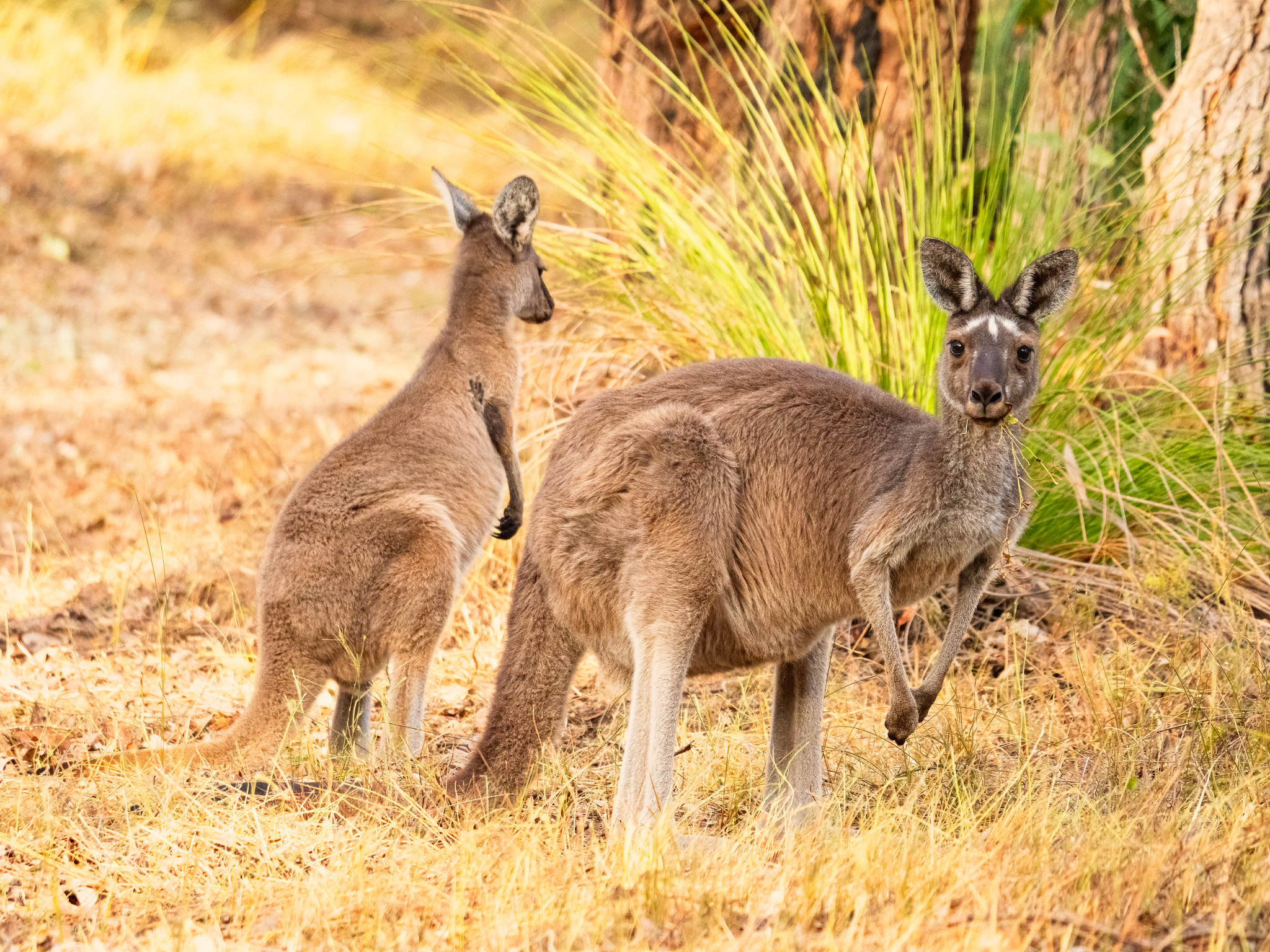


Yongka by Paul Amyes on 500px.com
The girls stop grazing to welcome me. Yongka or Western Grey Kangaroos (Macropus fuliginosus) at Lake Leschenaultia, Western Australia.


Not having had kids I loose track of things like school holidays so when I arrived at Lake Leschenaultia at 6:30 am the other day I was surprised with how many kids were playing on the foreshore at the top end of the lake. It was only as I passed the packed camping area I realised we must still be in the Easter holidays. The other thing that caught me off guard was the water level. I’ve never seen it so low – you could walk out in the reed beds. The water birds were staying in what was left of the water out in the middle and any attempt to approach them meant that you were quickly up to your knees in black sticky smelly mud.Not what I had gone for and I was torn between heading back home or heading down to the forested area at the far end of the lake in the hope that it would be quite and I’d have a chance of seeing some wildlife. I decided to stay and try and make the most of being there – it was after all a beautiful morning. The sun was  peaking over the tree tops and gave the forest a nice warm glow and it was the perfect temperature for a walk around the lake. As I walked down the path along the lakeside I met a couple Kangaroos who looked equally nonplussed  at the hoard of screaming children. We looked at each other for a few minutes and they got back to the serious business of grazing.
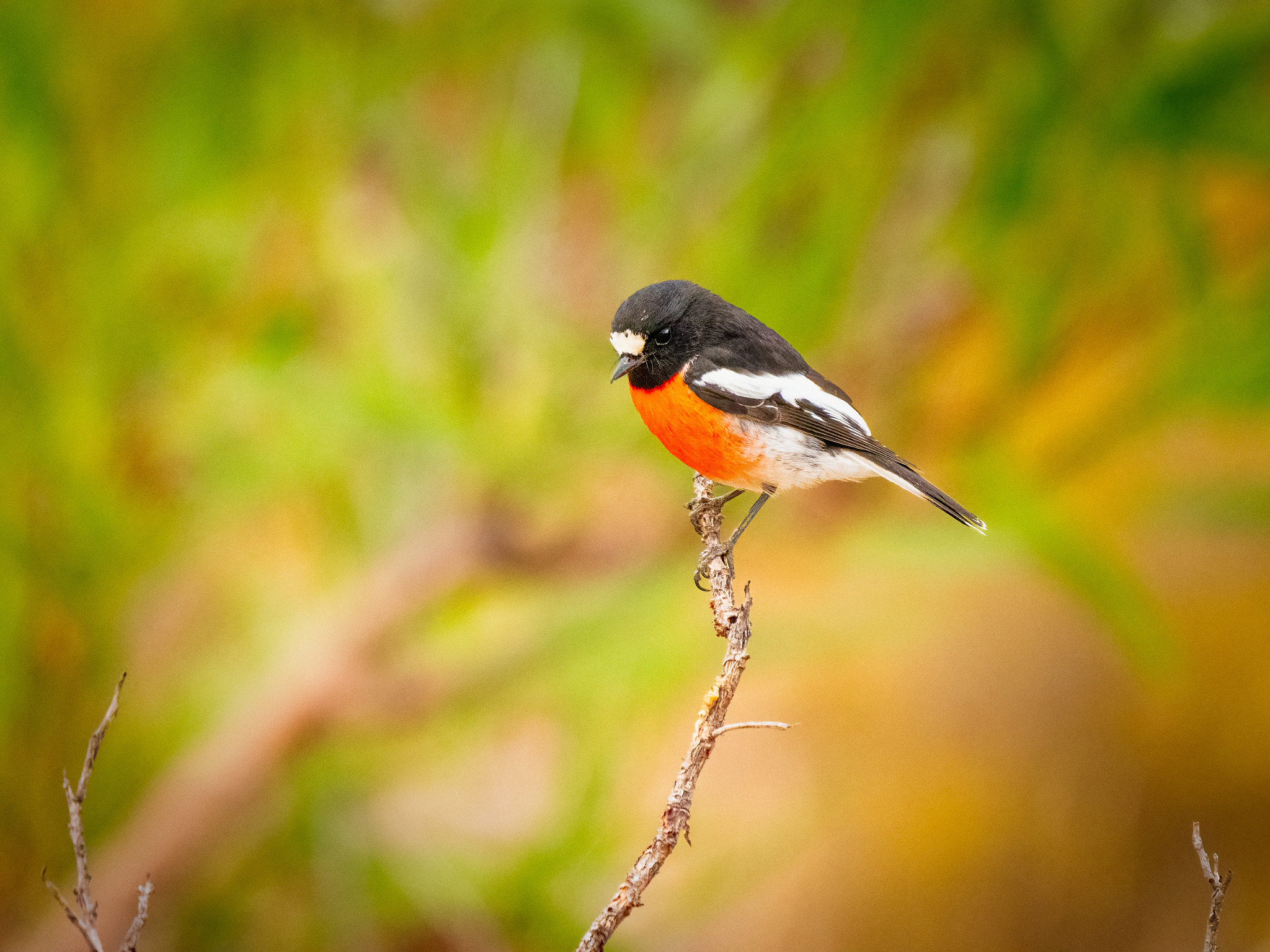
 

Dermokalitj by Paul Amyes on 500px.com
Dermokalitj or Scarlet Robin (Petroica boodang). Lake Leschenaultia, Western Australia.


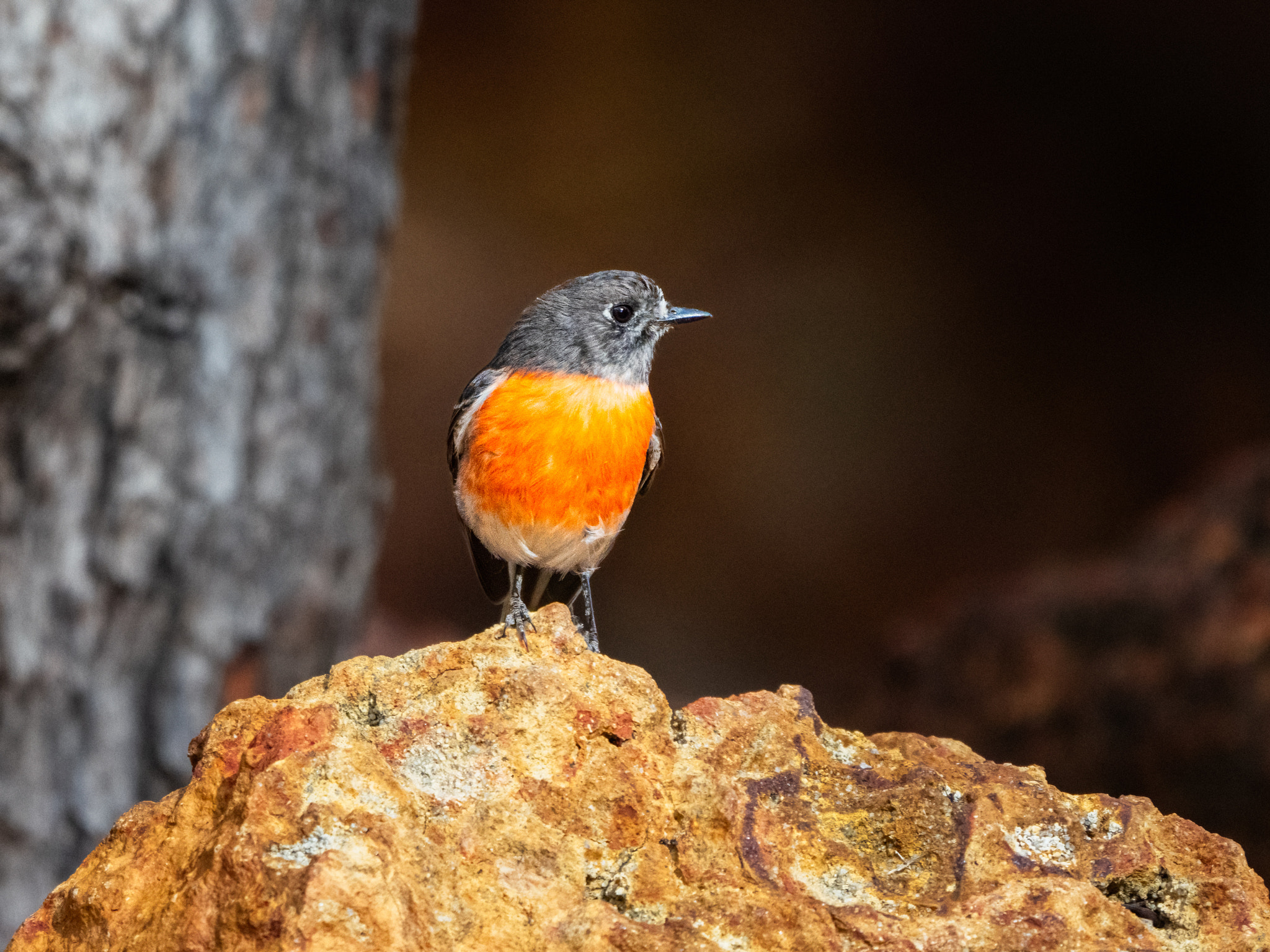
Dermokalitj by Paul Amyes on 500px.com
Dermokalitj or Scarlet Robin (Petroica boodang). Lake Leschenaultia, Western Australia.


Strolling down to the boundary fence I was happy to note that the air was still and there were loads of midges and mosquitoes flying around. Passerine birds follow the clouds of insects through the forest and feed on them so this meant I had a good chance of photographing robins, wrens, tree creepers, pardalotes and thornbills. I wasn’t disappointed a couple of male Scarlet Robins (Petroica boodang) stopped what they were doing to have a good look at me. The females stayed in the thicker bush eating. There were heaps of Splendid Fairy-wrens (Malarus splendens) dancing about in the understory and on the forest floor. They look like mechanical toys the way they move about with sudden jerky movements. That makes following them through the viewfinder of a camera with a long lens very tricky, but, if you’re quiet and still they will come quite close to you – which makes photographing them a bit easier. The males had shed their brilliant blue plumage that is characteristic of the mating season and were in their drab grey colouring with bright blue tails. Like this they are virtually indistinguishable from the females with the only difference being that they have a dark grey beak while the females have an orange one. If wrens are tricky to photograph then Western Thornbills (Acanthiza inornata) can make you weep with frustration. No bigger than 10cm they bounce erratically around on the forest floor and in the undergrowth with considerable speed rarely pausing. They don’t have the tolerance to be near people which often means when you do get one to sit still long enough to be photographed they are a tiny spec in the frame. Walking back to the dam wall there is a terraced picnic area that enabled me to get at their eye level and conceal me at the same time. I managed to get off a few frames as the birds worked their way quickly through the grass.
 

Djorrdjilya by Paul Amyes on 500px.com
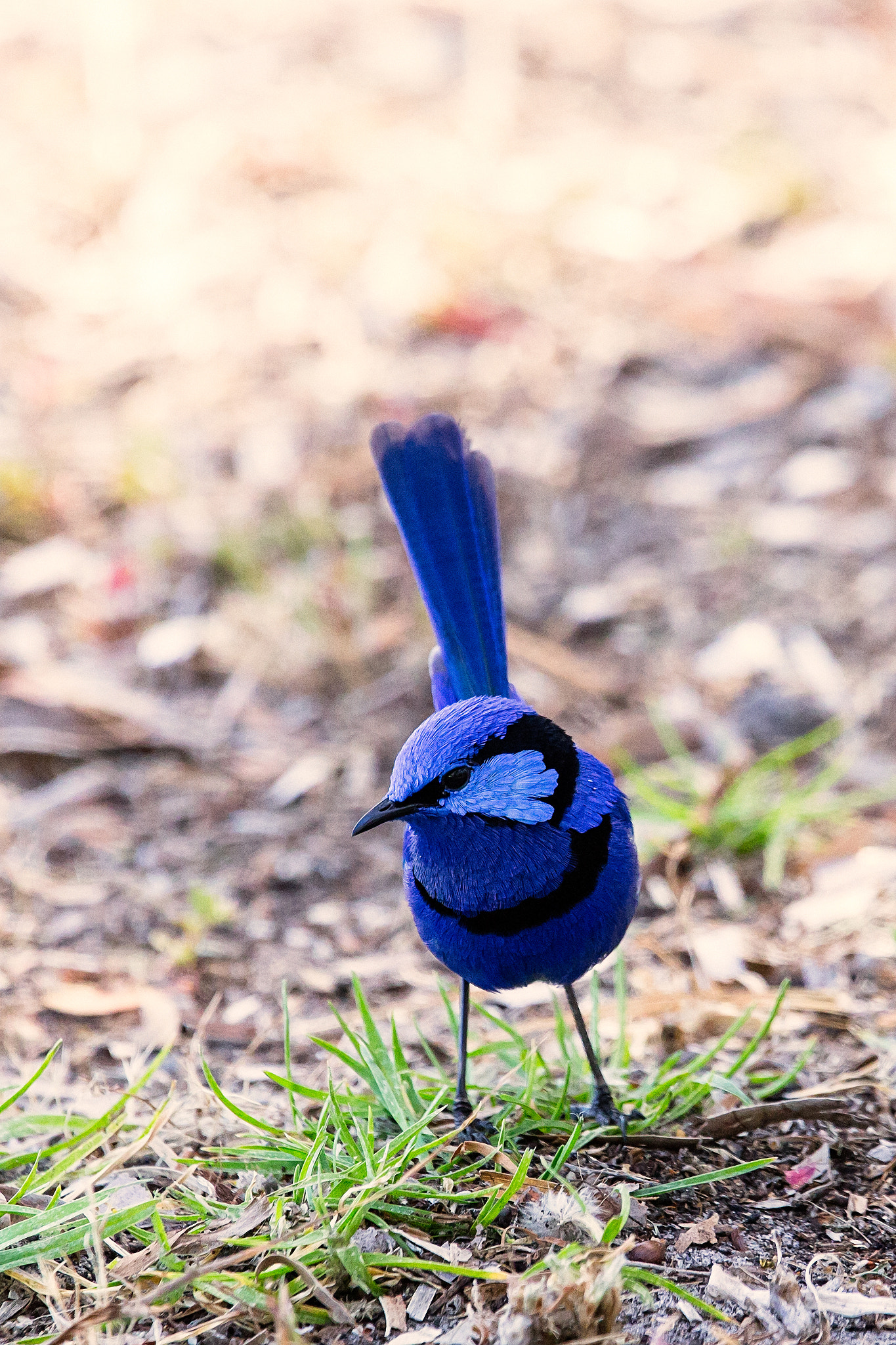
A male splendid fairy-wren (Malurus splendens) in full breeding season plumage. Cheyne’s Beach, Western Australia.


Djer-djer by Paul Amyes on 500px.com
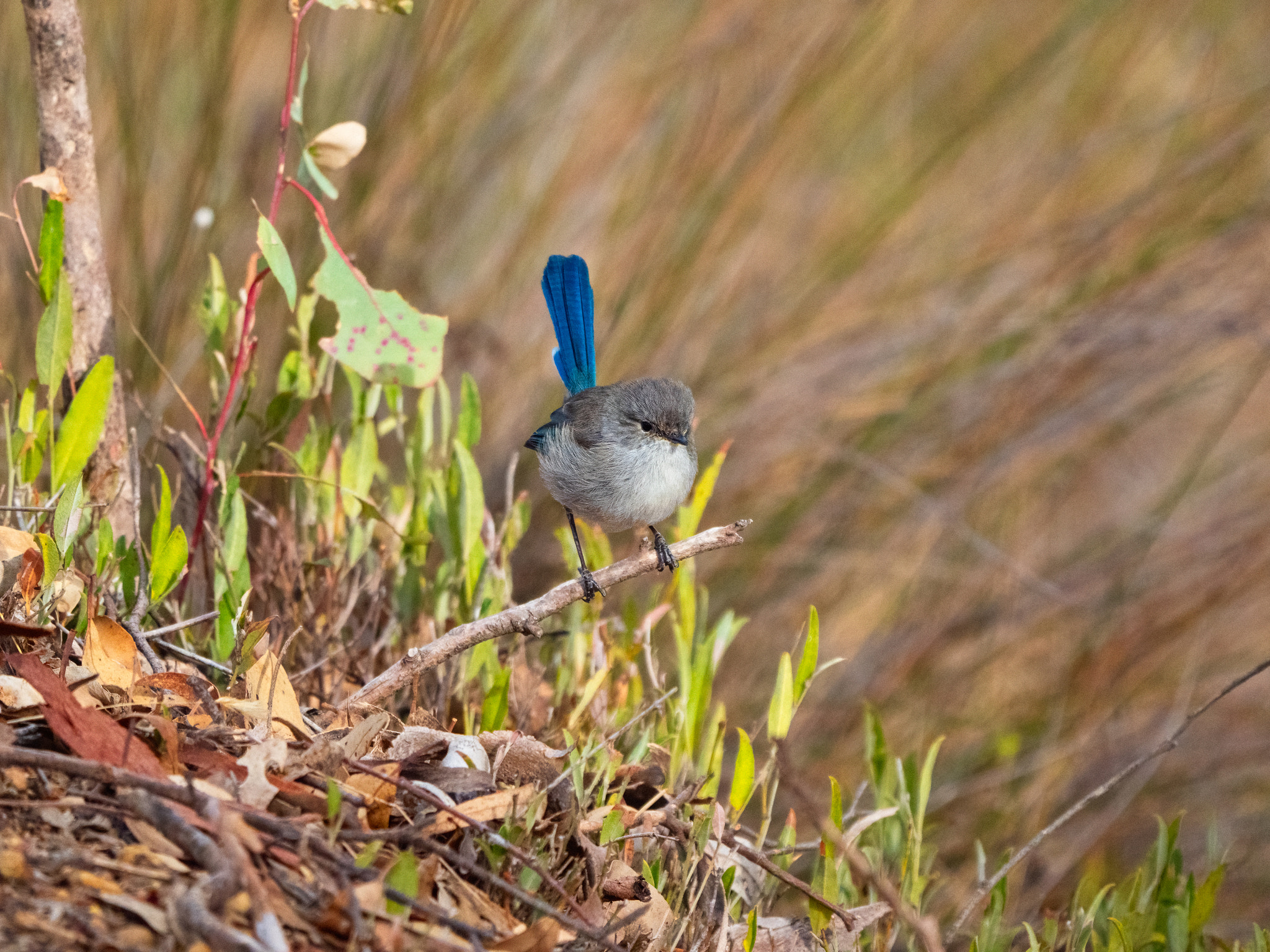
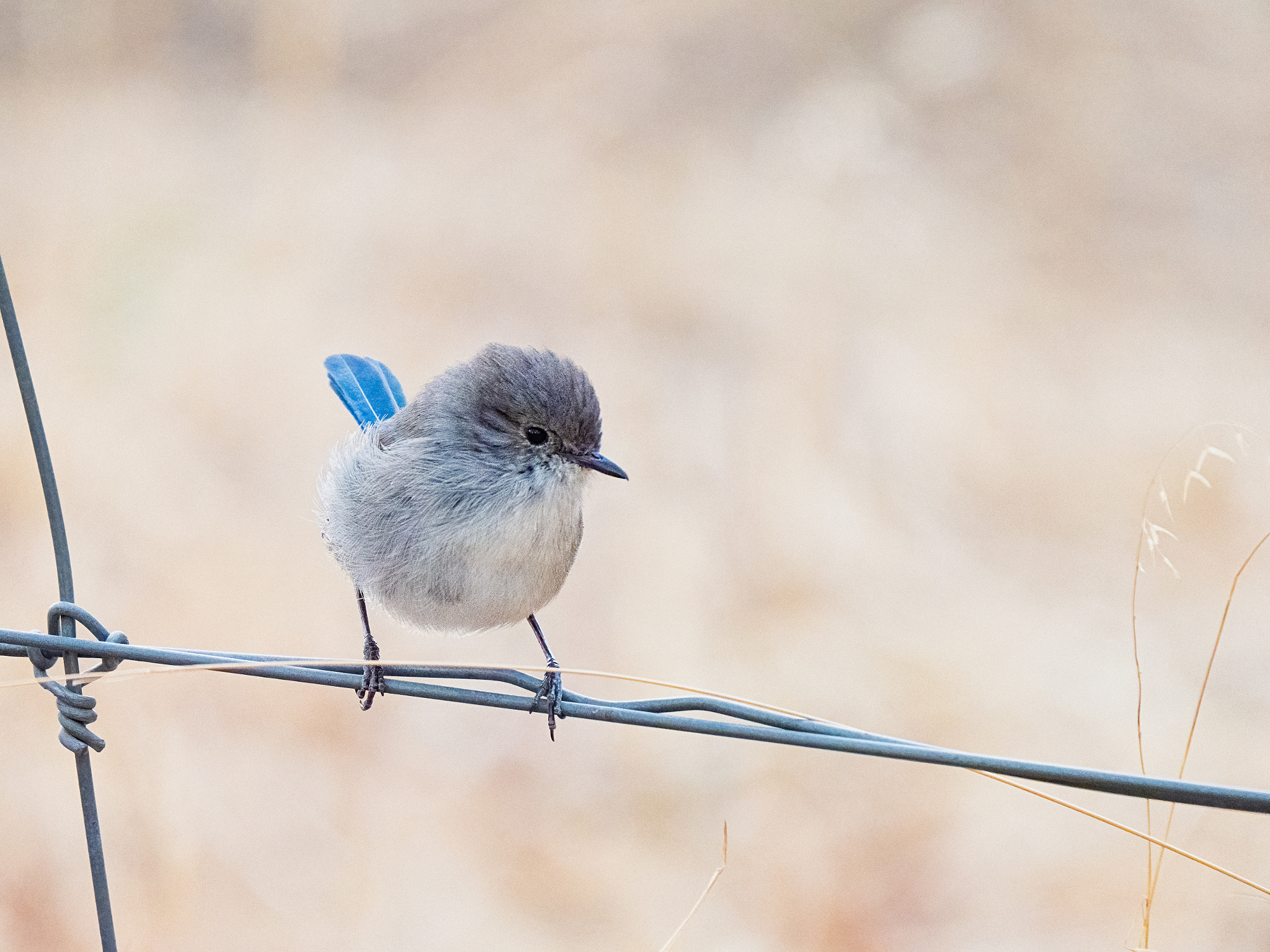
Male Djer-djer or Splendid Fairy-wren (Malarus splendens subsp splendens) outside the breeding season. Lake Leschenaultia, Western Australia.


Djer-djer by Paul Amyes on 500px.com
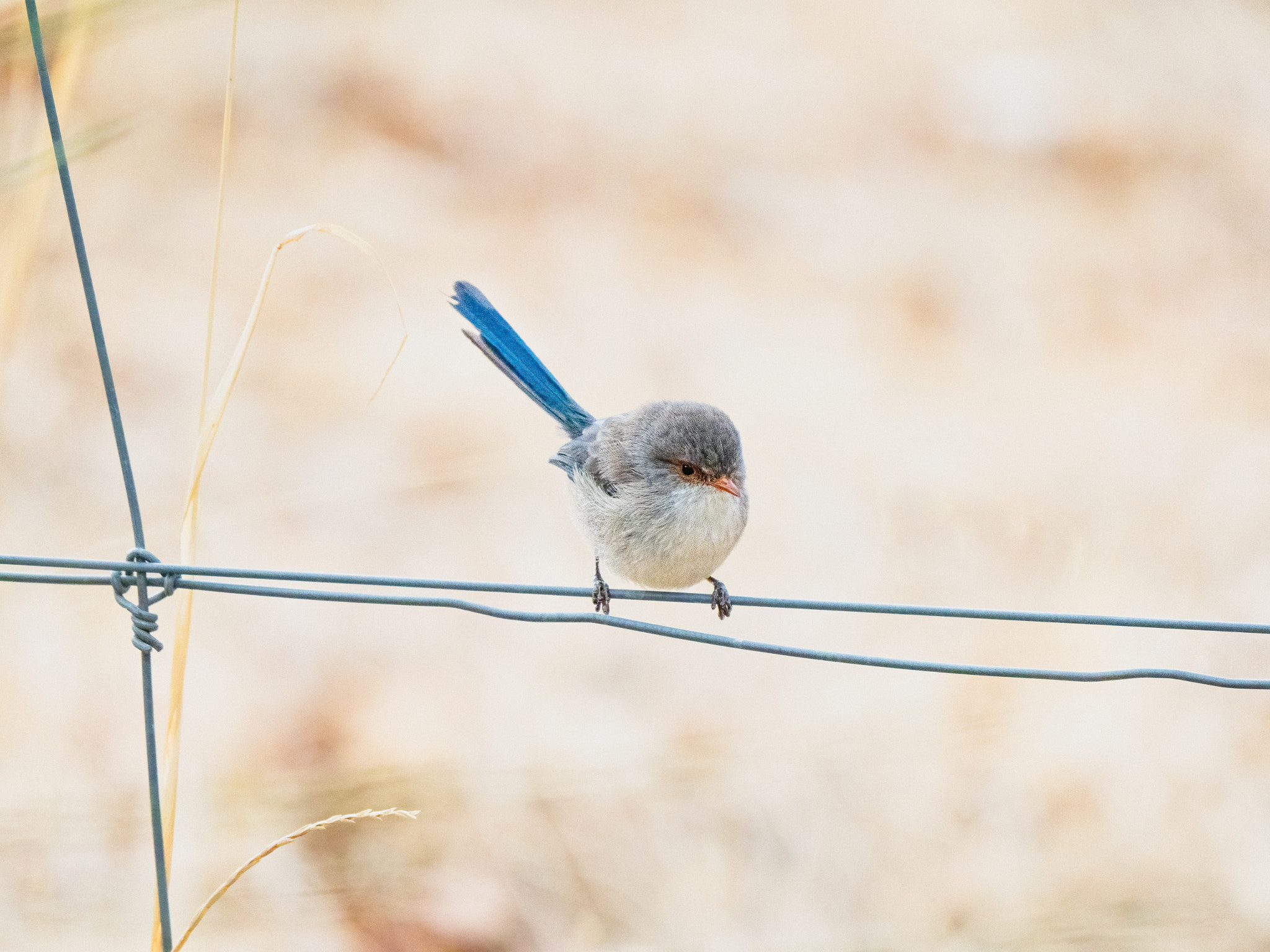
Female Djer-djer or Splendid Fairy-wren (Malarus splendens subsp splendens). Lake Leschenaultia, Western Australia.


Djer-djer by Paul Amyes on 500px.com
Male Djer-djer or Splendid Fairy-wren (Malarus splendens subsp splendens) in a more picturesque setting.


Djobool-djobool by Paul Amyes on 500px.com
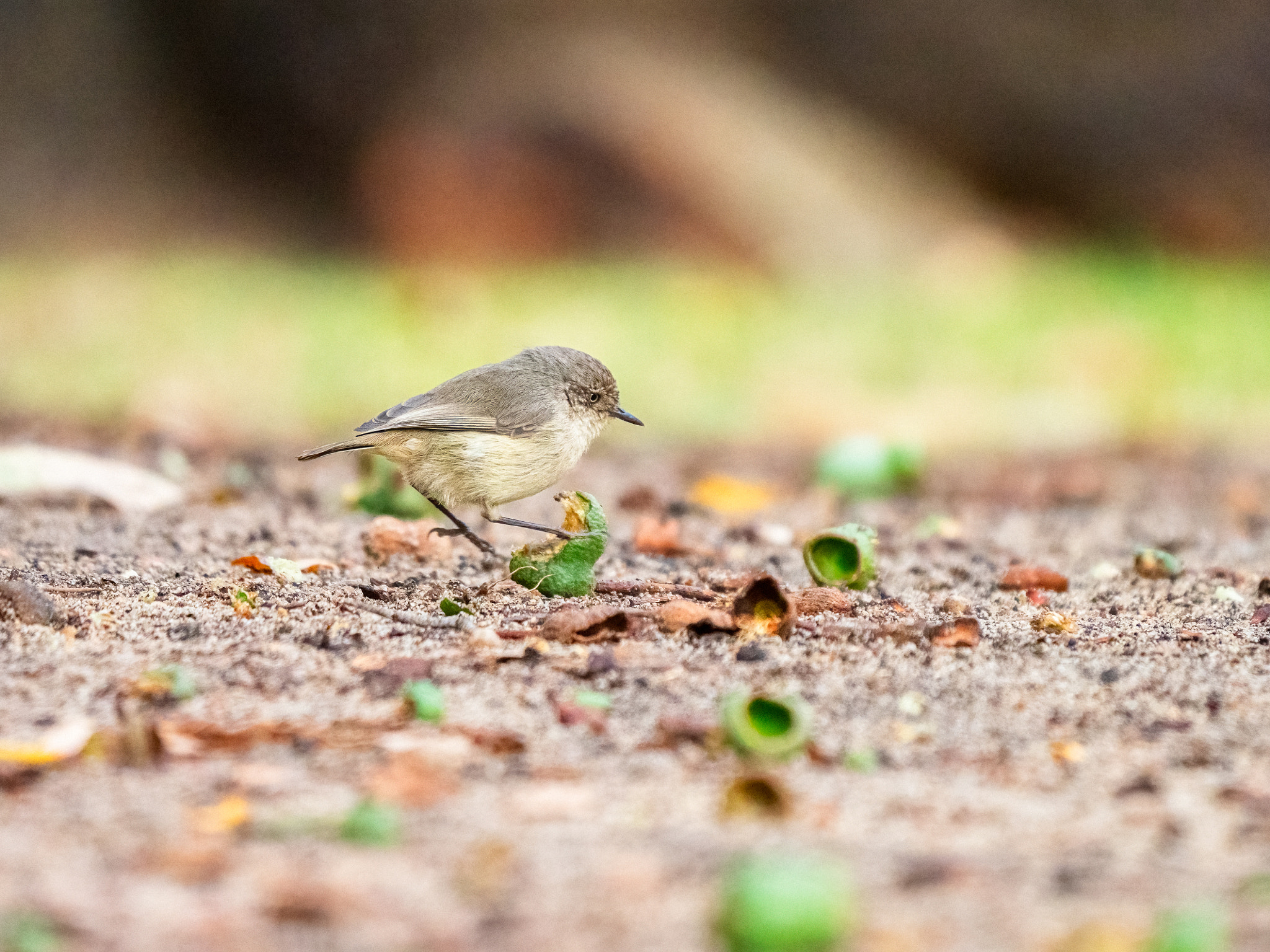
The tiny hyper-kinetic Djobool-djobool or Western Thornbill (Acanthiza inoranta) at Lake Leschenaultia, Western Australia.


I was glad I stayed and persevered. Yes the conditions weren’t conducive to photographing the species I wanted, but being flexible and altering the plan made for a very enjoyable morning out.
 

Kaa-kaa by Paul Amyes on 500px.com

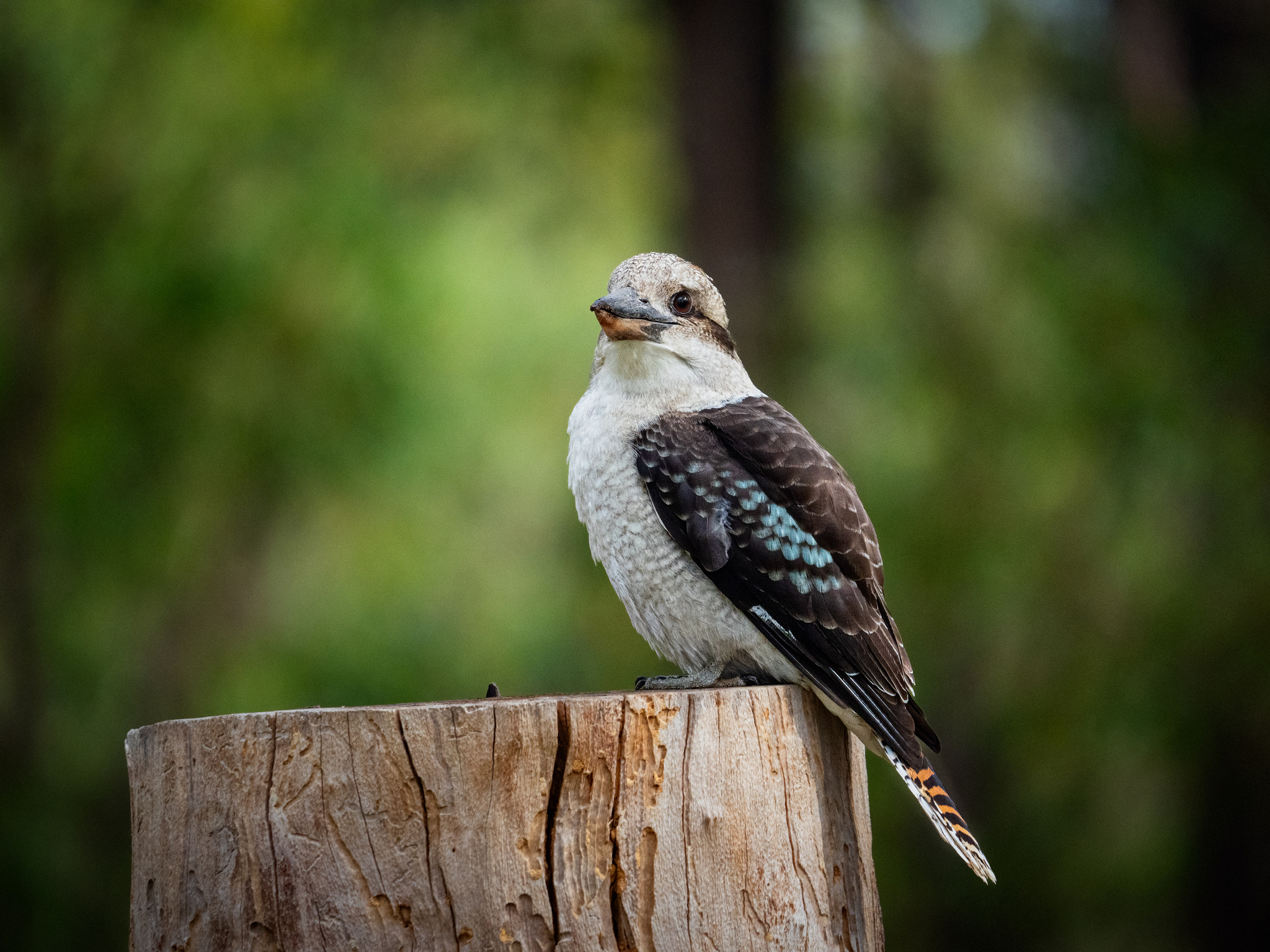
This Kaa-kaa or Laughing Kookaburra (Dacelo novaeguineae) saw me off as I left Lake Leschenaultia.

Given The Cold Shoulder

By Western Australian standards it is freezing – well 2ºC – and just after dawn. I find myself sitting in a reed bed wondering why I abandoned a nice warm bed to be wet and cold.


Waradja or Spotless Crake (Porzana tabuensis). Lake Leschenaultia, Western Australia. A bit of a grab shot. It was taken with a geriatric Canon EOS 300d and an equally old Canon EF 75-300mm lens. Unfortunately the bird moved too quickly and the camera’s autofocus system wasn’t able to keep up.


Well the answer to that is four weeks ago I was here at Lake Leschenaultia mucking about with an old camera and lens when I spotted a small bird in the reeds that I’d not seen before. I grabbed a quick photo but it disappeared back into the reeds before I could properly sort myself out. When I got home I identified the bird from the blurry grab shot as a Waradja or spotless crake. Since then I’d been full of good intentions to go back and try to get a better photo, but,  they were sabotaged by a great deal of procrastination until the other day when I’d decided to resurrect an old favourite camera of mine – the original Canon EOS 5d from 2005. The original batteries had perished and would no longer hold a charge so I got a set of replacements and found a couple of memory cards at the back of a drawer. I just needed something to point it at, and that is when I remembered the spotless crake.


Ngoonan by Paul Amyes on 500px.com
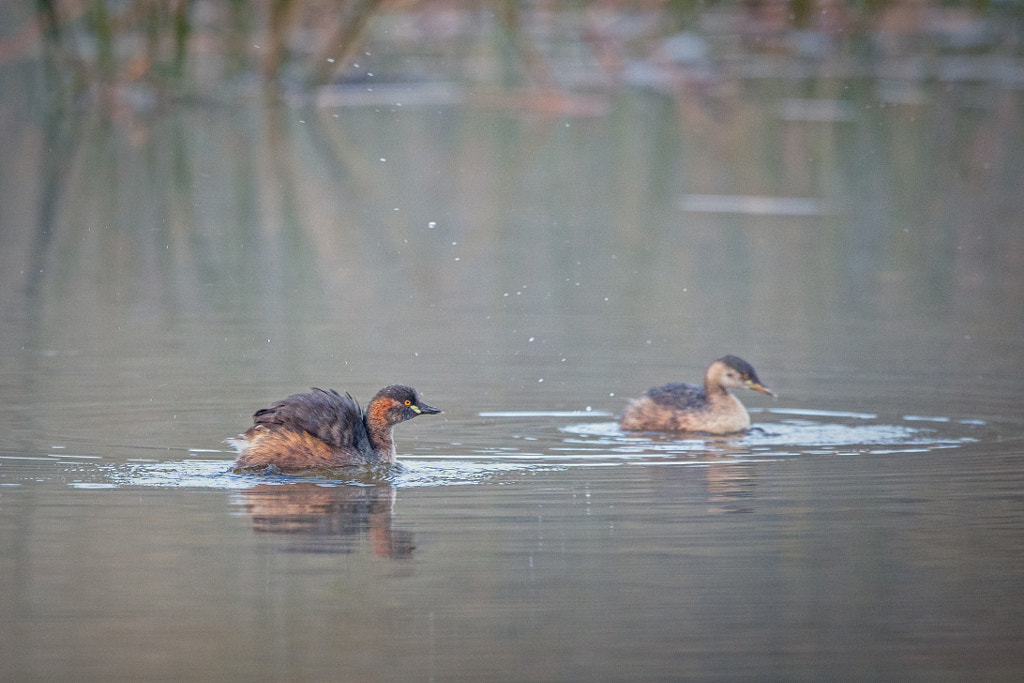
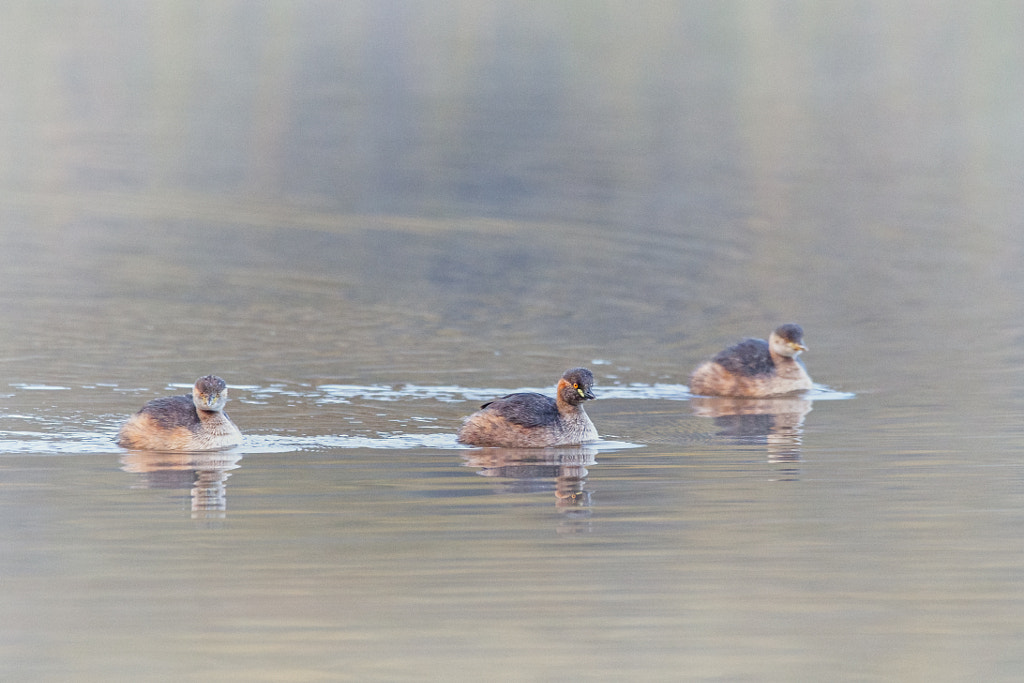
A flotilla of Ngoonan or Australasian grebe (Tachybaptus novaehollandiae) came to check out what I was doing.


Ngoonan by Paul Amyes on 500px.com
After a quick shufti they headed off to the centre of lake.


Things had changed considerably in the ensuing four weeks. There had been a lot of rain and the water levels had risen considerably. So much so that the area where I saw the bird was now under water. The other thing that had changed was that there was a lot of noisy building work going on – and when I mean noisy I mean really loud. Combine this with the cold and it was no surprise that there were no birds on the lake, not even the Eurasian Coots. Undeterred I parked myself in among the reeds as close as I could to the place where I’d seen the spotless crake and just waited. Some large jarrah trees cast their shade over me so I didn’t get the warming effect of the rising sun. After a couple of hours a flotilla of Australasian Grebes approached and gave me the once over and then made off to centre of lake to be in the sun. By now I was really cold and miserable. It was obvious that the spotless crakes weren’t going to put in an appearance so I decided to walk down the other side of the lake to warm up in the sun and restore some feeling back to my feet.


Kakak by Paul Amyes on 500px.com
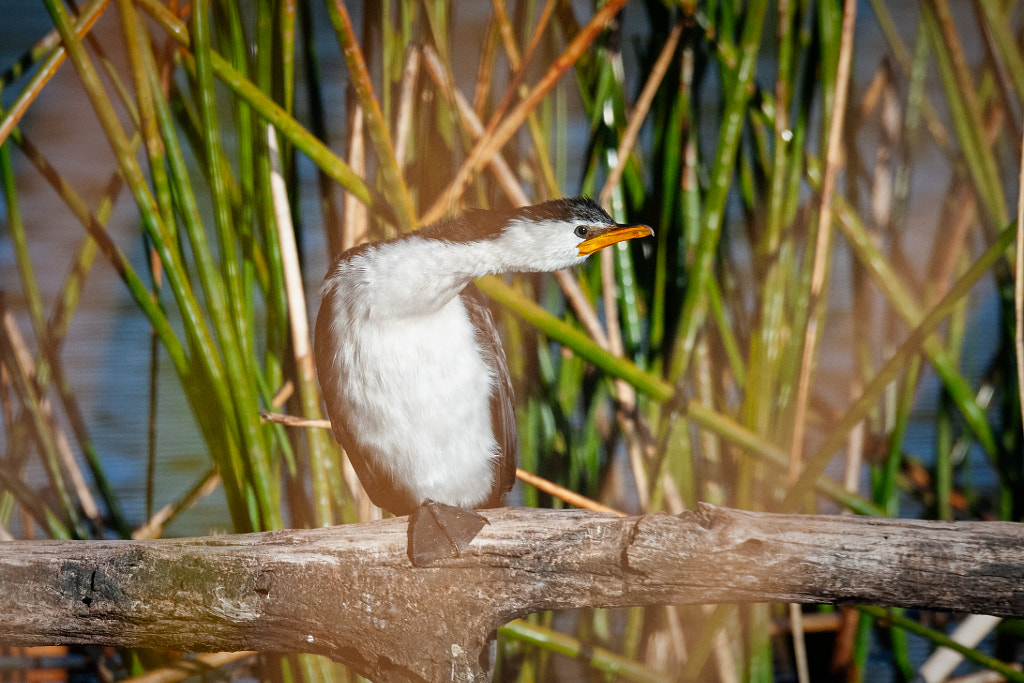
This Kakak or little pied cormorant (Phalacrocorax melanoleucos)was glad to see me move as I was disturbing its morning.


As walked past the dam wall I could hear the commotion of a whole heap of passerine birds moving through the forest understory. There were New Holland Honeyeaters, assorted thornbills, grey fantails and weebills. But, what really caught my attention were the splendid fairy wrens chasing insects at the waters edge. They were chasing small insects and occasionally they would perch on an old log or tree stump. For text twenty minutes or so I just took photos of them and then as quick as you like they were gone.


Bandiny by Paul Amyes on 500px.com
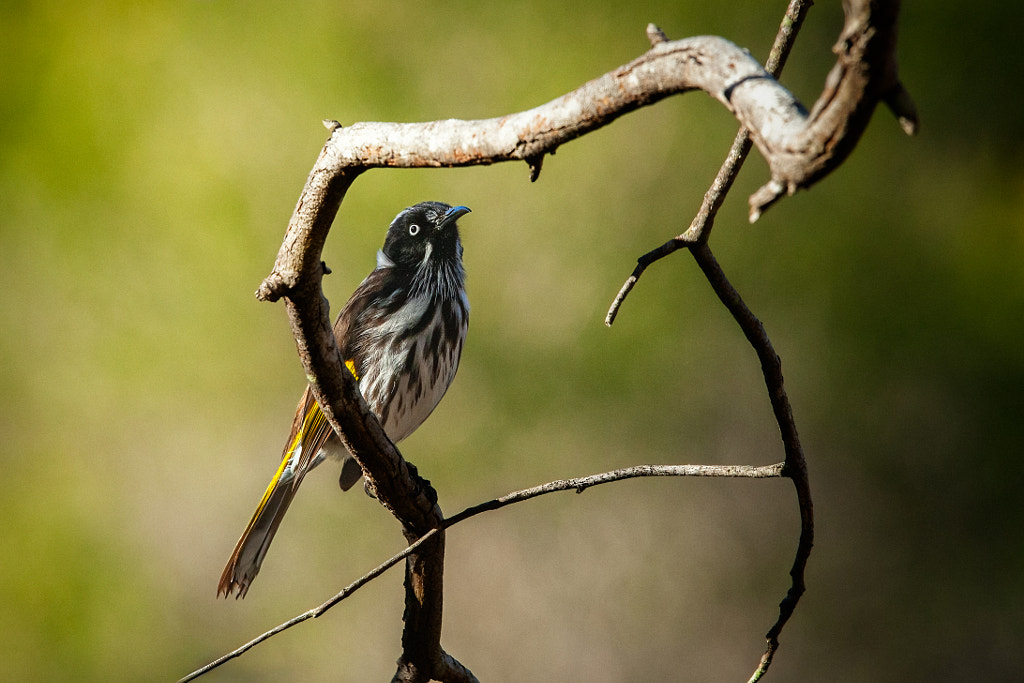
Bandiny or New Holland Honeyeater (Phylidonyris novaehollandiae) was one of the small passerine birds flitting about in the understory.


Djer-djer by Paul Amyes on 500px.com
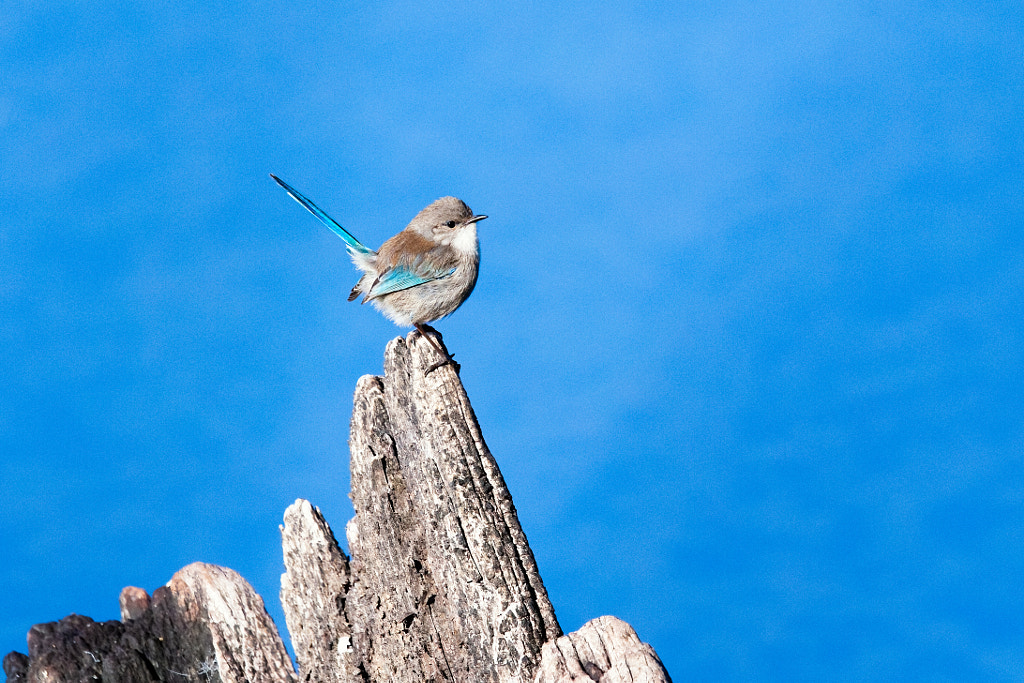
Djer-djer or Splendid Fairy-wren (Malurus splendens)catching the warmth of the sun.


Djer-djer by Paul Amyes on 500px.com
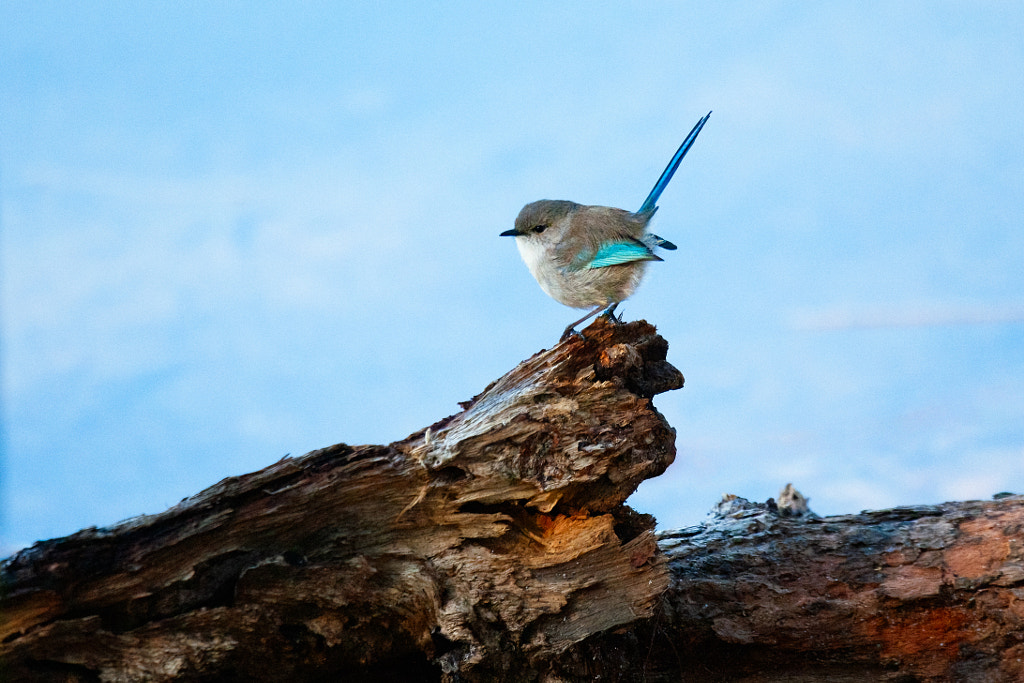
Time out from chasing insects.


Is a splendid fairy wren on a log worth an invisible spotless crake in the reed beds ? Yes it was this time.

Lord Of The Flies

A male Blue Skimmer (Orthetrum caledonicum) at rest. Lake Leschenaultia, Western Australia.


We went to Lake Leschenaultia and I had all these plans to photograph dragonflies in flight. I’d got this shot all planed out in my mind to get a shot of one flying just over some reeds. I’d set the camera up with what would be the best lens and headed out to an area on the lakeside where I knew I’d find some and there would be some nice light. Except it was very windy and I couldn’t find any dragonflies. I went off to the reed beds behind the boat shed thinking that should prove more fruitful as it was in the lee of the wind. There were loads there flying around and it was amazing to watch them chase each other around, but from a photographic point of view it wasn’t so good as there was a rather belligerent tiger snake who really did not want to share his basking spot. So I walked around the lakeside a bit further and found another spot that was sheltered from the wind. But try as I might I just could not get the shot I was after. They wouldn’t fly where I wanted, wouldn’t fly slow enough or in a straight line. In the end I had to content myself with the photo above. The dragonfly just rested on that twig for a couple of seconds in the shade and then it was off.

Nature photography is hard. We can have an idea of the shot in our minds eye and try to make it happen, but then nature doesn’t play ball with us and then we have to adapt and take what we’re given. Bit like life really.

A Beautiful Day

We’ve had some really gorgeous weather lately – so good it made us want to go out and have a BBQ picnic. Thanks to the media there is the impression that the average Australian is born wearing an apron and holding a pair of BBQ tongs in one hand and a can of beer in the other. Well it’s not quite true. For us a migrants we don’t have a natural proclivity to burn every piece of meat we eat over a fire. But when the weather is as good as it has been lately the notion of throwing a sausage on the barbie in a nice location is quite overwhelming. We set off to Lake Leschenaultia which is smallish man made lake in the Perth Hills surrounded by woodland.

Now this was not a designated photographic expedition I did take a camera and while the Beloved Significant Other was having a swim I snuck off to see what was about. The light was bright, it was midday after all, and there were quite a few people about so I didn’t have high expectations. But half an hour of looking I managed to find some mating dragonflies, see some very cheeky splendid fairy wrens and be delighted by a mother musk duck feeding her duckling.


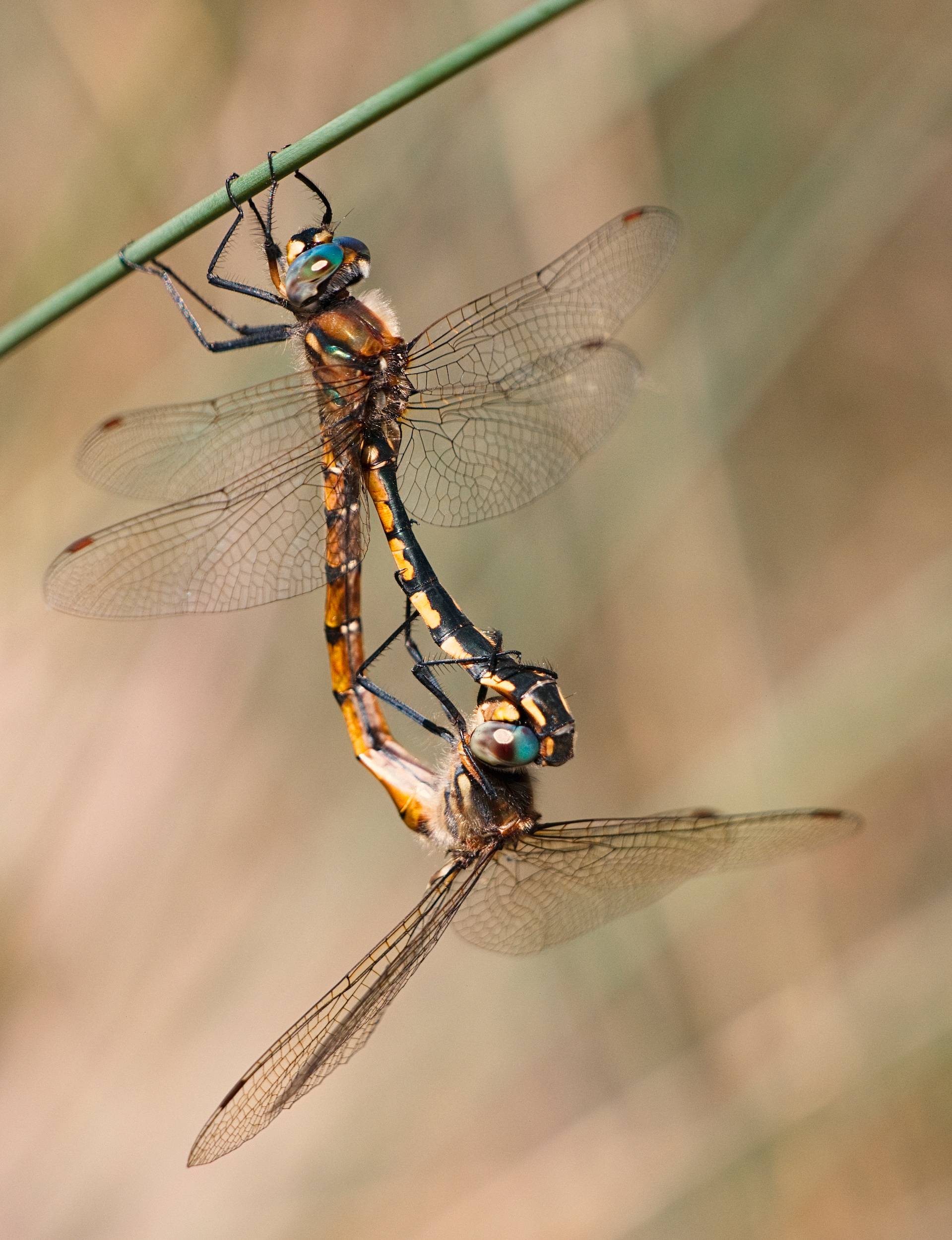
Tau emerald dragonflies (Hemicordulia tau) mating. Lake Leschenaultia, Western Australia.


Djer-djer aka splendid fairy wren. Lake Leschenaultia, Western Australia.


A female musk duck (Biziura lobata) feeding her duckling. Lake Leschenaultia, Western Australia.


They’re not the best photos I’ve taken, more snapshots really, but they added to what was a perfect day.

Lake Leschenaultia In Autumn


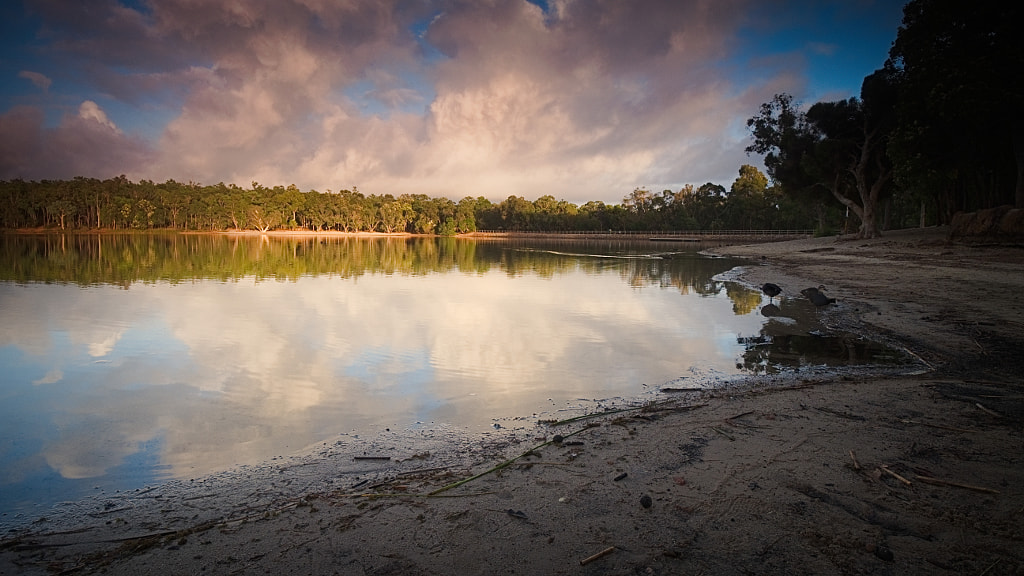
Time lapsing at Lake Leschenaultia in Western Australia.


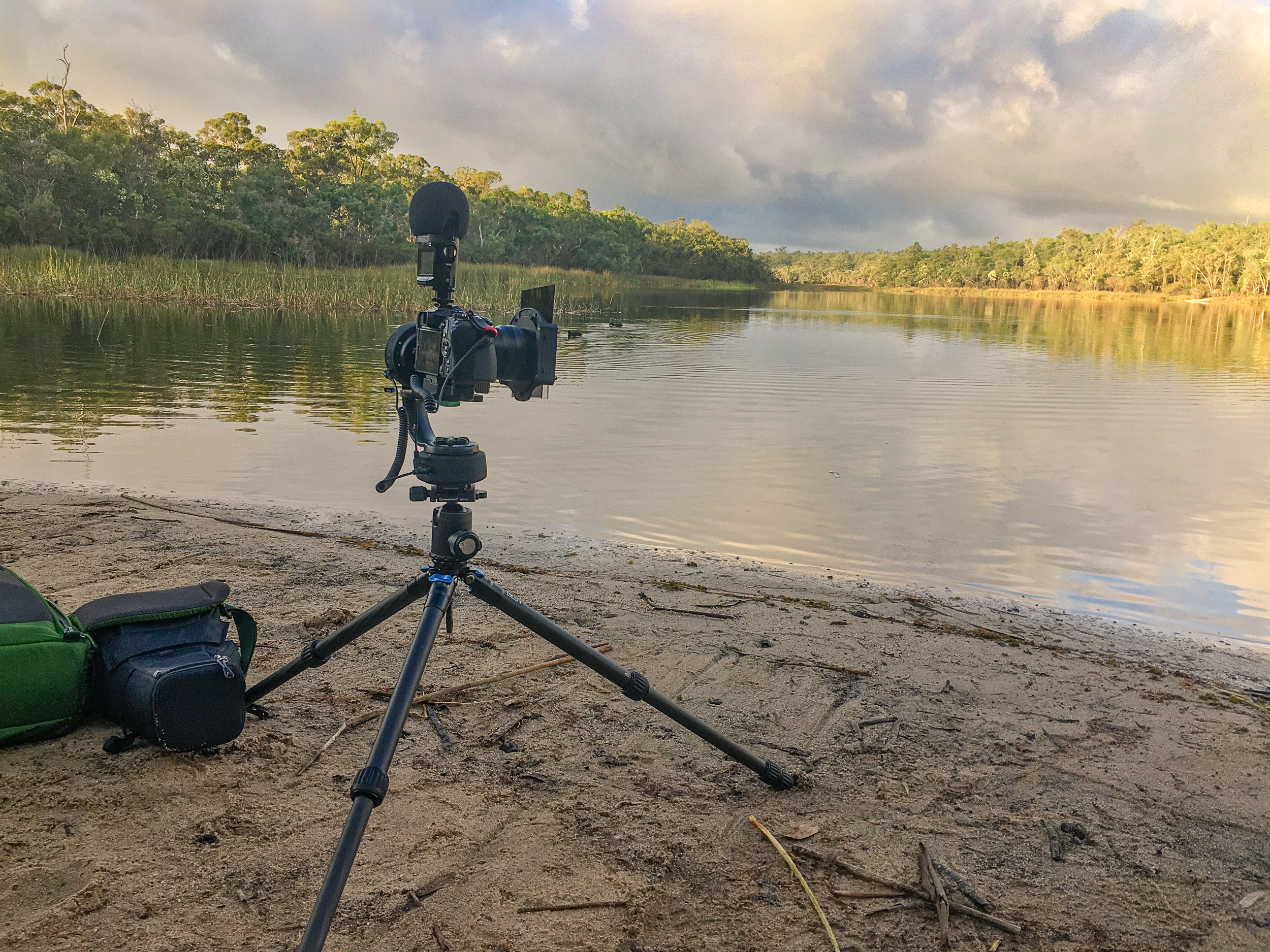
The last few weeks I’ve been spending a day at Lake Leschenaultia. I’ve photographed there often but this time I thought I’d try making a video about some of the wildlife there. In the process I’ve discovered three things:
  1. The animals don’t play ball. Quite a few times I went and they didn’t show up.
  2. It’s harder than it looks. We’re accustomed to seeing the David Attenborough docos on the TV and they spoil us because trying to get anything halfway decent takes an enormous amount of time, dedication and skill.
  3. All the cameramen and directors of photography I know of all complain of having wrecked backs. Having carted the equipment round for a few weeks I now know why – it’s bloody heavy!

Having said that it has been great fun and while I’m not particularly happy with the resulting video I enjoyed the whole experience immensely.


Now for a shameless plug. Autumn, Winter and Spring are the best times to go walking in Western Australia and the walk around Lake Leschenaultia is one of forty two that are in my book Perths Best Bush, Coast and City Walks which can be bought through the link given. Further more if you use the code PAULA15 you get a discount of 15%.

Thank Goodness!!


Lake Leschenaultia by Paul Amyes on 500px.com
Lake Leschenaultia at sunrise. The glowing rising sun is refected in the trees on the opposite shore.


After the onslaught of the hottest summer ever, which I wrote about in the last post we’ve had a few days of respite with temperature dropping 15ºC to the more manageable mid twenties. All of a sudden it feels like my brain has kicked up a gear.


Time lapsing at Lake Leschenaultia in Western Australia.


Kwilom by Paul Amyes on 500px.com
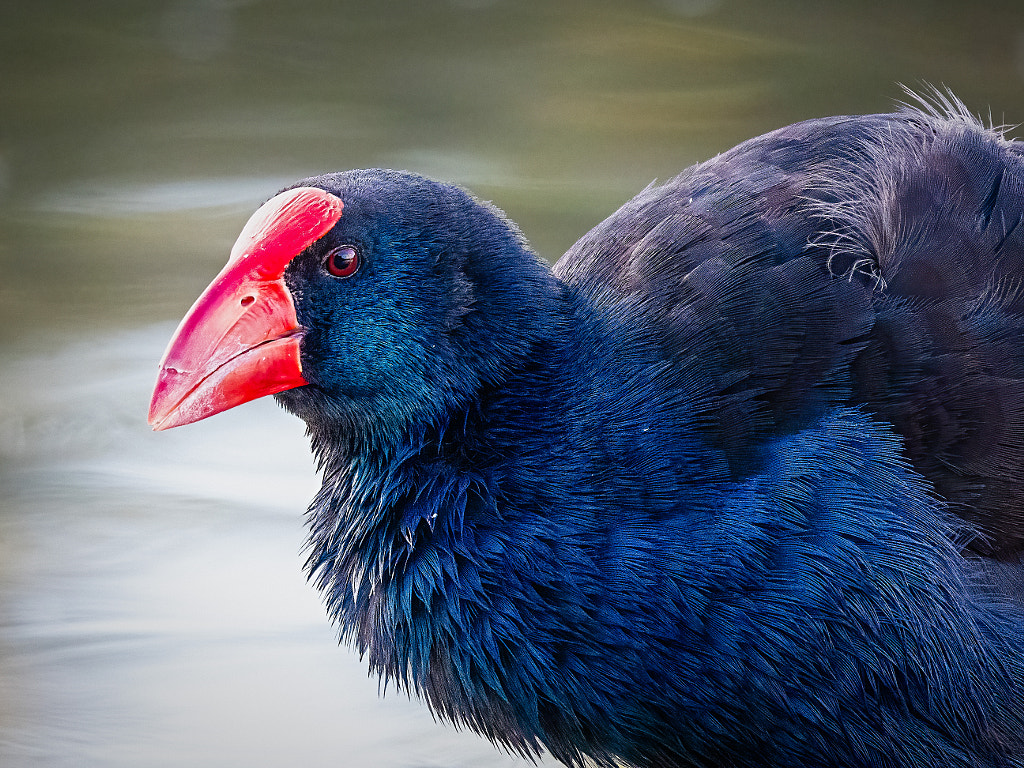
Kwilom or purple swamp hen (Porphyrio porphyrio subsp bellus). Lake Leschenaultia, Western Australia.


I went out to Lake Leschenaultia at sunrise to film a time lapse sequence for a video I’m working on. While there I decided to take a few pics of the birds I could see while I waited for the time lapse to finish. With the lower temperatures the birds were all a lot more active. When I visited last week a lot of the birds were just sleeping in the shade. The Eurasian Coots were putting on quite a show – preening, feeding, chasing each other. One of them was determined to explore the contents of my bag. The purple swamp hens weren’t very happy to see me on their bit of beach. One of them would walk backwards and forwards in front of me giving me the evil eye. The male musk duck I talked about in the last post came steaming out of the reeds. Man that is a fast duck. A few minutes later I was delighted when a female musk duck came out of the same reed bed with two ducklings in tow. That was a first for me.


Kodara by Paul Amyes on 500px.com
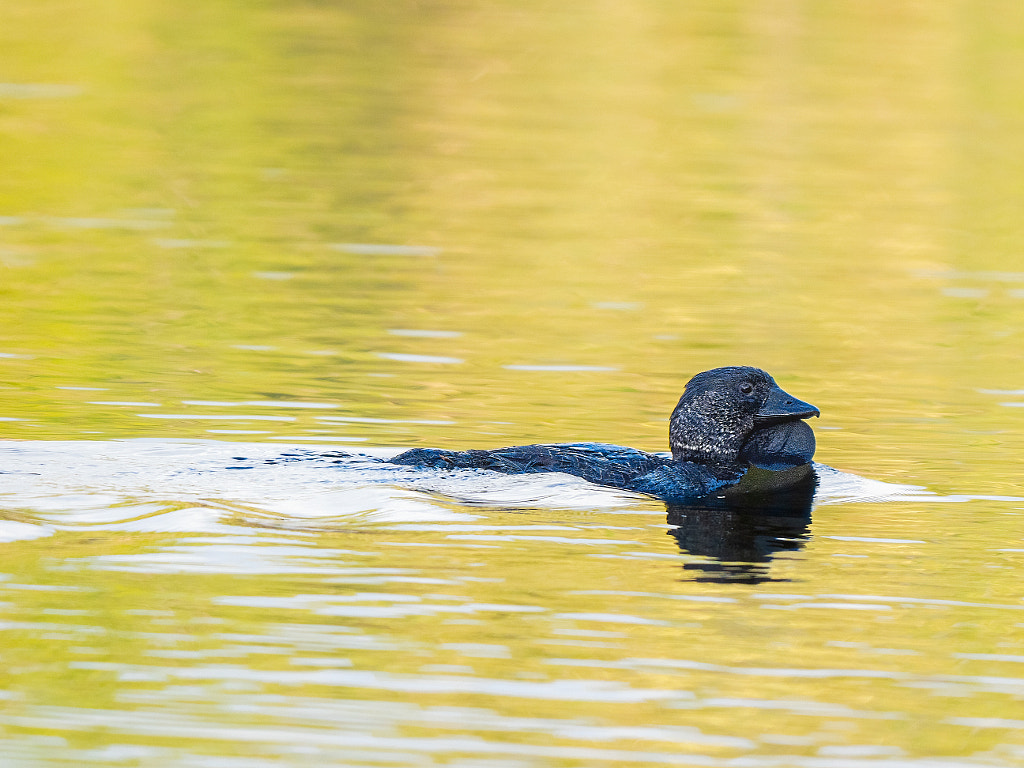
A male Kodara or musk duck (Biziura lobata). Lake Leschenaultia, Western Australia.


Kodara by Paul Amyes on 500px.com
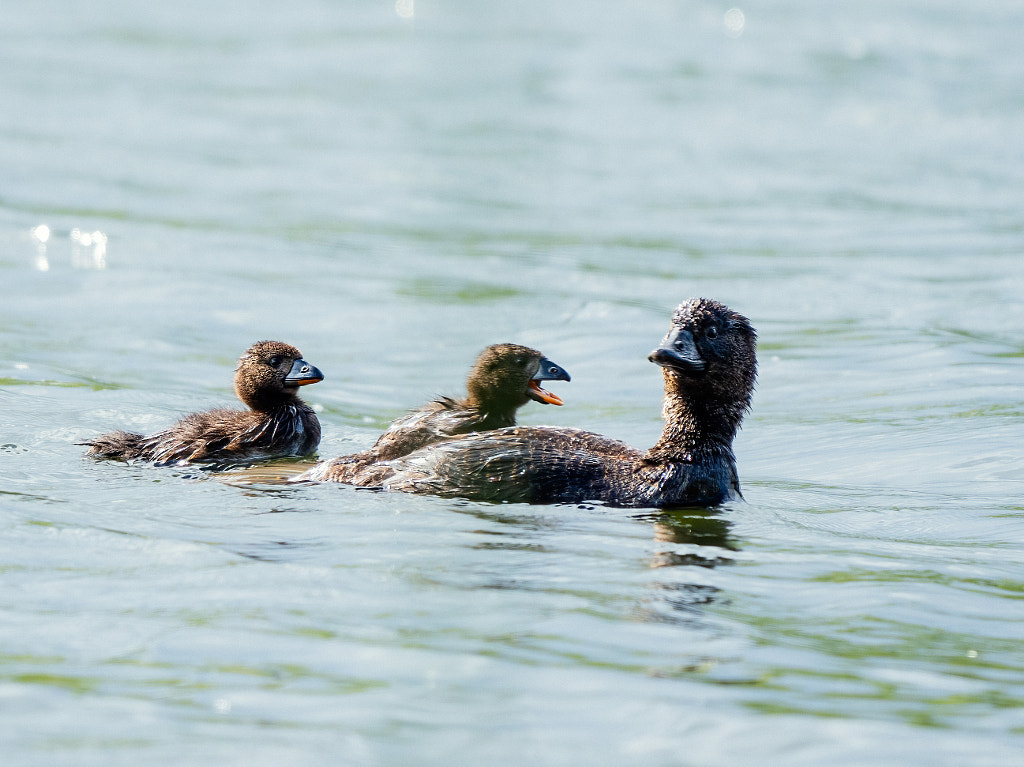
A female Kodara or musk duck (Biziura lobata) with two ducklings. Lake Leschenaultia, Western Australia.


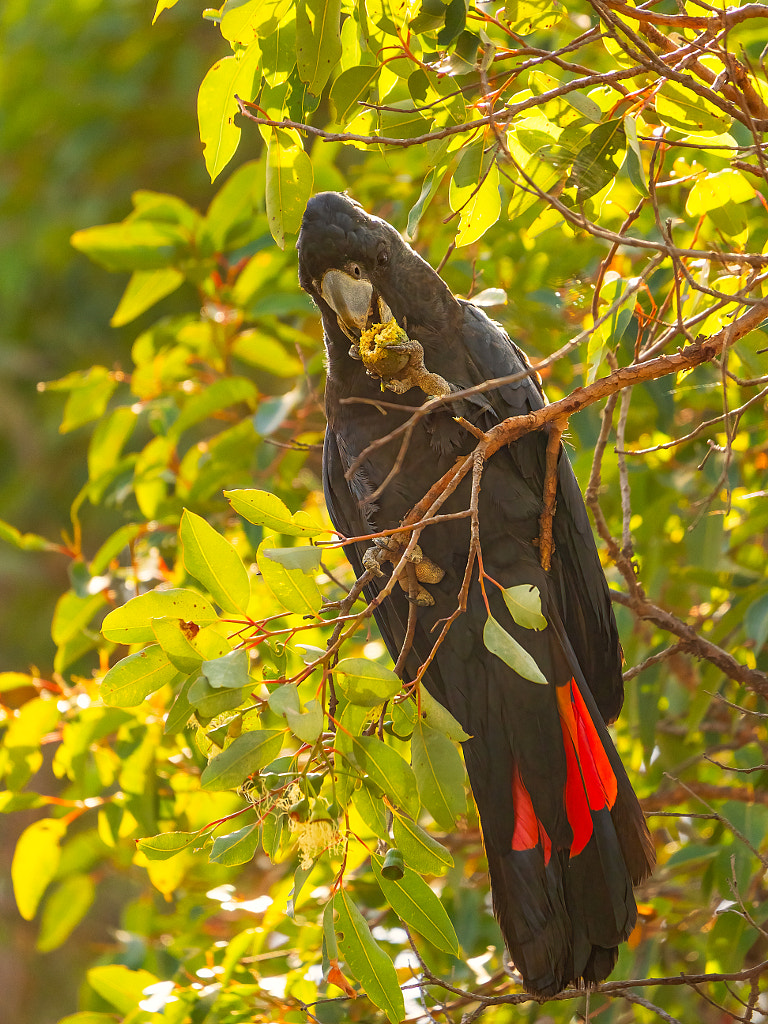
Away from the shoreline and in the trees the passerine birds were very busy looking for food. The grey fantails are a lot like their cousins the willie wagtail in that they just don’t give a stuff about people. They will perch on small branches and give you a good look over. That doesn’t mean they are easy to photograph as they have very short attention spans and don’t sit still for long. They are, however, quite territorial and will often come back to the same perch over and over so that increases your chances of getting a photo. The Western Thornbills are much more erratic and it can be difficult just to get a good look at as they move through the low lying scrub and shrubs. After a while I became aware of a large number of gum nuts dropping from two of the trees in front of me. Looking up I saw half a dozen Red-tailed Black Cockatoos feeding in true parrot fashion. Take a bite out of a fruit, drop it and then get another one. Repeat until you have stripped the tree bare or have had enough, whichever comes first. One of them gave me quite a long look and not for the first time I got the sense that there was a real intelligence behind those little black eyes.


Koodjinok by Paul Amyes on 500px.com
Koodjinok. A juvenile Grey fantail (Rhipidura fuiginosa preissi). Lake Leschenaultia, Western Australia.


Karak by Paul Amyes on 500px.com
Karak or Red-tailed Black Cockatoo (Calyptorhynchus banksii subs samueli) feeding on gum nuts. Lake Leschenaultia, Western Australia.


While at the lake amongst all this wonderful nature it wasn’t hard to feel intensely grateful to have this experience but also a little guilty. Over the course of the last couple of years it seems as if the world has gone to hell in a handcart what with the climate crisis, COVID and now the Russian invasion of the Ukraine with Putin threatening global nuclear annihilation. So what gives me the right to have all this serenity  and beauty when elsewhere people are suffering  and dying? This sort of thinking isn’t new. Henri Cartier-Bresson the Godfather of socially concerned documentary photographers said of the American fine art photographers Ansel Adams and Edward Weston:

“The world is going to pieces and people like Adams and Weston are photographing rocks!”

(quoted by Adams, Oral History, Univ. of Calif., Berkeley, p. 498)

For Bresson a documentary photograph should deliver the truth and be an agent of social change making life better for all humanity. He felt that Adams’ love of the beauty of nature was sentimental, naive and wasted. So was my being at Lake Leschenaultia taking pretty pictures just self indulgent sentimentalism? Perhaps I should be doing something more useful to try and solve the climate crisis and stop the war in the Ukraine. I could take the defence that Ansel Adams took when he made the address “The Role Of The Artist In Conservation” where he said:

“I believe the approach of the artist and the approach of the environmentalist are fairly close in that both are, to a rather impressive degree, concerned with the ‘affirmation of life’….Response to natural beauty is one of the foundations of the environmental movement.”

(www.anseladams.com/ansel-adams-the-role-of-the-artist-in-the-environmental-movement/)

I can say that I do through my books and photos hope that people will become more interested in the environment  and look to protect and conserve it. But I’m aware that what I do is very small. Adams had access to the presidents of the United Staes, millionaire philanthropists and captains of industry. So if I’m not influencing the opinions of the great and the good should I still be out taking pretty pictures?


Djoboldjobol by Paul Amyes on 500px.com
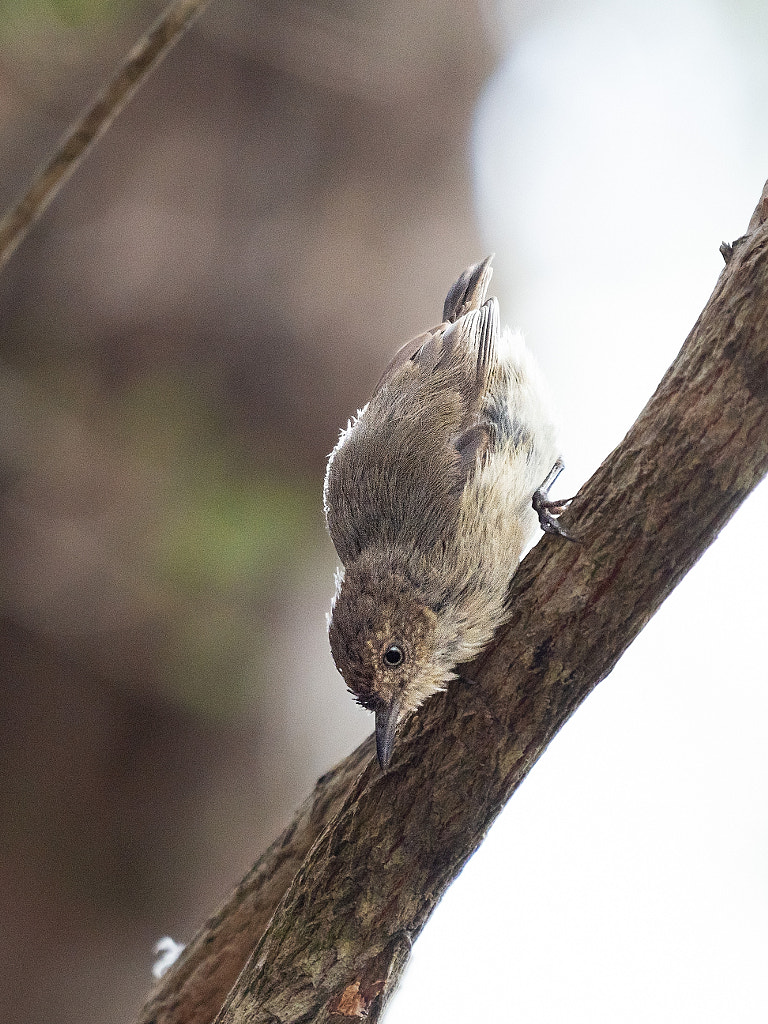
Djoboldjobol or Western Thornbill (Acanthiza inornata). Lake Leschenaultia, Western Australia.

The last week or so I’ve been reading ‘Journeys In The Wild – the secret life of a camera man’ by Gavin Thurston. Thurston is a film cameraman and director of photography who has worked on many of the BBC’s David Attenborough documentaries amongst other things. An interesting read about what really happens behind the scenes when those programs are made. Thurston admits that even taking into account all the difficulties and the missing out on family life he has been extremely privileged to have seen what he has seen. He recounts of how he was filming for the ‘Trial of Life’ series during the civil unrest in Panama. After a particularly dangerous drive out to the rainforest where they could have easily been killed by Panamanian Defence Force he’s out filming stingless bees when he realises:

“Nature and its beauty and complexity is an easy diversion from the rigours of human turmoil.”

I find that being in nature is a way to re-establish calm in my life. So I could sit at home and become fearful and anxious about what is happening in the world, but what does that achieve? Going out to spend time in the natural world and allowing myself to be totally immersed in that world brings about calmness, joy and an appreciation of life. It recalibrates my thinking. So as an act of self care spending a morning watching the sunrise at Lake Leschenaultia and enjoying the antics of the animals around me was very important.


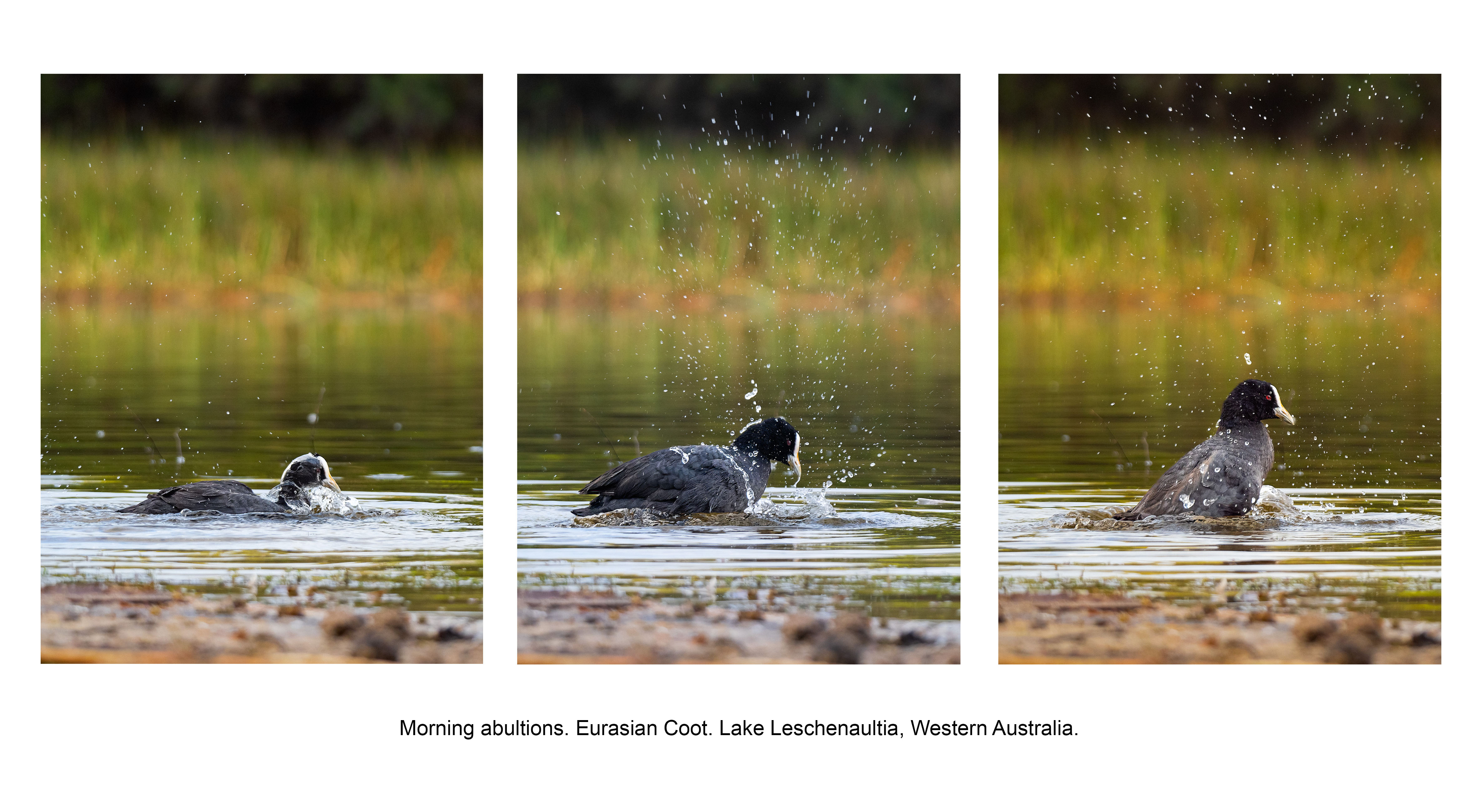
“I’m out of here”. Kidjibroon or Eurasian Coot (Fulica atra). Lake Leschenaultia, Western Australia.

Nice and Easy

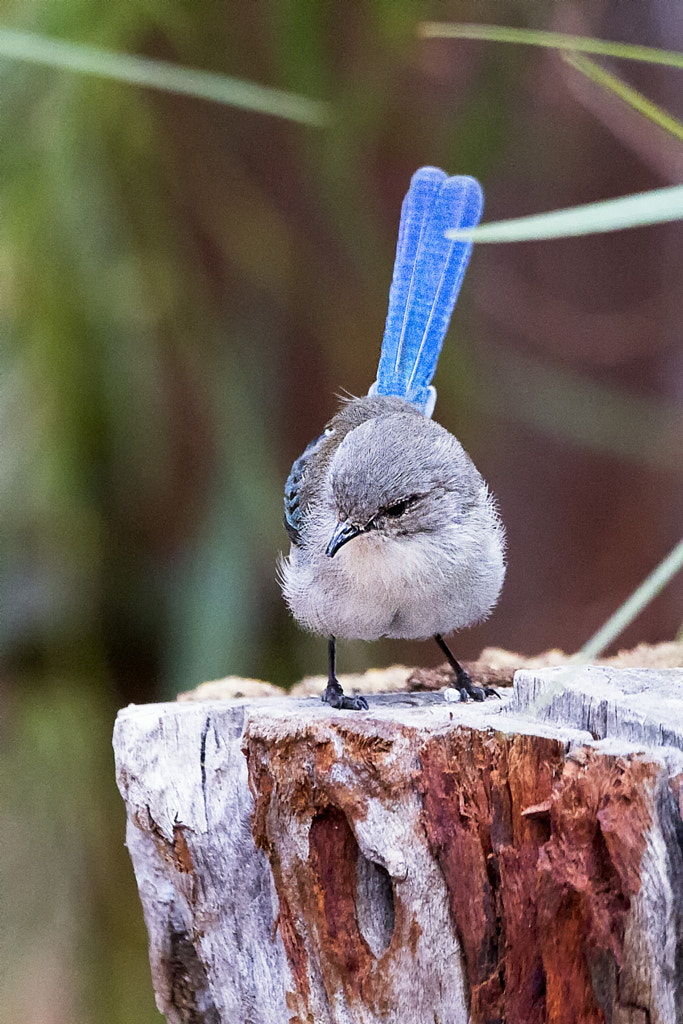
Splendid Fairy Wren by Paul Amyes on 500px.com
Splendid Fairy-wren, Malarus splendens subs splendens, out of the breeding period. Lake Leschenaultia, Western Australia. Canon EOS 6D with Sigma 150-600mm f/5-6.3 DG OS HSM Contemporary lens. Exposure: 1/1000sec, f6.3 at ISO 6400.

Sometimes I think that have got to be easier ways to enjoy birding and bird photography than dragging 3.5Kg of camera and lens quietly through the bush and trying to get a picture of something that is literally so flighty that the slightest sound sees your subject leave at a tremendous rate of knots.


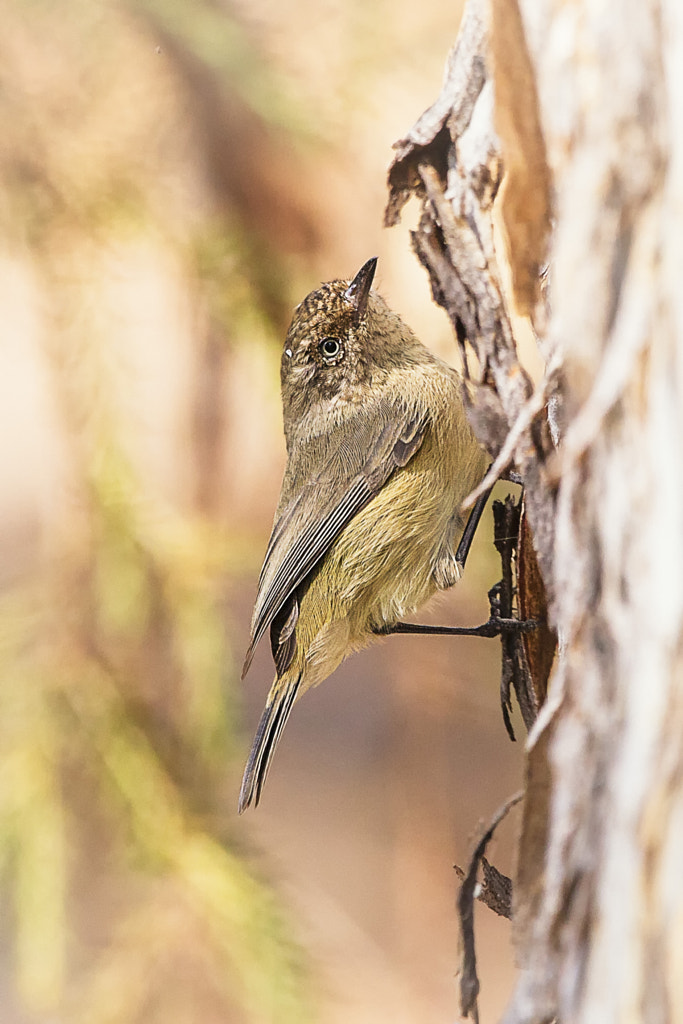
Western Thornbill by Paul Amyes on 500px.com
Western Thornbill, Acanthiza inornata. Lake Leschenaultia, Western Australia. Canon EOS 6D with Sigma 150-600mm f/5-6.3 DG OS HSM Contemporary lens. Exposure: 1/1000 sec, f6.3 at ISO 1000.


Case in point. Not so long ago Beloved Significant Other (BSO) went for a trip to Lake Leschenaultia in Chidlow. I spent an age crawling around in the bush looking for a cooperative subject. In that time every small twig that I inadvertently trod on sounded like a thunder clap that sent all the wildlife scurrying for cover in a 5Km radius.


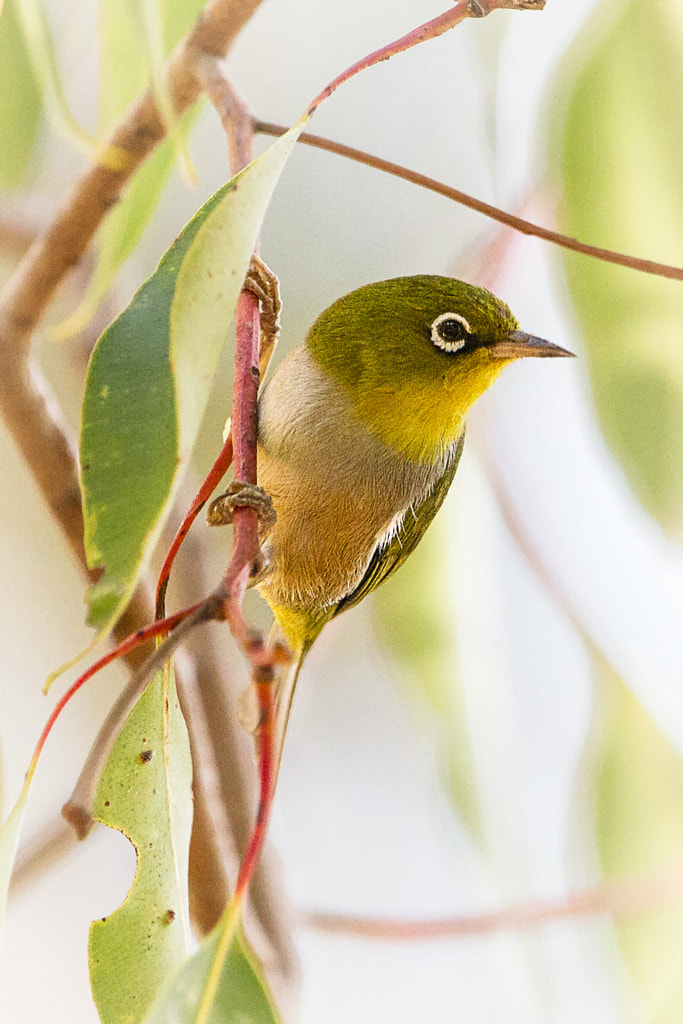
Silvereye by Paul Amyes on 500px.com
Silvereye, Zosterops lateralis. Lake Leschenaultia, Western Australia. Canon EOS 6D with a Sigma 150-600mm f/5-6.3 DG OS HSM Contemporary lens. Exposure: 1/1250 sec, f6.3 ISO 2500.

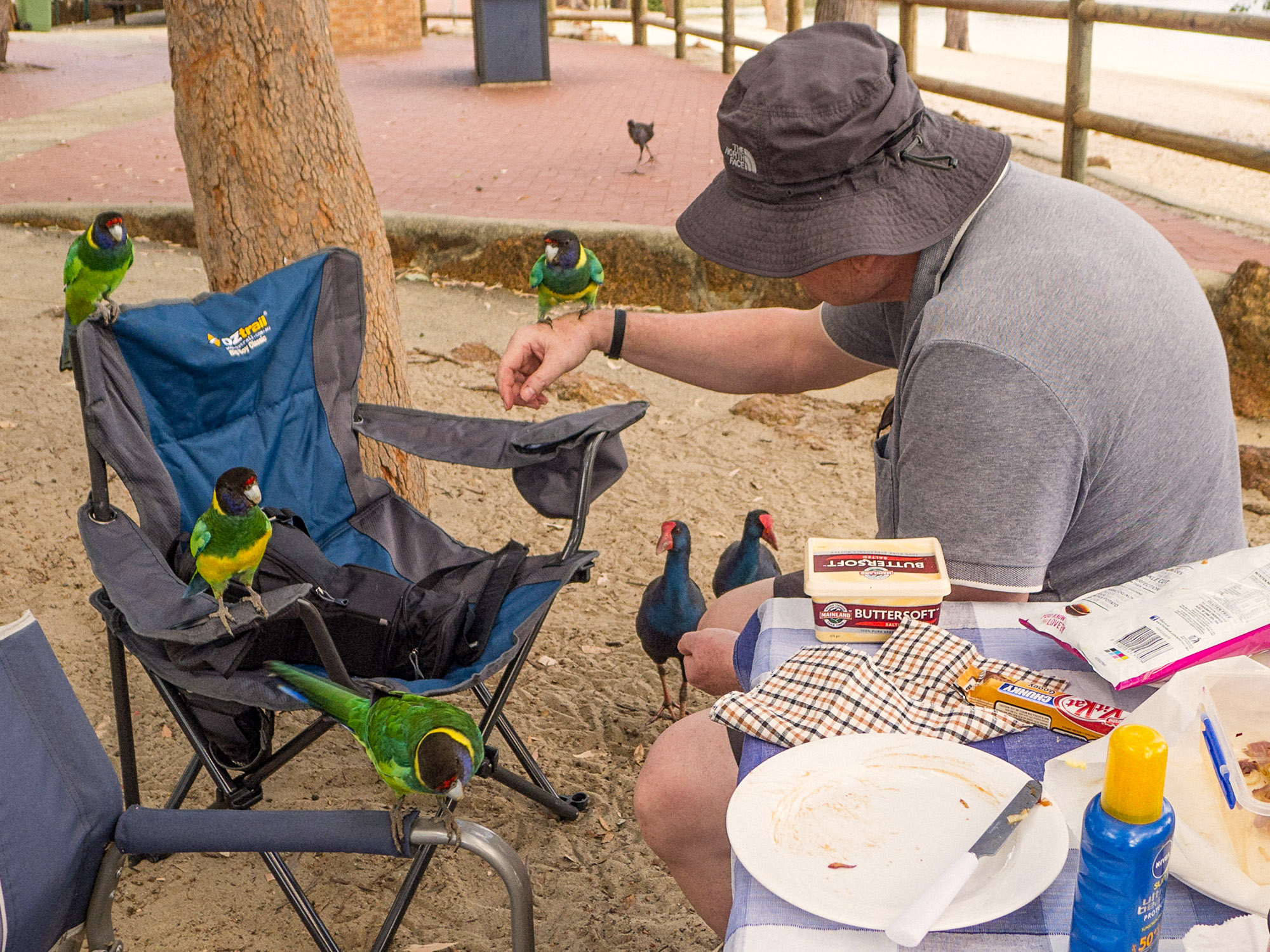
Even if you manage to creep up on a suitable subject you then have the problem of photographing something that is 5-10cm and hoping and twitching around like a meth user suffering from St Vitus’ dance while you are trying to track it and keep it in focus as it darts in and out of the foliage. So I’ve come up with an easier method. The BBQ. If you have BBQ in Australia every animal in the neighbourhood will be trying to relieve you of your food. The little buggers will climb into your lap and pose for photos if food is involved.


A picnic feast with the birds of lake Leschenaultia by Helen Amyes (aka BSO). Panasonic Lumix LX5. Exposure: 1/160 sec, f2.8 at ISO 80.


Seeing Red

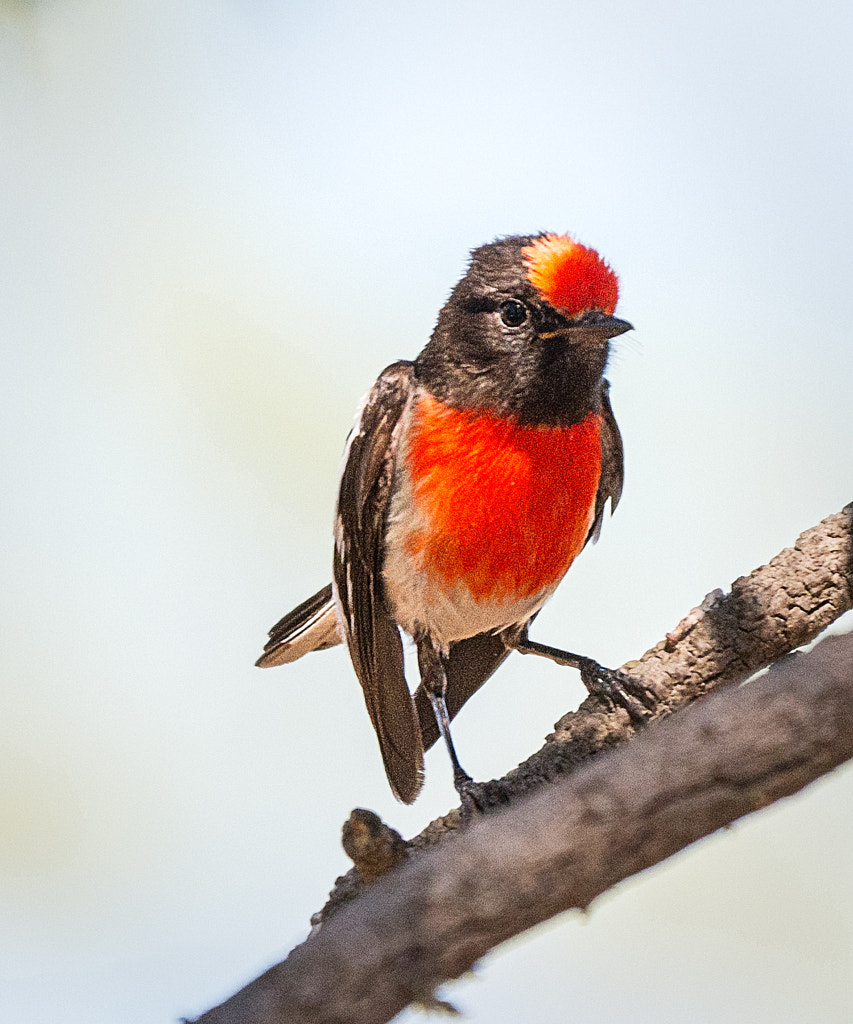
Red-capped Robin by Paul Amyes on 500px.com
Red-capped Robin,Wei. Avon Walk Trail, York, Western Australia. Panasonic Lumix G85 with Panasonic Leica 100-400mm F4.0-6.3 lens. Exposure: 1/1000 sec, f6.3 at ISO 640.


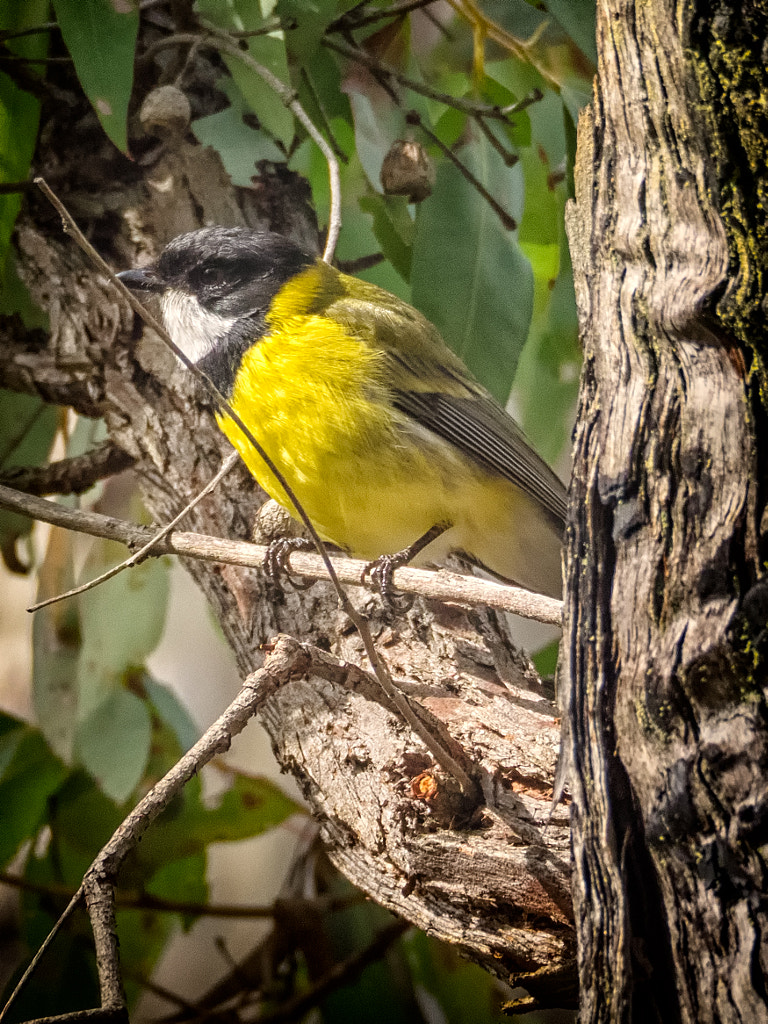
Being originally from England I automatically associate Christmas with cold weather, and by association Robins as they are part of iconography of the festive season. So when walking along the Avon River on a 40º C day seeing these Red-capped Robins seems a little incongruous. For such a small bird they are as bold as brass and will let you approach quite closely. The other confusing thing about Australian robins is that they don’t just come in red.


Lake Leschenaultia Lakeside Walk by Paul Amyes on 500px.com
The Western Yellow Robin (Eopsaltria griseogularis). Lake Leschenaultia, Western Australia. Olympus OMD EM1 with Olympus M.Zuiko Digital ED 75-300mm f/4.8-6.7 II lens. Exposure: 1/400 sec, f8 at ISO 800.


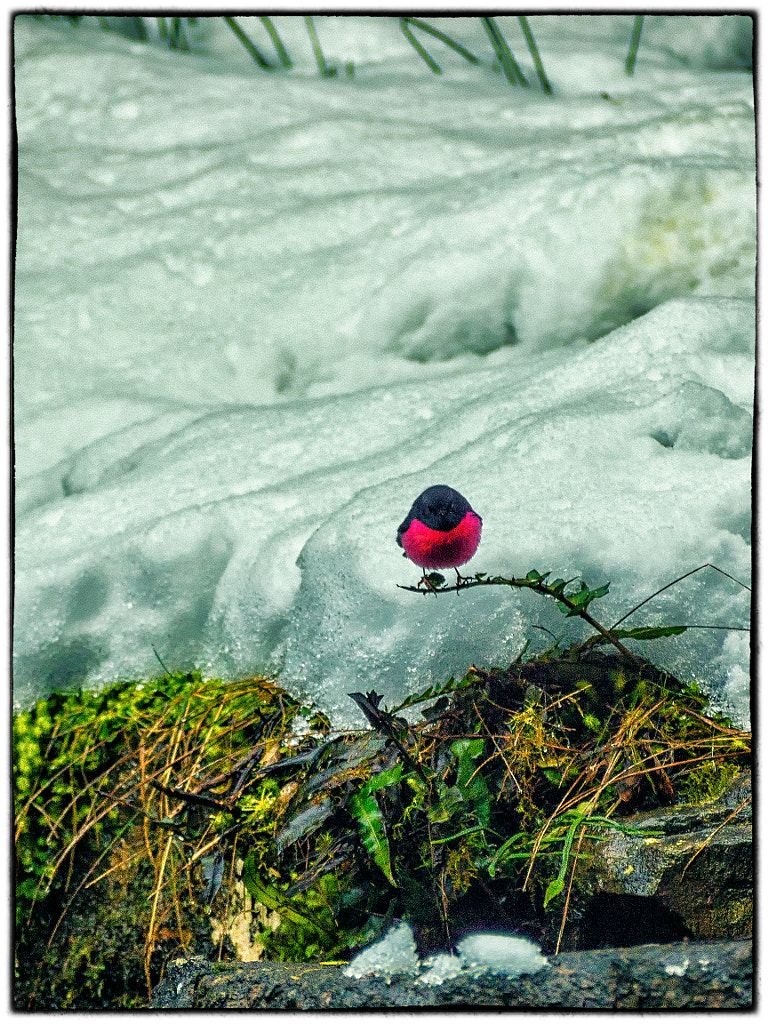
When we were in Tasmania we had proper winters with snow, and that meant we had robins in their proper setting, but not at Christmas. Oh it’s all very confusing!


Pink Robin at Silver Falls by Paul Amyes on 500px.com
A pink robin (pink) at Silver Falls, Mount Wellington in Tasmania. Olympus OM-D E-M10 with Olympus M.Zuiko Digital ED 40-150mm f/4-5.6 R lens. Exposure: 1/160 sec, f5.6 at ISO 200.


Mugged


I was at Lake Leschenaultia and it was a lovely winter’s day, the sun was out I’d just finished a bush walk. I decided to have lunch at one of the picnic shelters by the lake when it happened. There was no warning. One minute I sitting there alone and happy the next minute these two ne’er-do-wells are demanding with menace. To make matters worse I had nothing to give and they just would not accept that. They were merciless in their onslaught. Would I recognise them again? You bet I would! Their visages are engraved indelibly upon my mind. But better than that I managed to get pictures of them so others could be warned. Here they are.


Lake Leschenaultia Lakeside Walk by Paul Amyes on 500px.com
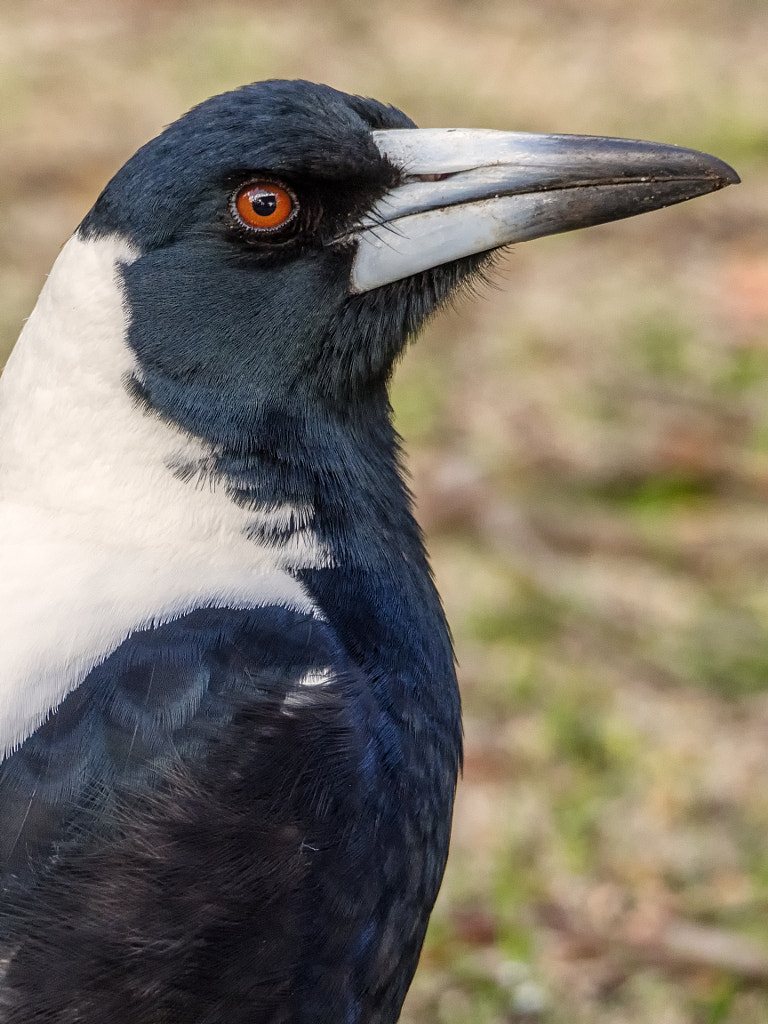
The eponymous Australian magpie (Gymnorhina tibicen) will happily relieve you of your picnic lunch at Lake Leschenaultia.
 

This was the ring leader. He was ruthlessly determined to relieve me of my lunch. He was brazen in his approach, like he just didn’t care.


Lake Leschenaultia Lakeside Walk by Paul Amyes on 500px.com
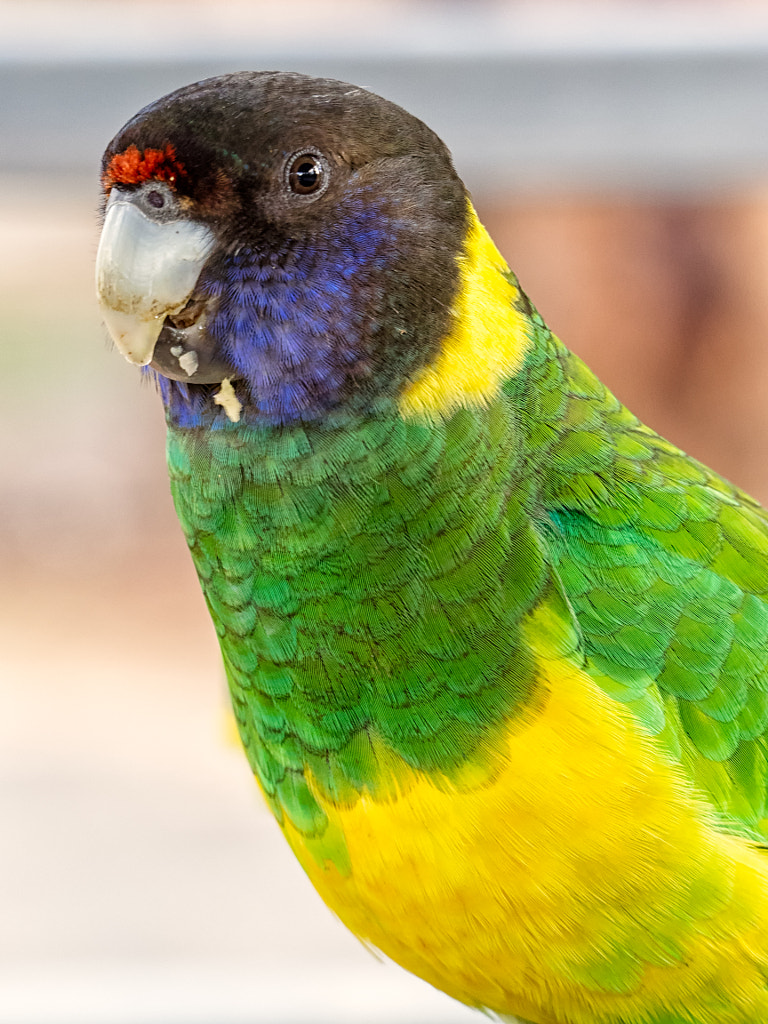
Australian Ringneck (Barnardius zonarius subspecies semitorquatus). One of the cheeky bandits that will help eat your lunch at Lake Leschenaultia


This one was a sly beggar! He quietly got into my bag and ransacked it looking for goodies. When discovered he just countered with a manic laugh.It was like something out of that Hitchcock film The Birds albeit with less blood and more sandwiches.


So if you go to Lake Leschenaultia watch out for these two. They are merciless – no picnic is safe! Be warned, or as the Australian Federal Government would say “Be alert but not alarmed“.